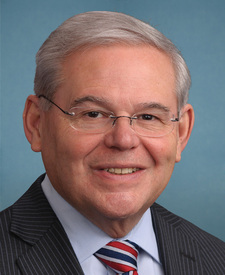
See how Robert Menendez's votes line up with your values.
DeepSyte scores Robert Menendez's record on the issues you care about — not party, not press releases. Take the 2-minute values quiz to see your personal alignment.
Sign in and take the values quiz to see how Robert Menendez's votes line up with your views.
Prediction track record
How often we called Robert Menendez's passage votes correctly, from their stated positions on each bill's tagged topics. Excludes “unclear” calls and abstentions.
32 predictions on record · none have been resolved by a passage vote yet. Check back as bills move.
Pending vote119-hr-5340
To prohibit the disclosure of records by the Secretary of Housing and Urban Development of individuals for the purposes of immigration enforcement, and for other purposes.
Based on 22 data points across public statements and recorded votes · AI analysis of public records
118-hr-2·Consistent
Secure the Border Act of 2023
92/100
What they said
May 11, 2026
The representatives call for the FAA to work with Congress to stop ICE from using the LADD privacy program to conceal deportation flights from public and congressional oversight, and demand investigation into reported inhumane conditions on these flights, including the use of full-body restraints.
The statement calls for FAA oversight of ICE deportation flights, transparency on immigration enforcement operations, and investigation into inhumane conditions on these flights. The bill (Secure the Border Act of 2023) focuses on border wall construction, asylum restrictions, and employment verification—enforcement-focused immigration measures that do not address FAA oversight, deportation flight transparency, or detention conditions. The rep's NO vote on a bill centered on border enforcement and restrictive asylum policies is consistent with the statement's emphasis on transparency, accountability, and humane treatment in immigration enforcement.
Transnational Criminal Organization Illicit Spotter Prevention and Elimination Act
92/100
What they said
May 11, 2026
The representatives call for the FAA to work with Congress to stop ICE from using the LADD privacy program to conceal deportation flights from public and congressional oversight, and demand investigation into reported inhumane conditions on these flights, including the use of full-body restraints.
The statement calls for transparency, oversight, and accountability in ICE deportation operations, opposing the agency's use of privacy programs to conceal flights and inhumane conditions. The bill criminalizes interference with border control and law enforcement activities, including transmitting law enforcement location information. These represent opposing approaches to immigration enforcement: the statement advocates for public disclosure and congressional oversight of ICE operations, while the bill enhances criminal penalties for activities that could obstruct enforcement. The rep's NO vote aligns with the stated position opposing expanded law enforcement secrecy and supporting transparency.
The representatives call for greater oversight of ICE detention facilities and criticize the Trump administration's immigration enforcement operations, alleging human rights abuses, substandard detention conditions, and intimidation of elected officials conducting constitutional oversight.
The statement criticizes the Trump administration's immigration enforcement operations, alleging human rights abuses and calling for greater ICE oversight. The Secure the Border Act of 2023 expands border wall construction, increases asylum restrictions, and strengthens immigration enforcement mechanisms—policies aligned with the Trump administration's enforcement-focused approach that the statement opposes. The representative's NO vote on passage is consistent with the stated position against aggressive immigration enforcement.
The delegation opposes the Department of Homeland Security's plan to convert a warehouse in Roxbury, New Jersey into an ICE detention facility, citing inadequate infrastructure, lack of community consultation, and concerns about inhumane detention conditions. They call on DHS to abandon the project and halt further immigration detention expansion in New Jersey.
The statement opposes DHS immigration detention expansion in New Jersey, citing inhumane conditions and inadequate infrastructure. The Police Our Border Act focuses on reporting the impact of Biden border policies on law enforcement. Rep. Menendez's NO vote on a bill framed around border enforcement aligns with his stated opposition to detention facility expansion and his broader concerns about immigration enforcement practices. The vote is consistent with the delegation's position against further detention infrastructure.
Rep. Menendez opposed ICE and Border Patrol funding in the DHS appropriations bill and committed to continuing efforts to block additional ICE funding through reconciliation, characterizing immigration enforcement as harmful to communities.
Rep. Menendez's statement explicitly opposes ICE and Border Patrol funding and characterizes immigration enforcement as harmful. The Secure the Border Act of 2023 expands border wall construction, increases CBP technology investment, and tightens asylum eligibility—all measures aligned with enhanced immigration enforcement. His NO vote on passage is directly consistent with his stated opposition to enforcement-focused immigration policy.
The representatives call for the FAA to work with Congress to stop ICE from using the LADD privacy program to conceal deportation flights from public and congressional oversight, and demand investigation into reported inhumane conditions on these flights, including the use of full-body restraints.
The statement opposes ICE operating in secrecy and demands transparency and accountability in immigration enforcement. The bill penalizes jurisdictions that restrict information-sharing with immigration authorities and non-compliance with immigration detainers. These represent opposing approaches to immigration enforcement oversight: the statement seeks to constrain and expose ICE operations; the bill seeks to compel cooperation with ICE and restrict sanctuary policies. The rep's NO vote aligns with the statement's implicit opposition to policies that strengthen ICE's operational authority and reduce local discretion over immigration cooperation.
The representatives call for the FAA to work with Congress to stop ICE from using the LADD privacy program to conceal deportation flights from public and congressional oversight, and demand investigation into reported inhumane conditions on these flights, including the use of full-body restraints.
The statement calls for transparency, oversight, and accountability in ICE deportation operations, opposing the use of secrecy tools to hide enforcement activities from public and congressional scrutiny. The Laken Riley Act mandates detention of non-U.S. nationals arrested for certain property crimes and authorizes states to sue over immigration enforcement decisions—provisions that expand ICE enforcement authority and discretion without addressing the transparency and oversight concerns raised in the statement. The rep's NO vote aligns with the statement's emphasis on accountability and opposition to unchecked enforcement operations, though the bill's specific focus on detention mandates rather than transparency makes the alignment directional rather than on identical provisions.
Continuing Appropriations and Border Security Enhancement Act, 2024
85/100
What they said
May 11, 2026
The representatives call for the FAA to work with Congress to stop ICE from using the LADD privacy program to conceal deportation flights from public and congressional oversight, and demand investigation into reported inhumane conditions on these flights, including the use of full-body restraints.
The statement demands FAA transparency and oversight of ICE deportation flights, opposing the use of privacy programs to conceal immigration enforcement operations. The bill is a continuing appropriations measure that includes provisions prohibiting DHS from using funds for certain immigration-related purposes, though the specific text does not detail whether it addresses ICE's use of FAA privacy programs or deportation flight transparency. The rep's NO vote is consistent with a position demanding greater oversight and restrictions on ICE operations, though the bill's broad appropriations structure and the lack of explicit detail on the specific LADD/ghost flights issue create some uncertainty about whether the vote was driven by this particular concern or other provisions.
Rep. Menendez opposes federal funding for Immigration and Customs Enforcement and the U.S. Border Patrol, and opposes Republican efforts to increase ICE funding through reconciliation legislation.
Rep. Menendez's statement opposes federal funding for ICE and Border Patrol, and opposes Republican efforts to increase enforcement agency budgets. The Secure the Border Act increases border security funding and mandates expanded wall construction and CBP technology investments—provisions aligned with enhanced immigration enforcement. His NO vote on passage is consistent with his stated opposition to increased border enforcement funding and Republican immigration priorities.
The delegation opposes DHS plans to convert a Roxbury warehouse into an ICE detention facility, citing inadequate infrastructure, lack of local consultation, and concerns about detention conditions. They call on DHS to abandon the project and halt further immigration detention expansion in New Jersey.
The statement opposes DHS expansion of immigration detention capacity in New Jersey, citing inadequate infrastructure and inhumane conditions. The Laken Riley Act mandates detention of certain non-U.S. nationals and expands detention authority. Rep. Menendez's NO vote on the bill aligns with his stated opposition to detention expansion. The bill does not directly address the Roxbury warehouse project, but it advances the detention infrastructure expansion the statement opposes.
The delegation opposes DHS plans to convert a Roxbury warehouse into an ICE detention facility, citing inadequate infrastructure, lack of local consultation, and concerns about detention conditions. They call on DHS to abandon the project and halt further immigration detention expansion in New Jersey.
The statement opposes DHS immigration detention expansion in New Jersey, specifically objecting to facility construction and detention practices. The Secure the Border Act of 2023 focuses primarily on border wall construction and asylum restrictions rather than interior detention facility expansion. Rep. Menendez's NO vote on a bill centered on border security measures is generally consistent with his stated opposition to detention expansion, though the bill and statement address different specific immigration policy questions—one about interior detention facilities and conditions, the other about border barriers and asylum eligibility.
Continuing Appropriations and Border Security Enhancement Act, 2024
85/100
What they said
Apr 29, 2026
The delegation opposes DHS plans to convert a Roxbury warehouse into an ICE detention facility, citing inadequate infrastructure, lack of local consultation, and concerns about detention conditions. They call on DHS to abandon the project and halt further immigration detention expansion in New Jersey.
Rep. Menendez's statement opposes DHS expansion of immigration detention facilities in New Jersey, specifically the Roxbury warehouse conversion. The bill is a continuing appropriations measure that includes provisions prohibiting DHS from using funds for certain immigration-related purposes. The rep's NO vote on a bill that funds DHS operations (even with some immigration restrictions) is generally consistent with his stated opposition to detention expansion, as voting against the appropriations bill withholds resources that could support such projects. However, the bill's primary purpose is continuing government funding across multiple agencies, and the specific immigration provisions are not detailed enough to confirm they directly address the Roxbury facility or detention expansion broadly.
The delegation opposes the Department of Homeland Security's plan to convert a warehouse in Roxbury, New Jersey into an ICE detention facility, citing inadequate infrastructure, lack of community consultation, and concerns about inhumane detention conditions. They call on DHS to abandon the project and halt further immigration detention expansion in New Jersey.
The statement opposes DHS immigration detention expansion in New Jersey, specifically objecting to inhumane detention conditions and facility construction. The Secure the Border Act of 2023 focuses primarily on border wall construction and asylum restrictions rather than detention facility expansion. Rep. Menendez's NO vote on this bill is generally consistent with his stated opposition to expanding immigration enforcement infrastructure, though the bill's specific provisions (border barriers, asylum limits, employment verification) do not directly address the Roxbury detention facility issue raised in the statement.
The delegation opposes the Department of Homeland Security's plan to convert a warehouse in Roxbury, New Jersey into an ICE detention facility, citing inadequate infrastructure, lack of community consultation, and concerns about inhumane detention conditions. They call on DHS to abandon the project and halt further immigration detention expansion in New Jersey.
The statement opposes DHS expansion of immigration detention capacity in New Jersey, citing inhumane conditions and inadequate infrastructure. The Laken Riley Act mandates detention of non-U.S. nationals arrested for certain crimes and expands state authority to sue over immigration enforcement decisions. Rep. Menendez's NO vote on the bill aligns with his stated opposition to detention expansion, as the bill would increase detention requirements and federal immigration enforcement mechanisms that conflict with his position against expanding detention facilities.
Transnational Criminal Organization Illicit Spotter Prevention and Elimination Act
85/100
What they said
Apr 29, 2026
The delegation opposes the Department of Homeland Security's plan to convert a warehouse in Roxbury, New Jersey into an ICE detention facility, citing inadequate infrastructure, lack of community consultation, and concerns about inhumane detention conditions. They call on DHS to abandon the project and halt further immigration detention expansion in New Jersey.
The statement opposes DHS immigration detention expansion in New Jersey, citing inhumane conditions and lack of community consultation. The bill criminalizes conduct that interferes with border control and enhances penalties for immigration-related crimes. Rep. Menendez's NO vote on a bill that strengthens immigration enforcement and border control measures is consistent with his stated opposition to expanding immigration detention and his concerns about harsh treatment of migrants. The vote aligns with the delegation's position against aggressive immigration enforcement policies.
Department of Homeland Security Appropriations Act, 2025
75/100
What they said
May 11, 2026
The representatives call for the FAA to work with Congress to stop ICE from using the LADD privacy program to conceal deportation flights from public and congressional oversight, and demand investigation into reported inhumane conditions on these flights, including the use of full-body restraints.
The statement calls for FAA oversight of ICE deportation flights and investigation into inhumane conditions, reflecting concern about immigration enforcement transparency and safety. The bill is a DHS appropriations measure that funds ICE operations. A NO vote on DHS appropriations could reflect opposition to funding ICE activities the rep views as problematic, consistent with the statement's concerns about ICE's conduct. However, the bill is a broad appropriations package funding multiple DHS agencies and functions; the NO vote may reflect objections to other provisions or overall budget levels rather than specifically to ICE's deportation flight practices.
Department of Homeland Security Appropriations Act, 2024
75/100
What they said
May 11, 2026
The representatives call for the FAA to work with Congress to stop ICE from using the LADD privacy program to conceal deportation flights from public and congressional oversight, and demand investigation into reported inhumane conditions on these flights, including the use of full-body restraints.
The statement criticizes ICE's use of FAA privacy programs to conceal deportation flights and calls for transparency and oversight of immigration enforcement operations. The bill provides FY2024 appropriations to DHS, including ICE. A NO vote on a DHS appropriations bill could reflect concerns about ICE's practices and funding levels, aligning with the statement's demand for accountability. However, the bill is a broad omnibus appropriations measure funding multiple DHS agencies and functions; the NO vote may reflect objections to other provisions (CBP, TSA, FEMA funding) or overall spending levels rather than specifically targeting ICE's conduct on deportation flights. The statement and vote are directionally consistent on immigration enforcement accountability, but the bill's scope and the vote's bundled nature create ambiguity about the specific driver of the NO vote.
The delegation opposes DHS plans to convert a Roxbury warehouse into an ICE detention facility, citing inadequate infrastructure, lack of local consultation, and concerns about detention conditions. They call on DHS to abandon the project and halt further immigration detention expansion in New Jersey.
Rep. Menendez's statement opposes ICE detention expansion in New Jersey and criticizes DHS detention practices as inhumane. The bill penalizes sanctuary jurisdictions that restrict cooperation with immigration enforcement. While the statement does not directly address sanctuary city policies, Menendez's opposition to detention expansion and his framing of detention as 'dehumanizing and cruel' is generally consistent with voting against a bill that incentivizes stricter immigration enforcement cooperation. However, the bill's specific mechanism (federal funding restrictions tied to sanctuary policies) differs from the statement's focus (opposing a particular detention facility project), creating some granularity mismatch.
Department of Homeland Security Appropriations Act, 2024
75/100
What they said
Apr 29, 2026
The delegation opposes DHS plans to convert a Roxbury warehouse into an ICE detention facility, citing inadequate infrastructure, lack of local consultation, and concerns about detention conditions. They call on DHS to abandon the project and halt further immigration detention expansion in New Jersey.
The statement opposes DHS expansion of immigration detention capacity in New Jersey, specifically the Roxbury ICE warehouse project. The bill is a broad FY2024 DHS appropriations measure that funds multiple agencies and directives, including ICE. A NO vote on the appropriations bill is generally consistent with opposition to detention expansion, as it withholds funding from the department pursuing the opposed project. However, the bill funds many DHS functions beyond detention (CBP, TSA, Coast Guard, FEMA, etc.), so the NO vote may reflect objections to other provisions or overall budget priorities rather than solely the detention issue.
Department of Homeland Security Appropriations Act, 2025
75/100
What they said
Apr 29, 2026
The delegation opposes the Department of Homeland Security's plan to convert a warehouse in Roxbury, New Jersey into an ICE detention facility, citing inadequate infrastructure, lack of community consultation, and concerns about inhumane detention conditions. They call on DHS to abandon the project and halt further immigration detention expansion in New Jersey.
The statement opposes DHS expansion of immigration detention infrastructure in New Jersey, specifically the Roxbury warehouse conversion. The bill provides FY2025 appropriations to DHS including U.S. Immigration and Customs Enforcement. The rep's NO vote on the appropriations bill is generally consistent with opposition to ICE detention expansion, as voting against DHS funding could reflect objection to detention programs. However, the bill is a broad omnibus appropriations measure funding multiple DHS agencies and functions beyond ICE detention; the NO vote does not specifically target the Roxbury facility or detention expansion alone, creating some ambiguity about whether the vote was driven by detention concerns or other DHS funding objections.
Continuing Appropriations and Border Security Enhancement Act, 2024
75/100
What they said
Apr 29, 2026
The delegation opposes the Department of Homeland Security's plan to convert a warehouse in Roxbury, New Jersey into an ICE detention facility, citing inadequate infrastructure, lack of community consultation, and concerns about inhumane detention conditions. They call on DHS to abandon the project and halt further immigration detention expansion in New Jersey.
The statement opposes DHS immigration detention expansion in New Jersey, specifically objecting to a Roxbury warehouse conversion project. The bill is a continuing resolution that includes provisions prohibiting DHS from using funds for certain immigration-related purposes. The rep's NO vote is generally consistent with opposition to detention facility expansion, though the bill's specific prohibitions and overall fiscal provisions are not detailed enough to confirm the vote was driven by the detention facility objection rather than other budgetary or policy concerns in the omnibus measure.
Department of Homeland Security Appropriations Act, 2024
75/100
What they said
Apr 29, 2026
The delegation opposes the Department of Homeland Security's plan to convert a warehouse in Roxbury, New Jersey into an ICE detention facility, citing inadequate infrastructure, lack of community consultation, and concerns about inhumane detention conditions. They call on DHS to abandon the project and halt further immigration detention expansion in New Jersey.
The statement opposes DHS expansion of immigration detention infrastructure in New Jersey, specifically the Roxbury warehouse conversion. The bill is a broad FY2024 DHS appropriations measure that funds multiple agencies and programs, including ICE. A no vote on a comprehensive appropriations bill can reflect opposition to specific provisions (such as ICE detention funding or expansion), which aligns with the delegation's stated position against detention facility expansion. However, the bill bundles funding for numerous DHS functions beyond detention, so the no vote may reflect other budgetary objections or priorities unrelated to the detention facility opposition.
Pairs with ambiguous language and high uncertainty are withheld until more data is available. Procedural, cloture, and amendment votes are excluded — they don't cleanly signal substantive support or opposition.
Pro analysis
AI rep analysis — Pro
Get an AI-narrated read on Robert Menendez's full voting record against your stated values — aligned themes, conflicts, notable votes, and what to watch for.
We haven't extracted campaign positions for Robert Menendez yet. Once their campaign website or position pages are processed, this card will track what they said vs how they voted.
Crossing the aisle
Passage votes where Robert Menendez broke ranks with ≥75% of Democrats. Threshold catches substantively partisan splits; unanimous-ish or close votes are excluded.
2
Cross-aisle votes
118-hr-5947·Apr 17, 2024·77% of D voted NO
To provide for the rescission of certain waivers and licenses relating to Iran, and for other purposes.
Menendez Introduces Bill to Expand Access to Plug-In Solar and Lower Electric Bills | U.S. House Representative Rob Menendez
Position: Introduces legislation to expand access to plug-in solar panels by offering rebates to eligible households, protecting renters' access, and requiring states to consider removing regulatory hurdles that raise installation costs.
WASHINGTON, D.C. – Congressman Rob Menendez (NJ-08) introduced the Socket Full of Sunshine Act, legislation that expands access to plug-in solar panels and helps families lower their utility bills The legislation would support rebates for eligible households, protect renters’ access, and require states to consider removing unnecessary regulatory hurdles. In New Jersey, monthly utility bills rose nearly 17 percent in 2025, twice the national average.
“Families are getting squeezed by electric bills that keep going up,” said Congressman Rob Menendez. “Plug-in solar is a simple, affordable way to cut those bills, but outdated rules and unnecessary fees are standing in the way. The Socket Full of Sunshine Act clears those barriers so more families, including renters, can start saving.”
A typical plug-in solar system consists of 1-4 panels, with current costs ranging from $285-$3,500 depending on size and inclusion of a battery. They can cut electricity bills by hundreds of dollars a year without complicated installation costs. The use of plug-in solar systems can also help households and businesses meet their energy needs through sustainable and renewable energy and lessen America’s dependence on fossil fuels and other sources of pollution.
While plug-in solar systems are intended to be “plug-and-play,” some utilities and state laws require that they be subjected to utility connection agreements that apply to larger rooftop solar installations. These agreements and other unnecessary installation costs or requirements can double the price of these systems and prevent renters, apartment dwellers, or other households from accessing this practical option to reduce electricity costs.
The Socket Full of Sunshine Act would:
This legislation has been endorsed by the Sierra Club, the New Jersey chapter of the League of Conservation Voters, The Consumer Federation of America, Evergreen Action, the Solar Energy Manufacturers for America Coalition, and Bright Saver.
“Plug-in solar can help households reduce energy bills, lower demand on the grid, and decrease dangerous emissions,” said Sierra Club Deputy Legislative Director for Clean Energy and Electrification Xavier Boatright. “This bill would help renters and low- and moderate-income households access the benefits of clean energy. We are grateful for Representative Menendez’s leadership in introducing this bill to bring American-made plug-in solar panels to more people.”
“Plug-in solar can help put clean energy within reach of more American families, giving renters and homeowners another way to manage their electricity costs. By expanding access to these technologies and providing rebates for low and moderate-income households, we can provide common sense ways to access cheaper clean energy,” said Allison McLeod, Interim Executive Director, New Jersey LCV. “The Socket Full of Sunshine Act recognizes that the benefits of the clean energy transition should be accessible to everyone. We applaud Representative Rob Menendez Jr. for advancing an approach that connects energy affordability, consumer choice, and American-made clean energy.”
“Balcony solar is a safe and accessible way to reduce individual home energy costs. This Act will bring solar power to far more American homes,” said Consumer Federation of America Director of Climate and Energy Policy Karim Marshall. “CFA enthusiastically supports the 'Socket Full of Sunshine Act' and applauds Representative Menendez for his visionary leadership in introducing this bill. It reflects a thoughtful and meaningful package of solutions that will enable consumers to save real money on their skyrocketing electric bills and ensure that deployment is done in the safest way possible.”
“Americans are being squeezed by record-high energy bills and they need relief now. The Socket Full of Sunshine Act would put solar energy and the savings it offers within reach for renters and low to moderate income households who have been shut out for too long,” said Evergreen Action Federal Affairs Director Dani Hupper. “By making it easier to access plug-in solar panels, this legislation will let families generate their own clean power and save hundreds of dollars a year on their bills. Solar is already saving families money. This bill makes sure renters and working families aren't left out.”
“As America works to rebuild its domestic solar manufacturing industry, we need to make sure growing demand for solar energy also supports the workers and companies making these products here at home,” said Solar Energy Manufacturers for America Coalition Executive Director Mike Carr. “The Socket Full of Sunshine Act recognizes that expanding access to affordable solar energy and supporting American manufacturing should go hand in hand. By prioritizing American-made products and tying federal rebates to domestic manufacturing and content requirements, this legislation can help create new demand for U.S.-made solar products and strengthen our domestic supply chains. Plug-in solar offers another way for Americans to lower their electricity bills while supporting American jobs and building a brighter future for domestic manufacturing.”
“Representative Menendez has just taken a giant leap toward energy affordability for all Americans,” said Bright Saver Co-CEO and Co-Founder Cora Stryker. “10 states now have laws on the books to open the door to affordable solar that plugs into a standard outlet. Representative Menendez has just opened the door to energy equity in all 50 states, for renters and homeowners alike.”
Congressman Rob Menendez has been a leading voice for lowering energy costs for New Jersey families, earlier this year introducing the PRICE Act, the Data Center Transparency Act, and the Load Forecasting Enhancement Act which passed the House in September. Congressman Menendez has represented New Jersey’s Eighth District since 2023. He serves on the Energy and Commerce Committee and its Subcommittees on Environment, Energy, and Communications and Technology. To learn more about his work, click here.
Menendez presenta un proyecto de ley para ampliar el acceso a la energía solar enchufable y reducir las facturas eléctricas | U.S. House Representative Rob Menendez
Position: The release supports the Plug-In Solar Act, which would provide grants for state rebates to low- and moderate-income households for plug-in solar devices, protect tenants' right to use them, require states to consider removing regulatory barriers, and establish safety standards and a savings label.
WASHINGTON, D.C. – El Congresista Rob Menendez (NJ-08) presentó la Ley Enchufe Lleno de Sol, una legislación que amplía el acceso a paneles solares enchufables y ayuda a las familias a reducir sus facturas de servicios. La legislación apoyaría los reembolsos para los hogares elegibles, protegería el acceso de los inquilinos y exigiría a los estados considerar eliminar obstáculos regulatorios innecesarios. En Nueva Jersey, las facturas mensuales de servicios subieron casi un 17 por ciento en 2025, el doble de la media nacional.
"Las familias están siendo presionadas por facturas eléctricas que no paran de aumentar", dijo el Congresista Rob Menendez. "La energía solar enchufable es una forma sencilla y asequible de reducir esas facturas, pero las normas obsoletas y las tarifas innecesarias se interponen en medio. La Ley Enchufe Lleno de Sol elimina esas barreras para que más familias, incluidos los inquilinos, puedan empezar a ahorrar."
Un sistema solar enchufable típico consta de 1 a 4 paneles, con costos actuales que oscilan entre 285 y 3.500 dólares dependiendo del tamaño y la inclusión de una batería. Pueden reducir las facturas eléctricas en cientos de dólares al año sin costos de instalación complicados. El uso de sistemas solares enchufables también puede ayudar a hogares y empresas a cubrir sus necesidades energéticas mediante energía sostenible y renovable, y reducir la dependencia de Estados Unidos de los combustibles fósiles y otras fuentes de contaminación.
Aunque los sistemas solares enchufables están pensados para ser "enchufables y utilizables", algunas compañías eléctricas y leyes estatales exigen que estén sujetos a acuerdos de conexión de servicios públicos que se aplican a instalaciones solares grandes en tejados. Estos acuerdos y otros costos o requisitos de instalación innecesarios pueden duplicar el precio de estos sistemas e impedir que inquilinos, residentes de apartamentos u otros hogares accedan a esta opción práctica para reducir los costos eléctricos.
La Ley Enchufe Lleno de Sol sería:
Exigiría a los estados considerar eliminar barreras a la energía solar enchufable, como acuerdos de interconexión y aprobaciones impuestas por la compañía eléctrica, tasas, mandatos de seguros y requisitos de equipo;
Establecer estándares claros de seguridad para dispositivos solares enchufables;
Crear un programa anual de subvenciones del Departamento de Energía de 100 millones de dólares para financiar reembolsos estatales de hasta 1.000 dólares para hogares de ingresos bajos y moderados;
Proteger el derecho de los inquilinos a utilizar dispositivos solares enchufables; y
Crea una etiqueta que muestre a los consumidores sus ahorros eléctricos esperados.
Esta legislación ha sido respaldada por el Sierra Club, la sección de Nueva Jersey de la Liga de Votantes para la Conservación, la Federación de Consumidores de América, Evergreen Action, la Coalición de Fabricantes de Energía Solar para América y Bright Saver.
"La energía solar enchufable puede ayudar a los hogares a reducir las facturas de energía, disminuir la demanda en la red y disminuir las emisiones peligrosas", dijo Xavier Boatright, subdirector legislativo de Energía Limpia y Electrificación del Sierra Club. "Este proyecto de ley ayudaría a los inquilinos y a los hogares de ingresos bajos y moderados a acceder a los beneficios de la energía limpia. Estamos agradecidos por el liderazgo del Representante Menendez al presentar este proyecto de ley para llevar los paneles solares enchufables fabricados en Estados Unidos a más personas."
"La energía solar enchufable puede ayudar a poner la energía limpia al alcance de más familias estadounidenses, dando a los inquilinos y propietarios otra forma de gestionar sus costos eléctricos. Al ampliar el acceso a estas tecnologías y ofrecer reembolsos a hogares de ingresos bajos y moderados, podemos ofrecer formas sensatas de acceder a energía limpia más barata", dijo Allison McLeod, directora ejecutiva interina de la LCV de Nueva Jersey. "La Ley de Enchufes Llenos de Sol reconoce que los beneficios de la transición a la energía limpia deben ser accesibles para todos. Aplaudimos al Representante Rob Menendez Jr. por impulsar un enfoque que conecta la asequibilidad energética, la elección del consumidor y la energía limpia fabricada en Estados Unidos."
"La energía solar en balcón es una forma segura y accesible de reducir los costes energéticos individuales en el hogar. Esta ley llevará la energía solar a muchos más hogares estadounidenses", dijo Karim Marshall, director de Política Climática y Energética de la Federación de Consumidores de América. "La CFA apoya con entusiasmo la 'Ley de Enchufes Llenos de Sol' y aplaude al Representante Menendez por su liderazgo visionario al presentar este proyecto de ley. Refleja un paquete de soluciones reflexivo y significativo que permitirá a los consumidores ahorrar dinero real en sus facturas eléctricas disparadas y garantizar que su despliegue se haga de la manera más segura posible."
"Los estadounidenses están siendo presionados por facturas energéticas récord y necesitan alivio ya. La Ley Enchufe Lleno de Sol pondría la energía solar y los ahorros al alcance de los inquilinos y los hogares de ingresos bajos a moderados que han estado excluidos durante demasiado tiempo", dijo Dani Hupper, directora de Asuntos Federales de Evergreen Action. "Al facilitar el acceso a paneles solares enchufables, esta legislación permitirá a las familias generar su propia energía limpia y ahorrar cientos de dólares al año en sus facturas. La energía solar ya está ahorrando dinero a las familias. Esta ley asegura que los inquilinos y las familias trabajadoras no queden excluidos."
"Mientras Estados Unidos trabaja para reconstruir su industria nacional de fabricación solar, debemos asegurarnos de que la creciente demanda de energía solar también apoye a los trabajadores y empresas que fabrican estos productos aquí en casa", dijo Mike Carr, director ejecutivo de la Coalición Solar Energy Manufacturers for America. "La Ley Enchufe de Sol reconoce que ampliar el acceso a energía solar asequible y apoyar la manufactura estadounidense deben ir de la mano. Al priorizar los productos fabricados en Estados Unidos y vincular las devoluciones federales a los requisitos nacionales de fabricación y contenido, esta legislación puede ayudar a crear nueva demanda de productos solares fabricados en EE. UU. y fortalecer nuestras cadenas de suministro nacionales. La energía solar enchufable ofrece otra forma para que los estadounidenses reduzcan sus facturas eléctricas mientras apoyan los empleos estadounidenses y construyen un futuro más prometedor para la manufactura nacional."
"El Representante Menendez acaba de dar un gran salto hacia la asequibilidad energética para todos los estadounidenses", dijo Cora Stryker, codirectora ejecutiva y cofundadora de Bright Saver. "Ahora 10 estados tienen leyes para abrir la puerta a la energía solar asequible que se conecta a un enchufe estándar. El Representante Menendez acaba de abrir la puerta a la equidad energética en los 50 estados, tanto para inquilinos como para propietarios."
El Congresista Rob Menendez ha sido una voz destacada para reducir los costos energéticos de las familias de Nueva Jersey, presentando a principios de este año la Ley PRICE, la Ley de Transparencia de Centros de Datos y la Ley de Mejora de la Previsión de Carga, que fue aprobada en la Cámara en Septiembre. El Congresista Menendez representa el Octavo Distrito de Nueva Jersey desde 2023. Forma parte del Comité de Energía y Comercio y de sus Subcomités de Medio Ambiente, Energía y Comunicaciones y Tecnología. Para saber más sobre su trabajo, haga clic aquí.
Lee el texto completo del proyecto de ley aquí.
Menendez and Krishnamoorthi Push for Stronger Energy Drink Safety Rules to Protect Kids | U.S. House Representative Rob Menendez
Position: Representatives Menendez and Krishnamoorthi urge HHS to update federal caffeine research and guidance and conduct a comprehensive assessment of high-caffeine energy drink consumption and health effects among school-aged children. They also support the Sarah Katz Caffeine Safety Act to increase caffeine labeling transparency and require an FDA safety review of caffeine.
WASHINGTON, D.C. – Congressmen Rob Menendez (NJ-08) and Raja Krishnamoorthi (IL-08) sent a letter to U.S. Department of Health and Human Services (“HHS”) Secretary Robert F. Kennedy Jr. calling on HHS to update federal research and guidance on high-caffeine energy drinks and conduct a comprehensive assessment of their consumption and health effects among school-aged children.
“Kids are consuming more caffeine than ever, and Sarah Katz’s tragic death exposed how dangerous poor labeling and hidden caffeine levels can be,” said Congressman Menendez. “We are calling on HHS to update federal caffeine guidelines, protect our children, and ensure parents and teachers have the information they need to keep children safe.”
“Energy drink use among kids is at record levels, while caffeine-related emergency room visits among middle and high school students have roughly doubled,” said Congressman Krishnamoorthi. “These products can pose serious health risks to children, yet the federal government is still relying on outdated research and guidance. Our government needs to catch up and give parents, schools, and health care providers the information they need to keep kids safe.”
In 2022, 21-year-old Jersey City native Sarah Katz died after drinking an energy drink that was improperly labeled. Congressman Menendez reintroduced the bipartisan Sarah Katz Caffeine Safety Act last year to increase transparency of caffeine in food and beverages. The bill would also require the Food and Drug Administration (“FDA”) to conduct a safety review for caffeine and support a study to examine how caffeine impacts vulnerable populations, including children.
Today, nearly one in four high school seniors consume energy drinks daily, up from one in six in 2022. From 2017 to 2023, caffeine-related emergency department visits among middle and high school students roughly doubled. Despite this uptick, official CDC guidance still relies in part on a 2013 SAMHSA report using emergency department visit data from 2007 to 2011.
The lawmakers also raised concerns about a lack of federal oversight and caffeine labeling requirements for energy drinks. FDA guidance is over ten years old, nonbinding, and provides no recommended caffeine limit for children or adolescents.
Menendez and Krishnamoorthi requested that HHS conduct a comprehensive assessment of energy drink consumption and its health effects among school-aged children and provide answers to the following questions:
The lawmakers called on HHS to make the assessment publicly available so parents, schools, and healthcare providers can understand the risks these products pose and the steps being taken to address them.
To read the full letter, please click here.
Congressman Menendez currently serves on the House Energy and Commerce Committee and the Subcommittees on Energy, the Environment, and Communications and Technology. Since coming to Congress, he has advocated for transparency in caffeine labeling and reintroduced the Sarah Katz Caffeine Safety Act during the 119th Congress.
Menendez Leads Push to Expand and Modernize the Hudson-Bergen Light Rail | U.S. House Representative Rob Menendez
Position: The release describes a letter from Rep. Rob Menendez urging New Jersey state leaders to prioritize infrastructure upgrades and service expansion for the Hudson-Bergen Light Rail. It expresses support for public transit investment, though it does not reference a specific pending bill or federal policy mechanism.
JERSEY CITY, NJ – Congressman Rob Menendez partnered with Hudson County Complete Streets and local transit advocates to elevate key community priorities for the continued expansion and modernization of the Hudson-Bergen Light Rail (“HBLR”). In a letter to New Jersey Governor Mikie Sherrill, NJ TRANSIT President and CEO Kris Kolluri, and New Jersey Department of Transportation Commissioner Priya Jain, Menendez urged state leadership to prioritize critical infrastructure upgrades and advance service expansions.
The HBLR serves more than 55,000 people daily commuters across New Jersey’s most densely populated region, where roughly one in three Hudson County households rely on public transportation.
“Investing in public transit directly improves daily quality of life for New Jersey families,” said Congressman Menendez. “Partnering with Hudson County Complete Streets and state leadership to modernize the HBLR means faster, more reliable commutes and better access to jobs and economic opportunity across our region. I am grateful to our transit advocates for their continued commitment to strengthening our transit network and look forward to continuing our work together.”
“The Hudson-Bergen Light Rail does more than simply move 55 thousand daily riders to their destinations, it supports economic growth, connects communities, and creates opportunity for both individuals and businesses,” said Jack McKee, Campaigns Manager, Hudson County Complete Streets. “It’s for these reasons that Hudson County Complete Streets is committed to realizing the asks laid out by our campaign.”
“Approximately 1 in 3 households in Hudson County do not have access to a vehicle at home. The Hudson Bergen Light Rail (HBLR) is a vital connector for communities across Hudson County,” said Dana Haymon, Campaign Lead, Better Light Rail. “Expanding this essential service to Bergen County and deeper into Jersey City is absolutely necessary to connect us with jobs, reduce our environmental impact, and just make getting around safer and easier for the thousands of folks that want to ride the HBLR. This is why we are asking for service expansion and investment at all levels to make our campaign goals happen.”
To accelerate ongoing planning and build on the state’s existing efforts, Congressman Menendez urged state leaders to prioritize the following key actions:
Read the full letter by clicking here.
Congressman Rob Menendez consistently champions mass transit infrastructure, securing millions in federal funding to modernize transit across New Jersey’s 8th Congressional District. Recently, he successfully partnered with the Port Authority of New York and New Jersey to expand PATH service frequencies. To learn more about his work, click here.
Menendez and Shreve Introduce Legislation to Ban Scam Call Machines | U.S. House Representative Rob Menendez
Position: The release supports legislation that would ban SIM box devices used to disguise scam robocalls and texts as local phone numbers, and direct the FCC to coordinate with law enforcement to block imports and prosecute their use.
WASHINGTON, DC – Today, Congressman Rob Menendez (NJ-08) and Congressman Jefferson Shreve (IN-06) introduced the bipartisan Stop SIM Box Scams Act, which would ban the hardware that enables scammers to disguise robocalls as local telephone numbers.
In 2025, Americans received approximately 29.6 billion scam robocalls and texts and lost nearly $2 billion to these scams. By masking international or out-of-state calls with local area codes, scammers exploit trust and dramatically increase answer rates among unsuspecting victims.
“Scammers shouldn’t be able to use our area codes to rip off our communities,” said Congressman Menendez. “Our legislation bans the deceptive devices that allow scammers to masquerade as our neighbors, cutting off a key tool for fraudsters and protecting working families.”
“That ‘local’ Indiana number on your phone may be a scammer calling from halfway around the world,” said Congressman Shreve. “I wrote this bill to stop scammers from using these machines to pose as our neighbors.”
The legislation targets “SIM boxes,” which are specialized devices that house hundreds of SIM cards at once, cycling through local phone numbers to help scam syndicates flood individuals with robocalls and text messages while evading law enforcement detection.
The Stop SIM Box Scams Act would prohibit manufacturing, importing, selling, leasing, advertising, owning, or operating SIM boxes. It would also direct the Federal Communications Commission to coordinate with federal law enforcement to block imports and prosecute people who use them.
Congressman Rob Menendez has been a leader on combatting scams and has led two scam-related pieces of legislation that recently passed out of the House Energy and Commerce Committee. Congressman Menendez has represented New Jersey’s Eighth Congressional District since 2023. He serves on the Energy and Commerce Committee, including the Subcommittees on Environment, Energy, and Communications and Technology. To learn more about his work, click here.
Menendez Introduces Legislation to Establish Permitting Process for Undersea Cables and Protect National Security Interests | U.S. House Representative Rob Menendez
Position: The release supports introducing bipartisan legislation to standardize the FCC permitting process for undersea cables, set national security requirements and review timelines, and apply added scrutiny to projects raising foreign adversary concerns.
WASHINGTON, DC – Congressman Rob Menendez (NJ-08) and Congressman August Pfluger (TX-11) introduced the bipartisan Submarine Cable Security Policy Act of 2026, which would streamline the Federal Communications Commission (“FCC”) permitting process for undersea cables while carefully vetting projects for national security concerns.
“Submarine cables are critical to our economy and national security, carrying the internet and communications traffic that Americans rely on every day,” said Congressman Menendez. “I am proud to co-lead this bipartisan legislation with Rep. Pfluger to establish a clear and consistent permitting process, provide greater certainty for responsible projects, and ensure that cables with potential national security risks receive the scrutiny they deserve.”
“Our foreign adversaries are investing in the undersea cables that carry over 95% of our international data, and they're doing it to undermine our national and economic security. The United States Submarine Cable Security Policy Act of 2026 sets clear, consistent security standards so we can keep bad actors out of our critical infrastructure,” said Congressman Pfluger.
The legislation would standardize the U.S. licensing process for undersea cables, establish national security requirements, set FCC review timelines, allow certain applicants to use self-certification and expedited review, and provide additional scrutiny for projects that raise foreign adversary or other national security concerns.
Congressman Rob Menendez has been a leader on protecting critical communications infrastructure, having previously introduced the AI for Secure Networks Act. Congressman Menendez has represented New Jersey’s Eighth Congressional District since 2023. He serves on the Energy and Commerce Committee, including the Subcommittees on Environment, Energy, and Communications and Technology. To learn more about his work, click here.
Menendez Bills to Combat AI-Driven Cyberattacks and Protect Americans from Scams Pass Out of Committee | U.S. House Representative Rob Menendez
Position: The release states support for H.R. 7294, the AI for Secure Networks Act, to address AI-enabled cyber threats to communications and critical infrastructure, and for H.R. 5967, the Strategic Task Force on Scam Prevention Act, to create a national strategy against scams targeting consumers and seniors. Both bills are described as having passed out of committee and the release urges their passage through the House.
WASHINGTON, DC – Congressman Rob Menendez (NJ-08) announced that two of his bipartisan bills with Congressman August Pfluger (TX-11) and Congresswoman Erin Houchin (IN-09) passed out of the House Energy and Commerce Committee. The bills are as follows:
H.R. 7294, AI for Secure Networks Act (Menendez and Pfluger)
“As our communications networks face growing threats, we must advance forward thinking solutions to protect the communications, emergency services, critical infrastructure, and financial systems Americans depend on,” said Congressman Menendez. “Our legislation promotes the responsible use of AI while confronting the growing risks posed by its exploitation, including the potential for more sophisticated cyberattacks on the communications systems Americans rely on every day. I look forward to working to pass this legislation and strengthen protections for our networks and the people who depend on them.”
Click here to view Congressman Menendez’s remarks.
H.R. 5967, Strategic Task Force on Scam Prevention Act (Menendez and Houchin)
“As scams become increasingly more sophisticated, we need a national strategy to protect American families and consumers,” said Congressman Menendez. “The Strategic Task Force on Scam Prevention Act brings together the federal government, law enforcement, and corporations to protect our families and seniors from being targeted by bad actors online and over the phone. I am proud that our legislation has passed the full Committee and is one step closer to becoming law and look forward to its passage through the House.”
Click here to view Congressman Menendez’s remarks.
Congressman Rob Menendez has represented New Jersey’s Eighth Congressional District since 2023. He serves on the House Energy and Commerce Committee, including the Subcommittees on Environment, Energy, and Communications and Technology. To learn more about his work, click here.
Menendez Legislation to Strengthen Electric Grid Planning Amid Rapidly Growing Energy Demand Passes the House | U.S. House Representative Rob Menendez
Position: Supports the Load Forecasting Enhancement Act, which directs FERC to convene regional joint boards with state utility commissions to identify best practices for electric load forecasting amid growing demand from AI data centers, and to report recommendations to Congress.
WASHINGTON, DC – Last night, Congressman Rob Menendez (NJ-08) announced that his bipartisan legislation, the Load Forecasting Enhancement Act, passed the House of Representatives. The legislation, introduced in June with Congressman Troy Balderson (OH-12), would help protect families and strengthen grid planning amid rapidly growing energy demand due to AI data centers.
“Families across America are facing rapidly rising utility bills as a result of unprecedented strain on our power grids, including increased demand from AI data centers,” said Congressman Menendez. “I am pleased that our legislation has passed the House of Representatives and is one step closer to becoming law. We will continue working to lower energy costs for families, protect ratepayers, and ensure our electrical grid can meet growing needs.”
“To protect Americans from higher electric bills and make sure our grid can keep up with rising demand, we need to plan ahead,” said Congressman Balderson. “The bipartisan Load Forecasting Enhancement Act gives states and utilities the tools they need to better understand future electricity demand and prepare for it. I applaud my House colleagues for supporting this practical legislation and helping make electricity reliable and more affordable for American families.”
The bill directs the Federal Energy Regulatory Commission (“FERC”) to convene regional joint boards with state public utility commissions to identify best practices for electric load forecasting. The legislation also requires FERC to report its findings and recommendations to Congress and encourages states to consider adopting improved forecasting procedures to support reliable, affordable electric service.
The United States is experiencing unprecedented growth in electricity usage and demand. At the same time, the North American Electric Reliability Corporation’s 2025 Long-Term Reliability Assessment warns that much of North America faces a growing risk of energy shortfalls over the next five years, with PJM—the regional transmission organization serving New Jersey—classified as “high risk.” Accurate load forecasting is critical to ensuring that the electric grid can meet future demand without blackouts or forcing consumers to pay for unnecessary infrastructure.
In addition to directing FERC to develop recommendations for improving load forecasting, the legislation:
Congressman Menendez serves on the House Energy and Commerce Committee, where he has been a leader on tackling rising costs for families in New Jersey and across the country. He recently introduced legislation to address skyrocketing energy bills and the environmental impacts of AI data centers across the country. To learn more about his work, click here.
Full text of the bill can be found here.
Menendez Applauds Major Passaic River Cleanup Milestone Following Pressure on EPA and DOJ | U.S. House Representative Rob Menendez
Position: Congressman Menendez welcomes a proposed $125,000,000 EPA and DOJ settlement for the Passaic River cleanup and calls for continued action until the river is fully remediated, with polluters paying for restoration rather than taxpayers.
WASHINGTON, DC – Today, Congressman Rob Menendez released the following statement after a proposed $125,000,000 settlement agreement was reached by the U.S. Environmental Protection Agency (“EPA”) and the Department of Justice (“DOJ”) in the long-overdue cleanup of the Passaic River.
“The Passaic River cleanup agreement is a necessary step forward for families in Newark and our neighboring communities who have borne the brunt of toxic pollution for far too long,” said Congressman Menendez. “We demanded action from the EPA and DOJ to protect our residents, and we fought alongside dedicated community advocates to get our residents long overdue progress. I will not stop fighting until the Passaic River is fully cleaned up, our families’ health is protected, and environmental justice is served.”
The proposed consent decree comes after Congressman Menendez led an effort with Congresswomen LaMonica McIver (NJ-10) and Nellie Pou (NJ-09) urging EPA Administrator Lee Zeldin and former Attorney General Pam Bondi to hold polluters accountable, accelerate the cleanup of the Diamond Alkali Superfund Site, and protect the health and well-being of New Jerseyans.
The Diamond Alkali Superfund Site was added to the National Priorities List in 1984, but the complex cleanup remains incomplete. The Passaic River continues to suffer from the impact of industrial waste, including dioxins discharged during the Vietnam War-era production of Agent Orange.
This new proposed agreement will support the next phase of the cleanup and ensure that liable polluters pay for the restoration, not taxpayers.
Congressman Rob Menendez has represented New Jersey’s Eighth Congressional District since 2023. He serves on the House Energy and Commerce Committee, including the Subcommittees on Environment, Energy, and Communications and Technology.
Menendez, Espaillat, and Mejia Conduct Oversight Visit at Delaney Hall Following Reports of Negligent Conditions | U.S. House Representative Rob Menendez
Position: The members state that conditions at Delaney Hall, a federally funded immigration detention facility, are inadequate, citing reports of delayed or denied medical care, spoiled food, and insufficient air conditioning, and call for federal officials and the facility operator to provide answers and address these conditions.
JERSEY CITY, NJ – Congressional Hispanic Caucus ("CHC") Vice Chair of Policy Rob Menendez (NJ-08), CHC Chair Adriano Espaillat (NY-13), and U.S. Representative Analilia Mejia (NJ-11) today conducted an oversight visit at Delaney Hall, operated by GEO Group, following repeated complaints regarding conditions inside the detention facility, including reports of spoiled food, inadequate or non-functioning air conditioning, and grave concerns about access to timely and appropriate medical care.
Following the visit, the members issued the following joint statement:
“ICE and GEO Group have a responsibility to the people they are holding in federal custody. What we heard and observed today makes clear that those held in Delaney Hall continue to be dangerously neglected.
We met with individuals who detailed medical care being delayed or denied when people are sick or in pain, spoiled and unsafe food being served, and inadequate air conditioning leaving people to endure dangerous conditions. This is a federally funded failure of care and oversight.
We will continue to demand clear answers about what is happening inside this facility, including the deaths of individuals held at Delaney, what DHS is doing to address these conditions, and why people in federal custody have been forced to endure them in the first place.”
The members will continue to review information gathered during today’s visit and pursue additional oversight as warranted, including seeking answers from federal officials and facility operators regarding the conditions reported at Delaney Hall.
Source: GDELT 2.0 GKG, filtered to a curated list of national outlets. Inclusion is not endorsement; opinion pieces and reported news are mixed.
Recent stock activity
Periodic transaction reports filed under the STOCK Act — disclosed by the rep, sourced from public filings.
No disclosed trades on record.
Source: open-data mirrors of the Senate eFD and House Clerk financial-disclosure systems. Disclosure within 30 days of trade is required by law (45 for spouse/dependent trades).
Top PAC donors · 2026 cycle
Political action committees that gave the most to this rep's principal campaign committee this cycle. PAC giving is direct organizational support — industry, ideological, or leadership.
1.AAJ PAC6 contributions$11,000
2.AIPAC PACIdeological2 contributionsPAC arm of the American Israel Public Affairs Committee, federalized in 2021. Backs candidates of both parties who support U.S.-Israel security and economic ties.AI$10,000
3.PURPOSE PAC3 contributions$10,000
4.CHARTER COMMUNICATIONS INC. PACTech3 contributionsTelecom and media PAC — backs candidates supporting broadband infrastructure investment, regulatory policies favorable to cable and internet service providers, and telecommunications competition.AI$10,000
5.ARRAY DIGITAL INFRASTRUCTURE, INC POLITICAL ACTION COMMITTEE2 contributions$10,000
6.AMERICAN FEDERATION OF STATE COUNTY & MUNICIPAL EMPLOYEES4 contributions$10,000
7.CRH AMERICAS, INC. PAC4 contributions$10,000
8.AMERICAN OPTOMETRIC ASSOCIATION PACHealth5 contributionsProfessional association PAC for optometrists — backs candidates supporting scope-of-practice protections, reimbursement policies, and regulatory positions favoring independent eye-care providers.AI$9,500
9.QUEST DIAGNOSTICS INCORPORATED POLITICAL ACTION COMMITTEE4 contributions$8,500
10.CHC BOLD PACLeadership4 contributionsMember-of-Congress leadership PAC affiliated with the Congressional Hispanic Caucus — directs contributions to allied Democratic candidates.AI$7,506
Source: OpenFEC (api.open.fec.gov) Schedule A receipts where contributor type is “committee.” Aggregated by contributing committee. Self-transfers from joint-fundraising / victory committees are excluded.
Top individual contributors · 2026 cycle
Itemized individual contributions over $200 to this rep's campaign committee, aggregated by donor employer. PAC giving is shown above; this section is people, not organizations.
1.SELF$55,996
2.LOWENSTEIN SANDLER LLP$25,000
3.LEFRAK$21,000
4.LINDE-GRIFFITH$15,000
5.BGR GROUP$14,000
6.BLACKSTONE$14,000
7.SILLS CUMMIS & GROSS$11,800
8.APOLLO GLOBAL MANAGEMENT$11,500
9.AMERICAN SPRAYTECH$10,500
10.WINNING STRATEGIES WASHINGTON$10,500
Source: OpenFEC Schedule A receipts where contributor type is “individual,” aggregated by the donor's self-reported employer. This is a geographic / industry correlation, not a corporate endorsement.