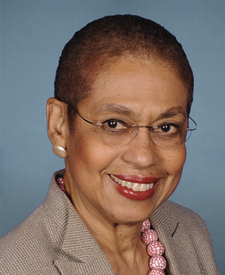
See how Eleanor Holmes Norton actually votes — against your values.
DeepSyte scores Eleanor Holmes Norton's record on the issues you care about — not party, not press releases. Take the 2-minute values quiz to see your personal alignment.
Sign in and take the values quiz to see how Eleanor Holmes Norton's votes line up with your views.
Prediction track record
How often we called Eleanor Holmes Norton's passage votes correctly, from their stated positions on each bill's tagged topics. Excludes “unclear” calls and abstentions.
38 predictions on record · none have been resolved by a passage vote yet. Check back as bills move.
No paired statements and votes yet for Eleanor Holmes Norton
We haven't yet found statement/vote pairs on the same topic for Eleanor Holmes Norton. This usually means either the rep hasn't taken public positions on bills that have come to a passage vote, or those bills haven't been tagged yet. The checker runs as new press releases and votes come in.
Pro analysis
AI rep analysis — Pro
Get an AI-narrated read on Eleanor Holmes Norton's full voting record against your stated values — aligned themes, conflicts, notable votes, and what to watch for.
We haven't extracted campaign positions for Eleanor Holmes Norton yet. Once their campaign website or position pages are processed, this card will track what they said vs how they voted.
Crossing the aisle
No party-break passage votes recorded for Eleanor Holmes Norton. Either they've voted with Democrats on every substantive passage vote in the corpus, or their tenure overlaps few high-threshold party-line votes so far.
Recent votes
No recorded votes yet.
Recent statements
May 11, 2026press_release_house
Norton Introduces Bill to Offer Short-Term Disability Insurance to Federal Employees
Position: Congresswoman Norton introduces legislation to make short-term disability insurance available to federal employees at group rates, with employees paying 100 percent of premiums and insurance companies prohibited from excluding or charging higher premiums based on preexisting conditions.
WASHINGTON, D.C. – Congresswoman Eleanor Holmes Norton (D-DC) today reintroduced her Federal Employee Short-Term Disability Insurance Act, which would allow federal employees to purchase short-term disability insurance at group rates to replace a portion of their income lost due to a short-term injury or disability, pregnancy, or pregnancy-related illness.
“According to the Social Security Administration, a 20-year-old worker has a one-in-four chance of becoming disabled by retirement age. Most disabilities are not caused by major accidents, but by injuries or illnesses, such as back injuries or cancer, according to the Council for Disability Awareness,” Norton said. “At a time when Americans are already struggling to afford necessities, there is every reason to allow our federal employees to take advantage of the federal government’s purchasing power to obtain the most reasonable price for short-term disability coverage, at no cost to the federal government.”
Norton’s introductory statement follows.
Statement of Congresswoman Eleanor Holmes Norton on the Introduction of the Federal Employee Short-Term Disability Insurance Act of 2026
May 11, 2026
Today, I introduce the Federal Employee Short-Term Disability Insurance Act of 2026, which would make short-term disability insurance available to federal employees. Employees would be responsible for 100 percent of the premiums and would receive benefits for up to one year. Insurance companies would be prohibited from excluding federal employees, or charging them higher premiums, based on preexisting conditions. Many private-sector employers make available disability insurance to their employees.
I began examining how we could provide federal employees with short-term disability insurance at group rates and with guaranteed coverage after learning that many of them buy such insurance in the individual market, which can have high premiums and exclude those with preexisting conditions. Although federal employees have good health insurance, health insurance benefits do not replace lost income. Moreover, while federal employees may have available sick or annual leave, they may not have enough such leave to pay the bills if they cannot work for an extended period, such as following surgery. Although the federal government provides disability benefits to federal employees who become permanently disabled, federal employees do not qualify for these benefits until they have worked for the federal government for at least 18 months. The Office of Personnel Management would contract with insurance companies to provide short-term disability insurance.
According to the Social Security Administration, a 20-year-old worker has a one-in-four chance of becoming disabled by retirement age. The majority of disabilities are not caused by major accidents, but by injuries or illnesses, according to the Council for Disability Awareness.
I urge my colleagues to support this bill.
###
Norton, First Woman to Chair EEOC, Introduces Fair Pay Act
Position: Congresswoman Norton introduces the Fair Pay Act, which would require employers to pay men and women comparable wages for comparable work, expanding beyond the 1963 Equal Pay Act to address gender-based wage gaps in gender-segregated occupations.
WASHINGTON, D.C. – Congresswoman Eleanor Holmes Norton (D-DC), who was appointed by President Jimmy Carter as the first woman to chair the U.S. Equal Employment Opportunity Commission (EEOC), today introduced the Fair Pay Act, which builds on her work enforcing the 1963 Equal Pay Act. The Fair Pay Act would help eliminate the gender wage gap by requiring men and women doing comparable work to be paid comparable wages and builds on the Equal Pay Act of 1963 by allowing women to prove that some or all of a wage disparity is based on gender-segregated comparable jobs.
"As the first woman to chair the EEOC, where enforced the Equal Pay Act, I have spent my career working to ensure equality for women, but it is clear that more must be done to address the structural disparities that persist in our workforce,” Norton said. “The Fair Pay Act is essential legislation that moves beyond identical roles to ensure men and women performing comparable work receive comparable wages. We can no longer allow gender-based wage gaps to exist unchallenged simply because a profession is traditionally dominated by one sex. This bill is a moral and economic necessity that finally challenges the historic devaluation of work historically performed by women.
“Unequal pay has been built into the way women have been treated since Adam and Eve. To dislodge such deep-seated and pervasive treatment, we must go to the source, the traditionally female occupations, where pay is linked with gender and always has been.”
Norton’s full introductory statement follows.
Statement of Congresswoman Eleanor Holmes Norton
On the Introduction of the Fair Pay Act of 2026
May 4, 2026
Today, I introduce the Fair Pay Act of 2026. This bill would require that if men and women are doing comparable work, they must be paid comparable wages. The Equal Pay Act of 1963 (EPA), the first of the great civil rights statutes of the 1960s, has grown creaky with age and needs updating to reflect the new workforce, in which women work as much as men.
As the first woman to chair the U.S. Equal Employment Opportunity Commission, where I enforced the EPA, I introduce this bill on behalf of the average female worker, who is often first steered to, and then locked into, jobs with wages that are deeply influenced by the gender of individuals who have traditionally held such jobs. The pay disparity most women face today stems mainly from the segregation of women and men in different jobs and women in female-dominated jobs being paid systematically less. For example, if a woman is an emergency services operator, a female-dominated profession, she should not be paid less than a fire dispatcher, a male- dominated profession, simply because each of these jobs has been dominated by one gender. We need more aggressive strategies to break through the societal barriers present throughout history, as well as employer-steering based on gender, which is as old as paid employment itself.
What may be the best case for a stronger and updated EPA occurred in Congress in 2003, when female custodians in the House and Senate won an EPA case after showing that female employees were paid a dollar less per hour for doing the same or similar work as male employees. Had those women not been represented by their union, they would have had an almost impossible task in using the rules for bringing and sustaining an EPA class action lawsuit.
This bill would not change the legal burden. Under this bill, as under the EPA, the burden would be on the plaintiff to prove discrimination. The plaintiff must show that the reason for the disparate treatment is gender discrimination, not legitimate market factors. Remedies to achieve comparable pay for men and women are not radical or unprecedented. State governments, in red and blue states alike, have shown that it is possible to eliminate the part of the pay gap that is due to job-steering. Many state governments have adjusted wages for female-dominated professions, raising pay for teachers, nurses, clerical workers, librarians and other female-dominated jobs that paid less than comparable male-dominated jobs. Minnesota, for example, implemented a pay equity plan when it found that traditionally female jobs paid 20 percent less than comparable traditionally male jobs. There may well be some portion of the gender wage gap that is traceable to market factors, but states have shown that you can tackle the gender discrimination-based wage gap without interfering in the market system. States generally have closed the wage gap over a period of four to five years at a one-time cost of no more than three to four percent of payroll.
Unequal pay has been built into the way women have been treated since Adam and Eve. To dislodge such deep-seated and pervasive treatment, we must go to the source, the traditionally female occupations, where pay is linked with gender and always has been.
I urge my colleagues to support this bill.
###
Norton Introduces Resolution to Designate May 1, 2026, as “D.C. Statehood Day”
Position: Representative Norton advocates for D.C. statehood through enactment of the Washington, D.C. Admission Act, arguing that D.C. residents pay substantial federal taxes and serve in the military but lack voting representation in Congress.
WASHINGTON, D.C. – Congresswoman Eleanor Holmes Norton (D-DC) today introduced a resolution to designate today, May 1, 2026, as “D.C. Statehood Day” and calling for statehood for the nation’s capital through enactment of her Washington, D.C. Admission Act.
"This week King Charles addressed a joint session of Congress, highlighting that historically, ‘no taxation without representation’ has been a shared democratic value between our two countries. But taxation without representation is still alive and well for 700,000 residents of the nation’s capital,” Norton said. "D.C. residents pay more in federal taxes per capita than any state, and more federal taxes overall than 26 states. D.C. residents have fought and died in every war since the Revolution, and they deserve the benefits of voting representation in Congress and full local self-government.
“D.C. deserves to become the 51st state, and I introduce this resolution to name May 1st, or 5/1 ‘Statehood Day’ for this very reason.”
The text of the resolution follows.
H. RES. __
Recognizing the disenfranchisement of District of Columbia residents, calling for statehood for the District of Columbia through the enactment of the Washington, D.C. Admission Act, and expressing support for the designation of May 1, 2026, as “D.C. Statehood Day”.
IN THE HOUSE OF REPRESENTATIVES
Ms. Norton submitted the following resolution; which was referred to the Committee on Oversight and Government Reform
RESOLUTION
Recognizing the disenfranchisement of District of Columbia residents, calling for statehood for the District of Columbia through the enactment of the Washington, D.C. Admission Act, and expressing support for the designation of May 1, 2026, as “D.C. Statehood Day”.
Whereas the United States was founded on the principles of consent of the governed and no taxation without representation;
Whereas District of Columbia residents are denied voting representation in Congress and full local self-government;
Whereas the District of Columbia pays more per capita Federal taxes than any State and pays more Federal taxes than 26 States;
Whereas statehood would give District of Columbia residents voting representation in Congress and full local self-government;
Whereas Congress has the constitutional authority to pass the District of Columbia statehood bill, the Washington, D.C. Admission Act (H.R. 51 and S. 51), which would admit the State of Washington, Douglass Commonwealth, and reduce the size of the Federal district;
Whereas the Admissions Clause of the Constitution gives Congress the authority to admit new States, and all 37 new States were admitted by Congress;
Whereas no State would have to consent to the admission of the State of Washington, Douglass Commonwealth;
Whereas the District Clause of the Constitution gives Congress plenary authority over the Federal district and establishes a maximum size of the Federal district, but not a minimum size nor a location of the Federal district;
Whereas the 23d Amendment to the Constitution allows the Federal district to participate in the electoral college, while not establishing a minimum size nor a location of the Federal district;
Whereas the Constitution does not establish any prerequisites for new States, but Congress has generally considered 3 factors—
(1) population and resources;
(2) support for statehood; and
(3) commitment to democracy;
Whereas the District of Columbia has a larger population than 2 States;
Whereas the District of Columbia has a larger gross domestic product than 15 States and a higher per capita gross domestic product than any State;
Whereas the District of Columbia has a higher per capita personal income than any State;
Whereas 86 percent of District of Columbia residents voted for statehood in 2016; and
Whereas District of Columbia residents have been fighting for voting representation in Congress and full local self-government for more than 200 years: Now, therefore, be it Resolved, That the House of Representatives—
(1) supports the designation of “D.C. Statehood Day”; and
(2) calls on Congress to pass the Washington, D.C. Admission Act (H.R. 51 and S. 51).
###
Norton Statement on Markup & Committee Passage of D.C. Appropriations Bill
Position: Norton opposes the D.C. appropriations bill as passed by committee, arguing that its anti-home-rule riders—including cuts to tuition assistance, restrictions on abortion funding, concealed carry reciprocity, and environmental enforcement—constitute federal overreach into local D.C. governance. She advocates for D.C. statehood as a remedy.
WASHINGTON, D.C. – After the House Committee on Appropriations yesterday marked up and passed the Financial Services and General Government (FSSG) bill, which includes the D.C. appropriations bill, Congresswoman Eleanor Holmes Norton (D-DC) said that although she was pleased no new riders were attached to the bill, she was still outraged at the number and scope of anti-home rule riders included in the base text that still remain in the bill. Republicans attempt to attach the riders to the annual D.C. spending bill to exert control over local D.C. matters, despite their positions as federal officials who do not represent D.C. residents.
Significantly, the bill would cut funding for D.C. Tuition and Grant Assistance (DCTAG), a program established by a bill Norton got passed in 1999, by 50%. DCTAG makes up the difference for D.C. residents between in-state and out-of-state tuition up to $15,000 a year at public institutions of higher education in the U.S.
"Although I am unsurprised at the number and scope of anti-D.C. home rule riders in the D.C. appropriations bill as passed out of Committee, I continue to be outraged at the entitlement shown by members of Congress who represent far-away districts yet think it’s appropriate to impose their policy preferences on 700,000 D.C. residents,” Norton said. "By loading this legislation with anti-home-rule riders, from stripping away reproductive healthcare access to meddling in our local public safety and education laws, Republican members are dictating how D.C. residents live, spend their own local tax dollars, and govern themselves.
"These members were not elected by D.C. residents, yet they continue to treat the District like their own playground to rule as they please. This bill should serve as a stark reminder of why D.C. statehood is not just a political goal, but a moral imperative to end this ongoing cycle of paternalism and disenfranchisement.
“D.C. residents are worthy and capable of governing themselves. Congress must pass my D.C. statehood bill."
As passed out of Committee, the bill would:
Permit anyone with a concealed carry permit from any state or territory to carry a concealed handgun in D.C. and on WMATA.
Provide $20 million for the D.C. Tuition Assistance Grant Program (DCTAG), a 50% decrease from the current funding level.
Prohibit D.C. from spending its own local funds on abortion services for low-income women.
Prohibit D.C. from using local funds to carry out its Reproductive Health Non-Discrimination Amendment Act of 2014.
Repeal D.C.’s Death with Dignity Act, and prohibit enacting any similar law.
Require D.C. to submit a report on its enforcement of the Partial Birth Abortion Ban Act.
Prohibit D.C. from spending its own local funds to enforce its vehicle emission standards.
Prohibit D.C. from using local funds to carry out its automated traffic enforcement law.
Prohibit D.C. from using its local funds to enact or carry out any law which prohibits motorists from making right turns on red.
Repeal the provision of D.C.’s Anti-Strategic Lawsuit Against Public Participation law, or Anti-SLAPP law, that exempts from that law any claim brought by the D.C. government.
Prohibit D.C. from using local funds to implement its law allowing noncitizens to vote in local elections or on activities related to enrolling or registering noncitizens into voter rolls for local elections.
Prohibit D.C. from using local funds to implement its Comprehensive Policing and Justice Reform Amendment Act of 2022.
Repeal parts of the Youth Rehabilitation Amendment Act of 2018 that allows courts to use sentencing alternatives for a person who was sentenced as an adult but was under the age of 24 at the time the person committed a crime, changing that age back to 22.
Prohibit the use of funds to implement, administer, or enforce any COVID–19 mask or vaccine mandate.
Prohibit the use of D.C.’s local funds to commercialize recreational marijuana.
Prohibit the use of D.C.’s local funds to implement the Insurance Regulation Amendment Act of 2024, which relates to reproductive health care and gender-affirming care.
Prohibit D.C. from using its own funds to implement or enforce provisions of the Consumer Protection Act against oil and gas companies for environmental claims.
Providing $50 million for the Emergency Planning and Security Fund. The fund pays for the unique public safety and security costs the District incurs as the nation's capital, and is designed to cover the District's costs upfront so D.C. does not need to expend local funds and then seek an appropriation to be reimbursed for such costs after the fact. This is a decrease of $40 million.
Amid the anti-home rule riders are several victories secured by Norton, despite Republican control of the House. The bill maintains the provision to exempt the D.C. government from a federal government shutdown in FY 2027, a provision she has gotten enacted every year since FY 2015. It also approves D.C. to spend under its FY 2027 local budget in the event of a federal government shutdown, avoiding the problem caused when House Republicans left the provision out of last year’s continuing resolution, which caused an initially projected $1.1 billion hole in D.C.’s budget in the middle of the fiscal year.
Norton secured the following victories in the bill:
Exempting D.C. from federal government shutdowns in FY 2027.
Providing $10 million for D.C. Water Clean Rivers Project, a $2 million increase.
Providing $600,000 for the Major General David F. Wherley, Jr. District of Columbia National Guard Retention and College Access Program.
Providing $4 million to combat HIV/AIDS in D.C.
###
Norton Introduces Bill to Provide Funding to Law School Clinics Providing Pro Bono Services to Veterans
Position: Congresswoman Norton introduces legislation to authorize the Department of Veterans Affairs to provide funding to law school clinical programs that offer pro bono legal services to veterans, including assistance with disability claims and foreclosures.
WASHINGTON, D.C. – Congresswoman Eleanor Holmes Norton (D-DC) today introduced the Veterans Legal Support Act, which would allow the Department of Veterans Affairs (VA) to provide funding to law school clinical programs that provide pro bono legal services to veterans, including assistance with disability claims and foreclosures. Currently, there are more than 20 law schools nationwide that have clinics focusing on the legal needs of veterans, including the William & Mary Law School Veterans Benefit Clinic, which was the first recipient of a “best practice” certification from the VA. Allowing the VA to provide funding to these clinics would allow other law schools, like the University of the District of Columbia’s David A. Clarke School of Law, to start their own VA-certified clinics.
"Countless veterans are currently stuck in limbo, waiting for the VA to process their claims. The clinical programs at certain law schools provide these veterans with the free, expert legal assistance they need to navigate a complex system and secure their hard-earned benefits. This bill builds on the proven success of existing law school clinics across the country, ensuring we sustain and expand the vital legal resources our veterans deserve."
Norton’s introductory statement follows:
Statement of Congresswoman Eleanor Holmes Norton
On the Introduction of the Veterans Legal Support Act of 2026
April 21, 2026
Today, I introduce the Veterans Legal Support Act of 2026, which would allow the U.S. Department of Veterans Affairs (VA) to provide support to law school clinical programs that provide pro bono legal and support services to veterans, including assistance with disability claims and foreclosures. There are at least 22 law schools that have clinics devoted to veterans’ legal needs, including the William & Mary Law School Veterans Benefits Clinic, which was the first recipient of a “best practice” certification from the VA. There are many other law schools, such as the University of the District of Columbia’s David A. Clarke School of Law, that are interested in starting their own VA-certified clinics. More needs to be done to sustain and increase the number of these programs.
I was a tenured professor at the Georgetown University Law Center and continued to teach a seminar there after being elected to Congress. I saw the expert assistance that clinical programs provide their clients.
I urge my colleagues to support this bill, a concrete measure that would assist our veterans, who put their lives on the line for this country.
###
Norton Highlights the Cruel Irony of D.C. Appropriations Bill, Including Many Anti-Home Rule Riders, Released on Emancipation Day
Position: Norton opposes the FY 2027 D.C. appropriations bill, which includes anti-home-rule riders that restrict D.C.'s local authority over abortion access, gun regulations, environmental standards, and education funding. She argues these riders represent federal overreach and calls for D.C. statehood as a remedy.
WASHINGTON, D.C. – The House Committee on Appropriations today released the text of its fiscal year 2027 (FY 27) Financial Services and General Government (FSSG) Appropriations bill, which Norton said includes an egregious number of anti-home rule riders. Republicans attempt to attach the riders to the annual D.C. spending bill to exert control over local D.C. matters, despite their positions as federal officials who do not represent D.C. residents.
Significantly, the bill would halve funding for D.C. Tuition and Grant Assistance (DCTAG), a program established by a bill Norton got passed in 1999. DCTAG makes up the difference for D.C. residents between in-state and out-of-state tuition up to $15,000 at public institutions of higher education in the U.S.
"The release of the FY 27 D.C. appropriations bill today, as D.C. celebrates Emancipation Day, is a cruel irony that will not be lost on the 700,000 D.C. residents," Norton said. "On the very day we celebrate Emancipation Day, marking the day President Lincoln freed 3,100 enslaved people in D.C., the first in the country, House Republicans have chosen to remind us that Congress can still impose its own policy priorities on D.C. without the consent of those who live in the nation's capital.
"By loading this legislation with anti-home-rule riders, from stripping away reproductive healthcare access to meddling in our local public safety and education laws, Republican members are attempting to dictate how D.C. residents live, spend their own local tax dollars, and govern themselves.
"These members were not elected by D.C. residents, yet they continue to treat our city like a federal colony. On this Emancipation Day, let this bill serve as a stark reminder of why D.C. statehood is not just a political goal, but a moral imperative to end this ongoing cycle of paternalism and disenfranchisement. Congress must pass my D.C. statehood bill."
The text released today would:
Permit anyone with a concealed carry permit from any state or territory to carry a concealed handgun in D.C. and on WMATA.
Provide $20 million for the D.C. Tuition Assistance Grant Program (DCTAG), a 50% decrease from the current funding level.
Prohibit D.C. from spending its own local funds on abortion services for low-income women.
Prohibit D.C. from using local funds to carry out its Reproductive Health Non-Discrimination Amendment Act of 2014.
Repeal D.C.’s Death with Dignity Act, and prohibit enacting any similar law.
Require D.C. to submit a report on its enforcement of the Partial Birth Abortion Ban Act.
Prohibit D.C. from spending its own local funds to enforce its vehicle emission standards.
Prohibit D.C. from using local funds to carry out its automated traffic enforcement law.
Prohibit D.C. from using its local funds to enact or carry out any law which prohibits motorists from making right turns on red.
Repeal the provision of D.C.’s Anti-Strategic Lawsuit Against Public Participation law, or Anti-SLAPP law, that exempts from that law any claim brought by the D.C. government.
Prohibit D.C. from using local funds to implement its law allowing noncitizens to vote in local elections or on activities related to enrolling or registering noncitizens into voter rolls for local elections.
Prohibit D.C. from using local funds to implement its Comprehensive Policing and Justice Reform Amendment Act of 2022.
Repeal parts of the Youth Rehabilitation Amendment Act of 2018 that allows courts to use sentencing alternatives for a person who was sentenced as an adult but was under the age of 24 at the time the person committed a crime, changing that age back to 22.
Prohibit the use of funds to implement, administer, or enforce any COVID–19 mask or vaccine mandate.
Prohibit the use of D.C.’s local funds to commercialize recreational marijuana.
Prohibit the use of D.C.’s local funds to implement the Insurance Regulation Amendment Act of 2024, which relates to reproductive health care and gender-affirming care.
Prohibit D.C. from using its own funds to implement or enforce provisions of the Consumer Protection Act against oil and gas companies for environmental claims.
Providing $50 million for the Emergency Planning and Security Fund. The fund pays for the unique public safety and security costs the District incurs as the nation's capital, and is designed to cover the District's costs upfront so D.C. does not need to expend local funds and then seek an appropriation to be reimbursed for such costs after the fact. This is a decrease of $40 million.
Amid the anti-home rule riders are several victories secured by Norton, despite Republican control of the House. The bill maintains the provision to exempt the D.C. government from a federal government shutdown in FY 2027, a provision she has gotten enacted every year since FY 2015.
Norton also secured the following victories in the bill:
Exempting D.C. from federal government shutdowns in FY 2027.
Providing $10 million for D.C. Water Clean Rivers Project, a $2 million increase.
Providing $600,000 for the Major General David F. Wherley, Jr. District of Columbia National Guard Retention and College Access Program.
Providing $4 million to combat HIV/AIDS in D.C.
###
Norton Introduces Resolution Commemorating Emancipation Day, Which Falls the Day After 2026 Federal Tax Filing Deadline
WASHINGTON, D.C. — Congresswoman Eleanor Holmes Norton (D-DC) today introduced her resolution commemorating Emancipation Day, an official holiday in D.C., honoring the date in 1862 when President Abraham Lincoln freed 3,100 enslaved people in the District, nine months ahead of the Emancipation Proclamation. This year D.C. will observe the holiday one day after the filing deadline for federal taxes.
“Emancipation Day is all the more powerful for its timing this year, coming the day after the annual deadline for filing federal taxes,” Norton said. “D.C. residents were the first to be freed from slavery but are the last to enjoy full rights and freedoms as American citizens, paying more in overall federal taxes than 26 states while still being denied voting representation in Congress and fiscal autonomy, as we’ve seen several damaging examples of this Congress. Most outrageously, last year Congress passed a continuing resolution to fund the federal government that restricted D.C.’s 2025 spending to 2024 levels in the middle of the fiscal year, creating an initially projected $1.1 billion shortfall in D.C.’s budget. Those funds were the District’s, collected from D.C.’s local taxes, not federal dollars.
“Liberty is an empty promise without the power of the purse. Fiscal autonomy is central to liberty and self-determination, and true freedom requires the ability to make choices about how D.C. spends its own local funds.”
The text of the resolution follows.
RESOLUTION
Recognizing the enduring cultural and historical significance of emancipation in the Nation’s capital on the anniversary of President Abraham Lincoln’s signing of the District of Columbia Compensated Emancipation Act, which established the “first freed” on April 16, 1862, and celebrating passage of the District of Columbia statehood bill in the House of Representatives.
Whereas the District of Columbia has been a focal point of the Nation’s complex racial history, which has included slavery, the Civil War, killings, segregation, and disenfranchisement, among other violations of civil and human rights;
Whereas, on April 16, 1862, in the midst of the Civil War, President Abraham Lincoln signed the District of Columbia Compensated Emancipation Act, which freed the approximately 3,100 enslaved individuals in the District of Columbia and authorized compensation to their former enslavers;
Whereas, on January 1, 1863, President Abraham Lincoln issued the Emancipation Proclamation, which established a “new birth of freedom” by legally emancipating millions of enslaved individuals in the 10 States of the Confederacy not under Union control, freeing the majority of the Nation’s enslaved individuals;
Whereas the Thirteenth Amendment to the Constitution of the United States, which reads “Neither slavery nor involuntary servitude, except as a punishment for crime whereof the party shall have been duly convicted, shall exist within the United States, or any place subject to their jurisdiction. Congress shall have power to enforce this article by appropriate legislation”, was adopted on December 6, 1865, and effectively outlawed slavery in the United States;
Whereas the enslavement of persons of African descent endured for more than two centuries in what is now the United States, including the District of Columbia;
Whereas, in 2005, District of Columbia Emancipation Day, commemorating April 16, the date of the signing of the District of Columbia Compensated Emancipation Act, was made a legal public holiday in the District of Columbia to be celebrated annually on April 16;
Whereas the residents of the District of Columbia pay more per capita in Federal taxes than the residents of any State;
Whereas the residents of the District of Columbia, who pay the full freight of Federal taxes, serve in the United States Armed Forces, are subject to all of the requirements of citizenship, and otherwise have long made contributions to the life, culture, and leadership of the United States, still are denied voting representation in the Congress and independence from congressional interference in local matters in violation of the Nation’s founding principles of no taxation without representation and consent of the governed;
Whereas, on June 26, 2020, and April 22, 2021, the House of Representatives passed the Washington, D.C. Admission Act, the first and the second times in history, respectively, the D.C. statehood bill had been passed by either chamber of Congress;
Whereas H.R. 51, the Washington, D.C. Admission Act, has 206 cosponsors; and
Whereas S. 51, the Washington, D.C. Admission Act, has 43 cosponsors: Now, therefore, be it
Resolved, That the House of Representatives—
(1) recognizes District of Columbia Emancipation Day, marking the anniversary of the end of slavery in the District of Columbia and symbolizing the aspirations of the residents of the District of Columbia for the same rights and freedoms afforded to residents of States; and
(2) calls on Congress to pass the Washington, D.C. Admission Act.
###
As Deadline Approaches, Norton Says Federal Tax Filing Season is a Reminder that D.C. Residents Remain Under Taxation Without Representation
Position: Rep. Norton advocates for D.C. statehood, arguing that District residents pay substantial federal taxes but lack voting representation in Congress and full local self-government, and that Congress should pass her D.C. statehood bill to remedy this disparity.
WASHINGTON, D.C. – As the federal tax filing season kicks off, Congresswoman Eleanor Holmes Norton (D-DC) issued a statement reminding the public that the District of Columbia pays more federal taxes per capita than any state and more federal taxes overall than 26 states, while being denied the same voting representation in Congress or full local self-government accorded to residents of the states. Norton said that the remedy is for Congress to pass her D.C. statehood bill.
"As the deadline for filing federal taxes approaches, I remind the public that D.C. still does not have voting representation in Congress nor full local self-government – rights accorded to residents of the states," Norton said. "’No taxation without representation' was the slogan that gave birth to our nation itself. The principle should particularly apply to the citizens of the nation's capital today, who have all the obligations of citizenship and pay more federal taxes per capita than residents of any state.
“I introduced my D.C. statehood bill in the House on the first day bills were allowed to be introduced this Congress. The residents of our nation’s capital are owed the same rights afforded to residents of the states.”
The D.C. statehood bill has passed the House twice, most recently in April of 2021.
###
Norton Introduces Bill Requiring Health Insurers to Directly Reimburse Divorced Parents for Children’s Medical Expenses
Position: Congresswoman Norton introduced legislation requiring all health insurers to directly reimburse divorced parents for out-of-pocket medical expenses for children, extending a requirement currently applied only to group health insurers under ERISA to all insurers.
WASHINGTON, D.C. – Congresswoman Eleanor Holmes Norton (D-DC) today introduced the Ensuring Child Health Coverage Compensation in Divorce Act of 2026, which would require all health insurers to directly reimburse a divorced parent who pays for reimbursable out-of-pocket medical expenses. In a divorce, one parent typically is court-ordered to provide health insurance for a child, but the other parent may pay for reimbursable out-of-pocket medical expenses. Under the Employee Retirement Income Security Act of 1974, group health insurers are required to directly reimburse the parent who pays for reimbursable out-of-pocket medical expenses. However, other health insurers are not required to do so. This issue was raised by one of Norton's constituents.
"Families facing divorce are experiencing significant hardship," Norton said. "My bill would ensure that children are getting necessary medical care while easing administrative burdens on families."
Norton's introductory statement follows.
Statement of Congresswoman Eleanor Holmes Norton on the Introduction of the Ensuring Child Health Coverage Compensation in Divorce Act of 2026
March 30, 2026
Today, I introduce the Ensuring Child Health Coverage Compensation in Divorce Act of 2026. This bill would require all health insurers to directly reimburse a custodial parent for any out-of-pocket medical expenses for a child incurred by such parent if a court directs a non-custodial parent (including a stepparent) to provide health insurance for the child.
In a divorce, one parent is typically court-ordered to provide health insurance for a child. However, the other parent may pay for out-of-pocket medical expenses for the child that are reimbursable by the insurer. Under the Employee Retirement Income Security Act of 1974, group health insurers are required to directly reimburse a parent who pays for reimbursable out-of-pocket medical expenses when the other parent has been court-ordered to provide health insurance for a child. However, other health insurers are not required to do so. This bill would require all health insurers to do so.
I urge my colleagues to support this bill.
###
Norton Statement After House Passage of Bill to Codify President Trump’s Efforts to Control D.C.
Position: Norton opposes the House-passed bill that would establish a federal commission to control D.C. policy, arguing it undermines D.C. home rule and self-governance. She advocates for D.C. statehood as an alternative to continued congressional interference in local affairs.
WASHINGTON, D.C. – After the House passed the Make the District of Columbia Safe and Beautiful Act, introduced by Rep. John McGuire (R-VA), which would codify parts of President Trump’s March, 2025 executive order, Congresswoman Eleanor Holmes Norton (D-DC) said that she was disappointed by the passage of yet another condescending, paternalistic bill towards D.C. Republicans have filed more than 100 bills, amendments and riders to repeal, amend or block D.C. from carrying out its own local laws and policies this Congress. McGuire’s bill is the 11th that the House has passed this Congress.
“Today the House passed yet another condescending bill that treats the more than 700,000 residents of the District of Columbia as though they are incapable of governing themselves,” Norton said. “This so-called ‘Safe and Beautiful’ bill is paternalistic and undemocratic, creating a federal Commission to dictate policies in a District whose residents have no voting representation in Congress and are already subject to Congress repealing its local laws. The bill’s token inclusion of one representative from the D.C. Mayor’s Office among 10 members does nothing to disguise its fundamental disrespect for D.C.’s local self-government.
“Members of Congress who do not represent the District should stop interfering in the local affairs of the District. D.C. residents are both worthy and fully capable of choosing their own local laws and policies through the democratic process, the same way other local jurisdictions throughout the country do. If Congress truly respected democracy, it would grant the District the full rights of statehood instead of repeatedly undermining home rule.”
McGuire’s bill would establish the “D.C. Safe and Beautiful Commission.” As originally introduced, the Commission included only federal officials as members and excluded any representation from the D.C. government, despite the power to make consequential changes affecting the District. The bill has since been amended to allow a representative from the D.C. Mayor’s Office as one of its 10 members.
###
Source: GDELT 2.0 GKG, filtered to a curated list of national outlets. Inclusion is not endorsement; opinion pieces and reported news are mixed.
Recent stock activity
Periodic transaction reports filed under the STOCK Act — disclosed by the rep, sourced from public filings.
No disclosed trades on record.
Source: open-data mirrors of the Senate eFD and House Clerk financial-disclosure systems. Disclosure within 30 days of trade is required by law (45 for spouse/dependent trades).
Top PAC donors · 2026 cycle
Political action committees that gave the most to this rep's principal campaign committee this cycle. PAC giving is direct organizational support — industry, ideological, or leadership.
1.MACHINISTS NON-PARTISAN POLITICAL LEAGUELabor14 contributionsTrade-union PAC of the International Association of Machinists and Aerospace Workers — backs candidates supporting union organizing, prevailing wages, and aerospace/manufacturing jobs.AI$70,000
2.REALTORS POLITICAL ACTION COMMITTEE (R.P.A.C.)7 contributions$35,000
3.CARPENTERS LEGISLATIVE IMPROVEMENT COMMITTEELabor7 contributionsTrade-union PAC for the United Brotherhood of Carpenters and Joiners of America. Backs prevailing-wage protections, federal infrastructure funding, project labor agreements, and worker organizing rights.AI$35,000
4.AMERICAN FEDERATION OF TEACHERSLabor6 contributionsTrade-union PAC for public-school teachers — backs candidates supporting public education funding, teacher compensation, and collective-bargaining rights.AI$30,000
5.FOREST CITY ENTERPRISES INC., UNITED FOR A SENSIBLE GOVERNMENT (FOCUS)5 contributions$25,000
6.UNITE HERE TIP CAMPAIGN COMMITTEELabor5 contributionsTrade-union PAC for hospitality and food-service workers — backs candidates supporting union organizing, workplace standards, and worker protections in the service industry.AI$25,000
7.UNITED TRANSPORTATION UNION - POLITICAL ACTION COMMITTEE (UTUPAC)5 contributions$25,000
8.INTERNATIONAL UNION OF OPERATING ENGINEERS EPEC4 contributions$20,000
9.IBEW PAC VOLUNTARY FUNDLabor3 contributionsTrade-union PAC for the International Brotherhood of Electrical Workers — backs candidates supporting union organizing, prevailing wages, and infrastructure investment.AI$15,000
10.IRONWORKERS POLITICAL ACTION LEAGUE [IPAL]3 contributions$15,000
Source: OpenFEC (api.open.fec.gov) Schedule A receipts where contributor type is “committee.” Aggregated by contributing committee. Self-transfers from joint-fundraising / victory committees are excluded.
Top individual contributors · 2026 cycle
Itemized individual contributions over $200 to this rep's campaign committee, aggregated by donor employer. PAC giving is shown above; this section is people, not organizations.
1.TGV ROCKETS$1,000
Source: OpenFEC Schedule A receipts where contributor type is “individual,” aggregated by the donor's self-reported employer. This is a geographic / industry correlation, not a corporate endorsement.