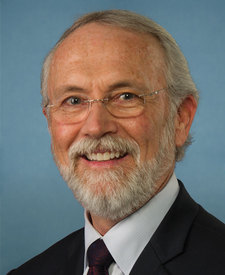
See how Dan Newhouse's votes line up with your values.
DeepSyte scores Dan Newhouse's record on the issues you care about — not party, not press releases. Take the 2-minute values quiz to see your personal alignment.
Sign in and take the values quiz to see how Dan Newhouse's votes line up with your views.
Prediction track record
How often we called Dan Newhouse's passage votes correctly, from their stated positions on each bill's tagged topics. Excludes “unclear” calls and abstentions.
A joint resolution to direct the removal of United States Armed Forces from hostilities within or against the Islamic Republic of Iran that have not been authorized by Congress.
A joint resolution to direct the removal of United States Armed Forces from hostilities within or against the Islamic Republic of Iran that have not been authorized by Congress.
A joint resolution to direct the removal of United States Armed Forces from hostilities within or against the Islamic Republic of Iran that have not been authorized by Congress.
A joint resolution to direct the removal of United States Armed Forces from hostilities within or against the Islamic Republic of Iran that have not been authorized by Congress.
No paired statements and votes yet for Dan Newhouse
We haven't yet found statement/vote pairs on the same topic for Dan Newhouse. This usually means either the rep hasn't taken public positions on bills that have come to a passage vote, or those bills haven't been tagged yet. The checker runs as new press releases and votes come in.
Pro analysis
AI rep analysis — Pro
Get an AI-narrated read on Dan Newhouse's full voting record against your stated values — aligned themes, conflicts, notable votes, and what to watch for.
We haven't extracted campaign positions for Dan Newhouse yet. Once their campaign website or position pages are processed, this card will track what they said vs how they voted.
Crossing the aisle
Passage votes where Dan Newhouse broke ranks with ≥75% of Republicans. Threshold catches substantively partisan splits; unanimous-ish or close votes are excluded.
Newhouse Statement on FBI Arrest at Hanford Field Office
Position: The release thanks the FBI and DOE for arresting a DOE employee accused of exploiting government trust to benefit a foreign terrorist organization, and states that if the allegations are true the individual should be prosecuted to the fullest extent of the law.
Press Release
For Immediate Release: October 1, 2026
Contact: Max Willens, (202) 738-7716
WASHINGTON, D.C. – Today, Rep. Dan Newhouse (WA-04) released the following statement after the arrest of a Department of Energy (DOE) employee by the Federal Bureau of Investigation (FBI):
“I want to thank the FBI and DOE for their coordinated effort today in arresting an individual who allegedly exploited the trust of the U.S. Government to the benefit of a foreign terrorist organization.” said Rep. Newhouse. “There is a zero-tolerance policy for individuals who betray our government for the sake of terrorism and if these allegations are true, this individual should be prosecuted to the fullest extent of the law. I will be receiving a briefing from DOJ and DOE to understand the severity of the situation, to review protocols in place, and to evaluate what improvements may be necessary. Thank you again to DOJ and DOE for their work to safeguard our national security.”
For more information, please visit the DOJ's website.
###
Newhouse Votes For Continuing Resolution to Fund Federal Government
Position: Rep. Newhouse supports passage of a short-term continuing resolution (H.R. 6500) to keep the federal government funded at current spending levels and avoid a shutdown, and calls on Senate Democrat appropriators to negotiate in good faith on full-year funding.
Press Release
For Immediate Release: September 1, 2026
Contact: Noah Yantis, (202) 225-4466
WASHINGTON, D.C. – Today, Rep. Dan Newhouse released the following statement after the vote on the Senate Amendment H.R. 6500, Continuing Appropriations and Extensions Act, 2027. The resolution passed by a vote of 370-48.
“Congress has a responsibility to fund the government each fiscal year and prevent a lapse in essential services for taxpayers. This short-term continuing resolution avoids a shutdown while maintaining current spending levels and allows additional time to negotiate full-year funding measures. Senate Democrat Appropriators have unnecessarily delayed this process, and they should come to the table for good faith negotiations to avoid another continuing resolution this winter."
Issues:
Newhouse Urges CMS to Create Pathway for Critical Access Hospital Status for Astria Toppenish
Position: Rep. Newhouse urges CMS to create an administrative pathway allowing hospitals on Tribal lands to qualify for Critical Access Hospital status, which would allow Astria Toppenish Hospital to be designated as a CAH despite being within 35 miles of the next closest hospital.
Press Release
For Immediate Release: September 1, 2026
Contact: Noah Yantis, (202) 713-7750
WASHINGTON, D.C. – Today, Rep. Dan Newhouse (WA-04) sent a letter to Center for Medicare & Medicaid Services (CMS) Administrator Mehmet Oz urging the creation of a pathway for Critical Access Hospital (CAH) status for hospitals located on Tribal lands through an administrative change to CMS administrative guidelines. This would allow Astria Toppenish to be designated as a CAH.
Click here or see below for full text of letter.
The Honorable Mehmet Oz, MD
Administrator Centers for Medicare & Medicaid Services 200 Independence Avenue, S.W. Washington, D.C. 20201
Dear Administrator Oz:
Thank you for your efforts to enhance and secure our Medicare and Medicaid programs and improve fiscal stewardship. As we implement the federal requirements to reduce fraud and abuse in the Medicaid program, your leadership on this critical issue will ensure that healthcare access, particularly in rural communities, remains strong.
I am writing to follow up on a conversation we had last fall about Astria Toppenish Hospital (ATH)—a hospital in my district located on an Indian reservation—and urge you to consider utilizing your authority to create a pathway for Critical Access Hospital (CAH) status for hospitals located on tribal land through an administrative change to the CMS Administrative (Interpretive) Guidelines.
As you know, the Medicare Rural Hospitality Flexibility Program, established under the Balanced Budget Act of 1997, created the CAH designation to help preserve access to inpatient care in certain rural communities. Since 2006, CAH status has been reserved for hospitals that meet strict rural and geographic tests, including being located more than 35 miles from the nearest hospital or 15 miles over mountainous terrain or secondary roads.
Astria Toppenish Hospital is a nonprofit PPS hospital located on the tribal lands of Confederated Tribes and Bands of the Yakama Nation, serving a uniquely diverse population across its region that includes tribal members and farm workers who work and live in the area. More than 15% of its community is American Indian, 66% is Hispanic, and 54% of residents live below 200% of poverty.
The hospital provides critical services across rural Washington and operates with one of the highest percentages of reliance on Medicaid of any hospital in the state, ATH is in dire financial straits and is facing significant reductions in service to its community and potential closure. While Washington State has already passed legislation that would provide cost-based payments to Medicaid patients at Astria Toppenish Hospital following enactment of federal CAH designation, ATH is ineligible for CAH status consideration under current standards due to being within 35 miles of the next closest hospital.
The current CMS Interpretive Guidelines related to CAHs provides that:
In determining whether a currently certified CAH or a CAH applicant meets the location requirements at §485.610(c), the proximity of IHS/Tribal hospitals or CAHs and non-IHS/Tribal hospitals or CAHs to each other is not considered.1
However, it is my understanding that CMS guidance remains silent on tribal or non-tribal hospitals located on tribal land. Given this, I respectfully request that you expand current guidance and adopt an administrative change that provides an exception for Indian Health Service (IHS), Tribal CAHs and other hospitals located on a reservation (as defined in section 4 of the Indian Health Care Improvement Act) that are located less than the 35 or 15 miles from another hospital or CAH. Additionally, I strongly urge you to consider clarifying in the new guidance that any new CAH that operates dedicated psychiatric beds over and above its 25 acute care beds.
Implementing these new administrative changes to the Interpretive Guidelines for the program will support rural hospitals in fighting against the drug and mental health crises that have been persistent across my state and is a significant opportunity to safeguard existing, essential healthcare services for our rural and tribal communities.
Thank you for your consideration of this request and please reach out to me or my staff with any questions.
Sincerely,
Dan Newhouse
Member of Congress
Newhouse Leads Bicameral Letter to DOL, State, DHS Regarding H-2A Program
Position: The letter urges the Departments of Labor, State, and Homeland Security to take administrative action to address processing delays, regulatory imbalances, and structural barriers in the H-2A agricultural guest worker program.
Press Release
For Immediate Release: July 30, 2026
Contact: Juan Ayala, (202) 713-7750
WASHINGTON, D.C. – Today, Rep. Dan Newhouse (R-WA) led a bicameral letter to the Departments of Labor, State, and Homeland Security respectfully urging the Administration to take administrative action to address processing delays, regulatory imbalances, and structural barriers threatening the effectiveness of the H-2A agricultural guest worker program.
This letter was signed by U.S. Senators Cindy Hyde-Smith (R-MS), Mike Crapo (R-ID), Bill Cassidy, M.D. (R-LA), Roger Wicker (R-MS), John Cornyn (R-TX), Thom Tillis (R-NC), House Agriculture Committee Chairman Glenn “GT” Thompson (R-PA), and U.S. Representatives Austin Scott (R-GA), Jeff Van Drew (R-NJ), Derrick Van Orden (R-WI), Monica De La Cruz (R-TX), María Elvira Salazar (R-FL), Mike Ezell (R-MS), David Valadao (R-CA), Juan Ciscomani (R-AZ), Clay Higgins (R-LA), and Richard McCormick (R-GA).
Click here or see below for the full text of the letter.
The Honorable Keith Sonderling
Acting Secretary of Labor
U.S. Department of Labor
200 Constitution Avenue NW
Washington, D.C. 20210
The Honorable Marco Rubio
Secretary of State
U.S. Department of State
2201 C. Street NW
Washington, D.C. 20520
The Honorable Markwayne Mullin
Secretary of Homeland Security
U.S. Department of Homeland
Security
Washington, D.C. 20528
Dear Acting Secretary Sonderling, Secretary Rubio, and Secretary Mullin:
We write to raise serious concerns regarding the H-2A agricultural guest worker program and to urge the Department of Labor, Department of State, and Department of Homeland Security to take administrative action to address growing processing delays, regulatory imbalances, and structural barriers that are threatening the program's effectiveness for agricultural producers across the United States. Ensuring our nation's farmers and small businesses have dependable access to a stable workforce is crucial to the economic wellbeing of our Nation.
We have received many reports from our constituents regarding significant challenges and delays in H-2A workforce visa processing at multiple stages — including the Department of Labor's Office of Foreign Labor Certification, U.S. Citizenship and Immigration Services, and U.S. consulates abroad. Visa processing instability and delays harm our country's agriculture sector and broader economy, and we encourage the Departments to act swiftly to resolve current challenges and prevent further interruptions to ensure an adequate workforce is in place for the agricultural season. Beyond processing timelines, we also write to raise several regulatory and process concerns that we believe warrant the Department's attention and, where appropriate, administrative action to better align current H-2A regulations with the statute's text and the practical realities of modern agricultural labor needs.
Current H-2A visa regulations are focused on allowing seasonal agricultural employment, but do not sufficiently or appropriately allow for ranching (livestock) and dairy industry workers to perform the year-round labor these industries require. The practical consequence is that operations requiring continuous, year-round labor — daily milking and animal husbandry on dairy farms, year-round herd health management and calving on cattle operations, and uninterrupted daily care on poultry and swine facilities — cannot access the same workforce program available to seasonal row crop producers, even though all of these activities constitute agricultural labor under 8 U.S.C. § 1101(a)(15)(H)(ii)(a). Read together, the statute's broad definition of agricultural labor — which encompasses livestock production — and its temporary or seasonal limitation have been interpreted by the Department of Labor in a manner that creates a structural barrier for industries whose labor needs are continuous rather than cyclical; as a result, year-round positions such as full-time dairy herdsmen, permanent ranch hands responsible for daily feeding and herd health, and continuous-duty swine and poultry caretakers are effectively excluded from the program regardless of whether the underlying work qualifies as agricultural labor under the statute's own definition. We urge the Departments to consider whether the temporary or seasonal requirement is more appropriately understood as describing the nature of the worker's authorized stay in the United States, rather than a limitation on the type of agricultural industry eligible to participate in the program.
In turn, 26 U.S.C. § 3121(g) and 29 U.S.C. § 203(f) define “agricultural labor” and “agriculture,” respectively, to explicitly include livestock-related work and broader farming practices. We strongly encourage the Department to revise the regulations to clearly and properly incorporate the use of temporary labor that is not seasonal in nature as contemplated by the Immigration and Nationality Act through its citation of other statutory definitions of “agricultural labor” and “agriculture.”
In addition, current H-2A visa regulations prioritize worker protections for housing, transportation, and wage guarantees without reciprocal employer safeguards. This leaves employers vulnerable, subject to substantial upfront costs with no guarantees that workers will complete contracts. Employers are then unable to recover transportation and housing costs. We also urge the Department to address these vulnerabilities by implementing regulations which would require workers to complete a guaranteed portion of their contract and allow payroll deductions for housing and transportation costs if a worker fails to finish their contract. These regulations would create balanced accountability without reducing worker protections.
Further, current H-2A processing timelines do not provide employers with sufficient lead time to secure workers before critical planting and harvest deadlines – a concern of particular urgency for specialty crop producers, whose perishable commodities leave little margin for delayed labor arrival. We are receiving complaints of processing delays at multiple stages, including the U.S. Department of Labor, U.S. Citizenship and Immigration Services, and U.S. consulates. Because the H-2A process is sequential — the Department of Labor must complete its review before USCIS can adjudicate a petition, and USCIS must complete its adjudication before consular posts can schedule interviews and the Department of Homeland Security can screen arriving workers — lengthening any single agency's timeline in isolation does not shorten the overall process. To help address these issues, we recommend extending H-2A filing eligibility to 120 days prior to workers' start date, expanding on the current 60-75 day filing window under 20 C.F.R. § 655.121(b). However, this change can only reduce overall delays if the Department of State and the Department of Homeland Security make corresponding adjustments to begin and complete their respective stages earlier as well; absent synchronized timelines across all three agencies, an extended filing window will simply shift the point at which delays occur rather than eliminate them, and could result in workers arriving even later in the season. The H-2A program has rapidly expanded since the conception of these filing timelines, yet these regulations have not been updated to reflect this demand and have ultimately caused significant delays in processing resulting in workers arriving after the contract start date. We expect the Departments to coordinate on addressing this compounding issue.
We further encourage the Department of State to consider establishing an expedited processing track for employers and workers with a demonstrated record of reliability — including timely arrival, compliance with approved job orders, and consistent return in subsequent seasons. We understand the Department has cited job order changes, worker no-shows, and similar unpredictability as obstacles to accelerating consular processing more broadly. A trusted-filer or recurring-worker fast lane would allow the Department to direct its limited interview and screening capacity toward higher-risk or first-time cases, while ensuring that reliable, repeat employer-worker pairings are not delayed behind less predictable applications. This kind of targeted efficiency, paired with administrative action at the Department of Labor, would meaningfully shorten the program's true end-to-end timeline rather than shifting the same bottlenecks later in the process.
We respectfully request that the Department of Labor provide clear guidance regarding the methodology it will apply when determining wage rates applicable to workers performing harvest operations in light of the current Adverse Effect Wage Rate (AEWR) methodology DOL issued in the October 10, 2025, interim final rule (IFR) to amend its regulations governing the certification of agricultural labor or services to be performed by temporary foreign workers in H2A nonimmigrant status (H-2A workers). As presently implemented, the AEWR rule does not explicitly address or incorporate the outcome of Teche Vermilion Sugar Cane Growers Association v. Su (subsequently Chavez DeRemer), for instance for those workers who perform duties such as short-haul truck drives that facilitate harvest from the field to the first point of delivery or sale. This has created uncertainty for employers seeking to remain compliant while ensuring fair compensation. Absent such guidance, agricultural employers face heightened compliance risk and administrative ambiguity during critical harvest periods. We therefore urge the agency to issue timely, practical guidance that aligns regulatory requirements with the court’s findings and reflects the operational realities of agricultural production.
A more recent issue that has come to our attention from constituents pertains to English Language Proficiency (ELP) criteria and testing occurring at U.S. consulates for those workers who would be, or have formerly been, H-2A workers operating commercial motor vehicles in the United States. We respectfully request that the Department of State provide detailed information regarding any guidance issued to U.S. consulates concerning the assessment of ELP for visa applicants. In particular, clarification is needed on whether consulates have been directed to apply consistent standards when evaluating language ability, including the potential use of standardized testing or other uniform criteria across posts. We are also interested in understanding how any such requirements are being communicated to employers who rely on these visa programs, as inconsistent or undisclosed expectations may create uncertainty in recruitment and workforce planning. Greater transparency and consistency in this area would help ensure fair adjudication processes and allow employers to better prepare applicants for consular review.
Lastly, H-2A employers face regulatory restrictions under 20 C.F.R. § 655.175(a) that provide limited opportunities to make changes to Applications for Temporary Employment Certification following approval. These restrictions prevent employers’ ability to amend or add new worksites to certified job orders. They cause producers to decline new business or risk noncompliance, negatively affecting agriculture and small businesses across the Nation. The Department must take action to alleviate these constraints and prevent further economic harm.
The H-2A program is indispensable to agriculture across the United States, from specialty crop operations to livestock and dairy producers. However, H-2A regulations have failed to adapt to the continually growing demand for these visas. Processing delays, regulatory imbalances, and broader immigration challenges threaten this program’s effectiveness throughout the country – all at a time when our nation’s agricultural producers are facing significant economic hardship. We cannot stress enough how important it is for the relevant federal agencies to consider changes to the H-2A program to better support our nation’s agricultural industry – the men and women who feed and clothe us.
Thank you for your attention to these serious matters. We look forward to continuing to work with you to improve the outlook for farmers and ranchers who rely on the H-2A program.
Endorsements: American Farm Bureau Federation, National Council of Agricultural Employers, AmericanHort, American Soybean Association, American Sugar Cane League, National Cotton Council, USA Rice, National Watermelon Association, National Council of Farmer Cooperatives, Southern Peanut Farmers Federation (GA, AL, FL, MS, SC growers), National Pecan Federation, National Peach Council, Southwest Council of Agribusiness, Western Growers, Florida Peanut Federation, Georgia Fruit and Vegetable Growers Association, Vidalia Onion Business Council, MBG Marketing (Michigan Blueberry Growers cooperative), National Milk Producers Federation, National Pork Producers Council, International Fresh Produce Association, U.S. Rice Producers Association, USA Farmers, Cotton Warehouse Association of America, Idaho Dairymen’s Association, Washington State Dairy Federation.
Issues:
Agriculture
Newhouse Votes to Support Our Warfighters, Maintain Peace Through Strength
Position: The release supports H.R. 8800, the FY2027 National Defense Authorization Act, which it describes as expanding military investment, replenishing munitions stockpiles, increasing servicemember pay, and strengthening deterrence against China, Iran, Russia, and North Korea.
Press Release
For Immediate Release: July 22, 2026
Contact: Juan Ayala, (202) 713-7750
WASHINGTON, D.C. – Today, Rep. Dan Newhouse (WA-04) released the following statement after voting in support of H.R. 8800, the National Defense Authorization Act for Fiscal Year 2027. This legislation passed by a vote of 216-212.
"In order to achieve peace through strength, we must revitalize our industrial base, replenish our missile stockpile, and effectively equip our warfighters to counter any threat to our national security," said Rep. Newhouse.
Newhouse continued, "This year’s NDAA is the largest-ever authorization to invest in our military, designed to meet the moment with the ongoing conflict in Iran and threats from terrorist adversaries. Importantly, we increase service member pay and benefits for military families in order to support those who defend our freedoms. This package sends a message to China, Iran, Russia, and North Korea that the United States will remain as a defender of liberty across the globe.”
Background
Newhouse Amendment
Included in the NDAA is Rep. Newhouse's amendment to prioritize procurement of domestically manufactured silicon anode materials for battery cells and battery systems. This critical directive will support local jobs and further cement Central Washington as a growing manufacturing hub capable of supporting military readiness and warfighting capabilities.
Revitalizes the Defense Industrial Base
The FY 2027 NDAA expands U.S. production capacity, unleashes private sector
investment, opens the door to new and innovative entrants, reduces needless
regulations, and creates thousands of skilled jobs for Americans.
Implements President Trump’s Peace Through Strength Agenda
The FY 2027 NDAA carries out the President’s commitment to build a ready, capable, and lethal fighting force by advancing over 65 of his Executive Orders and Legislative Proposals and by fully authorizing his top defense priorities.
Improves Servicemembers’ Quality of Life
The FY 2027 NDAA supports the President’s request to raise all servicemembers’ pay by 5 to 7% and improves housing, education, and access to childcare for military families.
Restores Lethal Capabilities
The FY 2027 NDAA rebuilds depleted stockpiles by providing the authorities and resources required to expedite the production and acquisition of munitions and key warfighting capabilities. It accelerates the fielding of game changing technologies like quantum computing, hypersonics, and autonomous systems.
Strengthens American Deterrence
The FY 2027 NDAA prioritizes investment in the forces and capabilities needed to maintain a strong U.S. posture. It strengthens nuclear deterrence, expands missile defense, and targets resources and authorities to counter adversaries like China, Russia, Iran, and North Korea.
Eliminates Waste, Fraud and Abuse
The FY 2027 NDAA builds on progress made in FY26 to streamline DoW operations and cut nearly $30 billion in wasteful programs. It stands up a new task force and provides new authorities to eliminate fraudulent payments and achieve a full and clean audit within 24 months.
Newhouse Votes to Advance Budget Framework Strengthening Elections, Farmers, and Military
Position: The release states that passage of the FY2027 budget resolution (H. Con. Res. 113) is necessary to replenish warfighting munitions, support producers facing rising costs, and strengthen election security.
Press Release
For Immediate Release: July 22, 2026
Contact: Juan Ayala, (202) 713-7750
WASHINGTON, D.C. – Today, Rep. Dan Newhouse (WA-04) released the following statement after voting in support of H. Con. Res. 113. This legislation passed the House by a vote of 216-214.
"This budget resolution is the first step in the reconciliation process," said Rep. Newhouse.
Newhouse continued, "Passage of this framework is necessary to ensure we can work to replenish critical warfighting munitions, support producers facing rising costs, and strengthen the security of our elections. I look forward to working with my colleagues over the next few months to address these priorities and deliver for the American people."
Background
The Concurrent Resolution on the Budget for Fiscal Year 2027 provides reconciliation instructions for the following House Committees:
Armed Services: $60 billion
Agriculture: $12 billion
Permanent Select Committee on Intelligence: $13 billion
Administration: $10 billion
An identical measure must be adopted by the Senate before instructed committees can draft the final reconciliation legislation.
The House Budget Committee approved this resolution on July 16 by a vote of 20–14.
ICYMI: Newhouse Holds Forestry and Horticulture Subcommittee Hearing with U.S. Forest Service Chief Tom Schultz
Position: The release describes a House subcommittee hearing on U.S. Forest Service priorities and states that more needs to be done to reduce the threat of catastrophic wildfires, while recognizing firefighters who died in a Colorado fire.
Press Release
For Immediate Release: July 22, 2026
Contact: Juan Ayala, (202) 713-7750
WASHINGTON, D.C. – Today, House Forestry and Horticulture Subcommittee Chairman Dan Newhouse (WA-04) held a hearing to receive an update about the U.S. Forest Service's priorities regarding wildfire management, disaster recovery, recreation access, and infrastructure.
Chairman Newhouse discussed the current wildfire season impacting Central Washington, the reorganization of the Forest Service, and the need for better stewardship of our national forest system. With 2026 on track to be one of the worst fire seasons in recent history, more needs to be done to reduce the threats of catastrophic wildfires.
Newhouse also took a moment to recognize Emily Barker, Nick Hutcherson, and Sydney Watson, three firefighters who tragically lost their lives in the Knowles fire in Colorado just a few weeks ago on June 29th.
Chief Schultz stressed the importance of wildfire safety, preparedness, and responsiveness. He talked about the service's work across Tribal and local governments to streamline forest management and how he is working to improve effectiveness. Schultz also commented on grazing, reforestation, and accelerated efforts to restore areas impacted by wildfires.
Click here to watch Chairman Newhouse's opening statement.
Click here and here to watch his rounds of questioning.
Click here to watch the full committee hearing.
Issues:
Wildfires and Forest Management
Position: Rep. Newhouse voted in support of H.R. 9770, a short-term continuing resolution funding the federal government through December 4, 2026, and extending expiring programs. He argues that a funding lapse would harm federal employees, essential services, and the economy, and blames Senate Democrats for not negotiating full-year appropriations.
Press Release
For Immediate Release: July 21, 2026
Contact: Juan Ayala, (202) 713-7750
WASHINGTON, D.C. – Today, Rep. Dan Newhouse (WA-04) released the following statement after voting in support of H.R. 9770, the Continuing Appropriations Act of 2027. This legislation passed the House by a vote of 220-205.
"Congress has a duty to fund the federal government; in fact, it is the bare minimum of our responsibilities as a legislature," said Rep. Newhouse.
Newhouse continued, "While House Republicans have made good progress in advancing appropriations measures for the upcoming fiscal year, Senate Democrats' unwillingness to negotiate full-year measures makes a short-term continuing resolution our only option. A lapse in funding would result in furloughed federal employees, impacts to essential services, and negative effects on our economy. This short-term continuing resolution will keep the government open and working for the American people."
Background
This bill provides continuing Fiscal Year (FY) 2027 appropriations for federal agencies and extends various expiring programs and authorities.
Specifically, the bill provides continuing FY 2027 appropriations to federal agencies through December 4, 2026. It is known as a continuing resolution (CR) and prevents a government shutdown that would otherwise occur if the FY 2027 appropriations bills have not been enacted when FY 2027 begins on October 1, 2026.
Additionally, this bill extends several expiring programs including the Nation Flood Insurance Program, the Temporary Assistance for Needy Families Program, and the Department of Agriculture's livestock mandatory price reporting program.
Newhouse Votes to Strengthen National Security, Support American Allies
Position: Rep. Newhouse supports the National Security, Department of State, and Related Programs Appropriations Act of 2027, which provides $47.32 billion in discretionary funding, a 6% reduction from FY2026, and maintains funding for allies including Israel, Jordan, Egypt, and Taiwan while countering adversaries such as the PRC, Iran, Cuba, and drug cartels.
Press Release
For Immediate Release: July 15, 2026
Contact: Juan Ayala, (202) 713-7750
WASHINGTON, D.C. – Today, Rep. Dan Newhouse (WA-04) released the following statement after voting in support of the National Security, Department of State, and Related Programs Appropriations Act of 2027. This legislation passed the House by a vote of 217-209.
“At a time when our Nation’s national security is under constant threat from adversaries, we are delivering on legislation to provide resources to critical agencies that keep us safe," said Rep. Newhouse.
Newhouse continued, "Peace through strength will ensure the United States remains the shining city on the hill as a diplomatic and economic powerhouse. I applaud Chairman Diaz-Balart’s efforts to eliminate wasteful spending while prioritizing the programs that keep Americans safe.”
Background
The National Security, Department of State, and Related Programs (NSRP) Appropriations bill provides a total discretionary allocation of $47.32 billion, which is $2.69 billion (6%) below the Fiscal Year 2026 enacted level, and reflects priorities of the America First agenda.
Within the total cuts, the NSRP bill maintains robust funding for our allies like Israel, Jordan, Egypt, and Taiwan and counters adversaries such as the Communist People’s Republic of China (PRC), Iran, Cuba, and drug cartels – including those designated as Foreign Terrorist Organizations. The bill supports the President’s vision to refocus and realign foreign policy to make America safer, stronger, and more prosperous, while ensuring all funds are spent in a manner consistent with relevant executive orders.
Newhouse Votes to Fund Vital CBP, Coast Guard, ICE Operations
Position: Rep. Newhouse supports funding for CBP, Coast Guard, and ICE operations, including resources for Border Patrol overtime, custody operations for deportation of criminal undocumented immigrants, and maritime border security.
Press Release
For Immediate Release: June 11, 2026
Contact: Juan Ayala, (202) 713-7750
WASHINGTON, D.C. – Today, Rep. Dan Newhouse (WA-04) released the following statement upon Committee passage of the Fiscal Year 2027 Department of Homeland Security Appropriations Act.
"Supporting the men and women who keep America secure remains a central focus for House Republicans, and this legislation advances this goal," said Rep. Newhouse.
Newhouse continued, "The bill includes resources to sustain our Border Patrol operations and overtime pay, bolsters the Administrations custody operations—strengthening efforts to deport and remove criminal illegal aliens, and modernizes Coast Guard operations, safeguarding maritime borders. These provisions will help ensure our homeland is safe from foreign adversaries and potential terrorists and I look forward to supporting it on the House Floor."
The Homeland Security Appropriations Bill provides a total discretionary allocation of $64.9 billion for the Department of Homeland Security (DHS), of which $2.9 billion is provided for defense activities. The bill also includes $6.2 billion in discretionary appropriations that are offset by fee collections and $28.39 billion as an allocation adjustment for major disaster response and recovery activities.
The legislation includes resources to protect the homeland and keep American communities safe, secure, and resilient. The bill provides the necessary personnel, training, and technology to secure our air, land, and maritime borders and the nation’s critical infrastructure against nation-state adversaries.
Rep. Newhouse's opening statement can be found here.
The full committee markup can be viewed here.
Issues:
Immigration and the Southern Border
Law Enforcement
Source: open-data mirrors of the Senate eFD and House Clerk financial-disclosure systems. Disclosure within 30 days of trade is required by law (45 for spouse/dependent trades).
Top PAC donors · 2026 cycle
Political action committees that gave the most to this rep's principal campaign committee this cycle. PAC giving is direct organizational support — industry, ideological, or leadership.
1.WINE INSTITUTE PACAgriculture2 contributionsWine-industry trade association PAC — backs policies supporting wine production, distribution, and sales, including tax and regulatory matters.AI$10,000
2.SPACE EXPLORATION TECHNOLOGIES CORP. PACDefense2 contributionsAerospace and defense contractor PAC — supports candidates backing federal space contracts, national security priorities, and commercial space development.AI$10,000
3.RAPTOR PAC4 contributions$8,500
4.SOUTHERN COMPANY EMPLOYEES PAC3 contributions$6,000
5.BWX TECHNOLOGIES, INC. PAC4 contributions$6,000
6.NEW ENERGY IN WASHINGTON HOUSE PAC (N.E.W. HOUSE PAC)1 contribution$5,000
7.SIX PAC1 contribution$5,000
8.DEFENDING THE AMERICAN DREAM PAC1 contribution$5,000
9.ALASKA AIR GROUP INC. PAC1 contribution$5,000
10.CHEVRON EMPLOYEES PAC1 contribution$5,000
Source: OpenFEC (api.open.fec.gov) Schedule A receipts where contributor type is “committee.” Aggregated by contributing committee. Self-transfers from joint-fundraising / victory committees are excluded.
Top individual contributors · 2026 cycle
Itemized individual contributions over $200 to this rep's campaign committee, aggregated by donor employer. PAC giving is shown above; this section is people, not organizations.
1.SELF$17,160
2.CLEAN PATH ACTION FUND FOR CONSERVATIV$7,000
3.MONUMENT ADVOCACY$5,541
4.THE BERNHARDT GROUP$5,500
5.N/A TRIBE$4,500
6.HORRIGAN FARMS, INC$3,660
7.CAPITOL PATH CONSULTING$3,500
8.ARNOLD VENTURES$3,500
9.CONSULTANT$3,500
10.S-3 GROUP$3,500
Source: OpenFEC Schedule A receipts where contributor type is “individual,” aggregated by the donor's self-reported employer. This is a geographic / industry correlation, not a corporate endorsement.