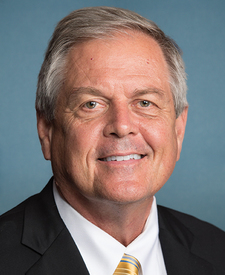
See how Ralph Norman's votes line up with your values.
DeepSyte scores Ralph Norman's record on the issues you care about — not party, not press releases. Take the 2-minute values quiz to see your personal alignment.
Sign in and take the values quiz to see how Ralph Norman's votes line up with your views.
Prediction track record
How often we called Ralph Norman's passage votes correctly, from their stated positions on each bill's tagged topics. Excludes “unclear” calls and abstentions.
A joint resolution to direct the removal of United States Armed Forces from hostilities within or against the Islamic Republic of Iran that have not been authorized by Congress.
To prohibit the disclosure of records by the Secretary of Housing and Urban Development of individuals for the purposes of immigration enforcement, and for other purposes.
A joint resolution to direct the removal of United States Armed Forces from hostilities within or against the Islamic Republic of Iran that have not been authorized by Congress.
Based on 10 data points across public statements and recorded votes · AI analysis of public records
118-hr-2·Consistent
Secure the Border Act of 2023
88/100
What they said
May 4, 2026
The representative expresses support for restrictive immigration policies, as evidenced by receiving a high grade from NumbersUSA, an organization that advocates for reduced immigration levels.
The representative's statement expresses support for restrictive immigration policies and border security, as evidenced by the A+ grade from NumbersUSA, an organization advocating for reduced immigration. The Secure the Border Act directly implements restrictive immigration measures—expanding border wall construction, tightening asylum eligibility, and mandating employment verification—all consistent with the restrictive immigration stance the statement endorses. The yes vote on passage aligns with the stated position.
The representative expresses support for restrictive immigration policies, as evidenced by receiving a high grade from NumbersUSA, an organization that advocates for reduced immigration levels.
The representative's statement expresses support for restrictive immigration policies and receiving a high grade from NumbersUSA, an organization advocating for reduced immigration. The Laken Riley Act mandates detention of non-U.S. nationals arrested for certain property crimes and authorizes states to sue over immigration enforcement decisions—both provisions align with restrictive immigration enforcement. The representative's yes vote on passage is consistent with the stated position of prioritizing restrictive immigration policy.
The representative expresses support for restrictive immigration policies, as evidenced by receiving a high grade from NumbersUSA, an organization that advocates for reduced immigration levels.
The representative's stated support for restrictive immigration policies and 'putting Americans first' aligns with voting yes on legislation that penalizes sanctuary jurisdictions by withholding federal funds from those that do not cooperate with immigration enforcement. Both the statement and vote reflect a restrictive immigration enforcement posture. The score is not higher because the statement is general (support for reduced immigration) while the bill addresses a specific enforcement mechanism (federal funding penalties), leaving some ambiguity about whether the rep's support extends to this particular policy tool.
Detain and Deport Illegal Aliens Who Assault Cops Act
85/100
What they said
May 4, 2026
The representative expresses support for restrictive immigration policies, as evidenced by receiving a high grade from NumbersUSA, an organization that advocates for reduced immigration levels.
The representative's stated support for restrictive immigration policies and 'putting Americans first' aligns with a yes vote on a bill that mandates detention and deportation of non-U.S. nationals who assault law enforcement. Both the statement and vote reflect a restrictive immigration stance. The bill addresses a specific subset of immigration enforcement (criminal aliens assaulting first responders) rather than the full scope of immigration reduction, but the directional consistency on enforcement and deportation is clear.
Transnational Criminal Organization Illicit Spotter Prevention and Elimination Act
85/100
What they said
May 4, 2026
The representative expresses support for restrictive immigration policies, as evidenced by receiving a high grade from NumbersUSA, an organization that advocates for reduced immigration levels.
The representative's stated support for restrictive immigration policies and border security aligns with a yes vote on legislation that criminalizes interference with border control measures and enhances penalties for immigration-related crimes. Both the statement and vote reflect a restrictive immigration enforcement posture. The bill addresses border security enforcement rather than immigration levels directly, which is a narrower focus than the statement's general endorsement of restrictive immigration policy, but the directions are clearly aligned.
Continuing Appropriations and Border Security Enhancement Act, 2024
85/100
What they said
May 4, 2026
The representative expresses support for restrictive immigration policies, as evidenced by receiving a high grade from NumbersUSA, an organization that advocates for reduced immigration levels.
The representative's stated support for restrictive immigration policies and border security aligns with voting yes on a bill that imposes limits on asylum eligibility and enhances border security measures. The bill bundles continuing appropriations with immigration law changes, but the immigration provisions directly match the representative's expressed position on reducing immigration and prioritizing border enforcement.
The representative expresses support for restrictive immigration policies, as evidenced by receiving a high grade from NumbersUSA, an organization that advocates for reduced immigration levels.
The representative's stated support for restrictive immigration policies and prioritizing Americans aligns directionally with a yes vote on legislation that bars or deports non-citizens convicted of Social Security and identity document fraud. Both the statement and bill address immigration enforcement, though the bill targets a specific category of fraud-related offenses rather than addressing immigration levels broadly. The vote is consistent with the representative's expressed immigration restrictionism.
The representative expresses support for restrictive immigration policies, as evidenced by receiving a high grade from NumbersUSA, an organization that advocates for reduced immigration levels.
The representative's stated support for restrictive immigration policies and 'America First' priorities aligns directionally with voting yes on a bill that scrutinizes the Biden Administration's border policies. However, the bill is narrowly focused on requiring DOJ reporting on law enforcement impacts rather than implementing restrictive immigration measures directly. The vote reflects support for oversight of border policy but does not directly enact the restrictive immigration policies the statement emphasizes.
To prohibit individuals who are not citizens of the United States from voting in elections in the District of Columbia and to repeal the Local Resident Voting Rights Amendment Act of 2022
75/100
What they said
May 4, 2026
The representative expresses support for restrictive immigration policies, as evidenced by receiving a high grade from NumbersUSA, an organization that advocates for reduced immigration levels.
Voted Yea on To prohibit individuals who are not citizens of the United States from voting in elections in the District of Columbia and to repeal the Local Resident Voting Rights Amendment Act of 2022
The representative's stated support for restrictive immigration policies and 'putting Americans first' aligns directionally with a vote to prohibit noncitizen voting in DC elections. Both reflect a preference for limiting noncitizen participation in U.S. governance. However, the statement addresses immigration levels broadly (per NumbersUSA's focus on reducing overall immigration), while the bill addresses a specific voting eligibility question. The vote is consistent with the general restrictive-immigration stance, but the statement does not explicitly address voting rights or DC-specific policy.
The representative expresses support for restrictive immigration policies, as evidenced by receiving a high grade from NumbersUSA, an organization that advocates for reduced immigration levels.
The representative's stated support for restrictive immigration policies aligns directionally with a yes vote on legislation that bars members of Hamas, Palestinian Islamic Jihad, and PLO members from admission and denies them immigration protections. However, the statement emphasizes general restrictive immigration principles (reducing overall immigration levels, as reflected by the NumbersUSA grade), while the bill targets a specific category of individuals based on terrorism and attacks on Israel. The vote is consistent with the stated restrictive stance, though the bill's specific focus on terrorism-related bars is narrower than the broader immigration-reduction philosophy the statement reflects.
Pairs with ambiguous language and high uncertainty are withheld until more data is available. Procedural, cloture, and amendment votes are excluded — they don't cleanly signal substantive support or opposition.
Pro analysis
AI rep analysis — Pro
Get an AI-narrated read on Ralph Norman's full voting record against your stated values — aligned themes, conflicts, notable votes, and what to watch for.
We haven't extracted campaign positions for Ralph Norman yet. Once their campaign website or position pages are processed, this card will track what they said vs how they voted.
Crossing the aisle
Passage votes where Ralph Norman broke ranks with ≥75% of Republicans. Threshold catches substantively partisan splits; unanimous-ish or close votes are excluded.
Providing for consideration of the bill (H.R. 9576) to establish the National Fraud Enforcement Division of the Department of Justice; providing for consideration of the bill (H.R. 10326) to enhance information-sharing capabilities between Federal law enforcement and State agencies to detect, investigate, and prosecute fraud in certain Federal programs, and to protect individual privacy; providing for consideration of the joint resolution (H.J. Res. 210) providing for congressional disapproval under chapter 8 of title 5, United States Code, of the rule submitted by the Environmental Protection Agency relating to ''California State Nonroad Engine Pollution Control Standards; Ocean-Going Vessels At-Berth; Notice of Decision''; providing for consideration of the joint resolution (H.J. Res. 213) providing for congressional disapproval under chapter 8 of title 5, United States Code, of the rule issued by the Environmental Protection Agency relating to the ''California State Nonroad Engine Pollution Control Standards; Commercial Harbor Craft Regulations; Notice of Decision''; and providing for consideration of the Senate amendments to the bill (H.R. 5334) to amend the Internal Revenue Code of 1986 to allow early childhood educators to take the educator expense deduction, and for other purposes.
Providing for consideration of the bill (H.R. 1501) to amend the FAST Act to include certain mineral production activities as a covered project, and for other purposes; providing for consideration of the bill (H.R. 9436) to amend the Consolidated Appropriations Act, 2023 to extend the time period for which certain regulations concerning the North Atlantic right whale are effective; providing for consideration of the resolution (H. Res. 1490) providing for the condemnation and denouncement of socialism in all its forms, and for other purposes; providing for consideration of the bill (H.R. 4795) to amend the Higher Education Act of 1965 to prohibit an institution that participates in a nonexpressive commercial boycott of Israel from being eligible for certain funds under that Act, to require an institution that participates in certain programs under that Act to certify that students are not unreasonably obstructed from participating in academic programs in Israel, and for other purposes; and relating to consideration of motions to suspend the rules.
Nearly 50 Years Later, It's Time to Update the Capital Loss Deduction
Position: The release supports the Capital Loss Inflation Fairness Act, which would raise the annual capital loss deduction limit from $3,000 to $14,250 for individuals and from $1,500 to $7,125 for married taxpayers filing separately, and index those amounts to inflation going forward.
The tax code shouldn’t be stuck in 1978.
Nearly 50 years ago, Congress set the amount of capital losses an individual could deduct against ordinary income at $3,000 per year. Think about how much has changed since then. The cost of a home, a car, groceries, and just about everything else has gone up SIGNIFICANTLY.
But that $3,000 limit? It hasn’t moved a penny.
Let’s say you invest some of your hard-earned money in stocks, property, or another investment. If you sell those investments for a profit, you have a capital gain. If you sell them for less than you paid, you have a capital loss.
Now, say everything is netted out at the end of the year and you’re left with a $10,000 capital loss.
Under current law, you can generally deduct only $3,000 of that loss against your ordinary income that year. The remaining $7,000 has to be carried forward to future tax years. That makes absolutely no sense.
My bill, the Capital Loss Inflation Fairness Act, would account for inflation and raise the annual capital loss deduction limit from $3,000 to $14,250 for individuals and from $1,500 to $7,125 for married taxpayers filing separately.
Just as importantly, it would index those amounts to inflation going forward so we don’t find ourselves having this same conversation 50 years from now.
This isn’t some new government program. It doesn’t create another federal bureaucracy. It simply updates an outdated provision of our tax code to reflect economic reality and allows Americans to recognize more of their investment losses sooner.
I’m proud to have Reps. Michael Cloud, Thomas Massie, Sheri Biggs, and Andy Harris join me as original cosponsors, along with support from the National Taxpayers Union and Americans for Prosperity.
Rep. Ralph Norman Reintroduces Capital Loss Inflation Fairness Act to Modernize Nearly 50-Year-Old Tax Rule
Position: Supports raising the annual federal capital loss deduction limit from $3,000 to $14,250 (and $7,125 for married filing separately) and indexing it to inflation, arguing the limit has been unchanged since 1978.
WASHINGTON — Congressman Ralph Norman (R-SC) reintroduced the Capital Loss Inflation Fairness Act to address a nearly five-decade-old provision of the federal tax code and allow Americans to deduct more of their investment losses from their ordinary income.
The current limit of $3,000, or $1,500 for married taxpayers filing separately, has remained unchanged since 1978. Norman’s legislation would increase those limits to $14,250 and $7,125, respectively. Additionally, the bill includes an annual adjustment for inflation.
Under current law, losses exceeding the annual limit generally must be carried forward to future tax years. The legislation would allow individual taxpayers to recognize more of those losses sooner and would apply to losses in tax years beginning after December 31, 2025.
“The $3,000 capital loss deduction hasn’t changed since 1978, and everyday Americans shouldn’t be penalized because Congress failed to update an outdated number,” said Congressman Norman. “It’s common sense. Raise the limit to reflect today’s dollars, tie it to inflation, and let Americans keep more of their hard-earned money.”
“Inflation shouldn’t be a backdoor tax increase,” said Congressman Thomas Massie (KY-4). “Congress set the capital loss deduction at $3,000 in 1978 and then let inflation erode its value for nearly fifty years. This bill offers some relief and course correction for taxpayers in an increasingly volatile economy.”
“Republicans are reversing years of Democrats’ big government tax burdens to ensure hardworking Americans can keep more of their money each year, and this legislation does just that,” said Congresswoman Sheri Biggs (SC-3). “I am proud to support this bill because it gives our constituents more breathing room when they take risks, invest, and contribute to our economy. As the cost of living increases, so should the amount you can deduct when you experience a loss. Americans should be able to keep more of their own money. It’s that simple.”
“The $3,000 capital loss deduction limit has been stuck in the tax code since 1978, even as the value of the dollar has declined dramatically due to inflation. Thankfully, Congressman Norman’s commonsense reform would provide taxpayers and investors with a fairer and more neutral tax treatment of capital gains and losses. NTU is proud to once again endorse the Capital Loss Inflation Fairness Act and looks forward to helping this important legislation reach the president’s desk,” Thomas Aiello, Vice President of Federal Affairs at National Taxpayers Union.
“The current federal tax code discourages families from saving, leaving them less secure and starving businesses of the capital needed to grow. The Capital Loss Inflation Fairness Act would correct our tax code's uneven treatment of capital gains and losses and strengthen the bottom line for families and businesses alike,” Patrick Fleenor, Tax Policy Fellow with Americans for Prosperity.
The Capital Loss Inflation Fairness Act is originally cosponsored by Reps. Michael Cloud (TX-27), Thomas Massie (KY-4), Sheri Biggs (SC-3), and Andy Harris (MD-1).
The bill is supported by the National Taxpayers Union and Americans for Prosperity.
Newsmax: Lawmakers Leave Washington to it the Campaign Trail
Position: The release calls on Senate Republicans to eliminate the legislative filibuster and end Democratic obstruction in order to deliver on campaign promises. It does not specify a particular bill or policy outcome.
Senate Republicans need to play hardball. NUKE the filibuster, END Democrat obstruction, and DELIVER on the promises we made to the American people.
Rep. Ralph Norman Welcomes $167 Million for Rural Health Funding for South Carolina
Position: Congressman Norman welcomes federal Rural Health Transformation Program grants totaling over $167 million for South Carolina rural healthcare and states that taxpayer dollars should be spent wisely and deliver results.
WASHINGTON — Congressman Ralph Norman (R-SC) issued the following statement following the announcement that 228 grants totaling more than $167 million will be awarded to strengthen healthcare in rural communities across South Carolina.
The funding is being awarded through the Rural Health Transformation Program, authorized by the One Big Beautiful Bill Act (Section 71401 of Public Law 119-21), and is intended to support high-impact investments that strengthen healthcare infrastructure and expand long-term capacity in rural communities.
“Nearly 20% of South Carolinians live in rural communities, and they should not have to drive hours just to receive quality health care,” said Congressman Norman. “These resources can make a real difference by strengthening local providers and expanding access to critical services. Every taxpayer dollar should be spent wisely and deliver results, and I look forward to seeing these funds put to work improving healthcare for South Carolinians.”
WATCH: Congressman Norman and CMS Administrator Dr. Mehmet Oz Discuss Rural Health Investment in South Carolina
The Rural Health Transformation Program is a $50 billion federal initiative administered by the Centers for Medicare & Medicaid Services to strengthen and modernize rural healthcare nationwide.
Read CMS Newsroom’s press release HERE.
Supporting Rep. Massie's Epstein Files Transparency Act II
Position: The release supports Rep. Thomas Massie's Epstein Files Transparency Act II, which aims to enforce compliance with the Epstein Files Transparency Act and hold the Department of Justice accountable under that law.
Congress passed the Epstein Files Transparency Act last year. Now it’s time to make sure the law is FOLLOWED.
I’m supporting Congressman Thomas Massie's Epstein Files Transparency Act II to enforce compliance and hold the DOJ accountable to the law.
After more than 20 years, the American people deserve the truth.
Position: The release opposes a $5,000 government check proposal, citing the national debt, and calls for a clear funding source before any such spending is supported.
I have serious concerns with this $5,000-check proposal. We are already more than $40 trillion in debt, and I cannot support another massive spending package without a clear way to pay for it.
Tying government checks to the outcome of an election starts to sound like pay-to-play politics. Republicans should earn the support of the American people through good policy, not by promising another round of checks from Washington.
Meanwhile, the Senate has hundreds of House-passed bills waiting for action. Congress should be focused on getting that work done and putting our country on stronger financial footing.
Show me how this is paid for without adding to the debt. Until then, I cannot support it.
Position: The release opposes expanding the Supreme Court from nine to thirteen justices, describing such a change as a political power grab, and calls for keeping the Court at nine members.
This week, Democrats admitted what they want: a 13-justice Supreme Court.
Changing the Court because you don’t like its rulings is a dangerous political power grab.
SCOTUS is not a political tool. Keep the Court at NINE!!
Position: The release supports a bill, the Merit Restoration Act, that would bar federal research agencies from using DEI requirements, diversity statements, or ideological tests when awarding taxpayer-funded research grants. It argues that such reform should be codified in law rather than left to future administrations.
Here's a simple idea for you... The federal government should NEVER use your tax dollars to reward political ideology over merit.
Fortunately, the Trump administration has been steadfast in working to eliminate DEI and radical ideological requirements from federal grants. But we shouldn't leave this up to the whims of future administrations and MUST make commonsense reform permanent.
My bill, the Merit Restoration Act, would prohibit federal research agencies from using DEI requirements, diversity statements, or ideological tests when deciding who receives taxpayer-funded research grants.
Federal research dollars should go toward the best ideas, the best science, and research that benefits the American people. NOT woke political agendas.
New GOP Bill Would Cut Off Housing Funds to Sanctuary Cities Defying Trump DHS
Position: The release supports legislation to block Community Development Block Grant funding from jurisdictions that do not cooperate with federal immigration enforcement, describing such jurisdictions as sanctuary cities.
With Congress continuing to advance the President's border security agenda, now is the time to finish the job by PERMANENTLY ending federal funding for SANCTUARY CITIES.
I’ve heard from many constituents who are scared of the illegal aliens with criminal histories who have settled in our communities, all thanks to Biden’s open-border policies. That’s why I introduced legislation to block Community Development Block Grant funding from jurisdictions across the COUNTRY that put politics ahead of public safety.
CDBG funds are taxpayer dollars meant to help communities improve roads, water systems, and neighborhoods. NOT reward cities that openly defy federal law. If a city wants to be a sanctuary for illegal aliens, it shouldn't expect hardworking South Carolinians to foot the bill.
Luckily, our state continues to demonstrate the importance of cooperation between local law enforcement and ICE. WE the people voted for secure borders and the rule of law. I look forward to the House doing everything it can to take up my bill and CODIFY President Trump’s border policies that have SAVED our nation.
If a city chooses to shield illegal immigrants instead of working with law enforcement, it shouldn't expect taxpayers in South Carolina to foot the bill.
Election Infrastructure Transparency MUST Be Public
Position: The release supports public disclosure of voting technology vendors' ownership, contracts, and foreign ties, and supports passage of the SAVE America Act requiring proof of citizenship to register and photo ID to vote.
Folks, I’ve got to be straight with y’all. President Trump told the nation the hard truth on July 16: “Tonight, I’m announcing the immediate declassification and release of critical intelligence, revealing shocking vulnerabilities in our election infrastructure.” He went further, saying Americans “were blatantly lied to about the security of our election infrastructure, including electronic voting machines and ballot counting systems… They’re vulnerable, and they’re easily compromised.” Our adversaries have the capability to compromise our elections. That’s not theory…that’s the President putting the FACTS out there.
Just three private companies control roughly 90% of the voting technology used by American voters. These vendors operate with almost ZERO PUBLIC TRANSPARENCY on ownership, supply chains, or foreign investment, even though experts have long flagged security gaps and the risk of outside influence. That’s why I introduced the Election Infrastructure Integrity Act. It requires states to publicly disclose every vendor’s ownership, contracts, and any foreign ties within 30 days of a federal election, or risk losing federal funding. This brings the sunlight the President is calling for and directly tackles those hidden systems.
The House has also done its job on the SAVE America Act, proof of citizenship to register and photo ID to vote. Yet the Senate is just days away from a 37-day paid vacation instead of finishing the work. Secure elections shouldn’t wait for a recess. Call your senators and demand they stay and pass these bills. I’m fighting for you every day to make sure only American citizens decide American elections. It’s commonsense!
Source: GDELT 2.0 GKG, filtered to a curated list of national outlets. Inclusion is not endorsement; opinion pieces and reported news are mixed.
Recent stock activity
Periodic transaction reports filed under the STOCK Act — disclosed by the rep, sourced from public filings.
No disclosed trades on record.
Source: open-data mirrors of the Senate eFD and House Clerk financial-disclosure systems. Disclosure within 30 days of trade is required by law (45 for spouse/dependent trades).
Top PAC donors · 2026 cycle
Political action committees that gave the most to this rep's principal campaign committee this cycle. PAC giving is direct organizational support — industry, ideological, or leadership.
1.ACPAC ACA INTERNATIONAL PAC2 contributions$10,000
2.STAND FOR AMERICA PAC2 contributions$10,000
3.MANUFACTURED HOUSING INSTITUTE PAC2 contributions$7,500
4.BULLDOG PAC1 contribution$5,000
5.HOUSE FREEDOM FUNDLeadership1 contributionMember-of-Congress leadership PAC — supports conservative House candidates and Republican priorities aligned with fiscal and social conservative principles.AI$5,000
6.LPL FINANCIAL LLC POLITICAL ACTION COMMITTEE2 contributions$3,000
7.NATIONAL AIR TRAFFIC CONTROLLERS ASSOCIATION PAC1 contribution$2,500
8.SYLVAMO CORPORATION PAC1 contribution$2,500
9.AMERICAN BANKERS ASSOCIATION PAC (BANKPAC)Finance1 contributionBanking-industry trade association PAC — backs candidates supporting deregulation, consumer-credit expansion, and reduced compliance costs for financial institutions.AI$2,500
10.HELP ELECT REPUBLICANS NOW HERN PAC1 contribution$2,500
Source: OpenFEC (api.open.fec.gov) Schedule A receipts where contributor type is “committee.” Aggregated by contributing committee. Self-transfers from joint-fundraising / victory committees are excluded.
Top individual contributors · 2026 cycle
Itemized individual contributions over $200 to this rep's campaign committee, aggregated by donor employer. PAC giving is shown above; this section is people, not organizations.
1.THE INTERTECH GROUP, INC.$3,300
2.JOHN BOUCHARD & SONS$1,000
3.RINEHART REALTY$500
4.FEDERAL HALL POLICY ADVISORS$500
5.MAYER BROWN$500
6.MILLER WENHOLD CAPITOL STRATEGIES$500
7.TCH GROUP$250
Source: OpenFEC Schedule A receipts where contributor type is “individual,” aggregated by the donor's self-reported employer. This is a geographic / industry correlation, not a corporate endorsement.