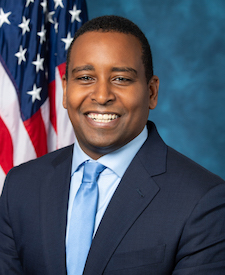
See how Joe Neguse actually votes — against your values.
DeepSyte scores Joe Neguse's record on the issues you care about — not party, not press releases. Take the 2-minute values quiz to see your personal alignment.
Sign in and take the values quiz to see how Joe Neguse's votes line up with your views.
Prediction track record
How often we called Joe Neguse's passage votes correctly, from their stated positions on each bill's tagged topics. Excludes “unclear” calls and abstentions.
19 predictions on record · none have been resolved by a passage vote yet. Check back as bills move.
Pending vote119-hr-5123
Indoor Air Quality and Healthy Schools Act of 2025
Based on 2 data points across public statements and recorded votes · AI analysis of public records
119-hr-5587·Consistent
HEATS Act
85/100
What they said
Apr 29, 2026
Neguse and Bennet urge the Departments of Agriculture and Interior to prioritize wildfire preparedness and response coordination with state and local agencies, expressing concern that staff vacancies from federal workforce reductions may impair the government's ability to respond to record wildfire conditions.
Neguse's statement emphasizes the need for robust federal coordination, preparedness, and environmental protection in response to record wildfire conditions and drought. The HEATS Act exempts geothermal activities from federal environmental review (NEPA), endangered species consultation, and historic preservation requirements on nonfederal lands. A no vote on this bill is consistent with the statement's concern for comprehensive federal environmental oversight and preparedness—the bill reduces federal environmental scrutiny precisely when the statement calls for strengthened federal coordination and protection of natural resources during a climate crisis.
Improving Interagency Coordination for Pipeline Reviews Act
25/100
What they said
Apr 29, 2026
Neguse and Bennet urge the Departments of Agriculture and Interior to prioritize wildfire preparedness and response coordination with state and local agencies, expressing concern that staff vacancies from federal workforce reductions may impair the government's ability to respond to record wildfire conditions.
Neguse's statement emphasizes the need for robust federal wildfire preparedness, coordination among agencies, and adequate staffing at the Departments of Agriculture and Interior to respond to record wildfire conditions. The bill he voted for expedites pipeline environmental reviews by centralizing authority in FERC and reducing state/local agency involvement in the review process—the opposite of the interagency coordination and deference to state and local partners that his statement advocates. While both involve federal-state coordination, they point in opposite directions on the substantive question of how much authority and coordination should flow through federal agencies versus remain distributed among federal, state, and local partners.
Pairs with ambiguous language and high uncertainty are withheld until more data is available. Procedural, cloture, and amendment votes are excluded — they don't cleanly signal substantive support or opposition.
Pro analysis
AI rep analysis — Pro
Get an AI-narrated read on Joe Neguse's full voting record against your stated values — aligned themes, conflicts, notable votes, and what to watch for.
We haven't extracted campaign positions for Joe Neguse yet. Once their campaign website or position pages are processed, this card will track what they said vs how they voted.
Crossing the aisle
No party-break passage votes recorded for Joe Neguse. Either they've voted with Democrats on every substantive passage vote in the corpus, or their tenure overlaps few high-threshold party-line votes so far.
Rep. Neguse Advances Bipartisan Recycling and Composting Accountability Act Through Energy & Commerce Committee
Position: Rep. Neguse supports legislation to improve national recycling and composting infrastructure by establishing data measurement standards and identifying infrastructure gaps.
Washington, D.C. — Last week, Colorado Congressman Joe Neguse passed his bipartisan proposal to improve America’s recycling and composting infrastructure through the House Energy and Commerce Committee. The legislation will identify national composting infrastructure challenges and improve recycling data measurement and reporting—enhancing systems that enable the country to reduce waste and support communities.
Rep. Neguse’s Recycling and Composting Accountability Act was incorporated as part of Republican Congresswoman Mariannette Miller-Meeks’ (IA-01) Recycling Infrastructure and Accessibility Act during an Environment Subcommittee markup last week, and passed the full Energy and Commerce Committee today.
The bill now advances to the full House of Representatives.
“To build a sustainable future, we must create systems that encourage recycling and waste reduction, and ensure our communities have the resources to reach those goals,” said Congressman Neguse. “I’m incredibly proud to see the Energy and Commerce Committee advance our bill to address gaps in recycling and composting infrastructure to the House Floor for final consideration. This proposal establishes a comprehensive baseline of recycling and composting data, and helps lay the foundation for a healthier environment and a better planet for everyone.”
The legislation to improve the nation’s recycling infrastructure is also included in the Senate’s STEWARD Act, which passed that chamber in December 2025.
Statements of support and additional information on the Recycling and Composting Accountability Act, can be found HERE.
###
Rep. Neguse: “Speaker Johnson owes the country an answer. Will he allow January 6th rioters — convicted felons who assaulted Capitol Police officers — to be paid with taxpayer dollars out of Trump’s slush fund?
Position: Rep. Neguse opposes Trump's $1.776 billion fund for political allies, including individuals charged in connection with the January 6th Capitol attack, and calls on Speaker Johnson to block the fund to protect taxpayer interests.
Washington, D.C. — Colorado Congressman Joe Neguse took to the House Floor to condemn Donald Trump’s ludicrous $1.776 billion slush fund for political allies, including individuals charged with crimes for their involvement in the January 6th attack on the Capitol.
Neguse, who led more than 90 House Democrats in an effort to lobby the courts to block Trump’s billion dollar fund, called out Speaker Mike Johnson directly—urging him to act in the best interest of American taxpayers and put a stop to this unparalleled corruption.
Click HERE to watch or download Rep. Neguse’s remarks.
A full transcript is available below.
Image
Reps. Neguse, Clarke Applaud Advancement of Magnus White and Safe Streets for Everyone Act to House Floor
Position: The representatives support legislation that would strengthen federal automated emergency braking standards to detect cyclists and pedestrians in both day and night conditions, aiming to improve roadway safety for vulnerable road users.
The bill was introduced in honor of the late 17-year-old U.S. National Cycling Champion from Boulder, Colorado, who was tragically killed by a vehicle while training.
Washington, D.C. — Today, Colorado Congressman Joe Neguse and Representative Yvette D. Clarke applauded the advancement of their legislation, the Magnus White and Safe Streets for Everyone Act, through the House Energy and Commerce Committee. The bill was marked up as part of the Surface Transportation reauthorization legislative package.
“Thanks to the tireless advocacy of Jill and Michael White—who have courageously championed common-sense reforms following the tragic loss of their son, Magnus, to help prevent future tragedies involving pedestrians and cyclists—our proposal to make roads safer advanced to the House Floor as part of a broader effort to strengthen motor vehicle safety. I’m deeply grateful to my colleague Congresswoman Yvette Clarke for helping move this critical, life-saving legislation forward—our work continues,” said Congressman Joe Neguse.
“Today’s advancement of the Magnus White and Safe Streets for Everyone Act through the Energy and Commerce Full Committee Markup stands as a tremendous victory for safety and responsibility on our roads, as well as for the White family, who have demonstrated incredible perseverance and determination in the wake of the tragedy that took their son. I am proud to fight alongside Congressman Joe Neguse, Jill and Michael White, and the White Line in this vital effort to protect cyclists and other vulnerable road users, no matter where they're going or where they come from. Together, we will carry this momentum forward to ensure our legislation becomes law, and our roads are as safe as they must be for every American on them. In the name of Magnus White and all others who were lost to preventable tragedies, we will prevail,” said Congresswoman Yvette D. Clarke.
Introduced by Representatives Neguse and Clarke, the legislation would strengthen federal standards for automated emergency braking (AEB) systems. Specifically, the bill would require AEB technology to reliably detect cyclists and other vulnerable road users in both day and night at the speeds NHTSA has previously determined in the existing AEB rule.
The Magnus White and Safe Streets for Everyone Act aims to improve roadway safety and ensure emerging vehicle technologies work equitably for all users.
Background
Raised in Boulder, Colorado, Magnus White, was a young cycling star representing the United States on the Junior Men's National Team. He was and continues to be a shining light for the people of Colorado’s 2nd District, and sadly passed away in 2023 after being struck by a motorist while on his bike.
Congressman Neguse first joined with Jill and Michael White to introduce the legislation in honor of their son in the 118th Congress, they renewed calls for the passage of this measure in June 2025. Click HERE to learn more about the effort.
###
Reps. Neguse and Huffman Introduce the Public Lands Workforce Stability Act
Position: The representatives introduce legislation to prohibit mass terminations at federal land management agencies (Department of Interior and U.S. Forest Service) through Fiscal Year 2030, arguing that staffing shortages impair agencies' ability to address wildfires, maintain public lands, and protect communities and natural resources.
Washington, D.C. — Colorado Congressman Joe Neguse, Ranking Member of the Federal Lands Subcommittee and Congressman Jared Huffman, Ranking Member of the House Natural Resources Committee, recently introduced the Public Lands Workforce Stability Act, a bill to prohibit mass terminations at our land management agencies, including the Department of Interior (DOI) and the U.S. Forest Service (USFS).
Since the start of 2025, the Trump administration has eliminated tens of thousands of jobs through the Reduction in Force (RIFs) of federal employees, leaving agencies unable to meet basic obligations due to staffing shortages. With fewer personnel across the board, DOI and USFS are in weakened positions to address threats such as wildfires; complete important construction and maintenance projects; continue programs designed to protect communities, vital watersheds, and wildlife habitats; and more.
The Public Lands Workforce Stability Act extends the moratorium on layoffs that congressional Democrats were able to put in place after Republicans’ disastrous 43-day government shutdown last year. Specifically, the bill reinstitutes and extends the ban on RIFs covering DOI and USFS until the end of Fiscal Year 2030.
“Extreme weather conditions, drought, and unprecedented fire risk, coupled with staffing shortages across the Interior Department and Forest Service, have placed our public lands and the civil servants that protect them in a dangerous position — the consequences of which are real and immediate,” said Congressman Neguse. “The Public Lands Workforce Stability Act halts these attacks on our hard-working public servants and safeguards this workforce’s ability to manage critical programs that safeguard natural resources, protect communities, fight wildfires, and more. It is imperative that we have a fully staffed workforce to care for our most treasured public lands.”
“The Forest Service and National Park Service have both lost nearly a quarter of their staff since Donald Trump took office. At a time when our public lands and nearby communities are struggling with a water, climate, and wildfire crises, we cannot afford to lose any more expertise. I'm proud to join Representative Neguse in this effort to stop the Trump administration's efforts to hollow out our public land management agencies. This bill reasserts Congress’ role in overseeing these agencies, their programming, and their staff,” said Ranking Member Huffman.
President Trump’s Department of Government Efficiency (DOGE) hit Colorado’s public lands workforce harder than any other state, with Colorado ranking 1st nationally in total public land agency job losses. Across federal land management agencies, including the National Park Service, Bureau of Land Management, U.S. Forest Service, and Fish and Wildlife Service, employment of Colorado residents dropped by more than 1,700 in 2025 — a 26% reduction in the public lands workforce.
The bill is endorsed by the Conservation Lands Foundation, Backcountry Hunters and Anglers, National Parks Conservation Association, Sierra Club, Grassroots Wildland Firefighters, Coalition to Protect America’s National Parks, Trust for Public Land, and the Association of National Park Rangers.
Statements of support and additional information on the Public Lands Workforce Stability Act, can be found HERE.
Congressman Neguse has been leading efforts to block the Trump administration’s attacks on the federal workforce responsible for fighting wildfires, managing public lands, protecting water, advancing clean energy, and honoring tribal obligations. In August 2025, he joined top Democrats from the Natural Resources Committee in introducing an initial series of bills that would put a stop to the abuse of RIFs to carry out mass firings at DOI and USFS. He also proposed landmark legislation that would direct the administration to rehire National Park Service (NPS) and USFS staffers wrongfully terminated as part of Trump’s DOGE initiative.
In October 2025, Rep. Neguse led his colleagues in a letter demanding the administration immediately cease using the Republican shutdown as a pretext to fire thousands more federal employees.
###
Rep. Neguse Questions Interior Secretary on No-Bid Contract
Position: Rep. Neguse questions the Interior Secretary's oversight of a $13 million no-bid federal contract awarded to Atlantic Industrial Coatings for Lincoln Memorial Reflecting Pool renovation, and criticizes the Trump administration's request for a $10 billion construction fund while simultaneously proposing a $757 million cut to National Park Service operations funding.
Washington, D.C. — ICYMI, yesterday, Colorado Congressman Joe Neguse, the lead Democrat on the Federal Lands Subcommittee, questioned Interior Secretary Doug Burgum on his agency’s role in a series of taxpayer-funded vanity projects that President Trump is spearheading across the nation's capital—including a $13 million makeover of the Lincoln Memorial Reflecting Pool.
The Trump administration is currently asking Congress for a $10 billion slush fund to support desired construction and rehabilitation projects across the D.C. area. That number is well above the $3.5 million deferred maintenance and repair figure reported by the National Park Service to bring assets in the region to an acceptable and safe condition. Public reporting has also suggested that some of these million-dollar contracts were awarded through a non-competitive bidding process.
Meanwhile, Trump and Burgum are seeking to enact sweeping cuts to facets of the National Park System in communities across the country—proposing a $757 million, or 26%, reduction in National Park Service operations funding.
In yesterday’s Natural Resources hearing, Rep. Neguse pressed Burgum for answers about the contractor renovating the Reflecting Pool, but the Secretary was unable to provide clarity. This builds on mounting confusion around the project after President Trump changed his own story on the matter in a series of Truth Social posts.
Watch and download the full exchange HERE. A full transcript is available below.
NEGUSE: Are you familiar with Atlantic Industrial Coatings?
BURGUM: Uh, I'm not familiar with that.
NEGUSE: So Atlantic Industrial Coatings is a company—are you familiar with that company?
BURGUM: You're saying Atlantic? I'm not familiar with Atlantic.
NEGUSE: Okay. Atlantic Industrial Coatings is the company that received a no-bid federal contract for the project at the Lincoln Memorial Reflecting Pool. Are you familiar with that now?
BURGUM: I'm familiar with that project. Yes.
NEGUSE: But not the company?
BURGUM: Uh, I wasn't familiar with that specific name of the company.
NEGUSE: Okay. You're familiar with the fact that a company received a no-bid contract to do the work on that project, correct?
BURGUM: I'm familiar that we have, that we're working on a project to restore, uh, the reflecting pool before the, uh, summer season with record attendance. Yes.
NEGUSE: And that was through a no-bid, $13 million contract, right? That's not up for debate. That's a fact.
BURGUM: I'm positive that we followed all of the required bidding rules. So, you're emphasizing the word no”-bid,” like something nefarious has happened. I reject that thesis.
NEGUSE: Okay, explain it to me, I’ll ask you the question. My understanding of the federal procurement rules is that a no-bid contract is reserved for situations where, “any delay would cause serious injury to the government.” Your proposition is what? That there'd be serious injury to the government if this company didn't get the $13 million contract to do this particular project right now…
BURGUM: Well, I think we do have a sense of urgency. I mean we got handed a record amount of deferred maintenance. We had 19 fountains across the city that didn’t work…
NEGUSE: That’s the serious injury to the government?
BURGUM: I'm not. I suppose a lawyer could decide that. But I think that maybe all of us could agree that we would want to have our nation's capital looking great for the 250th. I mean, this is a common-sense decision.
NEGUSE: I would say, just the last question. Who picked this company? Because President Trump, a few months ago, in a New York Times article, said, “I have a guy who’s unbelievable at doing swimming pools... He looked at it. He called me up. He said: ‘Sir, we can do something on it.”
Last night he posted on Truth Social: “Also, I didn't give out the contract, Interior did, to a contractor I did not know, and have never used before.” So Interior, he's talking about you. Did you give this $13 million no-bid contract to this company that's never done business with the federal government before?
BURGUM: The gentleman that you're talking about that has done, uh, construction work regarding pools and fountains for President Trump, is not part of this contract. He's working. He just, he's just a citizen that cared about it and offered some free advice. There is, there's nothing there there in terms of any dollars flowing to anybody that worked for President Trump.
NEGUSE: Then who picked this company, that’s what I’m getting at.
###
Neguse, Bennet Press Trump Officials on Plans for Wildfire Response and Preparedness in Colorado Ahead of Summer Months
Position: Neguse and Bennet urge the Departments of Agriculture and Interior to prioritize wildfire preparedness and response coordination with state and local agencies, expressing concern that staff vacancies from federal workforce reductions may impair the government's ability to respond to record wildfire conditions.
Washington, D.C. — Today, Colorado Congressman Joe Neguse and Senator Michael Bennet pressed the Departments of Agriculture and Interior for answers regarding their agencies’ efforts to ensure the federal government is prepared to respond in the face of record-high temperatures, drought conditions, and heightened wildfire risk.
According to experts, 2026 has been the worst year for Colorado’s snowpack in recorded history. Communities across the state and the nation are also already in the throes of a historic wildfire season. As of late April, more than 22,000 fires have burned nearly 2 million acres this year alone—more than two and a half times the 10-year average (2016–2025).
These conditions, coupled with staff vacancies across the Department of the Interior (DOI), U.S. Department of Agriculture (USDA), and U.S. Forest Service (USFS) due to President Donald Trump’s mass terminations and reductions in force, have created extremely dangerous circumstances.
“We write today regarding the dire wildfire and drought conditions currently facing the Western United States. [...] As we approach the summer months, we write to express our deep concerns about these conditions and respectfully implore your agencies to take immediate actions to better prepare for unprecedented wildfire risks,” wrote the Colorado lawmakers.
“The U.S. Department of Agriculture (USDA) and U.S. Department of the Interior (DOI) are integral partners, along with state, local, and tribal governments, in mitigating, monitoring, and responding to wildfires. In light of the increased risk of wildfire and resulting resource needs this year, rapid, responsive coordination between federal, state, local, and tribal partners will be critically important.”
Neguse and Bennet called on the administration officials to get serious about advancing a comprehensive federal approach to addressing the wildfire crisis, urging them to take immediate action to increase preparedness and cooperation with state and local agencies to tackle the problem.
The Colorado lawmakers closed by imploring the agencies to provide a status update on a series of actions, including current staffing levels and the impacts the planned reorganization of the USDA and DOI could have on wildfire preparedness and response.
The letter concluded: “We urge you to take immediate steps to maximize early detection of wildland fires and reduce any delays to ensure that federal resources are prepared to respond efficiently.”
Read the full letter HERE and below:
April 29, 2026
The Honorable Doug Burgum
Secretary
U.S. Department of the Interior
Washington, D.C. 20242
The Honorable Brooke Rollins
Secretary
U.S. Department of Agriculture
Washington, D.C. 20250
Dear Secretary Burgum and Secretary Rollins,
We write today regarding the dire wildfire and drought conditions currently facing the Western United States. As you know, record-high temperatures and drought conditions have resulted in historic snowpack deficits across the Western United States. As we approach the summer months, we write to express our deep concerns about these conditions and respectfully implore your agencies to take immediate actions to better prepare for unprecedented wildfire risks.
Every major river basin in the West experienced one of the warmest winters on record in 2025- 2026, in addition to nearly every basin experiencing record low snowpack, or snow water equivalent, levels. The Colorado River Basin, for example, reported record-low snow water equivalent, and the majority of the Western United States is currently under 50 percent of the median snowpack for this point in the year. More than 60% of the United States is currently experiencing drought conditions.
These record-low levels of snowpack and moisture, coupled with high winter temperatures, have significantly increased wildfire risk throughout the West as temperatures continue to rise heading into the summer months, threatening to overwhelm federal, state, local, and tribal firefighting resources. We have already seen fires burning throughout the winter months, as more than 22,000 fires have burned 1.8 million acres in 2026 – a 20-year high for this point in the year. As snowpack worsens and the number of high-severity wildfires increases, these conditions will require continued partnership and quick action from all levels of government.
The U.S. Department of Agriculture (USDA) and U.S. Department of the Interior (DOI) are integral partners, along with state, local, and tribal governments, in mitigating, monitoring, and responding to wildfires. In light of the increased risk of wildfire and resulting resource needs this year, rapid, responsive coordination between federal, state, local, and tribal partners will be critically important. We urge you to take immediate steps to maximize early detection of wildland fires and reduce any delays to ensure that federal resources are prepared to respond efficiently.
Therefore, we request that you take the following actions and provide our offices with a briefing on their status by May 29, 2026:
Take steps to convene additional cooperative preparedness efforts with local, state, and tribal governments and across all federal agencies to increase preparedness and rapid response capabilities. Quick, collaborative coordination across all levels of government will be critical to addressing and responding to wildfires, particularly during this heightened risk.
Work to pre-position assets and resources across the West in areas of highest risk before a fire breaks out, using qualified and capable state and local agencies to strengthen response capacity. This includes partnering with willing local fire departments to participate in severity assignments throughout the duration of the spring, summer, and fire season, including engine, crew, and overhead supports. Early partnerships with local and state fire departments will strengthen response capabilities in the areas of highest risk– decreasing costs, improving efficiency, and utilizing local knowledge of terrain, vegetation, and geography.
Continue with planning and implementation of wildfire mitigation projects—including the use of hazardous fuels reduction, actions to increase defensible space, and in areas that contribute to Potential Operational Delineation (POD) management strategies and adjacent to private lands—to the extent possible. This includes providing flexibility for pre-positioned federal fire crews to address wildfire mitigation needs where practical.
Extend the duration of exclusive-use federal contracts for wildfire resources this year so that they are available throughout the season. This includes beginning aviation contracts earlier in the spring and extending them throughout the entirety of this high-risk period, to ensure that needed resources are available early and late into the year as needed.
Provide an update on the planned reorganization of the USDA and DOI, and how this reorganization will impact wildfire preparedness and response capabilities for 2026.
Publicly release DOI and USFS staffing levels for 2026, including the number of federal wildland firefighters that have been hired and the number of Red-Card-holding staff that will be available to assist with wildfire suppression and response efforts.
Suspend existing hiring freezes and promotion prohibitions for all open positions in areas that are experiencing Moderate to Exceptional Drought (D1-D4), per the U.S. Drought Monitor.
We thank you for your attention to this urgent need across the Western United States and your swift actions to increase and accelerate wildfire preparedness well in advance of the summer months.
Sincerely,
###
Neguse, Bennet Introduce Bill Establishing New Congressional Pathway for States to Access Federal Disaster Money
Position: The release advocates for legislation that would allow Congress to override presidential denials of federal disaster relief funding and establish a fast-track process for states to access disaster assistance, arguing that disaster aid should not be subject to political considerations.
Washington, D.C. — Today, Colorado Congressman Joe Neguse and Senator Michael Bennet introduced legislation that would allow Congress to override a Presidential denial of federal disaster relief funding and create a new fast-track process to ensure states like Colorado are not left without support.
Earlier this year, President Trump denied Colorado’s request for disaster assistance for the Lee and Elk Fires in August 2025 and the Southwest Colorado flooding in October 2025. This despite both events meeting the statutory andpractical criteria for a Major Disaster Declaration as well as FEMA’s fiscal threshold to warrant federal aid.
“When natural disasters strike—from wildfires to flash floods—the Federal government must rise to the occasion and assist our communities,” said Congressman Neguse. “Natural disasters don’t discriminate based on state or political affiliation—and neither should the Federal government. That’s why I’m proud to join Senator Bennet in introducing legislation that continues the fight to ensure all Americans are provided with the critical resources necessary to recover after tragedy strikes.”
“Disasters don’t care about state lines or politics, and neither should our President’s response,” said Senator Bennet. “Following the Lee and Elk Fires andthe flooding in Southwest Colorado last year, every single member of the Colorado delegation was united: our communities needed federal assistance. The President outright rejected our calls for federal support. As natural disasters increase, Congress must be able to push past political retribution and help our cities and counties meet the challenge posed by these events.”
The bill is also championed by Colorado Senator John Hickenlooper andRepresentatives Raja Krishnamoorthi and Brittney Pettersen.
“The president is putting politics over Americans in crisis. We have to fight for a way forward,” said Senator Hickenlooper. “Disaster relief should never be tied to politics. Your zip code and your vote should not decide whether you can rebuild.”
“President Trump has repeatedly denied disaster aid requests, including ones affecting families in Illinois, leaving communities struggling to rebuild after severe storms and flooding,” said Congressman Krishnamoorthi. “Disaster relief should never depend on politics or arbitrary decisions. Our legislation empowers Congress to step in and help deliver the support states need when federal assistance is blocked. Families rebuilding after disasters deserve certainty that their government will stand with them when it matters most.”
“As wildfires become a year-round threat, Colorado communities cannot afford a federal government that turns its back on them when disaster strikes,” said Congresswoman Pettersen. “Trump denied disaster relief to Colorado multiple times all because we refused to bend the knee. The Disaster Declaration Transparency Act would change that because every community—red or blue—should have the tools needed to recover and rebuild more resilient to future threats. I'm proud to help lead this legislation and will keep fighting to make sure Colorado is never left behind again when disaster strikes.”
Specifically, this bill amends the Robert T. Stafford Disaster Relief andEmergency Assistance Act to give Congress a fast and clear way to respond when a president denies a governor’s request for a major disaster declaration. If a president rejects a request in certain cases, such as when FEMA recommends approval or when past decisions support approval, the president must notify Congress within 24 hours and provide a written explanation. After that, members of Congress can introduce a simple joint resolution within a set number of days that directs the president to approve the disaster declaration. The bill also sets up fast-track procedures in both the House and Senate to ensure a timely vote.
###
Rep. Neguse Announces $4 Million in Federal Funding Released for Boulder NOAA Institute
Position: Rep. Neguse opposes proposed budget cuts to NOAA and atmospheric/climate science research, and advocates for continued federal funding and protection of research institutions like CIRES and NCAR.
Lafayette, CO — Colorado Congressman Joe Neguse announced that $4.28 million in federal funding for the Global Monitoring Lab (GML) housed at NOAA in Boulder has been released by the U.S. Office of Management and Budget (OMB). The funds have been received by the Cooperative Institute for Research in Environmental Science (CIRES) and allow work to resume and furlough notices to be rescinded after a weekslong funding lapse began on March 24, 2026.
Neguse and his office pressed the Department of Commerce and Federal officials to ensure continued support for the Cooperative Institutes (CIs), underscoring the important role they play both in Colorado and across the nation. The Congressman also forcefully condemned budget cuts proposed by the Trump administration to the agency that would gut support for vital atmospheric and climate science research.
“The Cooperative Institute for Research in Environmental Sciences (CIRES) is not only vital to our state, employing hundreds of folks in Colorado, but to our country, advancing research that protects millions across the nation through research on weather, drought, and fire events. The critical work these folks are doing each and every day cannot be overstated, and the heeding of our call to release funds that allow for their work to continue is an important step forward,” said Congressman Neguse.
“We must continue to push for reversal of any plans to eliminate funding for these critical institutions or diminish the strength of our national labs, and stand strongly opposed to reckless and short-sighted proposals that undermine American science research.”
During the Fiscal Year 2026 (FY26) appropriations process, Rep. Neguse succeeded in protecting funding for vital programs at NOAA in the Commerce, Justice, Science (CJS); Energy and Water Development; and Interior and Environment Appropriations Act. He continues to lead the charge in the fight to protect the National Center for Atmospheric Research (NCAR) from outrageous and unlawful attempts by the Trump administration to dismantle the cutting-edge institution.
###
Colorado Rep. Neguse and Utah Rep. Maloy Lead Bipartisan Effort Urging Bureau of Reclamation to Prioritize Compliance with Existing Agreements As Officials Consider Flaming Gorge Drawdown
Position: Representatives from Upper Basin states urge the Bureau of Reclamation to ensure any drawdowns of Flaming Gorge and other upper basin reservoirs comply with existing agreements and governing laws, with clear guidance on how releases will protect Lake Powell and provisions for full recovery of upstream reservoirs.
Washington, D.C. — Amid the ongoing Colorado River crisis, Democratic Representative Joe Neguse (D-CO) and Republican Representative Celeste Maloy (R-UT) led a bipartisan coalition of Members in urging the Bureau of Reclamation to ensure any drawdowns of Flaming Gorge—a critical, high-capacity water bank—and other upper basin reservoirs remain in compliance with existing agreements and governing laws.
The letter was co-signed by fellow Upper Basin lawmakers, including Representatives Blake Moore (R-UT), Jeff Crank (R-CO), Jeff Hurd (R-CO), Brittany Pettersen (D-CO), Diana DeGette (D-CO), Melanie Stansbury (D-NM), Jason Crow (D-CO), Mike Kennedy, M.D. (R-UT), and Gabe Evans (R-CO).
The Colorado River has experienced persistent drought conditions over the past 25 years, and Upper Basin states, including Colorado, actively regulate water use in response to reduced flows. Existing state laws can require water users to take mandatory, uncompensated cuts, which carry significant impacts to communities but are taken to ensure communities across the West live within the available water supply.
After a record-hot winter, Lake Powell, which serves as a water bank for Lower Basin states, is at just 23% full. These conditions have led to proposed drawdowns of Flaming Gorge and other upper basin reservoirs.
Neguse and his colleagues' message underscores the need for all seven states to work together to ensure long-term sustainability of the Colorado River and its reservoirs for years to come.
“We write as Representatives of the Upper Colorado River Basin States to underscore the importance that any proposed drawdowns for Flaming Gorge and other upper basin reservoirs remain in compliance with existing agreements and governing laws,” wrote the lawmakers.
“[It] is critical that any releases made by the federal government from Flaming Gorge and other upstream reservoirs are in compliance with existing agreements, governing laws, and are done for the direct purpose of protecting Lake Powell. There must be clear guidance on how these proposed releases will protect elevations at Lake Powell, and once the releases have been completed, Flaming Gorge and other upstream reservoirs must be fully recovered. These releases must also be appropriately sized, as continued water storage is necessary for long-term sustainability.”
They concluded, “Millions of people across the West rely on the Colorado River, and it is our shared responsibility to ensure long-term sustainability of the River and reservoirs for years to come.”
The Colorado River basin spans seven states—Arizona, California, Colorado, Nevada, New Mexico, Utah, and Wyoming—and provides water for over 40 million people in the West.
Rep. Neguse, Co-Chair of the Colorado River Caucus, has been a leading voice in discussions regarding worsening levels of drought in the Colorado River Basin. He and other Members of Congress are actively working to address this issue, enacting significant bills that invest in drought resilience and water management into law in the 118th Congress.
Neguse has also partnered across party lines with fellow Western Slope Congressman Jeff Hurd (R-CO) to get the Trump administration to release critical federal drought management funding for Colorado and to move forward proposals that would safeguard the critical water source.
Read the lawmakers’ full letter HERE and below:
The Honorable Scott Cameron
Acting Commissioner
Bureau of Reclamation
1849 C Street NW
Washington, D.C. 20240
Dear Acting Commissioner Cameron,
We write as Representatives of the Upper Colorado River Basin States to underscore the importance that any proposed drawdowns for Flaming Gorge and other upper basin reservoirs remain in compliance with existing agreements and governing laws.
The Western United States and Colorado River Basin are experiencing historic drought conditions, in what could be the worst year on record. The Colorado River has consistently experienced drought conditions over the past 25 years, and record high temperatures coupled with low snowpack and precipitation across the basin this year are only further exacerbating the crisis. As we continue to face these conditions, we must all live within the available water supply to ensure sustainability into the future.
The Upper Basin States continue to actively regulate water use within their states in response to the decreased available flows. Existing state laws in the Upper Basin require water users to take mandatory, uncompensated cuts to water rights that date back to the 1800s — actions taken in direct response to the decreased runoff and water levels along the river. These cuts have significant impacts on water users, including Upper Basin Tribes, and local communities and economies, but are taken in order to live within the available water supply.
Therefore, it is critical that any releases made by the federal government from Flaming Gorge and other upstream reservoirs are in compliance with existing agreements, governing laws, and are done for the direct purpose of protecting Lake Powell. There must be clear guidance on how these proposed releases will protect elevations at Lake Powell, and once the releases have been completed, Flaming Gorge and other upstream reservoirs must be fully recovered. These releases must also be appropriately sized, as continued water storage is necessary for long-term sustainability.
Millions of people across the West rely on the Colorado River, and it is our shared responsibility to ensure long-term sustainability of the River and reservoirs for years to come. We appreciate your attention to this important matter.
###
Rep. Neguse Issues Statement on Firing of Attorney General Pam Bondi
Position: Rep. Neguse criticizes the fired Attorney General Pam Bondi's tenure, citing mismanagement of the Department of Justice, unlawful targeting of political opponents, and subversion of the rule of law. He states the termination was overdue and commits to continued accountability efforts.
Washington, D.C — Today, Colorado Congressman Joe Neguse issued the following statement after President Donald Trump fired Attorney General Pam Bondi:
“When Attorney General Pam Bondi appeared before our committee last month, the country learned what many of us have long made clear — that she was completely unfit to serve as our nation’s chief law enforcement officer. Her termination — a mere 30 days after former DHS Secretary Kristi Noem was also removed — is long overdue.”
“Put simply, Bondi’s incompetent mismanagement of the Department of Justice has been a disgrace. From her unlawful targeting of Trump’s political opponents to the dismantling of the Public Integrity Section and subversion of the rule of law, her tenure as Attorney General has been reprehensible.”
“We will continue to demand accountability, and to use every legal tool available to do so.”
Rep. Neguse has been a key leader in directing House Democrats’ legal and oversight efforts against the Trump administration. His work has resulted in significant outcomes, including the prior ousting of former Homeland Security Secretary Kristi Noem.
###
Source: GDELT 2.0 GKG, filtered to a curated list of national outlets. Inclusion is not endorsement; opinion pieces and reported news are mixed.
Recent stock activity
Periodic transaction reports filed under the STOCK Act — disclosed by the rep, sourced from public filings.
No disclosed trades on record.
Source: open-data mirrors of the Senate eFD and House Clerk financial-disclosure systems. Disclosure within 30 days of trade is required by law (45 for spouse/dependent trades).
Top PAC donors · 2026 cycle
Political action committees that gave the most to this rep's principal campaign committee this cycle. PAC giving is direct organizational support — industry, ideological, or leadership.
1.MACHINISTS NON PARTISAN POLITICAL LEAGUELabor3 contributionsTrade-union PAC of the International Association of Machinists and Aerospace Workers — backs candidates supporting union organizing, prevailing wages, and aerospace/manufacturing jobs.AI$15,000
2.AMERICAN ISRAEL PUBLIC AFFAIRS COMMITTEE POLITICAL ACTION COMMITTEEIdeological3 contributionsPAC arm of the American Israel Public Affairs Committee, federalized in 2021. Backs candidates of both parties who support U.S.-Israel security and economic ties.AI$15,000
3.BALL CORPORATION POLITICAL ACTION COMMITTEE3 contributions$15,000
4.UA UNION PLUMBERS & PIPEFITTERS VOTE! PAC (UNITED ASSOCIATION OF JOURNEYMEN AND APPRENTICELabor3 contributionsTrade-union PAC for the United Association of Plumbers and Pipefitters — backs prevailing-wage protections, infrastructure funding, and project labor agreements.AI$15,000
5.LABORERS' INTERNATIONAL UNION OF NORTH AMERICA (LIUNA) PACLabor3 contributionsTrade-union PAC for construction laborers — backs prevailing-wage standards, infrastructure investment, apprenticeship programs, and project labor agreements.AI$15,000
6.THE HOME DEPOT INC. POLITICAL ACTION COMMITTEEBusiness3 contributionsRetail corporation PAC — supports candidates aligned with business-friendly policies on tax, labor, and regulatory matters.AI$15,000
7.KPMG PARTNERS/PRINCIPALS AND EMPLOYEES PACFinance3 contributionsPAC of KPMG, a multinational professional-services and accounting firm. Backs candidates supporting business-friendly tax policy, regulatory efficiency, and professional-services industry interests.AI$15,000
8.AMERICAN FEDERATION OF TEACHERS STAFF UNION COMMITTEE ON POLITICAL EDUCATION2 contributions$10,000
9.VAIL RESORTS EMPLOYEE PAC2 contributions$10,000
10.HOPE PAC2 contributions$10,000
Source: OpenFEC (api.open.fec.gov) Schedule A receipts where contributor type is “committee.” Aggregated by contributing committee. Self-transfers from joint-fundraising / victory committees are excluded.
Top individual contributors · 2026 cycle
Itemized individual contributions over $200 to this rep's campaign committee, aggregated by donor employer. PAC giving is shown above; this section is people, not organizations.
1.SELF$136,370
2.BROWNSTEIN HYATT FARBER SCHRECK$20,325
3.HOLLAND & HART LLP$19,950
4.PERRY JACOBSON$19,470
5.ARNOLD VENTURES$19,000
6.FOUNDRY GROUP$12,500
7.UNIVERSITY OF COLORADO$12,225
8.DAVITA$8,250
9.UC HEALTH$7,575
10.IRELAND STAPLETON$7,500
Source: OpenFEC Schedule A receipts where contributor type is “individual,” aggregated by the donor's self-reported employer. This is a geographic / industry correlation, not a corporate endorsement.