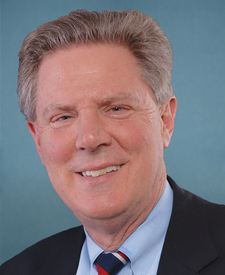
See how Frank Pallone's votes line up with your values.
DeepSyte scores Frank Pallone's record on the issues you care about — not party, not press releases. Take the 2-minute values quiz to see your personal alignment.
Sign in and take the values quiz to see how Frank Pallone's votes line up with your views.
Prediction track record
How often we called Frank Pallone's passage votes correctly, from their stated positions on each bill's tagged topics. Excludes “unclear” calls and abstentions.
Based on 3 data points across public statements and recorded votes · AI analysis of public records
118-hr-6285·Consistent
Alaska’s Right to Produce Act of 2023
92/100
What they said
Apr 28, 2026
Congressman Pallone calls on the EPA to prioritize federal engagement and assistance in investigating a suspected cancer cluster in Keyport, New Jersey, and to work with state and federal partners to remediate contamination at a former landfill site and address ongoing public health concerns.
Congressman Pallone's statement emphasizes federal environmental protection, remediation of contaminated sites, and holding corporate polluters accountable for public health harms. His no vote on Alaska's Right to Produce Act—which mandates oil and gas leasing in a sensitive wildlife refuge and limits EPA/Interior authority to enforce environmental protections—is strongly consistent with this position. Both the statement and vote reflect prioritization of environmental safeguards and federal agency engagement on contamination issues.
Pallone opposes the Trump administration's investigation into New Jersey's abortion coverage law, characterizing it as an attempt to restrict abortion access nationwide and override state protections for reproductive rights.
Pallone's statement opposes federal efforts to restrict abortion access and override state protections for reproductive rights, and the bill imposes federal criminal penalties on practitioners tied to abortion-related care. Voting no on the bill aligns directionally with opposing federal restrictions on abortion, though the statement does not address born-alive care standards or the bill's specific criminal provisions, so the match is general rather than direct.
Providing for congressional disapproval under chapter 8 of title 5, United States Code, of the rule submitted by the Environmental Protection Agency relating to "Multi-Pollutant Emissions Standards for Model Years 2027 and Later Light-Duty and Medium-Duty Vehicles".
75/100
What they said
Apr 28, 2026
Congressman Pallone calls on the EPA to prioritize federal engagement and assistance in investigating a suspected cancer cluster in Keyport, New Jersey, and to work with state and federal partners to remediate contamination at a former landfill site and address ongoing public health concerns.
Voted Nay on Providing for congressional disapproval under chapter 8 of title 5, United States Code, of the rule submitted by the Environmental Protection Agency relating to "Multi-Pollutant Emissions Standards for Model Years 2027 and Later Light-Duty and Medium-Duty Vehicles".
Pallone's statement emphasizes EPA engagement on environmental contamination and public health protection in his district. His no vote on a resolution to disapprove EPA emissions standards for vehicles aligns with this pro-EPA, pro-environmental protection stance—voting no preserves the EPA rule rather than nullifying it. However, the statement addresses a specific local contamination site while the bill concerns vehicle emissions standards, which are related but distinct environmental issues. The vote is consistent with Pallone's general environmental advocacy, though the statement does not explicitly address vehicle emissions policy.
Pairs with ambiguous language and high uncertainty are withheld until more data is available. Procedural, cloture, and amendment votes are excluded — they don't cleanly signal substantive support or opposition.
Pro analysis
AI rep analysis — Pro
Get an AI-narrated read on Frank Pallone's full voting record against your stated values — aligned themes, conflicts, notable votes, and what to watch for.
We haven't extracted campaign positions for Frank Pallone yet. Once their campaign website or position pages are processed, this card will track what they said vs how they voted.
Crossing the aisle
Passage votes where Frank Pallone broke ranks with ≥75% of Democrats. Threshold catches substantively partisan splits; unanimous-ish or close votes are excluded.
Pallone Leads NJ Delegation Members in Urging Trump to Approve Federal Disaster Assistance Following Devastating September Nor’easter
Position: The release urges the President to approve Governor Sherrill's request for a Major Disaster Declaration to provide federal assistance for New Jersey communities affected by the September 2026 nor'easter.
Washington, D.C. – Congressman Frank Pallone, Jr. (NJ-06) today lead a letter with Representatives Donald Norcross (NJ-01), Jeff Van Drew (NJ-02), Herbert Conaway, Jr. (NJ-03), Josh Gottheimer (NJ-05), Robert Menendez, Jr. (NJ-08), Nellie Pou (NJ-09), LaMonica McIver (NJ-10), Analilia Mejia (NJ-11), and Bonnie Watson Coleman (NJ-12) to President Trump urging him to swiftly approve Governor Sherrill’s recent request for a Major Disaster Declaration following the powerful nor’easter that battered New Jersey from September 23 through September 29, 2026.
The request follows a September 28 letter from Pallone calling on state and federal officials to immediately assess storm damage in anticipation of a federal disaster declaration. Those assessments have now confirmed nearly $27 million in damage across Atlantic, Cape May, and Monmouth counties.
“We are writing to express our support for Governor Sherrill’s request to declare a Major Disaster for the State of New Jersey for the impacts sustained from this severe weather event,” the lawmakers wrote. “The nor’easter brought dangerous conditions to our state causing substantial erosion. In some parts of our state, six to seven feet of tidal flooding inundated businesses and homes, municipal infrastructure such as piers and bulkheads were severely damaged, and vehicles on the street were submerged in flood water. While it appears that flood control projects, berms, and raised homes saved many areas from even worse damage, the destruction left behind from this storm is significant.”
On October 26, Governor Sherrill requested federal assistance to help communities cover the costs of storm cleanup, repair damaged roads, bridges, utilities, and other public infrastructure, and strengthen protections against future storms. A Major Disaster Declaration would unlock federal funding to help the Garden State recover from damage that local governments cannot afford to address on their own.
The full letter to President Trump is here and below:
President Trump:
From September 23 to 29, 2026, communities across New Jersey were hit by a powerful nor’easter storm that resulted in intense rainfall, tidal surges, and forceful winds. We are writing to express our support for Governor Sherrill’s request to declare a Major Disaster for the State of New Jersey for the impacts sustained from this severe weather event.
The nor’easter brought dangerous conditions to our state causing substantial erosion. In some parts of our state, six to seven feet of tidal flooding inundated businesses and homes, municipal infrastructure such as piers and bulkheads were severely damaged, and vehicles on the street were submerged in flood water. While it appears that flood control projects, berms, and raised homes saved many areas from even worse damage, the destruction left behind from this storm is significant. A post-storm assessment by the New Jersey Department of Environment’s Office of Costal Engineering determined that eight federal coastal storm risk management projects were significantly damaged. In its joint Preliminary Damage Assessments (PDAs), FEMA validated damages totaling $26,976,037 for Atlantic, Cape May, and Monmouth counties. The costs associated with these counties greatly exceed federal thresholds that indicate whether the impact to a jurisdiction exceeds the jurisdiction’s capacity to fund the cost of recovery.[1] The scope of this emergency requires critical support from the federal government for the State to recover from this storm.
Governor Sherrill requested activation of FEMA’s Public Assistance Program (Categories A-G) and the Hazard Mitigation Grant Program (HMGP) to reimburse costs to repair public infrastructure and fund projects that will prepare our state for the impacts of future catastrophic events. We urge you to use the authority granted under Section 401 of the Robert T. Stafford Disaster Relief and Emergency Assistance Act, 42 U.S.C. §§ 5121-5207 and 44 C.F.R. § 206.36 to expeditiously declare a Major Disaster for this nor’easter, so the State of New Jersey can effectively recover from this disaster and address vulnerabilities created by this storm.
Responding to major disasters is not just the federal government’s job, it’s America’s promise.
###
Pallone Unveils Lifesaving Defibrillator at Perth Amboy Youth Sports Complex
Position: The release describes a donated automated external defibrillator and temperature-controlled station installed at a youth sports complex, and references the HEARTS Act, which establishes federal grants for AEDs, CPR training, and cardiac emergency planning in schools and childcare centers.
PERTH AMBOY, NJ – Congressman Frank Pallone, Jr. (NJ-06) joined Perth Amboy Mayor Helmin Caba, state lawmakers, and local advocates today to unveil a new automated external defibrillator (AED) and temperature-controlled SaveStation at the Veterans Memorial Youth Complex, giving young athletes access to lifesaving equipment in the event of a cardiac emergency.
The AED and SaveStation were donated by the John Taylor Babbitt Foundation during Sudden Cardiac Arrest Awareness Month, with support from the Sarah Katz Foundation and local advocates. The temperature-controlled station is designed to protect the equipment from the elements and make it accessible when an emergency occurs.
“When a young athlete suffers cardiac arrest on the field or court, every second matters, and having an AED nearby can mean the difference between life and death,” said Pallone. “I want to thank the John Taylor Babbitt Foundation for generously donating this lifesaving equipment and the Sarah Katz Foundation for its advocacy and support. More than 15 years ago, we lost Kittim Sherrod during track practice in Edison, and his tragic death inspired me to write the HEARTS Act, which I am proud to say is finally the law. That law will help schools get AEDs, train students and staff in CPR, and prepare for cardiac emergencies before they happen.”
Pallone has long championed efforts to prevent sudden cardiac deaths among young athletes. After 17 year old Edison High School athlete Kittim Sherrod died from cardiac arrest during track practice in 2009, Pallone authored legislation to expand access to AEDs and CPR training in schools. That effort ultimately led to the bipartisan HEARTS Act, which was signed into law by President Biden in December 2024.
The HEARTS Act, formally known as the Cardiomyopathy Health, Education, Awareness, Research, and Training in Schools Act, establishes a federal grant program to help schools and childcare centers obtain AEDs, provide CPR and AED training, and develop plans to respond to cardiac emergencies. The law also supports public education efforts to raise awareness of cardiomyopathy and sudden cardiac arrest, conditions that can strike young people without warning. The Centers for Disease Control and Prevention estimates that approximately 2,000 Americans under age 25 die from sudden cardiac arrest each year.
The unveiling brought together Pallone, Assemblywoman Yvonne Lopez, Perth Amboy Mayor Helmin Caba, David and JoAnne Babbitt of the John Taylor Babbitt Foundation, Mike and Jill Katz of the Sarah Katz Foundation, and Mike Papale of the In A Heartbeat Foundation, all united in their commitment to preventing sudden cardiac deaths.
The new equipment at Veterans Memorial Youth Complex, located at 500 Dorothy Avenue in Perth Amboy, will help ensure that young athletes and community members have access to an AED when seconds count.
“What Dave and JoAnne Babbitt have done in memory of their son, John Taylor, means a great deal to our community. Through their foundation, they're helping make sure other families have access to lifesaving equipment when every second counts. We're grateful for their generosity and for Congressman Pallone's leadership on the HEARTS Act and his continued efforts to make AEDs more accessible. As we welcome more children and families to our Veterans Memorial Youth Complex, knowing this equipment is available gives us one more way to help keep them safe. I hope we never need it, but I'm grateful it's here,” Mayor Caba.
“Sudden cardiac arrest remains a major public health crisis. Approximately 350,000 out of hospital cardiac arrests events occur annually in the U.S., with nearly 90% fatality. Survival may be 40-70% or higher for an out of hospital witnessed cardiac arrest with CPR started immediately and an AED delivering a shock within five minutes. It is the goal of the John Taylor Babbitt Foundation to train as many people as possible in CPR and AED usage and donate AED's to ensure communities like Perth Amboy are "Heart Safe". Immediate bystander response to sudden cardiac arrest events is critical. The John Taylor Babbitt Foundation has donated over 850 AED's and supported CPR training for over 8,000 people since its inception in 2006,” David and JoAnne Babbitt of the John Taylor Babbitt Foundation.
###
Pallone, Booker Push to Protect Critical Fish That Sustain New Jersey’s Marine Wildlife and Fishing Industry
Position: Representatives Pallone and Senator Booker urge the Atlantic States Marine Fisheries Commission to substantially reduce the Atlantic menhaden total allowable catch to protect menhaden predators such as striped bass, bluefish, and ospreys, arguing the 20 percent cut for 2026 is insufficient.
WASHINGTON, DC – Congressman Frank Pallone, Jr. (NJ-06) and Senator Cory Booker (D-NJ) are calling for stronger protections for Atlantic menhaden, a small fish that plays an enormous role in New Jersey’s coastal ecosystem. Commonly known as bunker, menhaden are a vital food source for avian and marine wildlife. The lawmakers are urging the Atlantic States Marine Fisheries Commission (ASMFC) to significantly reduce fishing limits to ensure enough menhaden remain in the water to sustain the species that depend on them.
A 2025 scientific assessment found that the estimated average menhaden biomass was 37 percent lower than previously thought. The assessment also showed that cuts of 50 percent or more would be needed to reduce the likelihood of fishing pressure meeting or exceeding an ecological target designed to account for the food needs of striped bass. Despite those findings, the Commission reduced the coastwide catch limit by just 20 percent for 2026.
“This level of reduction is insufficient to address the ecological consequences of declining menhaden abundance. Reduced menhaden availability has been identified as the primary driver of low reproduction in ospreys throughout the Chesapeake Bay. A significant cut to the menhaden TAC is needed to prevent broad ecosystem impacts. We, therefore, urge the Commission to adopt a substantial reduction in the Atlantic menhaden TAC that reflects the best available science and supports the rebuilding of dependent species, and by extension the communities in our state and throughout the Atlantic Coast that rely on them,” the members wrote.
In a letter to ASMFC Atlantic Menhaden Management Board Chair Joe Cimino, Pallone and Booker warn that excessive menhaden harvesting, including industrial operations that process the fish into fish meal and oil, reduces the food available to predators throughout the Atlantic ecosystem. They argue that fishing limits must account not only for the health of the menhaden population itself, but also for the striped bass, bluefish and other species that depend on it.
The warning comes amid growing concerns about declining osprey reproduction along the Atlantic Coast. In New Jersey, researchers documented the state’s worst osprey breeding season in more than three decades in 2025. Research in the Chesapeake Bay has also identified reduced menhaden availability as a primary driver of poor osprey reproduction, underscoring the broader consequences of declining food supplies for coastal wildlife.
Mark Taylor states that, “As President of the Jersey Coast Anglers Association, with next year’s total allowable catch limits on the table, it’s vital that a major cut is made. We have been here before, and we saw our waters explode with life once the cutback was made back in 2013. Our member clubs all have watched menhaden disappear from New Jersey waters except for a short window in early spring and late fall. They’re gone. And when bunker disappear, everything that depends on them—striped bass, whales, tuna, dolphins, osprey, eagles—pays the price. We need fisheries managers to step in now and shut down industrial‑scale reduction fishing before it wipes out what’s left of the stock. At this point, a full stop on reduction fishing in the New Jersey–New York Bight isn’t just reasonable—it’s the only responsible move if we want our coastal ecosystem to recover.”
The Commission is expected to consider new coastwide fishing limits for 2027 through 2029 at its November meeting. Pallone and Booker are urging regulators to adopt a substantial reduction based on the best available science to protect New Jersey’s marine wildlife, recreational fishing communities and the health of the Atlantic Coast.
The full letter is available here.
###
Pallone Calls for NJ, Federal Officials to Survey Damage After Storm, Anticipating Federal Disaster Declaration
Position: Congressman Pallone calls on state and federal agencies to promptly survey storm damage from a nor'easter in New Jersey in anticipation of a federal disaster declaration, and states his willingness to help secure federal recovery funds.
LONG BRANCH, NJ – Following heavy rain and coastal flooding caused by a powerful nor’easter that impacted areas across New Jersey, Congressman Frank Pallone, Jr. (NJ-06) today called on the New Jersey Department of Environmental Protection (DEP), the New Jersey Office of Emergency Management (NJOEM), as well as the U.S. Army Corps of Engineers, and the Federal Emergency Management Agency (FEMA), to conduct a prompt survey to assess the damage to the state in anticipation of the necessity for a federal disaster declaration.
“In some parts of my district 6 to 7 feet of tidal flooding inundated businesses and homes, municipal infrastructure such as piers and bulkheads are severely damaged, and cars on the street are submerged in flood water,” Pallone wrote. “While it appears that flood control projects, berms, and raised homes saved many areas from even worse damage, the destruction left behind from this storm is significant.”
Pallone also thanked Governor Sherrill for her proactive state of emergency declaration, and reiterated his willingness to work with state officials to provide the necessary federal funds to help towns, businesses, and residents recover from the storm.
Full text of the letter is available here and below:
Dear Commissioner Potosnak and Acting State Director Hengemuhle:
Over the weekend, my district and areas across New Jersey were hit by a powerful nor’easter storm that resulted in intense rainfall, tidal surges, and forceful winds. I appreciate your willingness to conduct a prompt survey to assess damage to our state. This is necessary in my effort to secure a federal disaster declaration, should the damage survey thresholds be met.
From power outages to substantial coastal erosion, this nor’easter has brought dangerous conditions to our state. In its most recent forecast, the National Weather Service warned that the nor'easter would likely continue heavy rain and tidal surges on mid-Atlantic and northeastern states through Monday night. Coastal sections of New Jersey are seeing significant flooding. In some parts of my district, six to seven feet of tidal flooding inundated businesses and homes, municipal infrastructure such as piers and bulkheads are severely damaged, and cars on the street are submerged in flood water. While it appears that flood control projects, berms, and raised homes saved many areas from even worse damage, the destruction left behind from this storm is significant.
I appreciate Governor Sherrill’s proactive state of emergency declaration, and I urge the DEP and OEM to gather information on the full extent of the damage as soon as it is safe to do so.
Thank you for your prompt attention to this matter. I stand ready to work with you to provide the necessary federal funds to help towns, businesses, and residents recover from this devastating storm.
Sincerely,
FRANK PALLONE, JR.
Member of Congress
CC: US Army Corps of Engineers
Federal Emergency Management Agency
Pallone Urges FERC to Protect PJM Customers with Stronger Data Center Rules
Position: Ranking Member Pallone urges FERC to strengthen PJM's proposed data center rules so data centers pay all the costs they cause, make the requirement to bring new generation online permanent, and make the data center registry public. He states that the proposals are a step forward but do not go far enough to protect consumers from rising power bills.
WASHINGTON, D.C. – Energy and Commerce Committee Ranking Member Frank Pallone, Jr. (D-NJ) wrote to the Federal Energy Regulatory Commission (FERC) today urging the Commission to use its authority to approve and strengthen recent proposals put forth by PJM surrounding its handling of data centers.
“Americans are deeply frustrated and concerned that the rapid and unceasing development of data centers is driving up their monthly energy bills. At the end of the day, protecting Americans’ power bills is FERC’s responsibility,” Pallone wrote in his letter to FERC Chairman Laura Swett. “While I support many of the provisions included in the proposals, I am concerned that they do not go far enough and believe [FERC] should use its authority to improve PJM’s proposals to protect families across the mid-Atlantic region.”
Pallone explained that data centers are responsible for an increase in PJM capacity market costs of nearly $30 billion since the summer of 2024. Meanwhile, demand for electricity over the next decade is expected to explode, with PJM forecasting a roughly four percent increase in peak demand each year driven almost entirely by data centers.
PJM is therefore suggesting it implement three reforms: requiring data centers to pay for new power plants to make PJM’s grid reliable, requiring data centers to bring their own new generation capacity online, and creating a registry of data centers within PJM’s boundaries.
Pallone writes that while he supports these goals, FERC should impose the following improvements to strengthen them:
Ensure that data centers are responsible for all the costs they cause, not just for new power plants designed to shore up reliability;
Make the requirement for data centers to bring their own new generation capacity online permanent; and
Make the proposed data center registry public so that every American has access to the information they need to protect and empower their communities.
“Last year, my constituents saw an outrageous 20 percent increase in their power bills, fueled by skyrocketing prices in PJM’s capacity market. Over 90 percent of the increased demand PJM expects to see on its system by the end of the decade is from data centers,” Pallone continued. “If FERC gets this right, then it will have granted American families a measure of protection from the costs imposed by data centers. If the Commission falls short, then American families will pay the price.”
Pallone has publicly and repeatedly called for substantial federal guardrails to protect communities against data centers’ impact on their air, water, power grid, and monthly utility bills. If Congress fails to adopt strong guardrails, he has said a federal moratorium on data centers should be put in place.
While the guardrails proposed by PJM are not sufficient to fully protect consumers, Pallone writes that they represent important progress, and FERC should incorporate the critical improvements highlighted in his letter and approve them.
The full letter is available HERE.
###
Pallone’s Bipartisan AM Radio for Every Vehicle Act Passes House
Position: The release supports legislation directing the Department of Transportation to require automakers to include AM radio as standard equipment in new passenger vehicles, and to disclose to consumers any vehicle lacking AM radio before the requirement takes effect.
Washington, DC - Congressman Frank Pallone, Jr. (D-NJ), Ranking Member of the House Energy and Commerce Committee, today applauded House passage of his bipartisan AM Radio for Every Vehicle Act, a bill to ensure AM radio remains available in new vehicles sold in the United States.
Pallone introduced the legislation with Congressman Gus Bilirakis (R-FL) in response to automakers removing AM radio from some new vehicles, threatening access to an important source of emergency information when other communications systems fail. Their bill directs the U.S. Department of Transportation to issue a rule to require automakers to include AM radio as standard equipment in new passenger vehicles.
“Today, the House acted to protect a service that millions of Americans rely on every day and that can become a lifeline when disaster strikes,” Pallone said. “During Superstorm Sandy – when power, cell service, cable, and internet went down across New Jersey – radio listenership in my district surged 247 percent as people tuned in for critical information on AM radio stations. I’m proud we passed this bipartisan bill today, and I’ll keep working to get it across the finish line.”
AM radio remains an important part of the nation’s Emergency Alert System. A network of AM broadcast stations serves as Primary Entry Points for emergency alerts, and the Federal Emergency Management Agency (FEMA) invests in maintaining their ability to continue broadcasting during major disasters.
Pallone’s AM Radio for Every Vehicle Act would:
Require automakers to maintain free AM radio in new passenger vehicles sold in the United States.
Require clear disclosure to consumers if a vehicle lacks AM radio access before the new requirement takes effect.
The legislation previously advanced through the House Energy and Commerce Committee with bipartisan support in September 2025. Today’s House passage sends the legislation to the Senate for further consideration.
###
Pallone: Trump Stiffs New Jersey Again on Disaster Aid
Position: Criticizes the Trump Administration's denial of New Jersey's appeal for $84.4 million in federal disaster aid following a February blizzard, and calls for congressional oversight of FEMA's handling of the request.
WASHINGTON, DC — Congressman Frank Pallone, Jr. (NJ-06) today blasted President Trump for denying New Jersey Governor Mikie Sherrill’s appeal for $84.4 million in federal disaster aid following February’s deadly blizzard.
“Donald Trump is stiffing New Jersey taxpayers out of $84 million in disaster aid that his own government determined we qualified for. Twelve people died. New Jersey communities were buried under record snowfall. But apparently if you live in a state Trump doesn’t like, you’re on your own,” said Pallone.
“And where are the Republicans in Congress? I asked the committee chairs responsible for overseeing FEMA to investigate this weeks ago. Not one of them even bothered to respond. Trump is treating federal disaster aid like his personal political slush fund, and Republicans in Congress are too afraid to lift a finger to stop him,” Pallone continued.
In August, Pallone called on the Republican chairs of the congressional committees with jurisdiction over FEMA to investigate Trump’s initial denial of New Jersey’s disaster declaration after reports that regional FEMA and NOAA officials determined New Jersey and other affected states met federal thresholds for assistance. The Republican chairs have not responded. Governor Sherrill appealed the denial on July 20, seeking Public Assistance, including snow assistance for 19 counties, and statewide Hazard Mitigation assistance. Today the Trump Administration denied that appeal.
###
Pallone Leads 87 House Democrats Demanding Answers on 50+ Deaths in ICE Custody, Medical Care at Private Detention Centers
Position: The release calls on DHS and ICE to account for deaths and medical-care failures in immigration detention, and states that private detention contractors should not continue to profit from taxpayer dollars if facilities cannot be operated in compliance with federal law, with closure of such detention centers called for.
WASHINGTON, D.C. —Congressman Frank Pallone, Jr. (NJ-06), Ranking Member of the House Energy and Commerce Committee, today led 87 House Democrats in demanding that the Department of Homeland Security (DHS) and U.S. Immigration and Customs Enforcement (ICE) account for deaths and medical-care failures across the nation’s immigration detention system following the latest death connected to GEO Group-operated Delaney Hall in Newark, New Jersey. In a letter to DHS Secretary Markwayne Mullin and ICE Acting Director David J. Venturella, the lawmakers cite more than 50 deaths in ICE custody since January 20, 2025, additional deaths shortly after individuals were released from custody, and more than 300 allegations of medical neglect across at least 33 states. The lawmakers point to reported failures at facilities operated by major private ICE contractors including GEO Group and CoreCivic and warn that “the federal government cannot outsource its responsibility to provide adequate medical care” while continuing to pay contractors when deficiencies in care put lives at risk.
“The federal government cannot outsource its responsibility to provide adequate medical care, nor can ICE continue paying private companies to detain people without holding those companies accountable when serious deficiencies in care put lives at risk,” the members wrote. “If they cannot be operated in compliance with federal law and the Constitution, GEO Group, CoreCivic, and any other private contractors should not continue to profit from taxpayer dollars, and the detention centers must be closed.”
Pallone and his colleagues are demanding a facility-by-facility accounting of deaths, serious medical emergencies, delays in medical treatment, interruptions in prescription medications, access to specialists and diagnostic testing, and medical and mental-health staffing since January 20, 2025. They are also asking ICE to identify individuals who were released or transferred after a serious medical emergency or while hospitalized and whether they subsequently died, following ICE’s decision to stop requiring public reporting and congressional notification of deaths occurring within 30 days of release. The lawmakers are demanding ICE disclose which private companies provide medical care at each detention facility and how many medical-care violations have resulted in corrective actions, financial penalties, contract modifications or termination.
The letter can be found here and below:
Secretary Mullin and Acting Director Venturella,
As Members of the House of Representatives, we write with profound outrage following the latest death connected to Delaney Hall Immigration Detention Facility in Newark, New Jersey operated under a billion-dollar contract by GEO Group, a for-profit prison contractor. This tragic death is part of a broader and deeply troubling pattern of deaths occurring in Immigration and Customs Enforcement (ICE) detention facilities across the country. More than 50 people have died in ICE custody since January 20, 2025, with additional deaths occurring shortly after individuals were released from ICE custody.[1] These deaths raise serious questions about the conditions in which individuals are being detained, the quality and timeliness of the medical care they receive, and whether ICE and its private detention center contractors are meeting their responsibilities to safeguard the health and well-being of people in their custody.
Detention should never be a death sentence. Yet reports from detention centers across the country have documented delayed and denied medical treatment, failures to provide necessary medications, inadequate treatment of chronic illnesses, insufficient mental health services, and dangerous delays in emergency care. More than 300 allegations of medical neglect have been identified in federal court filings involving individuals detained across at least 33 states. Detainees have reported going without medications for high blood pressure, diabetes, depression, epilepsy, Parkinson’s disease, HIV, and other serious conditions, while requests for medical attention have gone unanswered for weeks as their conditions deteriorated.[2]
These concerns are particularly serious about facilities operated by GEO Group and CoreCivic, two of ICE’s largest private detention contractors. The federal government cannot outsource its responsibility to provide adequate medical care, nor can ICE continue paying private companies to detain people without holding those companies accountable when serious deficiencies in care put lives at risk.
At GEO Group’s Delaney Hall operations, detainees and their families have repeatedly reported difficulty obtaining medications and timely medical treatment.[3] Members of Congress have raised these concerns with the Department of Homeland Security (DHS) repeatedly, and recent reporting has described seriously ill detainees being released from the facility while families and advocates continue to raise questions about the medical treatment they received while in custody.[4] ICE’s subsequent decision to stop requiring public reporting and congressional notifications of deaths occurring within 30-days of release makes it even more difficult to determine whether inadequate medical care in federal custody contributed to these deaths.[5]
The concerns involving GEO Group are not limited to New Jersey. At GEO Group’s Adelanto ICE Processing Center in California, a federal court recently ordered significant changes to conditions at the facility and required independent monitoring of medical care. The order followed allegations concerning inadequate medical treatment and other conditions that placed detainees at risk.[6] Taken together, the documented problems at Delaney Hall and other GEO-operated facilities demand federal oversight and accountability rather than continued acceptance of contractor assurances that adequate medical care is being provided.
Serious deficiencies have also been documented at facilities operated by CoreCivic. In February, cases of measles, a highly contagious virus that spreads in close quarters, occurred in two CoreCivic detention facilities in Arizona and Texas. Dozens of detainees at CoreCivic facilities have also complained of hours-long waits to see nurses, only to be turned away and told their conditions were not serious enough to warrant treatment. Detainees with injuries have reportedly waited days or even weeks for x-rays, while people with diabetes have struggled to receive regular access to insulin. Many detainees and their attorneys also reported denial of access to outside specialists, including oncologists and dentists. Even when detainees are able to see a doctor and receive a prescription, they are often forced to wait days or weeks for their medication to be provided.[7] Infectious disease outbreaks are particularly concerning in detention settings where overcrowing and inadequate access to medical care can place both detained individuals and surrounding communities at risk.
At CoreCivic’s California City Detention Facility, these concerns have been substantiated through independent court oversight. A court-appointed medical monitor recently documented delays in medical assessments and treatment, missed medications, and inadequate follow-up care. The monitor concluded that the facility lacked a reliable system for consistently providing adequate health care and that these deficiencies placed detainees at risk of immediate and long-term harm.[8] A separate investigation by the California Department of Justice found that medical staffing at the facility had failed to keep pace with the growing detained population. At the time of the state’s inspection, the facility reportedly had only one physician for nearly 1,000 detainees.[9]
Similar concerns have been identified regarding facilities operated by other major ICE contractors. At Winn Correctional Center in Louisiana, operated by LaSalle Corrections, two detainees died in less than two months this year. A federal inspection identified deficiencies involving medical care and medical recordkeeping, including failures to maintain updated treatment documents and laboratory testing records.[10] At the Buffalo Federal Detention Facility in New York, where ICE contracts with Akima Global Services, medical staffing shortages have contributed to significant delays in care. A 2025 DHS Inspector General inspection found that staffing shortages resulted in detainees waiting as long as five months for dental care.[11] At the Management & Training Corporation operated Imperial Regional Detention Facility in California, two detainees died over the past year amid concerns about access to medical care as the population increased. One death, at the detention center in Camp East Montana operated by Amentum Services Inc, was even ruled to be a homicide by a local medical examiner and the Government Accountability Office documented preventable deaths and medical neglect in the facility in a June 2026 report.[12]
These deaths cannot be viewed in isolation from the documented failures in medical care occurring throughout ICE’s detention system. Delayed treatment, interruptions in prescription medications, inadequate medical and mental health staffing, failures to respond appropriately to serious medical conditions, and gaps in emergency and follow-up care have devastating and fatal consequences. DHS and ICE have an obligation to determine whether failures in medical care contributed to deaths in federal custody or shortly after release, make those findings available to Congress, and hold responsible officials and contractors accountable.
Federal standards of care require ICE detention facilities to provide timely and appropriate medical care to individuals in their custody. Under these standards, detainees must receive a physical examination and mental health screening within 14 days of arrival. Detention facilities must also have a physician available around the clock, and prescription medications and other necessary treatments must be provided in a timely manner.[13] Yet a recent investigation into ICE’s detention oversight system found that facilities continue to receive high inspection ratings despite reports of serious medical and safety deficiencies, raising more concerns about whether ICE’s inspection process is effectively identifying and correcting dangerous conditions.[14] The repeated reports of medical neglect across facilities operated by multiple private contractors raise fundamental questions about whether ICE is adequately enforcing its own requirements and what consequences, if any, contractors face when they fail to comply.
Accordingly, we request your response to the following:
1. Provide data on access to medical and mental health care provided to individuals in ICE custody since January 20, 2025, including the average time from intake to initial medical screening, comprehensive health assessment, receipt of prescribed medications, and the average response time for routine and urgent medical requests. Identify, by facility, the number of instances in which required medical evaluations or treatment were delayed and the length of those delays.
2. Provide, by facility, data on specialty medical care and diagnostic services, including the number of requests for outside specialists, diagnostic testing, and follow-up appointments; the number approved and denied; average wait times; and any current backlogs.
3. Describe in detail ICE’s procedures for ensuring continuity of prescription medications, including medications prescribed before detention and time-sensitive medications such as insulin, HIV medications, seizure medications, psychiatric medications, anticoagulants, and transplant medications. For each facility, identify the number of documented medication interruptions, and any current backlogs in fulling or administering prescriptions.
4. Provide, by facility, data on serious medical emergencies in ICE custody since January 20, 2025, including hospitalizations, emergency-department visits, suicide attempts, overdoses, cardiac events, seizures, and other life-threatening incidents. Identify any instances in which treatment, transportation, or hospitalization was delayed and the length of the delay.
5. Provide the total number of deaths in ICE custody since January 20, 2025, including the facility, date, cause of death when known, and whether the death remains under investigation. How many deaths involved documented medical complaints or concerns about the adequacy or timeliness of medical care? Provide autopsy results and other records for every death in ICE custody, or an explanation of why an autopsy was not conducted.
6. Identify all individuals since January 20, 2025, who were released from ICE custody or transferred to another facility after experiencing a serious medical emergency or while hospitalized. For each individual, provide the facility and facility operator, date and reason for the release or transfer, the individual’s medical condition at the time, and whether the individual subsequently died.
7. Describe ICE’s mental health and suicide-prevention procedures, including screening requirements, suicide-watch policies, available interventions, and the number of individuals identified as being at risk of suicide since January 20, 2025.
8. Provide current medical staffing levels and vacancies at each ICE detention facility, including physicians, nurses, nurse practitioners, physician assistants, mental health professionals, dentists, and pharmacists. Are licensed medical professionals available onsite 24 hours a day at each facility?
9. Identify the private contractors responsible for providing medical, mental health, and pharmaceutical services at each ICE detention facility and describe how ICE monitors their performance. How many medical care violations have resulted in corrective actions, financial penalties, contract modifications, or contract termination since January 20, 2025?
10. Describe ICE’s process for inspecting and enforcing compliance with applicable detention standards, including the number of medical-care deficiencies identified since January 20, 2025, the number that remain unresolved, and the corrective actions required.
11. What mechanisms are available to detained individuals and their attorneys to report inadequate medical care or violations of detention standards, and what protections are in place against retaliation?
12. What steps has ICE taken to address systemic concerns regarding medical care, medication access, staffing, serious medical emergencies, and deaths across its detention system, and what additional measures does the agency plan to implement?
13. Identify all ICE detention contracts executed, amended, or renewed since January 20, 2025, that include provisions stating or asserting that state or local laws, regulations, licensing requirements, inspections, or enforcement actions “shall not apply” to the detention facility. Why is ICE attempting to prevent state and local authorities from independently inspecting these facilities?
As Secretary of the Department of Homeland Security and Acting Director of Immigration and Customs Enforcement, you both have the authority and responsibility to address the serious deficiencies at these facilities. If they cannot be operated in compliance with federal law and the Constitution, GEO Group, CoreCivic, and any other private contractors should not continue to profit from taxpayer dollars, and the detention centers must be closed. We expect your prompt response no later than Tuesday, September 1st. As Members of Congress, we remain prepared to exercise our constitutional oversight authority to ensure that detainees are treated humanely and federal law is faithfully executed.
Pallone’s letter was signed by 87 Members of Congress: Amo, Gabe; Barragán, Nanette; Brownley, Julia; Brown, Shontel; Carson, André; Carter, Troy; Casar, Greg; Castro, Joaquin; Chu, Judy; Clarke, Yvette; Conaway, Herbert; Costa, Jim; Courtney, Joe; Crockett, Jasmine; Crow, Jason; Davis, Danny; Dean, Madeleine; DeGette, Diana; DeSaulnier, Mark; Dexter, Maxine; Dingell, Debbie; Escobar, Veronica; Espaillat, Adriano; Foster, Bill; Frost, Maxwell; Garamendi, John; García, Jesús; Garcia, Robert; Garcia, Sylvia; Goldman, Daniel; Gomez, Jimmy; Green, Al; Grijalva, Adelita; Hayes, Jahana; Hernández, Pablo; Hoyle, Val; Huffman, Jared; Ivey, Glenn; Jacobs, Sara; Johnson, Henry; Kamlager-Dove, Sydney; Khanna, Ro; Krishnamoorthi, Raja; Leger Fernandez, Teresa; Lynch, Stephen; McIver, LaMonica; Mejia, Analilia; Menefee, Christian; Menendez, Robert; Meng, Grace; Morrison, Kelly; Moulton, Seth; Nadler, Jerrold; Neguse, Joe; Norcross, Donald; Norton, Eleanor; Ocasio-Cortez, Alexandria; Omar, Ilhan; Pallone, Frank; Pelosi, Nancy; Pettersen, Brittany; Pou, Nellie; Quigley, Mike; Ramirez, Delia; Randall, Emily; Rivas, Luz; Ruiz, Raul; Salinas, Andrea; Scanlon, Mary Gay; Schakowsky, Janice; Scott, Robert; Simon, Lateefah; Stansbury, Melanie; Thanedar, Shri; Titus, Dina; Tlaib, Rashida; Tonko, Paul; Torres, Norma; Torres, Ritchie; Tran, Derek; Underwood, Lauren; Vargas, Juan; Vasquez, Gabe; Walkinshaw, James; Waters, Maxine; Watson Coleman, Bonnie; Williams, Nikema; Wilson, Frederica.
###
Pallone Announces $9.6 Million for Carteret Ferry Service Expansion
Position: The release announces $9.6 million in FTA funding to NJ TRANSIT for a new ferry vessel for the Carteret Ferry Service, and states support for public transportation investment as a means to reduce traffic congestion.
CARTERET, NJ — Congressman Frank Pallone, Jr. (NJ-06) today announced that the Federal Transit Administration (FTA) is officially awarding $9.6 million to NJ TRANSIT for the Carteret Ferry Service Expansion Project to purchase a new ferry vessel, the latest federal investment Pallone has helped deliver to establish passenger ferry service between Central New Jersey and New York City.
“People in Central Jersey should not have to spend hours of their lives sitting in traffic just to get to and from work. We need to give commuters more reliable ways to get where they need to go, and that means actually investing in public transportation,” said Pallone. “For years, I’ve fought for federal funding to make the Carteret ferry a reality because projects like this make a real difference in people’s lives. This $9.6 million investment helps to put another vessel on the water and takes cars off our overcrowded roads. That is exactly what federal infrastructure dollars should be doing.”
The funding builds on years of federal investment Pallone has helped secure for the project, including $6 million in Fiscal Year 2023 federal funding for the Carteret Ferry Terminal, a $5.6 million RAISE grant for construction of the multimodal terminal, and a previous $6 million FTA Passenger Ferry Grant to purchase a ferry vessel.
“Grant funding of this magnitude would not be possible without strong congressional support for public transportation. We gratefully acknowledge New Jersey’s congressional delegation, led by New Jersey’s senior U.S. Senator, Cory Booker, and U.S. Senator Andy Kim, as well as Congressman Frank Pallone, one of the delegation’s most senior members. Senator Booker has been a leading voice in advocating for public transportation, renewable energy and the revitalization of urban communities throughout New Jersey. This award will help us establish a modern, reliable and environmentally responsible ferry service that expands access to employment opportunities, reduces roadway congestion and strengthens connections between Central New Jersey and New York City,” said Carteret Mayor Dan Reiman.
The Carteret Ferry Service is planned to connect Central New Jersey with Manhattan and provide commuters with an alternative to driving and existing rail service. The broader waterfront project includes a multimodal terminal connecting ferry passengers with NJ TRANSIT buses, vehicles, and nearby pedestrian and bicycle routes.
###
Pallone Announces $1 Million to Support Survivors of Domestic Violence, Sexual Assault in Middlesex County
LONG BRANCH, NJ – Congressman Frank Pallone, Jr. (NJ-06) today announced $1 million for Women Aware Inc. in New Brunswick to strengthen services for survivors of domestic violence in Middlesex County.
“Women Aware provides lifesaving support for survivors at some of the most difficult moments in their lives, and this funding will help strengthen those services in Middlesex County,” Pallone said. “At a time when many victim service organizations are facing devastating funding uncertainty, this investment is especially important. Survivors deserve stability, safety, and access to care without wondering whether support programs will disappear. I will keep fighting to ensure New Jersey organizations have the federal resources they need to continue this work.”
The funding will support the development and expansion of the Middlesex County Family Justice Center, direct services for survivors, and specialized training for law enforcement, prosecutors, and emergency room personnel responding to domestic violence and strangulation cases.
Last year, Pallone led a push urging the Trump Administration to release nearly $10 million in aid for New Jersey programs supporting survivors of domestic violence, sexual assault, child abuse, and human trafficking after delays threatened critical services statewide.
Women Aware previously warned that reductions in federal Victims of Crime Act funding could force cuts to residential and non-residential programs that help survivors rebuild their lives and regain stability. Pallone has continued pressing the federal government to release delayed victim assistance funding to prevent layoffs, service reductions, and closures at organizations across New Jersey.
“This grant strengthens the cornerstone of safety in our community by allowing us to provide critical training for law enforcement and medical personnel. It ensures that when a survivor reaches out, whether in an emergency room or a courtroom, they are met with a response that is trauma-informed, expert, and rooted in justice,” said Women Aware CEO Phyllis Yonta, MSW, MA, DVS.
###
Source: GDELT 2.0 GKG, filtered to a curated list of national outlets. Inclusion is not endorsement; opinion pieces and reported news are mixed.
Recent stock activity
Periodic transaction reports filed under the STOCK Act — disclosed by the rep, sourced from public filings.
No disclosed trades on record.
Source: open-data mirrors of the Senate eFD and House Clerk financial-disclosure systems. Disclosure within 30 days of trade is required by law (45 for spouse/dependent trades).
Top PAC donors · 2026 cycle
Political action committees that gave the most to this rep's principal campaign committee this cycle. PAC giving is direct organizational support — industry, ideological, or leadership.
4.NATIONAL ASSOCIATION OF BROADCASTERS PAC (NABPAC)Tech2 contributionsBroadcasting-industry PAC — backs candidates supporting media ownership rules, spectrum policy, and regulatory positions favoring traditional broadcast television and radio.AI$10,000
5.VERIZON COMMUNICATIONS INC GOOD GOVERNMENT CLUB (VERIZON PAC)2 contributions$10,000
6.FRESENIUS MEDICAL CARE HOLDINGS INC PAC2 contributions$10,000
7.SERVICE EMPLOYEES INTERNATIONAL UNION COPE (SEIU COPE)2 contributions$10,000
8.MICROSOFT CORPORATION PAC2 contributions$10,000
9.AMERICAN ELECTRIC POWER PAC2 contributions$10,000
10.AFLAC INC PAC2 contributions$10,000
Source: OpenFEC (api.open.fec.gov) Schedule A receipts where contributor type is “committee.” Aggregated by contributing committee. Self-transfers from joint-fundraising / victory committees are excluded.
Top individual contributors · 2026 cycle
Itemized individual contributions over $200 to this rep's campaign committee, aggregated by donor employer. PAC giving is shown above; this section is people, not organizations.
1.SELF$24,250
2.ANTHROPIC PBC$21,000
3.SAKER SHOPRITES INC$14,000
4.BROWNSTEIN HYATT FARBER SCHRECK LLP$13,450
5.BGR GROUP$11,800
6.SALT POINT STRATEGIES$11,500
7.KOUNTOUPES DENHAM CARR & REID$11,300
8.RESOLUTION PUBLIC AFFAIRS$11,300
9.TIBER CREEK GROUP$10,400
10.GREENBERG TRAURIG PA$10,000
Source: OpenFEC Schedule A receipts where contributor type is “individual,” aggregated by the donor's self-reported employer. This is a geographic / industry correlation, not a corporate endorsement.