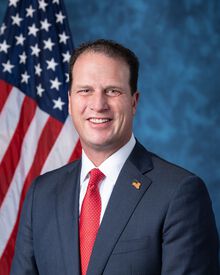
See how August Pfluger actually votes — against your values.
DeepSyte scores August Pfluger's record on the issues you care about — not party, not press releases. Take the 2-minute values quiz to see your personal alignment.
Sign in and take the values quiz to see how August Pfluger's votes line up with your views.
Prediction track record
How often we called August Pfluger's passage votes correctly, from their stated positions on each bill's tagged topics. Excludes “unclear” calls and abstentions.
No paired statements and votes yet for August Pfluger
We haven't yet found statement/vote pairs on the same topic for August Pfluger. This usually means either the rep hasn't taken public positions on bills that have come to a passage vote, or those bills haven't been tagged yet. The checker runs as new press releases and votes come in.
Pro analysis
AI rep analysis — Pro
Get an AI-narrated read on August Pfluger's full voting record against your stated values — aligned themes, conflicts, notable votes, and what to watch for.
We haven't extracted campaign positions for August Pfluger yet. Once their campaign website or position pages are processed, this card will track what they said vs how they voted.
Crossing the aisle
Passage votes where August Pfluger broke ranks with ≥75% of Republicans. Threshold catches substantively partisan splits; unanimous-ish or close votes are excluded.
1
Cross-aisle vote
118-s-4077·Dec 17, 2024·82% of R voted YES
A bill to designate the facility of the United States Postal Service located at 180 Steuart Street in San Francisco, California, as the "Dianne Feinstein Post Office".
Rep. Pfluger, Secretary Burgum Showcase Permian Basin Innovation During Diamondback Energy Tour
Subscribe to my newsletter to get the latest news and updates from my office.
MIDLAND, TX — Congressman August Pfluger (TX-11) joined U.S. Secretary of the Interior Doug Burgum for a tour of a Diamondback Energy e-frac site, where Secretary Burgum witnessed the cutting-edge innovation taking place in the heart of the Permian Basin.
Following the tour, Congressman Pfluger and Secretary Burgum participated in a roundtable discussion with industry executives and local leaders to discuss what they are experiencing on the ground and how Congress and the Trump Administration can help unlock and maintain American energy dominance.
"As the crown jewel of American energy production, the Permian Basin is the cornerstone of American jobs, national security, and economic prosperity. It was a privilege to welcome Secretary Burgum to see its impact firsthand. From touring a Diamondback e-frac site to a productive roundtable with industry leaders, our focus was on advancing practical solutions for today's challenges. Secretary Burgum has been a strong leader in advancing commonsense deregulatory efforts and fostering a more predictable regulatory environment that allows businesses to thrive. The world depends on the Permian Basin, and together, we are focused on unleashing its full potential," said Congressman Pfluger.
"This week’s visit with Congressman Pfluger to a critical Diamondback Energy operation underscored why President Donald J. Trump’s American Energy Dominance Agenda is so important to the future of our nation," said Secretary of the Interior Doug Burgum. "Expanding and unleashing domestic energy production in regions such as the Permian Basin is a matter of both economic strength and national security because every barrel produced supports American jobs, strengthens our economy and reduces dependence on foreign adversaries. The Trump administration is grateful for the hardworking men and women on the ground who are helping power a new era of American strength and innovation through the production of reliable, affordable energy, and we will continue advancing responsible energy development, cutting unnecessary red tape and unleashing America’s full energy potential for the benefit of every American."
“It was an honor to welcome Secretary Burgum and Congressman Pfluger and highlight the technology and people behind Diamondback’s operations. The Permian Basin is essential to reliable, affordable energy, and we remain focused on safe, efficient development while working with policymakers to keep American energy competitive and secure,” said Kaes Van’t Hof, Chief Executive Officer and Director of Diamondback Energy.
Pictures from the day are available for broadcast and distribution here, and a few are highlighted below as well.
Jay Hendricks from CBS7 joined the Congressman and Secretary on the tour for an exclusive interview and behind-the-scenes experience. Read the full story and watch the interview here or by clicking the image below:
In Case You Missed It (ICYMI):
On Sunday, Rep. Pfluger also joined Sunday Morning Futures with Maria Bartiromo to highlight the success and incredible work of the Permian Basin. As Rep. Pfluger said in an X post on the interview, "The Permian Basin is the crown jewel of American energy production. We’ve never been stronger in our energy position thanks to the innovation of small, independent companies in the Permian Basin like Diamondback Energy. Energy security will always be national security."
During the interview, Rep. Pfluger also emphasized the critical role the Permian Basin has in helping us lock in American energy dominance for generations to come. With OPEC unreliable and the Middle East increasingly unstable, the United States remains the world's most reliable and affordable source of oil and gas. We must provide this region with the predictability and support our producers urgently need.
Watch the full interview here or by clicking the image below:
Rep. Pfluger Hosts 112th Community Town Hall in Robert Lee
Subscribe to my newsletter to get the latest news and updates from my office.
ROBERT LEE, TX—Congressman August Pfluger (TX-11) hosted his 112th community town hall in Robert Lee to discuss DHS funding, highlight the successes of the House-passed 2026 Farm Bill, and address water supply concerns in the region. Congressman Pfluger looks forward to partnering with state and local leaders to address the water supply concerns discussed during the meeting.
Congressman Pfluger also gave a special recognition to Judge Hal Sapin, who will be retiring at the end of this year after more than a decade of distinguished service. Judge Spain's tenure has been defined by steady leadership and a deep commitment to the people of Coke County. Before entering elected office, Judge Spain served as County Commissioner and with the Texas A&M AgriLife Extension Service.
"It's always great to be in Coke County and meet face to face with the men and women I am blessed to fight for in Washington. These conversations are invaluable in helping me serve you in Congress, and I sincerely appreciate everyone who took the time to attend, listen, and ask questions," said Congressman Pfluger. "It was also a distinct honor to recognize Judge Spain for his years of steadfast service to this community. I have been extremely grateful for his leadership and friendship, and I wish him all the best in his future endeavors."
Photos from the town hall available for broadcast and distribution can be found HERE, and a few are highlighted below.
Following the town hall, Congressman Pfluger joined Ethan Purcell from Fox West Texas to recap the meeting and discuss key wins from the Farm Bill. Raley Kirk, a fourth-generation Central Texas rancher raising sheep and Spanish goats in San Saba, Texas, also joined Fox West Texas to urge the importance of this legislation for her family operations and the need for the Senate to take it up quickly.
Watch the full interview HERE or by clicking the image below:
Rep. Pfluger, Administrator Zeldin Discuss Commonsense EPA Reforms to Protect Health, Power Growth, and Restore Accountability
Position: Rep. Pfluger supports EPA deregulation and cost-benefit analysis that prioritizes affordable energy production over expansive environmental rules, arguing that the previous administration's regulatory approach harmed public health by making energy unaffordable. He endorses the Loper Linden decision limiting administrative authority and praises the current EPA's streamlined approach to environmental rules.
Subscribe to my newsletter to get the latest news and updates from my office.
WASHINGTON, DC — Congressman August Pfluger (TX-11), a member of the House Energy and Commerce Committee, participated in a high-profile Environment Subcommittee hearing with the Environmental Protection Agency (EPA) Administrator Lee Zeldin.
During the hearing, Rep. Pfluger underscored the significance of the Supreme Court's landmark Loper Bright decision to rein in the unelected administrative state and called out his colleagues who were unaware of it, given its crucial role in federal rulemaking. He also asked Administrator Zeldin to outline how the EPA is returning to a clear reading and implementation of the Clean Air Act as written to protect public health without stifling economic innovation or progress.
Rep. Pfluger also highlighted the remarkable strides energy producers in the Permian Basin have made in reducing emissions while simultaneously growing energy output. Additionally, he welcomed an update from Administrator Zeldin on the OOOOb and OOOOc methane rules and the HFC Management Rule.
Watch Rep. Pfluger's questioning HERE or by clicking on the image below.
Read Rep. Pfluger's exchange with EPA Administrator Zeldin below:
Rep. Pfluger: Director, thank you for being here. Thank you for your service in riding the ship. My colleagues across the aisle claim that this EPA deregulatory actions are killing Americans. Couldn't be more false. The truth is actually the opposite, and what kills Americans is unaffordable energy in an unreliable electric grid, and that's exactly what the previous administration's EPA was delivering. The Biden EPA imposed trillions of dollars in regulatory costs and based on widely-inflated benefit calculations, assigning speculative dollar values to statistical lives while ignoring the real-world consequences of making energy unaffordable. 25 million American households have reported going without food or medicine to pay their energy bills. That is the human cost of regulatory excess. This EPA is doing what the agency is supposed to: rigorous, honest cost-benefit analysis, not rubber-stamping regulations that strangle reliable energy production while claiming to save lives on a spreadsheet. Affordable, reliable energy is the foundation of American health and safety, and Administrator Zeldin, your reforms are protecting Americans not by speculating about benefits, but by delivering them. And I'll get to Loper Bright. It's shameful that some of our colleagues have no idea what Loper Bright actually is and what it does. Thank you for the words that you had yesterday at a hearing here on Capitol Hill, and Loper Bright happened because of left-wing EPA overreach. That's exactly why we are here. And I'd like to ask you, how do you respond to the claim that faithfully reading the Clean Air Act as written somehow harms public health, and what actual authorities did Congress provide that this administration is now properly executing to benefit health?
Administrator Zeldin: Thank you for asking. For a long time, that Chevron Doctrine was in place. This got challenged. For those who aren't familiar with the Chevron Doctrine, basically, agency heads were looking at federal statute and would get creative. The statute wouldn't say that an agency head can't do something. So they'd say, Well, I guess that means that we can. We saw that used inside of the 2009 Endangerment Finding. If you read the Endangerment Finding throughout it, you'll see that discretion is being used just because it doesn't say we can't. Well, I guess that means we can. Well, the Supreme Court weighed in on Loper Bright and said, You can't do that anymore, that you have to follow the best reading of statute, the Major Questions Doctrine, which was also put forth by the Supreme Court in recent years in their cases, also says that an agency can impose trillions of dollars of regulation on their own. That's something that should have a debate and a vote in Congress. And what does that all mean when a member might be upset that we repeal the 2009 Endangerment Finding? Well, if you want an agency like the EPA to impose trillions of dollars of regulations and regulate the heck out of greenhouse gas emissions, it's really simple. Introduce a bill, debate it, get it passed, change the law, and we'll follow the law. The commitment that I made when I was nominated, the commitment that I reiterate here today, is that I will follow the best reading of the law, period.
Rep. Pfluger: Thank you for that. And I'll ask, can you provide an update regarding what actions the EPA is considering on the reconsideration of Quad Ob and c, which cost hundreds of billions of dollars in excess, and is another example of left-wing overreach?
Administrator Zeldin: Absolutely, this has been a multiple-phased process. We delayed a compliance deadline to allow us to fix the flaws with the OOOOb and OOOOc regulations. We just announced the second phase of the reconsideration. We're about to announce a third phase as soon as this week. We'll be putting out updated guidance to make sure that those who look at OOOOb, OOOOc, and have to comply with OOOOb understand exactly what that rule means and how the agency interprets it. This is a really important topic for a lot of our country, a lot of our economy. We want more reliable base load power. We want to unleash energy dominance. And OOOOb and OOOOc is a vehicle that was used to cause a lot of harm to much of this country, including a lot of Texas.
Rep. Pfluger: And it ignores the facts that between 2011 and 2020, methane emission intensity has dropped 70% just in the Permian Basin, while production of oil and gas has increased 320%. So it ignores those facts. I appreciate the work you've done, Administrator, to revisit and improve certain aspects of the AMAC implementation, and I've heard constructive feedback from stakeholders in Texas on those efforts. And at the same time, some have raised concerns about the HFC Management Rule, particularly in compliance challenges that it creates for refrigeration in grocery stores and other places. Can you give us whether the agent, can you give us an idea whether the agency is considering near-term reconsideration or adjustments of the HFC Management Rule? I'm sorry, I only have 10 seconds left.
Administrator Zeldin: So, on April 17, EPA sent over a proposal to the OMB. We are continuing to work on fixing the Technology Transition Rule. The impacts will be fixed by addressing this, the negative impacts of the Technology Transition Rule on grocery stores, on the semiconducting industry, on residents, and on residents across our country. We are going to fix it to the maximum extent allowed under the law.
Rep. Pfluger: Thank you, Director. My time has expired, and I yield back.
Pfluger Secures Big Wins in Farm Bill, Applauds House Passage
Subscribe to my newsletter to get the latest news and updates from my office.
WASHINGTON, D.C. — Today, Congressman August Pfluger (TX-11) voted to pass the Farm, Food, and National Security Act of 2026, commonly known as the Farm Bill. Rep. Pfluger secured major wins in this year's bill, delivering for both Texas's 11th Congressional District and America's broader agriculture community.
The Farm Bill is one of the most consequential pieces of legislation that shapes food, agriculture, and rural life in the United States. The legislation is set to be renewed roughly every five years, yet Congress has not passed a Farm Bill since 2018, making this year's bill especially important. Texas-11 is one of the most abundant suppliers of agricultural resources in America, and Rep. Pfluger has been a longtime advocate for farmers and ranchers in Washington.
To applaud its passage, Rep. Pfluger released the following statement:
"For too long, Texas farmers and ranchers have been pushed to the brink, battling rising costs, workforce shortages, and relentless weather uncertainty. Now, we are one step closer to getting our farmers the certainty they need. This Farm Bill is a major victory for the West Texas agriculture community, which is the backbone of our nation's economy and a critical pillar of our national security. It delivers tangible, agriculture-focused solutions and locks in several key provisions I was proud to fight for. With fewer than 2% of Americans working to feed, clothe, and fuel the entire country, passing this legislation out of the House was essential. After nearly a decade of delay, House Republicans stepped up and took action."
The bill includes several of Rep. Pfluger's top agriculture priorities that he fought to secure, including:
Streamline Disaster Assistance Programs (Sec. 1004): specialty crop emergency framework. (Sec. 1003): TAP advance payments with 120-day deadlines, improved ECP/EWP.
Robust EQIP Funding with Streamlined Applications: adds precision ag at 90% cost-share, $200K payment limits, streamlined TSP program with clear timelines.
Groundwater Sustainability & Drought Relief: EQIP water conservation practices, national flood vulnerability study, Drought Monitor reauthorization, zero/low-interest loans for distressed water systems, High Plains crop insurance pilot.
Extend Feral Swine Eradication Program (Sec. 2402): makes the program permanent at $150M for FY2025–2031 (40% NRCS / 60% APHIS). Requires land-grant university contracts.
Several of Rep. Pfluger's submitted Farm Bill provisions were achieved last year in the Working Families Tax Cuts, including:
Increase ARC/PLC Reference Prices for Seed Cotton: H.R. 1 delivered reference price increases of 10–20% beginning with crop year 2025, including for seed cotton, the first meaningful Title I investment since 2002.
Add Base Acres / Historic Acre Basis for Title I: H.R. 1 added 30 million new base acres, so all row crop producers have access to Title I programs.
Maintain Pima Cotton & Wool Trust Funds: H.R. 1 funded the Wool Trust Fund, Pima Cotton Trust Fund, and citrus greening programs as orphan programs.
WOLF Act: A core provision of the WOLF Act was signed into law in H.R.1 (Sec. 10401), increasing livestock indemnity from 75% to 100% of market value when killed by federally protected species. Black Vulture and Caracara take authorities were not included, and may need a separate vehicle.
$6B crop insurance investments: Made higher levels of coverage more affordable through increased premium support and enhancements to area-wide plans included in H.R. 1.
The bill also includes several provisions of particular importance to TX-11 and Texas:
Crop Insurance Late-Planting Pilot (Sec. 11011): A pilot in at least 10 counties in or adjacent to the High Plains Groundwater Conservation District in Texas to evaluate the late-planting coverage penalty for corn — directly addressing West Texas producer concerns.
Southern Border Initiative (Sec. 2202): Authorizes one-year contracts for repair of damages accruing on the southern border, supporting ranchers in the TX-11 border region.
Cattle Fever Tick Eradication Review (Sec. 12002): Directs a university review of the program, critical for Texas cattle producers near the quarantine zone.
New World Screwworm Preparedness (Sec. 12001): With NWS at our doorstep, the bill clarifies that animal disease traceability is an eligible activity under the National Animal Disease Preparedness and Response Program (NADPRP) and extends all program authorizations. Combined with H.R. 1’s $1.5 billion investment in livestock biosecurity (supporting APHIS, USDA labs, and vaccine development), these provisions strengthen the infrastructure needed to detect and respond to an NWS incursion along the southern border — a top concern for TX-11 cattle producers.
Texas Water Treaty Report (Sec. 12408): Requires USDA to report on all authorities available to assist Texas producers harmed by Mexico’s failure to deliver treaty-obligated water.
Save Our Bacon / Prop 12 Fix (Sec. 12006): Establishes a federal right to raise and market livestock in interstate commerce, preventing California and other states from imposing extraterritorial production mandates on Texas livestock producers. Protects small and mid-sized operations from the $4,500+/sow compliance costs that have already forced 12% of small pork operations out of the market.
Livestock Market Structure / A-PLUS Act (Sec. 12111): Amends 9 CFR 201.67 to allow livestock auction owners to invest in, finance, or manage packing facilities with capacity under 2,000 head/day for cattle and sheep. Requires disclosure and preserves Packers & Stockyards enforcement. Designed to expand independent processing capacity closer to producers in cattle country, directly benefiting TX-11.
Precision Agriculture: Comprehensive provisions across Titles II, V, VI, and VII promote precision ag adoption through EQIP cost-share (90%), conservation loan priorities, rural entity financing, and research grants — benefiting large-scale cotton, sorghum, wheat, and cattle operations in TX-11.
Enhanced Commodity Safety Net: H.R. 1’s reference price increases (10–20%), additional base acres, and crop insurance premium support directly benefit the cotton, grain sorghum, wheat, and cattle operations predominant in the district.
Feral Swine Eradication: Now a permanent program at $150M — West Texas has among the highest feral hog densities in the nation.
Rural Broadband & Water: The ReConnect program ($350M/year), rural water infrastructure investments, and precision ag connectivity standards address critical needs across the district.
Wildfire & Rangeland: Expanded categorical exclusions (10,000 acres), mandatory 24-hour suppression, grazing-as-wildfire-strategy, and rangeland research initiatives benefit fire-prone and rangeland-dependent areas.
Pfluger, Colleagues Introduce Legislation to Strengthen Mental Health Resources
Position: The release advocates for permanent authorization of the Certified Community Behavioral Health Clinic (CCBHC) model and gives states the option to implement this approach into their behavioral health care systems, establishing a durable payment structure under Medicare and codifying Medicaid payment systems.
Subscribe to my newsletter to get the latest news and updates from my office.
WASHINGTON, D.C. — Representatives August Pfluger (TX-11), Doris Matsui (CA-07), Craig Goldman (TX-12), Angie Craig (MN-02), Mark Alford (MO-04), Paul Tonko (NY-20), and Brian Fitzpatrick (PA-01) introduced bipartisan legislation to strengthen mental health resources in Texas and across the country.
The Ensuring Excellence in Mental Health Act permanently authorizes the Certified Community Behavioral Health Clinic (CCBHC) model and gives every state the option to implement this proven approach into its behavioral health care systems.
Senators John Cornyn (R-TX), Tina Smith (D-MN), Thom Tillis (R-NC), and Catherine Cortez Masto (D-NV) introduced the Senate version of this legislation in December 2025.
Despite increased demands for behavioral health services, too many patients still face long waits, limited providers, and serious gaps in care. CCBHCs help close those gaps by delivering a full range of community-based services, including 24/7 crisis care, outpatient mental health and substance use treatments, screening and diagnosis, and coordination with hospitals, law enforcement, and veterans’ organizations.
“The need for more access to mental health care services is rising, yet for far too many Americans, high-quality, affordable care remains out of reach when they need it most,” said Congressman Pfluger. “We cannot afford to ignore this growing crisis. It is our responsibility to act with urgency and purpose. That’s why I am proud to co-lead the Ensuring Excellence in Mental Health Act, which establishes a durable payment structure for CCBHCs under Medicare and codifies the Medicaid payment system these clinics depend on to keep their doors open for people who need care.”
“Across the country, families are struggling to find timely, affordable mental health and substance use care,” said Congresswoman Matsui. “We cannot keep asking communities to do more with fewer resources while the need for care continues to grow. Certified Community Behavioral Health Clinics have a strong record of expanding access, improving crisis response, and connecting patients to the care they need. This legislation would build on that success by helping more people get treatment no matter where they live.”
“Mental health resources are vital for some of the most vulnerable members of our communities, and in many cases, they prevent larger health crises down the line. The Ensuring Excellence in Mental Health Act invests in a proven program and expands it to deliver more care to Americans in need,” said Congressman Goldman. “I’m proud to co-sponsor this bipartisan effort led by two great Texans, Sen. John Cornyn and Rep. August Pfluger, and Rep. Doris Matsui. I’m grateful to all my colleagues for their work on this important issue.”
“Our country is facing a mental health crisis and it’s time Congress did something about it,” said Congresswoman Craig. “I’m proud to join my colleagues in introducing this critical legislation that would provide communities with the comprehensive mental health and substance use resources they desperately need. On behalf of every Minnesotan who has struggled with their mental health, I’ll keep working until we get this bill signed into law.”
"Mental health care shouldn’t be out of reach for any American, especially our seniors,” said Congressman Alford. “This bipartisan bill builds on a model that’s already working in Missouri, expanding access, improving accountability, and delivering real results. I’m proud to cosponsor legislation that puts patients first and strengthens mental health care across the country.”
“Breaking down barriers and expanding access to mental health and addiction services saves lives," said Congressman Tonko. "Certified Community Behavioral Health Centers are a proven part of our healthcare system. I’m proud to join my colleagues to introduce this bipartisan legislation that strengthens behavioral health services and gives our communities the support they need.”
“We do not need to guess what works in mental health and addiction care—we are already seeing it in PA-1 and across the nation,” said Congressman Fitzpatrick. “Certified Community Behavioral Health Clinics have proven that timely, coordinated, community-based care can stabilize individuals in crisis, connect them to treatment, and support long-term recovery. The Ensuring Excellence in Mental Health Act takes that proven model and gives it the durability it deserves by establishing a formal funding structure and allowing Medicare coverage for the services these clinics provide. That means stronger access to care, greater stability for providers, and a more responsive behavioral health system for the individuals and families counting on it.”
The Ensuring Excellence in Mental Health Act would:
· Permanently authorize a Medicaid payment system for the CCBHC model.
· Establish a definition of services & prospective payment system for CCBHCs under Medicare, ensuring that CCBHCs can also provide behavioral health care for our seniors.
· Establish a new accreditation process for CCBHCs and a technical assistance program at HHS to encourage program integrity and quality of care.
· Authorize expansion grants for certified or potential CCBHCs to expand clinics' ability to provide comprehensive care.
· Authorize a new data infrastructure system for CCBHC data reporting.
Full text of the bill is available HERE.
Several outside organizations are supportive of the legislation, including the National Council for Mental Health Wellbeing, WellSpace Health and Meadows Mental Health Policy Institute, which released the following statements of support:
“CCBHCs are a powerful tool to ensure access to care for individuals facing mental health and substance use challenges. We must continue to invest in this model and strengthen it, so that high-quality care is within reach for every community,” said Chuck Ingoglia, MSW, President and CEO of National Council for Mental Health Wellbeing. “The Ensuring Excellence in Mental Health Act will empower clinics to sustain their critical work. It will grow the behavioral health workforce and ease the strain on emergency rooms and local law enforcement — which, in many communities, remain the primary response when a mental health or substance use crisis occurs.”
“When members of Congress from Texas and California agree on a healthcare model, you know it’s something special,” said Dr. Jonathan Porteus, CEO of WellSpace Health. “CCBHC’s provide a flexible, preventive, and clinically integrated behavioral health model, filling existing gaps in care while providing value to patients and taxpayers alike.”
“Every day we hear about Americans caught up in our ongoing behavioral health crisis, and it is a welcome day when we hear about solutions that bring the timely and effective care people need. The Ensuring Excellence in Mental Health Act will do just that. It brings Certified Community Behavioral Health Clinics to Americans with Medicare and expands access to lifesaving mental health, substance use, and crisis care,” said Andy Keller, President and CEO of the Meadows Mental Health Policy Institute.
Rep. Pfluger Pushes Satellite Modernization and Emergency Alert Upgrades
Position: Rep. Pfluger advocates for modernizing satellite licensing through the SAT Streamlining Act to reduce regulatory barriers and accelerate innovation by U.S. satellite companies, and highlights passage of the Mystic Alerts Act to integrate satellite networks into emergency alert systems for expanded coverage in underserved areas.
Subscribe to my newsletter to get the latest news and updates from my office.
WASHINGTON, DC — Congressman August Pfluger (TX-11), a member of the House Energy and Commerce Committee, participated in a Communications and Technology Subcommittee hearing focused on modernizing satellite policy and strengthening America's communications infrastructure.
The hearing, titled "SAT Streamlining Act: Modernizing Satellite Licensing For the Rural Frontier," examined how updated licensing processes can accelerate innovation and support U.S.-based companies like AST SpaceMobile, headquartered in Midland, Texas.
During the discussion, Rep. Pfluger pressed witnesses on how the SAT Streamlining Act would reduce regulatory barriers, boost investment, and help American satellite providers compete globally.
Rep. Pfluger also highlighted the recent House passage of his Mystic Alerts Act, a major step forward for emergency preparedness nationwide. This bipartisan legislation integrates satellite networks into the Wireless Emergency Alert (WEA) system, expanding coverage so families and first responders can receive critical, life-saving information even in areas without reliable cell service.
Witnesses included Tom Stroup, President, Satellite Industry Association, Kara Leibin Azocar, Vice President of Regulatory & Public Policy, Iridium, and Shiva Goel, Partner, Wiley Rein LLP.
Watch Rep. Pfluger's questioning HERE or by clicking on the image below.
Read Rep. Pfluger's exchange with witnesses below:
Rep. Pfluger: Thank you, Mr. Chairman, and I thank the witnesses for being here. There's a company in Midland, Texas, called AST Space Mobile, and they've testified before this committee before doing some amazing work. I've followed their progress closely, visited a couple of times, and this week we had a bill, the Mystic Alert Act, that passed the House incorporating space-based direct-to-device capability into the Wireless Emergency Alert System, and space-based-broadband is exactly the type of American innovation that I think we expect, and that Republicans in the Trump Administration are working hard to accelerate, streamlining the satellite regulations is critical into making that work. And I'll start with Ms. Azocar. How will the SAT Streamlining Act directly impact companies like AST SpaceMobile, and how will the implementation of laws such as the Mystic Alerts Act be affected if we don't fix the licensing process underlying them?
Mrs. Leibin Azocar: Thank you for the question, Congressman. I just want to start by ensuring you understand that Iridium has been part of the natural disaster response since Hurricane Katrina. So while it's discussed extensively today as a direct-to-device solution, we've been doing this now for decades, and in the instance of the Texas flooding, for instance, we were used not just for critical communications during the restoration, but also drones utilize Iridium for seeing what has happened and also for search and rescue. So there are a variety of different use cases and natural disasters. The streamlining of licensing will enable more providers to provide a variety of different services to end users in the event of a natural disaster, because, as Tom has indicated, satellite service, by its nature, is resilient and redundant in a natural disaster scenario.
Rep. Pfluger: Thank you. And I'll just kind of go one step further. You know, on the deemed grant provision, if the FCC misses a deadline, then the license is automatically approved upon the applicant's written notice, but after the floods where we lost communications, you know, I'm kind of looking at the agencies missing deadlines and how that technology could have saved lives. So can you explain how the provisions necessary to give these shot clocks real teeth, and what that effect would have, just overall on safety?
Mrs. Leibin Azocar: Shot clocks are an important part of satellite streamlining, but they're not without potential consequence. So while it's beneficial to the US Space economy for licensing to occur quickly, it also needs to be deliberative and to resolve all concerns so that the licensee that receives the license, and existing licensees, have regulatory certainty to rely upon that to innovate the way that Iridium has been able to do for the last twenty-five years.
Rep. Pfluger: Thank you very much. I'll go to another topic, kind of into the novel space activities topic, and Mr. Stroup, as we consider the SAT Streamlining Act. How should we think about addressing novel space activities, and how can we complement what Chairman Carr and the FCC is already doing and what they're specifically trying to do with the Part 100 proceeding?
Mr. Stroup: Thank you for the question. There are a number of novel space activities proposed, one good example of being space data centers. And I think that from the time we started discussing satellite streamlining to today, we've seen a sea change in terms of the potential scope of the applications and the size of constellations. And so I think ensuring that there is sufficient coordination among the various organizations, governmental organizations that have an interest, and that the streamlining act accounts for the ability to be able to gather additional information from the time an application is initially submitted is going to keep going to be key to supporting the some of the novel space activities which provide a great deal of excitement and opportunity within the industry, but also create some additional challenges for the industry.
Rep. Pfluger: Any specific challenges that we should be aware of or thinking about?
Mr. Stroup: Certainly, just the sheer scope size of some of the constellations that are proposed, it raises issues with respect to the impact of using optics for connectivity. NASA filed an application, a response, and one or more of the applications that have been filed, they'd be able to monitor all of those satellites. I mean, today, one of the satellite operators has had over 3000 Manu, 300,000 maneuvers in the course of one year, if we're looking at hundreds of 1000s or a million satellites, being able to make sure that we know where all of those objects are, in order to be able to make sure that that we we ensure the safety of space is definitely one of the challenges.
Rep. Pfluger: Mr. Gold, I'm sorry, I was going to talk to you about the regulatory environment and our competition with China, and if you'd like to follow up in writing on that specifically, if we fail to get the environment right with these novel space activities, what's the risk that we're opening ourselves up to? So my time has expired, and I'll yield back, but if you'd like to follow up in writing, that'd be great. I appreciate that conversation.
Rep. Pfluger: Thank you. I yield back.
Rep. Pfluger Pushes Acceleration of Advanced Nuclear Development, Highlights Critical Role West Texas Has
Position: Rep. Pfluger advocates for accelerated federal permitting and licensing of advanced nuclear reactors, highlighting the NRC's approval of a small molten salt reactor at Abilene Christian University and urging efficient carryover of licensing work from the Department of Energy's pilot program to commercial deployment.
Subscribe to my newsletter to get the latest news and updates from my office.
WASHINGTON, DC — Congressman August Pfluger (TX-11), a member of the House Energy and Commerce Committee, participated in an Energy Subcommittee hearing, where he questioned leaders from the U.S. Nuclear Regulatory Commission on advancing America's nuclear energy future.
During the hearing, Rep. Pfluger highlighted a major milestone for West Texas and the future of nuclear energy: the NRC's approval of a small molten salt reactor at Abilene Christian University. He emphasized the important role West Texas plays in maintaining this momentum as the U.S. works to lead in advanced nuclear technology.
Rep. Pfluger also urged Chairman Nieh to ensure that licensing work completed under the Department of Energy's pilot program is carried over efficiently as Natura Resources and other companies look to scale from demonstration reactors to full commercial deployment.
Witnesses from the U.S. Nuclear Regulatory Commission included The Honorable Ho K. Nieh, Chairman, The Honorable David A. Wright, Commissioner, The Honorable Bradley R. Crowell, Commissioner, The Honorable Matthew J. Marzano, Commissioner, and The Honorable Douglas W. Weaver, Commissioner.
Watch Rep. Pfluger's questioning HERE or by clicking on the image below.
Read Rep. Pfluger's exchange with witnesses below:
Rep. Pfluger: Thank you, Mr. Chairman, and I appreciate the commissioners for the work you do and get a lot of compliments from a lot of people on now moving a little bit more at the speed of need and getting things processed. We have an important project that y'all have approved and issued a license to at Abilene Christian University (ACU) for the construction of a small molten salt reactor. And very proud of what Abilene Christian and the Nature public-private partnership have done on that. It really marks the first permit for a liquid-fueled advanced reactor, and only the second for any advanced reactor issued by you, by the NRC. So, Chairman Nieh, now that ACU's partner Natura has demonstrated this and is part of the DOE Pilot Program, can you provide a little bit of clarification and remarks as to how licensing under that pilot program for the demonstration reactor will translate or carry over into NRC licensing for the build-out of a commercial reactor?
Chairman Nieh: Thank you, Congressman. As I mentioned in the earlier session, we, the NRC, will use information from the DOE pilot projects to support NRC review for commercial deployment, and what we will do is use that information efficiently. We won't redo the work, but we will validate that it meets NRC requirements.
Rep. Pfluger: I think that's been the frustration of any government bureaucracy. Is the relitigating of things that have already been discussed, and going from one agency to another. So, that's very much appreciated. And there are industries beyond nuclear energy where high consequence activities are undertaken every day, oil and gas, just to name a few, aerospace defense, and the equipment and the components used in these industries are manufactured with safety and with quality at the forefront. And the nuclear industry supply chain is unique in that the safety-related structures and systems and components can generally only be provided by a very small pool of suppliers, but they've adopted the NQA-1 quality management standard, and this has the effect of constraining the industry on its supply chain. Can you maybe address some of the actions that have been taken to the potential use of alternative quality management systems, such as those used in other critical industries, for supplying safety-related or structural systems and other components to the nuclear industry specifically?
Chairman Neih: Yes, sir, there are already existing provisions in NRC requirements where, through classification of safety systems, they can use commercial-grade items, provided they move through a structured process to determine the component's safety significance. What we're doing further than that in these rules that we're developing under the executive order, we are taking that same concept to be able to apply flexibility so that designers of nuclear systems and applicants can really focus their attention on what is most important to safety in terms of the quality assurance requirements for safety-related components. So we already do that in our frameworks already, and we're taking that and expanding it further into the licensing process. Again, this is going to help you really accelerate the deployment safely, because we just want to make sure that the components that are most important to safety are the ones that have high levels of quality. There are other things that may have functions that are less important to safety, that commercial grade could be sufficient.
Rep. Pfluger: Chairman, as we've talked about here, there are several pieces of legislation that we passed in the past couple of years with the intent of allowing us to compete, to move quicker, to be more efficient. You've just answered several questions on that. What is it that will get us to that A+ grade? Because I'm worried about the amount of electrons that are being generated and the demand that we see increasing, that's a good problem for us to have, but we have to compete worldwide. And what gets us to the A+ level that we're not doing? Whether it's us or you or the Department of Energy.
Chairman Neih: Well, anything that gets to shovels in the ground to start in construction safely with NRC approvals of applications that come before us. We're doing the groundwork now to develop these licensing frameworks that are going to provide a wide variety of options for different types of use cases, deployment models, and design maturities to come to the NRC and experience a disciplined and predictable process with a robust safety decision. So those options are going to be available once we complete our rulemaking activities. The NRC, we're waiting for more applications. You know, we are open for business. We're developing the workforce and the technical competence to be able to do that, and under the executive director's leadership, we're implementing a structured and disciplined management model to really execute our safety mission with discipline.
Rep. Pfluger: What percentage of the grid in the future should be serviced by nuclear? What percentage of our grid should be serviced in a perfect world by the nuclear component?
Chairman Neih: I can't give a number there. I really think that's for the, you know, the energy providers, to really decide. But whatever they decide upon, if it's nuclear, we'll be ready for it.
Rep. Pfluger: I yield back, thank you.
PASSED: Rep. Pfluger's Federal Broadband Deployment Act Passed Unanimously in the House
Subscribe to my newsletter to get the latest news and updates from my office.
WASHINGTON, D.C. — Congressman August Pfluger's (TX-11) Federal Broadband Deployment Tracking Act was unanimously passed through the U.S. House of Representatives, marking his 11th bill to pass the House this term and a major step forward for improving transparency and efficiency in the broadband deployment process, and helping close the digital divide for rural Americans.
In response to his legislation's passage, Congressman August Pfluger said, “It is time to close the digital divide and create a more connected future for all Americans, and the passage of my legislation today is a critical step to accomplishing this goal. By enhancing government accountability and accelerating broadband deployment, we're not just improving a process – we're investing in the future of our nation. The Federal Broadband Deployment Tracking Act will help ensure that investments in broadband expansion reach Americans more quickly and effectively.”
Rep. Pfluger's bipartisan Federal Broadband Deployment Tracking Act requires the National Telecommunications and Information Administration (NTIA) to submit a comprehensive plan to Congress within 180 days detailing how the agency will track permit applications for deploying broadband on federal lands. This will streamline projects to expand broadband access and help close the digital divide for communities in rural America.
Text of the legislation is available here.
According to a 2024 GAO study on broadband deployment, the BLM and Forest Service, which handle most permitting reviews on federal lands, often exceed the 270-day statutory deadline for processing applications. Lengthy application reviews, excessive fees, and complex environmental and historic preservation reviews mean service delays and higher prices, leaving ordinary Americans without essential broadband services.
Last year, the House Energy and Commerce Full Committee and the Subcommittee on Communication and Technology both unanimously advanced Congressman August Pfluger's (TX-11) bipartisan bill to improve transparency and efficiency in the broadband deployment process. Watch his remarks in committee on his legislation here.
ICYMI: Sterling City Rancher Outlines Big Wins for the Agriculture Community in the Working Families Tax Cuts
Subscribe to my newsletter to get the latest news and updates from my office.
WASHINGTON, DC — In Case You Missed It (ICYMI): John Ross Copeland is Coke-Sterling County Farm Bureau president and a fifth-generation farmer and rancher from Sterling City. He and his family raise cattle and sheep and grow crops in Coke, Sterling, Scurry, and San Saba counties.
Ross recently shared in The San Angelo Standard Times how the Republican-led Working Families Tax Cuts is helping keep family ranches like his strong. Read the full piece here or by clicking on the image below.
You can also read the full piece below:
Agriculture is at the heart of rural communities across the United States, especially here in West Texas. Every day, farmers and ranchers take on the enormous responsibility of feeding and clothing the world, and our job is only getting harder.
Today, farmers and ranchers make up less than 2% of the U.S. population. On top of a shrinking workforce, we navigate volatile markets, rising input costs, and the daily challenges of weather uncertainty. These pressures are impacting families and operations like mine in West Texas and across the nation.
The numbers tell the story best. Since 2022, net farm income has fallen by 24%, a loss of roughly $48 billion, forcing many farms and ranches to shut down. Commodity crop receipts across the agriculture sector are also facing sharp declines, with corn down 21% and cotton down 27%. At the same time, ever-increasing input costs continue to drag down various operations across the nation. Total farm production expenses climbed to a record $473 billion in 2025, and farm sector debt is projected to rise to $624.7 billion in 2026. To top it all off, natural disasters such as wildfires, droughts, and floods are wiping out agricultural infrastructure and causing massive livestock and crop losses.
Despite these challenges, farmers and ranchers continue to persevere, and now, meaningful support is finally coming thanks to the Working Families Tax Cuts that Congressional Republicans delivered, and President Trump signed into law last July.
For starters, this critical legislation delivered historic investments to strengthen the farm safety net and protect America’s food, fuel, and fiber industry. Key programs like crop insurance, Dairy Margin Coverage, Agriculture Risk Coverage (ARC), and Price Loss Coverage (PLC) received a major boost, including a $54 billion modernization of ARC and PLC to reflect market realities, and nearly $6 billion in enhanced crop insurance premium support. Over $2 billion was also invested to expand American producers' access to essential export markets. In total, Texas producers stand to save an estimated $624.4 million due to the expansion of crop insurance coverage and $5.8 billion more from expanded risk protection coverage through PLC and ARC.
This legislation also addresses reference prices for major American commodities, raising them between 10% and 21% to better reflect today’s economic realities and help keep producers financially viable. Just as important, farm bill commodity provisions and risk-management programs were extended through 2031, providing agricultural producers with much-needed price certainty for their products rather than continuing the guessing game that leads farms to question the standing of their operation year after year.
Disaster assistance was another critical priority. In regions like West Texas that are constantly plagued by the challenges of extreme weather, from wildfires and droughts to floods and blizzards, expanded disaster assistance programs now provide broader security for farmers and ranchers. This ensures producers have a safety net when dealing with the most unpredictable factor in their operation: the weather.
Our district is home to the largest sheep and goat producers in the United States. Through this legislation, I am thankful that the Sheep Production and Marketing Grant Program received $3 million in new mandatory funding for FY2026, a significant increase over prior funding levels. This is vital for the success of sheep producers across our region and allows our operations to continue providing high-quality wool products to the world.
Various other provisions in the Working Families Tax Cuts also directly assist livestock producers in maintaining the vitality of their operations. Animal agriculture health was another major priority in the legislation due to the ongoing threat of New World Screwworm. By providing $233 million annually from FY2026 through FY2030 for the USDA to carry out a new three-pronged animal health approach, this legislation helps prevent animal diseases from wreaking havoc on the livestock sector of agriculture and better protect the supply chain of livestock-related products.
The federal estate tax exemption was also permanently set at $15 million per person and $30 million per married couple to protect the legacy of family farms and ranches from being sold during a generational transfer or after the owner of the operation has passed away. This protects over 220,000 family farms across our state from the Death Tax that makes numerous generational agricultural operations inoperable. It also restored a 100% bonus depreciation, allowing agricultural producers to immediately write off investments for necessary equipment and agricultural infrastructure for their operations.
It’s simple: this legislation is helping American agriculture recover and gives farmers and ranchers the confidence to continue providing the food, fiber, and fuel that power our growing nation. These groundbreaking provisions are bolstering the agriculture sector and allowing family farms and ranches to weather difficult swings. We are so proud to have generational operations across West Texas, and this legislation will help people like me maintain their legacy. Ranching is in my blood, and I am incredibly thankful for the support this legislation will provide for my family and me for generations to come.
House Unanimously Passes Rep. Pfluger's Mystic Alerts Act
Position: Rep. Pfluger and cosponsors support the Mystic Alerts Act, which integrates satellite networks into the Wireless Emergency Alert system to ensure emergency communications reach Americans when traditional infrastructure fails.
Subscribe to my newsletter to get the latest news and updates from my office.
WASHINGTON, D.C.—Today, Congressman August Pfluger's (TX-11) Mystic Alerts Act was unanimously passed through the U.S. House of Representatives, marking his 10th bill to pass the House this term and a major step forward for emergency preparedness nationwide.
In response to his legislation's passage, Congressman August Pfluger said, "Disaster doesn't wait, and neither can we. The devastating July 4th floods that tore through Central and West Texas, including Camp Mystic where two of my daughters were staying, were a powerful reminder of the stakes. The Mystic Alert Act steps up where our systems often fall short, ensuring Wireless Emergency Alerts can still be delivered via satellite when traditional networks fail. This means life-saving information can reach families and first responders when it matters most. Today's passage is a major, commonsense win to strengthen emergency communications preparedness and protect our communities from facing a tragedy like this again."
Rep. Pfluger's bipartisan Mystic Alerts Act modernizes America's emergency alert infrastructure by integrating satellite networks into the Wireless Emergency Alert (WEA) system, helping ensure Americans can receive critical, life-saving alerts even when traditional communications infrastructure is damaged or nonexistent.
Rep. Pfluger introduced this bipartisan legislation alongside Reps. Lizzie Fletcher (TX-07), Buddy Carter (GA-01), and Marc Veasey (TX-33)
“My granddaughters were staying at Camp Mystic when the devastating floods claimed the lives of many young girls, including their cousin, Janie Hunt,” said Congressman Carter. “No child or family should have to endure a tragedy like this again. This bill will strengthen communication infrastructure during emergencies by implementing satellite-enabled alerts that can mean the difference between life and death. I am proud to see the Mystic Alerts Act pass the House, look forward to the Senate taking it up, and to its eventual signing into law.”
“I am proud of the passage of the Mystic Alerts Act through the House today—this bill will ensure that emergency alerts are disseminated through satellites even if commercial cell providers are unable to provide service,” said Congressman Veasey.
“In Houston and across the state of Texas, we are still heartbroken and grieving the loss of 135 people and the destruction of communities along the Guadalupe River last summer, a disaster made worse by communication gaps and failures,” said Congresswoman Lizzie Fletcher. “This bill is a small but important way to provide a meaningful response to the devastating floods and learn from the tragedy so that communities across the country do not have to experience the same pain and loss that Texans did last year. Nothing can bring back those that we lost in the flood, but we owe it to their survivors and to everyone we represent to do everything we can to try to prevent another tragedy like the one that we saw last summer. I am glad to partner with Congressman Pfluger, Congressman Veasey, and Congressman Carter in this effort and the work to get this legislation signed into law.”
Text of the legislation is available here.
Watch this legislation be featured on KLST here or by clicking the image below. You can also watch Rep. Pfluger's full remarks highlighting the need for this legislation here.
Since the devastating floods in Texas on July 4th, Rep. Pfluger has emphasized the urgent need to ensure that Americans across the nation, especially those in rural areas, receive life-saving emergency alerts when disaster strikes. The floods made it clear that gaps in emergency communications can cost lives, and Congress has a responsibility to close those gaps.
In December 2025, Rep. Pfluger previewed this legislation during a House Energy and Commerce Communications and Technology Subcommittee hearing focused on strengthening emergency alert systems. Expert witnesses testified in the December hearing that this legislation is a critical step toward closing the digital divide and strengthening public safety communications nationwide.
Rep. Pfluger then officially introduced the Mystic Alerts Act on January 12th, and it passed unanimously through the Energy and Commerce Communications and Technology Subcommittee and then through the full Energy and Commerce Committee in March.
Source: open-data mirrors of the Senate eFD and House Clerk financial-disclosure systems. Disclosure within 30 days of trade is required by law (45 for spouse/dependent trades).
Top PAC donors · 2026 cycle
Political action committees that gave the most to this rep's principal campaign committee this cycle. PAC giving is direct organizational support — industry, ideological, or leadership.
1.NATIONAL CATTLEMEN'S BEEF ASSOCIATION POLITICAL ACTION COMMITTEE (NCBA-PAC)Agriculture4 contributionsAgribusiness PAC representing U.S. cattle ranchers and beef producers — backs policies supporting livestock production, trade, and agricultural infrastructure.AI$20,000
2.SEAL PAC SUPPORTING ELECTING AMERICAN LEADERS PACLeadership2 contributionsLeadership PAC focused on electing candidates aligned with its mission. Specific candidate affiliations and policy priorities not inferable from the name alone.AI$10,000
3.VALERO ENERGY CORPORATION POLITICAL ACTION COMMITTEEEnergy2 contributionsEnergy company PAC for Valero Energy, a major petroleum refiner and fuel producer — backs candidates supporting oil and gas industry interests, energy infrastructure, and favorable regulatory policies.AI$10,000
4.DIAMONDBACK ENERGY, INC. POLITICAL ACTION COMMITTEE (DIAMONDBACK ENERGY PAC)2 contributions$10,000
5.NATIONAL ASSOCIATION OF BROADCASTERS PAC (NABPAC)Tech2 contributionsBroadcasting-industry PAC — backs candidates supporting media ownership rules, spectrum policy, and regulatory positions favoring traditional broadcast television and radio.AI$10,000
6.COMMITTEE FOR ADVANCEMENT OF COTTON2 contributions$10,000
7.US ENERGY PAC (THE PAC OF AMERICAN EXPLORATION & PRODUCTION COUNCIL, INC.)2 contributions$10,000
8.LUCAS FOR CONGRESS1 contribution$6,000
9.ERNST & YOUNG PAC1 contribution$5,000
10.CHARTER COMMUNICATIONS, INC. PAC1 contribution$5,000
Source: OpenFEC (api.open.fec.gov) Schedule A receipts where contributor type is “committee.” Aggregated by contributing committee. Self-transfers from joint-fundraising / victory committees are excluded.
Top individual contributors · 2026 cycle
Itemized individual contributions over $200 to this rep's campaign committee, aggregated by donor employer. PAC giving is shown above; this section is people, not organizations.
1.SELF$184,766
2.SHANNON CLINIC$15,750
3.BC OPERATING, INC.$14,000
4.SHELBURNE FINANCIAL SERVICES$14,000
5.INVESTMENTS$14,000
6.TILL$14,000
7.DOUBLE EAGLE$13,800
8.CEO$11,750
9.HOUSEWIFE$11,000
10.OWNER$10,500
Source: OpenFEC Schedule A receipts where contributor type is “individual,” aggregated by the donor's self-reported employer. This is a geographic / industry correlation, not a corporate endorsement.