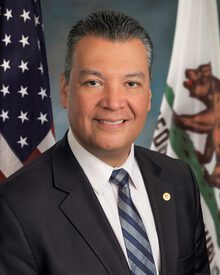
See how Alex Padilla actually votes — against your values.
DeepSyte scores Alex Padilla's record on the issues you care about — not party, not press releases. Take the 2-minute values quiz to see your personal alignment.
Sign in and take the values quiz to see how Alex Padilla's votes line up with your views.
Prediction track record
How often we called Alex Padilla's passage votes correctly, from their stated positions on each bill's tagged topics. Excludes “unclear” calls and abstentions.
14 predictions on record · none have been resolved by a passage vote yet. Check back as bills move.
Pending vote119-hjres-152
Proposing an amendment to the Constitution of the United States to ensure that only citizens are eligible to vote in Federal elections.
No paired statements and votes yet for Alex Padilla
We haven't yet found statement/vote pairs on the same topic for Alex Padilla. This usually means either the rep hasn't taken public positions on bills that have come to a passage vote, or those bills haven't been tagged yet. The checker runs as new press releases and votes come in.
Pro analysis
AI rep analysis — Pro
Get an AI-narrated read on Alex Padilla's full voting record against your stated values — aligned themes, conflicts, notable votes, and what to watch for.
We haven't extracted campaign positions for Alex Padilla yet. Once their campaign website or position pages are processed, this card will track what they said vs how they voted.
Crossing the aisle
Passage votes where Alex Padilla broke ranks with ≥75% of Democrats. Threshold catches substantively partisan splits; unanimous-ish or close votes are excluded.
1
Cross-aisle vote
119-hr-5334·Jul 29, 2026·77% of D voted YES
Lindsey O. Graham Sanctioning Russia and Iran Act of 2026
Padilla, Schiff Join Bennet and Colleagues Demanding Trump Administration Resume Russian Oil Sanctions - Senator Alex Padilla
Position: The senators urge the Trump Administration to resume sanctions on Russian oil and take additional steps to limit Russia's energy revenue, arguing these measures are necessary to deprive Putin of funding for his war against Ukraine.
WASHINGTON, D.C. — U.S. Senators Alex Padilla and Adam Schiff (both D-Calif) joined Senator Michael Bennet (D-Colo.) and 12 of their Senate colleagues in urging Secretary of the Treasury Scott Bessent to fully resume sanctions on Russian oil and use every available tool to cut into Russia’s war windfall profits.
In their letter, the Senators note that these steps are crucial to depriving Russian President Vladimir Putin of the revenue he needs to continue waging his war of aggression against Ukraine. Additionally, they point out that pausing these sanctions has not and will not noticeably bring down domestic energy prices – which are spiking because of President Donald Trump’s reckless war with Iran.
Padilla, Schiff, and Bennet were joined on this letter by Senators Angela Alsobrooks (D-Md.), Tammy Baldwin (D-Wis.), Richard Blumenthal (D-Conn.), John Hickenlooper (D-Colo.), Andy Kim (D.-N.J.), Jeff Merkley (D-Ore.), Gary C. Peters (D-Mich.), Raphael Warnock (D-Ga.), Elizabeth Warren (D-Mass.), Sheldon Whitehouse (D-R.I.), and Peter Welch (D-Vt.).
“We urge the Trump Administration to resume the Russia oil sanctions your Department recently paused by issuing and then extending a General License on deliveries of Russian oil. We also urge the Administration and your Department to take immediate, additional steps to limit the windfall profits Russia and its intermediaries continue to earn due to elevated energy prices stemming from President Trump’s unauthorized war with Iran. These steps are crucial to depriving Russian President Vladimir Putin of the revenue he needs to continue waging his war of aggression against Ukraine,” began the Senators.
“Despite warnings from U.S. government and outside experts, the Trump Administration failed to anticipate or plan for the likelihood that an open-ended war with Iran would spike global energy prices – especially if Iran were to effectively close the Strait of Hormuz, through which around 20 percent of the world’s oil and gas transits,” the Senators wrote. “The President’s self-made global energy crisis has predictably increased average national gasoline prices by over 85 cents a gallon and also raised the price of Russian oil, risking the replenishment of funding for Putin’s war machine. Putin has openly spoken of using the crisis to reestablish export markets for Russian oil. Estimates suggest that Russia’s oil revenue has doubled in April.”
“You described the Administration’s sanctions pause as necessary while noting it was ‘unfortunate’ that Russia stood to benefit financially from the decision. Pausing these sanctions has had and will continue to have, at best, a limited effect on domestic gasoline costs or global oil prices, which remain elevated. Doing so instead removed the stigma that had been driving discounted prices for Russian oil and allowed Russia to sell or resell cargoes to buyers now willing to pay higher prices – giving Putin a financial boon to ease the budgetary challenges resulting from his war on Ukraine. This provides additional funding to the Kremlin and its oil traders even as reports indicate that Russia has helped Iran target Americans,” the Senators continued.
“Continuing to pause these sanctions is a mistake that President Trump must reverse immediately. In addition, he must use every tool at his disposal to cut into Russia’s war windfall profits, instead of enabling their additional revenue. He has options that he can and must use to reimpose the stigma on and dissuade purchases of Russian oil,” the Senators urged.
“Failure to put more pressure on the Kremlin – particularly as the Trump Administration pulls resources necessary to deter Russia and China away from those theaters into the Middle East – would embolden Putin to continue waging his war against Ukraine, aiding Iran’s attacks on U.S. troops, and threatening our NATO allies,” concluded the Senators.
The text of the letter is available here and below:
We urge the Trump Administration to resume the Russia oil sanctions your Department recently paused by issuing and then extending a General License on deliveries of Russian oil. We also urge the Administration and your Department to take immediate, additional steps to limit the windfall profits Russia and its intermediaries continue to earn due to elevated energy prices stemming from President Trump’s unauthorized war with Iran. These steps are crucial to depriving Russian President Vladimir Putin of the revenue he needs to continue waging his war of aggression against Ukraine.
Before President Trump launched his war with Iran, Russia was suffering battlefield losses and facing financial pressures due to declining global oil prices and fewer buyers willing to purchase Russian oil. Reports from before the Iran war indicated that Russia lost oil and gas revenue in 2024 and 2025. Russia was reportedly struggling to sustain its ever-growing military spending with these declining revenues.
Russia continues evading existing sanctions and other measures through numerous front companies, traders, and “shadow fleet” vessels. Yet the Trump Administration has halted regular counter-evasion sanctions for 14 months now, an unprecedented pause. U.S. allies and partners, however, continue to act against hundreds of vessels and entities in Russia’s oil sales ecosystem. The European Union also banned imports of refined oil products derived from Russian crude oil, an action that India’s largest oil refiner cited when the firm began reducing its crude imports from Russia.
Despite warnings from U.S. government and outside experts, the Trump Administration failed to anticipate or plan for the likelihood that an open-ended war with Iran would spike global energy prices – especially if Iran were to effectively close the Strait of Hormuz, through which around 20 percent of the world’s oil and gas transits. The President’s self-made global energy crisis has predictably increased average national gasoline prices by over 85 cents a gallon and also raised the price of Russian oil, risking the replenishment of funding for Putin’s war machine. Putin has openly spoken of using the crisis to reestablish export markets for Russian oil. Estimates suggest that Russia’s oil revenue has doubled in April.
President Trump has failed to develop approaches to limit Russia’s windfall. Instead, he has responded to recent oil price increases with the reckless decision, in March 2026, to temporarily lift some sanctions on Russian oil, allowing the purchase of Russian oil and petroleum products already at sea. This move, a licensing action affecting large quantities of Russia’s most important export, flies in the face of a requirement under the Countering America’s Adversaries Through Sanctions Act (CAATSA) to notify Congress 30 days before taking such an action. The Senate overwhelmingly passed CAATSA, which President Trump signed into law in 2017.
You described the Administration’s sanctions pause as necessary while noting it was “unfortunate” that Russia stood to benefit financially from the decision. Pausing these sanctions has had and will continue to have, at best, a limited effect on domestic gasoline costs or global oil prices, which remain elevated. Doing so instead removed the stigma that had been driving discounted prices for Russian oil and allowed Russia to sell or resell cargoes to buyers now willing to pay higher prices – giving Putin a financial boon to ease the budgetary challenges resulting from his war on Ukraine. This provides additional funding to the Kremlin and its oil traders even as reports indicate that Russia has helped Iran target Americans.
Your Department described the sanctions pause as a temporary tool. When the initial sanctions pause expired after 30 days, you stated publicly that the Administration would not seek further extension. Despite this, just days later in late April, the Administration extended the pause for another 30-day period without explanation on the reversal of policy.
Yet the Trump Administration did not just extend its March sanctions pause, which allowed for the sale of oil already at sea as of mid-March. The renewal now also allows the sale of oil on ships that had been loaded as of mid-April. This rewarded Putin’s enablers who loaded oil after the Trump Administration issued the initial pause – betting correctly that this Administration would give them another payday in a misguided attempt to address the consequences of President Trump’s reckless war. Now, the private sector likely believes that the Trump Administration will continue extending this broad license.
Continuing to pause these sanctions is a mistake that President Trump must reverse immediately. In addition, he must use every tool at his disposal to cut into Russia’s war windfall profits, instead of enabling their additional revenue. He has options that he can and must use to reimpose the stigma on and dissuade purchases of Russian oil.
Now is the time to strengthen, not weaken, enforcement of restrictions on Russia’s oil and gas revenues. Yet as Congress has repeatedly raised, the Trump Administration has paused all Russia counter-evasion sanctions, including on those entities circumventing sanctions that the Administration itself imposed on Rosneft and Lukoil, for more than a year now.
Failure to put more pressure on the Kremlin – particularly as the Trump Administration pulls resources necessary to deter Russia and China away from those theaters into the Middle East – would embolden Putin to continue waging his war against Ukraine, aiding Iran’s attacks on U.S. troops, and threatening our NATO allies.
Padilla, Colleagues Introduce Bill to Crack Down on Oil Market Manipulation and Protect Consumers As Gas Prices Climb - Senator Alex Padilla
Position: Senator Padilla and colleagues introduced legislation to establish a new FTC unit to monitor petroleum markets for manipulation and fraud, increase transparency in fuel markets, and raise penalties for anti-competitive behavior that artificially inflates gas prices.
California gas prices are up more than $1.50 per gallon since the start of Trump’s war with Iran
WASHINGTON, D.C. — As Californians face rising gas prices driven by the Trump Administration’s ongoing war in Iran, U.S. Senator Alex Padilla (D-Calif.) joined Senators Maria Cantwell (D-Wash.) and Ron Wyden (D-Ore.) in introducing the Transportation Fuel Market Transparency Act to crack down on petroleum market manipulation and protect consumers from unjustified price spikes at the pump.
The bill would create a new Transportation Fuel Monitoring and Enforcement Unit at the Federal Trade Commission (FTC) to proactively monitor fuel markets for fraud, manipulation, and anti-competitive behavior that can artificially inflate prices. It would also increase transparency across fuel markets and significantly raise penalties for bad actors.
California drivers consistently pay among the highest gas prices in the nation, with costs often spiking faster and higher than the national average during periods of global disruption — putting added pressure on working families, small businesses, and commuters across the state.
“At a time when Trump’s unauthorized war with Iran is driving up costs, we need stronger oversight to ensure oil companies and traders aren’t exploiting the moment to pad their profits,” said Senator Padilla. “This bill will bring greater transparency to fuel markets, hold bad actors accountable, and help protect consumers across California.”
The Transportation Fuel Market Transparency Act would:
The legislation builds on previous efforts to strengthen federal oversight of energy markets, similar to authorities granted to the Federal Energy Regulatory Commission (FERC) and the Commodity Futures Trading Commission (CFTC), which have successfully policed manipulation in electricity and financial markets.
Despite having similar authority since 2007, the FTC has not consistently used its tools to monitor and enforce against manipulation in petroleum markets. This bill would ensure those authorities are fully utilized to protect consumers — including millions of Californians who rely on their cars every day.
A one-page summary of the Transportation Fuel Market Transparency Act is available here.
The full bill text is available here.
Padilla, Durbin, Peters, Schumer Lead Senate Colleagues in Pushing Back on Trump’s Executive Order Attacking Vote-By-Mail - Senator Alex Padilla
Position: Senators oppose President Trump's executive order restricting vote-by-mail access, arguing it exceeds constitutional authority, violates Article I Section 4, and would disenfranchise eligible voters. They call on the DOJ to refuse implementation and provide legal documents related to the order.
WASHINGTON, D.C. – Today, U.S. Senator Alex Padilla (D-Calif.), Ranking Member of the Senate Rules Committee and former California Secretary of State, along with Senators Dick Durbin (D-Ill.), Gary Peters (D-Mich.), and Leader Chuck Schumer (D-N.Y.), led a group of 20 Senate Democrats in pushing back on President Trump’s Executive Order attacking vote-by-mail.
In a letter to Acting Attorney General Todd Blanche, the Senators encouraged the DOJ to refocus on protecting voters and access to ballot box, as well as requested production of any opinions, correspondence, or documents related to Trump’s latest Executive Order.
“[This EO] is another attempt by the President to exceed the constitutional authorities granted to the Executive Branch concerning federal elections,” the Senators wrote. “Given the clearly unconstitutional nature of this EO, the Department of Justice (DOJ) should take no steps pursuant to the EO that violate the law and risk disenfranchising eligible voters. We further request that DOJ provide us with all legal opinions drafted by the Office of Legal Counsel (OLC), and any other DOJ correspondence or documents concerning any claims regarding the legality of the EO, including any communications between senior DOJ officials and the Department of Commerce.
“For over a decade, the President has sought to sow doubt in our electoral system, baselessly attempting to make the case that the only secure elections are those that he wins. This behavior is not only unbefitting of his office, but also hypocritical,” the Senators continued, citing Trump’s own use of vote-by-mail.
“Article I, Section 4 of the U.S. Constitution clearly indicates that states have the primary authority over election administration. Nonetheless, President Trump has repeatedly sought to restrict access to the ballot under the guise of election security… Taken together, the foreseeable result of these directives is that tens of thousands of eligible U.S. citizen voters will be disenfranchised,” the Senators further wrote, citing the EO’s unconstitutionality and vulnerabilities.
The Senators highlighted the disruption this would cause not only to voters, but also the ongoing gutting of the DOJ’s Civil Rights Division,“Besides the disruption it would cause for mail-in voters, the President’s order would also further corrupt the mission of the DOJ Civil Rights Division to protect civil rights and ensure that all eligible voters are able to exercise their right to vote. Since January 2025, DOJ has been gutted—morally and physically. Within one year, the Civil Rights Division lost 75 percent of its attorneys, and it has been reported that 55 major civil rights cases concerning racial gerrymandering and police misconduct were closed as the Division prioritized Second Amendment and anti-trans cases. More broadly, DOJ seems wholly disinterested in enforcing the law, dropping an estimated 23,000 criminal investigations in the first six months of President Trump’s second Administration to focus on immigration enforcement.
“DOJ should reprioritize protecting the ability of all eligible voters to fairly and accessibly exercise their fundamental right to vote. Protecting civil rights was a foundational purpose for establishing DOJ, and ensuring legal access to voting remains a key responsibility of DOJ leadership,” the Senators concluded, condemning this effort before making a request for document production. “As such, we urge you to ensure that the Department does not implement this unlawful executive order.”
In addition to Padilla, Durbin, Peters, and Schumer, the letter was also signed by U.S. Senators Kristin Gillibrand (D-N.Y.), Jeffrey Merkley (D-Ore.), Angus King (D-Maine), Peter Welch (D-Vt.), Michael Bennet (D-Colo.), Martin Heinrich (D-N.M.), Richard Blumenthal (D-Conn.), Mark Warner (D-Va.), Amy Klobuchar (D-Minn.), Raphael Warnock (D-Ga.), Chris Van Hollen (D-Md.), Angela Alsobrooks (D-Md.), Patty Murray (D-Wash.), Edward Markey (D-Mass.), Tim Kaine (D-Va.), Mazie Hirono (D-Hawaii), Ron Wyden (D-Ore.), Maria Cantwell (D-Wash.), Adam Schiff (D-Calif.) and Cory Booker (D-N.J.).
As Ranking Member of the Senate Rules Committee with oversight over federal elections, Padilla has consistently challenged Trump’s illegal efforts in attacking the right to vote, especially through vote-by-mail. In response to Trump’s unlawful Executive Order, Padilla introduced Absentee and Mail Voter Protection Act, which would nullify Trump’s EO and place restrictions on the administration’s attempts to implement any unlawful voter restrictions. Padilla also took to the Senate floor four times as a leader in the Democratic opposition to the anti-voter SAVE Act. In April, Padilla and Senator Ben Ray Luján (D-N.M.), led six Senators in expressing serious concerns about the harmful impacts to American voters of the Trump Administration’s plans to privatize the United States Postal Service (USPS) and move it under the control of the Department of Commerce.
In January, Padilla and Senator Merkley led their Senate colleagues in a letter to Postmaster General David Steiner, opposing the postmark policy under the Trump Administration that would make it harder for Americans to vote-by-mail. The USPS decision to delay postmarks would significantly increase voter disenfranchisement, as many states rely on postmarks to determine ballot eligibility.
Full text of the letter is available here and below:
Dear Acting Attorney General Blanche:
On March 31, President Trump signed an executive order (EO), entitled “Ensuring Citizenship Verification and Integrity in Federal Elections,” which is another attempt by the President to exceed the constitutional authorities granted to the Executive Branch concerning federal elections.1 Given the clearly unconstitutional nature of this EO, the Department of Justice (DOJ) should take no steps pursuant to the EO that violate the law and risk disenfranchising eligible voters. We further request that DOJ provide us with all legal opinions drafted by the Office of Legal Counsel (OLC), and any other DOJ correspondence or documents concerning any claims regarding the legality of the EO, including any communications between senior DOJ officials and the Department of Commerce.
For over a decade, the President has sought to sow doubt in our electoral system, baselessly attempting to make the case that the only secure elections are those that he wins. This behavior is not only unbefitting of his office, but also hypocritical. For example, while the President has condemned the practice of voting by mail, he still mailed in his own ballot during a recent special election in Florida.2 Notwithstanding the wild fabrications about widespread voter fraud coming from the White House, it is imperative that, as our nation’s chief law enforcement official, you uphold the rule of law and not implement this unlawful executive order and its enforcement provisions.
Article I, Section 4 of the U.S. Constitution clearly indicates that states have the primary authority over election administration.3 Nonetheless, President Trump has repeatedly sought to restrict access to the ballot under the guise of election security. The recent EO disregards federalism and the constitutional right to vote and instead deems the Department of Homeland Security (DHS) and the Social Security Administration (SSA) arbiters of citizenship using data that even DHS itself has admitted contains numerous errors, empowering them to compile a list of approved voters with scarcely any oversight.4 The EO also tasks the United States Postal Service (USPS) with only delivering ballots from voters to election officials that are on the Administration’s approved list of voters and directs the Attorney General to prioritize investigating and prosecuting a wide variety of actors involved in activities as innocuous as printing a ballot that is distributed to individuals the Administration determines are not eligible to vote. Furthermore, the printing, sending, and returning of mail and absentee ballots by voters for federal primary and special elections has been ongoing across the country for months prior to the general election in just over six months. Taken together, the foreseeable result of these directives is that tens of thousands of eligible U.S. citizen voters will be disenfranchised.
Contrary to President Trump’s erroneous claims, state and local election officials already have measures in place to ensure that only registered voters are able to vote. In fact, noncitizens rarely successfully cast ballots in U.S. elections. A Bipartisan Policy Center analysis of the Heritage Foundation’s Election Fraud Database only found 77 such instances from 1999 to 2023 out of hundreds of millions of votes.5 And nonpartisan experts concluded that only 0.000043 percent of mail-in ballots cast in federal general elections from 2016 to 2022 were fraudulent.6 That is only four cases out of every 10 million votes cast through the mail.
In addition to the obvious constitutional issues presented by the executive order, Section 2 is especially concerning, as it directs you to prioritize the investigation and prosecution of election officials if ineligible voters receive—not cast—ballots. As a result, the EO risks imposing criminal liability on election administrators, even absent clear evidence of intent to enable illegal voting. Additionally, Section 5 directs you to withhold federal funds from states and localities that fail to comply with the order. While the text does not specify which provisions are at issue, federal courts have repeatedly rejected as unlawful the practice of defunding localities simply because of policy differences.7
Besides the disruption it would cause for mail-in voters, the President’s order would also further corrupt the mission of the DOJ Civil Rights Division to protect civil rights and ensure that all eligible voters are able to exercise their right to vote. Since January 2025, DOJ has been gutted— morally and physically. Within one year, the Civil Rights Division lost 75 percent of its attorneys, and it has been reported that 55 major civil rights cases concerning racial gerrymandering and police misconduct were closed as the Division prioritized Second Amendment and anti-trans cases.8 More broadly, DOJ seems wholly disinterested in enforcing the law, dropping an estimated 23,000 criminal investigations in the first six months of President Trump’s second Administration to focus on immigration enforcement.9
As Acting Attorney General, you have sworn an oath to defend the Constitution. This EO is clearly at odds with that responsibility. New polling shows that 58 percent of Americans believe that many people will be told they are ineligible to vote when they arrive to the polls this November.10 This 16-point rise from January 2020 is alarming but entirely predictable, given the President’s concerted misinformation campaign regarding voter fraud.
DOJ should reprioritize protecting the ability of all eligible voters to fairly and accessibly exercise their fundamental right to vote. Protecting civil rights was a foundational purpose for establishing DOJ, and ensuring legal access to voting remains a key responsibility of DOJ leadership. As such, we urge you to ensure that the Department does not implement this unlawful executive order.
It is imperative that we understand the Department’s role in justifying this unlawful order. Through the Office of Legal Counsel, the Department of Justice reviews all executive orders “proposed to be issued by the President … for form and legality.”11 Please provide any DOJ or OLC opinions, correspondence, or other documents related to DOJ’s evaluation of the legality of this EO; communications between senior DOJ officials, including Assistant Attorney General Harmeet Dhillon and Acting Voting Section Chief Eric Neff, with the Department of Commerce, including Secretary Howard Lutnick’s office; and, if none exist, please explain why this is the case. We request that you comply with this request no later than May 15.
We look forward to your prompt response.
ICYMI: LA Times Op-Ed – Padilla, Lemek: “Trump votes by mail. He just doesn’t want you to” - Senator Alex Padilla
WASHINGTON, D.C. – In case you missed it, U.S. Senator Alex Padilla (D-Calif.), Ranking Member of the Senate Committee on Rules and Administration and California’s former Secretary of State, and Brian Lemek, Executive Director of Defend the Vote, penned an op-ed in the Los Angeles Times condemning President Trump’s threats to restrict voter access and urging Congressional action to protect mail-in and absentee voting.
In the op-ed, Padilla and Lemek criticized Trump’s recent Executive Order that aims to illegally re-write federal election administration rules, explicitly attacking vote-by-mail. In addition to the Executive Order, they discussed the Trump Administration’s efforts to limit voter access through efforts like the SAVE Act, while inflicting unnecessary challenges to voter registration and absentee voting. Padilla and Lemek also emphasized the extreme impact the vote-by-mail restrictions would have on democratic participation across our country.
“Under this order, if states don’t comply with Trump’s demands, the USPS won’t deliver absentee ballots of eligible voters in that state — meaning legally cast votes could go undelivered and uncounted. Not only is that dangerous and unconstitutional, it is profoundly un-American,” said Senator Padilla and Lemek.
They further outline how Congress can confront Trump’s illegal election takeover, through Padilla’s Absentee and Mail Voter Protection Act, which would nullify Trump’s Executive Order and limit the administration’s attempts to implement any unlawful voter restrictions. This bill safeguards mail-in and absentee voting, ensuring registered voters can cast their ballot safely and accounted for.
Read the op-ed here and below:
By Alex Padilla and Brian Lemek, Guest Contributors
More than 158 million Americans cast a ballot in the 2024 election, and nearly one in three did so by mail.
Nothing about that should be controversial because voting by mail is safe, secure and deeply rooted in American history. Generations of voters have relied on absentee and mail-in ballots to make their voices heard — from Union soldiers during the Civil War, to Japanese Americans held in detention camps during the Second World War, to astronauts in space, to seniors, rural Americans, working parents and people with disabilities. And California — the first state in the nation to allow any registered voter who chooses to vote by mail without needing to provide a reason — has allowed voters to cast their ballots absentee since 1978.
Now that right is under attack.
On March 31, just days after casting his own ballot by mail in a Florida special election, President Trump signed an executive order attacking vote by mail and absentee voting nationwide.
The president’s order also attempts to create federal lists of who his administration considers “eligible voters,” which will be given to states and enforced by the U.S. Postal Service, weaponizing the USPS in ways that would interfere with the delivery of eligible Americans’ ballots. That’s right. Under this order, if states don’t comply with Trump’s demands, the USPS won’t deliver absentee ballots of eligible voters in that state — meaning legally cast votes could go undelivered and uncounted.
Not only is that dangerous and unconstitutional, it is profoundly un-American.
Immediately after Trump’s executive order was announced, more than 20 states and multiple organizations challenged it in court. They are right to do so, and we believe these states will prevail for the same reason the courts rejected the president’s earlier attempts to seize authority over our elections. Because the Constitution is clear: States and Congress set the rules for federal elections — not the president.
But Americans should not have to rely solely on the courts to protect their right to vote from a reckless president — especially with primaries and special elections already underway ahead of November’s midterms. Congress must do the right thing and act now to protect Americans’ fundamental right to vote.
One way to do that would be through the Absentee and Mail Voter Protection Act. This is a bill that will negate Trump’s executive order and any similar actions, ensuring eligible voters can continue to cast their ballots safely and securely through the mail, free from political interference.
It’s important to recognize, though, that this latest executive order did not come out of thin air. It is part of a broader campaign to undermine confidence in our elections and restrict access to the ballot box.
We have all heard ad nauseum the false claims and “the Big Lie” surrounding the 2020 election. The same claims that Trump’s FBI used to justify the seizure of ballots in Fulton County, Ga., and that the Justice Department is now using in Wayne County, Mich. Chad Bianco, a Republican candidate for governor in California, also called on “the Big Lie” as a basis for his illegal seizure of ballots from Riverside County. We have also watched repeated efforts to pressure states, purge voter rolls, impose unnecessary barriers to registration and make it harder for eligible citizens to vote through efforts like the so-called SAVE America Act.
Now the target is absentee voting and vote by mail — one of the most successful and widely used tools for democratic participation in modern America.
The irony is impossible to ignore: It’s very popular among Republicans in Florida and elsewhere, and Trump has repeatedly voted by mail himself. It’s good enough and safe enough for him, but not for the rest of America. He trusts the system when it serves him but attacks it when millions of others might use it to threaten his power.
History teaches us something important about these efforts.
Throughout our nation’s history, each generation has fought to expand the franchise — from women’s suffrage to the Voting Rights Act to the National Voter Registration Act. Again and again, Americans have rejected attempts to limit participation and silence voters.
And that lesson of resistance is universal. In fact, we just saw it in Hungary’s national election when voters turned out in overwhelming numbers after 16 years of eroding democratic norms to remove an autocratic leader and his party from power.
When people sense their rights are threatened, they organize. They speak out. And they vote.
That is exactly why attacks on vote by mail are so misguided. Trump can spread distrust. Trump can sign executive orders. Trump can try to rig the rules in your favor. But he cannot stop Americans from participating in their democracy.
Voting by mail is not a loophole. It is not a vulnerability. It is a strength — one that has allowed millions of Americans to participate in our democracy who otherwise might not be able to.
And Congress needs to do everything in its power to protect it.
Senators Padilla, Schiff and Reps. Issa, Calvert Introduce Bipartisan, Bicameral Bill to Update Pechanga Water Rights Settlement - Senator Alex Padilla
WASHINGTON, D.C. — U.S. Senators Alex Padilla and Adam Schiff (both-D-Calif.) and Representatives Darrell Issa (R-Calif.-48) and Ken Calvert (R-Calif.-41) this week introduced bipartisan, bicameral legislation to make targeted, technical updates to the Pechanga Band of Luiseño Mission Indians Water Rights Settlement Act, ensuring the agreement reflects current trust lands and modern water quality challenges.
“For generations, the Pechanga Band of Luiseño Mission Indians has been a dedicated steward of land and water resources within the Santa Margarita River Watershed,” said Senator Padilla. “This legislation makes long-overdue updates to the Pechanga Band Water Rights Settlement to reflect current trust lands and confront modern water quality challenges like PFAS contamination. Tribal water rights are fundamental to sovereignty, public health, and long-term sustainability, and this bill ensures the Tribe has the tools and flexibility to continue protecting its water resources for future generations.”
“This much-needed legislation will help uphold water rights for the Pechanga tribal land and expand resources to improve water quality — helping support tribal agriculture, public health, and economic security,” said Senator Schiff.
“The Pechanga Band of Mission Indians is a critically important civic and cultural institution to our Southern California community, and I know they will carry out its rightful stewardship with precision and care to preserve and protect tribal lands,” said Representative Issa. “We worked diligently to introduce this legislation that will allow Pechanga to address important community concerns, and I thank Senator Padilla for his partnership and support of tribal communities across California.”
"Pechanga is grateful to Senators Padilla and Schiff, and Representatives Issa and Calvert for championing this bill — a common-sense solution that honors the intent of our water settlement, protects Pechanga’s sovereign rights, and ensures we have the tools to safeguard our water from emerging threats like PFAS. Water is central to our people and our homelands. We deeply appreciate their leadership in standing with Pechanga to protect this vital resource for generations to come,” said Mark Macarro, Chairman of the Pechanga Band of Indians.
The legislation updates the settlement agreement to ensure it keeps pace with the Tribe’s current land base and evolving water needs. Specifically, it would:
The Pechanga Band of Luiseño Mission Indians is a federally recognized Tribe. Since the 1950s, the Tribe has worked collaboratively with surrounding water users to protect the long-term sustainability of the Santa Margarita River Watershed, culminating in a negotiated settlement with the Rancho California Water District, Eastern Municipal Water District, Metropolitan Water District, and the United States. That agreement was authorized as part of the Water Infrastructure Improvements for the Nation (WIIN) Act in 2016 and became fully enforceable in 2020. It clarified the Tribe’s water rights and established cooperative water management frameworks with local agencies.
All impacted water agencies have expressed support for these technical updates, which are needed to reflect additional lands taken into trust and to address water contaminants identified since the original agreement.
The full bill text can be found here.
Padilla, Peters, Durbin, Schumer Lead Democratic Colleagues in Demanding DHS and SSA Uphold Federal Law Over President Trump’s Illegal Executive Order to Limit Voting - Senator Alex Padilla
Position: The senators oppose President Trump's executive order directing DHS and SSA to use the SAVE program for voter roll maintenance, arguing it violates federal law, the Constitution, and will cause eligible voters to be wrongfully removed from voter rolls due to inaccurate citizenship data.
WASHINGTON, D.C. — U.S. Senators Alex Padilla (D-Calif.), Ranking Member of the Senate Rules and Administration Committee, Gary Peters (D-Mich.), Ranking Member of the Homeland Security and Governmental Affairs Committee, Dick Durbin (D-Ill.), Ranking Member of the Senate Judiciary Committee, and Chuck Schumer (D-N.Y.), Senate Democratic Leader, led 24 of their Democratic colleagues demanding the Department of Homeland Security (DHS) and the U.S. Social Security Administration (SSA) follow existing federal law over the March 31 Executive Order signed by President Trump, which violates the Constitution and risks disenfranchising eligible voters. President Trump’s directive, which has been challenged in the courts, would require DHS to create eligible voter lists – which the federal government does not have the authority to do. Under the order, DHS is required to use data from the Systemic Alien Verification for Entitlements (SAVE) program that incorporates incorrect and out-of-date citizenship information from SSA, which DHS has acknowledged may produce inaccurate citizenship verification results. If the President’s executive order is implemented in place of current federal law, it will prevent eligible voters from exercising their fundamental right to vote.
In their letter to DHS Secretary Markwayne Mullin, the senators wrote, “The foreseeable result is that tens of thousands of eligible U.S. citizen voters will discover on Election Day that they are barred from voting because they have been incorrectly removed from voter rolls. Indeed, reports have already confirmed that eligible Americans are being targeted for removal from voter rolls after being erroneously flagged as non-citizens by the SAVE program. As state and local election officials have stated, the SAVE program’s expanded use for voter roll maintenance would likely lead to even greater wrongful disenfranchisement.”
“The Department should immediately discontinue the SAVE program’s use for these illegal and non-statutory purposes and take no steps pursuant to the Executive Order that violate the law and risk disenfranchising eligible voters,” the senators concluded.
In their letter to SSA Commissioner Frank Bisignano, the senators wrote, “SSA data is already at the core of the overhauled SAVE program at DHS, which continues to have serious accuracy and reliability concerns. State and local elections officials, nonpartisan voter advocacy organizations, federal agencies, and courts have made clear that the SAVE program is not appropriate for voter roll maintenance because incorrect and out-of-date citizenship information in the databases it queries, including SSA databases, leads to eligible voters often being incorrectly flagged as non-citizens.”
“Given that SSA is an unreliable source for information on U.S. citizenship, that recent DOGE activities at SSA put the American public’s data at risk, and that federal interference in state-run elections is a clear violation of the Constitution’s Elections Clause, SSA should immediately discontinue its data sharing activities and take no steps pursuant to the Executive Order that violate the law and risk disenfranchising eligible voters,” the senators concluded.
Padilla, Peters, Durbin, and Schumer previously led their Democratic colleagues in demanding the United States Postal Service (USPS) uphold existing federal law over President Trump’s executive order restricting vote by mail. The executive order, which has been challenged in the courts, attempts to turn the Postal Service into an election administrator and regulator, when it is supposed to be a nonpartisan agency whose only priority is to deliver the mail. It would have a chilling effect on the eligibility of American voters to exercise their constitutional right to vote by imposing unnecessary barriers and would corrupt the independent mission of the Postal Service by enabling it to determine who can vote by mail.
Read the full letter to DHS Secretary Mullin here.
Read the full letter to SSA Commissioner Bisignano here.
Source: GDELT 2.0 GKG, filtered to a curated list of national outlets. Inclusion is not endorsement; opinion pieces and reported news are mixed.
Recent stock activity
Periodic transaction reports filed under the STOCK Act — disclosed by the rep, sourced from public filings.
No disclosed trades on record.
Source: open-data mirrors of the Senate eFD and House Clerk financial-disclosure systems. Disclosure within 30 days of trade is required by law (45 for spouse/dependent trades).
Top PAC donors · 2026 cycle
Political action committees that gave the most to this rep's principal campaign committee this cycle. PAC giving is direct organizational support — industry, ideological, or leadership.
1.WINE INSTITUTE PACAgriculture3 contributionsWine-industry trade association PAC — backs policies supporting wine production, distribution, and sales, including tax and regulatory matters.AI$15,000
2.PROFESSIONAL ENGINEERS IN CALIFORNIA GOVERNMENT PECG - PAC2 contributions$10,000
3.NEW MILLENNIUM PAC2 contributions$10,000
4.NATIONAL AUTOMOBILE DEALERS ASSOCIATION PAC (NADAPAC)2 contributions$10,000
6.COMCAST CORPORATION & NBCUNIVERSAL POLITICAL ACTION COMMITTEE - FEDERAL2 contributions$10,000
7.AIR LINE PILOTS ASSOCIATION PACLabor2 contributionsTrade-union PAC for commercial airline pilots — backs candidates supporting pilot workplace protections, collective bargaining rights, and aviation safety standards.AI$10,000
8.GIDDY UP PAC2 contributions$10,000
9.FIDELITY NATIONAL FINANCIAL PAC 20012 contributions$10,000
10.EDWARDS LIFESCIENCES PAC2 contributions$10,000
Source: OpenFEC (api.open.fec.gov) Schedule A receipts where contributor type is “committee.” Aggregated by contributing committee. Self-transfers from joint-fundraising / victory committees are excluded.
Top individual contributors · 2026 cycle
Itemized individual contributions over $200 to this rep's campaign committee, aggregated by donor employer. PAC giving is shown above; this section is people, not organizations.
1.NOT-EMPLOYED$163,967
2.ELECTRIC CAPITAL$10,500
3.SINGLETON SCHREIBER LLP$8,000
4.JULES AND ASSOCIATES INC.$7,000
5.CALBPS$7,000
6.LANGWATER CAPITAL PARTNERS LLC$7,000
7.COINBASE$7,000
8.MOONPAY$7,000
9.LIEFF CABRASER HEIMANN & BERNSTEIN$7,000
10.WASSERMAN$7,000
Source: OpenFEC Schedule A receipts where contributor type is “individual,” aggregated by the donor's self-reported employer. This is a geographic / industry correlation, not a corporate endorsement.