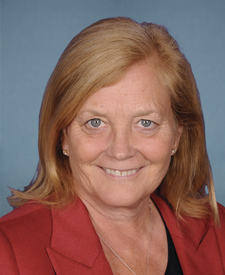
See how Chellie Pingree actually votes — against your values.
DeepSyte scores Chellie Pingree's record on the issues you care about — not party, not press releases. Take the 2-minute values quiz to see your personal alignment.
Sign in and take the values quiz to see how Chellie Pingree's votes line up with your views.
Prediction track record
How often we called Chellie Pingree's passage votes correctly, from their stated positions on each bill's tagged topics. Excludes “unclear” calls and abstentions.
To prohibit the disclosure of records by the Secretary of Housing and Urban Development of individuals for the purposes of immigration enforcement, and for other purposes.
To amend the Internal Revenue Code of 1986 to temporarily suspend certain fuel excise taxes for fuel separated during periods in which the national average price of gasoline exceeds $3.99 per gallon, and to prohibit certain credits or deductions for oil and gas companies during such periods.
Based on 11 data points across public statements and recorded votes · AI analysis of public records
118-hr-2·Consistent
Secure the Border Act of 2023
92/100
What they said
May 5, 2026
Rep. Pingree calls for the immediate release of a detained asylum seeker and closure of the Dilley Immigration Processing Center, questioning the legal basis for continued detention.
Rep. Pingree's statement calls for release of a detained asylum seeker and closure of a detention facility, expressing concern about the legal basis for continued detention. The Secure the Border Act of 2023 imposes strict limits on asylum eligibility and mandates expedited border wall construction and enforcement measures that would make asylum processing more restrictive. Pingree's NO vote on passage is consistent with her stated position opposing restrictive detention and asylum policies.
Rep. Pingree calls for the immediate release of a detained asylum seeker and closure of the Dilley Immigration Processing Center, questioning the legal basis for continued detention.
Rep. Pingree's statement focuses on individual case advocacy and facility oversight—calling for release of a detained asylum seeker and closure of a detention facility. The bill addresses sanctuary city policies and federal funding penalties for jurisdictions that restrict immigration-status information sharing or refuse to comply with ICE detainers. While both touch immigration enforcement and detention, they address different specific questions: Pingree's statement concerns detention conditions and individual case review, while the bill penalizes sanctuary policies. A NO vote on the bill is consistent with Pingree's advocacy for detained immigrants, as the bill would pressure jurisdictions to cooperate more fully with ICE detention and enforcement operations—the opposite direction from her call for release and facility closure.
Rep. Pingree calls for the immediate release of a detained asylum seeker and closure of the Dilley Immigration Processing Center, questioning the legal basis for continued detention.
Rep. Pingree's statement opposes prolonged detention of asylum seekers without legal justification and calls for facility closure, reflecting concern about detention authority and practices. The Laken Riley Act expands mandatory detention requirements for certain non-citizens and authorizes state litigation over immigration enforcement decisions, including release decisions. Pingree's NO vote on passage aligns with her stated position opposing expansive detention authority. However, the bill addresses detention of individuals arrested for specific crimes (burglary, theft, larceny, shoplifting), while the statement concerns detention of an asylum seeker with no apparent criminal charges, creating some granularity mismatch on the specific triggering conditions.
Transnational Criminal Organization Illicit Spotter Prevention and Elimination Act
85/100
What they said
May 5, 2026
Rep. Pingree calls for the immediate release of a detained asylum seeker and closure of the Dilley Immigration Processing Center, questioning the legal basis for continued detention.
Rep. Pingree's statement focuses on detention practices and the legal basis for holding asylum seekers, specifically calling for release of an individual and facility closure. The bill addresses criminal penalties for conduct that interferes with border control enforcement. While both touch immigration enforcement, they address different specific questions—detention policy versus criminal penalties for obstruction of border enforcement. Pingree's NO vote on a bill that enhances border enforcement penalties is generally consistent with her stated concern for asylum seekers' rights and skepticism of detention practices, though the bill does not directly address detention authority or facility operations.
Rep. Pingree calls for the immediate release of a detained asylum seeker and closure of the Dilley Immigration Processing Center, questioning the legal basis for continued detention.
Rep. Pingree's statement advocates for protecting asylum seekers from detention and questioning the legal basis for their continued confinement. The bill creates new grounds for deportation based on Social Security and identity document fraud convictions. Pingree's NO vote aligns with her stated concern for asylum seekers' rights and due process—voting against a bill that expands deportation grounds is consistent with her position that detention decisions should be legally justified and that vulnerable populations deserve protection. The bill does not directly address the Dilley facility or individual cases, but the directional alignment on immigration enforcement is clear.
Rep. Pingree calls for the immediate release of a detained asylum seeker and closure of the Dilley Immigration Processing Center, questioning the legal basis for continued detention.
Rep. Pingree's statement opposes detention of asylum seekers and calls for facility closure, reflecting concern for humane treatment and legal process. The Schools Not Shelters Act prohibits using school facilities to house undocumented non-citizens. Pingree's NO vote aligns with her stated position: opposing the bill preserves flexibility for schools to provide emergency shelter to asylum seekers and migrants, consistent with her advocacy for release and humane treatment. The vote and statement point in the same direction on immigration enforcement severity, though they address different specific mechanisms (detention facility operations vs. school facility use).
Detain and Deport Illegal Aliens Who Assault Cops Act
75/100
What they said
May 5, 2026
Rep. Pingree calls for the immediate release of a detained asylum seeker and closure of the Dilley Immigration Processing Center, questioning the legal basis for continued detention.
Rep. Pingree's statement opposes detention of asylum seekers and calls for closure of the Dilley facility, reflecting skepticism toward broad immigration detention practices. Her NO vote on a bill that mandates detention of non-citizens arrested for assaulting law enforcement is directionally consistent with that position—she voted against expanding detention authority. However, the bill addresses a narrow, specific category (assault of first responders) rather than the general detention practices Pingree criticized. The statement does not explicitly address detention of individuals accused of crimes against law enforcement, creating some granularity mismatch between the broad detention-skepticism position and the specific criminal-conduct trigger in the bill.
Continuing Appropriations and Border Security Enhancement Act, 2024
75/100
What they said
May 5, 2026
Rep. Pingree calls for the immediate release of a detained asylum seeker and closure of the Dilley Immigration Processing Center, questioning the legal basis for continued detention.
Rep. Pingree's statement opposes detention at Dilley and calls for facility closure, reflecting concern about immigration enforcement practices. The bill imposes limits on asylum eligibility and includes provisions restricting DHS use of funds for immigration purposes—measures that would tighten asylum access and enforcement. Pingree's NO vote aligns with opposition to restrictive asylum policies. However, the bill is a broad continuing appropriations measure bundling defense, VA, disaster relief, and multiple immigration provisions; her vote reflects opposition to the overall package's immigration restrictions rather than a direct statement on Dilley specifically.
Rep. Pingree calls for the immediate release of a detained asylum seeker and closure of the Dilley Immigration Processing Center, questioning the legal basis for continued detention.
Rep. Pingree's statement focuses on detention practices and asylum seekers' rights—specifically questioning the legal basis for continued detention and calling for facility closure. The bill creates criminal penalties for fleeing Border Patrol and bars convicted non-citizens from asylum relief. While both touch immigration enforcement, they address distinct questions: detention authority and conditions versus criminal liability for flight from law enforcement. Pingree's NO vote is consistent with a pro-asylum, skeptical-of-enforcement stance, but the bill does not directly address the detention practices or facility operations her statement criticizes.
Protecting our Communities from Failure to Secure the Border Act of 2023
75/100
What they said
May 5, 2026
Rep. Pingree calls for the immediate release of a detained asylum seeker and closure of the Dilley Immigration Processing Center, questioning the legal basis for continued detention.
Rep. Pingree's statement opposes detention of asylum seekers and calls for facility closure, reflecting concern for humane immigration processing. Her NO vote on a bill that prohibits federal lands from housing non-admitted aliens is directionally consistent with that position—the bill would restrict housing options for migrants, which aligns with her stated concern for asylum seekers' welfare. However, the bill addresses a narrow question (federal land use for migrant housing) while her statement focuses on detention facility operations and individual case release. The consistency is general rather than specific to the same policy question.
Rep. Pingree calls for the immediate release of a detained asylum seeker and closure of the Dilley Immigration Processing Center, questioning the legal basis for continued detention.
Rep. Pingree's statement opposes detention and calls for release of asylum seekers, reflecting concern about immigration enforcement practices. The POLICE Act expands deportability for non-citizens convicted of assaulting law enforcement. Pingree's NO vote aligns with a general skepticism toward stricter immigration enforcement measures, but the bill addresses a specific narrow question (deportability for assault convictions) rather than detention authority or asylum processing. The statement and bill share an immigration enforcement category but target different specific provisions.
Pairs with ambiguous language and high uncertainty are withheld until more data is available. Procedural, cloture, and amendment votes are excluded — they don't cleanly signal substantive support or opposition.
Pro analysis
AI rep analysis — Pro
Get an AI-narrated read on Chellie Pingree's full voting record against your stated values — aligned themes, conflicts, notable votes, and what to watch for.
Positions Chellie Pingree took during their campaign, scored against their subsequent record — public statements cross-checked with related votes. “Kept” means 80%+ of those statement-vs-vote pairs aligned; “Broken” means 30% or fewer.
0 kept0 broken0 mixed0 no action yet
Chellie Pingree has 6 tracked positions but no scored statement-vs-vote pairs touching them yet. Verdicts will appear here as related statements and votes accumulate.
No action yetSupports
Medicare should be allowed to negotiate lower prescription drug prices.
“She's fighting to lower prescription drug costs, protect reproductive freedom, strengthen Social Security and Medicare”
Passage votes where Chellie Pingree broke ranks with ≥75% of Democrats. Threshold catches substantively partisan splits; unanimous-ish or close votes are excluded.
The Dilley immigrant detention facility costs taxpayers millions. The human cost is even higher.
Position: The release criticizes the Dilley immigrant detention facility for its high cost to taxpayers ($15.3 million monthly) and harsh conditions experienced by detainees, including prolonged family separation and documented health deterioration. The representative expresses opposition to the facility's operations and the suffering it inflicts on detained immigrants.
On a sunny day in Texas inside one of the nation’s most notorious immigrant detention facilities, I sat down with Olivia Andre, a 19-year-old asylum seeker whose story has garnered national attention.
Despite it being nearly 90 degrees that day in Dilley, a small town about an hour outside of San Antonio, Olivia was bundled up in a down jacket. She was freezing. Her spirits, understandably, were low and she told me she hadn’t been sleeping much. She’d been suffering from headaches and had lost nearly 20 pounds in the six months she spent inside what has become known as the Family Trailer Prison.
For more than an hour, we talked about her family and the life that was unfairly ripped from her when Olivia, her mother and siblings were detained by immigration enforcement in November of 2025. I brought a hefty stack of legal documents with me, as well as family photos and letters from loved ones to give her in hopes they would lift her spirits.
Because the government is court-ordered to release migrant children and their parents from prolonged detention, the rest of Olivia’s family — mother Carine Balenda Mbizi; brother Joel Andre, 16; and sister Estafania Andre, 14 — were released from Dilley in March. But since Olivia is technically an adult, and not the legal guardian of her siblings, she was not released with them.
The last thing I wanted to do when I visited was give her any false hope, but, after hearing near-daily updates from her lawyers, I was optimistic she’d be soon released. And I promised her that we were doing everything we could to get her out.
The very next day, a federal district judge ordered her release. Soon, she’d finally be on a plane bound for where she belongs: back home in Portland with her loved ones.
Around 11:15 p.m. on Friday, May 8, Olivia finally made it home to Maine, where a raucous and overjoyed crowd of family, friends, neighbors and fellow Mainers was ready to welcome her home.
I can’t imagine the overwhelming sense of relief she and her family must be feeling right now. I sincerely hope that, in the months and years ahead, they’ll be able to find the peace and happiness they deserve.
At the same time, it’s impossible not to feel outraged by the cruelty and callousness the Andres have experienced, and the senseless suffering they — and countless others — have been forced to endure. All on the American taxpayer’s dime.
Despite the astronomical cost of $15.3 million a month, or roughly $1,000 per person a day, life inside the Dilley facility is pure misery. (And let me be clear: misery is the point, but more on that later.)
While on our official congressional oversight visit, Reps. Joaquin Castro, Henry Cuellar, Sylvia Garcia, Adelita Grijalva, Christian Menefee, Mark Takano and I saw the conditions firsthand and spoke directly with more than 60 people who were detained there.
The facilities appeared clean and were presented to us in a real “nothing to see here” kind of way. The food seemed fine and the medical bay was nice enough, though completely unoccupied. But outside of the personnel’s overview, which was literally read to us from a script, what we heard from the actual people forced to live there was deeply disturbing.
Here’s what a day in Dilley looks like, according to Olivia and the people we met with: You wake up by 6 a.m. for breakfast after a sleepless night, trying to eat what you can because lunch and dinner are often worse. By mid-morning, you are back in bed, exhausted, depressed or dealing with headaches and untreated health needs. You share a room with 10 to 12 other people so there is no privacy. Time drags on through the afternoon and by the evening, you just want to sleep. But the harsh lights stay on, you’re cold and the room is restless with anxiety and crying from your bunkmates.
It’s no wonder Olivia was feeling utter despair when I met with her there. And, as I alluded, that is the point.
The Department of Homeland Security operates under the mantra “detain to deport.” Regardless of whether a person has a pending asylum claim, has been denied due process, or is legally permitted to be in the United States, the Trump administration wants to detain and deport as many immigrants as they can. Their inhumane and un-American anti-immigration agenda demands it.
Olivia and many others said they’d been pressured to take the $2,500 offer to self-deport.
“You will never see your mother again,” they would tell her. “You may as well take the money and go home.” Of course, by “home” they don’t mean Portland, where she lives. They mean the Democratic Republic of the Congo, where her family fled horrific violence before claiming asylum in the U.S. in 2022.
On their journey, Olivia’s family suffered an unimaginable tragedy: her 8-year-old brother, Manuel, drowned while crossing the Darién Gap, where flash floods can be deadly and the journey itself is a measure of a family’s desperation.
It’s important to note that in Dilley, there are no violent criminals or anyone with a criminal conviction. This specific facility is meant for parents and their children who, at most, have minor immigration infractions equivalent to a parking ticket. Many, though, were simply caught up in our country’s broken immigration system. They have active asylum claims, green cards, visas and valid work permits. Maybe they are waiting for their court date or for their claim to be processed, which can take years, but they are doing everything they are legally supposed to do.
Olivia never should have been detained for this long in the first place. Nor should anyone whose only “crime” was fleeing violence and seeking a better life for themselves and their family — and has followed the rules at every turn.
For every Olivia whose story breaks through, there are countless others still trapped in facilities like Dilley, without national headlines, public pressure or members of Congress advocating on their behalf.
Dilley must be closed for good. This is a facility built to incarcerate families and children, operated at enormous public expense, and used to pressure vulnerable people into giving up their rights. Children do not belong in detention. Families seeking safety do not belong in detention. And no private prison company should profit from keeping them there.
We shouldn’t have to fight this hard to protect people’s constitutional rights — or to get people out of these horrific detention centers. But we will keep fighting.
I want to thank my team, Olivia’s attorneys, my colleagues, local advocates like Project Relief Maine, Ms. Rachel and everyone who had a hand in amplifying her story and helping secure her freedom.
When I met Olivia at the airport after her long flight home, the smile on her face could’ve lit a thousand rooms. I know she and her family have a long road ahead. But I hope she knows just how many people will be with her. Every step of the way.
I hope every innocent person who has been detained by this cruel and callous administration will one day feel the same joy Olivia is feeling right now — and that her story inspires all of us to continue pushing for the freedom and justice they deserve.
Federal Judge Orders Olivia Andre’s Release from Dilley, Pingree Announces
Position: Congresswoman Pingree celebrates a federal court order requiring the release of an asylum seeker from ICE detention and criticizes the detention of families and children at the Dilley facility, calling for immediate release of all detainees and citing constitutional and humanitarian concerns.
Just hours after returning to Maine from San Antonio, Texas, Congresswoman Chellie Pingree (D-Maine) shared news that a federal district court judge has ordered Olivia Andre’s release from the U.S. Immigration and Customs Enforcement (ICE) processing center in Dilley, Texas. According to Olivia’s lawyer, Elora Mukherjee, the judge’s order states she must be released by no later than Friday, May 8.
“I am overwhelmed with joy and relief that Olivia will finally be released and reunited with her family. Yesterday, I sat with Olivia in Dilley and heard how she struggled through every second of her time in detention. Words cannot describe how heartbreaking it was to leave knowing she was still trapped there in utter despair. Olivia should never have been left locked away in Dilley, far from her family, her community, and the life she was building in Portland. But today, after six months of fear, pain, and uncertainty, Olivia is finally coming home,” Pingree said. “Olivia’s release is a testament to the power of public pressure, persistent advocacy, and the simple truth that no one seeking safety should be subjected to this kind of needless cruelty. Now, ICE must release Olivia without delay so she can be reunited with her family and begin to heal where she belongs: at home in Maine.”
"I just spoke with Olivia. She is overwhelmed with emotion to learn that she will be coming home to Maine. Olivia and her family should never have been detained. The federal court ordered her release because the Trump administration had no lawful basis for detaining her. She suffered in detention for six months in violation of federal law and the U.S. Constitution's protections. Her mental and physical health deteriorated during this time because she did not have access to sufficient clean drinking water, palatable food, or appropriate medical care,” Mukherjee said. “All children and families should be released from Dilley immediately. There are cost-effective and humane alternatives to detaining children and families. Protecting children from needless cruelty is not an enormous ask. Our humanity demands it of us."
On Tuesday, Pingree—along with colleagues U.S. Representatives Joaquin Castro (D-Texas), Henry Cuellar (D-Texas), Sylvia Garcia (D-Texas), Adelita Grijalva (D-Ariz.), Christian Menefee (D-Texas), and Mark Takano (D-Calif.)—conducted an official oversight visit of the Dilley detention center. They had the opportunity to meet with more than 60 people detained there and heard firsthand accounts of their treatment and the facility conditions. Pingree met with Olivia during the visit.
Olivia and her family are asylum seekers from the Democratic Republic of the Congo, and have been living in Portland, where Olivia was a first-year nursing student. The rest of her family—mother Carine Balenda Mbizi; brother Joel Andre, 16; and sister Estafania Andre, 14—were released from the Dilley Processing Center in March.
Pingree previously conducted oversight visits of the ICE field office in Scarborough, Maine and the ICE facility in Burlington, Mass.
After Oversight Visit, Pingree, House Dems Call for Release of Their Constituents, Closure of Dilley Detention Facility
Position: Rep. Pingree calls for the immediate release of a detained asylum seeker and closure of the Dilley Immigration Processing Center, questioning the legal basis for continued detention.
In April, Pingree called on ICE to immediately release Olivia Andre, a 19-year-old student who has been detained in the Dilley Immigration Processing Center in Texas since November. In a letter to ICE Acting Director Todd Lyons, Pingree questioned the legal basis for Olivia’s continued detention, as no explanation has been given to Andre or her legal counsel.
Olivia and her family are asylum seekers from the Democratic Republic of the Congo, and have been living in Portland, where Olivia was a first-year nursing student. The rest of her family—mother Carine Balenda Mbizi; brother Joel Andre, 16; and sister Estafania Andre, 14—were released from the Dilley Processing Center in March.
Pingree previously conducted oversight visits of the ICE field office in Scarborough, Maine and the ICE facility in Burlington, Mass.
‘A Handout to Big Chemical’: On House Floor, Pingree Speaks Out Against Republican Farm Bill
Position: Pingree opposes the Republican Farm Bill's pesticide liability shield provisions, which she argues preempt state regulatory authority over pesticide usage and labeling while protecting chemical manufacturers from liability. She supports an amendment to strike these provisions.
Speaking on the House floor last night, Congresswoman Chellie Pingree (D-Maine) condemned the Republican Farm Bill that fails farmers and puts chemical company profits over the health of Americans. Pingree spoke in support of an amendment to remove dangerous, industry-written language that would pre-empt state rights to regulate pesticide usage or labeling and provide a liability shield for pesticide manufacturers. Representative Anna Paulina Luna’s (R-Fla.) amendment language is identical to the bipartisan amendment Pingree and Representative Thomas Massie (R-Ky.) introduced.
“Our amendment to strike the pesticide liability shield sections from the Farm Bill has drawn broad bipartisan support, both within this chamber and across America,” Pingree said. “The harmful language that Republicans on the House Agriculture Committee included in the Farm Bill is a handout to Big Chemical and preempts states’ rights to regulate pesticide usage or labeling and provides a liability shield for pesticide manufacturers.”
Click here to watch Pingree’s full remarks
Thank you very much, Mr. Speaker, and thank you to the ranking member for yielding me the time.
I am sorry to say that this is a terrible Farm Bill. As a result of this bill, more people will go hungry. More farmers will lose assistance to conservation programs that are already oversubscribed. And more farmers who are struggling to make ends meet will find it more and more difficult to hang onto their farms.
I have a lot of concerns about this bill, but I’d like to use the limited time I have to show strong support for Representative Luna’s pesticide amendment. I am proud to say that her amendment, which was made in order, mirrors the language of the bipartisan amendment I sponsored with Representative Massie, and I want to thank Representative Luna for also working on this important issue.
Our amendment to strike the pesticide liability shield sections from the Farm Bill has drawn broad bipartisan support, both within this chamber and across America.
The harmful language that Republicans on the House Agriculture Committee included in the Farm Bill is a handout to Big Chemical and preempts states’ rights to regulate pesticide usage or labeling and provides a liability shield for pesticide manufacturers.
Put simply, this language puts chemical company profits over the health of Americans.
More than 200,000 Roundup-related health claims have been made against Bayer. Behind the numbers are real people—husbands, wives, farmers, even pets—with heartbreaking stories. People suffering from non-Hodgkin’s lymphoma and other devastating cancers, racking up outrageous medical bills.
And what’s worse, chemical manufacturers have spent time and money developing additional uses for these same chemicals beyond killing weeds. We see glyphosate now used to dry crops before harvest, and that means it makes its way into more and more of our food system. That means the bread we’re eating, the hummus, the pasta, is more likely to contain this toxic and dangerous chemical. So more and more people are ingesting it without even realizing it.
If this language is not removed, we will have handed companies like Bayer exactly what they have spent millions of dollars and lobbying power on: legal immunity.
Earlier this year, I successfully sought to strip similar language from the FY 2026 Interior Appropriations funding bill. Unfortunately, the work we did in that committee did not deter Bayer, who, armed with 53 lobbyists and millions of dollars, immediately got to work to get their get-out-of-jail-free card elsewhere, in this Farm Bill and at the Supreme Court.
Democrats, Republicans, and citizens across this country agree: Keep this language out of the Farm Bill.
I urge my colleagues to support this amendment. I thank you, and I yield back.
Pingree, a longtime farmer and member of the House Agriculture Committee, attempted to strip this language from the Farm Bill during the committee markup in February. Pingree and Massie introduced the bipartisan Pingree-Massie Protect Our Health Amendment to remove this language from the final Farm Bill.
In January, Pingree successfully removed a similar provision from the FY2026 Interior and Environment Appropriations bill.
Earlier this year, President Trump signed an Executive Order to increase domestic production of glyphosate—a widely used weedkiller that has been linked to multiple health issues, including non-Hodgkin’s lymphoma. Pingree and Massie also introduced the No Immunity for Glyphosate Act, which would undo Trump’s Executive Order.
On Monday, April 27, the U.S. Supreme Court heard an appeal by the manufacturer of Roundup, supported by the Trump Administration, over lawsuits that allege it failed to warn consumers about the product’s dangers. Pingree and Massie both spoke at the "People vs. Poison" rally outside the Supreme Court [photos available here].
Pesticides in the United States are regulated under a combination of federal, state, and local laws. Debates over state and local authority to regulate pesticide use have been litigated for decades, particularly in cases involving widely used chemicals such as Roundup and paraquat, which have been linked to serious health harms. Many states, cities, and counties have adopted measures to restrict pesticide spraying near schools, homes, and public spaces, citing the heightened vulnerability of children to toxic exposure and risks to brain development, reproduction, and long-term health.
Seven states—Maine, Alaska, Hawaii, Maryland, Utah, Nevada, and Vermont—do not preempt local governments from regulating pesticide use within their jurisdictions. In Maine alone, there are more than 30 state and local regulations related to pesticide use and warning requirements that would be undermined or preempted under this Republican pesticide provision in the Farm Bill.
Pingree Statement on House Passage of Republican Farm Bill
Position: Congresswoman Pingree opposes the House-passed Republican Farm Bill, arguing it prioritizes corporate agricultural interests over small and mid-sized farmers, cuts food assistance programs, reduces conservation funding, and fails to address PFAS contamination and other rural challenges.
Congresswoman Chellie Pingree (D-Maine), a longtime organic farmer and member of the House Agriculture Committee, released the following statement after the House passed Republicans’ Farm Bill:
At a time when farmers are struggling in the face of rising costs and the President’s reckless tariffs, food insecurity is on the rise, and families are paying more for food than they ever have before, this Farm Bill fails to meet the moment. From failing to address desperately needed food assistance and cutting conservation funding, to providing massive subsidies to big agribusinesses and not including any resources for farmers in Maine and across the country impacted by PFAS contamination, the Republicans’ Farm Bill champions corporate interests over the well-being of small and mid-sized farmers, consumers, and rural communities. Once again, they’ve failed the American people.
While I’m relieved that we were able to remove language that would have shielded giant chemical companies like Bayer from liability for harms caused by toxic pesticides, this bill does little to address the very real pain that millions of people across the country are feeling right now. Republicans talk a big game about being the champions of rural America. About helping hardworking families. About how they’re trying to ‘Make America Healthy Again.’ But when it comes time to walk that walk, they go where their corporate donors tell them to go—every time. This Farm Bill is no different.
We have the resources, technologies, and people power to create the most productive and sustainable agriculture sector anywhere in the world. Instead of tapping into that boundless potential, this bill merely keeps the status quo: unconditional support for Big Ag; swill for everyone else—including the hundreds of thousands of farmers who feed this country every day. For these and many other reasons, I could not support this Farm Bill. I remain hopeful that the Senate will put forth a more workable version of this traditionally bipartisan, must-pass legislation that meets the moment for our farmers, families, and rural America.
Protects Republicans’ SNAP Cuts: Republicans cut $187 billion from SNAP in reconciliation resulting in benefits being taken away or reduced for more than 40 million Americans, including 16 million children, 8 million seniors, 1.2 million veterans and 4 million people with disabilities. Those cuts are protected by this farm bill. In addition, Republicans are openly talking about coming back for more SNAP cuts in new rounds of reconciliation bills.
Ignores States’ Ability to Set Their Own Food Production Standards: The bill would overturn state laws that dictate how animal products sold in their state must be raised. Many of these standards were approved by voters at the ballot box and upheld by the conservative Supreme Court in a 2023 ruling. These production standards have created premium markets for hog farmers across the country. To codify this language would be to overrule the voters and eliminate valuable markets for farmers.
Cuts Conservation Funding: At a time when farmers are struggling to make ends meet, the bill cuts $1 billion from the Environmental Quality Incentives Program (EQIP), a nationwide program that farmers rely on to help cover the costs of farming practices that protect water quality, soil health, and natural habitats. EQIP is one of the most oversubscribed conservation programs USDA offers, but the bill treats the program as a piggy bank for Republican priorities. At a time when farmers desperately need relief from rising costs, Republicans took money out of their pockets.
Includes No Money for Specialty Crops: After being largely left out of the Trump administration’s Farmer Bridge Assistance program, specialty crop growers who are asking for an additional $5 billion in economic relief received no additional direct support in this bill. They also received no mandatory money for specialty crop research or to assist with labor challenges, and no new investments were made in Specialty Crop Block Grants or GusNIP. The bill fails to adequately champion and support our specialty crop growers during this challenging time.
Has No Additional Farm Assistance: Despite farmers facing nearly $54 billion in losses and calls from leading farm groups for additional direct financial support, this farm bill fails to provide any aid to the family farmers who need it most. Farm country is being crushed under the weight of the war in Iran, ill-conceived tariffs and backward economic priorities driving input costs up and commodity prices down. The Republicans’ farm bill doesn't address these systemic issues, failing farm country.
Pingree Blasts Republican Agriculture Funding Bill that Fails Farmers, Families, and Rural America
Position: Opposes the Republican FY2027 Agriculture appropriations bill for cutting nutrition assistance (WIC), farmer support programs, conservation initiatives, and USDA staffing, arguing these cuts undermine rural communities and food security.
Congresswoman Chellie Pingree (D-Maine), a longtime organic farmer and member of the House Agriculture Committee, spoke out against Republicans’ Agriculture, Rural Development, Food and Drug Administration, and Related Agencies FY2027 funding bill. During the House Appropriations Committee markup of the bill today, Pingree criticized the funding bill for cutting nutrition assistance, farmer support, conservation programs, local food initiatives, and USDA staffing at a time when families are struggling to afford healthy food and farmers are facing rising costs, extreme weather, and tariff chaos.
“Republicans can say they care about farmers and the health of Americans. But the choices they make in this bill tell a very different story. Our farmers deserve better. Our rural communities deserve better. Families trying to put healthy food on the table deserve better,” Pingree said.
Pingree argued that Republicans’ claims to support farmers and the “Make America Healthy Again” movement are contradicted by a bill that cuts WIC fruit and vegetable benefits, weakens local food systems, and includes poison pill riders that undermine fair competition and public health.
“How do we expect to make America healthy if we are cutting the very benefit that helps pregnant women, new moms, babies, and young children access healthy fruits and vegetables?” Pingree said. “[…] This is at a time when nearly half of children in this country do not eat a vegetable every day. So, I just do not understand how anyone can say we are making America healthy while cutting the benefit that helps children eat healthy food.”
For 2027, House Republicans agriculture funding bill provides $6.3 billion in discretionary funding, a 4 percent cut below 2026. The legislation:
Pingree’s full opening remarks as prepared for delivery:
I have serious concerns about the funding bill before us today.
As appropriators, we have a very important responsibility. That is especially true for this bill, because we are talking about our farmers. About the food people eat. About whether our communities the basic support they need to survive.
Unfortunately, this bill takes us in the wrong direction. Take WIC, for example. We spend a lot of time in this committee talking about healthy food, nutrition, and getting more fruits and vegetables into people’s diets. And this is supposedly the administration of “MAHA” — Make America Healthy Again.
But how do we expect to make America healthy if we are cutting the very benefit that helps pregnant women, new moms, babies, and young children access healthy fruits and vegetables?
This bill cuts the WIC fruit and vegetable benefit by 10 percent for fiscal year 2027. And the Chairman has been very clear that this is just a starting point, with the eventual goal of going back to “pre-pandemic levels.”
Well, let’s talk about what that means. For women, that means going from $52 a month for fruits and vegetables down to $13. For children, it means going from $26 a month down to $10.
That is not a small adjustment. That is a dramatic cut.
In Maine, about 15,000 people participate in WIC. In a state of only 1.3 million people, that matters. And the fruit and vegetable benefit is one of the most used and most redeemed parts of the program.
One WIC participant in Maine said that, because of the current benefit, she was able to buy a bag of cherries for her child for the first time. Before that, when the benefit was lower, bananas were all they could afford. Her child had never had cherries before because they were too expensive.
That is what this cut means. It means fewer choices. It means fewer healthy foods. It means a parent standing in the grocery store deciding what they have to put back.
And again, this is at a time when nearly half of children in this country do not eat a vegetable every day.
So I just do not understand how anyone can say we are making America healthy while cutting the benefit that helps children eat healthy food.
The same contradiction shows up when we talk about farmers and conservation.
We hear a lot about regenerative agriculture. We hear a lot about soil health. But this bill cuts the very programs that help farmers do that work.
It eliminates funding for the USDA Climate Hubs. It cuts Sustainable Agriculture Research and Education by $8 million. It cuts conservation technical assistance by $61 million. And it cuts the Office of Urban Agriculture, which supports food loss and waste reduction projects and local food systems, by $3 million.
Now, I know what we are going to hear today. We are going to hear that this is some climate agenda—that some of these programs are unnecessary or political.
To that, I would just say this: talk to farmers.
Talk to the farmers in my state who are dealing with extreme weather. Talk to the farmers who are trying to improve their soil, manage flooding, deal with drought, use cover crops, and make their land more resilient.
That is not “woke.” That is what farming in 2026 looks like as they grapple with the impacts of climate change and rising costs. We are derelict in our duty if we are not helping them meet the challenges that are right in front of them.
At the same time, farmers in Maine are already struggling with the chaos of this Administration’s tariffs.
I heard from a farmer in Brunswick who was trying to purchase a machine from Holland and had to calculate the daily price of steel just to figure out whether he could afford it. Eventually, he gave up.
I heard from another farmer in Unity who is trying to buy equipment to weed potatoes. His tariff bill is 20 percent of the cost of the equipment, plus 50 percent of the price of the aluminum and steel in that equipment. The dealer does not even know what to charge because no one knows what the price will be when the equipment arrives.
That is the reality farmers are living with right now.
And what does this bill do? It cuts Farm Service Agency staffing, Rural Development staffing, and conservation technical assistance, which supports NRCS staff.
We can put all kinds of programs into a bill, but if there is no one in the county office to answer the phone, return an email, process a loan, or help a farmer access conservation funding, then those programs cannot—and, as we’ve seen over the past year of staff cuts—do not work.
I am also deeply disappointed that this bill does nothing to restore the Local Food Purchase Assistance program or the Local Food for Schools program.
We learned a lot during the pandemic. We learned that our supply chains were fragile, that buying locally matters, and that schools, food banks, farmers, and families all benefit when we connect local food to local need.
These programs did exactly that.
In Maine, Farms for Food Equity used LFPA funding to purchase more than 61,000 pounds of nutritious food from 15 local farms in Southern Maine. That food went to pantries and other food assistance programs.
Daybreak Growers Alliance, a women-owned food distribution company in Unity, used LFPA funding to purchase from more than 35 Maine farms and distribute more than $500,000 in Maine-grown products to neighbors in need.
Cultivating Community in Portland supported fresh, culturally familiar food for limited-resource neighbors.
Liberation Farms supported 30 immigrant and refugee farmers and helped provide thousands of pounds of culturally familiar crops to immigrant and refugee families in Androscoggin and Cumberland counties.
These programs helped farmers make ends meet, helped families eat, and kept dollars in local communities. That is exactly the kind of thing this bill should support. Instead, this bill walks away from them.
And finally, I have serious concerns about the poison pill riders in this bill, including provisions that end support for more competition in our poultry systems through the Packers and Stockyards Act and block sodium reduction targets from going into place.
Again, Republicans can say they care about farmers and the health of Americans. But the choices they make in this bill tell a very different story.
Our farmers deserve better. Our rural communities deserve better. Families trying to put healthy food on the table deserve better.
Maine Delegation Demands Answers from USPS for Failing to Pay Rockland Contractor More Than $349,000, Jeopardizing Mail Service for Maine Island Communities
Maine’s Congressional Delegation is calling on the U.S. Postal Service (USPS) to immediately resolve its payment issue with a Maine contractor that serves island communities. In a letter to Postmaster General David Steiner, U.S. Senators Angus King and Susan Collins and U.S. Representatives Chellie Pingree and Jared Golden condemned USPS for failing to pay the Rockland-based Penobscot Island Air (PIA) more than $349,000 for mail-delivery service and demanded answers about why USPS has, according to PIA, repeatedly failed to make timely payments for several years. After PIA announced it would not make its scheduled deliveries on Tuesday in protest, USPS agreed Wednesday to immediately pay 25% of the outstanding balance, and PIA promptly resumed service. But questions and concerns still remain.
“For decades, Penobscot Island Air has helped the USPS deliver essential mail to Maine’s island residents. We urge you to immediately resolve the outstanding back payments and provide clarification on how these payment lapses occurred, as well as how delays can be prevented in the future,” the delegation wrote. “From Matinicus to Vinalhaven, island communities in Maine rely on the USPS to pay bills, receive life-saving medications, and stay connected with friends and family. Penobscot Island Air is an indispensable bridge between the mainland and islands that helps the Postal Service fulfill its promise of reaching every American, even in the most rural communities.”
USPS’s failure to pay PIA is the latest example of recent disruptions to mail delivery in Maine. Over the past several months, delegation offices have received hundreds of complaints from constituents about delayed and inconsistent deliveries—particularly in rural communities.
Together, these issues underscore the importance of ensuring that USPS has the necessary resources and staff to fulfill its mission of providing all Americans with reliable, affordable, and universal mail service—and that its agreements with contractors like PIA are fully honored.
The letter is available here and is copied below.
Dear Postmaster General Steiner:
We write to seek clarification regarding reports of Penobscot Island Air’s (PIA) payment issues with the United States Postal Service (USPS). For decades, Penobscot Island Air has helped the USPS deliver essential mail to Maine’s island residents. We urge you to immediately resolve the outstanding back payments and provide an explanation of how these payment lapses occurred, as well as how delays can be prevented in the future.
From Matinicus to Vinalhaven, island communities in Maine rely on the USPS to pay bills, receive life-saving medications, and stay connected with friends and family. Penobscot Island Air is an indispensable bridge between the mainland and islands that helps the Postal Service fulfill its promise of reaching every American, even in the most rural communities.
On April 21, Penobscot Island Air alerted island residents that they would be halting mail deliveries for the day due to the back payments they are owed by the USPS. According to PIA, these back payments amount to over $349,000. While PIA had received partial payments for the balance, the last payment they received was on March 13. They had also made numerous attempts to resolve these payment issues through direct outreach to the USPS. The amount owed, the ongoing delay in payment, and the failure to resolve these issues in a timely fashion are alarming and unacceptable.
Mail deliveries for the USPS account for almost a fifth of PIA’s annual revenue. We are concerned that PIA’s operations will continue to be disrupted without reliable processing of this critical stream of income. The USPS cannot afford to jeopardize a dedicated, decades-long partnership, and Maine island residents cannot afford any discontinuation in service, even for a few days.
Penobscot Island Air is one of many contractors in the state that deliver mail to island communities by air and sea. This incident raises concerns over whether the USPS is faithfully fulfilling the terms of all these contracts.
While it is promising to hear that the USPS has reached a partial payment agreement to pay Penobscot Island Air about 25% of its outstanding balance, we need greater assurance from the USPS that Maine island contractors will receive fair and prompt compensation for the services they provide. We respectfully request detailed answers to the following questions and ask that USPS continue to work urgently with Penobscot Island Air to resolve these back payments immediately and ensure that future payment processing is timely and consistent.
What is the current balance of back payments USPS owes to Penobscot Island Air?
Can you provide a timeline of the USPS payments to PIA over the past three years, including when payments were due and when they were paid?
Can you provide an explanation for these delays in payment to PIA?
What specific steps will the USPS take to prevent lapses in payment from occurring in the future and to ensure that payment is processed in a timely and consistent manner?
Can you provide a list of all the USPS contractors in Maine who deliver mail to island communities?
Do any other island contractors have balances owed to them by the USPS?
Pingree, Massie Team Up to Strip Big Chemical Immunity from Farm Bill
Position: Pingree and Massie oppose provisions in the Farm Bill that would grant chemical manufacturers immunity from lawsuits and preempt state and local pesticide regulations. They are introducing an amendment to remove these protections.
Congresswoman Chellie Pingree (D-Maine) and Congressman Thomas Massie (R-Ky.) are teaming up to introduce an amendment to the Farm Bill that fights back against immunity for chemical companies and protects the health of Americans. Republicans’ Farm Bill, which is expected to be taken up by the House next week, includes provisions that would shield chemical manufacturers like Bayer from lawsuits and would preempt state and local warning label laws or usage regulations for potentially harmful products. The Pingree-Massie Protect Our Health Amendment would remove this harmful language from the Farm Bill. Cosponsors of the amendment include Representatives Brian Fitzpatrick (R-Pa.), Jim McGovern (D-Mass.), Eli Crane (R-Ariz.), and Eugene Vindman (D-Va.).
“Big Chemical has spent years trying to buy exactly this kind of protection from Congress: immunity from lawsuits, weaker safeguards, and a federal override of state and local pesticide protections. This Farm Bill would hand it to them on a silver platter,” Pingree said. “If a company’s product makes people sick, that company should be held accountable. If states and local communities want to put stronger protections in place, they should have every right to do so. I’m grateful to Congressman Massie for joining me in this fight. This is beyond politics and party lines. Congress should be protecting families, farmers, and children, not doing favors for Bayer and other chemical giants.”
“Americans need to know: our government is under siege by lobbyists for German company Bayer,” said Massie. “Bayer has spent over $9 million lobbying for exemption from liability for harm its chemicals, like glyphosate, might cause. To Make America Healthy Again, Congress should remove the language containing the pesticide liability shield from the Farm Bill.”
Seven states—Maine, Alaska, Hawaii, Maryland, Utah, Nevada, and Vermont—do not preempt local governments from regulating pesticide use within their jurisdictions. In Maine alone, there are more than 30 state and local regulations related to pesticide use and warning requirements that would be undermined or preempted under this Republican pesticide provision in the Farm Bill.
WATCH: Ranking Member Pingree Blasts Burgum for Sabotaging Renewable Energy as Gas Prices Soar
Position: Ranking Member Pingree opposes the administration's policies that she characterizes as sabotaging renewable energy development, arguing that renewable energy is more affordable than fossil fuels and that the administration's approach is exacerbating an affordability crisis for American households facing high gas prices.
“All of these dirty deals are to benefit industry. And it’s at the expense of the American people. Americans are now paying an average of $4.04 for a gallon of gas. According to Stanford Institute for Economic Policy Research, gas prices could peak at $4.36 a gallon, costing the average household $740 more for gas this year,” Pingree said. “So it makes no sense to me why this administration would be actively sabotaging renewable energy, which we know is the cheaper and more affordable energy option for families. Honestly, it just makes me very angry. This administration’s policies are causing an affordability crisis and there seems to be a lack of focus on what the Department’s mission actually is.”
The fiscal year 2027 budget requests $15 billion for the Department of the Interior:
Pingree Calls on ICE to Release Mainer Indefinitely Detained in Texas Detention Center
Position: Congresswoman Pingree calls on ICE to immediately release a 19-year-old asylum seeker detained in Texas, citing lack of transparency regarding the legal basis for her continued detention and concerns about due process violations and inhumane detention conditions.
Congresswoman Chellie Pingree (D-Maine) is calling on U.S. Immigration and Customs Enforcement (ICE) to immediately release Olivia Andre, a 19-year-old student who has been detained in the Dilley Immigration Processing Center in Texas since November. In a letter to ICE Acting Director Todd Lyons, Pingree questioned the legal basis for Andre’s continued detention, as no explanation has been given to Andre or her legal counsel.
“ICE has failed to provide any clear, written explanation for why she alone continues to be detained. This lack of transparency, especially to Ms. Andre and her legal counsel, is unacceptable and indefensible,” Pingree said.
Andre and her family are asylum seekers from the Democratic Republic of the Congo, and have been living in Portland, where Andre was a first-year nursing student. The rest of her family—mother Carine Balenda Mbizi; brother Joel Andre, 16; and sister Estafania Andre, 14—were released from the Dilley Processing Center last month.
Pingree’s letter comes amid reports of deplorable conditions at ICE detention centers, particularly at the Dilley facility, where detainees have reported severe lack of medical care, inadequate access to food, water, personal hygiene, and basic care. Andre has reportedly lost over 20 pounds since being detained. Her mental health has suffered as a result of detention and unnecessary family separation, writing in a letter to Pingree that she feels “lost, alone, and many times feel like I no longer have the strength to keep going.”
“ICE’s failure to provide counsel with the basic grounds of her ongoing detention reflects a serious breakdown in process and raises profound due process concerns,” Pingree continued. “When the government deprives someone of their liberty, it should at the bare minimum be able to clearly state why. Here, ICE has failed to do that.”
“ICE is not free to detain individuals without explanation,” Pingree said. “Every additional day that passes without a clear explanation only deepens my belief that this detention lacks any lawful or articulable basis.”
The full letter is available here and is copied below.
Source: GDELT 2.0 GKG, filtered to a curated list of national outlets. Inclusion is not endorsement; opinion pieces and reported news are mixed.
Recent stock activity
Periodic transaction reports filed under the STOCK Act — disclosed by the rep, sourced from public filings.
No disclosed trades on record.
Source: open-data mirrors of the Senate eFD and House Clerk financial-disclosure systems. Disclosure within 30 days of trade is required by law (45 for spouse/dependent trades).
Top PAC donors · 2026 cycle
Political action committees that gave the most to this rep's principal campaign committee this cycle. PAC giving is direct organizational support — industry, ideological, or leadership.
1.AMERICAN FEDERATION OF TEACHERS, AFL-CIO COMMITTEE ON POLITICAL EDUCATIONLabor2 contributionsTrade-union PAC for teachers — backs candidates supporting public education funding, collective bargaining rights, and worker protections.AI$10,000
2.LABORERS' INTERNATIONAL UNION OF NORTH AMERICA (LIUNA) PACLabor3 contributionsTrade-union PAC for construction laborers — backs prevailing-wage standards, infrastructure investment, apprenticeship programs, and project labor agreements.AI$10,000
3.THE FARM CREDIT COUNCIL POLITICAL ACTION COMMITTEE2 contributions$10,000
4.GENERAL DYNAMICS CORPORATION POLITICAL ACTION COMMITTEE (GDC PAC)2 contributions$10,000
5.AMERICAN FEDERATION OF STATE COUNTY & MUNICIPAL EMPLOYEES P E O P L E4 contributions$10,000
6.NATIONAL ASSOCIATION OF LANDSCAPE PROFESSIONALS INC. PAC3 contributions$7,500
7.AMERICAN ASSOCIATION FOR JUSTICE POLITICAL ACTION COMMITTEE (AAJ PAC)3 contributions$7,500
8.RAYTHEON COMPANY POLITICAL ACTION COMMITTTEE5 contributions$7,000
9.AMERICAN CLEAN POWER ASSOCIATION CLEANPOWER PAC3 contributions$6,000
10.SHEET METAL WORKERS' INT'L ASSOC POL ACTION LEAGUE1 contribution$5,000
Source: OpenFEC (api.open.fec.gov) Schedule A receipts where contributor type is “committee.” Aggregated by contributing committee. Self-transfers from joint-fundraising / victory committees are excluded.
Top individual contributors · 2026 cycle
Itemized individual contributions over $200 to this rep's campaign committee, aggregated by donor employer. PAC giving is shown above; this section is people, not organizations.
1.TISHMAN HOTEL & REALTY$7,000
2.INCITE$3,500
3.FRONTERA GROUP$3,400
4.POSEIDON TECH CORPORATION$3,000
5.MAPETSI POLICY GROUP LLC$3,000
6.SEACOAST INC.$2,500
7.S A D #28$2,000
8.MORIN LANDSCAPING$1,000
9.THREE DOLLAR DEWEY'S$1,000
10.NESSEL DEVELOPMENT$1,000
Source: OpenFEC Schedule A receipts where contributor type is “individual,” aggregated by the donor's self-reported employer. This is a geographic / industry correlation, not a corporate endorsement.