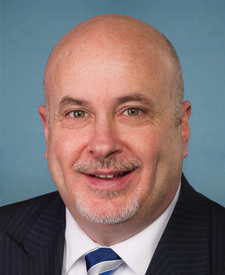
See how Mark Pocan's votes line up with your values.
DeepSyte scores Mark Pocan's record on the issues you care about — not party, not press releases. Take the 2-minute values quiz to see your personal alignment.
Sign in and take the values quiz to see how Mark Pocan's votes line up with your views.
Prediction track record
How often we called Mark Pocan's passage votes correctly, from their stated positions on each bill's tagged topics. Excludes “unclear” calls and abstentions.
A joint resolution to direct the removal of United States Armed Forces from hostilities within or against the Islamic Republic of Iran that have not been authorized by Congress.
To prohibit the disclosure of records by the Secretary of Housing and Urban Development of individuals for the purposes of immigration enforcement, and for other purposes.
We haven't yet found statement/vote pairs on the same topic for Mark Pocan. This usually means either the rep hasn't taken public positions on bills that have come to a passage vote, or those bills haven't been tagged yet. The checker runs as new press releases and votes come in.
Pro analysis
AI rep analysis — Pro
Get an AI-narrated read on Mark Pocan's full voting record against your stated values — aligned themes, conflicts, notable votes, and what to watch for.
We haven't extracted campaign positions for Mark Pocan yet. Once their campaign website or position pages are processed, this card will track what they said vs how they voted.
Crossing the aisle
Passage votes where Mark Pocan broke ranks with ≥75% of Democrats. Threshold catches substantively partisan splits; unanimous-ish or close votes are excluded.
RELEASE: Pocan Leads 19 Members Opposing U.S. Support for Aerial Fumigation in Colombia
Position: The release opposes any U.S. financial or logistical support for the planned resumption of aerial fumigation of coca crops in Colombia, citing health and ecosystem concerns and urging the Secretary of State to let Colombia's court challenges proceed without U.S. pressure.
WASHINGTON, D.C. – Today, U.S. Rep. Mark Pocan (WI-02) led a letter signed by 19 Members of Congress to Secretary of State Marco Rubio expressing opposition to any U.S. financial or logistical support for the planned resumption of aerial fumigation in Colombia. The program, which was banned by Colombia’s Constitutional Court in 2015, was found to be ineffective in diminishing coca cultivation and additionally poses a critical threat to human health and local ecosystems. The proposed pilot project, which would target an initial area of 1,000 hectares, or 2,471 acres, has been temporarily frozen by an administrative court in Mocoa. The Members urge Secretary Rubio to allow Colombia’s court challenges to proceed without U.S. pressure or intervention.
“We write to express our serious concerns regarding the intended reinitiation of aerial fumigation in Colombia amid reports that the Trump Administration has encouraged Colombia to restart the program,” the Members began. “We are opposed to any U.S. financial or logistical support for the planned resumption of aerial fumigation, which has not been shown to be effective in reducing coca cultivation and poses a significant threat to human health and fragile ecosystems.”
“In 2015, Colombia’s Constitutional Court banned the use of aerial fumigation after the World Health Organization’s (WHO) International Agency for Research on Cancer classified glyphosate, which was the key ingredient in Colombia’s fumigation program, as “probably carcinogenic to humans,” the Members added. “More than two decades of glyphosate aerial fumigation caused devastating health outcomes for communities already disproportionately affected by the armed conflict, Colombia’s small holder farmers and Afro-descendent, and Indigenous communities and the local ecosystems they protect, including the Amazon rainforest.”
“The proposed pilot project would target an initial area of 1000 hectares, or 2,471 acres, in the Amazonian department of Putumayo. On September 12, an administrative court in Mocoa temporarily froze the pilot project, stating that it must meet the conditions set by the Constitutional Court before proceeding, and that as of now sufficient information has not been provided,” the Members continued. “The Colombian government has appealed this decision. As many local communities, Indigenous peoples, environmental organizations, medical professionals, and Colombian Congresspeople are speaking out against the aerial fumigation pilot proposal, the Trump Administration should refrain from pressuring the Colombian government to double down on a failed counternarcotics strategy.”
“Meanwhile, we urge the Trump administration to learn lessons from the past and understand that only through providing meaningful alternatives to coca production will slow its spread,” the Members continued. “No action was more harmful to U.S. efforts than the administration’s illegal dismantlement of USAID. Prior to January 2025, USAID financed a series of activities in the Colombian Amazon supporting sustainable alternatives to coca cultivation and production. These programs designed to address the underlying economic insecurity faced by rural communities and to undermine the lure of illicit economies, such as sustainable agro-forest production, green tourism, and enforcement against environmental crimes, were abruptly eliminated and have not been replaced.”
“Two decades of aerial fumigation intended to reduce coca cultivation did not prove effective over the long-term. We continue to oppose U.S. financial or logistical assistance to resume ineffective aerial fumigation programs, and strongly urge the Trump administration to respect Colombia’s institutions and allow court challenges to proceed without intervention,” the Members concluded.
A digital copy of the full letter can be found here.
The full list of signers includes: Reps. Mark Pocan (WI-02), André Carson (IN-07), Greg Casar (TX-35), Lloyd Doggett (TX-37), Maxwell Frost (FL-10), Jesús “Chuy” García (IL-04), Sylvia Garcia (TX-29), Adelita Grijalva (AZ-07), Jonathan Jackson (IL-01), Pramila Jayapal (WA-07), Sydney Kamlager-Dove (CA-37), Summer Lee (PA-12), James McGovern (MA-02), Analilia Mejia (NJ-11), Eleanor Holmes Norton (DC-00), Alexandria Ocasio-Cortez (NY-14), Delia Ramirez (IL-03), Melanie Stansbury (NM-01), and Rashida Tlaib (MI-12).
Pocan, Welch Lead 16 Members Urging Ag Sec. Rollins to Reissue Dairy Business Funding Opportunity
Position: Members of Congress urged the Secretary of Agriculture to withdraw a newly added 25% cost-share requirement for the Dairy Business Innovation Initiatives program and reissue the funding notice without a matching requirement.
WASHINGTON, D.C. – Today, U.S. Representative Mark Pocan (WI-02) and U.S. Senator Peter Welch (D-VT) led a letter signed by 16 Members of Congress to Secretary of Agriculture Brooke Rollins, urging her to withdraw the newly added 25% cost-share requirement for the Dairy Business Innovation (DBI) Initiatives program and reissue the Notice of Funding Opportunity (NOFO) without a matching requirement.
The DBI Initiatives program was established by Congress as part of the Agriculture Improvement Act of 2018 to promote innovation in the dairy industry. It has retained strong bipartisan support ever since. The original law did not require recipients to match federal funding and this burdensome change comes when dairy farmers and businesses are already struggling as a result of volatility in markets and increases in costs.
“Today, the four existing initiatives serve dairy farmers and processors in 41 states and territories, representing 87 percent of the nation's milkshed,” the Members wrote. “They are the Dairy Business Innovation Alliance at the University of Wisconsin, the Northeast Dairy Business Innovation Center at the Vermont Agency of Agriculture, Food and Markets, the Pacific Coast Coalition at California State University, Fresno, and the Southeast Dairy Business Innovation Initiative at the University of Tennessee. Together they have awarded more than $106 million to 911 dairy businesses. Even so, they have been able to meet only about 35 percent of the demand they see through their competitive award processes. By law, at least half of each initiative's funding must go directly to grants to dairy businesses. The remainder supports technical assistance in business planning, marketing, and product development.”
“The need for this support has never been greater,” the Members continued. “Dairy farmers and processors are facing volatile markets, higher production and fuel costs, labor shortages, aging infrastructure, and growing competition. Small and mid-sized operations in particular depend on DBI to modernize equipment, develop new products, reach new markets, and keep viable outlets for farmers' milk. DBI works because it puts federal resources in the hands of regional partners with deep technical expertise and long-standing relationships with the dairy businesses they serve.”
“The organizations that host these initiatives are public universities and a state department of agriculture, working in partnership with a nonprofit trade association. They do not profit from DBI funding, and they generally do not have unrestricted resources to cover a 25 percent match,” the Members concluded. “The initiatives have told USDA that the new requirement could make continued operation of the program untenable. A requirement meant to stretch federal dollars could instead keep those dollars from reaching the farms and processors Congress intended to help.”
A digital copy of the letter can be found here.
The full list of signers includes: Reps. Mark Pocan (WI-02), Becca Balint (VT-At Large), Salud Carbajal (CA-24), Jim Costa (CA-21), Joe Courtney (CT-02), Maggie Goodlander (NH-02), John Mannion (NY-02), Gwen Moore (WI-04), Chellie Pingree (ME-01), Gabe Vasquez (NM-02), Sens. Peter Welch (D-VT), Tammy Baldwin (D-WI), Kirsten Gillibrand (D-NY), Alex Padilla (D-CA), Bernie Sanders (I-VT), and Adam Schiff (D-CA).
Pocan, Bacon Introduce Resolution Recognizing National PrEP Day
Position: The release introduces a resolution recognizing National PrEP Day on October 10, 2026, and states that access to pre-exposure prophylaxis (PrEP) for HIV prevention should be improved to address barriers such as cost, stigma, and access to care.
WASHINGTON, D.C. - U.S. Representatives Mark Pocan (WI-02) and Don Bacon (NE-02) today introduced a resolution recognizing October 10, 2026, as National PrEP Day and highlighting the importance of access to pre-exposure prophylaxis (PrEP) as a critical tool for preventing HIV.
“PrEP is one of the most effective tools we have to prevent HIV, yet too many people who could benefit from it continue to face barriers to access,” said Rep. Pocan, Chair of the Congressional HIV/AIDS Caucus. “National PrEP Day is an opportunity to raise awareness, reduce stigma and ensure people across the country know about this proven HIV prevention tool.”
“PrEP is a proven tool that can prevent HIV, and we should make sure people who can benefit from it know it is available and can access it,” said Rep. Bacon. “National PrEP Day is an opportunity to raise awareness, improve access and give people the information they need to protect their health. I'm joining Rep. Pocan on this bipartisan resolution supporting evidence-based efforts to prevent HIV and help more Americans access the care they need.”
When taken as prescribed, PrEP reduces the risk of acquiring HIV through sex by about 99 percent. Despite the effectiveness of PrEP, disparities in access and uptake persist due to factors including cost, stigma and barriers to health care.
Cosponsors include Representatives Yvette Clarke (NY-09), Eleanor Holmes Norton (DC), Robin Kelly (IL-02), Kevin Mullin (CA-15), Mike Quigley (IL-05), Mark Takano (CA-39) and Bonnie Watson Coleman (NJ-12).
The resolution is endorsed by MISTR, NMAC, and PrEP4All.
Issues:Healthcare
Pocan, Schakowsky Lead 71 Members Calling for Continued Allowance of Prescription Drug Imports
Position: The release urges HHS, FDA, DHS, and CBP to ensure that Americans can continue to obtain genuine, non-controlled prescription medicines from outside the United States for personal use, and to delay implementation of new CBP international mail procedures for prescription medicines unless assurances are provided that such shipments will not be blocked or routinely refused.
WASHINGTON D.C. - U.S. Representatives Mark Pocan (WI-02) and Jan Schakowsky (IL-09)today led a letter, signed by 71 Members of Congress, to Secretary of Health and Human Services (HHS) Robert F. Kennedy, Secretary of Homeland Security (DHS) Markwayne Mullin, and the commissioners of the Food and Drug Administration (FDA) and Customs and Border Protection (CBP), urging that the agencies ensure that Americans can continue to obtain genuine, non-controlled prescription medicines from outside the country.
New CBP procedures for international mail shipments, taking effect October 22, could disrupt 2.3 million Americans’ longstanding ability to obtain lower-cost prescription medicines from Canada and other countries for their personal use.
“For years, our constituents who have struggled with high prescription drug prices have obtained their medicines from pharmacies outside the United States, especially from Canada,” the members wrote.
“We support CBP’s goal of using better data to identify and intercept high-risk shipments. However, we are concerned that the new process could be implemented in a manner that prevents personal-use prescription medicines from being shipped to the United States or results in their routine refusal, including medicines Americans have long obtained from licensed pharmacies abroad,” the members continued. “Greater visibility should instead improve the government’s ability to distinguish dangerous products from lower-risk prescription medicines and preserve appropriate enforcement discretion.”
“We urge HHS, FDA, DHS, and CBP to delay any implementation of new procedures with respect to prescription medicines unless you can provide clear assurances that your agencies will not prevent genuine prescription medicines clearly intended for personal use and not appearing to present an unreasonable risk from entering the United States,” the members added.
“Americans should not lose access to affordable medicines simply because the government has better information about packages entering the country. We urge your agencies to use that information to focus enforcement on where the risks are greatest while preserving appropriate access to safe and affordable medicines for personal use,” the members concluded.
A digital copy of the full letter can be found here.
The letter is endorsed by the Campaign for Personal Prescription Importation, Just Care USA, National Association of Letter Carriers, Prescription Justice, and Social Security Works.
The full list of signers (71): Mark Pocan (WI-02), Jan Schakowsky (IL-09), Yassamin Ansari (AZ-03), Becca Balint (VT-01), Nanette Barragán (CA-44), Brendan Boyle (PA-02), Nikki Budzinski (IL-13), Janelle Bynum (OR-05), Salud Carbajal (CA-24), André Carson (IN-07), Greg Casar (TX-35), Judy Chu (CA-28), Yvette Clarke (NY-09), Steve Cohen (TN-09), Sharice Davids (KA-03), Madeleine Dean (PA-04), Diana DeGette (CO-01), Suzan DelBene (WA-01), Chris Deluzio (PA-17), Mark DeSaulnier (CA-10), Maxine Dexter (OR-03), Lloyd Doggett (TX-37), Veronica Escobar (TX-16), Dwight Evans (PA-03), Lois Frankel (FL-22), Maxwell Frost (FL-10), Robert Garcia (CA-42), Sylvia Garcia (TX-29), Chuy García (IL-04), Jimmy Gomez (CA-34), Adelita Grijalva (AZ-07), Val Hoyle (OR-04), Jonathan Jackson (IL-01), Pramila Jayapal (WA-07), Robin Kelly (IL-02), Timothy Kennedy (NY-26), Ro Khanna (CA-17), Raja Krishnamoorthi (IL-08), Greg Landsman (OH-01), Rick Larsen (WA-02), George Latimer (NY-16), Teresa Leger Fernandez (NM-03), Sam Liccardo (CA-16), Stephen Lynch (MA-08), John Mannion (NY-22), Doris Matsui (CA-07), Kristen McDonald Rivet (MI-08), Morgan McGarvey (KY-03), Jim McGovern (MA-02), Joe Morelle (NY-25), Seth Moulton (MA-06), Eleanor Holmes Norton (DC-01), Alexandria Ocasio-Cortez (NY-14), Jimmy Panetta (CA-19), Chris Pappas (NH-01), Chellie Pingree (ME-01), Mike Quigley (IL-05), Delia Ramirez (IL-03), Emily Randall (WA-06), Andrea Salinas (OR-06), Brad Schneider (IL-10), Adam Smith (WA-09), Marilyn Strickland (WA-10), Thomas Suozzi (NY-03), Mark Takano (CA-39), Rashida Tlaib (MI-12), Jill Tokuda (HI-02), Paul Tonko (NY-20), James Walkinshaw (VA-11), Debbie Wasserman Schultz (FL-25), and Frederica Wilson (FL-24)
Issues:Healthcare
Pocan, Quigley Lead 41 Members Calling for the Release of Detained Palestinian Physicians and Healthcare Workers
Position: The release describes a letter from 41 Members of Congress urging the Secretary of State to engage Israeli counterparts to secure the release of Palestinian physicians and healthcare workers held without formal charges or due process.
WASHINGTON, DC - U.S. Representatives Mark Pocan (WI-02) and Mike Quigley (IL-05) led a letter, signed by 41 Members of Congress, sent yesterday to Secretary of State Marco Rubio calling on him to engage with his Israeli counterparts to ensure the release of Palestinian physicians and other healthcare workers who are arbitrarily held in Israeli detention without formal charges or due process.
Since October 2023, Israeli forces have arrested hundreds of essential Palestinian healthcare workers, placing even further strain on Gaza’s already devastated healthcare system and severely undermining access to care in the West Bank. Dozens of medical workers, including physicians, remain detained despite facing no formal charges.
“We write to express our significant concerns regarding the Israeli government’s continued detention of Palestinian medical professionals, and to urge you to work with your Israeli counterparts to secure the release of medical professionals who remain in Israeli detention without due process, including physicians from Gaza and the West Bank,” the Members wrote.
“Since the start of the war in Gaza, Israel has arrested hundreds of essential Palestinian health care workers, placing even further strain on Gaza’s already devastated healthcare system and severely undermining access to care in the West Bank,” the Members continued. “Dozens of medical workers still remain detained despite facing no formal charges, and have reportedly been subjected to deplorable conditions in detention, including severe medical neglect, starvation, and abuse amounting to torture. Their prolonged and arbitrary detention appears to represent part of a pattern by the Israeli government to further dismantle the healthcare systems in Gaza and the West Bank and create conditions that are directly incompatible with rebuilding and recovery.”
“Among those detained are 14 Palestinian physicians from Gaza, including pediatricians, orthopedic specialists, and surgeons, who have been held in detention without charge for more than a year,” the Members added. “One of those doctors, Dr. Hussam Abu Safiya, has been held for over 18 months without any formal charges or trial, and is reportedly in such dire medical condition that his lawyer warned he is approaching the point of near-death. Like Dr. Abu Safiya, none of the other 13 doctors have been formally charged or allowed due process, and face similar dire conditions.”
“In recent months, we have also seen a growing number of assaults and arrests of Palestinian healthcare workers in the West Bank, including the arrest of Dr. Mazen Al-Rantisi in June,” the Members went on to say. “Known in his community as the “doctor of the poor,” he is also being held in detention despite facing no formal charges and is subject to similar inhumane conditions. These medical professionals provide essential healthcare services to their communities in the West Bank, and these increased attacks threaten their own health and safety, the health of their patients, and further underscore the broader Israeli effort to undermine the healthcare system in the West Bank, which is reportedly now on the brink of collapse.”
“Medical professionals are entitled to protections under International Humanitarian Law, and it is critical that the United States emphasizes the importance of protecting medical personnel from arbitrary detention without due process. We strongly urge you to work with your Israeli counterparts to secure immediate release from detention for these physicians, as well as the release of other medical professionals still in detention without due process,” the Members concluded.
A digital copy of the full letter can be found here.
The letter is endorsed by J Street, New Jewish Narrative, A New Policy, Friends Committee on National Legislation, PeaceMed, and Amnesty International
The full list of signers (41): Pocan, Mark; Quigley, Mike; Carson, André; Casar, Greg; Cisneros, Gilbert; Crockett, Jasmine; Davis, Danny; Dean, Madeleine; DeLauro, Rosa; Deluzio, Christopher; DeSaulnier, Mark; Dexter, Maxine; Doggett, Lloyd; Escobar, Veronica; Frost, Maxwell; Garamendi, John; García, Jesús; Garcia, Sylvia; Grijalva, Adelita; Hoyle, Val; Huffman, Jared; Jackson, Jonathan; Jayapal, Pramila; Kamlager-Dove, Sydney; Kelly, Robin; Khanna, Ro; Lee, Summer; Lynch, Stephen; McCollum, Betty; McGovern, James; Mejia, Analilia; Min, Dave; Moore, Gwen; Norton, Eleanor; Omar, Ilhan; Ramirez, Delia; Simon, Lateefah; Tlaib, Rashida; Tran, Derek; Waters, Maxine; Watson Coleman, Bonnie
Congressmen Pocan and Langworthy Introduce Bipartisan COMPACT Act to End Taxpayer-Funded Biomedical Testing on Dogs and Cats
Position: The release announces the introduction of the COMPACT Act, which would prohibit federal public-health research funds from supporting biomedical research involving live dogs and cats and would protect and rehome animals currently in research facilities. Sponsors cite abuse revelations at Ridglan Farms and advances in non-animal testing alternatives as reasons for the legislation.
WASHINGTON, DC - Congressmen Mark Pocan (WI-02) and Congressman Nick Langworthy (NY-23) today announced the introduction of the Companion Animal Protection Against Cruel Testing (COMPACT) Act, the most comprehensive legislation in history to modernize federally funded biomedical research and end inhumane testing practices on dogs and cats.
The legislation was announced at a press conference in Washington with the nation’s leading animal wellness organizations and rescue beagles released from Ridglan Farms in Wisconsin, which drew national attention and closure following revelations of widespread abuse.
The COMPACT Act prohibits the use of federal public-health research funds for biomedical research involving live dogs and cats while protecting animals currently in research facilities and preserving flexibility for genuine national emergencies. The legislation, developed with input from the medical and bioscience community, comes as advances in biomedical science have created alternatives to traditional animal testing, including in vitro systems, computational modeling and other non-animal technologies.
“What happened at Ridglan Farms was a wake-up call for our community and for the country,” said Congressman Mark Pocan. “We saw thousands of beagles confined in inhumane conditions and bred for research, and we saw what was possible when people came together to demand change.
“This is a nonpartisan issue, and I am glad to work with Congressman Langworthy to build on that progress with the COMPACT Act,” Pocan continued. “For years, our federal research agencies have worked on reducing animal testing and turning to more humane and effective alternatives, and this legislation takes the important next step in modernizing our federally funded research and protecting animals.”
“The horrific abuse and barbaric treatment of beagles uncovered inside research facilities like Ridglan Farms and Marshall Biosciences has outraged Americans from every corner of the country and political spectrum,” said Congressman Nick Langworthy. “Dogs and cats are companion animals and part of the family for millions of Americans; they should never have to endure inhumane suffering, particularly at expense to taxpayers and when science has evolved to develop more effective research methods. This is the most comprehensive legislation to date that moves our federal research system forward to better outcomes, while protecting innocent animals. I’m proud to work with my colleague, Congressman Pocan, on this thoughtful, bipartisan legislation.”
The COMPACT Act would:
Prohibit the use of federal funds administered by the Department of Health and Human Services and relevant subagencies for research involving live dogs and cats, including grants, contracts, cooperative agreements, fellowships, training awards and other federal funding mechanisms.
Protect and rehome animals currently being used for biomedical testing, giving them an opportunity for life outside research facilities.
Establish strong compliance and oversight mechanisms and provide law enforcement with tools to protect dogs and cats from taxpayer-funded experimentation.
Increase transparency and accountability at HHS through an annual agency report and a Government Accountability Office review three years after enactment.
Provide clear standards and transition provisions for research institutions, giving facilities certainty as they move toward modern, non-animal research methods.
The legislation is endorsed by the nation’s leading animal rights and wellness advocacy groups, including the Animal Wellness Action, White Coat Waste Project, Physicians Committee for Responsible Medicine, Humane World for Animals, Humane World Action Fund, the Beagle Freedom Project, PETA, and Save the Dogs.
“We are past due to close out the long, painful era of government-funded invasive testing on beagles and on cats,” said Wayne Pacelle, president of Animal Wellness Action and the Center for a Humane Economy. “In a world of predictive AI, organoids, and so many other biomedical innovations, American taxpayers need not subsidize ineffective experiments on animals widely recognized as beloved members of our families. We thank Congressman Langworthy and Pocan for leading an effort to usher in cruelty-free medicines and animal-free science.”
"This is a common-sense Act long overdue in recognizing that dogs and cats deserve protection. The federal government should not be funding experimentation on them when they belong in homes. Beagle Freedom Project stands at the ready to place these animals in loving homes," said Shannon Keith, president and founder.
“The COMPACT Act is a long-overdue step toward ending the use of dogs and cats in animal research” said Blair Eagleson, legislative affairs fellow at the Animal Legal Defense Fund. “By ensuring that the Department of Health and Human Services will not fund these practices, we are protecting our companion animals and encouraging biomedical research to prioritize humane methods. The Animal Legal Defense Fund thanks Congressman Langworthy for championing this cause to protect future dogs and cats from being used for research and offering a pathway to find loving homes for those who are currently suffering in labs.”
“Dogs and cats belong in homes, not laboratories, and taxpayer dollars should support research that better translates to human health. The COMPACT Act will help direct federal agencies toward research that benefits people and spares animals. The Physicians Committee commends Rep. Langworthy and Rep. Pocan for recognizing that protecting animals and improving science go hand in hand,” said Janine McCarthy, director of research policy at the Physicians Committee for Responsible Medicine.
Wayne Hsiung of Save the Dogs said, "Americans have been paying $40 million a year to fund cruel experiments on dogs and most have no idea. The COMPACT Act finally puts taxpayers back in control of their own money, and ends a program the science stopped justifying long ago. We're grateful to Rep. Langworthy for leading this fight."
“Americans should not be forced to pay for painful, deadly experiments on dogs and cats when modern, reliable, human-relevant research methods are available,” said Kathy Guillermo, PETA senior vice president. “The bipartisan COMPACT Act will help move federally funded research into the 21st century while protecting dogs and cats from suffering in laboratories. PETA applauds Representatives Langworthy and Pocan for their leadership and urges Congress to swiftly pass this commonsense legislation.”
Pocan Shares Concerns with Proposed MGS Transmission Line, Calls for Extended Public Input Process
Position: Rep. Pocan objects to the public input process for the proposed 765-kV BECI transmission line and asks Midcontinent Grid Solutions to delay its CPCN filing until at least May 2027 to allow additional outreach, route information, and analysis of reliability needs, alternatives, and costs.
MADISON, WI - U.S. Representative Mark Pocan (WI-02) sent a letter to Midcontinent Grid Solutions (MGS) objecting to the insufficient public input process and a concerning lack of information provided to constituents in the 2nd Congressional District who will be directly impacted by a proposed $1.2 billion transmission line, particularly in Sauk, Dane, and Rock counties.
The proposed transmission line, also known as the BECI project, would be a 765-kilovolt, 190-mile power line stretching across southern Wisconsin. Pocan called for MGS to delay a filing to proceed with the project until at least May 2027, after a meaningful public input process.
“I am writing to express concern with Midcontinent Grid Solutions' (MGS) plan to file its Certificate of Public Convenience and Necessity (CPCN) with the Public Service Commission of Wisconsin for the BECI 765-kV Transmission Line Project in early 2027,” Pocan began. Constituents in Wisconsin's Second Congressional District, particularly in Dane, Sauk, and Rock Counties, have reached out to my office with real concerns about this project, and I share those concerns.”
“People who received letters just weeks ago are now being asked to absorb the entirety of a 190-mile, 765-kV line, identify the parties involved, understand potential routes through their communities, and provide meaningful feedback, all on a compressed timeline that does not match the scale of the project's impact on their land, their livelihoods, and their communities,” Pocan continued.
“A project of this size and consequence deserves a public input process that matches its impact. I believe there should be additional time to engage more closely with potentially affected landowners before moving forward with a CPCN filing,” Pocan added. “That should include more open-house meetings, clearer and earlier communication about proposed routes, and opportunities for landowners and residents to raise property-specific concerns and have them addressed before the process moves to the PSC.”
“I would ask that MGS extend its public feedback window until at least May 2027 and use that additional time to conduct further outreach and share clear information about proposed routes, what specific reliability problems this project solves, what alternatives were considered for this project, and the full expected costs and benefits of this project to Wisconsinites,” Pocan concluded.
Read the letter here.
Issues:Energy and Environment
Pocan, Frankel, Randall, & Takano lead 113 House Members in Letter to OMB Calling for Renewal of Community HIV Funds
Position: The release argues that the CDC should renew approximately $46 million in direct HIV prevention grants to 96 community-based organizations rather than routing the funds through state and local health departments, and expresses concern about service continuity and 340B eligibility.
WASHINGTON, D.C. – U.S. Representatives Mark Pocan (WI-02), Lois Frankel (FL-22), Emily Randall (WA-06), and Mark Takano (CA-39) led 113 of their colleagues in a letter to the Office of Management and Budget (OMB) Director, Russell Vought, regarding reports that the Trump Administration has directed the Centers for Disease Control and Prevention (CDC) not to renew approximately $46 million in direct HIV prevention grants supporting 96 community-based organizations across the country. Reports show that OMB instructed CDC to route these congressionally appropriated funds through state and local health departments rather than renewing the awards directly to the community-based organizations. This change could create significant disruptions in HIV prevention services, undermining longstanding congressional investments in ending the HIV epidemic.
“We write regarding reports that the Office of Management and Budget (OMB) directed the Centers for Disease Control and Prevention (CDC) not to renew approximately $46 million in direct HIV/AIDS prevention grants supporting 96 community-based organizations (CBOs) under PS21-2102, despite Congress appropriating these funds for HIV prevention activities,” the Members began. “These organizations provide HIV testing, linkage to care, referrals for pre-exposure prophylaxis (PrEP) and post-exposure prophylaxis (PEP), outbreak response, and other evidence-based prevention services that protect our citizens and help stop the spread of HIV nationwide.”
"Despite this successful model, OMB has reportedly instructed CDC to redirect these resources through state and local health departments, putting the status of this funding and the very existence of these community-based organizations in jeopardy,” the Members continue. “This reported decision raises serious concerns regarding the implementation of congressional appropriations, continuity of HIV prevention services, and the Administration's commitment to ending the HIV epidemic in the United States.”
“According to reporting, the Administration intends for states to determine whether to subcontract funding to these organizations,” the Members go on to write. “However, this approach fundamentally changes how Congress has historically supported HIV prevention infrastructure and introduces uncertainty into organizations' ability to continue providing uninterrupted services. Additionally, reports indicate that organizations losing direct CDC funding may also lose their eligibility to participate in the 340B Drug Pricing Program through these grants, which could greatly increase the cost of providing HIV prevention medications and related services to our communities.”
“Congress has consistently demonstrated bipartisan support for evidence-based HIV prevention programs. And unless Congress directs otherwise, appropriated funds should be administered in a manner consistent with congressional intent and longstanding program implementation… The United States has made extraordinary progress in reducing HIV transmission through sustained investments in evidence-based prevention, community partnerships, and early linkage to care. Disrupting longstanding prevention infrastructure, without a transparent public health justification, risks reversing decades of bipartisan progress and undermining congressional investments in ending the HIV epidemic,” the Members concluded.
A digital copy of the letter can be found here.
Signers (113):Mark Pocan (WI-02), Lois Frankel (FL-22), Emily Randall (WA-06), Mark Takano (CA-39), Gabe Amo (RI-01), Yassamin Ansari (AZ-03), Becca Balint (VT), Nanette Barragan (CA-44), Joyce Beatty (OH-03), Wesley Bell (MO-01), Don Beyer (VA-08), Suzanne Bonamici (OR-01), Nikki Budzinski (IL-13), Salud Carbajal (CA-24), Troy Carter (LA-02), Greg Casar (TX-35), Kathy Castor (FL-14), Judy Chu (CA-28), Yvette Clarke (NY-09), Emanuel Cleaver (MO-05), Steve Cohen (TN-09), Lou Correa (CA-46), Jasmine Crockett (TX-30), Danny Davis (IL-07), Madeleine Dean (PA-04), Diana DeGette (CO-01), Suzan DelBene (WA-01), Chris Deluzio (PA-17), Maxine Dexter (OR-03), Debbie Dingell (MI-06), Lloyd Doggett (TX-37), Adriano Espaillat (NY-13), Dwight Evans (PA-03), Shomari Figures (AL-02), Lizzie Fletcher (TX-07), Laura Friedman (CA-30), Maxwell Frost (FL-10), Robert Garcia (CA-42), Jesús García (IL-04), Sylvia Garcia (TX-29), Dan Goldman (NY-10), Josh Gottheimer (NJ-05), Adelita Grijalva (AZ-07), Jahana Hayes (CT-05), Pablo Hernández (PR), Steven Horsford (NV-04), Steny Hoyer (MD-05), Val Hoyle (OR-04), Glenn Ivey (MD-04), Jonathan Jackson (IL-01), Sara Jacobs (CA-51), Pramila Jayapal (WA-07), Hank Johnson (GA-04), Julie Johnson (TX-32), Sydney Kamlager-Dove (CA-37), Marcy Kaptur (OH-09), William Keating (MA-09), Robin Kelly (IL-02), Ro Khanna (CA-17), Raja Krishnamoorthi (IL-08), Summer Lee (PA-12), Stephen Lynch (MA-08), Doris Matsui (CA-07), Lucy McBath (GA-06), Sarah McBride (DE), Jim McGovern (MA-02), LaMonica McIver (NJ-10), Analilia Mejia (NJ-11), Christian Menefee (TX-18), Rob Menendez (NJ-08), Grace Meng (NY-06), Kweisi Mfume (MD-07), Gwen Moore (WI-04), Kelly Morrison (MN-03), Jared Moskowitz (FL-23), Seth Moulton (MA-06), Kevin Mullin (CA-15), Jerry Nadler (NY-12), Eleanor Holmes Norton (DC), Alexandria Ocasio-Cortez (NY-14), Johnny Olszewski (MD-02), Ilhan Omar (MN-05), Nancy Pelosi (CA-11), Chellie Pingree (ME-01), Stacey Plaskett (VI), Ayanna Pressley (MA-07), Mike Quigley (IL-05), Delia Ramirez (IL-03), Luz Rivas (CA-29), Deborah Ross (NC-02), Mary Gay Scanlon (PA-05), Jan Schakowsky (IL-09), Bobby Scott (VA-03), Terri Sewell (AL-07), Lateefah Simon (CA-12), Adam Smith (WA-09), Eric Sorensen (IL-17), Haley Stevens (MI-11), Shri Thanedar (MI-13), Bennie Thompson (MS-02), Dina Titus (NV-01), Rashida Tlaib (MI-12), Paul Tonko (NY-20), Ritchie Torres (NY-15), Lori Trahan (MA-03), Juan Vargas (CA-52), Nydia Velazquez (NY-07), Eugene Vindman (VA-07), Debbie Wasserman Schultz (FL-25), Maxine Waters (CA-43), Bonnie Watson Coleman (NJ-12), Nikema Williams (GA-05), Frederica Wilson (FL-24)
National Endorsements: AIDS Institute, AVAC, HIV+Hepatitis Policy Institute, HIV Alliance, HIV Medicine Association, Save HIV Funding Campaign, NMAC, PrEP4All, NASTAD
State/Local Endorsements: Health Services Center (AL), APLA Health (CA), Family Health Centers of San Diego (CA), APNH: A Place to Nourish your Health (CT), South Side Help Center (IL), Indigenous Peoples Task Force (MN), Hyacinth Foundation (NJ), Migrant Health Center Western Region (TN), FLAS, Inc. (TX)
Position: Representative Pocan criticizes a State Department report on Cuba as unfounded and politically motivated, argues it is being used to justify potential military action, opposes involvement in another war, and calls for an end to the U.S. blockade of Cuba.
WASHINGTON, D.C. – U.S. Representative Mark Pocan (WI-02) issued the following statement after the State Department released its latest report on Cuba:
“The State Department just published a ridiculous report about the threat to America from Cuba. It may be the stupidest, most fantastical, most biased thing I’ve ever read from a governmental agency. This report focuses on the 1960s & 70s with no clear connection to today. Yet somehow, the State Department uses this report to say that this impoverished nation is responsible for everything from Black Lives Matter to Antifa, the anti-ICE protests and more.
“It’s clear that this report was written for Marco Rubio and his South Florida politics as a way to justify Trump setting up another war, not based on the reality of an impoverished nation due to our blockade. We simply can’t get involved in another illegal war.”
Pocan recently returned from a fact-finding mission to Cuba, where he saw firsthand that the U.S. policy toward Cuba is not working, and that this blockade must end.
Reps. Pocan, Dexter, Leger Fernandez, and Ramirez Return From Cuba Fact-Finding Mission
Position: The members state that U.S. sanctions and fuel restrictions on Cuba are harming Cuban citizens, citing shortages of food, medicine, and fuel, rising infant mortality, and constrained private-sector growth, and they call for reset of U.S.-Cuba relations through engagement and diplomacy. They also criticize U.S. immigration policy as pushing Cubans to emigrate.
WASHINGTON, D.C. – U.S. Representatives Mark Pocan (WI-02), Teresa Leger Fernandez (NM-03), Delia C. Ramirez (IL-03) and Maxine Dexter (OR-03) released the following statement upon the conclusion of their four-day Congressional delegation to Cuba:
“I went to Cuba thirty years ago, three and a half years ago, and now today,” said Rep. Pocan. “As a small business owner for 37 years myself, I have seen how the island’s private sector has the potential to thrive like never before, but is also hamstrung by U.S. sanctions that limit its access to financing, punish its workforce, reduce its customer base, and cut off its suppliers and export possibilities.”
“United States' policies continue to exacerbate a crisis of displacement: a situation that, for many Cubans, makes it impossible to stay and realize self-determination in their own land. From what I heard directly from Cubans, many feel like they are forced to emigrate. But when Cubans decide to leave behind their land and look at the United States with hope, they are confronted by the U.S.’s outdated immigration system and the Trump administration's white nationalist agenda,” said Rep. Ramirez. “It is an impossible choice: face hunger, illness, and destitution on your own land or the abuse of ICE in the U.S.”
“Cuba created a free, universal healthcare system that millions of Cubans and others around the world have come to expect and depend on,” said Congresswoman Maxine Dexter, M.D. “Today that system is buckling under sanctions that the White House has unleashed on the Cuban people. This is creating a humanitarian catastrophe, and it’s on us to stop it. I will be using all the tools at my disposal to remove the barriers to delivering health care to the Cuban people.”
“What the United States is doing to this island is a siege,” said Rep. Leger Fernández. “We’re blocking medical supplies, fuel and other essential inputs, leading its infant mortality rate to rise nearly 150% in recent years, from 4 to 9.9 per 1,000 live births. I doubt any American wants innocent Cuban babies to die due to our policies.”
The Members jointly wrote:
“As elected lawmakers tasked with oversight of U.S. foreign policy, we traveled to Havana to meet with Cubans of all walks of life and political perspectives to hear about the hardships the Trump administration’s maximum pressure policies are creating for Cuban citizens, learn about recent reform efforts aimed at modernizing the Cuban economy, and explore ways to reset U.S.-Cuba relations on a path of engagement, diplomacy and mutual respect.
“The de facto U.S. fuel blockade on Cuba is producing indiscriminate pain for the most vulnerable Cubans, contributing to nationwide electrical blackouts—including one during our trip—buildups of trash on street corners, severe shortages of food, medicine, and public transportation, and widening inequality on the island.
“In our meetings with religious leaders, entrepreneurs, civil society organizations, humanitarian groups, medical professionals and farmers, everybody we heard from - no matter their views of the Cuban government or the pace and scope of the announced reforms - agreed on one thing: that they are being strangled to death under the current executive orders and longstanding economic blockade.
“The Trump administration has not provided any evidence that Cuba poses a pressing national security threat to the United States and our interests at home and abroad. We believe that any pretext used to launch an illegal, unauthorized, and unpopular military operation against the island would exacerbate a grave humanitarian catastrophe, put U.S. service members at unnecessary risk, and hurt the very people we claim to support.
“The severe secondary sanctions - including more announced today - mean that there is almost no fuel and no banking on the island, forcing blackouts that can last days. Foreign businesses are fleeing the island, crippling Cuba’s private sector. Without electricity, hospitals, health care and all basic services are impacted. There is a growing humanitarian crisis and international aid organizations cannot distribute aid throughout the country. In other words, our policies are killing everyday Cuban citizens.
“We call on the Trump administration and our colleagues in Congress to listen to the majority of U.S. and Cuban citizens and the rest of the world by lifting the cruel sanctions weighing on the Cuban people and engaging in serious and comprehensive negotiations with Cuban authorities that help advance trade with the island, promote respect for human rights, and provide a much-needed solution for a Cuban population that doesn’t have any more time to wait.”
Source: GDELT 2.0 GKG, filtered to a curated list of national outlets. Inclusion is not endorsement; opinion pieces and reported news are mixed.
Recent stock activity
Periodic transaction reports filed under the STOCK Act — disclosed by the rep, sourced from public filings.
No disclosed trades on record.
Source: open-data mirrors of the Senate eFD and House Clerk financial-disclosure systems. Disclosure within 30 days of trade is required by law (45 for spouse/dependent trades).
Top PAC donors · 2026 cycle
Political action committees that gave the most to this rep's principal campaign committee this cycle. PAC giving is direct organizational support — industry, ideological, or leadership.
1.INTERNATIONAL ASSOCIATION OF SHEET METAL, AIR, RAIL AND TRANSPORTATION WORKERS POLITICAL A2 contributions$10,000
2.INTERNATIONAL UNION OF OPERATING ENGINEERS LOCAL 139 FEDERAL PAC2 contributions$10,000
3.NATIONAL TELECOMMUNICATIONS COOPERATIVE ASSOCIATION RURAL BROADBAND PAC2 contributions$10,000
4.AMERICAN FEDERATION OF TEACHERS, AFL-CIO COMMITTEE ON POLITICAL EDUCATIONLabor2 contributionsTrade-union PAC for teachers — backs candidates supporting public education funding, collective bargaining rights, and worker protections.AI$10,000
5.AMERICAN CRYSTAL SUGAR COMPANY POLITICAL ACTION COMMITTEEAgriculture2 contributionsAgricultural processing PAC for American Crystal Sugar — backs candidates supporting farm subsidies, sugar price supports, and agricultural trade policies.AI$10,000
6.DRIVE - DEMOCRAT, REPUBLICAN, INDEPENDENT VOTER EDUCATION (THE PAC OF THE INTERNATION6 contributions$10,000
7.LABORERS' INTERNATIONAL UNION OF NORTH AMERICA (LIUNA) PACLabor4 contributionsTrade-union PAC for construction laborers — backs prevailing-wage standards, infrastructure investment, apprenticeship programs, and project labor agreements.AI$10,000
8.AMERICAN FEDERATION OF STATE COUNTY & MUNICIPAL EMPLOYEES P E O P L E4 contributions$10,000
9.INTERNATIONAL ASSOCIATION OF FIREFIGHTERS INTERESTED IN REGISTRATION AND EDUCATION PACPublic Sector4 contributionsPublic-sector employee PAC affiliated with the International Association of Firefighters — backs candidates supporting firefighter workplace protections, benefits, and federal fire-service funding.AI$10,000
10.INTERNATIONAL UNION OF PAINTERS AND ALLIED TRADES POLITICAL ACTION TOGETHER POLITICAL COMMITTEELabor2 contributionsTrade-union PAC for the International Union of Painters and Allied Trades — backs prevailing-wage protections, apprenticeship funding, project labor agreements, and pro-union labor policies.AI$7,500
Source: OpenFEC (api.open.fec.gov) Schedule A receipts where contributor type is “committee.” Aggregated by contributing committee. Self-transfers from joint-fundraising / victory committees are excluded.
Top individual contributors · 2026 cycle
Itemized individual contributions over $200 to this rep's campaign committee, aggregated by donor employer. PAC giving is shown above; this section is people, not organizations.
1.MARQUIS MANAGEMENT, INC.$5,000
2.BGR GROUP$5,000
3.EXACT SCIENCES$4,749
4.UW MADISON$4,000
5.ASCENDIUM EDUCATION GROUP, INC.$4,000
6.KASIETA LEGAL GROUP, LLC$3,500
7.ARENBERG HOLDINGS$3,500
8.HAYAT PHARMACY$3,500
9.CSA PARTNERS$3,500
10.KESSLER SCHNEIDER$3,500
Source: OpenFEC Schedule A receipts where contributor type is “individual,” aggregated by the donor's self-reported employer. This is a geographic / industry correlation, not a corporate endorsement.