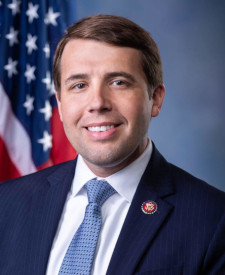
See how Chris Pappas actually votes — against your values.
DeepSyte scores Chris Pappas's record on the issues you care about — not party, not press releases. Take the 2-minute values quiz to see your personal alignment.
Sign in and take the values quiz to see how Chris Pappas's votes line up with your views.
Prediction track record
How often we called Chris Pappas's passage votes correctly, from their stated positions on each bill's tagged topics. Excludes “unclear” calls and abstentions.
A joint resolution to direct the removal of United States Armed Forces from hostilities within or against the Islamic Republic of Iran that have not been authorized by Congress.
To prohibit the disclosure of records by the Secretary of Housing and Urban Development of individuals for the purposes of immigration enforcement, and for other purposes.
Based on 2 data points across public statements and recorded votes · AI analysis of public records
118-hr-8314·Mixed signal
No Foreign Election Interference Act
65/100
What they said
Aug 28, 2026
Congressman Pappas advocates for the DISCLOSE Act, which would require disclosure of donors to super PACs and dark money groups, expand transparency requirements for online political advertising and social media influencer payments, and strengthen prohibitions on foreign election spending.
The statement advocates for the DISCLOSE Act, which focuses on requiring disclosure of donors to dark money groups and super PACs, and expanding transparency in political advertising and social media spending. The bill voted on addresses a narrower, related but distinct question: prohibiting tax-exempt organizations from accepting foreign contributions and making political donations. Both bills share a concern with dark money and foreign influence in elections, and the rep's YES vote on foreign-interference restrictions aligns directionally with the transparency and anti-corruption values expressed in the statement. However, the bills address different specific mechanisms—donor disclosure versus foreign-source restrictions—and the statement does not explicitly address the foreign-contribution prohibition that the bill enacts.
Congressman Pappas supports legislation to ban stock trading by members of Congress, restrict dark money in elections, regulate shadow lobbying, and strengthen congressional ethics enforcement through independent oversight.
The statement emphasizes banning stock trading by members of Congress, restricting dark money, regulating shadow lobbying, and strengthening ethics enforcement. The bill addresses foreign influence on elections by restricting tax-exempt organizations that receive foreign contributions from making political donations. Both address election integrity and foreign/special-interest influence broadly, and the rep's YES vote aligns with the anti-corruption theme. However, the bill's specific mechanism (foreign-contribution restrictions on tax-exempt orgs) differs from the statement's focus on congressional stock trading and dark money disclosure. The vote is consistent with the rep's stated anti-corruption values, though the bill does not directly address the specific provisions the statement emphasizes.
Pairs with ambiguous language and high uncertainty are withheld until more data is available. Procedural, cloture, and amendment votes are excluded — they don't cleanly signal substantive support or opposition.
Pro analysis
AI rep analysis — Pro
Get an AI-narrated read on Chris Pappas's full voting record against your stated values — aligned themes, conflicts, notable votes, and what to watch for.
We haven't extracted campaign positions for Chris Pappas yet. Once their campaign website or position pages are processed, this card will track what they said vs how they voted.
Crossing the aisle
Passage votes where Chris Pappas broke ranks with ≥75% of Democrats. Threshold catches substantively partisan splits; unanimous-ish or close votes are excluded.
Condemning actors seeking to defraud the United States Government, and expressing the sense of the House of Representatives that governmentwide fraud and improper payment prevention reforms will meaningfully improve the financial prosperity of the United States, and that Federal program eligibility should be verified before payment.
Pappas Fights Back on Trump’s Executive Order Limiting Mail-In Voting
Position: Congressman Pappas opposes President Trump's Executive Order 14399 limiting mail-in voting, arguing that mail-in voting is safe and effective, and that the order violates constitutional separation of powers by usurping congressional and state authority over election administration.
In response to President Donald Trump’s Executive Order 14399 seeking to exert control over mail-in ballots ahead of the 2026 midterm elections, Congressman Chris Pappas (NH-01), co-chair of the Congressional Postal Caucus, led 99 members in calling on the Postmaster General to revoke a Postal Service rule codifying the order. In addition to that, Pappas joined a bipartisan coalition in filing an amicus brief to the Supreme Court of the United States in the matter of United States Postal Service, et al., v. State of California, et al., a lawsuit brought by a coalition of State Attorneys General against the U.S. Postal Service.
One-third of Americans are expected to vote by mail in the upcoming midterm elections—a voting practice Donald Trump himself used as recently as August 2026, when the president voted in Florida’s Republican primary. A 2025 Brookings Institution study found an average of just four cases of voter fraud for every 10 million mail-in ballots cast — and that states using universal mail-in voting have among the lowest fraud rates in the country.
Letter to Postmaster General David P. Steiner:
Congressman Chris Pappas (NH-01), Congresswoman Nikki Budzinski (IL-13), and Congressman Raja Krishnamoorthi (IL-08) led 97 colleagues in calling on Postmaster General David P. Steiner to revoke a Postal Service rule that codifies President Trump's Executive Order targeting vote-by-mail.
“The evidence is clear: voting by mail is safe, effective, and helps to ensure everyone is able to execute their constitutional right to vote. USPS has played an essential role in elections for generations – and it is our fear that this final rule risks harming the democratic process and severely damaging USPS’s relationship with the millions of Americans who rely on USPS to deliver ballots every election cycle,” the members wrote.
The lawmakers warn that if the rule survives legal challenge, it would carry real consequences: disrupting operations for tens of thousands of USPS employees, creating new obstacles for tens of millions of voters who rely on mail-in ballots, and further eroding public trust in the electoral process.
Amicus brief to the Supreme Court of the United States in the matter of United States Postal Service, et al., v. State of California, et al.:
Congressman Pappas joined a court filing challenging the legality of President Donald Trump’s Executive Order 14399. The court case challenges a Final Rule issued by the USPS pursuant to Trump’s directive that imposes unconstitutional and unworkable restrictions on mail-in voting, including requiring states to provide a “citizenship verification list” and attempting to give USPS control over who can vote by mail.
In the court filing, the amici curiae argue that the order violates the separation of powers and usurps congressional authorities outlined in Article I of the U.S. Constitution, which gives the states and Congress exclusive authority over election administration.
“As current and former legislators, amici took an oath to uphold and defend the Constitution of the United States—including its guarantee of the separation of powers. Amici have a particular interest in defending the institutional role of the Legislative Branch under Article I of the Constitution and in vindicating the long-settled principle that the Constitution commits ultimate regulatory authority over federal elections to Congress. The Constitution does not contemplate the Executive Branch acting unilaterally to assert power over federal elections. Yet that is what the Order and Final Rule do,” wrote the lawmakers.
The amici also pointed to a recent federal court ruling blocking the USPS from implementing its newly finalized mail ballot rule for the midterm elections, saying the agency lacked the authority to implement the rule and that its actions are “substantively unconstitutional and contrary to law.” The group concluded by asserting States’ power to administer elections and Congress’s power to make or alter rules regulating elections, which the Supreme Court itself has described as an “override” authority. The president’s illegal incursion on this authority is an attempt to disenfranchise people who depend on mail-in ballots to vote.
Pappas Files Bipartisan Bill to Cut Taxes for 3.5 Million Working Families
Position: Congressman Pappas supports legislation that would expand the Child Tax Credit by allowing working families to begin receiving refundable CTC benefits starting with their first dollar of earned income, rather than only for income above $2,500, to provide tax relief to approximately 3.5 million families with children.
Congressman Chris Pappas (NH-01) joined Congresswoman Carol D. Miller (WV-01), Congressman Steven Horsford (NV-04), and Congresswoman María Salazar (FL-27) in introducing the bipartisan Stronger Start for Working Families Act, which would provide a tax cut to 3.5 million working families with children by allowing them to begin receiving the Child Tax Credit (CTC) starting with the first dollar they earn. This bill is a companion to legislation introduced in the Senate by U.S. Senators Maggie Hassan (NH) and Todd Young (IN).
"Families in New Hampshire are working hard and still coming up short. Child care for a family with two kids costs close to $32,000 a year here, more than a quarter of our state's median family income," said Congressman Pappas. "It makes no sense that parents who need the Child Tax Credit most are the ones missing out. This bill is a simple and straightforward fix: let families start earning the credit with their first dollar of work so we can put money back in their pockets."
Under current law, millions of working families do not receive the full value of the Child Tax Credit because their income isn’t high enough to maximize the refundable portion of the credit. The Stronger Start for Working Families Act would cut taxes for these families by allowing them to begin earning refundable CTC benefits beginning with the first dollar of income that they earn, rather than only for income over $2,500. According to the Tax Policy Center, this change would provide a tax cut to nearly 3.5 million families with kids in 2026.
Background:
Pappas fought for the original expansion of the Child Tax Credit in the American Rescue Plan and has continuously advocated for reinstating the expanded Child Tax Credit to help Granite State families make ends meet. It’s estimated that 34,000 more children in New Hampshire would benefit from the expanded Child Tax Credit.
Pappas also continues to advocate for investments in child care to be made in New Hampshire, including $1 million in federal dollars he secured through the Congressional appropriations process to make enhancements to the Child Study and Development Center at UNH, help create an Early Child Institute for Excellence, and improve child care and education in New Hampshire. He has held roundtable conversations with child care workers and New Hampshire families about the urgent need to address rising costs for families by making child care more affordable.
In February Pappas helped introduce the bipartisan After Hours Child Care Act, which would improve access to affordable child care for parents working nontraditional hours. In April, he introduced the Rural Child Care Access Act, legislation to help child care providers serving small and rural areas upgrade existing facilities or construct new ones and strengthen services by creating a new grant program administered by the Department of Health and Human Services. He also supports the Child Care for Working Families Act, the Child Care Infrastructure Act, the Helping Ensure Reliable Opportunities (HERO) for Child Care Act, and the Providing Child Care for Police Officers Act.
Pappas, Goodlander Urge Trump to Reverse Course on Canadian Trade War Threatening New Hampshire Small Businesses
Position: The lawmakers oppose escalating tariffs and trade barriers against Canada, arguing that such policies create economic uncertainty, disrupt integrated North American supply chains, and harm American businesses, workers, farmers, and consumers.
Congressman Chris Pappas (NH-01), Congresswoman Maggie Goodlander (NH-02), and 86 House colleagues are urging President Trump to change his administration’s diplomatic approach with Canada and recognize the importance of the U.S.-Canada relationship. The effort follows further fraying in the two country’s relations amid President Trump’s escalating and chaotic use of trade barriers against Canada. In a letter to President Trump, the lawmakers specifically highlighted the risk to America’s economy should the president continue to use demeaning rhetoric and implement damaging policies against Canada.
“Your Administration’s escalating and chaotic use of trade barriers against Canada is putting this relationship at serious risk. Recent tariffs, continued threats of additional trade restrictions, and increasingly adversarial rhetoric are creating uncertainty for businesses, workers, farmers, and consumers on both sides of the border. American exports to Canada declined in 2025, while Canadian exports to the United States also fell substantially following the implementation of U.S. tariffs. Additionally, Canadian businesses are increasingly looking to diversify their supply chains and markets, which should concern your Administration,”the lawmakers wrote.
The lawmakers went on to describe the shared economic interests between the U.S. and Canada and the risks a worsening relationship would have on the American people.
“Our economic relationship is too important to put at risk. Our manufacturers, farmers, producers, small businesses, and consumers depend upon Canada, as Canadian businesses and workers depend upon access to the United States. Materials, parts, and components routinely cross the border as part of shared North American supply chains. Disrupting these relationships increases costs for American businesses and consumers, undermines our competitiveness, and puts good-paying American jobs at risk. For example, the North American automotive industry relies on a highly integrated supply chain in which parts and materials can cross the U.S.-Canada border multiple times before a vehicle reaches a customer. Similar integration exists across energy, agriculture, steel, aluminum, critical minerals, and manufacturing,”the lawmakers continued.
A copy of the letter can be found here.
Position: The representative voted for a continuing resolution to maintain government funding and federal services, while calling for bipartisan legislative action to address utility and gas costs.
Today Congressman Chris Pappas (NH-01) issued the following statement after voting for a continuing resolution to extend government funding through December 11, 2026:
“I voted to keep our government open and ensure we fund vital services, pay federal workers, and prevent any possibility of a government shutdown at the end of this fiscal year. But Congress shouldn’t have to govern this way. It is past time for House leadership to engage in bipartisan negotiations, act responsibly, and pass legislation that will deliver relief from skyrocketing utility costs and gas prices and put money back in Granite Staters’ pockets.”
Pappas Announces 43 New Cosponsors of His Bill to End Corrupting Influence of Dark Money in American Elections, Bringing Total to 181
Position: Congressman Pappas advocates for the DISCLOSE Act, which would require disclosure of donors to super PACs and dark money groups, expand transparency requirements for online political advertising and social media influencer payments, and strengthen prohibitions on foreign election spending.
Today Congressman Chris Pappas (NH-01) announced that his DISCLOSE Act has gained 43 additional cosponsors since its introduction, bringing the total number of cosponsors to 181 in the House. Pappas introduced this legislation in March alongside U.S. Senator Sheldon Whitehouse (RI), House Judiciary Committee Ranking Member Jamie Raskin (MD-08) and House Administration Committee Ranking Member Joe Morelle (NY-25).
The DISCLOSE Act would end the scourge of dark money in our democracy, shine a bright light of transparency on politics, and make government more accountable to the will of voters.
"Trust in our government is nearing historic lows, and we need to take action to bring greater transparency to our elections and restore Americans’ faith that their voices will be heard in our democracy,” said Congressman Pappas. “The DISCLOSE Act would stop billionaires and corporate special interests from secretly buying our elections by requiring dark money groups to disclose who their donors are and shining a light on payments made to social media influencers to promote or attack candidates. I’m thrilled to see support for this legislation grow, bringing us closer to putting the power of our democracy back in the hands of the people.”
Since the 2010 Citizens United decision, secret spending in U.S. elections by corporations, ultra-rich ideological extremists, and secretive front groups has exploded. These dark-money expenditures that corrupt our politics increased from less than $5 million in 2006 to more than $300 million in the 2012 election cycle, and topped $1.9 billion in 2024, shattering the previous record of $1 billion in 2020.
The DISCLOSE Act would restore transparency in American elections and restore fairness and accountability in our political system by:
Requiring super PACs, 501(c)(4) “dark money” groups, corporations, and other organizations spending more than $10,000 in elections and on judicial nominations to promptly disclose donors who contribute more than $10,000;
Shutting down the use of transfers between organizations to cloak the identity of the original contributor.
Strengthening prohibitions against foreign actors participating in election spending in the United States, including in state and local referenda;
Prohibiting the establishment of corporations to conceal election contributions and donations by foreign actors;
Expanding “stand by your ad” disclosure requirements to online ads and ads that may promote or attack a candidate but stop short of expressly advocating for a vote for or against a candidate; and
Requiring identification of top funders of outside groups paying for video, text, or audio political ads.
The bill has been adapted to the modern political ecosystem. The DISCLOSE Act of 2026 would:
Capture payments made to social media influencers to promote or oppose a candidate as political spending that must be disclosed and disclaimed;
Narrow and specify what constitutes threats and harassment to qualify for an exemption to disclosure, and put commonsense guardrails on the process to grant such exemptions; and
Allow more flexibility for disclaimers for short political ads instead of limiting it to hyperlinks.
Several prominent good-government organizations support the bill including Campaign Legal Center, Democracy Defenders Action, Public Citizen, Democracy21, End Citizens United, Common Cause, Center for American Progress, and the Brennan Center.
A summary of the DISCLOSE Act of 2026 can be found here. The House bill text can be found here, and the Senate bill text can be found here.
Background:
Rep. Pappas has been an original cosponsor of the DISCLOSE Act since he came to Congress. He led efforts to pass the DISCLOSE Act in the 118th Congress following the retirement of Rep. David Cicilline.
Pappas Introduces Bill to Stop Taxation of NH Remote Workers' Income
Position: The release advocates for federal legislation establishing a uniform standard that prohibits states from taxing nonresident remote workers' income earned outside that state, framed as preventing double taxation and protecting workers' take-home pay.
This week Congressman Chris Pappas (NH-01), alongside Representatives Jim Himes (CT-04) and Josh Gottheimer (NJ-05), introduced the Multi-State Worker Tax Fairness Act. The bill would establish a uniform standard for taxing income based on physical presence in a state. In doing so, the bill prohibits a state from taxing a nonresident’s income earned when the individual was not physically in that state.
“Granite Staters do not pay an income tax in New Hampshire, and they certainly should not be forced to pay one to another state,” said Congressman Chris Pappas. “Every dollar that families can keep in their pocket matters, and workers must be protected from an unfair, out-of-state income tax. The Multi-State Worker Tax Fairness Act would protect those teleworking for a company in a state different from the one they reside in from over-taxation. I will continue to fight for tax fairness for all.”
“Remote work has become a mainstay of the modern American economy and yet state tax rules have yet to catch up to our new reality,” said Congressman Jim Himes. “Providing a uniform federal standard for taxing remote workers is a commonsense proposal that would ensure Connecticut teleworkers can continue to contribute to our national economy without being unfairly subjected to double taxation. For the millions of Americans who earn their livings from their home offices, let’s right this wrong once and for all.”
"This is a no-brainer. Jersey families who work remotely shouldn't get hit with a tax bill from a state they never stepped foot in," said Congressman Josh Gottheimer. "We're going to make sure hardworking Jersey families keep more of their hard-earned money instead of getting double-taxed for doing their jobs from their kitchen table.”
You can read the full text of the bill here.
Pappas Joins Colleagues in Urging Clarity from Pentagon on USS Lincoln’s Overextended Deployment & Sailors’ Safety
Position: The lawmakers express concern about the USS Abraham Lincoln's extended deployment and request clarity from the Pentagon on sailors' mental health, living conditions, and fleet readiness, citing reports of strain and safety issues among crew members.
Today Congressman Chris Pappas (NH-01) joined Reps. Joe Courtney (CT-02), Ranking Member of the House Seapower and Projection Forces Subcommittee, Wesley Bell (MO-01), Maggie Goodlander (NH-02) and 49 colleagues in sending a letter to Acting Secretary of the Navy Hung Cao expressing concern for the personnel and material readiness of the USS Abraham Lincoln (CVN-72) and requesting information on the ship’s deployment and future.
“Like the USS Gerald R. Ford (CVN-78) before it, CVN-72’s extended deployment is accompanied by deeply troubling reports about sailors’ mental health and living conditions. These reports are not political conjecture; they come from sailors’ worried family members,” the lawmakers wrote. “Navy leadership took the appropriate step in meeting to address families’ concerns, but there remains more to be done to ensure that the families and the public have faith that these sailors are being taken care of and that the Department is appropriately managing the fleet and its readiness for Operation Epic Fury.”
Read the full letter here.
On Tuesday, the Navy Times reported on the mental health strain, exhaustion, and safety concerns of sailors aboard the USS Abraham Lincoln (CVN-72), which has been deployed for over eight months supporting President Trump’s war with Iran, which included a span of 208 continuous days without porting, a carrier record.
Pappas, Blumenthal Introduce New Comprehensive Legislation to Crack Down on Claim Sharks Scamming Veterans
Position: The release advocates for legislation to strengthen federal enforcement against fraudulent claims representatives who exploit veterans seeking VA benefits, including reinstating criminal penalties for unaccredited agents charging fees and closing loopholes that allow predatory actors to avoid prosecution.
Today U.S. Representative Chris Pappas (NH-01), Ranking Member of the Subcommittee on Economic Opportunity of the House Veterans' Affairs Committee, and Senate Veterans’ Affairs Committee Ranking Member Richard Blumenthal (CT) announced their new comprehensive legislation to hold claims sharks and other predatory actors accountable for exploiting veterans and survivors’ earned Department of Veterans Affairs (VA) benefits.
The lawmakers’ Stopping Abuse, Fraud, and Exploitation by Governing Unaccredited Representatives Defrauding (SAFEGUARD) Veterans Act would make explicit that only VA-accredited individuals can assist veterans with VA benefit claims and reinstate criminal penalties for unaccredited agents who charge veterans extortionate fees for assistance with VA disability claims—a service provided for free by VA and accredited nonprofits. While current law prohibits this activity, predatory actors have used loopholes to avoid prosecution and federal agencies are limited in their ability to enforce the law without criminal penalties.
“Veterans seeking to access their benefits should not face another battle to do so. Unaccredited, for-profit companies are scamming veterans of their earned benefits under the guise of helping them and they must be stopped,” said Congressman Pappas. “This legislation is about transparency for veterans so they know the resources and help available to them when they apply for benefits, and accountability for for-profit claim sharks that are breaking the law and exploiting legal loopholes to defraud them. I’m glad to be working with Senator Blumenthal, veterans, veterans’ service organizations, and colleagues on both sides of the aisle on this issue. I won’t stop fighting to reinstate criminal penalties on these illegal business practices and safeguard the benefits veterans have earned.”
“Veterans need protection against claims sharks and other predatory scammers who are stealing millions in hard-earned benefits,” said Senator Blumenthal. “Our legislation will close loopholes and impose strict criminal penalties— deterring as well as punishing bad actors. There should be zero tolerance for exploitive tactics robbing veterans of funds they well deserve and need to live. I hope this measure will have bipartisan backing.”
The SAFEGUARD Veterans Act would:
Reestablish criminal penalties for unaccredited claims representatives scamming veterans;
Prohibit VA accreditation of any person found guilty of unauthorized solicitation, charging, or receiving compensation for assisting with VA benefit claims;
Close loopholes exploited by unaccredited actors to skirt federal prohibitions on unaccredited agents assisting veterans with VA benefit claims;
Prohibit the use of robocall technology to obtain VA claims information—targeting claim sharks who spam VA call centers to gain unauthorized access to veterans’ claims information;
Require VA to establish a system to track accredited agents and where veterans can report scammers; and
Increase warnings to veterans about claim sharks and other predatory practices of unaccredited agents.
“In recent years, numerous complaints have been raised about benefit‑assistance companies that target veterans with aggressive marketing practices, charge unauthorized or excessive fees, and provide misleading information about VA benefits. No veteran should be taken advantage of while trying to access the benefits they earned serving our country,” said Congressman Bacon. “These concerns underscore the urgent need for stronger protections and real accountability for bad actors. Predatory claim sharks undermine trust in the VA process and can leave veterans paying unauthorized fees for help they should be able to receive from accredited representatives. I’m grateful to work with Rep. Pappas on the SAFEGUARD Veterans Act to strengthen consumer protections, restore real consequences for bad actors, and make sure veterans know where to turn for trusted help.”
"Our veterans sacrificed so much to defend us and our freedoms – the least we can do is protect the benefits they earned and deserve," said Congresswoman Bynum. “I am proud to introduce the bipartisan SAFEGUARD Veterans Act to crack down on claim sharks preying on veterans and taking their benefits. Let's pass this bill and ensure our heroes in need of assistance can access it without the risk of being scammed.”
“We must reinstate strong criminal penalties for bad actors who illegally charge veterans for VA claims, while requiring accredited or supervised representation, strengthening enforcement, and expanding outreach so veterans can access free, trusted assistance. Veterans who served our country should never be charged unauthorized fees or misled by companies seeking to profit off the benefits they earned,” said Congressman Lawler.
The lawmakers’ legislation builds on bipartisan efforts to hold unaccredited entities accountable and a NPR investigation that revealed private companies continue to make millions by extorting veterans, despite knowing their actions are likely illegal. It also comes on the heels of a U.S. District Court for the Middle District of North Carolina summary judgement ruling that unaccredited companies are considered agents and are subject to the federal ban on charging veterans for assistance with preparation, presentation, and prosecution of claims for VA benefits. Some states have passed legislation authorizing the practice of charging for assistance with VA claims. The SAFEGUARD Veterans Act includes state laws preemption regarding recognition, fee agreements, or authority to charge for assistance with the preparation, presentation, or prosecution of VA benefit claims.
In the House, Pappas was joined by Reps. Don Bacon (NE-02), Janelle Bynum (OR-05), Mike Lawler (NY-17), Eleanor Holmes Norton (DC-AL), Nikki Budzinski (IL-13), Bill Keating (MA-08), Dina Titus (NV-03), Vindman (VA-08), and Jimmy Panetta (CA-19). In the Senate, the SAFEGUARD Veterans Act is co-sponsored by U.S. Senators Angus King (I-ME), Amy Klobuchar (D-MN), Tammy Baldwin (D-WI), Ben Ray Lujan (D-NM), Michael Bennet (D-CO), Sheldon Whitehouse (D-RI), Bernard Sanders (I-VT), Ruben Gallego (D-AZ), Jacky Rosen (D-NM), Mark Kelly (D-AZ), Jeanne Shaheen (D-NH), and Peter Welch (D-VT).
The legislation is also supported by National Association of County Veterans Service Officers (NACVSO), Military Officers Association of America (MOAA), the Veterans of Foreign Wars (VFW), Disabled American Veterans (DAV), and The American Legion.
“NACVSO supports the SAFEGUARD Veterans Act of 2026 and its efforts to restore integrity within the VA claims process,” said NACVSO President Andrew Tangen. “VA-accredited representatives operate under federal oversight, training requirements, and ethical standards designed to protect veterans, while unaccredited claims agents have increasingly exploited enforcement gaps while profiting from veteran injuries and illnesses. This legislation takes bad profit incentives away from unscrupulous claims agents by restoring criminal penalties for unauthorized assistance, improving transparency, modernizing accreditation oversight, and increasing awareness of predatory practices. No veteran should ever have to pay for initial claim services and those who have illegally profited must be held accountable.”
“For too long, unaccredited claims consultants have exploited veterans and survivors by charging excessive, unlawful fees for assistance they are not authorized to provide. The SAFEGUARD Veterans Act restores accountability, strengthens protections for veterans navigating the VA claims process, and reinforces the critical role of accredited veterans service organizations, attorneys, and claims agents who are held to rigorous standards," said MOAA President and CEO Lt. Gen. Brian T. Kelly, USAF (Ret). "MOAA applauds lawmakers for introducing this important legislation to preserve the integrity of the VA benefits system and ensure veterans are not targeted by predatory actors seeking to profit off of service-earned benefits.”
“DAV strongly supports the SAFEGUARD Veterans Act to help combat a serious and ongoing threat: unethical individuals who prey on veterans navigating the complex VA claims process and charge fees for help that should be free and accredited. By reinstating criminal penalties for unaccredited claims assistance, streamlining the accreditation process, and making public those who have been barred from VA accreditation, this bill puts teeth back into protections that veterans need, deserve, and have earned. Passage of this legislation would demonstrate our nation’s unwavering commitment to honor and protect all who have served because every veteran deserves strong, honest advocacy when seeking earned benefits—not opportunists seeking to profit,” said DAV National Service Director Scott Hope.
Background:
Unaccredited claims representatives, or claim sharks, are not subject to VA standards. They strategically advertise their services to avoid regulatory oversight and as a result, may engage in predatory and unethical practices that target veterans and rob them of their VA benefits. Federal laws and regulations prohibit anyone from assisting a veteran in the preparation, presentation, or prosecution of a VA benefit claim, or charging a fee for this assistance, without accreditation from VA. However, VA and other federal agencies are limited in their ability to enforce existing law because explicit criminal penalties were stripped from statute nearly two decades ago. This has contributed to the proliferation of unaccredited claims representatives in recent years, a troubling development especially as more veterans receive the benefits they’re owed thanks to the Honoring Our PACT Act.
In December, Pappas led a bipartisan group of more than 40 members in sending a letter to the Department of Veterans’ Affairs, the U.S. Federal Trade Commission, and the Consumer Financial Protection Bureau highlighting the disturbing and escalatory tactics of claim sharks, including those in reporting from NPR, and demanding the agencies immediately investigate and take meaningful action to curb these practices and protect veterans. Following that, Pappas introduced the bipartisan Veterans Benefits Information Protection Act, legislation to combat predatory practices used by claim sharks to spam government lines with auto-dialers to collect information about veterans’ benefits.
Pappas has repeatedly called on VA to improve awareness, chairing an oversight hearing on the topic, and has introduced the GUARD VA Benefits Act in the 117th, 118th, and 119th Congresses.His GUARD VA Benefits Actwould reinstate criminal penalties for unaccredited claim representatives who charge unauthorized fees while assisting veterans with filing a claim for VA disability compensation benefits. This legislation will discourage for-profit companies from operating outside the bounds of federal law, and will give VA and other agencies an additional tool to protect veteran claimants from predatory practices.
Issues:Veterans
Position: Congressman Pappas supports legislation to ban stock trading by members of Congress, restrict dark money in elections, regulate shadow lobbying, and strengthen congressional ethics enforcement through independent oversight.
Congressman Chris Pappas (NH-01) helped launch the End Corruption Caucus. This new caucus will work to advance legislation, bring together like-minded partners, and aim to root out corruption in government to restore the American people’s trust in their leaders.
"Trust in our government is nearing historic lows. We must root out corruption in our government, bring greater transparency to our elections, and restore Americans’ faith that their voices will be heard in our democracy,” said Congressman Pappas. “Our country faces incredibly difficult times under an administration only focused on enriching themselves and their political allies. With the End Corruption Caucus, we’re focused on fighting back. Let’s end stock trading by public officials, end shadow lobbying and its revolving door, get dark money out of politics, and make sure the government is always accountable to the people.”
Pappas helped launch the caucus alongside Congressman Jason Crow (CO-06), Congresswoman Alexandria Ocasio-Cortez (NY-14), Congressman Mike Levin (CA-49), Congressman Wesley Bell (MO-01), and Congressman Chris Deluzio (PA-17).
Background:
Since being elected to Congress, Pappas has stood up to special interests and is leading the fight to root out corruption in our elections, including through his DISCLOSE Act to crack down on dark money’s influence on U.S. elections.
Pappas has led the fight against Members of Congress from trading stocks. Pappas has repeatedly broken with his own party in support of the stock trading ban. Following his advocacy in 2022, then-Speaker Nancy Pelosi reversed course and announced legislation to ban stock trading by members of Congress would be considered by the House. Pappas led a bipartisan call for a vote on legislation to ban stock trading by members of Congress. In 2023, He joined 20 of his colleagues in calling for leaders of the House Committee on Administration to hold a markup on legislation that would prohibit Members of Congress from trading stocks. Pappas has also fought to change the rules of the House to include a ban on trading stocks by members of Congress.
In 2025, Pappas helped introduce the TRUST in Congress Act and cosponsors the Restore Trust in Congress Act, bills that would ban Members of Congress from trading stocks, and supported the bipartisan effort to force a vote on the latter. He also helped introduce the No Getting Rich in Congress Act, legislation toban stock trading by public officials and their families, prohibit lobbying on behalf of foreign adversaries, closes loopholes and regulates shadow lobbying, and extends existing ethics rules to spouses and dependents.
Pappas introduced the bipartisan Clean Legislating and Ethical Accountability Now (CLEAN) Act which would codify the Office of Congressional Ethics, now called the Office of Congressional Conduct (OCC), the only independent internal watchdog that probes ethical breaches in Congress.
Pappas Demands VA Establish Foreclosure Moratorium for Veterans Put at Risk of Losing Their Homes
Position: Congressman Pappas and 27 colleagues call on the VA to implement a targeted foreclosure moratorium for veterans with VA-guaranteed mortgages, citing the termination of the VASP program and delays in implementing the VA Home Loan Program Reform Act, which has left thousands of veterans at risk of losing their homes.
Today Congressman Chris Pappas (NH-01), a member of the House Veterans’ Affairs Committee (HVAC) and Ranking Member of the Subcommittee on Economic Opportunity, led 27 of his colleagues in calling on the Department of Veterans Affairs (VA) to immediately implement a targeted foreclosure moratorium for veterans with mortgages guaranteed under the VA Loan Guaranty Program.
This call comes following VA’s abrupt termination of the Veterans Affairs Servicing Purchase (VASP) program – the only VA program that guaranteed foreclosure avoidance for veterans experiencing severe financial hardship, helping them stay in their homes – and the department’s continued failure to set up new mortgage relief options under the VA Home Loan Program Reform Act, which was signed into law in July 2025.
Underscoring the veterans and their families being impacted, the lawmakers wrote, “More than 10,000 veterans have already lost their homes since the Administration abruptly terminated the Veterans Affairs Servicing Purchase (VASP) program in May 2025. With nearly 90,000 additional veterans currently delinquent or already in the foreclosure pipeline, veterans and their families nationwide are facing a housing crisis that is both tragic and preventable.”
Noting the administration’s gap between the termination of VASP and the rollout of a new program, they wrote, “While the VA Home Loan Program Reform Act was signed into law in July 2025 to provide a vital safety net, the program remains non-operational as of May 22, 2026. As noted in the NPR report, "Veterans Mortgages: Foreclosure VA Rescue," the gap between the expiration of previous relief programs and the rollout of this new authority has left veterans with no viable path to avoid foreclosure other than resetting to current, significantly higher market interest rates.”
They continued, “Veterans and their families should not be losing their homes simply because the administrative infrastructure for a legally authorized relief program is not yet finalized. If a veteran has a reasonable opportunity to have their home saved through the PCP under development, it would be cruel to foreclose on that veteran today.”
The letter was signed by Representatives Becca Balint (VT-AL), Nikki Budzinski (IL-13), André Carson (IN-07), Kathy Castor (FL-14), Judy Chu (CA-28), Herbert C. Conaway, Jr (NJ-03), Lou Correa (CA-46), Danny Davis (IL-07), Mark DeSaulnier (CA-10), Maxine Dexter (OR-03), Veronica Escobar (TX-16), Shomari Figures (AL,02), Sylvia R. Garcia (TX-29), Jesús “Chuy” García (IL-04), Maggie Goodlander (NH-02), Adelita S. Grijalva (AZ-07), Timothy M. Kennedy (NY-26), Rick Larsen (WA-02) John B. Larson (CT-01), Morgan McGarvey (KY-03), Kelly Morrison (MN-03), Delia Ramirez (IL-03), Andrea Salinas (OR-06), Terri Sewell (AL-07), Mike Thompson (CA-04), Rashida Tlaib (MI-12), and George Whitesides (CA-27).
Read the letter here and below:
Dear Secretary Collins,
We write to urge the Department of Veterans Affairs (VA) to immediately implement a targeted foreclosure moratorium for borrowers with mortgages guaranteed under the VA Loan Guaranty Program. This pause is essential to protect thousands of veterans who are currently at risk of losing their homes while the Department finalizes and implements the new Partial Claim Program (PCP) authorized by the VA Home Loan Program Reform Act of 2025.
According to recent reporting by NPR and other major outlets, more than 10,000 veterans have already lost their homes since the Administration abruptly terminated the Veterans Affairs Servicing Purchase (VASP) program in May 2025. With nearly 90,000 additional veterans currently delinquent or already in the foreclosure pipeline, veterans and their families nationwide are facing a housing crisis that is both tragic and preventable.
With the Administration’s decision to terminate VASP, tens of thousands of veterans lost the only option guaranteed to prevent foreclosure. While other mortgage relief options for veterans do exist, the rising number of veterans facing foreclosure clearly shows they are insufficient to meet this moment. Consequently, as Secretary only you have the power to take decisive action to prevent more veterans from losing their homes.
While the VA Home Loan Program Reform Act was signed into law in July 2025 to provide a vital safety net, the program remains non-operational as of May 22, 2026. As noted in the NPR report, "Veterans Mortgages: Foreclosure VA Rescue," the gap between the expiration of previous relief programs and the rollout of this new authority has left veterans with no viable path to avoid foreclosure other than resetting to current, significantly higher market interest rates.
Veterans and their families should not be losing their homes simply because the administrative infrastructure for a legally authorized relief program is not yet finalized. If a veteran has a reasonable opportunity to have their home saved through the PCP under development, it would be cruel to foreclose on that veteran today. A targeted moratorium would instead allow the veteran time for the Program to be offered by their lender. A foreclosure moratorium would also give VA time to align VA borrowers with those under FHA and USDA programs that already exist for those behind on payments and time for mortgage servicers to deploy the PCP.
Accordingly, we request that VA implement a targeted foreclosure moratorium until the VA Partial Claim Program is fully operational, accessible to mortgage servicers nationwide, and mortgage servicers are able to deploy the new program. Given the current potential for time-sensitive and irreversible impact on veterans, we also request a written response by June 2, 2026, to the following:
Will the Department implement a foreclosure moratorium for VA-guaranteed loans? If so, please describe the scope of that moratorium (including eligibility criteria, loan status requirements, and duration) and provide an implementation timeline.
If the Department will not implement a moratorium, please explain its rationale for that decision, identify what legal, statutory, or other constraints it believes prevent VA from doing so, and state whether VA has conducted a formal legal analysis of its authority to implement a moratorium (and if so, provide that analysis).
Our veterans served this country with the promise of a stable future and federal government dedicated to fulfilling that promise. Thank you for your immediate attention to this critical matter. We look forward to your response.
Sincerely,
Issues:Veterans
Source: GDELT 2.0 GKG, filtered to a curated list of national outlets. Inclusion is not endorsement; opinion pieces and reported news are mixed.
Recent stock activity
Periodic transaction reports filed under the STOCK Act — disclosed by the rep, sourced from public filings.
No disclosed trades on record.
Source: open-data mirrors of the Senate eFD and House Clerk financial-disclosure systems. Disclosure within 30 days of trade is required by law (45 for spouse/dependent trades).
Top PAC donors · 2026 cycle
Political action committees that gave the most to this rep's principal campaign committee this cycle. PAC giving is direct organizational support — industry, ideological, or leadership.
1.INTERNATIONAL UNION OF PAINTERS AND ALLIED TRADES POLITICAL ACTION TOGETHER POLITICAL ACTION COMMITTEE4 contributions$20,000
2.END CITIZENS UNITED - URGENT 20241 contribution$15,000
3.NATIONAL AUTOMOBILE DEALERS ASSOCIATION POLITICAL ACTION COMMITTEEBusiness3 contributionsTrade association PAC for new-car dealers — backs candidates supporting dealer franchise protections, vehicle sales regulations, and automotive retail interests.AI$15,000
4.INTERNATIONAL ASSOCIATION OF FIREFIGHTERS INTERESTED IN REGISTRATION AND EDUCATION PACPublic Sector3 contributionsPublic-sector employee PAC affiliated with the International Association of Firefighters — backs candidates supporting firefighter workplace protections, benefits, and federal fire-service funding.AI$15,000
5.AMERICAN FEDERATION OF TEACHERS, AFL-CIO COMMITTEE ON POLITICAL EDUCATIONLabor3 contributionsTrade-union PAC for teachers — backs candidates supporting public education funding, collective bargaining rights, and worker protections.AI$15,000
6.STAND UP FOR DEMOCRACY JFAIdeological1 contributionIdeological PAC — supports candidates and causes aligned with democratic governance and civic participation values.AI$14,750
7.INTERNATIONAL BROTHERHOOD OF ELECTRICAL WORKERS PACLabor2 contributionsTrade-union PAC for electrical workers — backs prevailing-wage protections, infrastructure investment, project labor agreements, and pro-union labor policies.AI$10,000
8.A NEW DIRECTION PAC2 contributions$10,000
9.NATIONAL ASSOCIATION OF LETTER CARRIERS OF U.S.A. POLITICAL FUND (LETTER CARRIER POLITICAL FUND)Public Sector2 contributionsPublic-sector union PAC representing U.S. Postal Service letter carriers — backs candidates supporting postal worker wages, benefits, job security, and USPS funding.AI$10,000
10.AMALGAMATED TRANSIT UNION - COPELabor2 contributionsTrade-union PAC for transit workers — backs candidates supporting public transportation funding, worker protections, and collective bargaining rights.AI$10,000
Source: OpenFEC (api.open.fec.gov) Schedule A receipts where contributor type is “committee.” Aggregated by contributing committee. Self-transfers from joint-fundraising / victory committees are excluded.
Top individual contributors · 2026 cycle
Itemized individual contributions over $200 to this rep's campaign committee, aggregated by donor employer. PAC giving is shown above; this section is people, not organizations.
1.SELF$45,300
2.JANE STREET CAPITAL$21,000
3.CORNERSTONE GOVERNMENT AFFAIRS$18,100
4.HARVARD UNIVERSITY$16,719
5.PURITAN BACKROOM$14,700
6.PDT PARTNERS$14,000
7.WELLS FARGO$12,500
8.GENTEX CORPORATION$12,500
9.SHAHEEN & GORDON P.A.$12,000
10.K&L GATES, LLP$11,000
Source: OpenFEC Schedule A receipts where contributor type is “individual,” aggregated by the donor's self-reported employer. This is a geographic / industry correlation, not a corporate endorsement.