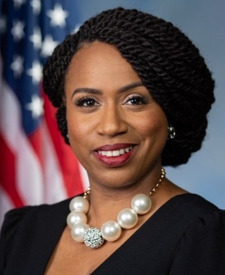
See how Ayanna Pressley actually votes — against your values.
DeepSyte scores Ayanna Pressley's record on the issues you care about — not party, not press releases. Take the 2-minute values quiz to see your personal alignment.
Sign in and take the values quiz to see how Ayanna Pressley's votes line up with your views.
Prediction track record
How often we called Ayanna Pressley's passage votes correctly, from their stated positions on each bill's tagged topics. Excludes “unclear” calls and abstentions.
26 predictions on record · none have been resolved by a passage vote yet. Check back as bills move.
To prohibit the disclosure of records by the Secretary of Housing and Urban Development of individuals for the purposes of immigration enforcement, and for other purposes.
Providing for congressional disapproval under chapter 8 of title 5, United States Code, of the rule submitted by the Bureau of Consumer Financial Protection relating to the withdrawal of the rule relating to "Truth in Lending (Regulation Z); Consumer Protections for Home Sales Financed Under Contracts for Deed".
No paired statements and votes yet for Ayanna Pressley
We haven't yet found statement/vote pairs on the same topic for Ayanna Pressley. This usually means either the rep hasn't taken public positions on bills that have come to a passage vote, or those bills haven't been tagged yet. The checker runs as new press releases and votes come in.
Pro analysis
AI rep analysis — Pro
Get an AI-narrated read on Ayanna Pressley's full voting record against your stated values — aligned themes, conflicts, notable votes, and what to watch for.
We haven't extracted campaign positions for Ayanna Pressley yet. Once their campaign website or position pages are processed, this card will track what they said vs how they voted.
Crossing the aisle
Passage votes where Ayanna Pressley broke ranks with ≥75% of Democrats. Threshold catches substantively partisan splits; unanimous-ish or close votes are excluded.
NEWS: Pressley, Murray, Duckworth Introduce Bicameral Bill to Help Women with Disabilities Access Reproductive Health Care - Ayanna Pressley
Position: The release advocates for legislation to improve reproductive health care access for women with disabilities, addressing discrimination and barriers they face in obtaining timely, informed, and culturally competent care.
Pressley: “With a nationwide assault on reproductive healthcare deeply impacting our siblings with disabilities, this bill is timely, urgent and responsive.”
WASHINGTON – Today, Congresswoman Ayanna Pressley (MA-07), Co-Chair of the Reproductive Freedom Caucus, along with Senators Patty Murray (D-WA) and Tammy Duckworth (D-IL), reintroduced their Reproductive Health Care Accessibility Act, legislation to help women with disabilities—who face discrimination and extra barriers when seeking care—get better access to the timely, informed, and culturally competent reproductive health care they deserve.
“Everyone should have equitable access to healthcare. Disability justice and reproductive justice are connected,” said Congresswoman Pressley, Co-Chair of the Reproductive Freedom Caucus. “With a nationwide assault on reproductive healthcare deeply impacting our siblings with disabilities, this bill is timely, urgent and responsive. I’m grateful to Senator Murray, Senator Duckworth, and our advocates for their ongoing partnership on this legislation.”
“Every single American woman deserves reproductive health care from a provider that understands her unique needs and treats her with dignity and respect as she makes her personal health care decisions—this is especially true for women with disabilities who often face discrimination and additional barriers to receiving basic health care,” said Senator Murray. “While Republicans do all they can to rip away health care, attack our reproductive rights, and try to ban abortion nationwide, I am continuing to fight back and ensure that all women can access high-quality care from providers who understand their unique needs. This bill will help make a big difference in making sure people with disabilities can get the informed and accessible reproductive health care they deserve.”
“Americans with disabilities have long faced barriers to health care services, equipment and providers—and those barriers have only multiplied under the Trump Administration when it comes to reproductive care,” said Senator Duckworth. “Between the fall of Roe and Republicans passing $1 trillion in Medicaid cuts, it’s shameful how Donald Trump has made sure it’s even harder for people with disabilities to access reproductive health care. I’m proud to introduce this bill with Senator Murray to help ensure that Americans with disabilities are not left behind in getting the care we need, when we need it.”
All Americans deserve to decide if, when, and how to start and raise a family—including the roughly one in four adults with disabilities, who report wanting children as much as those without disabilities do. But people with disabilities have long experienced discrimination and barriers when accessing sexual and reproductive health care. They are also less likely to receive contraception counseling and timely prenatal care, experience a higher rate of sterilization, and are at a greater risk for adverse pregnancy outcomes. And they face other barriers to accessing reproductive care, such as a lack of accessibility at health care facilities, accessible medical diagnostic equipment, accessible travel, and health care providers trained on how to treat and address the unique, diverse needs of people with disabilities receiving reproductive health care.
The legislation would provide grant funding for training and education programs for health care professionals focused on the reproductive health needs of people with disabilities, help to increase the representation of people with disabilities in the health care provider workforce, and establish a new technical assistance center to provide recommendations and best practices regarding sexual and reproductive health care for people with disabilities, among other things. The lawmakers first introduced the bill in 2022, and reintroduced it in 2023 as well.
The Reproductive Health Care Accessibility Act would lower barriers to sexual and reproductive care and help ensure disabled people get timely access to culturally competent health care. Specifically, the bill would:
The legislation is also cosponsored by Senators Angela Alsobrooks (D-MD), Richard Blumenthal (D-CT), Cory Booker (D-NJ), John Fetterman (D-PA), Kirsten Gillibrand (D-NY), Maggie Hassan (D-NH), Mazie Hirono (D-HI), Edward Markey (D-MA), Jeff Merkley (D-OR), Alex Padilla (D-CA), Bernie Sanders (I-VT), Adam Schiff (D-CA), Tina Smith (D-MN), Elizabeth Warren (D-MA), Peter Welch (D-VT), Sheldon Whitehouse (D-RI), and Ron Wyden (D-OR).
The legislation is endorsed by American Civil Liberties Union, All* Above All, Catholics for Choice, Center for American Progress, In Our Own Voice: National Black Women’s Reproductive Justice Agenda, National Abortion Federation, National Asian Pacific American Women's Forum, National Council of Jewish Women, National Disability Rights Network, National Family Planning and Reproductive Health Association, National Health Law Program, National Latina Institute for Reproductive Justice, National Network of Abortion Funds, National Partnership for Women and Families, National Women's Law Center Action Fund, Physicians for Reproductive Health, Planned Parenthood Federation of America, Power to Decide, and Reproductive Freedom for All.
“The barriers disabled people face when trying to access reproductive health care are real, longstanding, and too often ignored. This bill recognizes that accessibility is not optional when it comes to bodily autonomy and reproductive freedom,” said Mia Ives-Rublee, Senior Director of the Disability Justice Initiative at the Center for American Progress. “Everyone deserves the ability to make informed decisions about their own health and future, and that means ensuring care is accessible, inclusive, and responsive to the needs of disabled people.”
“For too long, our health care system has subjected people with disabilities, and especially disabled Black, Indigenous, and People of Color, to discrimination in sexual and reproductive health (SRH) care. And while this discrimination often violates federal civil rights laws, it persists,” said Madeline Morcelle, Senior Attorney at the National Health Law Program. “We are proud to endorse the Reproductive Health Care Accessibility Act because it invests in solutions that will help prevent discrimination before it happens, such as comprehensive provider training and grants to increase disabled representation in the SRH care workforce. Together, these measures will help foster a future in which people with disabilities’ sexual and reproductive autonomy is honored, pain and other symptoms are not dismissed, and SRH care is accessible, trauma-informed, culturally and linguistically appropriate, non-coercive, and delivered with dignity.”
A one-pager on the bill is available here.
The full text of the Reproductive Health Care Accessibility Act is here.
In her time serving in Congress, Rep. Pressley has fought persistently to protect and advance reproductive justice and ensure fundamental life-saving reproductive health care for all.
VIDEO: After Memorial Drive Shooting, Pressley Slams Trump Admin for Fueling Gun Violence, Weakening Accountability for Gun Dealers - Ayanna Pressley
Position: Congresswoman Pressley criticizes the Trump Administration for weakening accountability measures for gun dealers who violate federal law, which she argues fuels illegal gun trafficking and contributes to gun violence. She advocates for stricter enforcement against dealers who sell firearms to prohibited individuals.
“The gun lobby is controlling the regulators while our communities are paying the price, burying loved ones and raising children in fear… The shame and sham of it all.”
WASHINGTON – Today, during a House Oversight subcommittee hearing, Congresswoman Ayanna Pressley (MA-07) discussed the public health crisis of gun violence and criticized the Trump Administration for weakening accountability for gun dealers who violate federal law, fueling illegal gun trafficking into states like Massachusetts, and defending policies that limit access to data that communities need to combat gun violence. The Congresswoman’s question line follows the shooting this week in which a gunman armed with an assault-style weapon opened fire on random drivers and pedestrians traveling along Memorial Drive in Cambridge.
In her questioning of Robert Cekada, the Director of the Bureau of Alcohol, Tobacco, and Firearms, Congresswoman Pressley highlighted the communities bearing the lifelong trauma of gun violence, including children, young people, and families, and contrasted them with those the Administration has instead been catering to, the gun lobby.
A transcript of the Congresswoman’s remarks during debate on the legislation is available below, and the video is available here.
Transcript: Pressley Slams Trump Admin for Fueling Gun Violence, Weakening Accountability for Gun Dealers
House Oversight Subcommittee on Federal Law Enforcement
May 14, 2026
REP. PRESSLEY: Director Cekada, gun violence is a public health crisis, and this administration is failing to meet it with the urgency that it demands.
Across our country, including in my district, the Massachusetts 7th, families are bearing the devastating consequences of shootings, trafficking, domestic violence, femicide, suicide and community trauma.
Just this past Monday, a gunman armed with an assault rifle opened fire on random drivers and pedestrians traveling along Memorial Drive in Cambridge, terrorizing people in broad daylight. Constituents in my district and communities across this country should not have to live with the constant fear that their daily commute could become a mass casualty event.
Now, while Massachusetts has some of the strongest gun safety laws in the nation, more than two-thirds of guns recovered from crimes in our Commonwealth originate from out of state. At the same time, communities are demanding accountability.
Director Cekada, your agency has weakened oversight of gun dealers by ending the zero tolerance policy for firearm dealers who violate the law. Mr. Director, yes or no, should gun dealers who willfully sell firearms to prohibited individuals be allowed to continue operating? Yes or No.
DIRECTOR CEKADA: Your statement is a violation of the law, and they should be put out of business if they willfully violate the Gun Control Act.
REP. PRESSLEY: Alright, that's right. These dealers are breaking the law, and previously would have had their licenses to sell revoked, but your agency repealed that policy.
Accountability should not be a radical concept here. Instead, your agency has chosen to weaken enforcement while simultaneously defending policies that limit access to data that communities need to combat gun violence.
This is bad public policy. This is bad for public safety. This is bad for public health.
Survivors of gun violence carry lifelong trauma, especially our children, increasingly so, a childhood is a privilege instead of a right. Young people are growing up internalizing trauma as a normal part of daily life. Active shooter drills, memorials outside of school, parents afraid to allow their children to walk home alone.
Now, all the data supports that exposure to gun violence has profound and lasting impacts on childhood development, mental and physical health and educational attainment. In the full oversight committee, I convened the first ever Congressional hearing on childhood trauma. It was illuminating and devastating.
Children who witnessed gun violence are more likely to experience anxiety, depression and PTSD well into adulthood. These children and their families are the people you should be centering in your work, Director Sakata.
I believe the people closest to the pain should be the closest to the power. But let's look at who you are instead holding close to the power. Not the traumatized children, not the grieving mothers, not the classroom educators who everyday wonder, "Is today the day that I will have to shield my student from a shooter."
Instead, this is a picture from your signing ceremony announcing over 30 changes to end gun safety protections, and standing directly behind you are the leaders of the gun lobby, the NRA, the National Shooting Sports Foundation, the National Association for Gun Rights, and others who have spent decades obstructing commonsense gun safety measures.
The gun lobby is controlling the regulators while our communities are paying the price, burying loved ones and raising children in fear.
The shame and the sham of it all.
WATCH: Pressley Slams Republican Bill that Ignores Unemployment Crisis, Strips Federal Reserve’s Mandate to Maximize Employment - Ayanna Pressley
Position: Rep. Pressley opposes Republican legislation that would remove the Federal Reserve's mandate to maximize employment, arguing that this mandate is essential for economic health, community well-being, and worker dignity.
Pressley Has Repeatedly Sounded the Alarm on Trump’s Unemployment Crisis, Pushout of Black Women from Workforce, Demanded Action from Federal Reserve
“People are looking for jobs. People want to work, but Trump's economy won't let them….Maximizing employment is good for our economy. It's good for our communities. It's good for our families.”
WASHINGTON – Today, during a House Financial Services Committee Markup, Congresswoman Ayanna Pressley (MA-07) vehemently opposed Republican legislation that would strip the Federal Reserve's mandate for maximum employment, emphasizing the Fed’s essential role in ensuring economic health, community well-being, and personal dignity in work especially under Trump’s unemployment crisis.
“The Federal Reserve’s mandate for maximum employment is essential to ensuring jobs are available and people are employed—and removing it would devastate our economy and communities,” said Congresswoman Ayanna Pressley. “While Republicans continue advancing harmful, anti-worker policies, I’ll keep fighting for the dignity of work.”
During debate, Rep. Pressley combatted Republicans’ anti-worker legislation through four amendments affirming the importance of the Fed’s mandate for maximum employment. Rep. Pressley’s amendments would:
In Congress, Rep. Pressley has repeatedly sounded the alarm on the rising number of Black women forced out of the workforce in the United States, called on the Federal Reserve to take action, and convened impacted women and economists to renew those calls.
A transcript of the Congresswoman’s opening remarks during debate on the legislation is available below, and the video is available here.
Transcript: Pressley Slams Republican Bill that Ignores Unemployment Crisis, Strips Federal Reserve’s Essential Mandate to Maximize Employment
Like Ranking Member Waters and my Democratic colleagues, I vigorously oppose this legislation to strip the mandate from maximum employment from the mission of the Federal Reserve.
I mean, I never thought that my Republican colleagues would need a lesson on the importance of gainful employment and having a job. Even Ronald Reagan said that he believed the best social program is a job. And yet, here we are.
The best way to support working families is to keep them working, plain and simple.
Maximizing employment is good for our economy. It's good for our communities. It's good for our families. And to deny that truth is to deny reality.
So I'm confident that the American people will see through these baseless talking points and agree with Democrats that everyone should be able to get a job, to work a job, and to earn a living.
Work is, is pride. It's dignity. It's essential to survive, to thrive, to provide, even to dream.
I've been working, I've been employed since I was thirteen, fourteen years old. Many young people pursue jobs, whether it's being a bagger at a grocery store or work in retail, not just for enrichment or for exposure, but because it is essential. I was working at the age of fourteen to contribute to my household income.
Or what of young adults, recent graduates from college or a trade school, who want to save for a house or maybe even start a business one day?
Or, you know, as a mother, I think about what it means to be able to see the light behind my child's eyes when I can provide them with a vacation or some gift that they've been begging for.
And for our elders, increasingly so, under Trump's administration and economy, retirement is farther and farther out of reach, and many of our elders have no choice but to work in order to pay for life saving medication, to keep a roof over their heads.
So all this to say that having a job is not a statistic. It is essential. It is dignity.
The dignity of work is transformational. That's what the Fed's mandate for maximum employment is about.
This mission was not created in a vacuum. It dates back to the Great Depression in recognition that people should be able to earn a living, provide for themselves and their family. There was nearly unanimous support by Republicans and Democrats for maximum employment when the mandate passed Congress.
The Federal Reserve Board of Governors is the only independent agency that works on improving employment. Some argue that this is the role of the Department of Labor, but in Trump's America, the Labor Department is a joke. We don't even have a Secretary of Labor right now.
So the Fed's mandate is essential, and always has been.
During the Great Recession of 2008—massive job loss—the Fed stepped in to maximize employment. During the COVID-19 pandemic and record layoffs, the Fed once again pursued its mandate of maximum employment. And in this moment, we need the Fed to do more, not less.
For months, I've been sounding the alarm about the current unemployment crisis. The unemployment rate has increased to 4.3% due to Trump's reckless policies like firing government workers, attacking small businesses.
And when you analyze the data, Black unemployment specifically is at 7.3%. These are the worst rates we've seen since the pandemic.
Black workers are the canaries in the coal mine. What happens to our community first, happens to everyone next. So folks should take heed.
People are looking for jobs. People want to work, but Trump's economy won't let them.
Just last week, Fed Chair Jerome Powell announced the jobs numbers and said something that Republicans need to hear. There is little hiring going on, and for many Americans, it doesn't feel like a good labor market.
So the solution to the current unemployment problem is not to tell the Fed to abandon the goal of maximum employment. The solution is to empower the Fed to do even more. Recent graduates deserve more.
Having a job and earning a paycheck is a beautiful and essential thing.
So I just want to say this to folks at home, in the midst of all of this, these anti-worker policies against paid leave, child care, supporting tariffs, suppressing wages.
To those who keep applying to jobs but still aren't hearing back,
To those who are wondering how they're going to pay their bills without a paycheck,
To those who are doing everything right but the economy is all wrong,
To those who know and appreciate the dignity of work, I see you. I'm fighting for you.
And that is why I oppose this bill, and I urge my colleagues to do the same.
In September 2025, Congresswoman Pressley wrote to Federal Reserve Chairman Jerome Powell sounding the alarm on the rising unemployment rate for Black women in the United States and demanding the Fed take immediate action to uphold its mandate of maximum employment for all. The Congresswoman’s letter came amid the Trump Administration’s mass federal workforce layoffs and anti-DEI policies disproportionately impacting Black women and as Donald Trump attempted to seize control of the Fed by illegally firing Federal Reserve Governor Lisa Cook. A copy of the Congresswoman’s letter is available here.
In December 2025, Rep. Pressley and Congressional Black Caucus Chairwoman Yvette Clarke followed up to Rep. Pressley’s demands and wrote to Federal Reserve Chairman Jerome Powell demanding a briefing for members of the Congressional Black Caucus on how the Federal Reserve is responding to this growing crisis.
In March 2026, Reps. Pressley and Summer Lee (PA-12) introduced the Better Labor Statistics Act, or the BLS Act, legislation that would codify the Bureau of Labor Statistics’ mandate to report unemployment data publicly, online, and at the first Friday of each month to ensure transparency and accuracy in unemployment data collection. The BLS Act would also codify the publication of unemployment data broken down by race and ethnicity, gender, geography, and industry.
In December 2025, Rep. Pressley, along with Co-Chairs of the Congressional Caucus on Black Women & Girls, Congresswomen Yvette D. Clarke (NY-09), Robin Kelly (IL-02), Bonnie Watson Coleman (NJ-12), led 19 of their colleagues demanding the Department of Labor (DOL) take immediate action to address the rising unemployment crisis among Black women that has taken shape since the start of the second Trump Administration.
In November 2025, Rep. Pressley convened Black women, economists, civil rights leaders, and community members for an urgent discussion about the unemployment crisis facing Black women and its impact in Massachusetts and beyond.
In September 2025, Congresswoman Pressley convened a press conference with a coalition of Black women activists and civil rights leaders to continue sounding the alarm on the rising number of Black women forced out of the workforce in the United States.
WATCH: In Palm Beach Hearing, Pressley Highlights Economic & Emotional Harms Borne by Epstein Survivors - Ayanna Pressley
Position: Congresswoman Pressley advocates for accountability and legislative action to address the economic and emotional harms suffered by survivors of Jeffrey Epstein's abuse, emphasizing that federal institutions failed to uphold survivors' rights under the Crime Victims' Rights Act.
“There is no amount of compensation that could ever fully account for what was stolen, but every single survivor certainly deserves much more than sympathy, and that is the work that I'm committed to doing alongside of you legislatively.”
As a Survivor of Sexual Abuse, Pressley Has Led Calls for Accountability
PALM BEACH, FL – Today, in a field hearing on the Epstein investigation led by House Oversight Committee Democrats, Congresswoman Ayanna Pressley (MA-07) discussed the long-lasting economic and emotional harms that survivors continue to carry while rarely seeing meaningful accountability. Congresswoman Pressley emphasized that survivors of Jeffrey Epstein’s abuse were harmed not only by predators themselves, but also by federal institutions that violated their rights under the Crime Victims’ Rights Act and denied them accountability.
The field hearing, led by Ranking Member Robert Garcia, was held as part of the Epstein investigation in Palm Beach, Florida, where many of Epstein’s crimes and subsequent failures of accountability took place. The field hearing included testimony from survivors and important witnesses in the investigation.
As a survivor of sexual abuse herself, Congresswoman Pressley has been a dedicated advocate for survivors’ justice and has led committee Democrats in calling for a full Congressional hearing to ensure survivors’ firsthand accounts are heard.
A transcript of Congresswoman Pressley’s question line during the hearing is available below and the video is available here.
Transcript: Pressley Highlights Economic & Emotional Harm Borne by Epstein Survivors
House Oversight Committee Field Hearing
May 12, 2026
REP. PRESSLEY: Thank you to Congresswoman Lois Frankel, thank you to Ranking Member Garcia, Congresswoman Summer Lee. Your efforts have made today possible. And of course, our courageous survivors.
I’ve been on this Committee since I was a freshman, and Elijah Cummings, the great Elijah Cummings, our chair at the time, would often remind us that the role of the Committee on Oversight, our mandate, is to be in efficient and effective pursuit of the truth.
Now that pursuit is what brings House Democrats here today. Because instead of Epstein’s victims being met with efficiency, they’ve been met with obstruction and delays by law enforcement and by the Department of Justice.
Instead of Epstein’s victims being met with effectiveness, they’ve been met with systemic coverup, and I would add cowardice of those who were intimidated by the power and the privilege of Jeffrey Epstein, Ghislaine Maxwell and their co-conspirators.
So today, we’re here to shine a light. Because sunlight is the best disinfectant. We’re here to shine a light on the corruption, on the failures of this investigation.
But most of all, we’re here to center the survivors. To center the courageous.
Survivors who are grown women before you but who were children. Children whose innocence was corrupted. Whose bodies were violated. Whose dreams were destroyed. Whose lives were irrevocably changed.
Maria, Courtney, Jena-Lisa, Danny, Roza, and Sky and Amanda, here for Virginia, we thank you.
Congress enacted the Crime Victims Rights Act in 2004 to mandate specific obligations for the Department of Justice to ensure that survivors are protected, informed, and able to heal.
Mr. Kuvin, you spent decades representing survivors and fighting for transparency around the federal government’s handling of their cases. Can you speak to how the federal government violated, after their bodies were violated, after their dreams, their dignity, their lives were violated, how were their rights violated?
SPENCER KUVIN: It was our understanding after the release of documents and the bravery of Ms. Wild here at the end in her case that was brought and the final disclosure of all those documents, it showed that the federal government and the state attorney’s office colluded together to not bring an indictment because they knew that if they did, then the Crime Victims Rights Act would then be triggered and they would have to inform the victims of what they were doing.
So what we learned was they intentionally kept it out of the hands of victims so that the victims co couldn’t object or have any say in the process by secretly doing this deal that they did. And the federal judge, very brave, federal judge Mara found there was a violation of the act here in the Southern District and unfortunately because the way the law was written, there was absolutely no way to get them any justice or remedy as a result.
REP. PRESSLEY: That’s right. So they weren’t notified, they were not consulted, they were not given the opportunity to participate in proceedings that directly affected their lives and their safety. These rights are supposed to be guaranteed by the Crime Victims Rights Act.
Now would any survivor like to speak to any examples to share about how the federal government ignored or neglected your case? I see the clock is ticking here. Would anyone else like to speak to that?
How about this – let me just say this, as a survivor myself, I know that this is not only about your safety that you were robbed of, your innocence and your dreams.
Survivors are forced to carry the financial burden of abuse – lost wages, housing instability, medical expenses, legal fees, security costs, trauma that impacts their daily life.
JENA-LISA JONES: We have put ourselves on the front line and spoke out and put our faces to the public when we should have never had to, and that comes with a huge toll. Now every job that we apply for, they Google us. They know our most personal information of things that happened to us as children. That is forever, forever going to follow us. We don't get that back. We don't get that luxury. So that is just the one, one of the most important things that comes with the weight of this all because the government couldn't do their job.
ROZA: Like I heard this before from the survivors. I'm a really cool person if you meet me outside of here, I have life stories, but this release of documents made me something else, and I can't do tasks, daily tasks, without certain help, and I have a support system, and I'm grateful for it, but if I didn't, I don't think I would be here today alive. So it's really hard. I want to tell the world like it's hard to be here today. I'm very uncomfortable. I’m trying to look like I'm okay, but I'm not okay.
REP. PRESSLEY: Yes, would anyone else like to speak to the financial burden of abuse, loss of wages, housing instability, medical expenses, legal fees, security costs?
COURTNEY WILD: So I was gonna, when I was younger, when I we met, I met Jeffrey, I experienced a lot of homelessness, so I think I misunderstood your question.
REP. PRESSLEY: No, say whatever you’d like.
MS. WILD: Yes, ma'am, I was just gonna say that, you know, just like you were walking over the bridge, you know, a 14-year-old going to Palm Beach. It was like, as soon as you go over that bridge, you just feel the money and power. And it's just such a contrast. If you go down Okeechobee to Okeechobee and the Turnpike, there's a road called Drexel, and it's a mobile home street. There's a lot of — that's where I came, that's where I was from. So to go from here to there is just, you know, it's so confusing.
I was homeless. My parents had addiction problems, you know. He preyed, he knew what he was doing. It was all very calculated, you know, and then later on, the fact that he used those things against me. We had the Feds pulling up our MySpaces and treating us like criminals because we were at a party at 16 and 17, drinking, you know, rather than going out — they had so for me, it's just, it's so sad that he — he knew who he preyed on. He preyed on young, especially in Palm Beach County, he preyed on us, kids who came from troubled backgrounds and everything else, and they portrayed us as these underage prostitutes, which is that, is that a real charge, like, what was the statute number on his charge that he took?
MR. KUVIN: It was bizarre to us, even at the time, but, you know, it made absolutely no sense. The statutory guidance was very questionable, given that there were minors, but speaking to the representative’s questions specifically and representing survivors over the last 30 years now, you know, it affects not just the survivor.
It affects their family. It affects the way they raise their own children, if they have daughters, it affects their mental stability and ability to maintain employment. Try telling a survivor they've got to pay a lawyer for 20 years straight if they want to get justice. It's impossible, especially with a law that doesn't provide any remedy. So they've got to seek out victims advocates that are willing to do it for free, and there aren’t many of those, especially none that want to do it for 20 plus years to fight. So the financial ramifications of being a victim, especially of somebody with unlimited resources, is dramatic.
DANI HANNAH BENSKY: I think, also, to continue this fight like we're all here right now, and this isn't the only thing I'm sure we're all doing this week, to talk about getting the messaging out. Advocacy is expensive. Therapy and healing is expensive, you know? And we there's no time to work because, honestly, we got to change it for our kids, because I don't want to raise my kid in a world like this right now.
LAUREN HERSH: I'll just close out with one, one point to Courtney, to your question, about these prostitution charges. We need to eliminate the prostitution charges from the books altogether. We absolutely, absolutely should be holding sex buyers accountable for the harm they cause. But people in prostitution should not be criminalized for being in prostitution, because the vast majority of them are not there by choice. They're there because of lack of circumstances, poverty, other vulnerabilities, and what we see so often is that traffickers deliberately use that notion, that the women and girls will be arrested for prostitution as a tactic.
It is the number one tactic in order to make sure that survivors, victims are too terrified and too traumatized to talk, so we've got a lot of work to do.
REP. PRESSLEY: And I just want to again, thank you all, and thank you for being prescriptive with a number of the legislative responses to address these systemic harms.
I'll just say that there is no amount of compensation that could ever fully account for what was stolen, but every single survivor certainly deserves much more than sympathy, and that is the work that I'm committed to doing alongside of you legislatively. Thank you.
Palm Beach, Florida is where Jeffrey Epstein’s crimes first came to light, and where prosecutors offered Epstein a sweetheart deal that allowed him to continue his crimes. Palm Beach is also home to Mar-a-Lago, President Donald Trump’s primary residence and private club. During the many years of friendship between Donald Trump and Jeffrey Epstein, multiple women were recruited for Epstein from Mar-a-Lago, including Virginia Guiffre. The Wall Street Journal reports that spa employees from Mar-a-Lago, usually young women, were sent to Epstein’s nearby residence for massages, manicures, and other spa services. Epstein referenced Mar-a-lago in a 2019 email to Michael Wolff, released by Oversight Democrats, when he said, “of course Trump knew about the girls.”
VIDEO: Following Palm Beach Hearing, Pressley Calls for Accountability, Healing, & Restorative Justice for Epstein Survivors - Ayanna Pressley
Position: Rep. Pressley calls for legislative action centered on restorative justice for survivors of Jeffrey Epstein's abuse, emphasizing the need for accountability and healing for those harmed by Epstein and institutional failures.
“Not only was their innocence corrupted and their bodies violated and their lives changed, their very rights were violated…and I'm working closely with survivors for a legislative fix of restorative justice.”
Pressley, Oversight Democrats Hold Field Hearing Centering Survivors of Epstein’s Abuse
PALM BEACH, FL – Today, during a press conference following a field hearing on the Epstein investigation led by House Oversight Committee Democrats, Congresswoman Ayanna Pressley (MA-07) made an impassioned call for accountability, healing, and restorative justice for survivors of Jeffrey Epstein’s abuse. After hearing firsthand from survivors—many of whom shared how they were harmed not only by Epstein and his co-conspirators, but also by the institutions that failed to deliver accountability—Rep. Pressley uplifted their stories, highlighted the emotional harm and financial hardship that many survivors are forced to carry, and emphasized her commitment to taking legislative action that centers restorative justice.
The field hearing, led by Ranking Member Robert Garcia, was held as part of the Epstein investigation in Palm Beach, Florida, where many of Epstein’s crimes and subsequent failures of accountability took place. The field hearing included testimony from survivors and important witnesses in the investigation.
As a survivor of sexual abuse herself, Congresswoman Pressley has been a dedicated advocate for survivors’ justice and has led committee Democrats in calling for a full Congressional hearing to ensure survivors’ firsthand accounts are heard.
A transcript of Congresswoman Pressley’s remarks at a press conference following the hearing is available below and the video is available here. Footage of her question line during the hearing is available here.
Transcript: Following Palm Beach Hearing, Pressley Calls for Accountability, Healing, & Restorative Justice for Epstein Survivors
House Oversight Committee Field Hearing
REP PRESSLEY: We're here at ground zero for where Epstein's crimes occurred—crimes that were moral crimes, civil crimes, criminal crimes, crimes that I would consider, really, against humanity.
Given the systemic harm caused by really what was a global enterprise of trafficking girls, [it's] impossible for me to not think about my own 17-year-old daughter.
Again, you see grown women before you who are courageous in their refusal to be silent, but they were mere girls. Fourteen, fifteen, sixteen, seventeen. Talented artists, dancers, aspiring teachers, lawyers, models.
Their bodies were violated. Their dreams devastated. Their lives irreparably harmed.
When you are violated in such a way as a child, it changes—on a very foundational and deep level—who you are. Forever. Your ability to love, to receive love.
But it's not only an emotional toll, and certainly the cost of trauma is a high one.
But there are also economic expenses—an inability to pursue a job, to keep a job, 20 years of, 30 years, three decades of legal fees that no one was counting on.
And not only was their innocence corrupted and their bodies violated and their lives changed, their very rights were violated.
The Crime Victims’ Rights Act grants individuals who are victims of federal crimes specific enforceable rights, including protection from the accused, reasonable, accurate, and timely notice of public proceedings, and the right to be heard.
It ensures victims are treated with fairness, dignity and respect.
Their rights were violated, and I'm working closely with survivors for a legislative fix of restorative justice.
That's what brings us here today—to learn from the survivors, to identify failures, to hold predators and abusers accountable.
And although I commend the survivors for their courage, I look forward to a day where survivors do not have to relive their trauma in order to compel action from their government.
And finally, although this is a fight specifically for justice, accountability, and healing for our survivors—who deserve so much more than sympathy, which is why I’m seeking to advance a legislative restorative justice fix, to acknowledge the economic abuse and financial hardship that many of them still carry today.
But this is a fight for all survivors that are victims of sexual assault and human trafficking.
And so for that, to ensure that there is no erasure, I want to acknowledge the incredible work of Tarana Burke of the MeToo movement, Amber Tamblyn, and many more. And in my own district of the Massachusetts 7th, My Life My Choice and the Boston Area Rape Crisis Center.
This is a fight for all survivors.
Palm Beach, Florida is where Jeffrey Epstein’s crimes first came to light, and where prosecutors offered Epstein a sweetheart deal that allowed him to continue his crimes. Palm Beach is also home to Mar-a-Lago, President Donald Trump’s primary residence and private club. During the many years of friendship between Donald Trump and Jeffrey Epstein, multiple women were recruited for Epstein from Mar-a-Lago, including Virginia Guiffre. The Wall Street Journal reports that spa employees from Mar-a-Lago, usually young women, were sent to Epstein’s nearby residence for massages, manicures, and other spa services. Epstein referenced Mar-a-lago in a 2019 email to Michael Wolff, released by Oversight Democrats, when he said, “of course Trump knew about the girls.”
In Chelsea, Pressley Celebrates $922,000 Delivered for Roca’s ‘Managing Trauma in Corrections’ Program - Ayanna Pressley
Federal Dollars Help Roca Support Youth Cycling Through Incarceration and Correctional Officers Addressing Trauma
Pressley Has Led Efforts in Congress to Address Trauma and Build a More Just, Equitable Criminal Legal System
Photo (Dropbox) | Video (YouTube)
CHELSEA – Congresswoman Ayanna Pressley (MA-07) visited Chelsea to celebrate the $922,000 in federal community project funding she delivered for Roca, Inc’s “Managing Trauma in Corrections” program. The federal dollars secured by the Congresswoman, which passed under a previous spending bill signed by President Biden, helped create the new program at Roca, which supports young people cycling through incarceration and correctional officers addressing and mitigating trauma.
Congresswoman Pressley has led efforts in Congress to address trauma and transform our criminal legal system to center the dignity and humanity of every person.
During her visit, the Congresswoman participated in a roundtable discussion, tour of the building, and press conference with Roca leadership, staff, and impacted families and youth served by Roca.
“The team at Roca have been incredible partners in our shared work to end cycles of trauma and violence across Chelsea and across our Commonwealth,” said Congresswoman Pressley. “It was a joy to visit Roca, to hear directly from the people they serve, and to celebrate the vital role they play pouring into our young people and strengthening our communities. While Trump and Republicans terrorize our communities and traumatize our children, I’m grateful for organizations like Roca who’ve been standing in the gap.”
“Our intervention model has proven to be very effective at helping the highest-risk young people heal their trauma and learn skills required to achieve long-term behavior change,” said Molly Baldwin, CEO and Founder of Roca, Inc. “That drives dramatically reduced rates of recidivism and helps young people choose a better, more productive path, while enhancing public safety and saving taxpayers money. We are enormously grateful for Congresswoman Pressley’s leadership in securing this funding. This allowed us to impact more young people through our reentry work and expand our Rewire4 training, which helps corrections staff better understand and support the individuals in their custody.”
Photos from the event are available here and video of the press conference is available here.
Photo Credit: Congresswoman Pressley’s office
The Managing Trauma in Corrections (MTC) program modified Roca’s existing Rewire4 training materials being used by the Baltimore Police Department as training materials to support their officers addressing vicarious trauma, for use by correctional facilities across Massachusetts. The project would also serve all emerging adults with customized services designed to give young people the tools and skills critical to behavior change, regardless of the length of time they are detained or incarcerated.
Since its launch, Roca’s MTC program has achieved strong outcomes, significantly advancing its goal of reducing recidivism and improving behavioral health for high-risk, justice-involved emerging adults across Massachusetts. Grounded in Roca’s Intervention Model—combining relentless outreach, Rewire CBT, life skills development, and community partnerships—the initiative substantially exceeded its original service targets, engaging over 1,051 young people statewide compared to a goal of 400–500 between July 1, 2024 and June 30, 2025.
Rep. Pressley has secured approximately $43 million in federal community project funding for the Massachusetts 7th since Fiscal Year 2022.
ICYMI: Pressley Touts SPARK Act, Urges More Financial Investment in Small, Minority-Owned Businesses - Ayanna Pressley
Position: Rep. Pressley advocates for increased federal investment in minority-owned small businesses through the SPARK Act, which would provide grants and low-cost loans to underserved entrepreneurs and community organizations. She opposes the Trump Administration's proposed rollbacks to bank capital requirements, arguing they would harm underserved communities' access to credit and financial services.
Congresswoman Warns Harmful Impact of Trump Admin’s Proposed Rollbacks to Bank Capital Requirements on Underserved Communities
“I want [my constituents] to know that your Congresswoman has not forgotten you and will not stop fighting to make sure we repair past harm and prevent future harm to our businesses, communities, and families.”
WASHINGTON – In a House Financial Services Committee hearing this week, Congresswoman Ayanna Pressley (MA-07) discussed the affordability crisis facing minority-owned small businesses and warned of the harmful impact the Trump Administration’s proposed rollbacks to bank capital requirements would have on underserved communities.
In February 2026, Rep. Pressley introduced the Strengthening Place-based Access, Resources, and Knowledge (SPARK) Act to spur entrepreneurship and increase access for underserved entrepreneurs nationwide. The SPARK Act would create the SPARK Program to provide grant funding to community organizations that support small business accelerators and incubators, and the SPARK Financing Program to provide grants and low-cost loans directly to underserved small businesses.
A transcript of the Congresswoman’s exchange with hearing witnesses is available below and video is available here.
Transcript: Pressley Touts SPARK Act, Urges More Financial Investment in Small, Minority-Owned Businesses
House Financial Services Committee
April 28, 2026
REP. PRESSLEY: Thank you, Mr. Chair. I'll state the obvious to everyone, apparently, but the Trump Administration. We're in an affordability crisis, and while minority-owned small businesses in Massachusetts generated two and a half billion dollars in revenue in 2023, many of these small businesses, our minority owned small businesses remain underserved by our financial system. I’m talking about their ability to access equitably loans, credit and other supports from our financial system.
In fact, I know many experienced a disparate impact from the pandemic and never recovered. I represent the Massachusetts 7th Congressional District, and more recently, we have seen a number of our minority owned small businesses close to or forced to shutter their doors, having never recovered from the pandemic. A legacy business, Final Touch Boutique in Roxbury, is one of those such businesses.
Mr. Baer, during the pandemic, do you know how small, minority owned businesses were impacted compared to other businesses? Can you speak to that?
MR. BAER: I mean, Congresswoman, I don't have statistics on that. I presume, I think, as you suggested, that they did worse, probably because they had less capital built up and were less resilient and were smaller, and that was a tough thing to be, even with, you know, PPP aid and things like that.
REP. PRESSLEY: Fair enough. Well, in fact, one Federal Reserve research paper found that Black owned businesses went out of business at twice the rate of white owned businesses, and saw cash decline at nine times the level.
Mr. Baer, when bank capital requirements are lowered, like under Trump's Basel III proposals, do you have data on how much of that extra money actually goes back into communities for local small business loans?
MR. BAER: Well, I mean, it's difficult to predict, as the rules are not final, so we would have to wait a year or two and see what the results are. So I can't give you any kind of accurate estimate on how much that would increase, any type of lending, whether that's mortgage or securities intermediation or loans to small minority businesses.
REP. PRESSLEY: Well, some of what I've found is that larger banks are not necessarily reinvesting these dollars into underserved communities or lending more if they don't have to. So in fact, much of the research, what it bears out is that increasing bank capital requirements can actually increase bank lending and resilience, and in 2023 we saw what the SVB bank collapse almost did to small businesses in districts like mine, the in MA-7th and around the country. So we need banks that lend more but also protect people's money.
Ms. Valladares, would rolling back bank capital requirements through these proposals help or hurt small, minority owned businesses?
MS. VALLADARES: I think unfortunately, the data and the history would show that it's very much likely to hurt them. If you see what happened during the financial crisis, about 50% of Hispanic Americans lost jobs and suffered. About 25% African Americans suffered, and about 10% of the white population suffered.
Not only are there issues with discrimination, but as one of my fellow panelists described, yeah, there's issues with their access to capital, with their experience in taking out loans, all of the you know, these are, these are complex issues. So there's a lot of things, but and especially under this administration, I personally see no signs that they would be focused on helping underserved communities. None whatsoever.
REP. PRESSLEY: Thank you, you know. And in fact, these businesses are vital to the ecosystem of our communities, social and economic anchors, and they provide mobility as well, they provide jobs and services that meet local needs and help keep our city strong in times of economic downturn.
That's why I introduced the SPARK Act, along with Senator Markey and others, to ensure that small businesses are invested in and supported through grants and business loans. If Republicans were really serious about improving Main Street and economic growth, they will protect people's money and pass bills that invest dollars directly into the community.
That is actually a policy choice we can make right now and improve the lives of the American people. And I just want to say to my constituents, while some may have forgotten how the 2008 global financial crisis impacted you, or how the COVID-19 pandemic and SVB bank collapse impacted you, or even how the history of slavery and racial discrimination have continued to impact you, I want you to know that your Congresswoman has not forgotten you and will not stop fighting to make sure we repair past harm and prevent future harm to our businesses, communities, and families.
Pressley, Tlaib Reintroduce Bill to Boost Housing Access for Folks with Criminal Records - Ayanna Pressley
Position: The representatives support legislation to remove barriers to housing access for people with criminal records by limiting tenant screening criteria based on criminal history, with the goal of disrupting the prison-to-homelessness pipeline.
Bill Promotes Housing Justice by Removing Barries to Housing for People Formerly Incarcerated, Helps Disrupt Prison-to-Homelessness Pipeline
Bill Text | Bill Summary | Hearing Video
WASHINGTON – Today, during Fair Housing and Second Chance Month, Congresswoman Ayanna Pressley (MA-07) and Congresswoman Rashida Tlaib (MI-12) reintroduced the Housing for Formerly Incarcerated Reentry and Stable Tenancy (Housing FIRST) Act of 2026, bold legislation to help people who are formerly incarcerated and those with criminal histories access safe and stable housing. The bill would advance housing justice and help disrupt the prison-to-homelessness pipeline by removing unjust barriers to housing and limit tenant screening criteria for criminal records in background checks.
The Housing FIRST Act is informed by Rep. Pressley’s People’s Justice Guarantee, her bold vision for transforming the American criminal legal system into one that centers the dignity and humanity of all people.
“Safe, affordable housing is fundamental human right, but for too long, discrimination against folks with criminal records has served as a barrier to housing access, economic stability, and public safety,” said Congresswoman Pressley. “Our bill seeks to change that by removing the systemic barriers that have worsened the prison-to-homelessness pipeline, exacerbated mass incarceration, and denied housing to people who need it most. As someone whose own family has been impacted by mass incarceration, I’m proud to reintroduce this bill and grateful to Congresswoman Tlaib and our colleagues for their ongoing partnership.”
“From Detroit to Boston, every human being deserves access to safe, affordable housing, including people who were formerly incarcerated,” said Congresswoman Tlaib. “We must prioritize restorative justice, lead with compassion, and recognize the human dignity of our neighbors as we work to end mass incarceration and housing discrimination. This legislation addresses barriers to stable housing returning citizens face every day as they begin to rebuild their lives in our communities.”
Congresswoman Pressley discussed the bill in a House Financial Services Committee hearing. Watch it here.
Systemic discrimination against people with criminal records in tenant screening is a persistent barrier to housing access, economic stability, and public safety, and contributes to the prison-to-homelessness pipeline. Landlords’ refusal to rent to individuals with a criminal record impacts more than 70 million people in the United States—nearly 1 in 3 adults—with Black and brown folks having the highest rates of housing denials due to disparate treatment by the criminal legal system. Additionally, people who are formerly incarcerated are almost 10 times more likely to be homeless than the general public.
The Housing FIRST Act would address these systemic barriers by:
For bill text of the Housing FIRST Act, click here.
The Housing First Act is co-sponsored by Representatives Rashida Tlaib, James P. McGovern, Alexandria Ocasio-Cortez, Lateefah Simon, Delia Ramírez, Jan Schakowsky, Hank Johnson, Maxwell Frost, Summer Lee, Nikema Williams, LaMonica McIver, Yvette Clarke, Troy Carter, Robin Kelly, Sydney Kamlager-Dove, Bonnie Watson Coleman, Ilhan Omar, Greg Casar, Jimmy Gomez, and Eleanor Holmes Norton.
The legislation is supported by: Justice 4 Housing, National Consumer Law Center, JustLeadershipUSA, Prison Policy Initiative, Center for Popular Democracy, National Housing Law Project, National Council for Incarcerated & Formerly Incarcerated Women and Girls, National Low Income Housing Coalition, and Vera Institute.
“Justice for Housing, Inc supports the reintroduction of the Housing FIRST Act as a critical step toward addressing the structural barriers that limit housing access for justice-involved individuals. Research continues to show that incarceration significantly impacts credit, with Black households affected by incarceration experiencing dramatically lower credit scores—often by more than 200 points—further widening the racial wealth gap. Policies that center housing stability without over-reliance on credit history are essential to advancing equitable access to housing and long-term economic mobility.”
“A place to call home is a basic human need for all members of our community, including those with a conviction history. For too long, individuals seeking safe, affordable housing have been locked out by exclusions fueled by background checking. The Housing FIRST Act makes critically important changes to the Fair Credit Reporting Act and limits the way in which an individual’s past can be used to carve them out of housing access. These carve outs and exclusions affect both the impacted housing applicant, as well as their families, and are a direct contributor to the data showing that people reentering are ten times more likely to be homeless than other applicants. The Housing FIRST Act will also bring much needed clarity to how consumer reporting agencies handle the data requests for individuals who have received a clemency or had a record sealed, expunged, or vacated. Stable housing is the bedrock of successful reentry; passing this Act means we are choosing to invest in stronger families and safer neighborhoods rather than perpetual cycles of displacement. We urge Congress to act and to take the next step in turning the page from exclusion to true reintegration.” – JustLeadershipUSA
In April 2023, Rep. Pressley joined Justice 4 Housing, New England Culinary Arts Training, and housing advocates to tour their cutting-edge coworking space and discuss the organizations’ transformative work in support of Formerly Incarcerated People. Photos from the visit are available here.
As a Member of the Subcommittee on Housing and Insurance of the House Financial Services Committee (FSC), Rep. Pressley has consistently advocated for policies that affirm housing as a human right and center the dignity and humanity of all people, including individuals who are formerly incarcerated.
Pressley Rips SCOTUS Decision Gutting Voting Rights Act: “An Assault on Our Democracy and Black Political Power” - Ayanna Pressley
Position: Congresswoman Pressley opposes a Supreme Court ruling that she argues weakens voting rights protections and calls for passage of the John Lewis Voting Rights Advancement Act and Supreme Court reforms including court expansion, term limits for justices, and a binding ethics code.
Congresswoman Renews Calls for Passage of John Lewis Voting Rights Advancement Act and Supreme Court Reform, Including Expansion
WASHINGTON – Today, Congresswoman Ayanna Pressley (MA-07) issued a statement condemning the Supreme Court’s harmful ruling in Louisiana v. Callais. Congresswoman Pressley is renewing her calls for passage of the John Lewis Voting Rights Advancement Act and major Supreme Court reforms, including court expansion.
“With this shameful ruling, the Supreme Court is once again complicit in Republicans’ assault on our democracy and Black political power. This decision will disenfranchise millions of people, further weaken the Voting Rights Act, and embolden racial discrimination in our elections,” said Congresswoman Pressley. “Congress must immediately pass the John Lewis Voting Rights Advancement Act and take action to restore the integrity and legitimacy of this far-right majority Supreme Court—including expanding the court, imposing term limits on Supreme Court justices, and passing a binding Supreme Court code of ethics. Every option should be on the table.”
Rep. Pressley has demonstrated a steadfast commitment to protecting and expanding the sacred right to vote for all people, including those who are currently and formerly incarcerated.
Position: Congresswoman Pressley opposes the Trump Administration's effort to end Temporary Protected Status for Haiti, Venezuela, Syria, and other nations, and calls on the Supreme Court to uphold TPS protections and reject the administration's termination attempt.
Today, High Court Hears Oral Arguments in Trump Administration’s Effort to End TPS for Haiti, Venezuela, Syria, and Other Nations in Crisis
House Recently Passed Pressley Petition to Extend Haiti TPS
WASHINGTON – In case you missed it, Congresswoman Ayanna Pressley (MA-07) held a press conference alongside colleagues and a coalition of seniors, care workers, advocates, and allies to demand the Supreme Court defend Temporary Protected Status (TPS). Today, the Supreme Court is hearing oral arguments in a case involving the Trump Administration’s efforts to end TPS for Haiti, Venezuela, Syria, and other nations grappling with layered crises.
Earlier this month, the House adopted a discharge petition led by Congresswoman Pressley to extend TPS for Haiti for three years.
“TPS holders serve as a backbone for families and our economy—caring for our elders and loved ones through illness, strengthening our communities, and making innumerable contributions daily,” said Congresswoman Pressley in a statement. “That’s why we we’re using every tool available to defend Temporary Protected Status and affirm the dignity, humanity, and due process of our immigrant neighbors from Haiti, Venezuela, Syria, and other nations in crisis. Our message to the Supreme Court today is simple: do your job, uphold the law, save lives, and protect our communities. I’m grateful to my colleagues and our advocates for their ongoing partnership.”
Footage from the press conference is available here and a transcript of her remarks is available below.
Transcript: Rep. Ayanna Pressley Demands Supreme Court Defend Temporary Protected Status
House of Representatives
April 28, 2026
I'm grateful to be joined by incredible leaders and advocates in our fight to protect immigrant families.
Thank you Senator Blunt Rochester, thank you Senator Markey, thank you Congresswoman Wasserman Schultz, and to our movement siblings at Care for
Seniors and Care for America for your partnership on this urgent priority.
The fact that so many of you have made the trip to Washington, DC to join us in this fight is a testament to the strength of our movement.
I know that there are many at work who seek to, with each passing day, to advance a country where people are indifferent to the suffering of its neighbors, and each time we move in ways that are deeply empathetic and practice radical love and solidarity, we resist that force. So I thank you all for caring.
We are here today in defense of our neighbors with Temporary Protected Status, who are deeply rooted in our communities and essential to our economy. In my opinion, they are already home.
At this moment, over 1 million people are at risk of being removed from their homes, separated from their families, having their lives uprooted because of Trump's cruel and unlawful attempt to terminate their Temporary Protected Status.
Tomorrow, the Supreme Court will hear arguments on this critical case. We are demanding the Supreme Court uphold the law, save lives and protect our communities.
To send vulnerable families to countries like Haiti, Venezuela, and Syria that are enduring horrific humanitarian crises is unconscionable, shameful, unlawful, and preventable.
I want to be clear, this is not an appeal for charity or even benevolence. This is simply the right thing to do, the smart thing to do, the responsible thing to do, but not from a place of generosity, but instead from a place of reciprocity.
A strong, vibrant nation is what we owe to the TPS holders who make innumerable contributions to our communities daily. These are folks who have fled violence, who are patriots, who love this country, who take pride in their work, who have families and businesses, who have strengthened our communities.
Many TPS supporters serve as backbones for families in need and a guide through our hardest of times. These are the people caring for parents and grandparents in the twilight of their lives, or supporting your loved ones through an illness.
Let me be clear, an attack on TPS holders is an attack on all of us, and we won't back down. We will be exhaustive in leveraging every tool available to safeguard TPS.
Earlier this month, we built a broad, diverse, bipartisan coalition to force a vote in the House and pass legislation to extend TPS for Haiti for three years, that work continues.
Today, we are pressing the Supreme Court to uphold the law.
My colleagues and I filed an amicus brief urging the court to preserve TPS, to uphold the existing law for this necessary program. For months, we have uplifted the stories of the dedicated TPS holders who stand to be harmed and our communities who would suffer without them.
Terminating TPS is not only bad policy that would have catastrophic consequences for our communities, our seniors and our economy. In this case, it is also unlawful.
As I close, I'll just share my own story. It's not a unique one. This is deeply personal. It is not political.
In the final weeks of my mother's life and her CLL cancer battle, it was Haitian nurses, Haitian nurses who prayed over my mother, who sang songs to my mother, who oiled her scalp lovingly and braided her hair.
Everyone who calls this country home benefits from TPS and stands to be harmed by this termination.
So together, we will continue to defend our TPS holders and their families, to center their humanity and dignity and to fight for what is just.
Thank you again to everyone who traveled to Washington to make the case directly to Congress and to the Supreme Court, our freedoms and our destinies are truly tied and it's going to take every last one of us to get this done.
Immigrants make up roughly 28% of the U.S. direct care workforce and as many as one in three home care workers. Any loss of work authorization, advocates say, would disrupt continuity of care, intensify staffing shortages, and put the health, safety, and stability of millions of American families, many of whom also consider their caretakers family.
Earlier this month, the House of Representatives passed Congresswoman Pressley’s bipartisan discharge petition by a vote of 220-207 to extend Haiti TPS for three years. Congresswoman Pressley won a key procedural vote on the discharge petition and managed debate on the House floor prior to the successful final passage vote. Last month, Rep. Pressley’s discharge petition successfully met the 218-signature threshold to move forward with bipartisan support—only the 15th discharge petition to do so in the last 40 years.
Congresswoman Pressley serves as Co-Chair for the House Haiti Caucus and represents one of the largest Haitian diaspora communities in the country. She has stood in vigorous defense for Haitian communities and all immigrant neighbors amid Trump and ICE’s attacks against immigrant communities.
Congresswoman Pressley has been a leading voice in Congress pushing back against Trump’s threats to terminate Temporary Protected Status for Haitians.
This week, Rep. Pressley, alongside Rep. Wasserman Schultz and Senators Ed Markey and Chris Van Hollen, led 26 Senators and 157 Representatives in filing an amicus brief in the U.S. Supreme Court in Miot v. Trump, a consolidated case challenging the Trump administration’s unlawful termination of Haiti and Syria Temporary Protected Status (TPS).
On March 28, 2026, Rep. Pressley’s discharge petition to force a House vote on extending Temporary Protected Status (TPS) for Haiti successfully met the 218-signature threshold to move forward with bipartisan support.
In March 2026, Rep. Pressley joined Haitian faith leaders and advocates to urge the Supreme Court to affirm the lower courts’ rulings that deemed Trump’s push to terminate Haiti TPS unlawful.
In February 2026, Rep. Pressley applauded a federal judge’s ruling to temporarily block Trump’s move to terminate Temporary Protected Status (TPS) for Haitians. Ending TPS for Haitians would leave over 350,000 Haitian nationals at risk of deportation, many of whom reside in the Massachusetts 7th congressional district.
In January 2026, Congresswoman Pressley, alongside Senator Markey, held a field hearing on the importance of extending Temporary Protected Status (TPS) for Haiti. She documented this testimony in the legislative record. Footage from the hearing is available here and photos here.
In January 2026, Rep. Pressley also organized a press conference in D.C. in January to sound the alarm on the harm of terminating TPS for Haiti on seniors and the U.S. care economy.
Source: GDELT 2.0 GKG, filtered to a curated list of national outlets. Inclusion is not endorsement; opinion pieces and reported news are mixed.
Recent stock activity
Periodic transaction reports filed under the STOCK Act — disclosed by the rep, sourced from public filings.
No disclosed trades on record.
Source: open-data mirrors of the Senate eFD and House Clerk financial-disclosure systems. Disclosure within 30 days of trade is required by law (45 for spouse/dependent trades).
Top PAC donors · 2026 cycle
Political action committees that gave the most to this rep's principal campaign committee this cycle. PAC giving is direct organizational support — industry, ideological, or leadership.
1.MACHINISTS NON PARTISAN POLITICAL LEAGUE OF THE INTERNATIONAL ASSOCIATION OF MACHINISTSLabor7 contributionsTrade-union PAC of the International Association of Machinists and Aerospace Workers — backs candidates supporting union organizing, prevailing wages, and aerospace and manufacturing industry jobs.AI$35,000
2.SEIU COPE (SERVICE EMPLOYEES INTERNATIONAL UNION COMMITTEE ON POLITICAL EDUCATION)Labor6 contributionsTrade-union PAC for the Service Employees International Union — backs candidates supporting union organizing, collective bargaining, prevailing wages, and worker protections.AI$30,000
4.AMERICAN FEDERATION OF TEACHERS, AFL-CIO COMMITTEE ON POLITICAL EDUCATIONLabor4 contributionsTrade-union PAC for teachers — backs candidates supporting public education funding, collective bargaining rights, and worker protections.AI$20,000
5.CONGRESSIONAL BLACK CAUCUS PACLeadership3 contributionsCaucus PAC affiliated with the Congressional Black Caucus — directs contributions to allied Democratic candidates, particularly those focused on civil rights and racial equity issues.AI$15,000
6.UNITE HERE TIP CAMPAIGN COMMITTEELabor3 contributionsTrade-union PAC for hospitality and food-service workers — backs candidates supporting union organizing, workplace standards, and worker protections in the service industry.AI$15,000
7.LABORERS' INTERNATIONAL UNION OF NORTH AMERICA (LIUNA) PACLabor3 contributionsTrade-union PAC for construction laborers — backs prevailing-wage standards, infrastructure investment, apprenticeship programs, and project labor agreements.AI$15,000
8.IBEW LOCAL 103 FEDERAL POLITICAL ACTION COMMITTEE3 contributions$15,000
9.PROGRESSIVE VOICES FOR PEACE - UNITEMIZED1 contribution$12,309
10.ROOTED IN COMMUNITY LEADERSHIP PAC2 contributions$10,000
Source: OpenFEC (api.open.fec.gov) Schedule A receipts where contributor type is “committee.” Aggregated by contributing committee. Self-transfers from joint-fundraising / victory committees are excluded.
Top individual contributors · 2026 cycle
Itemized individual contributions over $200 to this rep's campaign committee, aggregated by donor employer. PAC giving is shown above; this section is people, not organizations.
1.THERMO FISHER$10,500
2.SOHOOKD$7,000
3.ARIEL INVESTMENTS$7,000
4.VINSON & ELKINS LLP$7,000
5.SHOWCASE COMMERCE$7,000
6.THE PARTNERSHIP, INC.$7,000
7.JORDAN REAL ESTATE INVESTMENTS$7,000
8.EGERIA ENTERPRISES$7,000
9.METROPOLITAN BOSTON HOUSING PARTNERSHI$7,000
10.UNIVERSITY OF CALIFORNIA SAN FRANCISCO$7,000
Source: OpenFEC Schedule A receipts where contributor type is “individual,” aggregated by the donor's self-reported employer. This is a geographic / industry correlation, not a corporate endorsement.