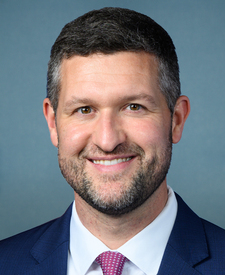
See how Patrick Ryan's votes line up with your values.
DeepSyte scores Patrick Ryan's record on the issues you care about — not party, not press releases. Take the 2-minute values quiz to see your personal alignment.
Sign in and take the values quiz to see how Patrick Ryan's votes line up with your views.
Prediction track record
How often we called Patrick Ryan's passage votes correctly, from their stated positions on each bill's tagged topics. Excludes “unclear” calls and abstentions.
A joint resolution to direct the removal of United States Armed Forces from hostilities within or against the Islamic Republic of Iran that have not been authorized by Congress.
Based on 1 data point across public statements and recorded votes · AI analysis of public records
119-hconres-93·Consistent
Directing the President, pursuant to section 5(c) of the War Powers Resolution, to remove United States Armed Forces from hostilities with Iran.
72/100
What they said
Apr 23, 2026
Congressman Ryan and House Democratic veterans are demanding an investigation into force protection failures at a U.S. base in Kuwait that resulted in six servicemembers' deaths, and are calling for accountability from Defense Secretary Hegseth regarding what they characterize as misleading statements about the attack and inadequate defenses against Iranian drone threats.
Voted Yea on Directing the President, pursuant to section 5(c) of the War Powers Resolution, to remove United States Armed Forces from hostilities with Iran.
The statement focuses on force protection failures and accountability for the Kuwait attack, and criticizes the buildup in CENTCOM as unauthorized, which aligns with the resolution's aim of removing forces from hostilities with Iran absent authorization. The bill, however, addresses the broader question of continued U.S. involvement in hostilities and permits defensive operations, a question the statement does not directly address. Direction appears generally aligned, but the statement does not explicitly call for withdrawal.
Pairs with ambiguous language and high uncertainty are withheld until more data is available. Procedural, cloture, and amendment votes are excluded — they don't cleanly signal substantive support or opposition.
Pro analysis
AI rep analysis — Pro
Get an AI-narrated read on Patrick Ryan's full voting record against your stated values — aligned themes, conflicts, notable votes, and what to watch for.
We haven't extracted campaign positions for Patrick Ryan yet. Once their campaign website or position pages are processed, this card will track what they said vs how they voted.
Crossing the aisle
Passage votes where Patrick Ryan broke ranks with ≥75% of Democrats. Threshold catches substantively partisan splits; unanimous-ish or close votes are excluded.
9
Cross-aisle votes
119-hr-4922·Sep 16, 2025·83% of D voted NO
D. C. Criminal Reforms to Immediately Make Everyone Safe Act of 2025
To prohibit individuals who are not citizens of the United States from voting in elections in the District of Columbia and to repeal the Local Resident Voting Rights Amendment Act of 2022
CONGRESSMAN PAT RYAN INTRODUCES NEW LEGISLATION TO EXPAND MEDICARE ELIGIBILITY AND LOWER HEALTHCARE COSTS ACROSS THE HUDSON VALLEY
Position: Supports lowering the Medicare eligibility age from 65 to 50 to expand health coverage and reduce costs, and opposes recent federal healthcare cuts.
Congressman Pat Ryan Introduces New Legislation to Expand Medicare Eligibility and Lower Healthcare Costs Across the Hudson Valley
Ryan’s Improving Medicare Coverage Act lowers the Medicare age of eligibility from 65 to 50, massively expanding coverage and lowering costs for millions of Americans
Especially following the devastating cuts to healthcare that have defined Trump’s second term, Ryan’s bill is drawing a clear line in the sand that benefits will be not just restored, but expanded
POUGHKEEPSIE, NY – Today, Congressman Pat Ryan announced the introduction of his Improving Medicare Coverage Act, new legislation that will expand healthcare coverage to millions of Americans by lowering the Medicare age of eligibility from 65 to 50. Ryan’s co-leads on the bill are Pramila Jayapal (WA-07), who joined Ryan in Poughkeepsie, as well as Representatives Chris Deluzio and Debbie Dingell.
“While Trump and Republicans cut your healthcare and raise your costs, we’re fighting back and putting your care first. But we’re not just reversing the harm – we’re building something better in its place, where millions more Americans will be able to access and afford the care they deserve right when they need it,” said Congressman Pat Ryan. “This legislation expands healthcare coverage to millions of Americans, takes decisive action to lower costs, and makes sure that everyone who needs it has access to quality health care, and won’t have to wait to get the cancer screenings, preventative care, and prescriptions they need. This is a commonsense bill, and I look forward to passing it through the Democratically-controlled House next year.”
“Lowering the Medicare eligibility age will be life-saving for the millions of Americans who are waiting an additional 15 years to be able to afford to see a doctor,” said Congresswoman Jayapal. “Expanding Medicare is not only popular, it is also morally the right thing to do. Millions leave the workforce before 65, and with Trump’s cuts to healthcare, many are now left without any options as they wait, sometimes years, for Medicare enrollment. Expanding this program is a commonsense step towards ensuring that all Americans have the care they deserve.”
“Especially after Trump’s healthcare cuts, expanding Medicare to Americans age 50 and up will save lives and get so many Americans the healthcare they need,” said Congressman Deluzio. “I am proud to support the Improving Medicare Coverage Act—this is an important steppingstone on the way to bigger healthcare reform where every American has good and decent healthcare.”
“For millions of Americans who cannot afford to go to the doctor, it is too late to receive preventive care by the time they reach age 65,” said Congresswoman Dingell. “The U.S. is the only industrialized nation that does not guarantee access to health care for all its citizens, and this needs to change now. I am proud to introduce this legislation to lower the Medicare eligibility age to 50, improve the Medicare Savings Program, and make lifesaving drugs more affordable.”
“NYSNA nurses believe that healthcare is a human right ! As patient advocates, we are proud to stand with Congressman Ryan and Congresswoman Jayapal as they introduce this legislation here in the Hudson Valley. Lowering the Medicare eligibility age to 50 will ensure healthcare coverage for an additional 62 million people and lower employer costs. This legislation will help to address the disparity that exists in healthcare and address the needs that nurses see wherever they practice,” said Christina Evans, RN, NYSNA Director at Large.
At age 50, the risks for several chronic conditions and cancers naturally increase. The median ages for many cancer diagnoses fall below 65 years of age: for instance, 61 is the average age for a breast cancer diagnosis. Adults in late middle age who lack health insurance are more likely to die or experience a preventable decline in their overall health. Lowering the healthcare eligibility age would improve the chances of being diagnosed early and surviving treatable diseases.
As of 2024, adults aged 55-64 made up 11.5 percent of the entire uninsured population in the U.S. The cuts to healthcare in Trump’s One Big Beautiful Bill Act are anticipated to remove 15 million Americans from their coverage, and 22 million Americans are paying over $1,000 more than they were before the Affordable Care Act tax credits expired. To address these cuts and the increased costs to planholders, lowering the Medicare eligibility age is an important step towards ensuring all Americans have health coverage. The legislation would also substantially reduce racial and ethnic health disparities in insurance coverage and healthcare.
In addition to lowering costs for older adults and improving patient outcomes, it is estimated that lowering the Medicare age could reduce costs for employers by up to 43 percent.
The Improving Medicare Coverage Act would:
Lower the Medicare eligibility age to 50;
Establish a Medicare Cost Assistance Program to replace the Qualified Medicare Beneficiary (QMB), Specified Low-Income Medicare Beneficiary (SLMB), and the Qualifying Individual (QI) programs with one program covering specified Part A premiums and Part B premiums, deductibles, and coinsurance for individuals with incomes up to 200% of the federal poverty level (FPL).
Enhance prescription drug affordability by:
Expanding access to assistance with out-of-pocket costs under Medicare Part D for low-income seniors and individuals with disabilities;
Combining the existing Extra Help and Low Income Subsidy programs into one program;
Raising the eligibility from 135% FPL to 200% FPL; and
Removing the asset test
Ensure that any individual making under 400% FPL who is not eligible for the Medicare Savings Program maintains the same eligibility for marketplace premium tax credits.
The Improving Medicare Coverage Act is cosponsored by Representatives Yassamin Ansari (AZ-03), Everton Blair (GA-13), Suzanne Bonamici (OR-01), Janelle Bynum (OR-05), Salud O. Carbajal (CA-24), Greg Casar (TX-35), Judy Chu (CA-28), Yvette Clarke (NY-09), Steve Cohen (TN-09), J. Luis Correa (CA-46), Jason Crow (CO-06), Maxine Dexter (OR-03), Veronica Escobar (TX-16), Jesús G. "Chuy" García (IL-04), Adelita Grijalva (AZ-07), Val Hoyle (OR-04), Jonathan Jackson (IL-01), Sarah Jacobs (CA-51), Henry C. "Hank" Johnson (GA-04), Ro Khanna (CA-17), Ted Lieu (CA-36), James P. McGovern (MA-02), LaMonica McIver (NJ-10), Grace Meng (NY-06), Seth Moulton (MA-06), Joe Neguse (CO-02), Eleanor Holmes Norton (DC-AL), Alexandria Ocasio-Cortez (NY-14), Chellie Pingree (ME-01), Mark Pocan (WI-02), Jan Schakowsky (IL-09), Adam Smith (WA-09), Shri Thanedar (MI-13), Mike Thompson (CA-04), Rashida Tlaib (MI-12), Paul Tonko (NY-20), Lori Trahan (MA-03), Debbie Wasserman Schultz (FL-25), Maxine Waters (CA-43), Bonnie Watson Coleman (NJ-12), and Nikema Williams (GA-05).
This legislation is endorsed by Center for Health and Democracy, Labor Campaign for Single Payer, MoveOn, People’s Action Institute, Physicians for a National Health Program, Public Citizen, SEIU, United Auto Workers.
The full text of the legislation is available here.
###
Issues:
An Economy that Works for All
Freedom for All
FOLLOWING BIPARTISAN PUSH FROM CONGRESSMAN PAT RYAN AND COLLEAGUES DEMANDING TRUMP ADMINISTRATION SPEED UP LIHEAP DISTRIBUTION, HHS RELEASES $356 MILLION FOR NEW YORK
Position: The release calls for faster distribution of LIHEAP home energy funds, an additional $3 billion in supplemental LIHEAP appropriations for FY27, and passage of the Heating and Cooling Relief Act to expand LIHEAP eligibility.
Following Bipartisan Push from Congressman Pat Ryan and Colleagues Demanding Trump Administration Speed Up LIHEAP Distribution, HHS Releases $356 Million for New York
As temperatures begin to drop and fuel prices remain high due to the Iran War, Congressman Ryan demanded that the Department of Health and Human Services (HHS) distribute critical home energy funds without delay
This week, $356 million in LIHEAP funding was released to New York, which is the earliest these awards have been granted
Ryan is calling on House Appropriations Committee to provide an additional $3 billion in supplemental LIHEAP funding for FY27
Ryan co-sponsors the “Heating and Cooling Relief Act,” which would expand eligibility for LIHEAP and lower home energy costs for millions more households nationwide
Heating oil prices in New York state are up almost 70% from this time last year, with prices in the Hudson Valley averaging $6.25/ gallon
WASHINGTON, DC – After Congressman Pat Ryan helped lead a bipartisan push demanding the Department of Health and Human Services (HHS) to distribute Low Income Home Energy Assistance Program (LIHEAP) funds to the states as soon as possible, HHS announced this week they have distributed $356,163,671 in LIEHAP funds for New York’s Home Energy Assistance Program. Heating oil prices in New York State are up more than 70% from this time last year, with prices in the Hudson Valley averaging $6.22/ gallon.
“After a summer of skyhigh gas prices and utility bills due to Trump’s war in Iran, home heating oil costs are up almost 70 percent. Now, as temperatures start to drop, Hudson Valley families are about to face more expensive heating bills on top of everything else. Thousands of families in our community rely on the LIHEAP program to keep their homes warm. We put the pressure on the administration early to ensure these funds got out the door without delay, and I’m proud they heeded our calls, distributing more than $356 million in LIHEAP funds to New York,” said Congressman Pat Ryan. “The LIHEAP program is chronically underfunded, which is why I’m calling on the Appropriations Committee to increase funding for the program and pushing for legislation to ensure more Hudson Valley families can qualify for assistance.”
This week, Ryan also joined a bipartisan group of 73 members in calling on the House Appropriations Committee to provide an additional $3 billion in emergency supplemental appropriations for the Low-Income Home Energy Assistance Program (LIHEAP) for Fiscal Year 2027 (FY27).
In the letter, the members wrote, “As the war with Iran remains unresolved, energy prices are expected to keep rising, with heating oil up 60% since February. LIHEAP’s $4 billion in funding for the last fiscal year would fall significantly short in meeting the needs of American families this fiscal year.”
“LIHEAP is a critical lifeline for low- and moderate-income individuals, but even if your household qualifies, LIHEAP does not provide guaranteed security. Five out of six families who qualify for LIHEAP receive no financial assistance due to the program’s woefully underfunded status. When adjusting for inflation, LIHEAP funding is lower now than it was in 1981 when the program was first created. If LIHEAP was funded at the same level as it was 45 years ago, the program would have received nearly $7 billion in FY27,” they continued.
“Emergency LIHEAP assistance is urgently needed as winter weather approaches and colder temperatures have already begun. Families should not have to choose between staying warm and purchasing other essential items like food, medication, or rent. Congress must act and not leave families in the cold,” they concluded.
LIHEAP helps low-income individuals and families pay for heating and cooling and mitigates the impacts of rising energy costs and extreme weather events. Across the nation, LIHEAP helps nearly 6 million households afford their energy bills, including nearly 30,000 in NY-18, but Secretary Kennedy’s decision last year to fire all LIHEAP staff last year has put this assistance at risk. Ryan has previously blasted the Trump Administration for threatening to eliminate federal funding for LIHEAP.
Ryan is also a co-sponsor of the Heating and Cooling Relief Act, legislation to modernize LIHEAP, increase investments, and dramatically expand eligibility so that households earning up to 250 percent of the Federal Poverty Line or 80 percent of State Median Income can qualify to apply for assistance. It would lower home energy costs for millions more households nationwide.
Specifically, the Heating and Cooling Relief Act would:
Substantially increase LIHEAP funding to ensure year-round assistance, including an additional $2 billion for emergency energy assistance and $1 billion in Just Transition Grants to help vulnerable households adapt to a changing climate;
Broaden eligibility so that households earning up to 250 percent of the Federal Poverty Line or 80 percent of State Median Income can qualify, while ensuring lower energy burdens for lower-income households and capping household energy burdens at 3 percent of monthly income;
Protect consumers from utility shutoffs, excessive late fees, and predatory energy practices that disproportionately impact vulnerable communities;
Expand emergency assistance, ensuring extreme heat and cold are recognized as qualifying emergencies and that states can provide vital cooling relief;
Increase funding for weatherization and home electrification, to help low-income households reduce energy costs, improve health and safety, and transition to clean, resilient energy systems;
Streamline enrollment and outreach, improving coordination with other federal programs and increasing access through automatic enrollment and simplified verification; and
Strengthen reporting requirements to better track affordability, equity, and climate resilience outcomes.
###
Issues:
An Economy that Works for All
Freedom for All
CONGRESSMAN PAT RYAN, NEW YORK DELEGATION DEMAND TRUMP ADMINISTRATION RELEASE $87 MILLION IN COUNTERTERRORISM FUNDING STILL OWED TO NEW YORK
Position: Calls on the Trump Administration to immediately release $87 million in FY2025 Homeland Security Grant Program funding owed to New York, arguing the withheld counterterrorism funds are needed for public safety and preparedness.
Congressman Pat Ryan, New York Delegation Demand Trump Administration Release $87 Million in Counterterrorism Funding Still Owed to New York
One Year After Trump Promised Full Reversal of Funding Cuts, First Responders Statewide are Still Without Millions in Federal Investments
KINGSTON, NY – Congressman Pat Ryan joined members of the New York Congressional Delegation in demanding the Trump Administration to immediately release $87 million in FY2025 Homeland Security Grant Program (HSGP) funding that is still owed to New York. Their letter, sent to DHS Secretary Markwayne Mullin and FEMA Administrator Cameron Hamilton, highlights the danger of withholding this funding from one the largest states in the nation and a top target for international and domestic terrorism.
“Since the start of the second Trump Administration, the President has waged targeted political attacks on New York State. When he cut this counterterrorism funding, New Yorkers across the state fought back and won. Now, a year later, we’re demanding Trump deliver the rest of what’s rightly ours,” said Congressman Pat Ryan. “As Trump’s war with Iran continues, Americans want and deserve to feel safe. Now is the absolute last time to be cutting security funding. The need is especially stark following the grim 25th anniversary of the 9/11 terror attacks – the tragedy that changed our state forever and inspired these vital preparedness programs in the first place. Trump’s DHS has an obligation to release these funds and protect New Yorkers.”
In September 2025, DHS issued HSGP award notifications that cut New York’s allocation by 86 percent, or $187 million, leaving the state with just $30 million compared to roughly $220 million in FY24. In October 2025, following bipartisan advocacy, President Trump committed to restoring full funding at approximately $220 million. After a court order in Noem v. Illinois that found Trump unlawfully cut emergency grant funding, the administration released $100 million, but $87 million is still owed to New York.
The missing funds affect every county in the state, including Dutchess, Orange, and Ulster, and represent $11 million in losses for New York City. The letter warns that without full restoration, the Trump Administration is severely limiting local law enforcement’s ability to plan, train tactical teams, procure equipment, and conduct operations. Created in the wake of the September 11th attacks, HSGP has protected New York State for decades. The delegation underscored that the funds are due 25 years after 9/11 and one year after the President’s promise.
The full text of the letter can be found here.
###
Issues:
Ensuring Safety for All
VICTORY ON THE HUDSON: CONGRESSMAN PAT RYAN AND LOCAL ADVOCATES CELEBRATE SUCCESS OF RYAN’S LAW THAT PERMANENTLY BANS BARGES ON THE HUDSON RIVER
Position: The release supports the Hudson River Protection Act, which permanently bans barges from docking or anchoring on the Hudson River to protect drinking water and the river environment from pollution.
VICTORY ON THE HUDSON: Congressman Pat Ryan and Local Advocates Celebrate Success of Ryan’s Law that Permanently Bans Barges on the Hudson River
After years of relentless advocacy by Congressman Ryan, bipartisan lawmakers, and local advocates, the “Hudson River Protection Act” – which permanently bans harmful, polluting barges from docking in the Hudson River – is now law
Ryan joined local advocates, including representatives from Riverkeeper and Scenic Hudson, to celebrate the community victory years in the making; Ryan first introduced the bill in 2023 following attempts to allow dangerous barges to anchor in the Hudson, contaminating drinking water for Hudson Valley residents and destroying the environment
POUGHKEEPSIE, NY – Today, Congressman Pat Ryan joined local experts and advocates to celebrate the success of his Hudson River Protection Act. After years of relentless advocacy by Congressman Ryan, bipartisan elected officials at the local, state, and federal levels, and community experts and advocates, Ryan’s bill permanently banning harmful, polluting barges from docking in the Hudson is now law.
Ryan first introduced the Hudson River Protection Act in 2023, following attempts to erode protections preventing harmful, polluting barges from using the Hudson River as a parking lot – threatening to contaminate drinking water for more than 100,000 Hudson Valley residents and destroy the environment. He has been fighting for years, alongside the Hudson Valley community – with the invaluable partnership of organizations including Riverkeeper and Scenic Hudson – to advance this legislation.
“If there’s one thing we can all agree on it’s making sure our drinking water is clean and that our Hudson River is safe and protected. For far too long, big corporations have polluted and put at risk our precious River in pursuit of profits. But not anymore. The Hudson is more than a river – it’s the lifeblood and the heartbeat of our community,” said Congressman Pat Ryan. “Today we celebrated the years of effort by every single member of our Hudson Valley community. I especially want to thank my partners at Riverkeeper and Scenic Hudson for their tireless work and commitment to protecting the Hudson. Never again will big corporations be able to turn our River into a parking lot for dangerous barges, polluting the drinking water for 100,000 of our neighbors. This victory proves that when the Hudson Valley stands up with one voice to demand change, we can accomplish anything.”
“As the Coast Guard reviews comments and finalizes its rulemaking barring new anchorages along the Hudson River, we look back to celebrate the Hudson River Protection Act as a powerful testament to what we can accomplish when communities come together to defend the river they depend on,” said Riverkeeper Associate Director of Government Affairs Jeremy Cherson. “For nearly a decade, Riverkeeper and thousands of New Yorkers have fought to ensure that the Hudson is protected from the risks posed by new commercial vessel anchorages. This law honors that persistence by safeguarding critical habitat, protecting drinking water for more than 100,000 people, and making clear that the Hudson is not a place for industrial exploitation. We’re grateful to Congressman Pat Ryan, our partners, and the countless Hudson Valley residents who raised their voices and refused to let the river’s future be put at risk.”
“The Hudson 7 is an intermunicipal council representing seven Mid-Hudson municipalities that rely on the Hudson River as a drinking water source. More than 107,000 people in Dutchess and Ulster Counties depend on the river for their drinking water, with five treatment plants drawing directly from the Hudson to serve communities including Rhinebeck, Esopus, Lloyd, Hyde Park, and Poughkeepsie,” said Gary Bassett, Mayor of the Village of Rhinebeck and Chair of the Hudson 7. “The river doesn’t follow municipal boundaries. A spill doesn’t stop at a town line, and a flood doesn’t stop at a county line. Protecting this shared resource requires regional cooperation and strong federal leadership. Today, we thank Congressman Ryan for his sustained leadership in advancing the Hudson River Protection Act.”
“Residents of Ulster County have a deep and abiding appreciation for the Hudson River. County Executive Metzger recognizes and supports the more than 9,000 county residents who draw their drinking water from the Hudson River, and the thousands more who enjoy fishing, boating, picnicking, and hiking along the waterfront. On behalf of the Department of Environment, we express our appreciation to Congressman Ryan and the advocacy groups who worked tirelessly to secure passage of this legislation,” said Andy Bicking, Director of Ulster County’s Department of Environment.
“Without the Hudson River Protection Act, our river was at risk of becoming a busy highway and parking lot for marine vessels carrying crude oil or other dangerous cargo. Scenic Hudson is proud to have partnered with Congressman Ryan to finally put an end to this threat. The Hudson River Protection Act, introduced and championed by the Congressman, will permanently prevent efforts to add new upper Hudson River anchorages, protecting the ecological health of the river and the health of those who rely on it for drinking water and recreation. Scenic Hudson will continue to partner with our friends in the Hudson Valley, Albany, and Washington to vigilantly protect this critical waterway,” said Carli Fraccarolli, Scenic Hudson's Government Relations Manager.
Congressman Ryan’s “Hudson River Protection Act” bans additional barge anchorages in the Hudson, which pollute the drinking water for more than 100,000 Hudson Valley residents and damage the Hudson’s diverse ecosystem.
In 2023, when the Coast Guard issued an Marine Safety Information Bulletin (MSIB) signaling an attempt to erode protections preventing commercial vessels from anchoring in the Hudson River, Ryan immediately raised the alarm, warning of devastating environmental and health impacts for the river ecosystem and broader community.
After a more than two month delay, Michael Emerson, the Director of Marine Transportation Systems, provided a woefully insufficient response that left the door open for dangerous oil barges to line the Hudson.
In October of 2023, Ryan was joined by Riverkeeper, Scenic Hudson and the Hudson 7 in demanding the Coast Guard uphold the anchoring ban. Ryan gave a speech on the House Floor, calling on Hudson Valley families to join the fight and shared a form for those interested to register their opinion. The new MSIB, issued in November 2023 in response to overwhelming community outrage, temporarily paused the Coast Guard’s plan to allow dangerous barges to line the Hudson River but doubled down on their plan to allow unlimited anchoring in the future.
Congressman Ryan’s greatest concern has been that the Hudson River serves as the primary water supply for seven communities in his district, and serves as the backup drinking water supply for our nation’s largest city, New York City. Additionally, more oil barges on the Hudson will increase the risks of a catastrophic spill. This is especially concerning for the more than 100,000 people that draw their drinking water from the Hudson River.
Barges often carry oil, asphalt, and other hazardous materials, which pollute the river with their noisy generators and “stadium” lighting. The Hudson River and its connected waters are also home to more than 200 species of fish and provide spawning and nursery habitat for striped bass, shad, and herring that support fisheries up and down the entire Atlantic coast. The River has seen significant efforts to restore the habitats of endangered fish species which are jeopardized by barge anchors dragging along the River bottom.
President Trump signed the “Hudson River Protection Act” into law as part of the FY2026 National Defense Authorization Act (NDAA), wherein Congressman Ryan secured numerous other wins including a pay raise for troops.
###
Issues:
Clean Air, Soil, and Water for All
“DON’T MESS WITH NEW YORK”: CONGRESSMAN PAT RYAN AND NEW YORK DELEGATION INTRODUCE BICAMERAL LEGISLATION TO REVERSE TRUMP’S DEVASTATING CUTS TO HEALTHCARE AND RESTORE COVERAGE FOR 450,000 NEW YORKERS
Position: The release supports the Restoring Essential Plan Coverage Act, which would repeal the One Big Beautiful Bill Act's premium tax credit eligibility restrictions to restore funding for New York's Essential Plan and allow all states to expand coverage through the ACA's Basic Health Plan. It opposes the healthcare funding cuts enacted in the One Big Beautiful Bill Act.
“Don’t Mess With New York”: Congressman Pat Ryan and New York Delegation Introduce Bicameral Legislation to Reverse Trump’s Devastating Cuts to Healthcare and Restore Coverage for 450,000 New Yorkers
Congressman Pat Ryan and the entire New York Democratic Delegation introduced legislation to reverse the Republican cuts to health care and restore coverage for 450,000 New Yorkers.
In NY-18, 15,656 Essential Plan enrollees were impacted by cuts to health care funding in Republicans’ One Big Beautiful Bill Act.
WASHINGTON, D.C. – Last week, Congressman Pat Ryan joined the entire New York Democratic delegation in introducing the Restoring Essential Plan Coverage Act, legislation to restore health coverage to the nearly 450,000 New Yorkers who were kicked off of the Essential Plan under the Republicans’ One Big Beautiful Bill Act. In NY-18, 15,656 Essential Plan enrollees were impacted.
Specifically, the Restoring Essential Plan Coverage Act would repeal the One Big Beautiful Bill Act’s premium tax credit eligibility restrictions, fully restoring funding for the Essential Plan. In addition to restoring the program, the legislation would provide all states with the option to expand health coverage through the Affordable Care Act’s Basic Health Plan.
“For over a year now, we’ve felt the devastating consequences of Trump and Republicans’ health care cuts right here in the Hudson Valley. Trump and spineless rubber-stamp Republicans in Congress cut $1 trillion from your health care and food assistance to fund a tax cut for billionaires – and they specifically targeted New York’s Essential Plan, ripping healthcare from more than 15,000 people in our district,” said Congressman Pat Ryan. “It’s cruel, un-American, and the exact opposite of everything our community stands for. On behalf of the 450,000 New Yorkers kicked off their insurance, we’re fighting back. I’m incredibly proud to join our entire state Democratic delegation in introducing this legislation to reverse the cuts, restore your coverage, and send a clear message to Trump: Don’t mess with New York.”
Congressman Ryan was an early, strong critic of President Trump domestic spending agenda – calling it a “Big, Ugly Betrayal” of the American people. Trump’s agenda rips health care coverage away from more than 17 million Americans, has caused a massive hike in insurance premiums for millions, and has already closed, significantly reduced services, or forced mass layoffs at countless hospitals nationwide. 77% of respondents to Ryan’s survey on ACA premiums said they’d already received notice their bills would increase.
This legislation is cosponsored by the entire New York Democratic delegation including: Senators Schumer (D-NY) and Gillibrand (D-NY), Leader Jeffries (NY-08), and Representatives Ocasio-Cortez (NY-14), Clarke (NY-09), Espaillat (NY-13), Gillen (NY-04), Goldman (NY-10), Kennedy (NY-26), Latimer (NY-16), Mannion (NY-22), Meeks (NY-5), Meng (NY-6), Morelle (NY-25), Nadler (NY-12), Riley (NY-19), Ryan (NY-18), Suozzi (NY-3), Tonko (NY-20), Torres (NY-15), and Velázquez (NY-07).
The full bill text is available here.
###
Issues:
An Economy that Works for All
Freedom for All
ICYMI: CONGRESSMAN PAT RYAN HOSTS HUDSON VALLEY RESTAURANT OWNERS FOR DISCUSSION ON RISING COSTS & IMPACTS OF PROPOSED SYSCO-RESTAURANT DEPOT MERGER
Position: The release states opposition to the proposed $29.1 billion Sysco-Restaurant Depot merger, arguing it would reduce competition and raise costs for independent restaurants and consumers, and calls on the FTC to block the deal.
ICYMI: Congressman Pat Ryan Hosts Hudson Valley Restaurant Owners for Discussion on Rising Costs & Impacts of Proposed Sysco-Restaurant Depot Merger
Mid Hudson News: Ryan and restaurant owners dish on Sysco at diner
Ryan hosted Hudson Valley restaurant owners, caterers, and small food distributors to discuss how corporate consolidation is raising prices and making it harder to run their small businesses
The discussion comes after Ryan called on FTC Chairman Andrew Ferguson to block the proposed $29.1 billion merger between Sysco and Restaurant Depot, arguing the merger would reduce competition, drive up operating costs for restaurants, and make dining out more expensive
NEWBURGH, NY – Yesterday, Congressman Pat Ryan – co-chair of the Congressional Monopoly Busters Caucus – hosted a roundtable conversation at Alexis Diner with Hudson Valley restaurant owners, caterers, and small food distributors to discuss how corporate consolidation is raising prices and making it harder to run their small businesses.
Participants discussed how the proposed merger between Sysco and Restaurant Depot – two of the largest suppliers Hudson Valley independent restaurants rely on – would bring a dramatic, negative impact to their businesses.
The conversation followed a letter Ryan sent to Federal Trade Commission (FTC) Chairman Andrew Ferguson last week, demanding the FTC block the proposed $29.1 billion merger and raising the alarm on how it would reduce competition, drive up operating costs for restaurants, and make dining out in the Hudson Valley more expensive.
“When the largest food distributor in the country seeks to acquire one of its biggest competitors, it’s all of us – our small restaurant and diner owners, food truck operators, caterers, and customers – who will be forced to pay the higher price,” said Congressman Pat Ryan. “Hudson Valley restaurants are part of what makes our community so special. We should be making it easier, not harder, for them to succeed. Keeping prices competitive is essential to the success of these restaurants, which is why we’re going to fight with everything we’ve got to make sure the FTC blocks this harmful deal and protects the independent businesses that keep our Hudson Valley communities thriving.”
“We're grateful that Congressman Ryan is standing with independent restaurants and bars by urging the FTC to fully investigate the proposed merger between Sysco and Restaurant Depot,” said Erika Polmar, Executive Director of the Independent Restaurant Coalition. “Restaurants already operate on margins of just 3 to 5 percent, and when one company controls more of the food supply chain, owners lose bargaining power and are left with higher prices, fewer options and lousy terms, costs that either land on the menu or eat into already meager margins. Restaurants are New York's second-largest private employer, and letting Sysco absorb the supplier independents rely on most would threaten the neighborhood businesses that anchor communities across the state.”
Read more:
Mid Hudson News: Ryan and restaurant owners dish on Sysco at diner
By Jeanine Agnolet
TOWN OF NEWBURGH – A handful of small, independent restaurant owners, food educators, chefs and a farmer sat around a table at the Alexis Diner in Newburgh on Monday to express their concerns to Congressman Pat Ryan (D, NY -18) about the proposed merger of the food industry giant Sysco Corporation and Restaurant Depot.
Above the frenetic sounds of a hectic lunch crowd with plenty of hot coffee, they candidly described what they said was the disaster that will strike if Sysco is successful in acquiring Restaurant Depot, which has a warehouse in the Town of Newburgh.
“The merger will drive the food prices up, and it will drive small restaurants right out of business,” said Tom Costa, chef and owner of North Plank Road Tavern in the Town of Newburgh and an active member of the Independent Restaurant Coalition. “Right now, I can run out to Restaurant Depot, and I can get three pounds of Faroe Island salmon, but if I have to order a case of it from Sysco, I risk losing some of it before I actually sell it. Restaurant Depot is a godsend for the small, independent restaurant, which is a dying breed.”
Congressman Ryan held the roundtable discussion to get feedback from local restaurant owners and food service providers.
Last Friday, Ryan, who co-chairs the Congressional Monopoly Busters Caucus, sent a letter to Federal Trade Commission Chairman Andrew Ferguson, urging him to block the proposed $29.1 billion merger.
Ryan says the appeal to prevent the acquisition has bipartisan support.
“I cannot overstate how big of a deal this is as one of the biggest mergers in this country in the past decade,” said Ryan. “At a time when costs are already exorbitantly high, this is incredibly problematic.”
Ryan said there are nearly 2,000 food service and accommodation businesses in his district, most of them with less than 20 employees.
“There are over 30 thousand food workers in these three counties—a huge source of employment across our communities, so this affects everyone,” said Ryan.
Sysco is the single biggest distributor of food in the nation, serving over 700,000 customers globally, including schools, hospital systems and other organizations that have high volume.
Earlier this year, it announced plans to purchase Restaurant Depot, one of the nation’s largest food wholesale cash-and-carry warehouse companies, that sells to independent restaurant owners, caterers and non-profits.
Restaurant owners contend the proposed merger would reduce competition, drive up operating costs and make dining out more expensive.
Rei Peraza, director of Operations and Executive Chef for Rossi & Sons, prides himself on the fact that he has never utilized Sysco.
“Sysco has an algorithmic pricing system. The more you buy, the better your pricing is, and that’s why it doesn’t work for a lot of small, mom and pop operations. I don’t think Sysco and the way they do business has ever been good for small businesses,” said Peraza.
With Sysco, the identities of restaurants get lost. You’re using the same chicken fingers and the same toilet paper as everyone else. As a whole, they have very little to offer in quality products outside of convenience.”
In 2013, Sysco attempted to acquire US Foods, but the Federal Trade Commission sued to block the merger and won.
Assemblyman Jonathan Jacobsen says he intends draft a letter to State Attorney General Letitia James, urging her to take action and enforce the current laws that prohibit monopolistic practices.
“It’s wrong in the insurance, healthcare and pharmaceutical industries, and it’s wrong here,” said Jacobsen.
“With this merger, we’ll be out priced, and this will be catastrophic,” said Gaby Pereyra, owner of Yara Farm in Middletown, New York and director of Operations for the Chester Agricultural Center. “It would be impossible for small farmers to be able to sell to small restaurants or suppliers.”
Ryan says he is hopeful that the merger can still be stopped, despite the fact that negotiations are in the final stages.
“Sysco has a pricing structure based on volume,” said Tom Costa. “It may be smart but it’s going to kill the little guy.”
Ryan’s letter to FTC Chairman Andrew Ferguson is included in full below, and can be viewed here.
Dear Chairman Ferguson,
I am writing to urge the Federal Trade Commission to conduct a rigorous review of Sysco Corporation's proposed acquisition of Restaurant Depot, and to formally oppose the merger unless substantial evidence is shown that the merger will not lessen competition in the markets on which independent restaurants and small food service operators rely. This issue is of personal interest as many of my constituents rely on the Restaurant Depot Warehouse located in my district in Newburgh, New York. In addition, as independent restaurants are forced to raise prices, those high prices are either absorbed, decreasing profits, or passed along to consumers. My constituents are already drowning in skyrocketing prices, and this acquisition will only make it more difficult both for small businesses working hard to make a living and for customers trying to afford the basics, like a warm meal from a local restaurant.
Restaurant Depot exerts indirect but consequential competitive pressure on Sysco by serving as an outside option for independent, price-sensitive operators who want to avoid rising delivery fees. Independent restaurant operators, including the 30,000 restaurant workers in my district, depend on low-cost product sourcing to operate. While Sysco has defended the acquisition, characterizing the two companies as possessing “minimal overlap” in customers, the truth is that this acquisition would establish Sysco’s total control over two unique channels of distribution that independent restaurants have historically used as substitutes for each other.
This acquisition would make Sysco the largest player in the cash-and-carry market, on top of its existing leadership in the broadline distribution market. This consolidation of market power will have severe and devastating consequences for independent restaurants, food service operators, and other small businesses who rely on competitive markets to keep prices low for their customers. With folks feeling intense financial pressure across the board right now, we should be working together to bring down costs, instead of fueling high prices. I’ll continue to stay in close contact with local businesses negatively impacted by rising prices and help them fight for fair practices.
As you look into the details of the merger, I urge the Federal Trade Commission to closely review the potential impact on the food service industry, including the small businesses and consumers who patronize our beloved independent restaurants.
On behalf of the hardworking independent restaurants and constituents who would be impacted by this merger in my district and around the nation, I urge the Commission to investigate this matter and take decisive action to protect competition, consumers, and small businesses.
Thank you for your attention to this matter.
###
Issues:
An Economy that Works for All
CONGRESSMAN PAT RYAN JOINS BIPARTISAN PUSH DEMANDING TRUMP ADMINISTRATION DISTRIBUTE AND EXPAND ACCESS TO VITAL LIHEAP FUNDS AS TEMPERATURES DROP
Position: The release calls on HHS to distribute LIHEAP funds to states as soon as possible and no later than November 1, 2026, and expresses support for the Heating and Cooling Relief Act to modernize LIHEAP, increase investments, and expand eligibility to households up to 250% of the federal poverty line or 80% of state median income.
Congressman Pat Ryan Joins Bipartisan Push Demanding Trump Administration Distribute and Expand Access to Vital LIHEAP Funds As Temperatures Drop
As temperatures begin to drop and fuel prices remain high due to the Iran War, Congressman Ryan is demanding that the Department of Health and Human Services (HHS) distribute critical home energy funds without delay
Ryan co-sponsors the “Heating and Cooling Relief Act,” which would expand eligibility for LIHEAP and lower home energy costs for millions more households nationwide
Heating oil prices in New York state are up more than 70% from this time last year, with prices in the Hudson Valley averaging $6.22/ gallon
WASHINGTON, DC – As home heating oil prices continue to rise, Congressman Pat Ryan joined a bipartisan group of 116 members in calling on the Department of Health and Human Services (HHS) to take all necessary steps to ensure that the Low Income Home Energy Assistance Program (LIHEAP) funds are distributed to the states as soon as possible and no later than November 1, 2026. Heating oil prices in New York state are up more than 70% from this time last year, with prices in the Hudson Valley averaging $6.22/ gallon.
Ryan is also a co-sponsor of the Heating and Cooling Relief Act, legislation to modernize LIHEAP, increase investments, and dramatically expand eligibility so that households earning up to 250 percent of the Federal Poverty Line or 80 percent of State Median Income can qualify to apply for assistance.
“With a history of repeated funding delays by HHS to states, we are especially concerned for households facing high energy prices this winter who rely on LIHEAP... It is of the utmost importance that the agency ensures funds are released as soon as possible and without congressional intervention throughout Fiscal Year 2027,” wrote the lawmakers.
“Since February, crude oil prices have significantly increased, topping significantly more than $100 per barrel at its peaks in April 2026 and recently on September 15, 2026. These price spikes impact home heating oil prices especially, as it is refined from crude oil,” they stated.
Emphasizing the importance of the speedy delivery of funds for families who rely on home heating oil, they continued, “Home heating oil will not be delivered without payment in full, up front, which can average $2,300 for just the winter season. For the many families that cannot afford these high costs, LIHEAP is a lifeline. If households don’t receive these funds on schedule, families will go without heat or be forced to make remarkably difficult decisions in order to afford it.”
LIHEAP helps low-income individuals and families pay for heating and cooling and mitigates the impacts of rising energy costs and extreme weather events. Across the nation, LIHEAP helps nearly 6 million households afford their energy bills, including nearly 30,000 in NY-18, but Secretary Kennedy’s decision last year to fire all LIHEAP staff last year has put this assistance at risk. Ryan has previously blasted the Trump Administration for threatening to eliminate federal funding for LIHEAP.
“Throughout the summer, families have struggled to fill up their gas tank because Trump’s war in Iran has sent gas prices skyrocketing. But it’s not just gas – it’s home heating oil too. As we head into fall and temperatures drop, Hudson Valley families are about to face higher heating bills on top of everything else. Thousands of families in our community rely on the LIHEAP program to keep their homes warm. The last thing these folks should be worrying about is whether they’ll get the support they’re counting on,” said Congressman Pat Ryan. “We’ve seen this Administration’s attempts to cut LIHEAP before, and I refuse to allow any delays to leave Hudson Valley families out in the cold this winter. We’re making sure these funds get distributed to the New Yorkers who need them.”
Underscoring the continued concerns about LIHEAP’s capacity to operate without dedicated staff, the lawmakers wrote, “We urge you to ensure that necessary personnel and resources are in place to support LIHEAP's continued success and request a detailed response on staffing levels supporting the LIHEAP program, including but not limited to how many staff members work on the program full time and part time, as well as projected vacancies that must be filled to ensure continued success.”
“Once again we urge you to do everything possible to distribute LIHEAP funds to states and families expeditiously. Families should not have to choose between staying warm and affording other essential items like food, medication, or rent. We appreciate your attention on this urgent matter and stand ready to support the agency in assisting the American people,” they concluded.
Read the full letter to Secretary Kennedy here.
Ryan also co-sponsors the Heating and Cooling Relief Act, which would lower home energy costs for millions more households nationwide.
Specifically, the Heating and Cooling Relief Act would:
Substantially increase LIHEAP funding to ensure year-round assistance, including an additional $2 billion for emergency energy assistance and $1 billion in Just Transition Grants to help vulnerable households adapt to a changing climate;
Broaden eligibility so that households earning up to 250 percent of the Federal Poverty Line or 80 percent of State Median Income can qualify, while ensuring lower energy burdens for lower-income households and capping household energy burdens at 3 percent of monthly income;
Protect consumers from utility shutoffs, excessive late fees, and predatory energy practices that disproportionately impact vulnerable communities;
Expand emergency assistance, ensuring extreme heat and cold are recognized as qualifying emergencies and that states can provide vital cooling relief;
Increase funding for weatherization and home electrification, to help low-income households reduce energy costs, improve health and safety, and transition to clean, resilient energy systems;
Streamline enrollment and outreach, improving coordination with other federal programs and increasing access through automatic enrollment and simplified verification; and
Strengthen reporting requirements to better track affordability, equity, and climate resilience outcomes.
###
Issues:
An Economy that Works for All
CONGRESSMAN PAT RYAN INTRODUCES “NO TROOPS IN OUR STREETS ACT” TO PREVENT ILLEGAL DOMESTIC TROOP DEPLOYMENTS AND VOTER INTIMIDATION AHEAD OF MIDTERM ELECTION
Position: Rep. Ryan introduced legislation to empower Congress to stop or reverse any domestic troop deployment ordered by the President, citing concerns about military use in relation to midterm elections.
Congressman Pat Ryan Introduces “No Troops in Our Streets Act” to Prevent Illegal Domestic Troop Deployments and Voter Intimidation Ahead of Midterm Election
Ryan’s bill prevents President Trump from weaponizing the military to interfere with elections; the introduction follows new reports that advisors close to the President are encouraging him to declare martial law ahead of the midterm elections
Trump has repeatedly refused to rule out declaring a national emergency on elections, has already deployed thousands of U.S. troops to Democratic-led cities, and suggested that Republicans should “take over” the voting process
The introduction comes just 33 days before the midterm election, in which Democrats are projected to massively out-perform Republicans
WASHINGTON, DC – Today, Congressman Pat Ryan – an Iraq War combat veteran and the first West Point graduate to represent the Academy in Congress – introduced the No Troops in Our Streets Act, landmark legislation preventing the President from weaponizing the military to interfere with elections. Specifically, the bill would empower Congress to stop or reverse any domestic troop deployment ordered by the President.
The introduction follows months of threats and actions by the Trump Administration to interfere with the November midterm elections and amid new reports from the Atlantic that advisors close to the President are encouraging him to declare martial law. Trump has repeatedly refused to rule out declaring a national emergency on elections, has already deployed thousands of U.S. troops against U.S. citizens in American cities, and suggested that Republicans should “nationalize” the midterm elections and “take over” the voting process. When asked directly in a House Armed Services Committee (HASC) hearing, a senior Trump military official refused to rule out troop deployments to polling sites.
“Patriots in uniform sign up to fight for fundamental American freedoms – not against them. Trump using U.S. servicemembers as political pawns is straight-up un-American, and we’re not going to let him get away with it,” said Congressman Pat Ryan. “Trump and those around him are scared – they know the American people are fed up with the war in Iran and skyrocketing prices. Instead of working to lower costs, Trump and his team are cooking up ways to intimidate voters, refusing to rule out domestic troop deployments. This bill provides a necessary check on the President. If he deploys troops, Congress can and will stop him. We won’t let this chickenhawk president exploit our servicemembers just because he can’t face the fact that the American people are fed up with his failed agenda of higher costs and unprecedented corruption.”
The legislation was co-sponsored by fellow Democratic veterans Reps. Eugene Vindman, Chris Deluzio, Maggie Goodlander, Jimmy Panetta, and Chrissy Houlahan. Senator Elissa Slotkin introduced companion legislation in the Senate. The bicameral legislation also includes $1 billion in new resources for state and local law enforcement on the ground.
Congressman Ryan is a U.S. Army veteran, served two combat tours in Iraq, and is the first West Point graduate to represent the Academy in the U.S. House of Representatives. Amid recent threats to veterans’ benefits, national security concerns, and rising threats worldwide, Congressman Ryan led his fellow veterans in Congress to create the Democratic Veterans Caucus. He sits on the House Armed Services Committee and has led extensive legislation to deliver relief for veterans, servicemembers, and military families.
###
Issues:
Ensuring Safety for All
Freedom for All
CONGRESSMAN PAT RYAN HOSTS ROUNDTABLE DISCUSSION WITH HUDSON VALLEY GUN VIOLENCE PREVENTION LEADERS IN POUGHKEEPSIE
Position: Congressman Ryan co-sponsors the Assault Weapons Ban and supports universal background checks, red flag laws, and safe firearm storage, and opposes efforts to roll back federal gun violence prevention measures.
Congressman Pat Ryan Hosts Roundtable Discussion with Hudson Valley Gun Violence Prevention Leaders in Poughkeepsie
Ryan – an Army combat veteran and member of the Congressional Gun Violence Prevention Task Force – has been a consistent advocate for gun violence prevention throughout his time in Congress
Guns remain the leading cause of death for children and teens in the United States; Ryan is a proud co-sponsor of the Assault Weapons Ban and has championed legislation promoting universal background checks and safe gun storage
Roundtable participants included representatives from Moms Demand Action, Family Services, local elected officials and more
POUGHKEEPSIE, NY – Last week, Congressman Pat Ryan – an Army combat veteran and member of the Congressional Gun Violence Prevention Task Force – joined Hudson Valley community leaders and gun violence prevention advocates for a roundtable discussion in Poughkeepsie. As violent crime rates continue falling in the Hudson Valley, advocates and leaders discussed efforts to build upon that progress and keep communities safe.
Guns remain the leading cause of death for children and teens in the United States; in 2026, there have already been 83 incidents of gunfire on school grounds, resulting in 27 deaths and 47 injuries nationwide.
Ryan is a proud co-sponsor of several bills curtailing the gun violence epidemic, including the Assault Weapons Ban.
Roundtable participants included representatives from Moms Demand Action, Family Services, local elected officials and more.
“I’m so grateful to everyone who gathered for today’s conversation. From local law enforcement, to elected leaders, to nonprofits dedicated to keeping our communities safe, this coalition has done amazing work toward ending the scourge of gun violence in Dutchess County and beyond. Tackling this epidemic requires all-hands-on-deck, and we recommitted to working together to save lives.,” said Congressman Pat Ryan. “There is nothing more important than keeping our communities – especially our kids – safe. As a combat veteran I know the weapons I carried in war have no place on our streets or in our schools. That’s why I proudly co-sponsor the Assault Weapons Ban, and support legislation promoting red flag laws, safe firearm storage, and universal background checks. We’ve made encouraging progress, but there’s still more work ahead. While the Trump administration tries to roll back our efforts, I’m continuing to fight for commonsense gun safety legislation and to help make sure the people doing the work to keep our communities safe have the resources they need.”
“At Family Services we see firsthand the devastating impact that violence has on children, families, and entire neighborhoods, and we also see the incredible strength and resilience of the people working to create safer communities,” said Leah Feldman, CEO, Family Services, Poughkeepsie. “That is why sustained investment in community violence intervention is so important. Programs like SNUG provide a critical connection between communities and the resources, support, and opportunities that can prevent violence. We are grateful for leaders like Congressman Ryan who recognize the importance of this work and continue to bring attention and resources to the effort to build safer communities.”
When young people experience violence in their neighborhoods, schools, or homes, the impact can extend far beyond the immediate moment, affecting their sense of safety, their ability to learn, and their vision for what is possible for their future,” said Jill Gomez, ED, Poughkeepsie Children’s Cabinet. “As a Children’s Cabinet, we believe every young person deserves to grow up surrounded by adults, institutions, and systems that work together to create safe, connected communities. Preventing gun violence requires that same collective commitment: listening to young people and families, strengthening the places and relationships that protect them, and aligning our community’s resources around the conditions that allow every child to thrive.”
“I am a Survivor Lead working out of MOMS Demand Action in the Hudson Valley. MOMS Demand Action continues to support initiatives that afford for our voices to be raised on Gun Violence prevention legislation and supporting candidates who wear GunSense on their sleeves. Boots on the ground advocacy for the support of Gun violence prevention is crucial, Gun Violence does not discriminate and we have to STAND ten toes down on electing those in office that will advocate endlessly to end Gun Violence. MOMS Demand Action will continue to advocate, be visible and support those entities that are working in sync to END GUN VIOLENCE,” said Kenya Gadsden. “Statistics often mention that on average 130 people are killed by guns every day in the U.S. with 200 shot and wounded. Guns are the leading cause of deaths among children and teens in this country. We can be the change!”
Congressman Ryan is a proud member of the Gun Violence Prevention Task Force and co-sponsor of the Assault Weapons Ban of 2025, which makes it illegal to import, sell, manufacture, transfer, or possess semiautomatic assault weapons or large-capacity ammunition feeding devices. Existing owners of these weapons must store them securely. It also authorizes the use of Edward Byrne Memorial Justice Assistance Grant funds to run buyback programs to compensate people who surrender their covered weapons or large-capacity magazines.
In addition to the Assault Weapons Ban of 2025, Congressman Ryan proudly co-sponsors:
H.R.2368 – Raise the Age Act of 2025 raises the minimum age to buy a semiautomatic firearm from 18 to 21 and prohibits a licensed gun dealer, importer, collector, or manufacturer from selling or transferring a semiautomatic center-fire shotgun to an individual under 21.
H.R.18 – Bipartisan Background Checks Act of 2025 requires background checks for firearm transfers between private parties (i.e., unlicensed individuals) and prohibits the transfer of firearms between private parties unless a licensed gun dealer, manufacturer, or importer takes possession of the firearm first and conducts a background check.
H.R.1564 – Ethan’s Law creates a framework to regulate firearm storage on residential premises at the federal, state, and tribal levels. At the federal level, it establishes requirements for firearms on residential premises to be safely stored if a minor can gain access or if a resident is ineligible to possess a firearm. Individuals who violate this rule face criminal penalties, and firearms stored in violation of the requirements are subject to seizure and forfeiture. At state and tribal levels, the bill requires the Department of Justice to award grants for the safe storage of firearms.
H.R.3018 – Federal Extreme Risk Protection Order Act authorizes federal courts to issue federal extreme risk protection orders, which allow certain individuals (such as law enforcement officers and family members) to petition a court for a temporary order prohibiting an at-risk individual from purchasing or possessing firearms.
H.R.4261 – Stopping the Fraudulent Sales of Firearms Act makes it illegal to sell or attempt to sell firearms or ammunition under pretenses. It strengthens regulations on the sale and distribution of firearms to improve overall safety and accountability in the firearms market.
Congressman Ryan also knows that the intersection of gun violence and domestic abuse cannot be ignored. Women in the United States are five times more likely to be murdered if their abuser has access to a firearm, and someone is shot and killed by a current or former intimate partner every 12 hours. In May, Ryan introduced groundbreaking domestic violence legislation to protect victims and their families. Ryan’s bill works to expand New York State’s Melanie’s Law nationwide. Melanie’s Law, signed into law in New York in 2024, is named for Wappingers Falls woman Melanie Chianese. In 2022, Melanie was killed by her mother’s abuser after an egregious gap in the law left her unable to obtain an order of protection. Ryan’s legislation incentivizes states to adopt laws similar to Melanie’s Law through the creation of a new federal grant program.
###
Issues:
Ensuring Safety for All
Congressman Pat Ryan Delivers on Key Hudson Valley Priorities to Lower Housing Costs and Crack Down on Private Equity in Bipartisan Housing Bill
Position: Congressman Ryan supports legislation that streamlines housing development permitting, restricts large institutional investors from purchasing additional single-family homes, establishes renter protections, modernizes federal housing programs, and reduces regulatory burdens on community banks to expand homeownership and rental affordability.
WASHINGTON, DC – Congressman Pat Ryan this week voted to pass the 21st Century Road to Housing Act, a comprehensive package of bipartisan legislation aimed at addressing the nationwide housing supply shortage and affordability crisis. The legislation passed the House with broad bipartisan support, and now moves onto the Senate.
The legislative package delivers on key priorities outlined in Ryan’s “Housing Affordability Agenda,” an all-of-the-above approach to lowering housing costs for Hudson Valley families.
“I hear it from folks every day – costs, especially housing costs – are still way too high. My ‘Housing Affordability Agenda’ was part of the very first legislation I introduced this Congress to bring down costs and cut through red tape, and I’m proud to see those priorities advance,” said Congressman Pat Ryan. “This legislation will lower the crushing housing costs across our community, make it easier to build, and crack down on the private equity firms buying up homes. I’ll keep fighting like hell to bring down costs for your family and for mine.”
The 21st Century Road to Housing Act would:
Remove unnecessary regulatory barriers to streamline housing development and affordability by:
Allowing the use of ready-to-use, pre-approved home designs so builders can get permits faster and build homes more quickly.
Modernizing and streamlining federal and local housing processes.
Stop corporate landlords from buying up more homes by:
Prohibiting large institutional investors - like private equity - that own more than 350 single-family homes from purchasing additional homes.
Support new renter protections by:
Creating a renter complaint hotline and public website for reporting, monitoring and resolving renter disputes with large institutional investor landlords.
Establishing procedures for timely responses by HUD and large institutional landlords and connects renters with State authorities.
Speed up homebuilding and expand financing opportunities by:
Updating rules for manufactured homes and making HUD the lead authority on standards.
Modernizing the HOME Program, which is the largest federal block grant program for states to increase the supply of affordable housing.
Exempting small-scale housing developments from burdensome federal environmental reviews and giving jurisdictions more flexibility and time to commit funds, and fewer rigid federal constraints.
Support community banking operations that enable homeownership by:
Cutting red tape and streamlining bank exams and outdated thresholds so well-run, community banks can focus on lending, not paperwork.
Expanding community and rural banks’ access to stable deposits so they can lend locally and support small businesses, farmers, and households.
Supporting rural banks, encouraging new banks, and providing regulators flexibility to handle failures without hurting local access to banking
Lowering costs, specifically when it comes to the price of housing, is a top priority for Congressman Ryan. Since 2020, single-family home prices in NY-18 have risen by 47.1%. Rent has increased by 15% in each of the three counties Ryan represents. In 2024, Ryan also called for an FTC investigation into price gouging by Wall Street private equity firms driving up housing costs. Part of Congressman Ryan’s first legislation this Congress was his Housing Affordability Agenda, an all-of-the-above approach to address the housing crisis and lower housing costs for Hudson Valley families:
The Working Families Housing Tax Credit Act incentivizes developers to build more equitable housing by authorizing below market rate loans and creating a new tax credit for developers building affordable housing utilizing union labor.
The PRO Housing Act provides funding for municipalities to convert or rehab existing housing, commercial spaces, and industrial centers in addition to “from scratch” developments. There will also be an emphasis placed on building near transit centers, and the establishment of a pilot program for the General Services Administration (GSA) to transfer unused federal land for development; thus eliminating government waste and increasing housing options.
The Deliver Housing Now Act cuts through the bureaucratic red tape to allow municipalities to use federal dollars according to local priorities. If passed it would allow municipalities to utilize federal dollars in whichever category of housing is most impactful to the people they serve.
The Mortgage Rate Reduction Act simplifies the federal loan assumption process, so that more than 11.3 million houses financed at lower interest rates through VA, USDA, or FHA loans are available to home-buyers.
Additionally, Congressman Ryan helped pass the Tax Relief for American Families and Workers Act of 2024, which would increase the Low-Income Housing Tax Credit, and develop more than 200,000 affordable housing units. Ryan has also championed housing in his federal Community Project Funding nominations and awards, securing $1 million for the Rumshock Veterans Foundation to tackle veteran homelessness and $1 million for the Chester Agricultural Center to construct its farmworker housing project. In the fall of 2023, he secured $199,000 for HONOR to provide emergency housing and services for youth facing homelessness in Orange County.
###
Source: GDELT 2.0 GKG, filtered to a curated list of national outlets. Inclusion is not endorsement; opinion pieces and reported news are mixed.
Recent stock activity
Periodic transaction reports filed under the STOCK Act — disclosed by the rep, sourced from public filings.
No disclosed trades on record.
Source: open-data mirrors of the Senate eFD and House Clerk financial-disclosure systems. Disclosure within 30 days of trade is required by law (45 for spouse/dependent trades).
Top PAC donors · 2026 cycle
Political action committees that gave the most to this rep's principal campaign committee this cycle. PAC giving is direct organizational support — industry, ideological, or leadership.
1.AMERICAN ASSOCIATION FOR JUSTICE POLITICAL ACTION COMMITTEE (AAJ PAC)5 contributions$12,500
2.JOBS, EDUCATION, & FAMILIES FIRST JEFF PAC2 contributions$10,000
3.AMERICAN FEDERATION OF TEACHERS, AFL-CIO COMMITTEE ON POLITICAL EDUCATIONLabor2 contributionsTrade-union PAC for teachers — backs candidates supporting public education funding, collective bargaining rights, and worker protections.AI$10,000
4.AIR LINE PILOTS ASSOCIATION PACLabor3 contributionsTrade-union PAC for commercial airline pilots — backs candidates supporting pilot workplace protections, collective bargaining rights, and aviation safety standards.AI$10,000
5.INTERNATIONAL UNION OF BRICKLAYERS AND ALLIED CRAFTSMAN POLITICAL ACTION COMMITTEE2 contributions$10,000
6.BLUE DISTRICT PROJECT2 contributions$10,000
7.STORM PAC2 contributions$10,000
8.TRANSPORT WORKERS UNION OF AMERICA POLITICAL CONTRIBUTIONS COMMITTEELabor3 contributionsTrade-union PAC for the Transport Workers Union of America — backs candidates supporting prevailing wages, workplace safety, and collective-bargaining protections for transit and airline workers.AI$10,000
9.AMERICAN ISRAEL PUBLIC AFFAIRS COMMITTEE POLITICAL ACTION COMMITTEEIdeological2 contributionsPAC arm of the American Israel Public Affairs Committee, federalized in 2021. Backs candidates of both parties who support U.S.-Israel security and economic ties.AI$10,000
10.VOTEVETSIdeological4 contributionsMilitary-veteran advocacy PAC — supports candidates backing veterans' benefits, healthcare access, and foreign policy positions aligned with veteran community priorities.AI$10,000
Source: OpenFEC (api.open.fec.gov) Schedule A receipts where contributor type is “committee.” Aggregated by contributing committee. Self-transfers from joint-fundraising / victory committees are excluded.
Top individual contributors · 2026 cycle
Itemized individual contributions over $200 to this rep's campaign committee, aggregated by donor employer. PAC giving is shown above; this section is people, not organizations.
1.PALANTIR TECHNOLOGIES$28,500
2.POWER ROGERS LLP$24,000
3.ANTHROPIC$23,500
4.ANDURIL INDUSTRIES$18,050
5.KLM EQUITIES$18,000
6.PAUL WEISS LLP$17,500
7.SHIFT5$17,500
8.INSIGHT PARTNERS$15,500
9.SULLIVAN & CROMWELL LLP$15,000
10.TRANSDIGM GROUP$14,000
Source: OpenFEC Schedule A receipts where contributor type is “individual,” aggregated by the donor's self-reported employer. This is a geographic / industry correlation, not a corporate endorsement.