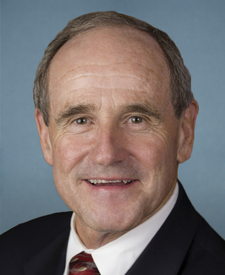
See how James E. Risch actually votes — against your values.
DeepSyte scores James E. Risch's record on the issues you care about — not party, not press releases. Take the 2-minute values quiz to see your personal alignment.
Sign in and take the values quiz to see how James E. Risch's votes line up with your views.
Prediction track record
How often we called James E. Risch's passage votes correctly, from their stated positions on each bill's tagged topics. Excludes “unclear” calls and abstentions.
4 predictions on record · none have been resolved by a passage vote yet. Check back as bills move.
Pending vote119-hjres-152
Proposing an amendment to the Constitution of the United States to ensure that only citizens are eligible to vote in Federal elections.
No paired statements and votes yet for James E. Risch
We haven't yet found statement/vote pairs on the same topic for James E. Risch. This usually means either the rep hasn't taken public positions on bills that have come to a passage vote, or those bills haven't been tagged yet. The checker runs as new press releases and votes come in.
Pro analysis
AI rep analysis — Pro
Get an AI-narrated read on James E. Risch's full voting record against your stated values — aligned themes, conflicts, notable votes, and what to watch for.
We haven't extracted campaign positions for James E. Risch yet. Once their campaign website or position pages are processed, this card will track what they said vs how they voted.
Crossing the aisle
No party-break passage votes recorded for James E. Risch. Either they've voted with Republicans on every substantive passage vote in the corpus, or their tenure overlaps few high-threshold party-line votes so far.
Risch, Cassidy Lead Bill to Protect American Workers, Block Harmful Biden Heat Rule
Position: Senators Risch and Cassidy oppose the Biden administration's proposed federal heat safety rule for workers, arguing that one-size-fits-all federal standards threaten small businesses and jobs, and that heat protection standards should be set by state and local authorities instead.
WASHINGTON – U.S. Senators Jim Risch (R-Idaho), Bill Cassidy (R-La.), and six Republican colleagues introduced the Heat Workforce Standards Act to protect workers from dangerous Biden-era heat standards that threaten jobs and create new safety risks.
“One-size-fits-all federal heating standards prevent small businesses and farmers from appropriately protecting the people they employ,” said Risch. “The Heat Workforce Standards Act will stop the implementation of a disastrous rule that ignores vastly different workplace and regional conditions, and returns the ability to set heat standards back to state and local leaders.”
“Protecting Louisiana workers is my top priority. The Democrats’ proposal puts workers at risk and threatens their livelihoods,” said Cassidy. “Any effort on worker safety should provide needed clarity and flexibility to ensure Louisianans can earn a paycheck in a safe working environment.”
Risch and Cassidy are joined by U.S. Senators Mike Crapo (R-Idaho), Tommy Tuberville (R-Ala.), Ted Budd (R-N.C.), Steve Daines (R-Mont.), Tim Sheehy (R-Mont.), John Cornyn (R-Texas).
Under current federal law, employers are required to take commonsense measures to protect their workers from heat.
In 2024, the Biden administration proposed a new rule requiring all employers, including small businesses, to comply with burdensome mandates on staffing, recordkeeping, and mandatory breaks tied to heat thresholds. These one-size-fits-all requirements would create additional safety risks on job sites that extend beyond heat-related injuries while making compliance nearly impossible for employers and workers. The rule would also raise costs on small businesses, forcing them to eliminate jobs.
This bill is supported by the Idaho Farm Bureau Federation, National Federation of Independent Businesses, National Restaurant Association, National Association of Manufacturers, International Franchise Association, Independent Electrical Contractors, National Marine Manufacturers Association, AICC, The Independent Packaging Association, Alliance for Chemical Distribution, American Bakers Association, American Building Materials Alliance, American Craft Spirits Association, American Lighting Association, American Pipeline Contractors Association, American Supply Association, American Short Line and Regional Railroad Association, Associated Equipment Distributors, Brick Industry Association, Distribution Contractors Association, Family Business Coalition, Foodservice Equipment Distributors Association, Gases and Welding Distributors Association, Heating, Air-conditioning, & Refrigeration Distributors International, Mason Contractors Association of America, NACS, National Electrical Contractors Association, National Energy & Fuels Institute, National Lumber & Building Material Dealers Association, National Ready Mixed Concrete Association, National RV Dealers Association, North American Association of Food Equipment Manufacturers, Petroleum Equipment Institute, Plastics Pipe Institute, Power & Communication Contractors Association, PRINTING United Alliance, Small Business & Entrepreneurship Council, Spray Polyurethane Foam Alliance, Steel Tank Institute/Steel Plate Fabricators Association, and Window and Door Manufacturers Association.
Risch, Secretary Wright Tout Idaho’s Future in Nuclear Energy, Express Support for ARC Act
Position: Senator Risch and Secretary Wright express support for the Advancing Reliable Capacity (ARC) Act, which aims to accelerate investment in and reduce financial risk for new commercial nuclear reactor projects. Both officials emphasize nuclear energy's role in U.S. energy production, economic competitiveness, and national security.
WASHINGTON – U.S. Senator Jim Risch (R-Idaho) discussed Idaho’s leadership in the future of nuclear energy, and his Advancing Reliable Capacity (ARC) Act with Energy Secretary Chris Wright.
Excerpts of the exchange below:
Risch: “One of the things I want to talk about a little bit today is the fact that you know that on, or about, the 4th of July, they're going to go critical with three micro reactors at the Idaho National Lab. [. . .] Can you give us a very short summary if you would of how this is going to change the world?”
Wright: “Fantastic Senator, and yes, as you know I've had a lifelong passion for nuclear energy. It has not had a great few decades. It's been stagnant, but we have a lot of things coming together right now. A lot of private capital, a lot of innovation, a President who signed four executive orders that said whatever is holding back nuclear power, look at it carefully, bring gold standard science and let's let innovation reign. Let's let small modular reactors get going again.”
“And in your great state, in the few weeks before July 4th, we will have multiple small modular reactors running their entire nuclear systems. [. . .] If we can build something small and modularly in a plant, we can drive down the cost of it. We can reduce the time it takes to build them. And we're going to dramatically grow American electricity [. . .] So, it's a huge deal. And of course, Idaho is a central state in this renaissance of nuclear energy, as it was in the first chapter of nuclear energy.”
Risch: “As time goes on, we're going to be an aggressive competitor in this marketplace. I really believe it. [. . .] I've been pressing the ARC Act quite aggressively. I appreciate you guys getting on board on that. Your thoughts on the ARC Act, briefly.”
Wright: “I think it's critical that we put together some pieces of legislation like the ARC Act that just enshrine this attitude and this necessary infrastructure we need to enable the growth of this new industry. It is a brand-new industry. It should have a very bright future, but we should not be complacent about it. And I look forward to talking to you more about the ARC Act and pushing that forward.”
Risch introduced the ARC Act in February 2026 to accelerate investment in and encourage completion of new commercial nuclear reactors by minimizing the risk of project cost overruns. The Idaho National Laboratory is on schedule to take three microreactors critical by July 4th of this year, in compliance with the administration’s Deploying Advanced Nuclear Reactor Technologies for National Security executive order.
Senator Risch is a long-time advocate for nuclear energy. He has spearheaded legislation to increase domestic energy production, enhance national security, and keep the United States at the forefront of nuclear advancement. He is the founder and co-chair of the Senate Advanced Nuclear Caucus, which amplifies the critical role nuclear energy plays in the U.S. and explores emerging nuclear technologies.
Idaho Congressional Delegation, State Treasurer announce $24 million in Secure Rural Schools payments for local counties
WASHINGTON – U.S. Senators Jim Risch and Mike Crapo, U.S. Representatives Mike Simpson and Russ Fulcher, and Idaho State Treasurer Julie Ellsworth announced that Idaho counties will receive $24 million in Secure Rural Schools (SRS) payments for Fiscal Year 2025.
SRS payments go to counties with large amounts of federal lands to support schools and maintain roads, bridges, and other infrastructure projects. Idaho is set to receive the third-highest total payment in the U.S.
“The federal government made a promise to rural communities that rely on SRS for schools, road maintenance, and other essential services,” said Risch. “Until we can bring historic timber revenue back to these areas, I will work with Congress to reauthorize this important program.”
“The federal government has a responsibility to counties home to federal lands in Idaho and across the country to help support essential public services like roads, emergency response and schools given these communities’ inability to collect property taxes,” said Crapo. “I continue working to secure a long-term, permanent solution so county governments can plan with certainty and no longer have to rely on year-to-year congressional approval.”
“Rural counties across Idaho depend on the Secure Rural Schools program,” said Simpson. “I'm pleased to see these funds allocated to help Idaho schools, roads, bridges, and other infrastructure projects. As a longtime supporter of the SRS program, I have been proud to advocate for critical funding alongside my Idaho colleagues, and we will continue to fight for a long-term solution.”
"Federal programs like SRS are vital to Idaho’s rural communities, where a high level of land is owned by the federal government. However, this funding has grown increasingly difficult to garner support for in the U.S. Congress, as states without vast federal landholdings often view this program as a subsidy," said Fulcher. "I’m pleased to see these funds released to our state and will continue to work towards a long-term solution that ensures Idahoans—not the federal government—are the sole determiners of Idaho’s future success and well-being."
“As these Secure Rural Schools funds are distributed to Idaho counties, they will help support the schools, roads and bridges that rural communities rely on,” said Ellsworth. “My office is proud to help ensure these dollars reach counties and further opportunities for our rural communities.”
First authorized by Congress in 2000, the SRS program helps counties containing tracts of federally-owned, tax-exempt forest land support essential local services and infrastructure. Funding for SRS comes through timber receipts and other revenue generating activities within U.S. national forests.
ICYMI: Risch Talks Nuclear, Public Lands, SAVE America Act on The Ranch Podcast
Position: Senator Risch expresses support for expanded nuclear energy development, including small modular reactors and micro reactors, as essential to meeting future energy demands. He also affirms commitment to preserving public lands and supports voter ID requirements to ensure only qualified U.S. citizens vote.
WASHINGTON – In a recent interview, U.S. Senator Jim Risch (R-Idaho) sat down with The Ranch Podcast to discuss nuclear energy, public lands, the SAVE America Act, and key issues of importance to Idahoans.
Click here to listen to Senator Risch’s interview on The Ranch Podcast
Excerpts from the podcast below, lightly edited for clarity:
On Nuclear Energy: “There has been a tremendous renaissance in nuclear energy in the last couple of years.”
“There have been a constant parade of people into my office who are people who have the means and want to get into the industry—whether it’s through their development of a Small Modular Reactor (SMR) or their development of a micro reactor.”
“The SMR and the micro are really going to change things. The micro is going to come online this year and the SMR is not going to be far behind it. It is going to dramatically change the way that energy is produced on this planet.”
“The kind of energy that we’re going to need over the next decade is staggering. It cannot be produced any other way than by nuclear energy.”
On Public Lands: “Out of all the issues I deal with, I’ve never seen one that generates the kind of interest that [public lands] does.”
“This is not a partisan issue. There are people on both sides of the aisle [. . .] in full support of the fact that we love our public lands. It’s part of our soul. It’s part of our history; it’s part of us. We are not going to sell off the public lands, period.”
On the SAVE America Act: “We Republicans are saying, look, if you’re going to vote, it’s fair that everybody knows that you are who you say you are and you are qualified to vote. Is that asking too much?”
“Our point of view is only qualified United States citizens should be allowed to vote.”
Risch, Crapo, Cornyn Introduce Bill to Allow Law Enforcement Officers to Purchase Retired Firearms
Position: The senators support legislation allowing active and retired federal law enforcement officers to purchase retired service firearms, citing fiscal responsibility and Second Amendment rights.
WASHINGTON – U.S. Senators Jim Risch (R-Idaho), Mike Crapo (R-Idaho), and John Cornyn (R-Texas) introduced the Federal Law Enforcement Officer Service Weapon Purchase Act, which would allow active and retired federal law enforcement officers in good standing to purchase retired service weapons and firearms.
“Destroying a perfectly good firearm when a federal agency no longer needs it is a waste of taxpayer dollars,” said Risch. “Allowing law enforcement to purchase these firearms is fiscally responsible and plain commonsense.”
“Millions of taxpayer dollars are spent each year destroying retired federal service firearms,” said Crapo. “This practice effectively means the government pays for the same firearm twice—first when it is purchased, and again when it is destroyed. Allowing federal officers in good standing to purchase their retired service weapons is a common-sense, cost saving measure.”
“There’s no reason the brave men and women in law enforcement who dedicate their lives to preserving public safety should not be able to purchase retired firearms,” said Cornyn. “This commonsense legislation would reduce unnecessary waste and save both taxpayers and federal agencies money by allowing officers to exercise their Second Amendment rights.”
Risch, Crapo, and Cornyn are joined by U.S. Senators Steve Daines (R-Mont.), Lindsey Graham (R-S.C.), James Lankford (R-Okla.), Cynthis Lummis (R-Wyo.), Roger Wicker (R-Miss.), Ted Budd (R-N.C.), Jim Justice (R-W.V.), Ted Cruz (R-Texas), and Pete Ricketts (R-Neb.). Congressman Russell Fry (S.C.-07) introduced companion legislation, which passed the U.S. House of Representatives last year.
This legislation is endorsed by the Association of State Criminal Investigative Agencies, Federal Law Enforcement Officers Association, Major Cities Chiefs Association, Major County Sheriffs of America, National Association of Police Organizations, National Narcotics Officers’ Associations’ Coalition, and National Fraternal Order of Police.
Current federal regulations require agencies to destroy a firearm once it is retired from use or is no longer needed, costing taxpayers millions of dollars each year.
The Federal Law Enforcement Officer Service Weapon Purchase Act would reduce this waste and honor the Second Amendment rights of our law enforcement by allowing eligible federal officers to buy retired firearms at fair-market or discounted rates. Recovering this value can in turn offset the cost of new equipment and technology, fund training programs, and support other public safety needs.
Source: GDELT 2.0 GKG, filtered to a curated list of national outlets. Inclusion is not endorsement; opinion pieces and reported news are mixed.
Recent stock activity
Periodic transaction reports filed under the STOCK Act — disclosed by the rep, sourced from public filings.
No disclosed trades on record.
Source: open-data mirrors of the Senate eFD and House Clerk financial-disclosure systems. Disclosure within 30 days of trade is required by law (45 for spouse/dependent trades).
Top PAC donors · 2026 cycle
Political action committees that gave the most to this rep's principal campaign committee this cycle. PAC giving is direct organizational support — industry, ideological, or leadership.
1.ONE TEAM SENATE MAJORITY3 contributions$29,415
2.2019 SENATORS CLASSIC COMMITTEELeadership2 contributionsMember-of-Congress leadership PAC — likely affiliated with a senator or senatorial group. Backs allied candidates and party priorities.AI$19,467
3.2025 SENATORS CLASSIC COMMITTEELeadership1 contributionMember-of-Congress leadership PAC — likely affiliated with a Senate Republican or Democratic leader or caucus, directs contributions to allied candidates.AI$10,953
4.VISA, INC. PAC2 contributions$10,000
5.ARKANSAS FOR LEADERSHIP PAC (ARKPAC)2 contributions$10,000
6.AMERICAN CHEMISTRY COUNCIL PACBusiness2 contributionsChemical industry trade association PAC — supports candidates backing regulatory policies favorable to chemical manufacturers and processors.AI$10,000
7.HALLIBURTON COMPANY PAC2 contributions$10,000
8.REINVENTING A NEW DIRECTION PAC2 contributions$10,000
9.21ST CENTURY MAJORITY FUND2 contributions$10,000
Source: OpenFEC (api.open.fec.gov) Schedule A receipts where contributor type is “committee.” Aggregated by contributing committee. Self-transfers from joint-fundraising / victory committees are excluded.
Top individual contributors · 2026 cycle
Itemized individual contributions over $200 to this rep's campaign committee, aggregated by donor employer. PAC giving is shown above; this section is people, not organizations.
1.SELF$198,420
2.BGR GROUP$15,000
3.ACCESS INDUSTRIES$14,000
4.ALLIANTGROUP$13,500
5.APOLLO GLOBAL MANAGEMENT$12,500
6.WILMERHALE$12,500
7.HUNTER ENGINEERING$12,000
8.THE INVUS GROUP LLC$10,500
9.RIVERBEND INDUSTRIES$10,500
10.LAGOS LAGOS, PLL$8,616
Source: OpenFEC Schedule A receipts where contributor type is “individual,” aggregated by the donor's self-reported employer. This is a geographic / industry correlation, not a corporate endorsement.