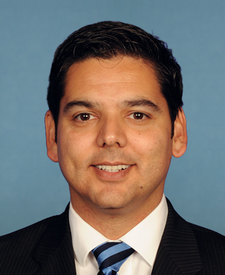
See how Raul Ruiz actually votes — against your values.
DeepSyte scores Raul Ruiz's record on the issues you care about — not party, not press releases. Take the 2-minute values quiz to see your personal alignment.
Sign in and take the values quiz to see how Raul Ruiz's votes line up with your views.
Prediction track record
How often we called Raul Ruiz's passage votes correctly, from their stated positions on each bill's tagged topics. Excludes “unclear” calls and abstentions.
To prohibit the disclosure of records by the Secretary of Housing and Urban Development of individuals for the purposes of immigration enforcement, and for other purposes.
We haven't yet found statement/vote pairs on the same topic for Raul Ruiz. This usually means either the rep hasn't taken public positions on bills that have come to a passage vote, or those bills haven't been tagged yet. The checker runs as new press releases and votes come in.
Pro analysis
AI rep analysis — Pro
Get an AI-narrated read on Raul Ruiz's full voting record against your stated values — aligned themes, conflicts, notable votes, and what to watch for.
We haven't extracted campaign positions for Raul Ruiz yet. Once their campaign website or position pages are processed, this card will track what they said vs how they voted.
Crossing the aisle
Passage votes where Raul Ruiz broke ranks with ≥75% of Democrats. Threshold catches substantively partisan splits; unanimous-ish or close votes are excluded.
Rep. Raul Ruiz Introduces Legislation to Strengthen U.S. Battery Manufacturing, Secure Critical Mineral Supply Chains
Position: Rep. Ruiz and Rep. Evans support legislation to expand domestic battery manufacturing, increase tax credits for U.S. battery producers, and reduce reliance on foreign sources for critical minerals used in clean energy and national security applications.
WASHINGTON, D.C. — Today, Congressman Raul Ruiz (D-CA) and Congressman Gabe Evans (R-CO) introduced the Critical Minerals and Manufacturing Support Act 2.0, bipartisan legislation to expand domestic battery manufacturing, reduce reliance on foreign adversaries, and strengthen America’s clean energy and advanced manufacturing supply chains.
The bill updates and strengthens the Advanced Manufacturing Production Credit to better support U.S.-based production across the full battery manufacturing supply chain—particularly electrode active materials critical to electric vehicles, grid storage, and national security technologies.
The legislation directly supports regions like California’s Lithium Valley, where domestic lithium extraction, processing, and battery-material manufacturing are advancing. By recognizing and incentivizing every step of the battery manufacturing supply chain—from critical mineral production to advanced materials manufacturing—the bill will position Lithium Valley as a fully integrated, end-to-end battery hub, driving job creation, lowering manufacturing costs, and strengthening domestic supply chains.
“America cannot lead the clean energy economy if we continue to outsource the materials that power it,” said Rep. Ruiz. “This bipartisan legislation makes a strategic investment in American manufacturing and American workers, especially in regions like Lithium Valley, where we have the opportunity to build a fully integrated regional battery supply chain. By strengthening domestic production, we can lower costs, create good-paying jobs, and ensure we are not dependent on prohibited foreign entities for the critical minerals that power our future.”
“America should never be dependent on foreign adversaries for the materials that power our vehicles, our grid, or our national security. I’m proud to co-lead the Critical Minerals and Manufacturing Support Act 2.0, bipartisan legislation that expands domestic battery manufacturing, strengthens supply chains, and ensures federal incentives support U.S.-made components. This bill creates certainty for manufacturers, supports American workers, and puts our nation's economic and energy security first.”
— Congressman Gabe Evans (CO-08)
Key Provisions of the Enhanced Critical Minerals and Manufacturing Support Act Include:
Boosts tax credits for U.S. battery makers by increasing support from 10% to 25%, making domestic production more affordable and competitive across the battery supply chain.
Protects U.S. national security by ensuring batteries cannot receive federal support if they rely on critical minerals sourced from prohibited foreign countries after 2026.
Updates outdated rules so federal incentives apply to modern and next-generation battery materials used in today’s electric vehicles and energy storage.
Includes silicon as a supported battery material, helping American manufacturers develop more advanced and longer-lasting batteries.
Gives manufacturers long-term certainty by extending tax credits through 2041, encouraging companies to invest, expand, and create good-paying jobs in the United States.
The legislation applies to battery components produced and sold after December 31, 2025.
This legislation is supported by EnergySource Minerals, the Battery Advocacy for Technology Transformation (BATT) Coalition, and Forge Nano, reflecting broad industry backing for domestic battery manufacturing and workforce development.
“CMMSA 2.0 strengthens U.S. energy security by supporting domestic production of critical battery materials essential to American manufacturing and infrastructure. By reinforcing incentives for U.S.-based supply chains and trusted sourcing, the bill helps reduce reliance on foreign producers. EnergySource Minerals supports this legislation because long-term energy leadership depends on producing essential materials responsibly here at home.”
— Carmen Rene, Chief Financial Officer, EnergySource Minerals
“It is essential to our national security to enable a domestic supply chain for battery materials, something Forge Nano has made a priority for many years. Forge Nano is excited to work with Rep. Evans on helping incentivize this critical industry and protect it from adversarial nations.”
— James Trevey, Chief Technology Officer, Forge Nano
Congressman Raul Ruiz Introduces the Humanitarian Standards for Individuals in ICE and CBP Custody Act
Position: Rep. Ruiz advocates for legislation establishing mandatory health screenings, medical care standards, and humane conditions for individuals detained by ICE and CBP, citing preventable deaths and inhumane conditions in immigration facilities.
Washington, D.C. — Today, Congressman Raul Ruiz, M.D. (CA-25) introduced the Humanitarian Standards for Individuals in ICE and CBP Custody Act, legislation to require U.S. Immigration and Customs Enforcement (ICE) and U.S. Customs and Border Protection (CBP). The legislation ensures health screenings and identifies and treats emergencies for individuals held in federal custody.
Last year marked the deadliest period in more than 20 years, with over 56 people dying in ICE and CBP custody combined. These deaths underscore the urgent need for clear, enforceable standards to protect human life when individuals are in the custody of ICE and CBP.
These preventable tragedies have occurred amid record levels of detention and mounting concerns about delayed medical care, overcrowding, and inhumane conditions within immigration facilities.
The bill establishes medically sound, enforceable requirements to protect the health, safety, and dignity of individuals detained by ICE and CBP, including children, pregnant women, older adults, and people with disabilities or acute medical needs.
“There is an alarming rise in deaths of people in ICE and CBP custody and reports of inhumane conditions inside detention centers. The violence and brutality against non-violent criminal immigrants is wrong. I introduced the Humanitarian Standards for Individuals in ICE and CBP Custody Act to prevent deaths and protect human dignity,” said Rep. Raul Ruiz.
The Humanitarian Standards for Individuals in ICE and CBP Custody Act requires:
Mandatory initial health screenings
Conducted by licensed medical professionals within 12 hours of arrival
Within 6 hours for high-risk individuals (children, pregnant people, elderly, acute medical conditions)
Screening for violent and sexual trauma to ensure safety inside facilities
Continuity of prescribed medications
Guaranteed access to basic necessities
Drinking water
Age-appropriate food to meet daily needs
Toilets, hand-washing stations, showers
Diapers and essential hygiene products
Humane conditions for living
Sleep accommodations and blankets
Family unity protections
Disability accommodations
Access to outdoor time
Safeguards for vulnerable populations
Access to trauma-informed care and support services
For individuals who have experienced violence, rape, sexual abuse, or severe trauma
Interpreter services to ensure informed medical care
Mandatory training for ICE and CBP personnel
Humanitarian standards
Identifying and responding to life-threatening medical emergencies
Trauma-informed care
Child welfare protections
Oversight and accountability measures
Unannounced inspections by DHS Inspector General
GAO report to Congress
Public reporting of aggregate data on complaints of sexual abuse
Clear implementation timelines
DHS must submit an implementation plan within 60 days
Full implementation within six months of enactment
The legislation has been supported by 69 Members of Congress: Reps. Wilson, Moulton, Elfreth, Matsui, Norton, Barragan, Simon, Sylvia Garcia, Watson Coleman, Garamendi, Ansari, Morrison, Craig, Thanedar, Tonko, CHC Chair Espaillat, DWS, Schrier, Tokuda, Krishnamoorthi, Hank Johnson, Grijalva, Deborah Ross, Correa, Jacobs, Bell, Neguse, Salinas, Min, Liccardo, Kamlager-Dove, Ro Khanna, Quigley, Soto, Bobby Scott, Mullin, Davis, Goodlander, Goldman, Robin Kelly, Kaptur, Hoyle, Garcia, Cleaver, Morelle, Walkinshaw, Mfume, McClain Delaney, Bonamici, Pettersen, Brown, Castor, Vargas, Levin, Gomez, Nydia Velázquez, McBride, Steve Cohen, Stephen Lynch, Nadler, Lieu, Tim Kennedy, Rick Larsen, Brownley, Titus, Veasey, DeGette, Cherfilus-McCormick, Ritchie Torres, Sewell, Pocan, Lofgren, Subramanyam, and Frankel.
The bill has been endorsed by: LULAC; United Farm Workers (UFW); College of the Desert; Michael VanRooyen, MD, MPH, Director: Harvard Humanitarian Initiative and MGB Chair of Emergency Medicine; the American Psychological Association Services, Inc.; and, Alianza Nacional De Campesinas, Inc.
“It is crucial for the wellbeing of the people in detention to receive attentive and continuous medical treatment and be provided with living conditions that are not detrimental to their health,” said Mily Trevino-Sauceda, Executive Director of Alianza Nacional de Campesinas. “There is no justifiable reasoning for such punitive and inhumane treatment of detained persons, regardless of a person’s status. Congress can not accept further suffering of both adults and children and needs to support changes to current ICE and CBP practices, which currently deprives thousands of basic human dignity.” – Mily Trevino-Sauceda, Executive Director
“It is an important safeguard for the health of detainees and promotes basic standards for the health and well being of those in ICE and CBP custody. As an emergency physician and humanitarian leader, I endorse this approach to providing basic screening and protection to detainees. If I can be of further assistance in supporting the safe and humane treatment of those who are in ICE and CBP custody, I would be happy to speak to anyone.” - Michael VanRooyen, MD, MPH, Director: Harvard Humanitarian Initiative and MGB Chair of Emergency Medicine
Court Sides With Ruiz and Colleagues, Reinstates Real-Time Oversight of Immigration Detention
Washington, D.C. –The decision was made in the case brought forth by 12 Members of Congress in Neguse et al. v. U.S. ICE et al.
Just now, a federal court temporarily stopped the Trump-Vance administration’s policy blocking Members of Congress from unannounced oversight visits to federal immigration detention facilities. The decision restores Congress’s ability to conduct real-time oversight of how the U.S. Department of Homeland Security (DHS) and U.S. Immigration and Customs Enforcement (ICE) detain individuals — including U.S. citizens — and spend billions in taxpayer dollars, while the case continues.
The lawsuit, Neguse et al. v. U.S. Immigration and Customs Enforcement et al., was brought by a dozen members of the U.S. House of Representatives after the administration imposed a seven-day waiting period and barred access to certain field offices, in violation of a longstanding federal law that guarantees congressional oversight.
The plaintiffs include Assistant Democratic Leader Joe Neguse; Congressional Hispanic Caucus Chair Rep. Adriano Espaillat; Homeland Security Committee Ranking Member Rep. Bennie G. Thompson; Judiciary Committee Ranking Member Rep. Jamie Raskin; House Oversight and Government Reform Committee Ranking Member Rep. Robert Garcia; House Homeland Security Committee Subcommittee on Border Security and Enforcement Ranking Member Rep. J. Luis Correa; Rep. Jason Crow; Rep. Veronica Escobar; Rep. Dan Goldman; Rep. Jimmy Gomez; Rep. Raul Ruiz; and Rep. Norma Torres.
In a joint statement, the plaintiffs said: “Today’s decision is a critical victory toward restoring our ability to conduct essential congressional oversight on behalf of the American people. It reinforces the rule of law and reminds the administration that oversight is not optional. Real-time, on-the-ground visits to immigration detention facilities help prevent abuses and ensure transparency. Oversight is a core responsibility of Members of Congress—and a constitutional duty we do not take lightly. We’ll continue standing up for the rule of law.”
The Members of Congress are represented in this suit by Democracy Forward Foundation and American Oversight.
“This ruling is a victory for the American people and their elected representatives,” said Skye Perryman, President and CEO of Democracy Forward. “This decision makes clear that no president can hide the truth about how people are treated in federal immigration custody. We’re honored to represent these individual Members of Congress in defending accountability, transparency, the rule of law, and human dignity.”
“Today’s ruling is a clear victory for the rule of law and a clear affirmation that no administration is above it,” said Chioma Chukwu, Executive Director of American Oversight. “Members of Congress have an unquestioned right to conduct real-time oversight of immigration detention facilities, and the American people have a right to know what is happening in their name. By blocking those visits, the administration wasn’t simply breaking the law, it was trying to conceal the reality inside these facilities from the public: people in overcrowded, inhumane conditions without adequate beds, showers, or medical care. This order restores a critical check on executive power and sends a clear message that abuse cannot be hidden.”
With this decision, the court reaffirms Members of Congress’s right to access federal immigration detention facilities without prior notice — a safeguard meant to prevent abuse, protect human rights, and ensure that taxpayer funds are not used to support unlawful or inhumane practices. The ruling sends a strong message that oversight is essential to democracy and that no administration is above the law.
How did we get here?
Federal law (Sec. 527, FY2024 DHS Appropriations Act) allows Members of Congress to visit U.S. Immigration and Customs Enforcement (ICE) sites where noncitizens are detained without prior notice. But increasingly, these representatives have been stopped at the door.
In response to questions about this, ICE officials announced a new policy requiring a seven-day waiting period and preventing entry to ICE field offices.
On July 30, a dozen individual Members of the U.S. House of Representatives sued the Trump-Vance administration, challenging the policy as an unlawful obstruction of congressional oversight.
Subsequently, the plaintiffs sought a court order requiring DHS and its Secretary Kristi Noem, as well as ICE and its Acting Director Todd Lyons to comply with the federal law granting Members of Congress the right to visit immigration detention facilities without prior notice during the course of their lawsuit.
Congressman Raul Ruiz, Congresswoman Nanette Barragán, and Congressman Troy Carter Call on EPA to Uphold Strong Air Quality Standards
Position: The representatives urge the EPA to maintain current fine particulate matter (PM2.5) air quality standards and oppose any efforts to weaken them, citing public health and environmental justice concerns.
Washington, D.C. – Today, Congressman Raul Ruiz, Congresswoman Nanette Barragán, and Congressman Troy Carter sent a letter to EPA Administrator Lee Zeldin urging the Agency to keep the current fine particulate matter (PM2.5) air quality standards in place. The letter calls on the EPA to abandon any efforts, judicial or administrative, to roll back the PM2.5 standards and to safeguard the health of millions of Americans, particularly in overburdened and environmental justice communities.
PM2.5, also known as soot, causes serious health problems and tens of thousands of premature deaths each year, especially harming children, seniors, and vulnerable communities.
“Maintaining strong, science-based air quality protections is one of the most effective tools we have to safeguard the public’s health,” said Congressman Raul Ruiz. “Safe air is not a partisan issue, it is a basic right. We urge EPA to uphold these standards so all communities, including our most vulnerable, can breathe clean air.”
“Clean and breathable air is essential to Americans’ lives and health,” said Congresswoman Barragán. “Strong National Ambient Air Quality Standards keep the amount of pollutants in the air down so that Americans can continue to live in healthy environments. But Trump and Zeldin want to weaken these standards — and put the lungs of Americans across the country at risk and further harm the communities that are already experiencing the consequences of exposure to polluted air. To preserve our air quality, and the health and lives of our communities, we must stop Trump and Zeldin from their selfish plan to lower air quality standards for their corporate friends.”
"Clean air is a matter of life and death, especially for communities in my district that have been overburdened by pollution for far too long. Rolling back the PM2.5 standards would be a direct attack on public health and environmental justice. The science is clear: stronger soot protections save lives, reduce hospitalizations, and protect our children and seniors. I urge the EPA to do its job, follow the science, and uphold these vital standards so every American—regardless of ZIP code—can breathe clean, healthy air," said Congressman Troy A. Carter, Sr. (LA-02).
The letter is supported by Earthjustice Action, EcoMadres, Moms Clean Air Force, Climate Action Campaign, WE ACT for Environmental Justice; League of Conservation Voters, and, GreenLatinos:
“When the Trump Administration’s EPA abandoned its defense of federal protections against soot pollution, it sent a clear message that it values corporate interests far above the health and safety of hardworking families and vulnerable communities,” said Earthjustice Action Senior Legislative Representative Liz Ruben. “In service of Trump’s deregulatory fever dream, his EPA has once again disregarded scientific evidence, tossed aside community concerns, and turned its back on the possibility of a brighter, healthier future for those who have long faced the disparate impacts of pollution. We thank Representatives Ruiz, Barragan, and Carter for their leadership on this issue and join them in demanding EPA Administrator Zeldin uphold the existing science- and health-based soot pollution standards.”
“Soot is a killer. It’s outrageous that Lee Zeldin’s EPA has moved to abandon protecting people from this incredibly dangerous pollutant. Soot—a.k.a. particle pollution—is a major contributor to chronic diseases like asthma, heart disease, and cancers. It also raises the risk of premature births and low birth weight, putting babies in danger of long-term health harms. This is exactly the opposite of making America healthy, and families and communities around the country will pay the price.” — Dominique Browning, Director and Co-founder, Moms Clean Air Force
“Soot is making our communities sick, with Latino families often bearing the heaviest burden. It’s unacceptable for EPA to back away from protections against this deadly pollutant. Particle pollution triggers asthma, heart disease, cancer, and even premature births. As a mom, I refuse to accept dirty air as our children’s future. EcoMadres will keep fighting to protect our kids and demand the clean air every family deserves.” — Isabel Gonzalez Whitaker, Director of EcoMadres
"We know that communities of color and low-wealth neighborhoods already face higher exposure to tailpipe pollution such as PM2.5, which drives higher rates of asthma, heart disease, and other chronic illnesses for Latinos, who also have greater barriers to access to healthcare. We thank Congressmen Ruiz and Congresswoman Barragan for standing up for our communities by urging the EPA to maintain the current fine particulate matter (PM2.5) National Ambient Air Quality Standards (NAAQS). — Juan Roberto Madrid, GreenLatinos Sustainable Communities Program Manager
“Thank you, Representatives Ruiz, Barragán, Carter and all the letter signers for urging the EPA not to reconsider its 2024 fine particulate matter (PM2.5) National Ambient Air Quality Standards (NAAQS). Particulate matter causes and exacerbates respiratory conditions and cardiovascular disease, and can lead to premature death, especially for vulnerable communities like children, the elderly and communities overburdened by pollution. We join these members of Congress in calling on the Trump EPA and Administrator Zeldin to stop sacrificing our health and our lives in favor of polluter profits” — Lizzy Duncan, Government Affairs Advocate, Healthy Communities, League of Conservation Voters
“The EPA continues to double down on a deregulatory agenda that harms everyone, but especially environmental justice communities. Soot pollution places a heavy burden on our communities. African Americans are nearly three times more likely to be hospitalized or die from asthma than their white counterparts while about 19 million low-income and 80 million people of color live in places with failing grades for soot and smog pollution. Yet, the EPA’s own data shows that the current standard saves lives, prevents asthma attacks, reduces ER visits, and cuts costs. After 55 years, the Agency must live up to its mandate under the Clean Air Act and protect our health, our communities, and our right to clean air. Until it does, we will keep fighting for the dignity and justice every community deserves.” — Anastasia Gordon, Director of Federal Policy at WE ACT for Environmental Justice
“The Trump EPA’s decision to abandon protections against soot pollution – one of the deadliest air contaminants – is utterly outrageous, gravely dangerous, and scientifically indefensible," said Margie Alt, director of the Climate Action Campaign. "We're grateful for the leaders in Congress who are standing against this attack and we echo their call for EPA to get back to the important work of protecting public health."
Background on the PM2.5 standard:
The 2024 PM2.5 standard, strengthened from 12 µg/m³ to 9 µg/m³, is backed by extensive scientific review and is projected to prevent thousands of premature deaths, reduce hospitalizations, and provide $46 billion in annual economic benefits by 2032. Rolling back these standards would endanger public health, reverse decades of progress, and disproportionately affect vulnerable communities, including those already struggling with high rates of asthma and other respiratory conditions.
Lawmakers Introduce Bipartisan Bill to Protect Seniors’ Access to Care by Strengthening Medicare
Position: The lawmakers support legislation to stabilize Medicare physician payment rates by aligning them with inflation to prevent doctor shortages and maintain seniors' access to care.
Washington, D.C. – Today, Representatives Raul Ruiz (CA-25), Gus Bilirakis (FL-12), Jimmy Panetta (CA-19), and Ami Bera (CA-06) introduced bipartisan legislation, the Strengthening Medicare for Patients and Providers Act, to protect seniors' access to care by ensuring Medicare keeps pace with rising health care costs. The bill helps prevent doctor shortages in Medicare by making sure payments better reflect the real cost of delivering care, especially in rural, underserved, and low-income communities.
Millions of seniors rely on Medicare to see their doctors, but year-to-year payment fluctuations have made it harder for physician practices to stay financially stable—forcing some to limit Medicare patients or close their doors entirely. By aligning Medicare payments more closely with inflation, this legislation aims to keep providers in the program so seniors can continue getting timely, high-quality care.
“Expanding access to health care by strengthening Medicare for Seniors is a priority of mine. It’s becoming more difficult for Seniors to find physicians through Medicare,” said Congressman Dr. Raul Ruiz (CA-25). “That’s why I introduced the bipartisan Strengthening Medicare for Patients and Providers Act, which expands access to Medicare beneficiaries by helping ensure their doctors can keep their doors open. Everyone, including people in rural and underserved communities, deserve stable, reliable access to the care they depend on.”
For years, health experts and oversight bodies—including the Medicare Trustees and MedPAC—have warned that failing to update Medicare payments to reflect inflation could lead to reduced access to care for beneficiaries. Costs to run medical practices have risen nearly 50% over the past two decades, while Medicare payments have fallen when adjusted for inflation, putting pressure on physicians who continue to serve Medicare patients.
This legislation answers those warnings by stabilizing access for current and future Medicare beneficiaries.
“I'm deeply concerned that our outdated physician payment system is contributing to reduced access and delays for seniors seeking the care they deserve. This important legislation will help create greater stability for older Americans by strengthening access to services and supporting improved health outcomes. The need for this reform is especially acute in the rural communities I represent, where longstanding provider shortages make consistent, reliable Medicare payments all the more essential,” said Congressman Bilirakis.
“In California's 19th Congressional District, many constituents are finding that doctors' offices are overwhelmed, and many seniors are stuck waiting months to see a physician," said Rep. Panetta. "By tying reimbursement rates to inflation, the Strengthening Medicare for Patients and Providers Act would help ensure that more doctors are available to treat patients and improve outcomes. Congress must be responsible to make Medicare work so patients can have affordable and accessible healthcare.”
###
Issues:Health Care
Congressman Ruiz Reintroduces CARE Act to Close Dangerous Gaps in Child Labor Laws in the Agriculture Industry
Position: Congressman Ruiz advocates for the CARE Act, which would extend child labor protections currently applied in non-agricultural industries to children working in agriculture, including raising minimum work ages, restricting hazardous tasks, and strengthening enforcement and data collection.
Washington, D.C. – Today, on International Children’s Day (November 20), Congressman Raul Ruiz (CA-25) reintroduced the Children’s Act for Responsible Employment (CARE Act), legislation that extends the same child-labor protections that apply in every other industry to children working in agriculture.
Current federal law allows children as young as 12 to work long hours in the fields under hazardous conditions — standards far weaker than those for non-agricultural jobs. The CARE Act closes these loopholes by aligning age limits and hazardous-task restrictions, strengthening enforcement, and improving data collection on injuries and fatalities.
“Children particularly those in farmworker communities deserve the same basic protections as every other child. Right now, a child dies in an agriculture-related incident about every three days, and that is unacceptable,” said Congressman Dr. Raul Ruiz (CA-25). “The CARE Act will finally bring fairness, safety, and accountability to protect the health and futures of vulnerable youth.”
“We love the Children’s Act for Responsible Employment and Farm Safety because it levels the playing field for farmworker children and closes exemptions to child labor law that never should have existed,” said Director of Child Labor Advocacy Reid Maki of the Child Labor Coalition and the National Consumers League. “Farmworker children face many dangers working in agriculture, and it makes no sense to allow them to do it at younger ages than teens working in any other sector. It also doesn’t make sense to allow them to do hazardous work at 16 when all other teens must be 18 to perform dangerous work. More than 200 groups agree that these exemptions need to be closed now.”
“The US will not fix the country’s child labor problem until Congress provides children working in agriculture with the same protections as all other working children. Congress should pass this bill without delay to protect children from dangerous work that harms their health and development,” said Jo Becker, children’s rights advocacy director, Human Rights Watch.
Key Provisions of the Bill
Aligns the age, work-hour, and hazardous-task restrictions for youth in agriculture with those in non‐agricultural occupations.
Strengthens pesticide and chemical exposure limits for minors working in farm settings.
Increases civil and criminal penalties for employers who violate child labor protections in agricultural contexts.
Boosts funding for the monitoring, reporting and enforcement of child labor standards in the agriculture industry.
Establishes a federal research and data collection initiative aimed at accurately tracking youth injuries and fatalities in farm labor.
###
Rep. Ruiz and Sen. Schiff Introduce Bill to Strengthen Communications Access on Tribal Lands
Position: The release introduces legislation to expand broadband and telecommunications access to Tribal communities by updating the Communications Act to explicitly include Indian Country and strengthening the Universal Service Fund to address persistent connectivity gaps in rural and high-cost Tribal areas.
Washington, D.C. – Today, Representative Dr. Raul Ruiz (D-Calif.-25), and U.S. Senator Adam Schiff (D-Calif.) introduced the Tribal Internet Expansion Act of 2025, legislation to help expand telecommunications and information services to Tribal communities.
“Access to reliable, high-speed internet is no longer a luxury, it’s a necessity,” said Congressman Ruiz. “For too long, many Tribal communities have been left without the dependable, affordable broadband needed for students to learn, patients to access care, and families to stay safe and economically secure. The Tribal Internet Expansion Act will strengthen the Universal Service Fund, so it better serves Indian Country and helps ensure Tribal Nations have the digital infrastructure they need to fully participate and thrive in today’s online world.”
“This legislation strengthens the foundation for expanding broadband and telecommunications access to Tribal Lands, supporting the needs of communities to utilize technologies so vital to economic growth and success,” said Senator Schiff. “I’m proud to join Representative Dr. Raul Ruiz in this effort to bridge the digital divide and ensure that this necessary resource is reliable, accessible, and affordable in every region.”
The Tribal Internet Expansion Act of 2025 will update the Communications Act of 1934 to explicitly include Indian Country and expand essential broadband access to rural, insular, and high-cost Tribal and Indigenous communities. With roughly one in four people on Tribal lands still lacking access to reliable, high-speed internet, the bill helps ensure that federal broadband and telecommunications programs better address persistent connectivity gaps in these historically underserved areas.
The legislation has already received widespread support from Tribal leaders and organizations:
“On behalf of the Morongo Band of Mission Indians, I want to thank Congressman Ruiz and Senator Schiff for introducing the Tribal Internet Expansion Act to help improve access to broadband internet services across Indian Country in an increasingly online world. This is a critical part of closing the digital divide in Indian Country – which is a barrier to education, economic opportunity, and healthcare services – that has persisted despite significant investment by Congress in recent years,” said Charles Martin, Chairman of the Morongo Band of Mission Indians.
“The National Congress of American Indians supports Rep. Ruiz and Senator Schiff's bill to ensure the Universal Service Fund (USF) adequately serves Indian Country. For over two decades NCAI has been very active at the regulatory level to ensure that the USF subsidy mechanisms evolve to address the enduring lack of communications technologies on Tribal lands, and to ensure that those mechanisms remain intact as Federal Communications Commission (FCC) leadership routinely changes hands. Last year, during the Supreme Court's review of FCC v. Consumers' Research, NCAI joined efforts to inform and brief the Court on the constitutionality of the USF and its importance to Tribal Nations. The term 'digital divide' was coined in 1995 to describe the entire nation, and now in 2025 the 'Tribal digital divide' has still not been permanently solved. Importantly, during the COVID-19 pandemic targeted investments in USF programs helped Tribal households gain vital access to reliable, affordable broadband services enabling students to learn, families to access telehealth, and communities to promote public safety and economic development opportunities. As many of these emergency investments have expired, this legislation is a timely and necessary step towards closing the digital divide still faced by many Tribal Nations. As more and better solutions are needed, we look forward to working with Rep. Ruiz and Senator Schiff, and other members of Congress to improve the USF's commitment to Tribes,” said Larry Wright Jr., Executive Director of the National Congress of American Indians.
“Access to broadband is essential for quality health care in our communities. Expanding this access will empower more Native patients to benefit from services such as telemedicine, which will ultimately improve health outcomes. We are grateful to Congressman Ruiz and Senator Schiff for his leadership in recognizing that digital infrastructure is a matter of health justice for all of Indian Country,” said Francys Crevier, CEO of the National Council of Urban Indian Health.
Full text of the legislation is available here.
###
Congressman Raul Ruiz and Congresswoman Lori Trahan Urge the Immediate Release of LIHEAP Funding Amid Government Shutdowns
Position: Congressman Ruiz and Congresswoman Trahan urge the immediate release of Low-Income Home Energy Assistance Program (LIHEAP) funding to vulnerable households facing rising utility costs and extreme weather, emphasizing that administrative delays and proposed elimination of the program threaten millions of seniors, children, and low-income families.
Washington, D.C. – Today, Congressman Raul Ruiz, M.D. (CA-25) and Congresswoman Lori Trahan (MA-03) led a letter urging Health and Human Services (HHS) Secretary Kennedy and Office of Budget and Management (OBM) Director Vought to immediately release the highest possible amount of Low-Income Home Energy Assistance Program (LIHEAP) funding available under the November 2025 Continuing Resolution. The members emphasized the urgent need to restore energy assistance to millions of vulnerable households facing rising utility costs and extreme weather conditions nationwide.
“LIHEAP is more than just a utility assistance program, it is a lifeline for seniors, children, and low-income families,” said Congressman Ruiz. “In my district, families face some of the highest temperatures in the country. There is an urgent need to protect people from extreme cold or heat. Without immediate LIHEAP funds, many must choose between safety and basic needs. That’s unacceptable.”
“Families across the country are already stretched thin by rising costs, and now millions are wondering how they’ll keep the heat on as temperatures continue to drop,” said Congresswoman Trahan. “No one should have to choose between staying warm and putting food on the table. The administration must act with urgency to get LIHEAP funding out the door, so families aren’t left out in the cold this winter.”
The letter is currently cosigned by 101 Democratic Members of Congress. The full letter can be found here.
LIHEAP is a federal program that helps eligible households afford heating in the winter and cooling during dangerously high summer temperatures. In previous years, nearly seven million families, seniors, and at-risk households have benefited from the program. However, recent administrative actions have placed the program—and millions of Americans who depend on it at risk.
Earlier this year, the Administration’s FY26 Budget Request proposed eliminating LIHEAP entirely, while reports in April indicated that the Department of Health and Human Services (HHS) had dismissed all LIHEAP staff. These decisions have created confusion and delay, leaving it unclear who will approve state energy assistance plans or oversee disbursement of funds now that the Continuing Resolution has been enacted.
The lawmakers noted that LIHEAP is already an underfunded and oversubscribed program—reaching only about 17 percent of eligible households. Without swift action to release funds, millions of seniors and families could be left without critical energy assistance until early 2026.
Key Impacts of Delayed LIHEAP Funding:
Families face dangerous exposure to freezing winter temperatures and life-threatening summer heat.
Rising electricity and heating costs are straining household budgets, particularly in rural and low-income communities.
Administrative delays at HHS threaten to postpone LIHEAP disbursements by months.
“Providing reliable LIHEAP funding is not a political choice, it is a moral and public health imperative,” Ruiz concluded. “We must act now to protect the most vulnerable families before temperatures drop, and lives are put at risk.”
###
Issues:Energy and Environment
Source: GDELT 2.0 GKG, filtered to a curated list of national outlets. Inclusion is not endorsement; opinion pieces and reported news are mixed.
Recent stock activity
Periodic transaction reports filed under the STOCK Act — disclosed by the rep, sourced from public filings.
No disclosed trades on record.
Source: open-data mirrors of the Senate eFD and House Clerk financial-disclosure systems. Disclosure within 30 days of trade is required by law (45 for spouse/dependent trades).
Top PAC donors · 2026 cycle
Political action committees that gave the most to this rep's principal campaign committee this cycle. PAC giving is direct organizational support — industry, ideological, or leadership.
1.UNITED FOOD & COMMERCIAL WORKERS INTERNATIONAL UNION ACTIVE BALLOT CLUB5 contributions$25,000
4.PAC TO THE FUTURELeadership3 contributionsMember-of-Congress leadership PAC — specific affiliations and policy positions not inferable from the name.AI · low$15,000
5.NATIONAL ASSOCIATION OF REALTORS POLITICAL ACTION COMMITTEEReal Estate3 contributionsTrade association PAC for U.S. real estate agents and brokers — backs candidates supporting property-rights protections, mortgage-lending access, and tax incentives for homeownership.AI$15,000
6.HMS SCRAP PAC2 contributions$10,000
7.JOBS, EDUCATION & FAMILIES FIRST (JEFF PAC)2 contributions$10,000
8.NATIONAL ASSOCIATION OF EMS PHYSICIANS PAC2 contributions$10,000
9.MACHINISTS NON PARTISAN POLITICAL LEAGUE OF THE INTERNATIONAL ASSOCIATION OF MACHINISTS AND AEROSPACE WORKERSLabor2 contributionsTrade-union PAC for the International Association of Machinists and Aerospace Workers — backs candidates supporting union organizing, prevailing wages, and worker protections in manufacturing and aerospace.AI$10,000
10.LEADERSHIP OPPORTUNITY INNOVATION SERVICE PAC - LOIS PAC2 contributions$10,000
Source: OpenFEC (api.open.fec.gov) Schedule A receipts where contributor type is “committee.” Aggregated by contributing committee. Self-transfers from joint-fundraising / victory committees are excluded.
Top individual contributors · 2026 cycle
Itemized individual contributions over $200 to this rep's campaign committee, aggregated by donor employer. PAC giving is shown above; this section is people, not organizations.
1.PZ INTERNATIONAL CONSULTING$14,000
2.ENGLISH LLOYD & ARMENTA$14,000
3.CHANDI GROUP USA, INC.$14,000
4.APPLIED BUSINESS CONCEPTS$14,000
5.US ACUTE CARE SOLUTIONS$10,600
6.ANDREESSEN HOROWITZ$10,000
7.ORANGE COUNTY UROLOGY ASSOCIATES$9,000
8.EISENHOWER HEALTH$8,500
9.UROLOGY ASSOCIATES OF THE CENTRAL COAS$7,500
10.CALDWELL LLP$7,000
Source: OpenFEC Schedule A receipts where contributor type is “individual,” aggregated by the donor's self-reported employer. This is a geographic / industry correlation, not a corporate endorsement.