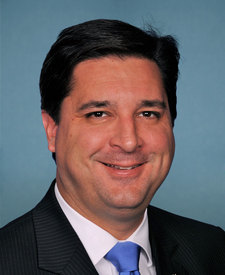
See how David Rouzer's votes line up with your values.
DeepSyte scores David Rouzer's record on the issues you care about — not party, not press releases. Take the 2-minute values quiz to see your personal alignment.
Sign in and take the values quiz to see how David Rouzer's votes line up with your views.
Prediction track record
How often we called David Rouzer's passage votes correctly, from their stated positions on each bill's tagged topics. Excludes “unclear” calls and abstentions.
1 prediction on record · none have been resolved by a passage vote yet. Check back as bills move.
No paired statements and votes yet for David Rouzer
We haven't yet found statement/vote pairs on the same topic for David Rouzer. This usually means either the rep hasn't taken public positions on bills that have come to a passage vote, or those bills haven't been tagged yet. The checker runs as new press releases and votes come in.
Pro analysis
AI rep analysis — Pro
Get an AI-narrated read on David Rouzer's full voting record against your stated values — aligned themes, conflicts, notable votes, and what to watch for.
We haven't extracted campaign positions for David Rouzer yet. Once their campaign website or position pages are processed, this card will track what they said vs how they voted.
Crossing the aisle
Passage votes where David Rouzer broke ranks with ≥75% of Republicans. Threshold catches substantively partisan splits; unanimous-ish or close votes are excluded.
1
Cross-aisle vote
118-hr-4143·May 8, 2024·82% of R voted YES
National Construction Safety Team Enhancement Act of 2024
Rouzer, Murphy Champion Fifth Annual North Carolina WATERS Summit to Advance Flood Solutions for North Carolina Communities
Position: The release describes Congressman Rouzer's support for flood mitigation, water infrastructure, and disaster-response legislation, including WRDA 2026 and the FEMA Act of 2025. It frames flood resilience as a priority for North Carolina communities.
GREENVILLE, NC - Today, North Carolina Congressmen David Rouzer (R-NC-07) and Greg Murphy, M.D. (R-NC-03) hosted the fifth annual Water Adaptation to Ensure Regional Success (WATERS) Summit in Greenville, North Carolina. This full day nonpartisan event brought together more than 175 local, state, and federal leaders, academic experts, and flood mitigation professionals to discuss solutions to waterway and flood mitigation challenges in North Carolina.
Since the last WATERS Summit, Congressman Rouzer has continued advancing legislation to address water-related challenges, streamline disaster assistance, and improve permitting.
“As communities grow in North Carolina, it's more important than ever to build them strong and resilient. That’s why I'm proud to help bring together industry leaders and public officials at the fifth annual WATERS Summit to identify ways to better protect North Carolinians from flooding," said Congressman Rouzer. "By leveraging modern technology and advancing legislative solutions in Congress, we can better prepare our state for future flood risks. I appreciate the partnership with Congressman Greg Murphy and everyone else who makes this a productive and collaborative summit.”
"It was a pleasure to host another successful WATERS Summit, convening so many incredible leaders from across North Carolina and our country to collaborate on flood mitigation," said Congressman Greg Murphy, M.D. "Waterway challenges and storm resiliency are not partisan issues - they are human issues. No recent example is greater than Hurricane Helene, which devastated our mountain neighbors, who we continue to support as they rebuild their lives. North Carolina faces unique challenges as a large state, and improving our infrastructure to withstand flooding is critical to our continued success and the preservation of our way of life."
As a senior member of the House Committee on Transportation and Infrastructure, Congressman Rouzer secured several priorities in H.R. 9497, the Water Resources Development Act (WRDA) of 2026. The legislation will help protect families from flooding while strengthening the resilience and durability of the nation’s ports and inland waterways.
Through WRDA 2026, Congressman Rouzer secured authorizations for critical infrastructure improvements involving ports, waterways, flood protection, and water infrastructure. These include Surf City’s 50-year federal beach renourishment project, multiple flood risk reduction studies for communities across Southeastern North Carolina, a feasibility study to improve water quality in the Cape Fear River in Cumberland County, and improvements to White Lake’s water infrastructure.
Congressman Rouzer is working to strengthen disaster response and improve coordination among federal agencies through H.R. 4669, the FEMA Act of 2025. Three of his bills were incorporated into the legislation, which advanced out of committee and awaits consideration by the entire House chamber.
Congressman Rouzer is also advancing permitting reform through H.R. 3898, the PERMIT Act, which passed the House in December 2025. The legislation streamlines permitting under the Clean Water Act, eliminate duplicative regulatory requirements, and provide greater clarity and predictability for infrastructure and energy projects.
The 2026 WATERS Summit featured speakers and participants from federal, state, and local government, as well as experts in infrastructure, flood mitigation, environmental quality, and disaster recovery. Speakers included Rep. David Rouzer (NC-07), Rep. Greg Murphy, M.D. (NC-03), U.S. Senators Thom Tillis (R-NC) and Ted Budd (R-NC) (both participating virtually), Wilmington Mayor Bill Saffo, Greenville Mayor P.J. Connelly, North Topsail Beach Mayor Richard Grant, NC State Senator Kevin Corbin, co-chair of the Governor’s WNC Recovery Committee, and Greenville City Manager Michael Cowin, among many others.
To watch the 2026 WATERS Summit, click here.
Rouzer Secures Federal Funding to Strengthen North Carolina’s Freight Rail Network
Position: The release announces up to $43.6 million in federal CRISI grant funding to R.J. Corman Railroad Group for freight rail track rehabilitation in North Carolina and South Carolina, and states that Rep. Rouzer supports modernizing these rail lines.
WASHINGTON, DC — Today, Congressman David Rouzer (NC-07) announced up to $43.6 million in federal funding will be awarded to R.J. Corman Railroad Group through the Federal Railroad Administration’s (FRA) Consolidated Rail Infrastructure and Safety Improvements (CRISI) Program. The funding will strengthen freight rail infrastructure across North Carolina and the Southeast.
The project includes infrastructure improvements to R.J. Corman’s Raleigh and Fayetteville Railroad (RFCC), a 63-mile short line connecting Raleigh and Fayetteville, and Carolina Lines (RJCS), an 88.5-mile railroad running from Myrtle Beach, South Carolina, to Chadbourn, North Carolina.
Planned improvements include replacing worn rail and crossties and rehabilitating track and grade-crossing surfaces. These upgrades are expected to reduce temporary speed restrictions and derailment risks, improve service reliability, and preserve critical rail connections linking North Carolina businesses to the national freight network.
“Our nation’s rail network plays a critical role in moving freight across the country and supporting American businesses," said Congressman Rouzer. "I’m proud to have worked with R.J. Corman to secure federal funding to modernize Raleigh and Fayetteville Railroad (RFCC), Carolina Lines (RJCS), and other rail lines to meet growing demand. I appreciate R.J. Corman’s commitment to these investments, which will strengthen North Carolina’s economy and the broader Southeast, enhance rail network resilience, and keep goods moving safely and efficiently.”
“This investment is an important step toward strengthening the short line railroads that help keep America’s economy moving,” said Justin Broyles, President and Chief Executive Officer of R. J. Corman Railroad Group. “The improvements made possible through this grant will enhance safety, improve reliability, preserve critical transportation infrastructure, and support future economic growth across our network. We are grateful for the confidence placed in R. J. Corman and proud to work alongside federal, state, and local partners to deliver lasting benefits for our customers, the communities we serve, and the nation’s supply chain.”
In September 2026, Congressman Rouzer sent a letter to Federal Railroad Administration Administrator David Fink urging support for R.J. Corman’s grant application. In the letter, he emphasized the importance of rehabilitating these rail lines to maintain confidence in the rail network at the local, regional, and national levels.
The project will benefit eight railroads serving 120 shippers across the agriculture, manufacturing, aggregates, chemicals, metals, energy production, ores, and critical minerals industries.
R.J. Corman Railroad Group, LLC, provides a range of services, including emergency response, track material distribution, short line railroad operations, industrial switching, and signal design and construction.
The CRISI program, administered by the FRA within the U.S. Department of Transportation, provides funding for rail infrastructure projects that improve safety, efficiency, and reliability.
Rouzer, Bipartisan Primary Care Caucus Co-Chairs Introduce Prioritizing Primary Care Act
Position: The release introduces legislation requiring federal reporting on primary care spending across federal healthcare programs and establishing a working group to improve primary care access and outcomes. The sponsors argue that increased investment in primary care reduces overall healthcare costs and improves patient health outcomes.
WASHINGTON, DC - Congressman David Rouzer (R-NC-07), along with the bipartisan co-chairs of the Congressional Primary Care Caucus, Representatives Joe Courtney (D-CT-02), Jen Kiggans (R-VA-02), and Ami Bera (D-CA-06), introduced H.R. 8765, the Prioritizing Primary Care Act of 2026 to better understand how federal healthcare spending can guide policies to expand primary care access and improve patient outcomes nationwide.
Research consistently shows use of primary care systems are associated with better health outcomes, lower healthcare costs, and improved access to care. Despite these benefits, the United States currently dedicates just five percent of total healthcare spending to primary care. H.R. 8765 requires the federal government to submit reports on primary care spending under federal healthcare programs and establishes a working group on primary care.
“Families across the country, particularly in rural areas like Southeastern North Carolina, continue to face a shortage of primary care providers,” said Congressman Rouzer. “That shortage makes it harder to access the consistent, preventive care needed to improve health outcomes and save lives. This legislation will help us better understand how federal healthcare dollars are being spent and how those investments can more effectively support primary care, improve patient outcomes, and thereby lower healthcare costs for patients and taxpayers.”
"We know that investing in primary care results in better health outcomes for patients and savings on other services. By measuring federal spending on primary care services across federal agencies that provide health care coverage to Americans and standardizing accounting for those services, we can give ourselves the basis of knowledge we need to increase investment in primary care,” said Congressman Joe Courtney.
“Primary care plays a critical role in reducing long-term healthcare costs, preventing chronic illness, and limiting overcrowding in emergency rooms," said Congresswoman Jen Kiggans. "As a geriatric nurse practitioner, I’ve seen firsthand how access to quality primary care can improve outcomes and strengthen communities. I’m proud to join my colleagues in introducing the Prioritizing Primary Care Act to ensure federal healthcare dollars are being invested effectively and to improve access to quality care for families across the nation!”
“As a doctor, I know that primary care is the foundation of a healthier, more affordable health care system,” said Congressman Bera. “Investing in primary care helps prevent disease, improve patient outcomes, and lower costs over the long term. This bipartisan bill will help us better understand how federal health care dollars are being spent and identify ways to expand access to care, especially in rural and underserved communities."
The Prioritizing Primary Care Act of 2026:
You can find the full text of the Prioritizing Primary Care Act 2026 here.
The Congressional Primary Care Caucus, originally established in 2015 by Congressman David Rouzer (NC-07) and Joe Courtney (CT-02), works to educate Congress on the importance of a comprehensive, continuous, coordinated, and patient-centered primary care system for communities across the country.
Rouzer, House Transportation and Infrastructure Committee Pass BUILD America 250 Act
Position: Congressman Rouzer supports the BUILD America 250 Act, which invests in road, highway, and bridge infrastructure, establishes new revenue streams for the Highway Trust Fund through electric vehicle fees, and streamlines environmental permitting for infrastructure projects.
The Building Unrivaled Infrastructure and Long-term Development for America’s 250th (BUILD America 250) Act prioritizes moving people, goods, and freight safely and efficiently across the country. The bill focuses on proven infrastructure programs, provides the largest-ever investment in our bridges, improves transit safety, and ensures projects and programs are more efficient.
The bill also helps improve the long-term stability of the Highway Trust Fund by ensuring all road users contribute to the maintenance and improvement of our roads. This is the first new revenue stream for the Highway Trust Fund in over three decades.
"America’s economic engine depends on infrastructure built to be safe, reliable, and capable of keeping the country moving," said Congressman Rouzer. “The BUILD America 250 Act responsibly invests in strengthening our roads, highways, and bridges, reflecting collaboration among Congress, job creators, and our communities. I am proud to have helped shape this bipartisan bill, and thank Chairman Graves and Ranking Member Larsen for their leadership. I look forward to continuing to advance these lasting infrastructure improvements benefiting our communities all across North Carolina and the entire country.”
North Carolina has experienced rapid growth, and our infrastructure must keep pace. The following North Carolina-specific provisions are included in the BUILD America 250 Act:
Empowering State Autonomy: North Carolina will receive more than $7.7 billion in highway apportionments for the state’s 23,554 miles of Federal-Aid highways and 5,801 miles of National Highway System. The bill improves the formula-based approach, with 90 percent of highway funding directed to states to address their unique infrastructure needs.
Supporting North Carolina's Economy: Allows agricultural vehicles to operate on interstates at North Carolina’s state weight limits, helping move goods more efficiently across the state and improving public safety.
Developing Future Interstates: Establishes two future interstate corridors in North Carolina, expanding and improving the state’s federal highway network.
Accelerating Project Delivery: Cuts red tape by streamlining environmental reviews and improving the permitting process to move projects forward faster and at lower cost.
Investing in Bridges: Increases funding to repair and modernize North Carolina’s more than 19,343 bridges. This bill provides the state with more than $185 million annually for bridge rehabilitation projects.
Strengthening the Highway Trust Fund: Preserves the user-fee principle while establishing the first new revenue stream for the Highway Trust Fund in more than 30 years through fees on electric vehicles (EVs) and plug-in hybrids.
Boosting Transit Security and Efficiency: Supports North Carolina’s 96 transit agencies by strengthening incentives to enforce fare evasion laws and directing funding toward safety and security measures protecting passengers and taxpayer dollars.
Promoting Amtrak Accountability: Incorporates Rep. Rouzer’s Amtrak Executive Bonus Disclosure Act (H.R.192), creating transparency and accountability for Amtrak by requiring reports on the use of federal funds and on how executive bonuses are determined.
To craft the BUILD America 250 Act, the Committee spent the last 18 months holding numerous hearings, including several chaired by Congressman Rouzer. The Committee also solicited input, ideas, and priorities for consideration from all Members of the House and job creators across the nation – over 11,000 individual policy requests were submitted.
The Committee urges swift action by the House and Senate to get this legislation to the President’s desk, as current program authorization expires September 30, 2026.
The text of the BUILD America 250 Act can be found here.
Watch Congressman Rouzer's opening remarks on the BUILD America 250 Act here.
Congressman David Rouzer, North Carolina Republican, represents the state’s Seventh Congressional District. He serves as chairman of the House Transportation and Infrastructure Subcommittee on Highways and Transit.
Position: Rep. Rouzer voted to pass the 2026 Farm Bill, which he characterizes as providing critical support to farm families, rural communities, and food security through provisions including strengthened disaster assistance, PFAS contamination resources, and expanded nutrition programs.
It was a historic week in Washington. The Farm Bill was brought to the House Floor for consideration and debate, and I was proud to support its passage to provide critical changes in law for North Carolina’s farm families. I also had the honor of serving on the escort committee for Their Majesties King Charles III and Queen Camilla.
Below, you’ll find updates on efforts to reopen the Department of Homeland Security (DHS), highlights from my meeting with members of the North Carolina’s Bankers Association, and resources to help you prepare for hurricane season. Read on to learn more.
If you received this newsletter from a friend, and you would like to continue receiving these updates, you can subscribe here or connect with me on Twitter, Facebook, and Instagram.
North Carolina is one of the most agriculturally diverse states in the country, with agriculture contributing more than $113 billion to our economy. In the House, I voted to pass the 2026 Farm Bill, a major win for America’s farm families, rural communities, and our nation’s food security, which is essential to our national security.
As a member of the House Committee on Agriculture, I worked to secure key provisions in this legislation to help Southeastern North Carolina and communities nationwide. These include strengthening disaster assistance, providing rural homeowners with additional resources to address PFAS contamination, and expanding access to healthy foods through nutrition programs to help combat diet-related diseases such as obesity and diabetes.
Our rural communities are the backbone of our state, and I’m grateful for the opportunity to advocate on their behalf. I look forward to Senate passage of their Farm Bill legislation so the two chambers can hammer out a final bill that incorporates these improvements.
After a 75-day shutdown, the House finally passed the Department of Homeland Security Appropriations Bill, ending the shutdown of the Department of Homeland Security and ensuring that our federal TSA agents, members of our Coast Guard, and FEMA employees are paid. The bill also appropriated the funding necessary to carry out their respective missions and was immediately signed into law by the President.
Funding for Immigration and Customs Enforcement (ICE) and Customs and Border Protection (CBP) is expected to be addressed through a budget reconciliation bill, known as Budget Reconciliation 2.0. The House and Senate have both passed the initial step (a budget resolution) and committees are now working to draft legislation to ensure ICE and CBP have the resources they need to protect the homeland for the remainder of President Trump’s term.
This past week, I had the distinct honor of welcoming Their Majesties King Charles III and Queen Camilla to the United States Capitol where the King addressed a Joint Meeting of Congress.
As our nation approaches her 250th anniversary of independence, this visit stands as a powerful reminder of our history and the foundational values that built and fostered the historical alliance between the United States and the United Kingdom.
This past week, I met with North Carolina Bankers Association President and CEO Peter Gwaltney, along with other banking leaders from across the state, to discuss key financial issues impacting North Carolina residents.
Our conversation centered around improving housing affordability and providing stable and secure options for responsible lending to help residents in NC-07 and across the state build stronger financial futures. I’m grateful for their commitment to advancing solutions that expand economic opportunities in our communities, and I look forward to continuing this important work.
Today, May 3rd, marks the start of North Carolina’s Hurricane Preparedness Week. While the official hurricane season runs from June 1st through November 30th, now is the time to start making preparations so you are ready if inclement weather hits.
For more information and hurricane preparedness resources, please visit my website.
An emergency kit is a container of items your family may need during or after an emergency. Put the kit in a location where everyone in your household can access it, and include enough water, food, and supplies to last three to seven days. And don’t forget about your pets! Click here for instructions on how to put an emergency kit together.
In order to keep your family safe if a storm threatens your area, it is important to know the difference between “watches" and “warnings". A “watch" means weather conditions in the area have the potential of becoming dangerous to potentially life-threatening within 48 hours. A “warning" means severe conditions are imminent within 36 hours.
When preparing for a natural disaster within your area, one of the most important things you can do is confirm you have a good insurance policy. Be aware homeowners insurance does not cover flood damage, regardless if you own or rent. Whether you are in a high, low, or moderate risk area, a separate flood insurance policy can be purchased. Policies are available for both residential and commercial buildings as long as the community joins in the National Flood Insurance Program. It is important to note, new flood insurance policies often require a 30-day waiting period. For information about the National Flood Insurance Program, call (877) 336-2627.
George Herman Ruth, Jr. hit his first professional home run in Fayetteville, NC in 1914. It was there he earned the nickname “Babe.” Today, you can learn more about this moment in baseball history at the Fayetteville Area Transportation and Local History Museum, which features an exhibit on Babe Ruth.
This historical marker commemorating the event is located at the intersection of Gillespie Street and Transportation Drive in Fayetteville.
A team of students from Public Schools of Robeson County is heading to the FIRST Robotics Competition World Championship in Houston after earning one of only two rookie team spots in North Carolina. Guided by their teacher, Nancy Townsend, the Iron Corsairs overcame multiple roadblocks on their road to success.
Their determination and hard work earned them statewide recognition and a chance to compete against top teams from around the world, while also opening doors to future careers in engineering and technology. It was a real showcase of the talent of Robeson County students on an international stage. We should all be very proud of these students!
Read more in the Robesonian on this story here.
“Standing here today, it is hard not to feel the weight of history on my shoulders — because the modern relationship between our two nations spans not merely 250 years, but more than four centuries… Today, I am here on this great occasion in the life of our nations to express the highest regard and friendship of the British people to the people of the United States.” — His Majesty King Charles III, excerpt from his address to a Joint Meeting of Congress, April 28, 2026
Rouzer Drives Agricultural Wins in House Farm Bill Passage
WASHINGTON, DC — The House has passed H.R. 7567, the Farm, Food, and National Security Act of 2026, or the 2026 Farm Bill, by a vote of 224-200, with strong support from Congressman David Rouzer (R-NC-07).
“Passage of the 2026 Farm Bill is a major win for America’s farm families, rural communities, and our nation’s food security, which is a key component of our national security," said Congressman Rouzer.
"Agriculture is our state’s number one industry, contributing $113 billion to our state's economy. The Farm, Food, and National Security Act of 2026 comes at a critical time for our nation’s farm families. I look forward to the Senate’s consideration in order to get these enhancements signed into law.”
Agriculture is North Carolina's top industry and curretly contributes more than $113 billion to our state’s economy. As a member ofthe House Committee on Agriculture, Congressman Rouzer secured important provisions in the legislation to benefit Southeastern North Carolina and communities across the country:
Since his first day in office, David Rouzer has proudly served on the House Agriculture Committee. He is a co-founder of the Congressional Agri-tourism Caucus and co-chair of the Congressional Specialty Crops Caucus. Rouzer has been involved in the development of almost every Farm Bill since 1996.
Rouzer Introduces STORM Act to Accelerate Medical Response During Natural Disasters
WASHINGTON, DC – Representing a hurricane-prone area, Congressman David Rouzer (R-NC-07) understands the importance of rapid access to medical care. He introduced H.R. 6539, the Strategic Teams Organized Response Mobilization (STORM) Act, which authorizes the Federal Emergency Management Agency (FEMA) to use online platforms to quickly connect healthcare workers with communities affected by natural disasters.
“In a natural disaster, every second counts — especially for those in need of urgent medical care," said Congressman Rouzer. "Local providers are often overwhelmed or directly impacted by the disaster themselves. By leveraging technology, the STORM Act ensures FEMA can quickly connect medical experts with the communities that need them most."
As communities saw in the aftermath of Hurricane Helene, natural disasters create a massive spike in healthcare needs, which can quickly overwhelm local doctors and hospitals — especially when those providers are also victims of the storm.
The STORM Act streamlines emergency response by allowing FEMA to use separate staffing platforms to fill medical gaps during disasters. Instead of relying on slow, manual coordination, these digital tools instantly match verified healthcare professionals with specific areas of need.
You can find the full text of H.R. 6539 here.
Source: open-data mirrors of the Senate eFD and House Clerk financial-disclosure systems. Disclosure within 30 days of trade is required by law (45 for spouse/dependent trades).
Top PAC donors · 2026 cycle
Political action committees that gave the most to this rep's principal campaign committee this cycle. PAC giving is direct organizational support — industry, ideological, or leadership.
1.ALTRIA GROUP, INC. POLITICAL ACTION COMMITTEE (ALTRIAPAC)3 contributions$10,000
2.CALPORTLAND COMPANY POLITICAL ACTION COMMITTEE (CALPORTLAND PAC)2 contributions$10,000
3.INTERNATIONAL PAPER POLITICAL ACTION COMMITTEE (IP-PAC)3 contributions$10,000
4.NATIONAL MARINE MANUFACTURERS ASSOCIATION AND MARINE RETAILERS ASSOCIATION BOAT PAC2 contributions$10,000
5.AMALGAMATED TRANSIT UNION - COPELabor2 contributionsTrade-union PAC for transit workers — backs candidates supporting public transportation funding, worker protections, and collective bargaining rights.AI$10,000
6.NATIONAL CATTLEMEN'S BEEF ASSOCIATION POLITICAL ACTION COMMITTEE (NCBA-PAC)Agriculture3 contributionsAgribusiness PAC representing U.S. cattle ranchers and beef producers — backs policies supporting livestock production, trade, and agricultural infrastructure.AI$10,000
7.NATIONAL AIR TRAFFIC CONTROLLERS ASSOCIATION PAC4 contributions$10,000
9.NATIONAL STONE, SAND & GRAVEL ASSOCIATION ROCKPAC2 contributions$10,000
10.PARSONS CORPORATION PAC2 contributions$10,000
Source: OpenFEC (api.open.fec.gov) Schedule A receipts where contributor type is “committee.” Aggregated by contributing committee. Self-transfers from joint-fundraising / victory committees are excluded.
Top individual contributors · 2026 cycle
Itemized individual contributions over $200 to this rep's campaign committee, aggregated by donor employer. PAC giving is shown above; this section is people, not organizations.
1.ROUTE 66 SHOOTING SPORTS PARK$14,000
2.PEPPER CONTRACTING SERVICES INC$10,500
3.INDIAN TRIBE$8,800
4.COASTAL KIA$8,000
5.CASSIDY AND ASSOCIATES$7,500
6.ALG SENIOR$7,287
7.LIVE OAK BANK$7,000
8.MEGA BUILDER$7,000
9.CLEARPATH FOUNDATION$7,000
10.PRESTON DEVELOPMENT$7,000
Source: OpenFEC Schedule A receipts where contributor type is “individual,” aggregated by the donor's self-reported employer. This is a geographic / industry correlation, not a corporate endorsement.