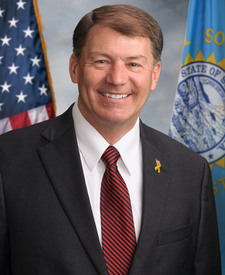
See how Mike Rounds actually votes — against your values.
DeepSyte scores Mike Rounds's record on the issues you care about — not party, not press releases. Take the 2-minute values quiz to see your personal alignment.
Sign in and take the values quiz to see how Mike Rounds's votes line up with your views.
Prediction track record
How often we called Mike Rounds's passage votes correctly, from their stated positions on each bill's tagged topics. Excludes “unclear” calls and abstentions.
8 predictions on record · none have been resolved by a passage vote yet. Check back as bills move.
Pending vote119-hjres-152
Proposing an amendment to the Constitution of the United States to ensure that only citizens are eligible to vote in Federal elections.
To amend the Research and Development, Competition, and Innovation Act to require each institution of higher education to certify as part of an application for a research and development award that such institution does not operate certain branch campuses, and for other purposes.
No paired statements and votes yet for Mike Rounds
We haven't yet found statement/vote pairs on the same topic for Mike Rounds. This usually means either the rep hasn't taken public positions on bills that have come to a passage vote, or those bills haven't been tagged yet. The checker runs as new press releases and votes come in.
Pro analysis
AI rep analysis — Pro
Get an AI-narrated read on Mike Rounds's full voting record against your stated values — aligned themes, conflicts, notable votes, and what to watch for.
We haven't extracted campaign positions for Mike Rounds yet. Once their campaign website or position pages are processed, this card will track what they said vs how they voted.
Crossing the aisle
No party-break passage votes recorded for Mike Rounds. Either they've voted with Republicans on every substantive passage vote in the corpus, or their tenure overlaps few high-threshold party-line votes so far.
Rounds Discusses Eliminating the Department of Education with Secretary McMahon | U.S. Senator Mike Rounds of South Dakota
Position: Senator Rounds advocates for eliminating the Department of Education and returning education authority and funding to states through block grants, arguing that federal education policy has been ineffective and that state and local governments should make decisions about education spending and programs.
McMahon: “Governors, state superintendents, state school boards will decide how this money should be spent in their state”
WASHINGTON – U.S. Senator Mike Rounds (R-S.D.) recently discussed plans to eliminate the U.S. Department of Education with Secretary Linda McMahon at a hearing of the Senate Appropriations Committee’s Subcommittee on Labor, Health and Human Services, Education and Related Agencies.
“I am concerned, as most of the people on this committee are, with regards to the direction that education has been going nationally since the creation of the Education Department,” said Rounds. “The latest scores from the National Assessment for Educational Progress, they're really kind of a national embarrassment. Two thirds of our nation's fourth graders can't read proficiently. Even worse, one-third of eighth graders scored below basic, the highest percentage ever recorded. That means these kids can't identify basic literary elements in a text. In math, the gap between high and low performing students is the widest it's ever been. The Department of Education was originally created to collect education data and advise state and local organizations on best practices, but it's really become a place, until you came into the picture, where it was a top-down direction-giving program. I like the approach that you're taking in returning it back to the states.”
“Well, to your point, sir, in this proposed budget is $2 billion that would go as a block grant to states through a formula that'll be worked on,” said McMahon. “What this will allow states to do that don't always participate in grant making because they maybe don't have enough money to hire grant writers, etc. But now all states will participate in money coming from this $2 billion. And then governors, state superintendents, state school boards will decide how this money should be spent in their state, where the greatest needs are, whether that's in rural communities. Whatever those programs are, they will be deciding how to spend that money.”
Rounds has long been pushing to dissolve the Department of Education and return critical programs back to other agencies. He first introduced the Returning Education to Our States Act in November 2024 and reintroduced it for the 119th Congress in April 2025. Rounds has met with McMahon multiple times to discuss this legislation, which aligns with the Secretary’s plans for the Department.
Watch the exchange HERE. Read a transcript of the exchange below.
Rounds: Madam Secretary, welcome. Let me just begin by saying thank you for taking the time to visit South Dakota and to talk about the goals moving forward with regard to the planning that you’ve got to deliver education decision making back to the states. Before I really get into that portion of it, I’d like to kind of share some concerns as well with regard to the TRIO program. I think this is one that a lot of folks have got some concerns with. And I would just ask that with the amount of attention you’ve seen here in this committee, if you would just commit to us that you would do the follow ups with it on some of the concerns that have been expressed about the loss or the changes to the TRIO program and that it is a sensitive area.
McMahon: Certainly will do that.
Rounds: Thank you Madam Secretary. I've appreciated your willingness to visit the issue of bringing the decisions for education back to the states, and your Returning Education to the States tour I thought was a really good idea. I like the idea that those decisions should be made at the local level. I think there's a number of areas within the Department of Education that we've been working on, through legislation, trying to divvy back out again to the departments that they were in before the Department was ever created. I like the fact that you've been working very hard at doing agreements with other agencies, in which you would take something which is currently with the Department of Education, and moving it back over to where it was before 1980. I like those ideas. We've introduced legislation that would do something similar and work our way back through, providing more block grant opportunities to the states with money, but then looking at specific areas such as impact aid and IDEA and so forth. Not block granting those things, but keeping those areas together in an office and the money with it. So, I just appreciate the way that you've focused on this.
I am concerned, as most of the people on this committee are, with regards to the direction that education has been going nationally since the creation of the Education department. The latest scores from the National Assessment for Educational Progress, they're really kind of a national embarrassment. Two thirds of our nation's fourth graders can't read proficiently. Even worse, one-third of eighth graders scored below basic, the highest percentage ever recorded. That means these kids can't identify basic literary elements in a text. In math, the gap between high and low performing students is the widest it's ever been. The Department of Education was originally created to collect education data and advise state and local organizations on best practices, but it's really become a place, until you came into the picture, where it was a top-down direction-giving program. I like the approach that you're taking in returning it back to the states.
Can you just, in a broad sense, would you like to share a little bit about what your vision is in terms of what the Department of Education should be like, as opposed to what it was when you found it, in terms of listening to the states and empowering the states, but not necessarily telling the states what they're supposed to do in a one-size-fits-all model?
McMahon: Well, to your point, sir, in this proposed budget is $2 billion that would go as a block grant to states through a formula that'll be worked on. What this will allow states to do that don't always participate in grant making because they maybe don't have enough money to hire grant writers, etc. But now all states will participate in money coming from this $2 billion. And then governors, state superintendents, state school boards will decide how this money should be spent in their state, where the greatest needs are, whether that's in rural communities. Whatever those programs are, they will be deciding how to spend that money.
It is a reduction in the total amount of dollars that are going. There are some programs that the Department has looked at that we have eliminated. We've also condensed about 17 programs into this block process. So, I think there is opportunity for states, you know, to take on this responsibility. And as a reminder, as you're aware, states provide about 93% of their own education budget. So, the amount that comes from, you know, the federal government is small by total comparison of the money that is spent in each state, you know, for its education process. So, I think the government wants to continue through Title 1A funding. We're recommending that's level funded. IDEA, we have, through our budget, proposed the greatest increase in a long time, a half a billion dollars for IDEA funding, and that includes $50 million for infants and children in their programs so that they're ready to accept these children who might have disabilities at birth or very early on. So I think that you know, the administration is showing that we're very concerned about our children and about education across the board.
Rounds: I appreciate your comments on it. I'm going to run out of time, but I did want to I just identify one more item on and that's Impact Aid. It's really important because that's the money that comes back to the states to replace what would otherwise have been property tax dollars and so forth that were found for like an area where on a Native American reservation or in an air force base, where it's the assistance to an area that may have federal lands that otherwise aren't taxed. And Impact Aid is really important to some of our more rural states like South Dakota. And I think one of the questions had been if it was to be delivered back out, would you keep it with a particular other department in terms of an agreement or an operational plan? Do you know where Impact Aid might end up or would you keep it within the Department of Education?
McMahon: We haven't determined that. Happy to get back to you on that. However, I want you to know that the Impact Aid dollars are going out on time where they're supposed to go.
Rounds: Excellent. Excellent. That takes a load off of a lot of these smaller school districts that really rely on that Impact Aid. Yes. I thank you for the attention to that matter.
ICYMI: Rounds Receives Support for Oversight of Lab-Grown “Meat” Products from HHS Secretary Kennedy | U.S. Senator Mike Rounds of South Dakota
Position: Senator Rounds expresses concern about lab-grown meat products entering the U.S. food system and seeks assurance that HHS/FDA will exercise rigorous oversight and safety evaluation of these products. HHS Secretary Kennedy affirms he shares these concerns and commits to FDA oversight requiring manufacturers to demonstrate safety.
Kennedy: “They’re going to have to get through a lot of skepticism to show that they’re safe”
WASHINGTON – U.S. Senator Mike Rounds (R-S.D.) questioned Secretary of Health and Human Services (HHS) Secretary Robert F. Kennedy Jr. on lab-grown “meat” products. Secretary Kennedy, in a hearing of the Senate Appropriations Committee’s Subcommittee on Labor, HHS, Education and Related Agencies, pledged to exercise HHS’s oversight of the Food and Drug Administration (FDA) in regulating fake “meat” products.
“Throughout your first year in office, you have made ‘Making America Healthy Again’ and eating ‘real food’ a priority,” said Rounds. “South Dakota farmers and ranchers work tirelessly to produce some of the safest and highest quality products in the world. I have concerns regarding lab-grown cells, or cell-cultivated products, attempting to enter the US food system posing as meat.”
“Do you share my concerns with these ultra-processed, lab-grown fake meat products?” asked Rounds. “With your prioritization of real food, how is HHS, through the FDA, monitoring and evaluating the health and safety of these particular types of products?”
“I share your concern, Senator,” said Kennedy. “I probably have amplified concern. We’re going to exercise FDA’s oversight of them. They’re going to have to show us, they’re going to have to get through a lot of skepticism to show that they’re safe.”
Watch the exchange HERE. Read a transcript of the exchange on lab-grown “meat” below.
Rounds also asked Secretary Kennedy questions on 340B and the National Institutes of Health (NIH). Watch the full exchange HERE.
Rounds: Throughout your first year in office, you have made “Making America Healthy Again” and eating “real food” a priority. South Dakota farmers and ranchers work tirelessly to produce some of the safest and highest quality products in the world. I have concerns regarding lab-grown cells, or cell-cultivated products, attempting to enter the US food system posing as meat. One example of these experiments takes pork fat cells grown in a lab and combines them with plant protein. This product is sold to consumers at the grocery store as a “meatball.” My question I guess for you, is do you share my concerns with these ultra-processed, lab-grown fake meat products? With your prioritization of real food, how is HHS, through the FDA, monitoring and evaluating the health and safety of these particular types of products?
Kennedy: I share your concern, Senator. I probably have amplified concern. We’re going to exercise FDA’s oversight of them. They’re going to have to show us, they’re going to have to get through a lot of skepticism to show that they’re safe.
Rounds Talks Tribal Radio Funding with Interior Secretary at Appropriations Subcommittee Hearing | U.S. Senator Mike Rounds of South Dakota
Interior’s FY27 budget request includes $11 million for tribal radio funding
WASHINGTON – U.S. Senator Mike Rounds (R-S.D.) today discussed funding for tribal radio stations with Secretary of the Interior Doug Burgum. In a hearing of the Senate Appropriations Committee’s Subcommittee on Interior, Environment and Related Agencies, Burgum reiterated the importance of these radio stations for tribal populations.
“I was glad to see that the Bureau of Indian Affairs’ FY27 budget request does support funding for tribally operated or affiliated radio stations in Indian country,” said Rounds. “Can you share just how important it is for these tribal radio stations to continue to be funded?”
“I think as anybody who’s spent time in Indian country in states like ours in the West, Senator, know that landlines are not a thing in many parts of the rural residence,” said Burgum. “Cell service is often sketchy, even though some of the tribes do run their own cellular programs.”
“Radio is often sometimes the only way people can reach information, whether it’s winter storms or tornadoes, prairie fires,” continued Burgum. “I mean, there’s real need for emergency information to be distributed to a population. I know that the tribal chairs and tribal councils all count on this for getting information out, not just about emergencies but about events going on in the community and about important things that tribal members need to know. So, again, thank you for being such a strong champion of this important program.”
Rounds has been a champion for tribal radio funding. In July 2025, Rounds secured tribal radio funding for FY26 after it was proposed for elimination in a rescissions package.
Watch the exchange HERE. Read a transcript of the exchange on tribal radio below.
Rounds also asked Secretary Burgum questions about constructing a new school on the Cheyenne River reservation and tribal law enforcement funding. Watch the full exchange HERE.
Rounds: I was glad to see that the Bureau of Indian Affairs’ FY27 budget request does support funding for tribally operated or affiliated radio stations in Indian country. The role of these stations play a critical role in providing essential and emergency information to tribal communities. We worked on this last year. OMB came through, put the resources together for us. It’s about – I mean, it’s a lot of money. Can you share just how important it is for these tribal radio stations to continue to be funded?
Burgum: I think as anybody who’s spent time in Indian country in states like ours in the West, Senator, know that landlines are not a thing in many parts of the rural residence. Cell service is often sketchy, even though some of the tribes do run their own cellular programs. Radio is often sometimes the only way people can reach information, whether it’s winter storms or tornadoes, prairie fires. I mean, there’s real need for emergency information to be distributed to a population. I know that the tribal chairs and tribal councils all count on this for getting information out, not just about emergencies but about events going on in the community and about important things that tribal members need to know. So, again, thank you for being such a strong champion of this important program.
Rounds Introduces Legislation to Expand Access to Capital for Small Businesses | U.S. Senator Mike Rounds of South Dakota
Position: Senator Rounds supports modernizing securities regulations to increase the asset threshold for private fund adviser SEC registration from $150 million to $175 million, indexed to inflation, to reduce compliance costs and expand capital access for small businesses and startups.
WASHINGTON — U.S. Senator Mike Rounds (R-S.D.) introduced legislation to increase access to capital for small businesses and entrepreneurs by modernizing outdated securities regulations.
The Small Business Investor Capital Access Act would update federal securities law to allow more small private funds to invest in emerging businesses by adjusting the threshold that determines when private fund advisers must register with the U.S. Securities and Exchange Commission (SEC). Under current law established in the 2010 Dodd-Frank Act, private fund advisers with up to $150 million in assets under management are exempt from SEC registration.
“Small businesses are the backbone of our economy, but too often they struggle to access the capital needed to expand and create jobs,” said Rounds. “This legislation removes unnecessary regulatory barriers that prevent small investment funds from directing capital to innovative startups and entrepreneurs, particularly in rural communities like many across South Dakota.”
Senator Ruben Gallego (D-Ariz.) joined Rounds in introducing this legislation.
“For too many small business owners, securing financing is still the hardest part of getting a business off the ground — and the problem runs deepest in communities that traditional lenders have long overlooked. Small investment funds can fill that gap, but right now they are forced to spend time and money following the same expensive compliance rules as massive Wall Street firms. That mismatch means these small funds have less capital to put towards startups and small businesses,” said Gallego. “This bill modernizes an outdated $150 million threshold and ties it to inflation so smaller funds can direct resources toward supporting local job-creating investments.”
"The Small Business Investor Alliance (SBIA) applauds the introduction of the Small Business Investor Capital Access Act by Senator Mike Rounds and Senator Gallego. This is a smart and necessary modernization of outdated regulation,” said Brett Palmer, President of SBIA. “Their strong support underscores the importance of aligning regulatory thresholds with economic reality. This bill will reduce compliance costs for smaller funds and allow more capital to flow to America’s small businesses.”
Under Dodd Frank, the current exemption for private fund advisors registering with the SEC is for firms up to $150M – this legislation increases the exemption to $175M for advisers to small private funds to reflect changes from inflation and requires the SEC to adjust the threshold for inflation every 5 years. Representatives Barr and Velázquez lead companion legislation in the House. This legislation passed the House Financial Services Committee 51-2 on July 22, 2025 and was included in the INVEST Act, which passed the House 302-123 on December 11, 2025.
Click HERE for full bill text.
Rounds Introduces Legislation to Support Rural Transit | U.S. Senator Mike Rounds of South Dakota
Position: Senator Rounds introduced bipartisan legislation to increase federal funding and support for rural public transit services, addressing funding shortfalls and regulatory barriers faced by rural transit operators.
WASHINGTON – U.S. Senator Mike Rounds (R-S.D.) introduced the Investments in Rural Transit Act, legislation that would help rural transit providers improve their services. Rural transit operators provide essential lifeline services to millions of Americans, getting them to work, school, grocery stores, medical appointments and more.
“For rural South Dakotans who do not own a vehicle, transit services are a lifeline to reach their jobs, medical appointments, grocery stores and other necessities,” said Rounds. “This legislation aims to support the operators who provide these essential services, so that they may continue to get our rural residents where they need to go.”
”South Dakota’s public transit providers face significant issues including Federal funding shortfalls, reduced local match, and lack of regulatory reform,” said Barbara Cline, Executive Director of Prairie Hills Transit. “Public transit serves all citizens including workers, students, seniors, and individuals accessing medical care. We support the Investments in Rural Transit Act that allows continued access, independence, and economic participation across our communities.”
Senators Tina Smith (D-Minn.) and Tammy Baldwin (D-Wis.) joined Rounds in introducing this legislation.
“High-quality, efficient public transit systems are important for Minnesotans who rely on them every day to get to the office, school, the doctor, and to make their lives work,” said Smith. “This bipartisan legislation would support reliable public transit in rural communities where it’s a lifeline.”
“Whether you are in a big city or a rural part of our state, every Wisconsinite should have access to good public transit. Unfortunately, that is just not the case in too many places and limited transit options are a significant barrier for folks trying to get to work, the store, or the doctor,” said Baldwin. “Our bipartisan legislation will invest in rural communities so workers and families are better connected to what they need.”
Specifically, the Investments in Rural Transit Act would:
Click HERE for full bill text.
Rounds Delivers Major Housing Affordability Wins for South Dakota | U.S. Senator Mike Rounds of South Dakota
Rounds helped author nearly 25 percent of the final bill
WASHINGTON – U.S. Senator Mike Rounds today secured the passage of key housing priorities for South Dakota as the Senate approved the 21st Century Road to Housing Act. The legislation includes provisions authored by Rounds that deliver the first major update to the Rural Housing Service in more than a decade, streamline federal review processes that can delay housing development and provide communities greater flexibility to pursue locally driven housing solutions. The legislation now heads to the House of Representatives for final passage.
“Access to safe, affordable housing is essential to the strength of our communities and the future of South Dakota,” said Rounds. “The 21st Century Road to Housing Act includes several of my bills that modernize rural housing programs and cut unnecessary red tape that slows housing development. These provisions will help expand our housing supply, especially in rural areas where the need is greatest. President Trump and Secretary Scott Turner have made it clear that increasing America’s housing supply is a national priority. This legislation is an important step toward making housing more accessible and affordable for families across South Dakota and the country.”
Rounds’ legislation included in the 21st Century Road to Housing Act:
Rural Housing Service Reform Act: This bill would improve federal rural housing programs and strengthen the supply of affordable housing in rural America by modernizing and strengthening several U.S. Department of Agriculture (USDA) rural housing programs. The Rural Housing Service Reform Act addresses longstanding challenges with maturing Section 515 properties, aligns income calculations with HUD standards, streamlines foreclosure and loan approval processes and invests in IT upgrades to improve efficiency. It would also ease access to home repair loans and expand eligibility for USDA loan guarantees to include properties with accessory dwellings and in-home daycares. By allowing rental assistance to be decoupled from expiring mortgages, the legislation helps preserve affordable housing for rural families who might otherwise face rent increases or displacement. Nationwide, this reform could help preserve housing stability for roughly 400,000 rural families, many of whom live in the Midwest and other rural regions.
Unlocking Housing Supply Through Streamlined and Modernized Reviews Act: The bill would modernize the National Environmental Policy Act (NEPA) review process for housing projects/services funded by the Department of Housing and Urban Development (HUD). The legislation reduces duplicative review requirements that delay projects without adding meaningful protections, allowing housing to be built faster and at lower cost.
Better Use of Intergovernmental and Local Development (BUILD) Housing Act: The bill would modernize the NEPA review process by increasing capacity sharing between HUD and state and local governments, aligning HUD’s standards with other agencies through delegated housing reviews, and granting the agency greater flexibility by allowing it to designate certain housing assistance as “special project funds.”
These bills were incorporated into the 21st Century Road to Housing Act, sponsored by Senator Tim Scott (R-S.C.) and Senator Elizabeth Warren (D-Mass.). The comprehensive proposal would expand and preserve the housing supply by removing regulatory barriers, promoting innovative construction, addressing blight and supporting disaster recovery, while also improving housing affordability, expanding homeownership, reducing homelessness and increasing access for veterans. The bill advances accountability and oversight by promoting evidence-based policies, strengthening program integrity and improving coordination and transparency across federal housing programs to make efficient use of taxpayer dollars.
Rounds Issues Statement Following Senate’s Passage of Third FY26 Appropriations Package | U.S. Senator Mike Rounds of South Dakota
Rounds secured $145.7 million in funding for projects in South Dakota
WASHINGTON – U.S. Senator Mike Rounds (R-S.D.), a member of the Senate Appropriations Committee, issued a statement following the Senate’s passage of a package of five appropriations bills for Fiscal Year (FY) 2026.
The legislation included appropriations bills for Defense; Labor, Health and Human Services, Education, and Related Agencies (LHHS); Transportation, Housing and Urban Development and Related Agencies (T-HUD); Financial Services and General Government (FSGG); and National Security, Department of State and Related Programs. This legislation also includes a continuing resolution for the Department of Homeland Security (DHS) appropriations through February 13.
“The appropriations process is one way we work to deliver real results for South Dakota. After years of continuing resolutions that reflect a Biden budget under Democrat leadership, we’ve now passed 11 of the 12 appropriations bills that fund 96% of government programs with President Trump’s priorities,” said Rounds. “This batch of appropriations bills includes several million dollars for projects in South Dakota that aim to improve in our rural health care facilities, expand our regional airports and invest in affordable housing. The bill also provides partial funding for the construction of an elementary school in Box Elder to support the influx of families from the bed down of the B-21 Raider stealth bomber.
“I’m hopeful that we’ll be able to pass the Homeland Security appropriations bill. DHS houses a number of agencies that are critical for operations in our nation, including the Federal Emergency Management Agency (FEMA) and the Transportation Security Administration (TSA). In addition, the men and women of Customs and Border Protection and Immigrations and Customs Enforcement continue to carry out the hard work of enforcing our immigration laws in this nation. I urge my colleagues to come to an agreement as soon as possible to prevent a lapse in funding for DHS operations.”
Rounds has served on the Senate Committee on Appropriations since January 2025. He serves on six subcommittees, including LHHS. Read a list of Rounds’ Congressionally Directed Spending (CDS) wins in the appropriations bills below totaling over $147 million for South Dakota. While the Defense Appropriations Act does not allow CDS, the legislation includes $88.5 million for South Dakota equities secured by Rounds.
Rounds Introduces the Life at Conception Act | U.S. Senator Mike Rounds of South Dakota
Position: Senator Rounds introduced legislation to extend 14th Amendment constitutional protections to unborn children beginning at conception, establishing statutory recognition of the right to life at all stages of human development.
Legislation would legally recognize the right to life by extending 14th Amendment protections to unborn children
WASHINGTON – U.S. Senator Mike Rounds (R-S.D.) introduced the Life at Conception Act, legislation to legally recognize the right to life by extending 14th Amendment protections to unborn children.
The Life at Conception Act clarifies in statute that the right to life guaranteed by the Constitution is vested in each human being at all stages of life. This is defined as the moment of conception, or any other moment at which an individual comes into being.
“Life at all stages is a gift from God and should be treated with dignity,” said Rounds. “The Life at Conception Act would protect the right to life in the Constitution to human beings at all stages, including in the womb. I’m pleased to be leading this legislation in the Senate with the support of my colleagues to protect the sanctity of human life.”
This legislation is cosponsored by Senators Marsha Blackburn (R-Tenn.), John Kennedy (R-La.), Roger Wicker (R-Miss.), Tommy Tuberville (R-Ala.), Kevin Cramer (R-N.D.), Bill Hagerty (R-Tenn.), Mike Crapo (R-Idaho), Jim Banks (R-Ind.), John Hoeven (R-N.D.), Steve Daines (R-Mont.) and John Boozman (R-Ark.). Representative Eric Burlison (R-Mo.) leads companion legislation in the House of Representatives.
“Life is precious and begins at the moment of conception, and it is our solemn duty to make certain the rights of every unborn child are enshrined into law,” said Blackburn. “As people around the world come together for the March for Life in D.C., I am pleased to join Senator Rounds in introducing the Life at Conception Act to ensure equal protection under the 14th Amendment for every human being at all stages of life.”
“One of the foundational rights that America is built on is the right to life,” said Daines. “This basic Constitutional principle safeguards the right to life for everyone in our nation- including unborn children. I’m proud to work with Senator Rounds and our colleagues on the Life at Conception Act, which protects our most vulnerable by affirming the biological truth that life begins at conception.”
“We have a moral responsibility to protect the most vulnerable among us,” said Crapo. “By recognizing life at conception, we affirm that the right to life is fundamental and universal.”
“The life of every child is precious and worthy of our protection,” said Hagerty. “We cannot deny the protection of the Fourteenth Amendment to the most vulnerable among us. I am pleased to support Senator Rounds’ legislation.”
“The right to life is enshrined in the Constitution and is our most fundamental right,” said Cramer. “We know life begins at conception, and the Life at Conception Act recognizes this obvious and powerful truth.”
“Every life is a sacred gift from God, worthy of dignity and protection from the moment of conception,” said Burlison. “The Life at Conception Act affirms Congress’s constitutional authority to define personhood and protect unborn children. I’m grateful to Senator Rounds for introducing the Senate companion bill and remain committed to defending life, as my record in Missouri and Washington clearly shows.”
This legislation is endorsed by the National Pro-Life Alliance, Susan B. Anthony Pro-Life America, Students for Life Action, the Concerned Women for America Legislative Action Committee and the Family Research Council.
“For more than twenty years, members of the National Pro-Life Alliance have championed the Life at Conception Act,” said Martin Fox, President at National Pro-Life Alliance. “We are honored that Senator Rounds is taking the lead on a bill that is now more important than ever due to the many loopholes that abortionists are using to get around state protections for the unborn. The Life at Conception Act reaffirms the original intention of the writers of the 14th Amendment by declaring that the word ‘person’ includes all persons from the moment of conception.”
“The Life at Conception Act affirms a simple, foundational truth backed by science and designed by God - from the moment of conception, a unique human life is formed,” said Marilyn Musgrave, Vice President of Government Affairs at Susan B. Anthony Pro-Life America. “Our laws should recognize the dignity, humanity, and inherent worth of every unborn child. Thank you, Senator Rounds for your steadfast pro-life leadership to defend the most vulnerable Americans.”
“Recognizing that a unique human being begins at the moment of conception, the Life at Conception Act implements equal protection for every human being from their first moments of existence,” said Kristan Hawkins, President of Students for Life Action & Students for Life of America. “What makes this measure the gold standard for recognizing the value of every life is the acknowledgement that the legal rights of preborn children are rooted in the 14th Amendment to the Constitution of the United States. This profound truth is echoed in the 2024 GOP Platform and is a message that Students for Life Action (SFLAction) celebrates and recommends in legislative findings across the board. Arbitrarily leaving some human beings outside of the protections of the law is a mistake that this nation does not need to make again. SFLAction gives this legislation our strongest endorsement and will score both votes and sponsorships of the bill.” ?
“The Declaration of Independence stated that all people have a fundamental right to life; it is time for Congress to recognize that that truth extends to children in the womb,” said Penny Nance, CEO and President of Concerned Women for America Legislative Action Committee. “The Life at Conception Act declares what most Americans believe and what science has long known - that life begins at conception and, therefore, preborn babies are entitled to the protection offered by the 14th Amendment. Concerned Women for America Legislative Action Committee is proud to endorse this legislation that affirms and protects the unique dignity of every life."
Click HERE for full bill text.
Rounds Joins Lee and Roy on SAVE Act to Secure Federal Elections | U.S. Senator Mike Rounds of South Dakota
Position: Senator Rounds supports the SAVE Act, which requires proof of citizenship for voter registration and mandates state verification of citizenship status and removal of non-citizens from voter rolls.
WASHINGTON – U.S. Senator Mike Rounds (R-S.D.) today joined Senator Mike Lee (R-Utah) and Representative Chip Roy (R-Texas) in sponsoring the Safeguard American Voter Eligibility (SAVE) Act. This legislation aims to make certain that only United States citizens are participating in federal elections by requiring proof of citizenship for voter registration.
“Free and fair elections are a foundation of our democracy. Part of that fairness is making sure only United States citizens are voting for our leaders,” said Rounds. “This rule has been loosely enforced in blue states for far too long. I’m pleased to be joining Senator Lee on this legislation which requires proof of citizenship in order to register to vote.”
Specifically, the SAVE Act amends the National Voter Registration Act, setting requirements for states to verify U.S. citizenship. It outlines acceptable documentation for proving citizenship and requires states to set up alternative verification processes for citizens without standard documents. Additionally, the legislation compels states to purge non-citizens from voter rolls and establishes federal penalties for intentionally registering non-citizens.
Click HERE for full bill text.
Rounds, Cassidy and Colleagues Blast Tim Walz for Rampant Childcare Fraud, Demand Accountability for American Taxpayers | U.S. Senator Mike Rounds of South Dakota
WASHINGTON – U.S. Senators Mike Rounds (R-S.D.), Bill Cassidy (R-La.) and the entire Senate Republican Conference are demanding accountability from outgoing Minnesota Governor Tim Walz amid widespread reports of fraud and abuse of federal child care funding in Minnesota.
“The state’s apparent negligent management of federal funds raises significant concerns about the adequacy of the state’s oversight, verification, and compliance systems for safeguarding taxpayer dollars intended to support vulnerable children and working families,” wrote the Senators. “Unfortunately, these latest reports appear to reflect only the tip of the iceberg.”
“The Constitution grants Congress the power of the purse, and the United States Senate is exercising its duty to ensure proper stewardship of federal taxpayer dollars for child care programs, and we take this responsibility very seriously,” continued the Senators.
This effort is in conjunction with the Trump administration, which has paused child care funding to Minnesota and other states pending verification and audits of how funds were used. There is also a current federal investigation into large-scale fraud in Minnesota’s social services programs.
Rounds and Cassidy are joined by Majority Leader John Thune (R-S.D.) and U.S. Senators John Barrasso (R-Wyo.), Mike Crapo (R-Idaho), Susan Collins (R-Maine), Jim Banks (R-Ind.), John Kennedy (R-La.), Ted Cruz (R-Texas), Rand Paul (R-Ky.), Ashley Moody (R-Fla.), Tim Scott (R-S.C.), Tommy Tuberville (R-Ala.), Roger Marshall (R-Kan.), James Lankford (R-Okla.), Lindsey Graham (R-S.C.), Shelley Moore Capito (R-W.Va.), Pete Ricketts (R-Neb.), Ted Budd (R-N.C.), Kevin Cramer (R-N.D.), Joni Ernst (R-Iowa), Cynthia Lummis (R-Wyo.), Deb Fischer (R-Neb.), Mike Lee (R-Utah), Jim Risch (R-Idaho), Tom Cotton (R-Ark.), Eric Schmitt (R-Mo.), Markwayne Mullin (R-Okla.), Bernie Moreno (R-Ohio), Katie Britt (R-Ala.), Marsha Blackburn (R-Tenn.), Rick Scott (R-Fla.), John Cornyn (R-Texas), Tim Sheehy (R-Mont.), Jon Husted (R-Ohio), Thom Tillis (R-N.C.), John Hoeven (R-N.D.), Bill Hagerty (R-Tenn.), Lisa Murkowski (R-Alaska), Cindy Hyde-Smith (R-Miss.), Dan Sullivan (R-Alaska), Josh Hawley (R-Mo.), Jim Justice (R-W.Va.), Steve Daines (R-Mont.), Ron Johnson (R-Wis.), Jerry Moran (R-Kan.), Todd Young (R-Ind.), John Curtis (R-Utah), Dave McCormick (R-Pa.), Mitch McConnell (R-Ky.), Roger Wicker (R-Miss.), John Boozman (R-Ark.) and Chuck Grassley (R-Iowa).
Read the full letter HERE or below.
We write to express serious concern regarding recent reports and federal investigations alleging widespread fraud and misuse of federal funds within Minnesota’s state-administered child care assistance programs. The state’s apparent negligent management of federal funds raises significant concerns about the adequacy of the state’s oversight, verification, and compliance systems for safeguarding taxpayer dollars intended to support vulnerable children and working families. Unfortunately, these latest reports appear to reflect only the tip of the iceberg.
Federal prosecutors have been conducting a broader investigation of large-scale fraud in Minnesota’s social services programs. Some authorities estimate that billions in federal funds across various programs, including child care, nutrition, Medicaid, and housing assistance, may have been misappropriated since 2018. One example includes the “Feeding Our Future” scheme, where more than 50 individuals were convicted for diverting hundreds of millions of dollars in pandemic relief funds intended for school meals.
Under the leadership of President Trump, the U.S. Department of Health and Human Services (HHS) has acted promptly to freeze child care payments to Minnesota pending verification and audits of how funds were used. The Constitution grants Congress the power of the purse, and the United States Senate is exercising its duty to ensure proper stewardship of federal taxpayer dollars for child care programs, and we take this responsibility very seriously. To that end, we are writing to request detailed responses to the following questions, on a question-by-question basis, no later than Thursday, January 22, 2026:
Source: GDELT 2.0 GKG, filtered to a curated list of national outlets. Inclusion is not endorsement; opinion pieces and reported news are mixed.
Recent stock activity
Periodic transaction reports filed under the STOCK Act — disclosed by the rep, sourced from public filings.
No disclosed trades on record.
Source: open-data mirrors of the Senate eFD and House Clerk financial-disclosure systems. Disclosure within 30 days of trade is required by law (45 for spouse/dependent trades).
Top PAC donors · 2026 cycle
Political action committees that gave the most to this rep's principal campaign committee this cycle. PAC giving is direct organizational support — industry, ideological, or leadership.
1.ONE TEAM SENATE MAJORITY4 contributions$44,473
2.FUND FOR A CONSERVATIVE FUTURE2 contributions$20,000
3.COMMON SENSE FOR AMERICA PAC3 contributions$15,000
4.TRUE NORTH PAC1 contribution$10,000
5.INTERCONTINENTALEXCHANGE, INC. PAC1 contribution$10,000
8.TOMORROW IS MEANINGFUL PAC TIM PAC2 contributions$10,000
9.THE HAWKEYE PAC2 contributions$10,000
10.JOBS OPPORTUNITY NOW PAC2 contributions$10,000
Source: OpenFEC (api.open.fec.gov) Schedule A receipts where contributor type is “committee.” Aggregated by contributing committee. Self-transfers from joint-fundraising / victory committees are excluded.
Top individual contributors · 2026 cycle
Itemized individual contributions over $200 to this rep's campaign committee, aggregated by donor employer. PAC giving is shown above; this section is people, not organizations.
1.SELF$62,807
2.GOOGLE$42,200
3.MARQUIS MANAGEMENT, INC.$30,000
4.ARES MANAGEMENT$21,000
5.BURWELL ENTERPRISE$21,000
6.SANFORD HEALTH$19,000
7.BLACKSTONE$14,400
8.STARKEY LABS$14,000
9.BUSINESS OWNER$14,000
10.CONFUSION CAPITAL$14,000
Source: OpenFEC Schedule A receipts where contributor type is “individual,” aggregated by the donor's self-reported employer. This is a geographic / industry correlation, not a corporate endorsement.