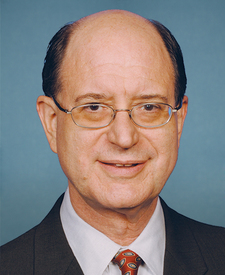
See how Brad Sherman actually votes — against your values.
DeepSyte scores Brad Sherman's record on the issues you care about — not party, not press releases. Take the 2-minute values quiz to see your personal alignment.
Sign in and take the values quiz to see how Brad Sherman's votes line up with your views.
Prediction track record
How often we called Brad Sherman's passage votes correctly, from their stated positions on each bill's tagged topics. Excludes “unclear” calls and abstentions.
A joint resolution to direct the removal of United States Armed Forces from hostilities within or against the Islamic Republic of Iran that have not been authorized by Congress.
To prohibit the disclosure of records by the Secretary of Housing and Urban Development of individuals for the purposes of immigration enforcement, and for other purposes.
Based on 10 data points across public statements and recorded votes · AI analysis of public records
118-hr-9494·Consistent
Continuing Appropriations and Other Matters Act, 2025
92/100
What they said
Mar 23, 2026
Congressman Sherman opposes the Trump administration's deployment of ICE agents at airport security checkpoints and its use of TSA funding as leverage to advance voting restrictions. He advocates for immediate TSA funding and removal of ICE from airport security roles.
Sherman explicitly opposed the bill's inclusion of voter registration modifications (the SAVE Act provisions) that he characterized as voter suppression, and he voted against passage. His statement directly criticizes the administration's use of TSA funding as leverage to advance voting restrictions, and he calls for immediate TSA funding without those restrictions. His no vote on passage aligns with his stated position that the bill should not proceed in its current form with the voting provisions attached.
To prohibit individuals who are not citizens of the United States from voting in elections in the District of Columbia and to repeal the Local Resident Voting Rights Amendment Act of 2022
92/100
What they said
Mar 23, 2026
Congressman Sherman opposes the Trump administration's deployment of ICE agents at airport security checkpoints and its use of TSA funding as leverage to advance voting restrictions. He advocates for immediate TSA funding and removal of ICE from airport security roles.
Voted Nay on To prohibit individuals who are not citizens of the United States from voting in elections in the District of Columbia and to repeal the Local Resident Voting Rights Amendment Act of 2022
Sherman's statement explicitly opposes voting restriction legislation (the SAVE Act) that he says would suppress voter access, and he voted against HR 192, which restricts voting eligibility by prohibiting noncitizens from voting in DC elections. His stated position and his no vote on passage are strongly aligned on the shared question of voting restrictions.
Congressman Sherman opposes the Trump administration's deployment of ICE agents at airport security checkpoints and its use of TSA funding as leverage to advance voting restrictions. He advocates for immediate TSA funding and removal of ICE from airport security roles.
Sherman's statement opposes ICE deployment at airports and criticizes the Trump administration's use of DHS funding as leverage for unrelated policy goals. However, he voted yes on the SHIELD Against CCP Act, which establishes a DHS working group to address Chinese security threats and directs DHS resource allocation and research priorities. The bill does not address ICE deployment at airports, TSA funding, or voting restrictions—the core subjects of Sherman's statement. His affirmative vote on a bill that redirects DHS focus and resources is inconsistent with his public position that the administration should immediately fund TSA and remove ICE from airport security roles.
Congressman Sherman opposes the Trump administration's deployment of ICE agents at airport security checkpoints and its use of TSA funding as leverage to advance voting restrictions. He advocates for immediate TSA funding and removal of ICE from airport security roles.
Sherman's statement opposes Trump's use of immigration enforcement (ICE deployment at airports) as leverage to advance restrictive voting legislation, and calls for TSA funding without such conditions. The Secure the Border Act of 2023 is a comprehensive immigration enforcement bill that expands border wall construction, asylum restrictions, and employer verification requirements — substantively aligned with the restrictive immigration policies Sherman opposes. His NO vote on passage is consistent with his stated opposition to Trump-era immigration enforcement priorities.
Congressman Sherman opposes the Trump administration's deployment of ICE agents at airport security checkpoints and its use of TSA funding as leverage to advance voting restrictions. He advocates for immediate TSA funding and removal of ICE from airport security roles.
Sherman's statement opposes ICE deployment at airports and criticizes use of immigration enforcement as leverage on unrelated policy. The Laken Riley Act expands ICE detention authority for certain crimes. Sherman's no vote on passage aligns with his stated opposition to expanded ICE authority and his criticism of the administration's immigration enforcement tactics. The statement does not explicitly address the bill's specific detention requirements, but his general opposition to ICE expansion and his framing of ICE as unsuited for airport roles is directionally consistent with voting against legislation that broadens ICE's detention mandate.
Department of Homeland Security Appropriations Act, 2024
85/100
What they said
Mar 23, 2026
Congressman Sherman opposes the Trump administration's deployment of ICE agents at airport security checkpoints and its use of TSA funding as leverage to advance voting restrictions. He advocates for immediate TSA funding and removal of ICE from airport security roles.
Sherman's statement opposes using TSA funding as leverage and calls for immediate TSA appropriations and removal of ICE from airport security roles. The DHS appropriations bill provides funding for both TSA and ICE. Sherman's NO vote is consistent with his stated position if he opposed the bill because it did not adequately fund TSA, bundled ICE funding in ways he disagreed with, or was part of a broader dispute over the bill's use as leverage in negotiations. However, the bill summary does not specify funding levels, conditions, or whether it was the vehicle for the voting-restriction linkage Sherman criticized, creating some ambiguity about what drove his vote.
Department of Homeland Security Appropriations Act, 2025
85/100
What they said
Mar 23, 2026
Congressman Sherman opposes the Trump administration's deployment of ICE agents at airport security checkpoints and its use of TSA funding as leverage to advance voting restrictions. He advocates for immediate TSA funding and removal of ICE from airport security roles.
Sherman's statement opposes Trump's use of ICE deployment at airports and demands immediate TSA funding to resolve staffing shortages. The DHS appropriations bill provides funding for both ICE and TSA. Sherman's NO vote is consistent with his stated position: he opposed the bill likely because it funded ICE operations (which he criticized for being deployed inappropriately at airports) and/or because he viewed the bill as part of Trump's leverage strategy on voting restrictions. However, the bill is a broad omnibus appropriations measure funding multiple DHS agencies, so the NO vote could reflect objections to other provisions or the overall package rather than solely the TSA/ICE question.
Continuing Appropriations and Border Security Enhancement Act, 2024
25/100
What they said
Mar 23, 2026
Congressman Sherman opposes the Trump administration's deployment of ICE agents at airport security checkpoints and its use of TSA funding as leverage to advance voting restrictions. He advocates for immediate TSA funding and removal of ICE from airport security roles.
Sherman's statement opposes TSA funding delays and ICE deployment at airports, and criticizes using appropriations as leverage for voting restrictions. However, he voted yes on a procedural motion for a continuing appropriations bill that, according to the summary, includes immigration law changes and asylum restrictions—provisions aligned with the administration's stated goals. The procedural nature of the vote creates ambiguity about whether Sherman was voting to advance or obstruct the bill, but his public opposition to the bill's bundled provisions and his stated position against voting restrictions suggest misalignment with a yes vote on its passage.
Continuing Appropriations and Border Security Enhancement Act, 2024
75/100
What they said
Mar 23, 2026
Congressman Sherman opposes the Trump administration's deployment of ICE agents at airport security checkpoints and its use of TSA funding as leverage to advance voting restrictions. He advocates for immediate TSA funding and removal of ICE from airport security roles.
Sherman's statement opposes Trump's use of TSA funding as leverage to advance voting restrictions and criticizes ICE deployment at airports. The bill is a continuing resolution that funds federal agencies (including DHS/TSA) through October 2023 and includes immigration law changes limiting asylum eligibility. Sherman's NO vote is consistent with his stated opposition to conditioning TSA funding on voting-restriction legislation — he would not support a bill that bundles TSA appropriations with restrictive immigration provisions. However, the bill's specific provisions on asylum limits and the exact mechanism of any TSA-funding leverage are not fully detailed in the summary, creating some ambiguity about whether the bill directly implements the scenario Sherman describes.
Department of Homeland Security Appropriations Act, 2025
72/100
What they said
Mar 23, 2026
Congressman Sherman opposes the Trump administration's deployment of ICE agents at airport security checkpoints and its use of TSA funding as leverage to advance voting restrictions. He advocates for immediate TSA funding and removal of ICE from airport security roles.
Sherman's statement opposes ICE deployment at airports and advocates for TSA funding without voting restrictions. His procedural yes vote on the DHS appropriations bill aligns with his stated goal of funding TSA and DHS operations. However, the procedural nature of the vote and the bill's broad scope—covering multiple DHS agencies and functions beyond the specific ICE/TSA conflict described in his statement—introduce ambiguity about whether this vote directly addressed his stated concerns or reflected a more complex legislative calculation.
Pairs with ambiguous language and high uncertainty are withheld until more data is available. Procedural, cloture, and amendment votes are excluded — they don't cleanly signal substantive support or opposition.
Pro analysis
AI rep analysis — Pro
Get an AI-narrated read on Brad Sherman's full voting record against your stated values — aligned themes, conflicts, notable votes, and what to watch for.
We haven't extracted campaign positions for Brad Sherman yet. Once their campaign website or position pages are processed, this card will track what they said vs how they voted.
Crossing the aisle
Passage votes where Brad Sherman broke ranks with ≥75% of Democrats. Threshold catches substantively partisan splits; unanimous-ish or close votes are excluded.
Congressman Brad Sherman Introduces Bill to Halt U.S. Oil Exports, Shield Americans from Price Spikes Amid Iran War
Position: Congressman Sherman introduced legislation to prohibit U.S. crude oil exports until hostilities with Iran cease and the Strait of Hormuz reopens, arguing that halting exports would increase domestic oil supply and lower gas prices for American consumers during the ongoing conflict.
WASHINGTON, D.C. — Today Congressman Brad Sherman (CA-32) introduced the Stop Oil Exports to Lower Gas Prices Act to protect American consumers from rising energy costs and economic instability by halting exports of U.S.-produced crude oil during the ongoing war with Iran.
America produces more oil than we use and is a net exporter of both petroleum and refined products. If we prohibit exports, the supply will exceed the demand, and prices for American consumers will drop. Currently, American oil is going to Europe and Asia to replace Middle East oil, reducing the domestic supply and raising the prices Americans pay.
“During this period of international instability, we have a responsibility to use all available tools to defend American families and our economy,” said Congressman Sherman. “This bill prioritizes consumers by directing our energy resources toward lowering costs here at home instead of allowing companies to chase higher profits at the expense of American consumers,” Sherman added.
The legislation would prohibit U.S. crude oil exports until (1) the President certifies that hostilities with Iran have ceased and (2) the Strait of Hormuz is fully reopened to global commerce.
The bill would implement a targeted export ban designed to stabilize domestic energy markets, reduce inflationary pressure, and prioritize U.S. supply during a period of international crisis. It also includes limited flexibility for cases where certain crude oil cannot be efficiently refined domestically, allowing narrowly tailored export licenses provided that refined products are returned to the United States.
Recently, Congressman Sherman pressed President Trump to immediately exercise this authority and pause U.S. petroleum exports until hostilities with Iran cease and global energy markets stabilize. In his letter to Trump, Sherman emphasized that such action would help shield American consumers from unnecessary price increases, reduce inflationary pressure, and ensure domestic energy supplies remain available during a period of global instability.
“Suspending crude oil exports during the Iran War is a lawful, targeted, and necessary step,” Sherman added. “American oil should first and foremost benefit the American people, who continue to suffer from the affordability crisis cause by President Trump’s reckless policies.”
To read Sherman’s letter to Trump, click here.
To view bill text, click here.
###
Issues:Consumer ProtectionEconomy Taxes and TradeEnergy IndependenceForeign PolicyTrade
Congressman Brad Sherman Holds 5th Town Hall of the Year to Address War with Iran, Economic Pressures, and Threats to Democracy
Position: Congressman Sherman emphasizes Congress's constitutional responsibility over war and peace decisions, calls for greater transparency and oversight regarding potential escalation of the Iran conflict, and advocates for policies to protect American consumers from economic pressures linked to international conflict.
SHERMAN OAKS, CA — On April 21, residents from across the San Fernando Valley and parts of the Westside of Los Angeles joined Congressman Brad Sherman’s (CA-32) fifth Telephone Town Hall of the year to discuss pressing national and local issues, including the ongoing U.S. war with Iran, rising economic uncertainty, and growing alarm over President Donald Trump’s conduct and fitness for office.
“I appreciate everyone who continues to join our Town Halls, ask thoughtful questions, and stay engaged during one of the most consequential periods our country has faced in years,” said Congressman Sherman. “At a moment when the United States is engaged in a dangerously escalating military conflict abroad, families are worried about rising costs at home, and serious questions are being raised about the stability and future of our democracy, these Town Hall events become even more critical, as they provide an important opportunity to hear directly from constituents, answer their concerns, provide them with accurate updates and ensure their voices are represented in Washington.”
During the event, Congressman Sherman — a senior Member of the House Foreign Affairs Committee and Ranking Member of the Subcommittee on the Middle East and North Africa — provided updates on the rapidly developing war involving Iran and ongoing U.S. military operations in the region. He emphasized Congress’s constitutional responsibility over matters of war and peace and renewed his call for greater transparency and oversight regarding decisions that could further escalate the conflict.
Sherman also addressed mounting concerns regarding President Trump’s erratic behavior, inflammatory rhetoric, and policy decisions that many believe have endangered both national security and democratic institutions. He discussed his support for efforts to clarify and strengthen procedures under the 25th Amendment to ensure that the nation has workable constitutional safeguards when a President is unable to faithfully discharge the duties of the office.
In addition, Sherman spoke about the economic strain facing working families, including higher gas prices, market instability, and broader cost-of-living pressures affecting communities throughout the San Fernando Valley and Los Angeles. He reiterated his call for policies that put American consumers first and shield households from the economic fallout of international conflict.
Constituents raised a wide range of concerns, including the risk of a broader Middle East war, threats to democratic norms, immigration policy, rising household expenses, Social Security and Medicare protections, and the need for accountability in Washington. Sherman addressed questions directly, underscoring his commitment to transparency, constitutional checks and balances, and keeping residents informed during a fast-moving and uncertain time.
Participants also had the opportunity to respond to interactive survey prompts about the issues most important to them.
The results of the survey questions are as follows:
Should Congress pass a law requiring nationwide independent nonpartisan redistricting commissions in all 50 states?
1) Yes: 78%
2) No: 5%
3) Unsure: 17%
In the long run, do you believe the current U.S. military action against Iran will make Iran’s development of a nuclear weapon:
1) More likely: 45%
2) About as likely as before: 33%
3) Less likely: 10%
4) Unsure: 12%
What impact do you believe Donald Trump’s economic policies have had on the U.S. economy?
1) A mostly positive impact: 21%
2) No real impact: 11%
3) A mostly negative impact: 61%
4) Not sure/unsure: 7%
Issues:Town Halls
Sherman Statement on Trump's Threat to "Kill a Whole Civilization"
Position: Congressman Sherman criticizes President Trump's rhetoric threatening Iran's civilization as reckless and dangerous, arguing it contradicts stated war strategy and increases risk to the United States.
SHERMAN OAKS, CA — Today Congressman Brad Sherman (CA-32) released the following statement responding to President Donald Trump’s warning about Iran that “a whole civilization will die tonight, never to be brought back again”:
"Trump claimed his war strategy was to win over the Iranian people — now he’s threatening their 'entire civilization'.
That’s reckless, unhinged and puts America at risk."
###
Issues:Foreign PolicyWorking for a Peaceful World
Over 2,000 Join Congressman Brad Sherman Telephone Town Hall
Position: Congressman Sherman opposes what he characterizes as reckless executive policies regarding Iran and military engagement, emphasizes Congress's constitutional war powers authority, and supports his bill to halt U.S. oil exports during the Iran conflict to protect consumers from rising energy costs.
SHERMAN OAKS, CA — On March 31, over 2,000 residents joined Congressman Brad Sherman (CA-32) for another live Telephone Town Hall to discuss key national and local issues, including economic challenges facing families, the ongoing war with Iran, and growing concerns over what Sherman described as President Donald Trump's reckless and extreme policies.
“At a time when families are feeling squeezed by rising costs, travelers are facing chaos at our airports, and the United States risks being pulled deeper into conflict abroad, it’s more important than ever that people stay informed and engaged,” said Congressman Sherman. “I’m grateful to the thousands of constituents who joined our Town Hall and who continue to participate in these conversations. Even in a turbulent moment in Washington, our communities are paying close attention and making their voices heard.”
During the event, Congressman Sherman — a senior Member of the House Foreign Affairs Committee and Ranking Member of the Subcommittee on the Middle East and North Africa — provided updates on the rapidly evolving situation involving Iran and ongoing U.S. military activity in the region. He reiterated the importance of Congress’s constitutional authority over decisions of war and peace and emphasized the need for strong oversight of executive actions that could draw the United States into a broader conflict.
Sherman also addressed widespread frustration with the current state of the economy, including rising gas prices and cost-of-living pressures facing families across the San Fernando Valley and Los Angeles. He discussed his bill the No U.S. Oil Exports During Iran War Act to halt exports of U.S.-produced crude oil during the ongoing war with Iran, aiming to protect American consumers from rising energy costs and economic instability.
In addition, Sherman spoke about the Department of Homeland Security funding impasse and its real-world consequences, including long TSA lines and airport disruptions, warning that misguided policy decisions have only exacerbated the situation for travelers.
The Telephone Town Hall featured Los Angeles City Councilmember Bob Blumenfield, who joined Sherman to provide updates on local issues affecting Valley residents and to highlight coordination between federal and local governments. Councilmember Blumenfield addressed concerns ranging from public services to infrastructure and emphasized the importance of maintaining strong communication between all levels of government during periods of uncertainty.
Constituents raised a wide range of issues, including the rising cost of living, the direction of U.S. foreign policy, airport delays and travel disruptions, ongoing immigration enforcement actions, and concerns about protecting democratic institutions and ensuring fair elections. Sherman addressed these questions directly, underscoring his commitment to transparency, oversight, and keeping constituents informed during a rapidly evolving period in Washington.
Participants had the opportunity to respond to interactive survey prompts about their top concerns.
The results of the survey questions are as follows:
Do you support or oppose allowing voting by mail without a claim of disability or travel?
- Yes, I support voting by mail: 80%
- Yes, but only for good reason: 16%
- No, I oppose voting by mail: 3%
- Unsure: 1%
Who do you blame for the current government shutdown of DHS?
-The Republican Party: 62%
- The Democratic Party: 17%
- Both Equally: 15%
- Unsure: 6%
Do you approve of President Trump’s performance as President so far?
- Approve: 11%
- Disapprove: 86%
- Unsure: 3%
Issues:Town Halls
Sherman Blasts Trump for Blocking TSA Deal, Deploying ICE at Airports to Push Voting Bill
Position: Congressman Sherman opposes the Trump administration's deployment of ICE agents at airport security checkpoints and its use of TSA funding as leverage to advance voting restrictions. He advocates for immediate TSA funding and removal of ICE from airport security roles.
WASHINGTON, D.C. — Congressman Brad Sherman (CA-32) today criticized President Donald Trump for derailing a bipartisan agreement to fund the Department of Homeland Security and deploying ICE agents to airport security checkpoints, as delays and TSA staffing shortages continue to strain airports nationwide.
“Trump just blew up a bipartisan deal to end this TSA nightmare because he wants to force through a voter suppression bill,” said Congressman Sherman. “Let that sink in.”
Sherman warned that, in the absence of proper TSA staffing and funding, Immigration and Customs Enforcement (ICE) personnel have been deployed into airport roles for which they are not trained — leading to confusion and operational disruptions rather than improved security.
“Instead of paying TSA workers, the administration is sending ICE into airports who aren’t trained for aviation security and are already causing confusion and disruption, not solving the problem,” Sherman said.
The Congressman further accused Trump of holding TSA workers’ paychecks hostage in an effort to advance the SAVE Act — legislation Sherman voted against and says would make it harder for millions of eligible Americans to vote: “He’s wreaking havoc across airports and putting aviation security at risk, all to pass legislation that would restrict access to the ballot box."
In response, Sherman announced that he has requested his own congressional salary be withheld until TSA workers receive their pay. See copy of Sherman's request here.
“Members of Congress should live by the same rules as the people we represent,” Sherman said. “If TSA workers aren’t getting paid, neither should we.”
Sherman called on Trump to reverse course immediately.
“Stop standing in the way. Fund TSA. Get ICE out of airports. End this now.”
###
Congressman Brad Sherman Will Soon Introduce Bill to Halt U.S. Oil Exports, Shield Americans from Price Spikes Amid Iran War
Position: Congressman Sherman will introduce legislation to prohibit U.S. crude oil exports during the ongoing war with Iran, with the goal of increasing domestic oil supply and reducing energy prices for American consumers.
WASHINGTON, D.C. — Congressman Brad Sherman (CA-32) will soon introduce the No U.S. Oil Exports During Iran War Act to halt exports of U.S.-produced crude oil during the ongoing war with Iran, aiming to protect American consumers from rising energy costs and economic instability.
“At a time of global uncertainty, we must use every available tool to protect the American people,” said Congressman Sherman. “This legislation puts American consumers first by ensuring that our energy resources are used to stabilize prices at home—not to maximize profits abroad,” Sherman added.
America produces more oil than we use. If we prohibit exports, the supply will exceed the demand, and prices will drop. Currently, American oil is going to Europe and Asia to replace Middle East oil, reducing the domestic supply and raising the prices Americans pay.
The legislation would prohibit U.S. crude oil exports until (1) the President certifies that hostilities with Iran have ceased and (2) the Strait of Hormuz is fully reopened to global commerce.
The bill would implement a targeted export ban designed to stabilize domestic energy markets, reduce inflationary pressure, and prioritize U.S. supply during a period of international crisis. It also includes limited flexibility for cases where certain crude oil cannot be efficiently refined domestically, allowing narrowly tailored export licenses provided that refined products are returned to the United States.
Recently, Congressman Sherman pressed President Trump to immediately exercise this authority and pause U.S. petroleum exports until hostilities with Iran cease and global energy markets stabilize. In his letter to Trump, Sherman emphasized that such action would help shield American consumers from unnecessary price increases, reduce inflationary pressure, and ensure domestic energy supplies remain available during a period of global instability.
“Suspending crude oil exports during the Iran War is a lawful, targeted, and necessary step,” Sherman added. “American oil should first and foremost benefit the American people.”
To read Sherman’s letter to Trump, click here.
###
Issues:Consumer ProtectionEconomy Taxes and TradeEnergy IndependenceTrade
Congressman Sherman Will Soon Introduce Bill to Prevent Oil Company Windfalls During Iran War and Deliver Relief to American Families
Position: Congressman Sherman will introduce legislation to impose a windfall profits tax on oil companies during the Iran conflict, with revenues rebated directly to American households to offset rising energy and consumer costs.
WASHINGTON, D.C. — In response to rising global oil prices linked to escalating tensions involving Iran, Congressman Brad Sherman (CA-32), a senior member of the House Foreign Affairs Committee, will soon introduce the Iran War Oil Crisis Windfall Profits Tax Act to crack down on excessive oil company profits driven by instability in the Middle East and to return those funds directly to American consumers.
“American families should not be forced to pay more at the pump and at the grocery store simply because of geopolitical turmoil abroad,” said Congressman Sherman. “While war drives up prices, Big Oil is reaping record profits without lifting a finger. This bill ensures that those windfalls are redirected back to the American people who are bearing the burden.”
Sherman’s legislation would impose a windfall profits tax during the course of the Iran War on major oil producers and ensure that revenues are rebated to American households — prioritizing relief for working families most impacted by rising costs.
Global oil markets have seen sharp price increases in recent weeks amid instability in the region, with crude oil prices surging well above historic norms. These increases ripple through the economy — raising costs for transportation, food, and everyday goods.
Sherman’s legislation would:
-Impose a 100% windfall profits tax on oil revenues earned above a defined baseline price;
-Apply the tax only during the period of war-related market disruption, ensuring it is targeted;
-Return collected revenues directly to American households, with a focus on low- and middle-income families most affected by rising costs.
The legislation is structured to remain in effect only until hostilities subside, global supply routes stabilize, and oil prices return to more typical levels.
Sherman is currently seeking bipartisan support for the measure and is urging colleagues to act swiftly to shield Americans from further economic strain.
“The goal is simple: if oil companies are benefiting from global instability, then American families deserve relief,” Sherman added. “This is about fairness, accountability, and protecting consumers during a time of economic pressure.”
###
Issues:Consumer ProtectionEconomy Taxes and TradeEnergy Independence
Congressman Brad Sherman Demands the Immediate Halt to American Petroleum Exports
Position: Congressman Sherman calls on the President to immediately halt U.S. petroleum exports during the Iran conflict to protect American consumers from rising energy prices and economic disruption, citing existing statutory authority under the Consolidated Appropriations Act of 2016.
WASHINGTON, D.C. — Congressman Brad Sherman (CA-32) today urged President Donald Trump to immediately halt exports of U.S.-produced petroleum during the ongoing hostilities involving Iran in order to protect American consumers from rising energy prices and economic disruption.
“Higher oil prices may benefit the largest oil companies, but they function as an unavoidable tax on American families,” said Congressman Sherman. “When energy prices spike, the cost of gasoline, transportation, food, and manufacturing all rise. At a time of international conflict and economic uncertainty, our priority should be protecting American consumers—not maximizing export profits for multinational oil producers.”
In a letter sent to the President today, Congressman Sherman warned that escalating tensions with Iran have pushed oil prices higher and created volatility in global energy markets, placing growing pressure on American households, workers, and businesses.
Sherman called on the President to use existing statutory authority to temporarily pause petroleum exports and prioritize domestic supply.
Sherman noted that under the Consolidated Appropriations Act of 2016, the President has authority to restrict crude oil exports during a national emergency or when exports would cause sustained material adverse employment effects in the United States.
Sherman pressed President Trump to immediately exercise this authority and pause U.S. petroleum exports until hostilities with Iran cease and global energy markets stabilize.
Sherman emphasized that such action would help shield American consumers from unnecessary price increases, reduce inflationary pressure, and ensure domestic energy supplies remain available during a period of global instability.
“Temporarily suspending crude oil exports is a lawful, targeted, and necessary step,” Sherman added. “America’s energy resources should first and foremost benefit the American people.”
To read the full letter,click here.
###
Issues:Consumer ProtectionEconomy Taxes and TradeEnergy IndependenceTrade
Source: GDELT 2.0 GKG, filtered to a curated list of national outlets. Inclusion is not endorsement; opinion pieces and reported news are mixed.
Recent stock activity
Periodic transaction reports filed under the STOCK Act — disclosed by the rep, sourced from public filings.
No disclosed trades on record.
Source: open-data mirrors of the Senate eFD and House Clerk financial-disclosure systems. Disclosure within 30 days of trade is required by law (45 for spouse/dependent trades).
Top PAC donors · 2026 cycle
Political action committees that gave the most to this rep's principal campaign committee this cycle. PAC giving is direct organizational support — industry, ideological, or leadership.
1.AMERICAN CRYSTAL SUGAR PACAgriculture3 contributionsAgricultural company PAC — backs candidates supporting sugar-industry subsidies, tariff protections, and farm-friendly trade and regulatory policies.AI$15,000
2.UA UNION PLUMBERS & PIPEFITTERS VOTE! PACLabor3 contributionsTrade-union PAC for United Association plumbers and pipefitters — backs prevailing-wage protections, infrastructure funding, project labor agreements, and pro-union labor policies.AI$15,000
3.BUILD PAC OF THE NATIONAL ASSOCIATION OF HOME BUILDERS PAC3 contributions$15,000
4.CARPENTERS LEGISLATIVE IMPROVEMENT COMMITTEE UNITED BROTHERHOOD OF CARPENTERS AND JOINERSLabor3 contributionsTrade-union PAC for the United Brotherhood of Carpenters and Joiners — backs prevailing-wage protections, federal infrastructure funding, project labor agreements, and worker safety standards.AI$15,000
5.FIDELITY NATIONAL FINANCIAL PAC 20013 contributions$15,000
6.NATIONAL MULTI HOUSING COUNCIL PAC3 contributions$15,000
7.MACHINISTS NON-PARTISAN POLITICAL LEAGUELabor3 contributionsTrade-union PAC of the International Association of Machinists and Aerospace Workers — backs candidates supporting union organizing, prevailing wages, and aerospace/manufacturing jobs.AI$15,000
8.INVESTMENT COMPANY INSTITUTE PAC2 contributions$10,000
9.AMERICAN INSTITUTE OF CERTIFIED PUBLIC ACCOUNTANTS PAC (AICPA)2 contributions$10,000
10.NATIONAL ASSOCIATION OF INSURANCE AND FINANCIAL ADVISORS PAC2 contributions$10,000
Source: OpenFEC (api.open.fec.gov) Schedule A receipts where contributor type is “committee.” Aggregated by contributing committee. Self-transfers from joint-fundraising / victory committees are excluded.
Top individual contributors · 2026 cycle
Itemized individual contributions over $200 to this rep's campaign committee, aggregated by donor employer. PAC giving is shown above; this section is people, not organizations.
1.NOT-EMPLOYED$106,700
2.THE AZOFF COMPANY$14,000
3.7-ELEVEN$11,750
4.CAPITAL GROUP$10,500
5.KITE PHARMA$9,100
6.EVOLVE REALTY AND DEVELOPMENT$8,000
7.SIERRA CARE AT THE LAKE, LLC$7,000
8.KEYES MOTORS$7,000
9.BRIGHTLIGHT TRADING$7,000
10.PUBLIC DOMAIN$7,000
Source: OpenFEC Schedule A receipts where contributor type is “individual,” aggregated by the donor's self-reported employer. This is a geographic / industry correlation, not a corporate endorsement.