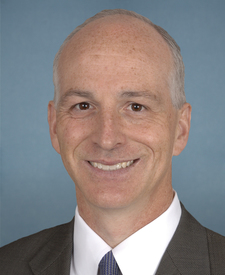
See how Adam Smith's votes line up with your values.
DeepSyte scores Adam Smith's record on the issues you care about — not party, not press releases. Take the 2-minute values quiz to see your personal alignment.
Sign in and take the values quiz to see how Adam Smith's votes line up with your views.
Prediction track record
How often we called Adam Smith's passage votes correctly, from their stated positions on each bill's tagged topics. Excludes “unclear” calls and abstentions.
A joint resolution to direct the removal of United States Armed Forces from hostilities within or against the Islamic Republic of Iran that have not been authorized by Congress.
To prohibit the disclosure of records by the Secretary of Housing and Urban Development of individuals for the purposes of immigration enforcement, and for other purposes.
A joint resolution to direct the removal of United States Armed Forces from hostilities within or against the Islamic Republic of Iran that have not been authorized by Congress.
Based on 1 data point across public statements and recorded votes · AI analysis of public records
119-hr-2913·Consistent
Ukraine Support Act
80/100
What they said
Oct 19, 2026
The release criticizes the President's executive order waiving congressionally mandated sanctions on Russia and calls on Congress to pass a sanctions bill that it says would better support Ukraine.
The statement calls for a Congressional sanctions bill that would better support Ukraine and criticizes the waiver of Russia sanctions, while the Ukraine Support Act imposes extensive sanctions on Russian entities and provides support to Ukraine, and the representative voted yes on passage. The statement does not address the bill's specific lend-lease, reconstruction fund, or disinformation provisions, so alignment is directional rather than complete.
Pairs with ambiguous language and high uncertainty are withheld until more data is available. Procedural, cloture, and amendment votes are excluded — they don't cleanly signal substantive support or opposition.
Pro analysis
AI rep analysis — Pro
Get an AI-narrated read on Adam Smith's full voting record against your stated values — aligned themes, conflicts, notable votes, and what to watch for.
Positions Adam Smith took during their campaign, scored against their subsequent record — public statements cross-checked with related votes. “Kept” means 80%+ of those statement-vs-vote pairs aligned; “Broken” means 30% or fewer.
0 kept0 broken0 mixed0 no action yet
Adam Smith has 22 tracked positions but no scored statement-vs-vote pairs touching them yet. Verdicts will appear here as related statements and votes accumulate.
No action yetSupports
A government-run public health insurance option should be added to the ACA marketplace.
“He supports the State-Based Universal Health Care Act, which protects Washington's health-care model from attempts to dismantle ACA coverage.”
The government should provide healthcare for everyone.
“He supports banning members of Congress from trading stocks, forcing polluters to pay for environmental cleanup, creating a universal healthcare system”
The U.S. should do more to enforce immigration laws and secure the border.
“Adam cosponsored the VISIBLE Act, which requires immigration enforcement officers to clearly display visible identification during public-facing enforcement actions”
The government should set legally enforceable limits on greenhouse gas emissions.
“He is leading the effort to transition our economy to a clean-energy future by reducing our dependence on foreign energy, creating green jobs and taking on Big Polluters.”
Tariffs on foreign goods should be used to protect American jobs.
“support a lawsuit brought by 12 States' Attorneys against the Trump Administration for abusing emergency powers under IEEPA to unlawfully impose reckless, across-the-board tariffs.”
Presidents should be able to impose broad tariffs unilaterally under emergency powers (IEEPA-style authority).
“support a lawsuit brought by 12 States' Attorneys against the Trump Administration for abusing emergency powers under IEEPA to unlawfully impose reckless, across-the-board tariffs.”
Cities should have to ease their zoning rules to qualify for federal infrastructure money.
“He sponsored a major zoning and permitting reform bill to incentivize cities and counties to cut red tape and build more housing near jobs and transit.”
Passage votes where Adam Smith broke ranks with ≥75% of Democrats. Threshold catches substantively partisan splits; unanimous-ish or close votes are excluded.
Rep. Smith Statement on West Bank Settler Violence
Position: Calls for sanctions on individuals and entities destabilizing the West Bank, urges Congress to pass the West Bank Violence Prevention Act, and criticizes Israeli government actions including retroactive legalization of outposts and settlement projects such as E1 as enabling settler violence.
WASHINGTON, D.C. (October 19, 2026) – Today, Congressman Adam Smith (WA-09) released the following statement:
“Unchecked settler violence in the West Bank is unacceptable. Within the last several days, Palestinians, European diplomats, and American journalist Heidi Levine have faced horrifying attacks by settlers.
Condemnations, opening of investigations, and the arrest of 10 settlers today is a start, but far more must be done to rein in settler violence. When Prime Minister Netanyahu’s government retroactively legalizes outposts, when Finance Minister Smotrich and National Security Minister Ben-Gvir openly support settlement expansion, and when settlement projects such as E1 are allowed to proceed, all these actions enable further settler violence.
We must ensure perpetrators of instability in the West Bank are held accountable. Congress should pass the West Bank Violence Prevention Act, legislation I introduced with Representatives Nadler and Himes that would sanction individuals and entities destabilizing the West Bank. Those threatening peace and stability in the West Bank must face consequences to prevent further terror and unrest.”
###
Rep. Smith on the Need for Negotiated Settlement in Iran
Position: The release criticizes the administration's military campaign against Iran and calls for a negotiated diplomatic settlement, similar to the Joint Comprehensive Plan of Action, to end the conflict.
“President Trump’s decision to launch an unnecessary war of choice with Iran has been disastrous. The war has resulted in the deaths of at least 19 service members and more than 800 wounded, over $40 billion in taxpayer dollars spent, thousands of civilians killed and injured, spiking gas prices, rising costs for everyday American families, and further regional instability.
"The administration has not accomplished its strategic objectives after over seven months of war. The President is in denial and continues to insist on prosecuting this war despite a lack of evidence and coherent strategy for how the war can achieve its aims. It is far past time for President Trump to wake up to reality and evaluate the real options on the table that will best serve the interests of the American people and our regional partners.
"It should be obvious by now that the only logical end to this war is a negotiated settlement achieved through diplomatic engagement by skilled negotiators, similar to the Joint Comprehensive Plan of Action President Trump destroyed, before it continues to spiral even more out of control. We need actual diplomats working to achieve actual peace."
###
Issues:
International Leadership and Foreign Affairs
Rep. Smith Statement on Executive Order Waiving Russian Sanctions
Position: The release criticizes the President's executive order waiving congressionally mandated sanctions on Russia and calls on Congress to pass a sanctions bill that it says would better support Ukraine.
"Last night, President Trump signed an executive order waiving sanctions on Russia mandated by Congress in the Lindsey O. Graham Sanctioning Russia and Iran Act, just two days before the law was set to take effect. By waiving these sanctions, President Trump is yet again siding with his dictator friend Putin and leaving President Zelensky and the Ukrainian people to fend for themselves.
"Donald Trump’s pro-Russia platform undermines global stability and is not in the interests of the United States. Over the past two weeks alone, Trump cut an illegal diesel deal with Putin that will do nothing to rein in sky-high diesel prices that are a result of the administration’s war in Iran, falsely claimed he achieved an energy ceasefire, and refused to provide transparency regarding restrictions on Starshield. Trump continually shows he would prefer to support an authoritarian regime over a democratic country.
"Trump is not operating in reality. Congress must reassert its authority, pass a sanctions bill that will actually support Ukraine, make it clear Trump is not above the law, and stop the President from running this country into the ground."
###
Issues:
International Leadership and Foreign Affairs
Rep. Smith and Rep. Krishnamoothi Introduce Legislation to Help Immigrants Enter the Health Care Workforce
Position: The release supports introduced legislation, the Immigrants in Nursing and Allied Health Act and the Internationally Trained Physicians Assistance Act, to reduce barriers that prevent immigrant health professionals from obtaining licensure and entering the U.S. health care workforce.
WASHINGTON, D.C. (October 1, 2026) – Today, Congressman Adam Smith (WA-09) and Congressman Raja Krishnamoorthi (IL-08) introduced the Immigrants in Nursing and Allied Health Act and the Internationally Trained Physicians Assistance Act, two bills to help immigrants enter the U.S. health care workforce and address the nation's growing shortage of health care providers. A 2022 study by the Migration Policy Institute found that 2.1 million college-educated immigrants are unemployed or underemployed, even as sectors like health care face mounting workforce shortages — including a projected shortfall of up to 48,000 primary care physicians by 2034, according to the Association of American Medical Colleges.
“We have thousands of skilled nurses, doctors, and health professionals in this country whose training and expertise are going to waste because their professional expertise is not recognized and they face numerous barriers to achieve the needed licensure. At the same time, our health care system is stretched thin and patients are waiting longer for care,” said Congressman Adam Smith. “This bill package helps immigrants put their skills to work and serve their communities and will rebuild the health care system.”
“Skilled doctors, nurses, and other health professionals should have the opportunity to put their training and expertise to work caring for patients,” said Congressman Raja Krishnamoorthi. “Our legislation would help qualified immigrants overcome unnecessary barriers to entering the health care workforce while helping communities address critical provider shortages. When we make better use of the talent already in our communities, we strengthen our health care system and expand access to care.”
Statements of Support
“Across the U.S., communities face critical health workforce shortages, yet immigrant and refugee health professionals—who possess in-demand skills—remain underemployed. Communities need this talent, and recognizing it is an essential step. By streamlining licensure and addressing unnecessary barriers, we can meet urgent labor needs and improve access to quality care. We support efforts, including at the state and federal levels, to advance policies that promote community prosperity by ensuring that immigrants can fully contribute their training and skills to their local economy.” - Kit Taintor, Head of US Policy and Practice, World Education Services (WES)
“We are proud to support these bills, which will expand opportunities for immigrant professionals while helping address critical workforce shortages in the healthcare sector," said Alice Kang, President of Upwardly Global. "With demand for healthcare workers rising nationwide, we should be creating pathways that allow qualified immigrants and refugees to contribute their expertise. This legislation will strengthen our healthcare system, bolster the economy and support safer, more resilient communities. Upwardly Global will continue to stand with Rep. Smith in moving this work forward.”
"Many members of our team hold advanced education and expertise in medicine, nursing, and behavioral health. Yet they are unable to practice here due to costly additional education requirements and complex licensing procedures. At a time when we are confronted with a significant healthcare provider shortage—and as we work to diversify the healthcare workforce—it is critical to consider policies that create pathways for these highly skilled professionals to contribute to patient care,” said Tamara Cyhan Cunitz, MN, RN, Executive Director, Nashi Immigrants Health Board. “These bills introduced by Rep. Smith would expand opportunities for immigrant healthcare professionals to serve patients in our community and region. These measures would not only strengthen our workforce with qualified providers but also enable community members to receive care from clinicians who understand their language and cultural background.”
Background
The Immigrants in Nursing and Allied Health Act would help immigrants, regardless of previous health care experience, enter the nursing and allied health workforce by:
Creating grants for programs that provide training, licensing, certification, and case management for immigrants interested in entering the health care field; and
Opening eligibility for the National Health Service Corps (NHSC) to non-U.S.-citizen immigrants.
An estimated 200,000 nurses per year will need to be hired to meet increased demand and replace retiring nurses. This bill supports immigrants entering nursing or an allied health profession, including dental hygienists, dietitians, medical technologists, occupational therapists, physical therapists, respiratory therapists, and speech language pathologists.
A fact sheet about the Immigrants in Nursing and Allied Health Act can be found here. The bill text can be found here.
The Internationally Trained Physicians Assistance Act would help internationally trained physicians (ITPs) obtain a U.S. medical license by:
Incentivizing states to create temporary licensing programs allowing internationally educated immigrants with medical degrees to practice under supervision while completing the training and certification needed for a U.S. medical license;
Establishing guaranteed medical residency slots for ITPs to practice in predominantly medically underserved communities; and
Providing grants to help cover the cost of exam preparation, testing, certification, ESL classes, and case management for ITPs in need of financial assistance.
Apart from Canada, internationally trained physicians cannot immediately apply to sit for the U.S. Medical Licensing Exam (USMLE), and the cost of licensing, test preparation, and certification often puts a U.S. medical license out of reach, even for highly trained professionals. Many states have created alternative licensure pathways, but more must be done at the federal level to support these reforms nationwide to expand high-quality health care access.
A fact sheet about the Internationally Trained Physicians Assistance Act can be found here. The bill text can be found here.
Endorsements: International Medical Graduates Academy (TIMGA), Nashi Immigrants Health Board, Northwest Immigrant Rights Project, Sea Mar Community Health Center, Seattle Indian Health Board, Spring Institute for Intercultural Learning, Talent Beyond Boundaries, Upwardly Global, World Education Services (WES)
###
Issues:
America's Workers
Health Care
Immigration Reform
Local Economy and Business
Congressman Smith Introduces Bipartisan Bill to Bolster 988 Mental Health Crisis Response
Position: The release announces introduction of the 988 Crisis Response Act, which would authorize $100 million in grants for mobile crisis response teams and make permanent and expand the 85% federal matching assistance percentage for Medicaid reimbursement of crisis call centers, mobile crisis response teams, and crisis stabilization facilities.
WASHINGTON, D.C. – Today, Congressman Adam Smith (WA-09) introduced the 988 Crisis Response Act, bipartisan legislation to fund professional mobile crisis response teams (MCRTs) dispatched by 9-8-8 Lifeline operators and establish Medicaid reimbursement for crisis call centers and resources. Congressman Smith is joined in introducing this legislation by Representatives Kim Schrier, M.D. (WA-08), Brian Fitzpatrick (PA-01), and David Valadao (CA-22) as part of the larger 988 Implementation Act.
“When someone has a mental health crisis, they deserve timely, comprehensive treatment — not just a trip to an overcrowded emergency room,” said Congressman Smith. "I've witnessed the important work of our mobile crisis response teams and broader behavioral health workforce in King County, and I appreciate their dedication to providing critical care to our community's most vulnerable. This bill will provide the reliable funding needed to strengthen these teams and help expand this model of care nationwide. Everyone deserves the right help, in the right setting, at the right time. I'm proud to join my colleagues in this effort.”
BACKGROUND: The 988 Crisis Response Act provides sustainable funding streams for mobile crisis response teams (MCRTs) and other elements of the crisis care continuum. This includes Medicaid reimbursement for crisis call centers, MCRTs, and crisis receiving and stabilization facilities, in line with the Substance Abuse and Mental Health Administration (SAMHSA) recommendation that insurers cover all three pillars of the crisis care continuum. The bill also provides grant funding to build MCRT capacity.
Specifically, this bill:
Authorizes $100 million for the Mental Health Crisis Response Partnership program for communities to create or enhance existing mobile crisis response teams, composed of licensed counselors, clinical social workers, physicians, paramedics, crisis workers, and/or peers. Teams must respond to people in crisis and provide immediate stabilization and referral to behavioral health services and supports.
Makes permanent the 85% federal matching assistance percentage (FMAP) for mobile crisis response teams and expands the FMAP to crisis call centers and crisis stabilizing and receiving facilities, ensuring unambiguous Medicaid financing for all three pillars of the crisis care continuum.
The bill text is available [here]. A fact sheet on the legislation is available [here].
“As a pediatrician, I have seen firsthand how severe our youth and adult mental health crisis has become,” said Congresswoman Schrier. “It is so important that when our family members, loved ones, and neighbors are in crisis, they can get immediate help. Mobile crisis response teams, with licensed counselors, physicians, crisis workers, and paramedics, dispatched by 988 save lives, deescalate dangerous situations, and keep us all safe. We need to make sure these teams are always available for every American as a reliable resource when our community members need help.”
“A mental health crisis does not wait for business hours, and a family asking for help should never be left wondering whether anyone will come,” said Congressman Fitzpatrick, Co-Chair of the Bipartisan Mental Health and Substance Use Disorder Task Force. “For years, I have worked with families, first responders, providers, and advocates who understand that the right intervention at the right moment can change the course of a life. The 988 Lifeline gave Americans a number to call; now we must make certain there is a strong system of care ready to answer that call. Our bipartisan 988 Crisis Response Act will help communities put trained professionals on the ground, strengthen crisis stabilization services, and ensure that when someone reaches out in their most vulnerable hour, help is not merely promised—it arrives.”
“Across the Central Valley, mobile crisis response teams work alongside law enforcement to respond to individuals in crisis, deescalate difficult situations, and connect people with vital mental health services,” said Congressman Valadao. “I know how deeply personal and impactful this work is for our community, which is why I’m proud to join my colleagues in introducing the 988 Crisis Response Act. This bipartisan bill will strengthen federal support for mobile crisis response teams and the broader crisis care continuum, helping ensure these critical services remain available to those who need them most.”
If you or a loved one needs help, call or text 988.
###
Rep. Smith Introduces Bill to Put Washington's Aerospace Workers and Safety Experts on Manufacturer Boards
Position: Rep. Smith introduced the Safety Starts at the Top Act, which would require large aerospace manufacturers with at least $15 billion in annual gross revenue to include two labor representatives and two aerospace safety experts on their boards of directors, and to certify compliance annually to the FAA Administrator.
WASHINGTON, D.C. (August 7, 2026) – Rep. Adam Smith today introduced the Safety Starts at the Top Act of 2026, legislation that would require large aerospace manufacturers to include worker representatives and safety experts on their boards of directors.
Washington's 9th District sits at the center of the nation's aerospace manufacturing workforce, home to thousands of machinists, engineers, and skilled tradespeople who design and build commercial aircraft flown by millions of passengers every day. The bill would ensure that expertise has a permanent, guaranteed voice at the highest levels of corporate decision-making.
“Washington's aerospace workforce builds some of the safest aircraft in the world, and they know better than anyone what it takes to keep it that way. This bill gives them a permanent seat at the table where safety decisions get made,” said Rep. Adam Smith.
The bill is the House companion to legislation introduced by Sen. Edward Markey (D-Mass.) in the Senate.
“For years, Boeing has prioritized financial engineering over mechanical engineering, undermining the company’s safety culture. It's time for that to change,” said Senator Edward Markey. “Without input from the workers on the factory floor every day, Boeing is flying blind. By requiring Boeing’s Board to include worker and safety representatives, the Safety Starts at the Top Act will ensure that Boeing listens to the professionals who know safety best.”
The Safety Starts at the Top Act would require any Organization Designation Authorization (ODA) holder with at least $15 billion in annual gross revenue to annually certify to the Federal Aviation Administration (FAA) Administrator that its board of directors includes two labor representatives — one from each union representing employees directly involved in aircraft design and manufacturing — and two aerospace safety experts with proven, demonstrable safety outcomes. The FAA Administrator would be directed to rescind the ODA delegation of any manufacturer that does not meet these requirements within 90 days of enactment.
The Safety Starts at the Top Act is endorsed by the International Association of Machinists & Aerospace Workers (IAM), IAM Local 751, IAM District W24, and SPEEA/IFPTE Local 2001.
Statements of Support:
“Safe airplanes are built by people who are empowered to speak up and leaders who are willing to listen. America's aerospace engineers and technical professionals bring decades of expertise to designing and manufacturing the world's safest aircraft, yet too often their voices have not reached the highest levels of corporate leadership. The Safety Starts at the Top Act helps ensure that the knowledge and experience of frontline workers, together with aviation safety experts, are represented where the most consequential decisions are made. That's good governance, good public policy, and most importantly, good for the flying public,” said Brandon Anderson, Legislative Director of the Professional Engineering Employees in Aerospace, (SPEEA, IFPTE Local 2001).
“IAM 751 appreciates and supports this proposed legislation and if passed would ensure that workers voices are heard at the highest levels when decisions impacting aerospace manufacturing and safety are being discussed and implemented,” said Jason Chan, President & Directing Business Representative for the International Association of Machinists (IAM) District 751.
“IAM District W24 supports the Safety Starts at the Top Act of 2026. When passed, it will allow workers' concerns and their voices to be heard. Safety has been a foundation of our Union, and when decisions are made with workers' input, manufacturing and working safely can be mutually beneficial,” said Brandon Bryant, President & Directing Business Representative for the International Association of Machinists (IAM) District W24.
The bill text for the Safety Starts at the Top Act is available here. A fact sheet on the legislation is available here.
Rep. Adam Smith Introduces Resolution Calling for Equal Tax Treatment of Wage Income and Capital Gains
Position: Rep. Adam Smith introduced a resolution calling on Congress and the Ways and Means Committee to simplify the tax code so that wage income and capital gains are taxed equally. The release argues that the wealthy pay lower effective tax rates than wage earners due to loopholes.
WASHINGTON, D.C. (July 31, 2026) – Today, Rep. Adam Smith introduced a resolution built on a simple idea: a dollar earned should be a dollar taxed, full stop. This resolution calls on Congress to start simplifying the tax code so working-class Americans and the ultra-wealthy play by the same rules.
"For decades, we've asked working families to play by one set of rules while the wealthiest Americans play by another. A teacher, a machinist, a nurse — they see taxes taken out of every paycheck before they ever see the money,” said Rep. Adam Smith. “Meanwhile, the ultra-wealthy grow their fortunes by trillions of dollars a year; paying next to nothing in taxes due to loopholes emplaced quietly over the past 40 years. It's time we started simplifying the tax code around one basic principle: a dollar earned is a dollar taxed, no matter who earns it or how.”
“This resolution tells Congress and the Ways and Means Committee to stop looking away from a system that treats identical gains completely differently depending on whose name is on them. If we're serious about the debt and serious about fairness, this is where we have to start."
The resolution has drawn early support from tax law experts, including Ray D. Madoff, Professor at Boston College Law School and author of “The Second Estate: How the Tax Code Made an American Aristocracy."
"I've spent years studying this issue, and the fix isn't complicated: broaden the income tax so it captures every form of monetary gain, not just wages. This resolution asks the correct, and long overdue questions. I'm glad to see Congress willing to take a serious look at why our tax code treats income so differently depending on where it comes from," said Ray D. Madoff, Professor at Boston College Law School.
Here's the problem:
The country is $39 trillion in debt — and the tax system isn't bringing in enough money to keep up, because too much income never gets taxed in the first place.
Regular paychecks are carrying the load. Income taxes make up about 49% of all federal revenue, and payroll taxes make up another 35% — meaning 84 cents of every federal dollar comes from taxes on wages. Taxes on investments, inheritances, and business ownership make up the rest.
The wealthiest 1% now hold about $55 trillion in net worth, while most Americans don't have enough savings to cover an emergency. Seventy years ago, top earners paid a 94% tax rate on that income. Today the top rate is just 37% — and many still pay far less through additional loopholes.
Billionaires can grow richer by billions a year and barely pay taxes on it, because that money comes from stock and business ownership going up in value, not a paycheck. A dollar earned that way isn't taxed anywhere near like a dollar earned at a job.
Some of the richest people in America pay a lower tax rate than teachers and nurses. A 2021 investigation into leaked IRS records found several of the wealthiest Americans paid a true tax rate in the low single digits, or no income tax at all due to tax loopholes, compared to how much their wealth grew each year — lower than many middle-class workers pay on their salaries.
The resolution calls on the House Ways and Means Committee to hold hearings on this gap, and urges Congress to start simplifying the tax code so every American — whether they earn a paycheck or sell a stock — is taxed the same way on the same amount of money earned.
The full text of the resolution is available here . A fact sheet is available here.
Smith and Krishnamoorthi Reintroduce Welcome Back to the Health Care Workforce Act to Strengthen America's Health Care Workforce
Position: Sponsors introduced the Welcome Back to the Health Care Workforce Act to create an HRSA grant program helping internationally educated health care professionals overcome licensing, credentialing, and language barriers to practice in the U.S.
WASHINGTON, D.C. (July 17, 2026) — Today, Congressman Adam Smith (D-WA) and Congressman Raja Krishnamoorthi (D-IL) introduced the Welcome Back to the Health Care Workforce Act, legislation to help address the nation's persistent health care workforce shortage by helping internationally educated health care professionals overcome barriers to practicing in the United States. Of the two million college-educated immigrants currently living in the United States, roughly 14 percent hold health-related degrees. Yet, many remain unable to work in their professions because of licensing, credentialing, language, and other barriers, even as hospitals, clinics, and long-term care providers across the country struggle to fill critical positions. According to the Migration Policy Institute, this underutilized talent represents a missed opportunity to strengthen the nation's health care workforce while contributing to an estimated $10 billion in lost federal, state, and local tax revenue each year.
"It makes no economic sense to have trained nurses and doctors working far outside their field while hospitals can't fill shifts and patients wait longer for care," said Congressman Smith. "This bill doesn't lower a single standard — it removes barriers that keeps qualified professionals from contributing at the level of their skills. That's a practical, commonsense fix to a workforce problem employers across the country are asking us to solve."
"The 9th District is one of the most diverse in the nation, and that diversity is an economic asset. In Kent, SeaTac, Tukwila, and South Seattle, we have neighbors with health care degrees and years of clinical experience who want nothing more than to serve their communities," Smith continued. "Putting their talents to work means shorter wait times, more culturally competent care, and stronger family incomes right here in King County."
"Across the country, communities are struggling with health care workforce shortages while highly qualified doctors, nurses, and other health professionals trained overseas remain sidelined by unnecessary barriers," said Congressman Krishnamoorthi. "Our legislation will help connect these talented professionals with the support they need to earn U.S. credentials, join the workforce more quickly, and expand access to quality care for patients across the country."
Specifically, the Welcome Back to the Health Care Workforce Act would establish a grant program administered by the Health Resources and Services Administration (HRSA) to:
Support local- and state-level partnerships among health care organizations, community-based organizations, institutions of higher education, and state and local governments to help internationally educated health care professionals enter the U.S. health care workforce.
Help internationally educated health care professionals overcome barriers to licensure and employment by:
Assisting with obtaining overseas academic and training records and navigating the U.S. licensing and credentialing process;
Providing work-readiness programs, peer support, mentoring, and culturally competent career counseling;
Expanding access to prerequisite coursework, continuing education, and English-language instruction; and
Supporting opportunities to address classroom and clinical instructor shortages.
Prioritize partnerships focused on helping health care workers serve rural communities or fill critical workforce shortages in underserved areas.
The legislation is supported by: Advocates for Community Health, Afghan Cultural Society, American Geriatrics Society, American Public Health Association, American Seniors Housing Association, America's Essential Hospitals, Arkansas United, Association of Clinicians for the Underserved, Association of Dental Support Organizations, Ballad Health, California Immigrants Resources Center, CGFNS International, Chemeketa Community College, Federation of American Hospitals, Gerontological Society of America, Global Cleveland, Intealth, International Institute of Buffalo, Jewish Family Service of San Diego, LeadingAge, Lifepoint Health, Lutheran Family Services Rocky Mountains, Medicos Unidos Venezuela, National AHEC Organization, National Association for Geriatric Education, National Association of Community Health Centers, National Association of Hispanic Nurses, National Association of Indian Nurses of America, National Association of Rural Health Clinics, National Black Nurses Association, National Immigration Forum, National League for Nursing, National Rural Health Association, National Skills Coalition, Pars Equality Center, Los Angeles, Philippine Nurses Association of America, Portland Refugee Support Group, Providence Public School, Restore Education, RUSA LGBTQ, Spring Institute for Intercultural Learning, Synergy Texas, Talent Beyond Boundaries, The International Medical Graduates Academy (TIMGA), The Welcoming Center, Tiyya Foundation, UnidosUS, Upwardly Global, US Together, Virginia Rural Health Association, Hospital and Healthcare Association, Welcome Back Initiative, Welcoming City, and World Education Services.
Click here to read the full text of the Welcome Back to the Health Care Workforce Act.
Rep. Adam Smith Statement on Trump Administration Employing Military Force Against Iran
Position: Rep. Smith opposes the Trump Administration's preemptive military strikes against Iran, arguing they lack congressional authorization, risk escalation, and represent a war of choice. He advocates for diplomatic engagement, coalition-building, and targeted economic sanctions as more appropriate pressure mechanisms.
WASHINGTON, D.C. – U.S. Representative Adam Smith (D-Wash.), Ranking Member of the House Armed Services Committee, released the following statement in response to the Trump Administration employing U.S. military force against Iran.
“Overnight, the President ordered preemptive military strikes against Iran. Let me be clear that I oppose these preemptive strikes and am concerned the situation is prone to rapid escalation that puts Americans at risk and threatens to drag us into a war of choice with no strategic endgame.
“This offensive use of military force against Iran, absent congressional authorization, is contrary to domestic and international law. Our system of checks and balances is crucial to ensuring that we adhere to the law and, hopefully, learn from the mistakes of our past.
“There is no question that the Iranian regime is guilty of horrific crimes against its own people and conducts destabilization activities in the region. That is why the Joint Comprehensive Plan of Action (JCPOA) was so important for limiting Iran’s nuclear ambitions and allowed access into the country to monitor their nuclear activities. The Trump Administration’s abandonment of that agreement, which was overwhelmingly beneficial to U.S. and regional interests, has left us without a key point of leverage at a critical time.
“We absolutely should exert pressure on Iran in order to ensure that they don’t build a nuclear weapon. However, the far more appropriate options for exerting that pressure are continued diplomatic engagement, coalition building with partners and allies in the region, and enforcement of targeted economic sanctions. These options are also far more likely to succeed without risking war with a country with advanced weapons systems and a demonstrated willingness to use those systems against thousands of American service members in the region and beyond.
“Make no mistake, the president's actions have dragged the United States into a war of his choosing. Regardless of my opposition to the course of action the president has unilaterally taken, my thoughts are with the brave men and women in uniform, and their families.”
###
Issues:
International Leadership and Foreign Affairs
Position: Congressman Smith supports the ROTOR Act, which would strengthen collision-avoidance standards and improve coordination between civilian and military aircraft operations in shared airspace following a fatal mid-air collision.
WASHINGTON, D.C. – Congressman Adam Smith (D-Wash.), Ranking Member of the House Armed Services Committee, released the following statement about the failed vote for the ROTOR Act on the floor of the House of Representatives.
“Last year’s tragic mid-air collision between an American Airlines regional jet and a U.S. Army Black Hawk helicopter took 67 lives and devastated families and communities across our country. It was the deadliest U.S. aviation disaster in decades. The subsequent investigation by the National Transportation Safety Board identified systemic failures in how civilian and military aircraft operate in shared airspace.
“More recently, serious coordination failures in El Paso between the Department of Defense (DoD), the Department of Homeland Security, and civilian authorities led to the temporary closure of airspace affecting an international commercial airport and its surrounding community. That incident underscores that these challenges are not isolated — they are systemic and ongoing. These failures demand legislative action.
“Today, the House of Representatives considered the ROTOR Act as an initial response to this tragic disaster. The bill would have made changes to strengthen collision-avoidance standards and improve aviation safety, which is why I voted in favor of its passage.
“I’m disappointed that the ROTOR Act failed to pass the House of Representatives. This legislation began the important process of addressing aviation safety and improved communication between civilian and military aircrafts.
“The tragedy that occurred over Washington, D.C. last year made clear that fragmented oversight and poor coordination cannot continue. I urge Speaker Johnson to work with the relevant committees, departments and agencies, families, and stakeholders to consider aviation safety legislation so that Congress can quickly enact the full scope of reforms necessary to protect the flying public and prevent another catastrophic loss of life."
BACKGROUND:
Link to the text of the ROTOR Act.
###
Issues:
Aviation Noise and Emissions
Transportation and Infrastructure
Source: GDELT 2.0 GKG, filtered to a curated list of national outlets. Inclusion is not endorsement; opinion pieces and reported news are mixed.
Recent stock activity
Periodic transaction reports filed under the STOCK Act — disclosed by the rep, sourced from public filings.
No disclosed trades on record.
Source: open-data mirrors of the Senate eFD and House Clerk financial-disclosure systems. Disclosure within 30 days of trade is required by law (45 for spouse/dependent trades).
Top PAC donors · 2026 cycle
Political action committees that gave the most to this rep's principal campaign committee this cycle. PAC giving is direct organizational support — industry, ideological, or leadership.
1.CARPENTERS LEGISLATIVE IMPROVEMENT COMMITTEE UNITED BROTHERHOOD OF CARPENTERS AND JOINERSLabor2 contributionsTrade-union PAC for the United Brotherhood of Carpenters and Joiners — backs prevailing-wage protections, federal infrastructure funding, project labor agreements, and worker safety standards.AI$10,000
2.AMAZON.COM SERVICES LLC SEPARATE SEGREGATED FUND2 contributions$10,000
3.MATSON, INC. FEDERAL ELECTION COMMITTEE2 contributions$10,000
4.LABORERS' POLITICAL LEAGUE-LABORERS' INTERNATIONAL2 contributions$10,000
5.KRATOS DEFENSE & SECURITY SOLUTIONS, INC. POLITICAL ACTION COMMITTEE2 contributions$10,000
6.HUNTINGTON INGALLS INDUSTRIES, INC. EMPLOYEES PAC3 contributions$10,000
7.BAKER DONELSON BEARMAN CALDWELL & BERKOWITZ PC PAC2 contributions$10,000
8.L3HARRIS TECHNOLOGIES, INC. PAC3 contributions$10,000
9.HONEYWELL INTERNATIONAL PACDefense5 contributionsDefense and aerospace contractor PAC — backs candidates supporting federal defense spending, military modernization, and aerospace manufacturing.AI$10,000
10.EMPLOYEES OF NORTHROP GRUMMAN CORPORATION PAC2 contributions$10,000
Source: OpenFEC (api.open.fec.gov) Schedule A receipts where contributor type is “committee.” Aggregated by contributing committee. Self-transfers from joint-fundraising / victory committees are excluded.
Top individual contributors · 2026 cycle
Itemized individual contributions over $200 to this rep's campaign committee, aggregated by donor employer. PAC giving is shown above; this section is people, not organizations.
1.ANTHROPIC$50,000
2.PALANTIR TECHNOLOGIES$38,500
3.MICROSOFT$36,597
4.LOCKHEED MARTIN$28,500
5.SELF$20,695
6.KRATOS DEFENSE & SECURITY SOLUTIONS$19,500
7.L3 HARRIS TECHNOLOGIES$19,250
8.BLUE ORIGIN$17,500
9.BOEING$15,100
10.BAE SYSTEMS$15,000
Source: OpenFEC Schedule A receipts where contributor type is “individual,” aggregated by the donor's self-reported employer. This is a geographic / industry correlation, not a corporate endorsement.