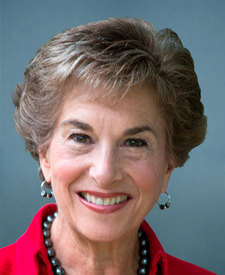
See how Janice D. Schakowsky actually votes — against your values.
DeepSyte scores Janice D. Schakowsky's record on the issues you care about — not party, not press releases. Take the 2-minute values quiz to see your personal alignment.
Sign in and take the values quiz to see how Janice D. Schakowsky's votes line up with your views.
Prediction track record
How often we called Janice D. Schakowsky's passage votes correctly, from their stated positions on each bill's tagged topics. Excludes “unclear” calls and abstentions.
To prohibit the disclosure of records by the Secretary of Housing and Urban Development of individuals for the purposes of immigration enforcement, and for other purposes.
No paired statements and votes yet for Janice D. Schakowsky
We haven't yet found statement/vote pairs on the same topic for Janice D. Schakowsky. This usually means either the rep hasn't taken public positions on bills that have come to a passage vote, or those bills haven't been tagged yet. The checker runs as new press releases and votes come in.
Pro analysis
AI rep analysis — Pro
Get an AI-narrated read on Janice D. Schakowsky's full voting record against your stated values — aligned themes, conflicts, notable votes, and what to watch for.
We haven't extracted campaign positions for Janice D. Schakowsky yet. Once their campaign website or position pages are processed, this card will track what they said vs how they voted.
Crossing the aisle
Passage votes where Janice D. Schakowsky broke ranks with ≥75% of Democrats. Threshold catches substantively partisan splits; unanimous-ish or close votes are excluded.
Schakowsky, Blumenthal Introduce Resolution to End Roadway Fatalities & Improve Traffic Safety
Position: The resolution advocates for federal action to reduce traffic fatalities to zero by 2050 through improved data collection, technology implementation, and targeted investment in transportation safety, with particular attention to disparities affecting communities of color and low-income areas.
Full Text of Resolution (PDF)
WASHINGTON - Today, U.S. Representative Jan Schakowsky (IL-09) and U.S. Senator Richard Blumenthal (D-CT) reintroduced the Road to Zero resolution to reduce traffic fatalities and improve roadway safety for drivers, passengers, pedestrians, bicyclists, and others on the road. The resolution aims to end roadway fatalities by 2050 by improving data collection and promoting access to safe, reliable transportation.
“I’ve seen the devastating impact that car crashes and unsafe vehicles have on families and communities, and it is simply unacceptable that so many lives are still being lost on our roadways,” said Congresswoman Jan Schakowsky. “By reintroducing the Road to Zero resolution, we are reaffirming our commitment to safer streets and a future where no one has to fear losing a loved one on the road. We can and must do better to make our streets safer for drivers, passengers, pedestrians, and cyclists, and we remain committed to working toward ending these unnecessary traffic deaths and injuries by 2050.”
“Road to zero is reachable and responsible,” said Senator Richard Blumenthal. “Roads must be made safer for all—pedestrians and bicyclists, as well as car users. Improved technology and increased investment provide the opportunity—and imperative—to cut road tragedies.”
The Road to Zero resolution highlights the troubling number of traffic fatalities and crashes in the United States, with many of the deaths resulting from distracted and alcohol-impaired driving. The resolution also notes the deep history of inequality in the United States’ transportation systems as crashes have a disproportionate impact on people of color and low-income communities. Citing the success of seatbelts, speed limits, and other technology in preventing injuries and fatalities, the measure encourages federal agencies to implement interventions and improve data collection to prevent crashes.
Data from the National Highway Traffic Safety Administration (NHTSA) has shown a steady decline in traffic fatalities since the implementation of the Bipartisan Infrastructure Law, which included historic funding for transportation safety and the Safe Streets and Roads for All grants to address high-crash areas. While nearly 37,000 people lost their lives to traffic crashes in 2025, NHTSA’s data shows a 6.7 percent decline in fatalities compared to the previous year. The Road to Zero resolution seeks to build on this progress and achieve zero roadway fatalities by the year 2050.
The resolution is endorsed by the National Safety Council, Consumer Reports, Vision Zero Network, and Families for Safe Streets.
The legislation is cosponsored by U.S. Representatives Dina Titus (NV-01), LaMonica McIver (NJ-10), Eleanor Holmes Norton (DC-AL), Grace Meng (NY-06), Jared Huffman (CA-02), Chuy García (IL-04), Melanie Stansbury (NM-01), Steve Cohen (TN-09), Emanuel Cleaver (MO-05), Raja Krishnamoorthi (IL-08), and Pramila Jayapal (WA-07) and U.S. Senators Jeff Merkley (D-OR), Bernie Sanders (I-VT), Chris Van Hollen (D-MD), Tina Smith (D-MN), Edward J. Markey (D-MA), and Ben Ray Luján (D-NM).
###
Issues:Consumer ProtectionAuto Safety
Schakowsky, Blunt Rochester Introduce Legislation to Improve Maternal Health Care and Save Moms’ Lives
Position: The release introduces legislation to establish a Medicare and Medicaid Innovation Center demonstration project for innovative maternity care payment models and to ensure continuous health insurance coverage for pregnant women from prenatal care through one year postpartum, with emphasis on addressing racial disparities in maternal health outcomes.
Full Text of Bill (PDF)
WASHINGTON – Today, Congresswoman Jan Schakowsky (IL-09), a Founding Member of the Black Maternal Health Caucus, introduced the Innovative Maternal Payment and Coverage To (IMPACT To) Save Moms Act, legislation aimed at transforming maternity care delivery and ensuring continuity of health insurance coverage for women from prenatal care through one year postpartum. Companion legislation was introduced in the U.S. Senate by Senator Lisa Blunt Rochester (D-DE).
The legislation would establish a new Center for Medicare and Medicaid Services Innovation Center demonstration project focused on developing innovative maternity care payment models and improving maternal health outcomes nationwide.
“Black women in the U.S. are still far more likely to die from pregnancy-related causes than white women, and that is unacceptable,” said Congresswoman Jan Schakowsky. “In the richest country in the world, every person deserves access to high-quality, equitable maternal health care before, during, and after pregnancy. I’m proud to reintroduce the IMPACT to Save Moms Act alongside Senator Lisa Blunt Rochester to help create innovative maternity care payment models and expand continuous health insurance coverage for pregnant women, helping ensure timely diagnosis, monitoring, and treatment throughout pregnancy and postpartum care. No one should lose their life because our health care system failed to provide the care they needed at one of the most critical moments of their lives.”
“As a mother and grandmother, I know first-hand the joys and challenges that motherhood brings,” said Senator Lisa Blunt Rochester. “I’m proud to lead legislation that strengthens the healthcare services afforded to moms across the country. It’s time that we ensure moms receive the same caliber of care that they so often give to others.”
Specifically, the IMPACT to Save Moms Act would:
Direct the Secretary of Health and Human Services to establish a five-year Perinatal Care Alternative Payment Model Demonstration Project, giving states the ability to test new payment approaches for maternity care under Medicaid and CHIP programs.
Adjust payments based on pregnancy risk level to help ensure high-risk patients are directed to the appropriate level of care.
Tie payments to measurable health outcomes rather than volume of services.
Explicitly incorporates consideration of social determinants of maternal health into the payment model.
Support interdisciplinary care teams that include maternity care providers, mental and behavioral health professionals, registered dietitians, and perinatal health workers — with an emphasis on providers from racially and ethnically diverse backgrounds and those trained on implicit bias and racism.
Require models to consider maternal mental health conditions and substance use disorders.
Require the Department of Health and Human Services to evaluate the project’s impact on maternal health outcomes, state spending, and patient experience.
The bill is cosponsored in the House of Representatives by Reps. Alma Adams (NC-12), Nanette Barragán (CA-44), Joyce Beatty (OH-03), Wesley Bell (MO-01), Nikki Budzinski (IL-13), Salud Carbajal (CA-24), André Carson (IN-07), Sheila Cherfilus-McCormick (FL-20), Yvette D. Clarke (NY-09), Emanuel Cleaver (MO-05), Steve Cohen (TN-09), Herb Conaway (NJ-03), Angie Craig (MN-02), Danny K. Davis (IL-07), Madeleine Dean (PA-04), Suzan DelBene (WA-01), Debbie Dingell (MI-06), Dwight Evans (PA-03), Shomari Figures (AL-02), John Garamendi (CA-08), Jesús "Chuy" García (IL-04), Sylvia R. Garcia (TX-29), Josh Gottheimer (NJ-05), Adelita Grijalva (AZ-07), Jahana Hayes (CT-05), Steven Horsford (NV-04), Jared Huffman (CA-02), Glenn Ivey (MD-04), Sara Jacobs (CA-51), Jonathan Jackson (IL-01), Hank Johnson (GA-04), Julie Johnson (TX-32), Sydney Kamlager-Dove (CA-37), Raja Krishnamoorthi (IL-08), George Latimer (NY-16), Stephen F. Lynch (MA-08), Lucy McBath (GA-07), Betty McCollum (MN-04), Jennifer McClellan (VA-04), Morgan McGarvey (KY-03), LaMonica McIver (NJ-10), Gregory Meeks (NY-05), Grace Meng (NY-06), Christian Menefee (TX-18), Joseph Morelle (NY-25), Gwen Moore (WI-04), Seth Moulton (MA-06), Kevin Mullin (CA-15), Eleanor Holmes Norton (DC-At Large), Nellie Pou (NJ-09), Ayanna Pressley (MA-07), Brad Schneider (IL-10), Robert C. "Bobby" Scott (VA-03), Terri Sewell (AL-07), Lateefah Simon (CA-12), Adam Smith (WA-09), Darren Soto (FL-09), Melanie Stansbury (NM-01), Marilyn Strickland (WA-10), Emilia Sykes (OH-13), Mark Takano (CA-39), Rashida Tlaib (MI-12), Paul Tonko (NY-20), Norma Torres (CA-35), Lori Trahan (MA-03), Lauren Underwood (IL-14), Juan Vargas (CA-52), Marc Veasey (TX-33), Frederica S. Wilson (FL-24), Bonnie Watson Coleman (NJ-12), and Nikema Williams (GA-05).
###
Issues:Women's IssuesWomen's HealthHealth
Schakowsky, Dingell Introduce Legislation to Expand Home Care, Strengthen Care Workforce
Position: The representatives support expanding Medicaid home and community-based services for older adults and people with disabilities, increasing federal funding for these services, strengthening the direct care workforce through improved wages and benefits, and eliminating waiting lists for home-based care.
Full Text of Bill (PDF)
WASHINGTON – U.S. Representatives Jan Schakowsky (IL-09) and Debbie Dingell (MI-06) on Wednesday introduced the Home and Community-Based Services (HCBS) Access Act, legislation to expand access to home and community-based care for older adults and people with disabilities while strengthening the caregiving workforce nationwide.
“Older adults and people with disabilities deserve to live with dignity and age in place. Yet the United States still lacks a comprehensive long-term care policy that meets the needs of our most vulnerable communities. Medicaid Home- and Community-Based Services help fill this gap, ensuring millions of Americans can remain independent in their homes and communities,” said Congresswoman Jan Schakowsky. “I am proud to join my colleague Congresswoman Dingell in introducing this legislation to strengthen our nation’s care infrastructure by expanding access to Medicaid home care, investing in the direct care workforce, and supporting family caregivers. It’s time to move beyond discussion and deliver real national solutions to the caregiving crisis.”
“We know that the majority of individuals who require long-term care would prefer to receive it in their own homes and communities. No one should have to wait years to get the care they deserve, and no care worker should have to live below the poverty line to give this care,” said Congresswoman Debbie Dingell. “Medicaid is the single largest payer of long-term care in our country. At a time when Medicaid is facing unprecedented, historic cuts, it’s more important than ever that we prioritize home and community-based services. This legislation will provide much-needed investment in our care workforce, making it easier for those who need care to get it, and supporting the caregivers doing this crucial work.”
Medicaid is the primary payer for long-term services and supports (LTSS) in the United States. While eligible individuals are guaranteed access to institutional care, access to home and community-based services (HCBS) often depends on state waiver programs, leaving many individuals on waiting lists for years or even decades.
As a result, many older adults and people with disabilities are forced into institutional settings in order to receive care, even though most would prefer to remain in their homes and communities. This disparity undermines the rights affirmed in the Olmstead v. L.C. decision, which recognized the right of individuals with disabilities to receive services in the most integrated setting appropriate.
The HCBS Access Act would ensure eligible individuals have a real choice between home-based and institutional care by putting both options on equal footing. The legislation would increase Medicaid funding for HCBS, strengthen the federal match to help states expand services, and eliminate waiting lists over time. It also invests in the direct care workforce by improving wages, benefits, and job quality, while providing training and support for family caregivers and establishing stronger quality and accountability measures.
The legislation is endorsed by the American Federation of State, County and Municipal Employees (ASFCME), Justice in Aging, the National Health Law Program (NHeLP), the Service Employees International Union (SEIU), Little Lobbyists, Partnership for Inclusive Disaster Strategies, Partnership for Inclusive Disaster Strategies, American Network of Community Options and Resources (ANCOR), ADAPT, and PHI.
###
Issues:SeniorsHealthMedicare
Schakowsky, Durbin, Mullin Introduce Bicameral Bill to Crack Down on Illegal Robocalls
Position: The representatives support legislation that would strengthen enforcement of the Telephone Consumer Protection Act and Do-Not-Call Registry by allowing consumers and small businesses to seek damages for illegal robocalls, addressing financial losses from phone scams and AI-enabled fraud.
Full Text of Bill (PDF)
WASHINGTON – Today, U.S. Representative Jan Schakowsky (IL-09), U.S. Senate Democratic Whip Dick Durbin (D-IL), and U.S. Representative Kevin Mullin (D-CA-15) reintroduced the Protecting American Consumers from Robocalls Act, a bill that would help end the plague of illegal robocalls in America. The legislation would give the Telephone Consumer Protection Act (TCPA) and the Do-Not-Call Registry teeth by providing all telephone subscribers, including small businesses, the ability to seek damages for all unconsented-to telemarketing calls immediately after such a call.
Robocalls have become a widespread annoyance but are also costing consumers billions of dollars. In 2025, Americans lost more than $1.1 billion to phone scams. These scams are also becoming more advanced with the creation of Voice over Internet Protocol (VoIP) technology, which has lowered the cost of dialing to allow scammers to bombard non-consenting consumers with never-ending calls for pennies on the dollar. Lead-generators compound this issue by inviting consumers to provide their information on one platform only to misuse and sell this information to hundreds of robocallers.
“‘Do not call’ means do not call. Period. But illegitimate and intrusive robocalls are only getting worse, especially as scammers weaponize AI to impersonate loved ones and exploit Americans. So many of us are bombarded with relentless calls. Enough is enough,” said Congresswoman Jan Schakowsky. “That’s why I am reintroducing legislation that empowers victims to hold scammers accountable after just one illegal call. We need strong, pro-consumer guardrails now.”
“Like most Americans, I’ve experienced the nuisance of constant robocalls. At best, these calls are an insatiable annoyance, and at worst, these calls prey on consumers by trying to undermine someone’s personal privacy and financial information,” said Senator Dick Durbin. “It’s got to stop. The Protecting American Consumers from Robocalls Act will put real enforcement behind each violation of the Do-Not-Call Registry, protecting Americans from the scammers on the other end of the phoneline.”
“Robocall scams are getting more technologically sophisticated, including through the use of AI, while defrauding Americans of billions of dollars each year and disproportionately targeting our most vulnerable communities and seniors. I’m proud to co-lead the Protecting American Consumers from Robocalls Act because no one should be scammed out of their life savings and we urgently need to strengthen protections for individuals as well as small businesses,” said Congressman Kevin Mullin.
“Small-business owners need to answer the phone every time it rings, or risk losing customers. This exposes Mom & Pop shops to aggressive telemarketing and scam robocalls,” said Patrick Crotty, senior attorney at the National Consumer Law Center (NCLC). “The Protecting American Consumers from Robocalls Act gives small-business owners and others options to make the calls stop.”
In addition, through neighbor spoofing—a deceptive practice that allows callers to disguise the number from which they are calling—scammers can trick unknowing consumers into answering the phone. AI-generated voices that impersonate celebrities, family members, and elected officials make scammers even more difficult to detect.
Robocall scams often target the most vulnerable within our communities, including senior citizens, immigrant communities, and people with disabilities. Small businesses also are bombarded with these illegal calls, creating additional and burdensome costs and interfering with productivity.
Specifically, the Protecting American Consumers from Robocalls Act:
Amends TCPA to cover the equipment that scammers and telemarketers use by updating the definition of an Automated Telephone Dialing System to include systems which dial phone numbers from a stored list successively without human intervention;
Allows small businesses to add their numbers to the Do-Not-Call Registry;
Provides landline and cellular consumers, including small businesses, who have telephone numbers on the Do-Not-Call Registry, a private right of action after receiving one telephone call by or on behalf of the same entity in violation of the TCPA; and
Ensures that a minimum of $500 can be levied for each violation of the Do-Not-Call Registry.
In 1991, Congress passed the TCPA in response to a spike in telemarketing calls. The TCPA prohibits calls using an automatic telephone dialing system or a prerecorded voice, including AI-generated voices, from being made to cell phones without the prior express consent of the call recipient. While the TCPA also prohibits telemarketing calls to landlines without prior consent, these rules routinely are ignored because the enforceable penalties only apply if there are two or more calls in a 12-month period to the same line from the same caller.
The bill is endorsed by the National Consumer Law Center, Consumer Action, Electronic Privacy Information Center, National Consumers League, Consumer Federation of America, and Public Citizen.
##
Issues:Consumer Protection
Schakowsky, Casten, Beyer Reintroduce Energy Consumer Protection Act to Crack Down on Market Manipulation
Position: The representatives support strengthening Federal Energy Regulatory Commission authority to ban companies from energy markets for price manipulation or false information submission, and argue that current enforcement tools are insufficient to protect consumers from market abuse.
Full Text of Bill (PDF)
WASHINGTON – Today, U.S. Representatives Jan Schakowsky (IL-09), Sean Casten (IL-06), and Don Beyer (VA-08) reintroduced the Energy Consumer Protection Act, bicameral legislation aimed at strengthening federal oversight of energy markets and protecting consumers from price manipulation.
The legislation would provide the Federal Energy Regulatory Commission (FERC) with additional authority to ban companies from participating in electricity and natural gas markets if they are found to have manipulated energy prices or submitted false or misleading market information.
“As energy costs soar, we can’t risk letting bad actors rig the electricity market to line their own pockets at the expense of families," said Congresswoman Jan Schakowsky. "I'm reintroducing the Energy Consumer Protection Act to give the Federal Energy Regulatory Commission the tools it needs to hold traders who manipulate the market accountable and protect consumers from corporate greed.”
“Electricity prices have skyrocketed under the Trump Administration due to policies that protect fossil fuel companies at the expense of consumers,” said Congressman Sean Casten. “Our bill, the Energy Consumer Protection Act, helps bring those costs down and prioritizes American families by giving FERC the additional authorities it needs to prevent market manipulation."
"American families are spending more on their energy bills than ever before as the Trump Administration continues to prioritize fossil fuel profits over affordability, and we can't afford market manipulators making matters worse," said Congressman Don Beyer. "Our bill, the Energy Consumer Protection Act, would provide the FERC with the ability to hold those manipulators accountable and keep energy costs down for consumers."
Current law prohibits energy market manipulation and false or misleading information. However, existing enforcement tools are not sufficient to deter repeat violations or protect consumers from ongoing abuse.
Just last week, a company was ordered to pay more than $1 billion in penalties for fraud in energy capacity markets, underscoring the need for stronger enforcement authority.
Companion legislation was introduced in the U.S. Senate by U.S. Senators Catherine Cortez Masto (D-NV) and Maria Cantwell (D-WA).
###
Issues:Consumer ProtectionEnergy & Environment
Position: Rep. Schakowsky opposes President Trump's threatening rhetoric toward Iran, argues that the JCPOA was an effective diplomatic agreement that should not have been abandoned, and calls for the invocation of the 25th Amendment or impeachment proceedings to remove Trump from office due to what she characterizes as reckless and destabilizing behavior.
EVANSTON - Today, U.S. Representative Jan Schakowsky (IL-09), released the following statement in response to President Trump’s Truth Social post threatening Iran:
"Donald Trump’s words, 'a whole civilization will die tonight, never to be brought back again,' are more than empty threats. His reckless actions and statements are putting the American people in harm’s way and threatening global stability.
“Someone this unstable, whose behavior endangers the nation, should not remain in office. Republicans who stay silent are complicit. The 25th Amendment must be invoked. If Trump’s Cabinet is too cowardly to act, Congress must do its duty and begin impeachment proceedings before more damage is done.
“Constituents are calling my office in tears. They are terrified. I have always recognized the threat posed by Iran’s hardline regime. Iran should never be permitted to have a nuclear weapon. That is why I helped negotiate the Joint Comprehensive Plan of Action (JCPOA) and lead efforts to ensure it was implemented. This successful diplomatic agreement cut off every pathway to an Iranian nuclear weapon until Trump single-handedly tore it up in 2018. We would not be in this situation today if diplomacy had not been abandoned.
“Trump’s dangerous rhetoric cannot be normalized. We must act immediately to hold this administration accountable and protect the American people."
###
Issues:Foreign Policy/National SecurityIran
Schakowsky, Doggett Unveil Brand New Bill to Establish Mandatory Nursing Home Staffing Standards
Position: The release advocates for federal legislation establishing mandatory minimum nurse staffing standards in nursing homes, requiring 4.1 hours of direct care per resident daily and 24/7 registered nurse presence, with enforceable penalties for non-compliance.
Full Text of Bill (PDF) | Bill Summary (PDF)
WASHINGTON - Today, Reps. Jan Schakowsky (IL-09), Co-Founder & Co-Chair of the House Democratic Caucus Task Force on Aging and Families, and Lloyd Doggett (D-TX), Ranking Member of the House Ways & Means Health Subcommittee, filed brand new legislation to establish comprehensive mandatory minimum nurse staffing standards in nursing homes.
For decades, researchers have clearly established a link between higher staffing levels and improvements in the safety and quality of care delivered to nursing home residents. Yet, Trump outrageously repealed minimum staffing rules at the behest of nursing home executives who donated to his campaign. Meanwhile, his draconian immigration policies and ICE abuses are harming the care workforce, and his “Big Beautiful Bill” enacted the largest health care cut in U.S. history—cuts expected to trigger nursing home closures.
The Safe Staffing Saves Lives Act will establish statutory, mandatory, minimum nurse staffing standards with strong enforceable penalties.
"Every person in the United States deserves to age with dignity and have access to high-quality long-term care. Yet for too long, our nation has failed to establish a sustainable, comprehensive long-term care policy,” said Congresswoman Jan Schakowsky. "This critical legislation would require nursing homes to provide a minimum of 4.1 hours of direct care per resident each day and ensure a registered nurse is on duty 24 hours a day, 7 days a week. Study after study shows that stronger staffing standards lead to better patient outcomes and higher-quality care. It is past time that we act on the evidence, hold facilities accountable, and ensure every resident receives the person-centered care they deserve.”
“Once again, the corrupt Trump regime has sold off the best interests of Americans to the highest bidder—repealing modest rules after nursing home executives donated to the Trump campaign,” said Congressman Lloyd Doggett. “This legislation provides the accountability these executives, often backed by private equity, have dodged for too long. Vulnerable nursing home residents with complex needs, and the compassionate nursing staff caring for them, deserve comprehensive, enforceable staffing standards to ensure their safety, health, and dignity.”
“Care workers have been sounding the alarm for decades about the dangers of understaffed nursing homes—both for the health and safety of these critical workers and the seniors whose lives are in their hands,” said AFL-CIO President Liz Shuler. “The Safe Staffing Saves Lives Act sets minimum standards on staffing to ensure that safety and care never takes a back seat to corporate profits. We commend Rep. Doggett for his leadership on decent staffing standards that will protect America’s workers and save lives.”
“Chronic short staffing has plagued our nation’s nursing homes for decades, with 1.3 million Americans living in understaffed facilities on any given day. Nursing home workers are stretched too thin and receive poverty wages to care for our parents and grandparents.,” said SEIU Vice President Leslie Frane. “As the nation’s largest healthcare union, SEIU members demand that Congress stand with us and the people we care for by passing the Safe Staffing Saves Lives Act. All of us deserve to age with dignity and receive high-quality care, but until we fix the dangerous gaps in our long-term care system, we are failing families across the country.”
"Care providers and staff at nursing homes are doing everything they can to ensure our loved ones are living with dignity, but across the country, these essential workers are stretched thin, often working long hours, nights and weekends for low pay," said AFSCME President Lee Saunders. "Instead of supporting them, the Trump administration is actively rolling back safe staffing standards for nursing homes, undermining efforts to improve life-sustaining care. The Safe Staffing Saves Lives Act, led by Reps. Schakowsky and Doggett, would help ensure safe staffing at nursing homes by establishing clear, enforceable requirements — including 24/7 registered nurse coverage and minimum hours of care per resident. We urge Congress to pass it."
“National Consumer Voice for Quality Long-Term Care strongly supports the Safe Staffing Saves Lives Act and is extremely grateful to Representatives Doggett and Schakowsky for introducing this legislation. It is irrefutable that nursing homes with higher staffing levels have better health outcomes and quality of life for residents,” said National Consumer Voice Public Policy Director Sam Brooks. “Understaffing has plagued nursing homes for decades and is the primary driver of poor health outcomes in nursing homes. The Safe Staffing Saves Lives Act relies on decades of research to establish a minimum staffing standard that will help ensure residents receive high-quality care and live in safe homes.”
“Many nursing home problems, including falls, bed sores, malnutrition, and infections, are the direct result of nursing homes cutting corners and not having enough staff on duty,” said Eric Carlson, Directing Attorney at Justice in Aging. “The Safe Staffing Saves Lives Act will do what it says – save lives – by requiring nursing homes to maintain safe staffing levels for nurses and nurse aides. Nursing homes receive tens of billions of federal dollars annually, and it’s about time that residents receive the care that they deserve.”
"Having adequate staffing in nursing homes improves patients' health and saves lives. Having sufficient staff to ensure resident wellbeing shouldn't be controversial, but the reality is that the health and safety of residents is imperiled every day in far too many facilities. Whether it is because a company wants to cut corners or private equity is trying to extract maximum profit, the risks of insufficient staff are just too high to be left to the whim of nursing home owners,” said Lisa Gilbert, Co-President of Public Citizen. “The Safe Staffing Saves Live Act is commonsense and an important step toward reforming our broken health care system."
In 2023, Reps. Schakowsky and Doggett led over 100 colleagues in urging the Biden Administration to use its authority under the Nursing Home Reform Act of 1987 to establish staffing standards. Heeding their call, CMS eventually finalized modest regulations, which Trump subsequently repealed. The Safe Staffing Saves Lives Act establishes mandatory, statutory, minimum nurse staffing standards and additional enforceable penalties that go beyond the previous rulemaking. With an increasingly aging population with complex medical needs, it is essential that nursing homes have sufficient nurse staffing.
###
Issues:SeniorsHealthHealth Care Workforce
Schakowsky, Pocan, Khanna Reintroduce Bill to Strengthen Medicare, Define Alternative Plans
Position: The representatives support legislation that would rename Medicare Advantage plans, prohibit private insurers from using 'Medicare' in marketing, and impose fines for deceptive practices. They argue that Medicare Advantage plans deny necessary care, restrict providers, and overcharge taxpayers while misleading seniors through use of the Medicare name.
Full Text of Bill (PDF)
WASHINGTON – This week, U.S. Representatives Jan Schakowsky (IL-09), Mark Pocan (WI-02), and Ro Khanna (CA-17) reintroduced the Save Medicare Act. This bill renames so-called “Medicare Advantage” plans, prohibits private insurers from using “Medicare” in plan titles or advertisements, and imposes significant fines for any insurer that engages in this deceptive practice.
Many cable news watchers get inundated with commercials for private healthcare plans during the open enrollment period. Because of that, Reps. Schakowsky, Pocan, and Khanna previously filmed a video explaining why Medicare Advantage is not Medicare.
“Let’s be clear: Medicare Advantage is not Medicare. These private insurance plans use Medicare’s trusted name while too often denying medically necessary care, restricting providers, and overcharging taxpayers by billions. That is unacceptable. We have seen insurers exploit the system to boost profits at the expense of seniors," said Congresswoman Jan Schakowsky. "This crucial legislation will end deceptive marketing and ensure beneficiaries understand the difference between Traditional Medicare and private insurance plans. Seniors deserve transparency, accountability, and the full benefits they have earned.”
“Only Medicare is Medicare. It is one of the most popular and essential services the government provides,” said Congressman Mark Pocan. “Private, so-called ‘Medicare’ plans run by private insurers undermine traditional Medicare and create confusion. They often leave patients without the benefits they need while overcharging the federal government for corporate profit. This bill makes clear what is – and what is not – Medicare, and ensures this essential program will continue to serve seniors and other Americans for generations to come.”
“It’s time to be honest about Medicare Advantage," said Congressman Ro Khanna. “It’s a private insurance program that too often boosts profits by limiting coverage, while the name itself misleads seniors into thinking it’s traditional Medicare. That’s wrong. This legislation will stop private insurers from cashing in on the Medicare name. We should be working to protect and expand real Medicare instead.”
The Save Medicare Act will eliminate the confusion private insurers have relied upon for years to enroll unsuspecting seniors, and restore true Medicare as the primary health plan older Americans rely on.
Co-sponsors include: Jan Schakowsky (IL-09), Mark Pocan (WI-02), Ro Khanna (CA-17), Steve Cohen (TN-09), Rosa DeLauro (CT-03), Chris Deluzio (PA-17), Lloyd Doggett (TX-37), Maxwell Frost (FL-10), Dan Goldman (NY-10), Eleanor Holmes Norton (DC), Pramila Jayapal (WA-07), Hank Johnson (GA-04), Greg Landsman (OH-01), Grace Meng (NY-06), Alexandria Ocasio-Cortez (NY-14), Ilhan Omar (MN-05), Rashida Tlaib (MI-12)
Endorsing organizations include: Center for Health and Democracy, Just Care USA, Social Security Works, Physicians for a National Health Program
###
Issues:SeniorsHealthMedicare
Schakowsky, Grijalva, Moylan, Warren, 30+ Lawmakers Introduce Bipartisan Bill to Update, Expand Lifeline Benefits for Seniors, Americans with Disabilities
Position: The lawmakers support expanding and modernizing the Supplemental Security Income (SSI) program by raising asset and income limits, increasing benefit payments, eliminating asset-accumulation penalties, and extending eligibility to residents of U.S. territories.
WASHINGTON – Today, U.S. Representatives Jan Schakowsky (IL-09), Adelita Grijalva (AZ-07), and James Moylan (GU-AL) and U.S. Senator Elizabeth Warren (D-MA) led over 30 lawmakers in introducing the Supplemental Security Income (SSI) Restoration Act, a bipartisan bill to strengthen critical SSI benefits that support nearly 8 million seniors and Americans with disabilities. The bill would make much-needed updates to the benefits program — much of which hasn’t been updated since it was first established over five decades ago — and will expand benefits eligibility, increase cash payments, and fix rules that currently penalize Americans for trying to save money.
“Supplemental Security Income (SSI) is a vital lifeline for millions of low-income seniors, people with disabilities, and families struggling to make ends meet,” said Congresswoman Jan Schakowsky. “Today’s SSI system still relies on outdated, overly burdensome rules written decades ago, leaving far too many beneficiaries living in poverty. This legislation will modernize and strengthen SSI by raising asset and income limits, establishing a livable minimum benefit, ending punitive reductions, and extending benefits to eligible residents of Guam, Puerto Rico, the U.S. Virgin Islands, and American Samoa. Every person deserves to age and live with dignity, and Congress must act to ensure SSI fulfills its promise.”
“For millions of seniors, people with disabilities, and families raising children with high needs, Supplemental Security Income is the last line of defense against poverty,” said Congresswoman Adelita Grijalva. “The program has not been meaningfully updated since the 1970s, forcing people to live far below the poverty line just to qualify for help. The SSI Restoration Act will finally modernize this lifeline by increasing benefit levels, updating outdated asset limits, and eliminating punitive rules that trap people in poverty. Our seniors, people with disabilities, and caregivers deserve the dignity and security that this program was always meant to provide.”
“SSI is a critical lifeline for millions of Americans — but the program is five decades out-of-date, leaving people behind and even punishing them for trying to save up,” said Senator Elizabeth Warren. “At a time when Donald Trump’s policies are already driving up everyday costs, we need to make sure seniors and Americans with disabilities can afford their basic needs. My bill will expand and strengthen SSI benefits to deliver some real relief.”
Supplemental Security Income (SSI) was first signed into law in 1972, becoming the first fully federalized disability program to provide disabled Americans with benefits. Today, nearly eight million Americans rely on SSI to meet their basic needs.
While SSI is still a key source of federal income support for older and disabled Americans, the system has barely been updated since it was first established more than fifty years ago. Currently, many of the program’s original income and asset limits — which eligible recipients may not exceed — fall below the poverty line, often trapping beneficiaries in poverty and falling short of the program’s mission.
The SSI Restoration Act will expand and strengthen benefits by:
Increasing “income disregard” amounts, which have not changed since 1974
Updating the asset limit to $10,000 / $20,000 for an eligible couple
Increasing the benefit rate to 100% of the federal poverty level and repealing the marriage penalty
Repealing penalties for in-kind support, resource transfers, state taxes and tribal benefits
Streamlining lump-sum and back payments
Extending the program to the U.S. territories
The bill is cosponsored in the House by Representatives Becca Balint (VT-AL), Andre Carson (IN-07), Eleanor Holmes Norton (DC-AL), Pramila Jayapal (WA-07), Summer Lee (PA-12), Ted Lieu (CA-36), Gwen Moore (WI-04), Chellie Pingree (ME-01), Stacey Plaskett (VI-AL), Melanie Stansbury (NM-01), Dina Titus (NV-01), and Rashida Tlaib (MI-12).
The bill is cosponsored in the Senate by Mazie Hirono (D-HI), Ron Wyden (D-OR), Kirsten Gillibrand (D-NY), Tina Smith (D-MN), Sheldon Whitehouse (D-RI), Alex Padilla (D-CA), Richard Blumenthal (D-CT), Tammy Duckworth (D-IL), Bernie Sanders (I-VT), Chris Van Hollen (D-MD), Tammy Baldwin (D-WI), Ed Markey (D-MA), Cory Booker (D-NJ), Patty Murray (D-WA), Dick Durbin (D-IL), Michael Bennet (D-CO), Jeff Merkley (D-OR), Angela Alsobrooks (D-MD), and Elissa Slotkin (D-MI).
The bill is endorsed by AFL-CIO, AFSCME, Alliance for Retired Americans, American Academy of Pediatrics, American Association on Health and Disability, American Network of Community Options and Resources (ANCOR), American Society on Aging, ASSIST Program, Autistic Self Advocacy Network (ASAN), Benefits Law Center, Bread for the City, California Alliance for Retired Americans, California Association of Food Banks. Center for Law and Social Policy (CLASP), Center for Medicare Advocacy, Community Legal Services of Philadelphia, Cure SMA, Disability Belongs, Economic Policy Institute, Educate. Advocate., Empire Justice Center, Epilepsy Foundation of America, Food Bank of Contra Costa and Solano, Homeless Action Center, Homeless Advocacy Project, Inner City Law Center, Justice in Aging, Lakeshore Foundation, Latinos for a Secure Retirement, League of United Latin American Citizens (LULAC), Legal Council for Health Justice, Maryland Latinos Unidos (MLU), National Academy of Elder Law Attorneys (NAELA), National Alliance on Mental Illness (NAMI), National Alliance to End Homelessness, National Association of Councils on Developmental Disabilities, National Association of Disability Representatives, National Committee to Preserve Social Security and Medicare, National Council of Gray Panthers Networks, National Council on Aging, National Down Syndrome Congress (NDSC), National Hispanic Council on Aging (NHCOA), National Organization for Women, National Organization of Social Security Claimants' Representatives (NOSSCR), National Respite Coalition, National Women's Law Center Action Fund, New York Legal Assistance Group, Paralyzed Veterans of America, People With Disabilities Foundation, Public Justice Center, SAGE, Service Employees International Union, Social Security Works, Southeast Asia Resource Action Center (SEARAC), Strengthen Social Security Coalition, The Arc of the United States, Triage Cancer, USAging, and Women's Institute for a Secure Retirement (WISER).
###
Issues:SeniorsSocial SecurityHealth
Position: Representative Schakowsky opposes President Trump's military strikes in Iran without congressional authorization. She advocates for a bipartisan War Powers resolution to reassert Congress's constitutional authority over war decisions and calls for a return to diplomatic engagement, citing the JCPOA as a successful model.
EVANSTON – Today, U.S. Representative Jan Schakowsky (IL-09) released the following statement on President Donald Trump’s announcement of wide-ranging military strikes inside Iran:
“The American people overwhelmingly do not want another war in the Middle East, and the last thing our country needs is to be drawn into a conflict that would cost lives and destabilize the region.
“President Trump’s announcement of ‘major combat operations’ was not authorized by Congress, and I fully support a bipartisan War Powers resolution to reclaim our constitutional authority over matters of war.
“I fought for and continue to defend the Joint Comprehensive Plan of Action (JCPOA), which proved that diplomacy, not war, can constrain Iran’s nuclear program and keep Americans safe. Abandoning that approach in favor of reckless escalation puts lives, security, and regional stability at risk.
“We must return to diplomacy, uphold Congress’s authority, and prioritize the safety of U.S. service members and civilians above all else.”
###
Issues:Foreign Policy/National SecurityIran
Articles from a curated list of national outlets that mention Janice D. Schakowsky.
No recent news mentions yet.
Source: GDELT 2.0 GKG, filtered to a curated list of national outlets. Inclusion is not endorsement; opinion pieces and reported news are mixed.
Recent stock activity
Periodic transaction reports filed under the STOCK Act — disclosed by the rep, sourced from public filings.
No disclosed trades on record.
Source: open-data mirrors of the Senate eFD and House Clerk financial-disclosure systems. Disclosure within 30 days of trade is required by law (45 for spouse/dependent trades).
Top PAC donors · 2026 cycle
Political action committees that gave the most to this rep's principal campaign committee this cycle. PAC giving is direct organizational support — industry, ideological, or leadership.
1.JSTREETPAC13 contributions$92,680
2.MACHINISTS NON-PARTISAN POLITICAL LEAGUE PAC5 contributions$25,000
3.CARPENTERS LEGISLATIVE IMPROVEMENT COMMITTEELabor4 contributionsTrade-union PAC for the United Brotherhood of Carpenters and Joiners of America. Backs prevailing-wage protections, federal infrastructure funding, project labor agreements, and worker organizing rights.AI$20,000
4.LABORERS' POLITICAL LEAGUE4 contributions$20,000
5.UNITE HERE TIP CAMPAIGN COMMITTEELabor4 contributionsTrade-union PAC for hospitality and food-service workers — backs candidates supporting union organizing, workplace standards, and worker protections in the service industry.AI$20,000
6.AMERICAN ASSOCIATION FOR JUSTICE PAC3 contributions$15,000
7.LOCAL 881 UNITED FOOD AND COMMERCIAL WORKERS POLITICAL ACTION FUND3 contributions$15,000
9.COMMUNICATIONS WORKERS OF AMERICA COPE PCC2 contributions$10,000
10.UNITED STEELWORKERS OF AMERICA PAC2 contributions$10,000
Source: OpenFEC (api.open.fec.gov) Schedule A receipts where contributor type is “committee.” Aggregated by contributing committee. Self-transfers from joint-fundraising / victory committees are excluded.
Top individual contributors · 2026 cycle
Itemized individual contributions over $200 to this rep's campaign committee, aggregated by donor employer. PAC giving is shown above; this section is people, not organizations.
1.STATE OF ILLINOIS$8,000
2.SELF$7,150
3.STATE OF IL$6,600
4.BGR GROUP$4,500
5.SAP$3,500
6.JOHNSON, JONES, SNELLING, GILBERT & DA$3,500
7.SHARED USE MOBILILTY CENTER$3,500
8.VISTRIA GROUP$3,500
9.TIME'S UP$3,500
10.STOWELL & FREIDMAN$3,500
Source: OpenFEC Schedule A receipts where contributor type is “individual,” aggregated by the donor's self-reported employer. This is a geographic / industry correlation, not a corporate endorsement.