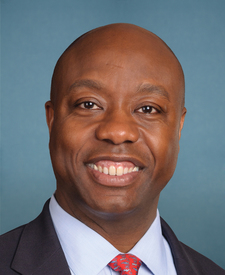
See how Tim Scott actually votes — against your values.
DeepSyte scores Tim Scott's record on the issues you care about — not party, not press releases. Take the 2-minute values quiz to see your personal alignment.
Sign in and take the values quiz to see how Tim Scott's votes line up with your views.
Prediction track record
How often we called Tim Scott's passage votes correctly, from their stated positions on each bill's tagged topics. Excludes “unclear” calls and abstentions.
28 predictions on record · none have been resolved by a passage vote yet. Check back as bills move.
To prohibit the disclosure of records by the Secretary of Housing and Urban Development of individuals for the purposes of immigration enforcement, and for other purposes.
Providing for congressional disapproval under chapter 8 of title 5, United States Code, of the rule submitted by the Bureau of Consumer Financial Protection relating to the withdrawal of the rule relating to "Truth in Lending (Regulation Z); Consumer Protections for Home Sales Financed Under Contracts for Deed".
We haven't yet found statement/vote pairs on the same topic for Tim Scott. This usually means either the rep hasn't taken public positions on bills that have come to a passage vote, or those bills haven't been tagged yet. The checker runs as new press releases and votes come in.
Pro analysis
AI rep analysis — Pro
Get an AI-narrated read on Tim Scott's full voting record against your stated values — aligned themes, conflicts, notable votes, and what to watch for.
We haven't extracted campaign positions for Tim Scott yet. Once their campaign website or position pages are processed, this card will track what they said vs how they voted.
Crossing the aisle
No party-break passage votes recorded for Tim Scott. Either they've voted with Republicans on every substantive passage vote in the corpus, or their tenure overlaps few high-threshold party-line votes so far.
Sen. Tim Scott to introduce legislation ending the “birth tourism” industry — U.S. Senator Tim Scott of South Carolina
Position: Senator Scott will introduce legislation to restrict birthright citizenship and end the practice of birth tourism, arguing that American citizenship should not be accessible through this mechanism.
“American citizenship is to be cherished, not cheapened”
CHARLESTON, S.C. — Following Tuesday’s U.S. Supreme Court ruling regarding the 14th Amendment and birthright citizenship (Trump v. Barbara), U.S. Senator Tim Scott (R-S.C.) announced he will be introducing new legislation to end the “birth tourism” industry once and for all.
“The cheapening of American citizenship must end,” said Sen. Scott. “It is a privilege and an honor to be a citizen of this nation, so the insanity of the birth tourism industry must end.”
Sen. Scott continued, “For too long, wealthy adversaries and those who have no interest in seeing the United States flourish have perverted our system. A whole industry exists in China that has assisted more than 1 million Chinese nationals in obtaining American citizenship and passports. The fact that this is allowed to continue is insane.”
Sen. Scott concluded, “This is not a partisan issue, and I hope my colleagues on both sides of the aisle rally to this urgent matter, especially as we honor the sacrifice, significance, and opportunity on our 250th birthday. American citizenship is to be cherished, not cheapened.”
Sens. Scott, Budd, Colleagues send letter to protect U.S. specialty crop producers and restore competitive trade balance with Mexico — U.S. Senator Tim Scott of South Carolina
Position: Senators Scott and Budd call on the U.S. Trade Representative to implement trade measures to restore competitive balance for U.S. specialty crop producers against Mexican imports during peak U.S. growing season, citing unfair market pressures and national food security.
WASHINGTON — U.S. Senator Tim Scott (R-S.C.) joined Sen. Ted Budd (R-N.C.) in sending a letter to U.S. Trade Representative Jamieson Greer, calling for measures to restore a more competitive trade balance for U.S. specialty crops with Mexico. In the letter, the senators advocate for addressing the unsustainable pressures on U.S. specialty crop producers caused by an increasing volume of foreign products unfairly flooding U.S. markets while U.S. crops are reaching their peak in-season period. The letter comes as Ambassador Greer works to reauthorize the United States-Mexico-Canada Agreement (USMCA).
In the letter, the senators wrote:
“Without measures to restore competitive balance, specialty crop production will increasingly move to foreign countries. We urge you to evaluate trade actions that can safeguard U.S. growers from unfair pressures from Mexico. This work is essential to maintaining U.S. competitiveness in the specialty crop sector and ensuring Americans continue to have access to high-quality, domestically grown food, which is fundamental to our national security.”
U.S. Senators Cindy Hyde-Smith (R-Miss.), Ashley Moody (R-Fla.), Jon Ossoff (D-Ga.), Rick Scott (R-Fla.), Raphael Warnock (D-Ga.), and Roger Wicker (R-Miss.) joined in co-signing the letter.
U.S. Representative Austin Scott (R-Ga.-08) led the letter in the House of Representatives and was joined by 79 members in sending the letter.
The letter is endorsed by: American Farm Bureau Federation, Alabama Farmers Federation, Blue Ridge Apple Growers Association, California Table Grape Commission, Colorado Fruit and Vegetable Association, Florida Blueberry Growers Association, Florida Farm Bureau Federation, Florida Fruit and Vegetable Association, Florida Tomato Exchange, Georgia Agribusiness Council, Georgia Berry Exchange, Georgia Blueberry Commission, Georgia Department of Agriculture Commissioner Tyler Harper, Georgia Farm Bureau, Georgia Fruit and Vegetable Growers Association, Georgia Green Industry Association, Georgia Pecan Growers Association, Georgia Watermelon Association, Idaho Onion Growers Association, Malheur County Onion Growers, Michigan Asparagus, Michigan Farm Bureau, Michigan Onion Committee, Michigan Vegetable Council, Mississippi Farm Bureau Federation, National Onion Association, National Pecan Federation, North Carolina Apple Growers Association, North Carolina Chamber, North Carolina Farm Bureau Federation, North Carolina Greenhouse Vegetable Growers Association, North Carolina Growers Association, North Carolina Sweetpotato Commission, North Carolina Tomato Growers Association, North Carolina Vegetable Growers Association, Oklahoma Pecan Growers Association, South Carolina Small Fruit Association, Southeastern Pecan Growers Association, Texas Pecan Growers Association, Tobacco Associates, Inc., Tobacco Growers Association of North Carolina, Vidalia Onion Business Council, Washington Red Raspberry Commission, and Western Pecan Growers Association.
Read the full letter text here or below:
The U.S. specialty crop industry encompasses a large variety of commodities across 220,000 farms, each with distinct supply and demand conditions. As you know, many American growers of fruit, vegetable, and certain tree nut commodities and products are under unsustainable pressure from growing volumes of products unfairly entering U.S. markets. These imports flood the U.S. market, often at the same time U.S. crops are reaching their peak in-season period, with prices at or below the cost of production for U.S. producers. Additionally, many of these commodities are seasonal and/or perishable, creating unique challenges for identifying markets as these products must be harvested, marketed, and consumed within a limited window of time. Other specialty crops that are marketed year-round are forced to suffer the consequences over the course of the entire year. As you review the United States-Mexico-Canada Agreement (USMCA), we look forward to engaging with you to implement trade measures that will allow our specialty crop producers to continue to feed the nation and remain viable against unfair foreign competition. We urge you to consider the significant strain Mexico continues to place on the U.S. specialty crop industry.
Fresh fruit and vegetable imports from Mexico have increased by more than 550 percent since 2001, driven by fundamental cost and regulatory advantages.
Mexican producers operate with significantly lower labor and production expenses, where agricultural wages are about one-tenth of U.S. levels, while U.S. growers depend heavily on the higher-cost H-2A program for seasonal labor. Because labor accounts for roughly half of total production and harvest expenses in this industry, these disparities create a substantial competitive gap. Mexican farms also cut corners by avoiding many of the regulatory requirements imposed by U.S agencies, such as the U.S. Environmental Protection Agency and the U.S. Department of Labor, further reinforcing their cost of production advantage.
Without measures to restore competitive balance, specialty crop production will increasingly move to foreign countries. We urge you to evaluate trade actions that can safeguard U.S. growers from unfair pressures from Mexico. This work is essential to maintaining U.S. competitiveness in the specialty crop sector and ensuring Americans continue to have access to high-quality, domestically grown food, which is fundamental to our national security.
Many specialty crop organizations and representatives recently submitted comments to the Office of the United States Trade Representative for consideration under Docket ID: USTR-2025-0004, titled “Request for Comments on the Operation of the Agreement between the United States of America, the United Mexican States, and Canada.” We encourage you to prioritize the evaluation of these comments, and we emphasize the importance of these commodity industries’ submissions. We appreciate your consideration of our growers’ concerns, your review of the companion letter sent from 79 members of the U.S. House of Representatives on May 12, 2026 regarding this matter, and look forward to continued collaboration as the 2026 USMCA review process moves forward.
Sens. Scott, Blumenthal lead reintroduction of college mental health legislation — U.S. Senator Tim Scott of South Carolina
Position: Senators Scott and Blumenthal support legislation requiring the Departments of Education and Health and Human Services to collaborate on evidence-based mental health and suicide prevention plans for colleges and universities to implement.
WASHINGTON — U.S. Senators Tim Scott (R-S.C.) and Richard Blumenthal (D-Conn.) reintroduced legislation to improve mental health on college campuses. The Enhancing Mental Health and Suicide Prevention Through Campus Planning Act would support institutions of higher education in developing and implementing comprehensive mental health and suicide prevention plans, helping to improve college students’ mental health.
“Education is the key to opportunity in America, and the environment and support our kids receive from cradle to college is just as important as what is being taught in the classroom,” said Sen. Scott. “This legislation prioritizes a student’s well-being and academic success by promoting collaboration and planning between federal agencies and colleges and universities. This bill will help address the growing mental health crisis by making sure all students have the opportunity to pursue their studies in a safe and supportive environment.”
“This legislation ensures universities have the tools they need to provide quality care and support to students struggling with their mental health. Our country is facing a severe youth mental health crisis, with more and more college students experiencing anxiety, depression, and suicidal thoughts. This bill addresses that emergency by increasing the resources available to universities to support students when they need it most,” said Sen. Blumenthal.
To address our country’s youth mental health crisis, the Enhancing Mental Health and Suicide Prevention Through Campus Planning Act would amend the Higher Education Act. Specifically, the bill would require the U.S. Department of Education (ED) and the U.S. Department of Health and Human Services (HHS) to collaborate and create evidence-based mental health plans that colleges and universities may use to promote positive mental health and address mental health crises among their students. These plans would align with strategies recommended by the Substance Abuse and Mental Health Services Administration’s (SAMHSA) Suicide Prevention Resource Center, specifically its nine-part Comprehensive Approach to Suicide Prevention.
In the U.S. Senate, the legislation is cosponsored by U.S. Senators Chris Murphy (D-Conn.) and Michael Bennet (D-Colo.).
The legislation is endorsed by the JED Foundation (JED).
“As stewards of protecting the emotional health of teens and young adults, The Jed Foundation is proud to endorse this timely legislation. The data is clear: mental health is a key factor in college degree completion, and a significant contributor to students leaving school before finishing their degrees. Effective suicide prevention requires a comprehensive approach that integrates training, resources, and postvention services. This bill will help guide colleges and universities in building the campus systems, infrastructures, and evidence-based policies needed to ensure the strongest possible support for student well-being and success,” said Dr. Zainab Okolo, LCMFT, The JEDFoundation Senior Vice President of Policy, Advocacy, and Government Relations.
The full bill text can be found here.
Sen. Scott introduces legislation to level playing field for American manufacturers in foreign-trade zones — U.S. Senator Tim Scott of South Carolina
Position: Senator Scott introduced legislation to allow goods produced in U.S. Foreign-Trade Zones to be exported duty-free to Mexico and Canada under USMCA, arguing this removes a competitive disadvantage for American manufacturers and supports domestic jobs.
WASHINGTON — U.S. Senator Tim Scott (R-S.C.) today introduced the Foreign-Trade Zone Export Enhancement Act of 2026 to allow goods produced in Foreign-Trade Zones (FTZs) to be exported duty-free to Mexico and Canada. This bill levels the playing field for American manufacturers by removing a trade disadvantage that prevents goods produced in a U.S. FTZ from being exported duty-free to Mexico and Canada under the United States-Mexico-Canada Agreement (USMCA), thereby undercutting U.S. competitiveness, including South Carolina companies operating in FTZs.
“South Carolina companies operating in Foreign-Trade Zones make significant contributions to the Palmetto State’s economy,” said Sen. Scott. “My bill levels the playing field for our businesses by making sure American manufacturing remains globally competitive, boosting USA-made exports, and supporting American jobs.”
Joining Sen. Scott is Sen. Katie Britt (R-Ala.).
“I’m proud to support Alabama’s world-class manufacturing sector, including those in our thriving automotive and aerospace industries, which continue to drive growth and strengthen our state’s industrial base. This legislation would help ensure Alabama companies that utilize our FTZs aren’t operating at a global competitive disadvantage. This is a commonsense step Congress can take to strengthen domestic manufacturing and support hardworking Americans," said Sen. Britt.
“For over the last decade, BMW Plant Spartanburg has been the largest exporter by value in the U.S. Since 2014, our 11,000 associates have been responsible for the more than 3 million vehicles exported to nearly 120 global markets. We support Senator Scott’s ‘Foreign-Trade Zone Export Enhancement Act of 2026’ that will continue to sustain and grow U.S. jobs and competitiveness in advance manufacturing,” said Bryan Jacobs, vice president of government and external affairs for BMW Group.
“We appreciate Senator Scott’s leadership in addressing a critical issue impacting U.S. manufacturing competitiveness. This legislation helps ensure that products manufactured in South Carolina can be exported to Canada and Mexico without unnecessary cost disadvantages, allowing companies like AFL to compete on a level playing field and continue investing in jobs and innovation here at home,” said Jaxon Lang, president and CEO of AFL.
“South Carolina's foreign-trade zones are a critical tool for the manufacturers who move cargo through the Port of Charleston. Senator Scott's bill keeps South Carolina competitive, protects jobs, and reinforces the kind of stable trade environment that attracts long-term manufacturing investment,” said Micah Mallace, president and CEO of SC Ports.
“U.S. Foreign-Trade Zones were established to strengthen America’s position as a globally competitive place to invest and expand operations,” said Jeff Tafel, president of National Association of Foreign-Trade Zones. “In practice, however, current USMCA implementation has created unintended cost disparities for many U.S. FTZ-based operators, imposing costs that competitors in Canada and Mexico often do not face. At the same time, operators are navigating an increasingly complex trade environment. Senator Scott’s proposal is a necessary step that helps restore balance in how U.S. FTZs are treated under USMCA and reinforces the original intent of the FTZ program to encourage domestic production and investment, support American jobs and ensure companies are not penalized for operating in the U.S."
Companion legislation has been introduced in the House by Representatives Lance Goodman (R-Tex.-5) and Vicente Gonzalez (D-Tex.-34).
Congress created the U.S. FTZ program in 1934 to encourage domestic manufacturing and distribution, specifically in cases where foreign countries maintain a tariff advantage. $133 billion of merchandise was exported from U.S. FTZs in 2024, accounting for nearly 7% of total U.S. goods exports that year.
Under USMCA, U.S. manufacturers operating within U.S. FTZs are required to pay a duty to the U.S. government on inputs used in products made domestically by American workers that are exported to Canada and Mexico. However, Mexico and Canada have implemented loopholes to avoid this requirement. This creates a significant disadvantage to U.S. FTZs.
In South Carolina, FTZs employ roughly 28,000 people and handle $5-10 billion in exports.
Read the full text of the bill here.
Sen. Scott joins Sens. Cassidy and Hassan in introducing historic bill to improve child literacy — U.S. Senator Tim Scott of South Carolina
Position: Supports federal legislation to strengthen evidence-based literacy instruction, require early literacy screening, and provide states and local communities with additional resources to improve reading outcomes, particularly for low-income students.
WASHINGTON — U.S. Senator Tim Scott (R-S.C.) joined Senators Bill Cassidy (R-La.) and Maggie Hassan (D-N.H.) in cosponsoring the Reading Excellence and Achievement for Development (READ) Act to improve all children’s ability to read, empowering them to achieve the American Dream.
This legislation aims to address the national literacy crisis by strengthening evidence-based literacy instruction, requiring early literacy screening, and empowering states, local communities, and parents with more resources.
“Literacy is one of the most valuable tools in life we can give students, but our nation is seeing a decline in reading outcomes,” said Sen. Scott. “The READ Act strengthens federal literacy grants and helps our education system return to proven, evidence-based reading practices, which is especially important for kids growing up in low-income communities like I did. This bill is about making sure our youth have the high-quality education they deserve to succeed in life and unlock their God-given potential.”
“Capable students are dropping out of high school simply because they were never taught how to read. Children with dyslexia are extremely bright, but without early testing and proper resources, they are being left behind,” said Dr. Cassidy. “Let’s learn from states like Louisiana and implement proven reforms so every child has the power to read and reach their full potential.”
“In the greatest country in the world, we cannot resign ourselves to the fact that many children still struggle to read at grade level and that only one in three students leave high school as proficient readers,” said Sen. Hassan. “This bipartisan bill will build on the extensive research that shows how students learn to read most effectively and will help make those tools available for teachers to use in their classrooms. We must come together to prioritize our children’s success, and I urge my colleagues to work with me on this bipartisan effort.”
U.S. Senators Jim Banks (R-Ind.), John Hickenlooper (D-Colo.), and Mark Kelly (D-Ariz.) joined in introducing the READ Act.
Low literacy rates have significant economic consequences, costing taxpayers an estimated $224 billion annually and resulting in nearly $40 billion in lost productivity for American businesses.
States that have adopted evidence-based literacy practices aligned with the science of reading have shown strong results. Mississippi, for example, rose from 49th in the nation to the top 10 in fourth-grade reading achievement after implementing comprehensive literacy reforms.
Building on this success, 44 states and the District of Columbia have enacted science of reading-related laws, demonstrating broad bipartisan momentum to improve literacy outcomes for students.
Read the full section-by-section here.
Sens. Scott, Budd, Colleagues Introduce Legislation to Prevent Thousands of Illegal Aliens from Escaping Mandatory Detention — U.S. Senator Tim Scott of South Carolina
Position: The senators support legislation to clarify that all individuals who enter the United States illegally must be subject to mandatory detention without bond pending removal, arguing that current court interpretations have created loopholes allowing some to avoid detention.
WASHINGTON — U.S. Senators Tim Scott (R-S.C.) and Ted Budd (R-N.C.) introduced the Detention Authority Clarification Act this week, which would amend the Immigration and Nationality Act (INA) to make to make Congress’ intent unambiguous that illegal aliens be subject to detention without bond pending removal from the United States. This is in response to split decisions by federal courts across the country about what should already be clear in section 235 of the INA—all who have entered the United States illegally are subject to mandatory detention.
U.S. Senators John Cornyn (R-Tex.), Marsha Blackburn (R-Tenn.), and Lindsey Graham (R-S.C.) joined in introducing the Detention Authority Clarification Act.
“Illegal immigrants who break our laws must be detained while they await deportation,” said Sen. Scott.“The Detention Authority Clarification Act would make sure that no one can enter our country illegally and evade removal. Illegal immigrants must be detained and deported promptly. This is a nation of laws, and breaking the law has consequences.”
“We are a nation of laws, and those who break these laws by coming to our country illegally must be held accountable for their actions. President Trump has worked hard to reaffirm the integrity of our nation’s immigration system, yet hundreds of federal district court judges are allowing illegal aliens to avoid mandatory detention based on a supposed loophole. The Detention Authority Clarification Act would eliminate any doubt by reaffirming mandatory detention for those who have violated U.S. law by entering the country illegally,” said Sen. Budd.
“Aliens who enter our country illegally and threaten American lives must face mandatory detention and should not be able to seek bond to be released into our communities,” said Sen. Cornyn.“This legislation would clarify current law to stop woke judges from allowing illegal aliens to roam American streets and commit further crimes while they await deportation from the United States.”
“Illegal aliens who gained entry under Biden’s open border continue to endanger Americans’ lives and must be removed as swiftly as possible,” said Sen. Blackburn. “The Detention Authority Clarification Act would ensure that these individuals must be detained without bond until they are promptly deported and are not allowed to evade the consequences of their crimes.”
“During the four years under Biden, weak and ineffective enforcement of our nation’s immigration laws created an opportunity for millions of dangerous illegal aliens to pour into our country. Instead of detaining these unvetted and unauthorized individuals, the Biden Administration let these lawbreakers walk free, many of whom went on to prey on innocent Americans, like Laken Riley. I am pleased to join Senator Budd and my colleagues in introducing the Detention Authority Clarification Act to ensure that when illegal immigrants break into our country, they remain in immigration detention until they are deported. This legislation will keep Americans safe and end the cycle of catch and release once and for all,” said Sen. Graham.
The Detention Authority Clarification Act is supported by the Immigration Accountability Project (IAP).
The Immigration and Nationality Act, as amended, requires the detention of illegal aliens. Previous administrations allowed these illegal aliens to be released on bond. However, the Trump administration now detains these illegal aliens in compliance with the statute and with Congress’ intent. Thousands of detained, illegal aliens have filed lawsuits in federal courts challenging the Trump administration’s interpretation of the INA, and hundreds of federal district judges have granted their request for release. Split panels of circuit court judges on the federal courts of appeals have sided with and against the Trump administration, and one such panel of judges deadlocked entirely on this question.
Specifically, section 235 of the INA, as amended by the Illegal Immigration Reform and Immigrant Responsibility Act (IIRIRA), provides that an alien who enters the U.S., including those who enter illegally, is deemed an “applicant for admission” and is to be subject to detention until the alien is lawfully admitted to the U.S. or removed from the U.S. in the case of an illegal alien.
Detention Authority Clarification Act:
Clarifies the intent of section 235 of the INA to eliminate alleged ambiguity by stating that all who have entered the United States illegally are subject to mandatory detention.
Requires mandatory detention for illegal aliens in section 236 of the INA to harmonize the language of sections 235 and 236.
Sens. Scott, Coons Introduce Bill to Support Education Excellence at HBCUs — U.S. Senator Tim Scott of South Carolina
Position: Senators Scott and Coons introduced legislation establishing a competitive federal grant program to support infrastructure, research, technology, and workforce development investments at Historically Black Colleges and Universities.
WASHINGTON — U.S. Senators Tim Scott (R-S.C.) and Chris Coons (D-Del.), co-chairs of the HBCU Caucus, today introduced the Institutional Grants for New Infrastructure, Technology, and Education (IGNITE) for HBCU Excellence Act, legislation designed to strengthen Historically Black Colleges and Universities (HBCUs) through investments in infrastructure, research, technology, and workforce development.
The legislation establishes a competitive federal grant program within the Department of Education to support modernization efforts at HBCUs nationwide.
“HBCUs have long been engines of opportunity, but for far too long, too many have been asked to do more with less. The IGNITE for HBCU Excellence Act will help modernize campuses, expand research and workforce training opportunities, and ensure students are prepared to succeed in a 21st-century economy,” said Sen. Scott. “I’m proud to partner with Senator Coons on this legislation to strengthen HBCUs in South Carolina and across the country for generations to come.”
“Historically Black Colleges and Universities like Delaware State University have long been institutions that create opportunity and academic excellence for future generations of community leaders, innovators, educators, and freedom fighters,” said Sen. Coons. “Funding for HBCUs is critical to providing educational resources for low-income students, first generation college students, and those most at risk of not entering college. Congress needs to take up and pass the IGNITE HBCU Excellence Act to modernize campuses across the country so that HBCUs have the technology, facilities, and resources they need to educate the next generation.”
The House companion legislation will be led by HBCU Co-Chairs Representatives Alma Adams (D-N.C.-12) and French Hill (R-Ark.-02).
“For generations, HBCUs have educated students who went on to lead in every corner of our country, often while operating with far fewer resources than their peer institutions,”said Rep. Adams. “The IGNITE HBCU Excellence Act is about making sure these institutions have the facilities and infrastructure needed to continue serving students and competing in today’s higher education landscape. From academic buildings and research labs to student housing and technology infrastructure, this bill makes long-term investments that will strengthen our campuses, support workforce development, and expand opportunity for future generations. I am proud to continue this bipartisan work through the HBCU Caucus alongside Congressman French Hill and our Senate partners.”
"Central Arkansas is home to four outstanding HBCUs, and I have seen firsthand the difference these institutions make for their students and communities,” said Rep. Hill. “I have also seen how the lack of long-term investment and aging infrastructure limits what these institutions are able to offer their students. The IGNITE HBCU Excellence Act is a meaningful step toward addressing that. It would help ensure our HBCUs have the facilities and infrastructure to match the excellence of the students they serve. This is the kind of investment that will pay dividends for generations, and I am proud to partner with Congresswoman Adams and our Senate colleagues to get it done."
The IGNITE for HBCU Excellence Act is supported by the Thurgood Marshall College Fund, the United Negro College Fund, the White House Initiative on Historically Black Colleges and Universities, and the Office of Management and Budget.
South Carolina State University President Alexander Conyers said, “The IGNITE HBCU Excellence Act represents an important investment in the future of Historically Black Colleges and Universities and the students we serve. For South Carolina State University, modern facilities, technology, and research capacity are critical to preparing students for success in today’s workforce and economy. We appreciate Senator Scott’s support of efforts that help strengthen HBCUs and expand opportunities for our students and communities.”
“The IGNITE HBCU Excellence Act has the potential to be a transformative investment in HBCUs and the students who depend on them,” said UNCF President and CEO Michael L. Lomax. "For generations, HBCUs have nurtured extraordinary talent, yet they have long struggled with unequal access to funding and modern infrastructure. This legislation could reverse those adverse circumstances by providing targeted resources that strengthen both research excellence and campus infrastructure, ensuring HBCUs have the tools to lead in a rapidly changing world.
"The IGNITE HBCU Excellence Act will empower HBCUs by strengthening them financially,” Lomax continued. "We—at UNCF—view strengthening HBCUs both from the financial and infrastructure perspectives as the maximum impact Congress can have on the institutions at this time. When HBCUs thrive, the entire nation benefits. These institutions have long been engines of social mobility and economic growth in our communities. By passing the IGNITE HBCU Excellence Act, Congress will ensure that HBCUs have the capacity to continue shaping leaders, advancing innovation, and serving as vital pillars of our national progress. We urge Congress to act without delay, pass the IGNITE HBCU Excellence Act, and make these vital investments in America’s future.”
“The IGNITE HBCU Excellence Act will help transform our institutions,” said Thurgood Marshall College Fund President & CEO Dr. Harry L. Williams. “In order for our nation to reach its full potential, we must strategically invest in and support every postsecondary student population to ensure that our country has the robust workforce capable of meeting tomorrow’s challenges. By passing the IGNITE HBCU Excellence Act, Congress is making an affirmative statement that investing in HBCUs and their students is a smart strategic investment to enhance our nation’s global competitiveness. We thank Sen. Scott, Sen. Coons, Rep. Hill and Rep. Adams of the bipartisan HBCU Caucus for bringing this smart piece of legislation forward and we urge Congress to pass the IGNITE HBCU Excellence Act this year.”
The IGNITE for HBCU Excellence Act would:
Full text of the bill can be found here.
Sen. Tim Scott Leads Historic Markup of Digital Asset Market Structure Legislation — U.S. Senator Tim Scott of South Carolina
Position: Senator Scott supports the Digital Asset Market Clarity Act, which establishes a federal regulatory framework for digital assets. He argues the legislation protects consumers through clear disclosures and fraud safeguards, enables domestic innovation by replacing regulatory uncertainty with clear rules, and strengthens national security by enhancing anti-money-laundering and sanctions enforcement.
WASHINGTON — U.S. Senator Tim Scott (R-S.C.), Chairman of the Senate Banking, Housing, and Urban Affairs Committee, today convened a historic markup of H.R. 3633, the Digital Asset Market Clarity Act of 2025, legislation to establish clear rules of the road for digital assets. During today’s markup, Sen. Scott emphasized that the Clarity Act will protect Main Street, keep innovation in the United States, and safeguard U.S. national security. In his opening remarks, Sen. Scott underscored that years of regulatory uncertainty and regulation by enforcement have driven innovation overseas, left Americans exposed, and made it harder for law enforcement to do its job. He also highlighted that the bill is the product of months of good-faith bipartisan negotiations and takes the side of everyday Americans by bringing digital assets out of the shadows and into a system that is safer, fairer, and more transparent.
Sen. Scott’s opening remarks as delivered:
Today is an important day – not just for this Committee, but for the country.
For years, the digital frontier was trapped in a regulatory gray zone.
Developers, entrepreneurs, and investors were left with uncertainty.
They faced confusion and enforcement actions when, instead, the government should have been crafting clear rules of the road.
Those hurdles drove innovation overseas, left Americans exposed, and made it harder for law enforcement to do their job.
Today, we change that.
The bill we are marking up achieves three simple goals: protecting consumers, keeping innovation here at home, and safeguarding U.S. national security.
Those are not partisan goals. They are American priorities.
Protecting consumers means making sure everyday people come first.
It means clear disclosures, safeguards against fraud, and rules that keep markets open, fair, and efficient.
It means that if someone in South Carolina invests in digital assets, they are protected by a framework with real, enforceable legal standards.
This bill gives Americans confidence that the system works for them, not against them.
Keeping innovation here at home means giving American builders, entrepreneurs, and businesses the clarity and certainty to do what they do best.
Until today, outdated rules, unpredictable enforcement, and outright hostility have forced far too many American companies overseas. That costs us jobs, investment, and leadership.
This bill says that the future of finance should be built in America, under American laws, and with American values.
Safeguarding our national security means closing the doors that criminals, terrorists, and hostile regimes have tried to exploit.
This bill strengthens anti-money-laundering and sanctions rules and gives law enforcement better tools to go after bad actors.
These tools make it harder to hide and easier to enforce the law.
None of this happened overnight.
It happened because members on both sides of the aisle chose to sit down, listen, and work.
We’ve had months of good-faith negotiations. Republicans did not get everything we wanted.
But we made real progress with our Democrat colleagues, and this bill, and ultimately – and more importantly – the American people, will be better off because of it.
This legislation does not take sides between traditional finance and new technology. Or Republicans and Democrats.
It takes the side of everyday Americans.
It brings digital assets out of the shadows and into a system that is safer, fairer, and more transparent.
This is what good governance looks like.
Today, we take a step forward, together, to protect investors, grow our economy, and keep America leading the world.
I’m proud of this Committee for doing the work, and I look forward to moving this bill forward.
Sens. Scott, Barrasso, Colleagues Introduce No Licenses for Illegal Drivers or Truckers Act — U.S. Senator Tim Scott of South Carolina
Position: Senators Scott and Barrasso introduced legislation requiring proof of lawful presence to obtain driver's licenses and commercial driver's licenses, with federal highway funding withheld from non-compliant states. The sponsors argue this measure addresses public safety concerns and enforces immigration law.
WASHINGTON — U.S. Senators Tim Scott (R-SC) and John Barrasso (R-WY) introduced the No Licenses for Illegal Drivers or Truckers Act, which would require applicants for driver’s licenses, commercial driver’s licenses, and personal identification cards to be lawfully present in the United States. This bill would withhold federal highway funds from states that fail to comply and redirect those funds to states in compliance.
”America continues to suffer the consequences of Biden’s open border policies. Illegal immigrants on the road have posed a serious public safety threat in our communities as we’ve tragically seen in South Carolina. The No Licenses for Illegal Drivers or Truckers Act would improve accountability to make sure states confirm the lawful presence of driver’s license applicants and help protect the communities we call home,” said Sen. Scott
“Millions of illegal immigrants flooded into the United States under the Biden administration’s radical open border policies. Since many illegal immigrants do not speak English and cannot read road signs, these drivers make roads less safe for the law-abiding public,” said Sen. Barrasso. “While Wyoming already prohibits illegal immigrants from getting driver’s licenses, 19 states and the District of Columbia continue to issue personal and commercial driver’s licenses without verifying legal status. My legislation will ensure states follow the law and prioritize public safety.”
Joining Sens. Scott and Barrasso are Sens. John Cornyn (R-TX) and Cynthia Lummis (R-WY).
Several states such as California, New York, and Washington do not require evidence of lawful presence for an applicant to receive a driver’s license, commercial driver’s license, or personal identification card. Illegal immigrants, many who do not understand English to be able to read road and traffic signs, are obtaining licenses and posing a safety risk to communities. This oversight has led to lethal accidents involving American citizens, often children at play.
The No Licenses for Illegal Drivers or Truckers Act would:
Sens. Scott, Warner introduce Clinical Trial Modernization Act to expand access, improve health outcomes — U.S. Senator Tim Scott of South Carolina
Position: Senators Scott and Warner introduced legislation to modernize clinical trials by removing barriers to participation for underrepresented communities, including rural and underserved populations, through expanded access and reduced economic and geographic obstacles.
WASHINGTON — U.S. Senators Tim Scott (R-SC) and Mark Warner (D-VA) yesterday introduced the Clinical Trial Modernization Act of 2026, legislation designed to remove barriers to clinical trial participation and expand access for historically underrepresented communities.
Building on his previous work through the DIVERSE Trials Act, Sen. Scott’s legislation focuses on modernizing clinical trial technology, increasing participation, and ensuring more representative data to improve patient outcomes nationwide.
“Clinical trials are critical to medical innovation, but too many Americans, especially those in rural and underserved communities, are left out,” said Sen. Scott. “This legislation takes meaningful steps to remove barriers, expand access, and ensure that lifesaving treatments are developed with every patient in mind. By modernizing how we conduct clinical trials, we can deliver better care and better outcomes for all Americans.”
“Too often, patients are struggling to enroll in a clinical trial because of the costs associated or how difficult it is to be at the clinic in person,” said Sen. Warner. “Removing economic and geographic barriers to entry for underrepresented populations in clinical trials will result in better treatments and cures for patients and all Americans. I’m proud to introduce this bipartisan legislation that will make sure the United States continues to be a global leader in medical research.”
“No one should have to face the burden of additional costs or inconveniences while going through one of the most difficult situations of their lives — cancer,” said Lisa A. Lacasse, president, American Cancer Society Cancer Action Network. “The Clinical Trial Modernization Act would help remove cost and geographic barriers to clinical trials and help ensure that more patients have a chance to enroll in the best treatment options available here in the U.S. We thank Sens. Scott and Warner for their leadership on this legislation.”
Full text of the Clinical Trial Modernization Act can be found here.
Clinical trials that do not reflect the diversity of the broader patient population can produce findings that are not fully applicable to all patients, potentially contributing to disparities in treatment outcomes.
This legislation is specifically designed to increase participation among medically underserved communities, including racial and ethnic minorities, older adults, rural populations, and other historically under-resourced and underrepresented groups in clinical research.
Differences in physiology, genetics, and other factors can significantly influence how individuals respond to medical treatments. Ensuring greater diversity in clinical trials helps researchers better identify these differences and supports the development of more effective, tailored therapies for patients.
A committee report using the Future Elderly Model found that health disparities in conditions such as diabetes, heart disease, and hypertension are projected to cost the U.S. economy more than $11 trillion through 2050—including costs related to mortality, morbidity, and lost workforce participation.
Source: GDELT 2.0 GKG, filtered to a curated list of national outlets. Inclusion is not endorsement; opinion pieces and reported news are mixed.
Recent stock activity
Periodic transaction reports filed under the STOCK Act — disclosed by the rep, sourced from public filings.
No disclosed trades on record.
Source: open-data mirrors of the Senate eFD and House Clerk financial-disclosure systems. Disclosure within 30 days of trade is required by law (45 for spouse/dependent trades).
Top PAC donors · 2026 cycle
Political action committees that gave the most to this rep's principal campaign committee this cycle. PAC giving is direct organizational support — industry, ideological, or leadership.
1.TEAM MCCONNELL1 contribution$13,800
2.ONE TEAM SENATE MAJORITY1 contribution$13,678
3.TAKE BACK THE SENATE1 contribution$12,733
Source: OpenFEC (api.open.fec.gov) Schedule A receipts where contributor type is “committee.” Aggregated by contributing committee. Self-transfers from joint-fundraising / victory committees are excluded.
Top individual contributors · 2026 cycle
Itemized individual contributions over $200 to this rep's campaign committee, aggregated by donor employer. PAC giving is shown above; this section is people, not organizations.
1.BLACKSTONE$40,400
2.WELLS FARGO$35,871
3.COINBASE$19,000
4.SKYBRIDGE CAPITAL$10,300
5.PEACHTREE PROVIDENCE PARTNERS$8,500
6.GONSOULIN ENTERPRISES LLC$7,000
7.MULTICOIN CAPITAL$7,000
8.WEATHERTECH$7,000
9.PAYROLL & INSURANCE GROUP$7,000
10.MCKEE FOODS$7,000
Source: OpenFEC Schedule A receipts where contributor type is “individual,” aggregated by the donor's self-reported employer. This is a geographic / industry correlation, not a corporate endorsement.