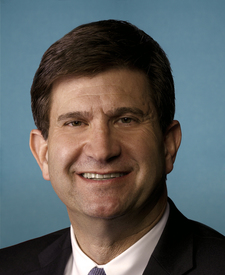
See how Bradley Scott Schneider's votes line up with your values.
DeepSyte scores Bradley Scott Schneider's record on the issues you care about — not party, not press releases. Take the 2-minute values quiz to see your personal alignment.
Sign in and take the values quiz to see how Bradley Scott Schneider's votes line up with your views.
Prediction track record
How often we called Bradley Scott Schneider's passage votes correctly, from their stated positions on each bill's tagged topics. Excludes “unclear” calls and abstentions.
A joint resolution to direct the removal of United States Armed Forces from hostilities within or against the Islamic Republic of Iran that have not been authorized by Congress.
To prohibit the disclosure of records by the Secretary of Housing and Urban Development of individuals for the purposes of immigration enforcement, and for other purposes.
A joint resolution to direct the removal of United States Armed Forces from hostilities within or against the Islamic Republic of Iran that have not been authorized by Congress.
Based on 1 data point across public statements and recorded votes · AI analysis of public records
119-hr-2913·Consistent
Ukraine Support Act
88/100
What they said
Oct 13, 2026
Opposes the President's decision to lift sanctions on Russian diesel, arguing it benefits Russia without meaningfully lowering U.S. diesel prices, and pledges to work to block purchases of Russian oil and support Ukraine.
The statement opposes the President's lifting of sanctions on Russia and pledges to support Ukraine and block Russian oil purchases. The Ukraine Support Act, which Schneider voted for on passage, imposes extensive sanctions on Russian energy sectors and authorizes support for Ukraine, so the direction of the vote matches the stated position. The bill does not specifically address the diesel sanctions waiver, which keeps the score short of the strongest band.
Pairs with ambiguous language and high uncertainty are withheld until more data is available. Procedural, cloture, and amendment votes are excluded — they don't cleanly signal substantive support or opposition.
Pro analysis
AI rep analysis — Pro
Get an AI-narrated read on Bradley Scott Schneider's full voting record against your stated values — aligned themes, conflicts, notable votes, and what to watch for.
Positions Bradley Scott Schneider took during their campaign, scored against their subsequent record — public statements cross-checked with related votes. “Kept” means 80%+ of those statement-vs-vote pairs aligned; “Broken” means 30% or fewer.
0 kept0 broken0 mixed0 no action yet
Bradley Scott Schneider has 1 tracked position but no scored statement-vs-vote pairs touching them yet. Verdicts will appear here as related statements and votes accumulate.
No action yetSupports
A national law should protect access to abortion in every state.
“In Congress, he proudly fights to make life more affordable for Illinoisans and protect Social Security and Medicare, a woman's right to choose”
Passage votes where Bradley Scott Schneider broke ranks with ≥75% of Democrats. Threshold catches substantively partisan splits; unanimous-ish or close votes are excluded.
SCHNEIDER, KELLY INTRODUCE BIPARTISAN BREWS TO BARNS ACT TO SUPPORT SMALL BREWERIES & LOCAL FARMERS, STRENGTHEN LOCAL SUPPLY CHAINS
Position: The release supports the Brews to Barns Act, legislation that would create a tax credit against the federal beer excise tax for brewers who donate spent grain for local agricultural use.
LINCOLNSHIRE, IL - Today, U.S. RepresentativesBrad Schneider (IL-10), a member of the Ways and Means Subcommittee on Tax, and Mike Kelly (PA-16), Chairman of the Ways and Means Subcommittee on Tax introduced the bipartisan Brews to Barns Act, legislation that would establish a credit against the excise tax on beer for brewers that donate spent grain for local agricultural use.
Additional co-sponsors of the Brews to Barns Act include House Agriculture Committee Chairman Glenn "GT" Thompson (PA-15), Representatives Jeff Hurd (CO-03), House Small Brewers Caucus Co-Chair Marilyn Strickland (WA-10), Josh Riley (NY-19), and John Larson (CT-01).
“Everyone in America—from working families to Main Street businesses—is feeling the bite of rising costs,” said Rep. Schneider. “Among those hit hardest are craft beer brewers and local farmers, which is why I am glad to join my colleagues in this bipartisan effort to help lower costs and prevent waste.”
“At their cores, local breweries and farms are small businesses who play integral roles in our communities. The Brews to Barns Act incentivizes a collaborative effort between small breweries and local farmers to strengthen local supply chains. It's a win-win for everyone,” said Rep. Kelly, a Co-Chair of the House Small Brewers Caucus.
“Pennsylvania’s farmers, ranchers, and brewers already know that good ingredients shouldn’t go to waste,” said Rep. Thompson. “Across the Commonwealth, brewers continue to create partnerships with local farmers and ranchers to put their spent grain to use in agricultural production. The Brews to Barns Act will provide key incentives to build upon that relationship, helping lower input costs for producers while supporting local small businesses.”
“This tax credit for donating spent grain will lower costs for small brewers, benefit our local farmers and ranchers, and keep spent grain out of our landfills” said Rep. Strickland, a Co-Chair of the House Small Brewers Caucus. “This bill is a common-sense way to lower the cost of doing business, while supporting small brewers that boost our local economies.”
“Small breweries have a long history of supporting their communities, and their relationships with local farmers are an important part of that. By donating spent grain for agricultural use, brewers help turn a byproduct of the brewing process into a valuable resource for farmers," said Bart Watson, President & CEO, Brewers Association. "The Brews to Barns Act recognizes the value of these longstanding partnerships and helps ensure they can continue to thrive. We appreciate Reps. Kelly and Schneider's leadership in supporting the connections between America's brewers and farmers.”
You can find full bill text here.
###
SCHNEIDER, MURPHY INTRODUCE BIPARTISAN LEGISLATION TO IMPROVE ACCESS TO MEDICAL SUPPLIES
Position: Introduces bipartisan legislation to exclude urological and ostomy supplies from Medicare's Competitive Acquisition Program for five years, arguing the CMS rule would undermine patient access, and to establish an expert panel and demonstration project to evaluate competitive bidding.
LINCOLNSHIRE, IL — Congressman Brad Schneider (IL-10) and Congressman Greg Murphy, M.D., (NC-03) introduced the bipartisan Access to Medical Supplies Act, which would exclude urological and ostomy supplies from Medicare’s Competitive Acquisition Program for five years to protect Medicare beneficiaries who rely on them.
“Everyone deserves access to the medical supplies that will improve their quality of life and improve their well-being. Unfortunately, the new rule from CMS making ostomy and urological medical supplies part of a competitive bidding program undermines this goal,” said Schneider. “These are highly specialized prosthetics, and a sweeping rule like this should never be put in place without patient, provider, and supplier feedback. I’m proud to work with my Ways and Means colleague Dr. Murphy to introduce the bipartisan Access to Medical Supplies Act to pause this rule and ensure patients continue to receive the medical supplies they need.”
“Patients who rely on urological and ostomy supplies should not be forced to sacrifice the products that work best for them,” said Murphy. “As a physician, I know that every patient has different medical needs, and access to the right supplies can make a meaningful difference in their health and quality of life. This legislation will give patients, physicians, and policymakers time to evaluate competitive bidding and ensure that any future program protects access to the supplies patients need.”
The Access to Medical Supplies Act would:
Exclude urological and ostomy supplies from Medicare’s Competitive Acquisition Program for five years, from January 1, 2028, through December 31, 2032.
Establish a technical expert panel of patients, caregivers, clinicians, suppliers, manufacturers, and other stakeholders to evaluate the impact of competitive bidding and recommend changes.
Establish a demonstration project to assess the impact of competitive bidding on patient access and health outcomes before broader implementation.
View the full bill text here.
SCHNEIDER INTRODUCES LEGISLATION TO PROTECT ACCESS TO ONLINE RESOURCES FOR LGBTQ STUDENTS
Position: The release supports legislation that would bar schools and public libraries from receiving E-Rate discounts if they block LGBTQ online resources, arguing that access to such information is important for LGBTQ youth.
LINCOLNSHIRE, IL –Today, during LGBTQ history month, Congressman Brad Schneider (IL-10) introduced legislation to ensure critical online LGBTQ resources are not blocked at schools and public libraries. Currently, public schools and libraries that receive discounted telecommunications and internet rates through the Federal Communication Commission (FCC) E-Rate program must enforce an internet safety policy that in some cases leads to the blocking of useful LGBTQ resources. The Don’t Block LGBTQ Act would clarify that schools and public libraries that block LGBTQ resources would lose access to discounted rates under the E-rate program.
“During LGBTQ History Month, we celebrate the countless LGBTQ Americans who have strengthened our communities and helped move our country forward,” said Schneider. “LGBTQ Americans, especially young people, deserve access to information, support, and resources that can make a meaningful difference in their lives. I'm proud to introduce this legislation to ensure LGBTQ individuals are not prevented from receiving support – whether asking health questions, responding to bullying, or seeking advice about coming out to family and friends.”
According to the American Psychological Association, the majority of LGBTQ+ youth have turned to a mental health professional or experienced symptoms of anxiety. Access to resources on where to reach for help is critical to ensuring youth have the support they need.
View the full bill text here.
SCHNEIDER BLASTS TRUMP DECISION TO LIFT SANCTIONS ON RUSSIAN DIESEL
Position: Opposes the President's decision to lift sanctions on Russian diesel, arguing it benefits Russia without meaningfully lowering U.S. diesel prices, and pledges to work to block purchases of Russian oil and support Ukraine.
LINCOLNSHIRE, IL – Today, Congressman Brad Schneider (IL-10), a member of the House Ways and Means Trade Subcommittee and the House Foreign Affairs Committee, released a statement opposing President Trump’s decision to lift sanctions on Russian diesel in a bid to lower diesel prices in the U.S. as prices shoot up to over $6 a gallon.
“Nearly five years since the start of Russia’s unprovoked, illegal war against Ukraine, President Trump inexplicably continues to side with Putin and his anti-democracy agenda,” said Schneider. “Meanwhile, as American soldiers are fighting and dying in Trump’s ill-conceived war with Iran, and American families are paying the price at the pump, Russia is helping Iran target U.S. forces. President Trump is finding new ways to help Putin and worsen the state of the war in both Ukraine and the Middle East. For the more than 20 months he has been in office, Trump has had the power to impose sanctions on Russia and bring an end this war. He has chosen to do neither. Now, by lifting sanctions and allowing the United States to buy Russian diesel, the President is filling Putin’s coffers while doing little to lower diesel prices here. I will work with my colleagues on both sides of the aisle to block Trump’s purchases of Russian oil and stand with Ukraine in its fight for independence, sovereignty, and the West’s security.”
SCHNEIDER, GILLIBRAND CALL FOR HEARINGS AFTER NAVY DISCLOSES 8 ATTEMPTED SUICIDES BY SAILORS IN USS ABRAHAM LINCOLN CARRIER STRIKE GROUP
Position: Representative Schneider and Senator Gillibrand call for congressional hearings and accountability regarding reported conditions and eight suicide attempts among sailors in the USS Abraham Lincoln carrier strike group, and criticize the administration's response to those concerns.
Washington, D.C. – Today, Representative Brad Schneider (D-IL-10), a member of the House Committee on Foreign Affairs, and U.S. Senator Kirsten Gillibrand (D-NY), a member of the Senate Armed Services and Intelligence Committees, called for congressional hearings following the Navy’s confirmation that 8 sailors in the USS Abraham Lincoln carrier strike group had attempted suicide during the group’s most recent deployment. This admission was made in a September 22 letter Gillibrand received from Acting United States Secretary of the Navy Hung Cao, weeks after administration officials and the president had dismissed families’ and soldiers’ concerns about conditions on board the ship.
Acting Secretary Cao’s response follows the August 2026 letter that Gillibrand and 14 of her colleagues sent to Defense Secretary Pete Hegseth calling for transparency after reporting detailed dismal conditions for sailors on board the USS Abraham Lincoln. Gillibrand also previously demanded hearings over those reports.
“What Trump and Secretary Hegseth dismissed as ‘fake news’ turned out to be serious and deteriorating conditions for our service members,” said Senator Kirsten Gillibrand, member of the Senate Armed Services Committee. “Our troops and their families make immense sacrifices every single day, yet the president dismissed them with open disrespect. That this administration can find endless taxpayer dollars for bombs, ballrooms, and billionaires, but cannot take care of our service members, is completely unacceptable. The American people need hearings, accountability, and a clear plan to protect our service members and prioritize American families.”
“As the Member of Congress representing Naval Station Great Lakes in North Chicago, where every Navy recruit receives basic training, the health and well-being of our men and women in uniform is one of my highest priorities,” said Rep. Brad Schneider. “Every American should be outraged by this Administration’s failure to equip our service members with the tools and support they need to carry out a successful deployment and the blatant lies about the conditions sailors were experiencing on the USS Abraham Lincoln. The new reporting from CNN in response to Senator Gillibrand’s oversight effort is deeply concerning and should alarm everyone. I’m glad to join Senator Gillibrand in calling for open and public hearings to get the answers the American people and our service members deserve.”
In the response letter, Acting Secretary Cao wrote, “Since the beginning of Lincoln's deployment, there have been a total of eight suicide attempts across the strike group - this number includes the Lincoln crew and Sailors from the carrier air wing, strike group and destroyer squadron staff, escorting destroyers, and all embarked aviation squadrons.”
The letter detailed one particular suicide attempt, in which “one Sailor attempted to go overboard in March and was stopped by his shipmates. That Sailor was also provided immediate medical care and subsequently returned to homeport.”
The full response can be read HERE.
CONGRESSIONAL JEWISH CAUCUS URGES SECRETARY RUBIO TO PRESERVE SPECIAL ENVOY FOR HOLOCAUST ISSUES AS A DISTINCT AND PERMANENT OFFICE
Position: The Congressional Jewish Caucus urges the Secretary of State to keep the Special Envoy for Holocaust Issues as a permanent, distinct office rather than absorbing it into the Special Envoy to Monitor and Combat Antisemitism, and to appoint a senior career official as the next envoy.
WASHINGTON, DC – Today, Co-Chairs Congressman Brad Schneider (IL-10) and Congressman Jerrold Nadler (NY-12), led the Congressional Jewish Caucus, in calling on Secretary of State Marco Rubio to preserve the office of the Special Envoy for Holocaust Issues (SEHI) as a permanent and distinct entity within the Department of State and not for SEHI to be absorbed under the Special Envoy to Monitor and Combat Antisemitism (SEAS). This letter highlights that SEHI is the only office in the federal government solely devoted to pursuing justice for Holocaust survivors and advocating on their behalf, and the need to appoint a career official as the next SEHI, with the seniority, diplomatic experience, and specialized expertise necessary to negotiate complex restitution and compensation matters.
“Since its establishment in 1999, the Office of the Special Envoy for Holocaust Issues has been the only office in the federal government solely devoted to pursuing justice for Holocaust survivors and advocating on their behalf,” the members wrote. “The office has also been supported on a bipartisan basis in Congress and administrations of both parties have actively affirmed its importance. For decades, SEHI has worked with foreign governments, international institutions, and Jewish organizations to pursue restitution and compensation for survivors and their families, recover Nazi-looted property, preserve Holocaust memory, and address unresolved Holocaust-era obligations. As the number of living Holocaust survivors continues to decline, this work is only becoming more urgent.”
“That is why we oppose any effort to consolidate or eliminate SEHI and are troubled by the reported plan for the Office of the Special Envoy to Monitor and Combat Antisemitism (SEAS) to absorb the SEHI office. SEHI and SEAS have clearly distinct mandates and responsibilities,” the members continued. “Both are full-time responsibilities that require full-time principals with unique areas of focus and full-time staff with unique expertise. Combining them would not streamline efficiency or eliminate any meaningful duplication; it would risk diminishing the focus, experience, and institutional capacity necessary for each.”
“The SEHI portfolio requires deep institutional knowledge, advanced diplomatic acumen, and sustained relationships with governments and international organizations,” the members added. “We ask that you appoint, as soon as possible, a senior career State Department official whose sole and full-time responsibility is serving as Special Envoy for Holocaust Issues. That official should have the seniority, diplomatic experience, and specialized expertise necessary to negotiate complex restitution and compensation matters and to maintain the relationships that SEHI has built over decades.”
Signers of the letter include Reps. Jake Auchincloss, Becca Balint, Suzanne Bonamici, Steve Cohen, Lois Frankel, Laura Friedman, Dan Goldman, Josh Gottheimer, Sara Jacobs, Greg Landsman, Mike Levin, Jared Moskowitz, Jerrold Nadler, Jamie Raskin, Jan Schakowsky, Brad Schneider, Kim Schrier, Eugene Vindman, and Debbie Wasserman Schultz.
View the full letter here and below.
Dear Secretary Rubio,
As members of the Congressional Jewish Caucus, we write to urge you to immediately appoint a new Special Envoy for Holocaust Issues (SEHI) and to preserve SEHI as a distinct, permanent office led by a dedicated career State Department official.
Since its establishment in 1999, the Office of the Special Envoy for Holocaust Issues has been the only office in the federal government solely devoted to pursuing justice for Holocaust survivors and advocating on their behalf. The office has also been supported on a bipartisan basis in Congress and administrations of both parties have actively affirmed its importance. For decades, SEHI has worked with foreign governments, international institutions, and Jewish organizations to pursue restitution and compensation for survivors and their families, recover Nazi-looted property, preserve Holocaust memory, and address unresolved Holocaust-era obligations. As the number of living Holocaust survivors continues to decline, this work is only becoming more urgent.
That is why we oppose any effort to consolidate or eliminate SEHI and are troubled by the reported plan for the Office of the Special Envoy to Monitor and Combat Antisemitism (SEAS) to absorb the SEHI office.
SEHI and SEAS have clearly distinct mandates and responsibilities. SEAS is responsible for confronting contemporary antisemitism around the world, while SEHI focuses on Holocaust-era restitution, historical justice, remembrance, and accountability. These missions are complementary, but they are not interchangeable. Both are full-time responsibilities that require full-time principals with unique areas of focus and full-time staff with unique expertise. Combining them would not streamline efficiency or eliminate any meaningful duplication; it would risk diminishing the focus, experience, and institutional capacity necessary for each.
The effort is also especially troubling given the highly specialized nature of SEHI’s work and the longstanding success of having it led by a career diplomat with the expertise and continuity necessary to conduct sensitive restitution negotiations. The SEHI portfolio requires deep institutional knowledge, advanced diplomatic acumen, and sustained relationships with governments and international organizations. This unique mandate needs an independent office, fully integrated within the Bureau of European and Eurasian Affairs, and without additional or perhaps superseding agenda items both with external interlocutors and internal stakeholders.
Strong institutions must outlast individual officeholders and administrations. We are troubled by the suggestion that the plan to merge these offices may be motivated, at least in part, by a desire to expand the influence of certain personnel within the State Department.
Jewish organizations across the ideological and institutional spectrum have recognized the importance of maintaining a dedicated SEHI. In their letter to you, leading organizations including the Conference on Jewish Material Claims Against Germany, World Jewish Restitution Organization, American Jewish Committee, Anti-Defamation League, B’nai B’rith International, and more urged you to appoint a senior diplomat promptly and preserve the uniqueness of this important office. Their concern is shared by former SEAS and Holocaust experts who understand that preserving the distinct mission of SEHI is not bureaucratic duplication—it is an essential part of the United States’ commitment to Holocaust survivors and their families.
We urge you to heed their call and to reject any effort to eliminate, consolidate, or dual-hat the SEHI position. Instead, we ask that you appoint, as soon as possible, a senior career State Department official whose sole and full-time responsibility is serving as Special Envoy for Holocaust Issues. That official should have the seniority, diplomatic experience, and specialized expertise necessary to negotiate complex restitution and compensation matters and to maintain the relationships that SEHI has built over decades.
This appointment should be made with urgency. The recent departure of Special Envoy Germain creates a vacancy at precisely the moment when continuity is most important. There are fewer Holocaust survivors with each passing year. Every delay risks losing opportunities for restitution, accountability, and historical preservation that may never return.
The United States created SEHI because Holocaust survivors and their families require a dedicated advocate within our government. That need has not diminished. It has become more urgent. We urge you to put an end to the effort to consolidate these offices and to appoint a new, dedicated, career Special Envoy for Holocaust Issues without delay.
SCHNEIDER, FITZPATRICK REINTRODUCE LEGISLATION TO EXPAND STUDY ABROAD OPPORTUNTIES
Position: The release advocates for legislation to expand study abroad opportunities for American college students by providing competitive grants to institutions of higher education to remove financial, institutional, and cultural barriers and increase participation to one million students over the next decade.
WASHINGTON, DC – Congressman Brad Schneider (IL-10), a member of the House Ways and Means Committee, and Congressman Brian Fitzpatrick (PA-01) reintroduced bipartisan, bicameral legislation to encourage institutions of higher education to expand study abroad opportunities to nontraditional locations for American students. The Senator Paul Simon Study Abroad Program Act is named after the late United States Senator Paul Simon, who encouraged Congress to prepare the next generation of Americans with the global knowledge and skills needed for success in an increasingly interconnected world. Senators Dick Durbin (D-IL) and Roger Wicker (R-MS) have introduced companion legislation in the Senate.
“International study experiences help American students expand their perspectives, build their skills, and be better prepared to succeed in all their pursuits—whether in business, education, or public service,” saidRep. Schneider. "Senator Paul Simon championed study abroad for American students of all backgrounds and I am proud to help carry on his legacy with Congressman Fitzpatrick and Senators Durbin and Wicker to provide even more opportunities for our nation’s future leaders."
“America’s leadership in the 21st century will be shaped by the leaders we prepare today. Study abroad is an essential part of a well-rounded education—giving our students the opportunity not only to visit and study in nations around the world, but to serve as ambassadors for American values, ideas, and leadership. This bipartisan initiative opens that door wider. By expanding access to international education for one million students over the next decade, we will ensure that young Americans from every walk of life and background are prepared to compete in tomorrow’s economy, lead with purpose, and strengthen our country’s place in the world,” said Fitzpatrick.
“Senator Paul Simon always knew the value of understanding how the world works and how we are all interconnected,” Durbin said. “This legislation builds on Senator Simon’s vision by creating opportunities for American students of all backgrounds to see and experience the world. By giving the next generation of students, the chance to study abroad, they will be better prepared to lead successful lives and expand their worldview.”
“Study abroad is a valuable experience for many American college students who hope to become our country’s future leaders,” Wicker said. “I appreciate this effort to expand access to study abroad for thousands of undergraduates who would not otherwise have the opportunity.”
The bill would build on the State Department’s existing IDEAS program by creating competitive grants for colleges and universities to help remove financial, institutional, and cultural barriers that prevent many students from studying abroad. The legislation also aims to increase the number of American students studying abroad annually to one million within the next decade.
Supporting Organizations: This bill is supported by the following organizations: NAFSA: Association of International Educators, Academic Programs International, American Council on the Teaching of Foreign Languages, American Association of Collegiate Registrars and Admission Officers, American Association of Community Colleges, American Association of State Colleges and Universities, American Association of Teachers of French, American Association of Teachers of Italian, American Association of Teachers of Japanese, American Association of Teachers of Spanish and Portuguese, American Classical League, American Council on Education, American Councils for International Education, California Language Teachers' Association, CETRA Language Solutions, Connecticut Council of Language Teachers, Delaware Council on the Teaching of Foreign Languages, Fluency Consulting LLC, Foreign Language Association of North Dakota, Foreign Language Association of Virginia, Fund for Education Abroad, German American Partnership Program, Global Seal of Biliteracy, Hispanic Association of Colleges and Universities, IES Abroad, Illinois Association for College Admission Counseling, Illinois Council on the Teaching of Foreign Languages, Indiana Foreign Language Teachers Association, Institute of International Education, Intercultural Student Experiences (DBA Xperitas), International Association for Language Learning Technology, International Educators of Illinois, Joint National Committee for Languages, Kansas World Language Association, Kentucky World Language Association, Language Magazine, Linguistic Society of America, MARACAS / Learning Kaleidoscope, Model Language Association, National Association for College Admission Counseling, National Committee for Latin and Greek, National Council for Languages and International Studies, National Education Association, National Network for Early Language Learning, New Mexico Organization of Language Educators, New York State Association of Foreign Language Teachers, Pacific Northwest Council for Languages, Pennsylvania Council for International Education, Southern Conference on Language Teaching, TESOL International Association, The Alliance for International Exchange, The Coalition for a Multilingual Rhode Island, The Forum on Education Abroad, United Negro College Fund, and West Virginia Foreign Language Teachers Association
Read the full bill text here.
###
SCHNEIDER INTRODUCES BILL TO PROTECT RETIREMENT SECURITY FOR UNPAID CAREGIVERS
Position: The release advocates for the Social Security Caregiver Credit Act, which would grant up to five years of Social Security credits to unpaid caregivers who provide at least 80 hours per month of care to dependent relatives, recognizing caregiving as work and protecting caregivers' retirement security.
LINCOLNSHIRE, IL – Congressman Brad Schneider (IL-10), a member of the House Ways and Means Committee, and U.S. Senator Chris Murphy (D-CT) reintroduced the Social Security Caregiver Credit Act which would provide up to five years of credits credit for caregivers who spend at least 80 hours per month providing care to a dependent relative. By allowing caregivers to earn Social Security Credits while they are out of the workforce, this legislation recognizes the essential value of caregiving and helps protect Americans’ long-term financial security.
“The cost of a care facility or in-home nurse is simply out of reach for many American families caring for a relative in need. Too often, families must risk their own financial security when doing what we all would do – providing essential care for spouses, parents, grandparents, or children,” said Schneider. “The Social Security Caregiver Credit Act would help ensure that people who step away from the workforce to care for loved ones aren’t penalized in retirement.”
According to a joint report from AARP and the National Alliance for Caregiving, sixty-three million American adults – representing almost one quarter of all adults in the US – provide care to adults or children with a medical condition or disability. Tens of millions of Americans leave the workforce entirely or reduce their hours significantly to care for loved ones at some point in their career. The Social Security Caregiver Credit Act would give retirement credit to unpaid caregivers providing care to a dependent relative under the age of 12 or to a chronically dependent individual.
“Caregivers shouldn’t lose out on Social Security benefits because they step away from the workforce to care for a loved one. Caregiving is work, and it’s time we start treating it that way. This legislation would make clear that the selfless decision to care for a family member no longer jeopardizes if and when you can retire,” said Murphy.
“Caregiving for an aging parent, relative with a disability, or ailing loved one is a full-time job,” said Gillibrand. “Individuals who leave the workforce to care for their loved ones should receive compensation for that critical work. This commonsense bill would ensure eligible caregivers receive essential Social Security benefits in retirement, helping them to continue to provide for themselves and their families after leaving their jobs. As the top Democrat on the Senate Aging Committee, I am committed to getting this legislation passed.”
“Every day, spouses, partners, and loved ones give up their own jobs, savings, and retirement security to care for someone living with ALS. Even children are often called upon to be caregivers. The Social Security Caregiver Credit Act helps address these issues by allowing caregivers to earn social security credits while they are out of the workforce caring for their loved ones. Said Calaneet Balas, CEO of the ALS Association. “We thank Senator Murphy and Congressman Schneider for standing with the ALS community and protecting caregivers from being financially punished for caring for their loved ones.”
"This legislation is long overdue, and we thank Rep. Schneider and Sen. Murphy for recognizing the value unpaid caregivers bring to our families, communities, and economy,” said Richard Fiesta, executive director of the Alliance for Retired Americans. “Caregivers often sacrifice their financial security to care for loved ones. By recognizing caregiving as work and providing Social Security credits, this bill takes a vital step toward fairness and equity and will help ensure more older Americans get the care they need."
"Americans, disproportionately women, who drop out of the paid workforce to care for children or other family members are doing essential work. Yet as a result, they not only forego income now, they also are likely to receive lower Social Security benefits. Social Security Works is delighted to endorse the Social Security Caregiver Credit Act, which addresses this injustice by having Social Security explicitly recognize and compensate the invaluable work of caregiving." - Nancy Altman, President of Social Security Works
You can read more about the Social Security Caregiver Credit Act here.
###
SCHNEIDER REINTRODUCES BILL EXPANDING FMLA TO COVER LOSS OF A CHILD
Position: The release advocates for amending the Family and Medical Leave Act to add the death of a child as a qualifying life event, entitling eligible parents to 12 weeks of unpaid bereavement leave with job protection.
LINCOLNSHIRE, IL – Congressman Brad Schneider (IL-10), along with Congressmen Brian Fitzpatrick (PA-01), Don Beyer (VA-08) and Sean Casten (IL-06), introduced the Sarah Grace-Farley-Kluger-Barklage Act, a bill to ensure that parents who have lost a child are entitled to 12 weeks of bereavement leave under the Family and Medical Leave Act (FMLA).
Currently, FMLA provides eligible employees up to 12 weeks of unpaid leave for certain life events, such as birth or adoption, a serious health condition, or to care for an immediate family member. During this leave, an employer cannot terminate an employee who qualifies for such leave. However, there are no such protections for parents grieving the loss of a child.
The Sarah Grace-Farley-Kluger-Barklage Act would amend the FMLA to add “death of a son or daughter” to the list of eligible life events for unpaid leave and allow parents the time to grieve without the fear of losing their jobs. The bill is named in memory of Sarah Grace Weippert, Noah and Katie Farley, Erica Kluger, and Blake Barklage, whose parents have worked tirelessly to ensure other grieving parents who have lost a child are afforded the time to heal in the face of unimaginable loss.
“The death of a child is an unthinkable loss. Grieving parents should not have to worry about their job stability during such a terrible time,” said Rep. Schneider (D-IL). “I’m proud to reintroduce this bipartisan, commonsense legislation to update to the Family and Medical Leave Act to ensure parents can take the time off they need to grieve and heal. By guaranteeing unpaid bereavement leave, we can give grieving parents some peace of mind. The families after whom this bill is named have turned their tragic loss into advocacy on behalf of other families experiencing the same loss and I’m inspired by their strength.”
“After the tragic loss of their beloved 17-year-old son, Blake, the Barklage family of Doylestown chose to turn unimaginable grief into advocacy so that other parents facing the loss of a child are met with greater understanding and support. After meeting with them and learning more about Blake’s life and the legacy they are building in his honor, I knew we had a responsibility to help carry that mission forward. No mother or father should be expected to return to work while carrying the heartbreak of losing a child and added fear of losing a paycheck,” said Rep. Fitzpatrick (R-PA). “The Sarah Grace-Farley-Kluger-Barklage Act will help ensure grieving parents have protected leave under the Family and Medical Leave Act so they have the time and security to mourn. This is not just about policy—it is about affirming a basic standard of compassion, dignity, and humanity for families in our community and across the nation facing the unthinkable.”
“Losing a child is a parent’s worst heartbreak, and they deserve protected time off from work to grieve,” said Rep. Beyer (D-VA). “Expanding the Family and Medical Leave Act to include parental bereavement is a simple but necessary act to help parents who are already dealing with a tragedy.”
“The loss of a child is unbearable,” said Rep. Casten (D-IL). “Any parent enduring such heartbreak deserves the time and space to grieve and heal. I’m honored to join my colleagues in introducing this legislation to ensure parents have support during such a profound loss.”
“On behalf of grieving parents, and in memory of Noah and Katie Farley, Erica Kluger, Sarah Grace Weippert, and Blake Barklage, we thank the sponsors of this bill for their compassion and common-sense approach to American workers who suffer the loss of a child," said Kelly Farley and Barry Kluger, authors of the 2011 Farley-Kluger Initiative. “The introduction coincides with the 25th anniversary of Erica’s passing and the birthday of Blake Barklage who passed five years ago. This legislation will enable those who suffer this tragedy to take the time necessary to deal with this loss and be productive colleagues and employees, not to mention stronger family members."
“We are deeply grateful to see Blake’s memory honored through the addition of ‘Barklage’ to the Sarah Grace-Farley Kluger Bereavement Leave Act. As a family, we have tried to turn unimaginable loss into something that can help others, and this work is deeply personal to us,” said Tom, Alison, and Alexis Barklage. “No parent should be expected to return to work just days after losing a child. Grief is profound, lasting, and life-changing—it cannot be contained within a few days of leave. Expanding FMLA to provide meaningful bereavement leave is an important step in supporting families in their darkest moments. Keeping Blake’s memory alive through this work means everything—and knowing it may help other families brings purpose to our loss.”
Bill text is available here.
###
SCHNEIDER STATEMENT ON THE PRESIDENT’S FAILURE TO DEFINE AN ENDGAME IN IRAN
Position: Rep. Schneider criticizes President Trump's military action against Iran for lacking a clear endgame strategy, failing to prevent Iran's nuclear program, and proceeding without congressional authorization. He calls for Congress to hold hearings and debate the path forward while maintaining pressure on Iran's nuclear and missile capabilities through allied cooperation and negotiations.
LINCOLNSHIRE, IL – Rep. Brad Schneider (IL-10), a member of the House Foreign Affairs Committee and co-founder and co-chair of the Abraham Accords Caucus, released the following statement in response to President Trump's address to the nation on the war in Iran:
“Five weeks after starting his war against Iran, President Trump finally addressed the American people to explain the timing of the attack and his end goals. Though he repeatedly stated his commitment to prevent Iran from obtaining a nuclear weapon, his speech offered neither certainty nor clarity regarding his strategy. Gone was any word of sympathy or encouragement for the Iranian people to free themselves from the oppressive regime. Most significantly, the President did not define how he will set the region on a path to stability and peace.
“Even though Iran's regime is still intact, its nuclear program is still in place, and its missiles remain a threat to our allies, particularly the UAE and Israel, President Trump is talking about walking away from the chaos of the war he started.
“Last Congress, I passed a resolution with Foreign Affairs Committee Chair McCaul declaring it U.S. policy that Iran will never obtain a nuclear weapon. Tragically, President Trump's war has only strengthened Iran's commitment to building one, while doing little to actually prevent it from doing so. Instead of removing Iran's 60% enriched uranium, the President is leaving it buried beneath damaged facilities, with only an open-ended threat of more missiles as his answer.
“The President took our nation to war without seeking congressional authorization, in violation of our Constitution, and has still not comprehensively informed Congress about the strategy and progress on each of these fronts—nuclear, missile, proxy, the Strait, and the future of the Iranian people. Congress must hold hearings, debate, and vote on the path forward.
“We must not leave Iran able to manufacture and launch missiles at will, capable and more committed to getting nuclear weapons, and with continued control over the Strait of Hormuz. The path to ending this war requires working together with our allies, using both good faith negotiations and the threat of shared military might.
“Lastly, we keep the men and women serving in our military in our hearts. They have executed their assigned missions with remarkable precision and effect. Thirteen brave souls have made the ultimate sacrifice, and hundreds more have been wounded. We pray that our servicemembers continue to be successful and return home safely.”
###
Articles from a curated list of national outlets that mention Bradley Scott Schneider.
No recent news mentions yet.
Source: GDELT 2.0 GKG, filtered to a curated list of national outlets. Inclusion is not endorsement; opinion pieces and reported news are mixed.
Recent stock activity
Periodic transaction reports filed under the STOCK Act — disclosed by the rep, sourced from public filings.
No disclosed trades on record.
Source: open-data mirrors of the Senate eFD and House Clerk financial-disclosure systems. Disclosure within 30 days of trade is required by law (45 for spouse/dependent trades).
Top PAC donors · 2026 cycle
Political action committees that gave the most to this rep's principal campaign committee this cycle. PAC giving is direct organizational support — industry, ideological, or leadership.
1.UBS AMERICAS INC. POLITICAL ACTION COMMITTEE (UBS PAC)Finance2 contributionsFinancial-services PAC for UBS Americas — backs candidates and policies supporting banking, investment, and capital-markets regulation.AI$10,000
2.AMERICAN FEDERATION OF TEACHERS, AFL-CIO COMMITTEE ON POLITICAL EDUCATIONLabor2 contributionsTrade-union PAC for teachers — backs candidates supporting public education funding, collective bargaining rights, and worker protections.AI$10,000
3.NATIONAL ASSOCIATION OF PROFESSIONAL EMPLOYER ORGANIZATIONS PAC (NAPEO PAC)3 contributions$10,000
4.TEACHERS INSURANCE ANNUITY ASSOCIATION OF AMERICA PAC (TIAA PAC)2 contributions$10,000
5.AVANGRID POLITICAL ACTION COMMITTEE2 contributions$10,000
6.TAKEDA PHARMACEUTICALS AMERICA INC. POLITICAL ACTION COMMITTEE3 contributions$10,000
7.AMERICAN EXPRESS COMPANY POLITICAL ACTION COMMITTEE (AXPPAC)3 contributions$10,000
8.HEALTHEQUITY, INC PURPLE POLITICAL ACTION COMMITTEE (HEALTHEQUITY PURPLE POLITICAL ACTION COMMITTEE)2 contributions$10,000
10.NATIONAL MULTIFAMILY HOUSING COUNCIL POLITICAL ACTION COMMITTEEReal Estate2 contributionsReal-estate industry PAC representing apartment and multifamily housing operators — backs policies on housing development, zoning, tax incentives, and regulatory streamlining.AI$10,000
Source: OpenFEC (api.open.fec.gov) Schedule A receipts where contributor type is “committee.” Aggregated by contributing committee. Self-transfers from joint-fundraising / victory committees are excluded.
Top individual contributors · 2026 cycle
Itemized individual contributions over $200 to this rep's campaign committee, aggregated by donor employer. PAC giving is shown above; this section is people, not organizations.
1.NEW YORK LIFE$16,500
2.SELF$13,694
3.KIRKLAND & ELLIS LLP$12,860
4.GREENBERG TRAURIG$11,000
5.APOLLO$10,500
6.APOLLO GLOBAL MANAGEMENT$9,500
7.PERKINS COIE LLP$8,200
8.HIGHLAND BAKING$7,000
9.SCOTT EISEN$7,000
10.NEUBERGER BERMAN$7,000
Source: OpenFEC Schedule A receipts where contributor type is “individual,” aggregated by the donor's self-reported employer. This is a geographic / industry correlation, not a corporate endorsement.