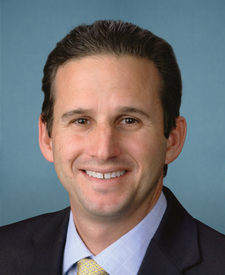
See how Brian Schatz actually votes — against your values.
DeepSyte scores Brian Schatz's record on the issues you care about — not party, not press releases. Take the 2-minute values quiz to see your personal alignment.
Sign in and take the values quiz to see how Brian Schatz's votes line up with your views.
Prediction track record
How often we called Brian Schatz's passage votes correctly, from their stated positions on each bill's tagged topics. Excludes “unclear” calls and abstentions.
100%
Accuracy
1
Correct
0
Incorrect
42
Pending
Right119-sjres-184
A joint resolution to direct the removal of United States Armed Forces from hostilities within or against the Islamic Republic of Iran that have not been authorized by Congress.
A joint resolution to direct the removal of United States Armed Forces from hostilities within or against the Islamic Republic of Iran that have not been authorized by Congress.
To prohibit the disclosure of records by the Secretary of Housing and Urban Development of individuals for the purposes of immigration enforcement, and for other purposes.
To amend the Internal Revenue Code of 1986 to temporarily suspend certain fuel excise taxes for fuel separated during periods in which the national average price of gasoline exceeds $3.99 per gallon, and to prohibit certain credits or deductions for oil and gas companies during such periods.
No paired statements and votes yet for Brian Schatz
We haven't yet found statement/vote pairs on the same topic for Brian Schatz. This usually means either the rep hasn't taken public positions on bills that have come to a passage vote, or those bills haven't been tagged yet. The checker runs as new press releases and votes come in.
Pro analysis
AI rep analysis — Pro
Get an AI-narrated read on Brian Schatz's full voting record against your stated values — aligned themes, conflicts, notable votes, and what to watch for.
We haven't extracted campaign positions for Brian Schatz yet. Once their campaign website or position pages are processed, this card will track what they said vs how they voted.
Crossing the aisle
No party-break passage votes recorded for Brian Schatz. Either they've voted with Democrats on every substantive passage vote in the corpus, or their tenure overlaps few high-threshold party-line votes so far.
Schatz Statement On Illegal Sports Gambling Indictment | U.S. Senator Brian Schatz of Hawaii
Position: Senator Schatz argues that federal regulation of sports gambling, particularly micro prop bets, is necessary to protect the integrity of professional sports and prevent misconduct beyond what DOJ enforcement alone can achieve.
WASHINGTON – U.S. Senator Brian Schatz (D-Hawai‘i) today released the following statement after federal prosecutors announced that that two former NBA players have been indicted on sports gambling charges. Schatz is set to introduce legislation regulating gambling in professional sports, which includes a ban on micro prop bets.
“This indictment is the latest example of how the explosion of unregulated sports betting is undermining the integrity of professional sports. While these players are rightly being held accountable, DOJ enforcement alone is not enough to crack down on the rampant misconduct. We need stronger federal regulation and oversight of prop bets to protect fans and restore public trust in sports.”
Schatz, Curtis, Warner Introduce Bipartisan Legislation To Provide More Transparency On AI-Generated Content | U.S. Senator Brian Schatz of Hawaii
Position: Senators Schatz, Curtis, and Warner introduced bipartisan legislation requiring clear labels and disclosures on AI-generated digital content to ensure consumers know when they are viewing or interacting with AI-made material.
Bill Would Require Clear Labels On AI-Made Content
WASHINGTON – U.S. Senators Brian Schatz (D-Hawai‘i), John Curtis (R-Utah), and Mark Warner (D-Va.) introduced bipartisan legislation to provide more transparency on digital content generated by artificial intelligence (AI). The bill will help ensure people know when they are viewing AI-made content or interacting with an AI chatbot by requiring clear labels and disclosures.
“People deserve to know whether the videos, photos, and content they see and read online are real or not,” said Senator Schatz. “Our bill is simple – if any digital content is made by AI, it should be labeled so that people are aware and aren’t fooled or scammed.”
“As AI-generated content becomes more refined and realistic, people deserve to know whether what they’re seeing is created by a human or generated by artificial intelligence,” said Senator Curtis. “Our bipartisan AI Labeling Act establishes clear, commonsense transparency standards that help consumers make informed decisions, promote trust in digital content, and discourage bad actors from using AI to deceive the public.”
“Jurisdictions around the globe are moving to adopt common-sense rules around labeling AI-generated content – it’s time for the U.S. to catch up and in fact lead the world with a disclosure and anti-circumvention model that should be the global standard,” said Senator Warner.
In May 2023, an AI-generated photo of an explosion near the Pentagon went viral, triggering a dip in the stock market. Deepfake images of President Trump being arrested were viewed by millions on social media, demonstrating the types of manipulation we could see during elections. And fraudsters are already abusing AI systems to generate scam calls, impersonating a loved one’s voice and scamming Americans out of their hard-earned money. As generative AI becomes increasingly convincing and widespread, it is critical that companies take steps to ensure that American consumers can identify AI-generated content.
The AI Labeling Act is endorsed by the American Society for Collective Rights Licensing INC (ASCRL); Authors Guild; Common Cause; Consumer Action; Consumer Federation of America (CFA); Department for Professional Employees, AFL-CIO (DPE); International Alliance of Theatrical Stage Employees (IATSE); Music Creators North America (MCNA); National Association of Voice Actors (NAVA); National Consumers League (NCL); Public Citizen; SAG-AFTRA; Society of Composers and Lyricists (SCL); Songwriters Guild of America (SGA); Writers' Guild of America East (WGAE).
“The National Association of Voice Actors proudly supports the AI Labeling Act. Audiences deserve to know what is real, ensuring consumers can make informed decisions about the content they engage with. Voice actors are already seeing their voices cloned, synthesized, and deployed without any clear disclosure. For audiences and voice actors, transparency is fundamental to protecting trust and preserving the value of human performance while creating a marketplace where authenticity is not left to guesswork. The AI Labeling Act takes an important step toward that goal by establishing clear disclosure and provenance requirements for AI-generated content. We thank Senators Schatz and Curtis for their leadership and look forward to working with Congress to move this legislation forward,” said Tim Friedlander, President and Co-Founder, National Association of Voice Actors.
"The Authors Guild applauds Senators Schatz and Curtis for reintroducing the AI Labeling Act. Readers deserve to know whether what they're reading was written by a human author or generated by a machine. As generative AI floods the market with synthetic books and articles, clear and conspicuous labeling is essential to protecting both the integrity of authorship and the public's trust in what they read. We are proud to endorse this commonsense, bipartisan bill,” said Mary Rasenberger, CEO, The Authors Guild.
"AI-generated deception is becoming a routine part of everyday life. Deepfakes and synthetic media increasingly appear in our social media, political discourse, and even messages shared by trusted friends and family. Americans shouldn't have to play detective every time they open a text, scroll through a newsfeed, or watch a video online. The AI Labeling Act is a commonsense transparency measure that helps restore trust in our information ecosystem by ensuring consumers can identify AI-generated content. In a world where seeing is no longer believing, transparency becomes the prerequisite for trust, accountability, and an informed public,” said J.B. Branch, AI Governance and Technology Policy Counsel, Public Citizen.
The full text of the bill is available here.
Schatz: Donald Trump Is Distracted With Things That Have Nothing To Do With People’s Lives | U.S. Senator Brian Schatz of Hawaii
Position: Senator Schatz criticizes President Trump for prioritizing expensive monument and event projects while Americans struggle with inflation, healthcare access, and cost of living. He argues Trump's policies—including wars, tariffs, and tax cuts for billionaires funded by cutting working people's healthcare—are harming ordinary Americans' financial situations.
WASHINGTON – U.S. Senator Brian Schatz (D-Hawai‘i) spoke today on the Senate floor about President Donald Trump’s preoccupation with building monuments and hosting sporting events while Americans across the country struggle to make ends meet amid rising prices.
“$600 million to build a ballroom at the White House. $100 million to build a triumphal arch. $250 million to renovate the Kennedy Center. And $60 million to host a UFC fight on the South Lawn of the White House. These are the things Donald Trump is putting his time and energy into right now, along with a whole lot of taxpayer money,” said Senator Schatz.
Senator Schatz continued, “People all across the country are eating less and driving less and saving less and seeing the doctor less because of his actions. Wars, tariffs, tax cuts for billionaires, paid for by cutting working people’s health care. And yet, all he can think about is where his next military adventure might be or what new monument he can build himself.”
Senator Schatz’s remarks, as prepared for delivery, are below. Video is available here.
$600 million to build a ballroom at the White House. $100 million to build a triumphal arch. $250 million to renovate the Kennedy Center. And $60 million to host a UFC fight on the South Lawn of the White House. These are the things Donald Trump is putting his time and energy into right now, along with a whole lot of taxpayer money. Meanwhile, gas is more than 4 bucks a gallon nationally and $5.58 in Hawai‘i. Grocery prices keep going up. Electricity bills are through the roof. Millions of Americans don’t have health insurance this year. And rents and mortgages are impossible to keep up with.
This is not a question of whether you like sports or monuments. I like sports. I think the capital city of the most powerful nation in the history of the world should be beautiful and modern and vibrant. But this is not that. This is a president who is so thoroughly distracted with his own personal pet projects that he has no time to do anything to lower prices and fix people’s actual problems. It’s not like these are events that have overtaken his agenda – this is his agenda. These are his initiatives that he came up with.
It’s plainly obvious that the Donald Trump is distracted with things that have nothing to do with regular people’s lives. But you don’t have to take my word for it. Last week, after inflation reached the highest level in 3 years, he said, “I love the inflation.” And a few weeks ago, as a war of his own making was ravaging people’s paychecks, he said, “I don’t think about Americans’ financial situation.” I don’t think about Americans’ financial situation. This is not me making a partisan accusation – those are his words!
People all across the country are eating less and driving less and saving less and seeing the doctor less because of his actions. Wars, tariffs, tax cuts for billionaires, paid for by cutting working people’s health care. And yet, all he can think about is where his next military adventure might be or what new monument he can build himself.
It’s not hard to imagine a focused, energetic president who exerts his authority to make people’s lives better, easier, more affordable, more fulfilling. And in the past, even when we didn’t agree with a president from the other party on solutions, we at least agreed on the problems. But not with Donald Trump. The problem was never that the Kennedy Center was too woke. The problem was never that gas was too cheap. No one woke up thinking, gee, I wish we were involved in more wars. Or man, we really ought to be throwing bigger parties for the president’s birthday.
No one asked for this. No one wants this. But we have a president who is at the end of his political career, with nothing to lose electorally. And all he can think about is himself and his legacy – not you.
Schatz Statement On UK Social Media Ban For Kids Under 16 | U.S. Senator Brian Schatz of Hawaii
Position: Senator Schatz supports federal legislation to restrict social media access for children under 16, citing concerns about platform addiction and harm to minors. He advocates for passage of the Kids Off Social Media Act.
Schatz Leading Efforts In Congress To Keep Kids Safe, Off Of Social Media
WASHINGTON – U.S. Senator Brian Schatz (D-Hawai‘i) released the following statement after British Prime Minister Keir Starmer announced his government’s plans to ban access to social media for all children under the age of 16. Schatz is the lead author of the Kids Off Social Media Act, bipartisan legislation that will keep kids off social media and help protect them from its harmful impacts.
“The UK is the latest example of a country stepping up to protect kids online. More and more governments are recognizing that addictive social media platforms are causing real harm to kids. Parents are asking for help, and lawmakers should listen. It’s time to pass the Kids Off Social Media Act.”
Senate Foreign Relations Committee Advances Schatz Bipartisan Bill To Promote Geothermal In Indo-Pacific | U.S. Senator Brian Schatz of Hawaii
Position: Senator Schatz supports legislation to promote geothermal energy exploration and production in the Indo-Pacific region as a means to enhance energy security for U.S. allies and partners while advancing U.S. economic and national security interests.
Legislation Now Moves To Full Senate For Consideration
WASHINGTON – Today, the U.S. Senate Foreign Relations Committee advanced the Pacific POWER Act, bipartisan legislation authored by U.S. Senator Brian Schatz (D-Hawai‘i) to promote geothermal exploration and production in the Indo-Pacific by leveraging the United States’ expertise as the world leader in geothermal electricity generation capacity. In addition to Schatz, the bill is co-sponsored by U.S. Senators Dave McCormick (R-Pa.), Chris Coons (D-Del.), John Curtis (R-Utah), and John Fetterman (D-Pa.).
“With energy demand rising and countries experiencing shortages, we have an opportunity to extend our leadership in geothermal energy and help our allies and partners become more energy secure,” said Senator Schatz, a member of the Senate Foreign Relations Committee. “Our bill will harness the expertise, capabilities, and financial tools of the U.S. public and private sectors to promote geothermal research and deployment in the Indo-Pacific in ways that support our economic interests and national security.”
Geothermal energy has the potential to meet a significant portion of the growth in electricity demand globally over the next few decades. But geothermal development is lagging globally because of challenges including high exploration costs and the need for stronger policy and supply chains. The United States, as the global leader in geothermal electricity generation, has the resources, expertise, and commercial capabilities necessary to support allies and partners develop geothermal capacity and become more energy secure in ways that also benefit U.S. security and economic businesses.
The text of the legislation is available here.
Schatz Presses Museums And Universities To Quickly Return Native Ancestral Remains And Items, Comply With Native American Graves Protection And Repatriation Act | U.S. Senator Brian Schatz of Hawaii
Position: Senator Schatz calls on museums and universities to accelerate repatriation of Native American ancestral remains and cultural items in compliance with the Native American Graves Protection and Repatriation Act, citing delays in the process.
Renewed Call Follows Schatz’s Efforts In Recent Years To Return Native Remains and Items Back To The Communities Where They Belong
WASHINGTON – U.S. Senator Brian Schatz (D-Hawai‘i), vice chair of the Senate Committee on Indian Affairs, renewed calls to 15 museums and universities to promptly repatriate Native ancestral remains and cultural items to the communities they belong to and meet their obligations under the Native American Graves Protection and Repatriation Act (NAGPRA). The renewed call follows efforts Schatz has led over the past few years to address the slow repatriation process by many U.S. institutions who continue to hold tens of thousands of Native remains and items.
"It shouldn’t take this long to return Native remains to their communities. Indigenous people have waited long enough. It's time for these museums and universities to stop the delays and finally do the right thing,” said Senator Schatz.
The 15 museums and universities Schatz wrote to include Ohio History Connection, Illinois State Museum, Harvard University, University of California Berkley, Indiana University, University of Tennessee Knoxville, University of Kentucky, University of Alabama, University of Arizona, University of Florida, University of Missouri, University of Oklahoma, Center for American Archeology, University of Texas at Austin, and Milwaukee Public Museum. Each were asked to update their compliance with NAGPRA, explain why NAGPRA items remain in their possession, and report any barriers to compliance, among other follow up questions unique to each institution’s initial responses.
The letters Schatz sent to the institutions are available here.
Schatz Introduces Bill To Harden Infrastructure Against Floods, Extreme Weather | U.S. Senator Brian Schatz of Hawaii
Position: Senator Schatz supports legislation requiring federally-funded infrastructure projects to be designed to withstand flooding and extreme weather impacts, accounting for climate change in federal investment decisions.
WASHINGTON – U.S. Senator Brian Schatz (D-Hawai‘i) joined colleagues in introducing the Federal Flood Risk Management Act, legislation to ensure that federally-funded infrastructure projects are built to withstand the impacts of flooding and other extreme weather. Flooding is the most common natural disaster in Hawai‘i and nationwide, most recently evidenced during the Kona low storms earlier this year.
“Extreme weather is becoming more frequent and more severe in Hawai‘i and across the country, and it’s taking a huge toll on our infrastructure. Our bill will help ensure that federally-funded infrastructure is built to be more resilient to the impact of floods and other disasters,” said Senator Schatz.
The Federal Flood Risk Management Act will codify the standards first set forth by President Barack Obama in 2015 but later rescinded by President Donald Trump. The bill will ensure that federal investments account for the impacts of climate change in order to protect infrastructure, save taxpayer dollars, safeguard businesses from flood damage, and keep communities safe.
The text of the bill is available here.
Schatz, Blackburn Introduce Bipartisan Legislation To Help Stop People From Sending Unwanted Nude Photos | U.S. Senator Brian Schatz of Hawaii
Position: Senators Schatz and Blackburn introduced bipartisan legislation establishing a federal private right of action for individuals who receive unsolicited explicit images online and imposing civil penalties on senders, with exceptions for good-faith medical, educational, or law enforcement purposes.
Bill Would Establish Federal Private Right of Action for Individuals Who Receive Unsolicited Explicit Images, Impose Civil Penalties on Senders
WASHINGTON – U.S. Senators Brian Schatz (D-Hawai‘i) and Marsha Blackburn (R-Tenn.) introduced legislation to curb the sending of sexually explicit images online, also known as cyberflashing, by creating a federal private right of action for victims who receive such images and imposing civil penalties for individuals who send them. Companion legislation was introduced in the U.S. House of Representatives by U.S. Representatives Jennifer McClellan (D-Va.) and Nathaniel Moran (R-Texas).
“No one should fall victim to unwanted flashing, whether in real-life or online,” said Senator Schatz, a senior member of the Senate Committee on Commerce, Science, and Transportation. “By providing a federal private right of action and imposing penalties, this bill will help prevent sexual harassment and hold perpetrators accountable.”
“AI has opened the door for bad actors to produce explicit images quickly and cheaply to abuse or harass more victims, especially targeting young women,” said Senator Blackburn. “The bipartisan CONSENT Act would provide victims with a civil right of action and relief when they receive unwanted sexual images or videos on dating apps, text messages, and other forms of online communication.”
Cyberflashing can occur on social media, dating apps, over text, or even via AirDrop, and disproportionately impacts women. According to the Pew Research Center, more than half of women and more than a third of men between 18-29 have received such images. Additionally, victims may face barriers to reporting including fear of retaliation, stigma, and procedural barriers. In addition, artificial intelligence has enabled a new form of non-consensual intimate imagery (NCII), which can be generated quickly and cheaply. A 2024 study found that 15% of K-12 students were aware of at least one NCII deepfake that depicts an individual associated with their school. These deepfakes can cause lasting trauma whether the videos or images are real or fake, or whether the recipient is the one being depicted.
The CONSENT Act would enable civil right of action and relief to victims who receive intimate digital depictions or intimate digital forgery without their consent. It also provides an exception for transmissions of intimate visual depictions for a good faith medical, education, or law enforcement purpose. An individual may obtain relief in the form of:
The CONSENT Act is endorsed by Bumble, SafeBAE, RAINN, the National Alliance to End Sexual Violence, National Domestic Violence Hotline (The Hotline), National Network to End Domestic Violence (NNEDV), National Women's Law Center Action Fund, and Sexual Violence Prevention Association (SVPA).
“For years, Bumble has championed efforts to criminalize cyberflashing and protect people from unsolicited explicit content online. While we are proud of the progress that has been made at the state level, millions of Americans, especially women, remain unprotected without a federal standard. That’s why we support the bipartisan CONSENT Act, which empowers individuals to take legal action against those who knowingly send nonconsensual explicit content. Congress has an opportunity to make it clear that these acts are unacceptable and that everyone deserves a safer, more respectful online experience. Thank you to the bill sponsors who are helping move this critical legislation forward,” said Whitney Wolfe Herd, Founder and CEO of Bumble.
"Cyberflashing is not a harmless prank or minor inconvenience. It is digital sexual violence. It violates the victims consent and can threaten their safety. Right now, digital sexual violence is the most rapidly increasing form of sexual violence. Yet, victims are left without avenues for justice and perpetrators are encouraged to continue their harm without consequences. The CONSENT Act changes this. It empowers survivors with the tools to seek justice in the form of civil restitution. Accountability and action change culture. The CONSENT Act will prevent future cyberflashing by changing the norms around accountability and action,” said Omny Miranda Martone, Founder and CEO of the Sexual Violence Prevention Association (SVPA).
“Unsolicited intimate images are a deeply invasive form of technology-facilitated abuse that can be used to harass, intimidate, and control victims and survivors,” said Katie Ray-Jones, CEO of the National Domestic Violence Hotline. “The CONSENT Act would create an important pathway for accountability and help ensure that survivors, including minors and those targeted by AI-generated abuse, have meaningful options to protect their safety, privacy, and dignity. The Hotline is grateful for continued bipartisan leadership to address the evolving ways technology is being used to cause harm.”
“The sending of unsolicited intimate images has been commonplace for decades, but federal law has failed to keep pace with technology-facilitated sexual harassment,” said Elizabeth Tang, Senior Counsel for Education and Workplace Justice at the National Women’s Law Center Action Fund. “The CONSENT Act closes this gap by allowing recipients of unsolicited sexual images to go to court to stop the harassment and recover reasonable damages, attorney fees, and court costs from their harasser. We urge Congress to act swiftly to pass this important and long-overdue bill.”
“The National Network to End Domestic Violence (NNEDV) strongly supports the CONSENT Act and applauds Representatives McClellan and Moran and Senators Schatz and Blackburn for introducing this bipartisan, survivor-centered legislation. Survivors of domestic violence, stalking, sexual assault, and other forms of abuse increasingly face serious harm from the non-consensual sharing and transmission of intimate images. By creating a clear pathway for survivors to seek accountability and injunctive relief, the CONSENT Act helps address a critical gap in existing law. NNEDV is proud to support this effort to strengthen protections against technology-facilitated abuse and ensure survivors have meaningful tools to pursue justice in the digital age,” said Tonia Moultry-Pace, Interim CEO and President of NNEDV.
The CONSENT Act takes an important step forward to acknowledge the harm caused to victims from receiving non-consensual sexual images, and, importantly, increases accountability for those engaged in this harm. We support the creation of a private right of action allowing recipients to seek damages and injunctive relief against individuals who knowingly transmit intimate images without consent,” said Terri Poore, Policy Director for the National Alliance to End Sexual Violence.
The full text of the bill is available here.
Following Reports Of Tribal Citizens Being Questioned And Detained, Schatz, Durbin Demand Answers From Trump Administration On Immigration Enforcement, Targeting Of Native People | U.S. Senator Brian Schatz of Hawaii
Position: Senators Schatz and Durbin call on the Trump administration to adopt formal guidance recognizing Tribal IDs as acceptable proof of U.S. citizenship, ensure immigration personnel receive training on this guidance, and engage in meaningful government-to-government consultation with Tribes on immigration enforcement activities affecting their communities.
Senators Call For Better Training, Full, Consistent Recognition Of Tribal IDs
WASHINGTON – U.S. Senator Brian Schatz (D-Hawai‘i), Vice Chairman of the Senate Committee on Indian Affairs, and U.S. Senate Democratic Whip Dick Durbin (D-Ill.), Ranking Member of the Senate Judiciary Committee, today demanded answers from the Trump administration on concerning reports that some immigration enforcement personnel have refused to recognize Tribal IDs and unnecessarily questioned and detained Tribal citizens.
“It is well-established law that Tribal citizens born within the United States are U.S. citizens, yet many Tribal citizens have met resistance from DHS personnel when attempting to establish their citizenship using their Tribal IDs,” the senators wrote in their letter to Department of Homeland Security (DHS) Secretary Markwayne Mullin and Department of the Interior Secretary Doug Burgum. “We urge DHS promptly to adopt formal guidance that recognizes Tribal IDs as acceptable proof of U.S. citizenship, ensure immigration personnel are trained on such guidance, and share such guidance externally with Tribes.”
“Tribes have a trust and treaty relationship with the United States rooted in the U.S. Constitution, federal statutes, and court decisions. Federal agencies are obligated to establish clear policies and engage in meaningful government-to-government consultation whenever federal decision-making affects Tribes. Despite this obligation, DHS has not engaged in meaningful consultation with Tribes on the use of Tribal IDs as proof of citizenship, nor, as DHS carries out expanded immigration enforcement efforts, how the agency will work with Tribes to respect Tribal inherent sovereignty over their lands and communities. We urge DHS to consult with Tribes on the use of Tribal IDs and expanded immigration enforcement activities, and to integrate Tribal feedback into agency guidance, training, and policies affecting Tribes,” the senators continued.
The full text of the letter can be found below and is available here.
Dear Secretary Mullin and Secretary Burgum:
We write to advise you of our deep concerns over reports that immigration enforcement personnel have detained, or attempted to detain, enrolled Tribal citizens. During these encounters with Tribal citizens, Tribal government-issued identification (Tribal ID) was not consistently treated as valid proof of U.S. citizenship, despite a Dear Tribal Leader letter issued by Secretary Noem indicating a Department of Homeland Security (DHS) position to the contrary. This raises questions regarding whether DHS personnel are properly trained to process Tribal IDs as proof of U.S. citizenship in light of the aforementioned agency policy on Tribal IDs. We are also concerned that efforts by U.S. Immigration and Customs Enforcement (ICE) to delegate its civil immigration enforcement responsibilities to non-federal law enforcement agencies raise the potential for the inappropriate exercise of federal civil authorities on Tribal lands. Recent actions by the agency exemplify DHS’s lack of Tribal consultation on federal actions that affect Tribes and their citizens, which has created confusion and implementation concerns. We urge you to direct DHS and ICE to promptly engage in meaningful and robust Tribal consultation on these policies and any other new federal actions that have Tribal implications.
There is no requirement in law for U.S. citizens to carry identification to avoid arbitrary arrest and detention. The Immigration and Nationality Act (INA) gives immigration officials limited authority to question individuals whom an official has reason to believe are noncitizens as to their right to be or remain in the United States. This authority allows such officials to briefly stop and question an individual and inquire about immigration status. If the person establishes that they are a U.S. citizen, they must be free to go after a brief encounter. It is well-established law that Tribal citizens born within the United States are U.S. citizens, yet many Tribal citizens have met resistance from DHS personnel when attempting to establish their citizenship using their Tribal IDs. ICE’s responses to congressional and Tribal inquiries on these matters have been vague and, as a result, it is unclear whether ICE is making any efforts to develop guidance on Tribal IDs as proof of citizenship for immigration enforcement purposes. DHS appears to lack a clear policy on Tribal IDs as proof of citizenship other than the aforementioned unsigned Dear Tribal Leader letter from former Secretary Noem. Accordingly, we urge DHS promptly to adopt formal guidance that recognizes Tribal IDs as acceptable proof of U.S. citizenship, ensure immigration personnel are trained on such guidance, and share such guidance externally with Tribes.
Tribes have a trust and treaty relationship with the United States rooted in the U.S. Constitution, federal statutes, and court decisions. Federal agencies are obligated to establish clear policies and engage in meaningful government-to-government consultation whenever federal decision-making affects Tribes. Despite this obligation, DHS has not engaged in meaningful consultation with Tribes on the use of Tribal IDs as proof of citizenship, nor, as DHS carries out expanded immigration enforcement efforts, how the agency will work with Tribes to respect Tribal inherent sovereignty over their lands and communities. We urge DHS to consult with Tribes on the use of Tribal IDs and expanded immigration enforcement activities, and to integrate Tribal feedback into agency guidance, training, and policies affecting Tribes.
We are also concerned that ICE has reportedly attempted to enter into agreements with Tribal entities to engage in civil immigration enforcement activities. To date, we are unaware of any Tribe or Bureau of Indian Affairs (BIA) law enforcement agency that has entered into an INA section 287(g) or 25 U.S.C. 2804(e) law enforcement agreement; nor is any such entity listed on ICE’s website as participating in such agreements. Nonetheless, Tribes have reported pressure from ICE to sign such agreements, particularly as states and counties are increasingly party to section 287(g) agreements across the country in regions with Tribal lands and in major cities where Tribal citizens live. We are deeply concerned that these agreements may allow for the inappropriate exercise of civil immigration authorities on Tribal lands. We seek additional transparency on agreements between DHS, ICE, and Tribes to ensure the laws that protect Tribal sovereignty and Tribal citizens are upheld.
Accordingly, we request that DHS, ICE, and the BIA provide written responses to the following questions. Please provide a complete written response to each question no later than 30 days.
We look forward to your prompt response.
Schatz Presses Secretary Rubio On President Trump’s China Trip, Impact Of Iran War On Indo-Pacific | U.S. Senator Brian Schatz of Hawaii
Position: Senator Schatz opposes the sale of advanced semiconductor technology to China and criticizes concessions on Taiwan made during President Trump's recent China visit. He also expresses concern about the impact of the Iran war on Indo-Pacific allies' energy security and U.S. strategic positioning in the region.
WASHINGTON – During a Senate Foreign Relations Committee hearing, U.S. Senator Brian Schatz (D-Hawai‘i) pressed U.S. Secretary of State Marco Rubio on sales of advanced technologies to China and concessions on Taiwan made during President Donald Trump’s recent trip to China. Schatz also questioned Rubio about the impact of the Iran war on key Indo-Pacific allies and partners.
“It's pretty plain that the president violated one of the Six Assurances,” said Senator Schatz. “He says, we discussed arms sales in great detail; it depends on China; it's a very good negotiating chip for us. It seems to me that if the main objective is to touch gloves and initiate conversations, then why give away any of the things that they're already seeking in exchange for essentially nothing? I just don't understand why we would want to sell them our second best chips and why we would start to at least complicate the question of our assurances regarding Taiwan?”
Senator Schatz added, “The Marshall Islands, the Philippines, and Tuvalu have declared a national emergency on their energy situation. South Korea says its energy crisis is a war-like situation. It is always the case that something in the Middle East undermines our ability to project power in the Asia-Pacific region. But it's not just a question of opportunity cost and attentional challenges. Now we're talking about our allies in the Asia-Pacific region really taking it on the chin with energy costs because of the Strait of Hormuz. What do we say to them: just hang in there?”
Video of Senator Schatz’s exchange with Secretary Rubio is available here.
Source: GDELT 2.0 GKG, filtered to a curated list of national outlets. Inclusion is not endorsement; opinion pieces and reported news are mixed.
Recent stock activity
Periodic transaction reports filed under the STOCK Act — disclosed by the rep, sourced from public filings.
No disclosed trades on record.
Source: open-data mirrors of the Senate eFD and House Clerk financial-disclosure systems. Disclosure within 30 days of trade is required by law (45 for spouse/dependent trades).
Top PAC donors · 2026 cycle
Political action committees that gave the most to this rep's principal campaign committee this cycle. PAC giving is direct organizational support — industry, ideological, or leadership.
1.GRIDIRON-PAC2 contributions$10,000
2.CSX CORPORATION GOOD GOVERNMENT FUND2 contributions$10,000
3.ECHOSTAR CORPORATION AND DISH NETWORK CORPORATION PAC2 contributions$10,000
4.INVESTMENT COMPANY INSTITUTE PAC1 contribution$5,000
5.FIRST HAWAIIAN BANK CITIZENSHIP COMMITTEE1 contribution$5,000
6.MATSON, INC. FEDERAL ELECTION COMMITTEE1 contribution$5,000
7.HOLLAND & KNIGHT COMMITTEE FOR EFFECTIVE GOVERNMENT1 contribution$5,000
8.LABORERS' INTERNATIONAL UNION OF NORTH AMERICA (LIUNA) PACLabor1 contributionTrade-union PAC for construction laborers — backs prevailing-wage standards, infrastructure investment, apprenticeship programs, and project labor agreements.AI$5,000
9.PRICEWATERHOUSECOOPERS POLITICAL ACTION COMMITTEEFinance1 contributionAccounting and professional-services PAC — supports candidates aligned with business-friendly tax policy, financial regulation, and professional-services industry interests.AI$5,000
10.NEW MILLENNIUM PAC1 contribution$5,000
Source: OpenFEC (api.open.fec.gov) Schedule A receipts where contributor type is “committee.” Aggregated by contributing committee. Self-transfers from joint-fundraising / victory committees are excluded.
Top individual contributors · 2026 cycle
Itemized individual contributions over $200 to this rep's campaign committee, aggregated by donor employer. PAC giving is shown above; this section is people, not organizations.
1.ANTHROPIC$41,500
2.FIRST HAWAIIAN BANK$19,250
3.MATSON$14,500
4.BLACKSTONE$10,500
5.KKR$10,500
6.COMCAST$10,000
7.CAPE$8,500
8.DAVIS LEVIN LIVINGSTON$7,700
9.ANTHROPIC PBC$7,000
10.SILBEY STRATEGIES INC.$7,000
Source: OpenFEC Schedule A receipts where contributor type is “individual,” aggregated by the donor's self-reported employer. This is a geographic / industry correlation, not a corporate endorsement.