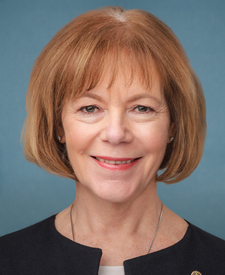
See how Tina Smith actually votes — against your values.
DeepSyte scores Tina Smith's record on the issues you care about — not party, not press releases. Take the 2-minute values quiz to see your personal alignment.
Sign in and take the values quiz to see how Tina Smith's votes line up with your views.
Prediction track record
We haven't made any vote predictions for Tina Smith yet. Predictions are generated for bills with tagged effects; they show up here as soon as the predict-votes job covers this rep's upcoming docket.
Consistency insights
No paired statements and votes yet for Tina Smith
We haven't yet found statement/vote pairs on the same topic for Tina Smith. This usually means either the rep hasn't taken public positions on bills that have come to a passage vote, or those bills haven't been tagged yet. The checker runs as new press releases and votes come in.
Pro analysis
AI rep analysis — Pro
Get an AI-narrated read on Tina Smith's full voting record against your stated values — aligned themes, conflicts, notable votes, and what to watch for.
We haven't extracted campaign positions for Tina Smith yet. Once their campaign website or position pages are processed, this card will track what they said vs how they voted.
Crossing the aisle
No party-break passage votes recorded for Tina Smith. Either they've voted with Democrats on every substantive passage vote in the corpus, or their tenure overlaps few high-threshold party-line votes so far.
U.S. Senator Tina Smith Reintroduces Bill to Help New, Beginning Farmers Grow a Successful Business - Senator Tina Smith
Position: Senator Smith reintroduced legislation to expand federal grant programs supporting new and beginning farmers through training, mentoring, and business development assistance, with the stated goal of preserving independent farm ownership against consolidation.
WASHINGTON, D.C. – [6/25/2026] U.S. Senator Tina Smith (D-MN) reintroduced the Farming Opportunities Training and Outreach Program Reauthorization Act, a bill that helps new farmers and producers successfully grow their budding operations.
Beginning farmers are forced to literally bet the farm, and then some, to pay for record-high land, fertilizer, equipment and other input costs necessary for farming. This grant program offers those farmers access to the knowledge, skills and tools needed to make informed decisions for their operations today and in the future.
“Farmers strengthen Minnesota’s economy and keep food on the table, simple as that,” said Sen. Tina Smith. “That’s why we need to support the next generation of independent farmers before the industry is eaten up by billion-dollar corporations, foreign companies and tech CEOs who see farming as another investment instead of a time-honored way of life. This program works to keep local farms locally owned and operated.”
The ag industry will soon see major shifts in farm ownership with more than one-third of American farmers being 65 years old or older. A seamless transition to the next generation is vital for small towns and rural communities to thrive, and to keep the United States as a leader in producing high-quality food and ag products.
This bill offers grants to organizations and non-profits that provide programs to support new farmers. One program is called Land Link, and it connects retiring farmers with new farmers, ensuring generational knowledge is passed down. The bill also supports business training, mentoring, apprenticeships, ag rehab programs for veterans, production practices, conservation planning, risk management, diversification and marketing strategies, food safety, recordkeeping, credit management and farm safety training.
“We applaud Senator Smith's reintroduction of the Farming Opportunities Training and Outreach Grant Program,” said Theresa Schneider, CEO of the Good Acre. “This program helps farmers navigate the critical early years of building a business, while expanding access for producers who have historically faced barriers to meaningful opportunities in agriculture. Especially at a time when farmers are facing new challenges, and our food system is as consolidated as ever. Our food future depends on resilient local systems, and these are practical investments in economic opportunity, market development and long-term resilience.”
Full text of the bill can be found here.
Smith's New Report on Solutions to the Home Insurance Crisis
Position: Senator Smith released a report examining the home insurance affordability crisis driven by climate-change-related extreme weather and insurance industry practices, and outlined more than two dozen policy options ranging from risk reduction measures to alternatives to the current private insurance system.
WASHINGTON – Today, U.S. Senator Tina Smith (D-MN), the lead Democrat on the Senate Housing Subcommittee, released a new report, Bold Solutions to the Home Insurance Crisis. It examines the nationwide crisis of rising home insurance costs, the role of climate-change-driven extreme weather events, and policy solutions that would tackle this affordability crisis.
Across the country, Americans are increasingly facing unaffordable home insurance bills or aren’t able to access coverage at all. Insurers have significantly increased their rates, pushing up home insurance premiums an average of 45% since 2019. Sixteen years ago, home insurance was much more affordable and cost only 5% of the typical monthly mortgage payment. But these costs have now more than doubled to more than 10% of a typical mortgage payment, even as mortgage costs have also surged.
Former Federal Reserve Chair Jerome Powell emphasized the risk we face in response to Sen. Smith’s questioning during a Senate Banking Committee hearing, saying that “If you fast-forward 10 or 15 years, there are going to be regions of the country where you can’t get a mortgage” due to insurance companies pulling out of high-risk areas.
Minnesotans have been particularly hit hard by rate increases. Last year, Minnesota home insurance rates increased 34%, which was the largest increase of any state, according to reports.
These problems, Sen. Smith argues, are driven by the growing strength and severity of disasters due to climate change and an insurance industry motivated more by profits than protecting its customers.
To address the problem, Sen. Smith lays out more than two dozen policy options that Washington can consider, ranging from those that lower physical risks for homeowners and communities, to wholesale alternatives to our current, private home insurance system.
You can read the full report HERE:
· Senator Smith’s opening letter here
“Owning a home has always been part of the American dream. But for too many families today, that dream feels further out of reach than ever before. Without affordable insurance, mortgages may become harder to get, home values could decline and whole communities could face financial ruin. This isn’t some distant threat; it’s happening right now all across the country. This crisis is the result of several intertwined factors—including the worsening effects of climate change, the realities of our built environment and the structure of our financial systems,” said Senator Smith. “This report lays out the facts behind the home insurance crisis. It discusses the role of climate change, shows who is profiting from the status quo and highlights bold solutions that would help keep homeownership within reach.”
"The scale of the crisis of insurance availability, affordability, and adequacy mandates ambitious policy solutions," said Moira Birss, Senior Fellow at Climate and Community Institute. "As this comprehensive and invaluable report from Senator Smith outlines, the public sector must forge a new path forward that keeps communities whole and holds private actors accountable."
“Home insurance is a major part of America’s affordability crisis. Countless families are shouldering the costs of the climate crisis through increased insurance premiums or lack of coverage. This is already having real-world impacts as disaster survivors struggle to rebuild and recover,” said TJ Helmstetter, a spokesperson for the Insurance Fairness Project. “Insurance is supposed to be the safety net when disasters occur, and right now the net is dangerously frayed. Homeowners and renters cannot be the only ones responsible for repairing it, especially when so many of us are barely making ends meet. Senator Smith’s report provides insights on avenues to ease costs and create a stronger, more reliable insurance system that manages rising premiums and risks. It also examines solutions to some root causes, including excessive profiteering and accelerating climate change.”
“The home insurance availability and affordability crisis is threatening the housing security of families across the United States. While climate change is increasing damages, insurance companies are continuing to profit while playing states off against each other. Federal intervention will be necessary to protect families and head off a full-blown economic crisis, and we laud Senator Smith for her forward-thinking approach on this pressing issue,” said Caroline Nagy, associate director for housing at Americans for Financial Reform Education Fund.
“From skyrocketing home insurance premiums to total policy cancellations, families are paying the price for record-breaking heat, severe drought, and devastating flooding. Meanwhile, insurance companies are raking in record profits and pushing the costs onto their customers. Americans deserve solutions now. We appreciate Senator Smith’s leadership in bringing much-needed attention to the climate-fueled home insurance crisis and offering real solutions to make housing more affordable,” said Mia Logan, Senior Advisor at Climate Power.
"Across the country, survivors of floods, wildfires, hurricanes, and extreme heat are facing a second disaster when they open their insurance bills," said Sierra Kos, Co-Founder and Co-Executive Director, Extreme Weather Survivors. "Rising premiums, reduced coverage, and policy nonrenewals are making it harder for families to stay in the homes and communities they love. We welcome Senator Smith's attention to the growing home insurance crisis and her commitment to exploring solutions that help keep coverage affordable and accessible for homeowners. Survivors need leaders at every level of government to recognize that as extreme weather events become more frequent and costly, insurance is increasingly becoming a housing issue, an affordability issue, and a recovery issue."
Senator Smith has been a champion in the Senate for affordable housing and clean energy policy. She has been the top Democrat on the Senate Housing Subcommittee since 2021 and has a record of proposing and delivering on bipartisan housing solutions, ranging from reforming rural housing programs, improving homeless assistance and access to homeownership, and has made addressing Minnesota’s housing challenges a priority as Senator. She was instrumental in securing major climate and energy provisions in the Inflation Reduction Act, including tax credits for clean energy technologies.
Bipartisan Legislation to Extend the Terrorism Risk Insurance Program
Position: The senators support reauthorization of the Terrorism Risk Insurance Program (TRIA), a federal reinsurance backstop that ensures commercial policyholders can obtain terrorism risk coverage and stabilizes the private insurance market.
WASHINGTON, DC – Today, U.S. Senators Tina Smith (D-MN), Dave McCormick (R-PA), Ruben Gallego (D-AZ), and Thom Tillis (R-NC) introduced the bipartisan Terrorism Risk Insurance Program Reauthorization Act of 2026, which is essential to economic security by safeguarding the availability of terrorism risk coverage. This legislation is also cosponsored by Senators Britt (R-AL), Van Hollen (D-MD), Crapo (R-ID), Cortez Masto (D-NV), Kennedy (R-LA), Schumer (D-NY), Moreno (R-OH), Kim (D-NJ), Ricketts (R-NE), Alsobrooks (D-MD), Warnock (D-GA) and Blunt-Rochester (D-DE).
Following the attacks on September 11, 2001, most states began allowing terrorism risk to be excluded from commercial insurance policies, leaving businesses and industries without access to coverage. Since insurance is a precondition for commercial lending and real estate transactions, this gap in coverage threatened broad economic damage across real estate, construction, energy, transportation, and related industries. Congress responded by passing the Terrorism Risk Insurance Act of 2002 (TRIA), creating a federal reinsurance backstop to stabilize the private market and ensure that commercial policyholders could continue to obtain terrorism risk coverage.
The private insurance market has relied on the TRIA backstop ever since. When TRIA briefly lapsed in December 2014, terrorism exclusions that insurers had pre-filed with state regulators took effect automatically, making terrorism coverage effectively unavailable across commercial policies nationwide. As a result, terrorism risk coverage was removed from policyholders immediately and without notice. Given that the current threat landscape remains elevated, allowing a similar lapse in terrorism coverage would expose policy holders to unnecessary financial risk and uncertainty.
“The Terrorism Risk Insurance Program is critical to keeping insurance available and affordable to businesses in Minnesota and across the country so they can grow and create jobs,” said Senator Smith. “Without this bill, a potential terrorism event would mean a financial catastrophe for many businesses and would be extremely costly to taxpayers. I’ve worked to make sure this bipartisan measure stays in place since I came to the Senate, and I’m glad to be introducing my TRIA bill again to ensure this vital program doesn’t lapse.”
“State sponsors of terror pose a persistent threat to the United States, and we must be prepared,” said Senator McCormick. “Reauthorizing TRIA ensures businesses and workers in Pennsylvania will be supported in the event of a terror attack.”
“We have to make sure we’re prepared for the worst,” said Senator Gallego. “I’m proud to co-lead the bipartisan reauthorization of the Terrorism Risk Insurance Act. This long-term reauthorization will ensure Arizona businesses can invest in their assets and create jobs with confidence and that they have the resources they need to recover in the event of a major terrorist attack.”
“For more than two decades, Congress has recognized the need for the Terrorism Risk Insurance Program. While making sure American businesses have access to this protection is an unfortunate necessity in today’s world, it’s critical that Congress extend the program,” said Senator Britt.
“In this dangerous moment when America faces growing threats from around the world, our communities need to know that their property is insured in the event of a major terror attack. Renewing TRIA with bipartisan support is an essential precautionary step we must take to ensure Americans have access to insurance and avoid economic peril by allowing them to recover and rebuild in the wake of an unimaginable tragedy,” said Senator Van Hollen.
“Lack of insurance coverage had a destabilizing effect on the U.S. economy in the wake of the September 11, 2001, terrorist attacks. TRIA has made coverage for terrorism risk insurance more available and affordable in Idaho and across the nation. This reauthorization ensures continued private-sector responsibility and safeguards our economy against potential future threats,” said Senator Crapo.
“From the Super Bowl to the World Series of Poker to F1 races, the Silver State regularly hosts large gatherings,” said Senator Cortez Masto. “While these events are critically important to Nevada’s tourism industry, they also create unique risks. Extending the Terrorism Risk Insurance program would help Nevada’s economy recover should a debilitating terrorist attack occur and ensures the continued availability of terrorism insurance for our businesses.”
“In the wake of the September 11th attacks, Congress created the Terrorism Risk Insurance Program to support Americans during crises. As America continues to deal with heightened terrorism threats, this program remainsas relevant as ever. I’m proud to join my colleagues in introducing a bill to get ahead of the Terrorism Risk Insurance Act’s expiration date, pass an extension and prevent any lapse in coverage,” said Sen. John Kennedy.
“After the horrendous September 11th attacks, we learned that failing to insure against losses from terrorism doesn’t just threaten individual businesses, it also undermines our entire economy. I am proud to have helped pass the original Terrorism Risk Insurance Act, which has been critical to safeguarding our real estate, construction, energy, transportation, and other vital industries against losses due to terrorist attacks,” said Leader Schumer. “Reauthorizing this program for seven years is common sense to provide certainty, stability, and protection for jobs, businesses, and our economy in the face of evolving threats.”
“Congress cannot let local communities foot the bill for possible terrorist attacks,” said Senator Moreno. “It is critical that we protect American jobs and ensure that businesses across the country have the tools they need to respond to and recover from these catastrophic events.”
“The threat of terror attacks doesn’t just impact lives, it impacts livelihoods. New Jerseyans saw that in the aftermath of 9/11, and we know that in the same way it’s important to invest in efforts to protect our country, it’s important that we reauthorize the Terrorism Risk Insurance Program,” said Senator Kim.
“The Terrorism Risk Insurance Act will provide certainty for insurers, businesses, and large community events that bring Nebraskans together,” said Senator Ricketts. “We must reauthorize this program and ensure we are protected and prepared for any potential future threat. I encourage my colleagues to quickly send TRIA Reauthorization to the President’s desk.”
“It is critical for the national and financial security of our nation that Congress pass the Terrorism Risk Insurance Act of 2026 – let’s act before this policy lapses to provide certainty for businesses,” said Senator Alsobrooks.
The Terrorism Risk Insurance Program Reauthorization Act of 2026 would extend TRIA by seven years. Acting before the program expiration date of December 31, 2027, provides long-term market certainty and would prevent policyholders from facing a gap in coverage.
The Terrorism Risk Insurance Act is also backed by the following stakeholders: American Property Casualty Insurance Association, Council of Insurance Agents and Brokers, Independent Insurance, Agents & Brokers of America, National Association of Mutual Insurance Companies, Reinsurance Association of America, Coalition to Insure Against Terrorism, Nareit, Real Estate Roundtable, Commercial Real Estate Finance Council.
Source: GDELT 2.0 GKG, filtered to a curated list of national outlets. Inclusion is not endorsement; opinion pieces and reported news are mixed.
Recent stock activity
Periodic transaction reports filed under the STOCK Act — disclosed by the rep, sourced from public filings.
No disclosed trades on record.
Source: open-data mirrors of the Senate eFD and House Clerk financial-disclosure systems. Disclosure within 30 days of trade is required by law (45 for spouse/dependent trades).
Top PAC donors · 2026 cycle
Political action committees that gave the most to this rep's principal campaign committee this cycle. PAC giving is direct organizational support — industry, ideological, or leadership.
1.WOMEN ON THE ROAD CALIFORNIA 2018Ideological1 contributionCalifornia-based PAC focused on women's political engagement — specific policy positions not inferable from the name.AI · low$15,000
2.SHAHEEN SMITH 2020Leadership1 contributionMember-of-Congress leadership PAC — supports Democratic candidates and causes aligned with the officeholder.AI$11,200
3.GREEN SENATE IMPACT1 contribution$10,361
4.NATIONAL TREASURY EMPLOYEES UNION POLITICAL ACTION COMMITTEEPublic Sector2 contributionsPublic-sector employee union PAC — backs candidates supporting federal employee benefits, workplace protections, and collective bargaining rights.AI$10,000
5.EMILY'S LISTIdeological2 contributionsPro-choice advocacy PAC — supports Democratic women candidates who back abortion access and reproductive rights.AI$10,000
6.XCEL ENERGY EMPLOYEE POLITICAL ACTION COMMITTEE (XPAC)Energy2 contributionsEnergy utility company PAC — supports candidates backing electric utility operations, grid infrastructure investment, and energy policy favorable to large power producers.AI$10,000
7.UA UNION PLUMBERS & PIPEFITTERS VOTE! PACLabor2 contributionsTrade-union PAC for United Association plumbers and pipefitters — backs prevailing-wage protections, infrastructure funding, project labor agreements, and pro-union labor policies.AI$10,000
8.LABORERS' INTERNATIONAL UNION OF NORTH AMERICA (LIUNA) PACLabor2 contributionsTrade-union PAC for construction laborers — backs prevailing-wage standards, infrastructure investment, apprenticeship programs, and project labor agreements.AI$10,000
9.COMCAST CORPORATION & NBCUNIVERSAL POLITICAL ACTION COMMITTEE - FEDERAL2 contributions$10,000
10.THE TOP 4 2020 COMMITTEE1 contribution$5,440
Source: OpenFEC (api.open.fec.gov) Schedule A receipts where contributor type is “committee.” Aggregated by contributing committee. Self-transfers from joint-fundraising / victory committees are excluded.
Top individual contributors · 2026 cycle
Itemized individual contributions over $200 to this rep's campaign committee, aggregated by donor employer. PAC giving is shown above; this section is people, not organizations.
1.SELF$3,945
2.ALBRIGHT STONEBRIDGE GROUP LLC$1,000
3.EDINA REALTY, INC.$500
4.MAYO CLINIC$160
5.MISSISSIPPI STATE UNIV$75
6.STATE OF MINNESOTA$70
7.UNIVERSITY OF MINNESOTA$65
8.ISD-11$50
9.WHEN I WORK$50
10.AUGSBURG UNIVERSITY$50
Source: OpenFEC Schedule A receipts where contributor type is “individual,” aggregated by the donor's self-reported employer. This is a geographic / industry correlation, not a corporate endorsement.