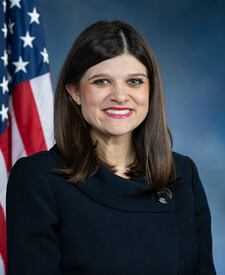
See how Haley M. Stevens's votes line up with your values.
DeepSyte scores Haley M. Stevens's record on the issues you care about — not party, not press releases. Take the 2-minute values quiz to see your personal alignment.
Sign in and take the values quiz to see how Haley M. Stevens's votes line up with your views.
Prediction track record
How often we called Haley M. Stevens's passage votes correctly, from their stated positions on each bill's tagged topics. Excludes “unclear” calls and abstentions.
To prohibit the disclosure of records by the Secretary of Housing and Urban Development of individuals for the purposes of immigration enforcement, and for other purposes.
No paired statements and votes yet for Haley M. Stevens
We haven't yet found statement/vote pairs on the same topic for Haley M. Stevens. This usually means either the rep hasn't taken public positions on bills that have come to a passage vote, or those bills haven't been tagged yet. The checker runs as new press releases and votes come in.
Pro analysis
AI rep analysis — Pro
Get an AI-narrated read on Haley M. Stevens's full voting record against your stated values — aligned themes, conflicts, notable votes, and what to watch for.
We haven't extracted campaign positions for Haley M. Stevens yet. Once their campaign website or position pages are processed, this card will track what they said vs how they voted.
Crossing the aisle
Passage votes where Haley M. Stevens broke ranks with ≥75% of Democrats. Threshold catches substantively partisan splits; unanimous-ish or close votes are excluded.
ICYMI: Rep. Haley Stevens Outlines Vision for American Prosperity, Industry, and Democracy.
Position: Stevens argues that many working families are struggling with household costs, citing paycheck-to-paycheck living, rising housing, health care, and energy costs, and cuts to Medicaid and SNAP benefits, and calls for policy action to address economic insecurity.
WASHINGTON, D.C. — In case you missed it, Michigan Congresswoman Haley Stevens delivered a special order address on the floor of the U.S. House of Representatives reflecting on the state of the American economy, the financial pressures facing working Michigan families, and the work ahead to strengthen American industry and democracy.
During the address, Stevens raised the alarm on rising household costs and the challenges facing workers and retirees, as well as the tasks Congress must undertake in the coming years to restore trust among the American people, restore our dominance on the global stage, and stand up for domestic manufacturing.
On the Affordability Crisis Facing Working Americans
“Why in the heaven’s name do we have 65%, nearly, of Americans in this country living paycheck to paycheck? Why is it that from the recent high school graduate to even, let’s say, the high school student working a job to the single parent, to the hard working, middle class family that they are living paycheck to paycheck?
“We must ask that, Mr. Speaker, not to just own around a political point or a political talking point, but around policy propositions. Because, you see, Mr. Speaker, in the last handful of years, in this quarter century mark of which America finds themselves in, I feel more compelled than ever to fight for my country, to fight for our freedoms, our way of life, the ability to start a small business without drowning in debt, the ability to live your life.
“And when I look around, I’m not seeing anyone’s bills going down. I’m not seeing housing prices going down. I’m not seeing health care bills going down. I’m not seeing energy costs going down.”
On the Draconian Cuts Republicans Have Rammed Though at the Expense of the American People
“Take a phone call to the Medicaid recipients of America, talk to those families. And their sobering experiences, cuts to the food benefits, the sobering conversations that I have with Michiganders whose eyes well up in tears because they worked all their life and never thought that they’d have to be nervous about what was going into their grocery cart. Embarrassment, shame. Food banks being pushed to a brink.
“It is not hyperbole. It is not hysteria. It is just my lived experience as a congresswoman in Michigan’s 11th district that I have witnessed my constituents cry because they cannot afford food. Why is that happening? Why are SNAP benefits being cut?”
On the Rising Threat of Economic Insecurity in this Country
“I call outrage, I frankly call, Mr. Speaker, unfairness, economic unfairness off the backs of hard working people who continue to work, who continue to meet the charge of America, who continue to do remarkable things in their communities.
“And yet they are being suffocated because it’s not just 65% living paycheck to paycheck. Let’s talk about what that really means. It means that we’ve got $1.3 trillion of credit card debt. Mr. Speaker, $1.3 trillion of credit card debt.”
On Investing in American Manufacturing and Shoring Up Our Critical Supply Chains
“We can’t wait another term to do nothing. We can’t wait another term to just see one big, crazy, life altering bill come through that I really can’t pinpoint lowered anyone’s bill. It just didn’t.
“Mr. Speaker, I have this fantastic bill called Unearth America’s Future Act. It’s taking the most beautiful parts of the CHIPS and Science Act, which we did to lessen our nation’s dependence on critical parts components. The microchip that goes into all high end manufacturing manufactured goods, most notably, Mr. Speaker, our automobile.
“Unearth America’s Future Act is a bill that creates loan guarantees, tax credits and monies for an R&D center of excellence, with an emphasis on synthesizing, processing and refining for the critical minerals that become our critical materials, 95% of which come from China.”
On the Power of the Vote and American Democracy
“We have to remember, and maybe it’s a call upon those who profit off of the commentary and the exchange and the gossip and the drama… to really look at outside of assumption, what takes place when people vote. You know, that’s the whole shebang.
“And yet we spend years leading up to votes, years of speculation, and yet there are still people, you know, just living their lives and going to the polls, and they’re counted as part of a vote. And I think that’s where we have to remember power lies in this country. Power lies in the vote. And those who engage in democracy.
“As Truman once said, America is not built on fear. America is built on courage, imagination. Let us bring some imagination to restoring the strength of American democracy. Open free market, democratic, equal opportunity capitalism so that all can succeed.
“America is not built on fear. America is built on courage, imagination, and the willingness to do the job at hand.”
###
ICYMI: Rep. Haley Stevens Has New Bill to Lower Retirement Age For Americans Who Work With Their Hands
Position: Rep. Haley Stevens introduced the Blue Collar Social Security Fairness Act, which would lower the Social Security retirement age to 60 for workers in physically demanding occupations. The release describes this as necessary to help such workers retire without waiting until their bodies give out.
WASHINGTON, D.C. – In case you missed it, Michigan Congresswoman Haley Stevens introduced the Blue Collar Social Security Fairness Act to lower the Social Security retirement age to 60 for workers in physically demanding careers.
The legislation would apply to physically demanding occupations, including jobs in manufacturing, construction, roofing, nursing, and more. The Social Security Administration would be responsible for identifying and regularly updating the list of qualifying occupations.
Here’s what Michiganders are seeing about Rep. Haley Stevens’ Blue Collar Social Security Fairness Act:
CNBC: New bill would lower Social Security retirement age for physically demanding jobs
By Lorie Konish
Rep. Haley Stevens, D-Mich., on Wednesday introduced a new bill that would lower Social Security’s full retirement age for workers in physically demanding jobs.
Currently, the earliest Social Security retirement age is 62, though beneficiaries receive reduced monthly checks for starting that soon. By waiting until full retirement age — that’s 67 for individuals born in 1960 or later — they may receive 100% of the benefits they’ve earned.
Yet for blue-collar workers, staying longer in physically demanding jobs in order to reach those age milestones may be difficult, according to Stevens’ proposal.
Individuals who have physically demanding jobs are at risk of exiting the workforce earlier than planned, which can interfere with their ability to have a secure retirement, according to 2022 research from the Schwartz Center for Economic Policy Analysis at The New School.
CBS News: New bill would lower Social Security retirement age for some workers
By Mary Cunningham
Among the various proposals for bolstering Social Security is raising the retirement age at which Americans can claim full benefits. One lawmaker instead wants to lower it.
Stevens has said that lowering the retirement age for blue-collar workers is necessary to help those who may struggle working into their 60s, given that such jobs are often physically demanding.
"Michiganders who work with their hands shouldn't be forced to wait until their bodies give out to retire," she said in a statement on Thursday in unveiling the legislation in Washington, D.C.
Newsweek: Millions of Americans Could Claim Social Security Early Under New Bill
By Aliss Hingham
Some Americans working in physically demanding jobs could claim full Social Security retirement benefits at age 60 under a new bill introduced in Congress.
The proposal would create an exception to existing Social Security rules for workers who have spent enough of their careers in physically demanding jobs, allowing them to receive unreduced retirement benefits seven years before the current full retirement age.
“If we want to honor the dignity of work in this country, we need to lower the retirement age for physical laborers,” said Stevens.
Fast Company: Social Security retirement age would be lower for ‘blue collar’ workers under proposed bill: What that means
By Sarah Fielding
As things stand, any American born in 1960 or later can’t access their full Social Security benefits until the age of 67. A new bill is hoping to change that.
“Michiganders who work with their hands shouldn’t have to work until their bodies give out to retire,” Stevens said in a statement shared on X. “If you put in the work, you deserve the retirement you earned.”
Almost 40% of working U.S. civilians work a job that requires lifting, carrying, pushing, pulling, and other physically demanding activities.
MLive: Proposal would lower Social Security’s full retirement age to 60 for some workers
By Leada Gore
A new proposal would lower Social Security’s full retirement age for some workers in physically demanding jobs.
Rep. Haley Stevens, D-Michigan, introduced the ‘Blue Collar Social Security Fairness Act’ this week. The bill would change full retirement age (FRA) – the point at which people can qualify for full Social Security benefits – to 60 for people in fields such as construction, roofing, manufacturing and nursing.
Under the bill, the Social Security Administration would set a list of qualifying jobs and update it every three years.
Deadline Detroit: Haley Stevens Introduces Bill To Lower the Social Security Age For Americans With Physically Demanding Jobs
By Allan Lengel
Democratic Congresswoman Haley Stevens on Wednesday announced proposed legislation — the Blue Collar Social Security Fairness Act — that would allow people with physically demanding jobs to collect full Social Security benefits at age 60.
“Michiganders who work with their hands shouldn’t be forced to wait until their bodies give out to retire,” Stevens said.
The Independent: New Social Security bill would lower retirement age to 60 for some workers
By Rachel Dobkin
The Blue Collar Social Security Fairness Act was introduced by Representative Haley Stevens, a Michigan Democrat, Thursday. The bill would allow Americans who work with their hands to collect full Social Security retirement benefits when they turn 60.
“I look forward to bringing together my colleagues in Congress to fix this glaring issue for Michigan workers, strengthen Social Security, and ensure its solvency for generations of Americans to come,” said Stevens.
Those eligible for full retirement benefits at 60 would include workers in construction, roofing, nursing, manufacturing and other physically demanding jobs
WDIV-DET (NBC) — Detroit, MI
A new bill in Congress could lower the full Social Security retirement age to 60 for some workers.
Michigan Congresswoman Haley Stevens, introducing the Blue Collar Social Security Fairness Act, aimed at people in physically demanding jobs like construction, nursing and manufacturing.
Under this proposal, workers would need to work a certain amount of years in qualifying jobs to get those full benefits at 60, the current full retirement age is 67.
###
Rep. Haley Stevens Announces Bill to Lower Social Security Age for Americans Who Work With Their Hands
Position: Introduces a bill to allow workers in physically demanding occupations to collect full Social Security retirement benefits at age 60, using a points system based on years of such work and requiring the SSA to publish and update a list of covered occupations.
Washington, DC — Today, Michigan Congresswoman Haley Stevens (MI-11) announced the Blue Collar Social Security Fairness Act, a bill to allow Americans who work in physically demanding jobs to collect full Social Security retirement benefits when they turn 60.
Under current law, Americans born after 1960 can begin collecting full Social Security retirement benefits at age 67 or reduced early retirement at age 62. But far too often, those who work in manual labor cannot continue working until 67 to receive the full benefits they’ve earned. Unable to claim full retirement benefits and with the strains of their day-to-day blue-collar work becoming increasingly unbearable, these workers find themselves in a difficult position as they look towards retirement.
Stevens’ bill lowers the eligible age for full retirement benefits to 60 for Americans who work in such jobs, including but not limited to construction, roofing, nursing, manufacturing, and more. The bill directs the Social Security Administration to identify and publish a comprehensive list of physically demanding occupations that would be covered under this law, and continue updating that list every three years.
“Michiganders who work with their hands shouldn’t be forced to wait until their bodies give out to retire,” said Rep. Haley Stevens. “If we want to honor the dignity of work in this country, we need to lower the retirement age for physical laborers. I look forward to bringing together my colleagues in Congress to fix this glaring issue for Michigan workers, strengthen Social Security, and ensure its solvency for generations of Americans to come.”
At a time when America needs more people to enter the skilled trades and labor-intensive careers, Stevens’ bill creates a new incentive for Americans to pursue these jobs with the promise of retiring early and receiving their full Social Security benefits.
The bill doesn’t require Americans to exclusively work in physically demanding jobs their whole careers to become eligible. Rather, it establishes a weighted points system based on years worked to assess eligibility. If an individual reaches a total of 15 points or 20 total years of physically demanding work across their career, they qualify for early retirement once they turn 60. The points are tabulated as follows:
0.5 points for each year worked from the ages of 18-34
1 point for each year worked from the ages of 35-44
1 year worked from the ages of 45-54 counts as 1.5 points
1 year worked above the age of 55 until an individual passes away counts as 2 points
Text of the bill can be found here.
###
Issues:
Economy
ICYMI: Rep. Stevens Introduces Paul Whelan Hostage Compensation and Reintegration Act
Position: Introduces legislation to provide financial compensation and reintegration support to Americans who have been wrongfully or unlawfully detained abroad after they return home.
WASHINGTON, D.C. – In case you missed it, Michigan Congresswoman Haley Stevens introduced the Paul Whelan Hostage Compensation and Reintegration Act, legislation to provide financial support to Americans who have been unlawfully or wrongfully detained abroad as they return home and rebuild their lives.
The legislation is named for Michigan’s Paul Whelan, who was wrongfully detained in Russia for more than five years before returning home in August 2024. After his release, Whelan faced many of the financial challenges that can follow years of detention, including lost income, the loss of his home and job, and difficulties obtaining health insurance.
Here’s what Michiganders are hearing and seeing about Rep. Haley Stevens’ work with Paul Whelan to support Americans returning home after wrongful detention abroad:
The Detroit News: New bill would compensate returned political hostages like Paul Whelan
By Melissa Nann Burke
“Reintegration should not stop at the airport,” Stevens said, describing Whelan’s experience returning home without a place to live or his former job after five and a half years of lost earnings.
“This is a very solid piece of legislation that brings some dignity to the people who I believe are American heroes.”
Stevens said the goal is to establish “a transparent and objective formula” recognizing the economic consequences of wrongful detention, including time taken away from a person’s career and livelihood.
CNN: Paul Whelan helps craft bill to compensate Americans wrongly detained abroad
By Jennifer Hansler
Whelan called the legislation “a huge step forward” in ensuring wrongfully detained Americans receive support after returning home.
“For people like me who have come home after five-and-a-half years, we really don’t have very much. House is gone. Cars are gone. Employment’s gone. No health insurance,” Whelan told CNN.
Stevens said the legislation would ensure Americans who endure wrongful detention have resources to “regain their footing, reunite with their communities, and rebuild their lives.”
Deadline Detroit: Haley Stevens introduces ‘Paul Whelan Hostage Compensation and Reintegration Act’ Bill
By Allan Lengel
“When an American is wrongfully detained abroad, we do everything we can to bring them home. Our responsibility cannot end the moment they step back on American soil,” Stevens said.
Whelan said former hostages often return home having lost their income, health insurance, employment, transportation and housing.
“Providing compensation to former hostages is a step in the right direction in supporting their positive and productive reintegration,” Whelan said.
NPR News Now: Paul Whelan compensation bill introduced
“Hostages lose freedom. That means I wasn't earning an income. I wasn't saving for retirement,” Whelan told NPR.
Whelan said that when he returned home, his home and cars were gone and he had to rebuild his life.
CBS News Detroit: Paul Whelan reacts to bill supporting Americans wrongfully detained overseas
CBS News Detroit reported on Stevens’ legislation to provide support to Americans returning home after being wrongfully detained abroad.
Whelan thanked Stevens for introducing the legislation and discussed the challenges former detainees can face after returning home.
The report highlighted Whelan’s more than five years of wrongful detention in Russia and the legislation’s effort to help Americans rebuild their lives after returning to the United States
###
Rep. Haley Stevens Introduces Bill Named for Paul Whelan to Help Wrongfully Detained Americans Reintegrate into Society
Position: Introduces legislation establishing a one-time, lump-sum compensation program for Americans designated as wrongfully detained abroad, or their next of kin, to address financial hardship upon return.
WASHINGTON, D.C. – Today, Michigan Congresswoman Haley Stevens introduced the Paul Whelan Hostage Compensation and Reintegration Act, legislation to provide support to Americans who have been unlawfully or wrongfully detained abroad as they return home and rebuild their lives.
Americans like Paul Whelan, for whom the bill is named, who endure wrongful detention often return home facing profound challenges. In addition to the emotional, mental, and social toll of captivity, former detainees can face severe financial hardship after months or years away from their jobs, families, and communities. Many return to lost income, mounting bills, defaulted loans, housing challenges, and barriers to reentering the workforce. They can also owe back taxes, late fees, and other financial obligations that accumulated while they were held abroad.
The Paul Whelan Hostage Compensation and Reintegration Act establishes a formal compensation program for Americans designated as wrongfully detained by the U.S. State Department. Eligible Americans, or their next of kin if the individual died in captivity, would be able to apply for a one-time, lump-sum payment based on the length of their unlawful or wrongful detention abroad.
“When an American is wrongfully detained abroad, we do everything we can to bring them home. Our responsibility cannot end the moment they step back on American soil,” said Rep. Haley Stevens. “After enduring months or even years of wrongful detention, Americans shouldn’t have to face back taxes, late fees, lost income, and financial instability when they come home. Paul Whelan’s experience showed our country the extraordinary toll wrongful detention takes not only during captivity, but long after someone returns home. This legislation will make sure Americans who endure this unimaginable ordeal have the support and resources they need to regain their footing, reunite with their communities, and rebuild their lives.”
“When a former hostage steps onto U.S. soil, they often return to a home much different than the home they left, and with that loss is usually the loss of their income, health insurance, employment, transportation, and the housing they enjoyed before being held hostage,” said Paul Whelan. “Providing compensation to former hostages is a step in the right direction in supporting their positive and productive reintegration. Thanks to Representative Stevens, we are closer to ensuring that no former hostage is left behind in the struggle to regain their lives.”
“Hostage US recognizes the critical need for comprehensive support and services for former hostages and wrongful detainees. This bill represents an important step toward bridging the gap in immediate financial assistance for former wrongful detainees upon return. We are grateful to Representative Haley Stevens, her office, and the contributors for advancing this meaningful effort to strengthen support for returning Americans,” said Liz Cathcart, Executive Director, Hostage US.
“No American who has endured the trauma of wrongful detention should be left to shoulder the long-term consequences alone. Survivors often face significant challenges after returning home, including the struggle to become financially stable. The Paul Whelan Hostage Compensation and Reintegration Act represents an important commitment to supporting those who have suffered on behalf of our nation and helping them successfully reintegrate into their communities. We are proud to support its introduction, and we commend Rep. Stevens for ensuring that survivors receive the assistance and recognition they deserve," said Foley Foundation President and Founder, Diane Foley.
On December 18, 2018, Paul Whelan was arrested in Russia and accused of spying. For nearly six years, Mr. Whelan was wrongfully detained in a Russian prison. Thanks to steadfast advocacy from Rep. Haley Stevens and the Biden Administration, Mr. Whelan was released on August 1, 2024. Mr. Whelan is a Marine veteran and lives in Michigan.
Text of the bill can be found here.
###
Rep. Haley Stevens Introduces Bipartisan Resolution to Honor National Physician Suicide Awareness Day
Position: The release supports a bipartisan congressional resolution designating September 17 as National Physician Suicide Awareness Day and urging national awareness and educational activities on physician mental health.
WASHINGTON, D.C. – Michigan Congresswoman Haley Stevens, alongside Rep. Brian Fitzpatrick (R-PA), announced a bipartisan resolution to recognize September 17th as National Physician Suicide Awareness Day and recognize the intense pressure and trauma physicians face in the workplace. The resolution enhances national awareness of the mental health crisis facing American physicians and honors the memory of the physicians we have lost to suicide. It also urges the establishment of national awareness and educational activities.
America’s physicians work under intense pressure and are regularly exposed to trauma on the job. Roughly 6 in 10 experience increased feelings of anger, tearfulness, or anxiety, while 55 percent have experienced debilitating levels of stress at one point. Seven in 10 physicians also report stigma surrounding mental health and seeking mental health care among physicians. More than half know a colleague or peer who has contemplated or attempted suicide.
“Every day, physicians across Michigan and our country dedicate themselves to caring for us during some of the most difficult moments of our lives, but too often, the people we rely on to care for us are struggling without the support they need,” said Rep. Haley Stevens. “We have lost far too many physicians to suicide, and we cannot allow stigma or fear to prevent health care professionals from seeking help. National Physician Suicide Awareness Day is about honoring those we have lost, starting honest conversations about physician mental health, and making sure the people who care for us know that they do not have to struggle alone.”
In addition to Stevens and Fitzpatrick, the resolution is cosponsored by Reps. Eleanor Holmes Norton (D-DC), Bonnie Watson Coleman (D-NJ), and Nanette Barragán (D-CA).
The resolution is endorsed by the Dr. Lorna Breen Foundation, Council of Residency Directors in Emergency Medicine (CORD), American Foundation for Suicide Prevention (AFSP), American Medical Association (AMA), American Hospital Association (AHA), American Academy of Emergency Medicine (AAEM), American Federation of Teachers (AFT), Society of Hospital Medicine (SHM), and American College of Emergency Physicians (ACEP).
“For many physicians, caring for patients is more than a job, it's a calling. Yet, our healthcare system has failed to fully support those who care for us all. High administrative burdens, long hours, and stigma around seeking mental health care leave many physicians feeling burned out and isolated,” said Corey Feist, CEO & Co-Founder of the Dr. Lorna Breen Foundation. “The Dr. Lorna Breen Foundation is proud to support Reps. Stevens and Fitzpatrick's bipartisan resolution designating September 17 as National Physician Suicide Awareness Day. By shining a light on physician mental health, honoring those we have lost, and prioritizing physician suicide awareness and prevention, this resolution helps take us one step closer to a country where all health workers feel safe seeking the mental health care they need. The Foundation looks forward to working with Congress to better protect and support health worker mental health.”
“National Physician Suicide Awareness Day was created by the Council of Residency Directors in Emergency Medicine (CORD) in 2018 to remember the physicians who have died by suicide and to shine a light on a hard truth: physicians die by suicide at more than twice the rate of the general population. Physicians devote their careers to caring for others, placing them at the heart of every community and at the bedside of patients and families suffering from illness. The factors leading to suicide are multifactorial and the demands of medicine carry additional emotional weight, including loss and responsibility for patients' lives. When compounded with personal and systemic pressures, a heavy burden is created, which is often borne in silence. In addition, physicians face additional suicide risk from their knowledge and access to deadly means. This resolution recognizes that suicidal ideation is not a burden physicians should carry alone, and implementation of suicide prevention interventions is a responsibility shared by their colleagues, institutions, and communities. Suicide is preventable. CORD proudly supports this resolution as a step toward a future in which physicians receive the same compassion and care they extend to their patients every day,” said Arlene Chung, MD, President-Elect of the Council of Residency Directors in Emergency Medicine.
“Physicians face disproportionately high rates of burnout, depression, anxiety, and suicide risk, driven by individual, environmental, and systemic factors,” said Laurel Stine, J.D., M.A., Executive Vice President and Chief Policy and Advocacy Officer at the American Foundation for Suicide Prevention (AFSP). “Designating September 17 as National Physician Suicide Awareness Day is an important opportunity to bring greater visibility to physician mental health and to advance meaningful solutions, including increasing research, reducing stigma, and expanding access to mental health care. AFSP applauds Representatives Stevens and Fitzpatrick for introducing this bipartisan resolution to recognize the critical need to support physicians’ well-being and encourage more open conversations about mental health.”
“Physicians dedicate their lives to caring for others, yet too many are struggling to care for themselves. Workforce shortages, the frustration and lost productivity caused by relentless prior authorization demands, and the financial pressures of running a medical practice are taking a toll on physicians’ mental health. At the same time, stigma and fear that seeking mental health care could jeopardize a physician’s ability to practice can keep physicians from getting the help they need and contribute to far too many physician suicides. Recognizing and understanding the realities physicians face is an essential first step. We applaud Reps. Stevens and Fitzpatrick for their bipartisan effort to designate September 17 as National Physician Suicide Awareness Day. The AMA looks forward to working with Congress on meaningful policy solutions to this complex and urgent problem,” said Willie Underwood, MD, MSc, MPH, President of the American Medical Association.
“The American Hospital Association thanks Representative Haley Stevens for introducing this resolution designating September 17 as National Physician Suicide Awareness Day. Physician suicide is a tragic issue that demands greater awareness, research, and action. By elevating this issue nationally, we can continue to reduce the stigma surrounding physician mental health. We are grateful for Representative Stevens’ leadership and commitment to supporting the well-being of the physicians and caregivers who care for patients every day,” said Lisa Kidder Hrobsky, Senior Vice President, Federal Relations at the American Hospital Association.
“Physicians dedicate their lives to caring for others, often meeting patients and families on some of the most difficult days of their lives. But those who support so many must know that support is there for them, too. With research showing that roughly one in ten physicians report recent or current suicidal ideation, we cannot afford to treat physician mental health as an afterthought. Designating National Physician Suicide Awareness Day is an important step toward breaking down stigma and encouraging physicians to seek help without fear,” said Vicki Norton, MD, FAAEM, President of the American Academy of Emergency Medicine.
“The Society of Hospital Medicine (SHM), representing the nation’s hospitalists, is pleased to support the resolution recognizing September 17 as National Physician Suicide Awareness Day. This important designation helps to raise awareness, reduce the stigma surrounding mental health challenges and seeking help, and promote a culture of well-being across our healthcare system. Every physician deserves the same compassion, support, and care they provide to their patients each day,” said Efrén C. Manjarrez, MD, SFHM, President of SHM’s Board of Directors.
“Emergency physicians care for patients every day, but many of us struggle in silence with our own mental health. We see the toll this takes and we know too many who have lost their lives to suicide. ACEP deeply appreciates Rep. Stevens and Rep. Fitzpatrick for their bipartisan work to shine a light on the mental health struggles of our health care workforce. We must continue the critical progress we are making toward eliminating barriers and stigma to ensure emergency physicians and health care workers can seek the mental health care and support they need and deserve.” said L. Anthony Cirillo, MD, FACEP, president of American College of Emergency Physicians (ACEP).
Text of the resolution can be found here.
###
Issues:
Health
Rep. Haley Stevens Champions Bipartisan Data Science and Literacy Act to Prepare Students for Data-Driven Economy
Position: Introduces the Bipartisan Data Science and Literacy Act, which would create a Department of Education grant program to expand data science instruction from pre-K through community college. The release argues that students need these skills to compete in a data-driven economy.
WASHINGTON, D.C. – Today, Michigan Congresswoman Haley Stevens alongside Reps. Jim Baird (R-IN), Don Beyer (D-VA), and Brian Fitzpatrick (R-PA) introduced the Bipartisan Data Science and Literacy Act, to expand access to data science education and make sure Michigan students have the skills needed to compete in an increasingly data-driven economy.
Data science draws on statistics, computer science, and mathematics to analyze and derive insights from data. Yet many students graduate from high school without these foundational skills, even as nearly one in four jobs requires data science skills.
“Data is powering the technologies and jobs that will define America’s economic future, and our students deserve the skills to lead that future,” said Rep. Haley Stevens. “Whether a student goes on to work on the factory floor, in a research lab, at a small business, or developing the next breakthrough technology, the ability to understand and use data will be increasingly important. This legislation is about making sure Michigan students are ready.”
“Data science education can be the catalyst that launches American scientific leadership into the stratosphere. Introducing children to STEM early gives them a foundation to continually build upon, preparing them to tackle increasingly advanced concepts as they reach higher education and enter the workforce. This is how we compound our scientific knowledge and foster the next generation of American innovation. Start early, build upon that knowledge, and grow our nation’s understanding of STEM,” said Rep. Jim Baird.
“Data is one of the most powerful tools shaping our society today. It helps businesses streamline supply chain operations, public health officials track and prevent disease, and Americans navigate nearly every aspect of modern life. Yet too many students lack access to the education they need to understand and use data effectively. Our bill would provide educators with the resources necessary to expand access to a quality data science education and prepare students for 21st century jobs,” said Rep. Don Beyer.
“Every generation has a responsibility to prepare the next for the world they will inherit. As data becomes foundational across nearly every field, our classrooms must keep pace. This legislation builds on the work we have led here in PA-1 to strengthen career and technical education, expand pathways into high-demand fields, and better connect learning with opportunity. The bipartisan Data Science and Literacy Act will carry that mission forward—equipping more students with the skills to succeed, strengthening our workforce, and ensuring America continues to lead,” said Rep. Brian Fitzpatrick.
The Data Science and Literacy Act establishes a grant program at the U.S. Department of Education to expand access to data science education nationwide. The program would support data science instruction from pre-K through community college, strengthen students’ data literacy, and provide professional development opportunities for educators. The legislation also improves federal data collection and establishes evaluation and reporting requirements to guide future investments.
Specifically, the Data Science and Literacy Act authorizes educational grants for the following purposes:
Curriculum Development: Developing, implementing, and expanding data science curricula and instructional materials.
Student Support: Improving student outcomes in data science education, including targeted support for students historically underrepresented in the field.
Professional Development: Providing evidence-based training and recruitment support for educators to effectively teach data science and related subjects.
Partnerships: Supporting collaboration with community colleges, institutions of higher education, and other relevant organizations to strengthen data science education pathways.
Text of the bill can be found here.
The legislation is backed by Data Science 4 Everyone (DS4E), Alliance for Data Science & AI (ADSA), Alliance for Learning Innovation (ALI), American Mathematical Association of Two-Year Colleges (AMATYC), American Statistical Association (AmStat), Association of Mathematics Teacher Educators (AMTE), Computer Science Teachers Association (CSTA), Digital Promise, INFORMS, Inter-university Consortium for Political and Social Research (ICPSR), National Council of Teachers of Mathematics (NCTM), and National Science Teaching Association (NSTA).
“The average school experience is becoming disconnected from the fast-changing world our students are graduating into,” said Zarek Drozda, Executive Director of Data Science 4 Everyone (DS4E). “The question ‘why am I learning this?’ needs to have a better answer. Engaging in data science activities allows students to connect their academic subjects to the real-world, and learn a toolkit for navigating (and questioning) AI at the same time.”
“ADSA works with more than 100 institutions of higher education, from R1 universities, community colleges, HBCUs, and Hispanic-serving institutions. One thing we hear consistently is that they want to be better partners to the K-12 schools in their regions,” said Dr. Micaela Parker, Founder and Executive Director of Alliance for Data Science and AI (ADSA). “The Data Science and Literacy Act creates that opportunity by putting flexible resources into district, community college, and university partnerships to update curricula for the modern age. This bill reflects how students actually use data: across their whole education, not in a single elective. ADSA is proud to support it.”
“Too often, promising education investments go unmeasured, leaving us guessing about what actually works. The Data Science and Literacy Act gets this right by building evaluation into the bill from the start by directing the Institute of Education Sciences (IES) to rigorously assess grant effectiveness and requiring grantees to continuously monitor their own progress. That commitment to evidence, not just access, is exactly what we want to see in federal education investments,” Sara Schapiro, Executive Director of Alliance for Learning Innovation (ALI). “At the Alliance for Learning Innovation (ALI), we believe every student deserves the tools to make sense of data and put it to work solving real problems. We're proud to endorse this bipartisan legislation and thank Representatives Stevens, Beyer, Fitzpatrick, and Baird for their leadership in building a stronger STEM pipeline for the next generation."
“H.G. Wells once said ‘Statistical thinking will one day be as necessary for efficient citizenship as the ability to read and write.’ (c. 1903) That day is today. This bill is the right step forward,” said Eddie Tchertchian, President of the American Mathematical Association of Two-Year Colleges (AMATYC).
“The presence of AI in our everyday lives and work has made statistical thinking more critical than ever, so I applaud Representative Stevens and her cosponsors for reintroducing this bill, " said Jeri Mulrow, President of the American Statistical Association (AmStat). “Statistical thinking, a core component of data literacy, is essential for today's students to effectively use AI, critically assess its outputs, and succeed in today's job market.”
“In continuing AMTE efforts to bring diverse mathematics teacher education communities together, our organization continues to support educators, coaches, consultants, specialists, and university and community college faculty to share and disseminate research, teaching, and community partnerships in different educational contexts,” said Farshid Safi, President of Association of Mathematics Teacher Educators (AMTE). “AMTE, intentionally and toward a more comprehensive and inclusive lens, adopts an expansive view of the term mathematics education to include intersections with fields such as data science and statistics education, mathematical modeling, STEM education while partnering with those engaged in early childhood, PK-12, and post-secondary contexts.”
“Data shapes the technologies students use, the decisions they encounter, and the world they will help create. The 2026 CSTA PK–12 Computer Science Standards identify Data & Analysis as a core concept in foundational computer science education, calling on students to use data to solve problems, make discoveries, and express ideas while critically examining its quality, representation, privacy, and impact,” said Bryan Twarek, Head of Research and Innovation of the Computer Science Teachers Association (CSTA). “The Data Science and Literacy Act would invest in the curricula, professional development, and partnerships teachers need to prepare their students to become critical consumers, responsible creators, and informed participants in a world powered by computing.”
“Data literacy is a foundational tool for real-world agency. Preparing students for a changing economy requires updating what and how we teach, moving away from narrow metrics of success to build practical skills across disciplines,” said Jean-Claude Brizard, Chief Executive Officer of Digital Promise. “The Data Science and Literacy Act delivers flexible resources that allow school systems and postsecondary partners to strengthen teacher capacity and create powerful learning experiences for every student. Digital Promise strongly supports this legislation as a crucial investment in long-term economic mobility.”
“Ensuring that data literacy is a foundational aspect of education is a cornerstone of the United States’ long-term economic and national security. Data is everywhere and the ideas and demands to create more of it, and the evermore complex ways to deploy it, are growing more significant by the day,” said Jeff Cohen, Chief External Affairs Officer at INFORMS. “This bill is a key part of addressing the substantial shortfall of STEM-prepared students for the workforce of tomorrow. Operations research, analytics, and the science and technology of decision-making is predicated on the sound and ethical use of data. INFORMS strongly supports the bipartisan Data Science and Literacy Act of 2026 and looks forward to working to ensure its passage and effective implementation.”
“ICPSR strongly supports this proposed legislation. Since 1962, ICPSR has linked data access to data literacy. We preserve and disseminate data, and we teach people how to manage and analyze data,” said J. Trent Alexander, Interim Director of the Inter-university Consortium for Political and Social Research (ICPSR). “Data access can only improve our understanding of the world in which we live if people have the skills to analyze that data and to understand the analyses undertaken by others. Data literacy is critical to both economic innovation and a vibrant democracy.”
“Students encounter data daily outside of school, opening the opportunity to learn to reason with and about data from the earliest grades through high school and beyond. A meaningful data literacy program builds fluency with data and statistics through students' thinking and sense-making, focused on assessing the source and credibility of data and analyzing the processes behind the findings,” said Latrenda Knighten, President of National Council of Teachers of Mathematics (NCTM). “Developing students who can use data to better understand complex situations and make informed decisions across contexts and subjects and providing them the opportunity to consider careers in statistics and data science, should be a goal of K-12 education.”
“Our students are graduating into a world where the ability to understand, interpret, and use data is no longer optional; it is essential. Science and STEM education provide powerful opportunities for students to develop these skills as they use data to ask questions and make sense of the world around them,” said Brianna Reilly Oliveira, Director of Professional Learning for the National Science Teaching Association. “NSTA strongly supports the Data Science and Literacy Act and its investment in educators and students. By equipping educators with the confidence, tools and strategies to integrate data literacy into science and STEM instruction, we can better prepare all students to thrive in a data-rich world.”
###
Rep. Haley Stevens Demands Swift Refunds for Businesses Hit by Illegal Trump Tariffs
Position: Calls on U.S. Customs and Border Protection to resolve administrative backlogs in the CAPE system so that importers can obtain refunds of tariffs previously paid under IEEPA, which the Supreme Court ruled unlawful.
WASHINGTON, D.C. – Today, Michigan Congresswoman Haley Stevens alongside Rep. Steven Horsford (NV-4) led their colleagues in calling on U.S. Customs and Border Protection (CBP) Commissioner Rodney Scott to immediately address administrative backlogs preventing American businesses from receiving refunds for duties paid under the Trump Administration’s illegal use of the International Emergency Economic Powers Act (IEEPA).
Businesses have reported that delays in CBP’s Consolidated Administration and Processing of Entries (CAPE) system are preventing importers from meeting the agency’s 90-day deadline to request refunds — potentially costing small businesses money they are legally owed.
“Sadly, businesses in our districts have reported significant logistical hurdles that they must clear to receive a refund,” the lawmakers wrote. “Under no circumstances should these companies bear the brunt of both the tariffs struck down by the Supreme Court and the denial of tariff refunds because of administrative mismanagement of the CAPE system.”
“Michigan businesses should not have to pay the price once let alone twice, first through illegal tariffs, and again because government red tape prevents them from getting their money back,” said Rep. Haley Stevens. “Small businesses in Michigan operate on tight margins, and every dollar matters. CBP must fix these administrative roadblocks and make sure businesses receive every dollar they are owed.”
The Supreme Court ruled in February 2026 that President Trump’s use of IEEPA to impose sweeping tariffs was unlawful. Rep. Stevens is urging CBP to take all necessary steps to ensure importers receive full refunds for duties paid under the invalidated tariff regime.
Full letter here.
###
Rep. Haley Stevens Leads Bipartisan Build to Scale Reauthorization Act to Strengthen Innovation and Entrepreneurship Across Michigan
Position: Rep. Stevens supports reauthorization and expansion of the Economic Development Administration's Build to Scale program through 2030 to strengthen startup growth, regional innovation hubs, and entrepreneurship, particularly in rural and economically distressed communities.
WASHINGTON, D.C. – Today, Michigan Congresswoman Haley Stevens (MI-11), along with Rep. Jim Baird (R-IN), introduced the bipartisan Build to Scale Reauthorization Act of 2026, legislation to extend and strengthen the Economic Development Administration’s (EDA) successful Build to Scale program through fiscal year 2030. The bill helps startups grow, strengthens regional innovation hubs, and creates good-paying jobs across Michigan and the country.
Since 2014, the EDA’s Build to Scale program has invested $272 million in 426 projects nationwide, supporting more than 58,600 jobs and 6,200 startups. In Michigan, the program has helped fuel entrepreneurship and advanced manufacturing in communities from Detroit and Ann Arbor to Traverse City to the Upper Peninsula.
“Michigan has proven that when we invest in innovation, manufacturing, and entrepreneurship, we create good-paying jobs and make our economy more competitive,” said Rep. Haley Stevens. “The Build to Scale program has helped communities across our state, from Detroit to Traverse City to the Upper Peninsula, grow startups, attract investment, and turn ideas into real products and technologies. This legislation builds on that success by making sure even more communities, especially historically underserved and economically distressed regions, have a chance to be part of the innovation economy.”
“Innovation is the driver of economic growth,” said Congressman Baird. “When entrepreneurs are given the tools to thrive, society benefits from new technologies and inventions. The Build to Scale Reauthorization Act of 2026 supports technology-based economic development and new opportunities for innovation, especially in rural communities. This legislation also boosts coordination between the Economic Development Administration and the National Science Foundation to avoid duplicative work and optimize influence. I thank Rep. Stevens for her work with me on this vital issue to help ensure America continues to lead the world in innovation.”
The Build to Scale Reauthorization Act of 2026 would:
Reauthorize the Build to Scale program through 2030;
Expand access to capital for entrepreneurs and startups;
Increase outreach to rural, trade-impacted, and economically distressed communities;
Reduce barriers to participation through cost-share waivers for distressed communities;
Strengthen coordination with federal innovation initiatives, including National Science Foundation programs and Regional Tech Hubs.
The legislation builds on Congresswoman Haley Stevens’ strong record on manufacturing and innovation. Stevens has visited nearly 200 manufacturers across Michigan, pushed to strengthen domestic supply chains and advanced manufacturing, and led efforts in Congress to support workforce development and entrepreneurship. She previously introduced legislation to reauthorize the Build to Scale program during the 116th Congress, continuing her work to grow startups and expand regional innovation economies.
Michigan organizations that have received Build to Scale funding include TechTown Detroit, Automation Alley, Ann Arbor SPARK, 20Fathoms, Lawrence Technological University, Michigan Technological University, Battle Creek Unlimited, and the University of Michigan.
The legislation is backed by the Detroit Regional Chamber, MichAuto, Automation Alley, Wayne State University, State Science and Technology Institute (SSTI), Association of Public and Land-grant Universities, Information Technology and Innovation Foundation (ITIF), Ben Franklin Technology Partners, and more than 60 economic development organizations nationwide.
“The State Science and Technology Institute (SSTI) applauds Representatives Stevens and Baird for introducing this bill to reauthorize one of the most important federal funding programs intended to support locally designed, public-private initiatives addressing private innovation asset gaps. Build to Scale helps Americans all across the country move new products, technologies, and medical inventions to market faster,” said Mark Skinner, President & CEO of SSTI. “The program allows any U.S. region to make its local companies more competitive at a time when global pressures demonstrate that we need that most urgently and in turn, those innovative startups and manufacturers create critical high-wage job opportunities in communities big, medium, and small; rural, suburban, and urban. Our nation’s regional innovation economy benefits greatly from Representatives Stevens’ and Baird’s leadership.”
“By leveraging the EDA’s Build to Scale framework, TechTown Detroit and Wayne State University have transformed a $400,000 federal investment into a powerful engine projected to unlock $34.7 million in private capital. This strategic initiative has fundamentally reshaped the regional ecosystem by training 200 new angel investors through the Catalyst Angel Program, ensuring that emerging tech startups have the access to capital and mentorship required to scale,” said Ezemernari Obasi, Ph.D., Vice President of Research & Innovation for Wayne State University. “Ultimately, this high-leverage model serves as a replicable blueprint for urban innovation, strengthening Detroit’s economic resilience while establishing a sustainable pipeline for high-growth entrepreneurship.”
“The Build to Scale program has been instrumental in expanding access to capital for early-stage technology companies across Pennsylvania,” said Ryan Glenn, Director of Statewide Initiatives, Ben Franklin Technology Partners. “Through our EDA-supported investments, we’ve accelerated company growth and supported entrepreneurs in underserved regions. We appreciate Representatives Haley Stevens and Jim Baird for leading the effort to reauthorize this important program.”
The legislation is also cosponsored by Reps. Wesley Bell (D-MO), Mark Alford (R-TX), Suzanne Bonamici (D-OR).
###
WATCH: Stevens Blasts Trump-McMahon Education Agenda for Threatening Michigan Schools and Workers
Position: Stevens opposes the Trump Administration's efforts to cut career and technical education programs, reduce K-12 funding, and dismantle the Department of Education, arguing these cuts would harm Michigan workers and students seeking middle-class employment.
WASHINGTON, D.C. – Today, Michigan Congresswoman Haley Stevens blasted President Trump and Education Secretary Linda McMahon over the Trump Administration’s efforts to gut career and technical education programs, slash K-12 funding, and dismantle the Department of Education.
At a House hearing, Stevens warned that the Administration’s agenda would hit Michigan workers, students, and schools especially hard at a time when the state is fighting to strengthen manufacturing and fill critical workforce shortages.
“It’s clear that [cutting technical education] is not going to make Michiganders achieve the paths for high-paying, middle-class jobs.”
Watch the full clip HERE
“Madam Secretary, I am strongly opposed to your efforts to dismantle the Department of Education, and I urge you to change course. Our kids’ futures depend on it.”
Stevens’ questioning reaffirmed her commitment to defending public education, strengthening workforce training programs, and ensuring every Michigan student has access to the opportunities they deserve.
###
Issues:
Education
Source: GDELT 2.0 GKG, filtered to a curated list of national outlets. Inclusion is not endorsement; opinion pieces and reported news are mixed.
Recent stock activity
Periodic transaction reports filed under the STOCK Act — disclosed by the rep, sourced from public filings.
No disclosed trades on record.
Source: open-data mirrors of the Senate eFD and House Clerk financial-disclosure systems. Disclosure within 30 days of trade is required by law (45 for spouse/dependent trades).
Top PAC donors · 2026 cycle
Political action committees that gave the most to this rep's principal campaign committee this cycle. PAC giving is direct organizational support — industry, ideological, or leadership.
1.FORD MOTOR COMPANY CIVIC ACTION FUND2 contributions$10,000
2.JACKSON HOLDINGS LLC AND JACKSON NATIONAL LIFE INSURANCE COMPANY FEDERAL SSF2 contributions$10,000
3.ELEVANCE HEALTH, INC. POLITICAL ACTION COMMITTEE (ELEVANCE HEALTH PAC)Health2 contributionsHealth insurance and managed-care PAC — backs candidates supporting policies favorable to HMO operations, healthcare cost management, and insurance industry regulation.AI$10,000
4.INTERNATIONAL ASSOCIATION OF SHEET METAL, AIR, RAIL AND TRANSPORTATION WORKERS PAL2 contributions$10,000
5.AIR LINE PILOTS ASSOCIATION PACLabor2 contributionsTrade-union PAC for commercial airline pilots — backs candidates supporting pilot workplace protections, collective bargaining rights, and aviation safety standards.AI$10,000
6.UBS AMERICAS INC. POLITICAL ACTION COMMITTEE (UBS PAC)Finance2 contributionsFinancial-services PAC for UBS Americas — backs candidates and policies supporting banking, investment, and capital-markets regulation.AI$10,000
7.ERNST & YOUNG POLITICAL ACTION COMMITTEEFinance2 contributionsAccounting and professional-services PAC — supports candidates aligned with business-friendly tax policy, regulatory efficiency, and professional-services industry interests.AI$10,000
8.HONEYWELL INTERNATIONAL POLITICAL ACTION COMMITTEE2 contributions$10,000
9.AMERICAN INSTITUTE OF CERTIFIED PUBLIC ACCOUNTANTS POLITICAL ACTION COMMITTEE2 contributions$10,000
10.AMERICAN ISRAEL PUBLIC AFFAIRS POLITICAL ACTION COMMITTEE2 contributions$10,000
Source: OpenFEC (api.open.fec.gov) Schedule A receipts where contributor type is “committee.” Aggregated by contributing committee. Self-transfers from joint-fundraising / victory committees are excluded.
Top individual contributors · 2026 cycle
Itemized individual contributions over $200 to this rep's campaign committee, aggregated by donor employer. PAC giving is shown above; this section is people, not organizations.
1.NYMAN TURKISH PC$21,000
2.MESIROW$14,250
3.GPS INVESTMENT PARTNERS$7,000
4.KIRKENDALL DWYER LLP$7,000
5.RUSK LLC$7,000
6.DOVER DEVELOPMENT$7,000
7.LINER LEGAL, LLC$7,000
8.PROGRESSIVE METAL MANUFACTURING$7,000
9.BERNARD FINANCIAL GROUP$7,000
10.CITIZENS DISABILITY LLC$7,000
Source: OpenFEC Schedule A receipts where contributor type is “individual,” aggregated by the donor's self-reported employer. This is a geographic / industry correlation, not a corporate endorsement.