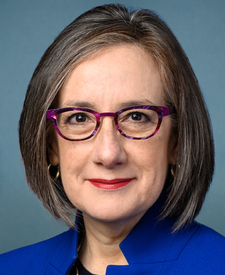
See how Andrea Salinas actually votes — against your values.
DeepSyte scores Andrea Salinas's record on the issues you care about — not party, not press releases. Take the 2-minute values quiz to see your personal alignment.
Sign in and take the values quiz to see how Andrea Salinas's votes line up with your views.
Prediction track record
How often we called Andrea Salinas's passage votes correctly, from their stated positions on each bill's tagged topics. Excludes “unclear” calls and abstentions.
40 predictions on record · none have been resolved by a passage vote yet. Check back as bills move.
To prohibit the disclosure of records by the Secretary of Housing and Urban Development of individuals for the purposes of immigration enforcement, and for other purposes.
Based on 1 data point across public statements and recorded votes · AI analysis of public records
119-hr-3486·Mixed signal
Stop Illegal Entry Act of 2025
45/100
What they said
Apr 30, 2026
Rep. Salinas opposes additional federal funding for ICE and CBP without accountability measures, arguing the agencies have engaged in unlawful tactics and that resources should instead support SNAP, Medicaid, and affordability programs.
The statement and bill both address immigration enforcement policy, but they target different specific questions. The statement opposes additional funding for ICE and CBP and criticizes their enforcement tactics as unlawful; the bill establishes criminal penalties for illegal entry and reentry. The rep's NO vote on this amendment is consistent with opposing stricter immigration enforcement, but the amendment's substantive content (criminal penalties) differs from the statement's focus (agency funding and accountability). The vote type is amendment, not passage, which limits clarity about the rep's intent on the underlying bill.
Pairs with ambiguous language and high uncertainty are withheld until more data is available. Procedural, cloture, and amendment votes are excluded — they don't cleanly signal substantive support or opposition.
Pro analysis
AI rep analysis — Pro
Get an AI-narrated read on Andrea Salinas's full voting record against your stated values — aligned themes, conflicts, notable votes, and what to watch for.
We haven't extracted campaign positions for Andrea Salinas yet. Once their campaign website or position pages are processed, this card will track what they said vs how they voted.
Crossing the aisle
Passage votes where Andrea Salinas broke ranks with ≥75% of Democrats. Threshold catches substantively partisan splits; unanimous-ish or close votes are excluded.
To prohibit individuals who are not citizens of the United States from voting in elections in the District of Columbia and to repeal the Local Resident Voting Rights Amendment Act of 2022
Rep. Andrea Salinas Votes Against $70 Billion for ICE and CBP With No Accountability
Position: Rep. Salinas opposes additional federal funding for ICE and CBP without accountability measures, arguing the agencies have engaged in unlawful tactics and that resources should instead support SNAP, Medicaid, and affordability programs.
WASHINGTON, D.C. — Congresswoman Andrea Salinas (OR-06) released the following statement on her vote against House Republicans’ budget resolution that would give $70 billion to ICE and CBP with no strings attached.
“I proudly voted against giving an additional $70 billion to ICE and CBP.
“We have spent over 25 percent of Trump’s second term in a full or partial government shutdown, with the current shutdown now dragging past 70 days. Instead of working with House Democrats to end this current shutdown, House Republicans just passed a bill that approves giving an extra $70 billion to ICE and CBP, without requiring changes to their unlawful and unconstitutional tactics.
“I will not give another cent to Immigration and Customs Enforcement and Customs and Border Protection, especially after Republicans handed them over $150 billion in their Big Ugly Bill — paid for by cuts to SNAP and Medicaid — making people hungrier, sicker, and poorer.
“Even after ICE agents brought chaos and violence to our communities and killed two U.S. citizens, Alex Pretti and Renee Good, House Republicans voted to give ICE and CBP billions more in funding without any guardrails to stop these abuses and protect American citizens.
“This funding could have helped fund SNAP and Medicaid, combat the affordability crisis, and improve lives, but instead it will be used to continue terrorizing communities. This is outrageous.
“Republicans are prioritizing blank checks for ICE and CBP over real solutions for hardworking families. Oregonians do not want this. I voted no.”
###
Issues:CongressImmigration
Rep. Andrea Salinas’ Statement on Her Vote Against the Republican Farm Bill
Position: Rep. Salinas opposes the Republican Farm Bill, citing inadequate support for specialty crop growers, failure to address tariff impacts, and cuts to SNAP nutrition assistance that harm food security for vulnerable populations including children and seniors.
WASHINGTON, D.C. — Today, Congresswoman Andrea Salinas (OR-06) released the following statement on her vote against the Republicans’ Farm Bill.
“This Farm Bill falls short of what Oregon farmers and families deserve. It does not do enough for specialty crop growers, fails to address the problems caused by Trump’s tariffs, and does not undo Republicans’ devastating cuts to SNAP, which only make the affordability crisis worse. This bill includes too many serious flaws for me to support it.
“Across the country, farm bankruptcies are up 46 percent. Oregon wine exports to Canada dropped more than 80 percent in a single year. And nearly 100,000 people in my district who rely on SNAP to put food on the table are at risk of losing their benefits. This bill does nothing to fix any of these problems.
“I fought to include amendments that will make a real difference for Oregonians, but Republicans refused to consider any of them. My amendments would have removed the statutory cap on Whole-Farm Revenue Protection, giving specialty crop producers the insurance coverage they need as their farms grow and as natural disasters become more frequent and severe. My Rural Partnership and Prosperity Act amendment would have helped rural communities access federal dollars for childcare, housing, and job training. My Timber Innovation for Building Rural Communities Act amendment would have expanded programs supporting mass timber and rural infrastructure. My Rural Health Care Facilities Revitalization Act amendment would have brought critical investment to rural hospitals and health clinics. And my amendment with Rep. Panetta, the Farmers Feeding America Act, would have strengthened food bank access to fresh, locally grown produce. None of these made it into the final bill.
“For generations, the Farm Bill worked because it was an agreement: farm programs and food assistance remained together in one bill. Republicans broke that deal. They stripped-out nutrition from the Farm Bill and gutted it through their ‘Big, Ugly Bill.’ They destroyed the Farm Bill coalition and put every future farm bill at risk.
“Instead of strengthening this partnership, Republicans chose to double down on harmful policies. They reinstated the discredited ‘10 a.m.’ wildfire suppression policy that puts firefighters at risk and ignores decades of forest science. It requires that every fire should be suppressed by 10 a.m. the day following its initial report. They gutted SNAP, putting nearly 800,000 Oregonians at risk of losing food assistance—including one in four children and one in eight seniors—at a time when grocery prices are still rising. And once again, they short shrifted specialty crop growers—the backbone of Oregon agriculture.
“Oregon’s farmers, families, and rural communities needed a Farm Bill that lowers costs, supports all producers, and strengthens food security. This one falls short. I will keep fighting for the investments and policies they deserve.”
###
Issues:AgricultureCongressRural Development
Reps. Salinas, Smith, Sen. Wyden Champion Legislation Supporting U.S. Kombucha Industry
Position: The representatives support modernizing federal alcohol tax and regulatory treatment of kombucha, arguing that current Prohibition-era standards unfairly burden kombucha producers and do not reflect the beverage's minimal alcohol content.
WASHINGTON, D.C. — Today, U.S. Representatives Andrea Salinas (OR-06) and Adrian Smith (NE-03), alongside Senator Ron Wyden (D-OR), introduced the KOMBUCHA Act, which would modernize outdated federal alcohol taxes and regulations on kombucha companies in Oregon and nationwide.
“Kombucha isn’t comparable to traditional alcoholic beverages like beer, and taxing it as if it were doesn’t make sense,” said Rep. Salinas. “We need to modernize the tax code so this industry isn’t unfairly burdened. Our KOMBUCHA Act will level the playing field and unlock new opportunities for local businesses in Oregon.”
“A serving of kombucha contains about as much alcohol as an overripe banana, so there’s no reason to tax it like it’s a full-on alcoholic beverage,” Senator Wyden said. “It’s past time to sober up our tax code and give kombucha producers a fair shake, and that’s what our bill is all about.”
"Kombucha is an everyday beverage enjoyed for its probiotic benefits, and it shouldn’t be taxed the same as beer or other alcoholic drinks,” said Rep. Smith. I’m glad to join Congresswoman Salinas in introducing our KOMBUCHA Act to update outdated federal tax rules and ensure fair treatment for Nebraska's small kombucha brewers.”
"Better Beverages supports the leadership of Congressman Adrian Smith and Congresswoman Andrea Salinas in advancing the KOMBUCHA Act. The current federal definition, rooted in outdated Prohibition-era standards, does not reflect modern fermentation practices and creates unnecessary barriers for responsible producers. Updating this framework will better align regulation with today's industry, support small businesses, and expand consumer access to safe, innovative products,” said Better Beverages.
“We appreciate the efforts of Congressman Adrian Smith and Congresswoman Andrea Salinas for advancing the Kombucha Act. This update to outdated prohibition era standards will allow small businesses greater flexibility to create products consumers are looking for in their communities and allow producers to reach further into new markets,” said Jessi and Nathan Hoeft, owners of Ensign Beverage.
“We at Spring Branch Kombucha, a small, family-run business in the Missouri Ozarks, greatly appreciate the efforts of Congressman Adrian Smith and Congresswoman Andrea Salinas for advancing the Kombucha Act. The existing federal definition, based on outdated Prohibition-era standards, creates unnecessary obstacles that disproportionately affect small producers like us. Updating this policy is critical to supporting small business innovation, strengthening our community, and ensuring consumers continue to have access to the diverse and growing kombucha market,” said Spring Branch Kombucha.
We appreciate the efforts of Congresswoman Andrea Salinas and Congressman Adrian Smith for advancing the Kombucha Act. The existing federal definition, based on outdated Prohibition-era standards, is no longer aligned with the modern kombucha industry and creates unnecessary obstacles for consumers and producers alike. Updating this policy will support innovation, strengthen businesses, please consumers, and contribute to a more dynamic and growing economy,” said Kendra Sepulveda, Director of Kombucha Brewers International.
“Bruja Sana Kombucha supports the leadership of Congressman Adrian Smith and Congresswoman Andrea Salinas in advancing the Kombucha Act. As an international producer, we recognize that the current federal definition, rooted in outdated standards, does not fully reflect the living nature of kombucha or the realities of modern fermentation. Updating this framework will not only benefit U.S. producers, but also help strengthen the global kombucha community, support small businesses, and encourage continued innovation and growth across markets,” said Daniela Guilbert, CEO of Bruja Sana Kombucha.
Kombucha contains trace amounts of alcohol produced by yeast during fermentation — which can trigger federal excise taxes and regulations covering alcoholic beverages. The KOMBUCHA Act would eliminate unintended tax and regulatory burdens by increasing the applicable alcohol-by-volume limit for kombucha from 0.5 percent to 1.25 percent. Kombucha would still have to meet all health and safety requirements generally applicable to nonalcoholic beverages as well as certain beverage alcohol labeling requirements.
To read the full text of this legislation, click here.
###
Issues:Congress
Rep. Salinas Leads Members of Congress in Opposing Trump Rule That Would Block Asylum Seekers from Working Legally
Position: Rep. Salinas and 29 colleagues oppose a proposed Trump Administration rule that would bar asylum seekers from obtaining initial work permits and grant USCIS broad authority to deny permit renewals, arguing the rule would harm the economy, employers, and asylum seekers already legally present in the U.S.
Proposed rule would freeze work permits, cost the U.S. economy up to $126.6 billion a year in lost wages, and pull trained workers out of construction, child care, and health care
Washington, D.C. – Today, U.S. Congresswoman Andrea Salinas (OR-06) led twenty-nine of her colleagues in a public comment letter to U.S. Citizenship and Immigration Services (USCIS) opposing a proposed Trump Administration rule that would effectively bar asylum seekers from getting an initial work permit and give the agency sweeping authority to deny renewals. By the agency’s own admission, the rule’s trigger — clearing the asylum backlog to a six-month average — could take USCIS anywhere from 17 to more than 100 years to hit. In the meantime, asylum seekers who are already in the U.S. legally, already paying taxes, and already filling jobs Oregon employers cannot fill any other way would be locked out of the workforce.
Click here or see below for the full letter:
Dear Director Edlow and Mr. Good:
We write to strongly oppose the proposed rule, Employment Authorization for Asylum Applicants, that would effectively bar asylum seekers from applying for an initial employment authorization document (EAD) until USCIS is able to significantly decrease the processing time for affirmative asylum applications. The rule would provide unfettered authority to USCIS to deny both initial and renewal EAD applications and increase wait times for asylum seekers to apply for an EAD. If finalized, these proposed changes would have devastating impacts on asylum seekers, employers, and local communities.
Currently, USCIS’ specific processing goal for asylum applications is an average of six months, and the agency estimates in this proposed rule that it would take them from 17 to over 100 years to achieve this goal.
While we appreciate the agency’s goal of reducing the amount of time it takes to process asylum applications, it is unacceptable for asylum seekers to bear the brunt of this goal and face severe economic uncertainty. It is cruel and unnecessary, especially considering many asylum seekers are fleeing violence and persecution and are coming to the United States for stability and a better future. Barring asylum seekers from being able to legally work benefits no one.
This proposed rule would make it harder for asylum seekers to renew their work permits. First, this proposed rule would require applicants to attend a biometrics appointment even if DHS already has their biometrics on file. This lacks sound reasoning and only serves to be another hurdle for asylum seekers. Second, the proposed rule also gives USCIS the authority to deny work permit applications for any reason. These changes are very concerning and destabilizing to businesses, families, and our constituents. When workers lose their work authorization due to processing delays or unexplained denials, employers abruptly lose trained employees they cannot easily replace, and workers and their families experience financial crises. The businesses in our districts that have invested in hiring and training these workers face real and immediate costs: lost productivity, search and rehiring expenses, and operational disruptions. The rule does not fully account for the disruption these proposed changes would cause to localities across the U.S.
The proposed changes would seriously harm the U.S. workforce. As of 2025, around 4.5 million people were seeking asylum, and 2.3 million of these were 16 years and older and already working. Asylum seekers who were 16 years and older had a higher workforce participation rate (72%) than the U.S. average. Of these workers, 17% worked in construction and 14% were employed in the transportation and warehouse industries, which are both critical industries currently facing significant workforce shortages. The data shows that people seeking asylum are continually filling roles that are difficult to fill with the domestic labor force. New economic data submitted to this docket shows that local communities that received more people seeking asylum during 2021–2023 saw higher employment and wages for native-born workers, U.S. citizens, and all existing workers. This data confirms what we already knew—asylum seekers want to work and contribute to their new communities, and our economy is stronger because of them.
Our constituents depend on a stable workforce, and asylum seekers are an essential part of it. People seeking asylum provide critical public services. Approximately 109,000 people with a pending asylum application work in health services, including child care and home health care; and 61,000 in education, including 27,000 in elementary and secondary schools. In the child care sector specifically, reducing the authorized workforce would make it harder for working parents in our districts to find care for their children.
As Members of Congress who appropriate federal funds, oversee agency budgets, and are directly accountable to constituents who rely on government services, we are acutely concerned about the fiscal consequences of this proposed rule. By restricting access to work authorization for people seeking asylum, our economy would lose billions of dollars through lost tax revenue, lower consumer spending, and worker shortages.
People seeking asylum pay $33 billion in taxes each year — including $19 billion in federal and payroll taxes and $14 billion in state and local taxes that fund the public schools, police and fire departments, road maintenance, Medicaid, and children’s health programs that our constituents use every day. DHS itself acknowledges that lost wages to workers with a pending asylum application under this rule could range from $34.6 billion to $126.6 billion every year. These losses would translate directly into reduced revenues at every level of government, constraining the resources available to fund programs that Congress has authorized and that American families depend on.
This proposed rule puts more pressure on the USCIS workforce that is already struggling to keep up with the mounting backlogs while the Trump Administration has systematically cut the agency’s workforce and adjudicatory capacity. For example, on February 14, 2025, the U.S. Department of Homeland Security fired around 50 workers. The Trump Administration also reduced workforce flexibilities such as telework, restricted the number of new hires to one for every four individuals that departed through attrition, and encouraged qualified employees to take early retirement. Together, these efforts negatively impacted the USCIS workforce and resulted in the number of staff decreasing from 22,322 to 19,925 within one year, which is an 11 percent decrease.
Even before President Trump took office for the second time, USCIS struggled to maintain sufficient staffing levels to adjudicate asylum applications in a timely manner. In a DHS Office of Inspector General report from FY2023, the OIG found that USCIS had over one million asylum cases pending, including 786,000 affirmative asylum cases pending for more than 180 days. The OIG also found that USCIS was not able to adjudicate these asylum cases in a timely manner because of insufficient funding and staffing levels. With this additional context, it is clear that USCIS has lacked sufficient staffing levels to process these claims for years now, and the root of the issue is funding. Therefore, this proposed rule, which effectively puts work permits for asylum seekers on hold until USCIS is able to reduce the asylum case backlog, misses the mark on addressing the root of the issue. Furthermore, a separate group of USCIS workers, Immigration Services Officers, are responsible for reviewing and processing asylum EAD applications, so the size of the EAD backlog does not have any bearing on the agency’s ability to decrease its asylum backlog.
Last, it is worth stating clearly that this regulation does not reflect congressional intent. By barring access to the authorized workforce to asylum seekers, the government is making it nearly impossible for asylum seekers to pay new asylum fees instituted in the One Big Beautiful Bill (OBBBA), or even to live safely in the United States while pursuing their asylum claims. This proposed regulation thus flies in the face of the Refugee Act, and the congressional guarantee that individuals have the ability to seek asylum in the United States.
Based on our concerns, we urge you to withdraw this proposed rule in full and pursue policies that protect access to work authorization. Barring asylum seekers from working legally is not beneficial to them or their families, or our communities.
###
Issues:CongressImmigration
Rep. Andrea Salinas Blasts House Republicans' "Self-Congratulation" While Rural Communities Suffer
Position: Rep. Salinas opposes House Republicans' rural policy record, arguing that their Medicaid and SNAP cuts harm rural hospitals and healthcare access, and that tariffs and trade policies increase costs for farmers and consumers.
WASHINGTON, D.C. — Today,Congresswoman Andrea Salinas (OR-06) released the following statement in response to House Republicans passing H.Res.1182, in which they celebrate their rural policy record as rural communities suffer.
“Republicans brought a Resolution to the House Floor to applaud themselves for their “great work” on behalf of rural communities. Our rural communities absolutely deserve federal support, but the idea that House Republicans deserve to pat themselves on the back, despite all the harm they’ve caused our rural communities, is laughable.
“We are in an affordability crisis that they caused. From health care premiums to groceries to gas, prices are skyrocketing and families are struggling to stay afloat. Meanwhile, House Republicans are applauding themselves for making historic cuts to Medicaid and SNAP in the Big, Ugly Bill to pay for tax cuts for billionaires. The impact of these cuts is especially severe in our rural communities. They could shutter rural hospitals, nursing homes, and health centers, leaving families with higher health care costs and rural patients with little to no access to care.
“On top of that, farmers and producers are bearing the brunt of President Trump’s shortsighted policies. His tariffs have made farming equipment more expensive and have broken longstanding trading partnerships. And his war with Iran has raised the cost of fertilizer to the point that 70% of farmers say they can’t afford it. As input costs rise and outputs decline, farmers will take home less while everyday Americans pay more. Everybody loses.
“The facts are obvious. Republicans reward the wealthy and leave rural communities behind. As a Member of the House Committee on Agriculture, I will keep calling out this nonsense where I see it and actually fight for our rural families, farmers, and their future. House Republicans are just hiding from the truth because they are too afraid to face the nightmarish reality they created.”
###
Issues:AgricultureCivil RightsRural DevelopmentCreating a More Affordable, Secure Oregon
Rep. Andrea Salinas Leads 15 Colleagues in a Letter Demanding Answers on DACA Renewal Delays
Position: The representatives oppose the Trump Administration's delays in processing DACA renewals and detentions/deportations of DACA recipients, and question the justification for increased renewal fees while processing times are deliberately slowed.
WASHINGTON, D.C. — Today, U.S. Congresswoman Andrea Salinas (OR-06) led 15 of her colleagues in a letter to the Director of U.S. Citizenship and Immigration Services, Joseph Edlow, to request answers about why the Trump Administration is failing to process Deferred Action for Childhood Arrivals (DACA) program renewals in a timely manner — putting DACA recipients at risk of deportation. The lawmakers also raised serious concerns about rising renewal fees and questioned how those funds are being used.
Click here or see below for the full letter:
Dear Director Edlow:
We write to express our strong opposition to the Trump Administration detaining and deporting beneficiaries of the Deferred Action for Childhood Arrivals (DACA) program. As you know, DACA protects recipients from deportation for two years and provides them with work authorization. DACA recipients that continue to meet its requirements are eligible to renew this relief from deportation and their work authorization. However, a recent report indicated that from January 1, 2025, to November 19, 2025, DHS has detained 261 DACA recipients (Dreamers) and deported nearly 90 of them. One specific case involved Mr. Juan Chavez Velasco, who was driving to the hospital to deliver milk to his newborn daughter. Another case involved Maria de Jesus Estrada Juarez, a mother and DACA recipient, who was deported after appearing for a scheduled immigrant visa (or green card) appointment. On March 23, 2026, a federal district court judge ordered the federal government to facilitate her return.
Additionally, the Trump Administration is intentionally processing DACA renewals slowly. This has resulted in Dreamers experiencing high levels of anxiety and uncertainty, and it has resulted in some of them losing their jobs due to a lapse in their status from the delays, which has caused many DACA recipients and their families to face economic challenges. Moreover, a lapse in their DACA status due to the Trump Administration’s slow processing times has also put Dreamers at risk for deportation, which impacts their families, communities, and workplaces. These deportations also significantly impact our country’s economy since during the first decade of the program, DACA recipients contributed $108 billion in wages, plus an additional $33 billion in combined federal, payroll, state, and local taxes.
At the same time, DACA recipients have continued to routinely pay fees for USCIS’ services. Specifically, for Dreamers, they must pay to renew their status every two years and are not eligible for reduced fees or fee waivers. And as of April 1, 2024, the fees increased from $495 to $555 for online applications and $605 for paper applications. This means that within a four-year period, DACA recipients pay over $1,000 in USCIS fees to maintain their status. Given that the Trump Administration is intentionally slowing down the processing of DACA renewals while simultaneously raking in more money from fees, we are deeply concerned about where the money is going from DACA renewal fees and how USCIS is processing DACA renewals. Please respond to the following questions by Monday, April 27, 2026:
Please provide the current processing times for DACA renewals. This needs to include the average processing time, median processing time, and the highest and lowest number of days it has taken USCIS to complete a DACA renewal since January 20, 2025.
Please describe the USCIS resources that are focused on DACA renewals and if, and how, this has changed from December 2024 to now. This specifically needs to include the number of employees and adjudicatory hours spent per week on processing DACA renewals.
Has USCIS proactively moved USCIS adjudicatory personnel off the DACA processing workload since January 20, 2025? If yes, why was this decision made?
Since January 20, 2025, how many DACA recipients filed for renewal within USCIS’ stated 120-day guidance widow, but then faced a lapse in their status due to processing delays?
Is USCIS working together with ICE, CBP, or TSA to target DACA recipients?
What steps is USCIS taking to ensure that DACA renewals filed within the 120-day guidance window are processed so that beneficiaries do not face a lapse in their status?
What policy and operational changes has USCIS implemented since January 20, 2025, that impact the adjudications process for DACA renewals and related-work authorization?
Since January 20, 2025, how many DACA renewals has USICS processed and approved? How many renewals were denied?
How many Requests for Evidence (RFEs) have been issued? Please provide weekly approval, denial, and RFE numbers since January 20, 2025.
We look forward to receiving your responses in a timely manner. Thank you for your time.
###
Issues:CongressImmigration
Articles from a curated list of national outlets that mention Andrea Salinas.
No recent news mentions yet.
Source: GDELT 2.0 GKG, filtered to a curated list of national outlets. Inclusion is not endorsement; opinion pieces and reported news are mixed.
Recent stock activity
Periodic transaction reports filed under the STOCK Act — disclosed by the rep, sourced from public filings.
No disclosed trades on record.
Source: open-data mirrors of the Senate eFD and House Clerk financial-disclosure systems. Disclosure within 30 days of trade is required by law (45 for spouse/dependent trades).
Top PAC donors · 2026 cycle
Political action committees that gave the most to this rep's principal campaign committee this cycle. PAC giving is direct organizational support — industry, ideological, or leadership.
1.DRIVE COMMITTEELeadership3 contributionsLeadership or member-affiliated PAC — specific positions and affiliated member not inferable from the name alone.AI · low$15,000
3.INTERNATIONAL BROTHERHOOD OF ELECTRICAL WORKERS POLITICAL ACTION COMMITTEELabor3 contributionsTrade-union PAC for the International Brotherhood of Electrical Workers (IBEW). Backs candidates supporting prevailing-wage standards, infrastructure investment, apprenticeship programs, and union organizing rights.AI$15,000
4.CHC BOLD PACLeadership3 contributionsMember-of-Congress leadership PAC affiliated with the Congressional Hispanic Caucus — directs contributions to allied Democratic candidates.AI$15,000
5.EMILY'S LISTIdeological3 contributionsPro-choice advocacy PAC — supports Democratic women candidates who back abortion access and reproductive rights.AI$15,000
6.TAKE BACK THE HOUSE 20241 contribution$12,300
7.MACHINISTS NON PARTISAN POLITICAL LEAGUE OF THE INTERNATIONAL ASSOCIATION OF MACHINISTS & AEROSPACE WORKERSLabor2 contributionsTrade-union PAC of the International Association of Machinists & Aerospace Workers — backs candidates supporting union organizing, prevailing wages, and aerospace manufacturing jobs.AI$10,000
8.PGE BIPARTISAN COMMITTEEEnergy2 contributionsPacific Gas & Electric Company PAC — supports candidates backing utility regulation, infrastructure investment, and energy reliability policies.AI$10,000
9.ENGINEERS POLITICAL EDUCATION COMMITTEE (EPEC)/INTERNATIONAL UNION OF OPERATING ENGINEERSLabor2 contributionsTrade-union PAC for the International Union of Operating Engineers — backs candidates supporting prevailing-wage standards, infrastructure investment, and project labor agreements.AI$10,000
10.HOUSE MAJORITY PACLeadership2 contributionsMember-of-Congress leadership PAC — supports House Republican candidates and coordinates party strategy in federal elections.AI$10,000
Source: OpenFEC (api.open.fec.gov) Schedule A receipts where contributor type is “committee.” Aggregated by contributing committee. Self-transfers from joint-fundraising / victory committees are excluded.
Top individual contributors · 2026 cycle
Itemized individual contributions over $200 to this rep's campaign committee, aggregated by donor employer. PAC giving is shown above; this section is people, not organizations.
1.METRO WEST AMBULANCE$8,000
2.ALSOP LOUIE PARTNERS$7,000
3.Q PRIME INC$7,000
4.KALSHI$7,000
5.MARQUIS ENERGY INC$7,000
6.LINKEDIN$7,000
7.SIGNAL GROUP$5,500
8.HKM EMPLOYMENT ATTORNEYS LLP$4,500
9.CAPITOL COUNSEL LLC$4,000
10.DIGITAL VISION INC$4,000
Source: OpenFEC Schedule A receipts where contributor type is “individual,” aggregated by the donor's self-reported employer. This is a geographic / industry correlation, not a corporate endorsement.