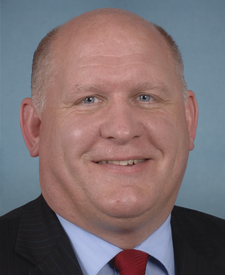
See how Glenn Thompson actually votes — against your values.
DeepSyte scores Glenn Thompson's record on the issues you care about — not party, not press releases. Take the 2-minute values quiz to see your personal alignment.
Sign in and take the values quiz to see how Glenn Thompson's votes line up with your views.
Prediction track record
How often we called Glenn Thompson's passage votes correctly, from their stated positions on each bill's tagged topics. Excludes “unclear” calls and abstentions.
7 predictions on record · none have been resolved by a passage vote yet. Check back as bills move.
No paired statements and votes yet for Glenn Thompson
We haven't yet found statement/vote pairs on the same topic for Glenn Thompson. This usually means either the rep hasn't taken public positions on bills that have come to a passage vote, or those bills haven't been tagged yet. The checker runs as new press releases and votes come in.
Pro analysis
AI rep analysis — Pro
Get an AI-narrated read on Glenn Thompson's full voting record against your stated values — aligned themes, conflicts, notable votes, and what to watch for.
We haven't extracted campaign positions for Glenn Thompson yet. Once their campaign website or position pages are processed, this card will track what they said vs how they voted.
Crossing the aisle
Passage votes where Glenn Thompson broke ranks with ≥75% of Republicans. Threshold catches substantively partisan splits; unanimous-ish or close votes are excluded.
Thompson Issues Statement on USDA Interim Final Rule for Whole Milk for Healthy Kids Act
WASHINGTON, D.C. – U.S. Representative Glenn “GT” Thompson released the following statement after the U.S. Department of Agriculture issued an interim final rule implementing the Whole Milk for Healthy Kids Act:
“I commend USDA for the swift implementation of the interim final rule for my legislation, the Whole Milk for Healthy Kids Act. Whole milk is an essential building block for a well-rounded and balanced diet, and I applaud USDA for providing schools clarity when it comes to offering flavored and unflavored whole and 2% milk options in Child Nutrition Programs.”
Background:
President Trump signed Rep. Thompson’s Whole Milk for Healthy Kids Act into law on January 14, 2026, after both the House and Senate unanimously passed his legislation.
Schools have the flexibility to offer whole and 2% milk options through Child Nutrition Programs such as the National School Lunch Program (NSLP), including the NSLP afterschool snack service, the preschool meal pattern, and Smart Snacks; School Breakfast Program; Child and Adult Care Food Program; and Special Milk Program.
Issues:Agriculture
Thompson, Bonamici Introduce Bill to Create Skill Savings Accounts
Position: Representatives Thompson and Bonamici introduced bipartisan legislation creating tax-advantaged skill savings accounts that allow workers to fund workforce development, apprenticeships, credentials, and other training opportunities throughout their careers.
BELLEFONTE, Pa. – Today, U.S. Representative Glenn “GT” Thompson (R-PA), and Suzanne Bonamici (D-OR), co-chairs of the Congressional Career and Technical Education (CTE) Caucus, introduced the bipartisan Skill Savings Account Act.
This bill creates skill savings accounts for workers of all ages to use for education expenses including workforce development and nontraditional learning opportunities. Skill savings accounts can be utilized for a wide variety of workforce development opportunities including apprenticeships, online courses, credentials, short or long-term community college and university courses, bootcamps, certificates, skill accelerators, and more to give workers the opportunity to reskill and upskill throughout their careers.
Skill savings accounts allow for tax-free contributions from employers, workers, community investment organizations, family and friends, government agencies, and tax authorities to contribute to an individual’s skill savings account, which are portable and follow the individual worker throughout their working life.
“A skilled workforce drives our economic growth and it’s important that every American knows there is more than one path to a successful future,” Rep. Thompson said. “I am proud to lead the Skill Savings Account Act. This commonsense, bipartisan legislation will create a tool for workers to reskill and upskill, ensuring that everyone can climb the ladder of opportunity.”
“Investing in workforce development is investing in America’s economic future,” Rep. Bonamici said. “Skill savings accounts will allow more Oregonians to access continuing education, workforce training, and reemployment services to help workers and businesses thrive.”
“The U.S. Chamber of Commerce commends Reps. Thompson and Bonamici for introducing the Skill Savings Account Act,” said Rodney Davis, Head of Government Affairs of the U.S. Chamber of Commerce. “This bill offers workers and employers a practical, flexible tool to invest in skills development and training, helping address worker shortages and keep America’s workforce competitive.”
"The Skill Savings Account Act creates a portable, tax-advantaged tool that empowers learners and workers to invest in their own upskilling and reskilling, reflecting how today's careers and related pathways actually unfold," said Kate Kreamer, Executive Director of Advance CTE. "Career Technical Education (CTE) has long delivered the high-quality programs and pathways that learners need to cultivate in-demand skills, and Skill Savings Accounts can help complement this existing infrastructure with a worker-centered, demand-side investment. Advance CTE commends Representatives Thompson and Bonamici for their leadership on this issue and is pleased to endorse the Skill Savings Account Act."
“By creating tax-advantaged accounts for education and training, this legislation expands access to high-quality learning opportunities, supports lifelong learning and strengthens the connection between education and workforce needs, helping more individuals gain the skills necessary to succeed in today’s economy," said LeAnne Curry, Executive Director of ACTE. "ACTE appreciates Congressman Thompson for his continued support of career and technical education and for introducing this legislation."
"BPC Action applauds Reps. Thompson (R-PA) and Bonamici (D-OR) for their leadership on the bipartisan Skill Savings Account Act," said Michele Stockwell, President of Bipartisan Policy Center Action (BPC Action). "This bill aligns with recommendations from the Bipartisan Policy Center's Commission on the American Workforce to provide workers with more opportunities to reskill and upskill throughout their careers. Expanding access to flexible, worker-centered learning opportunities is essential to building a stronger workforce and a more competitive economy, and BPC Action is proud to support this effort."
Specifically, this legislation would:
Create tax-free skill savings accounts for the purpose of paying the qualified education expenses of the account beneficiary, a portable account that follows a worker throughout their working life.
Workers can contribute to their own skill savings accounts and/or receive contributions from employers, family and friends, government agencies, tax authorities, and community investment organizations.
The total amount contributed by the employer shall not exceed $5,250 and the total amount contributed by an employee shall not exceed $10,000 in any calendar year.
A skill savings account balance may not exceed $50,000
Read the full text here.
Issues:Career and Technical Education Caucus
Thompson Issues Statement Following House Passage of Farm Bill
WASHINGTON, D.C. – U.S. Representative Glenn “GT” Thompson, Chairman of the House Agriculture Committee, released the following statement after the House of Representatives passed the Farm, Food, and National Security Act of 2026 (H.R. 7567) with a final vote of 224-200.
“Working in Congress on behalf of our nation’s farmers, ranchers, and rural communities is an honor,” Chairman Thompson said. “I was proud to lead the Farm, Food, and National Security Act of 2026, and I am extremely pleased to see this bill pass with a strong bipartisan vote. An updated farm bill that meets the current needs of our farmers and ranchers is long overdue, and this is a significant step toward getting farm country back on track."
Background:
The Farm, Food, and National Security Act of 2026 reauthorizes key USDA programs through 2031. The bill updates farm policy to strengthen supply chains, expand credit access for producers, and enhance crop insurance. By investing in rural broadband and infrastructure, it addresses modern challenges to support our farmers, ranchers, and foresters.
Issues:Agriculture
Thompson Issues Statement Following Passage of WIOA Reauthorization out of the Education and Workforce Committee
Position: Rep. Thompson voted in support of H.R. 8210, the Workforce Innovation and Opportunity Act reauthorization, which modernizes federal workforce policy to address skills gaps and align training with labor market demands in response to technological change.
WASHINGTON, D.C. – U.S. Representative Glenn “GT” Thompson released the following statement after voting in support of H.R. 8210, A Stronger Workforce for America Act, which passed out of the Education and Workforce Committee earlier today:
“While I voted in favor of A Stronger Workforce for America Act in committee, I will continue to work with my colleagues and stakeholders in our community to ensure this legislation meets local labor market needs and help to further lead individuals down the pathway of success and into high-quality, family-sustaining jobs," Rep. Thompson said.
Background:
The Workforce Innovation and Opportunity Act (WIOA) has not been reauthorized since 2014, and employers are experiencing persistent skills gaps across critical industries. Congress needs to modernize our federal workforce policy in order to keep pace with the rapidly changing labor market due to AI, automation, and technological innovation. This legislation makes targeted reforms to modernize the system and better align training with real job demand.
Thompson, Panetta Introduce All Children are Equal (ACE) Act
Position: Representatives Thompson and Panetta introduced legislation to reform Title I federal education funding formulas to distribute grants based on student poverty concentration rather than district population size, ensuring smaller districts with high poverty rates receive proportionally more federal support.
WASHINGTON, D.C. – Today, U.S. Representatives Glenn “GT” Thompson(R-PA) and Jimmy Panetta(D-CA) introduced the All Children Are Equal (ACE) Act, a bill that will fix the way federal grants are distributed under Title I of the Elementary and Secondary Education Act. These funds are utilized to combat the effects of poverty on student achievement.
The current Title I formulas have the perverse effect of diverting funding from smaller school districts with higher instances of poverty to more populous school districts that have lower instances of poverty. This legislation eliminates the number weighting system used to distribute grants, to ensure that funds per pupil are distributed based upon percentages of poverty, rather than weighting the formula based upon population.
“Students experiencing poverty are too often short changed because of their zip code or the size of their school district,” Rep. Thompson said. “Since 1965, the law has been very clear: all children should be treated equally. Implementing these changes is long overdue.”
“The federal government’s formula to allocate funding to support low-income students leaves too many kids in small schools behind,” Rep. Panetta said. “That’s why I’m proud to support this bipartisan legislation to update federal K-12 funding and ensure that we’re prioritizing schools with the highest concentrations of poverty. Doing so will help us target the areas of greatest need, regardless of size, and result in millions more in additional support for low-income students in California’s 19th Congressional District and across the country.”
“AASA is proud to support reintroduction of the All Children Are Equal Act,” said Dr. David Schuler, Executive Director of The School Superintendents Association. “ACE strengthens the integrity of Title I by better aligning funding with student need. It ensures dollars are truly targeted to areas of greatest need by reducing the influence of number weighting and focusing on concentrations of poverty. We commend GT for his tireless leadership on this issue and commitment to ensuring federal resources reach school districts serving the highest proportions of economically disadvantaged students—consistent with Title I’s original purpose.”
“In rural America, need is not smaller just because our districts are. Many rural schools serve high concentrations of poverty while also managing geographic isolation, transportation costs, staffing shortages and limited access to services that families rely on,” saidDr. Melissa Sadorf, Executive Director of National Rural Education Association. “The ACE Act corrects a long-standing flaw in the Title I formula by prioritizing poverty concentration over district size, ensuring rural students are no longer penalized for living in places with fewer places but just as much need. NREA is proud to support Representatives Glenn "GT" Thompson and Jimmy Panetta as they lead this bipartisan effort to make Title I funding more equitable for rural students and schools.”
“Title I was created to direct federal resources to students and communities with the greatest need, and the ACE Act makes important revisions to ensure these funds support districts with the highest concentrations of poverty,” said James Rowan, CEO and Executive Director of the Association of School Business Officials International. “School business officials work hard every day to stretch limited resources to serve their students. They know firsthand how critical Title I is for providing essential programs and services, particularly in smaller, rural, high-need districts. We support modernizing this program to ensure all districts can effectively educate their students.”
This legislation is also endorsed by the Pennsylvania Farm Bureau, YouthBuild Global, and the Association of Educational Service Agencies.
Read the full text here.
Issues:Education
Thompson's Student Aid Fraud Oversight and Accountability Act Advances through the Committee on Education and Workforce
Position: Rep. Thompson supports legislation that would require the Education Department to oversee institutions disbursing federal aid to applicants flagged for fraud, with exceptions for institutions that verify student identity before aid disbursement.
WASHINGTON, D.C. – Today, the House Education and Workforce Committee unanimously advanced a bill introduced by U.S. Representative Glenn “GT” Thompson (PA-15) that would combat fraud in higher education.
The Student Aid Fraud Oversight and Accountability Act will create an oversight mechanism requiring the Education Department to identify institutions that disburse federal aid to applicants flagged for potential fraud, placing those institutions in a priority category that can allow for program reviews, audits, and other oversight activities. The legislation provides an exception for institutions that verify student identity, through in-person or live video call verification, before dispersing student aid.
“The advancement of the Student Aid Fraud and Accountability Act is a clear indication that we must put a stop to fraudulent actors plaguing our education system and taking taxpayer funds,” Rep. Thompson said. “I look forward to working with my colleagues to pass this commonsense legislation on the House Floor."
“Fraud is everywhere, and although many schools are doing the right things, money is still being stolen,” said Rep. Walberg (MI-05), Chairman of the Education and Workforce Committee. “Rep. GT Thompson’s bill combats fraud by helping ensure schools verify suspicious applicants before disbursing aid—and that fraudsters aren’t getting rich at the expense of students and hardworking taxpayers. I am pleased that this bill passed the committee and look forward to advancing its efforts to safeguard taxpayer dollars.”
This bill can now be considered for a vote on the House Floor.
Read the full text here.
Issues:Education
Source: GDELT 2.0 GKG, filtered to a curated list of national outlets. Inclusion is not endorsement; opinion pieces and reported news are mixed.
Recent stock activity
Periodic transaction reports filed under the STOCK Act — disclosed by the rep, sourced from public filings.
No disclosed trades on record.
Source: open-data mirrors of the Senate eFD and House Clerk financial-disclosure systems. Disclosure within 30 days of trade is required by law (45 for spouse/dependent trades).
Top PAC donors · 2026 cycle
Political action committees that gave the most to this rep's principal campaign committee this cycle. PAC giving is direct organizational support — industry, ideological, or leadership.
1.TEAM GT7 contributions$69,951
Source: OpenFEC (api.open.fec.gov) Schedule A receipts where contributor type is “committee.” Aggregated by contributing committee. Self-transfers from joint-fundraising / victory committees are excluded.
Top individual contributors · 2026 cycle
Itemized individual contributions over $200 to this rep's campaign committee, aggregated by donor employer. PAC giving is shown above; this section is people, not organizations.
1.SELF$71,248
2.GS FOODS GROUP$10,780
3.COINBASE$10,100
4.KRIEBEL GAS$10,000
5.BEST LINE EQUIPMENT$8,000
6.PENN UNITED TOOL$7,600
7.GREYSTONE BANK$7,000
8.GLENN O'HAWBAKER INC$7,000
9.BELL & EVAN POULTRY$7,000
10.ZIPPO MANUFACTURING$7,000
Source: OpenFEC Schedule A receipts where contributor type is “individual,” aggregated by the donor's self-reported employer. This is a geographic / industry correlation, not a corporate endorsement.