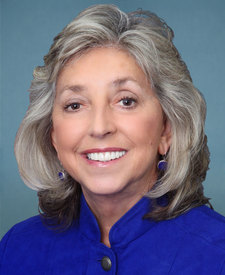
See how Dina Titus actually votes — against your values.
DeepSyte scores Dina Titus's record on the issues you care about — not party, not press releases. Take the 2-minute values quiz to see your personal alignment.
Sign in and take the values quiz to see how Dina Titus's votes line up with your views.
Prediction track record
How often we called Dina Titus's passage votes correctly, from their stated positions on each bill's tagged topics. Excludes “unclear” calls and abstentions.
20 predictions on record · none have been resolved by a passage vote yet. Check back as bills move.
Pending vote119-hr-5123
Indoor Air Quality and Healthy Schools Act of 2025
We haven't yet found statement/vote pairs on the same topic for Dina Titus. This usually means either the rep hasn't taken public positions on bills that have come to a passage vote, or those bills haven't been tagged yet. The checker runs as new press releases and votes come in.
Pro analysis
AI rep analysis — Pro
Get an AI-narrated read on Dina Titus's full voting record against your stated values — aligned themes, conflicts, notable votes, and what to watch for.
We haven't extracted campaign positions for Dina Titus yet. Once their campaign website or position pages are processed, this card will track what they said vs how they voted.
Crossing the aisle
Passage votes where Dina Titus broke ranks with ≥75% of Democrats. Threshold catches substantively partisan splits; unanimous-ish or close votes are excluded.
To prohibit individuals who are not citizens of the United States from voting in elections in the District of Columbia and to repeal the Local Resident Voting Rights Amendment Act of 2022
Rep. Dina Titus Introduces Resolution to Ban Representatives and their Staff from Participating in Prediction Markets
Position: Rep. Titus introduces legislation to prohibit Members of Congress, their staff, and House officers from participating in prediction markets, arguing that such participation allows officials to profit from insider knowledge and undermines public trust.
Subscribe to receive the latest news, insights,
and updates directly to your inbox.
“Like with stock trading, no Member of Congress should be able to profit off their insider knowledge by placing informed bets on prediction market platforms like Kalshi and Polymarket,” said Congresswoman Dina Titus. “We saw this happen with the Maduro arrest and again before President Trump’s war in Iran began. This legislation is fair and fosters trust and transparency from Congress to the American people.”
This legislation would amend House rules to prohibit Members of Congress, their staff, and House officers from entering into any financial agreement or contract involving an "excluded commodity" as defined under the Commodity Exchange Act, the legal category that covers prediction market contracts tied to the outcome of a specific event or contingency. The resolution also calls on the executive and judicial branches to adopt similar restrictions, ensuring that no federal official can leverage privileged government knowledge for personal financial gain.
Titus, Schatz Introduce Bicameral PATH to the Foreign Service Act
Position: The release advocates for legislation that would establish a career pathway for former USAID officers to transition to the State Department Foreign Service, removing hiring barriers and waiving standard eligibility requirements to retain institutional expertise in foreign assistance and diplomacy.
Subscribe to receive the latest news, insights,
and updates directly to your inbox.
Today Congresswoman Dina Titus (NV-01) introduced her Pathways for Advancement, Transition, and Hiring (PATH) to the Foreign Service Act with Senator Brian Schatz (D-HI) leading companion legislation in the Senate. This bill would provide a foreign service career pathway for former United States Agency for International Development (USAID) officers.
“Those who dutifully served at USAID before the Trump Administration wrongfully dismantled the agency included some of our most talented and skilled international affairs experts in the United States government,” said Congresswoman Dina Titus. “Our national security cannot afford to lose this institutional knowledge. I am introducing my PATH to the Foreign Service Act to ensure that these officers can continue to serve their country and foster a critical aspect of the nation’s soft power as Foreign Service Officers in the State Department.”
“The State Department needs experienced professionals to effectively administer foreign assistance, which is exactly why it should be rehiring Foreign Service Officers who were working at USAID before it was illegally shuttered by the Trump administration,” said Senator Schatz. “Our bill removes impediments in the hiring process so that these patriotic Americans can get back to serving their country.”
This legislation establishes a formal Foreign Service career pathway that allows former USAID members to be appointed at a grade and tenure status commensurate with their prior rank by removing certain eligibility requirements, waiving the Foreign Service Officer Test, and providing preferences to applicants with prior USAID experience. The Secretary of State and Office of Personnel Management would oversee and execute this new process. The bill provides a smooth, non-redundant path for successful USAID employees to transition to the State Department’s Foreign Service, acknowledging that these individuals have already proven their capabilities and skill sets.
The American Foreign Service Association (AFSA) and the American Federation of Government Employees (AFGE) have endorsed Congresswoman Titus’s legislation.
“The Foreign Service professionals who spent careers delivering foreign assistance and humanitarian aid at USAID are exactly who the State Department needs, now that it's taken on that mission. The PATH to the Foreign Service Act clears the way, making it easier to bring those professionals in permanently, at the level their experience warrants. We're grateful to Congress for recognizing that expertise,” said AFSA President John Dinkelman.
Full bill text can be found here.
Immediately after President Trump took office in 2025, he signed an executive order beginning the process of dismantling USAID. Since then, hundreds of thousands of dollars in federal grants for critical global programs have been cancelled, while thousands of experienced, skilled development professionals have been fired. The New York Times found that a third of former USAID professionals are still unemployed, and less than half have found full-time employment.
Many USAID employees specialized in specific regions and issues. Their unique experiences are critical to informing the United States’s responses to humanitarian emergencies around the world. The PATH to the Foreign Service Act would ensure that these public servants have a pathway to employment and that the United States government does not have a “brain drain” of their knowledge and expertise, thereby protecting our national security and expanding our global influence.
Titus Reintroduces Legislation to Help Citizens Overseas
Subscribe to receive the latest news, insights,
and updates directly to your inbox.
Today Congresswoman Dina Titus (NV-01), a senior member of the House Foreign Affairs Committee and Chair of the Americans Abroad Caucus, reintroduced the Commission on Americans Living Abroad Act. The legislation would establish a bipartisan commission to examine the concerns of the roughly five to six million U.S. citizens living and working abroad.
These citizens can face difficulties in accessing basic services involving immigration, taxation, voting, and the use of financial institutions, in addition to reaching their members of Congress. The Executive Commission created by Rep. Titus’s legislation would comprise a ten-member bipartisan panel to analyze, report on, and make appropriate recommendations to address the effects of activities, laws, and policies of the federal government on Americans citizens living abroad.
“Many of my constituents are among the millions of Americans abroad who’ve encountered financial, travel, and health-related burdens. The commission created by this legislation would help the federal government analyze the challenges of being away from home and help resolve them. As Chair of the Americans Abroad Caucus, and having taught abroad myself, I am familiar with these issues and will work with my colleagues to address them. All American citizens deserve representation, regardless of where they live,” said Rep. Titus.
"Congress needs to understand the important role of U.S. citizens living and working abroad in advancing U.S. economic and national security interests. The Commission on Americans Living Abroad Act of 2026 introduced by Americans Abroad Caucus Chairwoman Dina Titus, is a welcomed effort that will educate Congress on the issues affecting the 5 to 6 million U.S. citizens while they live and work outside the U.S. ACA thanks Congresswoman Titus for her continued commitment and support of U.S. citizens living abroad.” said Marylouise Serrato, Executive Director of American Citizens Abroad (ACA).
Reps. Titus, Pingree Demand Answers from President Trump on the Unauthorized Use of Taxpayer Dollars for His Triumphal Arch
Position: The lawmakers oppose the Trump Administration's redirection of National Endowment for the Humanities (NEH) funds toward construction of a Triumphal Arch, arguing it violates congressional appropriations intent, lacks legal authorization, and diverts resources from museums, libraries, and humanities councils nationwide.
Subscribe to receive the latest news, insights,
and updates directly to your inbox.
Co-Chair of the Congressional Humanities Caucus Congresswoman Dina Titus (NV-01) and Ranking Member of the House Appropriations Interior, Environment, and Related Agencies Subcommittee Congresswoman Chellie Pingree (ME-01) led a group of lawmakers expressing concerns to President Donald Trump and Acting Chairman for the National Endowment for the Humanities (NEH) William English regarding NEH funds being unlawfully redirected toward the construction of a Triumphal Arch.
Ranking Member of the House Natural Resources Committee Jared Huffman (CA-02), along with Representatives Don Beyer (VA-08) and Steve Cohen (TN-09), joined Congresswoman Titus and Congresswoman Pingree in demanding the Administration cease funding for this unauthorized project, provide clarity on the use of NEH funds, and promptly distribute appropriated funding to humanities councils and other intended recipients.
“A construction project of this nature, especially one previously described by President Trump as privately funded, falls well outside the intended use of NEH program funding. Allocating funds to a project that has no legal basis to proceed is an abuse of taxpayer dollars,” write the lawmakers.
“At the same time, museums, libraries, and local organizations nationwide wait for funding that Congress has already approved. NEH has yet to distribute appropriated funding for state and jurisdictional humanities councils, leaving these organizations in limbo halfway through the fiscal year. These institutions form the backbone of American civic and cultural life; redirecting their funding to a project that neither aligns with NEH’s mission nor reflects congressional intent risks real and immediate harm to communities nationwide,” continue the lawmakers.
The lawmakers’ letter specifically demands answers from President Trump and Mr. English on the following questions:
Full text of the letter can be found here.
Despite previous claims that President Trump would only use private donations to fund his Triumphal Arch, the National Endowment for Humanities released its FY26 plan earlier this month including $15 million for this project despite the absence of congressional authorization required under the CWA.
This is happening while humanities councils are experiencing an unprecedented funding crisis. Although Congress maintained the $65 million appropriation for councils in the recently passed funding bill, funds have not yet been released. As a result, councils across the country have endured layoffs, frozen grant programs, and scaled back urgent community initiatives, including preparations for the upcoming 250th anniversary of the Declaration of Independence. Instead of using funding as Congress intended, the Administration is using taxpayer dollars for a self-righteous project that lacks clear legal authority, while undermining the cultural and civic institutions that serve communities throughout the nation.
Reps. Titus, Steube Introduce Bipartisan PRIMATE Act to Strengthen Biosecurity and Protect Public Health
Position: Representatives Titus and Steube introduced the PRIMATE Act to restrict the importation of nonhuman primates for laboratory research, citing biosecurity risks, disease transmission concerns, and the availability of alternative research methods.
Subscribe to receive the latest news, insights,
and updates directly to your inbox.
“Americans shouldn’t have to worry about dangerous diseases entering our country through imported primates from countries we don’t trust to handle biosecurity risks,” said Rep. Greg Steube. “This bill is about protecting public health, strengthening accountability, and terminating an outdated trade practice that risks safety at the expense of the American taxpayer.”
“For decades, primates have been torn from the wild, shipped around the world, and forced into laboratories, creating serious public health risks along the way. Their importation exposes workers and our communities to dangerous pathogens. This bill is a crucial step toward ending that cruelty and protecting public safety. I applaud Representatives Steube and Titus for their leadership on this issue.” —Edie Falco, Award-winning Actress, Honorary Board Member for People for the Ethical Treatment of Animals (PETA)
“U.S. importers are generating disease risk to keep an outdated research model alive. Modern, human-relevant methods don’t require the global trafficking of primates or the biosecurity liabilities that come with it. This legislation aligns public health policy with where science is actually headed." —Lisa Jones-Engel, PhD, Chief Science Advisor, Primate Experimentation, People for the Ethical Treatment of Animals (PETA)
“Importing monkeys for research is hazardous to our nation’s health. It also fails to meet the moment of current science and research. The CDC has documented that imported primates can carry pathogens such as Shigella, Salmonella, and the herpes B virus, among other zoonotic diseases. At the same time, research is increasingly moving toward human-based methods that are more relevant to human health. This legislation helps reduce preventable health risks while aligning U.S. policy towards more innovative science.”—Neal Barnard, MD, FACC, President, Physicians Committee for Responsible Medicine (PCRM), George Washington University School of Medicine, Adjunct Professor of Medicine
“Restricting the importation of nonhuman primates is a critical measure for safeguarding public health and preventing the introduction of emerging infectious diseases. This legislation reflects a necessary shift toward recognizing the interconnected health of people, animals, and ecosystems."
—Thomas R. Gillespie, PhD, Professor & Chair, Department of Environmental Sciences, Department of Environmental Health, Rollins School of Public Health, Professor at Emory University
Background
From 2021 to 2024, nearly 100,000 nonhuman primates were imported into the United States for laboratory testing during the COVID-19 pandemic, a system supported in part by American taxpayer dollars.
Recent biosecurity breaches have highlighted the serious risks associated with primate trade. At a biomedical facility in Immokalee, FL, federal inspectors issued a critical violation after multiple primates died in an overheated room. In a separate incident, a monkey was mistakenly transported to a medical waste facility in Miami, raising concerns about breakdowns in handling and tracking protocols. A facility executive has also faced criminal charges following reports that primates were improperly disposed of in biohazard waste.
These are not isolated failures; they expose systemic weaknesses in oversight and biosecurity practices tied to the importation of nonhuman primates.
Public health risks are further compounded by gaps in current quarantine protocols. Federal guidance acknowledges that diseases such as tuberculosis may not always be detected during quarantine, meaning infected primates can be transported into research facilities and come into contact with workers despite screening efforts.
Under this legislation, the importation of nonhuman primates is prohibited except for limited, clearly defined exceptions, including for accredited zoological institutions. The bill directs U.S. Customs and Border Protection to deny entry to prohibited shipments and establishes civil penalties of up to $50,000 per violation, along with forfeiture of illegally imported primates.
Read the bill text here.
Rep. Dina Titus Introduces Resolution Recognizing Vatican-Taiwan Diplomatic Ties
Subscribe to receive the latest news, insights,
and updates directly to your inbox.
Congresswoman Dina Titus (NV-01) and Congressman James Moylan (GU-00) today introduced a resolution commending the Vatican and Taiwan for maintaining a strong diplomatic relationship and recognizing Taiwan’s commitment to religious freedom despite neighboring China’s ongoing infringement of religious rights.
“Taiwan is an example for the world in how a nation can stand up for its people’s beliefs despite having a dangerous and powerful neighbor that represses religious freedom,” said Congresswoman Titus. “At the same time, the Vatican should be commended for maintaining strong diplomatic ties with Taiwan since 1942 as its only European ally.”
“Religious freedom is one of the most fundamental human rights, and Taiwan continues to demonstrate to the world what it looks like to uphold that principle with strength, dignity, and respect for all faiths. I am proud to join Congresswoman Dina Titus in recognizing the enduring relationship between Taiwan and the Holy See, and in reaffirming support for those who defend the freedom to worship without fear. At a time when religious persecution continues in many parts of the world, Taiwan stands as a powerful example of democratic values and liberty in the Indo-Pacific,” said Congressman Moylan.
The resolution encourages the expansion of engagement between Taiwan and the Holy See, specifically through increased high-level visits by clergy and senior church officials from the Holy See to Taiwan to foster spiritual ties and partnership.
Taiwan contributed $1 million to the International Religious Freedom Fund between 2019 and 2024 to support the promotion of religious liberty around the world. In September 2023, the Legislative Yuan of Taiwan organized the Taiwan International Religious Freedom Summit which convened more than 150 lawmakers, government officials, religious leaders, and civil society professionals from around the world.
Congresswoman Titus noted that the Freedom in the World 2025 report by Freedom House awarded Taiwan a score of 94 out of 100 and recognized it as the second-freest entity in the Indo-Pacific, while the People’s Republic of China received a score of only 9 out of 100 and remains categorized as ‘‘Not Free’’
“Religious freedom should be protected in every nation. Taiwan stands as a beacon of that practice,” Congresswoman Titus finished.
Reps. Titus, Omar Introduce the Higher Education Marijuana Research Act
Position: Representatives Titus and Omar support legislation to remove federal restrictions on cannabis research at universities and research institutions, allowing scientists to study cannabis products that reflect state-legal markets and conduct clinical trials on health effects.
Subscribe to receive the latest news, insights,
and updates directly to your inbox.
“The legal, responsible use of cannabis has been a major economic driver in Nevada and across the country and deserves further research,” Congresswoman Titus said. “The Higher Education Marijuana Research Act would eliminate outdated federal restrictions that prevent universities and researchers from studying the full range of cannabis products that Americans are actually using today.”
“As Co-Chair of the Congressional Cannabis Caucus, I am proud to support the Higher Education Marijuana Research Act because it removes outdated federal barriers that have long prevented universities from conducting critical cannabis research. This legislation protects universities and researchers while lifting barriers so we can make better public health decisions,” Congresswoman Ilhan Omar said.
Although 40 states have legalized medical marijuana and 24 states have legalized it for recreational use, federal law continues to impose significant barriers that limit meaningful research. Cannabis remains subject to restrictive federal controls that dictate who can conduct research, what products can be studied, and how studies are designed. Researchers are often limited to federally authorized cannabis that does not reflect the potency or diversity available in state-legal markets. Compounding these challenges, researchers must navigate strict compliance requirements and uncertainty regarding legal liability. These barriers have delayed clinical trials, constrained understanding of long-term health effects, and left critical gaps in knowledge.
“It makes no sense for the federal government to impede this research when millions of Americans are already using marijuana, whether for medical purposes or recreationally,” Congresswoman Titus said.
The Higher Education Marijuana Research Act is supported by the National Organization for the Reform of Marijuana Laws (NORML), the National Cannabis Industry Association, the Drug Policy Alliance, and the UNLV Cannabis Policy Institute.
"This legislation is more necessary than ever before as the states continue to move towards allowing cannabis for medical and adult use purposes. Even if cannabis is federally reclassified in the near future, significant barriers will remain for scientists hoping to add to the existing body of research, especially when it comes to conducting clinical trials on health effects and studying the state-regulated products that cannabis consumers and patients are actually using. We applaud Rep. Titus for putting this bill forward again, and urge Congress to take action on it immediately to facilitate research, develop new medical treatments, inform evidence-based policies, and help consumers make educated choices," said Morgan Fox, Political Director for the National Organization for the Reform of Marijuana Laws (NORML).
"The American public has made clear that it wants access to safe, regulated, and tested cannabis products, and state-legal markets continue to evolve to meet that demand. However, federal barriers have long limited the ability of researchers to study cannabis in a way that reflects real-world conditions. The Higher Education Marijuana Research Act is a practical step toward expanding credible, real-world research by providing colleges and universities with the clarity and protections they need to participate. NCIA is proud to support this legislation, which will help strengthen the scientific foundation of the industry and better inform policymakers, regulators, and consumers alike,” said Brooke Gilbert, Chief Operating Officer, National Cannabis Industry Association.
"The Higher Education Marijuana Research Act is commonsense legislation that will help researchers better understand the types of cannabis being produced in state-regulated markets. The bill will lift a major roadblock that currently prevents scientists from learning more about state-regulated cannabis and its public health implications. Increasing the body of scientific evidence with better informed research is something anyone who favors evidence-based drug policy should support," said Cat Packer, Drug Policy Alliance's Director of Drug Markets and Legal Regulation.
"Everyone, from members of both sides of the aisle in Congress to the science community to the current and previous presidential administration, have expressed that cannabis research is necessary and important. This is practically the only issue that everyone can coalesce around these days, but there is not a lot of progress being made in reducing current barriers to cannabis research. Congresswoman Titus's bill is a smart response to the current barriers in cannabis research and since she has always been an advocate for common sense cannabis reform, it is fitting that she would lead the charge now. The UNLV Cannabis Policy Institute applauds her efforts and hopes that others will put in the necessary work to reduce the current barriers to cannabis research, which only serve to maintain outdated prohibition era policies," said Riana Durrett, Director, UNLV Cannabis Policy Institute.
As Co-Chair of the Cannabis Caucus, Congresswoman Titus has long been a leader on marijuana policy. She has worked to expand access to medical marijuana for veterans, improve access to financial services for state-legal cannabis businesses, and reduce federal interference in state-regulated markets, while also pushing the Administration to move more quickly toward reclassifying cannabis. As part of this broader effort to advance evidence-based drug policy, Congresswoman Titus also introduced the Evidence-Based Drug Policy Act which would remove outdated restrictions that limit the federal government’s ability to study and evaluate cannabis policy.
Rep. Dina Titus Introduces Bipartisan Legislation to Give Parity in Permitting for Transportation Projects
Position: Rep. Titus supports legislation that streamlines the federal permitting process for transit and passenger rail projects by allowing property acquisition before NEPA completion, bringing parity with highway project permitting timelines.
Subscribe to receive the latest news, insights,
and updates directly to your inbox.
“Many folks in Southern Nevada depend on bus services to get around our community,” said Congresswoman Titus. “Another emerging critical mode of transportation in our region is passenger rail. When high-speed rail comes to Southern Nevada, it will support tourism, improve air quality, and ease traffic congestion. The Modal Parity in Permitting Act will help ensure that the permitting process that allows these services to be built in our community is in line with the process for highway projects.”
The Modal Parity in Permitting Act would allow sponsors of transit and passenger rail projects to acquire real property interests necessary for a project before completing the National Environmental Policy Act (NEPA) permitting process. This would give transit and passenger rail projects parity with highway construction projects during the federal permitting process.
The Modal Parity in Permitting Act is on Congresswoman Titus’s list of priorities for surface transportation reauthorization. She will be pushing for its inclusion in the package as a Senior Member of the Transportation & Infrastructure Committee and the Ranking Member of the Subcommittee on Railroads, Pipelines, and Hazardous Materials.
Representatives Rob Bresnahan (PA-08) and Laura Friedman (CA-30) are original cosponsors of this legislation.
“Reliable infrastructure starts with a process that works. Right now, unnecessary delays in permitting are holding back critical transit projects in communities like ours,” said Rep. Bresnahan. “The Modal Parity in Permitting Act is a commonsense fix that allows local projects move forward without waiting on Washington every step of the way. This is about cutting red tape, supporting smart growth, and delivering the modern, connected transportation systems our region deserves.”
“For too long, transit and rail projects have faced a permitting process that puts them at a disadvantage compared to highways. The Modal Parity in Permitting Act is the straightforward fix we need, allowing transit and rail projects to acquire property during the permitting process just like highway projects can, so we can build critical infrastructure faster and more affordably,” said Rep. Friedman.
This legislation has been endorsed by RTC of Southern Nevada, The Bus Coalition, and the American Public Transportation Association (APTA).
“We are grateful for Congresswoman Titus' leadership in introducing this commonsense legislation,” said M.J. Maynard-Carey, CEO of the Regional Transportation Commission of Southern Nevada. “The Modal Parity in Permitting Act would give transit agencies the same real property acquisition flexibility that highway project sponsors already have, strengthening project delivery for major investments like the Boulder Highway Bus Rapid Transit corridor. We appreciate Congresswoman Titus' continued commitment to Southern Nevada's transportation future.”
“The Modal Parity in Permitting Act is a crucial, common sense step to reduce project delays, control costs, and speed the delivery of critical transit investments,” said Ed Redfern, Executive Director of the Bus Coalition. “At a time when transit agencies are using federal investments to expand capacity and improve service reliability, this legislation will help ensure taxpayer dollars go further and projects move more efficiently from planning to deployment. This bill helps create a more predictable permitting process, which will better position agencies of all sizes to deliver the bus infrastructure and fleet improvements communities need.”
“We applaud Representatives Titus (D-NV), Bresnahan (R-PA), and Friedman (D-CA) for introducing the Modal Parity in Permitting Act. For too long, public transit and passenger rail projects have faced a structural disadvantage in the permitting process — highway projects can acquire land before NEPA is complete, while FTA and FRA projects cannot. This bill levels the playing field and will help move critical public transit and passenger rail investments forward faster and more efficiently. We urge Congress to advance this legislation without delay,” said APTA President and CEO, Paul P. Skoutelas.
“The Modal Parity in Permitting Act will help expand passenger rail across the United States by putting passenger rail permitting on equal footing with highway construction projects,” said Brightline West President, Sarah Watterson. “Brightline West appreciates Representatives Titus, Bresnahan, and Friedman for their leadership on this important issue and urges Congress to advance this common sense bill as part of any upcoming surface transportation reauthorization package.”
Under current law, Federal Transit Administration (FTA) project sponsors may purchase property prior to NEPA completion at their own risk when the property is within a planned transit corridor. While this covers many transit properties, buildings that are used for operations or maintenance may fall outside the existing “corridor.” Similar limitations exist for passenger rail projects.
The permitting process is notably different for Federal Highway Administration (FHWA) projects. Highways project sponsors can purchase real property interests outside the corridor prior to completing environmental review. This often creates confusion for project sponsors who work across different modes of transportation and face different permitting regulations for each mode.
Congresswoman Titus’s bill will speed up transit and passenger rail projects without undercutting the environmental and wildlife considerations that are so integral to the federal permitting process. Importantly, under Congresswoman Titus’s Modal Parity in Permitting Act, project sponsors would still be prohibited from moving forward with developing any land in their possession before completing the required environmental reviews.
This bill provides a reasonable fix to the permitting procedures for all modes of transportation. As we continue to invest in our nation’s transportation networks, Congresswoman Titus is highlighting the importance of putting passenger rail and transit projects on an equal playing field with highways projects.
Titus Introduces Bill to Establish a Diplomatic Reserve Corps
Position: Congresswoman Titus supports establishing a 1,000-member Diplomatic Reserve Corps within the State Department to provide surge capacity for diplomatic operations during international crises and heightened demand.
Subscribe to receive the latest news, insights,
and updates directly to your inbox.
WASHINGTON – This week Congresswoman Dina Titus (NV-01) introduced the Diplomatic Reserve Corps Act of 2026. This legislation would authorize the State Department to establish a 1,000-member ready reserve to carry out U.S. diplomatic efforts during times of heightened demand. This bill is co-led by Congressman Michael Baumgartner (WA-05) and supported by the American Academy of Diplomacy.
“While our armed forces are equipped to handle surges in demand with a ready reserve corps, the State Department, often called our first line of defense, is not,” said Congresswoman Dina Titus. “A Diplomatic Reserve Corps would ensure that the United States continues to put forth well-trained and experienced diplomatic professionals during times of international crisis. This is essential to maintain our relationships around the world, protect U.S. citizens abroad, mitigate conflict, and advance our national security interests.”
“Strengthening America’s ability to respond to global crises requires more than good intentions – it requires a trained, ready, and rapidly deployable diplomatic workforce. A Diplomatic Reserve Corps would give the State Department the surge capacity it has long lacked, ensuring we can protect Americans, support our partners, and advance our interests without pulling personnel away from essential missions. This is a practical reform that brings our civilian crisis response capabilities closer to the standard long set by our military reserves. It’s a smart investment in American leadership and preparedness,” said Congressman Michael Baumgartner.
“The American Academy of Diplomacy strongly endorses HR 8167, the Diplomatic Reserve Corps Act of 2026. This Bill will greatly increase the Department of State's ability to react efficiently and effectively to protect American citizens in crises such as mass evacuations, wars, and disasters. It will ensure that the appropriate personnel with the right skills can be sent quickly to a crisis. The Academy urges the rapid passage of this bipartisan effort to improve the effectiveness of American diplomacy,” said Ambassador Ronald E. Neumann, President of the American Academy of Diplomacy.
A robust and agile diplomatic service is essential to protect national security. Quickly unfolding crises such as the 2021 Afghanistan evacuation underscore the need for a modernized Diplomatic Corps. When they occur, the State Department cobbles together volunteers such as short-term hires, willing retired professionals, and contractors, all of whom leave behind important roles, creating a cycle of vacant positions. These solutions are also costly and unsustainable in a complex and demanding global environment. Instead of struggling with patchwork solutions, we need a longer-term solution. The Diplomatic Reserve Corps Act of 2026 is tailored to meet these complex challenges.
This bill would amend the Foreign Service Act of 1980 to establish a Diplomatic Reserve Corps under the State Department. This group of 1,000 trained, on-call professionals would become available to supplement, when the need arises, the Civil Service, Foreign Service, Personal Service Contractors, and Locally Engaged Staff who now carry out U.S. diplomatic efforts both day-to-day and in times of crisis.
The Corps would consist of four components:
The Corps would be fully formed over a five-year period. In “Year Zero,” the fiscal year of enactment of the Diplomatic Reserve Corps Act of 2026, the State Department would create the infrastructure needed to recruit, support, and manage the Corps and develop the training modules. Induction into the Corps would then commence during the following fiscal year.
Full text of the Diplomatic Reserve Corps Act of 2026 is available here.
Rep. Dina Titus’s Bill to Modernize ACPAC Passes the House
Subscribe to receive the latest news, insights,
and updates directly to your inbox.
Washington, DC – Today Congresswoman Dina Titus (NV-01)’s ACPAC Modernization Act passed the House of Representatives with broad bipartisan support. The Congresswoman’s legislation would add a representative for ticket agents to the Federal Aviation Administration’s (FAA) Aviation Consumer Protection Advisory Committee (ACPAC). The ACPAC Modernization Act will now be sent to the Senate for consideration.
The ACPAC is a federal advisory body established by the FAA Reauthorization Act of 2012 for the purpose of providing recommendations to the Department of Transportation for improving consumer protections in air travel. As required by its chartering statute, the current ACPAC membership comprises one representative each from U.S. airlines, airports, consumer groups, and State or local governments.
The ACPAC Modernization Act would expand its membership to include a representative for travel agents, better reflecting consumer relations with those entities and ensuring a more streamlined, customer-friendly travel experience. Travel agents build their business on their unmatched expertise leading with the wants and needs of travelers and thereby will provide valuable insight into ACPAC’s work.
“Ticket agents, including 2,700 travel advisors in Nevada, generated $1 billion in sales in 2024 and play a critical role in Las Vegas’s tourism industry,” said Rep. Titus. “I am proud that my ACPAC Modernization Act passed the House with bipartisan support and encourage my colleagues in the Senate to send this commonsense bill to the President’s desk. My legislation will help DOT better protect travelers’ interests and support our travel and tourism economy. When we prioritize consumer protection and the passenger experience in aviation, everyone wins.”
“Travel advisors are an integral part of the travel ecosystem, serving both as advocates for their clients and as key contributors to the broader marketplace,” said Zane Kerby, American Society of Travel Advisors (ASTA) President and CEO. “We are grateful to Rep. Dina Titus for introducing and championing this important legislation. Today’s action brings us closer to ensuring advisors’ real-world expertise helps inform the policies that directly affect both travelers and the businesses that support them.”
“With passage of H.R. 5663, the ACPAC Modernization Act, the U.S. House has taken an important step to ensure the Department of Transportation has the expertise needed to address today’s airline consumer protection challenges. We thank Congresswoman Titus for her leadership and for recognizing the essential role ticket agents play in supporting millions of consumers,” said Laura Chadwick, President & CEO, the Travel Technology Association.
Source: GDELT 2.0 GKG, filtered to a curated list of national outlets. Inclusion is not endorsement; opinion pieces and reported news are mixed.
Recent stock activity
Periodic transaction reports filed under the STOCK Act — disclosed by the rep, sourced from public filings.
No disclosed trades on record.
Source: open-data mirrors of the Senate eFD and House Clerk financial-disclosure systems. Disclosure within 30 days of trade is required by law (45 for spouse/dependent trades).
Top PAC donors · 2026 cycle
Political action committees that gave the most to this rep's principal campaign committee this cycle. PAC giving is direct organizational support — industry, ideological, or leadership.
1.EDW HOLD THE HOUSE FUND5 contributions$68,849
2.JEFFRIES BATTLEGROUND PROTECTION FUNDLeadership3 contributionsMember-of-Congress leadership PAC affiliated with Hakeem Jeffries — directs contributions to allied Democratic candidates and causes.AI$29,880
3.LABORERS INTERNATIONAL UNION OF NORTH AMERICA LIUNA PAC4 contributions$20,000
4.NATIONAL ASSOCIATION OF REALTORS POLITICAL ACTION COMMITTEE (RPAC)3 contributions$15,000
5.NATIONAL BEER WHOLESALERS ASSOCIATION PACBusiness3 contributionsTrade association PAC for beer wholesalers and distributors — backs candidates supporting alcohol industry regulatory positions and distribution-network protections.AI$15,000
6.UA UNION PLUMBERS & PIPEFITTERS VOTE! PACLabor3 contributionsTrade-union PAC for United Association plumbers and pipefitters — backs prevailing-wage protections, infrastructure funding, project labor agreements, and pro-union labor policies.AI$15,000
7.JOBS EDUCATION AND FAMILIES FIRST - JEFFPAC3 contributions$15,000
8.STAND UP FOR DEMOCRACY JFAIdeological1 contributionIdeological PAC — supports candidates and causes aligned with democratic governance and civic participation values.AI$13,500
9.INTERNATIONAL UNION OF PAINTERS AND ALLIED TRADES POLITICAL ACTION COMMITTEE2 contributions$10,000
10.AMERICAN RESORT DEVELOPMENT ASSOCIATION POLITICAL ACTION COMMITTEE (ARDA ROC-PAC)2 contributions$10,000
Source: OpenFEC (api.open.fec.gov) Schedule A receipts where contributor type is “committee.” Aggregated by contributing committee. Self-transfers from joint-fundraising / victory committees are excluded.
Top individual contributors · 2026 cycle
Itemized individual contributions over $200 to this rep's campaign committee, aggregated by donor employer. PAC giving is shown above; this section is people, not organizations.
1.EO SOLUTIONS$28,000
2.PARAGON GAMING$9,000
3.MGM RESORTS$8,500
4.MERITAGE GROUP LP$7,000
5.UNIVERSITY OF TEXAS AT AUSTIN$7,000
6.JANE STREET$7,000
7.THE BAUPOST GROUP$7,000
8.LAW OFFICES OF R. STEPHEN MCNALLY$7,000
9.ART ADVISORS LLC$7,000
10.BAIN CAPITAL, LLC$7,000
Source: OpenFEC Schedule A receipts where contributor type is “individual,” aggregated by the donor's self-reported employer. This is a geographic / industry correlation, not a corporate endorsement.