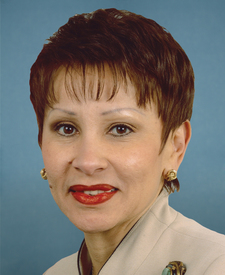
See how Nydia M. Velázquez's votes line up with your values.
DeepSyte scores Nydia M. Velázquez's record on the issues you care about — not party, not press releases. Take the 2-minute values quiz to see your personal alignment.
Sign in and take the values quiz to see how Nydia M. Velázquez's votes line up with your views.
Prediction track record
How often we called Nydia M. Velázquez's passage votes correctly, from their stated positions on each bill's tagged topics. Excludes “unclear” calls and abstentions.
A joint resolution to direct the removal of United States Armed Forces from hostilities within or against the Islamic Republic of Iran that have not been authorized by Congress.
A joint resolution to direct the removal of United States Armed Forces from hostilities within or against the Islamic Republic of Iran that have not been authorized by Congress.
No paired statements and votes yet for Nydia M. Velázquez
We haven't yet found statement/vote pairs on the same topic for Nydia M. Velázquez. This usually means either the rep hasn't taken public positions on bills that have come to a passage vote, or those bills haven't been tagged yet. The checker runs as new press releases and votes come in.
Pro analysis
AI rep analysis — Pro
Get an AI-narrated read on Nydia M. Velázquez's full voting record against your stated values — aligned themes, conflicts, notable votes, and what to watch for.
We haven't extracted campaign positions for Nydia M. Velázquez yet. Once their campaign website or position pages are processed, this card will track what they said vs how they voted.
Crossing the aisle
Passage votes where Nydia M. Velázquez broke ranks with ≥75% of Democrats. Threshold catches substantively partisan splits; unanimous-ish or close votes are excluded.
Velázquez, Grijalva Lead Resolution Recognizing World Contraception Day
Position: Introduces a House resolution recognizing World Contraception Day and calling on Congress and the administration to expand free or affordable contraception access, comprehensive insurance coverage, over-the-counter birth control, and efforts to address contraceptive deserts and reproductive health disparities.
WASHINGTON – Today, Reps. Nydia M. Velázquez (D-NY) and Adelita Grijalva (D-AZ) introduced a House resolution recognizing World Contraception Day and calling for expanded access to contraception and reproductive health care in the United States and around the world.
“Access to contraception is fundamental to giving people the freedom to make decisions about their own bodies, families, and futures,” said Rep. Velázquez. “Yet millions of people still face barriers to getting the care and information they need. On World Contraception Day, we are reaffirming that contraception is essential health care and that everyone deserves affordable, reliable access to it. I am proud to join Congresswoman Grijalva in continuing this fight for reproductive freedom at home and around the world.”
“Everyone deserves access to contraception and the freedom to make decisions about their own health and future,” said Rep. Grijalva. “Too many people still face barriers to the care they need, especially in communities that have been underserved for far too long. On World Contraception Day, we’re standing up for affordable, accessible reproductive health care for everyone.”
The resolution highlights persistent barriers to contraceptive access in the United States and globally. An estimated 218 million women in economically developing countries have an unmet need for modern contraception. In the United States, one-third of adult women who have attempted to obtain prescription contraception have reported barriers to access, while more than 19 million women of reproductive age who need publicly funded contraception live in areas without reasonable access to a health center offering the full range of contraceptive methods.
The resolution also recognizes longstanding racial, ethnic, and socioeconomic disparities in reproductive health care and the barriers faced by communities of color, Native people, immigrants, people with disabilities, LGBTQ+ individuals, and people living in areas with limited access to reproductive health providers.
Among other provisions, the resolution calls on Congress and the administration to expand access to free or affordable contraception, ensure access to medically accurate information and comprehensive insurance coverage, address contraceptive deserts and reproductive health disparities, and expand access and coverage for over-the-counter birth control and other forms of contraception.
The resolution further recognizes the broader benefits of contraceptive access, including allowing people to plan and space pregnancies and pursue their educational, career, and life goals.
###
Velázquez and Davidson Reintroduce Bill to Help Legal Cannabis Businesses Obtain Insurance
Position: Supports the CLAIM Act, which would shield insurers and related brokers and agents from federal criminal prosecution and civil liability when serving state-legal cannabis businesses, and directs a GAO study of barriers facing women and minority entrepreneurs in the cannabis industry.
WASHINGTON —Today, Rep. Nydia M. Velázquez (D-NY) and Rep. Warren Davidson (R-OH) reintroduced the Clarifying Law Around Insurance of Marijuana, or CLAIM Act, legislation that would shield insurers from federal criminal prosecution and protect brokers, agents, and insurers from civil liability when they serve businesses in the state-legal cannabis industry.
“Because of the conflict between federal and state law, insurers are still hesitant to write policies for cannabis businesses,” said Congresswoman Velázquez. “That means thousands of legal small businesses are operating without a safety net. One fire or one storm could wipe out everything an owner has built, with no way to recover. The CLAIM Act fixes this by giving these entrepreneurs access to the same basic insurance protections every other legal business takes for granted.”
“Businesses operating legally under state law should be free to purchase insurance, and insurers should be free to serve them,” said Rep. Davidson. “The federal government should not use regulation to interfere with lawful commerce or override decisions made by the states. The CLAIM Act removes that federal interference and protects the freedom of insurers and their customers to do business."
The CLAIM Act is endorsed by a broad coalition of insurance industry organizations, including the American Land Title Association, American Council of Life Insurers, American Property Casualty Insurance Association, Council of Insurance Agents & Brokers, Independent Insurance Agents & Brokers of America, National Association of Mutual Insurance Companies, National Association of Professional Insurance Agents, Reinsurance Association of America, and Wholesale & Specialty Insurance Association.
The legislation also directs the Government Accountability Office to study the barriers facing women and minority entrepreneurs seeking to enter the cannabis industry and identify ways to expand access to this growing market.
The text of the bill can be found here.
###
Issues:Economy
Velázquez Demands Answers as Culebra’s Health Center Is Days from Losing Its Operator
Position: Rep. Velázquez calls on the Puerto Rico Department of Health to explain its decision to change the operator of the Culebra Center for Diagnosis and Treatment, and argues that the change puts residents' access to basic health services at risk.
WASHINGTON — Today, Congresswoman Nydia M. Velázquez (D-NY) wrote to Puerto Rico Department of Health (PRDOH) Secretary Dr. Víctor M. Ramos Otero demanding answers about the Department’s abrupt decision to change the administration of the Culebra Center for Diagnosis and Treatment (CDT), the only facility providing hospital services to the island municipality’s residents. The Mennonite Health System has notified PRDOH that it will cease operating the CDT on August 31. Velázquez is requesting a response by that same day.
“For the people of Culebra, this marked the first time they were receiving this range of services, which any U.S. citizen would consider basic, in their own municipality without having to undertake a 17-mile round trip to Puerto Rico’s mainland,” Velázquez wrote. “Now, the Department’s refusal to reach an agreement with the Mennonite Health System is putting this accessibility at risk.”
Before 2019, medical care on Culebra was severely limited. The CDT’s roof was made of galvanized zinc, forcing medical staff to evacuate the building as Hurricane María approached and to treat patients outside the facility during and after the storm. Culebra had also gone without a pharmacy since 2010.
Following the hurricane, efforts led by the Foundation for a Better Puerto Rico funded the renovation of the facility, including a new concrete roof, and supported a significant expansion of services provided by the Mennonite Health System. A pharmacy and laboratory were created. Residents began receiving primary care, preventive medicine, physical examinations, laboratory services, early detection screenings, vaccinations, family planning, health certificates, and school physicals in their own municipality.
In her letter, Velázquez points to a series of public statements from Department officials that conflict with one another and with the documentary record, including claims that the Mennonite Health System chose not to continue, even though the organization submitted a proposal on August 18 to continue services through June 2031 and noted that no active contract has existed since December 31, 2024.
The letter also raises concerns about the timeline facing residents. The Department’s own Request for Proposals, issued August 24, keeps submissions open until September 23, a gap that could leave Culebra without a designated operator for months after the Mennonite Health System’s departure.
Velázquez is asking the Secretary to answer how the Department will honor the position taken by Culebra residents at an emergency assembly to keep the current operator, whether residents should expect any reduction or termination of current services, what compensation range the Department considers appropriate for an administrator serving a remote island municipality, whether the Department identified any contractual breaches by the current administrator, why it opened a competitive procurement rather than reaching an agreement, and what specific measures will guarantee uninterrupted care during the transition.
Read the full letter here.
###
Issues:Puerto Rico
Velázquez and Ocasio-Cortez Statement on Puerto Rico Water Crisis
Position: The statement attributes Puerto Rico's water crisis to federal neglect and mismanagement and calls for immediate release of about $30 billion in federal disaster grant assistance, FEMA advance disbursement of funds for water infrastructure repairs, and major public infrastructure investment.
WASHINGTON — Today, Congresswoman Nydia M. Velázquez (D-NY) and Congresswoman Alexandria Ocasio-Cortez (D-NY) released the following statement regarding the ongoing water crisis in Puerto Rico:
“During some of the hottest months on record, over 180,000 Puerto Rican households have been forced to live without running water for days at a time. Families cannot cook or clean, businesses cannot serve their customers, and the elderly and people with disabilities are struggling to get the water they need to live. The lack of clean water also raises the risk of dengue and other illnesses.
“The water crisis in Puerto Rico is not the result of one drought or one infrastructure failure; it is the result of federal neglect and mismanagement. We have known about the worsening condition of Puerto Rico’s water infrastructure for decades, and some communities have lived with water shortages for years. But the worsening climate crisis has brought this situation to a head, as rising temperatures and droughts have pushed a collapsing system to the brink.
“Governor González has claimed that ‘this situation is out of our hands.’ We reject this characterization. Both the state and federal governments have funds available to address this crisis. As Puerto Ricans continue to ration water, almost $30 billion in federal disaster grant assistance sits in limbo waiting to be disbursed. The Governor and the federal government must ensure that these funds are unlocked and distributed immediately.
“FEMA has also continued the cruel policy of forcing Puerto Rico to pay for infrastructure repairs in advance and seek reimbursement later. In the midst of a crisis, FEMA must reverse course and expedite the advanced disbursement of funds to fortify the island’s water system.
“Access to clean water is a fundamental human right. Right now, the Governor and the federal government must do everything in their power to affirm that right, restore water access, and make the robust investments necessary to update Puerto Rico’s public infrastructure.”
Issues:Puerto Rico
Velázquez and Johnson Reintroduce Resolution Recognizing World Hepatitis Day as Administration Rolls Back Vaccine Protections
Position: The release announces a resolution recognizing July 28, 2026 as World Hepatitis Day and states opposition to the Administration's rollback of the universal hepatitis B birth-dose vaccine recommendation, calling for the policy to be reversed.
WASHINGTON — Rep. Nydia M. Velázquez (D-NY) and Rep. Hank Johnson (D-GA), co-chairs of the Congressional Hepatitis Caucus, reintroduced a resolution recognizing July 28, 2026 as World Hepatitis Day, raising awareness about the issues surrounding hepatitis B and C and reaffirming Congress's commitment to ending these preventable diseases.
Each year, thousands of Americans die of viral hepatitis, and another 75,000 are infected. Worldwide, an estimated 520 million people are chronically infected with hepatitis B and C, and an estimated 1.3 million die annually. Hepatitis B and hepatitis C, and the liver disease they cause, remain urgent global health threats, disproportionately impacting communities of color, LGBTQ individuals, and people who inject drugs.
“Far too many Americans have died because of hepatitis, a viral disease that disproportionately affects communities of color and the LGBTQ community,” said Congresswoman Velázquez. “I'm proud to reintroduce this resolution recognizing hepatitis as a public health priority. With increased public education, improved testing, and access to treatment, we can turn the tide on this epidemic. But this Administration has chosen to walk away from decades of proven vaccine policy, putting newborns at risk of a preventable disease. We cannot let that stand.”
“How we respond to preventable diseases says a great deal about our values,” said Rep. Johnson. “Every family deserves access to accurate information, lifesaving treatments, and quality healthcare. As we recognize World Hepatitis Day, we must continue investing in the public health tools that save lives and protect future generations.”
The reintroduction comes amid an unprecedented rollback of federal hepatitis prevention policy. After firing all 17 members of the CDC's Advisory Committee on Immunization Practices (ACIP), Secretary Robert F. Kennedy Jr.'s reconstituted committee voted in December to end the longstanding recommendation that all newborns receive a hepatitis B vaccine dose at birth, a policy in place since 1991 that drove a dramatic reduction in pediatric hepatitis B infections. The CDC adopted the change over the objections of the American Academy of Pediatrics, the American Medical Association, and public health experts nationwide.
The Administration has also suspended U.S. support for global health institutions including USAID, the World Health Organization, and Gavi, the Vaccine Alliance, jeopardizing hepatitis prevention programs abroad.
The resolution is endorsed by: African Health Coalition Incorporation, American Association for the Study of Liver Diseases, Association of Asian Pacific Community Health Organizations (AAPCHO), Coalition Against Hepatitis for People of African Origin (CHIPO), Community HealthCare Network, Community Liver Alliance, Congolese United Foundation, ekiM For Change, Empire Liver Foundation, End Hep C SF, Hawaiʻi Health & Harm Reduction Center, Health Betterment Initiative, Hep Free Hawaiʻi, Hep B United, Hepatitis B Foundation, Hepatitis C Allies of Philadelphia (HepCAP), HIV+Hepatitis Policy Institute, Housing Works - Positive Health Project, Illinois Public Health Association, Indiana Recovery Alliance, Liver Coalition of San Diego, Montefiore Starfish Program, NASTAD, National Harm Reduction Coalition, National Survivors Union, National Viral Hepatitis Roundtable (NVHR), North East Medical Services, SF HepB Free, The AIDS Institute, The Hepatitis C Mentor and Support Group, Inc. (HCMSG), Thomas Boyer Liver Research Institute, and VOCAL-NY.
“Amid federal public health funding declines and falling rates of the lifesaving hepatitis B vaccine, it is critical that we reaffirm our commitment to eliminating viral hepatitis,” said Chari Cohen, DrPH, MPH, President of the Hepatitis B Foundation. “We cannot allow the millions of people living with hepatitis B and hepatitis C in the U.S. and around the world to be left behind. Viral hepatitis elimination is possible, but requires sustained federal investment and strong congressional support to ensure that essential prevention, testing, care, and treatment services are accessible to all who need them.”
“We have taken a step back in our efforts to eliminate hepatitis over the past year and yet we have the tools to save lives. We must re-commit to the science-back strategies that we know prevents hepatitis B and C while increasing access to treatment,” said Heather Lusk, Co-Director of Hep Free Hawaiʻi and Executive Director of the Hawaiʻi Health & Harm Reduction Center.
“The Illinois Public Health Association (IPHA) is committed to recognizing World Hepatitis Day and the urgent need to expand testing, vaccination, accessible treatments, and global elimination of this deadly disease by 2030. Viral hepatitis claims more than 1.3 million lives annually and disproportionately impacts vulnerable populations across the globe and here in the United States. IPHA strongly supports World Hepatitis Day and our public health champions worldwide who work to increase vaccination, screening, and treatment for our impacted communities day in and day out!” said Jeffery Erdman, Deputy Executive Director of the Illinois Public Health Association.
A PDF of the resolution can be found here.
###
Issues:Healthcare
Velázquez-Backed Cooperative Housing and Public Housing Oversight Provisions Headed to President's Desk in Landmark Housing Bill
Position: The release describes provisions in the ROAD to Housing Act that authorize housing cooperatives as eligible participants in federal housing programs and require monitors and receivers of federally monitored public housing authorities to deliver annual reports and testimony to Congress. The release states support for these provisions as increasing affordability and congressional oversight.
WASHINGTON — Today, the House of Representatives voted on final passage of the 21st Century ROAD to Housing Act, sending the most significant federal housing legislation in a generation to the President's desk. The final bill includes provisions authored by Congresswoman Nydia M. Velázquez (D-NY) to expand access to affordable housing through cooperative ownership models and tighten congressional oversight of public housing authorities operating under federal monitorship.
Velázquez’s provision explicitly authorizes housing cooperatives as eligible participants in federal housing programs, fixing vague statutory language that had left co-ops at risk of being excluded from programs they qualify for.
“Cooperative housing remains one of the best tools we have to increase affordability and ensure working families can stay in their neighborhoods," said Velázquez. "In a city like New York, where rising costs are pushing families out, resident-owned cooperatives offer stability and a buffer against rent hikes. This bill will ensure cooperatives play a prominent role in our national affordable housing strategy.”
Cooperative housing supports more than 1.5 million families across the country and is a cornerstone of affordable homeownership in New York City.
Velázquez also secured oversight and transparency requirements aimed at public housing authorities operating under a federal monitor or receiver. The provision was developed in response to persistent maintenance failures at the New York City Housing Authority (NYCHA) and the court-appointed federal monitor's limited engagement with New York's congressional delegation. Under the new requirements, monitors and receivers must deliver annual reports and testimony to Congress. Velázquez's language will strengthen congressional oversight and help the federal government direct resources where they are needed most.
“For years, NYCHA residents have lived with conditions no family should have to tolerate, while the court-ordered federal monitor operated with little input from the representatives who serve those communities," said Velázquez. "This law changes that. Requiring monitors and receivers to report and testify before Congress means we can better equip NYCHA and struggling housing authorities nationwide to make repairs and improve residents' lives.”
###
Issues:Housing
Velázquez, Tonko Introduce Resolution Recognizing ARFID as a Serious Eating Disorder
Position: Introduces a resolution recognizing ARFID as a serious eating disorder and calling for improved early identification, expanded research, and greater access to multidisciplinary care, including strengthened screening and clinical training.
WASHINGTON — Today, Rep. Nydia M. Velázquez (D-NY) and Rep. Paul Tonko (D-NY) introduced a resolution recognizing Avoidant/Restrictive Food Intake Disorder (ARFID) as a serious feeding and eating disorder and calling for urgent action to advance awareness, early identification, research, and equitable access to care.
“Far too many children and families are struggling with ARFID without a diagnosis, without answers, and without access to the specialized care they need,” said Congresswoman Velázquez. "This is a serious, clinically recognized eating disorder, yet it remains widely misunderstood, even among health care providers. Our resolution commits Congress to advancing the research, screening, and treatment infrastructure needed so that no family has to navigate AFRID alone.”
“ARFID is a serious, misunderstood eating disorder that affects people from all walks of life and can have lasting effects on both physical and mental health,” Congressman Tonko said. “Despite the known, grave impacts of this disorder, many Americans across the country remain undiagnosed and face significant barriers in accessing appropriate screening and treatment services. I’m proud to join Representative Velázquez to bring attention to this issue and call on Congress to recognize the need to improve diagnosis and expand access to life-saving multidisciplinary care.”
ARFID is clinically recognized in the DSM-5 as an eating disorder characterized by a persistent failure to meet nutritional or energy needs. Unlike other eating disorders, ARFID is not driven by body image concerns. Instead, it may stem from heightened sensory sensitivities, a lack of interest in eating, or fear of consequences such as choking or vomiting. The disorder typically emerges in early childhood and, without timely intervention, can lead to serious nutritional deficiencies, impaired growth and development, and dependence on feeding tubes.
Converging scientific evidence demonstrates that ARFID has a strong biological and genetic basis. The Child and Adolescent Twin Study in Sweden found the disorder's heritability to be as high as approximately 79 percent. ARFID is also closely associated with neurodevelopmental conditions: children with ARFID are 14 times more likely to have autism, and 11 percent of autistic children meet the criteria for ARFID.
Despite the seriousness of the disorder, lack of awareness among health care providers, educators, and the public contributes to delayed diagnosis, mischaracterization of symptoms, and barriers to evidence-based treatment.
The resolution recognizes ARFID as a serious eating disorder and calls for improved early recognition, expanded research into its biological and neurodevelopmental roots, and greater access to multidisciplinary care. It urges federal, state, and local governments to strengthen screening, clinical training, and referral pathways in pediatric and primary care; calls on schools to provide appropriate accommodations for affected students; and supports expanding community-based services such as feeding therapy, nutrition services, and behavioral health care.
The resolution is endorsed by the National Alliance for Eating Disorders and the Eating Disorders Coalition for Research, Policy & Action.
“The National Alliance for Eating Disorders applauds Congresswoman Velázquez for this resolution. ARFID is a serious, clinically recognized eating disorder that affects individuals of all ages and backgrounds — and so often, it goes unrecognized, misunderstood, and undertreated. ARFID deserves the awareness, research, and equitable access to care that every person struggling deserves. We are deeply grateful to the Congresswoman for her leadership and her commitment to helping ensure that no one has to navigate this disorder alone. Together, we can help build a future where individuals affected by ARFID are seen, supported, and given a real pathway to healing.” — Johanna Kandel, Founder & CEO, National Alliance for Eating Disorders
“We thank Congresswoman Velazquez on her leadership to raise awareness for AFRID, which is a type of eating disorder that is frequently misunderstood and often undiagnosed,” said Allison Ivie, MPP, Government Relations Representative for the Eating Disorders Coalition for Research, Policy & Action. “This resolution will continue to support efforts to educate the public about all eating disorders and ensure this mental illness remains a public health priority.”
For a copy of the resolution, click here.
###
Velázquez, Ocasio-Cortez Oppose Status Bill That Would Enshrine Puerto Rico's Colonial Condition
Position: Representatives Velázquez and Ocasio-Cortez oppose a Puerto Rico status bill introduced by Resident Commissioner Hernández Rivera because it includes an option to maintain the island's current territorial status, which they describe as colonial. They call instead for non-territorial, non-colonial options for decolonization.
WASHINGTON — Today, Rep. Nydia M. Velázquez (D-NY) and Rep. Alexandria Ocasio-Cortez (D-NY), longtime leaders of congressional efforts to decolonize Puerto Rico, issued the following joint statement opposing the status legislation introduced today by Resident Commissioner Pablo José Hernández Rivera:
“During the last three Congresses, we have led serious, legislative efforts to forge a path towards real self-determination for Puerto Ricans, underscoring that non-territorial, non-colonial options are the only options viable for true decolonization. Throughout the process of crafting legislation, we engaged in a series of meetings, hearings, and dialogues with Puerto Rican experts, academics, and stakeholders, the Diaspora, and Congress.
“Today, the Resident Commissioner of Puerto Rico co-opted our legislation and introduced a bill that includes an option to maintain the current status of the island as a colony. Over the last three congresses, more and more members have come to acknowledge that the current colonial condition of Puerto Rico is a moral stain on our nation’s history that must be addressed. Our country cannot claim to be a bastion of democracy as we continue to hold colonies in the Caribbean and the Pacific.
“The Resident Commissioner's bill denies the colonial character of the Commonwealth, erases historical realities, subverts Democratic consensus, and ignores Supreme Court decisions like United States v. Vaello-Madero, which reaffirmed that Puerto Rico remains subject to Congress's plenary powers. We stand together in opposing this legislation and will continue to fight for a serious decolonization process for Puerto Ricans. This is too vital an issue to be sullied by individual political aspirations.”
###
Issues:Puerto Rico
Velázquez Backs NY Legislation to Stop Vulture Funds from Preying on Puerto Rico and Other Struggling Economies
Position: Supports New York State legislation to restore the doctrine of champerty, which would make it illegal to buy debt solely to sue for collection, in order to curb hedge funds profiting from distressed economies such as Puerto Rico's.
WASHINGTON —Congresswoman Nydia M. Velázquez (D-NY) today voiced her support for New York State legislation that would close a loophole exploited by predatory hedge funds to profit from nations and territories in financial distress. The bill, sponsored by Assemblymember Jessica González-Rojas and State Senator Liz Krueger, would restore the legal doctrine of champerty, making it illegal to buy debt for the sole purpose of suing to collect on it. She released the following statement:
“For Puerto Ricans, this issue is not theoretical. New York's legal system has been used by hedge funds seeking outsized profits from Puerto Rico's debt crisis for years.
“To this day, the island has not finalized its bankruptcy; the Puerto Rico Electric Power Authority's restructuring remains stalled after 12 years of costly litigation. In total, Puerto Ricans have paid a staggering $2 billion for Title III proceedings under PROMESA.
“New York must act now to prevent Puerto Rican families from continuing to endure painful austerity, economic instability, and unreliable electric service just so vulture funds can maximize profits. As home to one of the largest Puerto Rican populations in the nation, New York has a unique responsibility to ensure its laws are not being used to profit from the suffering of Puerto Rican communities.
“Passing the Champerty Fix Bill would send a clear message that New York stands with working families and diaspora communities, not predatory actors exploiting financial distress for private gain.”
###
Velázquez, Meeks Introduce War Powers Resolution to Stop Unauthorized U.S. Military Action in Cuba
Position: Introduces a War Powers Resolution to terminate U.S. military action against Cuba, which the sponsors describe as unauthorized, and criticizes the administration's oil blockade and sanctions policy toward Cuba.
WASHINGTON —Congresswoman Nydia M. Velázquez (D-NY) and Congressman Gregory W. Meeks (D-NY), Ranking Member of the House Foreign Affairs Committee, introduced a War Powers Resolution to terminate unauthorized U.S. military action against Cuba.
The resolution follows months of escalation by the Trump administration, including an oil blockade, repeated threats by the President to "take" Cuba, and last week's indictment of former Cuban President Raúl Castro as a potential to justify illegal U.S. military action in Cuba.
“Donald Trump's belligerent foreign policy is creating new wars and conflicts across the world. As our country is already embroiled in a new war with Iran, the President has now set his sights on regime change in Cuba,” said Congresswoman Velázquez. “This administration is rushing toward another disastrous war, putting countless American and foreign lives at risk. Congress must reassert its constitutional authority if the President continues down this illegal path.”
“The Trump administration and Republicans in Congress are hellbent on starting another war, this time with Cuba, to distract from the President’s failure in Iran, weak economy, and mass deportation of 500,000 Cubans legally in the United States,” said Ranking Member Meeks. “If Donald Trump and Marco Rubio are serious about a new relationship with the Cuban people, they would reverse 65 years of failed U.S. policy toward Cuba, end the oil blockade and the humanitarian crisis it caused, and work with Congress to modify the draconian and outdated U.S. sanctions that disproportionately harm the Cuban people.”
The resolution is cosponsored by Congressman Jim McGovern (D-MA) and Congressman Joaquin Castro (D-TX).
Full text of the resolution is available here.
###
Articles from a curated list of national outlets that mention Nydia M. Velázquez.
No recent news mentions yet.
Source: GDELT 2.0 GKG, filtered to a curated list of national outlets. Inclusion is not endorsement; opinion pieces and reported news are mixed.
Recent stock activity
Periodic transaction reports filed under the STOCK Act — disclosed by the rep, sourced from public filings.
No disclosed trades on record.
Source: open-data mirrors of the Senate eFD and House Clerk financial-disclosure systems. Disclosure within 30 days of trade is required by law (45 for spouse/dependent trades).
Top PAC donors · 2026 cycle
Political action committees that gave the most to this rep's principal campaign committee this cycle. PAC giving is direct organizational support — industry, ideological, or leadership.
1.SMALL BUSINESS INVESTOR ALLIANCE PACBusiness2 contributionsSmall-business advocacy PAC — supports candidates backing tax incentives, regulatory relief, and access to capital for small enterprises.AI$6,000
2.NATIONAL ASSOCIATION OF DEVELOPMENT COMPANIES 504PAC1 contribution$5,000
3.AMERICAN FEDERATION OF TEACHERS, AFL-CIO COMMITTEE ON POLITICAL EDUCATIONLabor1 contributionTrade-union PAC for teachers — backs candidates supporting public education funding, collective bargaining rights, and worker protections.AI$5,000
4.MACHINISTS NON PARTISAN POLITICAL LEAGUE OF THE INTERNATIONAL ASSOCIATION OF MACHINISTS &Labor1 contributionTrade-union PAC for the International Association of Machinists & Aerospace Workers — backs candidates supporting union organizing, prevailing wages, and aerospace manufacturing jobs.AI$5,000
5.AMERICAN INSTITUTE OF CERTIFIED PUBLIC ACCOUNTANTS POLITICAL ACTION COMMITTEE2 contributions$5,000
6.MORTGAGE BANKERS ASSOCIATION POLITICAL ACTION COMMITTEE (MORPAC)1 contribution$3,500
7.GOVEVOLVE PAC1 contribution$3,500
8.WALMART INC. PAC FOR RESPONSIBLE GOVERNMENT2 contributions$3,500
9.INDEPENDENT COMMUNITY BANKERS OF AMERICA POLITICAL ACTION COMMITTEE (ICBA PAC)1 contribution$3,000
10.AMERICA'S CREDIT UNIONS PAC OF CREDIT UNION NATIONAL ASSOCIATION, INC.Finance1 contributionCredit union industry PAC — backs candidates and policies supporting credit union operations, member protections, and regulatory positions favoring cooperative financial institutions.AI$2,500
Source: OpenFEC (api.open.fec.gov) Schedule A receipts where contributor type is “committee.” Aggregated by contributing committee. Self-transfers from joint-fundraising / victory committees are excluded.
Top individual contributors · 2026 cycle
Itemized individual contributions over $200 to this rep's campaign committee, aggregated by donor employer. PAC giving is shown above; this section is people, not organizations.
1.SELF$4,917
2.SIEDMAN & ASSOC PC$4,500
3.HARVARD KENNEDY SCHOOL$4,300
4.5000 BROADWAY PRODUCTIONS$3,500
5.TUSK STRATEGIES$3,500
6.AMG WATERPROOFING$3,500
7.CAI MANAGERS$3,500
8.THE ELEEMOSYNARY GROUP$3,500
9.INKIT$3,500
10.HOSPITAL CARIBBEAN MEDICAL CENTER$1,700
Source: OpenFEC Schedule A receipts where contributor type is “individual,” aggregated by the donor's self-reported employer. This is a geographic / industry correlation, not a corporate endorsement.