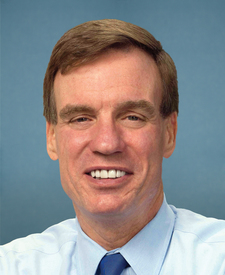
See how Mark R. Warner actually votes — against your values.
DeepSyte scores Mark R. Warner's record on the issues you care about — not party, not press releases. Take the 2-minute values quiz to see your personal alignment.
Sign in and take the values quiz to see how Mark R. Warner's votes line up with your views.
Prediction track record
How often we called Mark R. Warner's passage votes correctly, from their stated positions on each bill's tagged topics. Excludes “unclear” calls and abstentions.
100%
Accuracy
1
Correct
0
Incorrect
74
Pending
Right119-sjres-184
A joint resolution to direct the removal of United States Armed Forces from hostilities within or against the Islamic Republic of Iran that have not been authorized by Congress.
A joint resolution to direct the removal of United States Armed Forces from hostilities within or against the Islamic Republic of Iran that have not been authorized by Congress.
No paired statements and votes yet for Mark R. Warner
We haven't yet found statement/vote pairs on the same topic for Mark R. Warner. This usually means either the rep hasn't taken public positions on bills that have come to a passage vote, or those bills haven't been tagged yet. The checker runs as new press releases and votes come in.
Pro analysis
AI rep analysis — Pro
Get an AI-narrated read on Mark R. Warner's full voting record against your stated values — aligned themes, conflicts, notable votes, and what to watch for.
Positions Mark R. Warner took during their campaign, scored against their subsequent record — public statements cross-checked with related votes. “Kept” means 80%+ of those statement-vs-vote pairs aligned; “Broken” means 30% or fewer.
0 kept0 broken0 mixed3 no action yet
Mark R. Warner has 3 tracked positions but no scored statement-vs-vote pairs touching them yet. Verdicts will appear here as related statements and votes accumulate.
No action yetSupports
Medicare should be allowed to negotiate lower prescription drug prices.
Passage votes where Mark R. Warner broke ranks with ≥75% of Democrats. Threshold catches substantively partisan splits; unanimous-ish or close votes are excluded.
Warner, Kaine, Senate Dems Demand USPS Abandon Proposed Rule to Carry Out President Trump's Illegal Executive Order Restricting Vote by Mail
Position: Senate Democrats oppose a proposed USPS rule implementing an executive order to restrict vote-by-mail access by creating a federal absentee voter list that would give USPS authority to refuse ballot delivery, arguing the rule is unconstitutional and would disenfranchise millions of voters.
WASHINGTON – U.S. Sens. Mark R. Warner and Tim Kaine (both D-VA) along with the entire Senate Democratic Caucus demanded the United States Postal Service (USPS) abandon its proposed rule to implement President Trump’s unconstitutional executive order to restrict voting by mail. Sens. Warner and Kaine previously joined a group of colleagues in urging USPS not to carry out the executive order, which would force states to submit absentee voters’ information to the Postal Service for the creation of a federal mail-in voter list. Under the order, USPS could then refuse to deliver ballots to voters who are not included on that list, giving the agency an unprecedented and illegal role in the administration of American elections. USPS did not respond to that letter and has now issued a proposed rule that would ultimately allow the Postal Service to determine whether millions of Americans can receive and cast ballots through the mail.
“We write for a second time regarding the unconstitutional and illegal attempt to transform the United States Postal Service into an election administration agency controlled by the White House and President Trump,” wrote the senators. “In April, 37 senators wrote to you after President Trump issued his Executive Order directing USPS to issue a rule to establish compulsory specifications for election mail and create a master absentee voter list of millions of American voters – with the power to refuse to deliver their ballots.”
The senators continued, “Despite these grave and serious legal deficiencies, on June 2, 2026, USPS published a proposed rule that, if finalized, would establish President Trump’s control over federal elections and allow USPS to adjudicate who can and cannot vote by mail. This proposed rule risks disenfranchising millions of voters. We again insist that you follow the law, refuse to implement President Trump’s Executive Order, and withdraw this presidentially-directed proposed rule.”
The senators warned that the proposed rule would create a federally controlled national list of absentee voters, raising serious concerns about potential misuse and abuse. In court filings, the administration has acknowledged that the Department of Homeland Security (DHS) is already in discussions with USPS about potentially comparing the list to DHS datasets. The senators raised concerns that combining USPS data with unreliable federal records could lead to eligible voters being disenfranchised, or voters and election officials being unfairly targeted for investigation.
“Ultimately, the proposed rule seeks to create a centralized national absentee voter database with individualized barcodes connected to the voters’ names under the control of the President that contains the voting information of millions of Americans,” wrote the senators. “That information would be ripe for potential abuse or improper disclosure potentially imperiling the integrity of American elections.”
“Accordingly, we insist that the Postal Service abandon this proposed regulation and return to its core mission of providing universal postal services to every American. The Constitution and federal law demand nothing less,” the senators concluded.
In addition to Sens. Warner and Kaine, this letter was sent by U.S. Sens. Gary Peters (D-MI), Alex Padilla (D-CA), Chuck Schumer (D-NY), Angela Alsobrooks (D-MD), Tammy Baldwin (D-WI), Michael Bennet (D-CO), Richard Blumenthal (D-CT), Lisa Blunt Rochester (D-DE), Cory Booker (D-NJ), Maria Cantwell (D-WA), Chris Coons (D-DE), Catherine Cortez Masto (D-NV), Tammy Duckworth (D-IL), Dick Durbin (D-IL), John Fetterman (D-PA), Ruben Gallego (D-AZ), Kirsten Gillibrand (D-NY), Maggie Hassan (D-NH), Martin Heinrich (D-NM), John Hickenlooper (D-CO), Mazie Hirono (D-HI), Mark Kelly (D-AZ), Andy Kim (D-NJ), Angus King (I-ME), Amy Klobuchar (D-MN), Ben Ray Luján (D-NM), Ed Markey (D-MA), Jeff Merkley (D-OR), Chris Murphy (D-CT), Patty Murray (D-WA), Jon Ossoff (D-GA), Jack Reed (D-RI), Jacky Rosen (D-NV), Bernie Sanders (I-VT), Brian Schatz (D-HI), Adam Schiff (D-CA), Jeanne Shaheen (D-NH), Elissa Slotkin (D-MI), Tina Smith (D-MN), Chris Van Hollen (D-MD), Raphael Warnock (D-GA), Elizabeth Warren (D-MA), Peter Welch (D-VT), Sheldon Whitehouse (D-RI), and Ron Wyden (D-OR).
Read the full letter to the U.S. Postal Service here.
Warner Introduces Bill to Prevent Unqualified Appointees from Overriding Senate-Confirmed Intelligence Leadership
Position: Senator Warner opposes the appointment of Bill Pulte as Acting Director of National Intelligence and advocates for legislation requiring that the DNI position be filled only by Senate-confirmed officials with intelligence or national security experience.
WASHINGTON – U.S. Sen. Mark R. Warner (D-VA), Vice Chairman of the Senate Select Committee on Intelligence, today introduced the Do Not Interfere in our Intelligence Act of 2026 (DNII Act of 2026), legislation that would strengthen the existing line of succession if the position of Director of National Intelligence (DNI) were vacated and ensure that leadership of the intelligence community remains in the hands of experienced, Senate-confirmed national security officials.
“Bill Pulte may be exactly who President Trump wants running the intelligence community, but that does not make him qualified for the job. After pulling his own selected nominee from the confirmation process, the president chose to install a political ally with no intelligence background, no national security credentials, and a record of using government power to pursue political grievances as the country’s Director of National Intelligence. The intelligence community should be led by experienced, Senate-confirmed professionals – not by whoever happens to be most willing to carry out the president’s whims and vendettas,” said Sen. Warner. “And if there is an intelligence failure, a missed threat, or a national security crisis on Bill Pulte’s watch, Americans will pay the price, and President Trump will be to blame. He made the deliberate choice to pass over qualified national security professionals and put an unqualified loyalist in charge.”
Pulte currently serves as Director of the Federal Housing Finance Agency and has no professional intelligence or national security background. His appointment as Acting DNI bypassed multiple Senate-confirmed officials across the intelligence community with extensive experience overseeing intelligence operations, counterterrorism, counterintelligence, and national security matters, while the confirmation process for President Trump’s own DNI nominee, Jay Clayton, has been put on indefinite hold following the president’s decision to withdraw Clayton from a scheduled confirmation hearing.
The Do Not Interfere in our Intelligence Act of 2026 clarifies and adds to the existing line of succession for the Director of National Intelligence. Under existing statute, in the event the DNI position becomes vacant, the Principal Deputy Director of National Intelligence (PDDNI) is supposed to become Acting DNI. The DNII Act strengthens this line of succession to make clear who is qualified to serve as Acting DNI by requiring the president to choose someone who was appointed and confirmed by the Senate and serves in an office within the Office of the Director of National Intelligence. If no Senate-confirmed official remains within ODNI, the president would be required to select a Senate-confirmed official from elsewhere in the intelligence community.
Under the DNII Act, an individual without intelligence or national security experience, such as Bill Pulte, would not be eligible to bypass Senate-confirmed intelligence leaders and assume control of the intelligence community.
Warner, Himes Warn Acting DNI Pulte Against Illegal or Reckless Actions
Position: The lawmakers warn the Acting DNI against declassifying intelligence for partisan purposes, making large workforce reductions without consultation, and failing to preserve federal records, citing concerns about misuse of position and national security risks.
WASHINGTON – U.S. Sen. Mark R. Warner (D-VA), Vice Chairman of the Senate Select Committee on Intelligence, and U.S. Rep. Jim Himes (D-CT), Ranking Member of the House Permanent Select Committee on Intelligence, wrote to Acting Director of National Intelligence Bill Pulte regarding his intentions for his tenure, the protection of the ODNI workforce and safeguarding of classified materials, and his legal obligation to preserve all records of the actions he takes in an acting capacity.
The lawmakers wrote, “We are concerned that your record as Director of the Federal Housing Finance Agency demonstrates a willingness to misuse your position, including your access to sensitive information, to pursue President Trump’s perceived political enemies and further his retributive political agenda. Given the extremely sensitive nature of intelligence, we expect that you will not declassify properly classified information that would compromise intelligence sources and methods, or weaponize the declassification process for partisan political purposes, and that any declassification effort you undertake will follow all established policies and practices, including by obtaining substantive input from career intelligence officials regarding the national security risks posed by declassification.
“Additionally, we are concerned by reports that you intend to fire or place on leave hundreds of Office of the Director of National Intelligence (ODNI) officers as soon as this week. While there is room to consider responsible reductions to ODNI’s workforce, any large cuts would follow on a substantial downsizing that has already occurred in 2025 and risk jeopardizing the mission of an organization explicitly created after 9/11 to prevent any future such terrorist attack. Given your lack of experience within the Intelligence Community, it is difficult to imagine that in such a short amount of time you have already developed fully-informed views as to how to shrink ODNI without incurring risks to national security. Making significant structural changes to ODNI, to include a reduction in force, is not an appropriate course of action for anyone in an acting capacity, let alone without consultation with Congress, and you should refrain from doing so.
“Finally, we write to remind you of your obligation to preserve all records and materials related to actions you take while serving as the Acting Director of National Intelligence, including, but not limited to, any actions regarding declassification, publication, or release of classified materials, as well as any personnel actions. Preserving federal records and safeguarding information critical to congressional oversight is a legal obligation that you and all employees of the ODNI are required to meet. This includes electronic messages sent using both official and personal accounts or devices and records created using text messages, phone-based message applications, or encryption software.”
Read the full letter here and below.
We write to express our expectation that you will not take actions while temporarily serving as the Acting Director of National Intelligence that are more appropriately left to a Senate-confirmed Director and to remind you of your legal obligation to preserve all records of the actions you do take while temporarily serving in an acting capacity.
We are concerned that your record as Director of the Federal Housing Finance Agency demonstrates a willingness to misuse your position, including your access to sensitive information, to pursue President Trump’s perceived political enemies and further his retributive political agenda. Given the extremely sensitive nature of intelligence, we expect that you will not declassify properly classified information that would compromise intelligence sources and methods, or weaponize the declassification process for partisan political purposes, and that any declassification effort you undertake will follow all established policies and practices, including by obtaining substantive input from career intelligence officials regarding the national security risks posed by declassification.
Additionally, we are concerned by reports that you intend to fire or place on leave hundreds of Office of the Director of National Intelligence (ODNI) officers as soon as this week. While there is room to consider responsible reductions to ODNI’s workforce, any large cuts would follow on a substantial downsizing that has already occurred in 2025 and risk jeopardizing the mission of an organization explicitly created after 9/11 to prevent any future such terrorist attack. Given your lack of experience within the Intelligence Community, it is difficult to imagine that in such a short amount of time you have already developed fully-informed views as to how to shrink ODNI without incurring risks to national security. Making significant structural changes to ODNI, to include a reduction in force, is not an appropriate course of action for anyone in an acting capacity, let alone without consultation with Congress, and you should refrain from doing so.
Finally, we write to remind you of your obligation to preserve all records and materials related to actions you take while serving as the Acting Director of National Intelligence, including, but not limited to, any actions regarding declassification, publication, or release of classified materials, as well as any personnel actions. Preserving federal records and safeguarding information critical to congressional oversight is a legal obligation that you and all employees of the ODNI are required to meet. This includes electronic messages sent using both official and personal accounts or devices and records created using text messages, phone-based message applications, or encryption software.
We request that you provide prompt acknowledgement of this letter and of your full and immediate compliance with your legal obligations.
Warner Applauds Senate Passage of Bipartisan Landmark Housing Legislation
Position: Senator Warner supports the bipartisan ROAD to Housing Act, which aims to increase housing supply, reduce housing costs, preserve affordable housing in rural areas, reduce homelessness, and address corporate ownership of residential properties.
WASHINGTON – U.S. Sen. Mark R. Warner (D-VA), a member of the Committee on Banking, Housing and Urban Affairs, applauds today’s Senate passage of the bipartisan ROAD to Housing Act, the most comprehensive legislative housing package in decades. This landmark legislation will build more homes, bring down home purchasing and renting costs, preserve affordable housing in rural areas, help reduce homelessness, and address the rising share of housing owned by large corporate investors. The bill now heads to the House of Representatives.
“The housing affordability crisis is real and prevalent throughout the country,” said Sen. Warner. “This landmark legislation will boost the housing supply, bring down costs, and protect renters, veterans, and rural Virginians. I encourage my colleagues in the House to quickly pass this bipartisan housing package and deliver some real relief to Americans across the country.”
The legislation includes more than 40 bipartisan housing provisions, several authored and championed by Sen. Warner, including:
Sen. Warner has long prioritized expanding access to affordable housing and homeownership. He has introduced and supported a range of bipartisan bills to spur new housing construction and redevelopment, including the Neighborhood Homes Investment Act, Preserving Rural Housing Investments Act, Affordable Housing Credit Improvement Act, New Markets Tax Credit Extension Act, the Rural Historic Tax Credit Improvement Act, and the Historic Tax Credit Growth and Opportunity Act. He is also the lead author of the Low-Income First Time Homebuyers (LIFT) Act, which would help qualified first-generation homebuyers build equity in their homes by offering a 20-year mortgage with monthly payments comparable to a traditional 30-year loan, and the Yes in God’s Backyard (YIGBY) Act, which would help faith-based organizations and institutions of higher education unlock the promise of their existing land holdings by transforming underused property into much-needed affordable housing. Additionally, Sen. Warner is a cosponsor of the Downpayment Toward Equity Act, which would provide federal grants to help first-generation homebuyers cover down payments, closing costs, and other upfront expenses.
Senate Intel Vice Chair Warner Statement on FISA & Clayton Process
Position: Senator Warner opposes the President's approach to FISA reauthorization and personnel decisions, arguing that national security decisions should not be subject to political demands or social media directives, and that White House dysfunction is obstructing a bipartisan process.
WASHINGTON – Today, U.S. Sen. Mark Warner (D-VA), Vice Chairman of the Senate Select Committee on Intelligence, issued the following statement:
“What we're witnessing is an extraordinary display of dysfunction from a president who seems determined to turn America's national security into a political bargaining chip. Over the past two weeks, President Trump has careened from one personnel decision and political demand to the next – first installing Bill Pulte, then nominating Jay Clayton, then demanding unrelated legislation be attached to FISA reauthorization, and now threatening to derail both the confirmation process and a bipartisan reauthorization effort. At every turn, the president has injected more uncertainty into a process that should be focused on one thing: keeping the American people safe.
“National security cannot be governed by social media post. The president's latest intervention only underscores a simple reality: the biggest obstacle to resolving these issues has not been Senate Democrats or Senate Republicans. It has been the chaos and confusion coming from the White House itself.”
Warner Raises Alarm on CISA Workforce and Budget Cuts That Are Leaving Our Country Vulnerable to Threats
Position: Senator Warner opposes the Trump administration's reduction of CISA workforce and budget cuts, arguing that these actions weaken the federal government's cybersecurity capabilities and critical infrastructure defense, particularly at the state and local level.
WASHINGTON – U.S. Sen. Mark R. Warner (D-VA), Vice Chairman of the Senate Select Committee on Intelligence, pressed the Cybersecurity and Infrastructure Security Agency’s (CISA) Acting Director Nick Andersen on the Trump administration’s reduction of CISA staff and the drastic cuts to CISA’s proposed fiscal year 2027 budget. The senator is deeply concerned that these actions are leaving our nation’s cybersecurity and critical infrastructure vulnerable to attacks from adversaries and criminals armed with artificial intelligence-enabled tools.
Since January 2025, the Trump administration has purged nearly one-third of CISA’s workforce – primarily senior career officials – characterizing the losses as necessary to returning the agency to its original mission. Sen. Warner is worried that the administration is intentionally curtailing CISA’s core functions and capabilities in an effort to punish the agency of employees and offices who worked on election security in 2020 and that these cuts have weakened the federal government’s ability to respond to legitimate threats to cybersecurity in the future. State and local officials and industry leaders have reported reduced responsiveness and support from CISA. As cyber threats to critical infrastructure continue to increase, Sen. Warner is committed to ensuring the federal government, states, territories, and Tribes have all the tools and support they need to defend our national security, economy, public health, and safety, including a strong and engaged CISA.
In a letter, Sen. Warner wrote, “While your efforts to restore some of CISA’s staffing are welcome, they appear insufficient given the scale of threats facing our nation’s cybersecurity and critical infrastructure, particularly at the state level. The experience, institutional knowledge, and trusted relationships built by career staff are irreplaceable assets and vital to supporting states and critical infrastructure owners and operators to defend against cyberthreats. States and industry have reported that the staffing turbulence at CISA has disrupted its service delivery and operations.”
“In recent press reporting, the CISA spokesperson advised: ‘[s]tate and local governments seeking assistance are encouraged to contact our CISA regional teams who can help assess risk, strengthen defenses, enhance resilience, and respond immediately to incidents.’ At present, five of the 10 CISA regional directors are serving in an ‘acting’ capacity, and one of the regional websites appears to misspell the name of the acting director. High turnover and persistent vacancies plague CISA's headquarters leadership as well. Without permanent leadership, sufficient staffing, or adequate funding at the headquarters and regional levels, the shaken confidence of state, local, territorial, and Tribal leaders reflects a foreseeable erosion of the federal-state trust that effective cybersecurity depends on. Restoring that trust requires, at minimum, an honest accounting of where the agency stands,” Sen. Warner continued.
Sen. Warner concluded the letter requesting data on the current state of CISA’s staff and regional operations. He requested a response by June 26, 2026.
This letter follows Sen. Warner’s introduction of the Guaranteeing Universal Access to Cybersecurity Act, legislation that would fund MS-ISAC after former-DHS Secretary Kristi Noem terminated the program’s funding and banned federal grant funding from being used by states, localities, Tribes, and territories and other organizations for membership in MS-ISAC. Sen. Warner also sent a letter to DHS Secretary Markwayne Mullin urging DHS to prioritize CISA and to fund MS-ISAC, and a letter to every governor in the country explaining the risk facing critical infrastructure and the hazards caused by the Trump administration’s politically-motivated sabotage of CISA, as well as advocating for steps the governors can take to protect our national security, economy, and public health.
Read the full letter here and below.
Dear Acting Director Andersen:
I recently introduced the Guaranteeing Universal Access to Cybersecurity Act, a bill designed to restore funding to the Multi-State Information Sharing and Analysis Center (MSISAC). This bill is necessary to ensure states, localities, territories, Tribes, and other organizations can access real-time threat information, support, training, and resources to defend against cybersecurity threats to critical infrastructure. The Trump administration’s dramatic reduction of Cybersecurity & Infrastructure Security Agency (CISA) staff, defunding of the MSISAC, and cutting over $700 million in CISA’s proposed fiscal year 2027 budget demonstrates a dangerous underestimation of the threats facing our nation from adversaries and criminals who seek to destabilize our national security, economy, public health, and safety.
Governors, mayors, city and county executives, state chief information officers, school district leaders and education advocates, law enforcement, and cybersecurity experts have expressed grave concern at the state of CISA and its ability to function since the Trump administration curtailed CISA’s core functions and capabilities. While your efforts to restore some of CISA’s staffing are welcome, they appear insufficient given the scale of threats facing our nation’s cybersecurity and critical infrastructure, particularly at the state level. The experience, institutional knowledge, and trusted relationships built by career staff are irreplaceable assets and vital to supporting states and critical infrastructure owners and operators to defend against cyberthreats. States and industry have reported that the staffing turbulence at CISA has disrupted its service delivery and operations.
In recent press reporting, the CISA spokesperson advised: “[s]tate and local governments seeking assistance are encouraged to contact our CISA regional teams who can help assess risk, strengthen defenses, enhance resilience, and respond immediately to incidents". At present, five of the 10 CISA regional directors are serving in an “acting” capacity, and one of the regional websites appears to misspell the name of the acting director. High turnover and persistent vacancies plague CISA's headquarters leadership as well. Without permanent leadership, sufficient staffing, or adequate funding at the headquarters and regional levels, the shaken confidence of state, local, territorial, and Tribal leaders reflects a foreseeable erosion of the federal-state trust that effective cybersecurity depends on. Restoring that trust requires, at minimum, an honest accounting of where the agency stands. Accordingly, to assess the current state of CISA's regional leadership and capacity, please respond to the following interrogatories by June 26, 2026:
Senate Intel Vice Chair Warner Statement on Jay Clayton
Position: Senator Warner expresses concern about the timing and process of the DNI nomination, criticizing the use of an acting director lacking statutory qualifications and raising politicization concerns. He conditions support for a FISA extension on ensuring the Principal Deputy DNI serves as acting head during any transition.
WASHINGTON – Today, U.S. Sen. Mark Warner (D-VA), Vice Chairman of the Senate Select Committee on Intelligence, issued the following statement:
“I have known and respected Jay Clayton for many years and believe he is a capable public servant. The position of Director of National Intelligence is one of the most important national security jobs in government, overseeing the Intelligence Community and serving as the president’s principal intelligence advisor. Any nominee for this role deserves a thorough confirmation process and rigorous questioning before the Senate Intelligence Committee.
“At the same time, the timing of this announcement raises an obvious question: if the president intended to nominate Mr. Clayton, why spend the last ten days insisting that the Intelligence Community be led by an acting director who lacks the extensive national security experience required by statute and whose appointment raises serious concerns about the politicization of intelligence? The president could have put forward a qualified nominee from the beginning. Instead, he waited until the House of Representatives went out of town, choosing a path that raises the risk of an entirely avoidable lapse in a critical national security tool.
“That said, let me be clear – while I am glad to see the president finally come to his senses, before the Senate can take up a FISA extension there needs to be a clear guarantee that Mr. Pulte will not serve as acting DNI. Either Director Gabbard must remain in place or the administration must designate the Senate-confirmed Principal Deputy DNI as the acting head through any transition.”
New Data: Trump Says "I Love Inflation," As Virginia Families Have Had to Spend $2,600 More on Everyday Essentials
Position: The senators argue that Trump's economic policies, including tariffs and military actions, have increased costs for Virginia families and that the administration has failed to address inflation and rising costs for energy, groceries, housing, and healthcare.
WASHINGTON – Following a new report finding that Virginian families have had to spend $2,600 more on everyday essentials under Trump, U.S. Sens. Mark R. Warner and Tim Kaine (both D-VA) underscored the devastating effects of Trump’s reckless economic policies, including his tariffs and war in Iran.
“While Virginians across the Commonwealth are facing high energy, grocery, housing, and health care costs, the president has done nothing to ease the pain,” said the senators. “Once again, Trump shows how out of touch he is with the American people, or that he simply does not care about what Americans are going through under his administration.”
The report from the Joint Economic Committee – Minority, details how much more Virginians are paying under Trump:
Warner Introduces Bill to Update Our Country's Cybersecurity Plans, Defend Against Emerging AI Threats
Position: Senator Warner introduced legislation directing the Cybersecurity and Infrastructure Agency to work with federal regulators and industry to develop and regularly update cybersecurity plans for the nation's 16 critical infrastructure sectors, particularly in response to emerging AI-enabled threats.
WASHINGTON — U.S. Sen. Mark R. Warner (D-VA) today introduced the Combat Emerging Threats to Critical Infrastructure Act of 2026, legislation that directs the Cybersecurity and Infrastructure Agency (CISA) to work with regulators and industry to develop up-to-date cybersecurity plans. In light of artificial intelligence’s rapid advancement, including the development of Anthropic’s Claude Mythos – an AI model capable of identifying and exploiting vulnerabilities in our country’s cybersecurity infrastructure – it is critical that CISA coordinate with other federal agencies to ensure there are current cybersecurity plans can meet emerging threats.
"As AI continues to rapidly evolve, we must ensure our cybersecurity defenses keep up with the threats of the moment,” said Sen. Warner. “It’s critical that government works closely with industry, regulators, and cybersecurity experts to develop and regularly update the plans we need to protect our critical infrastructure from increasingly sophisticated malicious actors, including those enabled by AI.”
There are 16 critical infrastructure sectors designated under National Security Memorandum 22 (NSM-22), a memo that helps ensure U.S. critical infrastructure can provide the nation a strong and innovative economy, protect American families, and enhance our collective resilience to disasters before they happen. NSM-22 required CISA, in conjunction with other federal departments and agencies designated as Sector Risk Management Agencies (SRMAs), to develop sector-specific plans for each critical infrastructure sector. NSM-22 required a biennial updating of each sector-specific cybersecurity plan by the appropriate SRMA and that sector’s coordinating council. That update cadence has not been maintained, in many cases, for years. In fact, the cybersecurity plan for some critical infrastructure sectors has not been updated for over a decade.
Specifically, the Combat Emerging Threats to Critical Infrastructure Act of 2026 would require CISA to complete the following:
This bill is supported by the National Electrical Manufacturers Association.
"Manufacturing is a critical pillar of America’s economy, and the electroindustry provides the essential technologies that every other critical infrastructure sector is built upon," Brian Papp, Managing Director of Government Relations at NEMA. “As cyber and supply chain threats continue to evolve, the Combat Emerging Threats to Critical Infrastructure Act will help ensure security plans remain current, strengthen operational resilience, and equip manufacturers to address emerging risks, protect critical operations, and bolster American competitiveness.”
Warner, Padilla, Peters Demand Answers on Election Security Preparations Ahead of 2026 Midterms
Position: The senators demand that Trump administration officials increase election security preparations, restore funding and coordination mechanisms for election infrastructure protection, and cease making unsubstantiated claims about voting system vulnerabilities ahead of the 2026 midterms.
WASHINGTON — With less than six months until the 2026 midterm elections, U.S. Sens. Mark R. Warner (D-VA), Vice Chairman of the Senate Intelligence Committee, Alex Padilla (D-CA), Ranking Member of the Senate Committee on Rules and Administration, and Gary Peters (D-MI), Ranking Member of the Homeland Security and Governmental Affairs Committee, are demanding answers from Trump administration officials with oversight of the intelligence community and election security efforts about their lack of election security preparation, insufficient coordination with Congress and election officials, and unsupported public claims about voting system vulnerabilities.
In a letter sent to Director of National Intelligence Tulsi Gabbard, Director of Homeland Security Markwayne Mullin, Acting Attorney General Todd Blanche, Director of the Federal Bureau of Investigation Kash Patel, and Director of the National Security Agency Joshua Rudd, the senators wrote, “Although we are less than 6 months from the election and less than three months from the start of early voting in several states, ODNI’s election security efforts for this election cycle are clearly still in their infancy. Notably, no meaningful steps have been taken to coordinate information sharing and incident response between Executive Branch agencies or to ensure timely information dissemination to election stakeholders such as state and local election officials or to relevant private sector entities. Such inaction is particularly concerning given that the mechanisms and channels previously relied on to share and disseminate information have been decimated by Administration-induced funding and personnel cuts to the Cybersecurity and Infrastructure Security Agency (CISA) and Federal Bureau of Investigation (FBI). For example, the Administration has ceased funding the Elections Infrastructure Information Sharing and Analysis Center, entirely shutting off support for an entity that helped local election officials prepare for, defend against, and respond to election security threats. Additionally, CISA does not have a plan for fielding election security advisors despite Congress appropriating funding.”
ONDI’s alarming inaction is also coupled with DNI Gabbard’s harmful and unsubstantiated statements on alleged “evidence” of vulnerabilities to voting systems and manipulation of election threats, as well as the agency’s own highly unusual investigations regarding purported election security. The senators have not received any intelligence products concerning threats to election security, including any products that could support ongoing investigation into past elections or underlie claims about alleged voting system insecurity.
The senators wrote, “In light of our concerns, and consistent with past practice, we request that ODNI, CISA, FBI, and NSA provide regular briefings to congressional staff starting immediately and continuing through the November 2026 midterm elections. These briefings should cover threats to the elections; the Executive Branch’s efforts to counter, defend against, and share information about those threats; and any information regarding the security of the November 2025 elections and the 2026 primaries in advance of the general election. Any relevant intelligence products informing these briefings should be provided to the relevant congressional committees in advance of the briefings.”
The senators concluded the letter reiterating their ask for an all-senators briefing on election threats – including efforts to use influence or cyber-enabled means in the upcoming midterms – to be scheduled before June 25, 2026, and requesting that all election security intelligence products be made available to appropriate congressional committees and members of Congress as required by law. Warner, Padilla, and Peters also demanded that any underlying intelligence supporting DNI Gabbard’s public claims regarding voting system security is shared and that she or her replacement clarify her previous unsupported statements as well as the status of ODNI’s involvement in apparent domestic investigations into purported election integrity concerns.
Sens. Warner and Padilla previously pushed DNI Gabbard and ODNI to coordinate an intelligence community (IC) briefing on foreign election threats and requested a plan for defensive cybersecurity measures ahead of upcoming election cycles. Earlier this year, following unprecedented investigations by ODNI, the senators also called on DNI Gabbard to immediately schedule an IC briefing for senators on election security concerns. In May, Sen. Warner sent a letter to DHS Secretary Mullin raising concerns on reports that CISA is not providing critical election security support to states and localities.
Read the full letter here and below.
Secretary Mullin, Director Gabbard, Acting Attorney General Blanche, Director Patel, and General Rudd:
On September 15, 2025, and February 10, 2026, Senators Warner and Padilla wrote to Director Gabbard requesting Intelligence Community briefings for Senators on election security and foreign election threats. On May 8, 2026, the two individuals named as the joint Election Threat Executives briefed some Senate staffers on the Office of the Director of National Intelligence’s (ODNI) election security efforts ahead of the 2026 midterm elections. Requests for briefings on election security efforts at FBI and CISA have not been fulfilled despite requests – a departure from previous years.
Although we are less than 6 months from the election and less than three months from the start of early voting in several states, ODNI’s election security efforts for this election cycle are clearly still in their infancy. Notably, no meaningful steps have been taken to coordinate information sharing and incident response between Executive Branch agencies or to ensure timely information dissemination to election stakeholders such as state and local election officials or to relevant private sector entities. Such inaction is particularly concerning given that the mechanisms and channels previously relied on to share and disseminate information have been decimated by Administration-induced funding and personnel cuts to the Cybersecurity and Infrastructure Security Agency (CISA) and Federal Bureau of Investigation (FBI). For example, the Administration has ceased funding the Elections Infrastructure Information Sharing and Analysis Center, entirely shutting off support for an entity that helped local election officials prepare for, defend against, and respond to election security threats. Additionally, CISA does not have a plan for fielding election security advisors despite Congress appropriating funding.
Meanwhile, Director Gabbard has not clarified, justified, or abandoned her deeply concerning but wholly unsupported public statements about voting system security. Nor has she explained or justified ODNI’s highly unusual investigations regarding purported election integrity. Moreover, despite our requests and multiple statutory requirements, we have not received any intelligence products concerning threats to election security, including any products that could support ongoing investigation into past elections or underly claims about purported voting system insecurity.
In light of our concerns, and consistent with past practice, we request that ODNI, CISA, FBI, and NSA provide regular briefings to congressional staff starting immediately and continuing through the November 2026 midterm elections. These briefings should cover threats to the elections; the Executive Branch’s efforts to counter, defend against, and share information about those threats; and any information regarding the security of the November 2025 elections and the 2026 primaries in advance of the general election. Any relevant intelligence products informing these briefings should be provided to the relevant congressional committees in advance of the briefings.
We also reiterate our request for an all-Senators briefing on election threats, including efforts to influence election outcomes through influence or cyber-enabled means. In advance of that briefing, we ask that you make all intelligence products concerning election security threats available to appropriate congressional committees and members of Congress, as required by law. Additionally, if there is any intelligence underlying Director Gabbard’s claims regarding supposedly unresolved voting system insecurities or informing any ongoing investigations into past threats or foreign interference, we request that you comply with your legal obligations to share that intelligence. Finally, Director Gabbard or her replacement should come prepared to clarify and explain her public statements regarding voting system security and the status of ODNI’s highly unusual and inappropriate involvement in apparently domestic investigations into purported election integrity concerns.
Voting in the congressional primaries is well underway across the nation and the November elections are rapidly approaching. We request that you schedule regular staff briefings immediately and schedule the Senators briefing no later than June 25, 2026.
* High-quality photographs of Sen. Mark R. Warner are available for download here *
Photos may be used online and in print, and can be attributed to ‘The Office of Sen. Mark R. Warner
Source: GDELT 2.0 GKG, filtered to a curated list of national outlets. Inclusion is not endorsement; opinion pieces and reported news are mixed.
Recent stock activity
Periodic transaction reports filed under the STOCK Act — disclosed by the rep, sourced from public filings.
No disclosed trades on record.
Source: open-data mirrors of the Senate eFD and House Clerk financial-disclosure systems. Disclosure within 30 days of trade is required by law (45 for spouse/dependent trades).
Top PAC donors · 2026 cycle
Political action committees that gave the most to this rep's principal campaign committee this cycle. PAC giving is direct organizational support — industry, ideological, or leadership.
1.ONE VIRGINIA FUNDLeadership7 contributionsMember-of-Congress leadership PAC — supports Democratic candidates and causes aligned with Virginia political leadership.AI$64,350
2.VIRGINIA TOGETHER2 contributions$16,100
3.I GOT YOUR BACK PAC2 contributions$10,000
4.A NEW DIRECTION PAC2 contributions$10,000
5.JUSTICE 2026 - UNITEMIZED1 contribution$6,818
6.AMERICAN ISRAEL PUBLIC AFFAIRS COMMITTEE PACIdeological1 contributionFederal PAC arm of AIPAC, established 2021. Backs candidates from both parties who support U.S.-Israel security and economic ties.AI$6,200
7.WARNER ACTION FUND1 contribution$5,200
8.CISCO SYSTEMS INC. FEDERAL PAC1 contribution$5,000
9.AMERICAN HEALTH CARE ASSOCIATION PAC1 contribution$5,000
10.NOVO NORDISK INC. PAC (NOVO NORDISK PAC)1 contribution$5,000
Source: OpenFEC (api.open.fec.gov) Schedule A receipts where contributor type is “committee.” Aggregated by contributing committee. Self-transfers from joint-fundraising / victory committees are excluded.
Top individual contributors · 2026 cycle
Itemized individual contributions over $200 to this rep's campaign committee, aggregated by donor employer. PAC giving is shown above; this section is people, not organizations.
1.CORNING, INC.$69,000
2.AT&T$68,450
3.APOLLO GLOBAL MANAGEMENT$52,000
4.GOLDMAN SACHS$50,600
5.CISCO SYSTEMS$48,750
6.UNITED AIRLINES$44,025
7.HAVELI INVESTMENTS$42,500
8.BLACKSTONE, INC.$38,300
9.GOOGLE, INC.$37,600
10.VISA, INC.$37,500
Source: OpenFEC Schedule A receipts where contributor type is “individual,” aggregated by the donor's self-reported employer. This is a geographic / industry correlation, not a corporate endorsement.