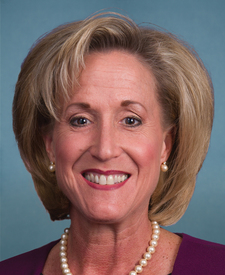
See how Ann Wagner's votes line up with your values.
DeepSyte scores Ann Wagner's record on the issues you care about — not party, not press releases. Take the 2-minute values quiz to see your personal alignment.
Sign in and take the values quiz to see how Ann Wagner's votes line up with your views.
Prediction track record
How often we called Ann Wagner's passage votes correctly, from their stated positions on each bill's tagged topics. Excludes “unclear” calls and abstentions.
36 predictions on record · none have been resolved by a passage vote yet. Check back as bills move.
Pending vote119-hr-5282
Reauthorizing Support and Treatment for Officers in Crisis Act of 2025
Based on 1 data point across public statements and recorded votes · AI analysis of public records
118-s-546·Consistent
Recruit and Retain Act
75/100
What they said
Apr 29, 2026
Congresswoman Wagner and Congressman Rutherford introduced legislation to provide local law enforcement departments with greater flexibility in using federal funding for officer training, recruitment, protective equipment, forensic technologies, and victim services.
The statement supports providing local law enforcement with flexible federal funding for officer training, recruitment, protective equipment, forensic technologies, and victim services. The bill expands COPS grants specifically for recruitment efforts, including reducing application fees and funding partnerships with educational institutions for recruiting activities. The rep's yes vote aligns with the stated goal of supporting recruitment and officer development, though the bill is narrower in scope—it focuses primarily on recruitment rather than the full range of uses (protective equipment, forensic tech, victim services) mentioned in the statement. The directional alignment is clear, but the bill addresses only a subset of the stated priorities.
Pairs with ambiguous language and high uncertainty are withheld until more data is available. Procedural, cloture, and amendment votes are excluded — they don't cleanly signal substantive support or opposition.
Pro analysis
AI rep analysis — Pro
Get an AI-narrated read on Ann Wagner's full voting record against your stated values — aligned themes, conflicts, notable votes, and what to watch for.
We haven't extracted campaign positions for Ann Wagner yet. Once their campaign website or position pages are processed, this card will track what they said vs how they voted.
Crossing the aisle
Passage votes where Ann Wagner broke ranks with ≥75% of Republicans. Threshold catches substantively partisan splits; unanimous-ish or close votes are excluded.
Trump Administration Announces $39.7 Million to Modernize Rural Healthcare Across Missouri
Position: The release announces $39.7 million in federal Rural Health Transformation Program funding for 26 Missouri rural healthcare providers to renovate and equip facilities and expand maternal, behavioral, diagnostic, and primary care services. It credits the Working Families Tax Cuts Act for the funding.
Today, the Trump Administration announced $39.7 million in Rural Health Transformation Program (RHTP) funding to modernize rural healthcare services and expand access to care across Missouri. This investment will support 26 rural healthcare providers as they renovate, reconfigure, equip, or repurpose existing facilities, to expand maternal health, behavioral health, diagnostic, outpatient, and chronic disease management services across Missouri.
This transformational funding will deliver new labor, delivery, and private triage rooms; expanded behavioral health services for older adults and people with substance use disorders; and upgraded diagnostic equipment, including MRI, mammography and ultrasound services. The funding will also expand primary care and increase the capacity of rural health clinics, helping rural providers update existing facilities and capabilities to better match the healthcare needs of the communities they serve.
The Rural Health Transformation Program is expanding access to quality healthcare, regardless of a patient’s ZIP code, while equipping first responders with the lifesaving resources they need when every second counts. This funding will make critical investments to strengthen rural healthcare, expand access to lifesaving services, and bring modern technology to communities across Missouri.
“This is critical funding that will help support access to affordable healthcare in our communities and ensure Missouri families have access to quality, modernized care. I was proud to help advance this funding in the Working Families Tax Cuts legislation and will continue to work with the Administration to make we take care of parents and their children,” said Rep. Ann Wagner.
“President Trump understands that every American deserves high-quality healthcare, no matter where they live,” said Health and Human Services Secretary Robert F. Kennedy, Jr. “We are putting resources directly into rural communities to strengthen the health workforce, modernize infrastructure, expand access, and bring care closer to home. We are giving states the flexibility to build solutions around the people they serve, while demanding accountability for results. That is how we strengthen rural health, improve the lives of patients and families, and Make America Healthy Again.”
“Instead of throwing money at a broken status quo, President Trump’s Rural Health Transformation Program is funding the structural improvements necessary to build stronger, more sustainable rural health systems,” said Centers for Medicare & Medicaid Services Administrator Dr. Mehmet Oz. “These investments are already delivering better access to higher-quality care for rural Missourians, and we look forward to working with state leaders to build on that success over the remaining four years of the program.”
Today’s investment was made possible through the Working Families Tax Cuts Act — passed by Republicans in Congress and unanimously opposed by Democrats — delivering a historic $50 billion investment to help states transform the way healthcare is delivered in America.
“Every Missourian deserves access to quality healthcare close to home. These investments will help rural health care providers modernize facilities, expand maternal and behavioral health services, and strengthen access to critical care across our state. By supporting locally driven solutions, we are helping rural communities build a stronger health care system that improves outcomes for Missouri families today and for generations to come,” said Gov. Mike Kehoe.
“This $39.7 million award is the next step in modernizing Missouri’s healthcare services and supporting our rural healthcare workers. I’m proud to have supported this program through the Working Families Tax Cuts Act. These investments will strengthen our healthcare system, support rural healthcare workers, and give Missouri families greater peace of mind knowing they can access the care they need,” said Sen. Eric Schmitt.
“As a physician, I have seen firsthand the physical and emotional toll that chronic illnesses and serious medical conditions can take on patients and their families,” said Rep. Bob Onder. “Chronic diseases can be particularly challenging for rural Missouri families because of limited access to specialized care, often forcing them to travel hours for treatment. Thank you, President Trump, for this investment to help modernize rural healthcare facilities, expand critical services, and bring quality healthcare closer to home.”
“Your zip code should never determine the quality of care you receive. That’s why Republicans included the $50 billion Rural Health Transformation Program — the largest single investment in rural health care in history — in the Working Families Tax Cuts. Thanks to the leadership of the Trump Administration and Governor Kehoe, this latest $39.7 million allotment will deliver direct, meaningful support to 26 local providers across Missouri, including several in the Fourth District. From expanding maternal and mental health services to enhancing chronic disease management, this funding will bring lifesaving care closer to home and keep rural Missouri strong,” said Rep. Mark Alford.
“Expanding and strengthening access to rural healthcare is essential for North Missouri,” said Rep. Sam Graves. “Modernizing our healthcare facilities and equipment ensures that families can get the quality care they need and deserve close to home. This latest round of Rural Health Transformation Program funding is an important step in making that a reality. The Working Families Tax Cuts law we passed last year continues to deliver meaningful results for communities across Missouri, and I look forward to seeing these investments take shape to improve rural healthcare.”
“I wrote the Rural Health Transformation Program to benefit Missouri communities. When a rural hospital shuts down back home, that often means losing half a day on the road for a basic scan, mental health appointment, or prenatal checkup,” said Rep. Jason Smith. “We’ve already seen a dozen rural hospitals close across Missouri in the last ten years alone, and I made it my mission to make sure that doesn’t continue. This $39.7 million is yet another sign that the program is doing exactly what I intended it to do when I included it in the One, Big, Beautiful Bill. I’m thrilled to see this much-needed funding go to over two dozen providers to improve and protect rural health care across the Show-Me State, and I’ll keep fighting to ensure that our neighbors have access to the care they need and deserve.”
Today’s announcement is one part of the larger overall funding amount awarded to Missouri for fiscal year 2026.
Key initiatives the overall RHTP funding will focus on include:
Building the rural healthcare workforce: Supporting recruitment, training, and retention strategies to strengthen the pipeline of healthcare professionals serving rural communities.
Strengthening rural facilities and access: Supporting partnerships, operational improvements, and care-delivery changes that help rural providers maintain essential services and improve access.
Advancing innovative care and payment models: Supporting new approaches to delivery and financing designed to improve quality, strengthen primary care, and support sustainable rural healthcare.
Expanding community-based and preventive care: Investing in school-based care, mobile services, and other community strategies that improve prevention, address chronic disease, and expand access to care.
Modernizing rural healthcare technology: Expanding remote care and data-driven tools to improve coordination and extend healthcare services to rural communities.
The Trump Administration is delivering on its commitment to strengthen rural America by investing in solutions that modernize technology to promote health and well-being for rural communities. Led by CMS, the RHTP is moving beyond the failed one-size-fits-all approach and giving rural communities the tools to build stronger, more innovative, and more sustainable health systems that deliver better care and better outcomes for the Americans they serve.
Trump Administration Announces New Funding to Support Rural Healthcare Workers and Expand Maternal Care Across Missouri
Position: The release announces federal Rural Health Transformation Program funding for Missouri to support rural healthcare workforce recruitment, childcare assistance for healthcare workers, and a certified nurse midwife training program, and the representative states she voted for the funding in the Working Families Tax Cut legislation.
Today, the Trump Administration announced more than $2.3 million in federal Rural Health Transformation Program (RHTP) funding to strengthen Missouri’s rural healthcare workforce and expand access to maternal care. This investment supports two targeted workforce initiatives in Missouri: expanding affordable, dependable childcare for rural healthcare professionals and delivering funding to establish a certified nurse midwife training program.
This transformational funding will deliver $1.46 million to tackle healthcare recruitment and retention challenges across rural Missouri. The funding will expand a cost-sharing childcare program that brings the state, rural health employers, and families together to make dependable childcare more affordable for healthcare workers, providing peace of mind that their loved ones are cared for while they care for their patients. In addition, $879,000 will support initial work to establish Missouri’s first certified nurse midwife training program, with rural clinical rotations designed to build a pipeline of maternal care providers for underserved communities.
The Rural Health Transformation Program is expanding access to quality healthcare, regardless of a patient’s zip code, and equipping rural health systems with the workforce and infrastructure needed to deliver timely care. This funding will make critical investments to strengthen rural healthcare, expand access to lifesaving services, and bring modern technology to communities across Missouri.
“Supporting rural healthcare workers and the community that relies on them is incredibly important. This funding will directly strengthen and expand access to maternal health care here in Missouri so moms and children have access to the care they need and deserve, and I was proud to vote for this funding in the Working Families Tax Cut legislation. I will always work to support families in Missouri and across the country, and I thank the Administration for joining me in prioritizing parents and their children,” said Rep. Ann Wagner.
“President Trump understands that every American deserves high-quality healthcare, no matter where they live,” said Health and Human Services Secretary Robert F. Kennedy, Jr. “We are putting resources directly into rural communities to strengthen the health workforce, modernize infrastructure, expand access, and bring care closer to home. We are giving states the flexibility to build solutions around the people they serve, while demanding accountability for results. That is how we strengthen rural health, improve the lives of patients and families, and Make America Healthy Again.”
“Every state knows best what its rural communities need, and thanks to President Trump’s Rural Health Transformation Program, they now have the resources to meet those needs,” said CMS Administrator Dr. Mehmet Oz. “As states put these resources to work, we’re focused on turning these investments into meaningful, sustainable improvements for the health systems that serve rural Missourians.”
Today’s investment was made possible through the Working Families Tax Cuts Act — passed by Republicans in Congress and unanimously opposed by Democrats — delivering a historic $50 billion investment to help states transform the way healthcare is delivered in America.
“As Missouri’s Rural Health Transformation Program continues to make strides in strengthening rural healthcare access with community-driven solutions, this funding brings much-needed childcare support for rural healthcare workers and expands access to critical maternal care across our state,” said Gov. Mike Kehoe. “We appreciate the Trump Administration’s continued focus and partnership in working to create stronger, healthier rural communities.”
"Rural hospitals across Missouri have been struggling for decades. Thanks to the Trump Administration, this $2.3 million award will expand access to maternal care and childcare support for rural healthcare workers. This investment will not only support our healthcare workers but also help ensure families in rural Missouri can access the quality care they deserve. I’m proud to have supported this program through the Working Families Tax Cut Act, and I’ll continue fighting to ensure rural Missourians get the care they need," said Sen. Eric Schmitt.
“This Administration has demonstrated a strong commitment to strengthening rural healthcare across Missouri, and this additional investment will build on those efforts to address critical workforce shortages and expand access to maternal care in our rural communities,” said Rep. Bob Onder. “As a physician, I know how important it is for patients to have access to quality care when they need it most. This funding will help ensure Missouri families can receive the care they need and that qualified healthcare professionals are there to provide it.”
“Rural Missouri families deserve quality care close to home, and that starts with the people who deliver it. This Rural Health Transformation Program funding is part of the largest ever single investment in rural health care through Republicans’ Working Families Tax Cuts. It will expand access to childcare for rural healthcare workers and stand up a certified nurse midwife training program so we can recruit and keep more caregivers in our communities. That’s real help for mothers and for the workforce that keeps rural hospitals and clinics open. I’m grateful the Trump Administration is putting these dollars to work in Missouri,” said Rep. Mark Alford.
"The future of rural healthcare depends on having a trained workforce," said Rep. Sam Graves. "This funding from the Working Families Tax Cuts law will help recruit and retain healthcare professionals, while expanding the availability of maternal care, which is critically needed in North Missouri. These types of investments are why we created the Rural Health Transformation Program, and I’m pleased to see the Trump Administration continue to direct this money to Missouri.”
“A rural mom shouldn’t have to drive an hour or more to find someone to deliver her baby. That’s exactly why I authored and fought for the Rural Health Transformation Program in the One, Big, Beautiful Bill. This funding will help Missouri recruit and retain the nurses and healthcare workers our rural communities depend on, and it will bring maternal care closer to home for families across southeast Missouri and the entire state. I’ll keep fighting to make sure rural Missouri is a place where moms can raise a family and get the care they need right where they live,” said Rep. Jason Smith.
Today’s announcement is one part of the larger overall funding amount awarded to Missouri for fiscal year 2026.
Key initiatives the overall RHTP funding will focus on include:
Building the rural healthcare workforce: Supporting recruitment, training, and retention strategies to strengthen the pipeline of healthcare professionals serving rural communities.
Strengthening rural facilities and access: Supporting partnerships, operational improvements, and care-delivery changes that help rural providers maintain essential services and improve access.
Advancing innovative care and payment models: Supporting new approaches to delivery and financing designed to improve quality, strengthen primary care, and support sustainable rural healthcare.
Expanding community-based and preventive care: Investing in school-based care, mobile services, and other community strategies that improve prevention, address chronic disease, and expand access to care.
Modernizing rural healthcare technology: Expanding remote care and data-driven tools to improve coordination and extend healthcare services to rural communities.
The Trump Administration is delivering on its commitment to strengthen rural America by investing in solutions that modernize technology to promote health and well-being for rural communities. Led by CMS, the RHTP is moving beyond the failed one-size-fits-all approach and giving rural communities the tools to build stronger, more innovative, and more sustainable health systems that deliver better care and better outcomes for the Americans they serve.
For more information about the RHTP, visit: https://www.medicaid.gov/resources-for-states/rural-health.
Wagner Congratulates Boeing for Winning the Navy Next Generation Fighter Jet Following her Years of Advocacy
Position: The release congratulates Boeing on being selected by the Navy to build the F/A-XX sixth-generation strike fighter and expresses support for Boeing-built defense programs, including the F/A-18, F-15, and F-47, as well as the associated jobs in Missouri. It states the representative has supported these programs through the National Defense Authorization Act and appropriations legislation.
Washington, D.C. – Congresswoman Ann Wagner (R-MO) released the following statement after the Navy chose Boeing to build the F/A-XX, the sixth generation strike fighter:
“It’s official, St. Louis will be the home of both the U.S. Navy and the U.S. Air Force next generation fighter jets that will strengthen American air dominance worldwide. For years, I have been proud to champion the effort in Congress supporting our local defense industrial base for the F/A-18 and F-15 programs. Winning the F/A-XX next generation naval fighter program, on top of the already awarded F-47 fighter, is a monumental win for Missouri and the families in our community that build these jets to keep our nation safe. Boeing not only supports thousands of local jobs here at home with these programs, but they also advance the overwhelming power of our military that makes our nation the best and strongest in the world.
“I have been an ongoing advocate for Missouri-made Boeing defense products during my time in Congress, leading the support for programs like these in our National Defense Authorization Act and Appropriations legislation. I believe in the ingenuity and hard work of our local workers here in St. Louis and their continuous ability to advance our nation’s military and keep the American people safe. I will always advocate for our St. Louis region and am proud to see our community continue to lead the way in keeping our national defense the strongest in the world.”
Trump Administration Announces More Than $45 Million to Upgrade Rural Missouri Hospitals, Connect Families to Rapid Psychiatric Consultations and Maternal Care, and Train More EMS Professionals Across Missouri
Position: Rep. Ann Wagner states she voted for the Working Families Tax Cut legislation that funds rural hospital resources and says she will keep working with the Administration on local hospital modernization and funding flexibility.
Washington, D.C. – The Trump Administration announced today that more than $45 million in Rural Health Transformation Program (RHTP) funding is being delivered to support rural healthcare for Missouri residents. This investment will support hospital infrastructure improvements, expand behavioral and maternal healthcare access, and strengthen the rural emergency medical services workforce.
The announcement includes approximately $35 million to support 20 rural hospital projects — covering facility improvements, building system upgrades, new diagnostic equipment, and renovated critical care and treatment spaces. It also includes up to $6.4 million to connect rural providers with behavioral health and perinatal specialists, including rapid psychiatric consultations, often within 30 minutes, for children and families, along with referral services, provider training, and additional support for pregnant and postpartum patients. And up to $4.2 million will grow Missouri's rural EMS workforce, with 437 individuals selected to begin funded EMT and paramedic training and incentives for rural agencies to hire and retain certified staff. These investments build on the Administration’s more than $7 million in funding previously announced to strengthen Missouri’s rural maternal health workforce through expanded doula training and certification and to expand mobile healthcare and community paramedicine services across rural communities.
“I was proud to vote for this funding in the Working Families Tax Cut legislation, so our rural hospitals have the necessary resources to provide patients with the top-notch healthcare they need and deserve. This is a transformative investment in rural healthcare that will support healthier families for generations to come. I will keep working with the Administration to ensure our local hospitals here in Missouri continue to modernize and have the funding flexibility to support patients close to home in the ways that work best for them,” said Rep. Ann Wagner
“President Trump understands that every American deserves high-quality healthcare, no matter where they live,” said Health and Human Services Secretary Robert F. Kennedy, Jr. “We are putting resources directly into rural communities to strengthen the health workforce, modernize infrastructure, expand access, and bring care closer to home. We are giving states the flexibility to build solutions around the people they serve, while demanding accountability for results. That is how we strengthen rural health, improve the lives of patients and families, and Make America Healthy Again.”
“President Trump made a historic commitment to rural America, and these investments are turning that commitment into better care for patients in communities across Missouri,” said Centers for Medicare & Medicaid Services Administrator Dr. Mehmet Oz. “This is what rural health transformation should look like: federal investment that is putting patients first, driving lasting improvements and expanding healthcare for the hardworking Americans who call these communities home.”
Today’s investment was made possible through the Working Families Tax Cuts Act — passed by Republicans in Congress and unanimously opposed by Democrats — delivering a historic $50 billion investment to help states transform the way healthcare is delivered in America.
“A person’s ZIP code should never determine whether they can see a doctor, receive emergency care, or access the services they need to live a healthy life,” said Gov. Mike Kehoe. “With this investment, we can continue to deliver meaningful improvements in rural healthcare for generations to come. We’re grateful to President Trump and the U.S. Department of Health and Human Services for their continued partnership as we work to build a stronger, healthier future for rural Missouri.”
“Rural communities deserve high-quality healthcare — and for many Americans, rural hospitals are the only option available. Choosing to live outside of a major metro area shouldn’t mean you receive subpar care. As affordability remains top-of-mind for many American families, Republicans have been fighting for policies that lower costs and make life better for our nation. The Working Families Tax Cuts enacted new, historic investment into rural healthcare services and included my provision to expand home and community-based options for individuals with special needs. This announcement of additional RHTP funding for rural healthcare is yet another step in Republicans’ efforts to deliver for rural communities and help Americans live healthier lives,” said Sen. Eric Schmitt
“The Rural Health Transformation Program, authorized by the Working Families Tax Cuts Act, is putting critical resources directly into the services and care Missouri families rely on. As a physician, I have seen firsthand how important it is for patients, especially those in rural communities, to have access to quality care close to home. These investments will strengthen our healthcare workforce, equip rural hospitals to better serve their patients, and help ensure Missourians can access the care they need,” said Rep. Bob Onder.
“Americans should not have to drive an hour or more to get the care they need, and the Rural Health Transformation Program is helping us change that. House Republicans enacted the largest investment in rural healthcare in American history through our Working Families Tax Cuts. We are putting resources directly into rural hospitals, EMS systems, behavioral health services, and maternal care that Missouri families rely on. I’ve visited nearly every rural hospital in Missouri’s Fourth District, and I’ve seen firsthand what these investments mean for keeping hospital doors open, strengthening our healthcare workforce, and ensuring families can receive quality care close to home. This is exactly what the Rural Health Transformation Program was designed to do: strengthen rural communities and ensure the heartland is not left behind,” said Rep. Mark Alford.
“Rural hospitals are a lifeline for our communities. Whether it’s a broken bone, a farm accident, or just routine care, we depend on them to be there when we need them. That can’t happen if they aren’t open, which is why we passed the Rural Health Transformation Program last year. The expansion of maternal healthcare access and rural EMS workforce, that are included in this funding, are critical needs in North Missouri. I’m thrilled to see this funding continue to make its way to our communities, so we can ensure that rural Missourians have access to the quality healthcare they depend on,” said Rep. Sam Graves
"Rural hospitals are the backbone of communities like the ones I grew up in. When a rural hospital shuts its doors, that often means an extra hour on the road to see a doctor, and that extra hour can be the difference between life and death,” said Rep. Jason Smith. "That's exactly why I fought to create the Rural Health Transformation Program when I was writing the One, Big, Beautiful Bill. I knew we had to make a real investment in rural healthcare, so hospitals, clinics, and EMS crews have the resources they need to continue serving the families who depend on them. I was glad to see it pay off for my hometown recently when Salem Memorial hospital received $1.7 million through the RHTP, and this announcement is just further proof that the One, Big, Beautiful Bill is delivering for families and rural communities across the nation. I will never stop fighting to make sure our rural communities have access to the quality healthcare they deserve."
Today’s announcement is one part of the larger overall funding amount awarded to Missouri for fiscal year 2026.
Missouri's broader RHTP strategy is designed to strengthen coordination and build a more sustainable rural healthcare system. Key initiatives the overall RHTP funding will focus on include:
Strengthening local and regional care networks: Supporting local community hubs and regional networks to improve care coordination and better connect rural Missourians with healthcare providers and services.
Building the rural healthcare workforce: Supporting recruitment, training, clinical education, and retention strategies to strengthen the pipeline of healthcare professionals serving rural communities.
Advancing technology and data: Building shared digital infrastructure and improving interoperability and data sharing to better connect rural providers and support coordinated care.
Transforming rural care delivery: Supporting provider modernization and innovative care and payment models designed to improve care and strengthen long-term sustainability.
The Trump Administration is delivering on its commitment to strengthen rural America by investing in solutions that modernize technology to promote health and well-being for rural communities. Led by CMS, the RHTP is moving beyond the failed one-size-fits-all approach and giving rural communities the tools to build stronger, more innovative, and more sustainable health systems that deliver better care and better outcomes for the Americans they serve.
Reps. Wagner and Cleaver Introduce Backlog Justice Act of 2026
Position: The release announces reintroduction of the Backlog Justice Act of 2026, which would create a tracking system for the national backlog of untested sexual assault kits so states can understand and address the extent of their backlogs. The sponsors state the bill is intended to bring justice to sexual assault survivors and help law enforcement identify perpetrators.
Washington, D.C. – This week, U.S. Representative Ann Wagner (R-MO) and Representative Emanuel Cleaver, II (D-MO) reintroduced the Backlog Justice Act of 2026, legislation designed to bring justice to victims of sexual violence by addressing the national backlog of untested sexual assault kits (SAKs).
Almost every minute, someone in the U.S. is sexually assaulted. After an assault, survivors can choose to undergo a thorough forensic analysis conducted by a doctor or nurse, where medical needs are evaluated and key evidence is obtained from their person. That evidence, which can include samples of the perpetrator’s hair and bodily fluids and evidence of the harm they inflicted on the victim, is then collected and stored in an SAK. The evidence in SAKs can be key to catching perpetrators, delivering justice to victims, exonerating innocent parties, and connecting cases of assaults carried out by serial offenders.
Unfortunately, far too often, SAKs are not tested. Bias against victims, lack of training and technology, and under-resourced crime labs are just some of the many factors that have created this crisis. Today, experts estimate the national untested SAK backlog ranges from the tens of thousands to the hundreds of thousands. This is a failure that must be addressed.
“For years I have fought for the rights and safety of survivors of sexual assault, and I am proud to join my colleagues in introducing this bipartisan legislation to advance that work and further reduce the sexual assault kit backlog,” said Congresswoman Wagner. “The Backlog Justice Act will create a tracking system to ensure states fully understand the extent of their backlog so we can deploy resources in the areas that need it most. This updated system will help law enforcement work more effectively with state, local, and federal authorities to identify perpetrators and make sure survivors find the justice they deserve. This bill complements and strengthens my Debbie Smith Act, legislation signed into law in 2024 that gave more funding for rape kit testing and was also supported by Congressman Cleaver.“
“Too often, the trauma of sexual assault is made even more painful by delayed justice,” said Rep. Cleaver. “Having already lived through a horrific experience, survivors must often deal with additional trauma from a system that doesn’t believe them, doesn’t prioritize them, and doesn’t hold perpetrators accountable for their crimes. While untested SAKs sit on shelves, survivors live in fear while predators continue to walk free. By leveraging the coordination and capacity-building powers of the federal government, the Backlog Justice Act is a step towards addressing this vital issue, bringing justice to victims, and keeping our communities safe. I thank Rep. Wagner and our colleagues from both sides of the aisle for their partnership in this important effort.”
“MOCADSV is pleased to continue our support of the Backlog Justice Act sponsored by Missouri Congressman Cleaver and Congresswoman Wagner,” said Cheryl Robb-Welch, CEO of the Missouri Coalition Against Domestic & Sexual Violence. “The representatives have remained diligent in their efforts to listen to advocates in the field and the victims they serve, and we appreciate their dedication to responding to sexual violence. The Backlog Justice Act aims to improve technology and knowledge used in forensic testing of sexual assault kits, strives to increase funding to ensure kits are tested and tracked through the process, and enhances accountability nationwide to ensure sexual assault kits are included in an electronic tracking and notification system that is available to victims. This bill will shine a light on each state’s forensic kit inventories and processing times with the goal of improving national sexual assault response. We believe this is a significant step to ensuring that the days of kits sitting on shelves and the system not responding to rape victims are over.”
“Additional resources for forensic science services providers are vital in ensuring that victims are taken seriously,” said Matthew Gamette, Chair of the Consortium of Forensic Science Organizations. “Survivors deserve to have their kits tested, have visibility to the status of their kits, their cases investigated and prosecuted, and their perpetrators held accountable. Forensic science training, technology implementation, appropriate and robust validation of technology are critical to solving sexual assault cases in the United States. Robust and reliable forensic science is support for victims of crime."
“The National Alliance to End Sexual Violence commends Representatives Wagner and Cleaver for their leadership on behalf of survivors of sexual assault,” said Terri Poore, Policy Director for NAESV. “Survivors deserve to have the evidence from their bodies treated with the utmost sensitivity and diligence, and we must make every effort to keep our communities safe. We are proud to endorse the Backlog Reduction Act of 2026."
Specifically, the Backlog Justice Act of 2026 would:
Direct the Bureau of Justice Assistance to establish, maintain, and update a National Sexual Assault Kit Backlog Database, enabling policymakers and advocates alike to have more comprehensive data so that they can recommend and implement more precise policies and funding levels in order more effectively reduce the backlog. The information on the database would be anonymized and include no personally identifiable information about victims.
Authorize training programs at the FBI laboratory to increase the number of DNA analysts available to test SAKs in crime labs across the country. The severe understaffing of crime labs is a key factor contributing to the backlog in kit testing.
Shift the burden of DNA instrument calibration and validation from individual crime labs to the FBI laboratory. In many jurisdictions, untested SAKs have outpaced the resources to test, process, and profile DNA samples in crime labs. One major reason for this is because lab technicians are often having to spend outsized portions of their time testing and validating the lab instruments used in the DNA testing process. By transferring much of the instrument validation burden over to FBI labs, DNA analysts in crime labs across the country would be able to focus more of their time and resources actually testing SAKs rather than calibrating lab instruments.
Incentivize states to implement Electronic Evidence Tracking Systems for SAKs to increase transparency into the testing process for survivors and their advocates. In many states, once the DNA sample is collected, survivors are unable to access any information about the status of their kit in the testing process. The kit testing process should not be a black box for survivors and their advocates, who deserve transparent justice.
The Backlog Justice Act of 2026 is cosponsored by Reps. Alma Adams (NC-12), Suzanne Bonamici (OR-01), Salud Carbajal (CA-24), Judy Chu (CA-28), Yvette Clarke (NY-09), Bonnie Watson Coleman (NJ-12), Debbie Dingell (MI-06), Brian Fitzpatrick (PA-01), Josh Harder (CA-09), Mike Lawler (NY-17), Stephen Lynch (MA-08), Ryan Mackenzie (PA-07), Eleanor Holmes Norton (DC-AL), Chellie Pingree (ME-01), Mike Quigley (IL-05), Lateefah Simon (CA-12), Shri Thanedar (MI-13), and Frederica Wilson (FL-24).
The Backlog Justice Act of 2026 is endorsed by the Rape, Abuse & Incest National Network (RAINN), the Missouri Coalition Against Domestic & Sexual Violence, American Society of Crime Laboratory Directors, the Consortium of Forensic Science Organizations, and the National Alliance to End Sexual Violence.
House Passes Wagner Co-Led Bill to Sanction Supporters of Russia and Iran
Position: The release supports passage of the Lindsey O. Graham Sanctioning Russia and Iran Act of 2026, which would sanction major purchasers of Russian oil and gas and extend sanctions on Iran's energy and weapons sectors, and calls for the President to implement these measures.
Washington, D.C. – Congresswoman Ann Wagner (R-MO) released the following statement after the House passed the Lindsey O. Graham Sanctioning Russia and Iran Act of 2026. This legislation will hold major purchasers of Russian oil and gas accountable for supporting Russia’s war against Ukraine and extend sanctions that restrict funding for Iran’s energy and weapons sectors.
“I am beyond proud to have passed the Lindsey O. Graham Sanctioning Russia and Iran Act, legislation that I co-led in the House of Representatives. Vladimir Putin is a brutal dictator, and his hopeless plot to rebuild the Soviet Union must come to an end. I will always stand against Putin’s evil regime, and I will continue working with my colleagues to cripple his power and bring an end to the largest land war in Europe since World War II. Far too many lives have been lost, and this bill will enact historic financial punishment on those who support Putin and his war. This legislation also extends sweeping sanctions on the Islamic Republic of Iran, which has targeted and killed Americans for over 47 years. Passage of this landmark sanctions bill is a fitting honor to the late Senator Lindsey Graham, and I look forward to the President implementing these measures.”
Wagner Thanks Oversight Subcommittee Chair Sessions for Bringing Postmaster General to St. Louis to Address USPS Delivery Malfeasance
Position: Representative Wagner calls for accountability for U.S. Postal Service leadership over on-time mail and package delivery failures in St. Louis and states that she will continue pressing for on-time delivery. She also thanks the Oversight Subcommittee chair for the visit with the Postmaster General.
Ballwin, MO. – Congresswoman Ann Wagner released the following statement after Chair Sessions toured the St. Louis Processing Center with the Postmaster General to exercise his Oversight responsibility and see firsthand the major problems the St. Louis community has had with on-time mail and package delivery:
Wagner said: “In March, I sent a letter formally requesting the House Oversight Committee, who has jurisdiction over the USPS, open a formal investigation into the disaster that has been our local mail delivery, and I thank Chairman Sessions for taking my many concerns seriously and coming to St. Louis today with the Postmaster General to help us get answers. Our St. Louis community deserves on-time mail delivery from the United States Postal Service, and so far the Postal Service has failed that basic duty to the people. People haven’t been receiving their paychecks or essential medications, and their ballots have been inexplicably delayed. I have worked for years to address this ongoing misconduct and hold accountable the people who have abdicated their basic responsibility to deliver the mail on time. When I called for an audit of our Sorting and Distribution Center to better understand the plague of unreliable mail service, I knew things were bad, but the results of that audit shocked us all. Postal Service leadership must be held responsible, and today’s visit is a good step, but it is certainly not the end. I will keep fighting to ensure on-time mail delivery so you and your families can have your ballots, essential medication, and bill payments arrive on time.”
Background
Since February 2024, Congresswoman Wagner has led sustained oversight of USPS failures in St. Louis. Her work has included seven congressional letters, direct engagement with USPS Headquarters, helping secure a targeted Inspector General audit, leading a meeting with the Postmaster General, requesting assistance from the House Oversight Committee, and referring alleged mail theft and check washing to the FBI.
September 2024 – Wagner Calls for Audit of Mail Sorting in Eastern Missouri: She wrote Postmaster General Louis DeJoy requesting the United States Postal Service (USPS) Office of Inspector General (OIG) audit the Hazelwood, MO, Sorting and Distribution Center, explain failures to deliver election mail on time, and provide clarity on a new USPS proposal to further delay mail in rural America.
April 2025 - Wagner, once again, requests that the USPS OIG conducts an audit of post office and distribution centers in St. Louis County.
The August 2025 OIG audit exposed deep-rooted inefficiencies, including:
A record backlog of over 2.5 million delayed mail pieces—the largest in USPS audit history—worsened by management instructing employees to hide delays in data systems.
Chronic staffing vacancies, unchecked truancy, and inadequate supervision, leading to operational breakdowns.
Incomplete maintenance and poor compliance, causing 40% of outbound trucks to be late or canceled due to shortages and congestion.
A complete failure of management to identify issues or enforce procedures, risking security for items like registered mail.
These failures culminated during Franklin County's April 2025 municipal election, where 350 absentee ballots arrived too late to be counted—some as late as August 20—disenfranchising Missourians who relied on the USPS to uphold their Constitutional right to vote.
September 2025 –Wagner led a bipartisan, bicameral letter demanding a meeting with new Postmaster General Steiner: The meeting was meant to discuss action plans for OIG recommendations, delay resolutions, election integrity, community impacts, leadership reforms, transparency, and personnel accountability.
November 2025 – Wagner Brings in Postmaster General for U.S. Capitol Meeting: After leading bipartisan Missouri delegation letter to Steiner regarding the audit and the breakdown of service in St. Louis, Rep. Wagner hosted Postmaster General Steiner and members of the Missouri and Illinois delegations on Capitol Hill. Steiner met with Reps. Wagner, Bell, Smith, Alford, Onder, and Bost, and acknowledged regional service failures and committed to corrective actions and a post-holiday assessment.
March 2026 – Wagner Requests Oversight Committee Investigation: After not receiving any updates on corrective actions or the post-holiday assessment, Rep. Wagner sent a letter to House Oversight Subcommittee on Government Operations requesting Chairman Pete Sessions’ assistance in reviewing USPS’s implementation of the OIG recommendations, responsiveness to Congress, management accountability, and preparedness to handle election mail.
May 2026 – Wagner Requests FBI Investigation of Check Washing at St. Louis USPS: After receiving a tip from a local Sheriff’s Office regarding mail theft and check washing at the St. Louis P&DC, Rep. Wagner sent a letter to the FBI requesting a federal investigation of mail theft and check washing connected to St. Louis postal processing. In response, the FBI informed Rep. Wagner that its St. Louis Field Offices had assigned a special agent to support and oversee a USPS OIG investigation.
Wagner, McCaul, Colleagues Introduce the Lindsey O. Graham Sanctioning Russia and Iran Act of 2026
Position: The release supports introducing and passing the Lindsey O. Graham Sanctioning Russia and Iran Act of 2026, which would impose sanctions on major purchasers of Russian oil and gas and extend Iran Sanctions Act restrictions on Iran's energy and weapons sectors, in order to pressure Russia to end its war against Ukraine.
Washington, D.C. – Today, Congresswoman Ann Wagner (R-Missouri) and House Foreign Affairs Committee Chairman Emeritus Michael McCaul (R-Texas) introduced the bipartisan Lindsey O. Graham Sanctioning Russia and Iran Act of 2026 alongside 16 of their colleagues. This legislation — which honors the late Senator Lindsey Graham, who worked on the bill for more than a year and secured the White House’s support — will hold major purchasers of Russian oil and gas accountable for supporting Russia’s war against Ukraine and extend sanctions that restrict funding for Iran’s energy and weapons sectors.
“To end Russia’s unprovoked and deadly invasion of Ukraine, we must enact maximum financial pain on Vladimir Putin and his cronies. I will not stand idly by while countless people are killed due to Putin’s doomed quest to reconstitute the Soviet Union. I am beyond proud to join my colleagues in introducing this sweeping sanctions legislation that will enact severe financial penalties against Putin, his allies, and those who choose to do business with him. The largest war in Europe since World War II must come to an end, and I am confident these measures will accelerate that process. I am also pleased this bill extends the Iran Sanctions Act to ensure all available measures are available to cripple the terrorist Iranian regime. These necessary sanctions are a fitting legacy to honor the late Senator Lindsey Graham, a friend and colleague who continually fought for freedom, democracy, and against tyrannical regimes like Russia and Iran,” said Rep. Wagner.
“Senator Graham was a national security giant, a statesman of unmatched conviction, and a personal friend and mentor. We shared a fundamental worldview: America is strongest at home when it projects strength abroad. That’s why he fought so hard for this bill, which I promised him months ago I would introduce in the House,” said Rep. McCaul. “As President Zelensky told me last month when I visited Ukraine, he is ready for a ceasefire — ready to negotiate, as he has been for years. Putin, on the other hand, consistently defies President Trump and the international community by refusing to come to the table. I can think of no better way to honor Senator Graham’s life and legacy than by passing these tough sanctions, which will help force Putin into negotiations and bring us closer to securing Lindsey’s vision of enduring peace in two critical regions of the world.”
“Democracy is presently under threat from despotism, and Congress must act to defend democracy and help Ukraine defeat Vladimir Putin’s effort to extinguish its liberty and sovereignty. Our legislation goes after multiple sources of Russian war funding, including its oil and gas sectors, shadow fleet, and financial institutions. I’m encouraged that the Senate passed the companion legislation last week with overwhelming support, and I thank former Chairman McCaul for partnering with me to facilitate action by the House. This action has been delayed too long and will, hopefully, accelerate Ukraine’s success and the ending of this war, one that was initiated illegally by Putin and that has resulted in tens of thousands of deaths of Russians and Ukrainians. I hope that we can secure bipartisan consensus in the House and enact a sanctions package that will stem the flow of money to Russia’s war machine and contribute to a Ukrainian victory," said Rep. Hoyer.
Earlier this month, an overwhelming bipartisan majority in the Senate voted to pass companion legislation, by a vote of 86-11, led by Sens. Darline Graham (R-S.C.), Richard Blumenthal (D-Conn.), Katie Britt (R-Ala.), Ranking Member of the Senate Foreign Relations Committee Jeanne Shaheen (D-N.H.), Chair of the Senate Armed Services Committee Roger Wicker (R-Miss.), and Chair of the Senate Foreign Relations Committee Jim Risch (R-Idaho). The text of the House bill is identical to the text that passed the Senate.
“This legislation was deeply important to my brother, Lindsey, and I’m grateful that it has achieved such a wide coalition of support. Lindsey was committed to achieving a peaceful resolution to this war, and I’m confident that these sanctions will pave the way,” said Sen. Darline Graham. “I’m grateful to Rep. McCaul for leading this effort in the House. The Senate came together in a strong, bipartisan fashion to pass the Lindsey O. Graham Sanctioning Russia and Iran Act of 2026, and I hope the House of Representatives will do the same. Russia has waged war against Ukraine for far too long, and this bill assists President Trump in his noble efforts to bring it to a close.”
“Representatives McCaul, Hoyer, Wilson, Kaptur, and Fitzpatrick are longtime champions of Ukraine’s cause and I am glad to have them leading our legislation in the House of Representatives. After a massive bipartisan vote in the Senate, we are eager to turn to the House as we fight to get this legislation across the finish line. There is immense urgency in getting this done – July set a record for Russia’s use of ballistic missiles, killing and wounding dozens of Ukrainians, including many children. Cutting off the source of funding – profits from oil and gas – for these deadly weapons and Russia’s war machine is essential to ending the bloodshed,” said Sen. Blumenthal.
Joining McCaul and Hoyer as original cosponsors are Co-Chair of the Congressional Ukraine Caucus Joe Wilson (R-S.C.); Co-Founder and Co-Chair of the Congressional Ukraine Caucus Marcy Kaptur (D-Ohio); Co-Chair of the House Baltic Caucus Don Bacon (R-Neb.); Rep. Jake Auchincloss (D-Mass.), House Armed Services Committee Chairman Mike Rogers (R-Ala.), Reps. Jill Tokuda (D-Hawaii), Mike Turner (R-Ohio), Gabe Vasquez (D-N.M.), Ann Wagner (R-Mo.), Josh Gottheimer (D-N.J.), Andy Barr (R-Ky.), and Ed Case (D-Hawaii); Co-Chair of the Congressional Ukraine Caucus Brian Fitzpatrick (R-Pa.); and Reps. Eugene Vindman (D-Va.), Nathaniel Moran (R-Texas), and Chrissy Houlahan (D-Pa.).
"Senator Lindsey Graham and I shared the belief that opposing dictators in defense of freedom and liberty is always the right thing to do. War criminal Putin is losing his invasion of sovereign Ukraine and the threat to humanity posed by the Iranian regime is dire. It is time for Congress to give President Trump the strongest tools available to choke off Russia's war machine for the good of mankind and cripple the ability of Tehran to continue sowing chaos in the region and beyond. My friend and colleague worked tirelessly in championing these critical initiatives, and I am grateful to help advance them across the finish line in the House,” said Rep. Wilson.
“Dictator Vladimir Putin’s illegal invasion of Ukraine is failing—Ukraine is battering Russian war infrastructure and the Kremlin is losing tens of thousands of troops each month. Now is the time to intensify pressure on Putin through crippling sanctions while surging support for our Ukrainian allies,” said Rep. Kaptur. “Putin will not make peace until he is forced to. I have been a supporter of every bipartisan sanctions bill on the table to pressure Russia to end its illegal full-scale invasion, and I am confident that the Lindsey O. Graham Sanctioning Russia and Iran Act of 2026 will accomplish that mission. Designed to protect our allies who aid Ukraine while squeezing Putin and the countries that enable his invasion, the sweeping sanctions and targeted tariffs in this bill are the best chance we have to get bipartisan legislation signed into law to hold Russia accountable and achieve peace.”
“Putin’s illegal war is failing, but he will not choose peace until the cost becomes too high for Russia and those helping fund his brutality,” said Rep. Bacon. “Senator Lindsey Graham was one of Congress’s clearest voices for Ukraine, understood that Putin only responds to strength, and worked until his final days to advance the toughest sanctions package yet against Russia’s war machine. The Lindsey O. Graham Sanctioning Russia Act would impose crippling pressure on Russia and those enabling Putin’s aggression, honor Sen. Graham’s commitment to Ukraine’s fight for freedom, and make clear that America stands with Ukraine.”
“Since 2022, I have called on both Biden and Trump to empower Ukraine to win this war through both strikes and sanctions on Russian oil infrastructure. The strikes are finally happening, and with this bill the sanctions are coming,” said Rep. Auchincloss.
"I am proud to join in introducing this legislation to sanction Vladimir Putin and his thugs as well as the Iran and its terrorist regime,” said Rep. Rogers. “Every dollar denied to Vladimir Putin weakens his war machine. By choking off the oil and gas revenue fueling Russia's aggression, this legislation gives President Trump powerful leverage to force Putin into serious negotiations that deliver a truly lasting peace. Including additional sanctions on Iran is equally critical given the terrorist regime’s continued threats to freedom of navigation in the Strait of Hormuz and its role in enabling Russia’s war against Ukraine. This legislation strengthens America’s hand against adversaries who threaten American security, our allies, and global stability.”
"It is long past time for Congress to impose tougher consequences on Russia and those financing its illegal war against Ukraine. I'm proud to support this updated legislation, which targets major purchasers of Russian oil and gas that continue to fund the Kremlin's aggression. This war has resulted in an estimated 2 million casualties, including more than half a million deaths. The United States must continue standing with the Ukrainian people and keep the pressure on Russia to agree to a just and lasting peace that preserves a free, sovereign, and independent Ukraine,” said Rep. Tokuda.
“For more than four years, the Ukrainian people have fought courageously to defend their sovereignty, and their resolve is paying off. Lindsey Graham understood that standing with nations fighting for freedom strengthens America’s own security, and until his final days, he was pressing for stronger sanctions against Russia,” said Rep. Turner. “This legislation honors that legacy, sends a clear message to Vladimir Putin that he cannot outlast Ukraine or the free world, and gives President Trump another powerful tool to pressure Russia, bring Putin to the negotiating table, and help restore peace to the region.”
"Vladimir Putin and the regime in Tehran are two of the gravest threats to America and our allies. For far too long, they've bankrolled their aggression by selling oil and gas to whoever will buy it,” said Rep. Gottheimer. "This bipartisan legislation cuts off those funding streams: holding accountable anyone who fills Putin's war chest as he wages his brutal, illegal war against Ukraine, and choking off the money that fuels Iran's weapons programs and its terror proxies. I was proud to see the Senate pass this bill with an overwhelming, bipartisan majority, and now it's on the House to finish the job. I can think of no better tribute to Senator Lindsey Graham — a national security champion — than enacting the tough sanctions he fought so hard for. Standing up to tyrants isn't a Democratic or Republican issue; it's an American one."
“By targeting the energy revenues and financial networks that fuel Putin’s war machine and enable the Iranian regime’s terrorist activities, this bipartisan legislation strengthens America’s ability to impose real economic consequences on our adversaries,” said Rep. Barr. “Senator Graham understood that harnessing America’s full strength from our financial system to our military is essential to deterring aggression, defending our allies, and advancing peace. I’m proud to join my colleagues to help carry forward that legacy.”
“Senator Graham believed, as I do, that American strength remains the surest guardian of peace,” said Rep. Fitzpatrick. “That conviction guided our work together on this legislation. Putin’s war machine runs on oil, money, and the willingness of others to look the other way—and the Lindsey O. Graham Sanctioning Russia and Iran Act of 2026 attacks all three. It isolates Russia’s banks, shuts down the networks financing its aggression, and forces every government and company enabling this war to make a choice. By increasing the cost of Putin’s war and reducing his ability to sustain it, this legislation strengthens the path to a just and lasting peace—one determined by Ukraine, not imposed by Moscow. The most fitting tribute Congress can offer Lindsey is to finish the work he began, carry forward the cause of freedom he championed, and make clear that America’s resolve will endure until that peace is secured.”
“Supporting a strong, free Ukraine is imperative for the national security of our communities here at home. Sanctioning Russia and Putin sends a direct message to the world: the United States will not sit by while brutal regimes bankroll aggression against democratic nations,” said Rep. Vindman. “I am proud to be a co-sponsor of this essential legislation. We must continue to escalate the economic pressure on the Kremlin and strengthen our resolve for the Ukrainian people as they fight for their freedom, sovereignty, and security.”
"Russia is perpetrating a war of aggression, and we must keep the pressure on Vladimir Putin. This action is long overdue, but we are finally moving forward with the resolve this moment demands. These sanctions will erode Russia's war machine by cutting off the revenue that funds it. We must hold those who are fueling this war accountable. These sanctions focus on Russia but will also target dangerous Chinese entities which support the Russian defense industrial base. Peace is the goal, and these mechanisms give the President the tools to achieve that goal,” said Rep. Moran.
“For more than four years, Ukrainians have courageously defended their freedom against Putin’s brutal invasion. The Lindsey O. Graham Sanctioning Russia and Iran Act would increase pressure on the Kremlin, hold those supporting its war accountable, and strengthen Ukraine’s position in pursuit of a just peace," said Rep. Houlahan. “The bill also extends longstanding sanctions against Iran. Sanctions cannot replace a clear strategy or the President’s obligation to seek congressional authorization for war, but they remain an important diplomatic tool. I am proud to cosponsor this legislation.”
Wagner Votes to Advance Peace Through Strength, Invest in Missouri-made Defense Production
Position: The release expresses support for the FY2027 National Defense Authorization Act (H.R. 8800), citing funding for Missouri-made defense programs, a troop pay raise, and expanded defense production capacity.
Washington, D.C. – Congresswoman Ann Wagner (R-MO) released the following statement after she voted for H.R. 8800, the National Defense Authorization Act for Fiscal Year 2027:
“Today’s passage of the NDAA is a massive win for Missouri and our national security. The greater St. Louis region is critical to the defense of our nation and to our military strength, and I successfully led initiatives to make sure our Missouri-made programs receive over $12 billion in support. This includes more than $4.9 billion for the new F-47 stealth fighter, $3.6 billion for our F-15s, $1.9 billion for our F/A-18s, $1.3 billion for the MQ-25 drone, and over $360 million for Joint Direct Attack Munitions and Small Diameter Bombs. I was also proud to lead the effort to invest millions of dollars in Mizzou’s MANTIS program, which will support our small businesses and the local defense industrial base in building the F-47. All of these efforts together account for thousands of jobs across our community.
“Our American warfighters put their lives on the line for our freedoms every day, and they deserve to have our full support on the battlefield and here at home. Today’s NDAA invests in the men and women of our armed forces by modernizing our military, expanding defense production capacity, and providing a crucial pay raise for our troops while improving housing, education, and childcare for military families. I will always stand with and support investments in our military and our state, and this legislation will ensure our adversaries will never gain a competitive edge on the battlefield, in no small part due to our Missouri-made capabilities.”
St. Louis NDAA Initiatives
1. $4.9 for F-47 stealth fighter
2. $3.6 billion for F-15 Eagle
3. $1.9 billion for F/A 18 Super Hornets
4. $1.3 billion for MQ-25 drones
5. $227 million for Joint Direct Attack Munitions
6. $135 million for Small Diameter Bombs
7. $5 million for Mizzou F-47 defense industrial base program
Rep. Wagner led the appropriations request that secured $5 million for Mizzou’s Manufacturing Advancement for Novel Technology Innovation and Sustainment (MANTIS) program that will expand the existing network of Missouri-based manufacturers to help local businesses work together and with Boeing to create a resilient Missouri supply chain for the production of the F-47. MANTIS will be executed at Missouri S&T’s Protoplex, which houses more than fifty state-of-the art advanced manufacturing systems, allowing local businesses to develop and mature emerging manufacturing technologies necessary to support the F-47. MANTIS will also provide modern, hands-on training to ensure local businesses have a skilled workforce capable of reinforcing Missouri’s stellar defense industrial base.
Position: The release states Representative Wagner voted for and cosponsored legislation banning Members of Congress from trading individual stocks, arguing that such trading risks abuse of public trust.
Washington, D.C. – Congresswoman Ann Wagner (R-MO) released the following statement after she voted to ban Congressional stock trading:
“I have neither owned nor traded individual stocks since long before I was elected to Congress, and neither has my husband. Members of Congress should not abuse the public trust by trading stocks and making money off potential insider information they only have because of their jobs.
“From day one, I was an original cosponsor and strongly supported this legislation, and I was proud to vote for it today to ban Members of Congress from trading stocks. Serving in Congress is and should be about service to our country, not about getting rich at the expense of your constituents.
“As your Representative, I am committed to transparently serving your needs and making your life easier and more affordable. I take that commitment seriously, and I will never abuse the trust you have placed in me.”
Source: open-data mirrors of the Senate eFD and House Clerk financial-disclosure systems. Disclosure within 30 days of trade is required by law (45 for spouse/dependent trades).
Top PAC donors · 2026 cycle
Political action committees that gave the most to this rep's principal campaign committee this cycle. PAC giving is direct organizational support — industry, ideological, or leadership.
1.AMERICAN BANKERS ASSOCIATION PAC (BANKPAC)Finance3 contributionsBanking-industry trade association PAC — backs candidates supporting deregulation, consumer-credit expansion, and reduced compliance costs for financial institutions.AI$12,000
2.INSURED RETIREMENT INSTITUTE POLITICAL ACTION COMMITTEE (IRI PAC)4 contributions$11,000
3.MAKING A RESPONSIBLE STAND FOR HOUSEHOLDS IN AMERICA PACIdeological1 contributionIdeological PAC with a household-focused mission — specific policy positions not inferable from the name alone.AI · low$10,000
4.AMERICA'S FIRST PAC1 contribution$10,000
5.MVL PAC1 contribution$10,000
6.BAKER PAC1 contribution$10,000
7.BUILDING A NATIONAL KNOWLEGEABLE SECURITY PAC1 contribution$10,000
8.LSEG US HOLDCO INC. PAC2 contributions$10,000
9.ERNST & YOUNG PAC3 contributions$10,000
10.ROCKET PAC3 contributions$10,000
Source: OpenFEC (api.open.fec.gov) Schedule A receipts where contributor type is “committee.” Aggregated by contributing committee. Self-transfers from joint-fundraising / victory committees are excluded.
Top individual contributors · 2026 cycle
Itemized individual contributions over $200 to this rep's campaign committee, aggregated by donor employer. PAC giving is shown above; this section is people, not organizations.
1.SELF$81,355
2.EDWARD JONES$41,750
3.KKR$40,500
4.ANDREESSEN HOROWITZ$14,000
5.FAMILY RESOURCE CENTER$14,000
6.CLIFFWATER LLC$11,000
7.AMEREN$9,729
8.DRURY DEVELOPMENT$9,000
9.ATTORNEY$9,000
10.DOBBS TIRE & AUTO$7,000
Source: OpenFEC Schedule A receipts where contributor type is “individual,” aggregated by the donor's self-reported employer. This is a geographic / industry correlation, not a corporate endorsement.