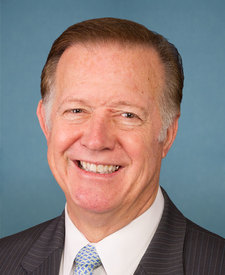
See how Randy K. Sr. Weber actually votes — against your values.
DeepSyte scores Randy K. Sr. Weber's record on the issues you care about — not party, not press releases. Take the 2-minute values quiz to see your personal alignment.
Sign in and take the values quiz to see how Randy K. Sr. Weber's votes line up with your views.
Prediction track record
How often we called Randy K. Sr. Weber's passage votes correctly, from their stated positions on each bill's tagged topics. Excludes “unclear” calls and abstentions.
No paired statements and votes yet for Randy K. Sr. Weber
We haven't yet found statement/vote pairs on the same topic for Randy K. Sr. Weber. This usually means either the rep hasn't taken public positions on bills that have come to a passage vote, or those bills haven't been tagged yet. The checker runs as new press releases and votes come in.
Pro analysis
AI rep analysis — Pro
Get an AI-narrated read on Randy K. Sr. Weber's full voting record against your stated values — aligned themes, conflicts, notable votes, and what to watch for.
We haven't extracted campaign positions for Randy K. Sr. Weber yet. Once their campaign website or position pages are processed, this card will track what they said vs how they voted.
Crossing the aisle
Passage votes where Randy K. Sr. Weber broke ranks with ≥75% of Republicans. Threshold catches substantively partisan splits; unanimous-ish or close votes are excluded.
6
Cross-aisle votes
118-hr-3012·Nov 20, 2024·81% of R voted YES
North Korean Human Rights Reauthorization Act of 2023
To designate the facility of the United States Postal Service located at 220 North Hatcher Avenue in Purcellville, Virginia, as the "Secretary of State Madeleine Albright Post Office Building".
Rep. Weber’s National Quantum Initiative Reauthorization Act Advances Out of the Full House Science, Space, and Technology Committee
Position: Rep. Weber supports reauthorization of the National Quantum Initiative to advance U.S. quantum information science research, workforce development, and international partnerships while maintaining American technological leadership against global competitors.
Subscribe to receive the latest news, insights,
and updates directly to your inbox.
Washington, D.C. - Today, Congressman Randy Weber’s (TX-14) H.R. 8462, the National Quantum Initiative Reauthorization Act, advanced out of the full House Science, Space, and Technology Committee unanimously and is now eligible for consideration on the U.S. House Floor.
Watch Representative Weber's Opening Statement here.
Read Representative Weber's Opening Statement below:
"Thank you, Mr. Chairman. I’m pleased to sponsor and support H.R. 8462, the National Quantum Initiative Reauthorization Act.
"The Trump Administration has identified quantum information science, technology, and engineering as one of the Nation’s highest research and development priority areas. First passed in 2018 during President Trump’s first term, the National Quantum Initiative aimed to accelerate the Nation’s advancement in quantum sciences and technologies. These efforts demonstrate a long-term commitment to American innovation, as well as maintaining U.S. leadership in science and technology.
"As the global push toward quantum supremacy intensifies, the United States faces growing pressure to maintain its leadership. Our adversaries, including the Chinese Communist Party, are committing significant resources to quantum information science. The U.S. cannot and must not afford to fall behind in the race for quantum supremacy.
"This legislation builds on the hard work and progress we’ve made over the past eight years to strengthen quantum information science. It sustains the basic research that underpins our success while including translational research to move quantum technologies toward real-world applications. It also prioritizes workforce development, recognizing that a strong talent pipeline is absolutely critical to advancing and deploying these technologies
"Lastly, it reinforces the importance of leveraging international partnerships to address the challenges and threats posed by our adversaries. This legislation also formally adds the National Aeronautics and Space Administration, NASA, to the National Quantum Initiative. NASA has made meaningful contributions to the goals of the National Quantum Initiative through targeted investments, including quantum-enabled technologies for space science and precision measurement. Quantum science, engineering, and technology have the potential to redefine what’s possible in this field. The National Quantum Initiative Reauthorization Act helps unlock that potential, and that is exactly what it is going to do.
"I want to thank everyone who took the time and effort to submit thoughtful feedback and suggestions on how Congress can strengthen the National Quantum Initiative. I look forward to continuing to work with my fellow members of this committee and stakeholders as we move this process forward.
Rep. Weber Introduces the National Quantum Initiative Reauthorization Act
Position: Rep. Weber introduced legislation to reauthorize and modernize the National Quantum Initiative, expanding federal quantum research programs, workforce development, and domestic supply chains while strengthening partnerships with U.S. allies and incorporating NASA into the initiative.
Subscribe to receive the latest news, insights,
and updates directly to your inbox.
Washington, D.C. - Congressman Randy Weber (TX-14) introduced H.R. 8462, National Quantum Initiative Reauthorization Act (NQIA), legislation to strengthen America’s leadership in quantum science and technology, bolster national security, expand workforce development, and counter growing competition from the Chinese Communist Party and other adversaries.
The legislation reauthorizes and modernizes the landmark National Quantum Initiative, first signed into law in 2018, to advance a coordinated federal strategy to move quantum research beyond basic science and into applied research, commercialization, and deployment. The bill expands programs across the federal government, supports domestic quantum supply chains, strengthens partnerships with U.S. allies, and formally incorporates NASA into the initiative.
The legislation is scheduled for markup before the full House Science, Space, and Technology Committee on Wednesday, April 29, 2026.
“Quantum technology will help define the future of economic strength, scientific discovery, and national security,” said Rep. Weber. “The United States must lead in this mission-critical field and not cede ground to the Chinese Communist Party. This legislation builds on the success of the original National Quantum Initiative by strengthening research, growing the workforce of tomorrow, and helping move breakthrough technologies from the lab into the real world.”
“I want to thank Congressman Randy Weber for his leadership in advancing the National Quantum Initiative Reauthorization Act," said Chairman Brian Babin, House Science, Space, and Technology Committee. "As we consider this legislation at Wednesday’s full committee markup, it’s clear this bill strengthens America’s position in a rapidly evolving global race by modernizing our quantum research enterprise, supporting a skilled workforce, and deepening partnerships with our allies. Ensuring U.S. leadership in quantum technology is critical to our economic competitiveness and national security, and this legislation takes an important step forward.”
The bill also includes provisions to:
Quantum technologies have the potential to transform computing, secure communications, sensing, and defense capabilities. As global competition intensifies, the National Quantum Initiative Reauthorization Act will help ensure America remains at the forefront of one of the most consequential technological frontiers of the 21st century.
ICYMI: Rep. Weber Pens Op-Ed Highlighting the Importance of Protecting America's Energy Infrastructure
Position: Energy infrastructure protection against cyber threats is critical to national security and economic stability. The 2021 Colonial Pipeline ransomware attack demonstrated the vulnerability of U.S. energy systems to cyberattacks and the cascading economic effects of such disruptions.
Subscribe to receive the latest news, insights,
and updates directly to your inbox.
In Ma 2021, Americans received a stark reminder that the infrastructure powering our country is not immune to attack.
A ransomware group known as DarkSide infiltrated the computer systems of the Colonial Pipeline, the largest refined fuel pipeline in the United States. Out of caution, the company shut down operations across its entire system while it worked to contain the breach.
The consequences were felt almost immediately.
Colonial Pipeline operates a 5,500-mile network stretching from Texas to New Jersey, carrying gasoline, diesel and jet fuel to markets across the eastern United States. Every day, the system moves roughly 2.5 million barrels of fuel, supplying nearly 45% of the gasoline and diesel consumed along the East Coas.
When that system stopped moving fuel, even temporarily, the effects rippled across more than 12,000 gas stations and impacted tens of millions of Americans.
Within days of the shutdown, drivers lined up for miles to fill their tanks, and panic-buying spread across several states. The national average gasoline price climbed to levels not seen since 2014, while some states saw increases of more than 20 cents in a single week.
For many Americans, it was the first time they realized just how much their daily lives depend on energy infrastructure that operates quietly in the background.
But what made the Colonial Pipeline attack particularly alarming was not just the disruption itself; it was how it happened.
The attackers never physically touched the pipeline.
Cybercriminals believed to be operating out of Russia gained access to Colonial’s computer network using a compromised password and deployed ransomware designed to lock the company out of its own systems until a ransom payment was made.
In other words, criminals thousands of miles away disrupted one of the most critical energy systems in the United States using nothing more than a laptop and malicious code.
That reality should concern every American. The Colonial Pipeline attack revealed that the systems we depend on every day are no longer threatened solely by physical sabotage or traditional acts of war; They are also vulnerable in cyberspace.
Energy infrastructure has always been vital to the strength of our economy, but the 2021 Colonial Pipeline attack showed just how equally important it is to our national security. Pipelines move the fuel that powers our cars, trucks, airplanes, farms and factories. Refineries turn crude oil into the gasoline and diesel that keep commerce moving. Ports and terminals carry that energy to communities across the country and markets around the world.
The Colonial Pipeline attack revealed what happens when one link in that chain is disrupted. Brief interruptions to a single system can spread quickly across the country. When fuel deliveries slow, transportation costs rise. When prices increase, families feel it at the pump. And when uncertainty spreads across energy markets, the effects are felt throughout the broader economy.
Nearly five years later, the lesson learned from the Colonial Pipeline attack is undeniable: cybersecurity is inseparable from energy and national security.
President Donald Trump’s Cyber Strategy for America recognizes this reality and places securing critical infrastructure at the center of our national cyber posture. One of the strategy’s key priorities is Pillar Four: Secure Critical Infrastructure. This pillar focuses on identifying, prioritizing, and hardening the systems that power our country, including pipelines, energy grids and the digital networks that support them.
That same mission is driving action in Congress.
My Pipeline Cybersecurity Preparedness Act, a bipartisan effort with Rep. Debbie Dingell, D-Mich., designates the Department of Energy to lead pipeline cybersecurity preparedness and response, strengthen coordination and improve information-sharing, all without adding new regulatory burdens.
Because what we saw in 2021 cannot happen again.
The United States possesses one of the most advanced and productive energy systems in the world. From the energy fields of Texas and the refining complexes along the Gulf Coast to the pipelines that move fuel to communities across the country, this network remains a pillar of American strength.
But if we are going to retain that strength, we must remain vigilant in cyberspace.
The infrastructure that powers America must be protected with the same seriousness we devote to protecting the nation itself.
That means strengthening cybersecurity across our energy infrastructure now. Not tomorrow. Today.
Chairman Weber Delivers Opening Statement at Energy Subcommittee Hearing on American Energy and Mineral Dominance
Position: Chairman Weber expresses support for advancing subsurface science and technology, including geothermal energy systems and critical minerals extraction, as part of U.S. energy dominance and economic competitiveness.
Subscribe to receive the latest news, insights,
and updates directly to your inbox.
"Welcome to today’s hearing titled Subsurface Science and Technology: American Energy and Mineral Dominance. I recognize myself for five minutes for an opening statement.
"Well, good morning, you all. You can tell I’m from Texas. Good morning, and welcome to today’s Energy Subcommittee hearing titled Subsurface Science and Technology: American Energy and Mineral Dominance.
"The United States is blessed with an abundance of natural resources across our magnificent country. For over a century, our nation has generated a significant portion of its power directly from subsurface resources such as coal and natural gas. Technological breakthroughs in subsurface sciences have enabled us to access these resources in new and innovative ways, unlocking potential that was once thought, quite frankly, impossible.
"A great example of this is the geothermal energy sector. Previously, geothermal energy was limited to certain regions due to extremely specific conditions required for it to be a viable energy source. For a geothermal well to be successful, the required combination of shallow heat, permeable rock, and available water had to be present to extract heat from the Earth and generate electricity. If any of these requirements were not met, a geothermal well would not generate power. As a result, the few areas capable of supporting geothermal electricity generation were tapped decades ago, which left the industry in a position where some believed that its full potential had already been reached.
"Thanks to innovation in the oil and gas sector, geothermal is getting a new lease on life. Over the last few decades, oil and gas have been at the forefront of new drilling and extraction technologies and methods. These breakthroughs have helped address issues that traditional geothermal energy has faced in the past. Next-generation geothermal systems are also well suited to play a role in leveraging established technologies like hydraulic fracturing and drilling deeper to access hotter rock, bringing baseload geothermal to new regions across the entire country.
"The timing for these enhanced geothermal systems to be commercialized could not be better. Energy demand is skyrocketing as we are not only onshoring manufacturing, but also electrifying our lives and working to stay ahead of the Chinese Communist Party in the artificial intelligence race. It is very important to ensure that the U.S. is positioned for a prosperous future.
"The Department of Energy underwent a reorganization in November 2025. This reorganization resulted in the establishment of two key offices for today’s hearing: the Hydrocarbons and Geothermal Energy Office and the Office of Critical Minerals, Minerals, and Energy Innovation. With their creation, DOE made the subsurface—and, by extension, geothermal energy and critical minerals—a priority moving forward.
"These offices have already announced funding opportunities to accelerate the deployment of next-generation geothermal energy, while helping ensure a safe and secure supply chain for the good old U.S. of A.
"We have seen recently how geopolitical events can impact not only our economy, but the global economy. This underscores the importance of strengthening domestic supply chains to meet both our energy and critical mineral needs. It also highlights the need to continue advancing cutting-edge innovation.
"The discoveries made by oil and natural gas companies that led to hydraulic fracturing, much of it from the Galveston, Texas area, and the hydraulic fracturing boom have helped insulate the U.S. from electricity price shocks, thanks to our enormous natural gas production capacity. This has enabled us to support our allies with LNG shipments to Europe and Asia, not only during the current supply disruption, but in previous ones as well.
"The ability to bring a new baseload power source to market during an energy supply crunch is an enormous win for the American people. Paired with DOE’s ongoing efforts to reduce reliance on critical minerals from foreign countries that may not have always had our best interests in mind, this creates a powerful one-two punch for the subsurface community.
"I want to thank all the witnesses for being here today and for their testimony, and I look forward to a very productive discussion.
"With that, I yield back my time."
Reps. Weber and Dingell’s Pipeline Cybersecurity Preparedness Act Advances Out of Energy and Commerce Committee
Position: The release advocates for H.R. 7272, the Pipeline Cybersecurity Preparedness Act, which strengthens federal coordination and information-sharing on cybersecurity threats to pipeline and LNG infrastructure, with the Department of Energy leading the effort.
Subscribe to receive the latest news, insights,
and updates directly to your inbox.
Washington, D.C. - Today, Congressman Randy Weber’s (TX-14) H.R. 7272 Pipeline Cybersecurity Preparedness Act advanced out of the full House Energy and Commerce Committee unanimously and is now eligible for consideration on the U.S. House Floor.
Rep. Weber introduced the legislation in February 2026 alongside Rep. Debbie Dingell (D-MI) to strengthen cybersecurity coordination across the nation’s pipeline and liquefied natural gas (LNG) infrastructure.
“Cyberattacks targeting our nation’s critical infrastructure are not hypothetical threats, and the consequences would not be limited to one region,” said Rep. Weber. “A disruption to a pipeline in Texas can be felt by families at the gas pump in Virginia. Americans saw that reality during the Colonial Pipeline cyberattack, when fuel shortages spread across the eastern seaboard. In the event of an attack on our energy infrastructure, we need a coordinated, whole-of-government response to restore operations quickly and protect our energy supply. The Department of Energy is best positioned to lead that effort.”
The need for stronger coordination and preparedness across America’s energy infrastructure became clear during the Colonial Pipeline cyberattack in May 2021, one of the most significant cyber incidents targeting U.S. energy infrastructure.
The Pipeline Cybersecurity Preparedness Act seeks to strengthen coordination and preparedness across the energy sector to ensure the federal government and industry partners can respond quickly and effectively to cyber threats targeting critical energy infrastructure.
“I want to thank my friend from Michigan, Representative Dingell, for co-leading H.R. 7272, the Pipeline Cybersecurity Preparedness Act, which unanimously passed through the Energy Subcommittee in February.
“The Department of Energy (DOE) currently serves as the government’s energy sector lead, coordinating efforts across energy infrastructure owners and operators, states, and federal agencies.
“In this role, DOE maintains visibility across the entire energy value chain, an essential part of its mission, while providing the technical expertise necessary to coordinate security and hazards response across the sector.
“As the threat landscape evolves, cyber-attacks on U.S. systems from adversarial nations and rogue actors alike are on the rise. Given the unique risks that cyber threats pose to our energy infrastructure, we must strengthen information sharing and coordination practices in law.
“That is why it is critical to advance H.R. 7272. This bill would improve how the DOE works with others in the energy sector to ensure the security and resilience of pipelines and LNG facilities that our nation depends upon for the reliable supply of fuels and electricity.
“This bill leverages the Department’s vast technical capabilities to develop a program that improves the coordination and the technical support needed to ensure timely, efficient, and effective efforts to secure our energy systems and response to disruptions.
“As I said in the Subcommittee markup, let me be crystal clear—H.R. 7272 does not create or authorize a regulatory program.
“Collaboration with agencies, like the Transportation Security Administration, and utilizing their expertise will remain key, however it is important to remember that the Department of Energy retains responsibility over the whole energy and power sector. It also already leads federal coordination on this front.
“For any American watching this today, an attack on our infrastructure is not merely a hypothetical scenario. And the impacts would not be isolated.
“An attack on a pipeline in Texas can be felt in Virginia at the gas pump. We experienced this firsthand when many gas stations along the eastern seaboard quite literally ran out of fuel in the aftermath of the Colonial Pipeline cyber-attack.
“In the wake of a cyberattack, we need a direct, cohesive, whole-of-government response to cut through the chaos, and there is no better entity to lead that effort than DOE.
Rep. Weber Delivers Over $3 Million to Southeast Texas as President Moves to Reopen the Government
Subscribe to receive the latest news, insights,
and updates directly to your inbox.
Washington, D.C. - U.S. Congressman Randy Weber (TX-14) supported final passage of H.R. 7148, the Consolidated Appropriations Act, 2026, which will be signed immediately by President Donald J. Trump to reopen the federal government and deliver over $3M in funding across Texas’ 14th Congressional District.
“Keeping the government open is one of our most basic responsibilities, and shutdowns only hurt hardworking Americans,” said Rep. Weber. “This bill will be signed immediately by the President to reopen the government and put more than $3 million to work right here in Texas’ 14th District. Those dollars are being used to train workers, rebuild local streets people drive every day, and upgrade community facilities families rely on. It took a herculean effort to get this done, and folks across Southeast Texas will feel the positive impact where they live, work, and raise their families.”
Reps. Weber and Dingell Introduce Bipartisan Pipeline Cybersecurity Preparedness Act to Protect America’s Energy Infrastructure
Position: Representatives Weber and Dingell introduced legislation to designate the Department of Energy as the lead federal agency for coordinating cybersecurity preparedness, response, and recovery efforts for pipeline infrastructure.
Subscribe to receive the latest news, insights,
and updates directly to your inbox.
Washington, D.C. - Congressman Randy Weber (R-TX) introduced the bipartisan Pipeline Cybersecurity Preparedness Act alongside Congresswoman Debbie Dingell (D-MI), legislation to protect America’s pipelines by placing the Department of Energy as the lead agency on cybersecurity coordination.
Cyber threats to critical energy infrastructure are increasing in frequency and sophistication, putting the pipelines that transport energy across the country at risk. While pipeline cybersecurity responsibilities are currently spread across multiple federal agencies, the Department of Energy already serves as the Energy Sector Risk Management Agency and has demonstrated its ability to respond during major incidents, including the 2021 Colonial Pipeline cyberattack.
“Texas’ 14th Congressional District helps power America, and protecting our pipelines is critical to our national and energy security,” said Rep. Weber. “This bill puts the Department of Energy’s expertise in the lead to coordinate preparedness, response, and recovery efforts to protect our pipelines.”
The Pipeline Cybersecurity Preparedness Act directs the Department of Energy to coordinate with federal, state, and industry partners to strengthen the security and resilience of pipeline infrastructure by:
"As our world becomes more digital and interconnected, strong cybersecurity is essential, especially when it comes to protecting our energy supplies,” said Rep. Dingell. “Cyber threats to our energy infrastructure are real, growing, and need action now. The Pipeline Cybersecurity Preparedness Act strengthens the Department of Energy’s role by ensuring its experts are fully engaged in federal coordination and working closely with industry to secure our pipelines. We must continue to act decisively to safeguard our critical infrastructure and our national security.”
Rep. Weber Leads Letter Urging Secretary Rubio to Continue Condemning the Iranian Regime’s Violent Crackdown
Position: Rep. Weber and 58 co-signers urge the State Department to continue publicly condemning Iran's violent repression of protesters, including mass arrests, denial of medical care, and targeting of hospitals, and to reaffirm U.S. commitment to human rights and solidarity with the Iranian people.
Subscribe to receive the latest news, insights,
and updates directly to your inbox.
Washington, D.C. - Congressman Randy Weber (TX-14) led a bipartisan letter to Secretary of State Marco Rubio urging the U.S. Department of State to continue publicly condemning the Iranian regime’s violent repression of peaceful protesters following reports of lethal force, mass arrests, and intimidation of civilians.
The letter raises particular concerns over reports that Iranian authorities have escalated their crackdown by targeting civilian infrastructure, including hospitals and medical facilities, and denying injured protesters access to urgent medical care, actions that constitute serious violations of international humanitarian and human rights law.
In the letter to Secretary Rubio, the lawmakers wrote:
“The Iranian people have made clear their demand for a secular, democratic, non-nuclear republic grounded in political pluralism and respect for human dignity. Protesters have also explicitly rejected all forms of authoritarian rule, whether Iran’s former monarchy dictatorship or its current theocratic system, and seek the right to determine their own future. Recent international reactions against the regime’s brutalities underscore the urgent global concern over continued violence against civilians and abuses of power in Iran.”
The letter calls on the Department of State to maintain a strong, public posture condemning the regime’s abuses and to reaffirm America’s commitment to universal human rights and solidarity with the Iranian people.
This letter was signed by 59 Members of Congress.
“The Iranian people have made it unmistakably clear that they reject this regime and the system of repression it has imposed on them,” said Rep. Weber. “From mass arrests to targeting hospitals, the regime has shown it will use any means to silence political dissent. The United States must continue to condemn these abuses and stand with the Iranian people as they demand the right to determine their own future.”
Articles from a curated list of national outlets that mention Randy K. Sr. Weber.
No recent news mentions yet.
Source: GDELT 2.0 GKG, filtered to a curated list of national outlets. Inclusion is not endorsement; opinion pieces and reported news are mixed.
Recent stock activity
Periodic transaction reports filed under the STOCK Act — disclosed by the rep, sourced from public filings.
No disclosed trades on record.
Source: open-data mirrors of the Senate eFD and House Clerk financial-disclosure systems. Disclosure within 30 days of trade is required by law (45 for spouse/dependent trades).
Top PAC donors · 2026 cycle
Political action committees that gave the most to this rep's principal campaign committee this cycle. PAC giving is direct organizational support — industry, ideological, or leadership.
1.HOUSE FREEDOM FUNDLeadership9 contributionsMember-of-Congress leadership PAC — supports conservative House candidates and Republican priorities aligned with fiscal and social conservative principles.AI$48,300
2.AMERICAN ISRAEL PUBLIC AFFAIRS COMMITTEE POLITICAL ACTION COIdeological7 contributionsPAC arm of the American Israel Public Affairs Committee, federalized in 2021. Backs candidates of both parties who support U.S.-Israel security and economic ties.AI$40,429
3.MAJORITY COMMITTEE PACLeadership7 contributionsLeadership PAC — likely affiliated with a member of Congress or caucus group; specific positions not inferable from the name.AI · low$35,000
4.VALERO PAC (FEDERAL)Energy4 contributionsPAC of Valero Energy Corporation, a major petroleum refiner and fuel distributor. Backs candidates supporting oil and gas industry interests, including regulatory and tax policy favorable to refining operations.AI$20,000
5.AMERICAN CRYSTAL SUGAR COMPANY PACAgriculture4 contributionsAgricultural company PAC for a major sugar producer — backs candidates supporting farm subsidies, tariff protections, and agricultural trade policies.AI$20,000
6.EYE OF THE TIGER PACLeadership4 contributionsLeadership or single-issue PAC — specific positions and affiliated member of Congress not inferable from the name.AI · low$20,000
7.PHILLIPS 66 PACEnergy3 contributionsEnergy company PAC for Phillips 66 — backs candidates supporting oil refining, petrochemicals, pipeline infrastructure, and energy independence policies.AI$15,000
9.OLIN CORPORATION GOOD GOVERNMENT FUND3 contributions$15,000
10.EMPLOYEES OF RAYTHEON TECHNOLOGIES CORPORATION PACDefense3 contributionsDefense contractor employee PAC — supports candidates aligned with Raytheon Technologies' interests in aerospace, defense systems, and military contracting.AI$15,000
Source: OpenFEC (api.open.fec.gov) Schedule A receipts where contributor type is “committee.” Aggregated by contributing committee. Self-transfers from joint-fundraising / victory committees are excluded.
Top individual contributors · 2026 cycle
Itemized individual contributions over $200 to this rep's campaign committee, aggregated by donor employer. PAC giving is shown above; this section is people, not organizations.
1.SELF$23,220
2.TRANS-GLOBAL SOLUTIONS INC.$14,000
3.GARVER REAL ESTATE$12,300
4.RICELAND HEALTHCARE$8,500
5.PATRIOT INS$7,000
6.GULFSPAN INDUSTRIAL$7,000
7.BUFFALO MARINE SERVICE$7,000
8.BLACKSTONE INC.$7,000
9.RBC$7,000
10.COASTAL WELDING SUPPLY$6,800
Source: OpenFEC Schedule A receipts where contributor type is “individual,” aggregated by the donor's self-reported employer. This is a geographic / industry correlation, not a corporate endorsement.