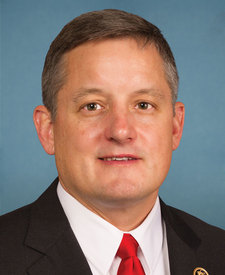
See how Bruce Westerman's votes line up with your values.
DeepSyte scores Bruce Westerman's record on the issues you care about — not party, not press releases. Take the 2-minute values quiz to see your personal alignment.
Sign in and take the values quiz to see how Bruce Westerman's votes line up with your views.
Prediction track record
How often we called Bruce Westerman's passage votes correctly, from their stated positions on each bill's tagged topics. Excludes “unclear” calls and abstentions.
8 predictions on record · none have been resolved by a passage vote yet. Check back as bills move.
Pending vote119-hr-7664
State Partnerships to Enhance Removal of Criminal Aliens Act
Based on 1 data point across public statements and recorded votes · AI analysis of public records
119-hr-4922·Notable gap
D. C. Criminal Reforms to Immediately Make Everyone Safe Act of 2025
12/100
What they said
Jan 14, 2026
The release advocates for legislation that reduces mandatory minimum sentences for juveniles who committed crimes against their abusers, allowing judges greater discretion in sentencing based on age, trauma history, and rehabilitation prospects.
The statement advocates reducing mandatory minimum sentences for juveniles who committed crimes against their abusers, giving judges more discretion. The bill, which the representative voted for, repeals a DC court's discretion to sentence youth offenders below mandatory minimums and restricts DC's authority over sentencing laws, pointing in the opposite direction on the same specific question of judicial discretion in youth sentencing.
Pairs with ambiguous language and high uncertainty are withheld until more data is available. Procedural, cloture, and amendment votes are excluded — they don't cleanly signal substantive support or opposition.
Pro analysis
AI rep analysis — Pro
Get an AI-narrated read on Bruce Westerman's full voting record against your stated values — aligned themes, conflicts, notable votes, and what to watch for.
Positions Bruce Westerman took during their campaign, scored against their subsequent record — public statements cross-checked with related votes. “Kept” means 80%+ of those statement-vs-vote pairs aligned; “Broken” means 30% or fewer.
0 kept0 broken0 mixed0 no action yet
Bruce Westerman has 4 tracked positions but no scored statement-vs-vote pairs touching them yet. Verdicts will appear here as related statements and votes accumulate.
No action yetSupports
A government-run public health insurance option should be added to the ACA marketplace.
“The Fair Care Act focuses on five areas: Private insurance; Public insurance; Prescription drugs; Provider competition; Innovation.”
Government environmental reviews for energy and infrastructure projects should move faster, even if it means fewer reviews.
“I have helped roll back more than a dozen job-killing Obama-era regulations and stood up for Main Street in the face of an overreaching federal bureaucracy.”
No party-break passage votes recorded for Bruce Westerman. Either they've voted with Republicans on every substantive passage vote in the corpus, or their tenure overlaps few high-threshold party-line votes so far.
WESTERMAN BILL TO TRANSFER CROSSETT EXPERIMENTAL FOREST TO THE STATE PASSES OUT OF THE HOUSE
Position: Congressman Westerman supports the Crossett Experimental Forest Act of 2026, which would transfer the 1,680-acre Crossett Experimental Forest in Ashley County, Arkansas from federal to state ownership to preserve forestry research, and calls on the Senate to pass the bill.
Today, the House of Representatives passed the Crossett Experimental Forest Act of 2026 that was introduced by Congressman Bruce Westerman (AR-04). This legislation allows the Crossett Experimental Forest, located in Ashley County, Arkansas, to continue providing opportunities for research through a transfer of ownership from the federal government to the state government. Congressman Westerman released the following statement:
“It’s impossible to discuss Arkansas forestry without recognizing the Crossett Experimental Forest. As the first field station in the Southern Forest Experiment Station, the research conducted here, combined with the leadership of Dr. Don C. Bragg and Dr. James M. Guldin, most notably contributed to the development of uneven-aged southern pine management. Its international reputation for exceptional forestry research highlights the profound global impact these studies have had for nearly a century on forest management practices,” said Congressman Westerman.
“As a forester, I understand first-hand the importance of regional, real-world data. What’s more, Arkansas’s forestry industry is a major driver of our state’s economy, and its success and longevity rely on modern, science-based practices for managing and conserving one of our most valuable natural resources. This proposed transfer of forest land from the federal government to the state government secures this great legacy, offers continued recreation use as a state wildlife management area, and keeps active, hands-on research alive for future foresters to learn from and enjoy. I am pleased to see this legislation pass out of the House and call on the Senate to pass this bill expeditiously to get it onto the President's desk to be signed into law.”
Background:
The Crossett Experimental Forest, (CEF) is an experimental forest totaling 1,680 acres in Ashley County, Arkansas, and was acquired via donation by the U.S. Forest Service in 1934. CEF has subsequently operated as a research forest as part of the broader Southern Research Station.
For the past two decades, research at CEF took place under the direction of Dr. Don Bragg. Tragically, Dr. Bragg passed away in December 2023. Since Dr. Bragg’s passing, there has been virtually no research conducted at CEF.
The state is prepared to dedicate resources across CEF and work with University of Arkansas at Monticello to ensure this remains a premier location for forestry and silviculture research. Arkansas has the expertise, the partnership and the willingness to invest in its future.
Read full bill text here.
Issues:Natural Resources
WESTERMAN INTRODUCES BIPARTISAN LEGISLATION AIMED AT CREATING STRONGER DOMESTIC PULP & PAPER AND WOOD PRODUCTS MARKETS
Position: The release supports introducing the bipartisan Strong American Wood (SAW) Act to strengthen domestic pulp, paper, and wood products markets through research and innovation, fair trade measures against subsidized foreign goods, and reduced regulatory burdens on mills.
Today, Congressman Bruce Westerman (AR-04) introduced the bipartisan Strong American Wood (SAW) Act along with Congresswoman Marie Gluesenkamp Perez (WA-03) that works to enhance the demand for American-grown wood and support the domestic wood products and pulp and paper products markets by promoting new markets through research and innovation, enacting fair trade, and clearing regulatory hurdles. Congressman Westerman and Congresswoman Gluesenkamp Perez released the following statements:
“American pulp and paper producers and wood products manufacturers are foundational industries across rural America. They are under immense pressure from static market conditions, subsidized foreign goods, and an overly burdensome domestic regulatory environment. The effects are underscored by mill closures, reduced production, job loss, and declining investment. These impacts threaten long-term competition in the marketplace, impact rural livelihoods, and put our forest health at risk – priming our forests as tinderboxes for devastating wildfire,” said Congressman Westerman. “The bottom line is that the United States is the world’s largest importer of wood and paper products while our mills are closing and our forests are going up in flames. That should not be so, and it’s why I introduced the Strong American Wood Act to ease regulatory burdens stifling mill growth, to allow U.S. producers to compete with subsidized foreign producers, and to expand markets for our domestic wood and paper products.”
“As wildfire emissions continue to spiral, cheap plastic substitutes for timber and paper products pollute our rivers and bodies and folks who work in the woods and mills are continually scapegoated-it’s past time we reevaluate the effectiveness of governmental policies around wood products,” said Congresswoman Gluesenkamp Perez. “I’m proud to join Bruce Westerman in introducing this legislation and prouder yet to stand with my community in demanding policies that strengthen our timber markets and affirm our commitment to the people who actually make the things we need.”
Background:
Mills across the country are closing and jobs are disappearing. Industry figures report that more than 50 mills have been closed or curtailed in about 15 months. Since 2021, we have seen 277 sawmill and wood-business closures.
Foreign imports are undercutting American producers. Even with a robust domestic supply, in the past year, the United States has imported nearly $27.7 billion in pulp and paper products and $19.3 billion in wood products like solid sawn and engineered wood. That’s a total of roughly $47 billion a year and more than any other country.
Low-value timber that needs to be thinned to maintain forest health in many places costs more to cut and haul than the timber is worth. Similarly, poor market conditions for residual material from solid wood products manufacturing not only threaten long-term forest health but ultimately devalue forestland, which creates ripple effects from forest fragmentation to negative impacts on institutional investments and retirement funds.
Housing backlog data reveals that the United States is over 4 million new homes behind. This statistic is devastating because it means current low demand for lumber which is resulting in mill closures and related infrastructure losses and sets the stage for future supply shortages, which will result in higher costs and more dependence on imports.
To address these issues, theStrong American Wood Act:
Expands the Carbon Storage Tax Credit to cover biochar and solid stored carbon.
Lowers barriers to entry for woody biomass to be used in transportation fuels.
Creates more economic and research opportunities for the commercialization of wood products like woody biomass and biochar.
Removes tariffs on machinery not produced in the U.S. that is needed to modernize and expand mills.
Directs tariff and countervailing duty collections from the long-standing U.S./Canada Softwood Lumber Agreement to be used to create revolving loan funds to promote new home building using domestic wood products and to promote U.S. softwood lumber products.
Removes all Buy American/Build America exemptions for all U.S. government-sourced components that could be purchased as a domestic forest product.
Establishes a domestic timber procurement requirement across all federal building components.
Recognizes domestic pulp and paper, hardwood, and softwood supply chains as critical national security materials and directs investigations into whether foreign pulp & paper and wood products imports undermine our national security.
Preserves American-owned and operated forests by implementing 100% expensing for reforestation expenditures following a natural disaster.
Requires secondary inspections for wood products and wood-look-alike products to ensure importers disclose full chemical inputs in these products.
Requires an EPA study to assess the impacts of wildfires on air quality, specifically on PM2.5 levels, and the role pulp & paper and wood products manufacturing plays in reducing wildfires.
Returns the EPA PM2.5 rule to 12 micrograms per cubic meter allowing for clean air and flexibility for producers.
Establishes a statutory response to European Union Deforestation Regulations (EUDR) that unfairly targets U.S. wood products produced from the world’s most sustainably managed forests. EUDR promotes wood products from virgin forests such as the Amazon rainforests while discriminating against products from managed working forests like those found in the United States and Scandinavia, where forest sustainability practices far outperform those in southern and Central Europe, Asia, South America, and Africa.
Link to bill text here.
Link to one-pager here.
Westerman Cosponsors the Introduction of Bipartisan Legislation to Support Veterans' Right to Build Their Own Homes
Position: Supports a five-year VA pilot program offering direct housing loans to rural veterans for building their own homes, with domestic wood sourcing requirements and expedited permitting.
This week, Reps. Bruce Westerman (R-AR) and Marie Gluesenkamp Perez (D-WA) introduced the Veterans Owner-Builders’ Rights Act to expand VA home loans and provide rural veterans with the ability to use a VA home loan to build their own homes. This bill would establish a five-year pilot program under the Department of Veterans Affairs (VA) to make direct housing loans to veterans in rural areas for the construction of new homes.
“Stable, reliable housing directly contributes to the health and well-being of our veterans. Unfortunately, high construction costs and interest rates keep many from investing in their future as homeowners,” said Congressman Westerman. “By working directly with the VA to expand construction loan access and investing in the domestic building materials we have in our own backyard, this bill initiates an innovative pilot program that lowers housing costs and provides more access for our veterans in addition to supporting rural America and bolstering our domestic wood supply chain. I’m grateful for the opportunity to work alongside my colleague from Washington to deliver real, bipartisan solutions that address the needs of our veteran community.”
“Building our own home was one of the hardest and most rewarding things I’ve ever done. While many vets have the relevant skills, they functionally can’t use their VA home loans and leverage their skills to build a home. In fact, only 30% of vets use their VA home loans at all,” said Congresswoman Gluesenkamp Perez. “My bill creates a pilot program for rural vets to use provided blueprints and expedited permitting to start building wealth and community-while increasing the housing supply for all of us.”
Background:
As the U.S. continues to face a shortage of starter homes, giving veterans the flexibility to build a home creates a new path to home ownership. In rural communities especially, housing demand frequently outpaces construction. Many veterans already have the skills and knowledge to build a home, but without benefits that give them the freedom to use those skills, they don’t have an opportunity to build. This means veterans are forced into a narrow band of options for how to use VA home loans. As a result, only about 30% of veterans use VA home loans. Owner-builder opportunities, like the ones this bill creates, simultaneously build wealth for veterans and their families, while adding to the overall housing supply.
Specifically, this legislation would:
Create a new direct home loan program at VA for rural veterans who want to build their own homes, utilizing the framework and eligibility requirements of an existing VA direct home loan program;
Provide blueprints with American wood sourcing and manufacturing requirements to stimulate domestic timber economies;
Streamline the permitting application process by requiring permit furnishment within 45 days of submission and covering all associated fees;
Provide technical assistance for veterans through the VA or a contracted third party related to the skills necessary to construct or repair a home, as well as for the permit application process; and
Safeguard against home-flippers by requiring the veteran to live in the home for at least two years or otherwise accelerate repayment of their loan.
Find more on the bill here.
Issues:Jobs and Economic Growth
WESTERMAN WRDA PRIORITIES ADVANCE TO THE HOUSE FLOOR
Position: Congressman Westerman expresses support for the Water Resources Development Act of 2026 and highlights provisions he secured for Arkansas waterways, flood control, navigation, and recreational access.
Today, the U.S. House Committee on Transportation and Infrastructure held a markup to advance the Water Resources Development Act (WRDA) of 2026. Congressman Bruce Westerman (AR-04) released the following statement:
“As a water-rich state, Arkansas depends heavily on the passage of the Water Resources Development Act (WRDA),” says Congressman Bruce Westerman. “In my capacity as a member of the House Committee on Transportation and Infrastructure, I had the privilege of securing several maintenance and development provisions to expedite repairs for the Dardanelle Lock and Dam, strengthen efficiency requirements for the MKARNS, improve flood control, and maintain recreational access during projects on Arkansas’ parks, lakes, trails, and waterways. I’m grateful for Chairmen Graves and Collins’ dedicated work to ensure we receive needed investments to continue improving our nation’s inland waterways and water resources infrastructure.”
BACKGROUND:
The Water Resources Development Act (WRDA) of 2026 is biennial, bipartisan legislation that supports the viability, effectiveness, and conservation of waterways for commercial and recreational use.
Westerman secured the following policy priorities in the 2026 WRDA:
Expedited repairs and study completion for the Dardanelle Lock & Dam
Ensures slope stabilization and recontouring to prioritize efficiency while keeping what is best for the surrounding environment in mind. This will protect navigation, prevent shutdown risks, and safeguard economic activity along the Arkansas River.
Strengthening the McClellan–Kerr Arkansas River Navigation System (MKARNS)
Increased efficiency requirements for inland waterway project management within the Corps.
Enhanced dredging coordination and beneficial use policies improving sediment management in navigable waterways.
Policies improving contracting efficiency that accelerate navigation construction and maintenance.
Lower Mississippi River Comprehensive Management Study
Arkansas directly benefits from a basin wide plan to improve flood control, navigation reliability, sediment management, and long-term river system resilience.
Supports eastern Arkansas farmers, industries, and communities vulnerable to repeat Mississippi River flooding.
Recreational Access Requirements
Any Corps project affecting parks, lakes, trails, or waterways in Arkansas must:
- Maintain recreational access
- Provide alternatives during construction
Updates to national flood risk policy
Require nonstructural solutions to be evaluated equally, benefiting rural Arkansas communities.
Improve levee certifications and safety assessments.
Streamline real estate requirements for maintaining levees.
Arkansas counties with levee districts (e.g., along the Arkansas and Mississippi Rivers) benefit from faster approvals and clearer standards.
Click here for a summary of the bill.
Click here for the full bill text.
Issues:Transportation and Infrastructure
WESTERMAN REINTRODUCES COMPREHENSIVE HEALTH CARE REFORM PLAN TO LOWER COST AND EXPAND COVERAGE FOR ALL AMERICANS
Position: Congressman Westerman introduced the Fair Care Act of 2026, a health care reform plan intended to lower costs, reduce the number of uninsured, protect patients with preexisting conditions, and expand coverage options through market-based measures. The release states the plan does not raise taxes.
Today, Congressman Bruce Westerman (AR-04) introduced the Fair Care Act of 2026, a comprehensive health care reform plan that combines over 75 bipartisan proposals to lower costs, decrease the number of uninsured individuals, protect those with preexisting conditions, and expand coverage options. Congressman Westerman released the following statement:
“For a health care system that is the largest contributor to our federal debt and where Americans spend over $5 trillion annually with 18%, and rising, of our GDP, we cannot afford to let partisan politics stand in the way of common sense and quality care. That’s why I introduced the Fair Care Act, an overarching solution that increases the number of people with health insurance coverage, decreases patient costs, and lowers long-term government spending.
“The Fair Care Act takes politics out of the equation and introduces common sense and competition to the health care marketplace, making health care more economical, straight forward, and accessible to all Americans.”— Congressman Bruce Westerman
“The Fair Care Act is the most rigorous, credible, carefully constructed, free-market health reform plan that Republicans have ever advanced. It expands coverage and reduces the deficit without raising taxes. The Fair Care Act works by reducing the underlying cost of health care, giving patients more affordable and innovative options for their coverage and care. I'm grateful to the Fair Care Act's sponsors, especially Rep. Westerman, for advancing these ideas."— Chairman and Co-Founder of The Foundation for Research on Equal Opportunity (FREOPP), Avik Roy
“The Fair Care Act would transform American health care. As high health care costs crush working- and middle-class families, improving affordability and access to medical care could not come at a better time. The Fair Care Act would enable families to obtain much-needed care at competitive rates that work best for their budget while demonstrating that the United States can achieve broader coverage without a government-run health care system.”— FREOPP resident health care fellow, Gregg Girvan
Background
The Fair Care Act of 2026 is the fifth version of the Fair Care Act of 2019, crafted with more than 75 bipartisan provisions.
Some of the Fair Care Act of 2026 provisions include:
Codifying the Affordable Care Act preexisting condition protections in HIPAA.
Offering greater protections for patients with preexisting conditions through an "Invisible Guaranteed Coverage Risk Pool" and guaranteed coverage Medigap plans.
Eliminating the employer health insurance mandate and allowing those with Employer Sponsored Insurance (ESI) offers to receive premium assistance.
Strengthening and increasing enrollment in the commercial marketplace through expanded assistance to 600 percent FPL and state innovation waivers.
Expanding the use of pretax dollars to cover more medical expenses, including insurance premiums and direct primary care arrangements.
Promoting transparency by publishing provider networks and prices for common services.
Requiring medical providers to send timely, transparent bills to patients.
Discouraging hospital consolidation and anti-competitive behavior while protecting rural hospitals from closures.
Modernizing the prescription drug approval process to bring safe, effective medicine to patients faster.
Reforming Pharmacy Benefit Manager (PBM) practices, including eliminating Direct and Indirect Remuneration (DIR) fees.
Expanding the number of health professionals that can provide telehealth services.
Modernizing Medicare enrollment through a competitive bidding process, which promotes Medicare Advantage plans.
Establishing a flexible Medicaid funding option for states and closing the gap between Medicaid eligibility and premium assistance in the individual market.
Promoting fiscal accountability and solvency for Medicare and Medicaid.
Read the full bill text here.
WESTERMAN AND COLLEAGUES LAUNCH BIPARTISAN GULF SOUTH BUSINESS CAUCUS TO DRIVE INVESTMENT, JOBS, ENERGY, AND MANUFACTURING LEADERSHIP ACROSS THE REGION
New Congressional caucus unites bipartisan Members from Alabama, Arkansas, Louisiana, Mississippi, and Texas to advance shared priorities on energy, manufacturing, infrastructure, and industrial growth
Today, Congressman Bruce Westerman (R-AR), joined by Reps. Troy A. Carter, Sr. (D-LA), Lizzie Fletcher (D-TX), Michael Guest (R-MS), Gary Palmer (R-AL), Mike Rogers (R-AL), Terri Sewell (D-AL), Bennie Thompson (D-MS), and Randy Weber (R-TX), launched the Gulf South Business Caucus, a new bipartisan Congressional caucus dedicated to advancing the economic competitiveness, energy leadership, and industrial growth of the Gulf South region. Westerman will serve as Chair of the caucus, which brings together Members of Congress from Alabama, Arkansas, Louisiana, Mississippi, and Texas to coordinate on federal policy priorities that support the region’s workers, communities, and employers. Additional members are expected to be announced in the coming weeks.
In 2024, the five Gulf South states contributed more than $3.7 trillion to the U.S. GDP, accounting for approximately 13% of the total U.S. economy. The region is home to many of the nation’s most important hubs for energy production, advanced manufacturing, transportation and logistics, chemicals, and rapidly expanding technology and digital infrastructure investment. The caucus will focus on strengthening grid reliability, expanding infrastructure investment, supporting workforce development, and ensuring the region’s priorities are reflected in national policy, opening the door to new investment, business development, and long-term job creation across the five states.
Founding members and co-chairs of the caucus issued the following statements on today’s launch:
“Playing a pivotal role in our nation’s economic success, the Gulf South region is integral to America’s energy production, manufacturing, and workforce demand. The Gulf South Business Caucus is committed to empowering this region’s local workers, communities, and employers through bipartisan, multi-state collaboration around shared economic interests of the region. We know that when the Gulf South succeeds, America succeeds. It is an honor to serve as chairman of this caucus, and I look forward to working alongside my colleagues to champion pro-growth policies and regional development within the halls of Congress that achieve this goal.” — Rep. Bruce Westerman (R-AR), Chair, Gulf South Business Caucus
“I’m proud to help lead this effort that reflects both the strength and the urgency of the Gulf South’s economic future. Our region has long powered this nation—through energy production, advanced manufacturing, and the movement of goods that keep our economy running. But we know our best days are still ahead. From the ports of Louisiana to the manufacturing hubs across our neighboring states, we are aligned in our mission to create good-paying jobs, drive innovation, and build a more resilient and competitive regional economy.” — Rep. Troy A. Carter, Sr. (D-LA)
"The Gulf South powers American energy and manufacturing, and the businesses and workers driving that growth deserve a strong, unified voice in Washington. The Gulf South Business Caucus is an opportunity to bring stakeholders directly into federal conversations about permitting, infrastructure, workforce, and the policy conditions that will keep our region competitive for decades to come. I am glad to partner with Congressman Bruce Westerman, Congressman Troy A. Carter, Sr., Congressman Michael Guest, Congressman Gary Palmer, Congressman Mike Rogers, Congresswoman Terri Sewell, Congressman Bennie Thompson, and Congressman Randy Weber to help build a forum where we can do that work together." — Rep. Lizzie Fletcher (D-TX)
“I am honored to join the new bipartisan Congressional caucus dedicated to advancing the economic competitiveness, energy leadership, and industrial growth of the Gulf South region. The Gulf South region plays a pivotal role in our nation’s economic success. As a Member of Congress from Mississippi, I look forward to the work this caucus will do to prioritize and strengthen our economic opportunities.” — Rep. Michael Guest (R-MS)
“The Gulf South plays a critical role in powering our nation’s economy. Alabama is a leader in energy production, advanced manufacturing, and innovation, and our workers help drive economic growth not just in our state, but across the entire Gulf South. As Co-Chair of the Gulf South Business Caucus, I’m committed to working with my colleagues to advance policies that strengthen grid reliability, cut unnecessary red tape, and support job creation across our region so we can ensure the Gulf South continues to lead in innovation, investment, and economic growth. I’m thankful for Chairman Bruce Westerman’s leadership in starting this caucus, and I look forward to seeing what we accomplish.” — Rep. Gary Palmer (R-AL)
“I am proud to join my colleagues in the founding of the Gulf South Business Caucus. The Gulf South Region’s economy has been growing at an extraordinary rate. As Members of Congress from this region, it is our job to work together to ensure our communities have the resources to continue this tremendous growth. We are always stronger when we work together, and the creation of this caucus further cements the spirit of collaboration between our neighboring districts.” — Rep. Mike Rogers (R-AL)
“I am proud to come together with my colleagues from the Gulf South region to launch this bipartisan caucus. I look forward to expanding our joint effort to promote infrastructure investment, affordable energy, and workforce development programs in the region.” — Rep. Terri Sewell (D-AL)
“The launch of the Gulf South Business Caucus represents a significant step toward better coordinating the economic strengths of our region. By aligning our federal priorities, we can help ensure that the growth and innovation taking place across the Gulf South translate into stronger infrastructure and good paying jobs for working families. I am committed to this bipartisan effort to expand opportunity, support long term economic development, and make certain that communities in Mississippi and across the region share in the benefits of this progress.” — Rep. Bennie Thompson (D-MS)
“I’m proud to be an inaugural member of the Gulf South Business Caucus. In Texas’ 14th District alone, our seven ports support over 200,000 jobs, move tens of billions in economic activity, and anchor a region that drives more than $1 trillion in trade each year while producing a massive share of America’s fuel supply. The Gulf Coast is the backbone that keeps America moving. This caucus is ready to set the bar and keep this country charging toward its next era of greatness.” — Rep. Randy Weber (R-TX)
The Gulf South Business Caucus will serve as a platform for Members to engage with business leaders and work together to identify opportunities to transform the region.
Issues:Jobs and Economic Growth
BIPARTISAN RESOLUTION INTRODUCED DECLARING APRIL AS SECOND CHANCE MONTH
Today, U.S. Representatives Bruce Westerman (R-AR) and Danny K. Davis (D-IL) alongside U.S Senators Kevin Cramer (R-ND) and Amy Klobuchar (D-MN) reintroduced the bipartisan, bicameral Second Chance Month Resolution that recognizes April as Second Chance Month. The members released the following statements:
“This is a nation of second chances. Offering incarcerated Americans the opportunity to succeed by reducing barriers preventing them from establishing good-paying jobs and earning sought-after respect is a critical key to reducing recidivism rates. By investing in these individuals who have proven to be committed to rectifying their mistakes, we are investing in the future success and safety of our communities,” said Congressman Westerman. “I am proud to introduce this resolution to recognize April as Second Chance Month. This piece of legislation champions second chances while highlighting the importance of restoring hope to individuals looking to reintegrate back into their communities with dignity.”
“There are millions of individuals in our country who have civil and criminal records that serve as barriers to obtaining education, technical skills, training, jobs, and government benefits,” said Congressman Davis. “Second chances - and especially the Second Chance Act – help to reduce and remove these barriers. Therefore, I am proud to join my colleagues in recognizing Second Chance Month. Second Chance Month honors the work of non-profit organizations, faith-based entities, communities, governments, employers, and individuals that help those with records gain the skills, education, and employment needed to thrive, thereby strengthening individuals, rebuilding families, and growing our economy.”
“Way too often, the conversation around criminal justice ends at punishment,” said Senator Cramer. “I think, instead of dwelling on incarceration, we really ought to focus on what comes next. Our resolution simply recognizes the importance of another chance and ensuring individuals have another shot at rebuilding their lives, supporting their families, and most importantly, contributing to their communities. Those who have reconciled with society deserve an opportunity to succeed, and Second Chance Month really reinforces that commitment.”
“As a former prosecutor, I have seen firsthand the challenges facing those who have been formerly incarcerated,” said Senator Klobuchar. “People are capable of change and many deserve a second chance. This bipartisan resolution to recognize ‘Second Chance Month’ will bring awareness to these barriers and promote opportunities for those who have served their time to access stable jobs, continue their education, and become productive members of society again.”
“As Prison Fellowship marks its 50th anniversary, the Second Chance Month resolution reflects our longstanding commitment to justice that restores. We know that when unnecessary barriers to reentry are removed, people are better equipped to succeed, making our neighborhoods safer and stronger for everyone.” Scott Peyton, Director of Government Affairs for Prison Fellowship
Background
This resolution recognizes April as Second Chance Month, raising awareness for unlocking opportunities for successful reentry into society following incarceration that ultimately reduces recidivism rates.
Millions of American adults with a criminal record face enormous obstacles to successfully re-enter society upon release. When legal and social barriers prohibit a formerly incarcerated person from finding well-paying jobs, this not only negatively impacts them, but also has lasting negative effects for their families. Beyond that, securing gainful employment and being accepted in society has been proven to reduce the likelihood of these individuals returning to prison in the future, ultimately decreasing crime and improving public safety.
This resolution is supported by Prison Fellowship, American Correctional Association, Brennan Center for Justice, CPAC, Due Process Institute, FAMM, Major County Sheriffs of America, Modern Fortis, National District Attorneys Association, Niskanen Center, Right on Crime, and Unify.US.
Read the full resolution text here.
Issues:Education and Opportunity
WESTERMAN STATEMENT ON 2026 STATE OF THE UNION ADDRESS
Tonight, President Donald Trump delivered his State of the Union Address to Congress. Congressman Bruce Westerman (AR-04) provided the following statement in response:
“Over the past year, the Republican trifecta has delivered commonsense solutions to ease the burdens everyday Arkansans are facing, and we are just getting started. Good governance means focusing on dinner table issues that matter most: cutting burdensome federal regulations, lowering the cost of living, creating stronger borders, and building a thriving economy. Tonight, while President Trump reaffirmed that vision, it is clear that there is still more work to do. I look forward to continuing to work with the Administration and my colleagues in the House and Senate to champion commonsense legislation that prioritizes American families, workers, and values.“
WESTERMAN FUNDING PRIORITIES FOR FOURTH DISTRICT HEAD TO PRESIDENT'S DESK
Today, the House of Representatives passed several funding packages to fund the government for Fiscal Year 2026 for the Departments of Defense, Transportation, Housing and Urban Development (THUD), Labor, Health and Human Services (Labor -HHS), and Education as well as other related agencies. Within the THUD provisions were several Westerman-backed wins for the Fourth District of Arkansas. Congressman Bruce Westerman (AR-04) released the following statement:
“Our state’s infrastructure plays an important role in the safety of our communities – especially for our more rural areas. Runways, roadways and bridges connect rural folks with the vital services they need while increasing access to global markets for our local farmers and manufacturers. Together, they work hand-in-hand to foster the security of its residents and the growth of our local economies. It is a privilege to work on behalf of communities across the Fourth District to secure wins that ultimately invest in the future of our great state.”
Westerman secured federal investments for the following projects:
$7 million to the Highway 82 Railroad Overpass
This project realigns portions of Highway 82 and constructs a five-lane grade separation with Union Pacific Railroad. As this section of highway is currently a narrow underpass of the Union Pacific Railroad, this project will increase safety as well as provide a five-lane structure in preparation for future widening of the Highway 82 corridor. The benefits of widening this corridor include increased safety, mobility, enhanced economic opportunities, and improved intermodal connectivity and reliability of the regional transportation system.
$11 million to the Texarkana Regional Airport (TXK) Taxiway-Taxilane Construction
This project is for the construction of a new taxilane and the widening of the full-length taxiway to accommodate all aircraft in the Taxiway Design group (TDG) 5. This project would improve the primary taxiway at Texarkana Regional Airport (TXK) to allow for larger/heavier aircraft to operate at the airport and support economic development of the local community and the region.
$9.2 million to the Demolition, Stabilization, and Remediation of the former Army Navy General Hospital
This project funds the demolition, stabilization, and remediation of the former Army Navy General Hospital in Hot Springs, Arkansas. The property is located in the heart of downtown Hot Springs, a major tourist attraction for the state of Arkansas. It is an iconic building that has fallen into serious disrepair and poses a major risk to Hot Springs National Park and the thermal springs for which Hot Springs is known. Demolition, remediation, and stabilization of the property are necessary to mitigate fire risk, secure the site, and remove hazards to public safety.
Issues:Transportation and Infrastructure
WESTERMAN APPLAUDS HOUSE PASSAGE OF APPROPRIATIONS BILLS THROUGH REGULAR ORDER
Today, the House of Representatives voted to pass the final four appropriations bills: Department of Defense (DoD) Appropriations Act, 2026; Departments of Labor, Health and Human Services, and Education, and Related Agencies Appropriations Act, 2026; Transportation, Housing and Urban Development, (THUD) And Related Agencies Appropriations Act, 2026; and the Department of Homeland Security Appropriations Act, 2026. The passage of these bills ultimately completes the annual appropriations process through a committee-led approach and restores regular order to the federal budget process. Congressman Bruce Westerman (AR-04) released the following statement:
“For years, Congress has relied on bloated and reckless stopgap spending bills, ultimately leaving future lawmakers to deal with a compounding fiscal issue. Today, the House has restored regular order and fiscal sanity to the federal budget process by successfully passing all twelve appropriations bills. House Republicans are continuing to deliver on their promises to the American people by lowering the level of discretionary spending to steward their tax dollars well and work in the way Congress was intended. I’m proud of the job my Republican colleagues have done to put the American people first and apply commonsense, conservative principles to such an integral part of the role we play as lawmakers.”
Source: GDELT 2.0 GKG, filtered to a curated list of national outlets. Inclusion is not endorsement; opinion pieces and reported news are mixed.
Recent stock activity
Periodic transaction reports filed under the STOCK Act — disclosed by the rep, sourced from public filings.
No disclosed trades on record.
Source: open-data mirrors of the Senate eFD and House Clerk financial-disclosure systems. Disclosure within 30 days of trade is required by law (45 for spouse/dependent trades).
Top PAC donors · 2026 cycle
Political action committees that gave the most to this rep's principal campaign committee this cycle. PAC giving is direct organizational support — industry, ideological, or leadership.
1.THE HOME DEPOT INC. POLITICAL ACTION COMMITTEEBusiness3 contributionsRetail corporation PAC — supports candidates aligned with business-friendly policies on tax, labor, and regulatory matters.AI$10,000
2.THE EYE OF THE TIGER POLITICAL ACTION COMMITTEEOther2 contributionsPAC with a motivational slogan name — specific policy positions and affiliations not inferable from the name alone.AI · low$10,000
3.THE COUNCIL OF INSURANCE AGENTS & BROKERS POLITICAL ACTION COMMITTEEFinance2 contributionsInsurance-industry PAC representing agents and brokers — backs candidates supporting favorable regulatory and tax treatment of insurance distribution and sales.AI$10,000
4.REPUBLICAN MAJORITY FUND2 contributions$10,000
5.NATIONAL ASSOCIATION OF REALTORS POLITICAL ACTION COMMITTEEReal Estate3 contributionsTrade association PAC for U.S. real estate agents and brokers — backs candidates supporting property-rights protections, mortgage-lending access, and tax incentives for homeownership.AI$10,000
6.NATIONAL ASSOCIATION OF MANUFACTURERS PAC (NAM-PAC)2 contributions$10,000
7.MR. SOUTHERN MISSOURIAN IN THE HOUSE PACLeadership2 contributionsMember-of-Congress leadership PAC — supports allied candidates and Democratic causes, likely affiliated with a House member representing southern Missouri.AI$10,000
8.CHARTER COMMUNICATIONS INC. PACTech3 contributionsTelecom and media PAC — backs candidates supporting broadband infrastructure investment, regulatory policies favorable to cable and internet service providers, and telecommunications competition.AI$10,000
9.BUILD PAC OF THE NATIONAL ASSOCIATION OF HOME BUILDERS (BUILDPAC)2 contributions$10,000
10.BACPAC2 contributions$10,000
Source: OpenFEC (api.open.fec.gov) Schedule A receipts where contributor type is “committee.” Aggregated by contributing committee. Self-transfers from joint-fundraising / victory committees are excluded.
Top individual contributors · 2026 cycle
Itemized individual contributions over $200 to this rep's campaign committee, aggregated by donor employer. PAC giving is shown above; this section is people, not organizations.
1.PERMIAN RESOURCES$24,000
2.MEWBOURNE OIL COMPANY$23,000
3.FLYWHEEL ENERGY$20,500
4.ARENA ENERGY$15,900
5.SIERRA PACIFIC IND.$14,000
6.ARNOLD VENTURES$14,000
7.ENTERPRISE PRODUCTS PARTNERS$10,500
8.THE WINROCK GROUP$10,500
9.RYAN, LLC$10,000
10.PAFFORD EMERGENCY MEDICAL SERVICES$9,000
Source: OpenFEC Schedule A receipts where contributor type is “individual,” aggregated by the donor's self-reported employer. This is a geographic / industry correlation, not a corporate endorsement.