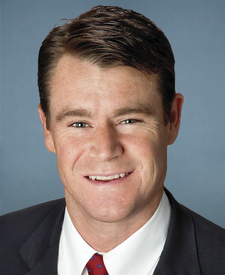
See how Todd Young actually votes — against your values.
DeepSyte scores Todd Young's record on the issues you care about — not party, not press releases. Take the 2-minute values quiz to see your personal alignment.
Sign in and take the values quiz to see how Todd Young's votes line up with your views.
Prediction track record
How often we called Todd Young's passage votes correctly, from their stated positions on each bill's tagged topics. Excludes “unclear” calls and abstentions.
100%
Accuracy
1
Correct
0
Incorrect
55
Pending
Right119-sjres-184
A joint resolution to direct the removal of United States Armed Forces from hostilities within or against the Islamic Republic of Iran that have not been authorized by Congress.
A joint resolution to direct the removal of United States Armed Forces from hostilities within or against the Islamic Republic of Iran that have not been authorized by Congress.
We haven't yet found statement/vote pairs on the same topic for Todd Young. This usually means either the rep hasn't taken public positions on bills that have come to a passage vote, or those bills haven't been tagged yet. The checker runs as new press releases and votes come in.
Pro analysis
AI rep analysis — Pro
Get an AI-narrated read on Todd Young's full voting record against your stated values — aligned themes, conflicts, notable votes, and what to watch for.
We haven't extracted campaign positions for Todd Young yet. Once their campaign website or position pages are processed, this card will track what they said vs how they voted.
Crossing the aisle
Passage votes where Todd Young broke ranks with ≥75% of Republicans. Threshold catches substantively partisan splits; unanimous-ish or close votes are excluded.
1
Cross-aisle vote
118-sjres-117·Nov 21, 2024·80% of R voted YES
A joint resolution relating to the disapproval of the Presidential report with respect to the indebtedness of the Government of Ukraine.
Young, Colleagues Introduce Resolution Highlighting Chinese Threat to America’s Strategic Interests - Senator Young
Position: The resolution expresses concern over China's threat to U.S. national security and economic interests, calling for strengthened deterrence in the Indo-Pacific, protection of American workers and businesses from unfair Chinese economic practices, U.S. leadership in emerging technologies, support for allies and partners, stability across the Taiwan Strait, and advancement of human rights and democratic values.
WASHINGTON – U.S. Senator Todd Young (R-Ind.) joined a bipartisan group of senators in introducing a resolution affirming concern over the growing threat China poses to America’s national security and economic prosperity at a pivotal moment for U.S.-Chinese relations. The resolution calls for a continued and steady focus on strengthening deterrence in the Indo-Pacific, protecting American workers and businesses from unfair economic practices, maintaining leadership in artificial intelligence and other emerging technologies, supporting allies and partners, preserving peace and stability across the Taiwan Strait, and advancing human rights and democratic values.
In addition to Young, U.S. Senators Chris Coons (D-Del.), Pete Ricketts (R-Neb.), Jeanne Shaheen (D-N.H.), Ted Cruz (R-Texas), Tim Kaine (D-Va.), Bernie Moreno (R-Ohio), Patty Murray (D-Wash.), John Curtis (R-Utah), Andy Kim (D-N.J.), Dave McCormick (R-Pa.), Tammy Duckworth (D-Ill.), Jim Banks (R-Ind.), Elissa Slotkin (D-Mich.), Thom Tillis (R-N.C.), and Roger Wicker (R-Miss.) also introduced the resolution.
The resolution states that the United States should address the security, economic, technological, diplomatic, and strategic threats posed by China as a top foreign policy priority. It also calls for the United States to:
A copy of the resolution is available here.
Young, Moran Introduce Legislation to Promote and Expand Apprenticeship Programs - Senator Young
Position: Senators Young and Moran introduced legislation to create a refundable payroll tax credit for employers who participate in registered apprenticeship programs, offsetting wages and program costs to expand workforce training opportunities.
WASHINGTON – Today, on National Apprenticeship Day, U.S. Senator Todd Young (R-Ind.) and U.S. Representative Nathaniel Moran (R-TX-01) introduced the Workforce Apprenticeship Growth and Education Support (WAGES) Act. The legislation would create a refundable payroll tax credit for employers who maintain or participate in a Registered Apprenticeship Program (RAP). The tax credit would offset the cost of wages paid to apprentices and mentors, as well as the cost of other program expenses.
“Apprenticeships equip individuals with sustainable skills to advance their careers and offer employers job-ready workers, but too many businesses still face barriers to launching or scaling these programs. At a time when high-demand industries are struggling to fill open positions, our bill will make it easier for businesses to invest in high-quality apprenticeship programs, strengthening our workforce and expanding pathways to good-paying careers. This is an important step in ensuring Americans are prepared for the jobs of today and tomorrow,”said Senator Young.
“Apprenticeships are one of the most powerful—and underutilized—pathways to prosperity in America,” said Representative Moran. “This legislation changes that by making it easier and less costly for businesses to invest in the next generation of skilled workers through apprenticeship programs. We are making it practical for employers across America to create workforce opportunities from within their organization by utilizing the expertise of their experienced employees to upskill and mentor younger workers, all the while doing so by keeping more of their tax dollars.”
Under the WAGES Act, eligible employers would be required to:
Covered program expenses would include:
In 2025, President Trump signed an Executive Order to prepare Americans for high-paying skilled trade jobs of the future, with plans to reach and surpass one million new active apprenticeships. The WAGES Act builds on the Trump Administration's efforts to grow apprenticeship programs across the country. These programs benefit workers by providing them a skills-based education for a sustainable career and offer employers an opportunity to recruit, build, and retain a highly skilled workforce.
The WAGES Act is supported by the following organizations: American Hotel and Lodging Association, American Society for Nondestructive Testing, American Trucking Associations, Associated Equipment Distributors, Associated General Contractors of America, Caliber Collision, National Association of Home Builders, National Restaurant Association, National Roofing Contractors Association, Real Estate Roundtable, Small Business & Entrepreneurship Council, U.S. Chamber of Commerce, Ascend Indiana, CEOs of Indiana Corporate Partnership, Indiana Electric Cooperatives, Indiana Manufacturers Association, and the Indy Chamber.
“There’s never been a more exciting time to build a career in the skilled trades. The Wages Act is a meaningful step forward, encouraging companies to invest in apprenticeship programs that create real opportunity for the next generation of talent. At Caliber, we see the impact of these programs every day—building careers, strengthening our workforce, and supporting the future of our industry. We appreciate Congressman Moran and Senator Young for their leadership in advancing this effort,” said David Simmons, CEO of Caliber Collision.
Additional statements of support can be found here.
A summary of the WAGES Act can be found here. Full legislative text can be found here.
Young, Colleagues Introduce Bill to Advance AI Innovation, Reliability for Americans - Senator Young
Position: Senators Young, Heinrich, Rounds, and Booker support establishing the National Artificial Intelligence Research Resource (NAIRR) through the CREATE AI Act to expand access to AI research infrastructure, advance AI innovation and safety, and develop workforce skills while maintaining U.S. competitiveness with China.
WASHINGTON – Today, U.S. Senators Todd Young (R-Ind.), Martin Heinrich (D-N.M.), Mike Rounds (R-S.D.), and Cory Booker (D-N.J.) reintroduced the Creating Resources for Every American to Experiment with Artificial Intelligence Act (CREATE AI Act), legislation that would establish the National Artificial Intelligence Research Resource (NAIRR). The NAIRR is a shared national research infrastructure to connect American researchers and educators to data, software, and tools necessary to advance AI research and development (R&D) and develop AI skills for the U.S. workforce. The legislation will also focus on improving the safety, reliability, and trustworthiness of AI for Americans.
“The United States cannot cede leadership in AI development to China. For both our economic and national security, we must harness AI’s potential and mitigate its risks. By establishing the National AI Research Resource in statute, the CREATE AI Act will give incredible access and resources to America’s brightest, allowing for advancements in AI innovation, deployment, and safety for our country and ultimately the world,” said Senator Young.
“The Create AI Act will help us develop and deploy AI responsibly, while also unleashing American innovation by expanding access to the tools needed to conduct cutting-edge research. But as we push this technology forward, we must also take seriously our responsibility to rein in its potential harms — putting the right safeguards in place to ensure AI is used safely, ethically, and in the public interest. By truly democratizing access to AI, we can prepare American workers for the future, maintain our nation’s competitive edge, and ensure these rapid advancements strengthen our economy and benefit communities in New Mexico and across the country,” said Senator Heinrich.
Artificial intelligence has the potential to impact a range of fields, from national security to health care,” said Senator Rounds. “Our bipartisan legislation establishes the National Artificial Intelligence Research Resource (NAIRR), which will provide tools and resources for universities and researchers across the country. This will help NAIRR to accomplish the objectives laid out in President Trump’s AI Action Plan. Universities in South Dakota are already conducting research and applying AI and other emerging technologies. This legislation will allow these universities to expand their leading role.”
“The United States has some of the brightest AI researchers in the world. They want to solve hard problems and improve people’s lives—but the steep financial costs of doing this research have pushed too many of them to the sidelines,” said Senator Booker. “The NAIRR gives universities, students, and researchers—in New Jersey and across the country—the tools they need to pursue new breakthroughs; it ensures that the future of AI research isn’t shaped only by a small number of large companies; and it helps us build a stronger, more diverse AI research community that’s focused on serving the public good.“
“As AI continues to transform the world on a global and economic scale, it’s critical to our innovation and national security that America leads—and wins—the race. Establishing the NAIRR as a shared national research infrastructure will give students, researchers and workers access to resources to advance safe AI development, drive innovation and strengthen America’s leadership in emerging technologies. I’m proud to support the CREATE AI Act to expand opportunity and prepare our next generation for success,” said Senator Jon Husted, who also cosponsored the legislation.
The CREATE AI Act would establish NAIRR to do the following:
The legislation is supported by Indiana University, AI Policy Network, Information Technology Industry Council (ITI), Cognizant, SeedAI, Business Software Alliance, and TechNet.
“Artificial intelligence’s advanced data and computing capacity can help us solve complex, real-world problems,” said Pamela Whitten, President of Indiana University. “By broadening access for university and nonprofit researchers, we can accelerate innovation and expand the impact of research that benefits America. Senator Young’s leadership on the National AI Research Resource is an important step forward.”
“By establishing the National AI Research Resource within the National Science Foundation, the CREATE AI Act will enable greater scientific discovery, advance new methods of AI testing and evaluation, and better resource the alignment research needed to prevent the loss of control over AI systems of unprecedented scope and capability. As AI systems become increasingly capable, the ability for scientists to rigorously and independently evaluate AI models is a national security and public safety imperative,” said Daniel Colson, Executive Director of the AI Policy Network.
“Now is the time to empower students and researchers with cutting-edge AI development tools,” said Jason Oxman, President and CEO of ITI. "To do this, we need a place where public and private sector partners can collaborate and share resources like compute, data, and infrastructure. This legislation would designate the National AI Research Resource (NAIRR) as that hub. We thank Senators Young and Heinrich for their leadership on the CREATE AI Act and for helping more Americans access U.S. AI leadership and expertise.”
“I commend Senators Young and Heinrich for their leadership on democratizing AI for shared benefit across the United States. As a leading AI builder, we see firsthand the importance of expanding the AI ecosystem for researchers, students, non-profits, and businesses through access, learning, and adaptability. This bipartisan legislation will drive innovation, accelerate AI participation, and advance our national infrastructure to support the fast-moving changes of this transformative technology,” said Ravi Kumar S, CEO of Cognizant.
“Access to compute, data, and tools are all major bottlenecks for AI. One of the best ways Congress can help promote American competitiveness is by removing these bottlenecks across the country — for students, researchers, scientists, startups, and established businesses alike. Codifying the NAIRR would help do exactly that. We commend Senators Young, Heinrich, Rounds, and Booker for their continued focus on this critical bipartisan priority and urge swift passage for the CREATE AI Act,” said Austin Carson, Founder and CEO of SeedAI.
“BSA commends Senators Young, Heinrich, Rounds, and Booker for reintroducing the CREATE AI Act to expand access to the infrastructure that drives AI innovation. The bill would strengthen US leadership in AI by establishing the National Artificial Intelligence Research Resource. By broadening access to compute, data, and technical resources, the CREATE AI Act will accelerate more widespread AI research and adoption and help startups, small businesses, and academic institutions put AI to work,” said Business Software Alliance.
“Authorizing the National Artificial Intelligence Research Resource (NAIRR) through the CREATE AI Act is critical to ensuring that students, researchers, and innovators across the country have access to the computing power, data, and tools needed to build the next generation of safe and trustworthy AI and help secure long-term U.S. leadership in artificial intelligence. We thank Senators Young, Heinrich, Rounds, and Booker for their leadership on this important effort to advance American innovation," said Linda Moore, President and CEO, TechNet.
Full text of the legislation can be found here.
Young, Colleagues Introduce Legislation to Close Loopholes Allowing Taxpayer-Funded Abortions - Senator Young
Position: Senator Young and colleagues introduced legislation to prohibit federal Title X family-planning grants from going to entities that perform abortions or fund abortion providers, arguing that taxpayer dollars should not subsidize abortion services.
WASHINGTON – U.S. Senator Todd Young (R-Ind.) and Marsha Blackburn (R-Tenn.) introduced the Title X Abortion Provider Prohibition Act to ban federal Title X family-planning grants from going to any entity (like Planned Parenthood) that performs abortions or funds abortion providers.
“Title X was designed to provide moms and children with necessary family planning services, not fund abortions. This legislation will protect life and ensure taxpayer dollars are protected from taking innocent lives,” said Senator Young.
“Taxpayers should not have to spend a penny on abortions,” said Senator Blackburn. “The Title X Abortion Provider Prohibition Act would protect life and stop federal funds from going to entities that perform abortions by closing loopholes in federal law.”
The Title X Family Planning Program is intended to assist low-income women with family planning services. Unfortunately, this program has a history of subsidizing massive organizations that engage in abortion activities such as Planned Parenthood. Since 1976, federal law has prohibited use of federal funds for abortions.
Section 1008 of the Public Health Service Act explicitly states that Title X funds “shall not be used in programs where abortion is a method of family planning,” but Clinton-era rules require all grantees to refer patients for abortions and allow abortion facilities to be co-located within Title X clinics.
As a result, Planned Parenthood clinics that receive federal family planning funds can share the same facility, staff, and waiting room as abortion clinics, and often refer women for on-site abortions.
Additional co-sponsors of this legislation include Senators Bill Cassidy (R-La.),James Lankford (R-Okla.), Steve Daines (R-Mont.), Jim Risch (R-Idaho), Ted Cruz (R-Texas), Thom Tillis (R-N.C.), Cynthia Lummis (R-Wyo.), Josh Hawley (R-Mo.), Cindy Hyde-Smith (R-Miss.), Bill Hagerty (R-Tenn.), Katie Britt (R-Ala.), Mike Crapo (R-Idaho), Deb Fischer (R-Neb.), Roger Wicker (R-Miss.), John Barrasso (R-Wyo.), Roger Marshall (R-Kan.), and Kevin Cramer (R-N.D.).
The Title X Abortion Provider Prohibition Act would:
This legislation is supported by Susan B. Anthony Pro-Life America, Concerned Women for America Legislative Action Committee, March for Life Action, National Right to Life Committee, Americans United for Life, and the Students for Life Action.
“Abortion providers such as Planned Parenthood should not receive a single dime of taxpayer dollars, especially when those funds are meant to provide family planning services to women in need. Abortion is the exact opposite of that mission. Title X funds should be reserved for entities that truly help American families, rather than those that prey upon vulnerable women and their unborn babies. We are grateful to Sen. Blackburn for introducing legislation that would prohibit this evil, predatory industry from receiving federal grants they do not deserve,” said Penny Nance, President and CEO of Concerned Women for America Legislative Action Committee.
“Taxpayer dollars should never be used to subsidize the abortion industry. Senator Blackburn’s Title X Abortion Provider Prohibition Act restores a clear and commonsense boundary by ensuring that family planning funds are directed to providers that offer genuine, life-affirming care. For too long, abortion providers have received federal support while continuing to profit from abortion. National Right to Life is proud to support Senator Blackburn’s leadership on this important measure,” said Carol Tobias, President, National Right to Life.
“March for Life Action applauds Senator Blackburn’s Title X Abortion Provider Prohibition Act. Abortion providers like Planned Parenthood should not receive a single cent of taxpayer funding, whether through the Title X program or otherwise,” said the March for Life Action.
“Title X has long served as a slush fund for the Big Abortion industry, led by Planned Parenthood. In 2024 alone, abortion businesses ended the lives of an estimated 1.1 million unborn babies. Thank you, Senator Blackburn, for championing this important legislation to permanently stop Title X dollars from going to these bad actors and protect American taxpayers from being forced to fund the abortion industry,” said the Hon. Marilyn Musgrave, VP of Government Affairs, Susan B. Anthony Pro- Life America.
See the full text of the legislation here.
Young, Cantwell Resolution Marking World Quantum Day Passes Senate - Senator Young
WASHINGTON – Last week, the United States Senate unanimously passed a resolution introduced by U.S. Senators Todd Young (R-Ind.), Maria Cantwell (D-Wash.), and Maggie Hassan (D-N.H.) to commemorate and support the goals of World Quantum Day, recognized annually on April 14. World Quantum Day highlights the significance of the quantum mechanics in everyday-life technologies, such as semiconductors, GPS systems, and MRI imaging.
On World Quantum Day, the Senate Commerce Committee unanimously passed the National Quantum Initiative Reauthorization Act out of committee. The legislation, introduced by Young and Cantwell, would further ensure American leadership in quantum technologies. The bill now heads to the full Senate for consideration.
“Quantum science is driving groundbreaking technological advancements, like the development of life-saving medical treatments and the production of new materials. These advancements will play a crucial role in strengthening America’s competitive edge and national security,” said Senator Young. “Our World Quantum Day initiative recognizes the incredible discoveries we’ve made through quantum while underscoring the importance of preparing the next generation with the skills to carry that momentum forward.”
“It’s appropriate that on World Quantum Day, the Commerce Committee passed legislation to authorize the National Quantum Initiative across the full research-to-application spectrum. It will strengthen research and accelerate applications and expand initiatives, including NASA's research activities. And it will establish three new NIST quantum centers and create new NSF multidisciplinary centers for quantum research and education and new quantum testbeds,” said Senator Cantwell.
Full text of the resolution can be found here.
Young Discusses Iran at Semafor World Economy Summit - Senator Young
Position: Senator Young states that while he wants the Iran conflict to end soon, it is important to win the war, which he defines as reopening the Strait of Hormuz and securing Iran's supply of uranium.
WASHINGTON – Today, U.S. Senator Todd Young (R-Ind.) joined Semafor’s World Economy Summit and took questions on the Iran war, the 2026 World Cup, and his working relationship with President Trump.
While saying he wants the conflict in Iran to end soon, Young said it is important to win the war, which he defined as reopening the Strait of Hormuz and securing Iran’s supply of uranium.
Video of Senator Young at the event is available here.
Young, Colleagues Support U.S.-Mexico-Canada Agreement, Urge Market Access for American Producers - Senator Young
Position: Senator Young and colleagues support the U.S.-Mexico-Canada Agreement and urge the U.S. Trade Representative to maintain and expand market access for American agricultural producers during the agreement's upcoming six-year joint review.
WASHINGTON – Today, U.S. Senator Todd Young (R-Ind.) joined a bipartisan group of senators in a letter to U.S. Trade Representative (USTR) Jamieson Greer emphasizing support of the U.S.-Mexico-Canada Agreement (USMCA) ahead of the Agreement’s six-year joint review and urging expanded market access and certainty for American producers.
“The United States is currently the world’s largest agricultural exporter, with total agricultural exports valued at $176 billion in 2024. Since the Agreement’s entry-into-force, U.S. agricultural exports have increased substantially, particularly to Canada and Mexico. For many states, Canada and Mexico represent the largest and second-largest export markets. The market access achieved under USMCA is a critical component of the success of American agriculture and contributes to our secure food supply chain and to the global competitiveness of U.S. producers. Bulk commodities, like wheat, corn, and oilseeds, maintain a strong trade surplus with Canada and Mexico. Farmers, ranchers, processors, and exporters throughout the supply chain have been broadly supportive of USMCA and the certainty it provides.
…American family farmers and ranchers depend on the certainty afforded by a stable Agreement. The integrated supply chains facilitated by streamlined compliance requirements, effective rules governing food safety measures, and intellectual property protections have allowed the U.S. to build a fortified trading network here in the Western Hemisphere. Our close proximity to dependable markets based on rules-based, science-driven commitments from our trading partners is critical for domestic producers.
…As preparations begin for the upcoming joint review process, we encourage continued engagement with Congress, farmers, and ranchers to ensure the agreement is improved to support U.S. agriculture and maintain strong market access for American producers,” the senators wrote in the letter.
Senators Steve Daines (R-Mont.), Amy Klobuchar (D-Minn.), John Boozman (R-Ark.), Raphael Warnock (D-Ga.), Mike Crapo (R-Idaho), Michael Bennet (D-Colo.), Chuck Grassley (R-Iowa), Tina Smith (D-Minn.), Thom Tillis (R-N.C.), Mark Warner (D-Va.), John Cornyn (R-Texas), Catherine Cortez Masto (D-Nev.), Roger Marshall (R-Kan.), Chris Coons (D-Del.), Dick Durbin (D-Ill.), John Barrasso (R-Wyo.), Tammy Duckworth (D-Ill.), Marsha Blackburn (R-Tenn.), John Hickenlooper (D-Colo.), James Lankford (R-Okla.), Jacky Rosen (D-Nev.), Mitch McConnell (R-Ky.), Adam Schiff (D-Calif.), Tim Sheehy (R-Mont.), Elissa Slotkin (D-Mich.), Joni Ernst (R-Iowa), Jeff Merkley (D-Ore.), Kevin Cramer (R-N.D.), Peter Welch (D-V.T.), Tommy Tuberville (R-Ala.), Ted Budd (R-N.C.), Cindy Hyde-Smith (R-Miss.), Jon Husted (R-Ohio), Jerry Moran (R-Kan.), Pete Ricketts (R-Neb.), Jim Justice (R-W.V.), Roger Wicker (R-Miss.), John Hoeven (R-N.D.), Ted Cruz (R-Texas), and Deb Fischer (R-Neb.) also signed the letter.
Full text of the letter can be found here.
The letter is supported by the American Soybean Association, the Agricultural Coalition for USMCA, the National Corn Growers Association, and the National Association of Wheat Growers.
“The USMCA has been a true success story for U.S. soybean farmers, increasing market access in both Canada and Mexico while ensuring critical cross-border trade remains unhindered," ASA greatly appreciates the leadership of Senator Daines, Klobuchar, and Boozman in leading this letter to USTR and shining a bipartisan spotlight on the importance of USMCA to American farmers and ranchers." – Scott Metzger, President of the American Soybean Association
“We are greatly appreciative of our allies in the Senate for supporting the renewal of USMCA, which is vital to the U.S. economy and an important economic engine for rural America. Renewing the agreement builds on the president’s success, and we encourage its extension due to the vast benefits to U.S. agriculture.” – Bryan Goodman, spokesperson for the Agricultural Coalition for USMCA
“Canada and Mexico are the two of largest markets for American corn growers, and USMCA has been vital to making that happen. We are deeply appreciative of these senators for taking the initiative and sending this letter highlighting the importance of this agreement to America’s farmers.” – Jed Bower, President of the National Corn Growers Association
“USMCA is essential for U.S. wheat farmers. It keeps key markets open, ensures fair treatment, and gives producers the stability we need to stay competitive. Mexico continues to be the largest buyer of U.S. wheat, highlighting just how important this agreement is to our industry. NAWG thanks Senators Klobuchar, Boozman, and Daines for leading this effort and for continuing to highlight how critical USMCA is for farmers and rural America.” – Jamie Kress, President of the National Association of Wheat Growers
Led by Young and Cantwell, National Quantum Initiative Reauthorization Act Unanimously Passes Commerce Committee on World Quantum Day - Senator Young
Position: Senators Young and Cantwell support reauthorization of the National Quantum Initiative to accelerate quantum technology development, strengthen U.S. competitiveness against China, and build workforce capabilities in quantum engineering and research.
WASHINGTON – Led by U.S. Senators Todd Young (R-Ind.) and Maria Cantwell (D-Wash.), Ranking Member of the Senate Committee on Commerce, Science and Transportation, the National Quantum Initiative Reauthorization Act which will accelerate quantum technology development and real-world applications that are vital to U.S. national security and global economic competitiveness passed the U.S. Senate Commerce Committee unanimously today. The legislation is cosponsored by Senators Dick Durbin (D-Ill.), Steve Daines (R-Mont.), Ben Ray Luján (D-N.M.), Marsha Blackburn (R-Tenn.), Tammy Baldwin (D-Wis.), Ted Budd (R-N.C.), Chuck Schumer (D-N.Y.), Mike Rounds (R-S.D.), John Fetterman (D-Penn.), Dave McCormick (R-Penn.), Andy Kim (D-N.J.), Tim Sheehy (R-Mont.), John Hickenlooper (D-Colo.), Bernie Moreno (R-Ohio), Tammy Duckworth (D-Ill.) and Roger Wicker (R-Miss.).
“We need to ensure the United States has the talent and research capabilities required to lead the global tech competition and outcompete China,” said Senator Young. “Quantum technologies promise to dramatically transform every industry and sector of our economy and revolutionize our technological capabilities. The National Quantum Initiative strengthens the research and development investments and builds a strong workforce which plays a critical role in safeguarding America’s economic and national security. This legislation, which reauthorizes the NQI, is critical to ensuring American leadership in quantum technology.”
“From scientific breakthroughs in healthcare to clean energy solutions, quantum technology is a game-changer and federal investment is vital to accelerating the transition from basic science to quantum innovation and practical applications,” said Senator Cantwell. “The State of Washington, with its vibrant tech industry, national lab partnerships and a growing pipeline of quantum engineers and technicians, is poised to become ‘Quantum Valley.’ By investing in workforce development, promoting international cooperation with trusted allies and supporting resilient domestic supply chains, the National Quantum Initiative will position the United States to drive innovation, benefit from economic growth and create high-skilled jobs.”
Since its enactment in 2018, the National Quantum Initiative (NQI) has helped to catalyze a rapidly growing U.S. quantum ecosystem, supporting the emergence of dozens of venture-backed quantum startups and a broader national industry spanning quantum computing, networking, and sensing. Through NQI-aligned programs, researchers have produced thousands of peer-reviewed publications and patents, and a new generation of quantum engineers has been trained. Federal coordination under the Initiative has driven billions of dollars in public and private investment, accelerating breakthroughs, and strengthening U.S. leadership in quantum standards and measurement science.
These outcomes clearly demonstrate that the Initiative has moved quantum from a fragmented research effort into a nationally coordinated engine for innovation, commercialization, and competitiveness. But without sustained federal investment and a clear pathway beyond basic research, the United States risks losing technological leadership, weakening national security advantages, and ceding future economic growth to foreign competitors.
The bipartisan legislation would advance the National Quantum Initiative across the full research-to-application spectrum, strengthening basic research while accelerating practical applications and expanding the Initiative to include the National Aeronautics and Space Administration’s (NASA) research initiatives, including quantum satellite communications and quantum sensing. The bill would establish up to three new National Institute of Science and Technology (NIST) quantum centers. It would create three new National Science Foundation (NSF) Multidisciplinary Centers for Quantum Research and Education, a quantum education and workforce hub and new quantum testbeds. These new centers, hubs, and testbeds would provide the shared infrastructure needed to scale quantum research, translate breakthroughs into applications, and train the next generation of quantum scientists and engineers.
The National Quantum Initiative Reauthorization Act:
“The Quantum Industry Coalition applauds Senator Young and Senator Cantwell for introducing the National Quantum Initiative Reauthorization Act. This vital legislation will help advance U.S. leadership in the critical fields of quantum computing, sensing, networking, and cryptography.” – Paul Stimers, Executive Director of the Quantum Industry Coalition (QIC’s letter of support for the NQI Reauthorization is here.)
“The NQI is a critical component of the U.S. quantum ecosystem, providing a solid foundation of leading-edge research and creating a pipeline of relevantly educated talent. The NQI Reauthorization will further grow the US ecosystem by adding capacity to move basic research from lab to market and enhancing coordination and collaboration with the private sector and international partners. QED-C is excited to contribute and participate in accelerating progress toward a quantum-enabled economy.” – Celia Merzbacher, Executive Director of the Quantum Economic Development Consortium
“SIIA is pleased to see the reintroduction of the National Quantum Initiative Reauthorization Act, by Senators Cantwell and Young. Emerging technologies are essential to America’s economic strength, and quantum information sciences and technology are a part of the next wave of technology. America’s leadership in technology is the result of generations of public and private partnership, from the funding of research through national laboratories and universities to the innovation of companies. As the Senate sponsors indicate in their statements, the development of new quantum technologies is already fueling economic growth around the country, from manufacturing components and sensors to building and staffing laboratories. While quantum technologies pose new security challenges, the research covered by the National Quantum Initiative includes work to address these challenges. Investing in quantum research supports cybersecurity, information infrastructure, geostrategic and economic considerations and the Reauthorization package is a step in the right direction.” – Paul Lekas, Executive Vice President, Global Public Policy and Government Affairs, the Software & Information Industry Association
“Quantum computing is accelerating rapidly, and the time to act is now. The National Quantum Initiative has delivered important advances over the past five years, and IBM is proud to help lead that progress. But the pace of global innovation demands that we move even faster. Reauthorizing the NQI is essential to sustaining U.S. leadership in a technology that will transform industries, reshape scientific discovery, and unlock tremendous economic value. We urge Congress to quickly pass this measure and accelerate the research, workforce development, and public-private partnerships that will translate quantum innovation into real-world benefits for the American people.” – Arvind Krishna, Chairman and CEO, IBM
“Microsoft supports the National Quantum Initiative Reauthorization Act as a vital step in maintaining U.S. leadership in quantum information science. This legislation plays a crucial role in driving innovation, cultivating a skilled quantum workforce, and fostering public-private partnerships. As quantum technologies advance, they offer transformative potential to address critical global challenges and accelerate scientific discovery. Microsoft is proud to contribute to the progress of quantum science and technology and advocates for the swift passage of this essential legislation to secure the United States’ position at the forefront of the quantum revolution.” – Fred Humphries, Corporate VP U.S. Government Affairs for Microsoft
“Google thanks Senators Young and Cantwell for introducing the National Quantum Initiative Reauthorization Act. As a leader in the quantum computing field, Google Quantum AI views this legislation as a vital step for America’s technological future. Since 2018, the Initiative has secured U.S. quantum leadership through essential federal investment in R&D and the STEM workforce. By expanding its scope and adding focus on practical applications and public-private collaboration, this Act ensures the United States maintains its competitive edge. We are proud to partner with National Quantum Initiative centers and activities, and look forward to the economic and national security benefits this legislation will deliver.” – Hartmut Neven, Founder and Lead, Google Quantum AI
“IonQ thanks Senator Young and Senator Cantwell for their leadership and look forward to swift passage of the National Quantum Initiative Reauthorization Act. We believe quantum technologies will positively transform the world economy and profoundly impact national security. This is both a historic and foundational Act to ensure the United States builds a sustainable global leadership position in quantum technologies.” – Niccolo de Masi, Chairman & CEO of IonQ
“Infleqtion applauds Senators Cantwell and Young for advancing the National Quantum Initiative Reauthorization Act. Reauthorizing the NQI is important for U.S. national security and economic competitiveness and will improve the lives of all Americans. Quantum technologies will strengthen our nation’s critical infrastructure, boost U.S. manufacturing and jobs, and this legislation will help accelerate deployable quantum capabilities into real-world use and accelerate adoption at scale.” – Matt Kinsella, CEO of Infleqtion
“SEEQC is developing advanced quantum computing hardware based on a fully chip-based architecture designed for scalable, energy-efficient deployment and domestic manufacturability. Our approach enables quantum systems to be designed, fabricated, and integrated within the United States. Congress should reaffirm America’s commitment to leadership in this strategic industry. U.S. must maintain the lead as quantum computing transitions from research to deployment, directly influencing economic growth, national security, and the global standards governing next-generation computing systems. SEEQC strongly supports the bipartisan leadership of Senators Cantwell, Young, Daines, and Blackburn, and Sen. Schumer in advancing this legislation. This bill will help ensure that the United States leads not only in quantum discovery, but also in the domestic manufacturing and secure deployment of quantum computing systems.” –John Levy, CEO, Chair and Co-Founder, SEEQC
“EeroQ is pleased to support the bipartisan reauthorization of the National Quantum Initiative Act because this legislation recognizes that small business will power the innovation needed for American dominance in quantum technologies.” – Nick Farina, CEO of EeroQ
“America’s quantum moment is arriving, and PsiQuantum thanks the co-sponsors of the National Quantum Initiative Reauthorization Act for their bipartisan leadership. This important legislation underscores the robust role that the U.S. government can play to help develop and deploy this seminal technology as soon as possible. We will continue to partner with Congress and the Executive Branch to deliver the full promise of quantum computing for the security and prosperity of the American people.” – Prof. Jeremy O’Brien, PsiQuantum Co-Founder and Chief Executive Officer
“Maintaining excellence in quantum science is critical for U.S. economic competitiveness and national security. We applaud Senators Young and Cantwell for advancing the National Quantum Initiative, which establishes a critical framework to accomplish this goal. Academic science and engineering research has been the seed corn for quantum innovation, and agencies like the National Science Foundation and others play a vital role in sustaining this work. This legislation will help ensure U.S. universities remain strong contributors to our national quantum goals, while also helping to educate the quantum workforce of the future.” –Barbara R. Snyder, President, Association of American Universities
“The American Physical Society applauds the bipartisan leadership of Senators Young and Cantwell on the National Quantum Initiative Reauthorization Act. Building on the success of the original NQIA, this bill provides vital support for the fundamental physics research underlying quantum technologies, as well as the continued development of a highly skilled workforce. This support for quantum research, workforce training, and infrastructure will be essential to maintain our nation’s competitive edge, economic prosperity, and national security.” – Brad Marston, President, American Physical Society
“The National Quantum Initiative Reauthorization Act is vital for advancing quantum science and technology and ensuring the United States remains a global leader in this field. At the University of Washington, this investment empowers us to train the next generation of quantum researchers, and strengthens our ability to innovate in quantum computing, communication, and materials.” – Dr. Kai-Mei Fu, Professor of Physics, Electrical Engineering at the University of Washington
Sens. Cantwell, Young, Durbin and Daines first introduced S. 5411, the National Quantum Initiative Act, in December 2024. The National Quantum Initiative coordinates quantum research and development to advance the United States’ economic and national security. The original five-year authorization was signed into law in December 2018, and authorization of appropriations for certain R&D programs expired on September 30, 2023. Authorization for the entire National Quantum Initiative expires December 21, 2029.
Young/Blum Column in National Review: Restore Merit to College Admissions by Ending Legacy Preferences - Senator Young
Position: Senator Young and Edward Blum argue that Congress should require colleges receiving federal funds and tax benefits to eliminate legacy and donor preferences in admissions, asserting that such preferences undermine merit-based selection and perpetuate wealth-based advantage.
WASHINGTON – The following column by U.S. Senator Todd Young (R-Ind.) and Edward Blum, founder and president of Students for Fair Admissions, was published in National Review today:
Congress should act to remove higher education’s mechanisms that protect those already advantaged by wealth and birth.
For generations, Americans have told themselves a simple story: In this country, talent, character, and hard work — not birth — should shape our future, determining how far someone can rise. That principle has guided our republic since its founding. Yet in elite higher education, admissions policies too often contradict it. Preferences for the children of alumni and major donors have become a quiet, but consequential, form of advantage. They have become the “artificial aristocracy” that Thomas Jefferson warned against.
Congress now has an opportunity to phase out these unfair “legacy” and donor preferences. Lawmakers should require transparency from colleges that benefit from federal funds and tax advantages. Public subsidies ought to align with public values, and fairness in access to elite institutions should be among them.
Jefferson believed a healthy republic should elevate a “natural aristocracy” of “virtue and talents.” But when institutions reserve special consideration for applicants based on lineage or wealth, they undermine that ideal and weaken public trust.
The data are difficult to ignore. Research from Opportunity Insights shows that, holding academic credentials constant, applicants from families in the top 1 percent of the income distribution are roughly 58 percent more likely to gain admission to “Ivy-Plus” institutions than similarly qualified middle-class students. For those in the top 0.1 percent, the odds are even higher.
These gaps are not explained by merit alone. They reflect structural preferences that tilt the playing field toward those who already start ahead.
Defenders of legacy preferences often argue that these policies are necessary to sustain alumni giving and institutional resources. The evidence supporting that is thin. Studies examining universities that have eliminated legacy preferences find no consistent decline in alumni donations. In some cases, however, giving patterns appear to rise and fall around a child’s application and admissions decision, suggesting that some giving is driven less by institutional loyalty than by whether alumni children are admitted. This is a fragile foundation on which to base national education policy.
Even when universities have been asked directly to justify these preferences, the case has been unconvincing. During the Students for Fair Admissions litigation, Harvard officials acknowledged they could not point to rigorous evidence that legacy preferences meaningfully increase charitable support. Assertions about financial necessity cannot substitute for facts.
There is also a basic structural reality that policymakers must confront: Admissions at highly selective institutions operate under fixed capacity. A preference granted to one applicant necessarily displaces another. That is not a moral judgment. It is simply how scarcity works. In a society committed to upward mobility, we must accept that no position is permanently protected. When we shield the top from competition, mobility becomes a slogan rather than a reality.
The current policy environment is changing quickly. The Supreme Court’s decision ending race-based admissions has prompted renewed attention to fairness, transparency, and accountability in higher education. The Trump administration’s “Compact for Academic Excellence in Higher Education” reflects that shift, emphasizing clearer rules, standardized measures, and outcome reporting.
Whatever one’s view of the broader agenda, the compact highlights an inconsistency that deserves bipartisan attention. It proposes significant federal involvement in defining merit while leaving untouched one of the most powerful non-meritocratic preferences in the system: A framework that prohibits consideration of race but permits admissions advantages tied to ancestry or donor relationships is not a coherent vision of meritocracy.
If the federal government is going to attach conditions to grants, tax benefits, or other public support, legacy and donor preferences should be part of that discussion. At a minimum, we should insist on transparency. Institutions receiving federal funds ought to disclose how many applicants receive such preferences, the magnitude of the admissions advantage, and how those students compare academically to their peers.
Beyond transparency, Congress should consider conditioning federal benefits on the phased elimination of these preferences — and ultimately ending them outright, as proposed in the Merit-Based Educational Reforms and Institutional Transparency (MERIT) Act. This approach respects institutional autonomy while aligning public support with public values.
None of these reforms will erase the deeper inequalities that begin long before college admission — from disparities in K–12 education quality, to gaps in extracurricular opportunities, to access to informal networks that lead to internships and entry-level jobs. But removing formal mechanisms that entrench advantage is a necessary step.
In a closed, highly selective sector, expanding opportunity requires making room at the top. America cannot credibly claim to be a committed meritocracy while its most powerful educational institutions preserve a quiet back door for those already closest to power.
Jefferson’s distinction between a natural and an artificial aristocracy remains relevant. The question before us is whether we will continue to protect advantage rooted in wealth and birth, or recommit ourselves to a system in which virtue, talent, and effort truly matter most.
Todd Young is a U.S. senator representing Indiana. Edward Blum is the founder and president of Students for Fair Admissions.
https://www.nationalreview.com/2026/04/restore-merit-to-college-admissions-by-ending-legacy-preferences/
Young Opposes Pro-Abortion United Nations Nominee - Senator Young
Position: Senator Young and co-signers oppose the nomination of Dr. Michelle Bachelet as UN Secretary General, citing her promotion of abortion as a human right and her history of overriding state sovereignty on abortion-related matters.
WASHINGTON – U.S. Senator Todd Young (R-Ind.) joined a bicameral letter to Secretary of State Marco Rubio urging the United States to veto the nomination of Dr. Michelle Bachelet of Chile to be the next United Nations Secretary General (UNSG). Bachelet has a history of promoting abortion as a human right and overriding state sovereignty with intimidation and coercion to push the pro-abortion agenda. Even though Bachelet’s own government recently withdrew her nomination over her extreme positions, her candidacy continues to move forward with the support of a few other Latin American countries.
In addition to Young, U.S. Senators James Lankford (R-Okla.), Mike Lee (R-Utah), Jim Banks (R-Ind.), and Pete Ricketts (R-Neb.), along with U.S. Representatives Christopher Smith (R-NJ-04), Andy Biggs (R-AZ-05), Sheri Biggs (R-SC-03), Warren Davidson (R-OH-08), Chuck Edwards (R-NC-11), Scott Fitzgerald (R-WI-05), Russ Fulcher (R-ID-01), Harriet Hageman (R-WY), Mike Haridopolos (R-FL-08), Andy Harris (R-MD-01), Diana Harshbarger (R-TN-01), Clay Higgins (R-LA-03), Brian Mast (R-FL-21), Mary Miller (R-IL-15), Andy Ogles (R-TN-05), Chip Roy (R-TX-21), John Rutherford (R-FL-05), Pete Sessions (R-TX-17), Keith Self (R-TX-03), Marlin Stutzman (R-IN-03), Glenn Thompson (R-PA-15), Daniel Webster (R-FL-11), and Joe Wilson (R-SC-02) also signed the letter.
Full text of the letter can be found here and below:
With deep concern, we note the nomination of Dr. Michelle Bachelet to be the next United Nations Secretary General (UNSG). In her previous roles with the United Nations High Commissioner for Human Rights (OHCHR), as Executive Director of UN Women, and as President of Chile, Dr. Bachelet has repeatedly prioritized an extreme abortion agenda at the expense of state sovereignty. She is an unsuitable candidate, and the United States, as a permanent member of the Security Council, should veto Dr. Bachelet’s selection.
Dr. Bachelet’s past performance does not match the qualifications that President Trump’s Administration has laid out for the next UNSG. In October 2025, during remarks at a United Nations Security Council Briefing on the United Nations Organization, Ambassador Dorothy Shea said that “the United States looks forward to a Secretary-General who shares this vision of returning the UN to its founding purpose of maintaining international peace and security. The next Secretary General should reject initiatives that fall outside the Charter’s founding purpose, prioritize accountability and transparency, and respect state sovereignty.” However, Dr. Bachelet’s previous promotion of an extreme abortion agenda suggests that, if selected as the next UNSG, she would continue the UN practice of engaging in “the propagation of divisive ideologies that undermine national sovereignty and stir controversy rather than bring member states together to address issues of common concern.” Her demonstrated ambitions and priorities, outlined below, conflict with the United States determination to bring the UN “back to the basics.”
United Nations High Commissioner for Human Rights (2018-2022)
Statement Opposing the Supreme Court Dobbs Decision
Dr. Bachelet used her tenure at the Office for the High Commissioner for Human Rights (OHCHR) to aggressively oppose the advancement of pro-life policy in the United States. In June 2022, the United States Supreme Court ruled in the case of Dobbs v. Jackson Women’s Health Organization that the United States Constitution “does not confer a right to abortion” and returned the authority to regulate abortion “to the people and their elected representatives.”
Dr. Bachelet chose to respond with an official OHCHR statement calling the decision “a major setback,” a “huge blow to women’s human rights,” and a decision that “strips autonomy” from women. She expressed her view that “abortion is firmly rooted in international human rights law and is at the core of women and girls’ autonomy.”
Having already set this precedent of using her office to attack United States pro-life law, as UNSG she clearly could not be trusted to respect the United States’ right to enforce pro-life laws and policies, include the Protecting Life in Foreign Assistance policy and the executive order Enforcing the Hyde Amendment (January 24, 2025).
Under Dr. Bachelet’s leadership, OHCHR pushed a radical abortion agenda in other ways. For example, in a 2022 speech, Dr. Bachelet asserted, “[r]estrictive abortion laws and practical barriers pose a threat to human rights…” She praised the weakening of pro-life laws in Colombia, Argentina, and Mexico. The truth is that killing an unborn child by abortion can never be construed to be a human right. Every person—born and unborn—deserves to have his or her human rights secured and protected.
A 2020 OHCHR “factsheet” on abortion claims, “[t]reaty body jurisprudence has indicated that denying women access to abortion can amount to violations of the rights to health, privacy and, in certain cases, the right to be free from cruel, inhumane and degrading treatment.” The “factsheet” claims that failure to provide abortion is “a form of gender based violence against women, which can amount to torture and/or cruel, inhuman and degrading treatment.” These assertions are contrary to the Geneva Consensus Declaration, signed by the United States and more than 30 other nations, which affirms that there is no international right to abortion.
Failure to Oppose Coerced Abortion in China
In May 2022, Dr. Bachelet traveled to China at the invitation of the Chinese Communist Party (CCP) to investigate years of reports of severe human rights abuses in the Xinjiang Uyghur Autonomous Region.
She should have honestly identified the atrocities committed by the CCP against the Uyghurs as a genocide. Instead, she released a watered-down report literally minutes before her term expired.
She allowed the CCP to blatantly shield itself from an honest assessment and to sidestep responsibility for its horrific human rights abuses. In an appalling failure of leadership, Dr. Bachelet crumbled under pressure and enabled the CCP to manipulate the visit for its own advantage.
Executive Director of UN Women (2010-2013)
When UN Women was first established in 2010, Dr. Bachelet was appointed to be the first Executive Director. Planned Parenthood Federation of America celebrated that Dr. Bachelet’s appointment to lead UN Women “sends a clear message to the global community.”
Dr. Bachelet used the UN Women platform to promote abortion. UN Women was defined as “dedicated to gender equality and the empowerment of women.” During her tenure, Dr. Bachelet declared that “reproductive rights,” a euphemistic term that encompasses elective abortion, was “absolutely fundamental” to that mission. The first major UN Women Report gives a glimpse of UN Women’s abortion advocacy. It pushes for countries to weaken pro-life laws and highlights court decisions that have undermined pro-life protections.
Given this history of UN Women, we welcomed President Donald Trump’s January 7, 2026 announcement of the United States’ withdrawal from UN Women, among other international organizations, on the basis that “it is contrary to the interests of the United States to remain a member of, participate in, or otherwise provide support to [these] organizations.” It is a matter of clear concern that Dr. Bachelet would bring her approach to the leadership of UN Women to the role of UNSG in a way that is likewise contrary to the interest of the United States.
President of Chile (2006-2010; 2014-2018)
During her bid for a second term as President of Chile, Dr. Bachelet campaigned on weakening Chile’s pro-life law protecting unborn life in all circumstances. After her reelection, Dr. Bachelet authored and sent to Chile’s Congress a bill to legalize abortion in certain situations. It was approved by lawmakers and overcame a court challenge in August 2017. BBC Mundo described the bill as one of Dr. Bachelet’s “flagship initiatives” and called the bill’s enactment “an important political victory” for her.
Dr. Bachelet’s resume reveals a pro-abortion zealot intent on using political authority to override state sovereignty in favor of extreme agendas. She has both overtly attacked pro-life laws— including those of the United States—and sought to weaken them through intimidation and coercion. She has incorrectly claimed that abortion is a human right while failing to provide an honest assessment of the true human rights abuses committed by the CCP. She has demonstrated that she is not a candidate who will respect state sovereignty, refrain from divisive ideologies, or focus of issues of common concern to UN member states.
The United States should use its veto power to prevent Dr. Bachelet from being selected as UNSG to preserve the role for a more qualified candidate.
Thank you for your attention to this matter.
Source: GDELT 2.0 GKG, filtered to a curated list of national outlets. Inclusion is not endorsement; opinion pieces and reported news are mixed.
Recent stock activity
Periodic transaction reports filed under the STOCK Act — disclosed by the rep, sourced from public filings.
No disclosed trades on record.
Source: open-data mirrors of the Senate eFD and House Clerk financial-disclosure systems. Disclosure within 30 days of trade is required by law (45 for spouse/dependent trades).
Top PAC donors · 2026 cycle
Political action committees that gave the most to this rep's principal campaign committee this cycle. PAC giving is direct organizational support — industry, ideological, or leadership.
1.DEMOCRACY ENGINE LLCIdeological2 contributionsPolitical technology and advocacy platform PAC — supports candidates and causes aligned with progressive and democratic values.AI · low$27,525
2.AMERICAN ISRAEL PUBLIC AFFAIRS COMMITTEE PAC - AIPAC2 contributions$25,100
3.TAKE BACK THE SENATE1 contribution$10,530
4.THOM PAC1 contribution$10,000
5.CONTINUING AMERICAS STRENGTH AND SECURITY PAC1 contribution$10,000
6.HAWKEYE PAC1 contribution$10,000
7.FREE STATE PAC1 contribution$10,000
8.DAKOTA PAC1 contribution$10,000
9.BLUEGRASS COMMITTEELeadership1 contributionMember-of-Congress leadership PAC affiliated with Senate Minority Leader Mitch McConnell. Directs contributions to Republican candidates and allied party committees.AI$10,000
10.AUTO CARE ASSOCIATION PAC1 contribution$10,000
Source: OpenFEC (api.open.fec.gov) Schedule A receipts where contributor type is “committee.” Aggregated by contributing committee. Self-transfers from joint-fundraising / victory committees are excluded.
Top individual contributors · 2026 cycle
Itemized individual contributions over $200 to this rep's campaign committee, aggregated by donor employer. PAC giving is shown above; this section is people, not organizations.
1.SKYHAWK$19,000
2.BARNES & THORNBURG$17,250
3.ALLEN CONTROL SYSTEMS$16,000
4.BLACKROCK$16,000
5.WEBB CREEK MANAGEMENT GROUP$14,000
6.SBV RE INVESTMENTS$14,000
7.KPS CAPITAL PARTNERS$14,000
8.E&A INDUSTRIES INC.$14,000
9.SMOKER CRAFT INC.$13,500
10.AM GENERAL$13,000
Source: OpenFEC Schedule A receipts where contributor type is “individual,” aggregated by the donor's self-reported employer. This is a geographic / industry correlation, not a corporate endorsement.