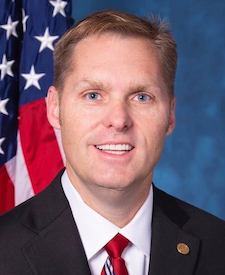
Michael Guest
RIncumbentFEC H8MS03125
Sign in + take the quiz to see alignment.
Raised this cycle$1.1M
Cash on hand: $780K

3 candidates on the November ballot. Incumbent: Michael Guest.
DeepSyte tracks the money and the record in every race against the issues you care about — not party, not press releases. Take the 2-minute values quiz to see your alignment.
Results appear here once a race is called and verified. Official returns from the Mississippi Secretary of State.
Sign in + take the quiz to see alignment.
A directional read on where this seat is trending, from the signals we have so far. This is an early scaffold — more inputs light up as coverage and constituent activity accrue.
Disclosed funding shaping this race — both the money candidates raise themselves and the outside spending dropped by independent groups. Issue-ad spending by 501(c)(4) groups is excluded; the FEC doesn't require disclosure of it. See the note below for details.
Candidate fundraising: FEC reports through October 14, 2026 · 2025–26 cycle
| Candidate | Raised directly | Outside for | Outside against | Net in corner |
|---|---|---|---|---|
Michael Guest(R)incumbent | $1.1M | — | — | $1.1M |
Michael A. Chiaradio(D) | $224K | — | — | $224K |
Erik Kiehle(L) | $0 | — | — | $0 |
Share of each candidate's itemized individual contributions from donors inside MS versus the rest of the country. Excludes sub-$200 unitemized donations (no geography on file) and PAC money — see note below.
Candidate-direct is each campaign's reported receipts on FEC Schedule A — individual contributions plus PAC contributions to the candidate's own committee — through the most recent filing.
Outside spending is independent expenditures on FEC Schedule E: money spent by PACs, super PACs, and party committees for or against a candidate, without legal coordination with the campaign. The committees listed under each candidate are the largest disclosed spenders on either side.
In-state vs out-of-state covers only itemized individual contributions — donations over $200, which are the only ones that carry a contributor address at the FEC. Sub-$200 unitemized donations (often a large share for grassroots campaigns) have no geography on file and are excluded, as is PAC money. So the percentages describe where a candidate's itemized individual money comes from, not where every dollar raised comes from.
Not counted: 501(c)(4) "social welfare" organizations run issue ads that frequently mention candidates by name but aren't classified as express advocacy under FEC rules — they file no Schedule E and don't appear in this breakdown. Press reporting on a race may cite figures that include this dark-money spending; ours doesn't.
Positions extracted from each candidate's campaign issues page by AI. Contested rows — where candidates disagree with each other — appear first.
| Statement | Guest | Chiaradio | Kiehle | You |
|---|---|---|---|---|
Agriculture Federal farm subsidies should be reduced and redirected toward smaller producers. | — | |||
Agriculture SNAP (food stamp) eligibility and benefit levels should be expanded. | — | |||
Criminal Justice The federal government should send more money to local police departments. | — | |||
Economy Tariffs on foreign goods should be used to protect American jobs. | — | |||
Foreign Policy Congress should explicitly authorize U.S. military defense of Taiwan in the event of a Chinese invasion. | — | |||
Housing The government should spend more building affordable housing. | — | |||
Housing Section 8 housing voucher funding should be increased substantially. | — | |||
Immigration The U.S. should do more to enforce immigration laws and secure the border. | — | |||
Immigration The U.S. should allow more legal immigration each year. | — | |||
Monetary Policy The Federal Reserve should remain independent of presidential influence over interest-rate decisions. | — | |||
Governance & Other Outside political spending — from PACs and super PACs — should be limited more strictly. | — | |||
Taxes People making over $400,000 a year should pay higher taxes. | — | |||
Taxes Corporate taxes should be lower. | — | |||
Trade Presidents should be able to impose broad tariffs unilaterally under emergency powers (IEEPA-style authority). | — | |||
Trade U.S. trade policy should reduce economic interdependence with China, especially on technology and critical minerals. | — | |||
Trade Congress should pursue new bilateral free-trade agreements with U.S. allies. | — |
SupportsOpposesNo public positionRinged = confirmed by the campaign
Candidate roster is sourced from the FEC's active-candidate list for the 2026 cycle. Fundraising totals reflect committee filings through the last reporting period.
Alignment % compares the candidate's extracted policy positions against your quiz answers. Positions are pulled from the candidate's campaign issues page by AI; we save the source quote for each position so you can verify the extraction. Candidates without a campaign issues page show position data pending — we're working through the roster and re-checking stale extractions every 90 days.
News coverage is from the GDELT 2.0 global news feed, filtered to a curated list of national, political, and regional outlets.