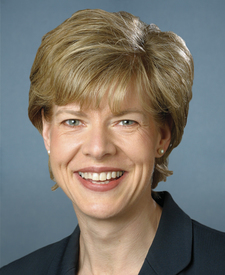
See how Tammy Baldwin actually votes — against your values.
DeepSyte scores Tammy Baldwin's record on the issues you care about — not party, not press releases. Take the 2-minute values quiz to see your personal alignment.
Sign in and take the values quiz to see how Tammy Baldwin's votes line up with your views.
Prediction track record
How often we called Tammy Baldwin's passage votes correctly, from their stated positions on each bill's tagged topics. Excludes “unclear” calls and abstentions.
100%
Accuracy
1
Correct
0
Incorrect
91
Pending
Right119-sjres-184
A joint resolution to direct the removal of United States Armed Forces from hostilities within or against the Islamic Republic of Iran that have not been authorized by Congress.
A joint resolution to direct the removal of United States Armed Forces from hostilities within or against the Islamic Republic of Iran that have not been authorized by Congress.
Based on 7 data points across public statements and recorded votes · AI analysis of public records
118-sjres-10·Consistent
A joint resolution providing for congressional disapproval under chapter 8 of title 5, United States Code, of the rule submitted by the Department of Veterans Affairs relating to "Reproductive Health Services".
92/100
What they said
Jun 24, 2026
Senator Baldwin opposes the Dobbs decision and calls for federal law to protect abortion access nationwide, stating that the government should not make reproductive decisions for women and that constitutional and statutory protections are needed to guarantee abortion rights.
Voted Nay on A joint resolution providing for congressional disapproval under chapter 8 of title 5, United States Code, of the rule submitted by the Department of Veterans Affairs relating to "Reproductive Health Services".
Senator Baldwin's statement opposes abortion restrictions and calls for federal protections guaranteeing abortion access. The bill nullifies a VA rule that expands abortion-related care for veterans. Baldwin's NO vote rejects the nullification, thereby supporting the VA rule that provides abortion services. Her vote and stated position are directly aligned on the specific question of whether abortion access should be protected and expanded.
A joint resolution providing for congressional disapproval under chapter 8 of title 5, United States Code, of the rule submitted by the Department of Veterans Affairs relating to "Reproductive Health Services".
92/100
What they said
Jun 23, 2026
Senator Baldwin supports federal legislation to help women access abortion care by offsetting travel costs and funding training for healthcare providers in states with abortion restrictions.
Voted Nay on A joint resolution providing for congressional disapproval under chapter 8 of title 5, United States Code, of the rule submitted by the Department of Veterans Affairs relating to "Reproductive Health Services".
Senator Baldwin's statement supports federal legislation to expand access to abortion care and help women overcome barriers to obtaining reproductive services. The bill is a congressional disapproval resolution that would nullify a VA rule authorizing abortion-related care for veterans and CHAMPVA beneficiaries. Baldwin's NO vote on the disapproval resolution is consistent with her stated position: voting against nullification preserves the VA's authority to provide abortion care, directly supporting her stated goal of expanding access to abortion services.
A joint resolution to direct the removal of United States Armed Forces from hostilities within or against the Islamic Republic of Iran that have not been authorized by Congress.
88/100
What they said
Aug 14, 2026
Senator Baldwin opposes the Trump Administration's Iran War and supports legislation to prevent the Pentagon from reclassifying or hiding casualty figures from that conflict. She argues the war was poorly prepared, has caused significant casualties, and that the administration is attempting to obscure its human and financial costs.
Voted Yea on A joint resolution to direct the removal of United States Armed Forces from hostilities within or against the Islamic Republic of Iran that have not been authorized by Congress.
Senator Baldwin's statement opposes Trump's Iran War and criticizes the administration for concealing its costs and casualties. The bill she voted for directs removal of U.S. Armed Forces from unauthorized hostilities in Iran, invoking the War Powers Resolution. Her YES vote on the removal resolution aligns with her stated opposition to the war and her call for accountability. The statement focuses on casualty transparency and ending the war; the bill addresses the legal authorization and removal of forces. Both reflect opposition to the conflict, though they address somewhat different mechanisms (transparency/accountability vs. force removal).
Senator Baldwin opposes the Dobbs decision and calls for federal law to protect abortion access nationwide, stating that the government should not make reproductive decisions for women and that constitutional and statutory protections are needed to guarantee abortion rights.
Senator Baldwin's statement opposes restrictions on abortion access and calls for federal protections of abortion rights. The Born-Alive Abortion Survivors Protection Act establishes criminal penalties for healthcare practitioners who fail to provide care to children born alive after abortion attempts. Baldwin voted no on cloture, blocking the bill's advancement. While the vote is procedural rather than a direct passage vote, her opposition to the bill aligns with her stated position that the government should not interfere with reproductive decisions and healthcare. The bill's focus on post-birth care requirements and criminal penalties represents the type of governmental restriction on abortion-related care that Baldwin opposes.
Making emergency supplemental appropriations for the fiscal year ending September 30, 2024, and for other purposes.
75/100
What they said
May 26, 2026
Senator Baldwin opposes President Trump's military action in Iran, arguing it has driven up fertilizer and fuel costs for Wisconsin farmers and should be ended. She has forced Senate votes to terminate the war and supports bipartisan legislation to provide price transparency on fertilizer inputs.
Senator Baldwin's statement opposes Trump's military action in Iran and its economic harm to Wisconsin farmers. The bill provides supplemental appropriations for military operations in the Middle East region (Israel, Indo-Pacific allies) but does not directly address or fund the Iran conflict. Baldwin's NO vote on this amendment is consistent with her opposition to military escalation in the region, though the bill's specific focus on Israel and Indo-Pacific support rather than Iran operations creates some ambiguity about whether the vote directly targets her stated concern.
A joint resolution directing the removal of United States Armed Forces from hostilities in Syria that have not been authorized by Congress.
45/100
What they said
Aug 14, 2026
Senator Baldwin opposes the Trump Administration's Iran War and supports legislation to prevent the Pentagon from reclassifying or hiding casualty figures from that conflict. She argues the war was poorly prepared, has caused significant casualties, and that the administration is attempting to obscure its human and financial costs.
Voted Nay on A joint resolution directing the removal of United States Armed Forces from hostilities in Syria that have not been authorized by Congress.
Both the statement and bill address unauthorized military operations and congressional oversight of war, but they concern different conflicts and different legislative mechanisms. The statement opposes Trump's Iran War and supports transparency/accountability for casualty reporting; the bill directs withdrawal from Syria operations lacking congressional authorization. Baldwin's NO vote on the Syria withdrawal resolution is inconsistent with her stated commitment to ending unauthorized wars and holding the administration accountable, though the bill addresses a different theater and the vote's procedural context (timing, amendments, bundled provisions) is unclear from the record alone.
A joint resolution providing for congressional disapproval under chapter 8 of title 5, United States Code, of the rule submitted by the Federal Highway Administration relating to "Waiver of Buy America Requirements for Electric Vehicle Chargers".
45/100
What they said
Jul 22, 2026
Senator Baldwin supports legislation to ban Chinese-made vehicles and their components from the U.S. market to protect American workers, jobs, and data security from Chinese collection.
Voted Nay on A joint resolution providing for congressional disapproval under chapter 8 of title 5, United States Code, of the rule submitted by the Federal Highway Administration relating to "Waiver of Buy America Requirements for Electric Vehicle Chargers".
Both the statement and bill address protecting American workers and domestic manufacturing from foreign competition, but they target different specific questions. The statement focuses on banning Chinese vehicles and components to protect jobs and data security; the bill concerns waiving Buy America requirements for EV chargers, which would allow foreign-sourced components in federally funded charging infrastructure. Baldwin's NO vote on this amendment aligns with her stated commitment to domestic manufacturing protections, but the amendment's specific provision (waiving Buy America rules for EV chargers) is not directly addressed in her statement about vehicle bans. The vote is procedural (amendment), which adds uncertainty about her substantive intent.
Pairs with ambiguous language and high uncertainty are withheld until more data is available. Procedural, cloture, and amendment votes are excluded — they don't cleanly signal substantive support or opposition.
Pro analysis
AI rep analysis — Pro
Get an AI-narrated read on Tammy Baldwin's full voting record against your stated values — aligned themes, conflicts, notable votes, and what to watch for.
We haven't extracted campaign positions for Tammy Baldwin yet. Once their campaign website or position pages are processed, this card will track what they said vs how they voted.
Crossing the aisle
No party-break passage votes recorded for Tammy Baldwin. Either they've voted with Democrats on every substantive passage vote in the corpus, or their tenure overlaps few high-threshold party-line votes so far.
Baldwin Demands Trump Admin Immediately Investigate Tomah VA Staff Claims of Serious Failures in Care at Facility | U.S. Senator Tammy Baldwin of Wisconsin
Position: Senator Baldwin calls on the VA Secretary to immediately investigate serious allegations of care failures at Tomah VA Medical Center, including inadequate staffing, medication delays, and hospice care deficiencies, and requests an independent investigation by the VA Office of Inspector General.
Call comes as Tomah VA nurse charged with intentionally withholding oxygen from patient who later died at the hospital; Baldwin also calls on VA to launch independent investigation through Office of Inspector General
WISCONSIN – Today, U.S. Senator Tammy Baldwin (D-WI) called on Department of Veterans Affairs (VA) Secretary Doug Collins to immediately investigate serious allegations about the failure to care for our veterans and unacceptable conditions at the Tomah VA Medical Center. Baldwin is calling for VA Secretary Collins to conduct a full review of staffing levels, provider coverage, medication delays, hospice care, and patient safety at the Tomah VA Hospital and requesting the VA Office of the Inspector General (OIG) conduct an independent investigation. Baldwin’s office heard from several Tomah VA employees who outlined severe lapses in patient care at the hospital, including allegations of inadequate staffing contributing to falls, injuries, food choking incidents, and other adverse patient outcomes. The call comes as a Tomah VA nurse was criminally charged with patient abuse after a veteran receiving hospice treatment had oxygen allegedly withheld on purpose and later died.
“I write to express my grave concern regarding serious allegations about the treatment of veterans and conditions at the Tomah VA Medical Center. Employees at the Tomah VA contacted my office to report severe lapses in patient care at this facility. Their reports are specific and alarming. They include allegations of poor management and inadequate staffing contributing to falls, pressure injuries, food choking incidents, failures to conduct appropriate patient checks, and other adverse patient outcomes,” wrote Senator Baldwin in a letter to VA Secretary Collins.
“They also raise particularly troubling concerns about the care of hospice patients, including inadequate provider coverage and delays in ensuring that seriously ill veterans receive medications necessary for comfort and end-of-life care. Veterans receiving hospice care are among the most vulnerable patients in the VA system, and they and their families should be able to trust that they will receive safe and compassionate care and be treated with dignity during the final days of their lives,” Baldwin continued.
In addition to today’s letter to Secretary Collins, Senator Baldwin also requested the VA OIG conduct an independent investigation into the employees’ allegations. Senator Baldwin underscored that corrective action at Tomah VA cannot wait for an OIG investigation to conclude and requested that the VA immediately direct the Veterans Health Administration (VHA) and Veterans Integrated Service Network (VISN) to conduct a full review of staffing levels, provider coverage, medication delays, hospice care, and patient safety. Specifically, Senator Baldwin asked the VA to determine:
Additionally, Senator Baldwin asked the VA for more information regarding the recent criminal charges brought against a nurse at Tomah VA who allegedly purposefully withheld oxygen from a patient who later died in hospice care. Senator Baldwin requested to know when VA and Tomah leadership first became aware of the incident, what reviews were conducted afterwards, and what actions were taken to correct those failures and prevent them from happening again.
“The Tomah VA and the veterans it serves have spent years working to rectify and recover from the serious failures uncovered at the facility more than a decade ago. VA employees, veterans and the surrounding community worked hard to improve care, strengthen accountability and rebuild trust. We cannot allow serious patient safety or management problems to take root again or allow that hard earned trust to erode. Veterans and their families must be able to trust that VA will provide the safe, timely and high-quality care they have earned. Employees must also be able to raise concerns when that standard is not being met and know that speaking up will not put their careers at risk,” concluded Senator Baldwin.
A full version of the letter to Secretary Collins is available here and below. The letter to VA OIG is available here.
I write to express my grave concern regarding serious allegations about the treatment of veterans and conditions at the Tomah VA Medical Center. Employees at the Tomah VA contacted my office to report severe lapses in patient care at this facility. Their reports are specific and alarming. They include allegations of poor management and inadequate staffing contributing to falls, pressure injuries, food choking incidents, failures to conduct appropriate patient checks, and other adverse patient outcomes. They also raise particularly troubling concerns about the care of hospice patients, including inadequate provider coverage and delays in ensuring that seriously ill veterans receive medications necessary for comfort and end-of-life care. Veterans receiving hospice care are among the most vulnerable patients in the VA system, and they and their families should be able to trust that they will receive safe and compassionate care and be treated with dignity during the final days of their lives.
I have requested the VA Office of the Inspector General (OIG) conduct an independent investigation into these allegations. That investigation is important, but the VA cannot wait for that investigation before ensuring veterans are receiving safe care today. I expect prompt and thorough action from your office to protect the dignity and safety of veterans receiving care at this facility.
To that end, I request that you immediately direct the Veterans Health Administration (VHA) and Veterans Integrated Service Network (VISN) to conduct a full review of staffing levels, provider coverage, medication delays, hospice care, and patient safety. To be clear, this review should not rely on assurances from leadership at the Tomah VA. Given the range and severity of the allegations, there must be an independent and thorough examination of conditions at the Tomah VA. At a minimum, I ask that VA determine:
Separately, the criminal charges recently announced against a former Tomah VA nurse raise serious questions about the care of the hospice patients at the facility and how VA responded after learning of that incident. I ask that you provide my office with a full accounting of VA’s response upon learning of the alleged abuse including:
A veteran receiving hospice care at the Tomah VA was allegedly abused and later died. A year later, employees are raising serious concerns about the safety and quality of hospice care at the same facility, in the same hospice unit. That demands close scrutiny. I ask you to determine whether there are broader failures in staffing, supervision, management, or patient safety practices, what VA learned from the 2025 incident and whether the actions taken afterward were sufficient to protect veterans from similar harm.
I also want to be unequivocal about the employees who are raising these concerns. There must be zero tolerance for retaliation or reprisal against any employee for raising concerns about patient care, making a protected disclosure, communicating with Congress, contacting OIG or the Office of Accountability and Whistleblower Protection (OAWP), or cooperating with an investigation. I ask that you immediately direct VHA and VISN leadership to communicate clearly to all Tomah employees that they may raise concerns through protected channels and that retaliation or reprisal will not be tolerated. Facility leadership must not attempt to identify employees who have communicated confidentially with any congressional offices or take action against employees because they are believed to have raised concerns. My office will not provide the identities of employees who have contacted us without their express authorization.
I am copying OAWP on this letter so that it is formally aware of these disclosures and prepared to respond promptly to any allegation of retaliation or reprisal. I also ask that OAWP work with my office to ensure employees who have raised concerns understand their rights and the confidential reporting channels available to them.
The Tomah VA and the veterans it serves have spent years working to rectify and recover from the serious failures uncovered at the facility more than a decade ago. VA employees, veterans and the surrounding community worked hard to improve care, strengthen accountability and rebuild trust. We cannot allow serious patient safety or management problems to take root again or allow that hard earned trust to erode. Veterans and their families must be able to trust that VA will provide the safe, timely and high-quality care they have earned. Employees must also be able to raise concerns when that standard is not being met and know that speaking up will not put their careers at risk.
I ask for your prompt attention to these matters and a written response detailing the immediate actions VA is taking at the Tomah VA, providing the requested accounting of VA’s response following the August 2025 incident, the steps being taken to protect employees who raise concerns and the senior VA officials responsible for overseeing this response.
Baldwin, Scott Lead Bipartisan Call for Investigation into Amazon and Walmart for Hiding Made in America Goods | U.S. Senator Tammy Baldwin of Wisconsin
Position: Senators Baldwin and Scott call on the FTC to investigate Amazon and Walmart for allegedly using AI shopping tools to hide Made in America products from customers and failing to monitor fraudulent Made in USA labeling, undermining American manufacturers and consumers.
Amazon, Walmart AI shopping tools steer Americans away from American-made products and fail to report fraudulently labeled products, undercutting American businesses
WASHINGTON, D.C. – Today, U.S. Senators Tammy Baldwin (D-WI) and Rick Scott (R-FL) are calling on the Federal Trade Commission (FTC) to investigate Amazon and Walmart for hiding Made in America products from customers on their websites and apps and failing to monitor and report Made in America labeling fraud, undermining American businesses and workers.
The Senators’ ask follows a recent report that found the companies’ AI shopping chatbots, Alexa for Amazon and Sparky for Walmart, do not show customers items that are Made in the USA when they are searching for them, despite the chatbots being fully capable of finding those products in their inventory. The report also showed that Amazon and Walmart failed to report fraudulently labeled Made in the USA products, despite their ability to detect this fraud. Specifically, the lawmakers are calling on the FTC to investigate Amazon and Walmart’s use of their AI shopping tools and increase enforcement against false Made in the USA claims.
“We all share the goal of strengthening American manufacturing and small businesses through initiatives such as Made in USA labeling, all while ensuring consumers receive accurate information about where the products they buy are made,” wrote Baldwin and Scott. “Following a robust investigation, we strongly encourage the Commission to consider additional enforcement measures to deter such behavior going forward.”
“As two of the largest retail companies in the world, Amazon and Walmart’s potential noncompliance with federal standards and their explicit promotion of overseas and potentially fraudulent sellers on their online marketplaces and through their AI shopping chatbots is deeply concerning,” continued the lawmakers. “American manufacturers who adhere to these standards and support other domestic suppliers deserve a fair playing field on these online marketplaces. Likewise, consumers who seek out Made in the USA products should be able to rely on accurate country-of-origin information when making purchasing decisions. New technologies such as AI shopping chatbots must preserve that fairness.”
“We strongly urge the Commission to investigate potential suppression of Made in the USA products through these chatbots and online marketplaces, as well as the lack of monitoring and reporting of fraudulent Made in the USA labeling despite the technological capability to do so. We stand ready to work with the Commission to ensure that American manufacturers and consumers can rely on the integrity of the Made in the USA label,” the lawmakers concluded.
Full text of the letter is available here and below.
Dear Chairman Ferguson and Commissioner Meador:
We write to request that the Federal Trade Commission (the Commission) investigate alleged anticompetitive practices by Amazon and Walmart involving suppression of Made in the USA products when customers use their AI shopping chatbots, as well the companies’ apparent failure to report products fraudulently labeled Made in the USA. We all share the goal of strengthening American manufacturing and small businesses through initiatives such as Made in USA labeling, all while ensuring consumers receive accurate information about where the products they buy are made. Following a robust investigation, we strongly encourage the Commission to consider additional enforcement measures to deter such behavior going forward.
The authors of the report “Made in America, Hidden by AI” conducted an investigation to determine if the new Amazon and Walmart AI shopping chatbots (Alexa for Shopping for Amazon, and Sparky for Walmart) could reliably guide shoppers to Made in the USA products and determine whether those products were accurately labeled. Their findings indicate that Amazon and Walmart’s AI shopping chatbots have the capability to discern which products are Made in the USA and which products that are falsely listed as Made in the USA. However, the report suggests that Amazon and Walmart may obscure and suppress this information through their AI chatbot services, undercutting manufacturers that honestly utilize the Made in the USA label while benefitting bad actors and overseas sellers - potentially sowing doubt about the label’s veracity and effectiveness.
The presence of products fraudulently labeled as Made in the USA on Amazon and Walmart’s online marketplaces is not new. In July 2025, the Commission sent letters to both Amazon and Walmart alerting the companies that third-party sellers were falsely labeling products listed on their online marketplaces as Made in the USA, in potential violation of the federal standard and the marketplace terms of service. FTC’s letters encouraged Amazon and Walmart to monitor, identify, and take corrective action against sellers who make false or misleading Made in the USA claims. Despite progress, it appears the underlying problem has not been resolved; indeed, the companies’ AI shopping assistants may now be compounding it. Walmart launched Sparky in June 2025, and Amazon deployed Alexa for Shopping in May 2026. We understand that artificial intelligence may present pressing challenges for companies as they work to serve their customers; however, the aforementioned report’s allegations raise critical questions about fraud monitoring, compliance, and fair business practices overall.
The report details how searches for Made in the USA products through Amazon’s AI shopping chatbot, Alexa for Shopping (Alexa), are purportedly obscured and suppressed. When the report’s authors asked Alexa to show a “Made in USA” product, such as a fly-fishing reel, the chatbot claimed to not have access to that information. However, when asked to show products that were made in China, Alexa provided a list of products, including recommendations for purchase, suggesting that the system does have access to country-of-origin information. Slight alterations of search phrases, such as using “in USA” produced the desired result because the chatbot model could predict the rest of the phrase, suggesting that there could be an intentionally designed block for the “Made in USA” search term. When asked why there is no Made in USA filter, Alexa replied that it would “redirect significant sales away from their largest seller base,” referring to overseas manufacturers. Additional reporting from the Wall Street Journal described Walmart’s chatbot, Sparky, initially declining a request to evaluate the credibility of the labels on Made in the USA products in the shopper’s cart, but later producing an assessment when prompted differently.
Both the Amazon and Walmart’s AI shopping chatbots also demonstrated the ability to detect false Made in the USA labels when prompted, but both Alexa and Sparky indicated they do not proactively flag these fraudulent labels. For example, when Alexa provided a comparison chart that listed t-shirts as both Made in USA and imported, the chatbot could detect fraud after further questioning. It also disclosed the false Made in the USA label came from Amazon itself, not a third party. Similarly, Sparky was able to discern the credibility of Made in USA labeling using indicators like a company’s U.S. manufacturing footprint. When asked why this fraud is not flagged, both chatbots responded that it is a business decision not to. Sparky stated that because “the FTC pursues relatively few cases against retailers,” the incentive to create proactive compliance mechanisms is low. Alexa stated that because Amazon’s largest revenue contributors, their high-volume overseas sellers, benefit from inaction, addressing the fraud is not a priority. These responses warrant further scrutiny by the Commission.
As two of the largest retail companies in the world, Amazon and Walmart’s potential noncompliance with federal standards and their explicit promotion of overseas and potentially fraudulent sellers on their online marketplaces and through their AI shopping chatbots is deeply concerning. These concerns implicate the effectiveness of Made in the USA labeling as AI chatbots become more integrated in online shopping. The requirements for labeling a product as Made in the USA are rigorous. The final assembly or processing of the product must take place in the United States, all significant processing must occur in the United States, and all or virtually all ingredients or components of the product must be made and sourced in the United States. American manufacturers who adhere to these standards and support other domestic suppliers deserve a fair playing field on these online marketplaces. Likewise, consumers who seek out Made in the USA products should be able to rely on accurate country-of-origin information when making purchasing decisions. New technologies such as AI shopping chatbots must preserve that fairness. However, if these practices are allowed to persist, they will undermine the goals of the Made in the USA standard and disincentivize legitimate use of the label.
We strongly urge the Commission to investigate potential suppression of Made in the USA products through these chatbots and online marketplaces, as well as the lack of monitoring and reporting of fraudulent Made in the USA labeling despite the technological capability to do so. We stand ready to work with the Commission to ensure that American manufacturers and consumers can rely on the integrity of the Made in the USA label.
WATCH: Baldwin Secures Commitment from Trump Admin to Restore 988 ‘Press 3’ in Coming Weeks | U.S. Senator Tammy Baldwin of Wisconsin
Position: Senator Baldwin secured a commitment from Trump Administration nominees to restore the 988 'Press 3' specialized crisis line service for LGBTQ+ youth by end of September, and criticized the Administration's health policies for contributing to disease outbreaks, reducing ACA coverage, and cutting Medicaid.
PLUS: Baldwin outlines disastrous impact of Trump health policy, including measles and foodborne illness outbreaks, rate hikes for insurance coverage, and cuts to lifesaving research
WASHINGTON, D.C. – Today, U.S. Senator Tammy Baldwin (D-WI) questioned several of President Trump’s nominees for positions within the Department of Health and Human Services (HHS) at a Senate hearing and secured commitments that the Trump Administration will restore the ‘Press 3’ option for LGBTQ+ youth at the 988 Suicide and Crisis Lifeline by the end of September. This news comes after the Trump Administration abruptly cancelled ‘Press 3’ over a year ago and has since dragged their feet on following Senator Baldwin's bipartisan law that mandated a return of these services. For more than 13 months, the Trump Administration has withheld specialized services for a population that is more than four times as likely to attempt suicide than their peers.
During her questioning at a Senate Health, Education, Labor, and Pensions (HELP) Committee hearing, Senator Baldwin pressed Chris Klomp, nominee for HHS Deputy Secretary, and Dr. Timothy Westlake, nominee for Assistant Secretary of Mental Health and Substance Abuse (SAMHSA), about HHS’s failure to restore 988 specialized services for LGBTQ+ youth, despite Congress mandating the Trump Administration relaunch it in bipartisan funding legislation for Fiscal Year 2026 and only two weeks remaining in the Fiscal Year. Before it was shuttered by RFK, Jr., the hotline was fielding about 10% of all 988 contacts, including 19% of all texts. During their testimony, the nominees shared that a contract has been awarded to restore ‘Press 3’ services and that the Trump Administration should have an announcement about relaunch before the end of the Fiscal Year on September 30.
During her opening statement, Senator Baldwin highlighted how Secretary Kennedy and President Trump’s disastrous health policies are making Americans sicker and taking away care. She highlighted the historic outbreaks of measles and foodborne illnesses, withheld, unspent, or frozen funding impacting vital programs like Head Start and research on NIH, and record cuts to Affordable Care Act coverage and Medicaid that are projected to terminate health care for 15 million Americans.
Click here for a full video of Senator Baldwin's opening statement and questions in front of HELP.
Baldwin, Murray Sound Alarm on Trump Admin’s Plans to Divert or Withhold Millions in Healthcare Research Funds | U.S. Senator Tammy Baldwin of Wisconsin
Position: Senators Baldwin and Murray oppose the Trump administration's plans to divert or withhold millions in healthcare research funding appropriated by Congress for the Agency for Healthcare Research and Quality (AHRQ), arguing that the administration is violating the law and wasting taxpayer dollars meant to fund lifesaving research.
Lawmakers demand information about plans to award tens of millions in AHRQ funding set to expire September 30, after HHS informed them it plans to transfer some funding to other agencies
WASHINGTON, D.C. – U.S. Senators Tammy Baldwin (D-WI), Ranking Member of the Senate Appropriations Subcommittee on Labor, Health and Human Services and Education, and Patty Murray (D-WA), Vice Chair of the Senate Appropriations Committee, demanded Secretary of the Department of Health and Human Services (HHS) Robert F. Kennedy, Jr. release information about HHS’ plans to use tens of millions of dollars in funding Congress approved for lifesaving and cost-cutting healthcare research at the Agency for Healthcare Research and Quality (AHRQ)—all of which is set to expire come September 30 if it is not awarded. The demand comes after the lawmakers learned that HHS is planning to send tens of millions of dollars of its funding to other agencies, potentially wasting funds meant to address our nation’s most pressing healthcare concerns. Today, during a Senate confirmation hearing, Senator Baldwin also pressed Chris Klomp, nominee for HHS Deputy Secretary, to provide more information on the Department’s plan for this funding.
President Trump and Secretary Kennedy have worked to systematically dismantle AHRQ since taking office and are on track to waste a significant portion of the agency’s budget for the current fiscal year. This comes after AHRQ terminated approximately 150 grants totaling $94 million earlier this year and failed to spend, or impounded, $80 million in fiscal year 2025 funding after failing to award grants last year.
“It is increasingly clear that once again, your Department intends to ignore the law and—through a combination of gross negligence and intentional sabotage—will refuse to spend millions of taxpayer dollars that should be funding research to lower costs in the health care system and protect patients’ safety,” wrote the Senators in a letter to Secretary Kennedy.
“Research funded by AHRQ grants has saved tens of thousands of lives and billions of dollars in health care costs, but once again, instead of getting these funds provided by Congress out the door as is required by law, this administration is on track to impound these resources and kill lifesaving research,” they continued.
In the letter, Senators Murray and Baldwin state that HHS recently informed them that it plans to award just 90 grants this year—hundreds fewer than in prior years—and is seeking to transfer funding specifically appropriated for AHRQ to other agencies.
“AHRQ leadership informed the Committee of its ‘plans’ to spend $100 million on inter-agency agreements (IAAs), which would enable the Department to siphon dollars away from AHRQ to support other initiatives, instead of funding the health care quality and delivery research that Congress specifically set aside resources for. But to date, AHRQ has provided very limited information on how this funding would actually be spent—let alone how it could be spent effectively between now and September 30th,” Baldwin and Murray wrote.
The lawmakers also make clear that beyond seeking to steer AHRQ funding elsewhere without regard for the law, it is apparent the Trump administration may illegally impound funding set aside for this lifesaving research: “Even more alarming is the fact that AHRQ has provided exactly no information on how the remaining $65 million provided to it will be spent, again raising the likelihood that funding provided by Congress will simply be wasted.”
Murray and Baldwin ask HHS to furnish copies of all inter-agency agreements AHRQ has entered into and provide more information about exactly how Secretary Kennedy intends to get this funding out the door to support cost-cutting and lifesaving research.
The full letter is available here and below.
For months, we have directly raised our concerns about the unacceptable and intentional chaos at the Agency for Healthcare Research and Quality (AHRQ) with you, with Director Roger Klein, and most recently with Deputy Secretary Nominee Chris Klomp. As health care costs continue to rise and patient safety concerns persist, your Department has chosen to dismantle the very agency whose mission is to solve these problems.
It is increasingly clear that once again, your Department intends to ignore the law and—through a combination of gross negligence and intentional sabotage—will refuse to spend millions of taxpayer dollars that should be funding research to lower costs in the health care system and protect patients’ safety.
Research funded by AHRQ grants has saved tens of thousands of lives and billions of dollars in health care costs, but once again, instead of getting these funds provided by Congress out the door as is required by law, this administration is on track to impound these resources and kill lifesaving research.
At Harborview Medical Center in Seattle, AHRQ research helped reduce the percentage of preventable blood clots after surgery. A critical access hospital in New Mexico used AHRQ research to greatly reduce the incidence of catheter-associated urinary tract infections by more than 90 percent. The Dayton, Ohio VA used AHRQ research to help veterans manage high-risk diabetes more effectively. AHRQ’s work is evidence-based first and foremost—it saves lives and money. Sabotaging this agency is a direct attack on both the patients and providers who rely on AHRQ to make our health care system work better.
In fiscal year 2025, under your leadership, AHRQ allowed over $80 million in federal funding provided by Congress to be wasted. Instead of awarding grants to promote patient safety, support families with children in the hospital, improve autism screening and diagnosis, and provide support for those suffering from chronic pain, the Trump administration intentionally withheld federal funding that Congress provided on a bipartisan basis, disrupting 200 different research programs across nearly 30 states. Over the past year, you have also managed to push out 80 percent of all AHRQ staff, including the majority of those who had previously vetted grants and worked directly with researchers. From 2020-2024, AHRQ awarded an average of 127 new grants and 306 continuation grants. In 2025, AHRQ awarded only one new grant and 206 continuation awards.
Your Department recently informed us that it intends to award only 90 grants this year. That is unacceptable.
In July, AHRQ terminated over 150 grants via a generic form letter. These grants included research that was clearly focused on addressing the agency’s stated priorities, such as patient safety, the use of digital tools to improve health, artificial intelligence, and training future health services researchers. AHRQ discontinued research in Wisconsin testing the use of artificial intelligence to improve the experience of hospitalized children and their families, research that the agency had highlighted in a webinar in May. AHRQ also discontinued the health services research training program at the University of Washington. For reasons we cannot comprehend, these two grants, among many others, were cited as “inconsistent with agency priorities.”
It is now abundantly clear that AHRQ terminated those grants, that were clearly consistent with AHRQ’s mission and stated priorities, with no plan on how it would otherwise spend its funding for this year.
On September 4th, AHRQ leadership informed the Committee of its “plans” to spend $100 million on inter-agency agreements (IAAs), which would enable the Department to siphon dollars away from AHRQ to support other initiatives, instead of funding the health care quality and delivery research that Congress specifically set aside resources for. But to date, AHRQ has provided very limited information on how this funding would actually be spent—let alone how it could be spent effectively between now and September 30th. AHRQ supposedly plans to spend $30 million to support the National Institutes of Health (NIH) and help schools develop strategies for improving school meals. We have received no further information on these plans. So far, it appears the only thing the agency has done is issue a press release, and with 15 days left in the fiscal year there aren’t any actual funding opportunities available for schools and school districts to apply for these resources. This continues an alarming pattern by which this administration is seeking to use IAAs to siphon funding away from one agency to fund the administration’s priorities at another, without regard for the law and what Congress provided funding for in the first place.
Similarly, while Congress set-aside $5 million to accelerate evidence-based research and care delivery models into routine clinical practice so that women can get the menopause care they need, all AHRQ has shared is that the funding will be spent on working with two other agencies on “quality improvement activities” addressing menopause. Yet no actual funding opportunities are available for that work. Even more alarming is the fact that AHRQ has provided exactly no information on how the remaining $65 million provided to it will be spent, again raising the likelihood that funding provided by Congress will simply be wasted.
Congress appropriated funding for AHRQ to improve the health of Americans, and to make health care safer, better, and more affordable. Using accounting gimmicks and supposed IAAs as cover for either intentional sabotage or complete incompetence is inexcusable. It is unfortunately only one of many examples of how this administration is willfully choosing to make Americans less healthy and less safe—and raising costs while it’s at it.
Within 24 hours, we expect to receive written copies of all IAAs that AHRQ has entered into with other federal agencies, a detailed description of all supported activities, and a list of all grantees that will be supported by such funding in accordance with Public Law 119-75 before the end of the fiscal year.
Baldwin Releases Statement on Opposing the Clarity Act | U.S. Senator Tammy Baldwin of Wisconsin
Position: Senator Baldwin opposes the Digital Asset Market Clarity Act, arguing it fails to address political self-dealing in cryptocurrency, does not adequately protect consumers from crypto scams, and undermines tribal sovereignty regarding prediction markets.
WASHINGTON, D.C. – Today, U.S. Senator Tammy Baldwin (D-WI) released the following after voting against the Digital Asset Market Clarity Act, which fails to address President Trump and other politicians’ abuse of cryptocurrencies to enrich themselves and does not adequately safeguard tribal sovereignty from prediction markets.
“Crypto is part of our economy, and I’m committed to making sure it works for Wisconsinites. There can be upsides, but we need to do more to protect folks from crypto scams, stop the self-dealing from politicians, and crack down on its use for drugs, human trafficking, and terrorism. Unfortunately, the Clarity Act fundamentally fails to do that. This bill turns a blind eye to the President and his family blatantly abusing their position of power to make more than a billion dollars – yes, billion with a ‘b’ – from his crypto scheme. The President of the United States of America and his family are taking hundreds of millions of dollars from foreign entities into his crypto ventures, and then doling out favors to foreign nationals – and this bill does absolutely nothing about it,” said Senator Baldwin. “The American people expect their elected officials to serve the public, not their pocketbooks, but Republicans once again are refusing to stop President Trump from using his office to get rich quick. The Clarity Act also doesn’t adequately respect tribal sovereignty, allowing prediction market platforms to sidestep state and tribal gaming regulations. The crypto industry needs to be regulated, but this bill fell short on keeping Wisconsinites’ safe from scams, stopping corruption, and protecting the rights of Wisconsin tribes.”
As Packers’ Season Kicks Off, Baldwin Calls for Passage of Her For the Fans Act | U.S. Senator Tammy Baldwin of Wisconsin
Position: Senator Baldwin calls for passage of the For the Fans Act to require free local broadcast access for professional sports games and end blackouts on league-owned streaming services, arguing the measure would reduce costs for consumers and improve access for fans.
Nearly 25% of the Packers’ games in 2026-2027 season are set to air exclusively on streaming platforms
WISCONSIN – As the Green Bay Packers season kicks off Sunday, U.S. Senator Tammy Baldwin (D-WI) is calling for the passage of her For the Fans Act to ensure Wisconsin fans always have a free, live option to watch the Packers play. The Senator’s bill comes as more games are exclusively broadcast on streaming platforms, including four Packers’ games in the 2026-2027 NFL season, forcing millions of Wisconsinites to pay for a subscription just to watch their home team play. Currently, only people living in the Green Bay and Milwaukee media markets are guaranteed Packers games to be broadcast on local TV, leaving more than approximately half of Wisconsinites potentially without access to the games unless they pay for the additional streaming service.
“Regardless of where you live in Wisconsin, your political party, or who you pray to, we all root for the Green and Gold. We celebrate together, we commiserate together, and we always come back the next week to cheer on the Pack together,” said Senator Baldwin. “But, right now, we are watching the big billionaire-owned streaming giants and the NFL rig the rules and force us to fork up more and more money just to watch our home teams play. Wisconsin families have been crystal clear that they are stretched thin right now, and we need to help give them some relief. That’s why we need to pass my For the Fans Act to lower costs for families, stop the confusing maze of subscriptions, and ensure we can all watch the Packers continue to run the NFC North.”
Baldwin’s For the Fans Act would improve access for consumers of professional sports broadcasts by requiring free viewing access for local fans and ending blackouts on league-owned streaming services, like NBA League Pass or MLB.TV. The bill applies to professional baseball, basketball, football, hockey, and soccer leagues, and makes an exception for minor league teams and leagues with fewer than eight teams.
Polling from Data for Progress shows that overwhelming majorities of Americans support Baldwin’s For the Fans Act to stop professional sports leagues from blacking out games for fans, end the complicated web of streaming services, and cut costs for viewers across the country.
A one-pager on the For the Fans Act is available here.
Baldwin Urges Supreme Court to Block Trump’s Effort to Restrict Mail-In Voting | U.S. Senator Tammy Baldwin of Wisconsin
Position: Senator Baldwin opposes President Trump's Executive Order and USPS rule restricting mail-in voting, arguing the restrictions are unconstitutional and violate separation of powers by usurping congressional and state authority over election administration.
WASHINGTON, D.C. – U.S. Senator Tammy Baldwin (D-WI) and her colleagues are urging the U.S. Supreme Court to block President Trump’s unconstitutional Executive Order and U.S. Postal Service rule that attempts to restrict Wisconsinites’ ability to vote by mail ahead of the 2026 midterm elections.
Specifically, Baldwin joined a bipartisan group of 261 current and former lawmakers in filing an amicus brief with the U.S. Supreme Court in the matter of State of California, et al. v. United States Postal Service, et al., a lawsuit brought by a coalition of State Attorneys General against the U.S. Postal Service (USPS). The court case challenges a final rule issued by the USPS in response to Trump’s directive that imposes unconstitutional and unworkable restrictions on mail-in voting, including requiring states to provide a “citizenship verification list” and attempting to give USPS control over who can vote by mail.
“The President is trying to meddle in the elections because he knows that Americans are going to hold him accountable in November,” said Senator Baldwin. “Instead of changing course and doing what he said he would to lower costs, he is trying to silence Americans from having their voice heard at the ballot box. This effort to stop Americans from voting by mail – despite many Wisconsinites already having their ballots on their counters – is cut and dry unconstitutional, and the Supreme Court needs to say just that and protect Americans’ right to vote.”
Nearly one-third of Americans have voted by mail in recent elections, including over 500,000 Wisconsinites in the 2024 election — a voting practice Trump himself used as recently as August 2026, when he voted in Florida’s Republican primary.
In the court filing, the lawmakers argue that Trump’s Executive Order 14399 and USPS’s final rule violate the separation of powers and usurp congressional authorities outlined in Article I of the U.S. Constitution, which gives the States and Congress exclusive authority over election administration.
The lawmakers also pointed to a recent federal court ruling blocking the USPS from implementing its newly finalized mail ballot rule for the midterm elections, saying the agency lacked the authority to implement the rule and that its actions are “substantively unconstitutional and contrary to law.”
The lawmakers concluded by asserting States’ power to administer elections and Congress’s power to make or alter rules regulating elections, which the Supreme Court itself has described as an “override” authority. Trump’s illegal incursion on this authority is an attempt to disenfranchise people who depend on mail-in ballots to vote.
Senator Baldwin has repeatedly pushed back against the Trump Administration’s efforts to restrict mail-in voting and disenfranchise Wisconsin voters. In June, Baldwin demanded that the USPS abandon the rule, and in July, she called on the USPS to immediately address severe mail delays that caused hundreds of Wisconsinites’ ballots to arrive after Election Day in April.
The lawmakers’ demands come as President Trump has taken an all-of-the-above approach to try to interfere in the upcoming 2026 elections. In addition to his attempt to curtail legal mail-in voting, the President has repeatedly threatened to send federal agents to states’ polling places, repeated his claim about “rigged” elections more than 100 times, and sent FBI agents into Milwaukee to relitigate his 2020 election loss.
The amicus brief was led by Senators Alex Padilla (D-CA), Chuck Schumer (D-NY), Dick Durbin (D-IL), and Gary Peters (D-MI) and joined by the entire Senate Democratic Caucus.
The full brief is available here.
Baldwin Calls Out Trump’s Trade War with Canada as Tariffs Hit Wisconsin Dairy, Paper | U.S. Senator Tammy Baldwin of Wisconsin
Position: Senator Baldwin opposes President Trump's tariffs on Canadian goods, arguing they harm Wisconsin dairy and paper industries, increase costs for businesses and consumers, and destabilize rural economies and family farms.
50% tariffs on paper and dairy and 25% tariffs on cheese go into effect today
WISCONSIN – Today, U.S. Senator Tammy Baldwin (D-WI) released the following statement as Canada placed retaliatory tariffs on key Wisconsin exports, including dairy and paper. The tariffs come in response to President Donald Trump imposing tariffs on Canadian goods after he abandoned trade negotiations and as his administration’s trade war continues to result in higher costs and shrinking export markets for Wisconsin businesses.
“In recent weeks, I’ve traveled to every corner of Wisconsin to hear about how Donald Trump’s chaotic tariffs and war in Iran have made it harder for small businesses to make ends meet. Now, President Trump has decided to make that situation even worse by starting a tit-for-tat trade war with our state’s biggest trading partner. Wisconsin’s iconic dairy and paper industries are taking it on the chin, being either forced to cut deep into their bottom lines or worse, being locked out of a key market because the tariffs are just too much to bear,” said Senator Baldwin. “The President is gambling with the livelihoods of our family farmers and manufacturers, but this isn’t a game — the consequences are businesses being forced to lay off workers, shuttered family farms, and devastated rural economies. Made in Wisconsin businesses deserve stability they can depend on to support growth and plan for the future – not these higher costs and endless chaos. My Republican colleagues should be joining me in this outrage and speaking out against it on behalf of our constituents and Made in Wisconsin economy.”
Nearly every variety of cheese Wisconsin sells to Canada will face a 25 percent tariff, and milk powders, whey, and other dairy ingredients will face 50 percent. The tariffs will also impact Wisconsin’s paper industry, including corrugated boxes, coated papers, packaging, and tissue products, which will face retaliatory tariffs of mostly 50 percent. Wisconsin makes more paper products than any other state in the country and annually results in more than half a billion dollars in sales to Canada. Last year, Canada bought nearly 28 percent of Wisconsin’s total exports, amounting to over $7.5 billion in Wisconsin goods—nearly double what Wisconsin exports to Mexico, the next-largest market.
Last month, Senator Baldwin released a brand-new report showing that, from the ongoing trade war, war in Iran, and chaos, Congressional Republicans and President Trump are costing Wisconsin families more than $3,300 for everyday essentials like housing, gas, and groceries.
Baldwin Blasts Trump Admin for Diverting Billions from Lifesaving Medical Research to Pentagon | U.S. Senator Tammy Baldwin of Wisconsin
Position: Senator Baldwin opposes the Trump Administration's diversion of congressionally appropriated NIH medical research funds to the Department of Defense, arguing it undermines lifesaving research and circumvents the appropriations process.
WASHINGTON, D.C. – Today, U.S. Senator Tammy Baldwin (D-WI), ranking member of the Senate Appropriations Labor, Health and Human Services, and Education Subcommittee that funds the National Institute of Health (NIH), blasted the Trump Administration after the Department of Defense (DOD) announced that it was diverting billions of dollars Congress specifically provided for lifesaving medical research at NIH to fund Pentagon priorities instead.
“Donald Trump’s illegal war of choice in Iran is costing Americans billions of dollars in taxpayer funding and higher costs, and now he is raiding lifesaving medical research to find even more money for his out-of-control Department of Defense,” said Senator Baldwin. “The American people want cures to diseases that are causing heartache – not backdoor deals that rob them of hope and instead use their tax dollars for Secretary Hegseth’s pet projects. I will fight this decision at every step – and I expect to hear the same outrage from my Republican colleagues.”
The new agreement, which was not shared with Congress in advance, establishes a framework that could allow DOD to tap billions of dollars that Congress provided specifically for NIH’s National Institute of Allergy and Infectious Diseases (NIAID) in order to fund DOD initiatives instead. The arrangement could mean that a substantial portion of NIAID’s overall budget is not spent on NIAID programs, but Pentagon priorities, which should be considered through the bipartisan annual appropriations process.
Since the start of 2025, the Trump Administration has repeatedly attacked or frozen funding for NIH and the lifesaving research it supports. Despite Senator Baldwin working to increase NIH’s budget by $415 million for Fiscal Year 2026, the White House delayed getting that money out the door and left NIH unable to fund research for 40 days. This slow walking, combined with staffing cuts and Trump’s multi-year funding scheme, means that NIH will award thousands fewer research grants this year; the fewest research grants it has awarded any year since 2017.
ICYMI: Baldwin Wraps Up Week 2 of the “Ending Chaos, Lowering Costs” Tour | U.S. Senator Tammy Baldwin of Wisconsin
Position: Senator Baldwin opposes President Trump's trade policies and attacks on federal programs like Head Start, arguing they increase costs for Wisconsin families and businesses. She highlights her support for infrastructure investment and agricultural support programs.
Baldwin stops in Wausau, Green Bay, Monona, Waterloo, and Twin Ports
WISCONSIN – Today, U.S. Senator Tammy Baldwin (D-WI) wrapped up the second week of her “Ending Chaos, Lowering Costs” statewide tour with stops in Wausau, Green Bay, Monona, Waterloo, and the Twin Ports to meet with Wisconsinites and discuss how she is fighting to end the high costs and chaos that Congressional Republicans and President Donald Trump have caused and her work to support our Made in Wisconsin economy.
In Wausau, Senator Baldwin visited a Head Start center to highlight the chaos that President Trump has created for Wisconsin parents and childcare providers. Senator Baldwin talked with staff about how the Trump Administration’s latest attacks on Head Start will gut quality standards and jeopardize funding for the program. Since the start of 2025, the Trump Administration has leveled attacks on Head Start, including trying to eliminate the program that serves nearly 800,000 children and families, including over 16,000 Wisconsin children. Senator Baldwin is a staunch supporter of Head Start and worked to include an $85 million increase for the program in last year’s budget.
In Green Bay and Monona, Senator Baldwin visited American Tent, Renegade Plastics, and Fraboni’s to discuss how President Trump’s trade war and his illegal war in Iran are driving up costs for Wisconsin small businesses and their customers.
In the Twin Ports, Senator Baldwin celebrated a key investment she secured for our Made in Wisconsin economy, joining Wisconsin and Minnesota leaders to break ground on the new Blatnik Bridge. Senator Baldwin supported the Bipartisan Infrastructure Law and fought to deliver $1 billion in federal funding for the project.
In Waterloo, Senator Baldwin toured Crave Brothers Farmstead Cheese to celebrate the launch of a new product and highlight a program she created and successfully funds annually to support small- and mid-sized dairy businesses. In the 2018 Farm Bill, she created the Dairy Business Innovation Initiative, which has supported 600 small and mid-sized dairy businesses, including Crave Brothers, with grants to improve efficiencies, build capacity, and find new markets.
Senator Baldwin’s tour of Wisconsin comes as Senator Baldwin released a brand-new report last week showing that, from the ongoing trade war, war in Iran, and chaos, Congressional Republicans and President Trump are costing Wisconsin families more than $3,300 for everyday essentials like housing, gas, and groceries.
Key findings from this report can be found below:
Source: GDELT 2.0 GKG, filtered to a curated list of national outlets. Inclusion is not endorsement; opinion pieces and reported news are mixed.
Recent stock activity
Periodic transaction reports filed under the STOCK Act — disclosed by the rep, sourced from public filings.
No disclosed trades on record.
Source: open-data mirrors of the Senate eFD and House Clerk financial-disclosure systems. Disclosure within 30 days of trade is required by law (45 for spouse/dependent trades).
Top PAC donors · 2026 cycle
Political action committees that gave the most to this rep's principal campaign committee this cycle. PAC giving is direct organizational support — industry, ideological, or leadership.
1.THE LIFTOFF FUND3 contributions$24,210
2.WOMEN SENATORS MAKING HISTORY - UNITEMIZED2 contributions$23,506
4.BOOKER SENATE MAJORITYLeadership2 contributionsMember-of-Congress leadership PAC affiliated with Senator Cory Booker — directs contributions to allied Democratic candidates and causes.AI$20,600
5.SCHIFF(T) THE SENATE - UNITEMIZED2 contributions$16,729
6.SENATE IMPACT: IN & WI1 contribution$11,145
7.FAB FOUR FOR SENATE1 contribution$6,273
Source: OpenFEC (api.open.fec.gov) Schedule A receipts where contributor type is “committee.” Aggregated by contributing committee. Self-transfers from joint-fundraising / victory committees are excluded.
Top individual contributors · 2026 cycle
Itemized individual contributions over $200 to this rep's campaign committee, aggregated by donor employer. PAC giving is shown above; this section is people, not organizations.
1.SELF$13,769
2.EPIC$8,284
3.OSHKOSH CORPORATION$6,500
4.EDWARD SNOWDON JR.$3,500
5.BELL AMBULANCE INC.$3,500
6.URBAN LAND INTERESTS$3,500
7.MILWAUKEE FORGETECH$3,500
8.MARQUIS MANAGEMENT INC$3,500
9.PDT PARTNERS$3,500
10.ARNOLD VENTURES$3,500
Source: OpenFEC Schedule A receipts where contributor type is “individual,” aggregated by the donor's self-reported employer. This is a geographic / industry correlation, not a corporate endorsement.