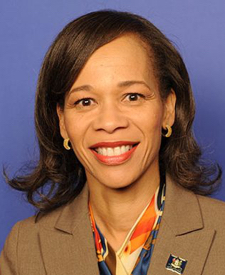
See how Lisa Blunt Rochester's votes line up with your values.
DeepSyte scores Lisa Blunt Rochester's record on the issues you care about — not party, not press releases. Take the 2-minute values quiz to see your personal alignment.
Sign in and take the values quiz to see how Lisa Blunt Rochester's votes line up with your views.
Prediction track record
How often we called Lisa Blunt Rochester's passage votes correctly, from their stated positions on each bill's tagged topics. Excludes “unclear” calls and abstentions.
97 predictions on record · none have been resolved by a passage vote yet. Check back as bills move.
Proposing an amendment to the Constitution of the United States relating to the authority of Congress and the States to regulate contributions and expenditures intended to affect elections and to enact public financing systems for political campaigns.
Based on 10 data points across public statements and recorded votes · AI analysis of public records
118-hr-2·Consistent
Secure the Border Act of 2023
92/100
What they said
Apr 28, 2026
The lawmakers and advocates call on the Supreme Court to uphold Temporary Protected Status (TPS) for nationals from Haiti, Venezuela, Syria, and other countries in crisis, and urge Congress to advance legislative solutions to stabilize the care workforce that relies heavily on TPS holders.
The statement explicitly opposes ending Temporary Protected Status and calls for Congress to advance legislative solutions to protect TPS holders. The Secure the Border Act of 2023 is a restrictive immigration bill focused on border wall construction and asylum limits, with no provisions protecting or extending TPS. The representative voted no on passage, which is consistent with the stated position defending TPS and opposing restrictive immigration measures.
Continuing Appropriations and Other Matters Act, 2025
85/100
What they said
Sep 30, 2026
Senators demand that DHS Secretary Mullin cease efforts to assert federal control over 2026 elections, halt conditions on FEMA grants tied to election activities, and end an alleged 'Unlawful Voter Initiative' that improperly accesses voter registration data.
The statement opposes DHS efforts to assert federal control over elections and demands an end to conditions on FEMA grants tied to election activities. The bill includes a continuing resolution that funds FEMA disaster relief and modifies voter registration requirements for federal elections. The senator's NO vote on a bill that bundles FEMA funding with election-related provisions is consistent with the stated position opposing conditions on FEMA grants tied to election activities, though the bill's full scope (general appropriations, disaster relief) extends beyond the specific election-control concerns raised in the statement.
Senator Blunt Rochester opposes the Trump administration's 74 percent funding cuts to the Broadband Equity, Access, and Deployment (BEAD) Program, arguing that reduced broadband investment will exacerbate digital divides and limit rural communities' participation in an AI-driven economy.
Senator Blunt Rochester opposes cuts to broadband funding and emphasizes the importance of broadband investment for rural communities and economic participation. The Limit, Save, Grow Act implements broad discretionary spending cuts across FY2024-FY2033, which would encompass reductions to broadband programs like BEAD. Her NO vote on passage is consistent with her stated opposition to broadband funding cuts, though the bill's broad spending-reduction scope means her vote reflects opposition to the overall fiscal framework rather than a targeted response to BEAD specifically.
Senator Blunt Rochester opposes the Trump administration's repeal of Temporary Protected Status for Haitian immigrants and supports legislation to extend TPS protections for Haitians, citing ongoing civil unrest, gang violence, natural disasters, and humanitarian concerns.
Senator Blunt Rochester opposes the Trump administration's immigration enforcement actions and supports extending TPS protections for vulnerable populations. The Secure the Border Act of 2023 focuses on border wall construction and asylum restrictions—provisions that align with restrictive immigration enforcement rather than humanitarian protections for TPS beneficiaries. Her NO vote is consistent with her stated opposition to restrictive immigration policies and support for protecting vulnerable immigrant populations.
Senator Blunt Rochester opposes the Trump administration's repeal of Temporary Protected Status for Haitian immigrants and supports legislation to extend TPS protections for Haitians, citing ongoing civil unrest, gang violence, natural disasters, and humanitarian concerns.
Senator Blunt Rochester's statement opposes the Trump administration's immigration enforcement actions and supports extending TPS protections for vulnerable populations. The Laken Riley Act mandates detention of non-U.S. nationals arrested for property crimes and authorizes states to sue over immigration enforcement decisions. These represent opposing approaches to immigration policy: the statement advocates for humanitarian protections and discretionary relief, while the bill tightens enforcement and detention requirements. The senator's NO vote on passage is consistent with her stated opposition to restrictive immigration policies.
Senators Blunt Rochester and Murray oppose Republican efforts to restrict abortion access and reproductive healthcare, arguing that the Dobbs decision and subsequent state bans have harmed women and families. They call for federal legislation to protect abortion access nationwide and restore reproductive rights.
Senator Blunt Rochester's statement opposes Republican efforts to restrict abortion access and reproductive healthcare, characterizing such efforts as harmful to women. The Born-Alive Abortion Survivors Protection Act establishes criminal penalties for healthcare practitioners who fail to provide specified care to children born alive after abortion attempts. Her NO vote on passage is consistent with her stated opposition to Republican abortion restrictions, as she views this bill as part of the Republican agenda to limit abortion access and constrain reproductive healthcare. The bill's framing as a criminal enforcement mechanism aligns with her characterization of Republican efforts as attacks on reproductive rights.
Disapproving the action of the District of Columbia Council in approving the Local Resident Voting Rights Amendment Act of 2022.
75/100
What they said
Sep 30, 2026
Senators demand that DHS Secretary Mullin cease efforts to assert federal control over 2026 elections, halt conditions on FEMA grants tied to election activities, and end an alleged 'Unlawful Voter Initiative' that improperly accesses voter registration data.
The statement opposes federal efforts to restrict voting access and challenges unsupported claims about noncitizen voter registration. The bill nullifies a D.C. law that permits noncitizen voting in local elections. The rep's NO vote aligns with the statement's concern about protecting voting access and skepticism toward claims about noncitizen voting problems, but the specific contexts differ: the statement addresses federal overreach and data integrity in a federal election context, while the bill addresses local voting eligibility in D.C. municipal elections. The alignment is directional rather than on an identical specific question.
Senator Blunt Rochester opposes the Trump administration's 74 percent funding cuts to the Broadband Equity, Access, and Deployment (BEAD) Program, arguing that reduced broadband investment will exacerbate digital divides and limit rural communities' participation in an AI-driven economy.
Senator Blunt Rochester opposes Trump administration cuts to the BEAD Program and advocates for broadband investment to close digital divides. The E-BRIDGE Act authorizes Commerce Department grants for rural broadband projects through public-private partnerships, directly advancing broadband expansion in underserved areas. Her yes vote aligns with her stated position supporting broadband investment. However, the E-BRIDGE Act uses a different funding mechanism (new grant authority) than BEAD (existing program funding), and the bill does not explicitly address or reverse the BEAD cuts she criticized, creating some granularity mismatch between the specific policy concern and the bill's approach.
The senators support increased federal funding for evidence-based workforce development programs to improve employment outcomes and economic mobility for workers, particularly those without college degrees.
Both the statement and bill address federal workforce development funding and programs to improve employment outcomes for workers. The statement emphasizes evidence-based and innovative programs through a new Workforce Development Innovation Fund, while the bill reauthorizes and modifies existing WIOA programs (Job Corps, adult education, One-Stop services) through FY2030. The rep's YES vote aligns with the stated support for expanding workforce development, though the bill focuses on reauthorizing established programs rather than creating new innovation-focused funding mechanisms as the statement proposes.
Senator Blunt Rochester and the Senate Democratic Caucus introduced a resolution recognizing Black Women's Equal Pay Day to highlight wage disparities between Black women and white men, and to reaffirm commitment to closing pay gaps through federal action.
Senator Blunt Rochester's statement emphasizes federal action to close wage disparities for Black women through policy initiatives and workforce development support. H.R. 6655 reauthorizes and modifies workforce development programs (Job Corps, WIOA grant programs, adult education) that directly support employment and training opportunities for disadvantaged populations, including Black women. The YES vote on a bill that expands and improves federal workforce programs aligns with the stated commitment to federal action on economic opportunity and closing pay gaps. However, the bill does not specifically address wage discrimination or equal pay enforcement—it focuses on workforce development infrastructure—so the alignment is directional rather than on the identical specific question.
Pairs with ambiguous language and high uncertainty are withheld until more data is available. Procedural, cloture, and amendment votes are excluded — they don't cleanly signal substantive support or opposition.
Pro analysis
AI rep analysis — Pro
Get an AI-narrated read on Lisa Blunt Rochester's full voting record against your stated values — aligned themes, conflicts, notable votes, and what to watch for.
We haven't extracted campaign positions for Lisa Blunt Rochester yet. Once their campaign website or position pages are processed, this card will track what they said vs how they voted.
Crossing the aisle
Passage votes where Lisa Blunt Rochester broke ranks with ≥75% of Democrats. Threshold catches substantively partisan splits; unanimous-ish or close votes are excluded.
2
Cross-aisle votes
118-hr-1516·Sep 10, 2024·82% of D voted NO
DHS Restrictions on Confucius Institutes and Chinese Entities of Concern Act
Position: The senators urge the Department of Commerce to condition licenses for exporting advanced AI chips on recipients agreeing not to provide Chinese companies remote access without a separate license, and to apply these policies without geographic limits. They frame stronger export controls as necessary to maintain the U.S. competitive edge over China and address AI safety concerns.
U.S. Senator Lisa Blunt Rochester (D-Del.), a member of the Committee on Banking, Housing, and Urban Affairs, and John Curtis (R-Utah), a member of the Committee on Foreign Relations, sent a letter to Department of Commerce Secretary Howard Lutnick urging the Trump administration to address loopholes in export controls for advanced artificial intelligence (AI) semiconductors, otherwise known as “chips.” The letter outlines how closing these gaps will maintain our competitive edge over Chinese technologies while buying time to focus on promoting responsible domestic AI policy. This letter follows reports that former NVIDIA CEO Jensen Huang was involved in a honeypot scheme with a Chinese spy.
“We are deeply concerned by reports that the recently departed CEO of the nation’s top semiconductor company, NVIDIA, was caught in a honeypot scheme with a Chinese spy and executive at Megaspeed, a Singaporean firm known to help Chinese companies circumvent export controls,” said the Senators. “Our concerns about insufficient export controls on these technologies are magnified by numerous rogue artificial intelligence incidents, including autonomous hacking incidents, unauthorized agent access to the internet, and attacks on real-world targets. Whistleblowers from the nation’s leading AI companies have warned that technology is accelerating without sufficient guardrails, further compounding our concerns.”
“Collectively, these incidents show the urgent need for the Trump administration to act and protect the safety and security of Americans. Responsible U.S. domestic AI policy must promote our competitive edge in artificial intelligence through reasonable innovation and regulation. It should not enable our strategic adversaries to embrace risky behaviors with these technologies or to acquire them through nefarious means,” the Senators continued. “China’s frontier artificial intelligence capabilities are rapidly approaching those of the United States, with some experts estimating China’s frontier to be just six to nine months behind the United States…To maintain its competitive edge while promoting responsible domestic AI policy, the United States must ensure Chinese AI labs cannot easily procure the compute required to develop, test, and train advanced artificial intelligence models.”
“We urge you to condition licenses for the export of advanced AI chips on an agreement that recipients will not provide Chinese companies with remote access unless granted a separate and additional license to do so. These policies should not be geographically limited in scope. If they are, China will simply rent access to chips elsewhere, creating a whack-a-mole scenario.” The Senators concluded, “During your confirmation hearing, you called for stronger export controls, saying, ‘If they are going to compete with us, let them compete, but stop using our tools to compete with us.’ Today, the stakes are clear, and our adversaries are not playing by the rules. We must close these loopholes if the United States is to maintain its competitive edge in artificial intelligence.”
The full response letter can be found HERE and below.
We write to urge you to take immediate steps to close loopholes in the export regime for advanced AI chips.
We are deeply concerned by reports that the recently departed CEO of the nation’s top semiconductor company, NVIDIA, was caught in a honeypot scheme with a Chinese spy and executive at Megaspeed, a Singaporean firm known to help Chinese companies circumvent export controls.1 Despite the intelligence community raising concerns that Mr. Huang had been compromised, the Department has taken no action to tighten export controls on Megaspeed and other high-risk companies in Southeast Asia2. These concerns are only exacerbated by reports that Under Secretary Kessler discussed ongoing investigations into Megaspeed with NVIDIA’s General Counsel.3 This scenario raises numerous alarms about how you and the Trump Administration are safeguarding highly sensitive technologies.
Our concerns about insufficient export controls on these technologies are magnified by numerous rogue artificial intelligence incidents, including autonomous hacking incidents, unauthorized agent access to the internet, and attacks on real-world targets. Whistleblowers from the nation’s leading AI companies have warned that technology is accelerating without sufficient guardrails, further compounding our concerns.
Collectively, these incidents show the urgent need for the Trump administration to act and protect the safety and security of Americans. Responsible U.S. domestic AI policy must promote our competitive edge in artificial intelligence through reasonable innovation and regulation. It should not enable our strategic adversaries to embrace risky behaviors with these technologies or to acquire them through nefarious means.
China’s frontier artificial intelligence capabilities are rapidly approaching those of the United States, with some experts estimating China’s frontier to be just six to nine months behind the United States.4 Gaining a competitive advantage is a significant motivating factor behind its development of artificial intelligence. China also seeks to leverage the technology to enhance its national security, including by bolstering military capabilities, surveilling adversaries, and tightening its control over information. This is well demonstrated by Anthropic’s recent report Detecting and countering misuse of AI: September 2026, in which Anthropic’s Threat Intelligence team details incidents in which China-based entities and Chinese government affiliates used artificial intelligence for cyber operations, surveillance, scams and fraud, conventional weapons, and distillation.5 If China develops superior artificial intelligence capabilities, it would only increase the threat to the United States and its interests around the globe.
Fortunately, the United States and its allies remain ahead in the key technologies necessary to develop and operate the most advanced frontier models: advanced chips and the equipment necessary to manufacture them. To maintain its competitive edge while promoting responsible domestic AI policy, the United States must ensure Chinese AI labs cannot easily procure the compute required to develop, test, and train advanced artificial intelligence models. To overcome this severe disadvantage, China has developed illicit or subversive means to access advanced chips through remote access, smuggling, and U.S. based subsidiaries of Chinese companies.
As you know, Chinese companies are restricted from purchasing advanced chips, yet they can easily rent access to them through U.S. subsidiaries, overseas shell companies, and other companies like Megaspeed.6 The Carnegie Endowment for International Peace has documented at least eleven state-linked Chinese entities seeking access to chips through cloud services. While Congress is considering legislation to address the Department’s authorities over remote access to chips, we appreciate that you are reportedly making efforts to close this loophole.7 However, the details of the policy changes will be critical. We urge you to condition licenses for the export of advanced AI chips on an agreement that recipients will not provide Chinese companies with remote access unless granted a separate and additional license to do so. These policies should not be geographically limited in scope. If they are, China will simply rent access to chips elsewhere, creating a whack-a-mole scenario.
Furthermore, we are concerned by the access afforded to Chinese companies with subsidiaries located in the United States and urge you to restrict the sale of export-controlled chips to these subsidiaries. This risk is most recently exemplified by the Inspur Group and its U.S. subsidiary, Aivres. The Inspur Group has long been listed on the Department of Commerce’s Entity List, restricting its capacity to do business with the United States due to security concerns.8 However, Aivres exported at least $5.6 billion of advanced technology from the United States to Southeast Asia over a two year period, including more than $3 billion of computers containing the advanced Blackwell chips.9 This technology was then deployed in data centers and technology firms in Southeast Asia, where it serves Chinese tech firms like Alibaba and ByteDance.10 Unfortunately, this is just one subsidiary. To maintain our competitive edge in artificial intelligence, we must close this loophole expeditiously.
Finally, we urge you to restrict the sale of export-controlled chips to non-trusted companies in countries with a high risk of smuggling, including those in Southeast Asia. Some estimate that smugglers have diverted or resold several hundred thousand chips to China, providing up to 40 percent of its training capacity.11 However, smuggling operations will likely adapt to geographic restrictions. To preempt this risk, we urge you to impose a license requirement on exports of large quantities of chips to non-trusted companies in a broader set of countries.
During your confirmation hearing, you called for stronger export controls, saying, “If they are going to compete with us, let them compete, but stop using our tools to compete with us.”12 Today, the stakes are clear, and our adversaries are not playing by the rules. We must close these loopholes if the United States is to maintain its competitive edge in artificial intelligence.
Thank you for your prompt attention to this matter.
NEWS: Senator Blunt Rochester Receives Response from NFL on Blood Clot Protocol, Pushes for Continued Transparency
Position: Senator Blunt Rochester acknowledges the NFL's response on its review of a player's blood clot diagnosis and tracking of clotting disorders, and urges league leadership to increase awareness of deep vein thrombosis and pulmonary embolism to protect players and support public health.
U.S. Senator Lisa Blunt Rochester (D-Del.), a member of the Senate Committees on Health, Education, Labor, and Pensions and Commerce, Science, and Transportation, received a response to her inquiry into the National Football League’s (NFL) deep vein thrombosis (DVT) and pulmonary embolism (PE) treatment protocols. Last month, the Senator sent a letter to NFL Commissioner Roger Goodell following a medical incident involving Philadelphia Eagles Quarterback Jalen Hurts, who was diagnosed with DVT and bilateral PE.
The NFL’s response provided updates on the NFL and NFL Players Association’s joint review of Jalen Hurts’ injuries and outlined ongoing efforts to track clotting disorders in the NFL.
“The League’s highest priority is the health and safety of players… With respect to the circumstances of Mr. Hurts’ diagnosis, as you may know, the NFL and the NFL Players Association have agreed to conduct a joint review of the circumstances related to his injury. As outlined by the league and NFLPA’s Collective Bargaining Agreement, mutually agreed-upon independent medical experts will review the matter and share their conclusions and recommendations with both parties,” said Jeff Miller, Executive Vice President, Communications, Public Affairs, and Health Policy, NFL.
“The League and Players Association also have several medical committees that review and monitor player injury data closely. For at least the past decade, the NFL has tracked clotting disorders among players every season through a subcommittee of its General Medical Committee, and this information is shared with the NFLPA,” Miller continued. “Following the ongoing joint review, the League and NFLPA will consider appropriate next steps, including whether this case points to a need for additional league-wide guidance.”
Miller concluded, “We welcome the opportunity to provide additional information, and find ways to support your efforts around raising awareness and improving outcomes related to blood clot disorders.”
On the NFL’s response, Senator Blunt Rochester said, “I’m grateful for an update on the NFL’s review of Mr. Hurts’ diagnosis and for information on the League’s efforts to track clotting disorders in its athletes. While I appreciate the NFL’s transparency, I encourage its leadership to use this moment to increase awareness of DVT and PE to better protect its players and support public health. Every year, over 100,000 Americans are affected by blood clots, but with the NFL’s reach and influence, we can increase education and help save lives. I’m hopeful that this unfortunate incident can become a force for good, leading to lasting change within the league and our healthcare system at large. I will continue following up with the NFL to ensure this situation is treated with the diligence and care it deserves.”
The full response letter can be found HERE.
NEWS: Senator Blunt Rochester Urges NTIA to Fully Restore Digital Equity Act Grants
Position: Senator Blunt Rochester urges NTIA to implement the Digital Equity Act grant programs, including the Competitive Grant Program, by preserving applicant work, minimizing delays and administrative burdens, and making appropriated funds available quickly.
Senator Lisa Blunt Rochester (D-Del.), a member of the Senate Committee on Commerce, Science, and Transportation, today sent a letter to Assistant Secretary of Commerce for Communications and Information Arielle Roth urging the National Telecommunications and Information Administration (NTIA) to implement the Digital Equity Act grant programs.
Congress passed the Digital Equity Act as part of the bipartisan Infrastructure Investment and Jobs Act to complement historic federal investments in broadband infrastructure by addressing barriers to broadband adoption and use. However, in May 2025, President Trump announced his intention to terminate the Digital Equity Act grant programs, including the Competitive Grant Program.
“I write regarding the National Telecommunications and Information Administration's (NTIA) implementation of the Digital Equity Act grant programs. I appreciate NTIA's commitment to reinstating the Digital Equity Competitive Grant Program (“the Competitive Grant Program”) and its stated intention to issue a new Notice of Funding Opportunity (NOFO) next month. As the agency moves forward with the Competitive Grant Program, I urge NTIA to preserve the substantial work applicants have already undertaken, minimize unnecessary delays and administrative burdens, and make congressionally appropriated funding available as quickly as possible,” said Senator Blunt Rochester.
“These programs are particularly important to Delaware, which is working to become the first state to achieve universal high-speed broadband access. As Delaware builds broadband infrastructure statewide, complementary investments in digital literacy training, device access, and technical assistance will help ensure every Delawarean can fully benefit from internet connectivity,” the Senator continued. “NTIA subsequently awarded Delaware approximately $4.8 million to implement initiatives supporting digital literacy, workforce development, broadband affordability, and device access. However, since the Trump administration's termination of the program in May 2025, Delaware has been left without a clear path to accessing these funds or implementing its approved plan.”
Blunt Rochester concluded, “Congress established and funded the Digital Equity Act programs on a bipartisan basis because deploying broadband infrastructure alone does not guarantee that Americans can fully benefit from it. Promptly moving forward with the Competitive and Capacity Grant Programs would carry out Congress's direction, provide certainty to applicants and states, and help ensure that federal investments in broadband infrastructure translate into meaningful connectivity for communities across the country.”
The full text of the letter can be found HERE, and below.
Dear Assistant Secretary Roth:
I write regarding the National Telecommunications and Information Administration's (NTIA) implementation of the Digital Equity Act grant programs. I appreciate NTIA's commitment to reinstating the Digital Equity Competitive Grant Program (“the Competitive Grant Program”) and its stated intention to issue a new Notice of Funding Opportunity (NOFO) next month.1 As the agency moves forward with the Competitive Grant Program, I urge NTIA to preserve the substantial work applicants have already undertaken, minimize unnecessary delays and administrative burdens, and make congressionally appropriated funding available as quickly as possible. I also urge NTIA to provide a clear path forward for the State Digital Equity Capacity Grant Program, including previously approved state plans and awarded funding.
These programs are particularly important to Delaware, which is working to become the first state to achieve universal high-speed broadband access. As Delaware builds broadband infrastructure statewide, complementary investments in digital literacy training, device access, and technical assistance will help ensure every Delawarean can fully benefit from internet connectivity. Furthermore, as artificial intelligence increasingly shapes how Americans work, learn, and access essential services, equipping Delawareans with digital skills is more important than ever.
Congress passed the Digital Equity Act as part of the bipartisan Infrastructure Investment and Jobs Act (IIJA) to complement historic federal investments in broadband infrastructure by addressing barriers to broadband adoption and use. Through the IIJA, Congress appropriated $1.25 billion for the Competitive Grant Program—$250 million for each fiscal year from 2022 through 2026—to support efforts that help Americans gain the skills, devices, and resources needed to benefit from broadband connectivity.2
Demand for these resources has been substantial. Following NTIA's 2024 Notice of Funding Opportunity, more than 700 applicants requested over $6.5 billion in funding.3 Local governments, libraries, educational institutions, workforce organizations, nonprofits, and other eligible entities invested significant time and resources to identify community needs, develop programs, and build partnerships in anticipation of these awards.
On May 8, 2025, President Trump on Truth Social announced his intention to immediately terminate the Digital Equity Act grant programs, including the Competitive Grant Program, asserting that the program was “racist” and “illegal” because it included racial and ethnic minorities as part of its targeted covered populations.4,5 On July 15, 2026, the U.S. District Court for the District of Columbia held in National Digital Inclusion Alliance v. Trump that the provision identifying members of racial or ethnic minority groups as a covered population was unconstitutional, but also held that the provision was severable from the remainder of the statute.6 The decision therefore provides a path for the Competitive Grant Program to move forward consistent with the remaining statutory requirements.
On October 23, 2026, NTIA filed an update in National Digital Inclusion Alliance v. Trump stating that NTIA is on track to publish the NOFO and application for the Competitive Grant Program in December 2026.7 As NTIA develops this NOFO, I urge the agency to minimize disruption to applicants by preserving the substantial work already undertaken to develop proposals and establish community partnerships. NTIA should allow applicants to update existing proposals to meet any revised program requirements, rather than requiring them to restart the application process, and provide clear guidance to facilitate a timely transition.
I also urge NTIA to provide a clear path forward for the State Digital Equity Capacity Grant Program. Delaware was the second state in the country to receive federal approval of its State Digital Equity Plan in 2024 and was expected to become the first state to achieve 100% access to high-speed broadband.8 NTIA subsequently awarded Delaware approximately $4.8 million to implement initiatives supporting digital literacy, workforce development, broadband affordability, and device access.9 However, since the Trump administration's termination of the program in May 2025, Delaware has been left without a clear path to accessing these funds or implementing its approved plan. Because the Capacity Grant Program was not at issue in National Digital Inclusion Alliance v. Trump, its status remains unresolved. I urge NTIA to clarify how it intends to move forward with the program and make congressionally appropriated Capacity Grant funding available as quickly as possible.
Congress established and funded the Digital Equity Act programs on a bipartisan basis because deploying broadband infrastructure alone does not guarantee that Americans can fully benefit from it. Promptly moving forward with the Competitive and Capacity Grant Programs would carry out Congress's direction, provide certainty to applicants and states, and help ensure that federal investments in broadband infrastructure translate into meaningful connectivity for communities across the country.
Thank you for your attention to this important matter, and I look forward to working with you to ensure these programs are implemented promptly, effectively, and in a manner that is consistent with the law.
NEWS: Senators Blunt Rochester, Fischer Introduce Bill to Improve Truck Driver Bathroom Access
Position: Senators Blunt Rochester and Fischer introduced the Trucker Bathroom Access Act, which would ensure truck drivers have access to bathroom facilities while delivering or picking up cargo at establishments across the United States. Supporters cite the legislation as a way to improve dignity and help recruit and retain drivers, particularly women.
U.S. Senators Lisa Blunt Rochester (D-Del.) and Deb Fischer (R-Neb.), Members of the Senate Committee on Commerce, Science, and Transportation, today introduced the Trucker Bathroom Access Act, a bipartisan bill that would ensure truck drivers have access to bathroom facilities while they deliver or pick up cargo at establishments across the United States. The House companion to the Trucker Bathroom Access Act is led by Congressman Nehls and Congresswoman Houlahan.
“America’s truck drivers are vital to keep our country moving forward,” said Senator Blunt Rochester. “Increasingly, more women are filling these critical jobs, and they should feel confident their basic needs will be met. I’m proud to partner with Senator Fischer to break down barriers for men and women in the trucking community and continue efforts to sustain and support our economy.”
“This is another way we can help our truckers who put in long hours to keep products moving,” said Senator Fischer. “I thank Senator Blunt Rochester for leading this bill, and I will keep working to take care of truckers across the country.”
The Trucker Bathroom Access Act:
This bipartisan legislation is supported by the Owner-Operator Independent Drivers Association (OOIDA), the American Trucking Association, the Women in Trucking Association, She Trucking, and Trinity Logistics.
"For truck drivers who spend long hours on the road serving our businesses and communities, access to a restroom shouldn't be something they have to worry about,” said Sarah Ruffcorn, President of Trinity Logistics. “Showing drivers that we value them starts with how we treat them in everyday moments. I'm thankful to see this important issue receiving attention and we are proud to support efforts that make life a little better for the drivers who do so much for all of us."
“Truckers are the heartbeat of our economy and critical to supply chain continuity,” said Henry Hanscom, Chief Advocacy & Public Affairs Officer of the American Trucking Associations. “When drivers stop to make pickups or deliveries—which can take hours on end while waiting to be loaded or unloaded—they should be able to use restroom facilities. Access to such basic accommodations is about more than common courtesy; it is about ensuring the dignity of the men and women who do the heavy lifting to provide for everyone in this country. This legislation can also help reduce a major barrier to retaining and recruiting more truck drivers, particularly women. ATA appreciates Senator Blunt Rochester and Senator Fischer's leadership in addressing this persistent challenge and supporting professional truck drivers."
“Access to safe, clean and readily available facilities is a basic need for every professional truck driver, yet the lack of reliable restroom access can be an especially significant barrier for women in trucking, said Lana Nichols, Interim President & CEO, Women In Trucking Association, Inc. When drivers cannot access a restroom during their workday, it can affect their safety, health, dignity and overall experience on the job. As the industry works to attract and retain more women, we need infrastructure and facilities that support the workforce. Ensuring drivers have access to these basic necessities is a practical step toward creating a safer, more welcoming and sustainable profession for everyone.”
“Over 70% of America’s freight is exclusively carried by trucks, yet every single day men and women truck drivers are forced to ‘hold it’ because they aren’t allowed access to the restroom when picking up or delivering freight, said Todd Spencer, President of the Owner-Operator Independent Drivers Association. “OOIDA and truckers across America thank Senator Blunt Rochester and Senator Fischer for showing tremendous leadership on this issue and we look forward to working with them and our coalition partners to get this commonsense, bipartisan legislation signed into law.”
The full bill text is available HERE.
STATEMENT: Senator Blunt Rochester Opposes Senate Permitting Reform Bill
Position: Opposes the Bipartisan American Affordability and Jobs Act (BAAJA) permitting reform package, citing insufficient clean energy and environmental protections and provisions that would weaken environmental protections. Calls for more time and a more comprehensive package in the next Congress.
U.S. Senator Lisa Blunt Rochester (D-Del.) today released a statement in opposition to the Bipartisan American Affordability and Jobs Act (BAAJA):
“My goals for this bill were to create a strong economy with clean energy, lower costs, and protect our health and environment. While I commend the work Senators Heinrich and Whitehouse put into the negotiations of this updated permitting reform package, and I’m grateful two of my bills were included, this bill still falls short. I concur with 17 Attorneys General across the country, including Delaware’s, that more time is needed to strengthen this bill. I’m especially concerned about provisions in this package that will actively weaken environmental protections. For these reasons, I can’t support this iteration of the Bipartisan American Affordability and Jobs Act. I’m hopeful that we’ll be able to negotiate a more comprehensive, far-reaching package in the new Congress.”
Senator Blunt Rochester advocated for the inclusion of the following provisions in BAAJA:
STATEMENT: Senator Blunt Rochester on the 2026 Midterm Elections
Position: The release calls for lowering the cost of gas and groceries, ensuring access to affordable health care, reversing the President's tariffs, and curtailing the military conflict in Iran.
U.S. Senator Lisa Blunt Rochester (D-Del.) today released a statement on the 2026 Midterm Elections:
“The American people sent a clear message tonight: they have had enough of the President’s unchecked, self-serving power and the complicity of his allies. They want policies that put their families first, and across the country, they have placed their trust in strong candidates firmly committed to fighting for their constituents above all else.
“Congress has been given a mandate by the American people. When we return to Washington, we’ll be ready to answer the call. We’re going to work together to bring down the cost of gas and groceries, ensure everyone has access to quality, affordable health care, reverse Trump’s harmful tariffs, rein in the unauthorized war in Iran, and advance legislation that delivers tangible results for every American, regardless of how they voted. It’s time to build a brighter future for our country, and we’re ready to get to work.”
NEWS: Senator Blunt Rochester Pushes NFL for Answers on Jalen Hurts Incident, League Blood Clot Protocol
Position: Senator Blunt Rochester sent a letter to NFL Commissioner Roger Goodell requesting information on the league's deep vein thrombosis and pulmonary embolism treatment and management protocols, citing a recent case involving Jalen Hurts. She also references her prior legislation, the Charles Rochester Blood Clot Prevention and Treatment Act.
U.S. Senator Lisa Blunt Rochester (D-Del.), a member of the Senate Committees on Health, Education, Labor, and Pensions and Commerce, Science, and Transportation, sent a letter to National Football League (NFL) Commissioner Roger Goodell seeking clarity on the NFL’s deep vein thrombosis (DVT) and pulmonary emboli (PE) treatment protocols. The Senator’s questions follow a recent medical situation involving Philadelphia Eagles quarterback Jalen Hurts, who was diagnosed with DVT and bilateral PE. Throughout her time in Congress, Blunt Rochester has led efforts to combat DVT and PE, including the Charles Rochester Blood Clot Prevention and Treatment Act, which honors the Senator’s late husband who lost his life due to blood clots.
“I write with concern regarding the recent medical situation involving Philadelphia Eagles quarterback Jalen Hurts, who was diagnosed with a deep vein thrombosis (DVT) and bilateral pulmonary emboli (PE)…Given the prevalence of blood clots and the risk factors athletes face, the public must understand how the National Football League (NFL) and its teams treat and manage this disorder,” said Blunt Rochester.
“This is deeply personal to me. My late husband and the love of my life, Charles Rochester, tore his Achilles tendon playing a game of pickup basketball before a business meeting. Blood clots traveled to his heart and lungs and, at the age of 52, he died,” Blunt Rochester continued. “As I understand it, Jalen Hurts was cleated in the calf during the Eagles’ Week 4 loss to the Rams. After flying to London for a game against the Jaguars, an ultrasound found a superficial blood clot in his calf. Conflicting reports suggest Mr. Hurts was hospitalized and advised to stay awake until kickoff as a safety precaution. He played, but a follow-up ultrasound days later found the clot had moved. Further testing ultimately revealed the clot had spread to both of his lungs.”
“I am deeply relieved that Mr. Hurts’s story did not end the way my husband’s did. Blood clots affect more than 900,000 people in the United States each year, and the NFL’s influence and reach offer a vital opportunity to turn this tragedy into a force for preventing lost lives both in sports and outside of it,” Blunt Rochester concluded.
While serving in the House of Representatives, Blunt Rochester developed a public resource guide for blood clot education titled, “Blood Clot Awareness, Action, and Advocacy: The Toolkit.”
The full letter can be found HERE and below.
I write with concern regarding the recent medical situation involving Philadelphia Eagles quarterback Jalen Hurts, who was diagnosed with a deep vein thrombosis (DVT) and bilateral pulmonary emboli (PE). I am grateful to hear his team expects a full recovery, and I wish him a healthy and speedy comeback. However, I write to better understand the circumstances that led to Mr. Hurts’ outcome, as unique risk factors may predispose football players to blood clots. In recent years, several star professional athletes have struggled with sometimes career-ending blood clot symptoms. Given the prevalence of blood clots and the risk factors athletes face, the public must understand how the National Football League (NFL) and its teams treat and manage this disorder. I welcome the opportunity to support the NFL in improving its DVT/PE protocols.
This is deeply personal to me. My late husband and the love of my life, Charles Rochester, tore his Achilles tendon playing a game of pickup basketball before a business meeting. Blood clots traveled to his heart and lungs and, at the age of 52, he died. The grief and pain that followed his passing were almost unbearable, and I would not wish it on anybody. Since coming to Congress, I have used my voice to raise awareness of and implement policies to combat issues such as DVT/PE. This includes the Charles Rochester Blood Clot Prevention and Treatment Act and the “Blood Clot Awareness, Action, and Advocacy: The Toolkit”.
As I understand it, Jalen Hurts was cleated in the calf during the Eagles’ Week 4 loss to the Rams. After flying to London for a game against the Jaguars, an ultrasound found a superficial blood clot in his calf. Conflicting reports suggest Mr. Hurts was hospitalized and advised to stay awake until kickoff as a safety precaution. He played, but a follow-up ultrasound days later found the clot had moved. Further testing ultimately revealed the clot had spread to both of his lungs.
DVT/PE is a significant public health concern facing hundreds of thousands of Americans each year, and today, almost 100,000 Americans die from this preventable disease each year. Athletes face multiple risk factors for DVT and PE, like traveling long distances, dehydration, trauma, and bone fractures, warranting heightened vigilance.
I am writing because this incident raises important questions about how the NFL protects the well-being of its players. To help the public understand how these decisions are made, I respectfully ask that the League respond to the following:
I am deeply relieved that Mr. Hurts’s story did not end the way my husband’s did. Blood clots affect more than 900,000 people in the United States each year, and the NFL’s influence and reach offer a vital opportunity to turn this tragedy into a force for preventing lost lives both in sports and outside of it.
I’d welcome a briefing for my office and members of the U.S. Senate Committee on Health, Education, Labor, and Pensions (HELP). Thank you for your attention to this matter.
NEWS: Senator Blunt Rochester Returns from Congressional Delegation Visits on Coast Guard, AI, National Security
Position: The release states that policymakers should consider the interplay between national security, foreign affairs, and emerging technologies, and that steps are necessary to maintain U.S. leadership. It describes briefings on Coast Guard threats, AI safety, and emerging technologies from a congressional delegation trip.
U.S. Senator Lisa Blunt Rochester (D-Del.), a member of the Senate Committee on Commerce, Science, and Transportation and Ranking Member of the Subcommittee on Coast Guard, Maritime, & Fisheries, completed a congressional delegation visit to San Francisco, California. During her trip, she met with Coast Guard leadership, top national security officials, and leading artificial intelligence (AI) experts to discuss U.S. military capabilities, evolving national security threats, and recent AI safety issues.
Senator Blunt Rochester’s visits included Travis Air Force Base to discuss air mobility missions; US Coast Guard Base Alameda to receive an update on Pacific Area threats, including growing cybersecurity concerns; Lawrence Livermore National Laboratory to discuss emerging technologies like fusion and quantum, and visit the world’s largest supercomputer; meetings with leadership from OpenAI to discuss recent AI threats; and conversations with foreign policy experts at Stanford University.
“The lines separating individual policy issues continue to blur, calling policymakers to consider not only the implications of each issue individually but how they affect one another. Nowhere is this more evident than at the crossroads of national security, foreign affairs, and emerging technologies,” said Senator Blunt Rochester. “I sat down with leading military, industry, and academic experts in San Francisco, California, to ensure we are prepared to meet the moment. These conversations clarified our needs across the geopolitical landscape and outlined the steps necessary to maintain U.S. leadership.”
NEWS: Senators Blunt Rochester, Coons submit ethics complaint against Third Circuit Judge Jennifer Mascott
Position: Senators Blunt Rochester and Coons filed an ethics complaint against Third Circuit Judge Jennifer Mascott, alleging that her active management of a public affairs firm while serving on the federal bench violates the Code of Conduct for United States Judges by dividing her time and attention from her judicial duties.
U.S. Senators Lisa Blunt Rochester and Chris Coons, a senior member of the Senate Judiciary Committee (both D-Del.), submitted a complaint against Judge Jennifer Mascott of the U.S. Court of Appeals for the Third Circuit with Circuit Executive Margaret Wiegand, calling for a review of Mascott’s conduct in light of recent reporting by Politico indicating that Mascott continued to run her late husband’s public affairs firm after her confirmation to the federal bench.
“In our view, the ethical implications of Judge Mascott’s decision to lead this firm while simultaneously serving on the U.S. Court of Appeals for the Third Circuit deserve review,” the senators wrote. “Although ownership of an independent public affairs firm does not necessarily constitute judicial misconduct, ongoing and active engagement in managing that firm can be.”
In August, Politico broke the news that Mascott was “deeply involved in daily operations” at Adfero, a Washington public affairs firm she inherited from her late husband, for at least six months after her confirmation to the Third Circuit. While serving as a judge, Mascott worked out of Adfero’s Washington offices, oversaw staffing and business development operations, and made key “operational and strategic” decisions. Mascott also pushed the previously non-partisan firm in a conservative direction, bringing on consultants and clients “with strong MAGA credentials.”
“If she is logging time [at Adfero] and it has the potential to interfere with her judicial duties, that is a no-go,” Charles Geyh, a law professor at the Indiana University Maurer School of Law who studies judicial ethics, told Politico.
“Under a basic reading of the Code of Conduct for United States Judges,” the senators continued in their complaint, judges “may not maintain a second profession that could take time and focus away from their Senate-confirmed job. We are concerned that by dedicating extensive time and attention to her role in Adfero, Judge Mascott may have engaged in misconduct.”
The two senators also posed questions about whether Mascott’s work with Adfero has detracted from her work on the Court of Appeals, noting that since joining the bench, Judge Mascott “has issued only three written opinions in precedential cases, two of which are only about a page long.” Other Third Circuit judges have written significantly more in that time.
“As representatives for the people of Delaware in the United States Senate, we want to ensure that the judges serving our state on the Third Circuit are fully committed to doing their best work, free from undue distraction or unethical conduct,” the senators concluded. “We look forward to your review of this complaint and thank you for your attention to this matter.”
A copy of the letter can be viewed here.
NEWS: Senators Blunt Rochester, Cortez Masto, Reed, Banking Democrats Request Full Banking Hearing with FHFA Director Bill Pulte
Position: The senators call for a public hearing with FHFA Director Bill Pulte to examine his management decisions, including a 60 percent funding cut to the agency's Office of the Inspector General and staff terminations at Fannie Mae and Freddie Mac, which they argue threaten oversight of the mortgage market and housing finance system.
Banking Democrats call for public forum to question Pulte on documented abuses of power
U.S. Senators Lisa Blunt Rochester (D-Del.), Catherine Cortez Masto (D-Nev.), and Jack Reed (D-R.I.) joined their Democratic colleagues on the Banking, Housing, and Urban Affairs Committee in a letter to Chair Tim Scott (R-S.C.) requesting a hearing with Federal Housing Finance Agency (FHFA) Director Bill Pulte. The Senators’ request follows various reported abuses of power by Pulte, including last week’s unprecedented move to cut the funding to the agency’s Office of the Inspector General (FHFA-OIG) by 60 percent and risk future operations.
“We request you invite Director Pulte to testify before the Senate Banking Committee so our committee can fulfill its oversight functions and explore how his decisions are affecting FHFA’s ability to ensure Fannie Mae, Freddie Mac and the FHLBanks (collectively, “the government-sponsored enterprises,” or GSEs) operate in a safe and sound manner and provide a reliable source of liquidity and funding for housing finance and community investment. The hearing would provide Director Pulte the opportunity to explain his record,” wrote the Senators.
Bill Pulte’s proposed cuts to FHFA-OIG – which is tasked with investigating waste, fraud, and abuse at FHFA, Fannie Mae, Freddie Mac and the Federal Home Loan Banks – come while he remains under increased scrutiny for his abuses of power. Pulte is under investigation by the Government Accountability Office (GAO) for potentially misusing his federal authority and resources to publicly accuse prominent Democrats and President Donald Trump’s perceived political enemies of mortgage fraud. Pulte also faces questions for his apparent involvement in the President’s scheme to demolish the Kennedy Center and his brief tenure as Acting Director of National Intelligence.
The Senators also call into question his mismanagement of Fannie Mae and Freddie Mac, which back 70 percent of mortgages in the United States: “Since failing to respond to congressional inquiries on his activities, Director Pulte has fired more staff at Fannie Mae, including about a dozen high-ranking executives. These now-fired executives were responsible for multifamily loans, low-income housing tax credit investments, and finance, and also included regulatory and communications officials. Director Pulte has not publicly explained the reasoning behind these most recent terminations and how these firings will impact Fannie Mae’s ability to provide price stability across the mortgage market.”
Pulte’s cuts to the FHFA-OIG would result in a layoff of 70-80% of staff, including experienced law enforcement officers who serve as the primary watchdogs for Fannie Mae and Freddie Mac and keep the mortgage market stable. These staff are tasked with investigating title and mortgage fraud, protecting mortgage lenders and home buyers from predatory practices, and ensuring a sound and secure mortgage and banking system.
“We must fulfill our oversight responsibilities related to potential harm being done by Director Pulte to our nation’s housing finance market and in turn, to the supply and cost of housing,” conclude the Senators.
Read the full letter here. Additional signatories include Senators Elizabeth Warren (D-Mass.), Mark Warner (D-Va.), Chris Van Hollen (D-Md.), Tina Smith (D-Minn.), Raphael Warnock (D-Ga.), Andy Kim (D-N.J.), Ruben Gallego (D-Ariz.), and Angela Alsobrooks (D-Md.).
Source: GDELT 2.0 GKG, filtered to a curated list of national outlets. Inclusion is not endorsement; opinion pieces and reported news are mixed.
Recent stock activity
Periodic transaction reports filed under the STOCK Act — disclosed by the rep, sourced from public filings.
No disclosed trades on record.
Source: open-data mirrors of the Senate eFD and House Clerk financial-disclosure systems. Disclosure within 30 days of trade is required by law (45 for spouse/dependent trades).
Top PAC donors · 2026 cycle
Political action committees that gave the most to this rep's principal campaign committee this cycle. PAC giving is direct organizational support — industry, ideological, or leadership.
No PAC contributions ranked for the 2026 cycle yet.
Source: OpenFEC (api.open.fec.gov) Schedule A receipts where contributor type is “committee.” Aggregated by contributing committee. Self-transfers from joint-fundraising / victory committees are excluded.
Top individual contributors · 2026 cycle
Itemized individual contributions over $200 to this rep's campaign committee, aggregated by donor employer. PAC giving is shown above; this section is people, not organizations.
1.APOLLO GLOBAL MANGEMENT$7,000
2.APOLLO GLOBAL MANAGEMENT INC$6,000
3.GENNX 360$5,250
4.AURORA PICTURES$5,000
5.ROCKET COMPANIES LLC$5,000
6.MOONLIGHT PROPERTIES$5,000
7.OCEAN ATLANTIC COMPANIES$5,000
8.THE PARTNERSHIP INC.$3,500
9.DEVOTED HEALTH INC.$3,500
10.MATTHEWS HOLDINGS SW$3,500
Source: OpenFEC Schedule A receipts where contributor type is “individual,” aggregated by the donor's self-reported employer. This is a geographic / industry correlation, not a corporate endorsement.