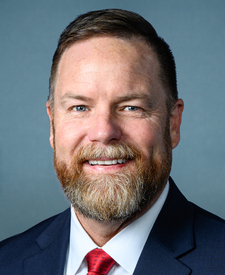
See how Aaron Bean actually votes — against your values.
DeepSyte scores Aaron Bean's record on the issues you care about — not party, not press releases. Take the 2-minute values quiz to see your personal alignment.
Sign in and take the values quiz to see how Aaron Bean's votes line up with your views.
Prediction track record
How often we called Aaron Bean's passage votes correctly, from their stated positions on each bill's tagged topics. Excludes “unclear” calls and abstentions.
We haven't yet found statement/vote pairs on the same topic for Aaron Bean. This usually means either the rep hasn't taken public positions on bills that have come to a passage vote, or those bills haven't been tagged yet. The checker runs as new press releases and votes come in.
Pro analysis
AI rep analysis — Pro
Get an AI-narrated read on Aaron Bean's full voting record against your stated values — aligned themes, conflicts, notable votes, and what to watch for.
We haven't extracted campaign positions for Aaron Bean yet. Once their campaign website or position pages are processed, this card will track what they said vs how they voted.
Crossing the aisle
Passage votes where Aaron Bean broke ranks with ≥75% of Republicans. Threshold catches substantively partisan splits; unanimous-ish or close votes are excluded.
Bean Introduces Bill to Resolve Digital Asset Tax Liabilities
Position: Congressman Bean introduced legislation establishing a voluntary disclosure program allowing taxpayers to correct past digital asset tax noncompliance with streamlined processes and limited penalties in exchange for full disclosure, payment of taxes owed, and IRS cooperation.
WASHINGTON—Today, Ways and Means Committee member U.S. Congressman Aaron Bean (FL-04) introduced H.R. 9174, the Digital Assets Voluntary Disclosure Program Act. As digital assets become increasingly common, this legislation establishes a voluntary disclosure program for taxpayers seeking to correct past digital asset-related tax noncompliance.
Upon introduction, Congressman Bean said, “Taxes are complicated enough. Add digital assets to the mix, and many Americans are left trying to navigate a confusing and evolving set of rules. My bill gives taxpayers who want to do the right thing an opportunity to correct past mistakes and come into compliance.”
“Most taxpayers want to follow the law and pay what they owe, but the complexity surrounding digital assets has left some Americans unsure of how to meet their obligations,” said Ways and Means Committee Chairman Jason Smith. “The Digital Assets Voluntary Disclosure Program Act creates a clear pathway for taxpayers to come back into compliance without facing unnecessary barriers or prolonged disputes. Representative Bean's bill is a practical solution that promotes voluntary compliance, improves tax administration, and helps taxpayers move forward with certainty while ensuring everyone plays by the same rules.”
BACKGROUND
The Digital Assets Voluntary Disclosure Program Act establishes a voluntary disclosure program for taxpayers with unreported or underreported digital asset-related tax liabilities.
Under the program, taxpayers must:
Fully disclose and correct prior digital asset-related tax noncompliance;
Pay all taxes owed, plus applicable interest; and
Cooperate with the Internal Revenue Service as part of the disclosure process.
In return, eligible taxpayers receive a streamlined compliance process and limited penalties, providing a practical pathway to come into compliance and resolve outstanding tax obligations.
Read the bill text HERE.
###
Bean Bill to Crack Down on Medicare Fraud Passes Committee
Position: Congressman Bean supports legislation to strengthen Medicare fraud prevention in the durable medical equipment system by requiring faster electronic claims submission, modernizing fraud detection technology, and reducing reliance on paper-based processes.
WASHINGTON— Today, U.S. Congressman Aaron Bean’s (FL-04) bill to combat fraud in the durable medical equipment (DME) system passed the House Ways and Means Committee. H.R. 8871, the DME Scammer Prevention Act, would strengthen oversight and modernize claims processing requirements to prevent bad actors from defrauding Medicare beneficiaries and stealing taxpayer dollars.
Watch Congressman Bean’s full remarks in committee markup on the bill here.
Upon committee passage, Congressman Bean said, “Rising fraud and criminal activity in the DME industry threaten to undermine our Medicare system and drive up costs. My bill will crack down on fraud, strengthen oversight, and ensure Medicare dollars are spent on legitimate patient care.”
“Seniors pay into Medicare their whole lives, but foreign fraudsters and transnational criminal rings are treating their earned benefits like a blank check,” said Ways and Means Committee Chairman Jason Smith. “Thanks to Representative Bean’s leadership, we’re making it harder for these bad actors to prey on seniors and get rich on the taxpayers’ dime and easier to stop fraud with digital tools. The DME Scammer Prevention Act modernizes Medicare fraud prevention so we can prevent scams, protect tax dollars, and preserve the benefits our seniors have earned.”
BACKGROUND
The DME Scammer Prevention Act would require the electronic submission of DME products most susceptible to fraud within 90 days of the initial claim date. The current submission deadline is 365 days, which allows fraudulent vendors to take advantage of the payment system and cheat the American taxpayer.
The bill would also direct the Government Accountability Office (GAO) to conduct a comprehensive review of the technology used by Medicare Administrative Contractors to screen and process claims. This report will help identify gaps in current fraud detection tools and recommend improvements to better protect the Medicare system.
Importantly, widespread fraud has been enabled in part by outdated systems and paper-based processes, including the continued allowance of fax submissions. In fact, more than 40,000 durable medical equipment (DME) claims have been submitted on paper and faxed to CMS for reimbursement in the past year alone, underscoring the need for modernization and stronger electronic safeguards.
Full text of Congressman Bean’s bill can be found HERE.
###
Position: Congressman Bean introduced legislation to strengthen Medicare fraud prevention in the durable medical equipment program by requiring faster electronic claim submission and directing a GAO review of fraud detection technology.
WASHINGTON—Today, U.S. Congressman Aaron Bean (FL-04) introduced H.R. 8871, the DME Scammer Prevention Act, to prevent widespread fraud in the durable medical equipment (DME) system and strengthen safeguards for Medicare beneficiaries and taxpayers.
DME is a critical component of Medicare, providing catheters, orthopedic braces, and other medically necessary devices to seniors and individuals with disabilities. However, the program has long been vulnerable to fraudulent billing schemes and improper claim submissions, costing taxpayers billions of dollars.
Upon introduction, Congressman Bean said, “Rising fraud and criminal activity threaten to undermine the Medicare system for Northeast Floridians and seniors across the country. We have an obligation to ensure that taxpayer dollars are used to care for our most vulnerable—not lining the pockets of fraudsters who exploit gaps in the system. This legislation strengthens accountability, improves oversight, and helps modernize the way claims are processed so legitimate patients get the care they need without delay or abuse of the system.”
BACKGROUND
The DME Scammer Prevention Act would require the electronic submission of DME products most susceptible to fraud within 90 days of the initial claim date. The current submission deadline is 365 days, which allows fraudulent vendors to take advantage of the payment system and cheat the American taxpayer.
The bill would also direct the Government Accountability Office (GAO) to conduct a comprehensive review of the technology used by Medicare Administrative Contractors to screen and process claims. This report will help identify gaps in current fraud detection tools and recommend improvements to better protect the Medicare system.
Full text of Congressman Bean’s bill can be found HERE.
###
Bean Puts America’s Veterans, Military Families First
Position: Congressman Bean supports H.R. 8469, which fully funds veterans' healthcare and benefits, invests in mental health and suicide prevention programs, and provides military construction funding. He passed amendments to expand fraud detection and require a comprehensive audit of VA administrative waste.
WASHINGTON—U.S. Congressman Aaron Bean (FL-04) released the following statement after the House approved H.R. 8469, the Military Construction, Veterans Affairs, and Related Agencies Appropriations Act, 2027.
Congressman Bean said, “We have a duty to support and care for those who have shown courage of conviction through their selfless service to our nation. This legislation fully funds veterans’ healthcare and benefits, and makes significant investments in mental health, suicide prevention, and homelessness programs. It also provides critical investments in military infrastructure that supports military readiness and improves the quality of life for our service members and their families.”
Congressman Bean passed the following amendments as part of the funding bill:
Amendment #104: Expands the use of data analytics and program integrity tools used to detect improper payments, duplicate claims, and organized fraud schemes within VA benefits and community care programs.
Amendment #105: Requires the Department of Veterans Affairs Office of Inspector General to conduct a comprehensive audit of improper payments, unused or duplicative software contracts, redundant consulting agreements, and stale unliquidated obligations across VA administrative offices, and to provide Congress with recommendations to reduce waste, fraud, and abuse.
KEY TAKEAWAYS
Champions our veterans by:
Fully funding veterans’ health care programs and benefits
Maintaining funding for research, mental health programs, and other programs relied upon by veterans
Investing over $2 billion in capital improvements for VA Medical Facilities and four national cemeteries
Supports the mandate of the American people by:
Fully funding the Community Care account, which empowers veterans to seek specialty care to meet their unique needs
Supporting efforts in improving mental health and suicide prevention among veterans.
Bolsters U.S. national security and border protections by:
Providing robust funding for military construction, enabling continued investment in the Indo-Pacific region and infrastructure necessary to support United States advanced weapons systems.
Maintaining the prohibitions on the closure of Naval Station Guantanamo Bay, Cuba, and the use of military construction funds to build facilities for detainees on U.S. soil.
Prohibiting the VA from purchasing resources directly or indirectly from Communist China.
The measure passed by a vote of 400 to 15.
###
From Roundtable to Results: Bean, Ways and Means Advance Bipartisan Foster Youth Legislation
Position: Congressman Bean supports advancing bipartisan legislation to modernize the Chafee Foster Care Program through six bills that expand housing assistance, increase education and training vouchers, and improve workforce development opportunities for youth aging out of foster care.
WASHINGTON—U.S. Congressman Aaron Bean (FL-04) joined his colleagues on the Ways and Means Committee in advancing six bipartisan bills to modernize the John H. Chafee Foster Care Program for Successful Transition to Adulthood (Chafee). These bills are part of a national effort to ensure every young person aging out of foster care has the tools to build a strong and independent future.
Earlier this month, the Ways and Means Committee convened a bipartisan roundtable with the First Lady and former foster youth leaders to hear directly about the challenges young people face as they transition out of the foster care system. The discussion underscored the urgent need to move beyond awareness and take meaningful legislative action.
Upon committee passage, Congressman Bean said, “After hearing directly from foster youth and advocates, it was clear we needed action, not just conversation. The future of our nation rests with our children, and we have a responsibility to invest in their success. These bipartisan bills modernize the Chafee program and help ensure young people leaving foster care have the support, stability, and opportunity they need to reach their full potential.”
The following Ways and Means legislation was passed with unanimous, bipartisan support and now heads to the House floor:
Foster Youth Housing Opportunity Act (H.R. 7432)
Improves access to housing for youth aging out of foster care, and former foster youth, by strengthening coordination between Chafee and the Foster Youth to Independence (FYI) housing voucher program administered by the Department of Housing and Urban Development, by:
Aligning the age eligibility between programs, ensuring youth can receive Chafee-funded supportive services for the full duration of the voucher.
Updating the existing 30 percent cap on room and board to exclude housing supportive services for youth with FYI vouchers, and allowing the cap to be based on a rolling average over five years; and
Requiring joint federal guidance to clarify rules and coordination of services between state child welfare agencies and local public housing authorities administering FYI vouchers.
Foster Youth Postsecondary Education Access and Success Act (H.R. 7463)
Increases the individual education and training voucher (ETV) cap from $5,000 to $12,000 per student annually, while maintaining current funding levels for ETVs.
Permits states to establish a grace period for youth to demonstrate satisfactory progress toward completion of a program, after an assessment and consultation with the youth.
Requires the Department of Health and Human Services (HHS) to develop a user-friendly, electronic, standard application form for ETVs, and requires states to make reasonable efforts to inform youth about the program to improve awareness and streamline access.
Foster Youth Workforce Opportunity Act (H.R. 7343)
Expands use of Chafee ETVs to include short-term workforce and vocational training and credentialing programs.
Expands ETVs to cover the costs of apprenticeships, GEDs, and remedial education, and provides one additional year of eligibility if used for remedial education.
Fresh Starts for Foster Youth Act (H.R. 7529)
Improves access to legal services for youth and ensures states have processes in place to take into consideration legal issues impacting foster youth, such as housing, education, employment entry, and family conditions, as part of case planning in their transition to adulthood.
Support for Expectant and Parenting Foster Youth Act (H.R. 7655)
Improves access to home visiting services offered through the Maternal, Infant, and Early Childhood Home Visiting (MIECHV) program for youth in foster care who are expecting or parenting.
MIECHV is an evidence-based program that has demonstrated results in improving maternal and infant health outcomes and supporting early childhood development.
Permits states to use Chafee funds to provide specialized case management to expectant and parenting youth.
Chafee Opportunities for New Networks and Existing Connection Trust (CONNECT) Act (H.R. 7995)
Updates the purposes section of the Chafee program to reflect the importance of establishing meaningful connections with adults and other lifelong support networks.
Adds a new purpose to clarify that Chafee funds may be used to help foster youth engage in their own permanency process and planning for independence.
Requires HHS to issue guidance, in consultation with youth with foster care lived experience, regarding implementation of the new purposes, including best practices, outreach, and protocols for documenting supports for youth.
###
With Wildfires Straining Communities, Bean Backs Bipartisan Plan to Support Family Forests
Position: Congressman Bean supports the Save America's Family Forests Act of 2026, which would allow family forest landowners to immediately expense reforestation costs following federally declared natural disasters, removing current $10,000 caps and multi-year recovery periods to enable faster forest restoration and economic recovery.
WASHINGTON—U.S. Congressman Aaron Bean (FL-04) joined Congressman Earl L. “Buddy” Carter (GA-01), Congresswoman Terri Sewell (AL-07), Congressman Mike Thompson (CA-04), Congressman Greg Steube (FL-17), Congressman Greg Murphy (NC-03), and Congressman Nathaniel Moran (TX-01) in introducing the Save America’s Family Forests Act of 2026. This bipartisan bill aims to help family forest landowners recover more quickly from natural disasters and maintain productive working forests.
This introduction comes as active wildfires continue to affect communities in Northeast Florida and across multiple states, placing pressure on forest landowners, local economies, and vital natural resources.
Upon introduction, Congressman Bean said, “Northeast Florida’s forests are essential to our environment and our economy, and they’re under real strain from ongoing wildfires. Family forest landowners and the timber industry play a vital role in restoring these lands, but they need the flexibility to recover and replant quickly after damage. The Save America’s Family Forests Act gives them that support, helping Florida’s forestry families keep their land productive and our natural resources strong for the future."
Congressman Carter said, “Georgia’s family forest landowners are essential to our economy and our way of life. It’s the number one state for forestry, supporting rural jobs, strengthening supply chains, and keeping our environment healthy and resilient. By building on proven expensing policies, this bill ensures they can recover quickly after disasters and continue managing healthy, productive forests.”
The bill has received support from the American Farm Bureau Federation, the Forest Landowners Association, and the Congressional Sportsmen’s Foundation.
Full text of the bill can be found HERE.
BACKGROUND
Under current law, landowners can deduct only $10,000 of reforestation expenses upfront and must recover the remaining costs over seven years. The Save America’s Family Forests Act of 2026 would modernize this outdated approach by allowing faster cost recovery after natural disasters, helping ensure timely replanting and sustained forest productivity.
The bill builds on successful expensing tools—such as bonus depreciation and Section 179 equipment expensing—enacted in the One Big Beautiful Bill Act. Applying these same principles to reforestation enables forest landowners to reinvest quickly and keep working forests healthy and productive.
Specifically, the bill would:
Fully and immediately expense reforestation costs following a federally declared natural disaster.
Remove the $10,000 cap and eliminate long recovery periods under current law.
Improve access to the capital needed to replant and restore forests rapidly.
###
Position: Congressman Bean opposes the Center for Medicare and Medicaid Innovation (CMMI), arguing that it has increased federal spending, wasted taxpayer dollars, and exceeded its statutory authority by operating without adequate congressional oversight.
WASHINGTON—Today, U.S. Congressman Aaron Bean (FL-04) introduced the Abolish the Center for Medicare and Medicaid Innovation (CMMI) Act to dismantle an agency that has increased federal spending, inefficiently spent taxpayer dollars, and repeatedly exceeded its statutory authority by encroaching on Congress’s constitutional role.
Upon introduction, Congressman Bean said, “CMMI’s existence is yet another example of the waste and mismanagement that has come to define Washington bureaucracy. It’s time that we fight back against the bloated federal government and eliminate agencies that should never have been established in the first place. The expenditure of taxpayer dollars must be tied to results, and after 15 years of proven failures, it’s long past time to end CMMI for the good of both patients and taxpayers.”
BACKGROUND
The Center for Medicare and Medicaid Innovation (CMMI) was created under the Affordable Care Act with a $10 billion budget per decade to test payment models intended to reduce costs and improve care. Early projections by the Congressional Budget Office (CBO) were overly optimistic, estimating $2.8 billion in savings from 2011 to 2020.
In reality, CMMI increased federal spending by $5.4 billion during that period, and CBO now projects an additional $1.3 billion in spending from 2021 to 2030. Outside analyses suggest these estimates likely understate the true cost, noting even mandatory models “continue to underperform” and fail to become more efficient.
CBO projections also rely on an expansive interpretation of CMMI’s authority, allowing the agency to launch and expand mandatory models without Congressional approval, effectively supplanting Congress’s constitutional role and limiting lawmakers’ ability to intervene.
Read the bill text HERE.
###
U.S. Congressman Bean Questions HHS Secretary Kennedy
Position: Congressman Bean supports expanding Health Savings Accounts (HSAs) to give patients greater control over healthcare spending and applauds the Administration's focus on affordability and transparency in healthcare.
WASHINGTON—U.S. Congressman Aaron Bean (FL-04), member of the Ways and Means Committee, spoke with U.S. Department of Health and Human Services Secretary Robert F. Kennedy, Jr., about his Make America Healthy Again initiative, empowering patients and tackling fraud.
During his line of questioning, Congressman Bean highlighted his HSA’s for All Act, which would expand access to Health Savings Accounts (HSAs) and give hardworking Americans more control over their healthcare dollars.
Following the hearing, Congressman Bean said, “Improving health outcomes isn’t just about access—it’s about affordability, transparency, and giving patients real control over their care. I applaud the Administration’s focus on making Americans healthier and expanding commonsense tools like HSAs so families can better plan for and afford the care they need.”
To watch their conversation, CLICK HERE.
###
Congressman Bean: “We must fix a broken and unsustainable healthcare system.”
Position: Congressman Bean advocates for expanding graduate medical education residency slots and strengthening the physician workforce to improve healthcare access and outcomes, while emphasizing a shift toward prevention-focused care delivery.
WASHINGTON—Earlier this week, U.S. Congressman Aaron Bean (FL-04), a member of the House Ways and Means Committee, participated in a field hearing at the Lake Erie College of Osteopathic Medicine titled “Modernized Health Care in Practice: Empowering Americans to Live Healthier Lives.” The hearing featured an expert panel of physicians and medical executives, exploring how a modernized approach to healthcare would impact chronic disease prevention, innovations in care delivery, and the long-term stability of the healthcare system.
During his line of questioning, Congressman Bean emphasized the need to strengthen the physician workforce by expanding graduate medical education (GME) residency slots, particularly in fast-growing states like Florida, which are facing increasing demand for care.
Following the hearing, Congressman Bean said, “Our current healthcare system is broken and unsustainable. We’re spending trillions, yet Americans are sicker than ever—and a big part of the problem is we don’t have enough doctors to meet the need. If we’re serious about improving access to care, we must expand medical residencies, strengthen our healthcare workforce, and focus on prevention rather than just treating illness. I’ll keep fighting for solutions that put patients first and deliver better outcomes for the American people.”
To watch Congressman Bean’s remarks, click HERE.
###
On Tax Day, American Workers and Families Come First
Position: Congressman Bean supports the Working Families Tax Cut Act, which he describes as delivering tax relief to workers and families through provisions including no tax on tips or overtime, exemptions for Social Security benefits, and an enhanced child tax credit.
WASHINGTON—Today, U.S. Congressman Aaron Bean (FL-04) spoke on the House floor to highlight how the Working Families Tax Cut Act is delivering real results for the American people. During this historic filing season, more than 53 million filers claimed at least one tax benefit in the new law, driving an unprecedented 11% increase in average tax refunds. As a result, millions of workers and families are seeing bigger refunds and lower tax bills this Tax Day.
Full speech, as prepared for delivery, is below:
Mr. Speaker, we all remember that iconic final scene from Thelma & Louise—two women in a red convertible, pedal down, flying straight off the edge of a cliff.
For working Americans, that’s exactly what many people saw coming: a $4 trillion taxhike that would have put families in the passenger seat while the left drove full speed toward the edge, no brakes, no plan, and no way out.
But this Tax Day, House Republicans refused to let that be the ending.
With the Working Families Tax Cut, we turned the wheel. We changed the direction. And we put working people back in control of their own hard‑earned money.
No tax on tips. No tax on overtime. No tax on Social Security benefits. A deduction for auto‑loan interest on new American‑made vehicles. A higher standard deduction. A stronger child tax credit. Every one of these provisions means the same thing: more take‑home pay, more breathing room, and more opportunity for the families who make this country work.
The Working Families Tax Cut is real tax relief for real people. Parents juggling rising costs, for workers picking up extra shifts, and for seniors who spent a lifetime paying in and deserve to keep what they earned.
Mr. Speaker, instead of driving off a cliff, we wrote a happy ending. One where hardworking American taxpayers keep more of what they earn and move forward with confidence and certainty.
To watch Congressman Bean's remarks, CLICK HERE.
###
Source: GDELT 2.0 GKG, filtered to a curated list of national outlets. Inclusion is not endorsement; opinion pieces and reported news are mixed.
Recent stock activity
Periodic transaction reports filed under the STOCK Act — disclosed by the rep, sourced from public filings.
No disclosed trades on record.
Source: open-data mirrors of the Senate eFD and House Clerk financial-disclosure systems. Disclosure within 30 days of trade is required by law (45 for spouse/dependent trades).
Top PAC donors · 2026 cycle
Political action committees that gave the most to this rep's principal campaign committee this cycle. PAC giving is direct organizational support — industry, ideological, or leadership.
1.AMERICAN ISRAEL PUBLIC AFFAIRS COMMITTEE POLITICAL ACTION COMMITTEEIdeological6 contributionsPAC arm of the American Israel Public Affairs Committee, federalized in 2021. Backs candidates of both parties who support U.S.-Israel security and economic ties.AI$30,000
2.NATIONAL AUTOMOBILE DEALERS ASSOCIATION POLITICAL ACTION COMMITTEEBusiness4 contributionsTrade association PAC for new-car dealers — backs candidates supporting dealer franchise protections, vehicle sales regulations, and automotive retail interests.AI$20,000
3.INDEPENDENT INSURANCE AGENTS & BROKERS OF AMERICA, INC. POLITICAL ACTION COMMITTEE (INSURP4 contributions$20,000
4.MAJORITY COMMITTEE PAC--MC PACLeadership4 contributionsLeadership PAC — likely affiliated with a member of Congress or caucus group; backs allied candidates and party priorities.AI · low$20,000
5.SWISHER INTERNATIONAL INC PAC FUND3 contributions$15,000
6.AMERICAN CRYSTAL SUGAR COMPANY POLITICAL ACTION COMMITTEEAgriculture3 contributionsAgricultural processing PAC for American Crystal Sugar — backs candidates supporting farm subsidies, sugar price supports, and agricultural trade policies.AI$15,000
7.NATIONAL ASSOCIATION OF REALTORS POLITICAL ACTION COMMITTEEReal Estate3 contributionsTrade association PAC for U.S. real estate agents and brokers — backs candidates supporting property-rights protections, mortgage-lending access, and tax incentives for homeownership.AI$15,000
8.AMERICAN REVIVAL PACIdeological3 contributionsSingle-issue or ideological PAC — specific positions not clearly inferable from the name alone.AI · low$15,000
9.UNITED STATES SUGAR CORPORATION EMPLOYEE STOCK OWNERSHIP PLAN POLITICAL ACTION COMMITTEE,3 contributions$15,000
10.THE EYE OF THE TIGER POLITICAL ACTION COMMITTEEOther3 contributionsPAC with a motivational slogan name — specific policy positions and affiliations not inferable from the name alone.AI · low$15,000
Source: OpenFEC (api.open.fec.gov) Schedule A receipts where contributor type is “committee.” Aggregated by contributing committee. Self-transfers from joint-fundraising / victory committees are excluded.
Top individual contributors · 2026 cycle
Itemized individual contributions over $200 to this rep's campaign committee, aggregated by donor employer. PAC giving is shown above; this section is people, not organizations.
1.APOLLO GLOBAL MANAGEMENT$14,500
2.ARNOLD VENTURES$10,500
3.CORCORAN PARTNERS$10,200
4.BAPTIST HEALTH$7,750
5.GHYABI CONSULTING & MANAGEMENT$7,500
6.HOME NURSE INC.$7,000
7.A1A SOFTWARE LLC$7,000
8.NEW WORLD SYMPHONY INC.$7,000
9.NIAGARA DRINKING WATER INC.$7,000
10.WARE CAPITAL LLC$7,000
Source: OpenFEC Schedule A receipts where contributor type is “individual,” aggregated by the donor's self-reported employer. This is a geographic / industry correlation, not a corporate endorsement.