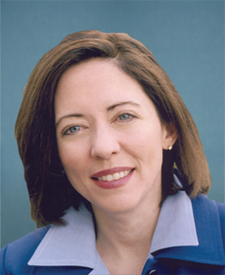
See how Maria Cantwell actually votes — against your values.
DeepSyte scores Maria Cantwell's record on the issues you care about — not party, not press releases. Take the 2-minute values quiz to see your personal alignment.
Sign in and take the values quiz to see how Maria Cantwell's votes line up with your views.
Prediction track record
How often we called Maria Cantwell's passage votes correctly, from their stated positions on each bill's tagged topics. Excludes “unclear” calls and abstentions.
33 predictions on record · none have been resolved by a passage vote yet. Check back as bills move.
Pending vote119-hjres-152
Proposing an amendment to the Constitution of the United States to ensure that only citizens are eligible to vote in Federal elections.
Providing for congressional disapproval under chapter 8 of title 5, United States Code, of the rule submitted by the Bureau of Consumer Financial Protection relating to the withdrawal of the rule relating to "Statement of Policy Regarding Prohibition on Abusive Acts or Practices".
No paired statements and votes yet for Maria Cantwell
We haven't yet found statement/vote pairs on the same topic for Maria Cantwell. This usually means either the rep hasn't taken public positions on bills that have come to a passage vote, or those bills haven't been tagged yet. The checker runs as new press releases and votes come in.
Pro analysis
AI rep analysis — Pro
Get an AI-narrated read on Maria Cantwell's full voting record against your stated values — aligned themes, conflicts, notable votes, and what to watch for.
We haven't extracted campaign positions for Maria Cantwell yet. Once their campaign website or position pages are processed, this card will track what they said vs how they voted.
Crossing the aisle
No party-break passage votes recorded for Maria Cantwell. Either they've voted with Democrats on every substantive passage vote in the corpus, or their tenure overlaps few high-threshold party-line votes so far.
Cantwell Joins Colleagues in Demanding Answers From Hegseth on Cost of Iran War | U.S. Senator Maria Cantwell of Washington
Position: Senator Cantwell and 45 Democratic colleagues demand that the Department of Defense provide full accounting of costs and budget details for the ongoing war with Iran, criticizing the administration for withholding information from Congress and the public while costs to taxpayers and military casualties continue to mount.
WASHINGTON, D.C. – Today, U.S. Senator Maria Cantwell (D-WA), ranking member of the Senate Committee on Commerce, Science, and Transportation and senior member of the Senate Finance Committee, joined 45 of her colleagues in the Democratic Senate caucus in sending a letter to Secretary of Defense Pete Hegseth demanding a full accounting of the costs of the ongoing war with Iran.
The letter also criticized the Department of Defense for withholding basic budget information from Congress and the American public even as U.S. casualties and taxpayer costs continue to increase.
“Meanwhile, at home, American taxpayers have already paid an extra $100 billion out of their pockets for higher gas and diesel prices alone and at least another $60 billion in higher costs for things like groceries, mortgages, and plane tickets as a result of the war,” wrote the Senators. “Now you are asking that they pay again to fund a war of choice that Congress never authorized and the President launched with no strategic plan.”
The United States is now more than six months into a conflict President Trump initially said would last six weeks. Eighteen American servicemembers have been killed and more than 820 wounded, and over 50,000 troops are currently deployed to the Middle East. In the letter, the senators note that deployments, including for the USS Abraham Lincoln and the 82nd Airborne, have been repeatedly extended, and that their offices have heard directly from military families worried about loved ones serving in the conflict. The aircraft carrier – which the Navy recently indicated is likely coming to Bremerton – was at sea for 286 days, a modern record, and concerns were raised by the crew and their families.
In their letter, the senators highlight the contrast between the current Pentagon’s transparency record with past wartime practice, noting that Hegseth has briefed Congress only seven times in six months and held just eight Pentagon press briefings or interviews since the war began, compared to more than 70 press briefings in the first month of the Iraq War alone. The senators also criticized the administration’s public supplemental funding request as a seven-page document offering only vague line items, in contrast to the detailed, hundred-page supplemental requests provided to Congress during the Iraq and Afghanistan wars.
Senators are requesting that the Department of Defense provide:
“Despite asking for tens of billions of additional taxpayer dollars, you have so far failed to provide basic information on how this money has and will be spent,” continued the senators. “Congress must have access to this information to carry out our oversight responsibilities. It is the bare minimum that any American would expect in balancing their own household budget.”
The letter was led by U.S. Senator Elissa Slotkin (D-MI). In addition to Sen. Cantwell, it was signed by Senators Angela Alsobrooks (D-MD), Tammy Baldwin (D-WI), Michael Bennet (D-CO), Richard Blumenthal (D-CT), Lisa Blunt Rochester (D-DE), Cory Booker (D-NJ), Chris Coons (D-DE), Catherine Cortez Masto (D-NV), Tammy Duckworth (D-IL), Richard Durbin (D-IL), Ruben Gallego (D-AZ), Kirsten Gillibrand (D-NY), Maggie Hassan (D-NH), Martin Heinrich (D-NM), John Hickenlooper (D-CO), Mazie Hirono (D-HI), Tim Kaine (D-VA), Mark Kelly (D-AZ), Andy Kim (D-NJ), Angus King (I-ME), Amy Klobuchar (D-MN), Ben Ray Luján (D-NM), Ed Markey (D-MA), Jeff Merkley (D-OR), Chris Murphy (D-CT), Patty Murray (D-WA), Jon Ossoff (D-GA), Alex Padilla (D-CA), Gary Peters (D-MI), Jack Reed (D-RI), Jacky Rosen (D-NV), Bernie Sanders (I-VT), Brian Schatz (D-HI), Adam Schiff (D-CA), Democratic Leader Chuck Schumer (D-NY), Jeanne Shaheen (D-NH), Tina Smith (D-MN), Chris Van Hollen (D-MD), Mark Warner (D-VA), Raphael G. Warnock (D-GA), Elizabeth Warren (D-MA), Peter Welch (D-VT), Sheldon Whitehouse (D-RI), and Ron Wyden (D-OR).
The full text of the letter is available HERE.
Cantwell Hails Historic Opportunity to Codify Athletes’ Rights in Protect College Sports Act | U.S. Senator Maria Cantwell of Washington
Position: Senator Cantwell advocates for passage of the Protect College Sports Act, which would codify athletes' rights to name, image, and likeness (NIL) compensation, establish health and safety protections, regulate agent conduct, and preserve women's and Olympic sports opportunities.
WASHINGTON, D.C. – Today, U.S. Senator Maria Cantwell (D-WA), ranking member of the Senate Committee on Commerce, Science, and Transportation and a senior member of the Senate Finance Committee, urged her colleagues to support her bipartisan Protect College Sports Act, a historic opportunity to enshrine athletes’ rights to name, image, and likeness (NIL) revenue – as well as important health and safety protections – into federal law.
“We can recognize [these rights], enshrine them today, and make sure that these athletes are protected forever, including the rights to not have their contracts screwed with, their rights to not have their school override them, the rights to have any amount of money that some business wants to pay them, as long as it is for a valid business purpose,” said Sen. Cantwell said in a speech on the Senate floor.
Sen. Cantwell also outlined the importance of stabilizing college sports. “I want these rules put in place because sports is about any given Saturday,” she said. “It is not about whether you have a billionaire in your backyard. It is about whether you can coach and recruit and develop and maintain and have academic performance and have fairness … and have everybody compete and keep the ecosystem in place. But that fairness does not exist today without this bill.”
Sen. Cantwell noted that the runaway spending on athletics threatens opportunities in women’s and Olympic sports. “I am not going to have women's and Olympic sports undermined by this system. In fact, there is a poll that shows that 87% of the public ... agree, women's and Olympic sports need to be preserved,” she said. “We are not going to let runaway boosters who basically want no rules and runaway agents who want to prey on high school kids decide what's going to happen here.”
Sen. Cantwell spoke ahead of a procedural vote. The Senate advanced the bill 77-22, moving it closer to final passage.
Video of Sen. Cantwell’s floor speech is HERE; a transcript is HERE.
Sen. Cantwell is leading the effort to reform college sports and ensure tomorrow’s athletes have the same opportunities as today’s competitors. The Protect College Sports Act of 2026, which she introduced alongside Commerce, Science, and Transportation Committee Chair Senator Ted Cruz (R-TX), sets new rules and provides new tools to stabilize college sports, including codifying athletes’ rights to earn compensation for their NIL, enshrining scholarship and healthcare protections in law, reining in predatory agents, expanding revenue for all schools, and preserving and protecting the future of women’s and Olympic sports. On Tuesday, the Senate voted 74-24 to begin debate on the bill.
On Tuesday, Sen. Cantwell’s office also released a snapshot report detailing how the unsustainable growth in spending on college sports is amplifying financial pressures on colleges and universities. That report can be read in full HERE.
Monday, Sen. Cantwell joined current college athletes, coaches, and senators from both parties for a press conference at the U.S. Capitol to speak in support of the Protect College Sports Act. That press conference, which also included Gonzaga University head men’s basketball coach Mark Few, can be watched in full HERE.
The Protect College Sports Act’s new guaranteed protections for student athletes include:
Runaway Athletics Spending Threatens the Financial Health of America’s Colleges, Cantwell Snapshot Report Shows | U.S. Senator Maria Cantwell of Washington
Position: Senator Cantwell argues that unsustainable growth in college athletics spending is harming universities' financial health and educational missions, and supports the Protect College Sports Act to establish new rules governing college sports finances, athlete compensation, and revenue distribution.
WASHINGTON, D.C. – Today, U.S. Senator Maria Cantwell (D-WA), ranking member of the Senate Committee on Commerce, Science, and Transportation and senior member of the Finance Committee, released a new snapshot report on how runaway athletics spending is harming the financial health and broader missions of U.S. colleges and universities – and hitting students with record-high fees.
“This report demonstrates how the unsustainable growth in spending on college sports is amplifying the broader financial pressures on colleges and universities,” said Sen. Cantwell. “We're seeing universities transfer general fund money to cover athletic department deficits, dip into endowments to sustain their general funds, and beg state legislatures for even more sports dollars. We must rein in runaway athletics spending or face the consequences of a brain drain that threatens our global leadership in science and technology.”
The report contains a new analysis of the increase in government and institutional support to our leading public universities. According to this analysis, leading universities now contribute a half-billion dollars more towards athletics each year than they did ten years ago. Contributions from general funds to support athletics among Power Four schools have nearly tripled from 2015-2024, increasing from $445 million to $1.2 billion.
Other findings outlined in the report:
Sen. Cantwell is leading the effort to reform college sports and ensure tomorrow’s athletes have the same opportunities as today’s competitors, without sacrificing the educational and research endeavors of these institutions that are the lifeblood of our economic competitiveness.
In September 2025, she released a new analysis of college sports TV revenues showing how skyrocketing media rights payments have exacerbated a massive financial gap between traditional power conferences, especially the new Power 2 – the SEC and Big Ten – and everyone else.
Yesterday, she joined Gonzaga University head men’s basketball coach Mark Few, and current college athletes, coaches and senators rom both parties to speak in support of the Protect College Sports Act.
The Protect College Sports Act of 2026 sets new rules and provides new tools to stabilize college sports, including codifying athletes’ rights to earn compensation for their NIL, enshrining scholarship and healthcare protections in law, reining in predatory agents, expanding revenue for all schools and preserving and protecting the future of women’s and Olympic sports.
In June, at a landmark hearing on the bill, the Commerce Committee heard powerful testimony on the worsening crisis facing college athletics, including the future of women's and Olympic sports, athletes’ rights, and the financial sustainability of the entire collegiate sports system.
In December of last year, she introduced the Helping Undergraduate Students Thrive with Long-Term Earnings (HUSTLE Act) with Senator Marsha Blackburn (R-Tenn.) so that college athletes earning NIL (Name, Image, Likeness) money can protect more of it for their post-playing lives.
In October, Sen. Cantwell joined former college and professional athletes and Senators Cory Booker (D-N.J.) and Richard Blumenthal (D-Conn.) in warning that the SCORE Act would roll-back hard fought NIL rights and health protections, leave athletes vulnerable to unscrupulous agents, short-change women’s and Olympic sports, and shut the door on collective bargaining rights.
Last September, Sen. Cantwell, joined by co-sponsors Sens. Booker and Blumenthal, introduced the Student Athlete Fairness and Enforcement (SAFE) Act to codify athletes’ rights and protections in law, expand revenue for all schools, support women’s and Olympic sports and bring much-needed stability to the college sports system.
Cantwell Statement on the Supreme Court’s Ruling That Blocks U.S. Postal Service From Interfering With Vote-by-Mail | U.S. Senator Maria Cantwell of Washington
Position: Senator Cantwell supports the Supreme Court's decision blocking USPS requirements that would have interfered with vote-by-mail access, arguing the executive branch lacked constitutional authority to unilaterally impose such restrictions on federal elections.
WASHINGTON, D.C. – Yesterday, U.S. Senator Maria Cantwell (D-WA), ranking member of the Senate Committee on Commerce, Science, and Transportation, and senior member of the Senate Finance Committee, released this statement regarding the U.S. Supreme Court’s refusal to reverse a lower-court ruling that blocked the Postal Service from implementing requirements that would have interfered with vote-by-mail in Washington state and nationwide:
“This close to the election we need stability, not disenfranchisement and confusion. I’m glad a majority of the Supreme Court Justices rejected Trump’s mail-in ballot scheme that would have created chaos and denied many Americans the right to vote. I still encourage Washingtonians to stay vigilant, vote early, and use drop boxes when possible to avoid delays in the postal system.”
On September 8, Sen. Cantwell joined 260 of her colleagues – including all Senate Democrats and current and former members of the House of Representatives – in filing a bipartisan, bicameral amicus brief with the Supreme Court in the case. Together, the lawmakers argued, “As current and former legislators, amici took an oath to uphold and defend the Constitution of the United States — including its guarantee of the separation of powers. Amici have a particular interest in defending the institutional role of the Legislative Branch under Article I of the Constitution and in vindicating the long-settled principle that the Constitution commits ultimate regulatory authority over federal elections to Congress. The Constitution does not contemplate the Executive Branch acting unilaterally to assert power over federal elections. Yet that is what the Order and Final Rule do.”
The lawmakers argued, “The district court correctly concluded that Appellees are likely to succeed on the merits of their claims that USPS lacked authority to issue the Final Rule, that the Final Rule unconstitutionally imposes mail-ballot requirements on the States, and that the Final Rule unconstitutionally bars non-compliant State and local election officials from using the USPS to mail ballots at all.” Accordingly, Sen. Cantwell and her colleagues urged the Court, “Because the Order and Final Rule claim power that the Constitution has assigned to the States and Congress and that Congress has otherwise withheld from the Executive Branch, the district court correctly enjoined the Final Rule’s mandatory implementation, and this Court should deny Applicants’ request.” Today, the Supreme Court agreed.
In denying the stay, the Supreme Court let stand a preliminary injunction issued by a federal district court in two related cases – one brought by Washington along with other states – against the USPS rule for the upcoming election. In that ruling, the district court found “on one side, that immediate implementation of the Final Rule issued less than seventy days before the November 2026 election threatens disenfranchisement of millions of United States citizens who seek to vote by mail and, on the other side, that the record includes no evidence relating to fraudulent mail voting to support the rushed implementation of the Final Rule” and granted the preliminary injunction.
Earlier this month, Sen. Cantwell held a press conference in Seattle to warn Washington voters about Administration efforts to undermine their right to vote. That same day Sen. Cantwell and Washington Secretary of State Steve Hobbs released a snapshot report showing that late-postmark rejection rates have more than doubled in 19 counties compared to the 2024 primaries – with rural counties worst affected -- following a new Trump Administration policy that can delay postmarking of mail-in ballots by several days.
Sen. Cantwell remains a stalwart defender against overreach of the Trump administration into our elections:
Cantwell Joins Gonzaga’s Mark Few, Current College Athletes & Other Coaches Speaking in Support of Protect College Sports Act | U.S. Senator Maria Cantwell of Washington
Position: Senator Cantwell supports the Protect College Sports Act, which establishes federal rules for college athlete compensation (NIL rights and revenue sharing), protects scholarships and healthcare, regulates agents, and addresses unsustainable spending in college athletics.
WASHINGTON, D.C. – Today, U.S. Senator Maria Cantwell (D-WA), ranking member of the Senate Committee on Commerce, Science, and Transportation and a senior member of the Senate Finance Committee, joined Gonzaga University head men’s basketball coach Mark Few, current college athletes, other coaches, and senators from both parties to speak in support of the Protect College Sports Act.
"[The Protect College Sports Act] is a first-time federal statute on the rights of students to earn NIL and revenue sharing. So, a historic recognition of both of those rights," said Sen. Cantwell.
"This is [also] about reining in the bad practices that are happening in college sports today, the runaway costs that are sending people to the state legislature, asking for bailouts from taxpayers to pay for sports ... because of the runaway arms race in sports spending," she added. "I'm asking my colleagues to join us in fixing what's wrong with college sports today."
"We really, really need help, and we need it from Congress," said Coach Few. "This bill might not be perfect, but it's far and far away the best thing we got out there right now."
"I'm so proud of both Senator Cantwell working with her over all these years, but just teaming with Senator Cruz," he added, "it really, really gives you a great feeling and great encouragement of just how Washington does really work for all of us."
Speakers at today’s press conference included current college athletes, current college coaches and bill cosponsors from both parties.
Sen. Cantwell is leading the effort to reform college sports and ensure tomorrow’s athletes have the same opportunities as today’s competitors. The Protect College Sports Act of 2026 sets new rules and provides new tools to stabilize college sports, including codifying athletes’ rights to earn compensation for their NIL, enshrining scholarship and healthcare protections in law, reining in predatory agents, expanding revenue for all schools and preserving and protecting the future of women’s and Olympic sports.
In June, at a landmark hearing on the bill, the Commerce Committee heard powerful testimony on the worsening crisis facing college athletics, including the future of women's and Olympic sports, athletes’ rights, and the financial sustainability of the entire collegiate sports system.
In December of last year, she introduced the Helping Undergraduate Students Thrive with Long-Term Earnings (HUSTLE Act) with Senator Marsha Blackburn (R-Tenn.) so that college athletes earning NIL (Name, Image, Likeness) money can protect more of it for their post-playing lives. In October, Sen. Cantwell joined former college and professional athletes and Senators Cory Booker (D-N.J.) and Richard Blumenthal (D-Conn.) in warning that the SCORE Act would roll-back hard fought NIL rights and health protections, leave athletes vulnerable to unscrupulous agents, short-change women’s and Olympic sports, and shut the door on collective bargaining rights.
Last September, Sen. Cantwell, joined by co-sponsors Sens. Booker and Blumenthal, introduced the Student Athlete Fairness and Enforcement (SAFE) Act to codify athletes’ rights and protections in law, expand revenue for all schools, support women’s and Olympic sports and bring much-needed stability to the college sports system.
Video of Sen. Cantwell’s remarks is available HERE. Video of Coach Few’s remarks is available HERE. Photos are available HERE. A transcript is HERE. A video of the full press conference is available HERE.
Cantwell Statement On Trump Plan To Eliminate EPA Limits on Power Plant Pollution | U.S. Senator Maria Cantwell of Washington
Position: Senator Cantwell opposes the Trump administration's plan to eliminate EPA pollution caps on power plants, arguing that rolling back carbon limits is counterproductive to public health and climate goals, and that investment in cleaner energy technologies is the appropriate path forward.
WASHINGTON, D.C. – Today, Trump administration officials announced a plan to remove the existing pollution caps placed on power plants in the United States, changing a longtime policy of the Environmental Protection Agency (EPA) and threatening to increase the level of greenhouse gases pumped into our atmosphere.
U.S. Senator Maria Cantwell, senior member of the Senate Committee on Energy and Natural Resources and ranking member of the Senate Committee on Commerce, Science, and Transportation, made the following statement:
“Rolling back carbon pollution limits from power plants is a step in the wrong direction. Rather than abandoning public health standards and the fight against climate change, the way to keep electricity prices down is to invest in cleaner, more efficient energy technologies.”
In the United States, the power sector is already the second-largest producer of carbon dioxide and other greenhouse gases, behind only the transportation sector.
According to data recently released by the National Oceanic and Atmospheric Administration (NOAA), July 2026 was the hottest on record for the contiguous U.S., with an average temperature of 76.9*F – a full 3.3*F hotter than the 20th century average, and the hottest in 132 years of record keeping. Climate change is already costing American consumers, with one study published earlier this year finding U.S. households paying an average of $400 to $900 more per year because of climate change, and more than $1,300 in some parts of the country.
Sen. Cantwell has been a strong advocate of polices that reduce greenhouse gas emissions across multiple sectors and industries. As then-chair of the Senate Committee on Commerce, Science, and Transportation, she secured $297 million for the Sustainable Aviation Fuel and Low-Emissions Aviation Technology Grant Program, now known as the Fueling Aviation’s Sustainable Transition (FAST) program, which was enacted in the Inflation Reduction Act. She also partnered with her Senate colleagues to introduce the Sustainable Skies Act in 2019, a version of which was also incorporated in the Inflation Reduction Act to provide a tax credit to increase the supply of sustainable aviation fuel.
In 2024, the U.S. Government Accountability Office (GAO) published a report requested by Sen. Cantwell and U.S. Senator Susan Collins (R-ME) on the economic impacts of climate change to the federal government. The report identified six key sectors of great financial risk to the federal government due to the projected impacts of climate change: crop insurance, coastal disaster relief, health care expenditures, wildland fire suppression, flood insurance, and sea level rise. The GAO warned that changes in the first four sectors would cost the federal government an estimated $18 billion annually by midcentury and nearly $69 billion annually by late century.
In 2023, Sen. Cantwell joined Sen. Collins in introducing the bipartisan Carbon Removal and Emissions Storage Technologies (CREST) Act, which would direct the Departments of Energy and Interior to establish new research programs and evaluate the feasibility of carbon removal and storage pathways, quantify the net impact of carbon removal solutions, and establish an innovative pilot reverse auction purchasing program to accelerate carbon removal market commercialization. The CREST Act followed the Cantwell-Collins CLEAR Act, introduced in 2009, which would set up a mechanism for selling carbon shares to fuel producers and would return most of the resulting revenue in checks to every American.
In 2020, she pushed back against President Trump’s rollback of fuel efficiency standards, which would eliminate clean car standards: “Injecting uncertainty into the economy with this short-sighted action will degrade public health, pollute our environment, and negatively impact job growth,” Sen. Cantwell said.
Cantwell Leads Bicameral Letter Urging Trump Administration Not to Axe Protections for America’s Remaining Wild Public Forests | U.S. Senator Maria Cantwell of Washington
Position: Senator Cantwell and 39 co-signing senators oppose the Trump Administration's efforts to repeal the Roadless Rule, which has protected approximately 44 million acres of National Forest System lands from roadbuilding and logging since 2001. The letter argues the rule provides habitat protection, wildfire mitigation, clean water, carbon storage, and economic benefits through recreation and tourism.
WASHINGTON, D.C. – Today, U.S. Senator Maria Cantwell (D-WA), ranking member of the Senate Committee on Commerce, Science, and Transportation and senior member of the Committee on Energy and Natural Resources, led 39 Senators and dozens of House members in a letter calling on the Trump Administration to end its efforts to repeal the Roadless Rule. For a quarter century, the Roadless Rule has shielded approximately 44 million acres of the most pristine and treasured areas within the National Forest System from roadbuilding and logging.
“Since its adoption in 2001, the Roadless Rule has served as a cornerstone of public lands conservation, now protecting approximately 44 million acres of National Forest System lands across 37 states,” wrote the Senators. “These areas provide clean drinking water, critical wildlife habitat, carbon storage, and world-class recreation opportunities. Iconic landscapes such as the Tongass National Forest in Alaska, the Gila National Forest in New Mexico, and the George Washington National Forest in Virginia exemplify the ecological, cultural, and economic importance of these lands.”
The letter to Agriculture Secretary Brooke Rollins and U.S. Forest Service Chief Tom Schultz goes on to note the habitat protection, wildfire mitigation, and economic benefits of the Roadless Rule.
The Roadless Rule enjoys strong public support, as evidenced by the overwhelming majority of 2.5 million comments submitted on the Roadless Forest Protection Rule since it has been enacted — more than 95%— were in support of protecting roadless areas. A March 2019 poll by the Pew Charitable Trusts found that three out of four respondents said they supported keeping roadless forest protections, while only 16% opposed it. That level of support changed little between respondents living in rural or non-rural areas and across party affiliation and political views.
For more than two decades, the Roadless Rule has prevailed over numerous court challenges and administrative and legislative attacks. The first Trump administration weakened the rule, and in October 2020 the administration removed roadless protections for over 9 million acres of pristine forest lands in the Tongass National Forest, threatening old-growth forest and southeast Alaska’s robust tourism and fishing economies. Under the Biden administration, the protections in the Tongass were restored, but they were then removed again by the second Trump administration.
In August 2025, the U.S. Department of Agriculture (USDA) published a notice in the Federal Register indicating that the Trump Administration intends to start an environmental review process to rescind the rule. The notice started the clock on a three-week public comment period which ended on Sept. 19. Since that comment period ended, USDA has been updating its proposal and developing its accompanying draft environmental impact statement (EIS).
In April, the Trump administration enacted a sweeping rollback of environmental protections across nearly 60% of U.S. national forests, including about 26 million acres of previously protected Roadless areas. This policy shift was formalized through an emergency directive by Agriculture Secretary Brooke Rollins, following a presidential executive order aimed at expediting logging projects by streamlining permitting, removing National Environmental Policy Act (NEPA) requirements, and exempting affected forests from administrative objection processes that previously allowed for challenges by environmental groups, tribes, and local government.
Then, on August 18, the Trump Administration released its proposed rule and draft environmental impact statement, a significant step toward repealing the 2001 Roadless Rule. Yet the administration has allowed only 30 days for public comment, an inadequate timeframe for communities, Tribes, conservation organizations, and others to fully assess and respond to a proposal with potentially sweeping consequences for our national forests. For more than two decades, the Roadless Rule has protected over 58 million acres of National Forest System lands from new road construction and some of the most damaging forms of logging. The current proposed rollback threatens 44 million acres, the federal Roadless areas in every state except Colorado and Idaho that have enacted state specific Roadless area protections. These protections are particularly important in Alaska’s Tongass National Forest, the nation’s largest remaining temperate rainforest, where intact forestlands provide essential wildlife habitat, help communities adapt to a changing climate, and support local economies.
The Forest Service’s August notice provides information about how members of the public may submit comments on the proposal in writing during the short 30-day comment period, which ends Monday, September 21. According to the notice, comments may be provided electronically (the preferred method) through the Federal eRulemaking Portal, https://www.regulations.gov, by identifying docket number FS-2025-0001 or RIN 0596-AD66 and following the instructions for sending comments. Alternatively, hardcopy letters sent by mail must be submitted to the Director, Ecosystem Management Coordination, 201 14th Street SW, Mailstop 1108, Washington, DC 20250-1124.
The contrast between the original rulemaking and today’s rushed repeal effort is stark: the 2001 rule was shaped by more than 600 public meetings and an extensive public comment process, while the current administration has held no comparable public meetings to hear directly from the communities that could be affected. In the absence of meaningful federal engagement, communities in Oregon, Montana, North Carolina, and other states have been left to organize their own opportunities for public input. Americans who rely on these lands for clean water, recreation, wildlife, and their livelihoods deserve a genuine opportunity to participate in decisions that will shape the future of our national forests.
Congress should ensure these protections do not disappear with a change in administration. Last year, Sen. Cantwell, along with Sen. Ruben Gallego (D-AZ) and Representatives Andrea Salinas (D, OR-06) and Yassamin Ansari (D, AZ-03), introduced the Roadless Area Conservation Act (H.R. 3930/S. 2042) to permanently codify the Roadless Rule.
By codifying the rule into law—including in the Tongass—the Roadless Area Conservation Act would uphold recreational access to public lands, preserve the habitats of 1,600 at-risk species, reduce the risk of wildfires, aid in the fight against climate change by preserving vast carbon sinks, and safeguard watersheds that provide clean drinking water for more than 60 million Americans in 39 states and more than 350 communities across the United States. The legislation would maintain the flexibility engrained in the Roadless Rule which allows for continued forest management and the construction of roads as needed to address fires, floods, or other catastrophic events, and other circumstances like the need to build new road connections between remote communities.
The Roadless Area Conservation Act of 2025 would:
The full text of the letter is below and HERE.
Dear Secretary Rollins and Chief Schultz,
As Members of Congress representing a broad range of communities, stakeholders, and outdoor interests, we write in strong support of the U.S. Forest Service’s Roadless Area Conservation Rule (“Roadless Rule”) and in firm opposition to the Department of Agriculture’s proposal for rescission. We urge the Department to halt this effort and instead focus on effective implementation of this longstanding and successful policy.
Since its adoption in 2001, the Roadless Rule has served as a cornerstone of public lands conservation, now protecting approximately 44 million acres of National Forest System lands across 37 states. These areas provide clean drinking water, critical wildlife habitat, carbon storage, and world-class recreation opportunities. Iconic landscapes such as the Tongass National Forest in Alaska, the Gila National Forest in New Mexico, and the George Washington National Forest in Virginia exemplify the ecological, cultural, and economic importance of these lands.
The Roadless Rule was developed through one of the most robust public processes in federal rulemaking history. The Forest Service received 1.6 million public comments - approximately 95 percent in support - and held over 600 public meetings nationwide. In contrast, the current rescission effort has lacked meaningful public engagement. The Department provided just 21 days for public comment on the Notice of Intent in 2025 and has yet to hold any public meetings. Despite these limitations, more than 600,000 comments were submitted, with over 99 percent opposing rescission. This overwhelming and bipartisan public support underscores the continued popularity and importance of the Roadless Rule. Unsurprisingly, at just 30 days, the ongoing comment period for the Draft Environmental Impact Statement (DEIS) and proposed rule is equally insufficient, and we encourage the USFS to extend the comment period to 120 days for a fair and transparent process.
Given the extraordinary public interest in the Roadless Rule and the significant consequences that its repeal would have for communities across the country, the Forest Service should also conduct a robust series of in-person public meetings before finalizing any rescission. Additionally, Tribes are entitled to the opportunity to engage in robust consultation, as the repeal of the Rule will have dramatic consequences on their way of life. When the Roadless Rule was originally developed, the aforementioned 600 public meetings ensured that affected communities, Tribes, local governments, industry, recreation interests, and conservation organizations had the opportunity to engage directly with the agency. The proposal to repeal the Rule warrants the same level of public engagement. Public meetings should be held in regions where National Forest System roadless areas are most affected, providing local communities with a meaningful opportunity to ask questions, provide testimony, and ensure the administrative record reflects the perspectives of those who will experience the greatest impacts. A transparent, accessible, and geographically representative public engagement process is essential to maintaining public confidence in the rulemaking process and ensuring the agency fully considers the consequences of such a consequential policy change.
The enduring support for the Roadless Rule is rooted in its clear and measurable benefits. Over the past 25 years, the rule has helped protect watersheds, biodiversity, and ecosystem integrity by limiting road construction and large-scale logging in undeveloped areas. Forest Service data show that watersheds within roadless areas are far more likely to be in “properly functioning” condition compared to those outside of them, which are more often classified as “at risk” or “impaired.”1
These healthy ecosystems support a wide array of wildlife. Roadless areas provide habitat for hundreds of species listed or proposed for protection under the Endangered Species Act, including grizzly bears, lynx, and other sensitive species, and disproportionately support species of conservation concern. In addition, these areas play a vital role in climate resilience and carbon storage. For example, the Tongass National Forest alone stores over 1.5 billion metric tons of carbon and sequesters millions more annually.
Claims that the Roadless Rule impedes wildfire management are not supported by the evidence. The rule explicitly allows for wildfire prevention, suppression, and hazardous fuels reduction. In fact, nearly 2 million acres of roadless areas have undergone fuel treatments in recent years.2 Forest Service data also show that roadless areas account for a significant share of fuel treatment activities relative to their forest coverage. Research further indicates that wildfire risk is comparable inside and outside of roadless areas and that roads are not necessary to maintain forest health.
Moreover, scientific studies demonstrate that wildfire ignitions occur far more frequently in roaded areas due to human activity.3 By limiting road construction, the Roadless Rule helps reduce ignition risks from sources such as vehicles, campfires, and other human causes.
Finally, the economic benefits of the Roadless Rule are substantial. By avoiding the construction and maintenance of new roads, the rule saves taxpayers billions of dollars. The Forest Service already faces a road maintenance backlog of nearly $6 billion across its existing system.4 Expanding road networks into remote and often economically unviable areas would only increase these costs. At the same time, protected roadless areas support recreation, tourism, and outdoor economies, while safeguarding clean water and subsistence resources that communities rely on. When it comes to outdoor recreation, roadless areas encompass more than 25,000 miles of trails, 8,500 climbing routes, 1,000 miles of whitewater, and more than 10,000 miles of mountain biking trails across the country, all of which support a $1.3 trillion outdoor recreation economy. Additionally, hunters and anglers across the nation access these public lands where backcountry provides ample fishing and hunting. The Roadless Rule protects drinking water in 354 municipal watersheds, saving downstream communities millions of dollars in water filtration costs.5
After 25 years of successful implementation, the conclusion is clear: the Roadless Rule is effective, widely supported, and essential to responsible forest management. Rescinding it would undermine decades of progress and impose unnecessary environmental and fiscal costs.
1 https://www.wilderness.org/sites/default/files/media/file/Report-WatershedHealthinWildernessEtc_2012.pdf
2 https://subscriber.politicopro.com/article/eenews/2025/09/17/ex-forest-service-chiefs-warn-against-logging-ban-repeal-00569334
3 Aplet G. et al. “Three-decade record of contiguous-U.S. national forest wildfires indicates increased density of ignitions near roads.” Fire Ecology; Balch J.K. et al., “Human-started wildfires expand the fire niche across the United States.” Proceedings of the National Academy of Sciences. (2017) 11(114): 2946–2951.
4 https://www.taxpayer.net/energy-natural-resources/comments-on-noi-to-repeal-the-roadless-rule/
5 https://www.federalregister.gov/documents/2001/01/12/01-726/special-areas-roadless-area-conservation
We respectfully urge the Department to end its unjustified rescission of the Roadless Rule.
“Cast, But Never Counted”: Cantwell & Secretary of State Hobbs Say Trump’s USPS Suppressing WA Mail-In Voting by Postmarking or Delivering Ballots After Election Day | U.S. Senator Maria Cantwell of Washington
Position: Sen. Cantwell and Secretary Hobbs oppose Trump Administration postal policies that delay mail-in ballot postmarking, arguing these policies suppress voter participation by causing ballots to arrive after Election Day and be rejected. They call for Senate oversight hearings and urge voters to use ballot drop boxes or mail ballots early.
SEATTLE, WA – Today, U.S. Senator Maria Cantwell (D-WA) and Washington Secretary of State Steve Hobbs held a press conference in Seattle, together with Seattle King County NAACP President Hayward Evans and League of Women Voters Snohomish County President Brenda Mann Harrison, to warn Washington voters about Administration efforts to undermine their right to vote.
Sen. Cantwell and Secretary Hobbs released a new snapshot report showing that late-postmark rejection rates have more than doubled in 19 counties compared to the 2024 primaries – with rural counties worst affected -- following a new Trump Administration policy that can delay postmarking of mail-in ballots by several days.
According to the University of Washington’s April 2026 Vote-By-Mail Research Report Series, more than one-third of voters in the State of Washington returned their ballots through the mail and 95% of general election ballots arrived by Election Day between 2020 and 2024. Nationwide nearly 47 mail ballots were safely and securely cast and counted in the 2024 general election, rather than voting in person at a polling place. That included nearly 4 million Washingtonians.
“I’m calling on my colleagues in the United States Senate to do their oversight job and hold hearings as to why the President of the United States and the Postal Service is disenfranchising voters across the United States with policies that are leaving them with a ballot that was cast, but never counted,” Sen. Cantwell said. “That’s what Washingtonians need to know: The Post Office is taking your ballot as a piece of mail but not stamping it that day.”
“Please drop your ballot in a ballot box provided by the local county, if possible,” she continued. “If you can’t do that, and you’re in a rural community, mail your ballot as soon as you get it. Now, I find a little bit of irony here that the president may be disenfranchising his most stable voters in rural communities by taking the vote away. That is why my colleagues in the United States Senate, if they were going to do their constitutional oversight role instead of trying to promote the SAVE [America] Act, would be holding a hearing of the Homeland Security [and Governmental Affairs] Committee and bringing the U.S. Postal Service in.”
“The U.S. Postal Service is trying to do everything they can to ruin vote by mail in the State of Washington,” Secretary Hobbs said. “We are all used to putting our ballot in the mailbox, knowing that if you put it in there before 8 p.m. on election day, it would be counted. But instead, this postmaster general -- in coordination with the administration -- changes the rule on postmarks so that it’s done at the central processing facility. So what does that mean? That could mean days that your ballot is delayed.”
Video of the press conference is HERE; photos are HERE; and a transcript is HERE. Images of charts displayed at the press conference are available HERE.
In December, the United States Postal Service finalized a rule that requires ballots to be postmarked at new regional processing and distribution centers, rather than at a community’s local post office. To compound the delay, under new policy, if your post office is over 50 miles from a distribution center, your mail will be transported to the distribution center only once a day, instead of twice. Depending on where the ballot is mailed from, that transfer can take days or even more than a week – meaning that voters who mail in their ballots on Election Day, or even several days earlier, run the risk of having their votes rejected for being “late.”
The result is significant voter disenfranchisement, especially in rural areas. The top five worst increases in ballot rejection rates between the 2024 and 2026 elections took place in:
Increase in Rate of Primary Election Too-Lates From 2024 to 2026
Impacts have also been felt by Washington voters earlier this year. During the February 2026 special election, Snohomish County conducted a test of their mail service to assess the delivery times in their area. As part of the test, election staff deposited generic return ballot envelopes in USPS blue collection boxes at various points leading up to the election. They found that of the ballots mailed the morning of Election Day, less than half were postmarked in time to be counted.
Sen. Cantwell and Secretary Hobbs have together been ringing the alarm on the Trump Administration’s dangerous new policies – in February, Sen. Cantwell invited Secretary Hobbs to Washington, D.C., as her guest to President Trump’s State of the Union address to draw attention to the administration’s election interference.
Sen. Cantwell remains a stalwart defender against overreach of the Trump administration into our elections:
With Costs Skyrocketing, Cantwell & Colleagues Move To End Trump’s Tariff Taxes and Trade Wars | U.S. Senator Maria Cantwell of Washington
Position: Senator Cantwell opposes President Trump's tariffs and supports legislation to revoke existing tariffs and curtail the president's unilateral tariff authority. She argues tariffs harm American families and the economy and advocates for congressional oversight of trade policy.
EDMONDS, WA – Today, U.S. Senator Maria Cantwell (D-WA), ranking member of the Senate Committee on Commerce, Science, and Transportation and senior member of the Senate Finance Committee, joined her colleagues in introducing legislation that would revoke President Donald Trump’s newest global tariffs and 50% tariffs on Canada, as well as curtail President Trump’s ability to continue waging his unilateral trade war.
“It’s time to stop taxing Americans at the border and provide working families relief from President Trump’s destructive tariffs. Repealing the outdated trade laws this Administration is abusing is the best way to end these senseless trade wars before they cause irreparable damage to our economy and alliances,” Sen. Cantwell said.
Since President Trump started his latest trade war, American families have paid the price. In just one year, Trump’s tariff tax cost the average family nearly $2,000, with hardworking Americans bearing 96% of the cost of the hundreds of billions of dollars in new tariffs. A report released last week by the National Taxpayers Union Foundation found that executive tariffs have cost the State of Washington over $7 billion since the beginning of the second Trump Administration, equivalent to $2,257 per Washington household, the 15th-highest total nationwide.
Today, Senate Democratic Leader Chuck Schumer (D-NY) led the introduction of the End Trump’s Tariff Tax Act, legislation that would:
This legislation would apply to Trump’s newest global tariffs of 12.5% and 50% Canadian tariffs.
In addition to Sens. Cantwell and Schumer, the legislation is co-sponsored by U.S. Senators Patty Murray (D-WA), Ron Wyden (D-OR), Amy Klobuchar (D-MN), Mark Warner (D-VA), Kirsten Gillibrand (D-NY), Chris Coons (D-DE), Angus King (I-ME), Tim Kaine (D-VA), Elissa Slotkin (D-MI), and Peter Welch (D-VT).
According to a June report by the Seattle-based Washington Council on International Trade, Washington state imported $15.2 billion in Canadian goods from April 2025 to March 2026. Washington state businesses shipped $7.3 billion in goods to Canada.
Sen. Cantwell has been a steadfast champion of opening new markets for American manufacturers overseas, and of defending American businesses from the Trump Administration’s damaging tariffs.
Immediately following President Trump’s April 2, 2025, ‘Liberation Day’ tariffs, Senators Cantwell and Chuck Grassley (R-IA) introduced the bipartisan Trade Review Act to reaffirm Congress’ key role in setting and approving U.S. trade policy. The Trade Review Act of 2025, modeled after the War Powers Resolution of 1973, would reestablish limits on the president’s ability to impose unilateral tariffs without the approval of Congress.
The Trade Review Act of 2025 has considerable bipartisan support, and a bipartisan companion bill to Cantwell’s legislation has also been introduced in the House of Representatives. In October, the U.S. Chamber of Commerce, the world’s largest business organization, endorsed Sen. Cantwell’s legislation and the National Taxpayers Union included the Trade Review Act in their Top 10 Bipartisan Bills for Taxpayers “No Brainer” list for 2025. View all statements of support, including from organizations that represent millions of small, medium, and large businesses, HERE.
Amid Attacks by Israeli Settlers in West Bank, Cantwell & Colleagues Urge Netanyahu to Stop the Violence | U.S. Senator Maria Cantwell of Washington
Position: Senator Cantwell and colleagues urge Israeli Prime Minister Netanyahu to take measures to prevent and stop increasing violence by Israeli settlers in the West Bank, establish investigation mechanisms for violations, and make clear that the Israeli government will not tolerate such violence.
WASHINGTON, D.C. – Today, U.S. Senator Maria Cantwell (D-WA) joined 44 Senate colleagues in a letter to Israeli Prime Minister Benjamin Netanyahu, urging him to put an end to increasing violence by Israeli settlers in the West Bank.
“Incidents of fatal violence by settlers have reportedly already surpassed 2025 levels and continue to increase,” wrote the Senators. “The last few weeks alone saw a significant surge in violence on both sides, resulting in a large-scale response by Israeli security forces, mass arrests of Palestinians, and reported attacks by settlers on mosques. We urge you to take measures to prevent and intercede in this violence, establish a credible mechanism to investigate violations of law, and to make clear that the Government of Israel will not tolerate violence by its people, just as it does not tolerate violence against its people.”
The Senators noted that U.S. citizens and their families have been subject to the increasing violence.
On September 6, 2024, University of Washington graduate Aysenur Ezgi Eygi was shot to death while she was peacefully protesting in the West Bank.
Later that month, Sen. Cantwell sent a letter to President Joe Biden and Secretary of State Antony Blinken calling for the White House and State Department to order an independent investigation into Eygi’s shooting death.
In July 2025, Sen. Cantwell joined Senate Democrats in a letter to Secretary of State Marco Rubio and then-Attorney General Pam Bondi calling for an investigation into the death of Palestinian-American Saifullah Kamel Musallet in the West Bank earlier that month, as well as updates into the investigations of other deaths in Gaza, including Eygi’s.
In September 2025, Sen. Cantwell joined a bicameral letter to Sec. Rubio demanding answers from the U.S. State Department about two violent attacks on American citizens in the West Bank.
In October 2025, Sen. Cantwell joined Senate Democrats in a letter to President Trump supporting his efforts to oppose the annexation of the West Bank by Israel.
The full text of today’s letter is HERE and below.
We write in shared concern and opposition to the growing levels of violence in the West Bank. Many of us have previously expressed to President Trump that continued settlement expansion and fighting in the West Bank will harm Israel’s long-term security and the prospects for lasting peace, prosperity, and freedom for Israelis and Palestinians alike.
Incidents of fatal violence by settlers have reportedly already surpassed 2025 levels and continue to increase. The last few weeks alone saw a significant surge in violence on both sides, resulting in a large-scale response by Israeli security forces, mass arrests of Palestinians, and reported attacks by settlers on mosques. We urge you to take measures to prevent and intercede in this violence, establish a credible mechanism to investigate violations of law, and to make clear that the Government of Israel will not tolerate violence by its people, just as it does not tolerate violence against its people.
We write particularly on behalf of American citizens who have been killed or threatened in such violence. Many of us have heard first-hand from their families and other constituents who have themselves been threatened without cause by settlers. We have engaged the U.S. Embassy in Jerusalem and your embassy in Washington to ensure their protection and appreciate measures taken on their behalf, but a more significant response from your government is clearly needed. We ask for your personal and direct engagement and intervention in order to protect our constituents and their families.
President Trump and Secretary of State Rubio have expressed their opposition to all violence in the West Bank and actions aimed at annexation, but those concerns have gone unaddressed. Now, we urge you to take the following actions:
Like you, the safety and security of our constituents is of paramount importance. We urge your government to ensure that Americans in the Israeli-controlled parts of the West Bank are able to enjoy the security and protection of property to which they are entitled. We also hope to see the conditions improved so that Israelis and Palestinians may one day live in peace with each other without the fear of terrorism or lawless violence.
Source: GDELT 2.0 GKG, filtered to a curated list of national outlets. Inclusion is not endorsement; opinion pieces and reported news are mixed.
Recent stock activity
Periodic transaction reports filed under the STOCK Act — disclosed by the rep, sourced from public filings.
No disclosed trades on record.
Source: open-data mirrors of the Senate eFD and House Clerk financial-disclosure systems. Disclosure within 30 days of trade is required by law (45 for spouse/dependent trades).
Top PAC donors · 2026 cycle
Political action committees that gave the most to this rep's principal campaign committee this cycle. PAC giving is direct organizational support — industry, ideological, or leadership.
1.WOMEN SENATORS MAKING HISTORY - UNITEMIZED2 contributions$23,361
2.KEEP WA BLUE1 contribution$5,600
3.WASHINGTON STATE DEMOCRATIC CENTRAL COMMITTEE1 contribution$5,000
Source: OpenFEC (api.open.fec.gov) Schedule A receipts where contributor type is “committee.” Aggregated by contributing committee. Self-transfers from joint-fundraising / victory committees are excluded.
Top individual contributors · 2026 cycle
Itemized individual contributions over $200 to this rep's campaign committee, aggregated by donor employer. PAC giving is shown above; this section is people, not organizations.
1.SV ANGEL LLC$7,000
2.BROWNSTEIN HYATT FARBER SCHRECK LLP$6,000
3.UNESCO WASHINGTON$4,500
4.SIERRA NEVADA CORP.$3,500
5.INCITE.ORG$3,500
6.ARCH VENTURE PARTNERS$3,300
7.PISCES INC$3,300
8.CHARLIES PRODUCE$2,900
9.VALLEY VISTA COLLECTIVE LLC$2,500
10.PENN AVENUE PARTNERS$2,000
Source: OpenFEC Schedule A receipts where contributor type is “individual,” aggregated by the donor's self-reported employer. This is a geographic / industry correlation, not a corporate endorsement.