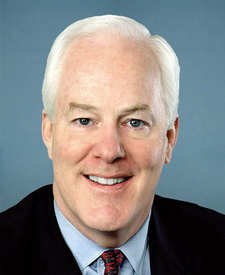
See how John Cornyn actually votes — against your values.
DeepSyte scores John Cornyn's record on the issues you care about — not party, not press releases. Take the 2-minute values quiz to see your personal alignment.
Sign in and take the values quiz to see how John Cornyn's votes line up with your views.
Prediction track record
How often we called John Cornyn's passage votes correctly, from their stated positions on each bill's tagged topics. Excludes “unclear” calls and abstentions.
38 predictions on record · none have been resolved by a passage vote yet. Check back as bills move.
Pending vote119-hr-5340
To prohibit the disclosure of records by the Secretary of Housing and Urban Development of individuals for the purposes of immigration enforcement, and for other purposes.
Based on 3 data points across public statements and recorded votes · AI analysis of public records
118-sjres-10·Consistent
A joint resolution providing for congressional disapproval under chapter 8 of title 5, United States Code, of the rule submitted by the Department of Veterans Affairs relating to "Reproductive Health Services".
75/100
What they said
Jul 15, 2026
Senators Cornyn and Tillis urge the Acting Attorney General to resolve Louisiana v. FDA litigation by accepting a court-ordered consent decree that would restore in-person dispensing requirements for mifepristone and end the Biden-era policy removing those requirements.
Voted Yea on A joint resolution providing for congressional disapproval under chapter 8 of title 5, United States Code, of the rule submitted by the Department of Veterans Affairs relating to "Reproductive Health Services".
Both the statement and bill address abortion policy, and the senator voted yes on a resolution that restricts abortion access (nullifying VA abortion care authorization). The statement urges restrictions on mail-order mifepristone; the bill restricts VA provision of abortion services. The votes align directionally on abortion restriction. However, the specific mechanisms differ—one targets medication abortion dispensing requirements, the other targets VA service provision—and the statement does not explicitly address VA abortion services, creating some granularity mismatch between the precise policy questions.
Senator Cornyn supports legislation to recover fraudulent spending, protect taxpayer dollars, and establish accountability measures including a Veterans Scam and Fraud Evasion Officer at the VA to prevent fraud targeting veterans and the general public.
Senator Cornyn's statement emphasizes anti-fraud measures, accountability, and protecting taxpayer dollars through legislation like the VSAFE Act. However, the Consolidated Appropriations Act, 2024 is a broad omnibus spending bill that funds multiple federal departments and agencies. Cornyn voted yes on passage of this spending bill, which typically includes the very kind of discretionary spending and appropriations that anti-fraud advocates often scrutinize. The bill does not appear to be primarily structured around fraud prevention or recovery mechanisms that Cornyn's statement highlights; rather, it allocates funds across departments. A yes vote on an omnibus appropriations bill is directionally misaligned with a public position centered on preventing wasteful spending and holding fraudsters accountable, though the bill does include VA appropriations relevant to veterans.
Senator Cornyn supports legislation to recover fraudulent spending, protect taxpayer dollars, and establish accountability measures including a Veterans Scam and Fraud Evasion Officer at the VA to prevent fraud targeting veterans and the general public.
Senator Cornyn's statement emphasizes protecting taxpayer dollars, recovering fraudulent spending, and establishing accountability measures including anti-fraud protections at the VA. However, his cloture vote was 'no' on the Consolidated Appropriations Act, 2024, which includes the Military Construction, Veterans Affairs appropriations bill. A cloture vote is procedural and does not directly reflect support or opposition to the bill's substance; a 'no' vote on cloture typically indicates opposition to advancing the bill toward passage. This creates tension between his stated commitment to protecting veterans and taxpayer funds and his procedural vote to block consideration of legislation that funds the VA.
Pairs with ambiguous language and high uncertainty are withheld until more data is available. Procedural, cloture, and amendment votes are excluded — they don't cleanly signal substantive support or opposition.
Pro analysis
AI rep analysis — Pro
Get an AI-narrated read on John Cornyn's full voting record against your stated values — aligned themes, conflicts, notable votes, and what to watch for.
We haven't extracted campaign positions for John Cornyn yet. Once their campaign website or position pages are processed, this card will track what they said vs how they voted.
Crossing the aisle
Passage votes where John Cornyn broke ranks with ≥75% of Republicans. Threshold catches substantively partisan splits; unanimous-ish or close votes are excluded.
1
Cross-aisle vote
118-sjres-117·Nov 21, 2024·80% of R voted YES
A joint resolution relating to the disapproval of the Presidential report with respect to the indebtedness of the Government of Ukraine.
Cornyn, Tillis Urge Blanche to Protect Life, Counter Dangerous Mail-Order Abortion Drugs - Senator Cornyn
Position: Senators Cornyn and Tillis urge the Acting Attorney General to resolve Louisiana v. FDA litigation by accepting a court-ordered consent decree that would restore in-person dispensing requirements for mifepristone and end the Biden-era policy removing those requirements.
WASHINGTON – U.S. Senators John Cornyn (R-TX) and Thom Tillis (R-NC) sent a letter to Acting U.S. Attorney General Todd Blanche ahead of his nomination hearing today in the Senate Judiciary Committee urging him to resolve the mail-order abortion lawsuit, Louisiana v. FDA, by agreeing to a court-ordered consent decree, which would end the unlawful Biden-era policy that removed in-person dispensing requirements for the dangerous chemical abortion drug, mifepristone, while FDA conducts its safety review.
Excerpts from the letter are below, and the full text of letter can be viewed here.
The lawmakers wrote: “We write to express our growing concern that the Department of Justice (DOJ) has not acted to stop the abortion industry’s unlawful and unsafe mail-order abortion drug practice.”
“It is well within the power of the Department of Justice, under your leadership, to resolve the Louisiana v. FDA litigation, which is now back before the Fifth Circuit Court of Appeals. By agreeing to a consent decree under the supervision of the court, you can swiftly end this illegal, Biden-era policy and restore in-person dispensing requirements while we await FDA’s safety review,” they continued.
“On June 24, we celebrated four years since the Supreme Court’s landmark ruling in Dobbs v. Jackson. But the sad truth is that the number of abortions has actually increased in that time. This is in large part because of the abortion industry’s efforts to expand the use of unsafe mail-order abortions. With every day that passes, more lives are at risk and are lost because of this harmful policy. DOJ can and must act,” they concluded.
Cornyn, Ossoff Introduce Mystic Alerts Act - Senator Cornyn
Position: Senators Cornyn and Ossoff support legislation enabling wireless emergency alerts to be delivered via satellite communications when ground-based infrastructure fails during disasters, citing the need to improve emergency response capabilities.
WASHINGTON – U.S. Senators John Cornyn (R-TX) and Jon Ossoff (D-GA) today introduced the Mystic Alerts Act, which would allow wireless emergency alerts (WEAs) to be delivered via satellite communications technologies when other pathways fail during emergencies, including disasters like the Fourth of July floods in Central Texas last year:
“Texas will never forget the July 4th flooding tragedy that devastated Camp Mystic and other communities in Central Texas. Seconds matter during fast-moving disasters like flash flooding, and damaged ground-based infrastructure can slow down emergency alerts that might save lives,” said Sen. Cornyn. “The Mystic Alerts Act would help ensure communities experiencing severe disasters receive wireless emergency alerts even when cellular communications networks are compromised, and I urge my Senate colleagues to support this legislation to strengthen this important technology and save lives.”
“When storms, disasters, or threats to public safety threaten our state, crisis management is key,” said Sen. Ossoff. “This bipartisan bill with Senator Cornyn will help upgrade America's emergency alert systems to keep Georgia families safe and informed.”
Congressman August Pfluger (TX-11) is leading this legislation in the U.S. House of Representatives.
On July 4, 2025, a devastating flood in the Texas Hill Country tragically killed 28 individuals at Camp Mystic in Kerrville in addition to more than 100 other individuals across Central Texas. There were multiple reports of undelivered WEAs throughout the areas impacted by the disaster once cellular infrastructure was damaged.
Cornyn Op-Ed: CHIPS Act Will Help America Win the AI Race with China - Senator Cornyn
Position: Senator Cornyn argues that the CHIPS for America Act and CHIPS and Science Act are essential investments to strengthen U.S. semiconductor manufacturing capacity and maintain American competitiveness in artificial intelligence development against China.
WASHINGTON – U.S. Senator John Cornyn (R-TX) authored the following op-ed in the Dallas Morning News sounding the alarm on the AI and semiconductor manufacturing race with China that will determine who controls the future of the world and highlighting the success of his CHIPS for America Act, legislation he authored with Sen. Mark Warner (D-VA) that was funded through the CHIPS and Science Act, in reshoring semiconductor manufacturing:
CHIPS Act will help America win the AI race with China
July 10, 2026
https://www.dallasnews.com/opinion/commentary/article/cornyn-ai-race-chips-act-22340332.php
The global competition for the future of artificial intelligence, or AI, is quickly becoming a two-way race between the United States of America and the People’s Republic of China. Technology is evolving rapidly in life-changing ways and which of these two nations wins this race could determine the economic, political and even cultural future of the world.
Amid this technological revolution, the CHIPS for America Act, which I led with Sen. Mark Warner, D-Va., back in 2020, and the funding included in the subsequent CHIPS and Science Act, have proven to be fortuitous investments in the infrastructure that will underpin the next digital age.
AI models, including large language models and other AI systems, rely on enormous numbers of low-latency computers. This infrastructure requires unthinkable quantities of semiconductors. Whoever can manufacture these high-powered chips quickly and at a reasonable price will dominate the AI playing field.
The two-way AI race has many layers, some with the United States ahead, and others where China leads. Right now, the United States has a slight advantage over China on advanced semiconductor design. However, when it comes to actually building the infrastructure that AI relies on, such as the fabs that produce semiconductors, America has fallen behind.
Today, 90% of the world’s most advanced semiconductors are manufactured in Taiwan, a dramatic shift from the 1990s, when the United States produced nearly 40% of the world’s semiconductors.
How did the United States go from producing nearly half of the world’s semiconductors to only 12% today? The answer lies in the aggressive approach that the Chinese government has taken toward critical manufacturing infrastructure and complex supply chains. And what they can’t produce domestically, they coerce others to produce for them in Africa, Southeast Asia and Latin America at dramatically low prices with very little regard to working conditions.
With Chinese leader Xi Jinping threatening to take over Taiwan as soon as 2027, it matters whether the United States has the infrastructure to support the modern digital economy.
Consider that Iran has been able to essentially shut down oil commerce through the Strait of Hormuz, leading to higher gas prices in the United States. The Chinese Communist Party could do essentially the same thing for free and open economies by invading Taiwan and shutting off the West’s access to the chips that power nearly all modern devices — mobile phones, smart watches, computers, TVs, cars, washing machines and more.
The United States has a fighting chance in this race because of the significant investment we made in semiconductors through the CHIPS for America Act and CHIPS and Science Act. Together, these laws provided $40 billion in direct manufacturing incentives for semiconductors and $13 billion for research and workforce development.
A large percentage of the funding from CHIPS went to building fabrication facilities also capable of manufacturing core memory, which will help companies quickly scale to meet the needs of the AI boom.
Back home on the Silicon Prairie, companies have used this funding to build new semiconductor fabrication plants at Samsung, Texas Instruments and many more. Texas Instruments was awarded $1.6 billion in funding from the CHIPS and Science Act, which allowed the company to construct new wafer fabrication facilities. GlobalWafers, also a participant in the CHIPS for America program, announced a joint investment with Micron on Thursday that will expand its wafer manufacturing facility in Sherman.
Spurred by our federal legislation, the Texas legislature passed the Texas Chips Act in 2023 to further invest in the Texas chips industry, which now boasts the second largest semiconductor workforce in the country. Other states should harness this same opportunity to build on these federal investments and attract further private sector investment and high-paying jobs.
The implementation of the CHIPS and Science Act has not been perfect. The Biden administration hijacked CHIPS to further its own DEI political agenda and other unrelated policies, undermining Congress’ intent and diluting the resources made available.
Luckily, the Trump administration has refocused the program toward actually reshoring this critical supply chain. Some projects have been held up because of state environmental regulations and permitting delays that Congress should address through permitting reform. But the purpose of our legislation was to spur investment in these critical infrastructure projects, not to implement a government command economy in the model of China.
I’m proud that the CHIPS for America Act and CHIPS and Science Act have proven to be contributors to reshoring America’s manufacturing in an industry that will determine who controls the future of the world. This legislation has not only been successful in kickstarting this growth, but has equipped the United States of America to lead in one of the generation-defining technological revolutions in human history.
Cornyn Op-Ed: Four Years Later, the Bipartisan Safer Communities Act is Making a Difference - Senator Cornyn
Position: Senator Cornyn defends the Bipartisan Safer Communities Act as a successful, narrowly tailored law that has delivered school safety funding, mental health infrastructure, and gun trafficking enforcement while protecting Second Amendment rights.
AUSTIN – U.S. Senator John Cornyn (R-TX) authored the following op-ed in the San Antonio Express-News highlighting the success of his Bipartisan Safer Communities Act (BSCA), which was signed into law in 2022 following the tragic Robb Elementary School shooting in Uvalde, Texas:
Four years later, the Bipartisan Safer Communities Act is making a difference
https://www.expressnews.com/opinion/commentary/article/bipartisan-gun-legislation-working-as-intended-22322166.php
It’s been four years since the Bipartisan Safer Communities Act, or the BSCA, was signed into law. My Senate colleagues and I carefully crafted this legislation in response to the tragic school shooting in Uvalde, where 19 children and two teachers died on May 24, 2022.
I am proud of the work we did to reject the calls for extreme measures that would have encroached on the Second Amendment rights of law-abiding Texans and instead delivered a practical solution, narrowly tailored to address the root causes of this senseless violence.
The Bipartisan Safer Communities Act provided hundreds of millions of dollars to Texas in grants for school safety and mental health infrastructure, and created new authorities to prosecute gun trafficking, all while protecting the due process rights of law-abiding firearms owners.
The Bipartisan Safer Communities Act marked a historic investment in resources for mental health and school safety. Texas has received more than $300 million to strengthen mental health care and school safety. These resources have allowed school districts to upgrade security cameras, implement threat alert systems and improve emergency response plans.
This law expanded the Certified Community Behavioral Health Clinic, or CCBHC, program, which has allowed clinics to expand their services for mental health and substance use disorders. There are now more than 500 CCBHCs operating in 46 states. Because of these provisions, those who are mentally troubled are more likely to receive the help they need, and children attending schools are safer due to enhanced security measures.
This law also created narrow, targeted provisions consistent with existing law to keep dangerous weapons out of the hands of criminals and the mentally ill using the National Instant Background Check, or NICS, system.
Of course, some loud voices have tried to erode support for these narrow reforms by labeling them as gun control measures, but that couldn’t be further from the truth.
The Bipartisan Safer Communities Act created new authorities that empower the U.S. Department of Justice to prosecute individuals for firearms trafficking and straw purchasing when someone purchases a gun on behalf of another person who is legally ineligible to do so.
Straw purchases are the primary way criminals arm themselves, including the individual who threatened President Donald Trump’s life at Trump International Golf Course in September 2024.
The DOJ has convicted nearly 500 criminals under the new straw purchasing and firearms trafficking provisions in my law, while another 716 people are facing charges under these provisions.
Before the BSCA, the only penalty a criminal faced for a straw purchase was for lying on their firearms transaction form, a minor offense that many prosecutors would not bother to litigate. Now, because of my law, the DOJ has a way to combat cartel violence and prosecute individuals who engage in firearms trafficking.
This law also incentivized states to upload disqualifying juvenile criminal and mental health records into NICS, so they can be considered for purchasers between the ages of 18 and 21.
The lack of such records in NICS is the reason the Uvalde shooter had no problem buying weapons within days of his 18th birthday. His juvenile records would have shown he was a deeply troubled young man who had a history of fighting, threatening fellow students and abusing animals. These warning signs were no less serious simply because they happened while he was a minor.
This provision has been knowingly mischaracterized as a mandatory waiting period for anyone younger than 21 seeking to purchase a firearm. Quite the opposite, this law requires a determination based on the review of NICS records to be made within a strict, short window of time.
Less than 0.01% of all firearms background checks are affected by this review, but those that have, have proven necessary. They include an 18-year-old who attempted to purchase a long gun in Nebraska after making terroristic threats as a minor, as well as a 20-year-old drug dealer with a juvenile felony adjudication who attempted to do the same in Arizona. Without the BSCA, these individuals never would have been discovered or rightfully denied access to purchase a firearm.
Perhaps the most significant misinterpretation of this law is that it incentivized states to create red flag laws. On the contrary, no federal red flag was included. Furthermore, the BSCA created a new due process framework that states with red flag laws must adopt to be eligible for BSCA funding, ensuring Americans’ Second Amendment rights are protected even in blue states.
The vast majority of BSCA funds have gone to state mental health programs, veterans courts, crisis intervention and school safety measures, which have nothing to do with red flag provisions.
The Bipartisan Safer Communities Act marked a generational investment in Texas’ resources for mental health and school safety, alongside commonsense reforms to prevent known dangerous criminals from attaining weapons. This carefully crafted, bipartisan legislation prevented the far left from having their dream of an assault weapons ban or universal background checks, which I oppose.
It represents what the world’s greatest deliberative body was meant to do — prevent bad ideas from becoming law and address hard, polarizing problems through bipartisan consensus.
Cornyn, Coons, Colleagues Introduce Bill to Bolster Ukraine’s Defense Arsenal Using Seized Russian Sovereign Assets - Senator Cornyn
Position: The senators support legislation allowing Ukraine to use seized Russian sovereign assets to purchase military equipment for defense against Russian aggression, building on existing law to expand permissible uses of frozen Russian funds.
WASHINGTON – U.S. Senators John Cornyn (R-TX), Chris Coons (D-DE), Roger Wicker (R-MS), Tim Kaine (D-VA), Chuck Grassley (R-IA), and Sheldon Whitehouse (D-RI) today introduced the Seized Assets for Battlefield Equipment and Readiness (SABER) Act, which would amend current law to allow Ukraine to use assets confiscated from the Central Bank of the Russian Federation and other Russian sovereign assets for the purchase of military equipment to defend against Vladimir Putin’s war machine:
“The REPO Act laid important groundwork for seizing and repurposing billions of dollars in frozen Russian assets to help the Ukrainian people defend their own sovereignty after Russia’s unprovoked invasion of Ukraine,” said Sen. Cornyn. “By extending the law’s permissible use of funds to replenish Ukraine’s arsenal, this legislation would go one step further to helping our ally defend against Russian aggression and force Putin to foot the bill for arming Ukraine.”
“Ukraine is on the frontline of freedom in Europe, protecting the rest of the world from Putin’s unprovoked aggression,” said Sen. Coons. “Ukraine’s army has fought courageously under incredibly difficult circumstances, and we need to ensure they have the tools and funds they need to defeat Putin on the battlefield and build back stronger once the war ends. With this bipartisan legislation, we are opening up new pathways for support so we can assure our and Ukraine’s security.”
“The Rebuilding Economic Prosperity and Opportunity for Ukrainians (REPO) Act ensured that frozen Russian assets be used to support Ukraine’s fight for sovereignty. As Ukrainians continue to resist Russia’s assault, they should have every means available to defend themselves. The SABER Act would build on existing law, allowing confiscated Russian sovereign assets to be used to purchase military equipment Ukraine needs to defeat Putin’s war machine,” said Sen. Wicker.
“The resolve and resilience of Ukrainians in defending their homeland from Russian forces has been commendable, and the international community must continue to do all we can to ensure Ukraine has what it needs to be successful on the battlefield and rebuild their country,” said Sen. Kaine. “That’s why I’m joining my colleagues in introducing this bipartisan legislation to allow the use of Russian sovereign assets to buy defense articles that would support Ukraine’s fight against Russia.”
“Putin’s unprovoked invasion of Ukraine sparked the largest land war in Europe since World War II, and the United States must do our part to stand with our Ukrainian allies. Our bipartisan legislation assists Ukraine as they continue to defend against Putin’s unrelenting attacks. Importantly, this support for Ukraine comes at no cost to the American taxpayer,” said Sen. Grassley.
“Seizing Russian sovereign funds so that war criminal Putin can’t use them for his illegal invasion in Ukraine was the first step, and we achieved that through our bipartisan REPO law,” said Sen. Whitehouse. “Hundreds of billions of dollars in frozen Russian funds should be put to good use repelling Russian invaders and supporting the brave Ukrainians fighting for freedom.”
U.S. Congressman Joe Wilson (SC-02) is leading companion legislation in the U.S. House of Representatives.
The Rebuilding Economic Prosperity and Opportunity for Ukrainians (REPO) Act, now law, currently permits frozen Russian sovereign assets under U.S. jurisdiction to be confiscated and transferred to Ukraine for the use of:
Senator Cornyn’s SABER Act would add another permissible use, allowing seized Russian sovereign bank assets to be used for Ukraine’s purchasing of defense articles and services to respond to and recover from the consequences of the aggression of the Russian Federation.
Cornyn, Padilla Introduce Bill to Strengthen Electric Grid Reliability - Senator Cornyn
Position: Senators Cornyn and Padilla support reauthorization of the Grid Resilience and Innovation Partnerships (GRIP) program to provide federal funding for electric grid weatherization and resilience improvements against extreme weather events.
WASHINGTON – U.S. Senators John Cornyn (R-TX) and Alex Padilla (D-CA) today introduced legislation that would reauthorize their Preventing Outages With Enhanced Resilience and Operations Nationwide (POWER ON) Act to help weatherize electric grids across the nation:
“Texas is no stranger to extreme weather events, and it’s imperative that we have the infrastructure capable of withstanding the gamut of everything from freezing cold temperatures to sweltering heat waves, flooding, and devastating wildfires,” said Sen. Cornyn. “This bipartisan legislation would reauthorize the grid resilience program Senator Padilla and I created, which is essential to preventing outages and ensuring Texans can depend on the power they need to weather any storm.”
“As we continue to grapple with threats to the electric grid from extreme weather, investing in projects to improve the flexibility and resiliency of the power system is crucial,” said Sen. Padilla. “The GRIP program is a major success, driving improvements and innovation to make the electric grid more secure and efficient. Our bipartisan effort will continue to help us keep the lights on and keep costs down for future generations.”
In February 2021, record amounts of snow, ice, and prolonged sub-zero temperatures overwhelmed the Texas power grid and forced the Electric Reliability Council of Texas (ERCOT) to shut off electricity for more than four million Texans, leaving them without heat for days on end. More than 200 lives were lost. This disaster laid bare the vulnerabilities of our electric grid infrastructure and the need for electricity providers and suppliers to protect against future extreme weather events. Insufficient grid resiliency increases the likelihood of blackout events, which threaten lives and cost the U.S. economy billions of dollars.
Following Winter Storm Uri, Senator Cornyn introduced the Preventing Outages with Enhanced Resilience and Operations Nationwide (POWER ON) Act, now law, which established the Grid Resilience and Innovation Partnerships (GRIP) Program at the U.S. Department of Energy (DOE) to provide critical resources to help states weatherize electric grids.
This legislation would reauthorize the grid resilience grant program at the DOE to prevent a lapse in federal funding that is essential to protecting energy facilities and energy infrastructure against future extreme weather events.
Cornyn, Colleagues’ Bill to Prevent Foreign Adversaries from Influencing U.S. Policy Passes Senate Foreign Relations Committee - Senator Cornyn
Position: The senators support legislation to close Foreign Agents Registration Act loopholes that allow unregistered agents of foreign adversaries to lobby in the United States, citing national security and democratic integrity concerns.
WASHINGTON – U.S. Senators John Cornyn (R-TX), Sheldon Whitehouse (D-RI), Jim Risch (R-ID), Thom Tillis (R-NC), Chuck Grassley (R-IA), Deb Fischer (R-NE), Peter Welch (D-VT), and John Kennedy (R-LA) released the following statements after their Preventing Adversary Influence, Disinformation and Obscured Foreign Financing (PAID OFF) Act, which would help close Foreign Agents Registration Act loopholes that allow unregistered agents of foreign adversaries to lobby in the United States, passed the Senate Foreign Relations Committee:
“American policy should not in any way reflect the handiwork of foreign adversaries who are actively working to tip the scales in their favor and undermine our interests,” said Sen. Cornyn. “By exposing the efforts of countries of concern like China or Russia to exert malign influence, this legislation would better safeguard U.S. decision making.”
“When foreign adversaries skirt loopholes to lobby Congress, they directly threaten our democracy,”said Sen. Whitehouse.“This bipartisan legislation is long overdue and will help prevent unregistered foreign agents from putting a thumb on the scale of American policy.”
“For years, the United States’ biggest adversaries have exploited loopholes in U.S. lobbying laws to influence senior government officials and advance their geopolitical goals,”said Sen. Risch.“Well-known examples include Russia’s efforts to prevent sanctions against its Nord Stream 2 pipeline and Chinese surveillance firm Hikvision’s attempts to avoid sanctions. This provision will close key loopholes to ensure transparency and accountability of malign foreign lobbying efforts in the United States.”
“Foreign adversaries like China and Russia should never be allowed to covertly influence American policy or public opinion,” said Sen. Tillis. “I’m proud this bipartisan legislation passed out of committee so we can close dangerous loopholes and strengthen our national security.”
“Americans ought to know if a foreign government is attempting to sway policy decisions in the United States,” said Sen. Grassley. “I applaud the Senate Foreign Relations Committee for advancing our bipartisan PAID OFF Act, which will close loopholes to ensure unregistered foreign agents can no longer secretly stick their noses in American politics.”
“Our foreign adversaries are working hard to gain influence over U.S. politics,” said Sen. Fischer. “We need to reform FARA – the law requiring foreign agents to disclose who they’re working for – so we can better expose those who are quietly working on behalf of foreign governments. I thank Senator Cornyn for leading this important bill – let’s get it over the finish line.”
“With one of the highest rates of misinformation and disinformation in the world, it’s no wonder that the American people are losing trust in our democratic institutions,” said Sen. Welch. “Foreign adversaries have exacerbated that distrust by using loopholes in U.S. lobbying laws to undermine U.S. decision-making and influence politics. Congress must pass this bipartisan legislation to close these loopholes, protect our national security, and hold bad actors accountable.”
“Foreign agents working for our adversaries like China and Iran shouldn’t be able to hide in the shadows while they try to bend American policy to their will. If you’re being paid to push the interests of our enemies, the American people deserve to know who is signing the checks and what you’re up to. The PAID OFF Act strengthens our disclosure laws and ensures full transparency,” said Sen. Kennedy.
Sen. Bill Hagerty (R-TN) is a cosponsor of this legislation.
U.S. Congressman August Pfluger (TX-11) is leading companion legislation in the U.S. House of Representatives.
The Foreign Agents Registration Act (FARA) has not been amended since the 1990s, and the law has not kept up with modern foreign adversary influence campaigns using commercial activities and registration loopholes as subterfuge to advance malign interests. Currently, agents representing foreign adversaries are able to avoid FARA registration by claiming a commercial activity, domestic interest, or Lobbying Disclosure Act (LDA) exemption, which shields their influence and advocacy from the Department of Justice. This legislation would close these loopholes by requiring agents working on behalf of a Chinese, Russian, Iranian, North Korean, or Cuban government or commercial entity to register under FARA, providing greater transparency into their influence campaigns. The legislation would sunset after five years. Additionally, the legislation includes a mechanism for the Secretary of State to propose additions or deletions to the countries of concern list in the State Department Basic Authorities Act. Any additions or deletions would become effective if Congress passes a joint resolution of approval.
Cornyn, Coons Introduce Bill to Combat PRC-linked Organized Crime in Latin America - Senator Cornyn
Position: Senators Cornyn and Coons support legislation to establish a formal consultation and information-sharing program between U.S. and Latin American law enforcement agencies to combat Chinese Communist Party-linked organized crime in the Western Hemisphere.
WASHINGTON – U.S. Senators John Cornyn (R-TX) and Chris Coons (D-DE) introduced the Eliminate PRC Organized Crime Act, which would target the Chinese Communist Party’s (CCP) influence via organized criminal groups in Latin America by establishing a program to formalize greater consultation and information sharing between U.S. and Latin American and Caribbean (LAC) law enforcement agencies:
“Confronting Chinese organized crime, which is often propped up by the Chinese Communist Party, must be a shared mission of the Western Hemisphere, and it’s important our law enforcement agencies reflect that,” said Sen. Cornyn. “This commonsense legislation will combat the CCP’s influence in our hemisphere by increasing cooperation and communication between U.S. and Latin American law enforcement agencies.”
“China is growing increasingly aggressive toward our allies in the Pacific as well as our allies in Latin America and the Caribbean,” said Sen. Coons. “Chinese-linked criminal networks endanger Americans and our communities by flooding our country with everything from fentanyl to dangerous counterfeits. This bipartisan bill will empower our allies in the Western Hemisphere with more tools to keep criminals at bay, protecting themselves and us.”
"Chinese criminal networks in the Western Hemisphere pose a direct threat to U.S. national security, supporting drug trafficking and other illicit activities and destabilizing key U.S. partners. FDD Action is proud to endorse this effort to help Latin American partners build law enforcement capacity to take on this threat," said FDD Action Senior Director of Government Relations Connor Pfeiffer.
The Eliminate PRC Organized Crime Act would:
This legislation is endorsed by FDD Action, the National HIDTA Directors Association, and the National Narcotic Officers’ Associations’ Coalition
Cornyn, Whitehouse Introduce Bill to Support Youth Aging Out of Foster Care - Senator Cornyn
Position: Senators Cornyn and Whitehouse introduced legislation to expand the Chafee Foster Care Program by authorizing the use of federal funds for legal services to youth aging out of foster care, and requiring states to address legal issues in transition planning.
WASHINGTON – U.S. Senators John Cornyn (R-TX) and Sheldon Whitehouse (D-RI) today introduced the Fresh Starts for Foster Youth Act, which would support youth aging out of the foster care system by improving their access to legal services:
“The Chafee program has a proven track record of equipping youth with the tools they need to be successful in adulthood, including by providing a path to education, jobs, and housing,” said Sen. Cornyn. “By adding access to legal services to the list of already authorized uses of Chafee funds, this legislation would further improve outcomes and give Texas kids aging out of foster care the best possible chance for a bright future.”
“Modernizing America’s foster care system means providing support at every step of their journey to adulthood,” said Sen. Whitehouse. “This bill continues the legacy of the late Rhode Island Senator John Chafee’s significant reforms to foster care by giving young people the tools and support they need to overcome obstacles and find their footing.”
This legislation was introduced in the U.S. House of Representatives by Congressmen Darin LaHood (IL-16) and Danny K. Davis (IL-07).
The U.S. Department of Health and Human Services’ John H. Chafee Foster Care Program for Successful Transition to Adulthood provides resources to support youth ages 14 to 21 as they transition from the foster care system to independent adulthood. The Chaffee program has a proven track record of improving outcomes for kids and young adults aging out of foster care by increasing their access to education, workforce training, housing opportunities, and preventive health awareness.
Sen. Cornyn’s Fresh Starts for Foster Youth Act would update the Chafee program by adding access to legal services to the list of authorized purposes for which states may use federal funds within this program. It would also require states to certify that their case planning process for youth aging out of the foster care system considers legal issues that may impact a youth’s transition to adulthood, as well as efforts to resolve those issues. This may include legal issues affecting housing, education, custody or emancipation, employment, and other matters.
This legislation aligns with President Trump’s Executive Order, Fostering the Future for American Children and Families, First Lady Melania Trump’s Fostering the Future initiative, and the administration’s commitment to improve outcomes for children, youth, and families involved in the foster care system.
The Fresh Starts for Foster Youth Act is endorsed by more than 150 organizations, including the Texas Alliance for Youth Success and Texans Care for Children.
Cornyn, Senate GOP Colleagues Introduce Bill to Increase Protections for Firearms Industry Against Liberal Lawsuits - Senator Cornyn
Position: Senators Cornyn and colleagues introduced the SHOT Act to strengthen the Protection of Lawful Commerce in Arms Act by providing enhanced legal protections to firearms manufacturers and sellers against lawsuits, which they characterize as frivolous attacks by anti-gun groups.
AUSTIN – U.S. Senator John Cornyn (R-TX) and 15 of his Senate Republican colleagues introduced the Stopping Harmful and Outrageous Torts (SHOT) Act, which would strengthen the Protection of Lawful Commerce in Arms Act (PLCAA) to provide enhanced protections to the firearms industry from frivolous lawsuits brought by progressive anti-gun groups:
“I am a proud supporter of the PLCAA, which protects our firearms industry from the constant onslaught of frivolous attacks by the Radical Left, progressive officials, and rogue activist judges,” said Sen. Cornyn. “This legislation would strengthen the PLCAA to ensure it can continue to defend law-abiding Americans’ Second Amendment rights against anti-gun groups’ evolving tactics, and I urge the Senate to bring it to the floor for a vote as soon as possible.”
"Radical leftists, Democrat politicians, and rogue judges are eroding our Second Amendment rights by supporting baseless lawsuits against law-abiding gun makers," said Sen. Blackburn. “The SHOT Act would put a stop to these harmful lawsuits and protect the firearms industry that is vital to upholding our constitutional right to bear arms.”
“For far too long, radical anti-gun groups have weaponized our courts with meritless lawsuits against America’s firearms industry, aided by activist judges who disregard federal law. I am proud to join Senator John Cornyn in stopping these baseless attacks on our constitutional rights and defending an industry that plays a vital role in our public safety and national security,” said Sen. Budd.
“Litigious activists should not be allowed to bankrupt lawful businesses for crimes they did not commit,” said Sen. Crapo. “The SHOT Act would reinforce Congress’s original intent by strengthening federal protections for members of the firearms industry, stopping meritless lawsuits and preventing costly legal abuse.”
“For years, bad actors have frivolously litigated the firearms industry in ways that unnecessarily strain our court system and undermine Americans’ Second Amendment rights,” said Sen. Curtis. “The SHOT Act helps ensure that lawful firearms manufacturers and sellers are not held liable for crimes committed by third parties, while closing loopholes and reinforcing existing legal protections.”
“The Constitution makes it very clear: Americans have the right to keep and bear arms. I’m proud to work with Senator Cornyn and our colleagues on the SHOT Act to protect firearm manufacturers from frivolous lawsuits by anti-gun organizations and protect the constitutional rights of law-abiding citizens,” said Sen. Daines.
“The Second Amendment is a fundamental right established by our Founding Fathers. Unfortunately, that hasn’t stopped leftist organizations, special interest groups and foreign governments from attempting to strip Americans of their right to bear arms, including through baseless litigation intended to bankrupt the firearms industry,” said Sen. Grassley. “I'm proud to join my colleagues in introducing the SHOT Act, which will put a stop to these frivolous lawsuits and help protect Americans’ constitutional rights.”
“Radical anti-gun activists’ attempts to strip Idahoans of their Second Amendment rights and bankrupt our firearm industry must stop,” said Sen. Risch. “The SHOT Act will protect our Constitutional right to bear arms by ending frivolous and costly lawsuits.”
“As radical anti-gun groups continue their attacks on the firearms industry through a deluge of nuisance lawsuits and baseless claims, it’s crucial we clarify and strengthen existing protections for the industry to protect Americans’ Second Amendment rights. That’s why I’m pleased to cosponsor the SHOT Act, which makes key updates to the PLCAA – deterring such meritless litigation and defending our constitutional freedoms,” said Sen. Sheehy.
“The threats against our right to bear arms run far and wide. When radical gun-grabbing activists lose at the ballot box, they turn to the court room with bogus legal claims,” said Sen. Graham. “I’m proud to stand with Second Amendment advocates in supporting the SHOT Act, which will shut the door on absurd lawsuits that seek to put gun dealers across South Carolina out of business.”
The legislation is also cosponsored by Senators Tom Cotton (R-AR), Jim Justice (R-WV), Cynthia Lummis (R-WY), Shelley Moore Capito (R-WV), Pete Ricketts (R-NE), and Bill Cassidy (R-LA). U.S. Congressman Derek Schmidt (KS-02) introduced companion legislation in the House of Representatives.
The Protection of Lawful Commerce in Arms Act (PLCAA) was passed by Congress 20 years ago to stop frivolous lawsuits brought by radical anti-gun groups against the firearms industry. These bogus lawsuits, premised solely on the actions of third parties who misuse firearms in a manner beyond the industry’s control, sought to bankrupt the firearms industry. In response, the PLCAA provided the firearms industry with basic immunity protections from frivolous suits that many other American industries enjoy.
Unfortunately, anti-gun groups, progressive politicians, plaintiffs’ attorneys, and rogue judges have ignored the plain text of the PLCAA and chipped away at its protections. For example, in Smith & Wesson Brands, Inc. v. Estados Unidos Mexicanos, Mexico filed a lawsuit against firearms manufacturers alleging that they caused cartel violence. The District Court judge hearing the case quickly dismissed the suit under the PLCAA, but a panel of liberal judges on the First Circuit ignored the PLCAA’s text and reversed the lower court, necessitating the Supreme Court’s involvement. While a unanimous Supreme Court emphatically dismissed the suit, the entire charade cost firearms manufacturers an exorbitant amount in legal fees.
The Stopping Harmful and Outrageous Torts (SHOT) Act would address tactics the anti-gun lobby has taken to go after firearms manufacturers and undermine the PLCAA’s protections, along with holdings by rogue judges, by establishing new provisions under the law that would:
The Stopping Harmful and Outrageous Torts (SHOT) Act is endorsed by the National Shooting Sports Foundation (NSSF).
Source: GDELT 2.0 GKG, filtered to a curated list of national outlets. Inclusion is not endorsement; opinion pieces and reported news are mixed.
Recent stock activity
Periodic transaction reports filed under the STOCK Act — disclosed by the rep, sourced from public filings.
No disclosed trades on record.
Source: open-data mirrors of the Senate eFD and House Clerk financial-disclosure systems. Disclosure within 30 days of trade is required by law (45 for spouse/dependent trades).
Top PAC donors · 2026 cycle
Political action committees that gave the most to this rep's principal campaign committee this cycle. PAC giving is direct organizational support — industry, ideological, or leadership.
1.AMERICAN ISRAEL PUBLIC AFFAIRS COMMITTEE PACIdeological5 contributionsFederal PAC arm of AIPAC, established 2021. Backs candidates from both parties who support U.S.-Israel security and economic ties.AI$64,401
2.ONE TEAM SENATE MAJORITY4 contributions$55,679
3.NO LABELS PROBLEM SOLVERS PAC (EARMARKS)2 contributions$27,500
4.2025 SENATORS CLASSIC COMMITTEELeadership2 contributionsMember-of-Congress leadership PAC — likely affiliated with a Senate Republican or Democratic leader or caucus, directs contributions to allied candidates.AI$26,683
5.CORNYN MAJORITY TEXAS2 contributions$25,500
6.FRIENDS OF KENNEDY2 contributions$24,900
7.2019 SENATORS CLASSIC COMMITTEELeadership1 contributionMember-of-Congress leadership PAC — likely affiliated with a senator or senatorial group. Backs allied candidates and party priorities.AI$14,840
Source: OpenFEC (api.open.fec.gov) Schedule A receipts where contributor type is “committee.” Aggregated by contributing committee. Self-transfers from joint-fundraising / victory committees are excluded.
Top individual contributors · 2026 cycle
Itemized individual contributions over $200 to this rep's campaign committee, aggregated by donor employer. PAC giving is shown above; this section is people, not organizations.
1.CHARTER BROKERAGE LLC$57,750
2.AT&T$52,315
3.BLACKSTONE$38,600
4.APOLLO$28,070
5.FIDELITY INVESTMENTS$25,100
6.ARCHROCK$23,500
7.IBC BANK$22,500
8.APOLLO GLOBAL MANAGEMENT$20,500
9.CAPITOL COUNSEL$19,415
10.INFORMATION REQUESTED PER BEST EFFORTS$18,738
Source: OpenFEC Schedule A receipts where contributor type is “individual,” aggregated by the donor's self-reported employer. This is a geographic / industry correlation, not a corporate endorsement.