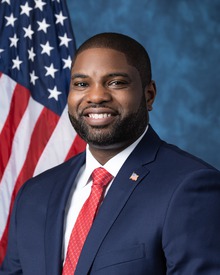
See how Byron Donalds's votes line up with your values.
DeepSyte scores Byron Donalds's record on the issues you care about — not party, not press releases. Take the 2-minute values quiz to see your personal alignment.
Sign in and take the values quiz to see how Byron Donalds's votes line up with your views.
Prediction track record
How often we called Byron Donalds's passage votes correctly, from their stated positions on each bill's tagged topics. Excludes “unclear” calls and abstentions.
A joint resolution to direct the removal of United States Armed Forces from hostilities within or against the Islamic Republic of Iran that have not been authorized by Congress.
To prohibit the disclosure of records by the Secretary of Housing and Urban Development of individuals for the purposes of immigration enforcement, and for other purposes.
Based on 18 data points across public statements and recorded votes · AI analysis of public records
118-hr-2·Consistent
Secure the Border Act of 2023
88/100
What they said
Mar 27, 2026
The congressman opposes Democratic efforts to reduce border security funding and limit deportations of undocumented immigrants convicted of crimes, and criticizes Democrats for prioritizing impeachment over immigration policy.
Congressman Donalds's statement opposes Democratic efforts to defund border security and criticizes their immigration policy as inadequate. The Secure the Border Act of 2023 increases border security funding and construction requirements, directly aligning with his stated position. His yes vote on passage is consistent with his public opposition to defunding border security and his call for stronger immigration enforcement.
Detain and Deport Illegal Aliens Who Assault Cops Act
88/100
What they said
Mar 27, 2026
The congressman opposes Democratic efforts to reduce border security funding and limit deportations of undocumented immigrants convicted of crimes, and criticizes Democrats for prioritizing impeachment over immigration policy.
Donalds explicitly opposes Democratic efforts to 'defund the ability to actually deport criminal illegal aliens from the United States' and criticizes Democrats for blocking deportations. The bill mandates DHS custody and deportation of non-U.S. nationals arrested for or convicted of assaulting law enforcement. His yes vote on passage aligns directly with his stated position opposing restrictions on deporting criminals. The score is not higher only because the statement addresses a broader critique of Democratic immigration policy (including border security funding and impeachment focus) while the bill is narrowly tailored to assault on first responders.
The congressman opposes Democratic efforts to reduce border security funding and limit deportations of undocumented immigrants convicted of crimes, and criticizes Democrats for prioritizing impeachment over immigration policy.
Donalds's statement opposes Democratic efforts to limit deportations of undocumented immigrants convicted of crimes and supports border security enforcement. The POLICE Act expands deportability for non-citizens convicted of assaulting law enforcement, directly advancing the enforcement and deportation priorities he advocates for. His yes vote on passage aligns with his stated position opposing Democratic restrictions on deportations.
Continuing Appropriations and Border Security Enhancement Act, 2024
85/100
What they said
Mar 27, 2026
The congressman opposes Democratic efforts to reduce border security funding and limit deportations of undocumented immigrants convicted of crimes, and criticizes Democrats for prioritizing impeachment over immigration policy.
The congressman's statement opposes Democratic efforts to defund border security and limit deportations of criminal undocumented immigrants. The bill he voted for includes border security enhancements and imposes limits on asylum eligibility—provisions aligned with his stated position. However, the bill is a continuing resolution that bundles appropriations across multiple agencies with an 8.1% reduction for non-excepted programs, so his yes vote reflects support for the overall package rather than a direct endorsement of every provision or rejection of every Democratic priority.
Department of Homeland Security Appropriations Act, 2024
85/100
What they said
Mar 27, 2026
The congressman opposes Democratic efforts to reduce border security funding and limit deportations of undocumented immigrants convicted of crimes, and criticizes Democrats for prioritizing impeachment over immigration policy.
Donalds opposes Democratic efforts to defund border security and deportation capabilities, and criticizes Democrats for prioritizing impeachment over immigration policy. His yes vote on the DHS Appropriations Act, which funds border security agencies (CBP, ICE) and enforcement operations, aligns with his stated opposition to defunding these functions. The vote supports the position he articulated in the statement.
Transnational Criminal Organization Illicit Spotter Prevention and Elimination Act
85/100
What they said
Mar 27, 2026
The congressman opposes Democratic efforts to reduce border security funding and limit deportations of undocumented immigrants convicted of crimes, and criticizes Democrats for prioritizing impeachment over immigration policy.
The congressman's statement opposes Democratic efforts to limit deportations of undocumented immigrants convicted of crimes and criticizes Democrats for weakening border security. The bill enhances criminal penalties for conduct that interferes with border control and increases punishment for assisting inadmissible aliens with felony convictions. His yes vote on passage aligns with his stated position supporting stricter enforcement against criminal aliens and border security measures.
The congressman opposes Democratic efforts to reduce border security funding and limit deportations of undocumented immigrants convicted of crimes, and criticizes Democrats for prioritizing impeachment over immigration policy.
Congressman Donalds's statement opposes Democratic efforts to limit deportations of undocumented immigrants convicted of crimes and supports robust border security enforcement. His yes vote on the Consequences for Social Security Fraud Act, which expands deportability grounds for aliens convicted of identity document fraud and Social Security fraud, aligns with his stated position favoring deportation authority for criminal conduct. The bill directly implements the enforcement mechanism he advocates for.
The congressman opposes Democratic efforts to reduce border security funding and limit deportations of undocumented immigrants convicted of crimes, and criticizes Democrats for prioritizing impeachment over immigration policy.
Congressman Donalds's statement opposes Democratic efforts to limit deportations of undocumented immigrants convicted of crimes and supports stronger border security enforcement. His yes vote on the Agent Raul Gonzalez Officer Safety Act, which creates new criminal offenses for fleeing law enforcement near the border and mandates deportability for non-U.S. nationals convicted of the offense, aligns with these stated positions. The bill directly advances the enforcement and deportation priorities he advocates for in the statement.
The congressman opposes Democratic efforts to reduce border security funding and limit deportations of undocumented immigrants convicted of crimes, and criticizes Democrats for prioritizing impeachment over immigration policy.
Donalds's statement opposes Democratic efforts to limit deportations of undocumented immigrants and criticizes sanctuary policies that obstruct federal law enforcement. The bill denies federal funds to jurisdictions that restrict cooperation with immigration detainers and withhold immigration status information—directly advancing the enforcement priorities Donalds advocates for. His yes vote aligns with his stated position against policies that impede deportation and federal immigration enforcement.
Congressman Donalds supports the Trump administration's military involvement in the region to keep the Strait of Hormuz open and criticizes NATO allies for not contributing more to regional security efforts.
Congressman Donalds's statement supports Trump administration military involvement in the region and criticizes NATO allies for insufficient commitment to regional security, reflecting a hardline Iran policy stance. His YES vote on the Solidify Iran Sanctions Act, which makes permanent sanctions on Iran's energy sector and weapons development, aligns with that hardline posture. Both the statement and vote reflect support for strong measures against Iran, though the statement focuses on military presence and allied burden-sharing while the bill addresses economic sanctions specifically.
Congressman Donalds introduces legislation to amend the Securities Exchange Act of 1934 to establish a clear statutory definition of 'dealer' as an entity trading solely for customers, not their own accounts, in order to prevent regulatory overreach and protect private investors and small public companies from SEC enforcement actions.
Congressman Donalds's statement advocates for statutory clarity to prevent SEC regulatory overreach and protect investors from expansive enforcement theories. His yes vote on SOPRA, which removes judicial deference to agency interpretations and requires de novo review of agency actions, aligns directionally with this goal—both seek to constrain agency authority and increase judicial oversight. However, SOPRA is a broad procedural reform affecting all agencies, while the statement focuses specifically on SEC dealer definitions and securities law. The consistency is general rather than precise.
The congressman opposes Democratic efforts to reduce border security funding and limit deportations of undocumented immigrants convicted of crimes, and criticizes Democrats for prioritizing impeachment over immigration policy.
Donalds's statement opposes Democratic efforts to defund border security and limit deportations of criminal undocumented immigrants, and criticizes Democrats' immigration policy record. His yes vote on the Police Our Border Act—which requires DOJ reporting on impacts of Biden-era border policies on law enforcement—aligns directionally with these stated concerns about border security and enforcement. However, the bill is narrowly focused on a reporting requirement rather than substantive policy changes, so the alignment is general rather than precise.
The congressman opposes Democratic efforts to reduce border security funding and limit deportations of undocumented immigrants convicted of crimes, and criticizes Democrats for prioritizing impeachment over immigration policy.
The congressman's statement opposes Democratic efforts to weaken immigration enforcement and deportation capabilities. The Schools Not Shelters Act restricts use of federally-funded school facilities to house undocumented immigrants, which aligns with a stricter immigration enforcement posture. His yes vote is directionally consistent with his stated opposition to Democratic immigration policies. However, the statement focuses on border security funding and deportation of criminal aliens, while the bill addresses a narrower question—school facility use for shelter—so the alignment is general rather than specific to the exact provisions he criticized.
Congressman Donalds supports the Trump administration's military involvement in the region to keep the Strait of Hormuz open and criticizes NATO allies for not contributing more to regional security efforts.
Congressman Donalds's statement supports Trump administration military involvement to secure the Strait of Hormuz and criticizes NATO allies for insufficient regional security contributions. The Fight CRIME Act imposes sanctions on Iran's missile program and requires diplomatic coordination on arms restrictions. Both the statement and the bill address Iran-related security concerns and align directionally on a harder line toward Iran. However, the statement focuses on NATO burden-sharing and military presence in the strait, while the bill addresses missile sanctions and diplomatic reporting—related but distinct policy mechanisms. The yes vote is consistent with the stated position's general thrust, though the specific policy tools differ.
Congressman Donalds supports the Trump administration's military involvement in the region to keep the Strait of Hormuz open and criticizes NATO allies for not contributing more to regional security efforts.
Congressman Donalds supports Trump administration military involvement in the Middle East to secure the Strait of Hormuz and criticizes NATO allies for insufficient regional security contributions. His YES vote on the FY2025 DOD appropriations bill, which funds military personnel, operations, maintenance, and procurement, is generally consistent with that position—the bill provides resources for the military activities he advocates. However, the statement addresses a specific regional security policy question (Strait of Hormuz, NATO burden-sharing) while the appropriations bill is a broad funding measure that does not specify regional deployment or NATO coordination priorities. The vote reflects support for DOD funding broadly, which aligns directionally with his stated foreign policy views, but the bill does not directly address the specific policy debate he articulates.
Congressman Donalds supports the Trump administration's military involvement in the region to keep the Strait of Hormuz open and criticizes NATO allies for not contributing more to regional security efforts.
Congressman Donalds's statement supports robust U.S. military involvement in the Middle East to secure the Strait of Hormuz and criticizes NATO allies for insufficient regional security contributions. His YES vote on the FY2024 DOD Appropriations Act, which funds military personnel, operations, maintenance, and procurement, is generally consistent with that position—the bill provides resources for the military activities he advocates. However, the bill is a broad appropriations measure that funds all DOD operations globally, not specifically Middle East or Strait of Hormuz operations, so the vote does not directly address the specific regional policy question the statement raises.
Congressman Donalds supports the Trump administration's military involvement in the region to keep the Strait of Hormuz open and criticizes NATO allies for not contributing more to regional security efforts.
Congressman Donalds's statement supports Trump administration military involvement in the region to secure the Strait of Hormuz and criticizes NATO allies for insufficient contribution to regional security. The No Technology for Terror Act restricts technology exports to Iran, which aligns with a hardline Iran policy and regional security posture. His YES vote on the bill is consistent with the stated position of supporting stronger measures against Iran. However, the statement focuses on military involvement and NATO burden-sharing, while the bill addresses export controls—related but distinct policy tools. The vote reflects general alignment on Iran policy direction rather than direct support for the specific export-control mechanism discussed.
Israel Security Supplemental Appropriations Act, 2024
70/100
What they said
Mar 17, 2026
Congressman Donalds supports the Trump administration's military involvement in the region to keep the Strait of Hormuz open and criticizes NATO allies for not contributing more to regional security efforts.
Congressman Donalds's statement supports U.S. military involvement in the Middle East region to maintain strategic interests (Strait of Hormuz security) and criticizes NATO allies for insufficient regional security contributions. His YES vote on the Israel Security Supplemental Appropriations Act, which funds DOD operations in the region and defense support to Israel, is directionally aligned with that position. However, the statement focuses on NATO burden-sharing and the Strait of Hormuz specifically, while the bill addresses Israel-related military and security funding more narrowly. The vote reflects support for regional military engagement broadly, but the statement does not explicitly address Israel or the specific provisions of this supplemental appropriations bill.
Pairs with ambiguous language and high uncertainty are withheld until more data is available. Procedural, cloture, and amendment votes are excluded — they don't cleanly signal substantive support or opposition.
Pro analysis
AI rep analysis — Pro
Get an AI-narrated read on Byron Donalds's full voting record against your stated values — aligned themes, conflicts, notable votes, and what to watch for.
We haven't extracted campaign positions for Byron Donalds yet. Once their campaign website or position pages are processed, this card will track what they said vs how they voted.
Crossing the aisle
Passage votes where Byron Donalds broke ranks with ≥75% of Republicans. Threshold catches substantively partisan splits; unanimous-ish or close votes are excluded.
27
Cross-aisle votes
119-hr-2860·Jun 3, 2026·76% of R voted YES
Northwest Straits Marine Conservation Initiative Reauthorization Act of 2025
A bill to designate the facility of the United States Postal Service located at 180 Steuart Street in San Francisco, California, as the "Dianne Feinstein Post Office".
Position: The release supports the STARS Act, legislation to establish a NASA-led United States Space Academy on Florida's Space Coast, implementing a presidential executive order on training the nation's space workforce.
Subscribe to receive the latest news, insights,
and updates directly to your inbox.
WASHINGTON – Congressman Byron Donalds (R-FL) is leading the effort in the House to secure Florida as the permanent home for the newly established United States Space Academy through the introduction of the "Securing the Advancement of Rising Spacefarers (STARS) Act".
The "STARS Act" is the 28th piece of legislation introduced by Congressman Donalds in the 119th Congress and is co-led by Senator Ashley Moody (R-FL) in the Senate. Congressman Mike Haridopolos (R-FL) is a co-sponsor in the House.
This piece of legislation directly answers President Trump's August 28 Executive Order, establishing a federal commission tasked with planning a dedicated, NASA-led academy to train the nation's military, civilian, and commercial space workforce.
"Florida is the birthplace of American space exploration and has led the world in spaceflight for decades. The Sunshine State has built an unmatched, fully integrated space ecosystem that bridges operational launch infrastructure, military space command assets, and tier-one research universities. Establishing the Space Academy on Florida's Space Coast forges an immediate talent pipeline and creates an unmatched competitive advantage, offering cadets daily exposure to NASA personnel, Space Force leaders, and private industry innovators," said Congressman Byron Donalds. "To ensure American space superiority in an increasingly competitive domain, our future leaders must be educated at the very nexus of global space operations. I am proud to stand alongside Senator Moody in this effort to further strengthen and elevate Florida’s ever-emerging space landscape and solidify our nation’s strength and security beyond Earth’s orbit for generations to come."
Donalds Votes to Ban Congressional Insider Trading and Secure the Ballot Box
Position: The release states Rep. Byron Donalds voted for a legislative package combining the Stop Insider Trading Act, which bars members of Congress from purchasing new individual stocks, and the Voter ID Act, which would establish nationwide voter identification requirements for federal elections.
Subscribe to receive the latest news, insights,
and updates directly to your inbox.
WASHINGTON – Yesterday, Congressman Byron Donalds (R-FL) voted to pass a legislative package combining the Stop Insider Trading Act and the Voter ID Act, which bars members of Congress from purchasing new individual stocks and seeks to secure our federal elections with common-sense, nationwide Voter ID.
"We are putting an end to self-enrichment in the halls of Congress. If you are elected to serve the people, your focus should be on your constituents, not your personal stock portfolio," said Congressman Byron Donalds. "I am proud to stand with my Republican colleagues in the House to ban congressional insider trading and secure our federal elections with common-sense, nationwide Voter ID."
Background on H.R.7008 – "The Stop Insider Trading Act":
Background on H.R.9368 – "The Voter ID Act":
Position: Introduces the Protecting Ratepayers Act, which would require data center developers and operators to generate and source their own energy and water rather than relying on public grid and water infrastructure, so that associated costs fall on developers rather than households.
Subscribe to receive the latest news, insights,
and updates directly to your inbox.
WASHINGTON – Congressman Byron Donalds (R-FL) has introduced the "Protecting Ratepayers Act" to ensure that private developers, rather than American taxpayers, bear the investment costs of data center developments that advance our country's technological dominance.
Introduced as the 27th piece of legislation by Congressman Donalds in the 119th Congress, this measure mandates that entities that build, own, or operate data centers derive all of their energy and water from alternative sources. This ensures these facilities do not interfere with the electric grid or the public water system.
This piece of legislation aims to protect American households from rising utility costs by requiring AI data centers to independently source water and power, bypassing public infrastructure. Additionally, this initiative codifies President Trump's Ratepayer Protection Pledge into law, ensuring corporate expansion does not strain public infrastructure.
"The next wave of technology and innovation shouldn’t come at the expense of hardworking Americans. Our outdated energy grid is already in desperate need of modernization and is not prepared to take on the power demands of data centers without impacting the wallets of our citizens," said Congressman Byron Donalds. "That is why I’m proud to introduce the Protecting Ratepayers Act, which requires all new and existing data centers to generate and use their own power and water. This common-sense approach will ease the burden on individuals and households everywhere without stifling our economic growth."
Donalds Introduces the Tax Dollar Accountability Act
Position: Introduces legislation requiring state and local governments that receive federal funds to give federal auditors access to their financial records, with federal funding frozen for noncompliance.
Subscribe to receive the latest news, insights,
and updates directly to your inbox.
WASHINGTON – Congressman Byron Donalds (R-FL) has introduced the "Tax Dollar Accountability Act" to protect hard-earned taxpayer dollars by requiring local and state governments to open their financial books to federal auditors or face a total freeze of their federal funds.
Introduced as the 26th piece of legislation by Congressman Donalds in the 119th Congress, this measure furthers the Trump administration’s commitment to rooting out waste, fraud and abuse.
Any government entity that accepts federal funding must grant the Office of the Comptroller of the Currency complete access to its internal financial records that pertain to federal dollars. This includes detailed budgets, expenditure reports, vendor contracts, and grant distributions. Local and state officials will be legally required to hand over these documents at the conclusion of every fiscal year to verify that federal taxpayer dollars are being managed properly.
"The rampant fraud and abuse of federal taxpayers that has been allowed to take place is not just unacceptable but is a direct insult to hardworking Americans across the country. The precious dollars that our citizens are compelled to send to Washington must be guarded with the utmost care and used for the betterment of our country, not to line the pockets of corrupt individuals and organizations," said Congressman Byron Donalds. "Americans everywhere deserve to know where their money is being sent and what it is being used for, and that is why I’m proud to introduce the Tax Dollar Accountability Act to audit all federal dollars sent to every level of government."
BACKGROUND:
Donalds Introduces the Restore Florida Water Independence Act
Position: Congressman Donalds introduced H.R. 9017, the Restore Florida Water Independence Act, to reinstate Florida's state-run authority over Section 404 Clean Water Act wetland permits and reverse a 2024 federal court decision that discontinued that authority.
Subscribe to receive the latest news, insights,
and updates directly to your inbox.
WASHINGTON – Congressman Byron Donalds (R-FL) has introduced bipartisan legislation, H.R. 9017 - "Restore Florida Water Independence Act," to reverse a detrimental decision from the U.S. District Court for the District of Columbia that discontinued the State of Florida's Section 404 permitting authority.
Introduced as the 25th piece of legislation by Congressman Donalds in the 119th Congress, this measure is co-led by Congressman Brian Mast (R-FL) and Congressman Jared Moskowitz (D-FL), with additional support from Congressman Mike Haridopolos (R-FL) and Congressman Vern Buchanan (R-FL).
The "Restore Florida Water Independence Act" has received endorsements from the Florida Coastal Conservation Association and the Bonefish Tarpon & Trust.
This piece of legislation seeks to reinstate the state's authority over Section 404 Clean Water Act wetland permits by codifying the biological opinion. This authority establishes an expedited, state-run system designed to eliminate federal processing delays.
"In 2024, the D.C. District Court stripped Florida of its efficient and robust Section 404 permitting authority, creating unnecessary bureaucratic delays for critical projects that protect our wetlands, support Everglades restoration, and sustain the Sunshine State’s ocean economy," said Congressman Byron Donalds (R-FL). "The Restore Florida Water Independence Act puts Florida back in charge and restores permitting authority to those best equipped to protect our state’s natural resources: Floridians."
"No one has stronger expertise on Florida’s Everglades, estuaries, and coastlines than Floridians. For years, our state proved it could carry out Section 404 responsibly and efficiently, with tailored local accountability instead of the federal one-size-fits-all approach," said Congressman Brian Mast (R-FL). "Restoring permitting authority back to our communities shouldn’t even be up for debate—let’s pass this bill to get back to protecting every corner of our state.”
"CCA Florida supports this legislation, which returns a timely permitting process to Florida for our beneficial environmental and habitat projects constructed annually throughout the state. We support this streamlined process for our projects that help protect and enhance Florida's natural marine resources, while adhering to scientifically supported best management practices and operating in compliance with state and local laws and ordinances," said Morgan Lynch, Government Affairs Chairman, Coastal Conservation Association Florida.
BACKGROUND:
In 2020, the State of Florida streamlined its dredge-and-fill permitting by assuming federal Clean Water Act Section 404 authority, which replaced the dual state-federal reviews. In 2024, a federal court vacated this approval, returning permitting responsibilities to the U.S. Army Corps of Engineers.
The state initially sought the Section 404 program to eliminate redundant oversight, as roughly 85% of state and federal wetland review requirements overlapped. Now, project applicants must navigate the U.S. Army Corps of Engineers' permitting process.
Restoring this authority to the state will offer a more efficient, coordinated process while maintaining environmental protections.
In September 2024, Congressman Byron Donalds led the Florida House Republican Delegation in a letter demanding answers from the U.S. Army Corps of Engineers (USACE) regarding its implementation of Clean Water Act Section 404 permitting, following a decision from the U.S. District Court for the District of Columbia that discontinued the State of Florida’s 404 permitting authority.
Read the full text of the letter HERE.
Donalds Commends President Trump and DOJ Following the Indictment of Raúl Castro
Position: Congressman Donalds commends President Trump and the Department of Justice for indicting Raúl Castro over the 1996 downing of Brothers to the Rescue aircraft that killed three American citizens, and calls for justice to be done.
Subscribe to receive the latest news, insights,
and updates directly to your inbox.
WASHINGTON – Yesterday, Congressman Byron Donalds (R-FL) and Senator Rick Scott (R-FL) held a joint press conference with other members of the Florida delegation following the indictment of Raúl Castro.
Congressman Byron Donalds commended President Trump and the Department of Justice for its indictment of Raúl Castro for his role in the 1996 downing of Brothers to the Rescue aircraft that killed three American citizens.
"This is a day of justice for the Cuban people. This is a day of justice for Cuban-Americans in Florida and all across the United States of America. For more than 60 years, we have witnessed very close to our shores, 90 miles off the coast of Florida, we have witnessed a communist dictatorship led by the Castros," said Congressman Byron Donalds. "And finally today, thank you to President Trump and to the Acting Attorney General, Mr. Todd Blanche, for the swift decision to indict Raúl Castro for his crimes against America, against three Americans in particular... So, this is a great day for the Cuban people, great day for the people of Florida, [and] a great day for the people of our country. We want to see justice done and justice will be done."
Watch Congressman Donalds' full remarks HERE.
Watch the full press conference HERE.
Donalds Introduces The Build Nuclear With Local Materials Act
Position: Supports legislation allowing commercial-grade concrete and steel for non-safety structures at nuclear facilities, while retaining NRC standards for safety-related systems, to reduce construction costs and regulatory burden.
Subscribe to receive the latest news, insights,
and updates directly to your inbox.
WASHINGTON – Congressman Byron Donalds (R-FL) has introduced bicameral legislation to cut "red tape" by allowing the use of commercial-grade concrete and steel for non-safety structures while maintaining strict regulatory oversight for all critical safety-related systems.
Introduced as the 24th piece of legislation by Congressman Donalds in the 119th Congress, the bipartisan "Build Nuclear with Local Materials Act" is co-led by Congressman Jake Auchincloss (D-MA). Senator Cynthia Lummis (R-WY) and Senator Mark Kelly (D-AZ) lead the Senate companion to this legislation.
This legislation aims to address burdensome control standards that have historically made the cost to build nuclear a financial burden. Streamlining the construction of nuclear facilities by reducing regulatory hurdles and lowering costs for non-safety-related infrastructure works to cut unnecessary red tape. This targeted approach ensures that the Nuclear Regulatory Commission maintains strict concrete and steel standards for critical safety systems, while allowing standard construction practices to move projects forward with more efficiency.
The "Build Nuclear with Local Materials Act" has received endorsements from the Abundance Institute, the Breakthrough Institute, the Pacific Legal Foundation, C3 Solutions Organization, and Americans for Prosperity.
"Energy security is national and economic security for the United States. As our energy demands continue to grow, it is essential that nuclear energy is a viable source of base load power. We must take a hard look at outdated and burdensome regulations and make practical, common-sense reforms," said Congressman Byron Donalds (R-FL). "I am proud to work alongside Congressman Auchincloss, Senator Lummis, and Senator Kelly to introduce the Build Nuclear with Local Materials Act to reduce construction and compliance costs for nuclear reactors, without sacrificing safety."
"As nuclear technology evolves, our regulations should evolve with it," said Senator Cynthia Lummis (R-WY)."Requiring nuclear-grade materials in parts of a plant that have nothing to do with safety drives up costs and locks out local construction crews who are more than capable of doing the job. This legislation fixes that by requiring the NRC to allow commercial-grade concrete and steel where it's safe to do so. I'm pleased to work with Senator Kelly and Congressman Donalds to get this done. The result is simple: lower costs, more local jobs, and zero compromise on safety."
"Massachusetts should build nuclear power — and build it with local jobs," said Congressman Jake Auchincloss (D-MA). "This bill ensures that more Bay Staters would do the work when Massachusetts moves to build clean, dispatchable, affordable power."
"Representative Donalds' bill is a practical step toward making it easier to build more nuclear power in America. This kind of targeted reform helps create a more build-friendly environment for new nuclear projects and moves the country closer to abundant, reliable American energy. This is exactly the kind of policy Congress should advance if it is serious about energy abundance," said Chris Koopman, CEO of the Abundance Institute.
"The Breakthrough Institute commends Representative Donalds for introducing the Build Nuclear with Local Materials Act. After decades of stagnant electricity demand, growing industries such as AI, advanced manufacturing, and broader electrification will bring large loads to the grid. Advanced nuclear technologies are well-positioned to meet this demand, but high construction costs continue to be a constraint on deployment. Regulatory requirements governing the use of safety-related materials in non-safety-related structures can be a meaningful contributor to this cost. Aligning material standards with safety significance by allowing commercial-grade concrete and steel, where appropriate, can preserve stringent protections for critical systems while reducing unnecessary cost and complexity. This performance-based approach can help shorten construction timelines and improve project economics without compromising public health and safety. We appreciate Representative Donalds’ leadership in advancing pragmatic reforms to strengthen the conditions for new nuclear in the United States," said Dr. Adam Stein, Director of Nuclear Energy Innovation at the Breakthrough Institute.
"For too long, the federal government has stifled nuclear energy with misguided and unnecessary red tape. Pacific Legal Foundation applauds Senator Lummis and Representative Donalds for introducing the Build Nuclear with Local Materials Act, which directs the Nuclear Regulatory Commission to permit the use of commercial-grade steel and concrete at nuclear facilities. Passing this bill is one of many important steps needed to remove key barriers for American nuclear energy to expand, innovate, and power the future," said Josh Smith, Senior Fellow at the Pacific Legal Foundation.
"Nuclear-grade materials carry an enormous cost premium for little to no additional safety benefit. Three-quarters of a nuclear reactor is concrete, and thanks to federal regulations, that concrete costs 50 percent more than what we use to build bridges and skyscrapers, not because it's meaningfully safer, but because the regulations say so. The same story holds for steel. For nuclear energy to succeed in the United States, it needs to be cost-competitive, and reducing government regulations that unnecessarily inflate costs is key to achieving that. The Build Nuclear with Local Materials Act is a long-overdue course correction that will help deploy more clean, dependable power without compromising on safety," said Nick Loris, President of C3 Solutions Action.
"We are proud to support Congressman Byron Donalds' efforts to encourage the further buildout of nuclear energy in the United States by lessening the burdens placed on the construction and manufacture of these facilities via oversight by the Nuclear Regulatory Commission. The current text in Congressman Donalds' bill requires the agency to finalize a rulemaking to authorize the use of commercial-grade steel and concrete in non-safety-related structures at nuclear facilities. This bill provides a reasonable and responsible manner to address building and construction activities at nuclear facilities. Congressman Donalds has been a stalwart in the energy and natural resources space, and we are thankful for his leadership," said Faith Burns, Energy Policy Fellow at Americans for Prosperity.
BACKGROUND:
With innovations in reactor designs, nuclear-grade cement and steel are not necessary for every component within a reactor facility. They are largely unnecessary for non-safety-related structures, yet their mandated use can impose significant costs and hinder innovation and deployment.
The cost of nuclear-grade concrete is estimated at $527 per cubic meter, compared to $352 for commercial concrete. The estimated cost of nuclear steel is 120% higher than non-nuclear-grade steel. Concrete pours using nuclear-grade cement can also take substantially longer; foundation pours take about twice as long, and superstructure pours take about 50% longer than those using ordinary concrete.
Currently, reactor construction requires specialized crews and the use of nuclear-grade cement and steel throughout the entire facility, regardless of proximity to the reactor core. This bill allows the use of commercial concrete and steel to construct supporting structures that are not directly exposed to radioactive material. Congress should ensure that nuclear construction requirements remain tied to genuine safety needs, rather than imposing unnecessary material and compliance burdens that raise costs and slow deployment.
This bill authorizes the use of commercial-grade steel and concrete in non-safety-related structures at nuclear facilities. Additionally, it allows the Nuclear Regulatory Commission to require nuclear-grade materials if they determine that stricter standards are necessary to address a specific safety risk, or to ensure adequate protection of public health and safety.
Donalds Introduces The Reform Immigration Through Biometrics Act: Strengthening Border Security With Accountability
Position: Congressman Donalds introduced legislation requiring the Department of Homeland Security to report to Congress on the implementation of a biometric entry-exit data system to track visa overstays, close security gaps, and strengthen border security.
Subscribe to receive the latest news, insights,
and updates directly to your inbox.
WASHINGTON – Congressman Byron Donalds (R-FL) has introduced legislation requiring a formal evaluation of the U.S. Customs and Border Protection's (CBP) progress in implementing a full biometric entry-exit data system.
The "Reform Immigration Through Biometrics Act" is the 23rd piece of legislation proposed by Congressman Donalds during the 119th Congress. This bill mandates that the Department of Homeland Security (DHS) report to Congress on the system’s implementation. This requirement aims to identify hurdles causing delays, close security gaps, track visa overstays more accurately, and ensure full border security.
“Knowing who has come into our country is fundamental to our nation’s sovereignty and survival. Under President Trump’s leadership and with the help of the Department of Homeland Security, the border has been secured, but the work is far from over. Visa overstays and fraudulent documentation remain a large piece of the overall illegal immigration puzzle that needs to be addressed,” said Congressman Byron Donalds (R-FL). "The American people have entrusted Republicans with a clear mandate to secure our borders and resolve the immigration crisis—and we are committed to delivering on that promise. This bill is a critical step forward in delivering on this mandate. I am proud to introduce the Reform Immigration Through Biometrics Act to finally ensure oversight of our nation's biometric entry-exit system."
Biometric: An objective measurement of a physical characteristic used to verify identity against database records. Main types: Fingerprints, facial images, and iris scans.
Byron Donalds Cracks Down On Persistent Border Blind Spot Leaving US Vulnerable To Overstays
Ashley J. DiMella - Fox News Digital
April 21, 2026
Donalds Introduces The Defining Dealer Act: Preventing Government Overreach In Our Financial Markets
Position: Congressman Donalds introduces legislation to amend the Securities Exchange Act of 1934 to establish a clear statutory definition of 'dealer' as an entity trading solely for customers, not their own accounts, in order to prevent regulatory overreach and protect private investors and small public companies from SEC enforcement actions.
Subscribe to receive the latest news, insights,
and updates directly to your inbox.
WASHINGTON – Congressman Byron Donalds (R-FL) has introduced legislation to amend the Securities Exchange Act of 1934, establishing a clear distinction between professional firms and private traders to prevent government overreach in our financial markets.
The "Defining Dealer Act" is the 22nd piece of legislation proposed by Congressman Donalds during the 119th Congress. By defining 'dealer' as: an entity trading solely for customers—not their own accounts, this bill establishes clear, separate regulatory distinctions between professional firms and private traders.
This bill has received endorsements from the Small Public Company Coalition and the Investor Choice Advocates Network.
“It is no secret that the Biden administration deputized regulators to circumvent Congress and carry out their political agenda. Under then-Chairman Gensler, the SEC disregarded decades of securities law, and tried to put the federal government in the middle of every transaction. Thankfully, this extreme overreach has been stopped for now, but it is time for Congress to codify these long-standing principles and prevent this political interference from happening again. That is why I am proud to introduce the Defining Dealer Act, which codifies the universally understood and accepted definition of dealer as any person buying and selling securities for customers,” said Congressman Byron Donalds (R-FL).
“The SEC has pursued a novel and boundless enforcement theory that treats professional investors as unregistered broker-dealers simply because buying and selling securities is central to what they do. That is not what the Exchange Act says, it is not what Congress intended, and it is not what decades of settled practice have reflected. The Defining Dealer Act restores clarity, protects capital formation, and ensures that the professional investment community can continue to serve the small public companies that depend on it,” said Marc Indeglia, President, Small Public Company Coalition.
"The Defining Dealer Act protects investors' freedom to actively manage their own portfolios without fear that the government will recast their investment activity as a regulated business — because when investors can't tell where the line is, they stop investing,” said Nick Morgan, President, Investor Choice Advocates Network.
WHAT THIS BILL DOES:
While the current SEC has sought to rectify the wrongs of the previous administration, this statutory ambiguity is ripe for malicious misinterpretation and casts uncertainty on market participants.
The "Defining Dealer Act" codifies a long-standing and universally understood definition of dealer as “any person buying and selling securities for customers.”
Micro-caps, which are small public companies, often cannot obtain bank loans and instead turn to lenders who provide capital in exchange for convertible notes—the conversion of the loan into stock.
As a result, certain funds and individuals began doing this process frequently: buying a micro-cap company’s convertible note, converting it into stock, then selling that stock into the public market.
For decades, this was considered “investing” rather than “dealing.” Historically, “investors” buy and sell for themselves, whereas “dealers” buy and sell for customers. These micro-cap lenders never registered as “dealers,” as they believed they were investing for themselves.
Position: Congressman Donalds opposes Cuba's communist government and calls for full-scale regime change; he also opposes Iran acquiring nuclear weapons and supports the President's use of sanctions and other measures to prevent Iranian nuclear development.
Subscribe to receive the latest news, insights,
and updates directly to your inbox.
WASHINGTON – Congressman Byron Donalds (R-FL) joined Meet the Press on NBC News to discuss his opposition to Cuba's communist dictatorship and the ongoing conflict in Iran.
Watch the full interview here.
"I believe there needs to be full-scale regime change in Cuba":
"I believe there needs to be full-scale regime change in Cuba. What you just heard was a dictator who wants to have the same deal as the Castro brothers. That he wants to be able to rule Cuba with an iron fist and die in office. That's what it sounded [like] to me. I think what the American people need to understand is that Cuba, for 67 years, has been a communist dictatorship. They have suppressed the free speech of the Cuban people. The Cuban people today are rationing food. You talked about their power grid. Their economy is flat on their back. And I think for what Díaz-Canel was saying —about how there don't have to be any changes for Cuba to be better—is a lie.
"A nuclear Iran is just simply unacceptable":
"I believe so. I think that's the core mission that the President has been talking about for quite some time. And it's not just over the last 40 days that we've been dealing with this; the President has been speaking about this for years. Number two, and for the American people again, please understand: what the President is having to do now is to fix the foreign policy mess of several presidents when it's come to Iran. In his first term as president, through his sanctions, he had the Iranian government flat on their back. Joe Biden comes in [and] undoes all that. The Iranians were able to reconstitute their economy and, as a result, begin the enrichment process again. So, the President is trying to use every lever possible in order to bring this situation under control once and for all. A nuclear Iran is just simply unacceptable because that is a theocratic regime who is hell-bent on global jihad. They are hell-bent on spreading terror around the globe. That's been their modus operandi for 47 years."
Source: open-data mirrors of the Senate eFD and House Clerk financial-disclosure systems. Disclosure within 30 days of trade is required by law (45 for spouse/dependent trades).
Top PAC donors · 2026 cycle
Political action committees that gave the most to this rep's principal campaign committee this cycle. PAC giving is direct organizational support — industry, ideological, or leadership.
2.NEXTERA ENERGY, INC. POLITICAL ACTION COMMITTEE1 contribution$5,000
3.KING & SPALDING NONPARTISAN COMMITTEE FOR GOOD GOVERNMENT1 contribution$5,000
4.AMERICAN COUNCIL OF ENGINEERING COMPANIES (ACEC/PAC)Business1 contributionEngineering industry association PAC — supports candidates backing infrastructure investment, regulatory streamlining, and federal contracting policies favorable to engineering firms.AI$5,000
5.TWDC ENTERPRISES 18 CORP. EMPLOYEES PAC AKA 'THE WALT DISNEY COMPANY EMPLOYEES PAC' OR 'DISNEY PAC'1 contribution$5,000
6.DELOITTE POLITICAL ACTION COMMITTEE1 contribution$5,000
7.GOOGLE LLC NETPAC1 contribution$5,000
8.STATE FARM MUTUAL AUTOMOBILE INSURANCE COMPANY FEDERAL POLITICAL ACTION COMMITTEE (STATE FARM FEDERAL PAC)2 contributions$5,000
9.THE MOSAIC COMPANY PAC3 contributions$5,000
10.INTERNATIONAL SALON SPA BUSINESS NETWORK INC PAC (ISBN PAC)1 contribution$3,300
Source: OpenFEC (api.open.fec.gov) Schedule A receipts where contributor type is “committee.” Aggregated by contributing committee. Self-transfers from joint-fundraising / victory committees are excluded.
Top individual contributors · 2026 cycle
Itemized individual contributions over $200 to this rep's campaign committee, aggregated by donor employer. PAC giving is shown above; this section is people, not organizations.
1.INDELIBLE$7,000
2.ANDREESSEN HOROWITZ$7,000
3.DEASON CAPITAL SERVICES$6,600
4.INDELIBLE SOLUTIONS$3,500
5.CLOTINE CAPITAL$3,500
6.PRESIDENT$3,500
7.ANDREESEN HOROWITZ$3,500
8.CORRENTE CO INC$3,500
9.FORTRESS INVESTMENT GROUP$3,300
10.AG HILL PARTNERS$3,300
Source: OpenFEC Schedule A receipts where contributor type is “individual,” aggregated by the donor's self-reported employer. This is a geographic / industry correlation, not a corporate endorsement.