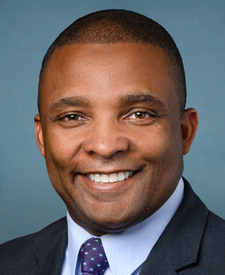
See how Donald G. Davis actually votes — against your values.
DeepSyte scores Donald G. Davis's record on the issues you care about — not party, not press releases. Take the 2-minute values quiz to see your personal alignment.
Sign in and take the values quiz to see how Donald G. Davis's votes line up with your views.
Prediction track record
We haven't made any vote predictions for Donald G. Davis yet. Predictions are generated for bills with tagged effects; they show up here as soon as the predict-votes job covers this rep's upcoming docket.
Consistency insights
No paired statements and votes yet for Donald G. Davis
We haven't yet found statement/vote pairs on the same topic for Donald G. Davis. This usually means either the rep hasn't taken public positions on bills that have come to a passage vote, or those bills haven't been tagged yet. The checker runs as new press releases and votes come in.
Pro analysis
AI rep analysis — Pro
Get an AI-narrated read on Donald G. Davis's full voting record against your stated values — aligned themes, conflicts, notable votes, and what to watch for.
We haven't extracted campaign positions for Donald G. Davis yet. Once their campaign website or position pages are processed, this card will track what they said vs how they voted.
Crossing the aisle
Passage votes where Donald G. Davis broke ranks with ≥75% of Democrats. Threshold catches substantively partisan splits; unanimous-ish or close votes are excluded.
50
Cross-aisle votes
119-hjres-213·Sep 16, 2026·98% of D voted NO
Providing for congressional disapproval under chapter 8 of title 5, United States Code, of the rule issued by the Environmental Protection Agency relating to the "California State Nonroad Engine Pollution Control Standards; Commercial Harbor Craft Regulations; Notice of Decision".
Providing for congressional disapproval under chapter 8 of title 5, United States Code, of the rule submitted by the Environmental Protection Agency relating to "California State Nonroad Engine Pollution Control Standards; Ocean-Going Vessels At-Berth; Notice of Decision".
Congressman Don Davis Votes to Advance Bipartisan Farm Bill for Eastern North Carolina
Position: Congressman Davis voted in support of H.R. 7567, the Farm, Food, and National Security Act of 2026, citing provisions that expand risk management tools, support specialty crop growers, improve credit access, strengthen flood protection, and promote precision agriculture in eastern North Carolina.
Washington, D.C. — Congressman Don Davis (NC-01) stood with eastern North Carolina farmers and voted in support of H.R. 7567, the Farm, Food, and National Security Act of 2026, which passed the House by a bipartisan vote of 224 to 200. Davis, one of fourteen Democrats to support the bill, fights for eastern North Carolina priorities, including flood recovery, crop insurance, rural water, and the next generation of family farms.
“An estimated 15,000 farms closed this past year, and farmers in eastern North Carolina are feeling real pressure. Rising fertilizer and fuel costs, tighter margins, drought, and uncertainty are putting strain on the people who feed and clothe us. A Farm Bill matters for our farmers and our region.
While not perfect, the Farm, Food, and National Security Act of 2026 (H.R. 7567) provides necessary support: expanding access to risk management tools, opening new markets through trade promotion, strengthening support for specialty crop growers, and improving access to credit and loans.
I didn't just vote for this bill; I helped shape it, rolling in six bills I introduced, an amendment, and more than 25 measures I've supported. While I'll keep working to make it stronger, we can't afford to fall short because too much is at stake for eastern North Carolina,” said Congressman Don Davis.
Key Provisions Championed by Congressman Davis:
Promoting precision agriculture:
(Includes provisions from H.R. 1985, Promoting Precision Agriculture Act, introduced by Congressman Davis)
Establishes a partnership between the federal government and the private sector to create voluntary interconnectivity standards.
Prioritizes the cybersecurity needs for precision agriculture technologies.
Protecting farmers and rural communities from natural disasters:
(Includes provisions from H.R. 1858, Flooding Prevention, Assessment, and Restoration Act, introduced by Congressman Davis)
Empowers communities to restore flood protection in watersheds to levels above pre-disaster conditions through the NRCS Emergency Watershed Protection (EWP) Program—a federal initiative for emergency recovery.
Directs the USDA to conduct a comprehensive national agriculture flood vulnerability study. This study will provide vital insights into flood risks on agricultural lands, equipping producers with actionable data to make informed decisions and implement effective mitigation strategies.
Reduces the local cost-share requirement to access the Watershed Rehabilitation Program for communities in limited resource areas. This NRCS program was designed to rehabilitate aging dams that no longer meet federal or state safety criteria, ensuring the continued safety of communities downstream.
Prioritizing underserved and distressed rural communities:
(Includes provisions from H.R. 2109, Cybersecurity for Rural Water Systems Act, H.R. 6433, Rural Uplift and Revitalization Assistance Act, and H.R. 7530, Assistance for Rural Water Systems Act, introduced by Congressman Davis)
Authorizes USDA to provide technical assistance to strengthen local capacity and improve access to rural development programs for geographically underserved and distressed rural areas, directly or through cooperative agreements.
Allows the USDA Circuit Rider Program to provide cybersecurity technical assistance to rural water systems.
Provides low-interest loans and loan forgiveness for rural communities seeking to upgrade their water systems.
Expanding rural entrepreneurship in persistent poverty counties:
(Includes provisions from an amendment led by Congressman Davis during markup of the bill)
Reduces the matching requirement for organizations participating in the Rural Microentrepreneur Assistance Program (RMAP) from 15 percent to 5 percent in persistent poverty counties—areas where poverty rates have remained at or above 20 percent for decades.
Helping military veterans find careers in agriculture:
(Includes provisions from H.R. 1230, AG VETS Act, co-led by Congressman Davis)
Codifies the Agriculture Grants for Veteran Education and Training Services (AgVets) program to establish farming and ranching opportunities for military veterans.
Keeping family farms in the possession of farm families:
(Includes provisions from H.R. 6385, Farm Transitions Act of 2025, introduced by Congressman Davis)
Reauthorizes the U.S. Department of Agriculture’s Commission on Farm Transitions and requires the Commission to deliver a comprehensive set of policy recommendations to Congress within two years, focusing on ensuring that next-generation farmers have access to the land, resources, and support needed to keep family farms strong for the future.
Doubling funding for crucial agriculture trade programs:
Doubles the Market Access Program (MAP) funding from $200 million to $410 million.
Doubles the Foreign Market Development (FMD) Program from $34.5 million to $82 million.
Congressman Don Davis is the Ranking Member of the House Agriculture Committee’s Subcommittee on Commodity Markets, Digital Assets, and Rural Development.
Congressman Don Davis Votes to Stand with Farmers, Producers, and Rural Communities across NC-01
Position: Congressman Davis supports passage of H.R. 7567, the Farm, Food, and National Security Act of 2026, which includes provisions for precision agriculture, disaster protection, rural water system upgrades, and support for underserved rural communities.
WASHINGTON, D.C. — Congressman Don Davis (NC-01), Ranking Member of the House Agriculture Committee’s Commodity Markets, Digital Assets, and Rural Development Subcommittee, issued the following statement after voting to report out of Committee favorably H.R. 7567, Farm, Food, and National Security Act of 2026.
“Over the past year, about 15,000 farms have closed, taking with them livelihoods, family legacies, and dealing a huge blow to rural America. Farmers are facing rising costs and uncertainty. Congress must pass a Farm Bill to invest in the hands that feed, clothe, and fuel American agriculture,” said Congressman Davis.
Key Provisions Championed by Congressman Davis:
Promoting precision agriculture:
(Includes provisions from H.R. 1985, Promoting Precision Agriculture Act, introduced by Congressman Davis)
Establishes a partnership between the federal government and the private sector to create voluntary interconnectivity standards.
Prioritizes the cybersecurity needs for precision agriculture technologies.
Protecting farmers and rural communities from natural disasters:
(Includes provisions from H.R. 1858, Flooding Prevention, Assessment, and Restoration Act, introduced by Congressman Davis)
Empowers communities to restore flood protection in watersheds to levels above pre-disaster conditions through the NRCS Emergency Watershed Protection (EWP) Program—a federal initiative for emergency recovery.
Directs the USDA to conduct a comprehensive national agriculture flood vulnerability study. This study will provide vital insights into flood risks on agricultural lands, equipping producers with actionable data to make informed decisions and implement effective mitigation strategies.
Reduces the local cost-share requirement to access the Watershed Rehabilitation Program for communities in limited resource areas. This NRCS program was designed to rehabilitate aging dams that no longer meet federal or state safety criteria, ensuring the continued safety of communities downstream.
Prioritizing underserved and distressed rural communities:
(Includes provisions from H.R. 2109, Cybersecurity for Rural Water Systems Act, H.R. 6433, Rural Uplift and Revitalization Assistance Act, and H.R. 7530, Assistance for Rural Water Systems Act, introduced by Congressman Davis)
Authorizes USDA to provide technical assistance to strengthen local capacity and improve access to rural development programs for geographically underserved and distressed rural areas, directly, or through cooperative agreements.
Codifies the USDA Circuit Rider Program by allowing funds for the program to provide cybersecurity technical assistance to rural water systems.
Provides low-interest loans and loan forgiveness for rural communities seeking to upgrade their water systems.
Expanding rural entrepreneurship in persistent poverty counties:
(Includes provisions from an amendment led by Congressman Davis during markup of the bill)
Reduces the matching requirement for organizations participating in the Rural Microentrepreneur Assistance Program (RMAP) from 15 percent to 5 percent in persistent poverty counties—areas where poverty rates have remained at or above 20 percent for decades.
Helping military veterans find careers in agriculture:
(Includes provisions from H.R. 1230, AG VETS Act, co-led by Congressman Davis)
Codifies the Agriculture Grants for Veteran Education and Training Services (AgVets) program to establish farming and ranching opportunities for military veterans.
Keeping family farms in the possession of farm families:
(Includes provisions from H.R. 6385, Farm Transitions Act of 2025, introduced by Congressman Davis)
Reauthorizes the U.S. Department of Agriculture’s Commission on Farm Transitions and requires the Commission to deliver a comprehensive set of policy recommendations to Congress within two years, focusing on ensuring that next-generation farmers have access to the land, resources, and support needed to keep family farms strong for the future.
Doubling funding for crucial agriculture trade programs:
Doubles the Market Access Program (MAP) funding from $200 million to $410 million.
Doubles the Foreign Market Development (FMD) Program from $34.5 million to $82 million.
Issues:Agriculture
Congressman Don Davis Co-Chairs the First-Ever Berry Amendment Caucus, Strengthening American-Made Military Gear
WASHINGTON, D.C. — Congressman Don Davis (NC-01) announced the creation of the first-ever congressional Berry Amendment Caucus in the U.S. House of Representatives. This bipartisan group, co-chaired by Congressman Davis and Congressman Pat Harrigan (NC-10), will focus on keeping U.S. defense manufacturing strong, supporting American jobs, and ensuring our servicemembers receive the highest-quality, 100% American-made uniforms, body armor, helmets, and other essential gear.
“As North Carolina invests in a stronger future for our textile industry, we must strengthen the Berry Amendment, guaranteeing that every thread of the defense supply chain is American-made. Protecting local jobs, backing our manufacturers, and providing our military with the dependable, high-quality materials it deserves is vital,” said Congressman Davis.
Founding members of the caucus also include Representatives Nikki Budzinski (IL-13), Rich McCormick (GA-07), Greg Murphy (NC-03), Chris Pappas (NH-01), Ralph Norman (SC-05), Chuck Edwards (NC-11), David Rouzer (NC-07), Tim Moore (NC-14), John Carter (TX-31), Gabe Amo (RI-01), Joseph Morelle (NY-25), and Brian Mast (FL-21).
The Berry Amendment, first enacted in 1941, requires the U.S. military to purchase certain essential items, such as clothing, footwear, body armor, tents, and food, from American companies. This law helps keep our supply chains safe and supports U.S. workers who make these products. Rep. Davis led a bipartisan effort through the Fiscal Year 2026 National Defense Authorization Act to secure the strongest Berry Amendment language via section 865 since its permanent codification in 1994.
The Berry Amendment Caucus will focus on:
Protecting U.S. national security by keeping key industries, like uniforms, armor, and specialty materials, in America;
Supporting workers and factories that make Berry-compliant products;
Educating Members of Congress about all the products covered by the Berry Amendment; and
Ensuring the law is enforced and updated to meet the changing needs of our military.
“You cannot be the strongest military in the world while depending on foreign supply chains for mission-critical gear. The Berry Amendment protects our warfighters, protects American manufacturing, and protects our national security. As co-chair of this caucus, I am doubling down on a simple principle: the equipment that defends the United States should be made in the United States,” said Congressman Harrigan.
“The formation of the Berry Amendment Caucus marks an important step in sustaining and growing the domestic industrial base that equips the American warfighter,” said David Costello, Executive Director of the Warrior Protection & Readiness Coalition. “For decades, the Berry Amendment has ensured that our servicemembers have a secure supply chain for critical equipage and are never dependent on foreign supply chains for mission-essential gear. In war and in peace, the Berry Amendment guarantees that the United States is always capable of manufacturing the full spectrum of products needed to keep our troops combat-ready. Our association is deeply appreciative of the leadership demonstrated by Reps. Harrigan and Davis in founding this new caucus.”
Issues:Servicemembers, Veterans, and Military Families
Articles from a curated list of national outlets that mention Donald G. Davis.
No recent news mentions yet.
Source: GDELT 2.0 GKG, filtered to a curated list of national outlets. Inclusion is not endorsement; opinion pieces and reported news are mixed.
Recent stock activity
Periodic transaction reports filed under the STOCK Act — disclosed by the rep, sourced from public filings.
No disclosed trades on record.
Source: open-data mirrors of the Senate eFD and House Clerk financial-disclosure systems. Disclosure within 30 days of trade is required by law (45 for spouse/dependent trades).
Top PAC donors · 2026 cycle
Political action committees that gave the most to this rep's principal campaign committee this cycle. PAC giving is direct organizational support — industry, ideological, or leadership.
1.DEMOCRACY SUMMER 2026Ideological5 contributionsProgressive grassroots advocacy PAC — supports voter engagement, democratic participation, and candidates aligned with progressive causes.AI$47,962
2.JEFFRIES BATTLEGROUND PROTECTION FUNDLeadership3 contributionsMember-of-Congress leadership PAC affiliated with Hakeem Jeffries — directs contributions to allied Democratic candidates and causes.AI$28,191
3.JDCA PAC2 contributions$14,000
4.GENERATION 18Ideological1 contributionYouth-focused or generational advocacy PAC — specific policy positions not clearly signaled by the name.AI · low$12,615
5.DCCCParty2 contributionsDemocratic party committee — funds House Democratic candidates and coordinates national party support in federal races.AI$10,800
6.AMERICAN ISRAEL PUBLIC AFFAIRS COMMITTEE POLITICAL ACTION COMMITTEEIdeological2 contributionsPAC arm of the American Israel Public Affairs Committee, federalized in 2021. Backs candidates of both parties who support U.S.-Israel security and economic ties.AI$10,000
7.SUN POLITICAL ACTION COMMITTEE2 contributions$10,000
8.SOUTHERN STATES POLICE BENEVOLENT ASSOC PAC FUND2 contributions$10,000
9.INTERNATIONAL ASSOCIATION OF FIREFIGHTERS INTERESTED IN REGISTRATION AND EDUCATION PACPublic Sector2 contributionsPublic-sector employee PAC affiliated with the International Association of Firefighters — backs candidates supporting firefighter workplace protections, benefits, and federal fire-service funding.AI$10,000
10.HMP2 contributions$10,000
Source: OpenFEC (api.open.fec.gov) Schedule A receipts where contributor type is “committee.” Aggregated by contributing committee. Self-transfers from joint-fundraising / victory committees are excluded.
Top individual contributors · 2026 cycle
Itemized individual contributions over $200 to this rep's campaign committee, aggregated by donor employer. PAC giving is shown above; this section is people, not organizations.
1.JANE STREET CAPITAL$21,000
2.NOT EMPLOYER$17,500
3.COINBASE$14,000
4.CHARLES AND LYNN SCHUSTERMAN FAMILY PH$14,000
5.INSIGHT PARTNERS$10,500
6.BESSEMER VENTURE PARTNERS$10,500
7.CROWNE PARTNERS INC$8,500
8.CENTERVIEW PARTNERS$8,000
9.JORDAN REAL ESTATE INVESTMENTS$7,000
10.HUNT COMPANIES$7,000
Source: OpenFEC Schedule A receipts where contributor type is “individual,” aggregated by the donor's self-reported employer. This is a geographic / industry correlation, not a corporate endorsement.