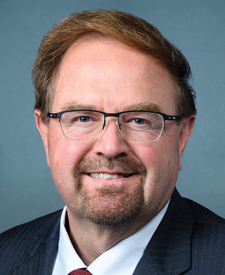
See how Chuck Edwards actually votes — against your values.
DeepSyte scores Chuck Edwards's record on the issues you care about — not party, not press releases. Take the 2-minute values quiz to see your personal alignment.
Sign in and take the values quiz to see how Chuck Edwards's votes line up with your views.
Prediction track record
We haven't made any vote predictions for Chuck Edwards yet. Predictions are generated for bills with tagged effects; they show up here as soon as the predict-votes job covers this rep's upcoming docket.
Consistency insights
No paired statements and votes yet for Chuck Edwards
We haven't yet found statement/vote pairs on the same topic for Chuck Edwards. This usually means either the rep hasn't taken public positions on bills that have come to a passage vote, or those bills haven't been tagged yet. The checker runs as new press releases and votes come in.
Pro analysis
AI rep analysis — Pro
Get an AI-narrated read on Chuck Edwards's full voting record against your stated values — aligned themes, conflicts, notable votes, and what to watch for.
We haven't extracted campaign positions for Chuck Edwards yet. Once their campaign website or position pages are processed, this card will track what they said vs how they voted.
Crossing the aisle
Passage votes where Chuck Edwards broke ranks with ≥75% of Republicans. Threshold catches substantively partisan splits; unanimous-ish or close votes are excluded.
7
Cross-aisle votes
119-hres-1498·Sep 1, 2026·99% of R voted YES
In the matter of allegations relating to Representative Chuck Edwards.
Position: Congressman Edwards supports legislation that allows energy companies to transfer unused clean-energy tax credits to finance disaster recovery and grid rebuilding, with the goal of lowering electricity costs and accelerating infrastructure restoration in disaster-affected communities.
WASHINGTON, D.C. — Congressman Chuck Edwards (NC-11) joined Congressman Greg Steube (FL-17) and Congressman Vern Buchanan (FL-16) to introduce the Disaster Zone Affordability Investment Act to stimulate local communities and lower electricity costs for communities impacted by natural disasters.
This legislation will allow eligible energy companies like Duke Energy to invest in disaster-affected areas by transferring unused clean-energy tax credits from prior years to responsibly finance storm recovery and grid rebuilding in local communities recovering from a natural disaster.
In the aftermath of Hurricane Helene, more than 3.4 million customers lost power, underscoring the need for faster investment in reliable energy infrastructure. By allowing utilities to monetize existing carryforward tax credits, this bill will reduce financing costs for storm restoration, enable faster reinvestment in damaged infrastructure, and lessen customers' financing costs to restore power sooner and lower electricity bills.
“After a disaster, communities need affordable, reliable power to recover and rebuild,” said Congressman Edwards. “This bill puts existing resources to work, encourages private investment, and helps lower energy costs for families and businesses when they need relief most.”
###
Edwards Introduces Legislation to Strengthen Election Integrity
Position: Congressman Edwards introduced legislation to prohibit federal election administration funds in states that permit ballot harvesting, arguing the practice invites abuse and undermines election integrity.
WASHINGTON, D.C. — Congressman Chuck Edwards (NC-11) introduced the No Funds for Ballot Harvesting Act, legislation aimed at strengthening election integrity and protecting free and honest elections.
Congressman Edwards said,“Ballot harvesting invites abuse and erodes confidence in our elections. Ballots should move directly from the voter’s hand to the ballot box, with limited, commonsense exceptions for caregivers and family members, not through political middlemen.”
The bill amends the Help America Vote Act of 2002 to prohibit the use of federal election administration funds in states that permit ballot harvesting. Ballot harvesting allows third parties to collect and submit ballots on behalf of voters, a practice that raises serious concerns about election security, voter privacy, and the integrity of the secret ballot.
Currently, 35 states in the U.S. still allow ballot harvesting. By ensuring taxpayer dollars are not used to support ballot harvesting, the No Funds for Ballot Harvesting Act reinforces safeguards that protect the integrity of each vote and preserve public confidence in our electoral system.
“One of the most fundamental rights we enjoy as Americans is the right to vote and choose our own leaders,”Congressman Edwards added.“That right must be protected. The No Funds for Ballot Harvesting Act helps ensure every American can cast a ballot freely, privately, and with confidence that our elections are secure.”
###
Edwards Urges Leadership to Bring the FEMA Act to the Floor
Position: Congressman Edwards urges House leadership to bring H.R. 4669, the FEMA Act, to the floor for a vote. The bill streamlines federal disaster assistance applications, increases upfront financial support to state and local governments, accelerates recovery timelines, and strengthens disaster preparedness and resilience.
WASHINGTON, D.C.– Congressman Chuck Edwards (NC-11) urged House leadership to bring H.R. 4669, the Fixing Emergency Management for Americans (FEMA) Act, to the House floor for consideration, emphasizing the need for faster, fairer disaster recovery for communities still rebuilding after Hurricane Helene.
The FEMA Act modernizes and streamlines federal disaster assistance by creating a single, universal application that allows survivors to complete one simplified form when seeking aid. The legislation also reforms FEMA’s Public Assistance program by increasing upfront financial support for state and local governments, clarifying reimbursement requirements, and accelerating long-term recovery timelines. Finally, the bill strengthens disaster preparedness and resilience through provisions that support utility resiliency, preserve local flexibility in building codes, and provide resources to help homeowners reinforce existing structures against future disasters.
This comprehensive legislation incorporates several Edwards-led bipartisan reforms to address the unique recovery challenges facing Western North Carolina, including:
Disaster Survivors Fairness Act — Streamlines the FEMA application process and improves coordination among federal agencies to better serve disaster survivors.
Fair Disaster Assistance Act — Protects federal disaster assistance applicants by ensuring FEMA does not issue premature denial notices before a final decision has been made regarding their insurance claim for disaster-related losses.
Promoting Resilient Buildings Act — Expands the definition of building codes to prevent burdens on states, homebuilders, and local municipalities and promoting more resilient buildings to ensure they are prepared in the event of a natural disaster.
Building Resilient Infrastructure and Communities for All Act — Reinstates and reforms the BRIC program to ensure rural communities have fair access to hazard mitigation funding.
“When Hurricane Helene hit our mountain communities last year, our region was devastated. Over the past year, we’ve seen the importance of well-run emergency management and disaster relief services and the impact they have on getting communities back on their feet. The FEMA Act implements what disaster-impacted communities like ours have been asking for: less red tape, clearer rules, and faster help,” said Congressman Edwards. “These reforms will make FEMA more responsive and ensure communities have the tools they need to rebuild stronger and recover faster. I urge House leadership to bring this bill to the floor so it can move forward.”
Full list of signatories on the letter include: Bacon, Don; Begich, Nicholas; Bell, Wesley; Bergman, Jack; Bilirakis, Gus; Bishop, Sanford; Bresnahan, Robert; Bynum, Janelle; Cammack, Kat; Carbajal, Salud; Carter, Earl; Davis, Donald; Dunn, Neal; Edwards, Chuck; Ezell, Mike; Figures, Shomari; Fitzpatrick, Brian; Foushee, Valerie; Friedman, Laura; Fry, Russell; Garcia, Robert; Gillen, Laura; Harrigan, Pat; Harshbarger, Diana; Hoyle, Val; Huizenga, Bill; Jackson, Jonathan; Kiley, Kevin; King-Hinds, Kimberlyn; LaLota, Nick; Lee, Laurel; McDonald Rivet, Kristen; McDowell, Addison; Miller, Carol; Moore, Tim; Moskowitz, Jared; Moulton, Seth; Moylan, James; Nadler, Jerrold; Pappas, Chris; Ross, Deborah; Rouzer, David; Scholten, Hillary; Schrier, Kim; Soto, Darren; Stauber, Pete; Suozzi, Thomas; Timmons, William; Vasquez, Gabe; Wilson, Joe.
The full letter can be found here.
###
Edwards Advances Final FY2026 Appropriations Package, Securing Critical Investments in Public Safety, Infrastructure, and Economic Growth
WASHINGTON, D.C. – Congressman Chuck Edwards (NC-11) voted to advance the final funding package of the Fiscal Year 2026 appropriations cycle, including the Defense; Homeland Security; Labor, Health and Human Services, Education; and Transportation, Housing and Urban Development bills, delivering essential resources that will strengthen public safety, boost economic development, and support long-term resilience for communities across Western North Carolina. Thanks to Republican leadership, Congress avoided the long-standing, irresponsible practice of rushing a must-pass end-of-year omnibus and instead put the appropriations process back on track to proceed through regular order.
“This bipartisan funding package ensures we deliver real results for our communities, from safer streets and emergency services to reliable infrastructure and workforce development,”said Congressman Edwards. “By completing all 12 appropriations bills, we are providing the stable, full-year funding families and local leaders asked for while continuing recovery from Hurricane Helene and setting Western North Carolina up for a prosperous future.”
The FY2026 appropriations package marks a key milestone in completing Congress’s annual budget work and reflects targeted investments in national defense, homeland security, public health, transportation, education, and community infrastructure that maintain America’s leadership at home and abroad while meeting local needs.
Through Member-directed Community Project Funding secured by Congressman Edwards, this legislation includes critical resources for NC-11 priorities:
$1.5 million for the Town of Robbinsville to upgrade water distribution lines on Black Knight Way and Dillard Orr Road will ensure reliable service to a new Graham County elementary school, serving about 500 students and existing residents and businesses.
$3 million for Madison County to support the construction of a new Emergency Services hub, improving coordination and response for routine needs and major incidents.
$3 million for Swain County to upgrade their water system to serve a new middle school in Bryson City, benefiting students, staff, and the surrounding community.
$3 million for Buncombe County to build a 10,000-square-foot EMS base at the Owen Pool site, enhancing emergency medical capacity for eastern Buncombe County.
$2.5 million for the Asheville Regional Airport to construct a new west-side taxiway, supporting current operations and future economic growth tied to transportation infrastructure.
This package delivers necessary resources for the region, especially for communities still rebuilding after Hurricane Helene’s devastation. Federal support through full-year appropriations eliminates the uncertainty of short-term extensions and empowers local leaders to plan with confidence.
“These investments go beyond individual projects — they strengthen our mountain towns, support local first responders, and expand opportunities for families and businesses,”Edwards added. “I will continue working to ensure Western North Carolina’s needs are met.”
###
Edwards Introduces the VET Connect Act Alongside Congresswoman Budzinski
Position: Congressman Edwards and Congresswoman Budzinski introduced legislation to direct the VA to establish a secure, opt-in database and messaging platform enabling veterans to reconnect with former service members based on shared service history while preserving privacy controls.
WASHINGTON, D.C. – Congressman Chuck Edwards (NC-11) introduced the VET Connect Act with Congresswoman Nikki Budzinski (IL-13) to direct the Department of Veterans Affairs (VA) to establish a secure, privacy-preserving database and messaging platform that enables veterans to reconnect with fellow service members with whom they served without requiring the disclosure of personal contact information.
This legislation requires the VA to both create and maintain this system on an opt-in basis, allowing verified veterans to reconnect based on shared service history, including their unit, deployment, dates of service, and more. To preserve their privacy, veterans can change their visibility settings, restrict or block communications, opt out entirely, or delete their information at any time.
“Many of our nation’s heroes return from the line of duty with invisible injuries and mental health challenges that can make it hard to connect with life outside of the service. The implementation of a communications database and messaging platform will reduce isolation, improve mental health outcomes, and strengthen online safety in the veteran community,” said Congressman Edwards. “The brave men and women who face immense challenges even long after they return from the battlefield deserve support. Legislation like the VET Connect Act is a step in the right direction, ensuring they aren’t fighting alone.”
"Our veterans develop bonds through shared experiences with their fellow service members -- relationships few outside the military can fully relate to. Too often, however, those ties fade once service ends. This straightforward, bipartisan legislation would create a secure, privacy-protected database to help veterans reconnect with one another, strengthening support networks and reinforcing a lasting sense of community. It is one simple but meaningful way to thank them for the sacrifices they have made to protect our freedoms and to ensure they have the support they need to thrive in civilian life,”said Congresswoman Budzinski.
For the full text of the bill, please click here.
###
Issues:Veterans
Source: GDELT 2.0 GKG, filtered to a curated list of national outlets. Inclusion is not endorsement; opinion pieces and reported news are mixed.
Recent stock activity
Periodic transaction reports filed under the STOCK Act — disclosed by the rep, sourced from public filings.
No disclosed trades on record.
Source: open-data mirrors of the Senate eFD and House Clerk financial-disclosure systems. Disclosure within 30 days of trade is required by law (45 for spouse/dependent trades).
Top PAC donors · 2026 cycle
Political action committees that gave the most to this rep's principal campaign committee this cycle. PAC giving is direct organizational support — industry, ideological, or leadership.
1.AIPAC PACIdeological6 contributionsPAC arm of the American Israel Public Affairs Committee, federalized in 2021. Backs candidates of both parties who support U.S.-Israel security and economic ties.AI$30,000
2.NADAPACAgriculture5 contributionsNational Automobile Dealers Association PAC — supports candidates backing dealer-friendly automotive policies, franchise protections, and regulatory positions.AI$25,000
3.EYE OF THE TIGER PACLeadership5 contributionsLeadership or single-issue PAC — specific positions and affiliated member of Congress not inferable from the name.AI · low$25,000
4.BUILD PAC NATIONAL ASSOC OF HOME BUILDERS PACReal Estate4 contributionsReal-estate industry PAC affiliated with the National Association of Home Builders — backs candidates supporting housing development, construction-friendly zoning, and reduced regulatory barriers.AI$20,000
5.NATIONAL ASSOCIATION OF REALTORS PACReal Estate4 contributionsReal-estate industry PAC — backs candidates supporting property-rights protections, mortgage-lending access, and tax incentives for homeownership.AI$19,000
6.MAJORITY COMMITTEE PACLeadership3 contributionsLeadership PAC — likely affiliated with a member of Congress or caucus group; specific positions not inferable from the name.AI · low$15,000
7.FIRST IN FREEDOM PACIdeological3 contributionsIdeological PAC — specific policy positions not clearly signaled by the name alone.AI · low$15,000
8.MCDONALD'S POLITICAL ACTION COMMITTEE3 contributions$15,000
9.UPS PAC2 contributions$10,000
10.HUCKPACLeadership2 contributionsMember-of-Congress leadership PAC — directs contributions to allied Republican candidates and causes.AI$10,000
Source: OpenFEC (api.open.fec.gov) Schedule A receipts where contributor type is “committee.” Aggregated by contributing committee. Self-transfers from joint-fundraising / victory committees are excluded.
Top individual contributors · 2026 cycle
Itemized individual contributions over $200 to this rep's campaign committee, aggregated by donor employer. PAC giving is shown above; this section is people, not organizations.
1.SELF$26,435
2.ARNOLD VENTURES$10,500
3.CORVID TECHNOLOGIES$10,000
4.DEGGGELLER ATTRACTIONS$10,000
5.C2 STRATEGIES$9,000
6.RAY CAMMACK SHOWS$7,500
7.ANROK$7,000
8.2040 FOUNDATION$7,000
9.BILTMORE$7,000
10.WHEELS CONTRACTING$7,000
Source: OpenFEC Schedule A receipts where contributor type is “individual,” aggregated by the donor's self-reported employer. This is a geographic / industry correlation, not a corporate endorsement.