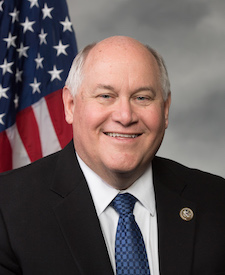
See how Ron Estes actually votes — against your values.
DeepSyte scores Ron Estes's record on the issues you care about — not party, not press releases. Take the 2-minute values quiz to see your personal alignment.
Sign in and take the values quiz to see how Ron Estes's votes line up with your views.
Prediction track record
How often we called Ron Estes's passage votes correctly, from their stated positions on each bill's tagged topics. Excludes “unclear” calls and abstentions.
We haven't yet found statement/vote pairs on the same topic for Ron Estes. This usually means either the rep hasn't taken public positions on bills that have come to a passage vote, or those bills haven't been tagged yet. The checker runs as new press releases and votes come in.
Pro analysis
AI rep analysis — Pro
Get an AI-narrated read on Ron Estes's full voting record against your stated values — aligned themes, conflicts, notable votes, and what to watch for.
Positions Ron Estes took during their campaign, scored against their subsequent record — public statements cross-checked with related votes. “Kept” means 80%+ of those statement-vs-vote pairs aligned; “Broken” means 30% or fewer.
0 kept0 broken0 mixed0 no action yet
Ron Estes has 13 tracked positions but no scored statement-vs-vote pairs touching them yet. Verdicts will appear here as related statements and votes accumulate.
No action yetOpposes
Enhanced ACA premium subsidies should be made permanent at expanded levels.
“Democrats have tried to mask it by covering over high prices with expensive subsidies that reward the insurance companies and punish patients.”
Passage votes where Ron Estes broke ranks with ≥75% of Republicans. Threshold catches substantively partisan splits; unanimous-ish or close votes are excluded.
Learn more about the benefits of the Working Families Tax Cuts
Rep. Ron Estes (R-Kansas) voted in favor of the Airspace Location and Enhanced Risk Transparency (ALERT) Act, comprehensive bipartisan aviation safety legislation following the tragic mid-air collision between an Army Black Hawk helicopter and a passenger aircraft in January 2025. The bill was approved by the Transportation and Infrastructure Committee unanimously and passed on the House floor overwhelmingly, by a vote of 396-10.
“I’m grateful for the comprehensive and collaborative work of Chairman Graves and the House Transportation and Infrastructure Committee on the ALERT Act, in collaboration with the National Transportation Safety Board (NTSB),” Rep. Estes said. “The NTSB’s investigation of the accident uncovered systemic failures in our aviation system, and the ALERT Act addresses the issues raised by the NTSB in a detailed, bipartisan manner for civil and military aviation.
This collision involved an Army Black Hawk helicopter and an American Airlines flight that originated from my hometown of Wichita. This tragedy has left our community shocked, and I am heartbroken that several Kansans were among the victims. No family should ever have to endure such heartbreak.
It is imperative that we in Congress work to ensure tragedies like this never happen again, and there is always more that can and should be done to enhance aviation safety. The ALERT Act takes critical steps to do just that. I look forward to continuing this important work with my colleagues in the House and Senate on a final legislative product to ensure that our skies remain safest in the world.”
Enter your email address to get the latest updates straight to your inbox.
Use the form below to sign up for my newsletter and get the latest news and updates directly to your inbox.
Rep. Estes, Sen. Capito Introduce Bill to Unleash Domestic Investments for U.S. Companies
Position: The release advocates for legislation that would restore interest deductibility standards for U.S. companies to enhance their global competitiveness and encourage domestic investment.
Learn more about the benefits of the Working Families Tax Cuts
Today, U.S. Rep. Ron Estes (R-Kan.) introduced the Ensuring Better Interest Treatment and Deductibility (EBITDA) Act. The legislation builds on the Working Families Tax Cuts Act’s—also known as the One Big Beautiful Bill—pro-growth policy by restoring globally competitive interest deductibility standards and unleashing domestic investment for U.S.-headquartered companies. Companion legislation is being introduced in the U.S. Senate by Senator Shelley Moore Capito (R-W. Va.).
“As it currently stands, our tax code is penalizing American businesses for growing — when a manufacturer borrows money in the United States to expand their global business, they shouldn’t be slammed with a surprise tax bill because they’re investing in their operations,” Rep. Estes said. “This commonsense solution restores the post-TCJA landscape that encourages investment and makes it easier for job creators to innovate, increase opportunities, and keep America competitive on a global stage.”
“U.S. based companies are at a disadvantage when competing in global markets for leveraged acquisitions, as foreign-headquartered rivals often benefit from more favorable interest deductibility rules and can therefore finance transactions more efficiently,” Senator Capito said. “This bill will help ensure pro-growth policy by increasing globally competitive interest deductibility standards and will help unleash domestic investments for U.S. companies.”
The legislation is supported by: the National Association of Manufacturers (NAM), U.S. Chamber of Commerce, Celanese, Asurion, Dell Technologies, Illinois Tool Works, and the American Chemistry Council.
“H.R. 1 was the investment of a generation in America’s manufacturers. Thanks to the leadership of President Trump and this Congress, the U.S. tax code is now set up to drive manufacturing investment and job creation. A critical component of H.R. 1’s pro-manufacturing agenda was the restoration of a pro-growth interest deductibility standard, a longtime NAM priority given debt financing’s importance for capital-intensive sectors like manufacturing,” Connor Rabb, Senior Director for Tax Policy for NAM, said. “The Ensuring Better Interest Treatment and Deductibility (EBITDA) Act from Sen. Capito and Rep. Estes would build on this progress, setting the stage for job-creating investments across the industry. Manufacturers strongly support the EBITDA Act, and we commend Sen. Capito and Rep. Estes for their leadership in making America the best place in the world to make things.”
“The Ensuring Better Treatment and Deductibility Act is an important step toward preserving a competitive, pro-growth tax environment for American companies. Restoring a more balanced approach to interest deductibility – consistent with longstanding standards – will help businesses invest in long-term growth and compete globally. Asurion applauds Senators Capito, Cornyn, Blackburn, and Husted for introducing this important legislation,” Asurion said.
“Dell Technologies supports the Ensuring Better Interest Treatment and Deductibility Act (EBITA) because it enhances financing flexibility for U.S. businesses. We appreciate Senator Capito, Representative Estes and their colleagues for working to advance this legislation,” Tom Vallone, Senior Vice President of Taxes at Dell Technologies, said”
“Senator Capito’s leadership recognizes that tax policy plays a critical role in U.S. competitiveness and in keeping the United States the world’s most attractive place to invest and borrow. Modernizing Section 163(j) will help strengthen American competitiveness by lowering financing costs for capital‑intensive manufacturers and encouraging more investment, innovation, and job creation here at home,” the American Chemistry Council said.
In July, President Trump signed into law the Working Families Tax Cuts Act, which provides major business tax benefits, including making the 20% Qualified Business Income (QBI) deduction permanent, restoring 100% bonus depreciation for investments, and increasing the Sec. 179 deduction cap to $2.5 million and increasing limits on business interest deductibility. Because of the hard work of President Trump and Congress, the U.S. tax code has finally put American businesses first and will help increase U.S. manufacturing. However, U.S. businesses are prevented from including global income (Subpart F income, GILTI inclusions, and Section 78 gross-up amounts) from their Adjusted Tax Income (ATI), which undercuts the restoration of the EBITDA standard. This anti-competitive provision shrinks the ATI base and reduces allowable interest deductions, even when such global income is fully subject to U.S. tax. This limitation undercuts the key pro-growth outcome in the Working Families Tax Cuts Act.
The Ensuring Better Interest Treatment and Deductibility Act (EBITDA) would build upon the pro-U.S. business policies in OBBB by repealing the ATI limitation exclusion of global income, allowing U.S. companies to remain competitive on the world stage.
Full text of the EBITDA Act can be found here.
Enter your email address to get the latest updates straight to your inbox.
Use the form below to sign up for my newsletter and get the latest news and updates directly to your inbox.
Rep. Estes Statement on Lesser Prairie Chicken Regulations Removed
Position: Rep. Estes celebrates the removal of the lesser prairie-chicken from the federal endangered species list, arguing that voluntary conservation efforts by landowners have been effective and that federal protections were burdensome to farmers, ranchers, and energy producers.
Learn more about the benefits of the Working Families Tax Cuts
Rep. Ron Estes (R-Kansas) released the following statement today after the U.S. Fish and Wildlife Service (FWS) officially finalized the removal of the lesser prairie-chicken from the Federal List of Endangered and Threatened Wildlife.
“Today is a massive win for common sense, for Kansas, for the hardworking farmers and ranchers who have been the true stewards of our land for generations, the energy producers, and our community partners,” said Rep. Estes. “For too long, D.C. bureaucrats attempted to weaponize the Endangered Species Act to implement a hostile land grab, ignoring the stable population data and the successful voluntary conservation efforts already in place.
By officially stripping these overreaching protections, we are liberating Kansans from an unscientific and burdensome mandate that threatened our local economies and American energy independence. I have fought this battle in Congress since I came into office, and I am proud to see the Trump administration follow through on restoring local control and protecting private property rights. We have proven that we can protect our natural resources without the heavy hand of the federal government crushing the very people who feed and fuel this country.”
Enter your email address to get the latest updates straight to your inbox.
Use the form below to sign up for my newsletter and get the latest news and updates directly to your inbox.
Rep. Estes Statement on POTUS State of the Union Address
Position: Rep. Estes expresses support for the Working Families Tax Cuts passed in July, characterizing them as delivering tangible savings to American families and exemplifying Republican efforts to benefit working Americans.
Learn more about the benefits of the Working Families Tax Cuts
Rep. Ron Estes (R-Kansas) released the following statement following President Trump’s State of the Union Address on Tuesday night:
“Throughout the course of the last year, Republicans have united to put America First, leading with results both in the administration and here in Congress. The President is right to be optimistic – we have accomplished a great deal, but there is still more work to be done,” Rep. Estes said. “Because of the Working Families Tax Cuts we passed in July, Americans and Kansans alike aren’t just hearing about tax cuts; they’re seeing them right on their kitchen table. These savings exemplify the hard work being put forth to provide real money for real families nationwide. Additionally, this year marks the United States’ 250th Birthday – which is a huge celebration across our country to see how far we have come as a nation. It was my honor to be here to listen to President Trump talk about our victories and see how much we can accomplish when we are unified to put Americans First. I will always fight for the best interest of Kansans in Congress.”
Enter your email address to get the latest updates straight to your inbox.
Use the form below to sign up for my newsletter and get the latest news and updates directly to your inbox.
Learn more about the benefits of the Working Families Tax Cuts
Rep. Ron Estes (R-Kansas) voted in favor of the ROTOR Act, aviation safety legislation following the tragic mid-air collision between an Army Black Hawk helicopter and a passenger aircraft in January 2025.
“I’m grateful for the work of the NTSB and the Senate, and realize there is always more that can and should be done to enhance aviation safety. There are 50 recommendations from the NTSB in their final report and many more findings that warrant legislative consideration, which should be similarly prioritized and considered as quickly as possible.
This collision involved an Army Black Hawk helicopter and an American Airlines flight that originated from my hometown of Wichita. This tragedy has left our community shocked, and I am heartbroken that several Kansans were among the victims. No family should ever have to endure such heartbreak.
It is imperative we in Congress work to ensure tragedies like this never happen again, and that our skies are the safest in the world. The ROTOR Act is a step in the right direction. I look forward to working with my colleagues in the House and Senate to continue this important work to identify and implement ways to ensure that flying in the United States remains the safest of anywhere in the world,” Rep. Estes said.
Enter your email address to get the latest updates straight to your inbox.
Use the form below to sign up for my newsletter and get the latest news and updates directly to your inbox.
Rep. Estes Introduces Legislation to Delay Efficiency Adjustment; Benefiting Kansas Doctors
Position: Rep. Estes introduced legislation to delay the Medicare Physician Fee Schedule efficiency adjustment, arguing that the 2.5% reduction to physician work RVUs is based on flawed assumptions about procedure times and will reduce physician compensation and threaten patient access.
Learn more about the benefits of the Working Families Tax Cuts
Congressman Ron Estes (R-Kansas) introduced legislation, H.R. 7520, that addresses the efficiency adjustment in the Medicare Physician Fee Schedule by delaying the adjustment to ensure it is more targeted and thoughtful. Currently, the CY 2026 Medicare Physician Fee Schedule Final Rule introduced a new “efficiency adjustment” policy, and this mandate assumes perpetual efficiency gains in physician services, leading to recurring reimbursement reductions.
The policy reduces work Relative Value Units (RVUs) and intra-service time for all non-time-based codes by 2.5% in 2026, with additional cuts every three years. CMS assumes services are becoming faster, yet studies show 90% of procedures had the same or longer operative times in 2023 compared to 2019.
Additionally, the 2.5% cut is a flat rate based on general economy-wide labor productivity rather than actual clinical work or direct patient complexity. Because many physician employment contracts use work RVUs to calculate pay, these cuts will decrease compensation and threaten patient access.
Lastly, this cut occurs as practice operational costs have increased 59% since 2001, resulting in a 33% decline in inflation-adjusted physician pay.
Rep. Estes legislation addresses concerns voiced by Kansas Doctors and National Doctors groups regarding this efficiency adjustment which calls for a delay while we work through how to ensure the adjustment is targeted and thoughtful to physicians nationwide.
“Paying physicians properly is one of the only ways to ensure continued access and quality care for patients nationwide. As your representative in Congress, it is my duty to respond to concerns and fight for our Kansas Doctors such as the concerns raised with this efficiency adjustment,” Rep. Estes said. “Our physicians in Kansas and across our country are committed to the health and wellbeing of all Americans, and I will continue to fight in their best interest in Washington.”
“Doctors are overwhelmed as it is. They’re suffering from record rates of burnout while spending more time filling out paperwork than with their patients. Asking them to work even faster without properly understanding what actually affects procedure times doesn’t make sense,” Rep. Tom Suozzi said. “This bipartisan bill delays an unvetted and potentially harmful policy from taking effect too haphazardly. Let’s take care of the people who take care of us and make sure they have the time, tools, and support to provide quality care for their patients."
“The 2.5% reduction to work Relative Value Units (RVUs) that went into effect on January 1 is detrimental to surgeons’ ability to provide quality care. Recent research shows that operative times have increased on average by 3% since 2019 as patient complexity has risen. This critical legislation will put a stop to the flawed across-the-board reduction until CMS is able to provide data on why it is necessary to do such an adjustment.
At a time when too many patients are seeing access to essential medical care delayed, we cannot allow another reduction in the structure of physician payments to drive even more physicians out of medical practice. We must stabilize payments to enable surgeons and physicians to keep their practices open so that they can continue to serve their patients.
Congress must step in immediately and stop the implementation of this flawed plan that will negatively impact surgeons and will limit access to care for millions of vulnerable patients. We thank Congressman Estes and Congressman Suozzi for their leadership on this critical issue,” Patricia L. Turner, MD, MBA FACS, Executive Director and CEO of the American College of Surgeons said.
"As healthcare professionals, we all strive to provide timely, well-organized care to patients," Michael L. Parks, MD, FAAOS, Second Vice President of the American Academy of Orthopedic Surgeons said. "The assumption from CMS that all services become more efficient over time, however, goes against established research and surgeons' firsthand experience. By ensuring that all codes are valued accurately, The Efficiency Adjustment Delay Act safeguards access to care by reducing financial strain for patients and physicians."
“The Efficiency Adjustment Delay Act builds on Congress’ recognition that cuts fuel consolidation to the detriment of physicians and their patients,” Alexander A. Khalessi, MD, MBA, Chair of the AANS/CNS Washington Committee for Neurological Surgery said. “It helps ensure any future changes to work RVUs are grounded in empirical evidence and stakeholder input. We applaud Representatives Estes and Suozzi for their leadership and urge Congress to advance this legislation.”
You may click HERE to read the full legislation.
You may click HERE to read a letter from over 30 organizations supporting this legislation.
Enter your email address to get the latest updates straight to your inbox.
Use the form below to sign up for my newsletter and get the latest news and updates directly to your inbox.
ICYMI: Estes Questions Health Insurance CEOs at Ways & Means Hearing
Position: Rep. Estes criticizes health insurance industry consolidation and the Affordable Care Act for failing to reduce healthcare costs and improve affordability for patients, citing rising premiums, high deductibles, and limited insurer options in Kansas.
Learn more about the benefits of the Working Families Tax Cuts
U.S. Congressman Ron Estes (R-Kansas), a member of the House Ways and Means Committee, joined a full committee hearing to question health insurance CEOs on the economic reality facing American families, and why the “efficiencies” of modern health care don’t translate into affordability for patients nationwide.
You may click HERE or on the image above to watch Rep. Estes’ full remarks.
Highlights from Rep. Estes’ remarks include:
“You’d think vertical integration and scale would result in lower prices and a better patient experience. Yet for the people of Kansas, the 2026 health care market is characterized as a physical and financial desert.”
“Families in my district are facing finalized gross premium hikes of 26.6% with benchmark deductibles as high as $6,000 for individuals and $12,000 for families.”
“When we talk about consolidation, we aren't just talking about companies. We're talking about the loss of local options. In 2026, 14 Kansas counties now have only one single insurer left available to them. When a local hospital in a community like Derby, Kansas, closes – it isn't just a business failure, it's a new, permanent expense for every patient in that town. A routine checkup has turned into an all-day event, including lost wages and travel costs that weren't covered by insurance.”
“I hope you can help me understand why American taxpayers who contribute the bulk of your revenue, particularly for what seems to be the Unaffordable Care Act, are seeing a diminishing return in the form of high denial rates and soaring out-of-pocket costs that are utterly unfair to them.”
“You own an insurer, you own a PBM, often own some physician practices – those should be designed to drive efficiencies and lower costs. However, your own data shows that the multi-billion dollar investments in integration, you still have an increase in health care spending. Naturally, it's up $5.6 trillion in 2025, and health care costs outpaced inflation by 300%, and insurance-owned specialty drugs now cost patients three times more than they did a decade ago.”
“Let's be clear, we have 15 years of the Democrats’ Unaffordable Care Act, and this has been the result. Americans cannot afford their health care, and the Democrats’ only solution is to cut another blank check to the insurance to paper over the inflationary prices.”
Enter your email address to get the latest updates straight to your inbox.
Use the form below to sign up for my newsletter and get the latest news and updates directly to your inbox.
Rep. Estes Reintroduces Legislation Benefiting Nursing Homes In-House CNA Programs
Position: Rep. Estes supports legislation that allows nursing homes to continue operating in-house CNA training programs even when they incur fines unrelated to direct resident care, to address workforce shortages while maintaining quality care standards.
Learn more about the benefits of the Working Families Tax Cuts
WASHINGTON - Ron Estes (R-Kan.) and Rep. Josh Harder (D-Calif.) reintroduced the Ensuring Seniors’ Access to Quality Care Act. This bill allows nursing homes to continue operating their in-house CNA training program even if they incur fines above a certain amount, so long as the fines are issued for reasons unrelated to direct resident care.
“This common sense, bipartisan bill accounts for the current workforce challenges nursing homes face without compromising on a commitment to quality care for residents.” said Rep. Estes. “This bill ensures nursing homes continue to meet high standards without losing the staffing levels needed to provide high-quality care.”
Rep. Estes said, “The Seniors’ Access to Quality Care Act prevents an in-house CNA education program from facing suspension due to non-care related clerical violations.” “That’s a commonsense solution to help keep CNA education programs operational and assist nursing homes across the country with staffing levels.”
"We should be doing everything we can to rebuild our workforce and make sure seniors get the consistent, high-quality care they deserve," said Rep. Harder. "This bill will help grow the pipeline of caregivers. I’m grateful to Congressman Estes for his leadership on this issue."
“We applaud Congressmen Estes and Harder for reintroducing the Ensuring Seniors’ Access to Quality Care Act to help develop more certified nursing assistants. As America’s population ages and demand for long term care grows, we strongly support this legislation and its goals to expand training pipelines and workforce capacity so that we can continue delivering high-quality, person-centered care. Addressing a key legislative priority of our Caregivers for Tomorrow initiative, this commonsense legislation represents the type of practical, collaborative policy solutions needed to support our caregivers and the people they serve,” Michael Bassett, Senior Vice President of Government Relations for American Health Care Association said.
Today, current surveys show about 94-96% of nursing facilities are still actively hiring or struggling to fill roles, and rural areas have reported having to limit admissions to their facilities close to 50% their full capacity due to these challenges. We are pleased that we were able to roll back the Biden administration’s nursing home staffing mandate which would have worsened workforce shortages across the country and required nursing homes nationwide already struggling to find staff to hire more than 100,000 additional nurses and nurse aides. One estimate suggested nearly 300,000 residents would lose access to care – more than one-fourth of all residents – as nursing homes slow admissions to comply with the mandate. Rep. Estes wrote about this rule and his CNA bill in a November 2023 op-ed in The Hill.
Under current law, Medicare prevents nursing homes from operating a Certified Nurse Aide (CNA) training program for two years if the facility is fined a certain amount. In making the decision to prohibit the training program, Medicare does not account for the seriousness of the underlying deficiency or activity the fine was related to. For example, a nursing home could be fined for a deficiency unrelated to direct resident care, like having expired crackers in a food pantry, yet would still be prohibited from operating a CNA training program for two years. While current law contains a waiver, it is seldom used and has proven inadequate. Rep. Estes' legislation addresses this issue.
Enter your email address to get the latest updates straight to your inbox.
Use the form below to sign up for my newsletter and get the latest news and updates directly to your inbox.
Estes Joins Colleagues to Introduce Bipartisan Budget Deficit Reduction Measure
Position: Congressman Estes supports establishing a federal budget deficit reduction target of 3% of GDP, to be achieved through spending reforms and tax policies that encourage investment and work.
Learn more about the benefits of the Working Families Tax Cuts
WASHINGTON – This week, Congressman Ron Estes (R-Kansas) joined Bipartisan Fiscal Forum (BFF) Co-Chairs Bill Huizenga (R-Michigan) and Scott Peters (D-California), in addition to Reps. Lloyd Smucker (R-Pennsylvania), and Mike Quigley (D-Illinois), to introduce House Resolution 981 establishing a clear fiscal goal – reduce the federal budget deficit to 3% of gross domestic product (GDP) or lower. Known as the “3% Resolution,” this measure establishes growing bipartisan agreement that Congress must adopt a concrete, achievable target to begin restoring fiscal discipline and confronting the nation’s escalating debt crisis.
With the federal deficit hovering around 6% of GDP in Fiscal Year 2025 and the national debt at historic levels, the 3% Resolution boldly calls for a straightforward, no-nonsense framework for action to put the nation on a more sustainable fiscal path and protect future generations from severe economic consequences.
You may read the text here. In addition to Rep. Estes and the two cochairs, the 3% Resolution is also cosponsored by the entire BFF Steering Committee, including Reps. Ed Case (D-Hawaii), Steve Womack (R-Arkansas), Jimmy Panetta (D-California), Erin Houchin (R-Indiana), Marie Gluesenkamp Perez (D-Washington), Blake Moore (R-Utah), Chrissy Houlahan (D-Pennsylvania), Dusty Johnson (R-South Dakota), and Jared Golden (D-Maine), as well as House Budget Chairman and BFF Co-Chair Emeritus Jodey Arrington (R-Texas).
In addition to the entire BFF Steering Committee cosponsoring the legislation, the 3% Resolution has gained significant support right out of the gate.
“Reining in the deficit is essential for protecting taxpayers and preserving economic opportunity. This bipartisan resolution by Reps. Bill Huizenga and Scott Peters establishing a 3% deficit-to-GDP goal over five years provides a meaningful benchmark for getting our fiscal house in order. The best way to meet this target is for Congress to pursue thoughtful, long-term spending reforms and tax policies that encourage investment, work, and innovation. The resolution also gives the Congressional Budget Office an important role in assessing how major legislation would affect progress toward meeting these deficit-reduction goals, helping to keep lawmakers on track,” said Demian Brady, Vice President of Research, National Taxpayers Union Foundation.
“Only Congress can fix federal finances. That’s why it’s good to see an emerging new framework from Representatives Huizenga, Peters, Smucker, and Quigley: reduce the deficit to 3% of GDP through an effective congressional budget process with credible backstops. Building consensus on the goals can open the door to serious conversations about how to get there,” said Kurt Couchman, Senior Fellow in Fiscal Policy, Americans for Prosperity.
Enter your email address to get the latest updates straight to your inbox.
Use the form below to sign up for my newsletter and get the latest news and updates directly to your inbox.
Congressman Estes Releases Statement on International Tax Side-by-Side Agreement
Position: Congressman Estes supports the international tax side-by-side agreement as a means to protect U.S. tax sovereignty, prevent double taxation of American companies, and maintain congressional taxing authority while allowing international engagement. He emphasizes the need for robust congressional oversight to verify compliance.
Learn more about the benefits of the Working Families Tax Cuts
WASHINGTON - Congressman Ron Estes (R-Kansas), a member of the House Ways and Means Committee, released the following statement following the international tax side-by-side agreement that was made:
“I cannot overstate the importance of this development for protecting U.S. tax sovereignty, American workers, and U.S. businesses competing globally. Under this side-by-side agreement, U.S. companies continue to be governed by U.S. tax law, while OECD Pillar Two rules are adjusted to ensure they do not unfairly apply to U.S.-parented companies. From the outset, the objective has been clear – to prevent double taxation and discriminatory treatment of U.S. firms.
I’m grateful to the U.S. Department of the Treasury and its negotiating team for engaging constructively with G7 and OECD partners and for advancing a framework that respects U.S. tax law while allowing for international engagement. I also thank Ways and Means Committee Chairman Jason Smith for setting clear congressional expectations and for his leadership in ensuring that any agreement protects U.S. competitiveness and Congress’ taxing authority. Additionally, thank you to Senate Finance Committee Chairman Mike Crapo for reinforcing congressional oversight, insisting on fairness for U.S. taxpayers, and coordinating with Treasury and international partners to achieve this outcome.
This agreement reflects clear and meaningful progress. As always, however, we must trust but verify. Congress can welcome this development while maintaining strong and vigilant oversight. Verification is essential to ensure that other countries fully implement their commitments through real-world compliance, not just written assurances.
I remain committed to robust congressional oversight of the agreement’s implementation, including close monitoring to ensure that U.S. companies are protected from the Undertaxed Profits Rule (UTPR) and similar mechanisms.
This side-by-side agreement represents a step in the right direction for U.S. tax policy. I will continue working to ensure it delivers on its promises and keeps American workers and businesses first.”
Enter your email address to get the latest updates straight to your inbox.
Use the form below to sign up for my newsletter and get the latest news and updates directly to your inbox.
Articles from a curated list of national outlets that mention Ron Estes.
No recent news mentions yet.
Source: GDELT 2.0 GKG, filtered to a curated list of national outlets. Inclusion is not endorsement; opinion pieces and reported news are mixed.
Recent stock activity
Periodic transaction reports filed under the STOCK Act — disclosed by the rep, sourced from public filings.
No disclosed trades on record.
Source: open-data mirrors of the Senate eFD and House Clerk financial-disclosure systems. Disclosure within 30 days of trade is required by law (45 for spouse/dependent trades).
Top PAC donors · 2026 cycle
Political action committees that gave the most to this rep's principal campaign committee this cycle. PAC giving is direct organizational support — industry, ideological, or leadership.
1.MARSH & MCLENNAN COMPANIES, INC. PAC (MARSH PAC)4 contributions$12,500
2.NATIONAL ASSOCIATION OF INSURANCE AND FINANCIAL ADVISORS PAC2 contributions$10,000
3.SEABOARD CORPORATION PAC2 contributions$10,000
4.MR. SOUTHERN MISSOURIAN IN THE HOUSE (MR. SMITH) PAC2 contributions$10,000
5.AMERICAN SOCIETY OF PENSION PROFESSIONALS AND ACTUARIES PAC (ASPPA-NAPA PAC/ ARA PAC )2 contributions$10,000
6.NATIONAL STONE, SAND & GRAVEL ASSOCIATION (ROCKPAC)2 contributions$10,000
7.AIRBUS GROUP, INC. PAC2 contributions$10,000
8.GARMIN INTERNATIONAL INC PAC2 contributions$10,000
9.LOCKTON INC. POLITICAL ACTION COMMITTEE2 contributions$10,000
10.NAIOP-PAC2 contributions$10,000
Source: OpenFEC (api.open.fec.gov) Schedule A receipts where contributor type is “committee.” Aggregated by contributing committee. Self-transfers from joint-fundraising / victory committees are excluded.
Top individual contributors · 2026 cycle
Itemized individual contributions over $200 to this rep's campaign committee, aggregated by donor employer. PAC giving is shown above; this section is people, not organizations.
1.TRANSYSTEMS$30,600
2.SELF$20,850
3.GILL CHIROPRACTIC HEALTH CENTER$11,500
4.BERRY COMPANIES$9,500
5.GRAHAM ADVISTORS LLC$7,500
6.CAPITOL TAX PARTNERS$7,300
7.STRATEGIC FINANCIAL CONCEPTS, INC.$7,000
8.LEGEND SENIOR LIVING$7,000
9.FOLEY EQUIPMENT$7,000
10.WASHER SPECIALTIES$7,000
Source: OpenFEC Schedule A receipts where contributor type is “individual,” aggregated by the donor's self-reported employer. This is a geographic / industry correlation, not a corporate endorsement.