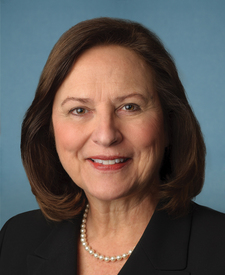
See how Deb Fischer actually votes — against your values.
DeepSyte scores Deb Fischer's record on the issues you care about — not party, not press releases. Take the 2-minute values quiz to see your personal alignment.
Sign in and take the values quiz to see how Deb Fischer's votes line up with your views.
Prediction track record
We haven't made any vote predictions for Deb Fischer yet. Predictions are generated for bills with tagged effects; they show up here as soon as the predict-votes job covers this rep's upcoming docket.
Consistency insights
Deb Fischer · statement ↔ vote record
41
Consistency score
Based on 5 data points across public statements and recorded votes · AI analysis of public records
118-hr-815·Mixed signal
Making emergency supplemental appropriations for the fiscal year ending September 30, 2024, and for other purposes.
35/100
What they said
Jul 22, 2026
Senator Fischer advocates for passage of the Sanctioning Russia Act, which would impose mandatory sanctions on Russia's political leadership, financial institutions, and energy sector to pressure Moscow to end its war against Ukraine.
Senator Fischer's statement advocates for passage of the Sanctioning Russia Act to impose mandatory sanctions on Russia and pressure Moscow to end its war in Ukraine. The bill voted on (HR 815) is a FY2024 supplemental appropriations act that provides funding for Ukraine assistance, Israel security, and Indo-Pacific allies. While both address support for Ukraine and allied nations against Russian aggression, Fischer voted NO on the passage of this appropriations bill despite her stated commitment to pressuring Russia through sanctions and supporting Ukraine's defense. The vote directly contradicts her stated position on advancing measures to counter Russian aggression.
Making emergency supplemental appropriations for the fiscal year ending September 30, 2024, and for other purposes.
35/100
What they said
Jul 22, 2026
Senator Fischer advocates for passage of the Sanctioning Russia Act, which would impose mandatory sanctions on Russia's political leadership, financial institutions, and energy sector to pressure Moscow to end its war against Ukraine.
Senator Fischer's statement advocates for passage of the Sanctioning Russia Act to impose mandatory sanctions on Russia and pressure Moscow to end its war in Ukraine. The bill voted on (HR 815) is a FY2024 supplemental appropriations act that provides funding for Ukraine assistance, Israel security, and Indo-Pacific allies. While both address support for Ukraine and allied nations against Russian aggression, Fischer voted NO on the appropriations bill despite publicly advocating for Russia sanctions legislation. This represents a direct contradiction on the shared specific question of supporting Ukraine against Russian aggression—the statement calls for action to pressure Russia, yet the vote rejected a bill that funded Ukraine assistance.
Senator Fischer opposes open borders and unrestricted immigration, arguing that secure borders and a controlled immigration system are necessary for national security and public safety. She contends that the U.S. already welcomes over one million immigrants annually and should maintain enforcement mechanisms.
The statement opposes open borders and unrestricted immigration, emphasizing border security and enforcement. The bill is a broad FY2024 appropriations measure covering multiple departments including Homeland Security, which funds border enforcement and immigration operations. Fischer's YES vote on this amendment is generally consistent with supporting border security funding, but the vote is procedural (amendment) rather than a direct passage vote on immigration policy, and the bill bundles appropriations across six departments. The specific amendment language is not provided, making it unclear whether it addressed immigration enforcement directly or another provision within the appropriations package.
Senator Fischer opposes open borders and unrestricted immigration, arguing that secure borders and a controlled immigration system are necessary for national security and public safety. She contends that the U.S. already welcomes over one million immigrants annually and should maintain enforcement mechanisms.
The statement opposes open borders and unrestricted immigration, emphasizing border security and enforcement. The bill is a broad FY2024 appropriations measure covering multiple departments including Homeland Security, which funds border and immigration enforcement operations. Fischer's YES vote on this amendment is generally consistent with supporting funding for immigration enforcement mechanisms, but the vote is procedural (amendment) rather than a direct passage vote on immigration policy, and the bill bundles appropriations across six departments. The specific amendment language is not provided, making it unclear whether this amendment directly addressed immigration enforcement funding or another provision within the appropriations bill.
Senator Fischer opposes open borders and unrestricted immigration, arguing that secure borders and a controlled immigration system are necessary for national security and public safety. She contends that the U.S. already welcomes over one million immigrants annually and should maintain enforcement mechanisms.
The statement opposes open borders and unrestricted immigration, emphasizing border security and enforcement. The bill is a broad FY2024 appropriations measure covering multiple departments including Homeland Security, which funds border and immigration enforcement operations. Fischer's YES vote on this amendment is generally consistent with supporting funding for immigration enforcement agencies, but the vote is procedural (amendment) rather than a direct substantive choice on immigration policy, and the bill bundles funding across six departments. The specific amendment language is not provided, making it unclear whether it addressed immigration enforcement directly or another provision within the appropriations package.
Pairs with ambiguous language and high uncertainty are withheld until more data is available. Procedural, cloture, and amendment votes are excluded — they don't cleanly signal substantive support or opposition.
Pro analysis
AI rep analysis — Pro
Get an AI-narrated read on Deb Fischer's full voting record against your stated values — aligned themes, conflicts, notable votes, and what to watch for.
We haven't extracted campaign positions for Deb Fischer yet. Once their campaign website or position pages are processed, this card will track what they said vs how they voted.
Crossing the aisle
No party-break passage votes recorded for Deb Fischer. Either they've voted with Republicans on every substantive passage vote in the corpus, or their tenure overlaps few high-threshold party-line votes so far.
Fischer Introduces Bipartisan Bill to Improve VA Hiring, Retention of High-Skilled Doctors
Position: Senators Fischer, King, and Blumenthal support legislation that would allow the VA Secretary to issue waivers permitting VA medical directors to exceed existing salary caps for physicians, enabling the VA to compete with private-sector compensation and improve recruitment and retention of doctors.
WASHINGTON – Today, U.S. Senators Deb Fischer (R-NE), Angus King (I-ME), and Richard Blumenthal (D-CT) introduced the bipartisan VA Salary Cap Waiver Adjustment Act to allow the U.S. Secretary of Veterans Affairs to issue waivers to VA medical directors allowing them to exceed existing salary caps for the hiring and retention of physicians.
"Hiring and retaining skilled physicians is a serious challenge within the VA and it needs to be addressed now,"Fischer said. "Giving the VA flexibility to retain medical professionals will help it compete with private-sector salaries and ensure veterans receive high-quality care. I thank Senators King and Blumenthal for their leadership, and I will continue working to support Nebraska's veterans."
"Our men and women in uniform served our country with patriotism and without conditions, and they deserve medical attention with a minimum of red tape," King said. "The VA Salary Cap Waiver Adjustment would allow VA facilities to have a more competitive salary structure that will maintain high levels of care for our veterans and reduce the odds that the VA lose doctors to higher paying opportunities elsewhere."
"VA's current salary cap is outdated and counterproductive — hindering the Department as it competes with the private sector to hire doctors," Blumenthal said. "Our bipartisan bill gives VA authority to raise physician salaries. As the cost of living continues to skyrocket, VA needs this authority to recruit and retain the best doctors around to serve veterans."
The VA Salary Cap Waiver Adjustment Act would allow the VA Secretary to issue as many waivers as necessary and give VA medical facilities the ability to compete with the salaries of private healthcare jobs.
This legislation is supported by Vietnam Veterans of America, the Veterans of Foreign Wars (VFW), Disabled American Veterans (DAV), the Wounded Warrior Project (WWP), and the American Legion.
The United States Congress passed, and the president signed the bipartisan Elizabeth Dole Act in December of 2024. This legislation allowed the VA to exceed salary caps for a limited number of highly trained physicians and for a limited time.
Last month, Fischer welcomed VA Secretary Doug Collins to the Omaha VA Medical Center, where they discussed this issue.
Permalink: https://www.fischer.senate.gov/public/index.cfm/2026/9/fischer-introduces-bipartisan-bill-to-improve-va-hiring-retention-of-high-skilled-doctors
Fischer Statement on House Passage of Russia Sanctions Bill
Position: Senator Fischer supports the Lindsey O. Graham Sanctioning Russia and Iran Act, which imposes mandatory sanctions on Russia's political leadership, financial institutions, and energy sector to pressure Moscow to end its war against Ukraine.
WASHINGTON – Today, U.S. Senator Deb Fischer (R-NE), a senior member of the Senate Armed Services Committee, issued the following statement after House passage of the Lindsey O. Graham Sanctioning Russia and Iran Act:
"Russia's financial backers must pay a price for enabling Putin's barbaric atrocities against sovereign Ukraine. I was proud to support this bill in the Senate and encouraged to see it pass the House. Now that it will soon become law, we can finally inflict decisive economic pressure on Putin's lifeline and work toward lasting peace."
Background
Fischer was an original cosponsor when the late Senator Lindsey Graham (R-SC) first introduced this legislation with Senator Richard Blumenthal (D-CT) in 2025. She was also an original cosponsor of the updated version when Senator Darline Graham (R-SC) introduced it on July 16, 2026.
On July 22, 2026, Fischer spoke on the Senate floor in support of the bill to tout its mandatory sanctions on Russia's political leadership, financial institutions, and energy sector — which will put economic pressure on Moscow to end Vladimir Putin's illegal war against Ukraine.
After championing the bill, Fischer applauded its passage by the full Senate in August.
Permalink: https://www.fischer.senate.gov/public/index.cfm/2026/9/fischer-statement-on-house-passage-of-russia-sanctions-bill
ICYMI: Fischer Urges Long-Term Funding For Golden Dome
Position: Senator Fischer advocates for long-term federal funding and development of the Golden Dome missile defense system, arguing it is necessary to defend U.S. homeland against strategic threats and to support allies in potential Pacific conflicts.
WASHINGTON – U.S. Senator Deb Fischer (R-NE), a senior member of the Senate Armed Services Committee (SASC), joined the Air and Space Forces Association's 2026 Air, Space & Cyber Conference to discuss why the Golden Dome missile defense shield is urgently needed to bolster America's homeland defense.
Fischer – who chairs the SASC Strategic Forces Subcommittee – was joined by Gen. Gregory Guillot, commander of U.S. Northern Command and North American Aerospace Defense Command, and Gen. Michael Guetlein, director of Golden Dome for America.
Watch the full discussion here or by clicking the image above.
On congressional support for Golden Dome:
"There is still a lot of work that has to be done. We've always had really strong bipartisan support on the Armed Services Committee when it comes to working together to identify threats and meet the needs that the Department and the military have presented to us. …
"First of all, we need to get the information that we need, but we also need to have a better understanding of just what Golden Dome involves.
"I think a lot of times people forget that in our 2024 NDAA, which came out of the Senate Armed Services Committee, we had a provision to do a study on a layered missile defense system. When President Trump came into the White House, he made it Golden Dome, but it started within Congress. I think that's important to remember because it shows you the level of commitment that's there.
"As we move forward, we're going to need better information. We were talking backstage a little bit about [Congressional Budget Office] scores and how unrealistic some of those can be sometimes. I think that's due to the fact that there isn't a clear understanding of this layered defense that we're looking at when it comes to defending our homeland."
On whether the current plans for Golden Dome are 'good enough':
"Well, right now we aren't defending [our homeland], so that's not good enough.
"Sure, we can defend against a massive strategic attack on this country. We can deter. That's our defense. …
"We need to present our president with options, and we need to be able to defend our homeland. That's when we have a good enough defense of our homeland, so we don't get into a situation where we're looking at massive destruction."
On Golden Dome's role in a potential future Pacific conflict:
"I personally believe it's better to have friends. It's better to have allies, and we need to make sure they understand that we're there for them as well. When we work together, we're stronger.
"I think it's also better that we inform the people of this country to a greater extent about some of the threats we face.
"It was very telling when the Chinese balloon came over the country and we saw the reaction of citizens here in the United States. Some of the reactions I heard in Nebraska and elsewhere in the country as I traveled were: 'When was it detected? Why didn't you just take it down right away? What was on it?'
"… They should also be aware that we are working to make sure this country is defended and that we do have the information.
"… I've pushed, as a member of the Armed Services Committee, to declassify some material so people have a better understanding. But we also want people to be assured that this country can and will defend itself.
"We will not back off from that. … We continue to look at current assets that we can use, but also at what's ahead for us with new technology. What can we tap into in order to meet what these two generals have discussed as the needs of the country to defend against anyone who has mischief in mind?"
On sustained federal funding for Golden Dome:
"To sustain a commitment through different administrations, different majorities, and different changes in our country — we've seen fallout from that across the board in the past.
"I'm worried about it. I'm worried about it right now, to be honest with you, when it comes to being able to fund what we need.
"I'm a supporter of the $1.5 trillion [defense budget]. That's what we need.
"I'm also a supporter of it going through regular order, going through an appropriations process, having committee and subcommittee hearings, having transparency, being on the record with your votes, and laying it out so that an administration can then follow it, and you can see that commitment."
On educating the public on why Golden Dome is needed:
"We have to have not just the buy-in from Congress to support our military and the defense of this country, but the buy-in from the people of this country as well.
"That goes back to having them understand the threats, understand the needs, and understand the resources that are being committed to address all those needs — and having it be transparent and accountable."
Permalink: https://www.fischer.senate.gov/public/index.cfm/2026/9/icymi-fischer-urges-long-term-funding-for-golden-dome
Fischer Votes to Advance Farm Bill, Secures Year-Round Sale of E15
Position: Senator Fischer voted to advance the Farm Bill out of committee and secured inclusion of year-round E15 fuel sales, along with provisions on tribal consultation, conservation program oversight, and nutrition programs.
WASHINGTON – Today, U.S. Senator Deb Fischer (R-NE), a member of the Senate Agriculture Committee, voted to advance the Farm Bill out of committee. The legislation passed with a vote of 12-11 and includes several of Fischer's priorities.
"We are one step closer to getting a full Farm Bill done for producers in Nebraska, and across the country," Fischer said. "I am proud to have led the effort to get E15 included in this strong, bipartisan bill, and secure many of my top priorities for the ag industry and rural America. I thank Chairman Boozman for his leadership and unwavering support for farmers and ranchers who are in dire need of a modern Farm Bill."
The Farm Bill passed out of committee today includes several of Fischer's priorities:
Increasing Tribal Input on Nutrition Act
Amendment to allow USDA to prevent conservation program dollars from going to foreign adversary companies of concern
Permalink: https://www.fischer.senate.gov/public/index.cfm/2026/9/fischer-votes-to-advance-farm-bill-secures-year-round-sale-of-e15
After Fischer Push, NTIA Announces New Round of Broadband Funding
Position: Senator Fischer supports the BEAD program as essential for rural broadband deployment in Nebraska and advocates for flexibility in using unobligated BEAD funds for additional purposes such as precision agriculture technologies.
WASHINGTON – Today, U.S. Senator Deb Fischer (R-NE), a senior member of the Senate Commerce Committee, issued the following statement after the National Telecommunications and Information Administration (NTIA) announced another round of Broadband Equity, Access, and Deployment (BEAD) Program funding:
"The BEAD program is essential to getting all of Nebraska connected to broadband. I have worked for years to help build this program into something that can truly help rural areas. I'm thankful NTIA answered our call to make additional funding available to serve unconnected locations. We need to keep these funds working for Nebraskans, and I will be working hard to allow unobligated BEAD funding to be utilized for other critical purposes like precision ag technologies."
In the announcement, NTIA states this round of funding is intended to serve locations that remain unserved after the initial deployment round. In the initial deployment, only around $44.5 million of Nebraska's allocation was spent, leaving approximately $340 million to be spent.
NTIA's announcement comes after Fischer's numerous letters and close work with the U.S. Department of Commerce to deploy additional funding:
Permalink: https://www.fischer.senate.gov/public/index.cfm/2026/9/after-fischer-push-ntia-announces-new-round-of-broadband-funding
ICYMI: Fischer Makes Case for Strong, Modern U.S. Nuclear Deterrent on Atlantic Council Podcast
Position: Senator Fischer advocates for modernization and strengthening of U.S. nuclear forces, including the Sentinel ICBM program, increased B-21 bomber procurement, and Columbia-class submarine expansion, to maintain a credible nuclear deterrent against China and Russia and assure allies.
WASHINGTON – U.S. Senator Deb Fischer (R-NE), a senior member of the Senate Armed Services Committee (SASC), joined the Atlantic Council's "So What's the Strategy?" podcast to share her vision for strengthening America's nuclear deterrent amid growing threats from China and Russia.
During the conversation, Fischer – who chairs the SASC Strategic Forces Subcommittee – outlined the need to modernize U.S. nuclear forces, maintain a credible nuclear triad, and ensure America has the capabilities necessary to deter its adversaries and protect its allies.
Watch the full discussion here or by clicking the image above.
On the cost of nuclear modernization:
"Why spend so much? What's our security worth? That's what it boils down to.
"What risks are we willing to take as a country, as a world, if the United States doesn't follow through and continue our modernization? Can we meet those threats?
"It's a very small percentage of our defense spending in this country. But as I said earlier, it is the bedrock of our security. And it's not just for us. We also offer a secure nuclear umbrella for our allies and partners. That keeps the world safer. We don't see nuclear proliferation around the world because of that. It's called deterrence for a reason.
"We don't ever want to have to use a nuclear weapon, but our adversaries need to know that we have a safe, credible, and secure triad, and we will use it if it becomes necessary."
On nuclear deterrence and assurance:
"We always want our adversaries—we want everyone—to wake up every morning and say, 'Not today. We are not going to do anything against the United States. Not today. Too risky.'"
On the type of nuclear capabilities the U.S. needs:
"I believe we have certain capabilities that are the base of our deterrence. Whether that's our ICBMs—the Sentinel program—that's a program that has to happen. It has had some bumps in the road, but we have General White now … to handle that. We established that position to make sure whoever was in charge of that program, along with the bombers, would have a direct line to the secretary and could make things happen faster.
"The Sentinel program is obviously our land-based leg. That has to remain strong. It's going to give the president more options once it is installed and able to perform. …
"Right now … we have a contract for 100 B-21 bombers. We've had every STRATCOM commander say that's not enough. And it's not enough. Whether it's 150 or, now they're talking about 200, that's another important leg of the triad.
"These bombers have to cover not just STRATCOM's needs but also [PACOM's] needs in a more conventional sense because of the capabilities they have.
"Then, when we look at our subs, we're really focused on the Columbia class to make sure that moves ahead. There's a good argument to be made—and I think we ought to investigate it—that we should probably have more when you look at the maintenance required. That applies to the bombers as well.
"When you look at maintenance time, especially on submarines, and we're facing two peer adversaries who also have triads—land-based missiles, bombers, and subs—we need to make sure that's covered.
"We need more shipbuilding. We need to be able to look at new, more regional options that a president could tap into.
"We heard many years ago in the Senate about Russia's policy to 'escalate to de-escalate.' They never thought, with the size of the weapons the United States has, that we would ever respond. It lowered the credibility of our deterrence. …
"We want to make sure we have what we need to offer the president of the United States options that keep this country and our allies safe."
On the president's $1.5 trillion defense budget request:
"I applaud the president for putting that number forward. I think it's a firm number that addresses many of the threats we have.
"You can look at things like hypersonics. You can look at things like Golden Dome, which I would point out we were able to get into the 2024 NDAA for FY 2025—the framework for the idea that we needed this layered defense system with radars, satellites, and interceptors.
"That came from within Congress. It came from a bipartisan group of senators. I'm very pleased the president picked up on that and named it Golden Dome.
"That is what we need to recognize the threats to our homeland. The missile defense system we need for this country has to be bolstered, and having Golden Dome move forward will help with that.
"We had $24 billion … last year. That's a start, but it's going to take sustained commitment and appropriations to get that done."
"…To me, the lack of [consistent] funding and the lack of certainty are concerns.
"…We're looking at CRs, which are devastating to our defense and national security.
"It's important that we focus on regular order and on working together again in a bipartisan way to make sure we can fund what we need … to keep this country safe."
"I think arms control is important… But let's look at history.
"Russia has never been steady in its support of any treaty… They ignore it or they pull out. They pulled out of New START in 2023…
"China has never participated in any talks and, as far as I know, publicly has never given any indication that they would participate in talks.
"In fact, I was with a small group of senators the week before President Trump went to China, and we met with a number of officials. I asked about arms control. I think that might have thrown them a little bit, but I asked about it.
"Their idea of arms control is that the United States should totally get rid of what we have, and then they'll be happy to talk. Why would we do that? We would make ourselves vulnerable.
"So I believe the strongest position we can take is to continue to strengthen what we need to meet the threats.
"Hopefully, we can engage in arms control, but it has to be with Russia and China. It can't just be with one or the other because all that does is weaken us."
"… If the Chinese didn't want to enter into discussions with Russia and the United States, they still need to enter into discussions with us and have those two tracks move side by side.
"But I think having all three together would be the best way to have a solid arms control treaty come out of it. I don't see that happening."
On the credibility of the U.S. nuclear umbrella for our allies:
"I think it's extremely important for the security not just of our country, but around the world, that we continue to provide that umbrella to our allies.
"Let's not forget that NATO is a nuclear alliance. That's important for our allies to know—that we will continue to provide that.
"It's important that our EUCOM commander is also the Supreme Allied Commander Europe because of that nuclear component in NATO.
"But I also hope it emboldens our allies to step forward, which they are doing in NATO and Europe, and provide more for their own security in their regions.
"It's difficult for the United States. It's expensive for the United States to be everywhere.
"So, when we have our allies in Europe and our partners and friends in the Pacific willing to work with us to provide security in those regions, that only makes America stronger and more secure.
"I believe we have to continue developing and strengthening those relationships."
Permalink: https://www.fischer.senate.gov/public/index.cfm/2026/9/icymi-fischer-makes-case-for-strong-modern-u-s-nuclear-deterrent-on-atlantic-council-podcast
Fischer in the Lincoln Journal Star: Take advantage of this real solution to paid family leave
Position: Senator Fischer advocates for her Paid Family and Medical Leave Tax Credit as a voluntary, market-based incentive for employers to offer paid leave, emphasizing it as an alternative to government mandates and highlighting recent Treasury guidance and SBA funding to increase awareness and utilization.
In case you missed it: Senator Deb Fischer (R-NE) penned an op-ed in the Lincoln Journal Star encouraging Nebraskans to capitalize on her Paid Family and Medical Leave Tax Credit, made permanent through the Working Families Tax Cuts. Fischer also highlights guidance recently released from the U.S. Department of Treasury on how business owners can claim this credit to offer paid leave to more employees.
Imagine working for a mom-and-pop store in the Haymarket and you're expecting a new baby or need to care for a sick family member. Your boss would like to offer you paid leave to care for your family, but as a small business, the margins are thin.
Your boss wants to do the right thing, but they can't afford it.
This had been the reality for small business owners and their employees for decades — until 2017 when I created the nation's first-ever paid family and medical leave policy.
My Paid Family and Medical Leave Tax Credit allows employers to claim a general business tax credit covering up to 25% of the wages they pay employees who are out on parental or family medical leave. Importantly, this is not a government mandate. It is a voluntary incentive.
I designed the credit with an income cap to ensure that it helps the workers who need it the most: middle-income and hourly workers. That cap adjusts every year. And the more generous the employer is, the more help they get.
Last year, through the Working Families Tax Cuts passed by Congress, we made my tax credit permanent. Now, businesses of all sizes can build paid leave into long-term benefit plans without wondering whether the incentive will disappear. Washington should make it easier — not harder — for a small business to stand by an employee when their family needs them most.
A tax credit only helps if employers know it exists and apply for it. That's why, this year, I used my role on the Senate Appropriations Committee to secure $1 million in federal funds for the U.S. Small Business Administration to help increase awareness of the credit and help employers know how to utilize it. And this month, the U.S. Treasury issued new guidance showing employers how to claim the credit.
This guidance explains additional methods that businesses can receive a tax break if they offer this paid leave to their employees. My original tax credit was based on wages employers pay employees while on leave. Through the Working Families Tax Cuts, I expanded this to also cover insurance policies purchased by employers to cover paid medical and family leave. We are making it even more attainable for businesses of all sizes to offer this important benefit to workers.
I am grateful to Secretary Scott Bessent for working closely with me on this. You can find the guidance at the following link: https://www.irs.gov/pub/irs-drop/n-26-28.pdf.
Now, we need to make sure employers know this credit is available. If you own a business, see whether you qualify. If you work for one, make sure your employer knows this option exists.
No small business owner should have to choose between doing the right thing for their employee and keeping their storefront open. And no worker should be forced to choose between receiving a paycheck and taking care of their family. This tax credit helps ensure they don't have to.
Permalink: https://www.fischer.senate.gov/public/index.cfm/2026/8/fischer-in-the-lincoln-journal-star-take-advantage-of-this-real-solution-to-paid-family-leave
Position: Senator Fischer introduced legislation to establish federal vehicle safety standards as the nationwide baseline, preventing state-level civil litigation from imposing stricter requirements on vehicles that comply with federal standards. The bill would preempt certain lawsuits while preserving claims for manufacturing defects, federal non-compliance, and breach of warranty.
WASHINGTON – U.S. Senator Deb Fischer (R-NE) has introduced the Uniform Vehicle Safety Standards Act to ensure federal vehicle safety standards set by the National Highway Traffic Safety Administration are the nationwide standards.
This legislation comes amid an increase in costly civil lawsuits where damages are awarded based on arbitrary standards, even when vehicles and equipment are compliant with federal standards. This has resulted in an increase in insurance costs and higher trucking prices, which are passed on to consumers.
"These decisions are not being driven by the law, and we need to set the record straight," Fischer said. "Federal standards are drafted for the safety of drivers and others on the road. These regulations should be consistent across states, and consumers should not be forced to pay more because of unfair practices that raise transportation costs."
The Uniform Vehicle Safety Standards Act would prevent litigation when the safety component at question is fully compliant with Federal Motor Vehicle Safety Standards (FMVSS). Plaintiffs could still bring claims for manufacturing defects, failure to meet FMVSS, breach of warranty, or other independent legal violations.
Representative Mike Flood (NE-01) has introduced companion legislation in the U.S. House of Representatives.
The bill is supported by the American Trucking Associations, the Alliance for Automotive Innovation, the International Foodservice Distributors Association, the Truck Trailer Manufacturers Association, the Truckload Carriers Association, the Truck Renting and Leasing Association, American Property Casualty Insurance Association, the American Bus Association, the National Tank Truck Carriers, the National Association of Trailer Manufacturers, the National Motor Freight Traffic Association, the National Association of Mutual Insurance Companies, the Transportation Intermediaries Association, the Nebraska Trucking Association, Werner Enterprises, and Timpte.
Alex Rosen, Senior Vice President, American Trucking Associations, said, "When NHTSA establishes a federal safety standard, manufacturers and motor carriers should be able to rely on that determination. Allowing lawsuits to effectively impose equipment mandates that diverge from federal requirements creates uncertainty, drives up costs, and threatens the uniformity that keeps our nation's supply chain moving safely and efficiently. The trucking industry applauds Senator Fischer for introducing this commonsense legislation to affirm NHTSA's role as the nation's expert regulator for motor vehicle safety standards. If NHTSA, after evaluating the available evidence through its rulemaking process, determines that a particular standard strikes the appropriate balance to maximize motor vehicle safety, that expert determination should carry greater weight than the hindsight judgments advanced by profit-seeking trial attorneys in individual courtrooms."
Alliance for Automotive Innovation said, "This is a commonsense bill from Sen. Fischer that makes it clear: if automakers meet the government's mandatory Federal Motor Vehicle Safety Standards -- and all automakers do -- then they shouldn't also be targeted with lawsuits and litigation."
Kent Grisham, President and CEO, Nebraska Trucking Association, said, "Senator Fischer's record of leadership on critical transportation issues is legendary. She is a true hero to trucking. The Uniform Vehicle Safety Standards Act is another example of her commitment to maintaining a strong transportation network and ensuring that carriers can continue investing in the people, equipment, and technologies that improve roadway safety. Nebraska's trucking industry plays a vital role in supporting agriculture, manufacturing, retail, construction, and virtually every sector of our state's economy. Senator Fischer knows that when manufacturers and operators have demonstrably adhered to all applicable laws, regulations, and recognized safety practices, they should not face unreasonable liability based on hindsight or inconsistent standards imposed after the fact. Passing this legislation will establish safeguards against such nonsense in our courts."
Ryan Streblow, President and CEO, National Tank Truck Carriers, said, "NTTC strongly supports the Uniform Vehicle Safety Standards Act, and commends Senator Fischer and Representative Flood for their leadership to provide much needed relief to the commercial trucking industry - the backbone of the American economy," said Ryan Streblow, President & CEO of National Tank Truck Carriers. "The American motoring public rightfully expects truck manufacturers to be built to high federal safety standards, but it is unreasonable to hold any industry accountable to 50 standards created through 50 state courts. The National Highway Traffic Safety Administration produces world-leading safety regulations, and state suits should not be allowed to supplant federal standards."
Jake Jacoby, President and CEO, Truck Renting and Leasing Association, said, "TRALA strongly supports the Uniform Vehicle Safety Standards Act, which will protect truck rental and leasing companies from unreasonable lawsuits involving vehicles that fully comply with federal safety standards. This legislation will preserve a consistent national framework, reduce costly litigation, and prevent optional safety equipment from being treated as mandatory through state-by-state court decisions."
Jim Mullen, President, Truckload Carriers Association, said, "The Truckload Carriers Association and its membership proudly support the Uniform Vehicle Safety Standards Act, as it reinforces the principle that there should be one national standard for vehicle safety. Motor carriers that comply with federally established safety requirements should not be subjected to inconsistent lawsuits seeking to impose standards beyond those adopted by the National Highway Traffic Safety Administration. Recent litigation in the trucking industry has demonstrated the importance of protecting companies that comply with federal safety regulations, providing greater certainty for businesses operating across state lines. By reducing unnecessary litigation costs and preventing conflicting court decisions, this legislation strengthens interstate commerce while preserving the integrity of the federal vehicle safety framework. The truckload industry believes safety is best advanced through clear, uniform federal standards that apply consistently nationwide, rather than through a patchwork of differing legal expectations imposed through litigation."
Fred Ferguson, President and CEO, American Bus Association, said, "Motorcoaches are interstate by nature, and our industry depends on clear, consistent federal vehicle safety standards. Operators and manufacturers should be held to the rigorous safety requirements established by NHTSA, but they should not face a patchwork of after-the-fact lawsuits that effectively impose different vehicle equipment standards from one state to the next. The Uniform Vehicle Safety Standards Act provides needed certainty while preserving NHTSA's central role in establishing and updating vehicle safety standards. The American Bus Association thanks Congressman Flood and Senator Fischer for their leadership and is proud to support this commonsense legislation.
Jimi Grande, Senior Vice President of Federal and Political Affairs, National Association of Mutual Insurance Companies, said, "Legal system abuse, including excessive litigation and nuclear verdicts, is making things more expensive across the economy for every American. NAMIC applauds Congressman Flood and Senator Fischer for leading on this important issue to provide much needed legal certainty for truckers, insurers, and the consumers who rely on them."
Chris Burroughs, President and CEO, Transportation Intermediaries Association, said, "We are pleased to support this bill which will close this loophole and ensure that standards are set at the federal level, providing much-needed certainty and enhancing safety. Certainty is essential to keeping America's roads safe, and under the current legal framework, motor vehicle manufacturers remain exposed to civil liability at the state level even if they have met the applicable federal safety standards."
Mala Parker, Senior Vice President of Government and Public Affairs, International Foodservice Distributors Association, said, "IFDA thanks Senator Fischer and Representative Flood for introducing the Uniform Vehicle Safety Standards Act. Foodservice distributors operate some of the largest commercial fleets in the country and invest heavily to ensure federal motor vehicle safety requirements are met. This bill gives our industry much needed legal certainty by creating uniformity among safety requirements while keeping our nation's roads safe."
Debbie Sparks, Executive Director, said, National Motor Freight Traffic Association, said, "NMFTA supports the Uniform Vehicle Safety Standards Act of 2026. A single, uniform federal safety standard, rather than a patchwork of common law verdicts second guessing manufacturers who met that standard in good faith, restores consistency to how motor vehicle safety compliance is treated across state lines. We appreciate Senator Fischer and Congressman Flood's attention to this issue."
Nathan Meisgeier, President and Chief Legal Officer, Werner Enterprises, said, "By establishing a uniform standard, this legislation shields carriers from frivolous lawsuits while ensuring motor vehicle manufacturing upholds established, federally mandated safety requirements for all drivers."
Permalink: https://www.fischer.senate.gov/public/index.cfm/2026/8/fischer-introduces-legislation-addressing-excessive-trucking-lawsuits
Fischer Statement on Democrats Blocking the Farm Bill in Committee
Position: Senator Fischer opposes the Democratic committee members' vote against advancing the Farm Bill, arguing that the bill includes bipartisan provisions on E15, SNAP, food banks, rural health, water infrastructure, and broadband that benefit farmers, ranchers, and rural communities.
WASHINGTON – Today, U.S. Senator Deb Fischer (R-NE), a member of the Senate Agriculture Committee, issued the following statement after Democrats on the committee voted against advancing the Farm Bill:
"It is disgraceful Democrats refused to advance the bipartisan Farm Bill out of committee. First, Senate Democrats refused to stand up for our service members by not moving the bipartisan NDAA. Now, they're turning their backs on farmers, ranchers, and rural America. We worked with them to secure bipartisan support for E15 and offered a compromise on SNAP cost share concerns.
"What did the Democrats do? They voted against every policy they claim to care about: funding food banks, improving rural and mental health services, increasing access to safe drinking water, and expanded broadband connectivity.
"This is a massive disservice to producers and communities across the country. I certainly hope they wake up and realize the pain this will inflict on American families."
Permalink: https://www.fischer.senate.gov/public/index.cfm/2026/8/fischer-statement-on-democrats-blocking-the-farm-bill-in-committee
Position: Senator Fischer voted for and championed the Sanctioning Russia Act, which imposes mandatory sanctions on Russia's political leadership, financial institutions, and energy sector to pressure Moscow to end its war against Ukraine.
WASHINGTON – Today, U.S. Senator Deb Fischer (R-NE), a senior member of the Senate Armed Services Committee, issued the following statement after the Senate passed and she voted for the Sanctioning Russia Act, which she championed as an original cosponsor:
"The Kremlin's war machine runs on the money it makes from selling cheap oil and gas to countries like China, India, and Brazil who then profit by reselling Russian energy at a markup. It is long overdue for these enablers to pay a price. The Sanctioning Russia Act will pressure the world's largest purchasers of Russian energy to reduce their dependence on Moscow. I urge the House to take it up swiftly and send it to the president's desk."
Fischer recently spoke on the Senate floor in support of the bill to tout its mandatory sanctions on Russia's political leadership, financial institutions, and energy sector — which will put economic pressure on Moscow to end Vladimir Putin's illegal war against Ukraine.
Fischer was an original cosponsor when the late Senator Lindsey Graham (R-SC) first introduced this legislation with Senator Richard Blumenthal (D-CT) in 2025. She was also an original cosponsor of the updated version when Senator Darline Graham (R-SC) introduced it on July 16, 2026.
Permalink: https://www.fischer.senate.gov/public/index.cfm/2026/8/fischer-votes-for-sanctioning-russia-act
Source: GDELT 2.0 GKG, filtered to a curated list of national outlets. Inclusion is not endorsement; opinion pieces and reported news are mixed.
Recent stock activity
Periodic transaction reports filed under the STOCK Act — disclosed by the rep, sourced from public filings.
No disclosed trades on record.
Source: open-data mirrors of the Senate eFD and House Clerk financial-disclosure systems. Disclosure within 30 days of trade is required by law (45 for spouse/dependent trades).
Top PAC donors · 2026 cycle
Political action committees that gave the most to this rep's principal campaign committee this cycle. PAC giving is direct organizational support — industry, ideological, or leadership.
3.REINVENTING A NEW DIRECTION POLITICAL ACTION COMMITTEEIdeological1 contributionPolitical action committee with a generic reform-oriented name — specific policy positions and affiliations not inferable from the name alone.AI · low$10,000
4.NEBRASKA SANDHILLS PAC1 contribution$10,000
5.TOMORROW IS MEANINGFUL PAC1 contribution$10,000
6.THOMPAC1 contribution$10,000
7.BLUEGRASS COMMITTEELeadership1 contributionMember-of-Congress leadership PAC affiliated with Senate Minority Leader Mitch McConnell. Directs contributions to Republican candidates and allied party committees.AI$10,000
8.OORAH PAC1 contribution$10,000
9.LETS GET TO WORK PACLeadership1 contributionLeadership or member-affiliated PAC — specific positions not clearly inferable from the name alone.AI · low$10,000
10.DENALI LEADERSHIP PAC1 contribution$10,000
Source: OpenFEC (api.open.fec.gov) Schedule A receipts where contributor type is “committee.” Aggregated by contributing committee. Self-transfers from joint-fundraising / victory committees are excluded.
Top individual contributors · 2026 cycle
Itemized individual contributions over $200 to this rep's campaign committee, aggregated by donor employer. PAC giving is shown above; this section is people, not organizations.
1.MARQUIS MANAGEMENT$30,000
2.WEXFORD CAPITAL$28,000
3.SELF$13,100
4.CQUENCE HEALTH GROUP$7,000
5.HAWKINS CONSTRUCTION$7,000
6.1ST FINANCIAL BANK USA$7,000
7.KANA SYSTEMS$7,000
8.UNION PACIFIC$7,000
9.ERGON$7,000
10.SAMPSON CONSTRUCTION$6,600
Source: OpenFEC Schedule A receipts where contributor type is “individual,” aggregated by the donor's self-reported employer. This is a geographic / industry correlation, not a corporate endorsement.