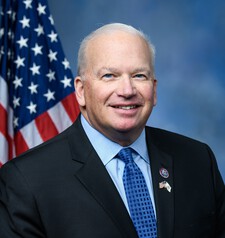
See how Scott Fitzgerald actually votes — against your values.
DeepSyte scores Scott Fitzgerald's record on the issues you care about — not party, not press releases. Take the 2-minute values quiz to see your personal alignment.
Sign in and take the values quiz to see how Scott Fitzgerald's votes line up with your views.
Prediction track record
How often we called Scott Fitzgerald's passage votes correctly, from their stated positions on each bill's tagged topics. Excludes “unclear” calls and abstentions.
To prohibit the disclosure of records by the Secretary of Housing and Urban Development of individuals for the purposes of immigration enforcement, and for other purposes.
No paired statements and votes yet for Scott Fitzgerald
We haven't yet found statement/vote pairs on the same topic for Scott Fitzgerald. This usually means either the rep hasn't taken public positions on bills that have come to a passage vote, or those bills haven't been tagged yet. The checker runs as new press releases and votes come in.
Pro analysis
AI rep analysis — Pro
Get an AI-narrated read on Scott Fitzgerald's full voting record against your stated values — aligned themes, conflicts, notable votes, and what to watch for.
We haven't extracted campaign positions for Scott Fitzgerald yet. Once their campaign website or position pages are processed, this card will track what they said vs how they voted.
Crossing the aisle
Passage votes where Scott Fitzgerald broke ranks with ≥75% of Republicans. Threshold catches substantively partisan splits; unanimous-ish or close votes are excluded.
Rep. Fitzgerald Introduces Package of Housing Legislation to End the GSE Conservatorship & Help Fix America's Housing Supply Crisis
Position: Rep. Fitzgerald advocates for ending the GSE conservatorship of Fannie Mae and Freddie Mac through a statutory path that increases private-sector risk sharing and capital requirements, and supports legislation to expand affordable construction financing for middle-class housing development.
WASHINGTON, DC – Today, Congressman Scott Fitzgerald (WI-05) introduced three pieces of legislation aimed at fixing the housing supply crisis in the United States: the Sustainable Homeownership Act, the Working Families Home Construction Act, and the Home Affordability Through Mortgage Simplification Act.
The Sustainable Homeownership Act creates a statutory path out of conservatorship for Fannie Mae and Freddie Mac. It also increases private-sector risk sharing, limits risky balance-sheet growth, and protects equal access for small lenders. The broader goal is to move the housing finance system away from indefinite government control and toward a more transparent, better-capitalized, private-capital-backed structure. The bill also addresses affordability concerns by tying conforming loan limit growth more closely to household income and by permitting certain enterprise funds to support housing supply initiatives.
“Fannie Mae and Freddie Mac have remained in conservatorship since the 2008 financial crisis, and Congress should establish clear guardrails for a more sustainable housing finance system,” said Congressman Fitzgerald. “The bill locks in conservative reforms that have been done administratively, brings more private capital into the mortgage market, and protects taxpayers from future bailouts.”
Background: Fannie Mae and Freddie Mac remain central to the housing finance market, but their long-running conservatorships have left unresolved questions about taxpayer exposure, enterprise capital, private risk sharing, and the appropriate role of the government-sponsored enterprises in the mortgage market. Republican members have consistently raised concerns that the enterprises should operate with stronger capital, greater private-sector risk transfer, a narrower retained portfolio, and clearer limits on mission creep.
Read the bill text here.
The Working Families Home Construction Act allows Fannie Mae and Freddie Mac to purchase residential construction loans at a low interest rate that are subject to certain home price specifications, helping builders access gap financing needed to produce more middle-class housing. Builders across the country are ready to build, but too often cannot access affordable construction financing needed for land acquisition, infrastructure, site preparation, and other upfront development costs, making it difficult for developers to build anything but upper-income homes.
“By providing low-cost financing, my bill will incentivize developers to build the type of middle-class housing currently missing from the market,” said Congressman Fitzgerald. “I based this legislative effort on a similar program that has worked successfully in Washington County, Wisconsin. Fixing the housing shortage in the United States is one of the top issues we face.”
Background: The United States continues to face a shortage of attainable, owner-occupied housing, particularly for working and middle-income families. While much of the housing affordability debate focuses on mortgage rates and monthly payments, insufficient housing supply remains a central driver of elevated home prices. Builders frequently face financing gaps for development costs that are not well supported by traditional mortgage finance. These challenges are especially acute for smaller builders and locally supported projects aimed at producing entry-level or workforce housing. Existing federal housing finance tools primarily support completed mortgages rather than the construction pipeline needed to produce new homes.
Read the bill text here.
The Home Affordability Through Mortgage Simplification Act streamlines mortgage disclosure rules so lenders are not punished for minor, technical errors that do not harm borrowers, while preserving consumer restitution rights. The current Truth in Lending Act and Real Estate Settlement Procedures Act Integrated Disclosures (TRID) framework has become overly technical and can delay closings over small, non-material issues. The bill is designed to keep core borrower protections in place while making TRID more practical.
“By simplifying the TRID process, my bill reduces unnecessary closing delays, lowers compliance uncertainty, and helps make the mortgage process less costly and frustrating for homebuyers,” said Congressman Fitzgerald. “Any commonsense reforms that make it easier for hardworking Americans to buy a home should be a no-brainer.”
Background:The TRID mortgage disclosure rules were created to help borrowers understand loan terms and closing costs before closing. While the goal remains important, the current framework has become overly technical and can delay closings or create lender liability for minor errors that do not harm the borrower. Under current rules, small fee changes, settlement agent mistakes, or routine last-minute updates can require corrected disclosures, reset waiting periods, or trigger compliance violations even when the borrower’s total costs remain substantially accurate. This creates uncertainty for lenders, adds costs to the mortgage process, and can disrupt home purchases in an already difficult affordability environment.
Read the bill text here.
###
Rep. Fitzgerald Chairs Hearing on How Government Regulation Harms Airline Competition and Consumer Costs
Position: Rep. Fitzgerald argues that government regulation and intervention in the airline industry—including FAA slot systems, long-term gate leases, and DOJ merger enforcement—harm competition and consumer welfare. He contends that deregulation has historically benefited consumers through lower prices and more choices, and that government barriers to entry protect incumbent carriers at the expense of new competitors and consumers.
WASHINGTON, DC – Today, Congressman Scott Fitzgerald (WI-05), who serves as Chairman of the House Judiciary Subcommittee on the Administrative State, Regulatory Reform, and Antitrust, held a hearing entitled, “The 30,000 Foot View: Competition and Regulation in the U.S. Airline Industry.” Rep. Fitzgerald issued the following statement about the hearing:
“Annual airline passenger traffic has nearly quadrupled since the 1970s, and consumers now benefit from a range of choices, from the legacy airlines to the low-cost- and ultra-low-cost-carriers. This is all thanks to the Airline Deregulation Act of 1978.
“Unshackled from government regulation, what we saw over time was intense competitive pressure that pushed prices down and consumer choice up. But that pressure also led to a significant number of mergers, acquisitions, and bankruptcies.
“Between 1978 and 2005, 162 airlines filed for bankruptcy. Today’s airline industry, while certainly more accessible and more competitive, is also more concentrated than ever before. The Big Four air carriers—American, United, Delta, and Southwest—control nearly 80 percent of domestic airline travel.
“While the Airline Deregulation Act freed the airlines from the decrees of government boards, the government still occupies a major role in commercial aviation that often benefits the incumbents at the expense of new entrants. For example, at seven of the nation’s busiest airports, the Federal Aviation Administration (FAA) controls and distributes access to take-offs and landings through a slot system that often favors incumbent carriers.
“There are also long-term gate lease agreements that last for decades. In 2016, Delta signed a twenty-year lease agreement with the City of Atlanta for its airport. That lease agreement also stipulated that the City of Atlanta could not operate a second airport. These agreements create a significant barrier to entry for competitors seeking to gain a foothold at major airports. If a competitor can’t access a gate, it can’t compete for a slot.
“Consumers deserve a system where airlines compete freely and can innovate and grow, not a system where the government consistently puts its thumb on the scale to foreclose competition. Government-imposed barriers destroy competition, leaving consumers worse off.
“The most recent example of this was the proposed Spirit-JetBlue merger. In 2023, the Biden-Harris DOJ sued to block the proposed $3.8 billion merger. The DOJ claimed the merger would remove Spirit from the market and reduce competition. At the time, the proposed merger would have created the fifth largest airline domestically—with 10 percent market share—and increase competition against the Big Four.
“However, one year later, a federal judge in Massachusetts sided with the DOJ and blocked the deal. Spirit later filed for bankruptcy twice and ultimately shut down operations in May of this year. The blocked merger of Spirit-JetBlue offers a cautionary tale about government overregulation. By blocking the transaction, regulators prevented the market from testing whether a stronger competitor could emerge to challenge the industry's largest incumbents. At a minimum, the case demonstrates the importance of ensuring that antitrust enforcement promotes competition rather than merely preserving the status quo.
“Today, we had a constructive debate about the future of the airline industry. Our goal should be to remove unnecessary barriers to entry, encourage robust competition, and ensure that consumers, not regulators, are the ultimate beneficiaries of airline policy.”
Watch Congressman Fitzgerald's opening statement from the hearing:
Rep. Fitzgerald Chairs Judiciary Subcommittee Hearing on Sports Broadcasting Act as Rising Streaming Costs Are Hurting Consumers
Position: Rep. Fitzgerald argues that professional sports leagues, particularly the NFL, have abused their antitrust exemption under the Sports Broadcasting Act by signing exclusive streaming agreements that fragment viewing access and raise consumer costs, contrary to the original legislative intent to expand public access to games.
WASHINGTON, DC – Today, Congressman Scott Fitzgerald (WI-05), who serves as Chairman of the House Judiciary Subcommittee on the Administrative State, Regulatory Reform, and Antitrust, held a hearing entitled, “Examining the Sports Broadcasting Act.” Rep. Fitzgerald issued the following statement about the hearing:
“When the Sports Broadcasting Act was enacted in 1961, the rationale was simple: Congress believed that joint television agreements would help make games more widely available to the public, preserve the competitive balance among different teams, and keep the professional sports leagues financially viable. Sixty-five years later, it’s fair for this body to ask whether the professional sports leagues have kept up their end of the bargain. In my opinion, they have not, and sports fans are paying the price.
“Since 2021, the NFL and other professional sports leagues have stretched the bounds of their antitrust exemption to sign exclusive distribution agreements with streaming platforms, including Amazon Prime, Netflix, Peacock, and ESPN.
“Consumers who wish to follow their favorite teams increasingly find themselves paying for multiple services, navigating fragmented viewing arrangements, and facing higher overall costs. According to Fox News, access to all NFL games during the 2025 season cost the average sports fan at least $575, or upwards of $800 for those without existing subscriptions. Likewise, watching all in-market MLB games can cost consumers upwards of $500 annually, according to the news site Kiplinger.
“In 2024, a jury found the NFL guilty of violating antitrust law for colluding to limit consumer choice and charge supracompetitive prices for access to games through its Sunday Ticket platform. The jury awarded the plaintiffs more than $14 billion in damages. This ruling is currently on appeal, but regardless of the litigation's final outcome, the allegations themselves reflect a broader reality: the NFL has used its unique ability to coordinate among otherwise competing clubs to maximize revenue rather than expand consumer access.
“The Sports Broadcasting Act was enacted to expand access to sports broadcasting, not to facilitate exclusive streaming arrangements that force fans to pay more for less. In my view, the NFL has lost sight of the original purpose of the legislation.
“Today, we had a constructive debate about what reforms Congress should consider to ensure the marketplace works for consumers.”
Watch Congressman Fitzgerald's opening statement from the hearing:
Rep. Fitzgerald Votes to Pass the Secure America Act to Fully Fund ICE and CBP
Position: Rep. Fitzgerald supports full funding for ICE and CBP through the Secure America Act, arguing that these agencies need resources to enforce immigration laws and protect the country.
WASHINGTON, DC – Congressman Scott Fitzgerald (WI-05) issued the following statement after voting to pass S. 2, the Secure America Act.
“Today, I was proud to vote to fully fund the Department of Homeland Security, including ICE and CBP, through the reconciliation 2.0 process,” said Congressman Fitzgerald. “Republicans will never back down when it comes to border security. Democrats, on the other hand, have repeatedly voted against funding for ICE and CBP. Let us not forget that they shut down the entire Department of Homeland Security earlier this year because they refused to support the agencies responsible for enforcing our immigration laws. The partisan games officially end today with the passage of the Secure America Act, which secures long-term funding for ICE and CBP to ensure they have the resources they need to protect the American people.”
###
Rep. Fitzgerald Votes to Pass Legislation Supporting American Agriculture and National Security
Position: Rep. Fitzgerald supports H.R. 8646, an appropriations bill that funds agricultural programs, rural infrastructure, agricultural research, food safety inspections, and measures to restrict foreign ownership of U.S. farmland.
WASHINGTON, DC – Congressman Scott Fitzgerald (WI-05) issued the following statement after voting to pass H.R. 8646, the Agriculture, Rural Development, Food and Drug Administration, and Related Agencies Appropriations Act, 2027.
“America’s food security is national security, and this bill puts farmers, ranchers, and rural communities first,” said Congressman Fitzgerald. “Not only does this legislation strengthen our food supply chain, but it also invests in rural infrastructure, agricultural research, and food safety inspections that protect American producers and consumers alike. It also takes critical steps to crack down on foreign influence in U.S. agriculture and strengthens oversight of foreign-owned farmland to protect against threats from adversarial nations like China.”
###
Issues:Agriculture
Fitzgerald, Moolenaar, and Issa Introduce Legislation to Prohibit Adversarial Chinese Patents
Position: The release advocates for legislation that would prohibit U.S. patent issuance to entities identified as national security threats by the federal government, restrict their access to expedited patent examination programs, and render previously issued patents to such entities unenforceable.
WASHINGTON, DC – Today, Congressman Scott Fitzgerald (WI-05) introduced two pieces of legislation aimed at countering China’s influence on the U.S. patent system: the Prohibiting Adversarial Patents Act and the Foreign Adversary Patent Disclosure Act.
The Prohibiting Adversarial Patents Act, introduced alongside Chairman of the Select Committee on China John Moolenaar (MI-02) and Chairman of the House Judiciary Subcommittee on Courts, Intellectual Property, Artificial Intelligence, and the Internet Darrell Issa (CA-50), would prohibit the issuance of a U.S. patent to any person or entity who is identified to be a threat to U.S. national security pursuant to the Non-SDN CMIC List, the 1260H List, or the FCC’s Section 2 List. Any patent previously issued to companies on these lists would be unenforceable. This bill would also restrict such entities from participating in any expedited patent examination programs, including the USPTO’s Patent Prosecution Highway program.
Huawei—which has close ties with the Chinese government—ranked fourth in number of patents granted in the U.S. in 2025, despite its ban in U.S. communications infrastructure. ZTE, meanwhile, ranked fifth in number of U.S. patents related to 5G technology in 2024. These companies not only can bypass their ban by signing licensing agreements for its patents (Huawei reported more than $630 million in patent licensing revenue in 2025), but can also assert their patents in U.S. courts against American companies.
“The Chinese Communist Party seeks out U.S. patents not because it believes in the right to own one’s intellectual property, but because stealing American innovation is part of its economic plan,” said Select Committee Chairman John Moolenaar. “This legislation strengthens our laws against the CCP’s attempts to use lawfare to flood our judiciary with bogus patent lawsuits. No country abuses our open society and our legal system more than China, and that must be stopped.”
“Today, there is no greater threat to America’s economy, national security, or technological leadership than the Chinese Communist Party’s relentless effort to gain advantage over the United States by any means necessary — both legal and illegal,” said Chairman Issa. “For too long, companies tied to the CCP have been allowed to benefit from the protections of America’s patent system while actively undermining our interests. This legislation ensures that entities posing a threat to our national security cannot exploit the very intellectual property protections that were designed to reward innovation and strengthen America.”
“We commend Congressman Fitzgerald, and Chairmen Issa and Moolenaar for their steadfast leadership in defending American businesses and U.S. economic security,” said the High Tech Inventors Alliance (HTIA). “For too long, the U.S. has allowed entities identified as national security threats to amass and weaponize U.S. patents against critical domestic industries such as semiconductor manufacturing, digital infrastructure, and artificial intelligence. This legislation will help prevent foreign interests from abusing the U.S. patent system and using it as a tool for economic warfare against America.”
Congressman Fitzgerald also introduced the Foreign Adversary Patent Disclosure Act, which requires patent applicants to disclose the identity of each person with an ownership interest in the claimed invention who, in the previous five years: was employed by an entity owned or controlled by a foreign adversary; received funding from a state-affiliated research fund or talent recruitment program associated with a foreign adversary; or received any other financial incentive from a foreign adversary. The bill defines “foreign adversary” as the People’s Republic of China (PRC), Cuba, Iran, the Democratic People’s Republic of Korea (i.e. “North Korea”), or the Russian Federation.
According to data from the World Intellectual Property Organization (WIPO), China has filed more patent applications than any other country over the last decade, with more than 1.8 million patents filed in 2024. Similarly, in 2024, nearly 55% of all U.S. patent applications were filed by foreign residents, namely China, which filed a record 49,000 applications. Most of these patents are funded, wholly or in-part, by the Chinese Communist Party through its Made in China 2025 plan.
“The Chinese Communist Party has spent years exploiting the American economy to advance its own technological and military ambitions,” said Congressman Fitzgerald. “The Prohibiting Adversarial Patents Act closes the door on hostile foreign entities using our patent system to gain economic leverage and undermine our national security, and the Foreign Adversary Patent Disclosure Act brings much-needed transparency to foreign-backed influence in America’s innovation pipeline.”
These bills are part of a broader legislative effort by Rep. Fitzgerald to counter China’s growing economic and strategic influence.
###
Fitzgerald and Nunn Introduce TRAIN and BRIDGE Acts to Counter China’s Belt and Road Initiative and Economic Coercion
Position: The release advocates for two legislative measures to counter China's Belt and Road Initiative: the TRAIN Act, which would direct the State Department to help partner governments assess risks from Chinese investment, and the BRIDGE Act, which would establish a government-wide strategy to counter China's economic and political influence through BRI.
WASHINGTON, DC – Today, Congressman Scott Fitzgerald (WI-05) introduced two pieces of legislation focused on countering China alongside Congressman Zach Nunn (IA-03): the Thwarting Regional Adversary Investments Now (TRAIN) Act and the Build Responsible Infrastructure Development for the Global Economy (BRIDGE) Act.
The TRAIN Act directs the State Department to help non-adversarial partner governments analyze and mitigate legal and financial risks before accepting investment or lending from China or other foreign adversaries.
This effort comes as China continues to use the Belt and Road Initiative (BRI) to expand its economic and strategic influence through infrastructure lending, investment agreements, and long-term financing relationships with developing countries. Since BRI’s launch, more than 150 countries and 32 international organizations have signed cooperation documents with China, including countries across sub-Saharan Africa, Europe and Central Asia, and East Asia and the Pacific. The scale of BRI activity has continued to grow, with 2025 engagement reaching an estimated $213.5 billion in construction contracts and investments, and cumulative BRI engagement approaching $1.4 trillion since 2013.
The BRIDGE Act establishes it is U.S. policy to counter efforts by the People’s Republic of China (PRC) and the Chinese Communist Party (CCP) to build an integrated economic and political order under Beijing’s leadership that threatens U.S. national security, foreign policy, and economic interests. The bill requires the Secretary of State, in coordination with the Secretary of Commerce, the CEO of the U.S. International Development Finance Corporation, and other relevant agencies, to submit a report to Congress within 180 days assessing the scope of PRC and CCP efforts to use BRI to undermine the U.S.-led international order.
While the United States has taken steps to counter BRI through initiatives such as the Partnership for Global Infrastructure and Investment, the U.S. International Development Finance Corporation, and broader economic statecraft tools, the federal government still lacks a single, integrated, government-wide strategy focused specifically on countering BRI.
“China has turned the Belt and Road Initiative into a weapon of economic coercion, building leverage through debt, controlling critical infrastructure, and pulling countries deeper into Beijing’s orbit,” said Rep. Fitzgerald. “The TRAIN Act helps countries avoid walking into those traps in the first place, and the BRIDGE Act ensures the United States is better positioned to address this challenge.”
“China has spent decades buying up the ports, power grids, and trade routes of developing nations, trapping them in debt and rigging the global market in their favor,” said Rep. Nunn. “That hits Iowa directly: our farmers and manufacturers compete to feed and supply the world, and they can't win on a field Beijing is tilting in their own favor. Our bills would give the United States a coordinated, whole-of-government strategy to counter China's invest-to-control strategy of economic coercion, help partner nations walk away from a bad deal with Beijing, and keep the playing field fair for Iowa.”
These bills are part of a broader legislative effort by Rep. Fitzgerald to counter China’s growing economic and strategic influence, with additional measures expected to be introduced in the coming days.
###
Rep. Fitzgerald Statement on Passage of 21st Century ROAD to Housing Act to Lower Housing Costs and Boost Supply
Position: Rep. Fitzgerald supports the 21st Century ROAD to Housing Act, which he describes as modernizing HUD programs, improving financing access, and removing federal barriers to housing construction to increase supply and lower costs.
WASHINGTON, DC – Congressman Scott Fitzgerald (WI-05) issued the following statement in response to the House passage of the 21st Century ROAD to Housing Act.
“Solving America’s housing shortage starts with increasing supply and cutting the red tape that makes it harder to build,” said Congressman Fitzgerald. “This legislation takes important steps to modernize HUD programs, improve access to financing, and eliminate federal barriers that slow housing construction so developers and rural banks can deliver more housing for hardworking Americans. I’m proud to support a bill that will help lower housing costs nationwide.”
###
Rep. Fitzgerald Statement on House Passage of the Farm Bill
Position: Rep. Fitzgerald supports H.R. 7567, the Farm, Food, and National Security Act, citing its provisions for farm stability, dairy pricing transparency, credit access, conservation investment, and veteran agricultural training.
WASHINGTON, DC – Congressman Scott Fitzgerald (WI-05) issued the following statement after voting to pass H.R. 7567, the Farm, Food, and National Security Act.
“This legislation delivers the certainty Wisconsin farmers have been asking for. For too long, our producers have been expected to feed America while operating under outdated, short-term program extensions. A five-year farm bill gives rural communities the stability needed to plan, invest, and keep their operations strong for generations to come.
“In America’s Dairyland, this bill makes meaningful improvements by promoting transparency in milk pricing and updating critical safety nets. These reforms will ensure farmers are paid fairly and can better navigate swings in the market. This stability does not just support farmers. It protects the entire dairy supply chain and the rural communities who depend on it.
“This bill also supports Wisconsin’s broader agricultural economy by expanding access to credit, investing in conservation for working lands, and promoting American products in global markets. It includes commonsense provisions I have supported, like strengthening training opportunities for veterans entering agriculture and improving pricing systems for dairy producers.
“At its core, this bill is about supporting America’s farmers who are the backbone of this country. It prioritizes our economic security, food security, and national security.”
###
Issues:Agriculture
Rep. Fitzgerald Statement on Passage of Three-Year FISA Reauthorization
Position: Rep. Fitzgerald supports reauthorization of FISA Section 702 for three years, citing its importance for national security and noting that recent reforms including enhanced oversight and criminal penalties for misuse provide adequate safeguards. He also expresses opposition to a central bank digital currency, characterizing it as a threat to privacy and financial freedom.
WASHINGTON, DC – Congressman Scott Fitzgerald (WI-05) issued the following statement after voting to pass S. 1318, legislation reauthorizing FISA Section 702 for three years.
“FISA Section 702 is a critical intelligence tool that gives our national security professionals the information they need to make real-time decisions to keep Americans safe.
“After serious abuses of this authority, Congress took action to restore accountability through the Reforming Intelligence and Securing America Act (RISAA). Those reforms put stronger guardrails in place, increased oversight, and have already led to a significant drop in improper queries.
“The bill we passed today also includes new, critical reforms to build on the reforms in RISAA, including enhanced criminal penalties for knowingly and willingly violating query procedures, a U.S. Government Accountability Office (GAO) audit of targeting procedures under Section 702, and more. I’m also pleased this bill includes a ban on a central bank digital currency. A government-controlled digital dollar is a direct threat to privacy, financial freedom, and the American way of life.
“With those safeguards now in place and working as intended, along with these additional added reforms, this three-year reauthorization ensures our intelligence community can continue to protect Americans while maintaining the guardrails already in place to prevent future misuse of this authority.”
###
Source: GDELT 2.0 GKG, filtered to a curated list of national outlets. Inclusion is not endorsement; opinion pieces and reported news are mixed.
Recent stock activity
Periodic transaction reports filed under the STOCK Act — disclosed by the rep, sourced from public filings.
No disclosed trades on record.
Source: open-data mirrors of the Senate eFD and House Clerk financial-disclosure systems. Disclosure within 30 days of trade is required by law (45 for spouse/dependent trades).
Top PAC donors · 2026 cycle
Political action committees that gave the most to this rep's principal campaign committee this cycle. PAC giving is direct organizational support — industry, ideological, or leadership.
2.AMERICAN CRYSTAL SUGAR CO PACAgriculture4 contributionsPAC of American Crystal Sugar, a sugar-beet processing cooperative. Backs policies supporting domestic sugar production, farm subsidies, and tariff protections for the U.S. sugar industry.AI$20,000
3.THE HOME DEPOT INC PAC3 contributions$15,000
4.NATIONAL ASSOC OF MUTUAL INSURANCE CO. PAC3 contributions$15,000
5.PROSPERITY ACTION INC.3 contributions$15,000
6.MAJORITY COMMITTEE PACLeadership3 contributionsLeadership PAC — likely affiliated with a member of Congress or caucus group; specific positions not inferable from the name.AI · low$15,000
7.INNOVATION PAC2 contributions$10,000
8.CULAC THE PAC OF CREDIT UNION NATIONAL ASSOCIATIONFinance2 contributionsCredit union industry PAC — supports candidates and policies favoring credit union regulatory treatment, consumer lending, and financial services competition.AI$10,000
9.NATIONAL ASSOCIATION OF REALTORS POLITICAL ACTION COMMITTEEReal Estate2 contributionsTrade association PAC for U.S. real estate agents and brokers — backs candidates supporting property-rights protections, mortgage-lending access, and tax incentives for homeownership.AI$10,000
10.AMERICAN ISRAEL PUBLIC AFFAIRS PACIdeological2 contributionsFederal PAC arm of the American Israel Public Affairs Committee (AIPAC), established 2021. Backs candidates from both parties supporting U.S.-Israel security and economic ties.AI$10,000
Source: OpenFEC (api.open.fec.gov) Schedule A receipts where contributor type is “committee.” Aggregated by contributing committee. Self-transfers from joint-fundraising / victory committees are excluded.
Top individual contributors · 2026 cycle
Itemized individual contributions over $200 to this rep's campaign committee, aggregated by donor employer. PAC giving is shown above; this section is people, not organizations.
1.SELF$37,194
2.BGR GROUP$11,500
3.MILWAUKEE TOOL$9,163
4.CONTINENTAL PROPERTIES$7,000
5.ULINE$7,000
6.ABC$7,000
7.BLACKSTONE$7,000
8.TOLL FOUNDATION$7,000
9.AMERICAN BEVERAGE ASSOCIATION$7,000
10.ELLIOTT INVESTMENT MANAGEMENT$7,000
Source: OpenFEC Schedule A receipts where contributor type is “individual,” aggregated by the donor's self-reported employer. This is a geographic / industry correlation, not a corporate endorsement.