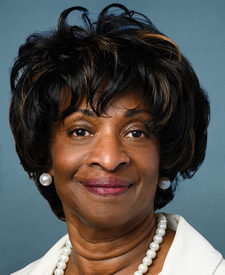
See how Valerie P. Foushee actually votes — against your values.
DeepSyte scores Valerie P. Foushee's record on the issues you care about — not party, not press releases. Take the 2-minute values quiz to see your personal alignment.
Sign in and take the values quiz to see how Valerie P. Foushee's votes line up with your views.
Prediction track record
How often we called Valerie P. Foushee's passage votes correctly, from their stated positions on each bill's tagged topics. Excludes “unclear” calls and abstentions.
A joint resolution to direct the removal of United States Armed Forces from hostilities within or against the Islamic Republic of Iran that have not been authorized by Congress.
Based on 13 data points across public statements and recorded votes · AI analysis of public records
118-hr-5525·Consistent
Continuing Appropriations and Border Security Enhancement Act, 2024
85/100
What they said
Mar 27, 2026
Rep. Foushee opposes continued ICE funding and supports the Senate's Homeland Security package that omits ICE appropriations. She criticizes House Republicans for prioritizing ICE funding over long-term TSA worker compensation.
Rep. Foushee's statement opposes ICE funding and supports a Senate Homeland Security package that omits ICE appropriations. The bill is a continuing resolution that funds federal agencies, including DHS, and the statement indicates it continues ICE funding. Her NO vote on passage is consistent with her stated opposition to ICE funding in the CR. The bill summary notes DHS funding provisions but does not explicitly detail ICE appropriations levels; however, the rep's statement and vote align directionally on the core question of whether to support a funding measure that includes ICE.
Rep. Foushee opposes continued ICE funding and supports the Senate's Homeland Security package that omits ICE appropriations. She criticizes House Republicans for prioritizing ICE funding over long-term TSA worker compensation.
Rep. Foushee's statement opposes ICE funding and supports a Senate package that omits ICE appropriations. The bill penalizes sanctuary jurisdictions that do not cooperate with ICE detainers and immigration enforcement. Her NO vote on the bill is consistent with her stated opposition to ICE funding and her criticism of Republican prioritization of ICE operations. The bill directly advances ICE enforcement capacity by conditioning federal funds on cooperation with immigration detainers, which aligns with the ICE funding she opposes.
Department of Homeland Security Appropriations Act, 2024
85/100
What they said
Mar 27, 2026
Rep. Foushee opposes continued ICE funding and supports the Senate's Homeland Security package that omits ICE appropriations. She criticizes House Republicans for prioritizing ICE funding over long-term TSA worker compensation.
Rep. Foushee's statement explicitly opposes ICE funding and supports a Senate package that omits ICE appropriations. The bill provides appropriations for U.S. Immigration and Customs Enforcement among other DHS agencies. Her NO vote on passage is consistent with her stated opposition to ICE funding. The bill bundles appropriations for multiple DHS agencies (TSA, CBP, ICE, FEMA, etc.), so her vote reflects opposition to the overall package that includes ICE funding rather than a direct choice between ICE and non-ICE options, which introduces some ambiguity about whether other provisions influenced her vote.
Rep. Foushee opposes continued ICE funding and supports the Senate's Homeland Security package that omits ICE appropriations. She criticizes House Republicans for prioritizing ICE funding over long-term TSA worker compensation.
Rep. Foushee's statement opposes ICE funding and criticizes Republican immigration enforcement priorities. The Laken Riley Act expands immigration enforcement authority and detention requirements, which aligns with the enforcement-focused immigration policies she criticized. Her no vote on the bill's passage is consistent with her stated opposition to prioritizing immigration enforcement over other policy goals. The score is not higher because the statement focuses primarily on ICE funding levels rather than the specific enforcement mechanisms in this bill.
Department of Homeland Security Appropriations Act, 2025
85/100
What they said
Mar 27, 2026
Rep. Foushee opposes continued ICE funding and supports the Senate's Homeland Security package that omits ICE appropriations. She criticizes House Republicans for prioritizing ICE funding over long-term TSA worker compensation.
Rep. Foushee's statement explicitly opposes ICE funding and supports a Senate DHS package that omits ICE appropriations. The bill provides appropriations for DHS including U.S. Immigration and Customs Enforcement. Her NO vote on passage is consistent with her stated opposition to ICE funding. The statement does not address other DHS components (TSA, CBP, FEMA, etc.), which the bill also funds; however, her primary stated objection—continued ICE appropriations—directly aligns with voting against a bill that includes ICE funding.
Rep. Foushee is demanding clarification on military detention policies and inter-agency coordination between the Department of Defense and ICE regarding civilian detentions at North Carolina military installations, particularly in cases where individuals entered restricted areas unintentionally and pose no security threat.
Rep. Foushee's statement focuses on protecting individuals detained at military installations who pose no security threat and ensuring equitable application of federal policy with appropriate safeguards. The Secure the Border Act emphasizes border wall construction and asylum restrictions without addressing the specific concern in her statement—inter-agency coordination between DoD and ICE regarding civilian detentions at military bases. Her NO vote is consistent with a position skeptical of broad enforcement measures that lack adequate protections for low-threat individuals, though the bill does not directly address the military detention coordination issue she raised.
Transnational Criminal Organization Illicit Spotter Prevention and Elimination Act
78/100
What they said
Mar 25, 2026
Rep. Foushee is demanding clarification on military detention policies and inter-agency coordination between the Department of Defense and ICE regarding civilian detentions at North Carolina military installations, particularly in cases where individuals entered restricted areas unintentionally and pose no security threat.
Rep. Foushee's statement emphasizes protecting individuals who pose no security threat and ensuring equitable application of federal policies, particularly regarding unintentional entry into restricted areas. Her no vote on a bill that criminalizes interference with border control and enhances penalties for immigration-related violations aligns with her stated concern about overly broad enforcement affecting innocent people. However, the bill's focus on transnational criminal organizations and intentional obstruction differs somewhat from her statement's focus on accidental detentions and inter-agency coordination, creating some directional alignment rather than perfect overlap.
Rep. Foushee is demanding clarification on military detention policies and inter-agency coordination between the Department of Defense and ICE regarding civilian detentions at North Carolina military installations, particularly in cases where individuals entered restricted areas unintentionally and pose no security threat.
Rep. Foushee's statement expresses concern about civilian detentions at military installations, questioning whether individuals pose security threats and demanding safeguards and equitable policy application. The Secure the Border Act focuses on border wall construction, asylum restrictions, and employment verification—provisions that expand immigration enforcement capacity rather than address the detention oversight and inter-agency coordination concerns Foushee raised. Her yes vote on this procedural motion is inconsistent with her stated position demanding restraint and scrutiny of detention practices.
Detain and Deport Illegal Aliens Who Assault Cops Act
75/100
What they said
Mar 25, 2026
Rep. Foushee is demanding clarification on military detention policies and inter-agency coordination between the Department of Defense and ICE regarding civilian detentions at North Carolina military installations, particularly in cases where individuals entered restricted areas unintentionally and pose no security threat.
Rep. Foushee's statement focuses on ensuring appropriate safeguards and inter-agency coordination in civilian detentions at military installations, emphasizing that individuals with no security threat or criminal history should not be detained. The bill mandates detention and deportation of non-U.S. nationals arrested for assaulting law enforcement. These address different specific questions—one concerns procedural fairness and threat assessment in military-area detentions; the other concerns mandatory detention for assault on first responders. Her NO vote is consistent with a position favoring discretionary, case-by-case evaluation over mandatory detention policies, though the bill does not directly address the military-installation coordination issues she raised.
Rep. Foushee is demanding clarification on military detention policies and inter-agency coordination between the Department of Defense and ICE regarding civilian detentions at North Carolina military installations, particularly in cases where individuals entered restricted areas unintentionally and pose no security threat.
Rep. Foushee's statement focuses on due-process concerns and inter-agency coordination in civilian detentions at military installations—specifically questioning whether individuals with no security threat or criminal history should be detained. The Stop Illegal Entry Act increases criminal penalties for illegal entry and reentry, a different policy question than the procedural and humanitarian concerns Foushee raised. Her NO vote on this amendment is consistent with skepticism toward stricter immigration enforcement, though the amendment vote is procedural and does not directly address the military detention coordination issues her statement emphasizes.
Rep. Foushee is demanding clarification on military detention policies and inter-agency coordination between the Department of Defense and ICE regarding civilian detentions at North Carolina military installations, particularly in cases where individuals entered restricted areas unintentionally and pose no security threat.
Rep. Foushee's statement focuses on protecting individuals detained at military installations who pose no security threat and ensuring equitable application of federal policy with appropriate safeguards. The bill penalizes jurisdictions that restrict cooperation with immigration detainers and information-sharing with DHS. Her NO vote aligns with her stated concern about protecting vulnerable individuals from detention in cases lacking clear security justification, as the bill would incentivize aggressive immigration enforcement cooperation. However, the statement addresses military detention protocols and inter-agency DOD-ICE coordination specifically, while the bill addresses sanctuary city funding restrictions more broadly, creating some granularity mismatch.
Rep. Foushee is demanding clarification on military detention policies and inter-agency coordination between the Department of Defense and ICE regarding civilian detentions at North Carolina military installations, particularly in cases where individuals entered restricted areas unintentionally and pose no security threat.
Rep. Foushee's statement focuses on protecting individuals detained at military installations who pose no security threat and may have valid work authorizations or pending immigration proceedings—emphasizing equitable application of federal policy and appropriate safeguards. The bill criminalizes fleeing from Border Patrol agents and imposes mandatory minimums and deportation consequences. While both touch immigration enforcement, they address different specific questions: the statement concerns detention protocols and inter-agency coordination for low-threat individuals, while the bill targets criminal conduct (fleeing law enforcement) near the border. The NO vote is consistent with a position favoring restraint in immigration enforcement and protection of vulnerable individuals, though the bill's focus on criminal flight rather than detention of inadvertent trespassers creates some granularity mismatch.
Rep. Foushee is demanding clarification on military detention policies and inter-agency coordination between the Department of Defense and ICE regarding civilian detentions at North Carolina military installations, particularly in cases where individuals entered restricted areas unintentionally and pose no security threat.
Rep. Foushee's statement focuses on protecting individuals detained at military installations who pose no security threat and may have valid work authorizations or pending immigration proceedings. The bill creates deportation grounds for Social Security and identity document fraud. While both touch immigration enforcement, they address different specific questions: the statement concerns detention protocols and inter-agency coordination for low-threat individuals, while the bill concerns consequences for document fraud. A NO vote on fraud-related deportation grounds is generally consistent with concern for vulnerable immigrants and due process, though the statement does not explicitly address fraud penalties.
Pairs with ambiguous language and high uncertainty are withheld until more data is available. Procedural, cloture, and amendment votes are excluded — they don't cleanly signal substantive support or opposition.
Pro analysis
AI rep analysis — Pro
Get an AI-narrated read on Valerie P. Foushee's full voting record against your stated values — aligned themes, conflicts, notable votes, and what to watch for.
We haven't extracted campaign positions for Valerie P. Foushee yet. Once their campaign website or position pages are processed, this card will track what they said vs how they voted.
Crossing the aisle
Passage votes where Valerie P. Foushee broke ranks with ≥75% of Democrats. Threshold catches substantively partisan splits; unanimous-ish or close votes are excluded.
Rep. Foushee Introduces Legislation to Extend Visas for International STEM Students Graduating From U.S. Universities | U.S. Congresswoman Valerie Foushee
Position: Congresswoman Foushee supports extending Optional Practical Training visas for international STEM and nursing students graduating from U.S. universities, allowing up to 48 months of post-graduation work authorization to retain skilled talent in the U.S. workforce.
DURHAM, NC (May 7, 2026) — Today, Congresswoman Valerie Foushee (NC-04) introduced the Stop the Brain Drain Act, which would help retain STEM talent in the United States by amending the Immigration and Nationality Act to codify the Optional Practical Training program and extend the period foreign students on F-1 (student) visas can remain in the U.S. for advanced training and employment authorization for a period up to 24 months.
“Keeping our nation’s doors open to international STEM students who are graduating from our universities is critical to ensuring that we retain skilled nurses in our hospitals, talented engineers in our labs, and forward-thinking researchers who are innovating and pushing the boundaries of what is possible,” said Congresswoman Foushee. “Upon graduation, international students are put on a 1-year clock to find someone to sponsor their visa or be forced to return home. This timeline is increasingly unrealistic with Trump’s economy and is causing us to lose STEM talent that call our country home. My bill will ensure that the incredible students who come here to learn, grow, and pursue their dreams have the opportunity to stay and build their futures here in the United States.”
This legislation would allow foreign nationals on F-1 (student) visas to receive a 24-month extension for practical training and employment authorization following the completion of their course of study. F-1 visa holders who completed a degree in science, technology, engineering, mathematics, or nursing may qualify for an additional 24-month extension, for a total of up to 48 months. This secondary extension reflects the high demand for skilled professionals in these fields and encourages foreign graduates to contribute their expertise to the U.S. workforce.
“International nurses are highly trained professionals who fill critical roles across our health system, and the current OPT framework creates unnecessary gaps that force talented, U.S.-trained nurses out of the workforce just as they are hitting their stride. This legislation is a practical, targeted fix that protects continuity of care and keeps experienced nurses at the bedside where patients need them most. Duke strongly supports Congresswoman Foushee's efforts to turn advocacy into action,” said Terry McDonnell, Senior Vice President & Chief Nurse Executive, Duke University Health System and Vice Dean for Clinical Affairs, Duke University School of Nursing.
“International students play an important role in strengthening America’s research enterprise and global economic competitiveness. UNC-Chapel Hill appreciates Congresswoman Foushee’s leadership on legislation that recognizes the value of retaining highly trained graduates in critical STEM and health fields and supports continued innovation, discovery, and workforce growth here in North Carolina and across the country,” said Kelly Dockham, Director of Federal Affairs, University of North Carolina at Chapel Hill.
The full bill text of the Stop the Brain Drain Act is available here.
Reps. Foushee, Moore Introduce Bipartisan Bill Protecting Children from AI Companion Chatbots | U.S. Congresswoman Valerie Foushee
Position: Representatives Foushee and Moore introduced the GUARD Act, bipartisan legislation that bans AI companion chatbots for minors, requires AI chatbots to disclose their non-human status, and establishes criminal penalties for companies allowing minors to access AI companions that solicit or produce sexual content.
WASHINGTON, D.C. (April 30, 2026) — Today, Representatives Valerie Foushee (D-NC) and Blake Moore (R-UT) introduced bipartisan legislation to protect children from AI companion chatbots.
The Guidelines for User Age Verification and Responsible Dialogue (GUARD) Act bans AI companion chatbots for minors, requires AI chatbots to disclose their non-human status to users of the platform, and establishes new criminal penalties for companies that allow minors to access AI companions that solicit or produce sexual content.
Companion legislation was introduced in the Senate by Senators Josh Hawley (R-MO) and Richard Blumenthal (D-CT).
“People under the age of 18 should not be able to interact with AI chatbots. These chatbots continue to put the lives and mental health of children at risk, and it is critical for Congress to act immediately,” Rep. Foushee said. “Our children are our top priority, and we have a responsibility to implement proper safeguards to ensure they are not being negatively impacted by AI. I’m proud to introduce the bipartisan and bicameral GUARD Act with Congressman Moore, and I will continue to advocate for further safeguards that protect our communities from the harms and risks associated with AI.”
“While our AI development agenda should seek to innovate and break barriers, it must also protect children from addictive and manipulative technology," Rep. Moore said. "The GUARD Act is a critical step to draw lines in the sand with Big Tech and ensure that minors are protected from chatbots that mimic romantic and social companionship. Parents and policymakers alike need to ground our children’s development in real-world interactions rather than push them further into the unaccountable black hole of frontier technology.”
“The Alliance for a Better Future (ABF) strongly supports the House introduction of the GUARD Act and commends Reps. Moore and Foushee for their focus on this critical issue. The remarkable breadth of chatbot capabilities makes the bill’s commonsense safeguards more necessary, not less. Chatbots can perform as a tutor, confidant, therapist, companion, and even, sadly, suicide coach — simultaneously, around the clock, and with sophisticated emotional attunement — posing emotional risks to children that are qualitatively different from any prior consumer technology. The risks are already real and urgent, with a rapidly-growing body count. The GUARD Act is a needed measure that will protect American families, preserve constitutional freedoms, and position the U.S. to lead in artificial intelligence,” said Janet Kelly, CEO, Alliance for a Better Future.
“As more and more children and teenagers are targeted by dangerous and predatory AI chatbots, it's imperative that Congress take action to protect children and teens online. The GUARD Act would help to protect minors from AI chatbots that target them for coercion and manipulation while ensuring that tech companies are held accountable when they hurt children and families. I thank Representatives Foushee and Moore for their leadership on this important issue,” said American Association for Justice (AAJ) CEO Linda Lipsen.
“Time’s up for unregulated AI chatbots to have free rein over our children. The harms are unfolding in real time, they aren’t hypothetical. AI chatbots have already had sexually abusive conversations with children. AI chatbots have already coerced children into committing suicide. The GUARD Act will help to protect minors from these harms by deliberately ensuring that violations are punishable by law. The GUARD Act has the sharp teeth needed to deal with rising AI exploitation,” said Haley McNamara, Executive Director and Chief Strategy Officer, National Center on Sexual Exploitation.
“We applaud Reps. Moore and Foushee for putting young people first by introducing the GUARD Act. This bill has strong protections to ensure that young people don’t grow up in a world where our agency and communities are eroded by AI companions designed to addict and isolate us,” said Sam Hiner, Executive Director and Co-Founder, Young People’s Alliance.
The GUARD Act:
Background:
In June 2025, the American Psychological Association issued a health advisory on artificial intelligence and adolescent well-being. The report noted that "adolescents are less likely than adults to question the accuracy and intent of information offered by a bot compared to a human. The report suggests that adolescents may struggle to distinguish between the simulated empathy of an AI chatbot or companion and genuine human understanding. They may also be unaware of the persuasive intent underlying an AI system’s advice or bias. Consequently, youth are likely to have heightened trust in, and susceptibility to, influence from AI-generated characters, particularly those that present themselves as friends or mentors."
Nearly all major chatbot service providers have terms of service that restrict their products from being used by unsupervised children under the age of 13. Yet, these organizations fail to implement sufficient safeguards to ensure that minors and young children are protected from harmful and sexual content on their platforms. The GUARD Act aims to spur Big Tech into action and establish commonsense protections to ensure AI companies are held accountable.
Read the full bill here.
Rep. Foushee Votes Against Republican Budget Resolution That Prioritizes ICE Over Addressing The Cost of Living | U.S. Congresswoman Valerie Foushee
Position: Rep. Foushee opposes the Republican budget resolution that allocates $70 billion to ICE and CBP while failing to address healthcare coverage losses. She argues ICE should be dismantled and defunded rather than receive additional appropriations.
WASHINGTON, D.C. (April 30, 2026) — Congresswoman Valerie Foushee (NC-04) released the following statement after voting against S. Con. Res 33, a Republican budget resolution which provides another $70 billion to U.S. Immigration and Customs Enforcement and U.S. Customs and Border Protection, while failing to address the over 15 million Americans being kicked off their healthcare after the passage of Trump’s Big, Ugly Bill.
“Republicans keep trying to hand another massive check to ICE, which has been linked to the deaths of American citizens and detainees, by using TSA and FEMA funding as bargaining chips. ICE’s continued abuses of power have been well-documented, and Republican’s insistence on further funding this agency shows how out-of-touch they truly are. This legislation does nothing to deliver the accountability the American people are demanding, and an additional $70 billion will effectively lock in funding for ICE for the remainder of the Trump Administration, further eroding Congress’s constitutional power of the purse.
“I have been clear that I believe that ICE should be dismantled and defunded. Congress should be clawing back previously approved funding for this rogue agency, not allocating billions in taxpayer dollars to enable the continued demonization of our immigrant communities.
“ICE puts every single one of us at risk, and I will not stop fighting to end its inhumane immigration enforcement and detention practices. Congress should be better than providing another blank check for an agency that violates Americans’ human rights, but under the Republican majority, it clearly is not.”
Rep. Foushee Condemns Supreme Court Decision Weakening Voting Rights Protections | U.S. Congresswoman Valerie Foushee
Position: Rep. Foushee opposes the Supreme Court's narrowing of Section 2 of the Voting Rights Act and calls for Congress to restore and strengthen voting rights protections against racial gerrymandering.
WASHINGTON, D.C. (April 29, 2026) — Today, Congresswoman Valerie Foushee (NC-04) released the following statement after the United States Supreme Court issued a 6-3 ruling in Louisiana v. Callais, narrowing key protections under Section 2 of the Voting Rights Act:
“Today’s Supreme Court ruling is a deeply troubling step backward for American democracy and for the hard-won protections of the Voting Rights Act. For generations, Black communities fought, bled, and organized to secure the fundamental right to have our votes counted fairly and our voices reflected in our elections. By narrowing the scope of Section 2, the Supreme Court has severely weakened one of the last meaningful safeguards against racially discriminatory gerrymandering, stripping away critical protections that prevent states from drawing unfair maps that dilute the voting power of communities of color.
“Congress must act with urgency to restore and strengthen the Voting Rights Act and ensure that no court decision turns back the clock on equal representation. The right to vote is foundational to our democracy—we cannot allow it to be eroded, and we should not accept a future where fair access to the ballot or fair representation is negotiable.”
Rep. Foushee Introduces RECON Act to Cut Social Security Red Tape | U.S. Congresswoman Valerie Foushee
Position: Rep. Foushee supports eliminating the mandatory reconsideration review process for Social Security disability claims to reduce wait times and allow claimants to proceed directly to administrative hearings.
WASHINGTON, DC (April 24, 2026) — This week, Congresswoman Valerie Foushee (NC-04) introduced the Respecting Every Claimant’s appeal Options Now (RECON) Act to eliminate the mandatory reconsideration review process for Social Security disability claims, cutting bureaucratic red tape and allowing claimants the option to proceed directly to a hearing after an initial decision, speeding up access to the benefits they have earned.
“The current review process for Social Security disability claims fails the people it was designed to protect. Far too many applicants advancing through the reconsideration and appeal process are forced to wait for months before a response—Congress must take immediate action to reduce these atrocious wait times and ensure Americans can receive their benefits,” said Congresswoman Foushee. “Delays in the mandatory reconsideration process means even more uncertainty for people who are already in crisis. This is a matter of life or death for many, which is why I am introducing this legislation that will take important first steps to address these gaps in administering Social Security benefits.”
Under current Social Security Administration protocol, when someone is initially denied disability benefits, they cannot appeal and request a hearing before a judge. Instead, they must first complete mandatory reconsideration, a built-in delay that sits at the heart of this problem. After an initial denial, claimants are forced back into a process that already has a backlog of 830,000 pending applications. Mandatory reconsideration can add a redundant step that delays access to the forum where claimants have a genuine opportunity to be heard: a hearing before an administrative law judge.
According to an analysis conducted by USAFacts, wait times for an initial social security disability decision have surged 86% since 2019, from four months to over seven months. For those who are denied and choose to appeal, the situation is worse. The median time to reach a final decision has stretched to 839 days, roughly two years and three months.
Based on 2020 report published by the U.S. Government Accountability Office, nearly 8,000 applicants file for bankruptcy and 10,000 die each year while awaiting a decision on their disability benefit application. In September 2022, the Social Security Administration itself called these wait times “unacceptable” and acknowledged they “cause significant financial hardship for the most vulnerable people.”
The RECON Act removes this mandatory reconsideration barrier and gives claimants more direct access to a hearing before a judge. This legislation would empower claimants to bypass the mandatory reconsideration step and request that their case move directly to an administrative hearing.
The RECON Act is endorsed by the National Organization of Social Security Claimants’ Representatives.
“This legislation improves an overburdened and too-slow Social Security claims process, allowing claimants to control how quickly they can present their case to a judge,” said David Camp, Senior Policy Advisor for the National Organization of Social Security Claimants’ Representatives (NOSSCR).
“Empowering claimants with the option to skip a year of unnecessary delay on a disability claim is a compelling improvement for vulnerable Americans enduring a process that can last years. This will save lives,” said Rick Fleming of North Carolina, a Past President of NOSSCR.
North Carolina attorney and NOSSCR Treasurer Ashley Sappenfield said, “we enthusiastically endorse this effort to improve the due process options for disabled claimants.”
The full bill text of the Respecting Every Claimant’s appeal Options Now Act is available here.
Reps. Foushee, Beyer, and Moylan Introduce the Protecting Consumers from Deceptive AI Act to Establish Accountability and Transparency Standards for Generative AI | U.S. Congresswoman Valerie Foushee
Position: The release advocates for federal legislation requiring transparency labeling and disclosure standards for AI-generated audio and visual content, including deepfakes, to protect consumers and preserve public trust in digital information.
WASHINGTON, D.C. (April 24, 2026) — Today, Congresswoman Valerie Foushee (NC-04), Congressman Don Beyer (VA-08), and Congressman James Moylan (GU-AL) introduced the bipartisan Protecting Consumers From Deceptive AI Act to establish technical standards and guidelines for generative AI content and ensure that the use of this technology is disclosed when it is used to create or modify audio and visual content.
“Deepfakes and AI-generated audio and visual content poses major risks to consumers, our elections, and public trust. Clear labeling and transparency of this content must be required so Americans can distinguish what images, audio, and videos are artificially generated,” said Congresswoman Valerie Foushee. “As the spread of deceptive AI content fuels misinformation and raises serious civil rights concerns, particularly for those that are disproportionally targeted online, this bill is an important step towards protecting creators and their work and ensuring generative AI systems are not used to hurt our communities. I am proud to introduce this bipartisan legislation alongside Congressman Beyer and Congressman Moylan to help defend the American people from the harms of deceptive AI.”
“The rapid pace and scale at which AI-generated content is flooding social media, news feeds, and political advertising demands urgent transparency to protect American consumers. Our legislation would require clear, consistent labeling of this AI-generated content to ensure informed decision-making and preserve public trust,” said Congressman Don Beyer.
“Artificial intelligence is advancing rapidly, and while innovation brings tremendous opportunity, it also comes with real responsibility. Americans deserve transparency when AI-generated content is being used to influence, persuade, or deceive. This legislation is about protecting consumers, strengthening trust in digital information, and ensuring people can better distinguish between authentic content and AI-generated manipulation,” said Congressman James Moylan.
Specifically, the Protecting Consumers From Deceptive AI Act would:
The Protecting Consumers From Deceptive AI Act is endorsed by Adobe, the American Society for Collective Rights Licensing, the Authors Guild, Bria, Encode AI, IEEE-USA, Jewish Federations of North America, and the Society of Composers & Lyricists.
“Adobe commends Congresswoman Foushee, Congressman Beyer, and Congressman Moylan for their leadership in advancing legislation to strengthen transparency and trust online,” said Jace Johnson, Vice President of Global Public Policy at Adobe. “As longtime advocates for content provenance, Adobe supports this bill’s balanced approach that recognizes the shared responsibility of generative AI developers and digital platforms to provide people with meaningful context about the content they encounter. This legislation represents an important step forward in getting AI labeling right, as we see this issue emerging globally. It is an opportunity for the United States to help set the standard and ensure that digital provenance technology is implemented thoughtfully and effectively. We look forward to continuing to work with Congress to advance smart, responsible AI policy.”
“The American Society for Collective Rights Licensing (ASCRL), the largest not-for-profit photography and illustrator association in the United States, is proud to support the Protecting Consumers from Deceptive AI Act again in the 119th Congress. ASCRL believes the bill would give platforms an incentive to license visual author materials, possibly to avoid or to help them comply with the identification and provenance requirements. It is a helpful step towards the broader task of ensuring that Congress pass legislation to provide for a collective licensing system to secure compensation for visual authors for the ingestion of their work for machine learning by generative AI platforms. ASCRL looks forward to working with Congresswoman Foushee, and other members of Congress, to advance this legislation,” said James Silverberg, CEO of the American Society for Collective Rights Licensing.
“The Authors Guild strongly supports Representative Foushee’s Protecting Consumers from Deceptive AI Act. While we’ve developed a Human Authored certification mark, clear labeling of AI-generated content is the more effective solution. This bill requires technologies to identify AI-generated content and trace its origin, starting with audio and video and lays the groundwork for standards to label AI-generated text. We thank Rep. Foushee and urge swift Committee action,” said Mary Rasenberger, CEO of The Authors Guild.
"Bria supports efforts to establish clear labeling standards and real accountability for generative AI outputs. The Protecting Consumers from Deceptive AI Act addresses a basic but increasingly urgent need: businesses and consumers should be able to know when songs and videos include AI-generated material. The origin of content is one of the most basic signals we rely on to assess what we are seeing, hearing, and sharing. If we want industry, government, and the creative ecosystem to embrace AI with confidence, people should not have to guess what is human-made and what is machine-generated. We applaud Rep. Foushee for advancing a more responsible, trusted, and commercially viable AI marketplace," said Vered Horesh, Chief AI Strategy Officer, Bria.
“We appreciate Rep. Foushee’s thoughtful bill to address the concerning and pervasive problem of AI deepfakes. The Protecting Consumers from Deceptive AI Act would require clear labeling of AI-generated content so people can tell what’s real and what isn’t. We welcome NIST’s collaboration with industry and experts to develop technical standards that identify AI-generated content, and look forward to continued collaboration with all stakeholders to ensure we get this right,” said Adam Billen, Co-Executive Director at Encode AI.
“As a global standards developer, IEEE offers standards that complement governance tools in critical areas such as AI and networking. These voluntary standards help ensure system interoperability and can facilitate privacy protections and transparency for autonomous systems. IEEE-USA welcomes this legislation which thoughtfully addresses the need to protect consumers from the possible negative aspects of generative AI, including how a combination of technical standards and requirements can inform how companies may disclose that their systems are using generative AI,” said Nils Smith, Vice President of IEEE-USA.
“The Society of Composers & Lyricists (SCL) thanks Congresswoman Foushee for reintroducing the Protecting Consumers from Deceptive AI Act. Composers and lyricists are already seeing their styles, and compositions replicated by generative AI systems without authorization. A federal framework that requires disclosure of AI-generated audio content, backed by NIST technical standards and FTC enforcement, is an essential first step toward protecting the human creators whose work these systems are trained on and imitating. SCL is proud to endorse this bill again in the 119th Congress,” said Ashley Irwin, President of the Society of Composers and Lyricists (SCL).
“Generative AI can be used to create highly realistic content that is difficult or impossible to distinguish from authentic material, including deepfakes. We are not interested in being deceived, and we are not interested in our children being deceived either. This is a matter of personal safety, national security, and maintaining a properly informed electorate. That is why labeling AI-generated and manipulated content is so important. I support the Protecting Consumers from Deceptive AI Act, introduced by my Congressional representative, Valerie Foushee," said Dr. Cynthia Rudin, Duke University’s Gilbert, Louis, and Edward Lehrman Distinguished Professor of Computer Science.
The full bill text can be found here.
Rep. Foushee Statement on Hazy Trump Ceasefire Deal and Renewed Calls for Impeachment | U.S. Congresswoman Valerie Foushee
Position: Rep. Foushee opposes President Trump's military escalation in the Middle East, characterizes his ceasefire agreement as inadequate, and calls for Congress to pass a War Powers Resolution and pursue impeachment proceedings.
DURHAM, NC (April 8, 2026) — Today, Congresswoman Valerie Foushee (NC-04) released the following statement after President Trump said “a whole civilization will die tonight” before agreeing to a ceasefire on Tuesday.
“Though I am relieved that no U.S. strikes were launched in the wake of the President’s incoherent threats on social media yesterday, I cannot give Trump credit for reaching a hazy short-term ceasefire agreement for a conflict which he escalated. Strikes that threaten the lives of thousands of innocent people have continued in neighboring nations, and Trump's behavior continues to demonstrate that he is unfit for office.
“Days after saying our government doesn’t have money for childcare and healthcare, Trump further escalated this needless conflict and has even requested $1.5 trillion from Congress for his miliary operations. In fact, reports indicate that Trump allowed Netanyahu—someone who has long stalled progress towards peace in the region—to drag him into this war with the promise of regime-change and controlling the flow of oil throughout the region. Instead, the lives of American servicemembers and thousands of civilians in Iran have been lost.
“Trump continues to behave like other instigators of grave wars across history who cared little for the human toll of these conflicts. This war is a moral issue. Congress must move forward with a War Powers Resolution and impeachment, should Trump’s cabinet refuse to invoke the 25th amendment.”
On April 7, Trump agreed to suspend bombing for two weeks if Iran reopens the Strait of Hormuz and called the Iranian proposal for a peace plan “a workable basis on which to negotiate”. Israel has continued to hit Lebanon with airstrikes, while Iran has continued to bomb the UAE, Kuwait, and Bahrain.
On April 4, NPR reported that 2,076 people have been killed by US-Israeli attacks since February 28. NBC News reports that at least 13 U.S. service members have been killed.
On February 28, the United States and Israel launched strikes across Iran. The blasts killed Ayatollah Ali Khamenei, and reportedly claimed the lives 150 people in a strike on a girls’ elementary school in southern Iran, most of them likely children.
The New York Times has reported that Israel Prime Minister Benjamin Netanyahu “had been pressing for months for the United States to agree to a major assault on Iran” and that “Mr. Netanyahu made a hard sell, suggesting that Iran was ripe for regime change” during a visit to the White House on February 11.
Congresswoman Valerie Foushee has voted in favor of advancing articles of impeachment at every opportunity to do so in the 119th Congress. She voted against tabling Congressman Al Green’s articles of impeachment in June 2025 and December 2025.
Rep. Valerie Foushee Votes Against GOP Continuing Resolution That Puts ICE Funding Over Long-Term Security For TSA Workers | U.S. Congresswoman Valerie Foushee
Position: Rep. Foushee opposes continued ICE funding and supports the Senate's Homeland Security package that omits ICE appropriations. She criticizes House Republicans for prioritizing ICE funding over long-term TSA worker compensation.
WASHINGTON, DC (March 27, 2026) — Today, Congresswoman Valerie Foushee (NC-04) released the following statement after voting against a Continuing Resolution presented by House Republican leadership. The U.S. Senate has already passed a Funding Package for the Department of Homeland Security that omits funding for ICE.
“While TSA workers are set to miss anther paycheck and ICE continues to terrorize immigrant communities, House Republicans rebuffed the Senate’s Homeland Security funding package that omits ICE funding. Instead, they are attempting to push through a 60-day funding package that fails to provide long-term security for TSA employees and continues to fund ICE,” said Congresswoman Valerie Foushee. “I refuse to vote for further funding for ICE. Though I am disappointed to see Congress refuse to respond to Trump’s inhumane immigration enforcement, Republicans can no longer pretend that their partial shutdown is about supporting federal workers—it’s about supporting ICE, and ICE only."
Rep. Foushee Demands Transparency After Army Follow-Up to Bull City Battalion Relocation Inquiry | U.S. Congresswoman Valerie Foushee
WASHINGTON, DC (March 26, 2026) — Today, Congresswoman Valerie Foushee (NC-04) sent a letter to United States Army Brigadier General Maurice Barnett after receiving a response to her November 24, 2025 letter regarding the reclassification of the Bull City Battalion.
The Bull City Battalion has been hosted at Duke University since 1982, where it was previously known as the Blue Devil Eagle Battalion. A recent proposal seeks to reclassify this program as an extension of the University of North Carolina at Chapel Hill, fundamentally altering its structure and leadership.
“In your response, you note that “the DRP employees began administrative leave in March 2025, and the associated civilian pay was removed from USACC’s budget,” and that officer production has declined “17 percent since 2020 with associated reductions in program funding and assigned military personnel.” While this provides important context regarding broader fiscal and personnel pressures, it does not explain why reclassification of this specific battalion was required,” wrote Congresswoman Valerie Foushee.
“The response does not assess retention or attrition risk, potential training degradation, or the specific impact on NCCU cadets facing increased travel time and reduced local support. Additionally, no safeguards, transition plan, or accountability measures were identified to ensure officer development outcomes are preserved during implementation.” continued Foushee. “Our intent is not to question Cadet Command’s authority, but to ensure that a decision with direct district-level impact is supported by a complete justification and a clearly articulated implementation framework.”
Congresswoman Foushee has raised concerns about Duke University losing its on-site Professor of Military Science and civilian support positions, and the impact the relocation will have on North Carolina Central University students’ access to the program.
Specifically, the letter asks the United States Army Cadet Command to provide further information regarding:
The cost and funding analysis supporting the reclassification, including alternatives considered.
Any assessment conducted regarding retention, attrition, or training impacts on affected cadets.
The safeguards or mitigation measures that will be implemented to preserve program quality during the transition.
The full text of Congresswoman Foushee’s letter can be found here.
Ranking Member Foushee's Opening Statement at Future of ISS Hearing | U.S. Congresswoman Valerie Foushee
WASHINGTON, DC (March 25, 2026) — Today, the House Committee on Science, Space, and Technology is holding a Space and Aeronautics Subcommittee Hearing on The Future of Low Earth Orbit: From the ISS to Commercial Platforms.
Ranking Member Valerie Foushee (D-NC) opening statement as prepared for the record is below:
Good morning and thank you Chairman Haridopolos for holding today’s hearing on the future of low Earth orbit, or LEO. I want to welcome our witnesses and thank you for being here.
When John Glenn became the first American to orbit the Earth in 1962, we could not have imagined that the United States would one day build an orbiting laboratory, or support continuous human presence there for 25 years, a milestone reached last November.
Today, the International Space Station (ISS) is one of NASA’s greatest achievements. It remains the largest orbiting research laboratory in space––a shining example of international collaboration––advancing science, strengthening partnerships, and enabling the next era of exploration. It has deepened our understanding of living and working in space and served as a proving ground for technologies needed beyond LEO.
But the ISS is aging. Technical risks are increasing, including cracks, leaks, and growing maintenance needs, and the long-term safety of its operations is not guaranteed.
NASA plans to transition to commercial platforms by 2030, yet we still lack a clear and credible plan to get there.
This is not a new concept. We have known the ISS is a perishable asset that has long exceeded its 15-year design life. Despite multiple hearings on the transition as well as statutory direction, today, key questions we have been asking about our future in low Earth orbit remain unanswered, including on: How we will acquire commercial platforms, NASA’s requirements for the platforms, the timeline for their availability, what resources NASA will need to support them, and the risk of a potential gap in U.S. presence in LEO.
That uncertainty is not acceptable for a global leader in space. A gap in U.S. presence in LEO is not just a technical risk, it is a strategic failure.
Leadership requires a clear strategy, sustained investment, and a realistic transition plan.
We must also recognize that LEO is becoming an arena of strategic competition. If we fail to lead and shape this future, others––particularly our adversaries––will.
At the same time, LEO offers real opportunity. LEO is also a testbed for AI-enabled science and advanced computing that will shape both our economy and national security.
From leveraging microgravity to advance quantum technologies—such as the Space Entanglement and Annealing Quantum Experiment led by a university team on the ISS—to advancing pharmaceutical research, and mitigating space radiation risks, LEO is a powerful platform for discovery and innovation.
Realizing that opportunity requires investing in people. We need a strong workforce pipeline, expanded access for HBCUs and MSIs, and continued support for student research and training programs that connect education to equitable pathways into high-quality aerospace jobs.
These opportunities help students and young professionals gain the skills to turn ideas into innovation, economic impact, and benefits that can serve all Americans.
As Ranking Member, I remain focused on ensuring NASA has the resources, workforce, and direction it needs to lead the future of LEO, while ensuring the benefits we derive from our efforts in LEO and beyond are equitably deployed to all Americans.
We cannot afford to get this transition wrong. The future of U.S. leadership in space depends on it.
I would be remiss if I did not mention that just yesterday the NASA Administrator publicly announced the potential for significant changes to NASA’s approach to the ISS transition. I look forward to hearing the details of those potential changes from our NASA witness this morning.
Source: GDELT 2.0 GKG, filtered to a curated list of national outlets. Inclusion is not endorsement; opinion pieces and reported news are mixed.
Recent stock activity
Periodic transaction reports filed under the STOCK Act — disclosed by the rep, sourced from public filings.
No disclosed trades on record.
Source: open-data mirrors of the Senate eFD and House Clerk financial-disclosure systems. Disclosure within 30 days of trade is required by law (45 for spouse/dependent trades).
Top PAC donors · 2026 cycle
Political action committees that gave the most to this rep's principal campaign committee this cycle. PAC giving is direct organizational support — industry, ideological, or leadership.
1.JOBS EDUCATION AND FAMILIES FIRST - JEFFPAC4 contributions$20,000
2.AMERICAN ISRAEL PUBLIC AFFAIRS COMMITTEE POLITICAL ACTION COMMITTEEIdeological4 contributionsPAC arm of the American Israel Public Affairs Committee, federalized in 2021. Backs candidates of both parties who support U.S.-Israel security and economic ties.AI$18,300
3.AMERICAN CRYSTAL SUGAR COMPANY POLITICAL ACTION COMMITTEEAgriculture3 contributionsAgricultural processing PAC for American Crystal Sugar — backs candidates supporting farm subsidies, sugar price supports, and agricultural trade policies.AI$15,000
4.ALLIED PILOTS ASSOCIATION POLITICAL ACTION COMMITTEE3 contributions$15,000
5.PAC TO THE FUTURELeadership3 contributionsMember-of-Congress leadership PAC — specific affiliations and policy positions not inferable from the name.AI · low$15,000
6.MACHINISTS NON PARTISAN POLITICAL LEAGUE OF THE INTERNATIONAL ASSOCIATION OF MACHINISTS & AEROSPACE WORKERSLabor3 contributionsTrade-union PAC of the International Association of Machinists & Aerospace Workers — backs candidates supporting union organizing, prevailing wages, and aerospace manufacturing jobs.AI$14,500
7.ELECT DEMOCRATIC WOMENIdeological3 contributionsIdeological PAC focused on electing women to federal office. Backs Democratic female candidates across districts and states.AI$14,000
8.CULAC THE PAC OF CREDIT UNION NATIONAL ASSOCIATIONFinance2 contributionsCredit union industry PAC — supports candidates and policies favoring credit union regulatory treatment, consumer lending, and financial services competition.AI$10,000
9.NATIONAL ELEVATOR CONSTRUCTORS PAC2 contributions$10,000
10.BUILDING RELATIONSHIPS IN DIVERSE GEOGRAPHIC ENVIRONMENTS PAC (BRIDGE PAC)Leadership2 contributionsMember-of-Congress leadership PAC — directs contributions to allied Democratic candidates and party priorities across federal races.AI$10,000
Source: OpenFEC (api.open.fec.gov) Schedule A receipts where contributor type is “committee.” Aggregated by contributing committee. Self-transfers from joint-fundraising / victory committees are excluded.
Top individual contributors · 2026 cycle
Itemized individual contributions over $200 to this rep's campaign committee, aggregated by donor employer. PAC giving is shown above; this section is people, not organizations.
1.ANTHROPIC$14,000
2.XYZ VENTURE CAPITAL$7,000
3.UNC CHAPEL HILL$5,300
4.DUKE UNIVERSITY$5,050
5.MANNING & ASSOCIATES PLLC$3,500
6.MARKETING ASSOCIATES$3,500
7.FCR INC.$3,500
8.JACOBS INVESTMENT COMPANY LLC$3,500
9.STACEY MINDICH PRODUCTIONS LLC$3,500
10.PEREGRINE 9 LLC$3,000
Source: OpenFEC Schedule A receipts where contributor type is “individual,” aggregated by the donor's self-reported employer. This is a geographic / industry correlation, not a corporate endorsement.