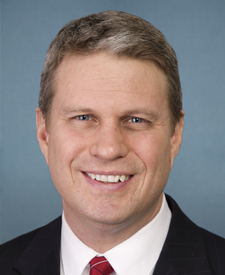
See how Bill Huizenga's votes line up with your values.
DeepSyte scores Bill Huizenga's record on the issues you care about — not party, not press releases. Take the 2-minute values quiz to see your personal alignment.
Sign in and take the values quiz to see how Bill Huizenga's votes line up with your views.
Prediction track record
How often we called Bill Huizenga's passage votes correctly, from their stated positions on each bill's tagged topics. Excludes “unclear” calls and abstentions.
A joint resolution to direct the removal of United States Armed Forces from hostilities within or against the Islamic Republic of Iran that have not been authorized by Congress.
To prohibit the disclosure of records by the Secretary of Housing and Urban Development of individuals for the purposes of immigration enforcement, and for other purposes.
Based on 11 data points across public statements and recorded votes · AI analysis of public records
118-hjres-136·Consistent
Providing for congressional disapproval under chapter 8 of title 5, United States Code, of the rule submitted by the Environmental Protection Agency relating to "Multi-Pollutant Emissions Standards for Model Years 2027 and Later Light-Duty and Medium-Duty Vehicles".
88/100
What they said
Dec 4, 2025
Congressman Huizenga supports the restoration of more attainable fuel economy standards, arguing that stricter Biden-era standards functioned as a de facto EV mandate that increased vehicle prices and manufacturing costs. He contends that less stringent standards will make cars more affordable and strengthen Michigan's auto sector.
Voted Yea on Providing for congressional disapproval under chapter 8 of title 5, United States Code, of the rule submitted by the Environmental Protection Agency relating to "Multi-Pollutant Emissions Standards for Model Years 2027 and Later Light-Duty and Medium-Duty Vehicles".
Huizenga's statement supports restoration of more attainable fuel economy standards to reduce vehicle costs and strengthen Michigan's auto sector, characterizing Biden-era standards as a de facto EV mandate. The bill nullifies EPA's 2027+ emissions rule that established stricter greenhouse gas and fuel economy requirements. His YES vote on the nullification directly aligns with his stated position opposing stricter standards. The vote implements the policy direction he advocates for—rolling back stringent fuel economy rules to make vehicles more affordable.
Congressman Huizenga supports the restoration of more attainable fuel economy standards, arguing that stricter Biden-era standards functioned as a de facto EV mandate that increased vehicle prices and manufacturing costs. He contends that less stringent standards will make cars more affordable and strengthen Michigan's auto sector.
Huizenga's statement supports restoration of less stringent fuel economy standards and opposes Biden-era stricter standards that he characterizes as a de facto EV mandate. The bill directly prohibits EPA from enforcing stricter emissions standards (including the 2027 greenhouse gas rule) and prevents EPA from mandating specific technologies. His YES vote aligns with his stated position that less stringent standards benefit affordability and Michigan's auto sector. The bill's prohibition on technology mandates and stricter standards matches his argument against the Biden approach.
A joint resolution providing for congressional disapproval under chapter 8 of title 5, United States Code, of the rule submitted by the Environmental Protection Agency relating to "Control of Air Pollution From New Motor Vehicles: Heavy-Duty Engine and Vehicle Standards".
75/100
What they said
Dec 4, 2025
Congressman Huizenga supports the restoration of more attainable fuel economy standards, arguing that stricter Biden-era standards functioned as a de facto EV mandate that increased vehicle prices and manufacturing costs. He contends that less stringent standards will make cars more affordable and strengthen Michigan's auto sector.
Voted Yea on A joint resolution providing for congressional disapproval under chapter 8 of title 5, United States Code, of the rule submitted by the Environmental Protection Agency relating to "Control of Air Pollution From New Motor Vehicles: Heavy-Duty Engine and Vehicle Standards".
Huizenga's statement supports relaxing fuel economy standards to reduce manufacturing costs and vehicle prices, arguing stricter standards functioned as a de facto EV mandate. His YES vote on S.J.Res. 11 nullifies EPA emission standards for heavy-duty vehicles, which aligns directionally with opposition to stricter environmental regulations on vehicles. However, the statement focuses on fuel economy standards and affordability, while the bill specifically addresses heavy-duty engine emission standards (ozone and particulate matter reduction). The bills address related but distinct regulatory questions within vehicle environmental policy.
Congressman Huizenga supports the restoration of more attainable fuel economy standards, arguing that stricter Biden-era standards functioned as a de facto EV mandate that increased vehicle prices and manufacturing costs. He contends that less stringent standards will make cars more affordable and strengthen Michigan's auto sector.
Both the statement and bill address DOE energy standards, with the rep opposing strict efficiency mandates that he argues increase consumer costs and manufacturing expenses. The rep's YES vote on legislation that constrains DOE's authority to set dishwasher standards aligns with his stated position that overly stringent standards harm affordability and domestic manufacturing. However, the statement focuses specifically on fuel economy standards and EV mandates in the auto sector, while the bill addresses appliance efficiency standards for dishwashers—different regulatory domains with different economic impacts. The directional consistency is clear (both oppose strict DOE standards), but the specific policy questions differ.
Congressman Huizenga supports the restoration of more attainable fuel economy standards, arguing that stricter Biden-era standards functioned as a de facto EV mandate that increased vehicle prices and manufacturing costs. He contends that less stringent standards will make cars more affordable and strengthen Michigan's auto sector.
Huizenga's statement supports less stringent fuel economy standards to reduce vehicle prices and protect Michigan's auto sector, opposing what he characterizes as a de facto EV mandate. The bill he voted for restricts state emission waivers that would limit internal combustion engine vehicles, which aligns with his stated goal of preventing stricter standards that favor EVs. However, the bill addresses state emission waivers under the Clean Air Act rather than federal fuel economy standards directly, creating a granularity mismatch between the specific policy mechanism in his statement and the bill's actual provisions.
Congressman Huizenga voted to end the government shutdown and criticizes the Democratic position that led to it, characterizing their demands for increased spending on immigration-related programs as unnecessary and harmful to military families, low-income Americans, and national safety.
Huizenga's statement criticizes Democratic demands for spending on immigration-related programs and emphasizes border security concerns. The Secure the Border Act directly addresses border security through wall construction, technology investment, and employment verification—policies aligned with the restrictive immigration stance expressed in his statement. However, the statement focuses on opposing Democratic spending priorities during a shutdown negotiation, while the bill is substantive immigration/border policy; the connection is directional alignment on immigration restrictiveness rather than a response to the specific shutdown dispute.
Transnational Criminal Organization Illicit Spotter Prevention and Elimination Act
75/100
What they said
Nov 12, 2025
Congressman Huizenga voted to end the government shutdown and criticizes the Democratic position that led to it, characterizing their demands for increased spending on immigration-related programs as unnecessary and harmful to military families, low-income Americans, and national safety.
Huizenga's statement opposes Democratic spending demands related to immigration programs and criticizes the shutdown as harmful. His YES vote on a bill that strengthens criminal penalties for border-control interference and immigration-related crimes aligns directionally with a restrictive immigration enforcement stance. However, the statement focuses on opposing spending increases for immigrants, while the bill addresses criminal penalties for border interference—related but distinct policy mechanisms. The vote is consistent with the general anti-immigration-spending position, though the specific policy tools differ.
Continuing Appropriations and Border Security Enhancement Act, 2024
75/100
What they said
Nov 12, 2025
Congressman Huizenga voted to end the government shutdown and criticizes the Democratic position that led to it, characterizing their demands for increased spending on immigration-related programs as unnecessary and harmful to military families, low-income Americans, and national safety.
Huizenga's statement criticizes Democrats for demanding spending increases (particularly on immigration programs) and votes YES on a bill that ends the shutdown by providing continuing appropriations. The vote aligns with his stated goal of reopening government and rejecting Democratic spending demands. However, the CR itself provides FY2024 appropriations and includes immigration-related provisions (asylum limits), which are policy outcomes rather than pure rejection of Democratic demands. The statement frames the vote as opposition to Democratic positions, while the bill represents a compromise continuing resolution that funds government operations—a more complex outcome than the statement's binary framing suggests.
Congressman Huizenga voted to end the government shutdown and criticizes the Democratic position that led to it, characterizing their demands for increased spending on immigration-related programs as unnecessary and harmful to military families, low-income Americans, and national safety.
Huizenga's statement criticizes Democratic demands for spending on immigration-related programs and emphasizes border security and national safety concerns. His YES vote on the Agent Raul Gonzalez Officer Safety Act, which creates criminal penalties for fleeing law enforcement near the border and bars immigration relief for violators, aligns directionally with those stated priorities on immigration enforcement and border security. However, the statement focuses on government spending and shutdown politics, while the bill addresses a specific criminal offense and deportation provision—distinct but related aspects of immigration policy. The alignment is general rather than on a shared specific question.
Congressman Huizenga voted to end the government shutdown and criticizes the Democratic position that led to it, characterizing their demands for increased spending on immigration-related programs as unnecessary and harmful to military families, low-income Americans, and national safety.
Huizenga's statement criticizes Democratic spending demands, including funds for immigration-related programs, and his YES vote on a bill restricting federal funds to sanctuary cities aligns directionally with opposition to spending that benefits undocumented immigrants. However, the statement addresses a broad shutdown dispute over $1.5 trillion in spending, while the bill targets a specific mechanism (sanctuary city funding restrictions) that does not directly address the shutdown's core fiscal disagreement. The vote is consistent with the anti-immigration-spending sentiment in the statement, but the bill and statement address different specific policy questions within the immigration domain.
Department of Homeland Security Appropriations Act, 2024
45/100
What they said
Nov 12, 2025
Congressman Huizenga voted to end the government shutdown and criticizes the Democratic position that led to it, characterizing their demands for increased spending on immigration-related programs as unnecessary and harmful to military families, low-income Americans, and national safety.
The statement criticizes Democratic demands for spending on immigration-related programs during a shutdown and frames the rep's vote as ending that shutdown. However, the bill itself is a DHS appropriations measure that funds immigration agencies (ICE, USCIS, CBP). The rep voted YES on a bill that appropriates funds for the very immigration-related spending he criticized Democrats for demanding. The specific policy question—whether to fund immigration programs—is directly addressed by both the statement and bill, but the rep's stated opposition to such spending and his YES vote on a bill that provides it are in tension. The vote may reflect a procedural choice to end the shutdown rather than substantive support for the bill's contents, creating ambiguity about his actual position on the appropriations themselves.
Pairs with ambiguous language and high uncertainty are withheld until more data is available. Procedural, cloture, and amendment votes are excluded — they don't cleanly signal substantive support or opposition.
Pro analysis
AI rep analysis — Pro
Get an AI-narrated read on Bill Huizenga's full voting record against your stated values — aligned themes, conflicts, notable votes, and what to watch for.
Positions Bill Huizenga took during their campaign, scored against their subsequent record — public statements cross-checked with related votes. “Kept” means 80%+ of those statement-vs-vote pairs aligned; “Broken” means 30% or fewer.
0 kept0 broken0 mixed0 no action yet
Bill Huizenga has 1 tracked position but no scored statement-vs-vote pairs touching them yet. Verdicts will appear here as related statements and votes accumulate.
No action yetSupports
Reducing the national debt should be a higher priority than new spending.
“In Congress, he has earned a reputation for fiscal discipline, government accountability”
No party-break passage votes recorded for Bill Huizenga. Either they've voted with Republicans on every substantive passage vote in the corpus, or their tenure overlaps few high-threshold party-line votes so far.
Huizenga, Peters and Bipartisan Fiscal Forum Members Respond to Troubling Debt Milestone
Position: The release expresses concern that the national debt, now above $40 trillion, threatens the economy and interest rates, and calls for a bipartisan fiscal commission and passage of the Fiscal Commission Act to address it.
Today, U.S. Representatives Bill Huizenga (R-MI) and Scott Peters (D-CA), Co-Chairs of the Bipartisan Fiscal Forum, released the following statements with fellow Members of the Bipartisan Fiscal Forum, as the gross national debt recently surpassed $40 trillion. Annual interest payments on the debt are already approaching $1 trillion, more than the United States is projected to spend this year on defense, Medicare, or Medicaid. Absent meaningful action, the debt is only projected to increase, and this has real consequences for hardworking families.
“Our national debt threatens our economy, drives up interest rates, slows wage growth, and leaves us less prepared for the next emergency. We are in this together, regardless of party label. Addressing our looming fiscal challenges will take both parties, and a bipartisan fiscal commission is a practical step toward doing so.” — Representative Bill Huizenga (MI-04), Co-Chair of the Bipartisan Fiscal Forum
“The national debt is now more than $40 trillion and we borrow nearly $2 trillion every year just to pay our expenses. As government borrowing grows, there is less money available in the system to help San Diegans afford homes, invest in their businesses, or take out loans. Congress must help working people keep up with the cost of living. The first step is to pass the Fiscal Commission Act.” — Congressman Scott Peters (CA-50), Co-Chair of the Bipartisan Fiscal Forum
“It is difficult to comprehend the scale of a $40 trillion national debt. What should be easy to understand is that we cannot continue down this path. The cost of servicing our debt is already consuming resources that could be used to grow our economy, strengthen our national security, and improve Americans’ lives. Generations of leaders from both parties share responsibility for the debt we have accumulated, and all must share responsibility for the solution. That means controlling spending, pursuing policies that grow our economy, and addressing the long-term drivers of our debt. The scale of this challenge is immense, but it is not beyond our ability to solve. America is a land of possibility, and we still have the opportunity to put our finances on a stronger foundation. If we make responsible choices today, we can strengthen our economy, expand opportunity, and leave future generations a more prosperous nation.” — Representative Lloyd Smucker (PA-11), Vice Chair of the House Budget Committee
“Both parties talk a big game on fiscal responsibility — until they’re the ones who have to govern. Reducing our national debt shouldn’t be seen as a threat to one party’s agenda, but as a once-in-a-generation chance to work together for the good of all Americans. It’s worth remembering: the last time we actually balanced the budget, Republicans controlled Congress and a Democrat sat in the White House. Absent bipartisan legislation, it's only a matter of time before one of the two parties is left holding the bag.” — Representative Jared Golden (ME-02)
“This milestone is a grave reminder of what is at stake if we do not seek legislative solutions to our federal spending crisis. Before long, the next generation will not be able to secure a car or home loan, afford everyday purchases due to inflation, or save for the future. Congress must come together to craft bold solutions, crack down on fraud in our government programs, and put the wellbeing of our children and grandchildren at the forefront of our discussions.” — Representative Blake Moore (UT-01)
“Hard working families across the nation know the bitter reality of living with and paying off debt. Hopefully the painful reality of more than $40 trillion of gross national debt is the wake-up call Congress needs to take a page from our constituents, balance the budget, and restore fiscal stability to Washington.” — Representative Marie Gluesenkamp Perez (WA-03)
“This is yet another sobering realization for lawmakers that we can no longer delay in addressing the fiscal state of our nation. Our record level of debt threatens our national security, strains our vital safety net programs, and creates a cascade of negative consequences for Americans from Main Street to Wall Street. Congress must come together expeditiously to pursue bipartisan solutions that responsibly rein in runaway spending before it is too late — the future prosperity of our nation depends on it.” — Representative Steve Womack (AR-03)
"Reaching $40 trillion in national debt is a dark milestone that should concern every American. Democrats and Republicans alike have contributed to this crisis, including doubling the national debt over the past decade. We must make realistic, aggressive changes if we want to ensure that the most critical functions of our government continue to operate for future generations. We cannot solve this crisis without both parties coming together with a true willingness to do whatever it takes. It's time for Congress to take decisive action now." — Representative Mike Quigley (IL-05)
While the Bipartisan Fiscal Forum does not endorse legislation, members of the group are leading a range of proposals that would seek to improve the nation’s fiscal outlook, including the Fiscal Commission Act, Sustainable Budget Act, Budgeting for a Better America Act, Fiscal Contingency Preparedness Act, Fiscal State of the Nation Act, and a resolution that would encourage Congress to achieve and maintain deficits at 3% of GDP. Adopting any or all these reforms would be a meaningful down payment toward fiscal responsibility.
The Bipartisan Fiscal Forum is a group of House members committed to raising awareness of the nation's unsustainable debt and working across the aisle toward a more responsible fiscal future.
House Passes 2 Huizenga Measures in Bipartisan Bill to Help Main Street, Improve Affordability
Position: The release supports H.R. 6955, the Main Street Capital Access Act, which would reduce regulatory burdens on community banks, encourage new community bank formation, and expand access to credit. It also supports two Huizenga-authored provisions on FDIC governance accountability and broader participation in failed-bank resolutions to reduce banking concentration.
Tonight, Congressman Bill Huizenga (R-MI), Vice Chairman of the House Financial Services Committee, released the following statement after the U.S. House of Representatives passed H.R. 6955, the Main Street Capital Access Act. This legislation is designed to strengthen community banks, expand access to credit, and end debanking. Importantly, this bipartisan bill includes two measures authored by Huizenga that strengthen oversight and promote greater competition within the banking system.
"Washington should not be making life more expensive for Americans with needless red tape,” said Congressman Bill Huizenga. “Less competition means fewer financing options, higher borrowing costs, and less investment on Main Street. By cutting through the red tape this bipartisan bill reduces costs and helps community lenders make life more affordable for American families. Lastly, I am glad this legislation includes my provisions to increase accountability and reduce concentration across our financial system.”
Access to affordable credit is critical for families buying a home, farmers investing in their operations, entrepreneurs starting a business, and employers creating jobs. The Main Street Capital Access Act removes unnecessary regulatory burdens on community banks, encourages the formation of new community banks, and allows local lenders to devote more resources to making loans.
Earlier today, Congressman Huizenga spoke on the floor in support of the Main Street Capital Access Act. The video of his remarks is available below.
The Main Street Capital Access Act incorporates two bills authored by Huizenga. The FDIC Board Accountability Act that strengthens governance and accountability at the Federal Deposit Insurance Corporation, as well as the Enhancing Bank Resolution Participation Act, which broadens participation in failed-bank resolutions to promote competition, protect depositors, and reduce concentration within the banking system. Together, these measures reflect Huizenga's continued work to ensure federal policy supports community financial institutions and the small businesses and families they serve.
The Main Street Capital Access Act passed the House by a vote of 270-155 and now advances to the Senate for consideration.
Huizenga Leads Bipartisan Effort to Strengthen Defense Cooperation with Key Allies Through UNLOCK AUKUS Act
Position: The release supports H.R. 9517, the bipartisan UNLOCK AUKUS Act, which would remove a statutory restriction to give the United States, Australia, and the United Kingdom greater flexibility to collaborate on advanced defense technologies while retaining safeguards for sensitive technologies.
Today, Congressman Bill Huizenga (R-MI), a senior member of the House Foreign Affairs Committee, announced the introduction of H.R. 9517, the bipartisan UNLOCK AUKUS Act, to strengthen the AUKUS security partnership by providing the United States, Australia, and the United Kingdom greater flexibility to collaborate on advanced defense technologies while preserving critical national security safeguards.
The legislation builds on Huizenga's longstanding efforts to strengthen AUKUS and ensure America's closest allies can work together more effectively to meet evolving security challenges. By removing an outdated statutory restriction that no longer reflects today's strategic environment, the bill strengthens cooperation among trusted partners while maintaining strong protections for America's most sensitive defense technologies.
"As the Chinese Communist Party rapidly expands its military capabilities, the United States must ensure our closest allies can innovate and work alongside us without unnecessary bureaucratic barriers,” said Congressman Bill Huizenga. “The UNLOCK AUKUS Act strengthens one of the world's most important security partnerships, meets the security challenges of today, and delivers a force multiplier to the AUKUS partnership."
“AUKUS provides a once-in-a-lifetime security enhancement for all three nations. Pillar I is happening in real-time in the Indo-Pacific and in our shipyards, and Pillar II is making exciting new progress with the recent announcement of collaboration between the three nations on payloads for undersea unmanned vessels,” said Congressman Joe Courtney (D-CT). “Through the UNLOCK AUKUS Act, Congress is building on that announcement by streamlining further collaboration on advanced missile capabilities in Pillar II. I’m excited to partner with my colleagues to introduce this bipartisan and bicameral bill, which reaffirms the clear-eyed and stalwart commitment by both parties in Congress to make AUKUS a success.”
“Although the AUKUS Partnership has improved defense cooperation with our Australian and British allies through the production of advanced technology like the hypersonic weaponry being developed at Crane Naval Surface Warfare Center in Indiana’s Eighth District, we must do better,” said Congressman Mark Messmer (R-IN). “I am proud to support Rep. Huizenga’s UNLOCK AUKUS Act, which will continue these important efforts, while also removing bureaucratic red tape that is preventing America from reaching our highest potential in our national defense strategic game plan.”
"Strengthening the AUKUS pact will keep Americans safe and strengthen our values-based alliances with the UK and Australia," said Congressman Gabe Amo (D-RI). "The bipartisan, bicameral UNLOCK AUKUS Act unleashes the full power of AUKUS for collaboration on 21st century defense systems to protect against our adversaries in the Indo-Pacific, while providing good jobs and supporting American businesses."
"The Chinese Communist Party is working at lightning speed to advance its military apparatus, and it does not play fair,” said Congressman Rep. Michael McCaul (R-TX). “The UNLOCK AUKUS Act empowers the United States and its allies to meet that generational challenge head-on by removing burdensome red tape that slows the transfer of critical military technologies. I urge my colleagues to support this important bill that will strengthen crucial partnerships like the AUKUS defense pact and deter the CCP's malign activity in the Indo-Pacific and beyond."
“The strength of our AUKUS partnership is critical to deterring an increasingly aggressive China and countering new, emerging threats in the Indo-Pacific,” said Congressman Pat Ryan (D-NY). “This bipartisan, bicameral legislation would streamline collaboration with our partners and ensure we collectively maintain our technological edge. As co-chair of the House Defense Modernization Caucus, this is simple, smart bill to cut through red tape and accelerate innovation.”
Announced in 2021, AUKUS is a trilateral security partnership between the United States, Australia, and the United Kingdom that is designed to deepen defense cooperation and promote stability throughout the Indo-Pacific. Pillar I focuses on Australia's acquisition of conventionally armed, nuclear-powered submarines. Congressman Huizenga championed this provision, the AUKUS Submarine Transfer Authorization Act, which was signed into law in December 2023. Pillar II accelerates cooperation on advanced capabilities including artificial intelligence, quantum technologies, cyber capabilities, electronic warfare, hypersonics, undersea technologies, and other emerging defense systems.
To support that mission, Congress previously established a streamlined export framework that allows many defense technologies to be shared more efficiently among the three nations. However, current law automatically excludes all technologies controlled under the Missile Technology Control Regime (MTCR), even if there is intent to transfer such articles under AUKUS. The UNLOCK AUKUS Act removes that blanket statutory prohibition and instead allows the President to determine which technologies should remain excluded based on evolving national security considerations.
Huizenga introduced the legislation alongside Representatives Mark Messmer (R-IN), Joe Courtney (D-CT), Michael McCaul (R-TX), Pat Ryan (D-NY), Blake Moore (R-UT), and Gabe Amo (D-RI). The Senate companion is led by Senators Pete Ricketts (R-NE) and Tim Kaine (D-VA).
The full text of the UNLOCK AUKUS Act is available here.
Huizenga, Olszewski, Kim, Thompson, and Bilirakis Introduce Bipartisan Legislation to Strengthen American Manufacturing
Position: The release supports introducing H.R. 9097, the American Manufacturing Revitalization Exchange Program Act, which would create a State Department exchange program sending American manufacturing workers abroad to allied countries for hands-on training and certifications to address the manufacturing workforce shortage and support reshoring.
Today, Congressman Huizenga (R-MI), Congressman Johnny Olszewski (D-MD), Congresswoman Young Kim (R-CA), Congressman Glenn “GT” Thompson (R-PA), and Congressman Gus Bilirakis (R-FL) announced the introduction of H.R. 9097, the American Manufacturing Revitalization Exchange Program Act. This bipartisan legislation will help train the next generation of technicians, machinists, engineers, and production specialists for the US manufacturing workforce. By 2033, American manufacturing will require 3.8 million additional workers, yet nearly half of these positions may remain unfilled, resulting in an economic cost of nearly $1 trillion by 2030.
Specifically, the American Manufacturing Revitalization Exchange Program Act establishes an international exchange program, known as the American Manufacturing Revitalization Exchange Program, at the State Department’s Bureau of Educational and Cultural Affairs. Under this program, the State Department will send eligible Americans working in manufacturing fields abroad for hands-on manufacturing training and certifications in allied countries with deep manufacturing expertise, who then return to the U.S. with new skills to help meet the labor skill shortage in the U.S. manufacturing industry and aid in reshoring efforts.
“Having a strong manufacturing sector is critical to our economy, national security, and ability to compete globally,” said Congressman Bill Huizenga. “By focusing on advanced manufacturing in sectors such as automotive, semiconductors, and aeronautics, this bipartisan legislation will help reshore American manufacturing, equip American workers with in-demand skills, and rebuild our nation’s middle class.”
"Strengthening American manufacturing starts with investing in our workforce," said Congressman Olszewski, a member of the House Foreign Affairs Committee. "I'm proud to help lead this effort to give workers greater access to the tools and experience they need to compete and succeed in a global economy. This will keep America competitive, strengthen our economic prosperity, and ensure our workforce is ready for the next generation of manufacturing."
“American manufacturing and its workforce are essential to our economy and the growth of industries around our nation," said Congressman Thompson. "This legislation expands opportunities for Pennsylvanians, allowing them to upskill and share their expertise with others. This will ensure future generations are prepared for the workforce and equipped with the right skills, maintaining America’s competitive edge as we move into the future."
“America’s manufacturing industry is facing a critical workforce shortage at a time when strengthening domestic production has never been more important,” said Congressman Bilirakis. “Our bill will give Americans the opportunity to gain valuable hands-on training from our allies, bring those skills back home, and help support our nation’s reshoring efforts. This program will also highlight the exciting opportunities available in modern manufacturing and help inspire more Americans to pursue these rewarding careers."
Support for the American Manufacturing Revitalization Exchange Program Act is strong and growing. Organizations that support this Huizenga-led effort include the United Steelworkers, National Association of Manufacturers, Alliance for International Exchange, Institute of Electrical and Electronics Engineers (IEEE-USA), Dirac, Inc, MISUMI Americas, BMW Group, Wallenius Wilhelmsen, LIFT, Foundation for American Innovation, Automation Alley, Additive Manufacturing Coalition.
“Manufacturers across the country are leading efforts to upskill and train the manufacturing workforce of the future. Rep. Huizenga’s American Manufacturing Revitalization Exchange Program Act would bolster the industry’s existing efforts to develop America’s manufacturing workforce by expanding workers’ training opportunities via international partnerships—bolstering investment and production capacity here at home.” Charles Crain, Managing Vice President of Policy at the National Association of Manufacturers, and Gardner Carrick, Chief Program Officer of the Manufacturing Institute
"We at Automation Alley appreciate Rep. Huizenga highlighting the need to focus on providing essential training for our critically important manufacturing workforce. Our manufacturers, and their workers, are the backbone of the State of Michigan's economy and it is imperative that our manufacturing workforce has the skills necessary to compete globally." Tom Kelly, CEO Automation Alley
“The USW supports increasing workers’ access to information about manufacturing processes, including hands-on experience, through the American Manufacturing Revitalization Exchange Program Act of 2026. This program will allow workers to learn from their counterparts overseas and bring that knowledge back to the United States, helping build bridges between workers and making our domestic industries stronger.” Roy Houseman, Legislative Director and Assistant to the President, United Steelworkers
“The Institute of Electrical and Electronics Engineers-USA (IEEE-USA) “endorses this legislation to continue revitalizing the science and technology workforce that has long driven American innovation. As manufacturing in critical sectors like robotics and semiconductors shifted overseas, our domestic workforce pipeline declined in tandem. Reclaiming our leadership in advanced manufacturing requires an economy that creates high-paying jobs for all workers, not just those with PhDs. By helping rebuild a highly skilled manufacturing workforce, this bill ensures the United States remains the global leader of science and technology innovation.” Nils Smith, Vice President, IEEE-USA
"The Alliance for International Exchange is pleased to endorse the American Revitalization Manufacturing Exchange Program Act, which creates an outbound exchange for American leaders in manufacturing to gain critical skills from U.S. allies and trade partners. This bill not only creates a public diplomacy program to fill a gap in American manufacturing, but also the program will also reinforce U.S. ties with partners globally while gaining innovative and necessary know-how in this space." Mark Overmann, Executive Director, Alliance for International Exchange
A resilient U.S. manufacturing sector requires a workforce that understands the complexities of a global supply chain. This Act is a forward-thinking investment in our most valuable resource: people. By upskilling U.S. citizens in allied countries, we’re building a sophisticated labor pool capable of integrating advanced technologies and securing our industrial base for decades to come. By establishing an exchange program with global allies, we’re enabling American talent to exchange ideas and technical expertise with the best manufacturing minds in the world. This Act ensures that our workforce returns home with a global perspective and specialized skills. To lead the next industrial revolution, we must be proactive in how we train the next generation. Supporting the 'American Manufacturing Revitalization Exchange Program' Bill allows us to bridge the skills gap by leveraging American strengths abroad. It’s a win-win that brings world-class knowledge back to U.S. soil, fueling the specialized talent we need to drive innovation.” Dave Evans, President & CEO of MISUMI Americas and CEO of Fictiv
"You can ship machines across an ocean, but you can't ship know-how. That has to be learned, captured, and passed down. The expertise that built the arsenal of democracy walked out the door with the jobs, and no amount of capital investment will rebuild our industrial base until we rebuild that knowledge. Representative Huizenga's bill creates a serious mechanism to bring back the production knowledge America gave away over the last forty years. Dirac is proud to support legislation that recognizes our shop floors as the foundation of American prosperity." Filip Aronshtein, Co-founder and CEO, Dirac, Inc.
“Advancing the skills of our workforce is a priority for BMW Group. For 15 years, we have been preparing students for a future in advanced manufacturing through several recruiting programs, including our most renown, the BMW Scholars Program at BMW Plant Spartanburg. We welcome Congressman Huizenga’s “American Manufacturing Revitalization Exchange Program Act” which will help support the training needed to develop a skilled and talented workforce for U.S. Manufacturing.” Astrid Ruggeri, Director, U.S. Trade Policy, BMW Group
“A skilled workforce and resilient supply chains are foundational to competitive manufacturing. As an integrated maritime, logistics, and industrial company, Wallenius Wilhelmsen is not only a transporter of goods, but an active industrial player with deep operational expertise. We see strong value in initiatives that strengthen U.S. manufacturing through practical skills development, hands-on training, and collaboration with global allies.” Wallenius Wilhelmsen
Position: The release supports the Deport the Terrorists Act, which would automatically revoke citizenship for naturalized citizens convicted of terrorism-related offenses, make them immediately removable, and direct DHS to prioritize their removal.
Today, Congressman Bill Huizenga (R-MI) announced the introduction of the Deport the Terrorists Act. This landmark legislation would overhaul deportation proceedings for naturalized American citizens who are convicted of financing, materially supporting, or outright committing acts of terror.
“American citizenship is one of our nation's greatest privileges,” said Congressman Bill Huizenga. “If a naturalized citizen is convicted of committing, supporting, or financing acts of terror, they should lose their citizenship and swiftly be deported from the United States."
Under current law, a naturalized citizen cannot be removed even for the most violent acts of terror without first going through the slow and complex denaturalization process. This loophole has allowed individuals who embraced terrorist ideologies after gaining citizenship to remain shielded from swift removal.
Examples of naturalized citizens who committed acts of terrorism include one that took place in Michigan and one that took place in Virginia 2026.
The Deport the Terrorists Act automatically revokes the citizenship of any naturalized US citizen convicted of a terrorism-related offense and makes such individuals immediately removable by creating new grounds for deportation for convictions involving terrorism, including conspiracy and solicitation.
Lastly, the Deport the Terrorists Act directs the Secretary of Homeland Security to prioritize the removal of any individual whose citizenship is revoked due to a terrorism-related conviction.
Huizenga, Correa, Walberg Introduce Bipartisan Bill to Improve Mental Health Outcomes, Prevent Veteran Suicide
Position: The release supports bipartisan legislation requiring or encouraging Community Care Network providers to complete VA-administered evidence-based suicide prevention training and creating a publicly available preferred provider list for veterans.
Today, Congressman Bill Huizenga (R-MI) and Congressman Lou Correa (D-CA) introduced the Veterans Suicide Prevention and Care Enhancement Act, bipartisan legislation aimed at improving mental health outcomes for veterans and helping reduce veteran suicide rates by expanding access to evidence-based suicide prevention care. The legislation seeks to increase the number of Community Care Network providers who complete evidence-based suicide prevention training administered by the Department of Veterans Affairs while also creating a publicly available preferred provider list to help veterans identify providers who best meet their needs.
Under current law, providers in local communities outside the VA healthcare system may participate in the Veterans Health Administration Community Care Network without completing VA-administered suicide prevention training. The Veterans Suicide Prevention and Care Enhancement Act encourages greater participation in that training and improves transparency for veterans seeking care options in their communities. Joining Representatives Huizenga and Correa as original cosponsors are Congressman Tim Walberg (R-MI), Congressman Mike Lawler (R-NY), and Congressman Chris Smith (R-NJ).
“When our servicemembers come home at the end of their service, our responsibility to them does not end,” said Congressman Huizenga. “Too many veterans continue to struggle with invisible wounds after returning home, and they deserve access to the highest quality mental health care available, wherever they receive it. This bipartisan legislation will help connect veterans with providers who have completed evidence-based suicide prevention training and improve transparency for veterans and families seeking care.”
“All gave some, and some made the ultimate sacrifice. Our veterans were willing to give their lives to defend American freedom and democracy. It is now our moral duty to provide them with the highest-quality mental health care,” said Congressman Correa. “I joined Representative Bill Huizenga in introducing the Veteran Suicide Prevention and Care Enhancement Act because veterans face a high risk of suicide. Not all wounds are visible, and we need to make sure that medical care is available to meet their needs. It is the least we can do to thank veterans for their sacrifice.”
“Our nation’s veterans have sacrificed so much for our freedoms, yet too many of these brave men and women struggle in silence,” said Congressman Walberg. “I am proud to join Representatives Huizenga and Correa on this bipartisan legislation, which will equip providers with the proper training to deliver high-quality mental health care to America's veterans so that we can honor these heroes’ service with the care, dignity, and compassion they so rightfully deserve.”
"Expanding suicide prevention training for Community Care Network providers connects veterans with better-informed care, said Congressman Mike Lawler. “This also inspires greater confidence in our veterans that their providers are prepared to recognize warning signs and respond with the support they need. Our veterans are more than deserving of access to providers who understand the unique challenges they face after serving our country,”
According to the VA’s 2025 National Veteran Suicide Prevention Annual Report, 6,398 veterans died by suicide in 2023, an average of 17.5 veterans per day. The report also found that 61% of veterans who died by suicide in 2023 had not received VA healthcare services in the year prior to their death.
The Veterans Suicide Prevention and Care Enhancement Act is supported by organizations including the American Legion Department of Michigan and the American Foundation for Suicide Prevention.
“The Department of Michigan American Legion supports efforts to reduce veteran suicides. The Veterans Suicide Prevention and Care Enhancement Act is one step in the direction of lowering veteran suicides by providing the proper training to those that provide care for veterans in the community.” Tim Poxson, American Legion Department of Michigan
Huizenga Votes to Lower Costs for Southwest Michigan Families and Farmers
Position: The release states support for a five-year farm bill that it says reduces input costs, strengthens risk management tools, expands food processing capacity, and strengthens the Tree Assistance Program for orchardists and nursery tree growers.
Today, Congressman Bill Huizenga (R-MI) released the following statement after voting in support of a five-year farm bill. Specifically, this legislation reduces input costs, strengthens risk management tools, and expands food processing capacity, all while investing in the rural infrastructure that supports Southwest Michigan’s economy and agricultural community.
Importantly, this legislation includes provisions from Huizenga’s bipartisan Protecting America’s Orchardists and Nursery Tree Growers Act, which will strengthen and expand the Tree Assistance Program to better protect growers when severe weather, disease, or other losses threaten long-term production.
“This farm bill will help lower costs for the farmers who grow our food and the American families they help feed,” said Congressman Huizenga. “For years, family farms and specialty crop growers across Michigan have faced challenges that threatened their livelihood. This legislation delivers relief by giving farmers the certainty they deserve as well as the tools to cut costs, expand local processing, and strengthen domestic supply chains from the ground up. At the end of the day, this legislation will lower prices at the grocery store, help farmers thrive, and make life more affordable and healthy for families across Southwest Michigan.”
Key provisions in the House-passed farm bill include:
Huizenga Introduces Legislation to Stop China and Russia from Stealing American AI Models
Position: The release supports introduction of H.R. 8283, the Deterring American AI Model Theft Act, which would authorize discretionary sanctions against foreign actors conducting unauthorized extraction of U.S. AI models, create a public list of such actors, and establish State Department coordination with industry on defenses.
Today, Congressman Bill Huizenga (R-MI) announced the introduction of H.R. 8283, the Deterring American AI Model Theft Act. Companies such as OpenAI, Google, and Anthropic have all indicated publicly that they have faced “distillation” attacks from State-backed Chinese AI companies. These attacks systematically extract and steal critical data, such as model weights, architectures, and other technical characteristics, that foreign adversaries use to build their own AI models for cheap while bypassing compute restrictions. Distillation attacks are the latest avenue of Chinese economic coercion and theft of U.S. intellectual property and poses a direct threat to the national security of the United States and the economic competitiveness of U.S. companies.
The Deterring American AI Model Theft Act addresses this problem by authorizing discretionary sanctions, creating a name and shame list of AI thieves, and approving a pathway for the U.S. State Department to interphase with private industry to share best practices and study attacks to strengthen defense.
“Model extraction attacks are the latest frontier of Chinese economic coercion and theft of US intellectual property,” said Congressman Bill Huizenga. “American AI models are demonstrating transformative cyber capabilities, and it is critical we prevent China from stealing these technological advancements. I am proud to champion the Deterring American AI Model Theft Act to advance the third pillar of the Trump Administration’s AI Action Plan. We must be more proactive in stopping the circumvention of US export controls by foreign adversaries.”
“American AI leadership rests on two pillars: the ingenuity of our innovators and the resolve, including of our government, to safeguard what our innovators build from those who seek to steal it. The Deterring American AI Model Theft Act of 2026 establishes a clear—and sorely needed—framework to identify foreign actors extracting American models, hold them accountable through existing authorities, and strengthen coordination between innovators and government. We commend Representative Huizenga for introducing it and urge the House Foreign Affairs Committee (HFAC) to advance it.” - Meredith Potter, Executive Director, American Security Fund
Distillation, when carried out with the approval of the AI model owner, is a legitimate and valuable tool for research and innovation. This bill protects such activity by disentangling it from illicit “model extraction attacks.”
Huizenga Announces Nearly $14.5 Million Investment in Battle Creek VA
Today, Congressman Bill Huizenga (R-MI) announced the Battle Creek VA Medical Center will be receiving $14,497,160 to modernize, repair, and improve buildings on its campus as part of the Veterans Health Administration’s Non-Recurring Maintenance (NRM) Program. In January, the Trump Administration announced the largest NRM allocation ever at $4.8 billion. The NRM program funds one-time maintenance projects for facilities, equipment or infrastructure that are not part of routine, recurring maintenance. These projects include significant maintenance, replacements or upgrades needed to maintain operational capability and advance health care delivery.
Specifically, the Battle Creek VA Medical Center will be receiving funding that enhances HVAC systems, improves overall building safety, replaces elevators in multiple buildings across the campus, and installs two additional sump pumps.
“I am glad to see these important investments being made to improve infrastructure, safety, and care at the Battle Creek VA,” said Congressman Bill Huizenga. “Our veterans deserve the best care available and that can’t happen unless we invest and make improvements to the facilities where our veterans receive care.”
“Under President Trump, VA is putting Veterans first, and this historic investment underscores that fact,” said VA Secretary Doug Collins. “Improved facilities, equipment and infrastructure mean better care for Veterans, and these funds will enable VA to achieve that goal.”
UNANIMOUS: Bipartisan Huizenga Legislation to Curb AI Chip Smuggling Passes Committee
Today, the House Foreign Affairs Committee passed bipartisan legislation, H.R. 3447, the Chip Security Act, introduced by Congressman Bill Huizenga (R-MI). This legislation passed by a unanimous vote of 42-0.
The Chip Security Act requires advanced chip manufacturers to implement technical security measures to detect and prevent smuggling to unauthorized countries and end-users. This legislation responds to ongoing reports of AI chips being smuggled into China, where they are used to power state-controlled AI projects. Despite current export controls, smuggling networks and front companies continue to move U.S.-made chips into restricted countries.
Last week, the Department of Justice filed charges against three individuals for conspiring to violate US national security lase by smuggling billions of dollars of advanced AI chips to China. Additionally, last fall, the Department of Justice announced it has indicted three Chinese nationals for smuggling high-tech chips to China via third party countries like Thailand and Malaysia.
“The Chip Security Act enhances protections on AI chip exports by scaling up best security practices and encouraging innovative technologies,” said Congressman Bill Huizenga, Chairman of House Foreign Affairs South and Central Asia Subcommittee. “This bill directly supports the Trump Administration’s AI action plan recommendations and benefits from both administration technical assistance and industry feedback.”
“If we're going to export advanced AI chips, we need confidence that they don’t end up in the hands of the Chinese military,” said House Foreign Affairs Committee Chairman Brian Mast. “We’re continuously talking about Chinese espionage, Chinese theft, and Chinese diversion over and over again. We can’t allow this to happen.”
“America has the best semiconductors in the world and we must defend our advantage over China, which is actively working to break the law and smuggle American chips. The Chip Security Act will make it harder to steal from us, and it will protect American jobs and industry. This legislation also advances President Trump’s AI Action Plan by implementing location verification and denying our adversaries access to compute power. Thank you to Chairman Mast, Congressman Huizenga, and the House Foreign Affairs Committee for advancing this legislation,” said China Select Committee Chairman John Moolenaar.
The Chip Security Act is led in the Senate by Sen. Tom Cotton (R-AR).
Find out more information about the Chip Security Act, here.
Source: GDELT 2.0 GKG, filtered to a curated list of national outlets. Inclusion is not endorsement; opinion pieces and reported news are mixed.
Recent stock activity
Periodic transaction reports filed under the STOCK Act — disclosed by the rep, sourced from public filings.
No disclosed trades on record.
Source: open-data mirrors of the Senate eFD and House Clerk financial-disclosure systems. Disclosure within 30 days of trade is required by law (45 for spouse/dependent trades).
Top PAC donors · 2026 cycle
Political action committees that gave the most to this rep's principal campaign committee this cycle. PAC giving is direct organizational support — industry, ideological, or leadership.
1.NATIONAL ASSOCIATION OF REAL ESTATE INVESTMENT TRUSTS, INC. PAC4 contributions$12,000
2.BREAD FINANCIAL HOLDINGS, INC. PAC (AKA BREAD FINANCIAL PAC)4 contributions$11,000
3.CALPORTLAND COMPANY PAC (CPCC-PAC)2 contributions$10,000
4.AMERICAN REVIVAL PACIdeological2 contributionsSingle-issue or ideological PAC — specific positions not clearly inferable from the name alone.AI · low$10,000
5.LEADERSHIP AND LOYALTY ONLY TO AMERICA PAC2 contributions$10,000
9.INTERNATIONAL COUNCIL OF SHOPPING CENTERS INC POLITICAL ACTION COMMITTEE (ICSC PAC)2 contributions$10,000
10.IN THE ARENA PAC2 contributions$10,000
Source: OpenFEC (api.open.fec.gov) Schedule A receipts where contributor type is “committee.” Aggregated by contributing committee. Self-transfers from joint-fundraising / victory committees are excluded.
Top individual contributors · 2026 cycle
Itemized individual contributions over $200 to this rep's campaign committee, aggregated by donor employer. PAC giving is shown above; this section is people, not organizations.
1.ANTHROPIC$28,000
2.CIENA$24,500
3.BAD BOY MOWERS$21,000
4.ANDREESSEN HOROWITZ$15,333
5.AMWAY$14,000
6.COINBASE$14,000
7.WINKLEVOSS CAPITAL MANAGEMENT$14,000
8.AZO SERVICES PIA, LLC$14,000
9.ZHANG FINANCIAL$12,000
10.WELLER AUTO PARTS$11,000
Source: OpenFEC Schedule A receipts where contributor type is “individual,” aggregated by the donor's self-reported employer. This is a geographic / industry correlation, not a corporate endorsement.