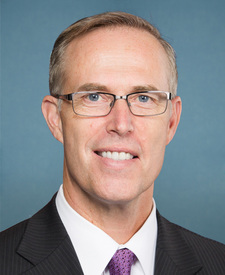
See how Jared Huffman's votes line up with your values.
DeepSyte scores Jared Huffman's record on the issues you care about — not party, not press releases. Take the 2-minute values quiz to see your personal alignment.
Sign in and take the values quiz to see how Jared Huffman's votes line up with your views.
Prediction track record
How often we called Jared Huffman's passage votes correctly, from their stated positions on each bill's tagged topics. Excludes “unclear” calls and abstentions.
A joint resolution to direct the removal of United States Armed Forces from hostilities within or against the Islamic Republic of Iran that have not been authorized by Congress.
Based on 7 data points across public statements and recorded votes · AI analysis of public records
118-hr-1·Consistent
Lower Energy Costs Act
92/100
What they said
Apr 16, 2026
Opposes Congressional Review Act resolution that would open the Boundary Waters to sulfide-ore copper mining, citing environmental pollution risks from mining operations and concerns that extracted minerals would be shipped to China rather than supporting domestic needs.
Rep. Huffman's statement explicitly opposes opening the Boundary Waters to sulfide-ore copper mining, citing environmental pollution risks and concerns that extracted minerals would be shipped overseas rather than supporting domestic needs. His no vote on H.J. Res. 140 (the Congressional Review Act resolution that would open the Boundary Waters to mining) is directly consistent with this stated opposition to the same mining project. Both the statement and vote point in the same direction on the shared question of whether to permit mining in this protected wilderness area.
The members oppose Secretarial Order 3431, which removes historical exhibits and educational materials about slavery, Indigenous peoples, and climate change from national parks. They call on appropriators to block funding for the order's implementation, arguing that honest historical interpretation serves the public interest and that the directive bypasses consultation with affected communities.
The statement opposes removal of historical materials and calls for blocking funding that bypasses consultation with affected communities and ignores professional standards. The HEATS Act exempts geothermal activities from National Historic Preservation Act review (unless the state lacks its own historic preservation law) and from Endangered Species Act consultation. The rep's NO vote on a bill that weakens historic preservation and environmental review requirements aligns with the stated position that historical interpretation and community consultation should be protected. The score is not higher because the bill addresses geothermal permitting specifically rather than national park exhibits, and the exemption is conditional on state law, creating some granularity mismatch.
The members oppose Secretarial Order 3431, which removes historical exhibits and educational materials about slavery, Indigenous peoples, and climate change from national parks. They call on appropriators to block funding for the order's implementation, arguing that honest historical interpretation serves the public interest and that the directive bypasses consultation with affected communities.
Huffman's statement opposes removal of historical materials and calls for blocking funding that bypasses consultation with affected communities and ignores professional standards. The HEATS Act exempts geothermal activities from National Historic Preservation Act review (unless the state lacks its own law) and from Endangered Species Act consultation. His no vote on passage aligns with his stated concern about circumventing historic preservation review and consultation requirements, though the bill's primary focus is geothermal permitting rather than park exhibits.
Huffman opposes the Trump administration's transfer of Oak Flat, a sacred Apache site, to multinational mining companies Rio Tinto and BHP. He argues the deal violates tribal sovereignty, harms the environment, and constitutes a giveaway of publicly owned copper resources worth over $150 billion without adequate royalties to the American public.
Huffman's statement opposes the Trump administration's transfer of public lands to foreign mining companies without adequate public benefit, arguing it violates tribal sovereignty and environmental protections. His no vote on Alaska's Right to Produce Act—which mandates oil and gas leasing in ANWR and limits presidential authority to cancel leases—is consistent with this position. Both the statement and vote reflect opposition to policies that prioritize extractive industry access to public lands over environmental and tribal interests. The score is not higher because the statement focuses on a specific 2026 executive action regarding Oak Flat, while the vote concerns a 2023 legislative mandate for ANWR leasing, making them related but not identical policy contexts.
The representatives oppose the Trump administration's $1 billion payment to TotalEnergies from the Judgment Fund following cancellation of offshore wind projects, arguing it violates federal law, misuses taxpayer funds, and improperly shields the deal from judicial review.
Huffman's statement opposes the Trump administration's misuse of federal funds and circumvention of environmental and judicial review processes. The HEATS Act exempts geothermal activities from federal environmental review (NEPA), endangered species consultation, and historic preservation requirements. While the statement focuses on a specific settlement deal and the HEATS Act addresses permitting exemptions for geothermal development, both reflect opposition to reducing environmental oversight and federal accountability. The NO vote aligns with the statement's concern about sidelining environmental protections, though the bills address different specific mechanisms (settlement fund abuse vs. permitting exemptions).
The members oppose Secretarial Order 3431, which removes historical exhibits and educational materials about slavery, Indigenous peoples, and climate change from national parks. They call on appropriators to block funding for the order's implementation, arguing that honest historical interpretation serves the public interest and that the directive bypasses consultation with affected communities.
Huffman's statement opposes Secretarial Order 3431 and calls on appropriators to block funding for it through spending bill language. The Fiscal Responsibility Act of 2023 is a broad budget measure that establishes discretionary spending limits and caps for FY2024-2025. Huffman's no vote on passage is consistent with his position: voting against a spending cap bill aligns with his call to appropriate funds to block the order's implementation, since lower discretionary spending caps would constrain the appropriators' ability to fund such restrictions. However, the bill addresses multiple budget issues beyond the specific parks funding question, creating some ambiguity about whether the no vote was primarily motivated by the parks issue or other budgetary concerns.
Huffman opposes the Trump administration's transfer of Oak Flat, a sacred Apache site, to multinational mining companies Rio Tinto and BHP. He argues the deal violates tribal sovereignty, harms the environment, and constitutes a giveaway of publicly owned copper resources worth over $150 billion without adequate royalties to the American public.
Huffman's statement opposes transferring public lands to private/foreign entities without adequate environmental and tribal consultation, and criticizes exemptions from environmental and historic preservation review. The HEATS Act exempts geothermal activities from NEPA environmental review and National Historic Preservation Act consultation (except where state law fills the gap). His NO vote aligns with his stated opposition to bypassing environmental and historic preservation protections. However, the statement focuses on mining royalties and tribal sovereignty over sacred sites, while the HEATS Act addresses geothermal drilling permits and exemptions—related but distinct resource extraction issues. The consistency is directional (both oppose weakening environmental/tribal protections) but the specific policy mechanisms differ.
Pairs with ambiguous language and high uncertainty are withheld until more data is available. Procedural, cloture, and amendment votes are excluded — they don't cleanly signal substantive support or opposition.
Pro analysis
AI rep analysis — Pro
Get an AI-narrated read on Jared Huffman's full voting record against your stated values — aligned themes, conflicts, notable votes, and what to watch for.
We haven't extracted campaign positions for Jared Huffman yet. Once their campaign website or position pages are processed, this card will track what they said vs how they voted.
Crossing the aisle
Passage votes where Jared Huffman broke ranks with ≥75% of Democrats. Threshold catches substantively partisan splits; unanimous-ish or close votes are excluded.
Huffman, Raskin, Houlahan Call for Investigation into Military Chaplaincy Amid Hegseth’s Religious Extremist Overhaul | U.S. Congressman Jared Huffman
Position: The representatives call for a GAO investigation into how military chaplains are recruited, vetted, and trained, and whether Secretary Hegseth's changes to the military chaplaincy threaten servicemembers' religious freedom.
WASHINGTON, D.C. — U.S. Representatives Jared Huffman (CA-02), Jamie Raskin (MD-8), and Chrissy Houlahan (PA-06) are calling on the Government Accountability Office (GAO) to investigate how military chaplains are recruited, vetted, and trained. The report also examines whether Defense Secretary Pete Hegseth’s changes to the military chaplaincy threaten the religious freedom of our servicemembers.
“Pete Hegseth has spent his tenure treating the Pentagon like a pulpit for his Christian nationalist agenda, and I’m deeply concerned about what that means for the men and women serving our country,” said Rep. Huffman. “The lack of transparency surrounding the military chaplaincy has always been an issue, but under this administration, it has become outright dangerous. Hegseth’s intentions have been clear from the start, and we must leave no stone unturned in determining whether the Chaplain Corps has become yet another vehicle for his ideological crusade.”
“Military chaplains have a unique responsibility to serve every servicemember, regardless of faith or belief. As a veteran, I know how important that trust is. The military has no business telling servicemembers what to believe, and no servicemember should have to wonder whether the chaplain they turn to for help will put religious ideology ahead of their duty to care," said Rep. Houlahan, Ranking Member of the Military Personnel Subcommittee. "Secretary of Defense Hegseth's changes raise serious questions about whether that responsibility is being compromised to advance his own religious agenda. Religious freedom is a constitutional right, not a privilege reserved for those who share the beliefs of the people in charge.”
Military chaplains serve approximately 1.3 million servicemembers from a wide range of religious backgrounds. Over the past year, Secretary Hegseth has introduced sweeping changes to the military chaplaincy, including reducing recognized religious affiliation codes, withdrawing the Army Spiritual Fitness Guide, and replacing chaplains' rank insignia with religious symbols.
In April 2026, Reps. Huffman and Raskin led a letter demanding answers from Secretary Hegseth about these changes and their potential impact on servicemembers’ religious freedom. The latest request to GAO builds on those oversight efforts, seeking an independent assessment of whether the administration’s policies are undermining the Chaplain Corps’ ability to fulfill its mission and serve servicemembers of all religious backgrounds.
Huffman Warns Loophole Could Let Trump Take D.C. Golf Course, Urges Appropriators to Put Guardrails on NPS Funds | U.S. Congressman Jared Huffman
Position: The release opposes federal funding for East Potomac Park seawall work without statutory guardrails that would keep the park public and prevent its transfer or redirection of funds to a private golf course. It urges appropriators to restrict the $500 million National Park Service construction request accordingly.
Washington, D.C. – Today, House Natural Resources Committee Ranking Member Jared Huffman (D-Calif.) urged House and Senate Appropriators to establish strict funding guardrails for the Trump administration’s $500 million request for National Park Service construction, warning that he could abuse a loophole in federal law to transfer the East Potomac Park golf course to himself after taxpayers foot the bill for the most expensive part of his proposed golf course upgrade.
In a letter to appropriators, the Ranking Member called for protections to ensure East Potomac remains public land, protected for the recreation and enjoyment of the American people and cannot be transferred to President Trump, his allies, or other private interests. The language also requests that any funding for seawall construction and repairs at East Potomac Park is used exclusively for that purpose and cannot be redirected to other projects.
In June, the Trump administration requested supplemental funding to rebuild the seawall at East Potomac Park, which protects the park from flooding. But the administration’s recent actions raise serious concerns that taxpayer dollars intended for necessary infrastructure repairs could instead pave the way for Trump’s proposed elite golf course.
For years, the seawall was in line with thousands of other high-priority deferred maintenance projects across the country. Only after President Trump expressed interest in turning East Potomac into a championship golf course did the project suddenly become a priority. Because the seawall repairs are necessary to advance the President’s redevelopment plans, Congress must ensure that funding for seawall maintenance does not inadvertently subsidize his personal ambitions for the site.
The Ranking Member urged appropriators that “without clear guardrails, taxpayers could end up footing the bill for seawall repairs that ultimately help pad Trump’s golf course portfolio.”
In the letter, Ranking Member Huffman warned that a loophole in federal law allows the Secretary of the Interior to sell National Park Service land in the District of Columbia deemed “no longer needed for public purposes” and gives the Secretary discretion to handpick buyers through private solicitation. Although Congress designated East Potomac as a public park to be “forever held and used as a park for the recreation and pleasure of the people,” there is a risk that the Secretary Burgum could exploit this loophole to sell the land or shift its control to private interests, including President Trump or his allies.
The $500 million request could end up forcing taxpayers to finance the expensive infrastructure work Trump is directing so he can transform the beloved East Potomac Park into an elite championship golf course for the ultra-rich.
“It would be unconscionable to let President Trump direct taxpayers to pay for the most expensive portion of the park’s maintenance needs and then take it from them to create a golf course catering to him and his billionaire buddies,” Huffman said.
In September, Ranking Member Huffman raised the alarm about President Trump barreling through with this latest pet project, following the same playbook he used on the White House Ballroom and Arch de Trump. The administration signed an agreement with Fazio Design, who designed several of Trump’s golf courses. The National Park Service has committed at least $50 million in taxpayer dollars for environmental review and construction work, and the President’s personal fundraiser has solicited donations for the golf course. NPS also moved forward with cutting historic trees in the park in defiance of a federal judge.
If President Trump objects to the Ranking Member’s proposed guardrails, then his intentions regarding East Potomac will become all the clearer. East Potomac Park is a beloved historic site that continues to be used by the public as a park and golf course, including the country’s oldest miniature golf course. Congress must provide safeguards to ensure that the President cannot turn this public park into a mini Mar-a-Lago for the mega-rich. Our parks, large and small, from Yosemite to East Potomac, belong to the American people. President Trump cannot be allowed to use taxpayer dollars to take them away.
Read the full letter here.
Gov Watchdog Finds National Security Gaps in Mining of Critical Minerals on America’s Public Lands | U.S. Congressman Jared Huffman
Position: The release argues that the federal government should verify the U.S. citizenship and incorporation status of mining claimants on public lands and that Congress should modernize the mining laws to increase accountability over foreign ownership, citing two GAO reports.
Washington, D.C. – As the United States races to reduce its reliance on foreign countries for critical minerals, the federal government has been handing out exclusive rights to mine America’s public lands without checking whether the people and companies receiving those rights meet the requirements to hold them, even allowing companies with ties to our adversaries to mine our public lands according to two new Government Accountability Office (GAO) reports released today by Ranking Member Jared Huffman (D-Calif.), Rep. Raja Krishnamoorthi (D-Ill.), Rep. Teresa Leger Fernández (D-N.M.), Rep. Joe Neguse (D-Colo.), and Rep. Melanie Stansbury (D-N.M.).
"Our mining laws date back to 1872, and we’re still running the system like it’s the Wild West. We’ve somehow managed to hand out mining claims for generations without doing the most basic homework on who gets to hold them. And for all of Trump’s tough talk about China, he seems awfully comfortable inviting foreign-owned mining companies onto Americans’ public lands without checking who’s backing them. Congress needs to modernize our mining laws and bring some basic accountability to who profits from our public lands,” said Ranking Member Huffman.
Federal law reserves mining claims on public lands for U.S. citizens and companies incorporated in the United States. The Bureau of Land Management, which runs the mining claim system, does not collect citizenship information from claimants, does not record whether they qualify, and rarely checks in the first place. A BLM official told GAO that companies from foreign adversary nations could hold claims on federal lands through U.S. subsidiaries, and claimants do not have to disclose whether a foreign company or government owns part of them.
When GAO reviewed a sample of 15 companies holding mining claims, investigators found no evidence that seven of them were incorporated in the United States, as the law requires. When GAO asked BLM for help confirming where these companies were incorporated, the agency had no additional information to offer.
In a second report, GAO reviewed ownership information for 43 operators of critical minerals mines on federal lands and found that at least 25 were subsidiaries of foreign entities. In at least two cases, Chinese entities had a financial interest in the parent companies.
Mining claims grant the exclusive right to extract minerals such as copper and gold, royalty-free, for as long as the holder pays annual fees. Claimants do not have to disclose whether a foreign company or government owns part of them. Australia and Canada, two of the world’s top mineral producers, require foreign investors to disclose their owners and have forced some to sell stakes in critical minerals companies on national security grounds.
GAO recommends that the Bureau of Land Management collect citizenship information from mining claimants and document that they qualify.
Read the GAO’s first report about citizenship requirements here.
Read the GAO’s second report about information on foreign investment here.
The United States depends heavily on foreign countries for critical minerals such as copper and lithium, which go into everything from electric vehicle batteries and power lines to phones and medical equipment. GAO has warned that this dependence leaves supply chains open to disruption by adversary nations. Federal lands cover nearly one-third of the country and are a significant source of these minerals.
Under the General Mining Act of 1872, individuals and companies stake claims on most federal lands without agency approval, and BLM has recorded an average of more than 60,000 new claims every year since 2021. Since 2025, President Trump has issued a series of executive orders to expand mining on federal lands and cut reliance on foreign minerals. GAO’s findings show his administration has not taken the most basic step to keep those minerals in the right hands: confirming who holds the claims and preventing our adversaries from taking our resources. A secure domestic supply of critical minerals starts with knowing who controls the mines on public lands.
Rep. Huffman releases statement on Defense Secretary Pete Hegseth's Decision to livestream execution | U.S. Congressman Jared Huffman
Position: Rep. Huffman criticizes Defense Secretary Pete Hegseth's decision to livestream the execution of Nidal Hasan, linking Hegseth's religious views to the decision, and calls for Hegseth's impeachment and removal from office.
Washington, D.C. — Today, Representative Jared Huffman released the following statement regarding Defense Secretary Pete Hegseth’s remarks linking Nidal Hasan’s religious beliefs to the decision to livestream his execution:
“Most Americans will be appalled at the sheer barbarity and bread-and-circus dystopia of this episode, but there's more to it than that. I have no doubt that Pete Hegseth's radical Christian nationalist worldview is behind all of this Hegseth believes he has a religious and patriotic duty to finish what the Christian crusaders started in the 11th century: defeat Islam and enthrone Christian dominion over the world.
"He's written a book about it, talked about it as a civilizational imperative, and even tattooed his body with symbols of these extreme beliefs. So it's no surprise to those of us who have followed Hegseth that he went out of his way to mention that the Fort Hood shooter is a Muslim and to stress that this fact is part of the justification for a live-streamed public firing squad. If you need more proof that Hegseth is an unhinged fanatic who should be impeached and removed from office, you have it here."
Gov Watchdog Finds Geothermal Developers Lack Permitting Tools Oil and Gas Companies Already Have | U.S. Congressman Jared Huffman
Position: The release highlights a GAO report finding that geothermal developers on federal lands lack permitting tools and transparency available to oil and gas companies, and references House-passed legislation that would require standardized BLM permitting procedures.
Washington, D.C. – Today, the U.S. Government Accountability Office (GAO) released a new report showing that companies trying to build geothermal power on public lands lack basic permitting tools that oil and gas companies already have and face confusing rules with no way to see where their permits stand, even as demand for geothermal development has grown more than fortyfold since 2020.
The watchdog report, requested by U.S. House Natural Resources Committee Ranking Member Jared Huffman (D-Calif.), Rep. Susie Lee (D-Nev.), Rep. Joe Neguse (D-Colo.), Rep. Alexandria Ocasio-Cortez (D-N.Y.), and Rep. Melanie Stansbury (D-N.M.) found that the permitting process can be inconsistent and lacks transparency, creating uncertainty for geothermal developers and federal land managers. Oil and gas companies file permits online, track them through a dedicated system, and work from public handbooks, while geothermal developers submit permit applications in writing, wait on unpublished handbooks, and have no system tracking their permits.
The report comes as Congress has shown bipartisan interest in expanding geothermal energy development and private-sector interest in federal lands has grown significantly. According to GAO, nominations of federal lands for geothermal development increased from approximately 25,000 acres in 2020 to more than one million acres in 2025.
Despite this growing interest, geothermal developers reported to GAO inconsistent permitting decisions for exploration activities. BLM has developed handbooks intended to clarify terminology and provide consistent guidance, but those documents have remained in draft form since at least 2022.
GAO also found that BLM lacks a comprehensive mechanism for tracking geothermal permitting activity. BLM shut down its geothermal tracking system in 2021, and the system that took its place has no way to track geothermal permits. Oil and gas wells, however, are tracked in a dedicated system from initial permitting through final closure. As a result, BLM has limited visibility into permitting timelines and workloads, making planning more difficult for both developers and federal officials to anticipate project timelines and resource needs.
The House has already voted to address these problems. The bipartisan Geothermal Energy Advancement Act (H.R. 5631), which passed the House in June, includes legislation sponsored by Rep. Lee, Rep. Ocasio-Cortez, and Rep. Yassamin Ansari (D-Ariz.). Rep. Ansari’s Geothermal Gold Book Development Act would require the Bureau to publish standard permitting procedures, in line with GAO’s recommendation.
Read the full report and recommendations here.
Huffman, Warren Reintroduce National Institutes of Clean Energy Act to Make Transformative Investments in Clean Energy Research and Technology | U.S. Congressman Jared Huffman
Position: The release supports reintroduced legislation, the National Institutes of Clean Energy Act, that would invest $400 billion over ten years in a new Department of Energy institute system for clean energy research and development. The sponsors argue such investment is essential to economic competitiveness and to addressing climate impacts.
Washington, D.C. – U.S. Representative Jared Huffman (D-Calif.) and U.S. Senator Elizabeth Warren (D-Mass.) reintroduced the National Institutes of Clean Energy Act (NICE), legislation that would invest $400 billion over the next decade to establish and operate a new system of institutes at the Department of Energy focused on research and development of advanced clean energy technologies. The National Institutes of Clean Energy, modeled after the National Institutes of Health, would invest in clean energy science, innovation, and research and development to support projects that help reduce carbon emissions and build climate resilience.
The United States has the highest GDP in the world but ranks 13thglobally for capital invested in public research and development. Because these funds directly contribute to the generation of knowledge and advanced technologies, how much the United States spends on research and development provides a snapshot of how innovative the economy truly is. By making smart investments in the nation’s future, the United States can begin developing new technologies to combat the climate crisis and strengthen the nation’s resilience.
“Investing in clean energy research and development is essential to boosting our economy and addressing the climate impacts pummeling our communities,” said Representative Huffman. “The NICE Act is a prime example of how the United States can accelerate the transition to a clean energy future by fostering innovative green technology.”
“The United States must be at the forefront of the fight for a cleaner and greener planet,” said Senator Warren. “We need to continue prioritizing the climate-related innovation that will get us there.”
The funding established in the bill would support:
Moreover, the National Institutes of Clean Energy Act prioritizes R&D of technologies that:
This legislation is co-sponsored by Senators Alex Padilla (D-Calif.), Bernie Sanders (I-Vt.), and Chris Van Hollen (D-Md.); and Representatives Yassamin Ansari (D-Ariz.), Steve Cohen (D-Tenn.), Adelita Grijalva (D-Ariz.), Jonathan Jackson (D-Ill.), and Lateefah Simon (D-Calif.).
The legislation is endorsed by MoveOn, GreenLatinos, Center for Progressive Reform, League of Conservation Voters, Friends of the Earth, New Consensus, Public Citizen, and Climate Hawks Vote.
Ranking Member Huffman Statement on Senate Permitting Deal | U.S. Congressman Jared Huffman
Position: The statement opposes the tentative Senate permitting deal in its current form, arguing it concedes too much on the Endangered Species Act and clean energy, and calls for ending the administration's restrictions on renewables before accepting major concessions.
"Passing a good permitting reform package will be one of my top priorities for the next Congress, so I'm very interested in these Senate negotiations.
"From what I've seen, Senators Whitehouse and Heinrich have done some good work, but they've been negotiating from a position of weakness and the tentative deal unveiled today raises significant questions and concerns that would have to be resolved before most Democrats could support it.
"I'm all for streamlining transmission and clean energy buildout, but the threshold requirement before making major policy concessions is to actually end Trump's war on renewables so that hundreds of bottled-up clean energy projects can bring that affordable power to the grid. Further, we can't throw states, tribes, impacted communities, and threatened and endangered wildlife under the bus. And as we streamline and cut red tape, we must make sure the American people — not just powerful corporate interests — have a say in government decisions about what happens to our air, water, and public lands. That's what serious, responsible permitting reform looks like.
"There's a way to get there, and parts of this deal are helpful, but some of it concedes too much. Hollowing out the Endangered Species Act through the delegation of authority and problematic definitions, for example, is so extreme that a milder version of it spooked several House Republicans off of Bruce Westerman's ESA bill earlier this year, so you can imagine how it's going to land with the American people who overwhelmingly support protecting wildlife. And the provisions that seek to guarantee fair treatment for wind, solar, and battery storage are novel, untested, and don't really end the war on clean energy, but they will still trigger cries of "Green New Deal" and fierce opposition from the House Freedom Caucus, clouding any path to pass this deal through the House unless it gets much worse. And knowing the GOP players, that's exactly what will happen if this bill advances in the lame duck.
"The bottom line for me, and I believe most Democrats, is that November 3rd is coming and we are likely to soon have a far better negotiating position. Folding our hand now or in the lame duck makes no sense when we can keep working on this and, in a few more months, have a much better deal that works for everyone."
Huffman, Padilla, Schiff, California Colleagues Condemn Trump Administration Efforts to Repeal Roadless Rule | U.S. Congressman Jared Huffman
Position: Members of the California congressional delegation oppose the Trump Administration's proposed rescission of the Roadless Rule, arguing the rule protects water quality, reduces wildfire risk, and supports the outdoor economy.
WASHINGTON, D.C. — U.S. Representative Jared Huffman (D-Calif.-02) Ranking Member of the House Committee on Natural Resources, U.S. Senators Alex Padilla and Adam Schiff (both D-Calif.) led 38 members of the California congressional delegation in opposing the Trump Administration’s rescission of the Roadless Rule, a landmark U.S. Forest Service conservation policy adopted in 2001 that protects nearly 60 million acres of undeveloped National Forest System lands. It prohibits new road construction, reconstruction, and commercial timber harvesting to preserve these areas’ ecological and recreational value. The Trump Administration issued its final proposed rule to advance the rescission of the Roadless Rule, allowing only a 47-day public comment period.
In their letter to Department of Agriculture (USDA) Secretary Brooke Rollins, the lawmakers underscored the importance of the Roadless Rule to California’s preservation of public lands and natural resources.
“Unpaved and poorly maintained forest roads are notoriously the largest source of human-made sediment in public waterways,” wrote the lawmakers. “Protected roadless areas actively safeguard California's water quality by preventing the severe erosion and landslides that choke pristine rivers with silt and other pollution that inevitably follows road construction. Roadless areas directly anchor the vulnerable origin points of the Sacramento, San Joaquin, American, Kern, Smith, and Eel Rivers, and these protected areas capture, clean, and regulate more than 11 trillion gallons of water annually.”
The lawmakers warned of the possible impacts on California’s water and natural resources if the Roadless Rule is fully repealed, especially with the growing threat of devastating wildfires in California.
“Most alarming is that when new areas are opened up to roads, wildfires become much more likely,” continued the lawmakers. “Moreover, when fires do burn through roadless areas, they often burn at lower, more natural intensities which keeps the underlying soil healthy and minimizes post-burn soil erosion impacts. The State of California currently spends billions of dollars each year toward wildfire mitigation and suppression, so removing this rule will result in even more fires and will unnecessarily cost California taxpayers more to support the State’s wildfire response efforts.”
The lawmakers further emphasized the Roadless Rule’s importance to the outdoor economy by protecting access to trails, promoting outdoor recreation, and supporting small businesses and local economies that rely on public lands. The lawmakers highlighted that Americans across the country have supported the Roadless Rule since its implementation, and that efforts to overturn the rule undoes previous bipartisan support. Since the announcement of the repeal, the rule received a significant amount of public support within the Administration’s brief public comment period.
“The proposed repeal of the Roadless Rule is deeply unpopular among our constituents,” the lawmakers concluded. “At the time of its adoption, the Rule received over 600 public hearings and over 1.6 million comments—more comments than any other rule in the nation’s history. Despite the significant amount of public consultation that went into the 2001 Roadless Rule, this Administration only gave our constituents 21 days to comment on the initial announcement for the Roadless Rule repeal—during which more than 600,000 comments were submitted and 99% of which supported retaining the rule.”
Padilla has been a longtime champion of public land conservation, fighting tirelessly against Republican efforts to undo environmental protections. Last week, Padilla led a bipartisan group of 153 lawmakers in urging the Department of the Interior (DOI) to abandon a proposed transfer of federally managed public land within Yosemite National Park that would facilitate private access to and development of an 83-acre parcel adjacent to the park known as Hazel Green Ranch. In June, Padilla co-led an effort to push back against Republicans’ efforts to codify the repeal of the Roadless Rule and proposed an amendment to the Wildfire Prevention Act to expand critical benefits for federal firefighters. Last year, Padilla reintroduced a public lands package, the Protecting Unique and Beautiful Landscapes by Investing in California (PUBLIC) Lands Act, which would protect and restore more than 1.7 million acres of California’s public lands throughout northwest California, the Central Coast, and Los Angeles County.
Full letter is available here or below:
We write to oppose the proposed rescission of the 2001 Roadless Area Conservation Rule (“Roadless Rule”) that prohibits new road construction and commercial timber harvesting in inventoried roadless areas (“roadless areas”). Eliminating the Roadless Rule will harm California’s already overburdened water sources, will counterintuitively decrease communities’ fire resilience, and will have negative economic impacts throughout our state.
For 25 years, the Roadless Rule has protected nearly 60 million acres across the United States from new road construction and commercial timber harvesting in some of our nation’s most intact and environmentally significant areas. In California, the U.S. Forest Service manages 20 million acres of national forests, including over 4.4 million acres of roadless areas. California’s national forests act as the state's natural water infrastructure, supplying roughly 65% of California’s total water supply, despite making up only 20% of the state's land area. Unpaved and poorly maintained forest roads are notoriously the largest source of human-made sediment in public waterways. Protected roadless areas actively safeguard California's water quality by preventing the severe erosion and landslides that choke pristine rivers with silt and other pollution that inevitably follows road construction. Roadless areas directly anchor the vulnerable origin points of the Sacramento, San Joaquin, American, Kern, Smith, and Eel Rivers, and these protected areas capture, clean, and regulate more than 11 trillion gallons of water annually. The raw, wholesale market value of the water produced by California's national forests is estimated at roughly $3.2 billion annually, and serves as the underlying foundation for our multi-billion dollar agricultural, municipal, and energy industries.
Despite what opponents of the Roadless Rule argue, it does not ban firefighting or fuel reduction activities in our national forests. Agencies retain full authority to remove trees, clear brush, and construct temporary emergency access roads to protect public safety. Local managers frequently conduct thinning, remove small-diameter trees and underbrush, and execute prescribed burns within roadless areas—particularly along existing boundaries where ignitions are most likely.
Most alarming is that when new areas are opened up to roads, wildfires become much more likely. Recent research demonstrates that wildfires are four times more likely to start near roads than in roadless areas. Because California’s national forests—such as the Los Padres and Angeles National Forests—directly border massive urban populations, human-caused ignitions are the state's primary wildfire threat to communities. By limiting road construction, the Rule isolates rugged terrain from vehicles, campfires, and equipment sparks. Moreover, when fires do burn through roadless areas, they often burn at lower, more natural intensities which keeps the underlying soil healthy and minimizes post-burn soil erosion impacts. The State of California currently spends billions of dollars each year toward wildfire mitigation and suppression, so removing this rule will result in even more fires and will unnecessarily cost California taxpayers more to support the State’s wildfire response efforts.
Roadless areas are also essential to maintaining and supporting our state’s outdoor recreation economy that draws people from around the world. California’s national forests host 33 million visitors per year, shifting hundreds of millions of dollars from urban centers directly into rural gateway communities through hotel taxes and local sales taxes. This tax revenue directly funds essential rural municipal services that many counties in California otherwise could not afford. The Roadless Rule also protects thousands of miles of hiking and mountain biking trails and hundreds of miles of whitewater paddling runs across the country, which allow outfitters and other small businesses to thrive. The strength of our outdoor economy is intrinsically tied to these roadless areas remaining protected from industrial development.
Finally, as you will undoubtedly find during this comment period, the proposed repeal of the Roadless Rule is deeply unpopular among our constituents. At the time of its adoption, the Rule received over 600 public hearings and over 1.6 million comments more comments than any other rule in the nation’s history. Despite the significant amount of public consultation that went into the 2001 Roadless Rule, this Administration only gave our constituents 21 days to comment on the initial announcement for the Roadless Rule repeal—during which more than 600,000 comments were submitted and 99% of which supported retaining the Rule. Now, the Administration is only allowing a 47-day comment period on the draft Environmental Impact Statement. Beyond all that, any new roads that are built would leave taxpayers on the hook for road maintenance, all while the U.S. Forest Service already has a $7-8 billion road maintenance backlog.
For these reasons and more, we strongly oppose the rescission of the Roadless Rule. We urge you to leave the Rule intact so that it can continue to provide its time-tested benefits to our state and nation. Thank you for your consideration.
To view the release online, click here.
Huffman, Titus Lead Colleagues in Demanding Answers on Trump Admin Plans to Open Public Lands to AI Datacenters | U.S. Congressman Jared Huffman
Position: The members oppose the Interior Department's reported plan to open federal public lands to data center projects without public input, citing concerns about secret industry deals, rising electricity costs, weakened environmental and Tribal consultation, and reduced agency staffing. They urge answers from the Interior Secretary on the proposals.
Washington, D.C. – Today, Natural Resources Committee Ranking Member Jared Huffman (D-Calif.) and Representative Dina Titus (D-Nev.), along with 14 House Democrats, sent a letter demanding answers from Interior Secretary Doug Burgum on the Department's reported plans to hand over federal public lands for massive data center projects.
The Bureau of Land Management is reportedly reviewing at least a dozen data center proposals at the President's direction, covering at least 17,600 acres across Arizona, Idaho, Nevada, Oregon, Utah, and Wyoming. Burgum has met with dozens of technology and energy executives about data center build out since the 2025 executive order on data center permitting, and BLM officials have reportedly compiled lists of public land to target for development.
“Our public lands must not be managed by secret deals and industry-led schemes,” the lawmakers wrote.
The lawmakers warned that the buildout will drive up costs for families already facing rising bills. One study found data centers could consume up to 12 percent of all U.S. electricity by 2028, straining the grid and pushing energy prices higher. At the same time, BLM has lost nearly half its staff under this administration, with a reported 50 percent vacancy rate in the Lands and Realty program that handles permitting. The agency proposed further cuts for fiscal year 2027 while naming data centers a top priority, which the members said will worsen backlogs for ready-to-build clean energy projects that would lower energy bills.
The letter points to the Townsite Data Center, the first BLM-approved data center on public lands, now held up in court after the agency let a developer reuse a permit issued for a solar project without new environmental review or public comment.
The members also raised alarm over Secretarial Order 3452, which directs Interior staff to streamline or exempt reviews of impacts to cultural and historic sites and to terminate Tribal consultation when an official decides further talks "will not be productive."
“Federal public lands belong to all Americans, and all Americans deserve to have a say in development that would affect our lands, waters, and access to public resources,” the members wrote.
“To date, the Trump administration has taken no effort to involve the American public in these data center plans – only industry executives,” they added.
Huffman and Titus were joined by Reps. Yassamin Ansari (D-Ariz.), Julia Brownley (D-Calif.), Maxine Dexter (D-Ore.), Debbie Dingell (D-Mich.), Sarah Elfreth (D-Md.), Val Hoyle (D-Ore.), Susie Lee (D-Nev.), Teresa Leger Fernández (D-N.M.), Dave Min (D-Calif.), Joe Neguse (D-Colo.), Chellie Pingree (D-Maine), Emily Randall (D-Wash.), Luz Rivas (D-Calif.), and Rashida Tlaib (D-Mich.).
Huffman Statement on Trump Administration Plans to Put More Data Centers on Public Lands | U.S. Congressman Jared Huffman
Position: Opposes the Trump administration's consideration of placing data centers on public lands, arguing it benefits large technology corporations at the expense of public land and ratepayers. Calls for stronger guardrails on AI data center buildout.
Washington, D.C. — Today, House Natural Resources Committee Ranking Member Jared Huffman (D-Calif.) released the following statement after The Washington Sun reported that the Trump administration is considering far more data centers on public lands than previously known:
“Donald Trump is selling out America’s public lands to the richest corporations in human history, and every American who loves these places should be furious.
“We need to pump the brakes on the reckless AI buildout, and today’s reporting adds another reason to the pile. Families are already paying higher electric bills to power data centers. Western communities are asking where the water will come from. Meanwhile, Secretary Burgum is taking meetings with the billionaire tech executives who stand to gain everything from yet another Republican public lands giveaway.
“Our Republican colleagues in Congress have fought attempts to put common-sense guardrails on AI data centers. Now we see their endgame: the Trump administration treating our shared natural heritage as a cheap, taxpayer-subsidized dumping ground for massive, energy-guzzling server farms.
“These lands belong to the American people. Democrats will fight to keep them that way.”
Source: GDELT 2.0 GKG, filtered to a curated list of national outlets. Inclusion is not endorsement; opinion pieces and reported news are mixed.
Recent stock activity
Periodic transaction reports filed under the STOCK Act — disclosed by the rep, sourced from public filings.
No disclosed trades on record.
Source: open-data mirrors of the Senate eFD and House Clerk financial-disclosure systems. Disclosure within 30 days of trade is required by law (45 for spouse/dependent trades).
Top PAC donors · 2026 cycle
Political action committees that gave the most to this rep's principal campaign committee this cycle. PAC giving is direct organizational support — industry, ideological, or leadership.
1.PROFESSIONAL ENGINEERS IN CALIFORNIA GOVERNMENT (PECG-PAC)Public Sector2 contributionsPublic-sector employee union PAC representing California engineers — advocates for member compensation, benefits, workplace conditions, and government infrastructure investment.AI$10,000
2.NATIONAL MARINE MANUFACTURERS ASSOCIATION AND MARINE RETAILERS ASSOCIATION BOAT POLITICAL2 contributions$10,000
3.ALLIED PILOTS ASSOCIATION POLITICAL ACTION COMMITTEE3 contributions$10,000
4.CLEANPAC2 contributions$10,000
5.AMERICAN CRYSTAL SUGAR POLITICAL ACTION COMMITTEEAgriculture2 contributionsAgricultural cooperative PAC — backs candidates supporting sugar-industry subsidies, tariffs, and farm-friendly trade and regulatory policies.AI$10,000
6.AMERICAN FEDERATION OF STATE, COUNTY & MUNICIPAL EMPLOYEES - PEOPLE4 contributions$10,000
7.INTERNATIONAL ASSOCIATION OF SHEET METAL, AIR, RAIL AND TRANSPORTATION WORKERS TRANSPORTAT4 contributions$7,500
8.AIR LINE PILOTS ASSOCIATION INTERNATIONAL PAC3 contributions$7,500
9.NATIONAL AIR TRAFFIC CONTROLLERS POLITICAL ACTION COMMITTEE4 contributions$7,500
10.AMERICAN ASSOCIATION FOR JUSTICE POLITICAL ACTION COMMITTEE3 contributions$7,500
Source: OpenFEC (api.open.fec.gov) Schedule A receipts where contributor type is “committee.” Aggregated by contributing committee. Self-transfers from joint-fundraising / victory committees are excluded.
Top individual contributors · 2026 cycle
Itemized individual contributions over $200 to this rep's campaign committee, aggregated by donor employer. PAC giving is shown above; this section is people, not organizations.
1.MIGHTY ARROW FAMILY FOUNDATION$7,100
2.REED INTERNATIONAL LTD$7,000
3.PENULT PROJECTS INC.$7,000
4.ALTSHULER BERZON LLP$6,510
5.ENS RESOURCES INC.$6,000
6.WRIGHT INSTITUTE$5,500
7.TAMALPAIS UNION SCHOOL DISTRICT$5,500
8.CBRE (COLDWELL BANKER RICHARD ELLIS GR$4,500
9.MARIN SANITARY SERVICE$4,500
10.BERGIN GLASS IMPRESSIONS INC$4,095
Source: OpenFEC Schedule A receipts where contributor type is “individual,” aggregated by the donor's self-reported employer. This is a geographic / industry correlation, not a corporate endorsement.