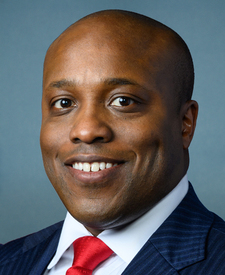
See how Wesley Hunt actually votes — against your values.
DeepSyte scores Wesley Hunt's record on the issues you care about — not party, not press releases. Take the 2-minute values quiz to see your personal alignment.
Sign in and take the values quiz to see how Wesley Hunt's votes line up with your views.
Prediction track record
How often we called Wesley Hunt's passage votes correctly, from their stated positions on each bill's tagged topics. Excludes “unclear” calls and abstentions.
17 predictions on record · none have been resolved by a passage vote yet. Check back as bills move.
Pending vote119-hr-5340
To prohibit the disclosure of records by the Secretary of Housing and Urban Development of individuals for the purposes of immigration enforcement, and for other purposes.
Based on 11 data points across public statements and recorded votes · AI analysis of public records
118-hr-8146·Consistent
Police Our Border Act
75/100
What they said
Dec 3, 2025
Congressman Hunt opposes the Afghan Special Immigrant Visa program and related policies, arguing that the vetting process is inadequate and has allowed dangerous individuals to enter the United States, compromising national security.
Rep. Hunt's statement opposes the Afghan SIV program and criticizes inadequate vetting procedures that he argues have allowed dangerous individuals into the country. The Police Our Border Act requires DOJ reporting on how Biden border policies have affected law enforcement. Both address immigration policy and national security concerns under the Biden Administration. Hunt's YES vote on a bill that scrutinizes border policy impacts aligns directionally with his stated opposition to what he views as reckless immigration policies. However, the bill does not specifically address Afghan SIV vetting procedures or the SIV program itself—it focuses on border enforcement and law enforcement impacts more broadly. The alignment is general rather than specific to the Afghan visa program Hunt criticized.
Detain and Deport Illegal Aliens Who Assault Cops Act
75/100
What they said
Dec 3, 2025
Congressman Hunt opposes the Afghan Special Immigrant Visa program and related policies, arguing that the vetting process is inadequate and has allowed dangerous individuals to enter the United States, compromising national security.
Congressman Hunt's statement opposes the Afghan Special Immigrant Visa program, arguing that inadequate vetting has allowed dangerous individuals into the country. The bill he voted for mandates detention and deportation of non-U.S. nationals arrested for assaulting law enforcement. Both reflect concern about non-citizen security threats and enforcement. However, the statement targets a specific visa program's vetting procedures, while the bill addresses a narrower enforcement mechanism for a specific crime category. The vote is consistent with Hunt's stated security concerns, though the bill does not directly address the SIV vetting process he called for disclosure on.
Congressman Hunt opposes the Afghan Special Immigrant Visa program and related policies, arguing that the vetting process is inadequate and has allowed dangerous individuals to enter the United States, compromising national security.
Congressman Hunt's statement opposes the Afghan SIV program due to inadequate vetting and national security concerns. The Laken Riley Act addresses immigration enforcement and detention of non-U.S. nationals arrested for certain crimes, and authorizes states to sue over immigration enforcement failures. Hunt's YES vote aligns directionally with his stated concern about immigration enforcement and security—the bill tightens detention requirements and creates accountability mechanisms. However, the bill does not specifically address SIV vetting procedures or the Afghan program; it focuses on property crimes and state enforcement authority. The statement and bill share a broad immigration-enforcement concern but address different specific mechanisms.
Continuing Appropriations and Border Security Enhancement Act, 2024
75/100
What they said
Dec 3, 2025
Congressman Hunt opposes the Afghan Special Immigrant Visa program and related policies, arguing that the vetting process is inadequate and has allowed dangerous individuals to enter the United States, compromising national security.
Rep. Hunt's statement opposes the Afghan Special Immigrant Visa program and criticizes inadequate vetting procedures that he argues have allowed dangerous individuals into the country. The bill includes provisions that prohibit DHS from using funds for certain immigration-related purposes and imposes limits on asylum eligibility, which align with a restrictive immigration stance. Hunt's NO vote on a bill that provides continuing appropriations but also restricts immigration enforcement is somewhat ambiguous—he may have opposed it due to insufficient immigration restrictions, disagreement with other appropriations priorities, or procedural concerns. The statement and bill's restrictive immigration direction are generally aligned, but the vote's specific driver cannot be definitively determined from the texts alone.
Congressman Hunt opposes the Afghan Special Immigrant Visa program and related policies, arguing that the vetting process is inadequate and has allowed dangerous individuals to enter the United States, compromising national security.
Rep. Hunt's statement opposes the Afghan SIV program and criticizes inadequate vetting procedures that he argues have allowed dangerous individuals into the country. The Schools Not Shelters Act restricts use of federally-funded school facilities to house non-citizens not admitted for lawful entry. His YES vote aligns directionally with his stated concern about controlling entry and placement of non-citizens, though the bill addresses a narrower question (shelter in schools) than his broader critique of SIV vetting procedures. The vote is consistent with his immigration-restrictive stance but does not directly address the specific vetting-process deficiency he emphasizes in the statement.
Congressman Hunt opposes the Afghan Special Immigrant Visa program and related policies, arguing that the vetting process is inadequate and has allowed dangerous individuals to enter the United States, compromising national security.
Rep. Hunt's statement opposes the Afghan SIV program due to inadequate vetting and national security concerns. The POLICE Act addresses a related but distinct question: making assault on law enforcement a deportable offense. Hunt's YES vote aligns directionally with his stated concern about removing dangerous individuals from the country, but the bill does not specifically address SIV vetting procedures or the Afghan program. The bill is narrower in scope (deportability for a specific crime category) than the statement's broader critique of SIV program vetting.
Congressman Hunt opposes the Afghan Special Immigrant Visa program and related policies, arguing that the vetting process is inadequate and has allowed dangerous individuals to enter the United States, compromising national security.
Rep. Hunt's statement opposes the Afghan Special Immigrant Visa program, arguing the vetting process is inadequate and allows dangerous individuals into the country. The Secure the Border Act addresses immigration enforcement broadly through border wall construction, asylum limits, and employment verification—measures aligned with a restrictive immigration stance. However, the bill does not directly address SIV vetting procedures or Afghan refugee admissions; it focuses on southern border security and asylum eligibility. Hunt's YES vote is generally consistent with his stated concern about immigration security, but the bill and statement address different specific mechanisms (SIV vetting vs. border barriers and asylum limits).
Congressman Hunt opposes the Afghan Special Immigrant Visa program and related policies, arguing that the vetting process is inadequate and has allowed dangerous individuals to enter the United States, compromising national security.
Rep. Hunt's statement opposes the Afghan SIV program due to inadequate vetting and national security concerns. The bill he voted for strengthens deportation grounds for identity and Social Security fraud. Both address immigration enforcement and security, but the bill targets a specific fraud-related ground for deportation rather than the SIV vetting process itself. The vote is directionally consistent with Hunt's stated concern about security risks from inadequately vetted individuals, but the bill does not directly address the SIV program or vetting procedures he criticized.
Congressman Hunt opposes the Afghan Special Immigrant Visa program and related policies, arguing that the vetting process is inadequate and has allowed dangerous individuals to enter the United States, compromising national security.
Rep. Hunt's statement opposes the Afghan Special Immigrant Visa program, arguing the vetting process is inadequate and allows dangerous individuals into the U.S. The bill he voted for bars Hamas/Palestinian Islamic Jihad members and October 7 attackers from admission and immigration relief. Both address immigration security and vetting concerns, but target different populations and threats—the statement focuses on Afghan SIV vetting failures; the bill addresses terrorism-related bars for Palestinian/Hamas-affiliated individuals. The vote is directionally consistent with Hunt's stated concern about inadequate vetting and national security risks from immigration programs, though the bill does not directly address the Afghan SIV program or vetting procedures he criticized.
Congressman Hunt opposes current Temporary Protected Status designations for Somalia, Sudan, Syria, Yemen, and Lebanon, arguing they have been abused and extended beyond their original humanitarian intent. The bill would terminate these designations, require affected individuals to self-deport, end employment authorization, and require Congressional approval for any future redesignations.
The statement and bill both address immigration enforcement but target different specific mechanisms. Hunt's statement focuses on terminating Temporary Protected Status designations and employment authorization for nationals from five countries; the bill establishes criminal penalties for illegal entry and reentry. Hunt's YES vote on this amendment is directionally consistent with his stated priority of stricter immigration enforcement, but the amendment addresses criminal penalties for illegal entry rather than TPS policy. The vote is procedural (amendment), making substantive intent unclear—the rep may have voted yes on the amendment for tactical reasons unrelated to its specific content, or because it aligns with his broader enforcement stance.
Congressman Hunt opposes the Afghan Special Immigrant Visa program and related policies, arguing that the vetting process is inadequate and has allowed dangerous individuals to enter the United States, compromising national security.
Both the statement and bill address immigration and national security concerns, but they target different specific policy mechanisms. The statement opposes the Afghan Special Immigrant Visa program and criticizes inadequate vetting procedures that allowed a dangerous individual to enter the U.S. The bill creates criminal penalties for fleeing law enforcement near the border and bars non-U.S. nationals convicted of such offenses from immigration relief. Rep. Hunt's YES vote on a bill that strengthens enforcement and restricts immigration relief is directionally consistent with his stated concern about border security and preventing dangerous individuals from entering the country. However, the bill does not directly address SIV vetting procedures or the Afghan refugee program—it addresses a different enforcement mechanism (fleeing law enforcement). The connection between the statement's specific critique and the bill's specific provision is thematic rather than direct.
Pairs with ambiguous language and high uncertainty are withheld until more data is available. Procedural, cloture, and amendment votes are excluded — they don't cleanly signal substantive support or opposition.
Pro analysis
AI rep analysis — Pro
Get an AI-narrated read on Wesley Hunt's full voting record against your stated values — aligned themes, conflicts, notable votes, and what to watch for.
We haven't extracted campaign positions for Wesley Hunt yet. Once their campaign website or position pages are processed, this card will track what they said vs how they voted.
Crossing the aisle
Passage votes where Wesley Hunt broke ranks with ≥75% of Republicans. Threshold catches substantively partisan splits; unanimous-ish or close votes are excluded.
13
Cross-aisle votes
119-hr-2860·Jun 3, 2026·76% of R voted YES
Northwest Straits Marine Conservation Initiative Reauthorization Act of 2025
For Immediate Release: Congressman Wesley Hunt Introduces the Guaranteeing the States Protection against Invasion Act 2026
Position: Congressman Hunt supports legislation that would authorize the President to declare an invasion at the southern border, codify Trump's Proclamation 10888, deny immigration relief to those entering during a declared invasion, and expand enforcement mechanisms including criminal and medical background checks and removal of undocumented immigrants.
Contact: Matthew Topolski, Communications Director
Email: matthew.topolski@mail.house.gov
Washington, D.C. — Today, Congressman Wesley Hunt introduced the Guaranteeing the States' Protection Against Invasion Act of 2026 (GSPA). During the Biden Administration, U.S. CBP encountered approximately 10.8 million individuals at the southern border, with an additional 2 million known "got aways."Texas accounted for approximately 46% of all illegal border encounters. In addition to the increase in encounters, drug seizures increased to nearly 500,000 pounds of fentanyl and over 250,000 pounds of cocaine. The GSPA Act will authorize the President to proclaim an invasion at our southern border, codify President Trump's Proclamation 10888, and prevent illegal immigrants who enter the country during the declared invasion from receiving immigration relief or protection.
The legislation also requires criminal history and medical background checks for individuals attempting to enter the U.S., ensuring they are not a risk to national security. Additionally, it directs the DHS to prevent unlawful mass entry and to remove illegal aliens who enter the country during a declared invasion. Statement from Congressman Hunt: "For four years under the Biden administration, our southern border was left wide open. Granting tens of millions of illegal immigrants access to American communities and American benefits. On the first day of Donald Trump's presidency, we witnessed him immediately close the southern border and deploy CBP and ICE agents across this country to rectify the failures of Joe Biden. As leaders, it is our responsibility to ensure that President Trump's work is codified into law, preventing an invasion of this scale from ever happening again."
For Immediate Release: Congressman Wesley Hunt Introduces the Temporary Protected Status Reform Act of 2026
Position: Congressman Hunt opposes current Temporary Protected Status designations for Somalia, Sudan, Syria, Yemen, and Lebanon, arguing they have been abused and extended beyond their original humanitarian intent. The bill would terminate these designations, require affected individuals to self-deport, end employment authorization, and require Congressional approval for any future redesignations.
1520 Longworth House Office Building, Washington, DC 20515Email Me(202) 225-5646
Washington, D.C. — Today, Congressman Wesley Hunt introduced the Temporary Protected Status Reform Act of 2026.
The original intent of Temporary Protected Status (TPS) was to provide temporary humanitarian relief to countries experiencing armed conflict, environmental disasters, or other extraordinary and temporary conditions.
However, under the Biden Administration, TPS designations were extended and abused. Among those extensions, countries such as Somalia, Sudan, Syria, Yemen, and Lebanon were granted TPS.
This bill will terminate TPS designations for these countries and require all affected individuals to self-deport by a designated date.
The TPS Reform Act will end all employment authorization by the termination date and prevents DHS from redesignating these countries without Congressional approval.
Programs designed to deliver humanitarian aid have been abused for too long. It’s now time for leadership to prioritize Americans.
Statement from Congressman Hunt:
"For years, under the Biden administration, TPS has been abused, allowing hundreds of thousands of foreign nationals into this country under the guise of humanitarian aid.
President Trump has made great strides to ensure that Americans are put first by closing the border and protecting America's sovereignty.
This bill ensures that the abuses and extensions made to Muslim-majority countries like Somalia, Sudan, Syria, Yemen, and Lebanon are terminated.
Under President Trump's leadership, Americans will be put first in America, and Congress must do everything in its power to codify President Trump's work."
For Immediate Release: Congressman Wesley Hunt Introduces the American Dream Protection Act of 2025
Position: Congressman Hunt opposes federal funding to states that provide educational benefits to undocumented immigrants, arguing that resources should prioritize U.S. citizens.
1520 Longworth House Office Building, Washington, DC 20515Email Me(202) 225-5646
Washington, D.C. — Today, Congressman Wesley Hunt introduced the American Dream Protection Act of 2025.
Statement from Congressman Wesley Hunt:
"For years, the American people have footed the bill so that illegal aliens would receive benefits that are intended for U.S. citizens.
As leaders and patriots of the America First agenda, we must fight to ensure that no illegal immigrant is gaining any advantage over taxpaying American citizens.
The American Dream Protection Act will do just that. No state that gives illegal aliens an unfair advantage in regard to receiving an education will receive federal funds.
Too many resources have been allocated to benefiting those who are in our country illegally. Americans will be put first in America."
For Immediate Release: Congressman Wesley Hunt Introduces the National Educator Safety and Accountability Act of 2025
Position: Congressman Hunt introduced legislation to establish a national registry for educators disciplined for sexual misconduct and create a federal task force to address educator sexual abuse. The bill aims to create standardized reporting between school districts to prevent offenders from moving between districts after misconduct.
Contact: Matthew Topolski, Communications Director
Email: matthew.topolski@mail.house.gov
Washington, D.C. — Today, Congressman Wesley Hunt introduced the National Educator Safety and Accountability Act of 2025.
There is a serious threat facing our nation regarding the safety of our children, and it is the responsibility of American leadership to address this issue promptly.
Approximately 10-12% of children experience sexual misconduct or grooming by a school employee before they graduate. Multiple incidents in Texas have been reported by the Texas Tribune and KPRC, among other outlets, highlighting the serious assaults against students within our school systems.
Currently, there is no effective vetting system for employees who move from district to district after being fired for misconduct. The lack of communication between state and local agencies allows recurring sexual misconduct across the state.
This legislation aims to create a standardized national reporting system, the National Educator Misconduct and Discipline Registry, to monitor offenders and establish a federal task force on educator sexual misconduct.
Statement from Congressman Wesley Hunt:
"As leaders, it is our responsibility to ensure the safety of our children as they receive their education.
Under no circumstances should a school bypass a background check and vetting process during hiring.
We must guarantee that those who teach and aim to influence young minds are individuals with good intentions. We cannot allow groomers and sexual predators to access our children.
This legislation will provide an incentive for school districts to adopt measures that keep our children safe."
###
For Immediate Release: Congressman Wesley Hunt Calls on Director Edlow to Fully Disclose the Vetting Process of Rahmanullah Lakanwal
Position: Congressman Hunt opposes the Afghan Special Immigrant Visa program and related policies, arguing that the vetting process is inadequate and has allowed dangerous individuals to enter the United States, compromising national security.
Contact: Matthew Topolski
Email: matthew.topolski@mail.house.gov
Washington, D.C. - Congressman Wesley Hunt is calling on Director Edlow to fully disclose the vetting procedures used for Afghan national Rahmanullah Lakanwal.
In the aftermath of the brutal attack in our nation’s capital, an attack that claimed the life of Army Spc. Sarah Beckstrom and left Staff Sgt. Andrew Wolfe, severely wounded, Congressman Hunt is demanding clear answers on how this individual was ever permitted to set foot on American soil.
In a formal letter to Director Edlow, who leads U.S. Citizenship and Immigration Services, Congressman Hunt directs his inquiry toward the vetting process that resulted in Lakanwal’s entry into the United States.
According to multiple reports, including NPR and ABC, Lakanwal entered through the Afghan Special Immigrant Visa (SIV) program.
The HOPE Act of 2021—authored by Senator John Cornyn and Senator Alex Padilla—expanded this program by authorizing 50,000 additional SIVs for Afghan contractors.
Policies like the HOPE Act have recklessly opened the door for dangerous individuals to enter our country, putting Americans at risk and compromising our national security.
The American people deserve answers. They deserve accountability. And they deserve to know why, under the Biden Administration, Washington’s leadership continues to place the interests of foreign nationals above the safety of American citizens.
VIEW LETTER HERE
For Immediate Release: Congressman Wesley Hunt Introduces the PARL Act
Position: Congressman Hunt supports legislation to protect U.S. businesses from Russian lawsuits filed in retaliation for complying with U.S. sanctions and export controls against Russia.
1520 Longworth House Office Building, Washington, DC 20515Email Me(202) 225-5646
Washington, D.C. - Congressman Wesley Hunt introduces the Protecting Americans from Russian Litigation Act (PARL ACT).
The PARL Act will protect U.S. businesses and ensure that they are not unfairly punished for complying with U.S. sanctions and export controls. Currently, Russia is pursuing spurious legal action against American companies that have ceased to continue business with Russian entities due to their compliance with U.S. sanctions and export controls.
The United States has no provision that would protect U.S. companies from this type of lawsuit. This legislation closes the legal loophole countries like Russia are exploiting and will protect U.S. companies from unfair litigation.
Statements from Congressman Wesley Hunt & Co-Lead Representative Hank Johnson:
"Russia's use of this Title 28 loophole to impose fines on American companies and workers is abhorrent," said Hunt. "Let us recall that sanctions against Russia were only instituted after they made the deliberate decision to invade Ukraine. Protecting America and our business interests should be a top priority for Congress, and I'm profoundly grateful for the bipartisan support this legislation has garnered."
“Four years into Putin’s unprovoked war of aggression in Ukraine, Russia and other foreign entities are still able to sue U.S. companies for abiding by U.S. sanctions,” said Rep. Johnson, ranking member of the Judiciary Subcommittee on Courts, Intellectual Property, Artificial Intelligence, and the Internet. “It’s time for Congress to close this loophole and join the European Union and the United Kingdom in protecting sanctions against Russia and the companies that comply with them.”
Congressman Wesley Hunt introduced the Second Amendment Restoration Act
Position: Congressman Hunt introduced legislation to repeal federal incentives for red-flag laws and strip funding for NICS expansion, arguing these provisions violate due process and the Second Amendment while burdening law-abiding gun owners.
Contact: Matthew Topolski, Communications Director
Email: Matthew.Topolski@mail.house.gov
Washington, D.C. - This morning, Congressman Wesley Hunt introduced the Second Amendment Restoration Act, which would partially repeal the Bipartisan Safer Communities Act, which was signed into law by President Joe Biden in 2022.
Specifically, the bill would repeal federal incentives for states to implement Red Flag Laws, which is a disastrous violation of due process and our Constitution. In addition, the bill would strip funding for the expansion of NICS, which has led to unconstitutional delays that extend waiting periods for legal firearm purchasers.
This bill still allows law enforcement agencies to prosecute illegal weapons trafficking, but legal firearm owners and Americans hoping to exercise their Second Amendment right will no longer be swept up in overburdensome federal oversight.
Our federal government should ensure that criminal justice information sharing remains focused on crime control and prevention, not monitoring law-abiding American citizens.
The Second Amendment Restoration Act is endorsed by Gun Owners of America (GOA), National Association for Gun Rights (NAGR), Texas Gun Rights Association (TXGR), Texas State Rifle Association (TSRA), and the National Rifle Association (NRA).
Congressman Wesley Hunt commented:
“The Second Amendment Restoration Act reverses the dangerous provisions of the so-called Safer Communities Act, which pushed red flag laws on Texans and funded their expansion nationwide. The Constitution is crystal clear: our right to keep and bear arms shall not be infringed. Every lawmaker who claims to stand for freedom should support this bill without hesitation. Protecting the right of Americans to defend themselves and their families is not just policy, it’s principle.”
Chris McNutt, President of the Texas Gun Rights Association, commented:
"We stand 100% behind Congressman Hunt in his mission to torch the Cornyn gun-control disaster. Not only did Cornyn bankroll red flag laws, he ballooned the flawed NICS gun ban registry and handed the ATF a blank check to expand its war on gun owners. This legislation rips Cornyn's betrayal out by the root and stem."
Dudley Brown, President of the National Association for Gun Rights Commented:
“Senator John Cornyn's so-called 'Bipartisan Safer Communities Act was never about safety; it was meant to be a backdoor assault on our God-given Second Amendment rights. Congressman Wesley Hunt's The Second Amendment Restoration Act takes a sledgehammer to Cornyn's unconstitutional nightmare and will demolish the Biden-era anti-gun agenda.”
Rep. Barry Moore commented:
“President Trump is leading the charge to restore common sense and constitutional principles in Washington, and Representative Wesley Hunt’s Second Amendment Restoration Act is part of that mission,” said Rep. Barry Moore. “Biden-era gun control provisions unfairly targeted law-abiding citizens, but this bill will restore our Founders’ intent when they drafted the Second Amendment. The federal government’s focus should be on stopping violent criminals - not burdening responsible Americans who exercise their right to keep and bear arms. I’m proud to stand with Representative Hunt and my colleagues in defending the God-given freedoms that make this nation strong.”
The Second Amendment Restoration Act was originally co-sponsored by Representatives Roy (TX-21), Gill (TX-26), Nehls (TX-22), Fedorchak (ND), Clyde (GA-09), Self (TX-03), Donalds (FL-19), Gosar (AZ-09), and Moore (AL-02).
Articles from a curated list of national outlets that mention Wesley Hunt.
No recent news mentions yet.
Source: GDELT 2.0 GKG, filtered to a curated list of national outlets. Inclusion is not endorsement; opinion pieces and reported news are mixed.
Recent stock activity
Periodic transaction reports filed under the STOCK Act — disclosed by the rep, sourced from public filings.
No disclosed trades on record.
Source: open-data mirrors of the Senate eFD and House Clerk financial-disclosure systems. Disclosure within 30 days of trade is required by law (45 for spouse/dependent trades).
Top PAC donors · 2026 cycle
Political action committees that gave the most to this rep's principal campaign committee this cycle. PAC giving is direct organizational support — industry, ideological, or leadership.
1.AMERICAN ISRAEL PUBLIC AFFAIRS COMMITTEE POLITICAL ACTION COIdeological5 contributionsPAC arm of the American Israel Public Affairs Committee, federalized in 2021. Backs candidates of both parties who support U.S.-Israel security and economic ties.AI$41,764
2.WAR VETERANS FUND 20222 contributions$26,765
3.LEAN FORWARD AMERICA FUNDIdeological1 contributionProgressive advocacy PAC — supports candidates and causes aligned with forward-looking Democratic and progressive policy priorities.AI$13,374
4.SERVANT LEADERSHIP FUND1 contribution$5,800
Source: OpenFEC (api.open.fec.gov) Schedule A receipts where contributor type is “committee.” Aggregated by contributing committee. Self-transfers from joint-fundraising / victory committees are excluded.
Top individual contributors · 2026 cycle
Itemized individual contributions over $200 to this rep's campaign committee, aggregated by donor employer. PAC giving is shown above; this section is people, not organizations.
1.SELF$55,625
2.PERMIAN RESOURCES$44,700
3.INFORMATION REQUESTED PER BEST EFFORTS$42,061
4.EMPOWER CLINIC SERVICES L.L.C.$14,000
5.TA$14,000
6.CORPAC GROUP$10,500
7.VACATIONS TO GO$7,800
8.AMERICAN GLOBAL STRATEGIES LLC$7,500
9.THRUSTMASTER OF TEXAS INC.$7,000
10.TANGO LIMA LP$7,000
Source: OpenFEC Schedule A receipts where contributor type is “individual,” aggregated by the donor's self-reported employer. This is a geographic / industry correlation, not a corporate endorsement.